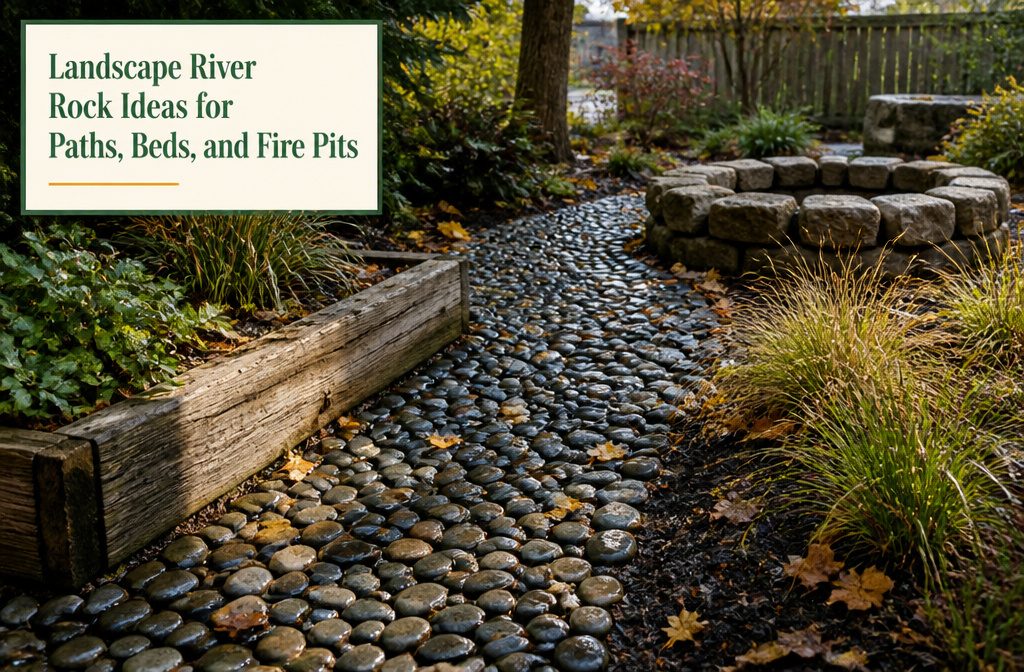
The ideas run from a single row of border stones to a stacked retaining wall, and the problem you need solved picks yours: drainage, weeds, worn grass, or water use.
The fire pit has a safety condition. Porous rock traps moisture that turns to steam, and the pressure can crack a stone or send fragments flying.
1. Dry Creek Bed
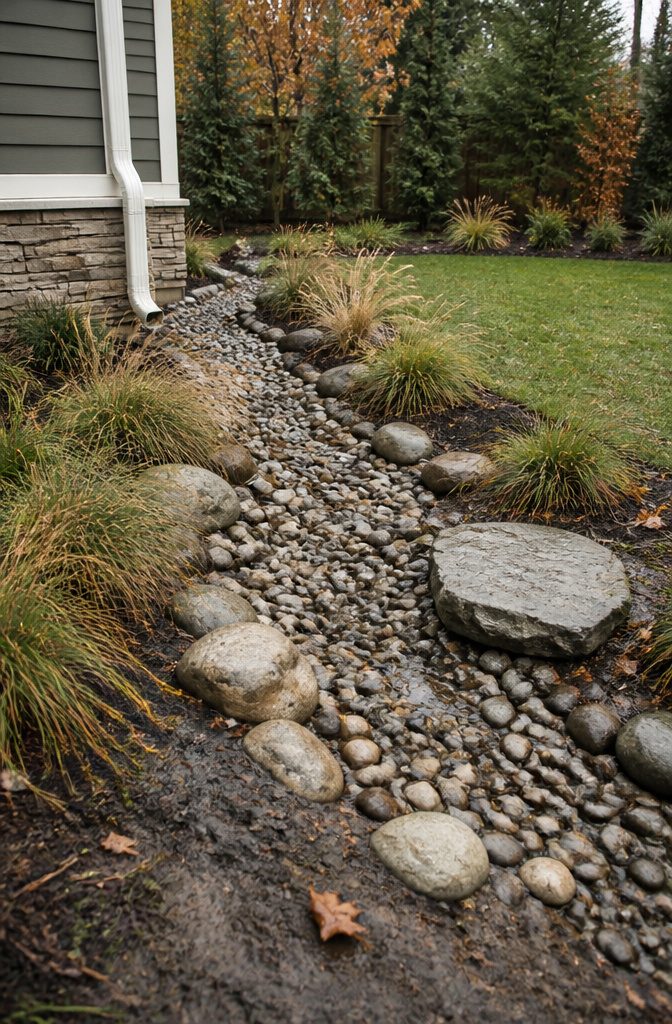
A dry creek bed gives a flat yard visual movement and sends rainwater somewhere other than your foundation. Dig a shallow trench and fill it with a mix of large and small stones.
Mixed sizes look most natural: uniform rock reads as a gravel strip, while a few big stones among smaller ones look as if water placed them there.
Plan the route before you dig. Start the bed where runoff collects, such as below a downspout, and run it away from the house toward a lower part of the yard so water doesn’t pool against the wall.
Ornamental grasses along the edges soften the lines, and the bed looks good year-round.
Recommended Products

【Natural Product】 Ausluru river rocks are natural lightly tumbled for smooth effect, without any additives. Every stone is hand-picked carefully to promise the premium quality for valued customers.

【Natural Product】 Ausluru river rocks are natural lightly tumbled for smooth effect, without any additives. Every stone is hand-picked carefully to promise the premium quality for valued customers.

Long-Lasting Beauty: Come with 3 pounds of decorative rocks for indoor plants, each rocks measuring around 1-2Inch(2-3cm). Dye and oil-free, they resist fading when washed or use in water. Eco-friendly and recyclable, maintaining enduring beauty and lovely at home.
2. Stone Garden Path
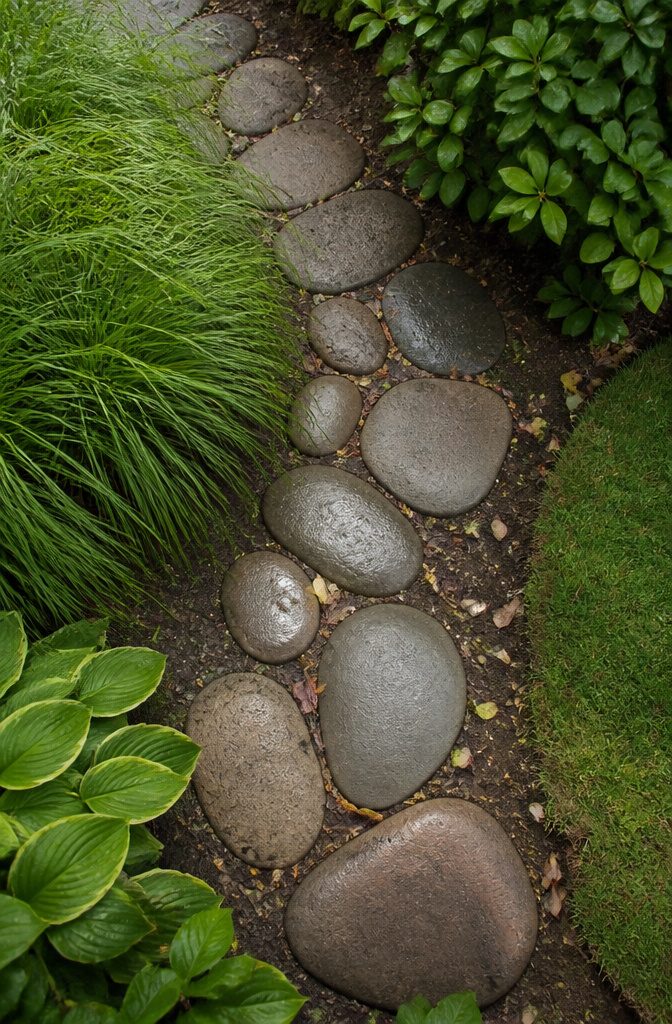
Flat, smooth stones make the best stepping path because each one gives your foot a level landing, and the smooth faces stay safe underfoot even when wet. Set them through a bed or across a lawn.
A straight line looks structured and formal.
A winding line looks natural, and in a garden bed it usually wins, because a dead-straight run reads as planned and monotonous. Bend the route around a shrub or grass clump so the curve has a reason to be there.
Press each stone down so it sits embedded in the soil, not perched on top. Settled stones look as if nature put them there.
Recommended Products

Sturdy Cast Iron Construction: Lawei turtle stepping stone is made of heavy-duty cast iron with genuine verdigris finish, this metal stepping stone withstands all weather extremes—perfect for year-round outdoor use in gardens, lawns and patios without rusting or cracking.

【GLOWING STEPPING STONES】Turn an ordinary garden path into a nighttime feature. Luminous glass stones absorb light during the day and create a beautiful blue-green glow after dark.

Sturdy & Anticorrosive Pine Wood Material: This 8.2ft x 16.5in garden walkway is made of carbonized pine for improved UV, moisture, and corrosion resistance—durable for year-round use. Note: Carbonisation improves weather and corrosion resistance, but extreme sun, heat, or dry climates may still cause aging or cracking; applying an outdoor sealant helps extend service life
3. Stone Mulch Around Trees
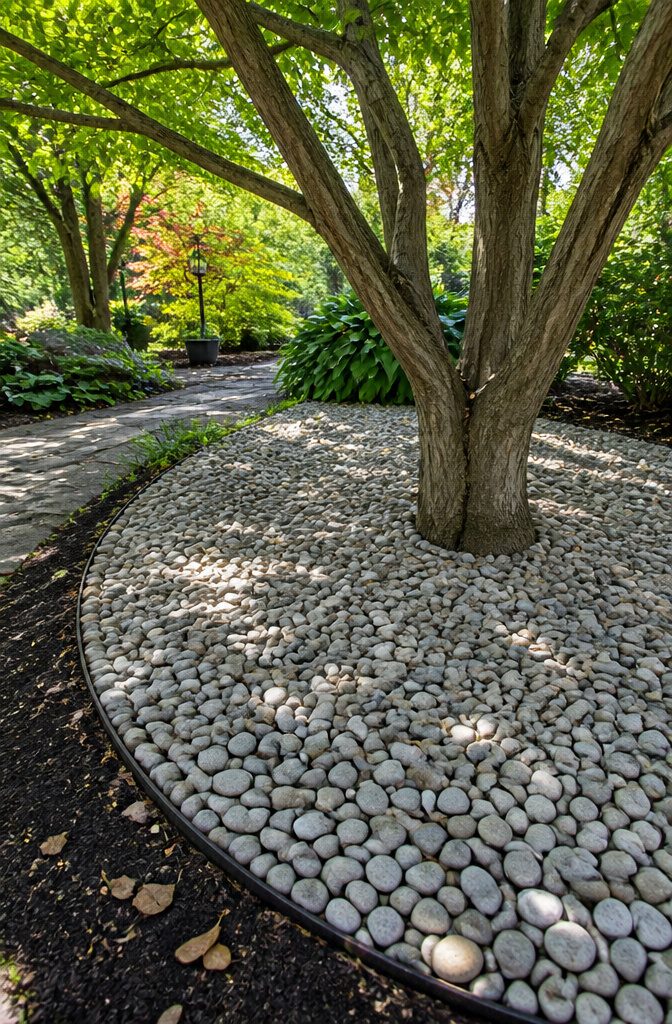
Small river stones do the work of wood mulch around a tree or shrub. They block light so weeds struggle, slow evaporation so the soil stays damp longer, and they never need topping up.
Choose small, rounded stones. Large cobbles leave gaps where weeds root, while very fine gravel packs down and washes into the soil.
Spread the stones in an even layer that fully hides the soil, and run the ring out toward the edge of the branches, where most of the feeding roots sit.
Keep the stones pulled back from the trunk so the base of the tree stays visible and dry. Piled against bark, they hold moisture where it can cause rot.
Recommended Products

Natural Stones: This river rocks are natural lightly polished for smooth effect, comes in a variety of natural colors, Resists fading for long-lasting beauty. The color of this river rock is natural so it may include a variety of different shades of browns, whites and black rocks. (rocks are natural and as a result some may be broken or out of shape, oval or round, thick or thin.

Natural Stones: This river rocks are natural lightly polished for smooth effect, comes in a variety of natural colors, Resists fading for long-lasting beauty. The color of this river rock is natural so it may include a variety of different shades of browns, whites and black rocks. (rocks are natural and as a result some may be broken or out of shape, oval or round, thick or thin.

【5 Pound Pebbles】The mixed color pebble is about 0.8-1.2 inch. Due to machine screening, some stones will exceed 1.2 inch in length. FANTIAN mixed color pebbles include various shades of brown, white, black and different shapes, so each mixed color rock is unique. They are very clean and have no dust or powder attached
4. Zen Garden Corner
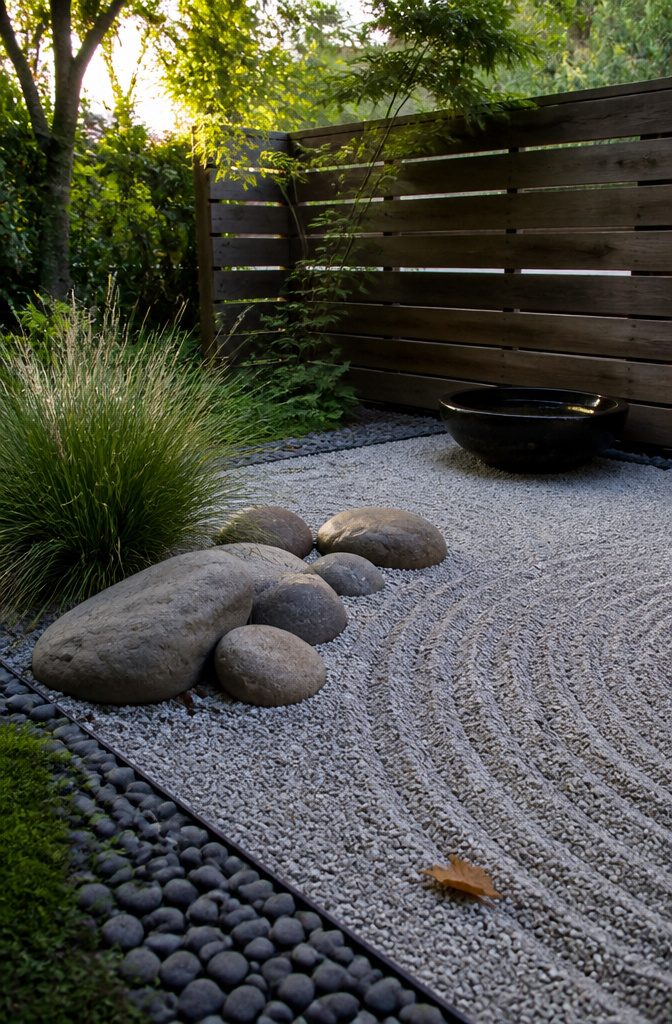
A few well-placed stones, a field of raked gravel, and a clump of bamboo or ornamental grass are enough for a calm retreat, and the whole thing fits in a small backyard corner.
Smooth, polished river rock in natural tones carries most of the mood. Pick stones with rounded faces and set them off-center, where you can see them from a chair or a window.
The gravel is the part that asks for work. Rain, leaves, and footsteps blur the pattern, so plan to re-rake it now and then to bring the lines back.
Keep plantings to the edges of the corner. The fewer plants you add, the less there is to tend.
Recommended Products
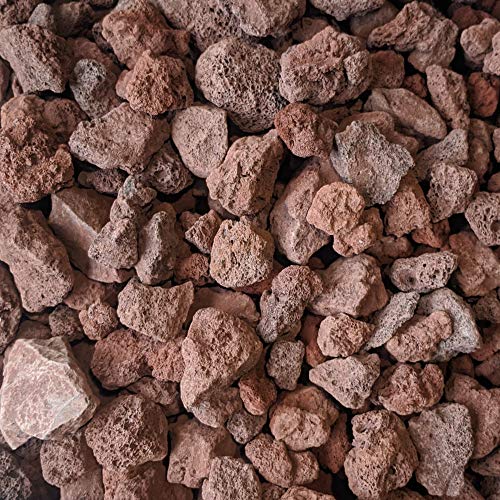
NATURAL VOLCANIC LAVA ROCK — Formed from real volcanic magma, these lava rocks withstand the extreme temperatures of outdoor gas fire pits without crumbling, cracking, or breaking down. No manufactured stone, no synthetic filler — just genuine volcanic material built to last season after season.

IMPROVED GRILLING RESULTS: Protect burners and distribute heat evenly with porous volcanic rock. These bbq lava rocks for gas grill absorb grease to minimize flare-ups, helping you cook food thoroughly without burning or charring.

15-LBS OF STONES - Each box contains 15-lbs lava stones(large: 2-3 Inches). Black 100% Natural Lava Rocks for Gas Fire Pit and Fireplace
5. Flower Bed Borders
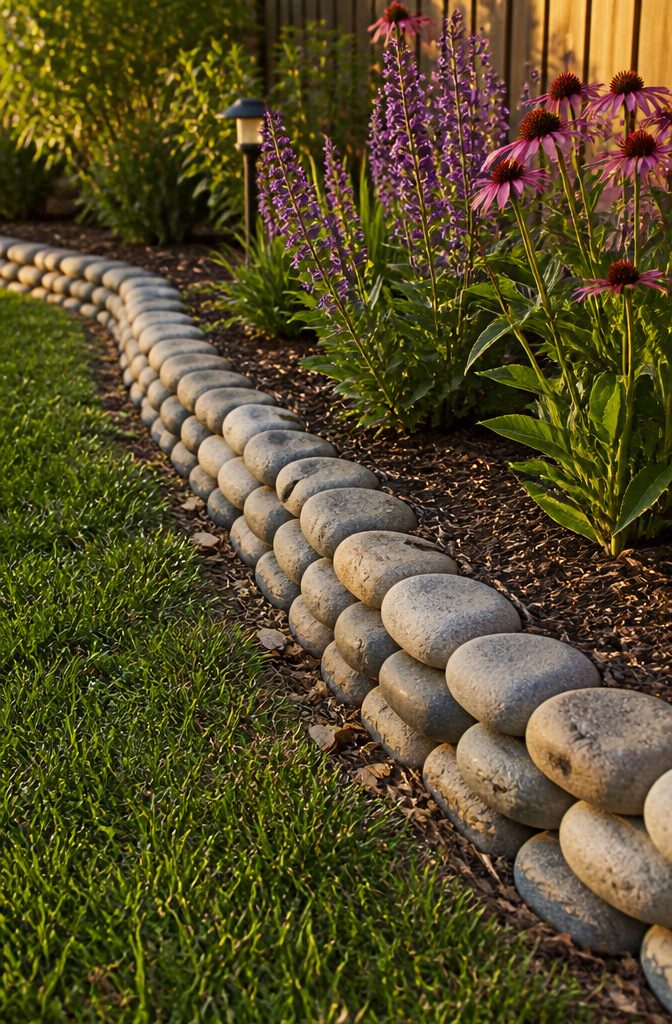
A single row of uniform river rocks draws a clean line between bed and lawn.
The stones hold mulch in place and keep grass from creeping into your plantings, so you can skip plastic edging entirely. That is one less product to buy, and no plastic strip to hide.
Pick stones that are close in size. Matched stones read as a deliberate border, while a mixed bag looks like leftovers.
If you want more presence, stack 2 or 3 rows for a raised, more dramatic edge. Offset each row so the stones sit in the gaps below, which keeps the stack from sliding apart.
Recommended Products

Packaging Details: The package contains 4 zen garden tools in four forms. Different forms can meet your different needs and your decoration requirements

✔COMPLETE ZEN DECORATION KIT: Our mini Japanese zen sand garden kit includes all the accessories for a peacefully moment of meditation: solid wood tray 8.5 x 6.7 x 0.5 inches, white sand, bamboo rake, rocks, 2 figures. Ideal for desks, tables, countertops & more

Wonderful High End Japanese Gift- Reward yourself or bring calm & happiness to loved ones. Japanese Zen Garden for desk; gorgeously packaged with the elements for inner peace. A deluxe, Zen gift set
6. Pond Surround
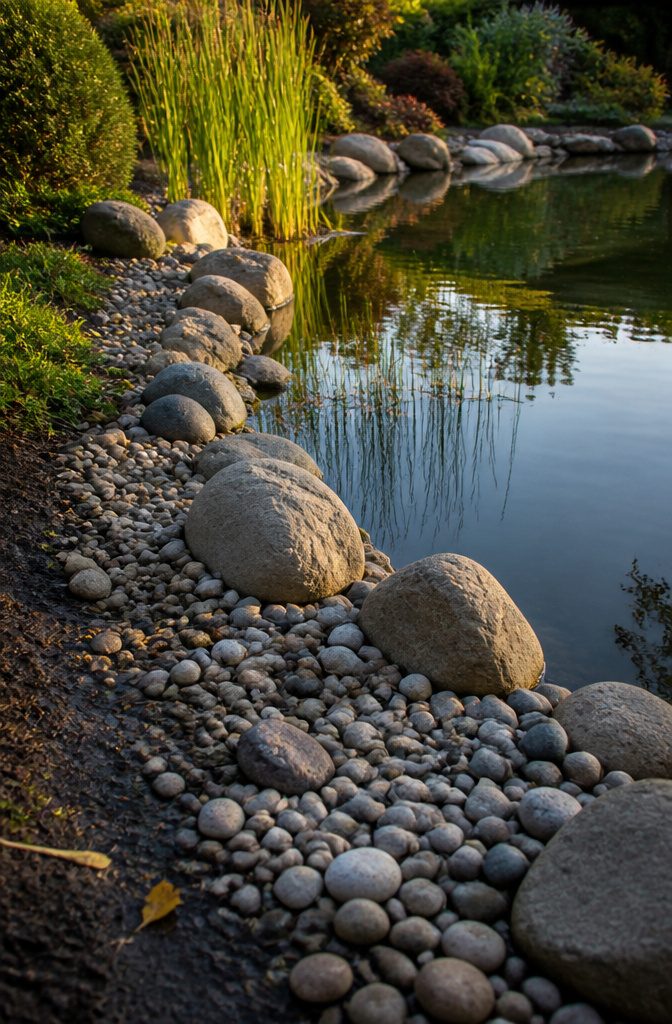
Smooth, rounded stones look right beside water because nothing about them looks installed. Lay them along the edge of a pond or fountain so the water meets the yard without a hard line where the liner or basin stops.
Mix the sizes.
Set a few large stones first, tuck medium ones against them, and fill the gaps with small ones. Uniform stones read as a border, while mixed ones look like a natural bank.
The rock also does a job. Stones placed over the edge of the liner hold it down and hide it.
A layer along the bank keeps rain from washing soil into the water, which is what erosion around a pond edge comes down to. Choose rounded river rock over sharp crushed stone here, since it looks better against water.
7. Fire-Pit Surface
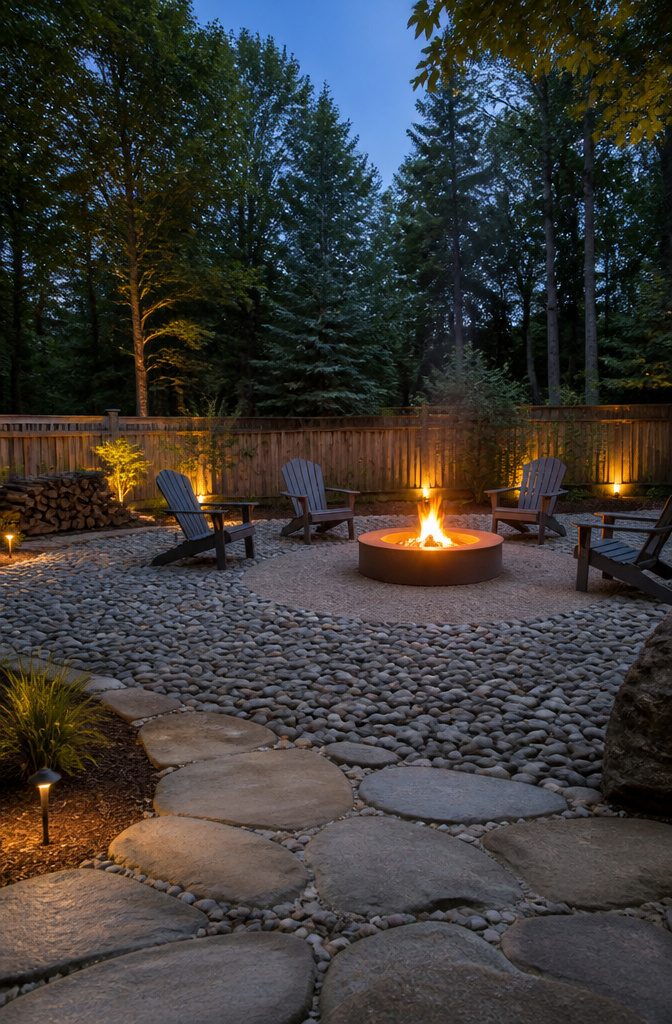
The ground around a fire pit turns to mud fast from foot traffic and rain. A generous layer of stones fixes that: water drains through, and you get a clean, firm surface for chairs and boots.
Choose heat-tolerant, non-porous stones and keep them a safe distance from the flames.
Porous rock soaks up water, and when fire heat reaches that trapped moisture it turns to steam. The pressure can crack a stone or send fragments flying.
Stones closest to the fire also take the most heat, so leave a buffer between the flames and the loose rock. If you can’t tell whether a stone is dense or porous, don’t use it in this spot.
8. Ground Cover for Worn Spots
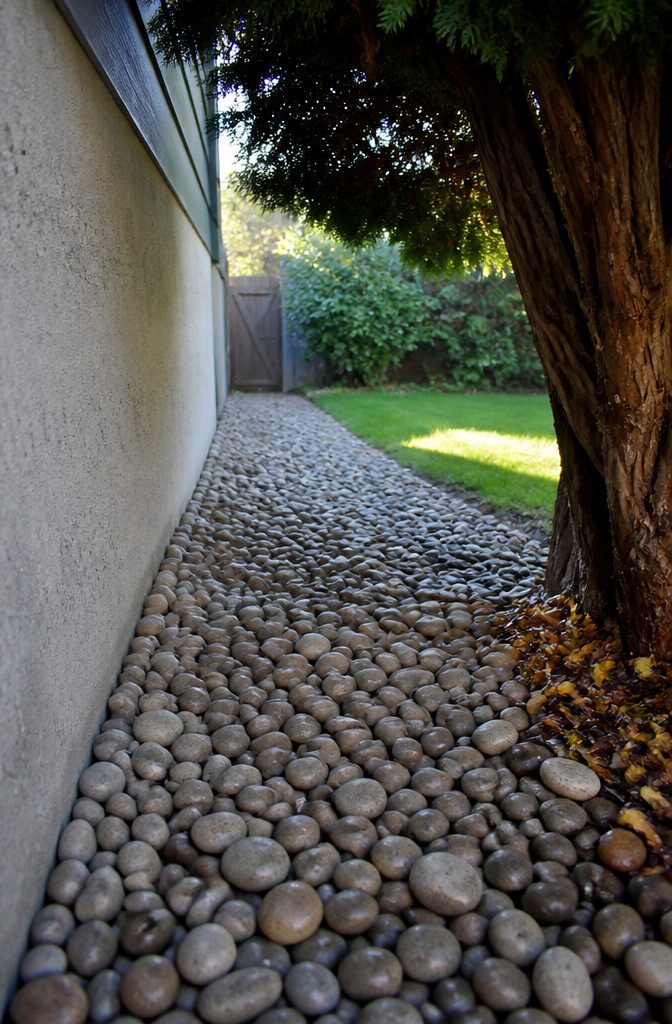
Grass in side yards, pet runs, and under play equipment wears down and dies because the same few feet of ground take every step. River rock ends the cycle of reseeding and resodding.
It also spares the soil the compaction that constant foot traffic causes on bare turf. If you’ve patched a strip more than once, switch it to stone.
The same fix works where plants never take: deep shade under a dense tree, the strip beside a concrete wall, or thin, poor soil.
Cover the bare ground with river rock instead of fighting it. The spot then looks planned rather than neglected, and it needs almost no upkeep afterward.
Recommended Products

【20 lbs Black Rocks】You will get 20 lbs black polished black river rocks. The length of the river rocks is about 1-2 inches. Actual size is bigger than picture

[2lbs Black Rocks 】Package: 2 pounds. Size: 0.8-1.2 inch. The black river rock is natural so it may include a variety of different shades of blacks. Keep in mind that rocks are heavy, so 2 pounds might not seem like a lot

Rich in Quantity: you will receive 30 pieces of non woven tree mulch ring, each measures approx. 12.6 Inches/ 32 cm in outer diameter and 1.57 inches/ 4 cm in inner diameter, enough quantity and proper size to meet your needs and replacements, and you can also share some with your friends and family members
9. Low Retaining Wall
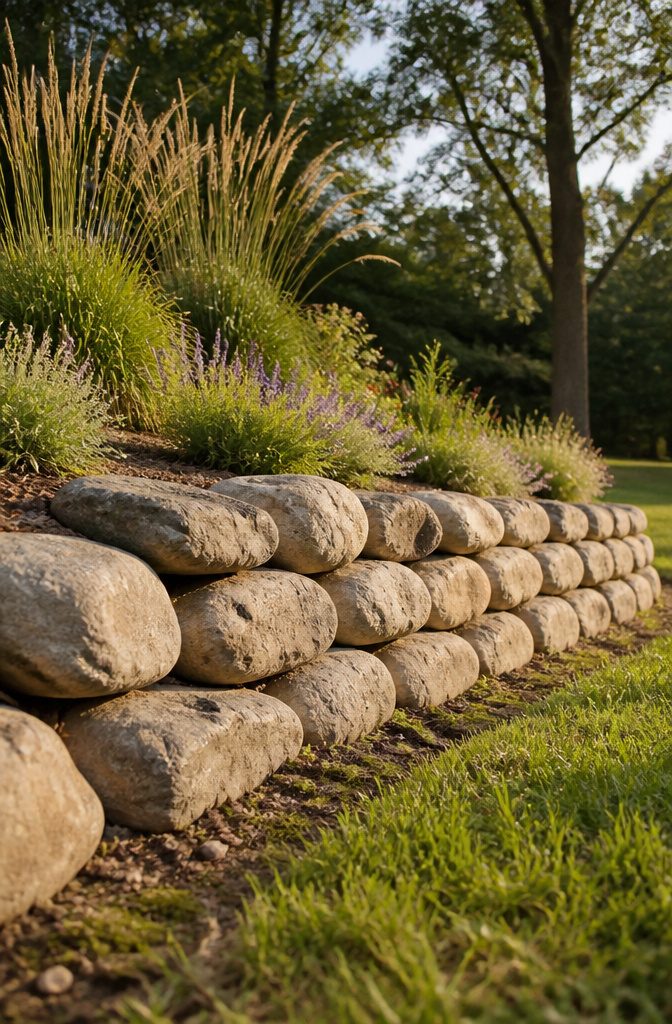
Stack your largest river rocks into a low wall to hold back a slope and turn it into level planting terraces.
The weight of the stones keeps the wall solid for years, and it needs no grout or sand joints, which erode over time. Stacked stone also blends into a yard far better than concrete block.
Keep it low. A foot or two of height is usually enough to flatten a bed, and it keeps the job small: fewer stones to buy and haul, and no need to engineer anything.
Walls taller than about 3–4 feet commonly trigger permit or engineering rules, so check locally before going higher. Set the biggest stones at the base and offset each course like brickwork.
Recommended Products

ADD REALISM TO YOUR FIREPLACE - Give your fireplace a "full" and natural look by adding lava rock around your log set.

Premium Heat-Resistant Natural Lava Rocks withstand intense high temperatures without cracking, chipping or breaking down. Maintain stable heat resistance for years of repeated use for all fire feature applications

【Natural Fire Pit Rocks】 -These black lava rocks have natural a porous surface, which can help spread the gas dispersion in all directions to improve the flame performance. It works great as a firebase underneath fire glass for fire pit or fireplace. While, it requires very little maintenance.
10. Xeriscape Design
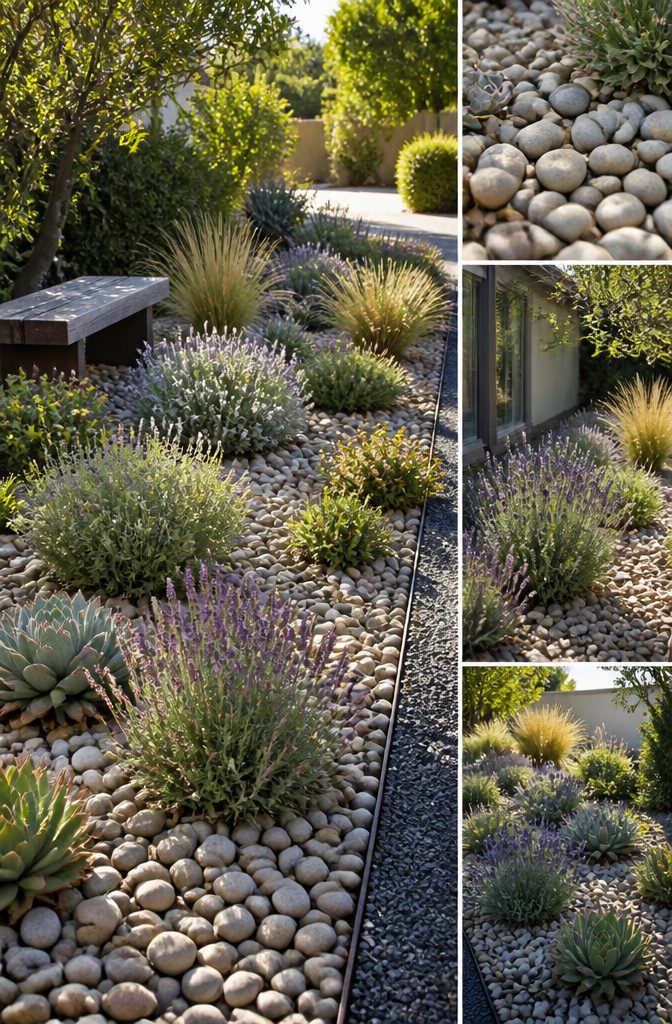
Xeriscaping is landscaping designed to reduce or eliminate supplemental water, and river rock handles much of that job.
Replace a patch of thirsty turf with a bed of rounded stone, and you remove the part of the yard that demands the most from a hose or sprinkler.
Then plant into the stone with species that already cope with dry spells: succulents, lavender, and ornamental grasses.
Succulents store water in their leaves.
Lavender prefers lean, fast-draining soil, and grasses add movement against the hard edges of the rock. Group plants in loose clusters instead of spacing them evenly, and let the stone fill the gaps.
Pick plants for your own sun and soil first, then fit the rock around them. New plantings still need regular water until their roots settle in.
Recommended Products

Desk Serenity: Bring balance and serenity to your desk at work, a calming spot for momentary escapes or channeling creativity
Bring balance and serenity to your desk at work, great for momentary escapes or channeling creativity

Package Includes: You will receive 12pcs mini zen garden tools, one set each of black and beige, containing a traditional four-pronged Zen garden rake, a design rake, and a drawing pen, allowing you to unleash your creativity in creating Zen sand gardens
11. Driveway Edging
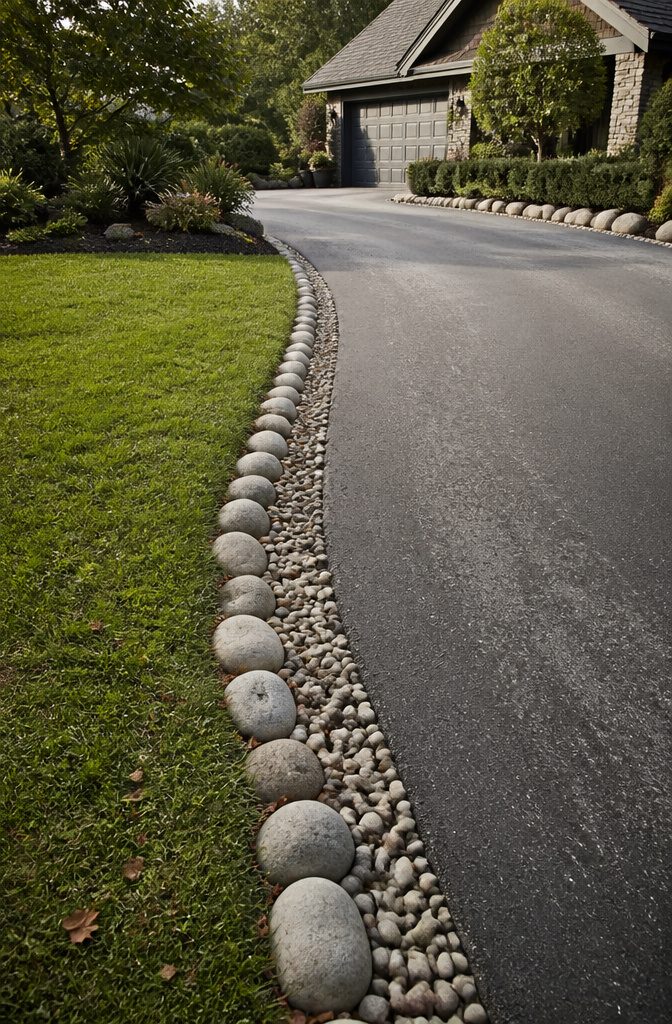
Two sizes of river rock divide the job along a driveway or parking pad. Larger stones mark the boundary, so the edge reads as deliberate and holds its line.
Smaller stones fill the space between them and the driveway surface, which closes the gaps and gives the border a finished look instead of a row of loose boulders.
You end up with less edging to maintain. A rock border keeps grass and weeds from creeping onto the drive, so you spend less time running a trimmer along the pavement.
It also costs a fraction of what hardscaping does, which matters on a yearly yard budget of $500–800. Choose the large stones first, then buy fill to suit them.
12. Lighting Accents
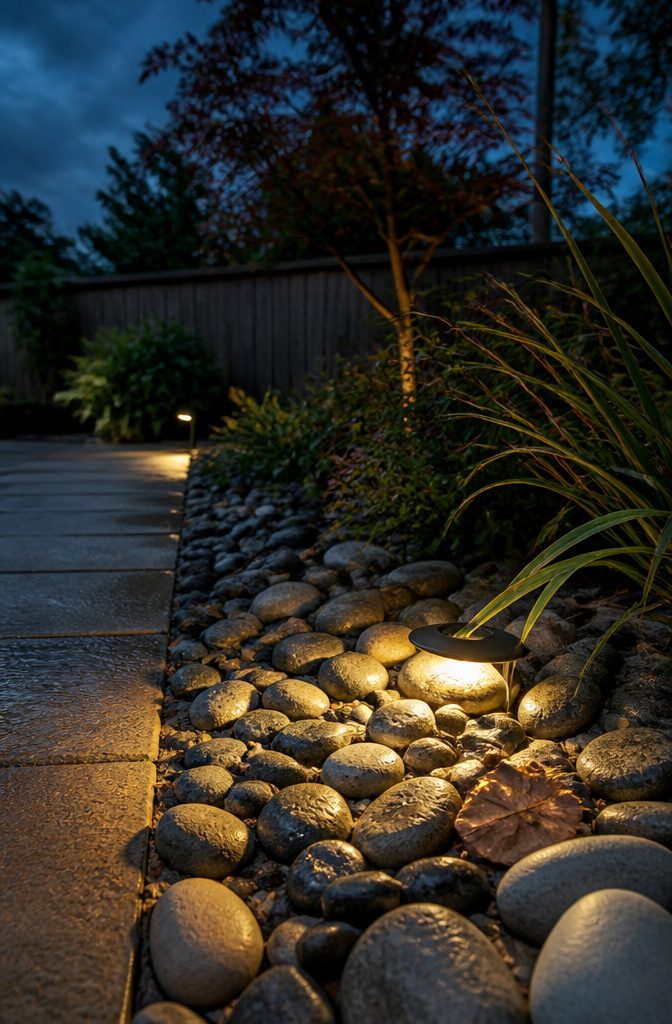
Low-voltage landscape lights look unfinished when they stick out of bare mulch or soil. Set them in a patch of river rock and they look planned.
The stones pick up the light and bounce it back softly, so each fixture gives off a warm glow across the ground around it instead of a hard spot.
Placement matters more than fixture choice. Along a path, set each light inside the stone edging rather than in the soil beside it, so the glow washes over the walking surface.
In a bed, work a fixture into a rock-covered gap between plants, where the stones can catch the light. Around a patio, run them along the perimeter where the rock meets the paving.
13. Focal Point
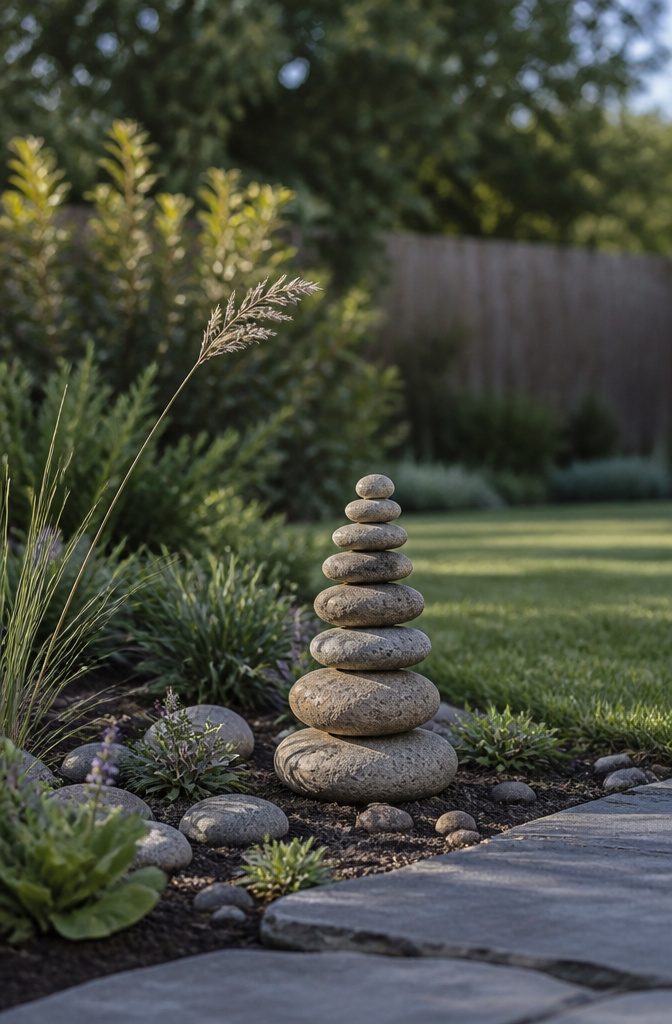
A stacked cairn is the pick for a small yard.
It takes up a footprint barely wider than its bottom stone, so it draws the eye without eating lawn or patio space. Set the largest, flattest river rock at the base and step down in size as you stack.
A stone-ringed raised bed gives you a focal point and a planting spot in one, but it needs enough room to look deliberate.
A boulder grouping at the corner of the yard takes the most space; crowd it into a tight lot and it reads as a pile left behind.
Whichever you build, plant natives around its base so the stone looks settled.
Choosing Stones by Use
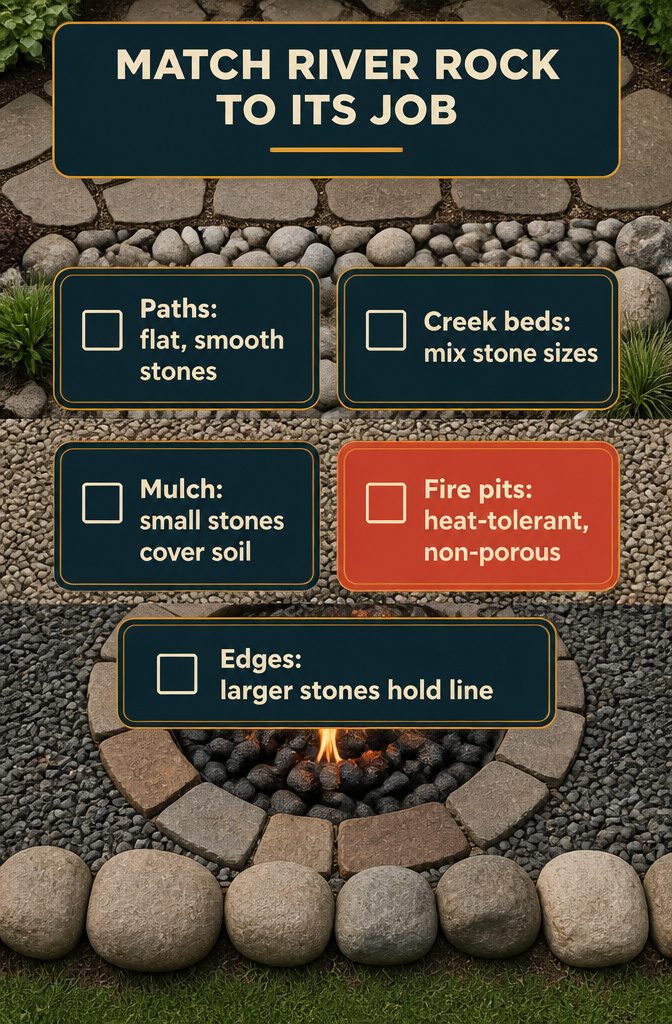
Match the stone to the job before you buy, because a rock that suits a path can fail beside a fire. For a fire pit, choose heat-tolerant, non-porous stone and keep it back from the flames.
| Use | Stone type | Reason |
|---|---|---|
| Paths | Flat, smooth stones | Comfortable underfoot, safe when wet |
| Creek beds and water features | Mixed sizes | Reads as a natural streambed |
| Mulch | Small stones | Covers bare soil evenly |
| Fire pits | Heat-tolerant, non-porous | Drains well, no muddy patches |
| Borders, driveway edges, retaining walls | Larger stones | Hold a firm line |
Santa Fe 3/8" Chip is a named decorative crushed stone if you want an angular look instead of rounded river rock.
Less Upkeep, Less Water
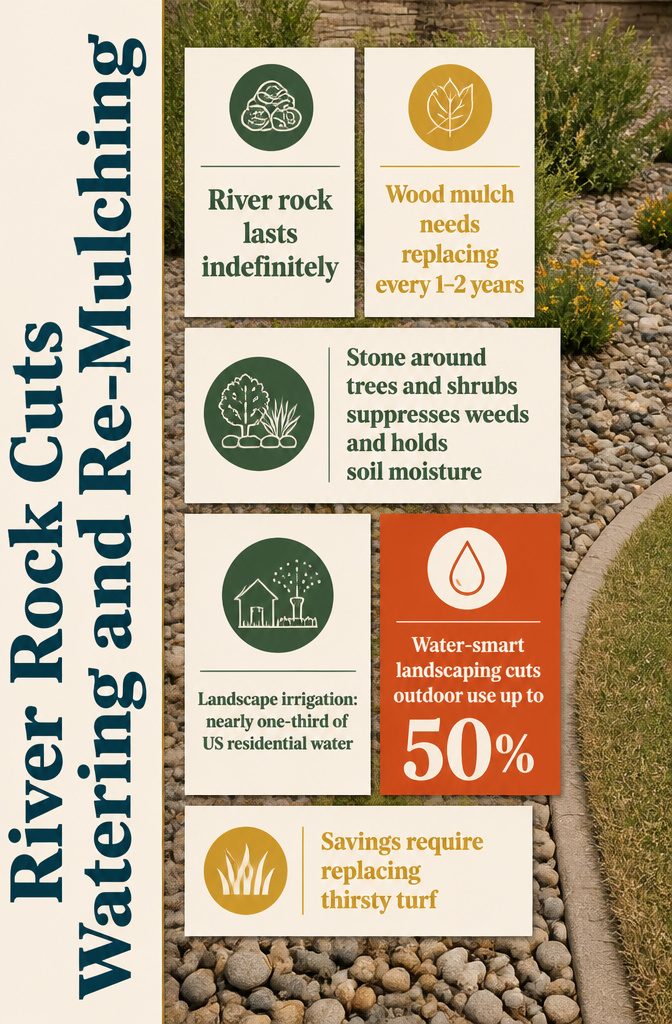
River rock saves on two chores, re-mulching and watering, but it costs more at the start.
- Wood mulch breaks down and needs replacing every year or two. River rock lasts indefinitely, so you spread it once.
- Stones around trees and shrubs suppress weeds and hold soil moisture. University of Florida IFAS Extension finds mulched trees and shrubs grow better than unmulched ones, and stone gives that benefit without the replacement cost.
- The EPA puts landscape irrigation at nearly one-third of residential water use in the US. Water-smart landscaping can cut outdoor use by up to 50 percent.
- Stone costs more up front than wood mulch. The water savings only show up if stone replaces thirsty turf and you plant drought-tolerant species alongside it.