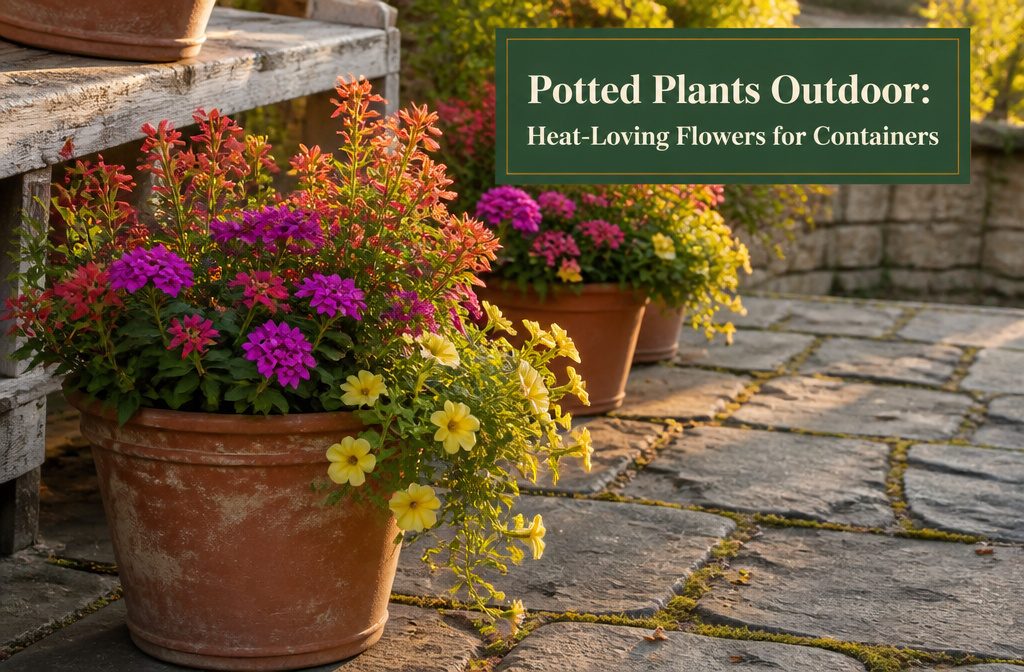
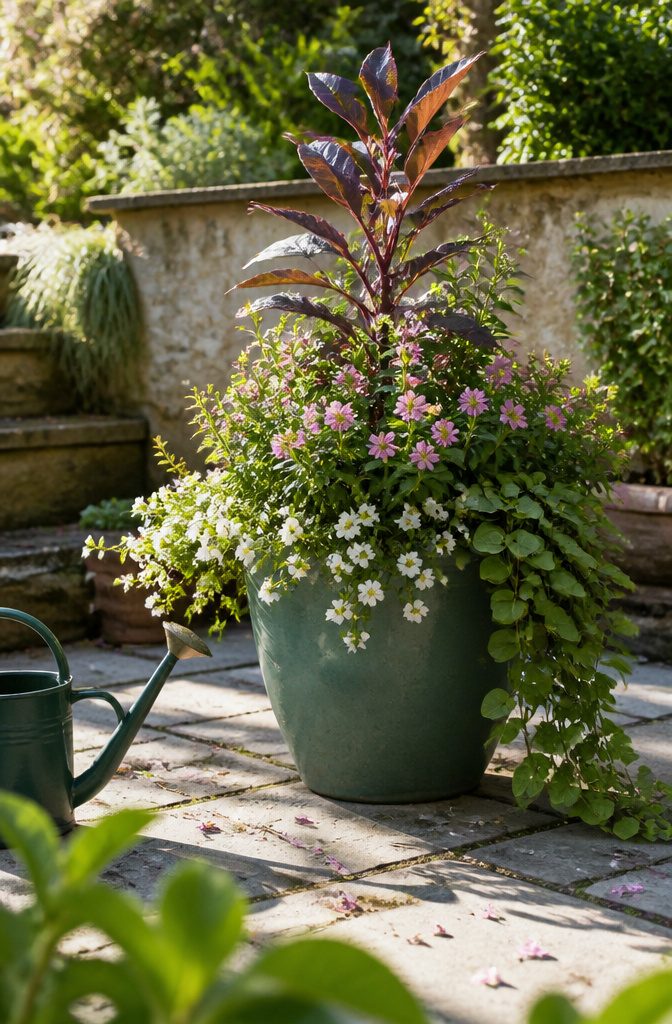
Heat-loving container flowers are full-sun plants grown in pots, and each pot needs three roles: a thriller for attention, a filler for mass, and a spiller over the rim.
Frequent watering flushes nutrients out of a pot fast, so feed regularly. Cuphea, verbena, and SuperCal calibrachoa cover those roles.
Cuphea for Heat
Cuphea is a full-sun container plant that shrugs off summer heat. Its nectar-rich flowers draw hummingbirds and bees, and they last well into fall.
In a mixed pot, give it the middle slot. It sits at mid-height, so plant it between a taller centerpiece and trailing plants along the rim.
Fertilize it regularly, since steady feeding encourages lush blooms, and frequent watering flushes nutrients out of a pot faster than they leave garden soil.
If you let the flowers go to seed, Cuphea can self-sow. Expect seedlings in nearby cracks and containers next season, and pull the ones you don’t want.
Recommended Products

VIBRANT & ADAPTABLE BLOOMS: Our California poppy seeds for planting produce stunning bright orange flowers with delicate petals that thrive in USDA zones 3-9. The adaptable nature of our poppies makes them ideal for various soil types and climates, perfect for wildflower gardens, meadow plantings, and natural landscapes. Their vivid color adds visual appeal to any garden or flower bed.

VIBRANT & ADAPTABLE BLOOMS: Our California poppy seeds for planting produce stunning bright orange flowers with delicate petals that thrive in USDA zones 3-9. The adaptable nature of our poppies makes them ideal for various soil types and climates, perfect for wildflower gardens, meadow plantings, and natural landscapes. Their vivid color adds visual appeal to any garden or flower bed.

PLEASE READ: We DO NOT SHIP to California, Hawaii, or Alaska.
Gomphrena for Round Blooms
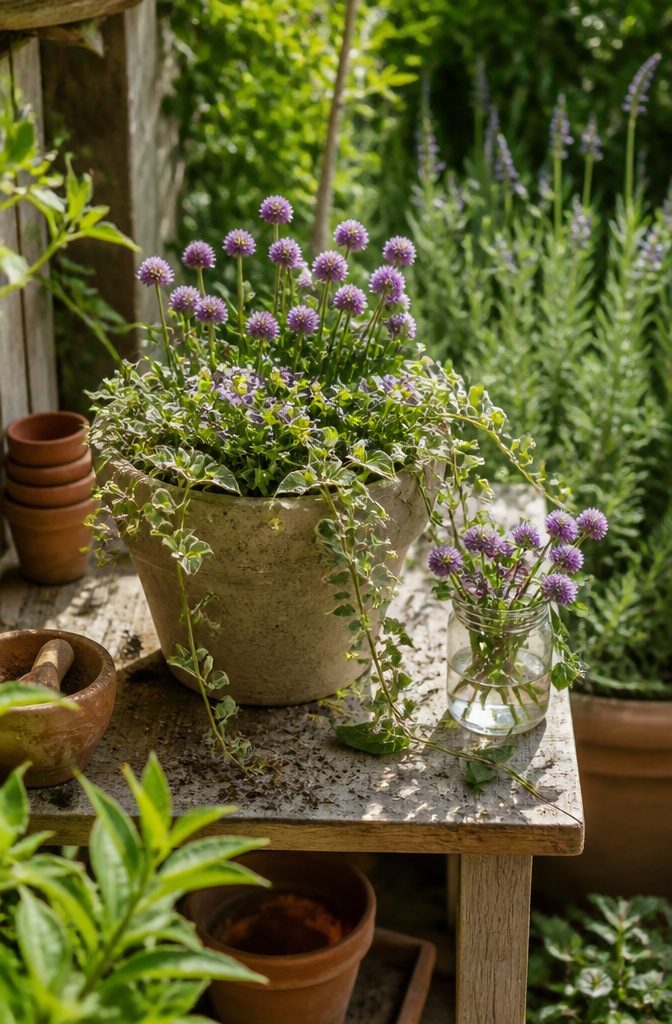
Most container flowers are flat-faced or trailing, so a pot of mounding and spilling plants can end up as one shape repeated.
Gomphrena breaks that up with round, ball-shaped blooms that sit like small pom-poms among the flatter flowers. The sphere gives your eye a place to land, and the pot looks planned instead of piled.
Ping Pong Lavender is the variety to look for. Its quirky spherical blooms also hold up in cut flower arrangements, so the same pot doubles as a small cutting source.
Plant it toward the center or back of the container, where the trailing plants can spill around it without hiding the round blooms.
Verbena as a Filler
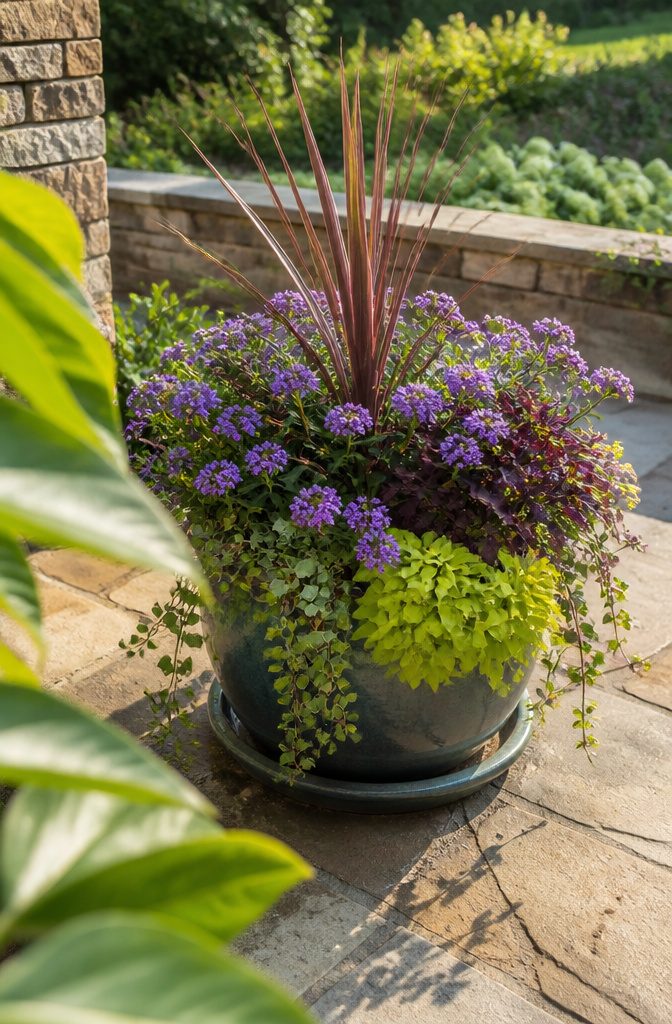
Verbena fills the middle of a full-sun pot, the zone between a tall center plant and the trailing plants at the rim.
It spreads outward and blooms through the whole season, so the container reads as full instead of a tall plant standing in bare soil. Even before every flower opens, the early blooms ring the pot in loose wreaths of color.
As the stems lengthen, wind them through the other plants instead of letting them flop over the edge.
Woven in, they link the tall and trailing plants into one planting. If your pot already has a spiller, add verbena for mass, since a second trailer only adds length.
Recommended Products
VIBRANT & ADAPTABLE BLOOMS: Our California poppy seeds for planting produce stunning bright orange flowers with delicate petals that thrive in USDA zones 3-9. The adaptable...
Calibrachoa as a Spiller
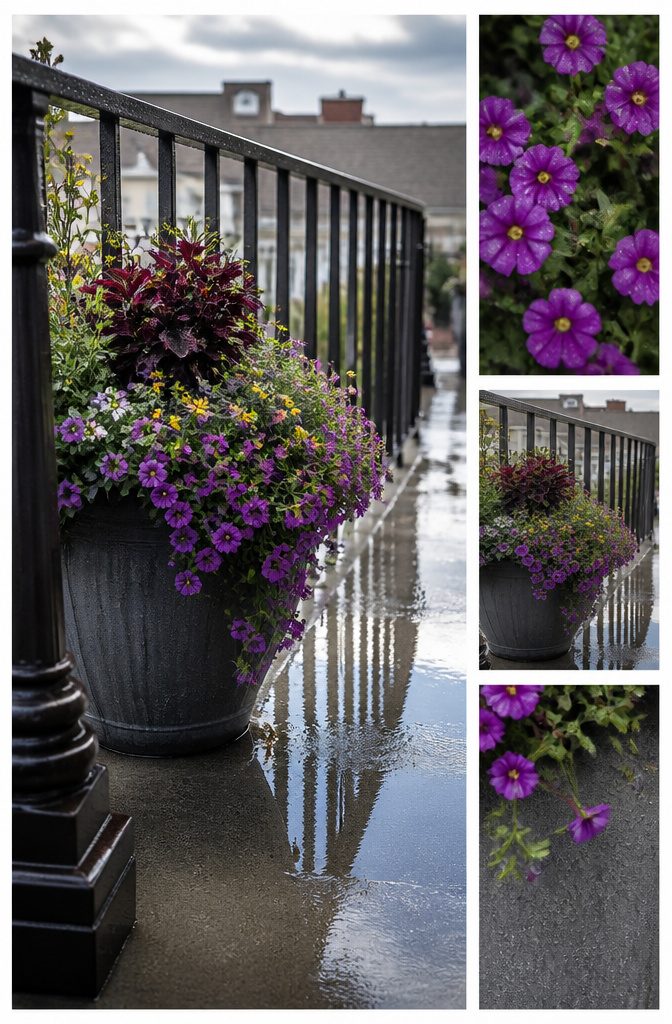
Calibrachoa mounds in a hanging basket and spills over the sides of a pot, which makes it a natural pick for the rim of a patio or balcony container.
It tolerates heat, and it is self-cleaning, so you skip the deadheading that petunias demand.
SuperCal is the series to look for. It is a hybrid that pairs bigger petunia blooms with calibrachoa’s colors, tolerates heat, and holds its blooms through a hard rain instead of turning to mush.
That matters on an uncovered balcony, where one storm can wreck a lesser flower.
Plant it at the edge of the pot, then build the rest of the container’s color around it.
Petunias and Deadheading
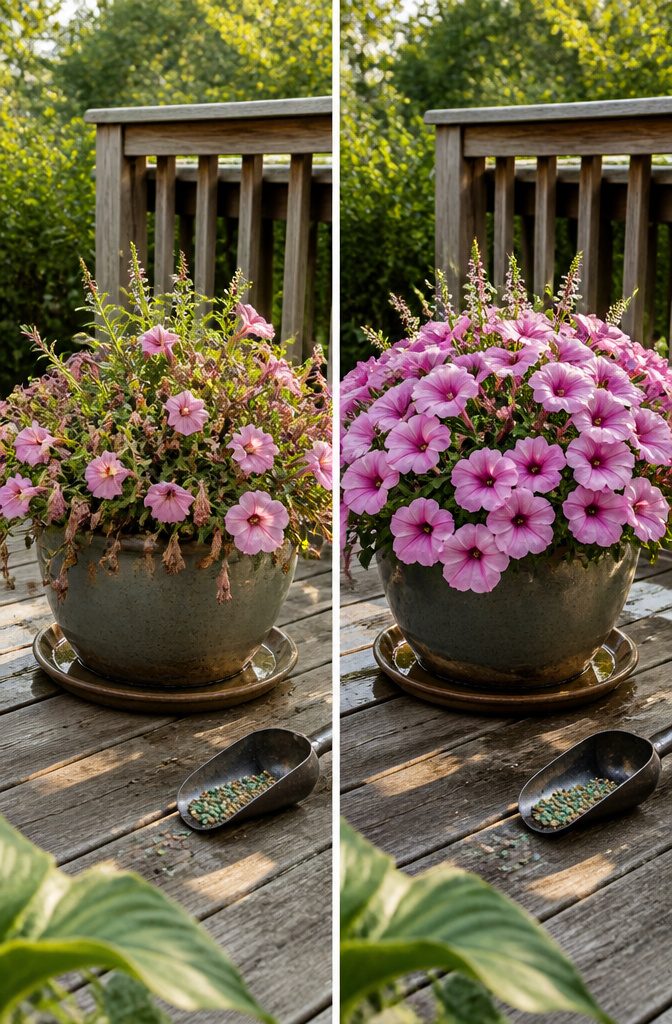
Regular petunias come in many varieties, but plenty of them need deadheading, and they turn leggy as summer goes on. The petals are sticky, so pinching off spent blooms is a chore you repeat all season.
Supertunias skip most of that. They are self-cleaning, so faded flowers drop on their own, and they grow as tidy mounds that tolerate heat and drought.
They also keep blooming well into fall. For a beginner, Supertunias are the better pick because they need far less trimming.
Either type blooms heavily, so feed it regularly. A pot holds limited nutrients, and constant flowering uses them up quickly.
Dahlias From Tubers
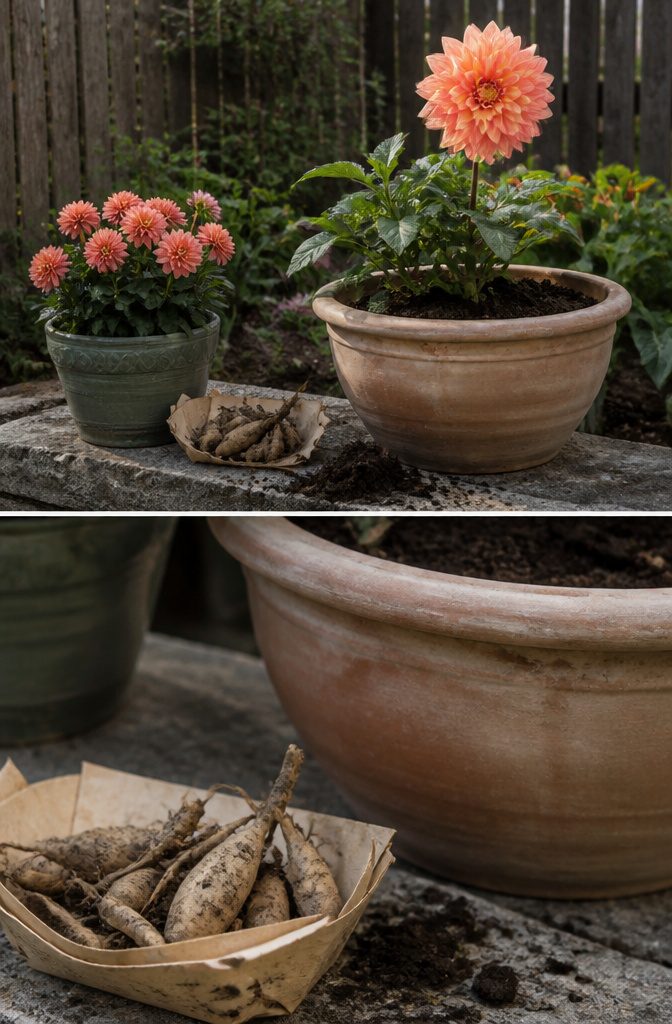
Dahlias go into a pot as tubers, and the tuber needs room to grow among the other plants in the arrangement.
If you want blooms sooner, start the tuber indoors about 1 month before your outdoor planting date. Buying a plant that is already well along skips that step.
Check the label for bloom size before you buy. A dinnerplate dahlia in a tiny pot is a losing setup, since the plant outgrows the container long before it can show off those flowers.
In a small pot, choose a variety with smaller blooms. Save the dinnerplates for a large container or the ground.
At season’s end, a potted dahlia can move into a garden bed or be overwintered.
Sun and Shade Plant Choices
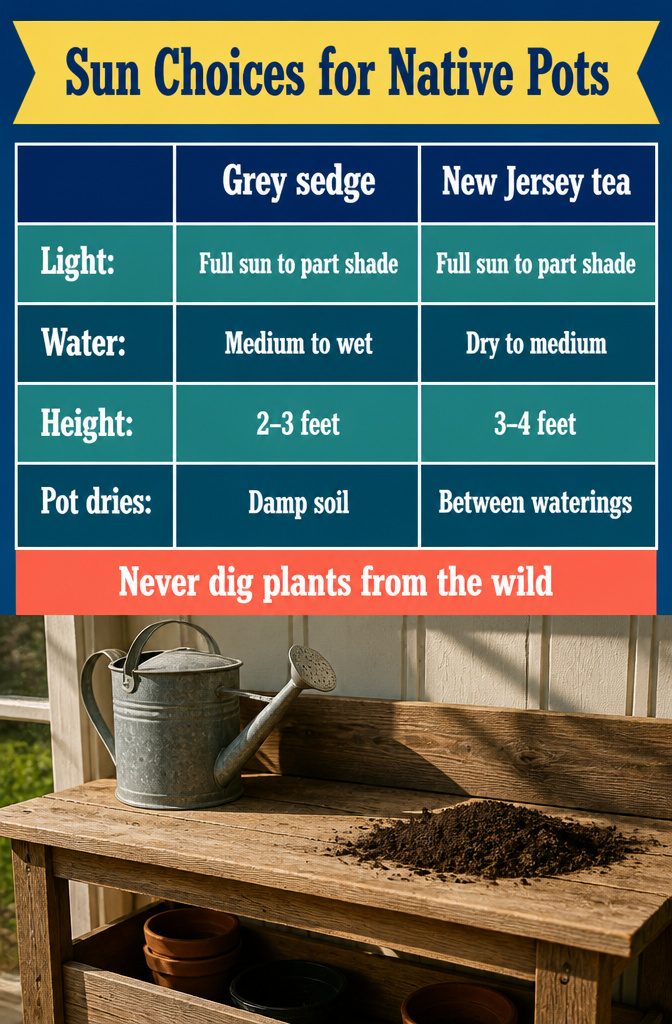
Light decides the plant list before anything else.
Native plants are sorted into full sun, part shade, and full shade, and the three below are examples from that range, not a complete list. Grey sedge and New Jersey tea both take full sun to part shade.
| Plant | Sun | Water | Height |
|---|---|---|---|
| Blue star | n/a | Medium | 2–3 feet |
| Grey sedge | Full sun to part shade | Medium to wet | 2–3 feet |
| New Jersey tea | Full sun to part shade | Dry to medium | 3–4 feet |
New Jersey tea suits a pot that dries out between waterings, and grey sedge suits one that stays damp. Its height is sometimes given as 2–3 feet, so leave room for 4.
Never dig plants from the wild. Grow them from seed or buy from reputable nurseries.
Thrillers, Fillers, and Spillers
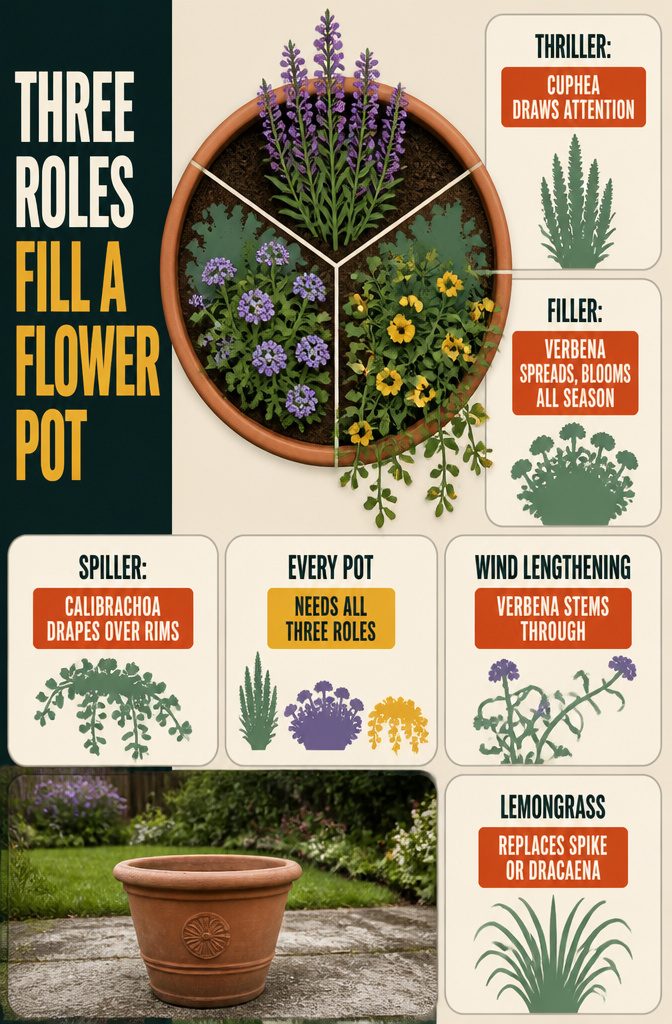
Missouri Botanical Garden sorts container plants into three roles:
Thrillers (plants with some striking characteristics that will draw attention to your container), Fillers (plants to add mass to your container), and Spillers (plants that will drape over the sides of your container).
Put at least one plant from each role in every pot. Cuphea can take the thriller spot, Verbena fills because it spreads and blooms all season, and Calibrachoa spills over the rim.
Wind the Verbena stems through the arrangement as they lengthen so they blend in. If you want more height, lemongrass works in place of a spike or dracaena.
Foliage, Flowers, and Texture
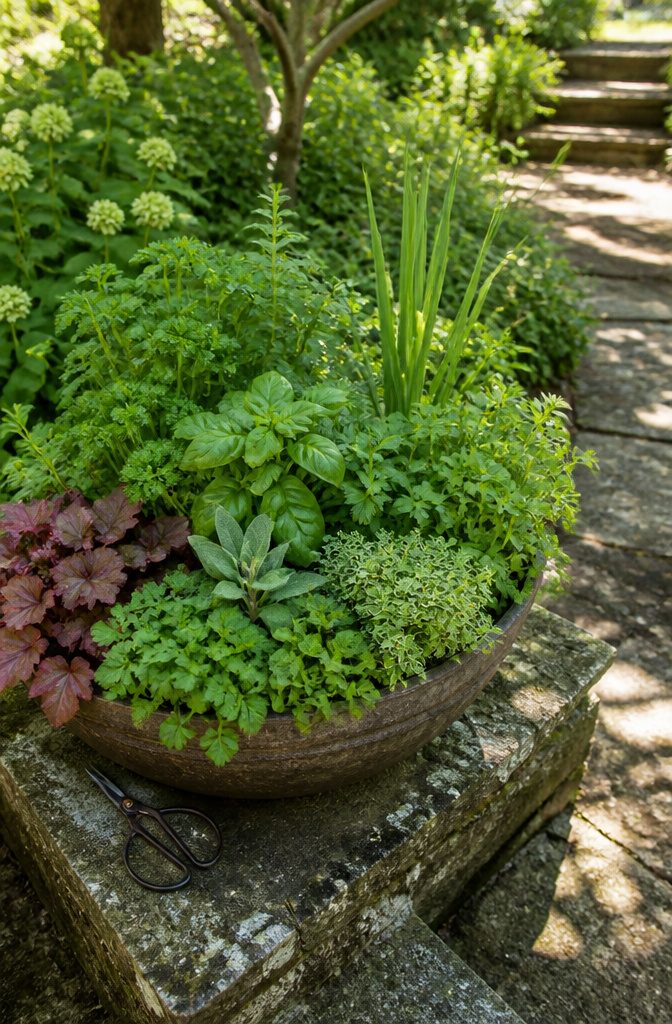
Herbs earn a place in a container for how they look as well as how they taste. Flat-leaf and curly parsley, cilantro, basil, sage, mint and lemongrass each have a different leaf texture, so they contrast well side by side.
Choose the fun varieties: pineapple sage, mojito mint and chocolate mint add scent and color, and you can cook with them.
Lemon thyme is the one to buy first. Its variegated green and yellow leaves stay bushy in the pot, and you can harvest it all season.
At season’s end, plant it in the garden to overwinter. Coral bells (Heuchera) make the same move: grow them for foliage color in the container, then move them into the garden.