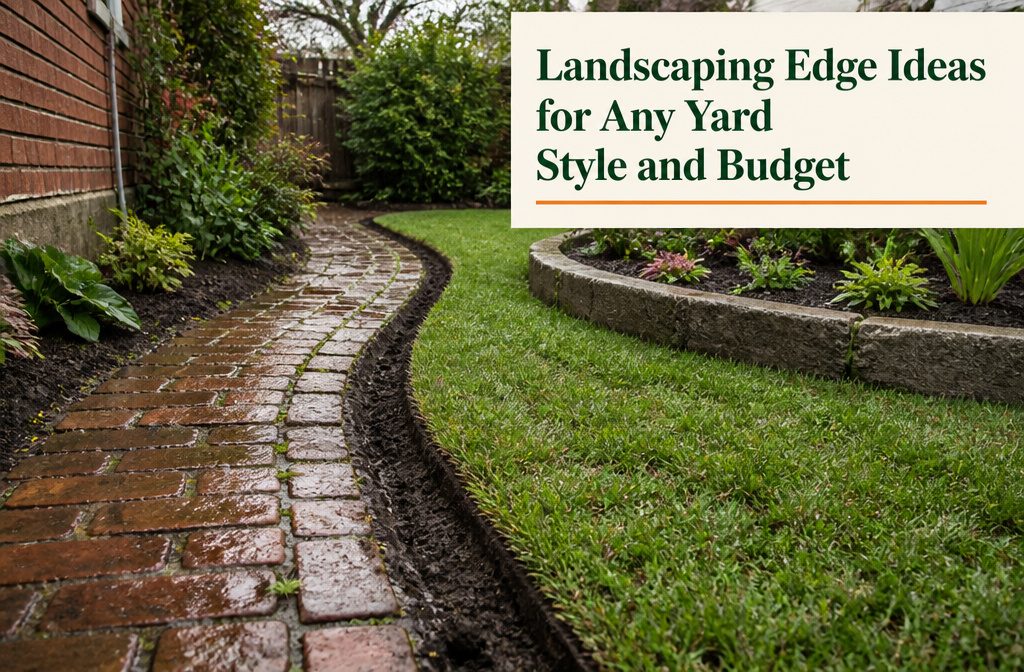
Edging runs from a hand-cut trench that needs only a spade to concrete curbing at $15–$20 per linear foot, and how long you want the bed line to stay decides where you land.
A cut edge needs recutting every year or two, while concrete can’t move once it cures. A 50-foot border costs $750–$1,000.
1. Hand-Cut Edge
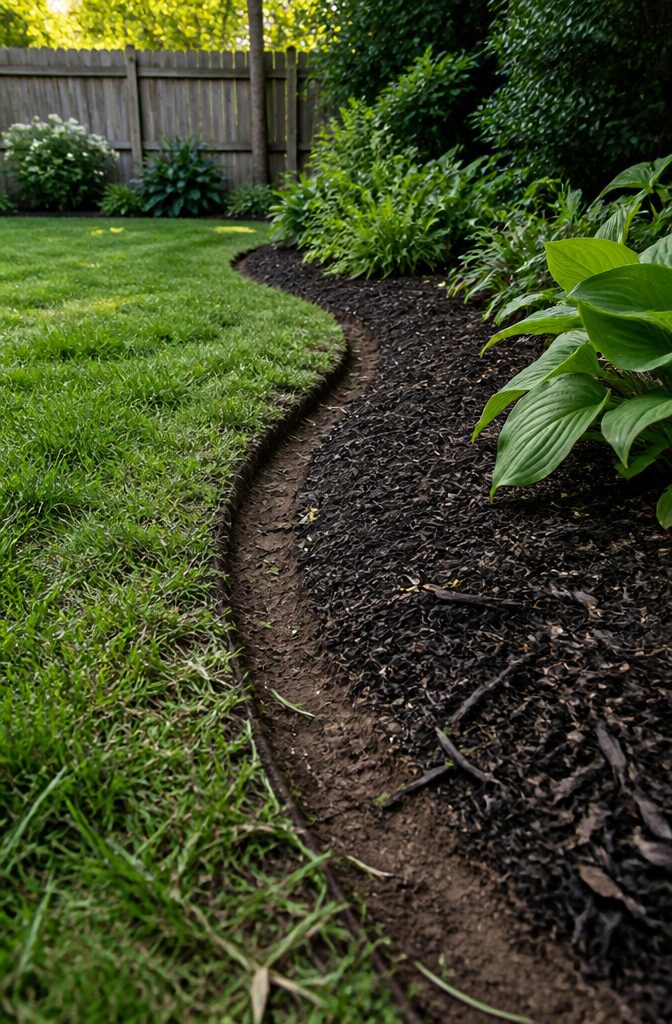
A half-moon edger or flat spade cuts a sharp trench between lawn and bed, and the only cost is the tool and your time.
For a straight line, tie string between two stakes and cut along it. Push a 4-inch blade down, then pull back.
Mulch up to the trench, but leave the cut face bare so it hardens off. Mulch piled against it gives grass roots an easy way over into the bed.
Expect to recut the line every year or two.
That makes it a poor fit if you want a one-time install. It suits you well if you keep enlarging beds as plants mature, since moving the line costs nothing but another afternoon with the spade.
Recommended Products

Ideal Garden Edger: BlumeTrec lawn edger tool is designed to create crisp, clean edges along sidewalks, driveways, patios, walkways, and garden borders. Garden edger trims grass around flower beds, lawns, and landscaping areas with precision. The reinforced half-moon blade easily penetrates soil for smooth, controlled edging, allowing homeowners to maintain neat yard lines, define garden borders, and install plastic edging with ease, making everyday yard care simpler and more effective.
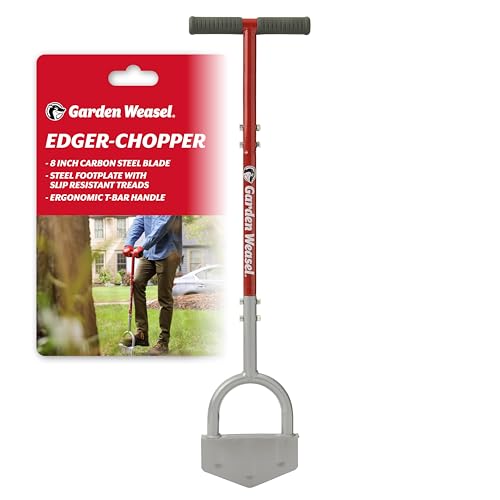
Crisp, Clean Edges - Create sharp defined borders along flower beds, driveways, and walkways using this manual lawn edger tool for a pro-level finish without gas or gadgets
2. Wood Edging
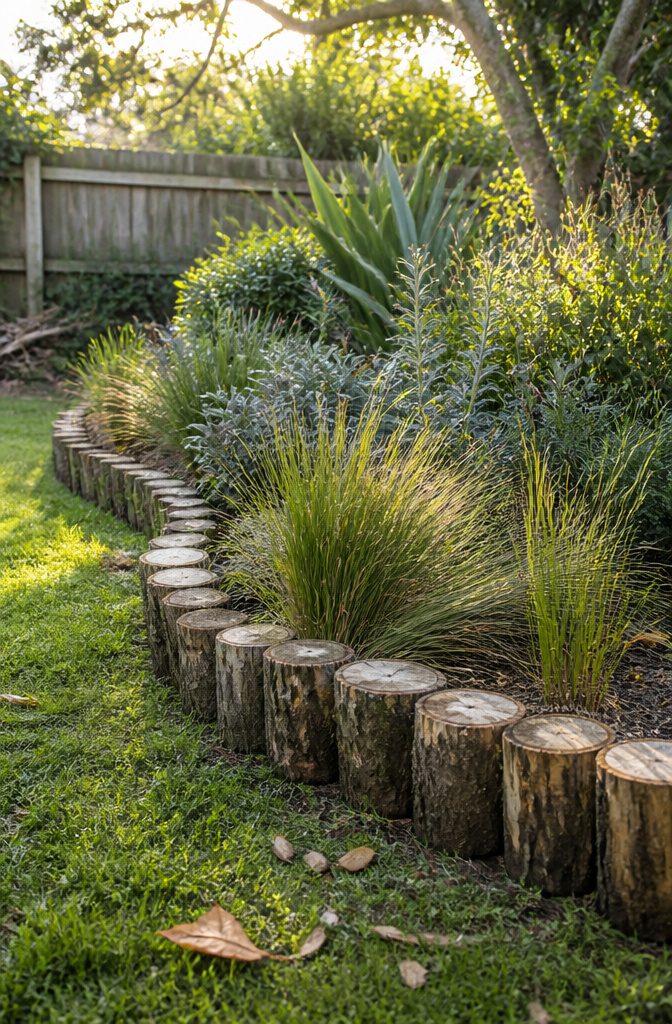
Wood gives a bed a rustic, natural edge, and the effort rises with the weight of the material.
Large branches or trunk sections from a tree you’ve already taken down are practically free. Edge the lawn first, then set the pieces around the bed.
Thin wood border edging suits casual, coastal or tropical gardens. It goes in with stakes, light digging and a rubber mallet.
Landscape timbers look sturdier and more timeless, but you have to stack and secure them, so the job is slower. A lumber yard usually costs less than a home improvement or hardware store.
Wood in damp soil rots, so expect to replace logs and thin border edging after several years.
Recommended Products
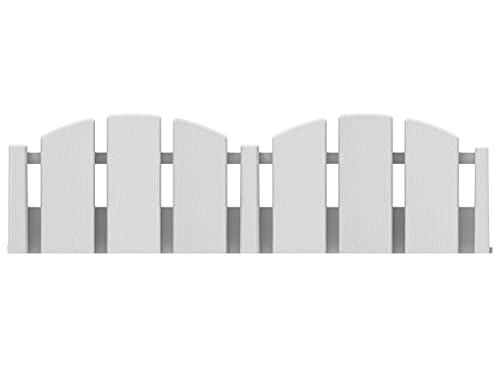
EASYFLEX DECORATIVE NO-DIG LANDSCAPE EDGING: Get a beautifully landscaped yard without all the work of a dig-in lawn edging; simple installation without trenches or shovels

Create your own unique designs with flexible wooden lawn edging that beautifully accents your flower beds, garden beds, landscape, lawn boarders and walk ways.

UNIQUE DESIGN: The top of the landscape edging stakes are curved and the unique reinforcing ribs in the middle ensure a firm and effective use. The curved top and unique reinforced rib design in the middle of the lawn edging stakes ensure firm and effective use. Paired with corrugated garden edging, they can remain upright and prevent toppling, quickly solving your problems.
3. Willow, Bamboo and Fence Panels
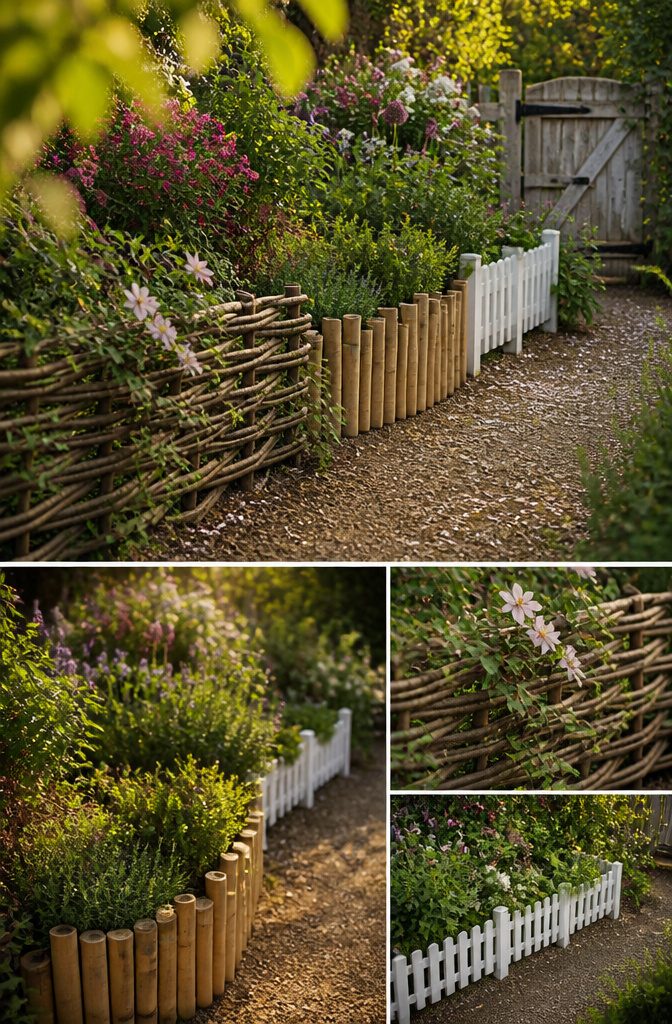
Three woven or fence-style borders cover most rustic and cottage yards, at $26 to $128.
- Woven willow (wattle), $128. This is the pick for a cottage or rustic look. It expands to fit different spaces and doubles as support for climbing plants. It hammers in easily, but twigs don’t last forever, and one direct hit from a string trimmer can damage it.
- Natural bamboo, $26. Bamboo is the cheapest to try, and it gives you a natural, woven-style border for a fifth of the willow price.
- Garden fence edging, $29. White sections give clean, tidy lines. Fence pieces come in metal, wood and plastic. They damage easily and won’t hold mulch in place, so use them to outline a bed, not to contain it.
Recommended Products

Natural brown willow color.
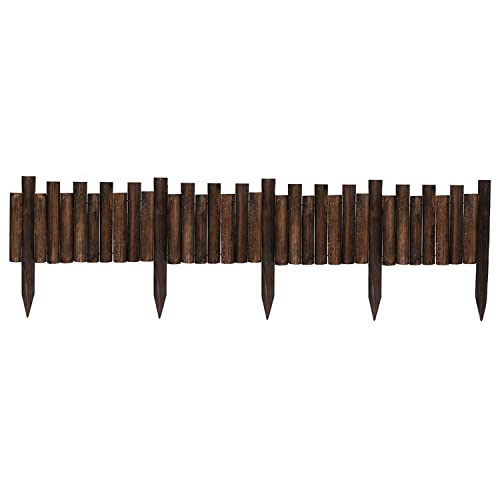
About the Edging: 8 inch height above ground, stakes Height 4 inch, 3.6 Feet total Length; Made from sturdy wood with a carbonized finish, this short fence is durable and long-lasting, standing up to outdoor elements.

Decorative Brick Red Finish for Rustic Charm: This short wood fence features a warm brick red finish that adds natural beauty and a decorative touch to any outdoor space. Ideal as a wood garden fence for flower beds, pathways, and yard accents.
4. Natural Stone and Flagstone
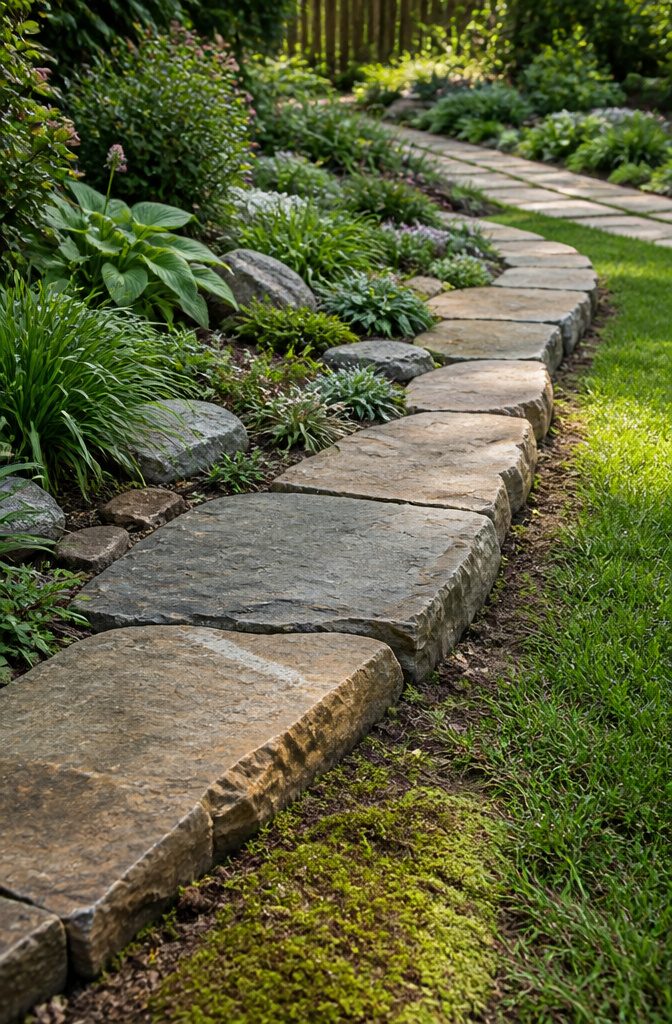
Flagstone comes in many shades and thicknesses, so choose pieces that suit your house and paths.
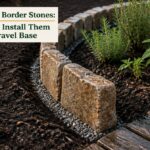
Set them flat along the bed for a low, tidy line, or stack them for a cottage or country look. Building the edge by hand is easy; the stone is the expensive part, especially natural stone.
If you edge with rock, carry the same stone into the bed. Landscape stone spread past the border helps drainage and stops weeds from crossing it.
Real stone is heavy to haul and costly to buy.
The Pioneer Woman’s stone-effect edging costs $33, and its pieces interlock into a neat line. It is far lighter, but plastic will not match the variation of real flagstone up close.
For a short run, buy the stone. For a long one, the faux version makes sense.
Recommended Products

Natural Wooden Garden Border Design: This wooden garden border features a unique burnt wood finish that adds rustic charm and warmth to your outdoor space. Perfect as decorative garden fence edging for flower beds, walkways, and landscaping accents.
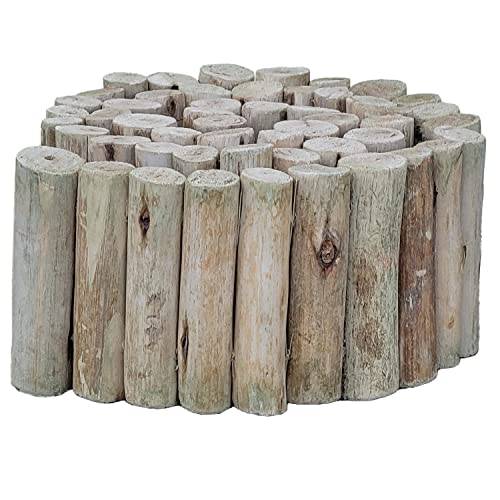
DECORATIVE GARDEN BORDERS: Create a beautiful floral display in your garden and enhance your landscape curb appeal with Eucalyptus wood flower bed borders

Natural Bamboo Edging: Crafted from real bamboo, this fence adds rustic elegance to flower beds, pathways, or lawns. Due to workmanship issues, some bamboo may have slight cracks, but it will not affect its use
5. Gravel and Pebbles
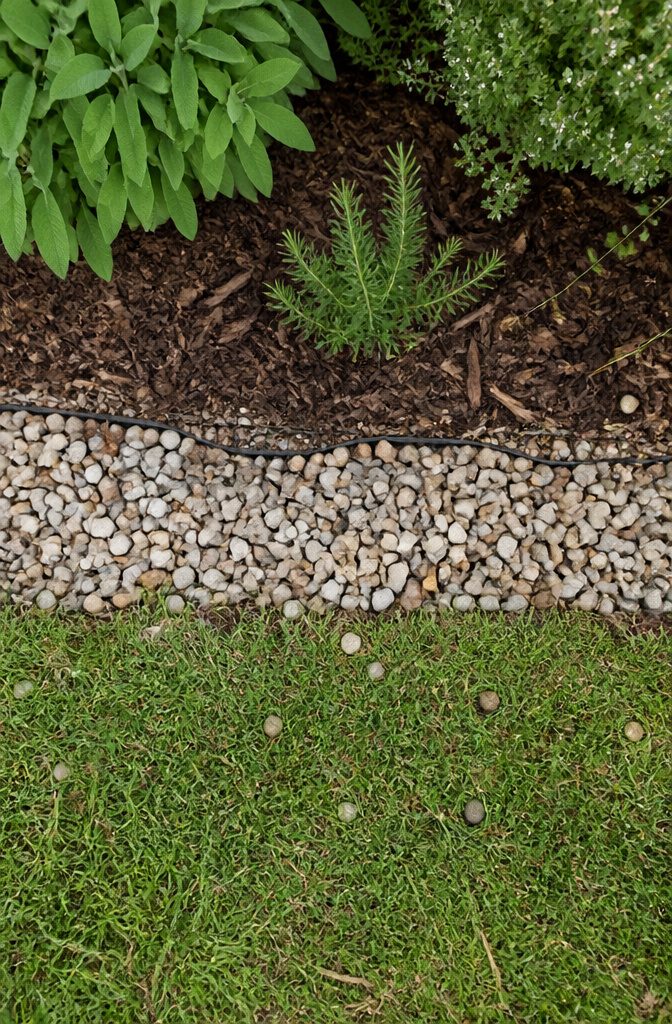
Gravel is the cheapest way to separate a bed from the lawn, and nearly all of the work is digging. Country Living gives the build:
Dig a trench that’s at least four inches deep. Line the trench with a weed prevention barrier; fixing it in place with peg. Fill the trench with gravel and then rake to evenly distribute.
Skip the lining and weeds will push up through the stone within a season, so dig at least 4 inches deep and peg the barrier down.
Gravel is permeable, so water drains instead of pooling at the bed’s edge.
A plastic grid under the stone adds stability and drainage. Stones do drift, so keep the fill slightly below the grass line and rake strays back after mowing.
Recommended Products

EASYFLEX DECORATIVE NO-DIG LANDSCAPE EDGING: Get a beautifully landscaped yard without all the work of a dig-in lawn edging; simple installation without trenches or shovels; color may vary due to the unique manufacturing process.

EASYFLEX DECORATIVE NO-DIG LANDSCAPE EDGING: Get a beautifully landscaped yard without all the work of a dig-in lawn edging; simple installation without trenches or shovels

8-Pack Faux Stone Garden Edging: Includes 8 gray landscape edging panels designed to create a clean stone-look border for flower beds, lawns, mulch areas, walkways, patios, and paths
6. Concrete Curbing
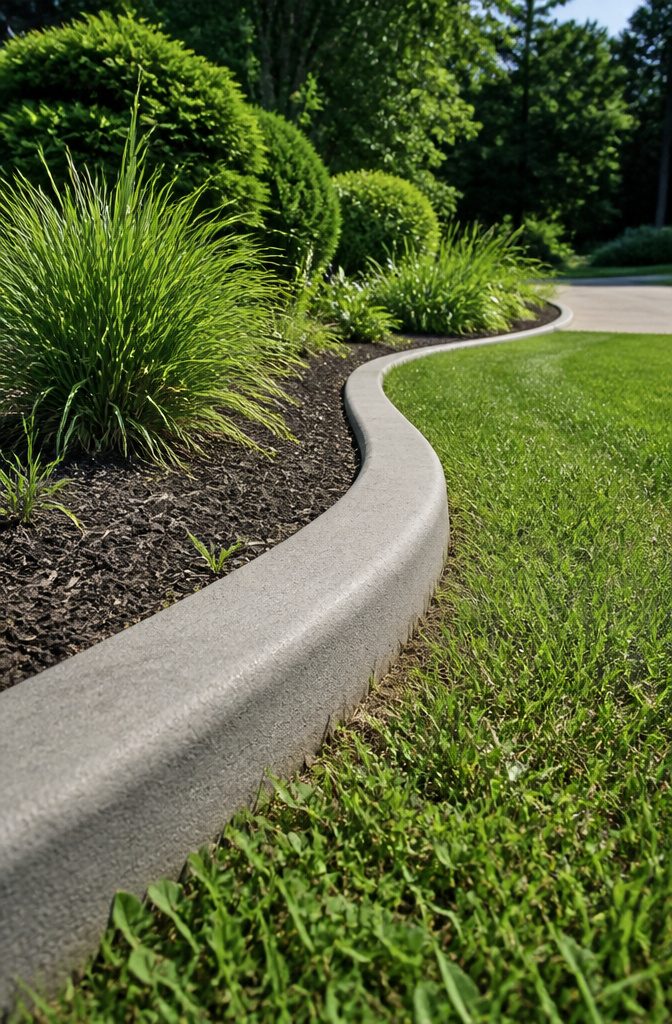
Poured concrete gives you the sleekest, most permanent edge in this list.
Landscape curbing runs $15 to $20 per linear foot for concrete, so a 50-foot border costs $750 to $1,000. That can swallow a year’s garden budget.
Concrete lasts longest of any edging here, and it is the hardest to change. Once it cures, moving a bed line means breaking the curb out, so settle the shape before anyone pours.
Skip this as a DIY project.
A short concrete wall edge needs a professional installer, and it suits a layout you plan to keep for good. If you rent or expect to redesign, choose an edge you can lift.
7. Metal and Corten Steel
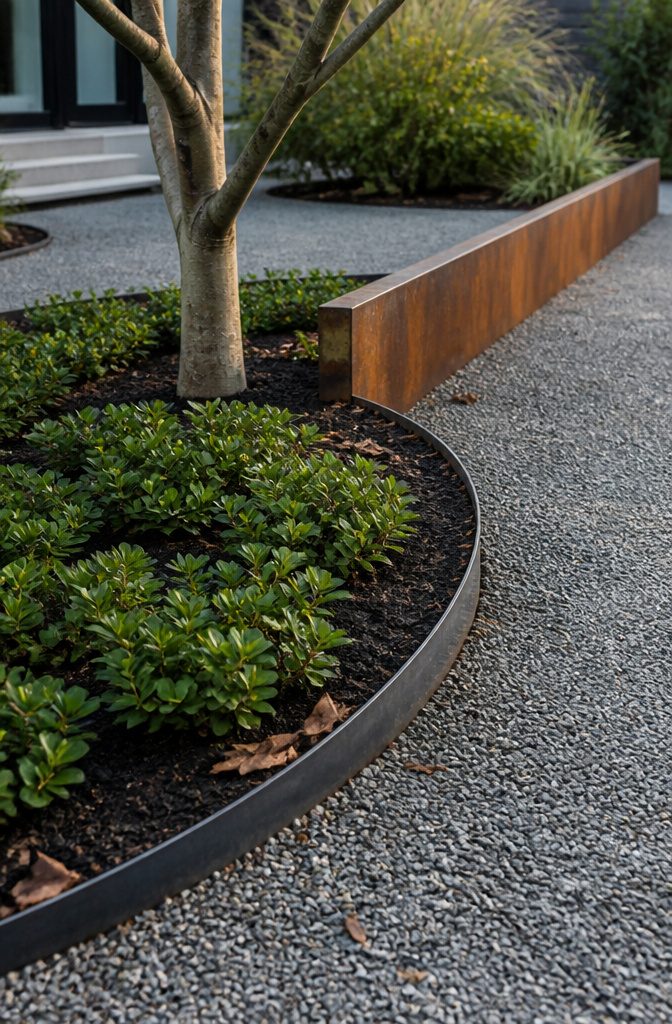
Flexible metal strips are the easier of the two.
Most are no-dig: you hammer them into the ground, and the bend in the metal lets you follow a tight curve around a tree or a winding bed. The hammering is hard on your hands, so wear heavy work gloves.
Weathering steel, sold as corten, is a little trickier to install, but it lasts a lifetime.
It weathers to a rust-brown patina over time, which gives a yard a contemporary look. It comes in various heights and price points, and some of the cheaper options work well as plain edging.
For curves and a quick weekend job, buy the strips. For a permanent, sharp line, corten is worth the extra effort.
Recommended Products

UNIQUE DESIGN: The top of the landscape edging stakes are curved and the unique reinforcing ribs in the middle ensure a firm and effective use. The curved top and unique reinforced rib design in the middle of the lawn edging stakes ensure firm and effective use. Paired with corrugated garden edging, they can remain upright and prevent toppling, quickly solving your problems.
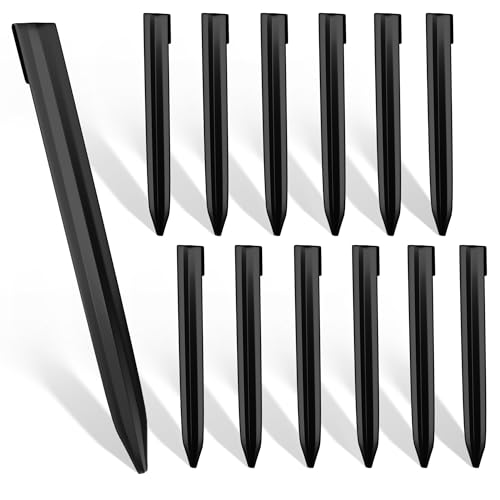
UNIQUE DESIGN: The top of the landscape edging stakes are curved and the unique reinforcing ribs in the middle ensure a firm and effective use. The curved top and unique reinforced rib design in the middle of the lawn edging stakes ensure firm and effective use. Paired with corrugated garden edging, they can remain upright and prevent toppling, quickly solving your problems.

Includes: 12 Pcs Landscape Edging Spikes, Deep 10 inch length
8. Plastic and Rubber Edging
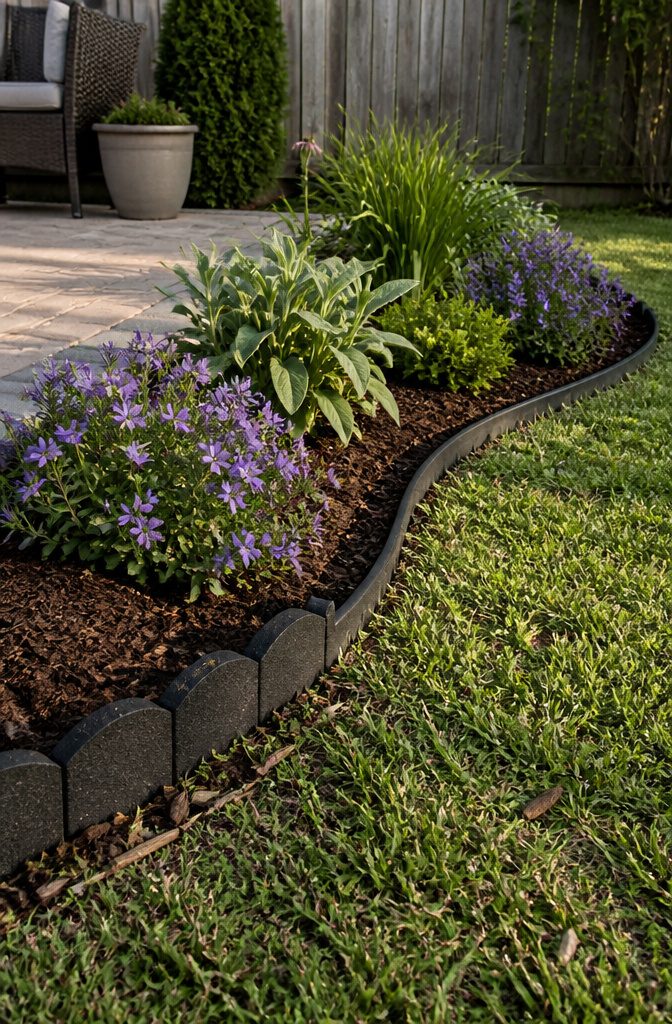
Flexible plastic edging bends around curves that stiff materials can’t follow, and it pairs well with mulch, which hides most of the strip. It’s a good pick for a first-season bed you may reshape next year.
The looks cost is plain: plastic still reads as plastic next to stone, brick, or wood, and it never softens into the garden the way natural materials do.
Recycled rubber is the more interesting option. The Pioneer Woman’s recycled rubber edging costs $78, and it’s easy to work with and long-lasting.
Recycled tire edging gives a small bed a playful border, and you can paint it any color to match your patio or fence. Skip both in a cottage garden, where black rubber looks out of place.
Recommended Products

Natural Wooden Garden Border Design: This wooden garden border features a unique burnt wood finish that adds rustic charm and warmth to your outdoor space. Perfect as decorative garden fence edging for flower beds, walkways, and landscaping accents.

DECORATIVE WOOD CONSTRUCTION: Natural wood material adds rustic charm to your garden, yard, patio, or flower bed while providing durable border definition for landscape areas

SHIPMENT CONTAINS: One 5 inch x 40 foot brown flexible landscape edging coil with 10 matching stakes for securing garden borders
9. Grasses and Flowering Shrubs
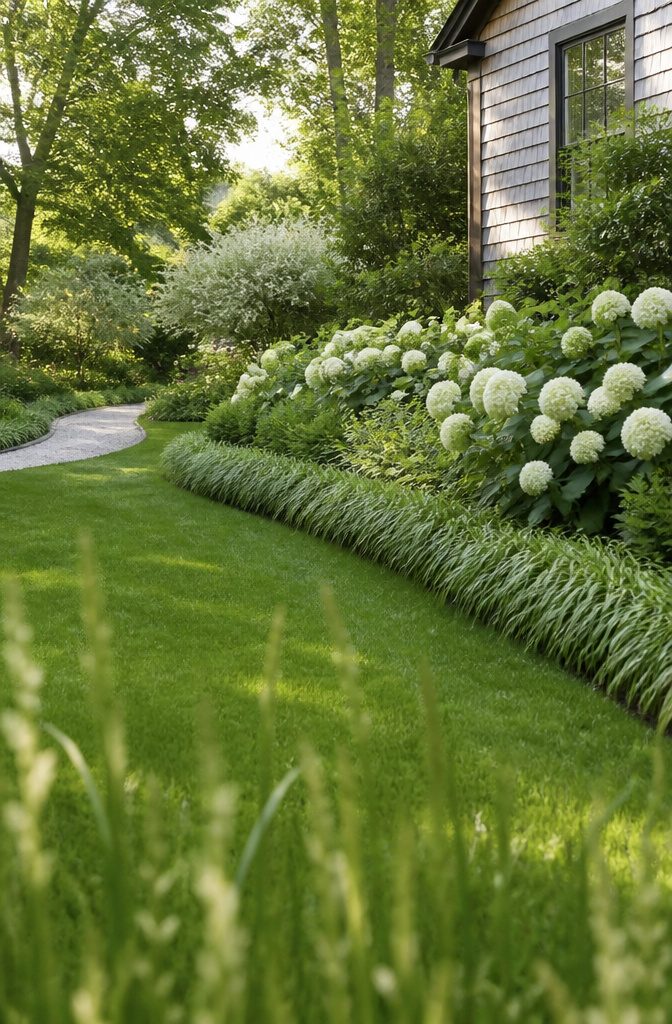
A planted edge softens the line where lawn meets bed, and mixing heights, styles and leaf colors keeps it from looking like a wall of one plant.
For the front row, plant about 20 divisions of Japanese sweet flag (Acorus gramineus) along the border so the grass reads as a continuous band.
Behind it, Annabelle hydrangea (Hydrangea arborescens ‘Annabelle’) adds height and flowers for up to two months in summer. The grass holds the edge through the seasons when the shrub is just leaves.
Both plants spread, so give them room from the start, or the line you wanted blurs into the lawn.
Plan on regular trimming and care to keep the edge crisp. Compared with stone or metal, a living edge looks softer but takes more work.
Recommended Products

【Create a Cleaner & More Organized Garden】 Tidy up messy flower beds and uneven lawn edges with a natural bamboo border that instantly defines outdoor spaces. The flexible roll design easily follows curved paths, garden borders, and landscaping layouts for a polished look.

【Upgraded Garden Fence】 Classic arch shape design garden fencing single piece size height is 22 inches(5'' stakes in soil), length is 12.6 inches, and the fence gap is 1.9 inches, total 10 pieces of fence, overall length about 11 ft. Equipped with 11 Pcs height of 17 inches metal stakes. More convenient installation. This fence will be the best choice for your beautiful garden, yard & patio!
10. Living Hedge
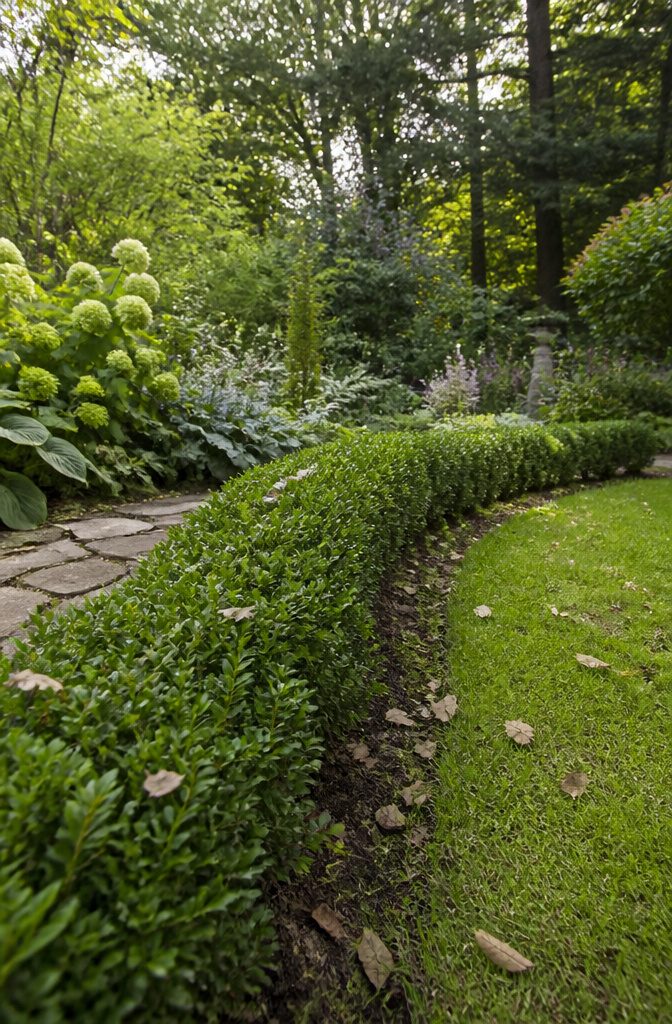
Boxwood is the classic choice for a living edge, and a low-growing hedge of it suits a country garden. Plant the shrubs close together so they knit into one line quickly instead of reading as a row of separate bushes.
Clipped and natural hedges ask for very different amounts of work. A sheared hedge looks formal only while it stays sharp, so every missed trim shows.
A hedge left to grow in its own shape has a softer outline and needs far less cutting. If you’re new to gardening, start with the natural version, since you can always begin shearing later.
Either style marks a boundary more firmly than a low edging plant.
A flowering border shows where a bed ends. A hedge tells people and pets where the space ends.
Recommended Products

Simple installation, no digging required - suitable for all soil types

Classic cobblestone design complements any landscape

【 Premium All-Natural Slate Material, One-of-a-Kind Natural Texture】Crafted from solid natural layered slate flagstone, each square stepping stone boasts exclusive natural veining patterns. Natural rough chiseled side edges retain raw stone character, while the flat top ensures secure walking. All stones are 100% real rock (not artificial concrete/resin), bringing authentic rustic landscape style to home yards.
11. Terracotta and Glass Bottles
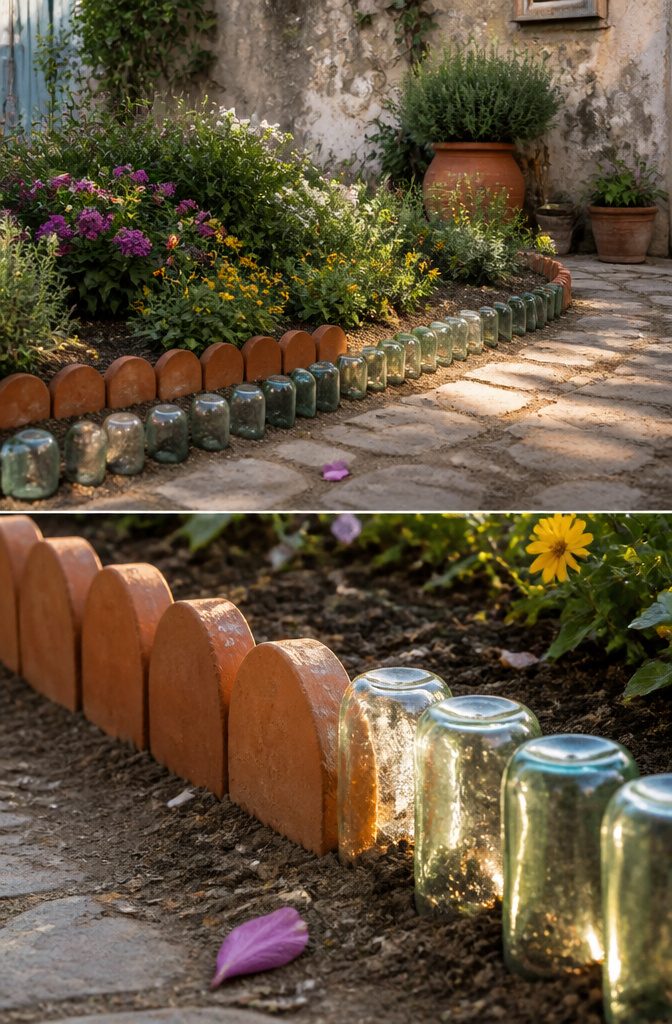
Terracotta gives a bed a warm, Mediterranean-style edge, and it works for flowerbeds and paths alike. Scalloped terracotta edging is straightforward to install, but measure the full run before you buy so you don’t end up short.
Glass bottles are the cheaper route, and they reuse something you would otherwise recycle. Push them neck-down into the soil in a plain row, or arrange them in a pattern for a more decorative line.
Both materials are fragile.
A stray foot, a mower or a dropped tool can crack terracotta or break a bottle, so keep them to small beds that nobody walks through. For a busy front walk, choose something sturdier.
12. Brick, Pavers and Raised Beds
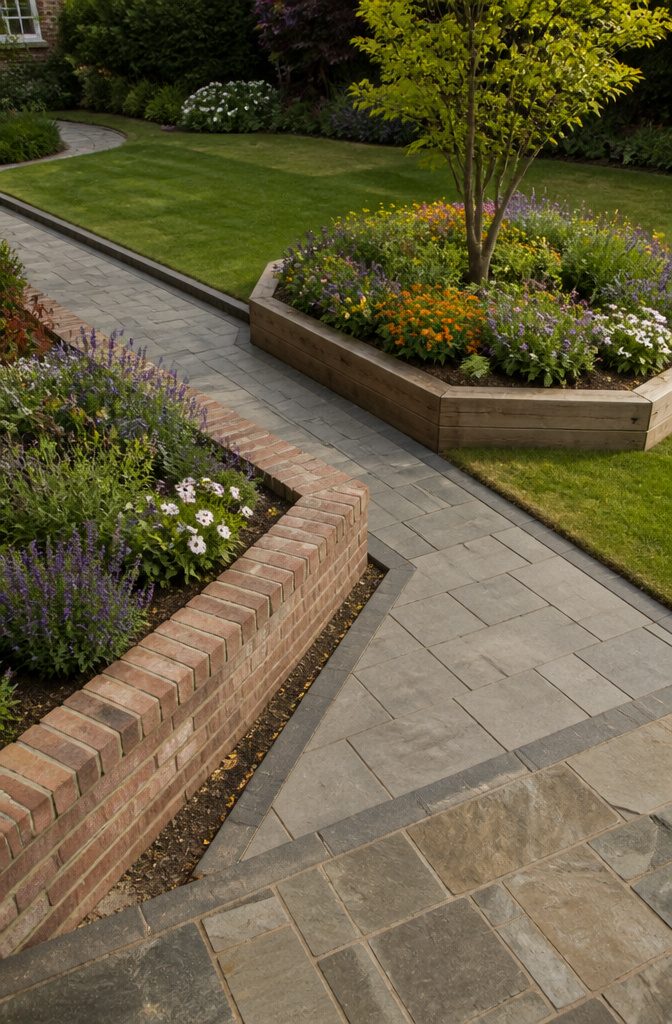
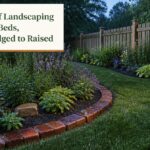
A brick wall is the edge to choose when you want height. It adds depth to the bed, keeps plants contained, and its warm tones and sturdy build make a border that lasts.
It also costs more than most options here. A mason needs the height and length of the wall to price it, so measure both before you call.
Paving blocks suit a more structured look. Their clean lines and varied designs define garden spaces and give a bed a crisp, formal border.
A raised bed with edging works well around a feature like a tree.
Fill it with colorful flowers and the spot gets an instant upgrade. All three need more skill, tools and installation time than lighter edging, so budget for a landscaper’s help.
Choosing by Style and Budget
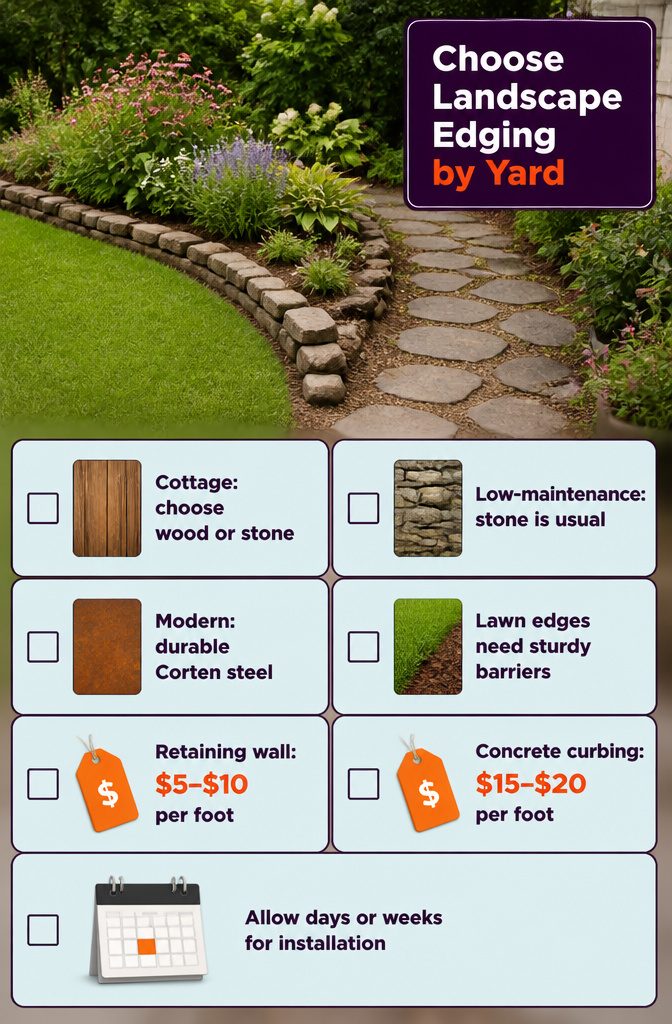
Edging marks where beds, lawn and paths begin and end, and a clean line between them makes a yard look planned. Pick the material by style first, then use, then cost.
- Cottage garden: Mixed plantings, shrubs, wood or stone give a natural border that looks grown rather than built.
- Low-maintenance yard: Stone is the usual choice.
- Modern yard: Corten steel is durable and low-maintenance. Many steel and aluminum strips bend easily enough to install yourself, which saves labor costs.
- Lawn against beds, gravel or mulch: Choose something sturdy, since the edge has to hold back grass and weeds.
- Budget: Retaining wall edging runs $5–$10 per linear foot. Concrete curbing costs $15–$20 per linear foot.
- Time: Tools, skill and install time differ by material, so allow days or weeks for the harder ones.
Edging for Erosion and Drainage
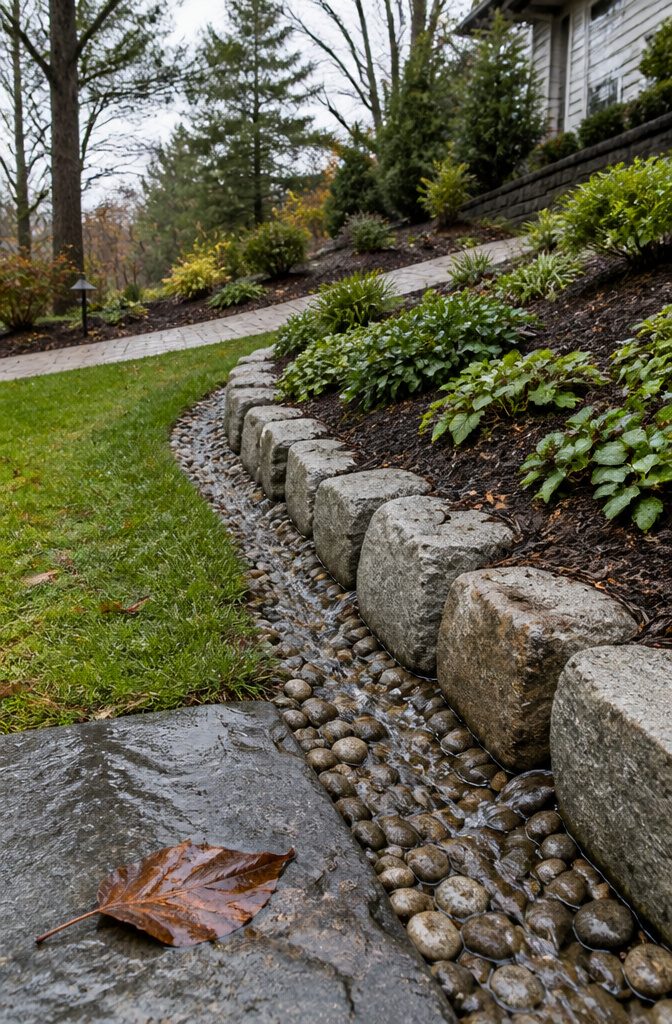
Edging changes how water moves through a yard.
A solid border slows runoff and holds soil in place. It also keeps spreading plants out of the lawn and out of the path of mowers and trimmers.
On a slope, pair plants that tolerate hills with stone, metal, or plastic edging.
The edging supports the base of the hill, especially where mulch meets lawn, and keeps rain from washing your plants toward the street. For steep grades, ask a local landscaping pro which material holds best.
Wherever a border could trap water, add a permeable layer beneath the top surface so it drains into the ground.
A plastic grid under gravel adds stability and drainage. Grass paver blocks and permeable pavers also work.
When to Hire a Pro
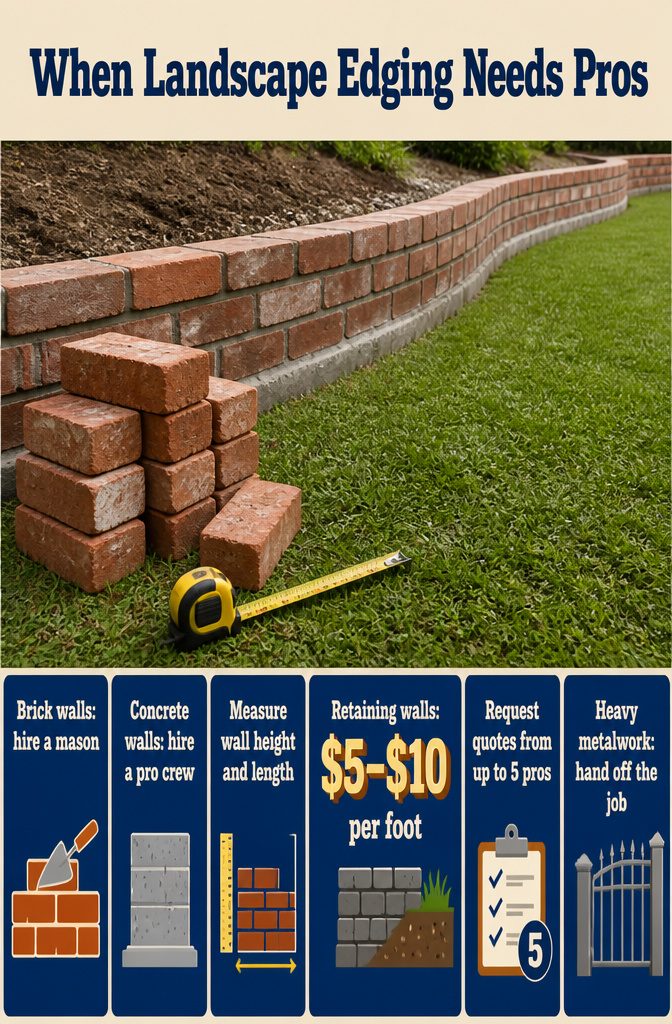
Hire a mason for a brick wall edge and a professional crew for any concrete wall edge.
Both are permanent, and a mistake is costly to undo. A mason prices brick by height and length, so measure both before you call.
Retaining walls run $5 to $10 per linear foot.
A 40-foot border would land between $200 and $400, and that’s before extras. Angi lets you request quotes from up to 5 pros, and comparing several is worth the extra phone time.
Natural edges are easy DIY: ornamental grasses and hedges need only a shovel and some patience.
Pliable steel or aluminum strips are also manageable on your own and save labor costs. Heavier metalwork is where beginners should hand off the job.
Frequently Asked Questions
What is the cheapest landscaping edge idea?
A hand-cut edge costs the least, because you pay only for a half-moon edger or flat spade and your own time.
Among materials, gravel is the cheapest way to separate a bed from the lawn, and most of the work is digging the trench.
If you want a ready-made border, natural bamboo at $26 is the lowest-priced of the woven and fence-style options.
How deep should I dig for a landscaping edge?
Dig at least 4 inches deep for a gravel edge, then line the trench with a weed barrier and peg it down.
A hand-cut edge uses the same depth, since a 4-inch half-moon edger blade makes the trench in one push and pull. Without the barrier, weeds push up through gravel within a season.
How much does concrete landscape curbing cost?
Concrete curbing runs $15–$20 per linear foot, so a 50-foot border costs $750–$1,000.
It lasts longer than any other edging here, but once it cures you have to break it out to move the bed line. Hire a professional installer rather than doing it yourself.
What is the best landscaping edge for a low-maintenance yard?
Stone is the usual choice for a low-maintenance yard.
Corten steel also needs little care and gives a modern look. Living edges such as grasses and hedges look softer but need regular trimming to stay crisp.
How long does wood edging last?
Wood edging lasts several years at most when it sits in damp soil, because it rots.
Plan to replace logs and thin wood border edging after that time. Landscape timbers look sturdier than thin edging, but they face the same moisture.
How do I keep grass from growing into my flower bed?
Cut a clean trench between the lawn and bed with a half-moon edger, then mulch up to the cut but leave the cut face bare.
The bare face hardens off, and grass roots can’t easily cross it into the bed. Recut the line every year or two.
Which landscaping edge ideas can I install myself?
Hand-cut trenches, gravel, wood, flexible plastic strips, and bendable steel or aluminum strips are all workable DIY jobs.
Ornamental grasses and hedges need only a shovel and some patience. Hire a mason for a brick wall edge and a professional crew for concrete, since mistakes in either are costly to undo.