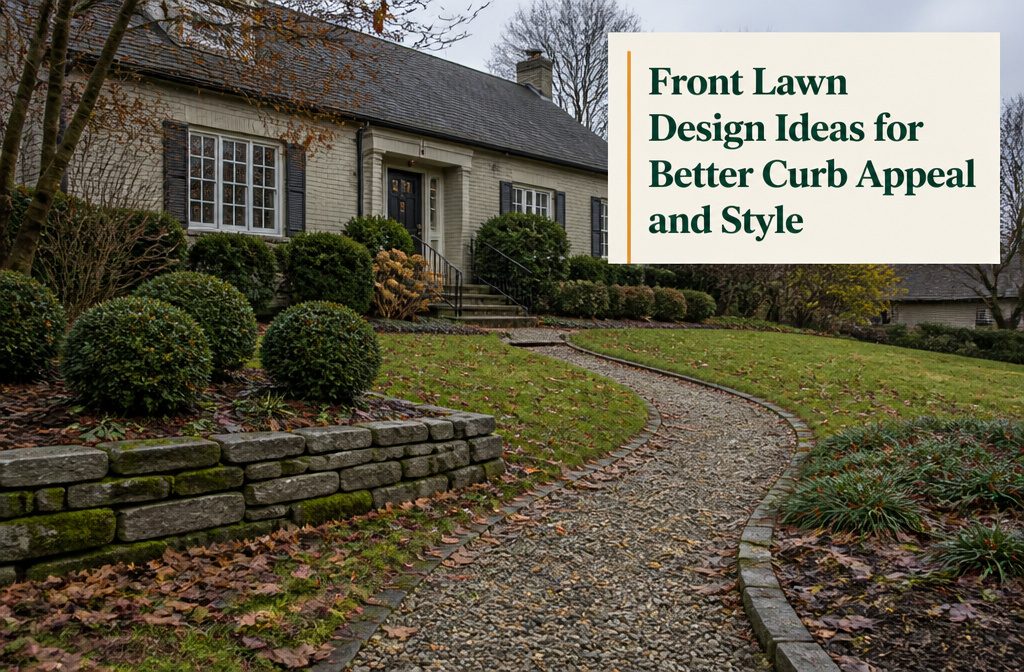
The ideas range from a cleanup that costs only your time to retaining walls, and your yard’s sun, slope, and house style decide which fit.
Walls, fences, and significant grading changes may need city or county approval, and an HOA may want written sign-off first. Mulch runs $17 to $68 per cubic yard.
1. Plant Trees
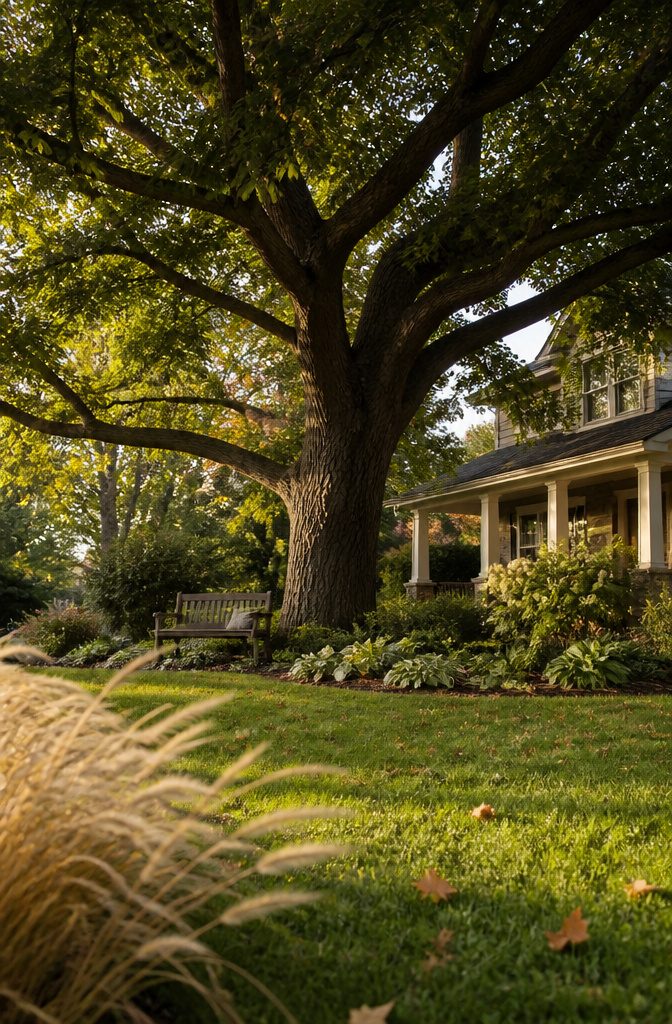
A tree gives a front lawn a focal point, shade, and room for a shade garden or bench beneath its branches.
It also works quietly in the background. LawnStarter puts a number on it:
A mature tree will absorb more than 48 pounds of carbon dioxide from the atmosphere every year.
That makes even a single tree worth planting.
Oaks, maples, aspens, and willows cool the property and make a yard look established. Dogwoods, cherry trees, crape myrtles, and hawthorns bring distinctive shapes and seasonal blooms.
Fruit trees add charm but need more upkeep. Check the mature size before you dig, because trees planted too close to the house lead to costly maintenance.
Recommended Products

【UV Protection & Cooling】Made of 100% brand new High Density Polyethylene material and eliminate the use of splicing fabrics.Blocks up to 95% of harmful UV rays and direct sunlight exposure."Breathable" fabric allows air to pass freely and achieve a certain degree of cooling.

[Extra-Long Christmas Tree Lights] - Nielfoi Christmas lights outdoor are 262ft and feature high quality 800 LED bulbs, the lights look bright but not dazzling! The length is long enough to effortlessly decorate a large trees, patio, terrace, room or other wide areas.

2. Layered Flower Beds
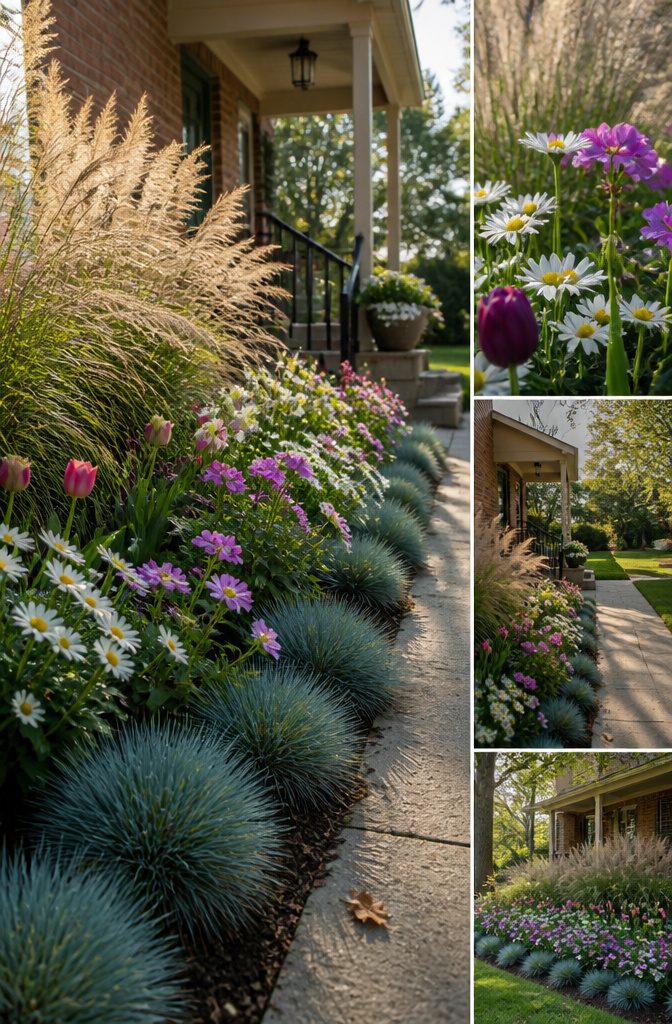
Plant in three tiers: short plants in front, medium in the middle, tall at the back.
Blue fescue or Japanese forest grass suits the front edge, daisies and geraniums fill the middle, and feather reed grass or fountain grass stands behind them. Roses fit the middle or back, depending on the variety.
Favor perennials. They return every year, so a one-time $10 to $30 per plant beats replacing annuals each spring.
Stagger the seasons: tulips and daffodils in spring, perennials with a few annuals in summer, grasses and mums in fall, and evergreens with red-twig dogwood for winter.
Leave space between plants for their mature size. A new bed looks sparse, but an overcrowded one competes for water and loses the layers you planted.
Recommended Products
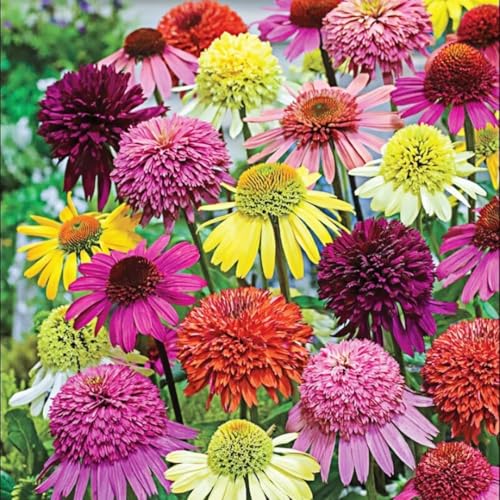
PACKAGE CONTENTS: 300+ Double Echinacea seeds perfect for creating a vibrant flower garden with stunning double-petaled coneflowers


3. Ground Cover and Mulch
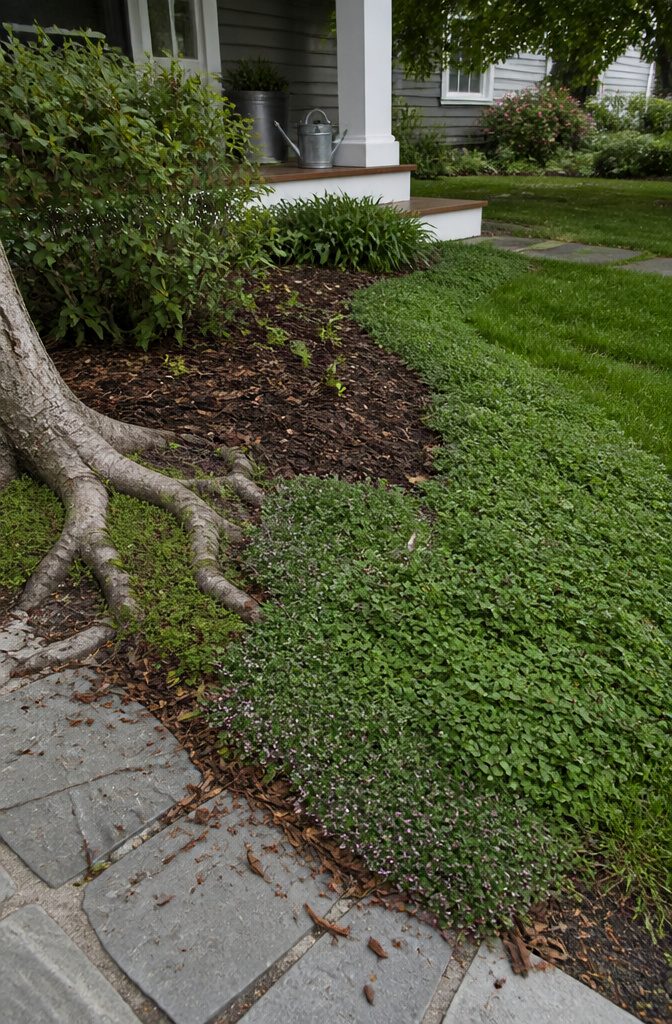
Creeping thyme, moss, and clover spread sideways instead of growing tall, so a small lawn planted with them needs far less mowing and weeding. They suit a patch you are tired of maintaining.
Mulch gives beds a finished, textured surface.
It holds moisture, prevents erosion, and hides exposed tree roots and weeds around shrubs and roses. Prices run $17 to $68 per cubic yard, or $2 to $5.50 per bag.
On a small budget, start with bagged mulch. A few bags cover a bed right away, and you pay only for what you spread.
Bulk by the cubic yard pays off once your beds are large enough to use it. Switch the lawn itself to ground cover later, one patch at a time.
4. Edging and Borders
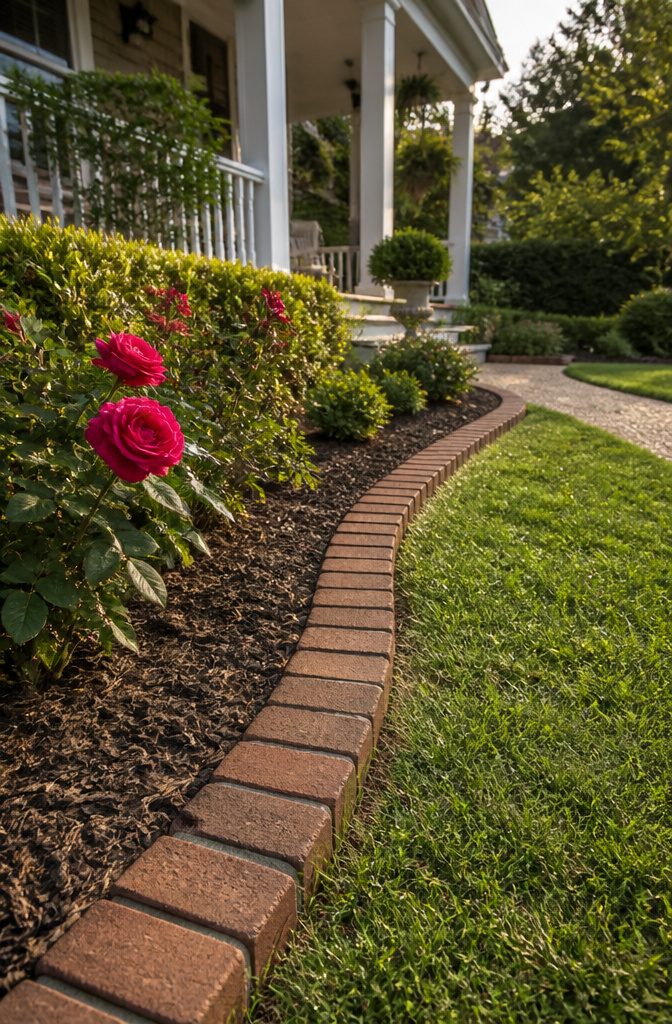
Stone or brick edging holds mulch in place after heavy rain, keeps turfgrass from creeping into the bed, and shields plants from mower blades.
Once set, either one needs little upkeep. Stone suits loose, informal beds, while a low brick border fits a house with straight, formal lines.
A short hedge also defines a bed and steers visitors toward the plantings you want seen, or away from a freshly planted patch.
It costs you regular trimming to stay low, so choose it only if you will keep up with the shears.
For the bed itself, decorative or pea gravel gives a clean, weed-free finish at $25 to $67 per cubic yard, about $46 on average. Pair it with a firm edge so the stones stay out of the lawn.
Recommended Products

PREMIUM LANDSCAPING LOOK Enhance flower beds, pathways, gardens, and outdoor spaces with rich Red rubber mulch designed to create a clean, modern, professional landscape appearance year-round.

PREMIUM DARK WOOD MULCH: Rich, dark-colored shredded wood mulch creates a clean, finished appearance around gardens, flower beds, trees, shrubs, borders, and pathways

5. Landscape Lighting
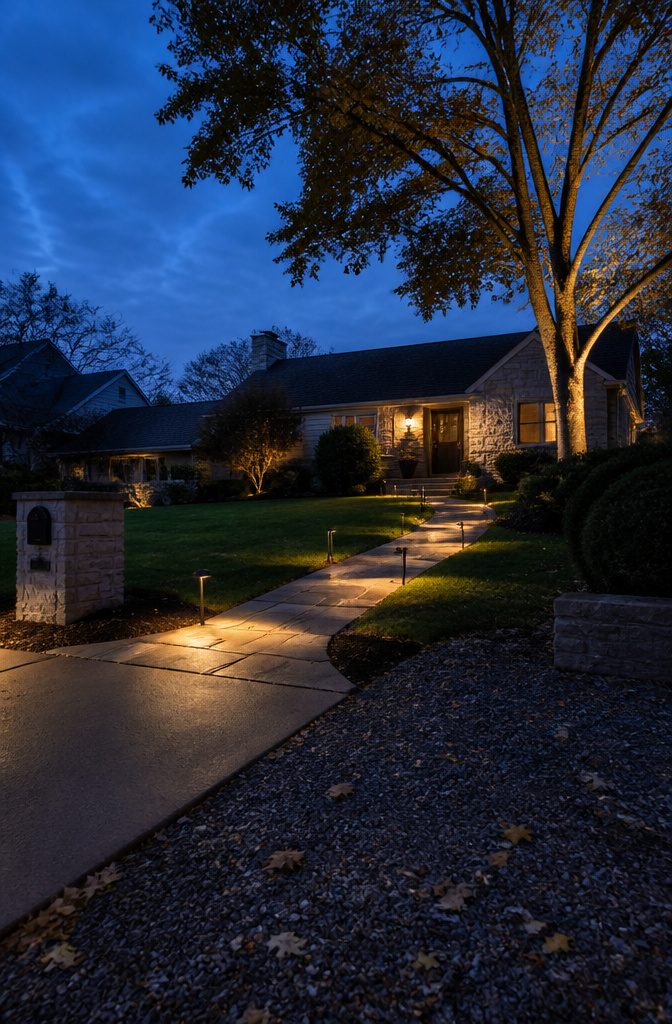
Start with the walkway and driveway.
Path lights show steps and changes in surface after dark, and solar-powered ones are an easy, affordable upgrade for a small budget. Put them first, because safety is the job they do best.
Add drama second.
Aim an uplight at one mature tree or at the facade, or put a spotlight on a feature plant. One or two targets read as designed, while lighting every shrub looks cluttered.
At the front door, a sconce or pendant keeps your address, mailbox, and entrance easy to find for guests and delivery drivers.
A single distinctive fixture here can also act as the entry focal point, so choose one with some character.
Recommended Products

EASYFLEX DECORATIVE NO-DIG LANDSCAPE EDGING: Get a beautifully landscaped yard without all the work of a dig-in lawn edging; simple installation without trenches or shovels; color may vary due to the unique manufacturing process.

Realistic Faux Stone Texture: Our landscape edging boasts a lifelike stone texture with detailed surface patterns that add depth and a polished look to your outdoor space. It beautifully enhances garden beds, lawns, pathways and flower beds, bringing a natural, decorative touch to any yard.

EASYFLEX DECORATIVE NO-DIG LANDSCAPE EDGING: Get a beautifully landscaped yard without all the work of a dig-in lawn edging; simple installation without trenches or shovels
6. Containers and Entry Focal Points
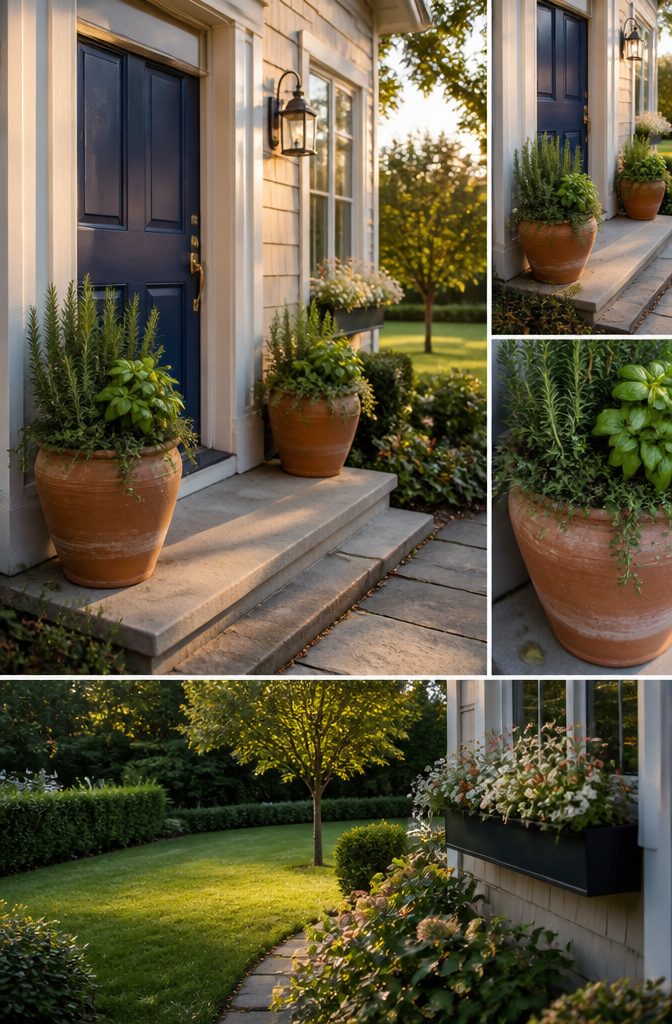
Your front door is already the focal point, so frame it. A pair of bold planters on either side, a light fixture with some character, or a colorful door pulls the eye there before it wanders across the lawn.
A bench or a small ornamental tree near the entry does the same job. An arbor covered in flowering vines turns the walk into an entryway and invites visitors to look at your beds.
Window boxes add instant color and cover scuffs on the window, and you get the view from inside too.
Fill containers with plants you can use.
Rosemary, basil, mint, and thyme give texture and fragrance, while tomatoes, peppers, and cabbage bring color and trim grocery costs. Containers move with you, which makes them the best entry upgrade for renters and small budgets.
Recommended Products

【UV Protection & Cooling】Made of 100% brand new High Density Polyethylene material and eliminate the use of splicing fabrics.Blocks up to 95% of harmful UV rays and direct sunlight exposure."Breathable" fabric allows air to pass freely and achieve a certain degree of cooling.

2 Packs, 3.6Ft Solar Christmas Tree Outdoor – Each tree has 100 snowflake lights that turn on automatically at dusk. Powered by the sun, no wiring or electric bills. Measures 3.6ft from stake to topper (± slight error).

Magical Christmas Meteor Shower Effect: Create a breathtaking winter wonderland with our mesmerizing meteor shower lights. Each bulb twinkles in a sequential cascade, mimicking romantic falling stars or gentle snowflakes against the night sky. Perfect for adding that magical Christmas lights display to your holiday decor, these dynamic patterns will captivate everyone who sees them
7. Walkways
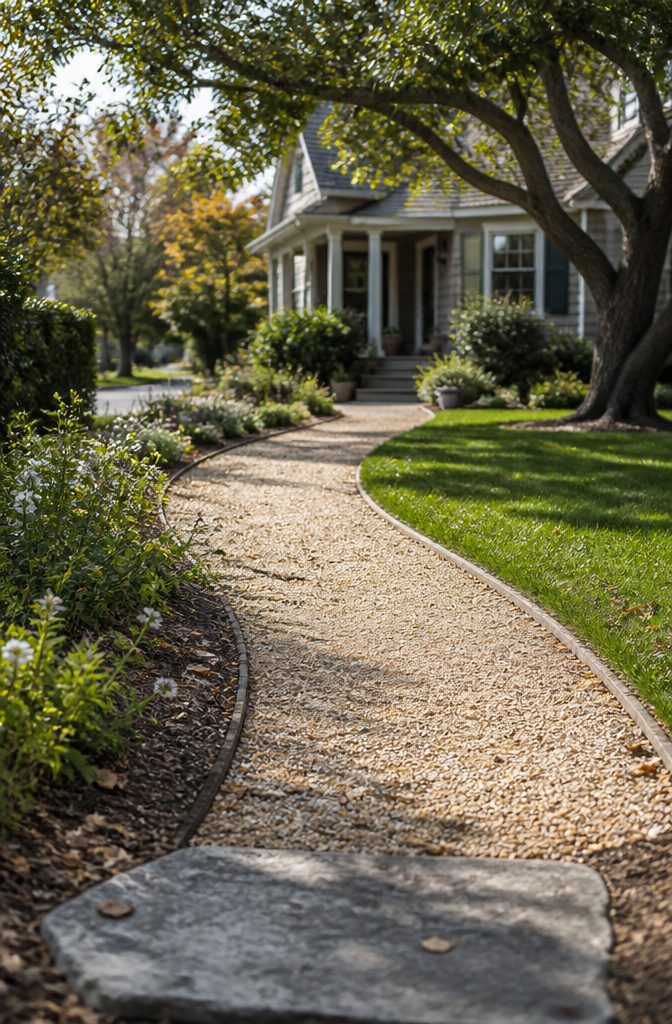
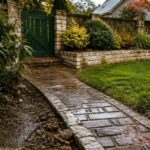
A walkway tells visitors where to go and keeps their feet off the lawn and beds.
Run it past something worth seeing, like an oak, a cottage garden or a view, and it can also link the front door, driveway and backyard.
Wide paths with gradual steps are easier for guests of all ages, and they give wheelbarrows and luggage carts a clear route.
For a first-time DIYer, gravel is the easiest and cheapest surface.
Pavers and stepping stones come next, at about $1 to $15 each depending on the material and size. Stamped concrete also works and gives a custom look.
Brick, stone and wood suit more traditional yards. A defined path also means less mowing.
Recommended Products

Layered flowers bring a double-flower look to cottage-style garden planting.

Freshest Wildflower Seeds: Our hummingbird and butterfly wildflower mix includes 24 beautiful annual, perennial and biennial plants. We offer the freshest seeds to enhance the quality of your garden, we ensure a high germination rate, 99% pure live seed, no filler

8. Water Features
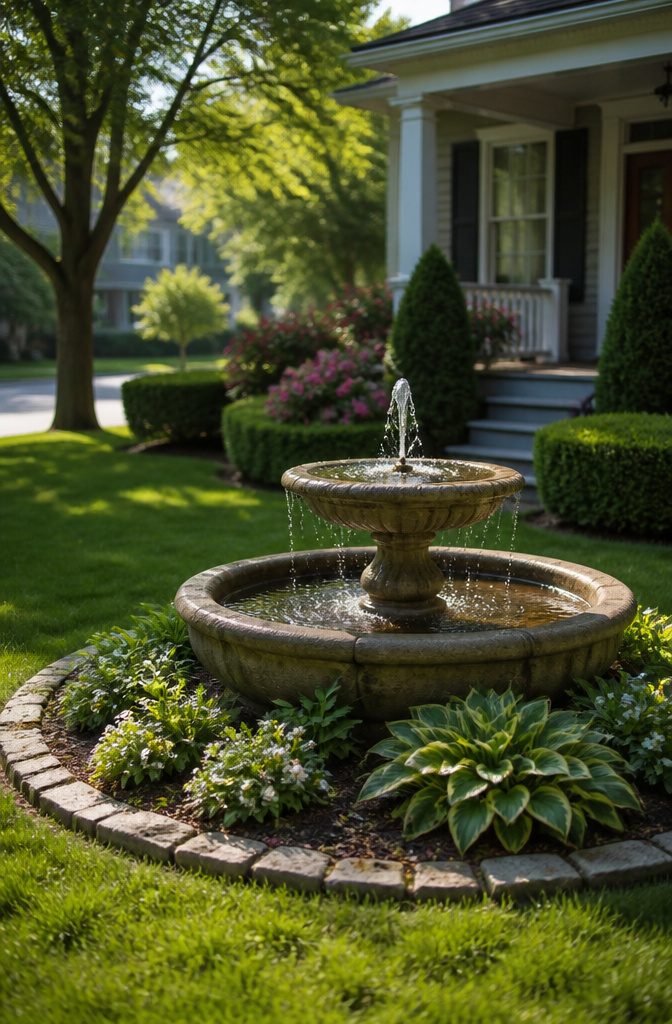
A water feature fills the spot where a plant bed would go, so it suits a front yard where you want little or no planting.
Fountains, birdbaths, waterfalls, and streams all work, and the trickle carries to the porch while you drink your morning coffee.
Formal and natural styles pull in different directions.
A symmetrical fountain gives a lawn order and elegance. A stream, waterfall, or pond looks like part of the surrounding outdoors and draws wildlife, and a koi pond adds colorful fish to watch.
Scale decides the choice.
In a small yard, a compact fountain or birdbath beats a pond, because a pond needs room to look natural and will crowd the lawn around it. Save ponds and streams for yards with space to spare.
9. Shrubs for Structure
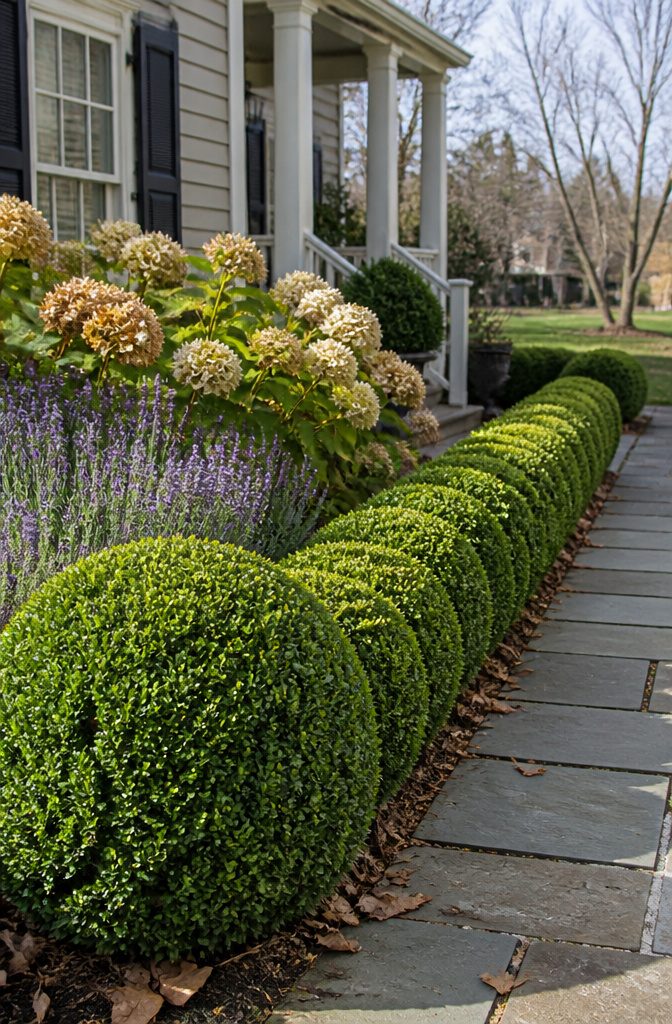
Boxwoods do the most jobs in a front yard.
Clipped into a shape and planted alone, they become focal points. Planted in a row along a walkway, they edge the path and keep people off the grass.
A tighter line works as a privacy screen, and they also grow well in pots. Pair them with hydrangeas and lavender for a traditional house.
For a bare corner or a patch you’d rather not look at, azaleas, daphne, distylium, and forsythia grow wide and tall enough to fill the space or cover it. Shrubs are perennial, so they return each year with little effort.
Put evergreens where you see them most. Boxwoods stay green through winter, when deciduous shrubs are bare sticks.
Recommended Products

100% Organic & Peat-Free: Our organix mulch mix is 100% organic & peat-free. Peat is one of Mother Nature’s most important stores of carbon. Instead of imported peat, the base of our soils is made from upcycled plant matter or wood fines from the United States!

NATURAL GARDEN COVER: Creates a clean, polished garden surface while helping minimize weed growth naturally. This organic mulch also supports healthy soil structure and nutrient balance for thriving plants.

100% Natural Cocoa Mulch – Made from the outer shells of cocoa beans, this premium mulch is free from added dyes or fragrances and delivers a rich, natural chocolate aroma straight from the garden.
10. Retaining Walls
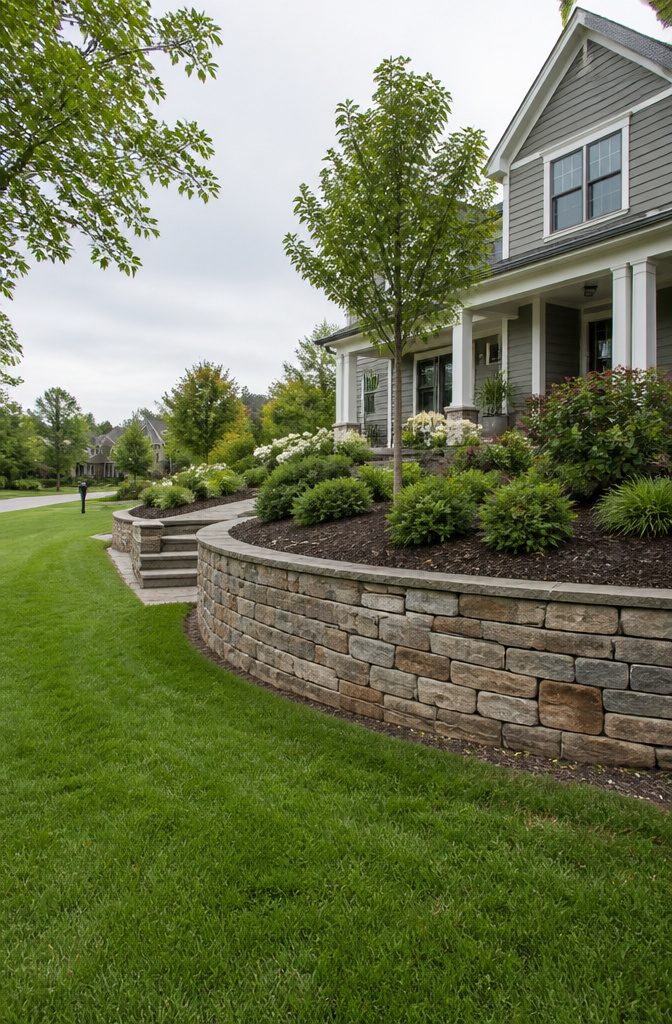
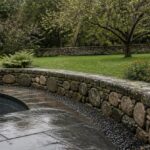
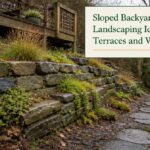
A retaining wall holds loose soil in place and turns one steep grade into level planting shelves.
Stone veneer, brick, and wood all work, so match the material to your siding or porch. A low wall also makes a raised bed, and a curved one around a single tree makes that tree the focal point.
On a hill, run stairs alongside the wall so nobody cuts across the beds. Shrubs and new turf above the wall add more erosion control.
Check before you dig.
Retaining walls, fences, and significant grading changes may need approval from your city or county, while planting flowers or shrubs usually does not. A call to the local building or zoning office settles it.
Recommended Products

REALISTIC FAUX STONE EDGING - These flower bed edging borders feature a lifelike brick texture that will add depth and dimension to your outdoor space. This landscaping edging kit includes (4) 25.91-inch-long pieces, with an assembled length of 8ft.

Stone-Look Decorative Landscape Edging: 2.75 inch tall rustic stone design complements any flower gardens and provide clean look for your gardens, flower beds, lawns, grass, raised garden beds, shrubbery, pathways, yard trees, ground pool, etc.

15-Pack Set: each garden edging border panel measures about 17.72 x 6.89 inches, 15 pieces totaling about 21.2 feet, more panels per pack help finish large yard projects with fewer orders and lower cost per foot
11. Shade Garden
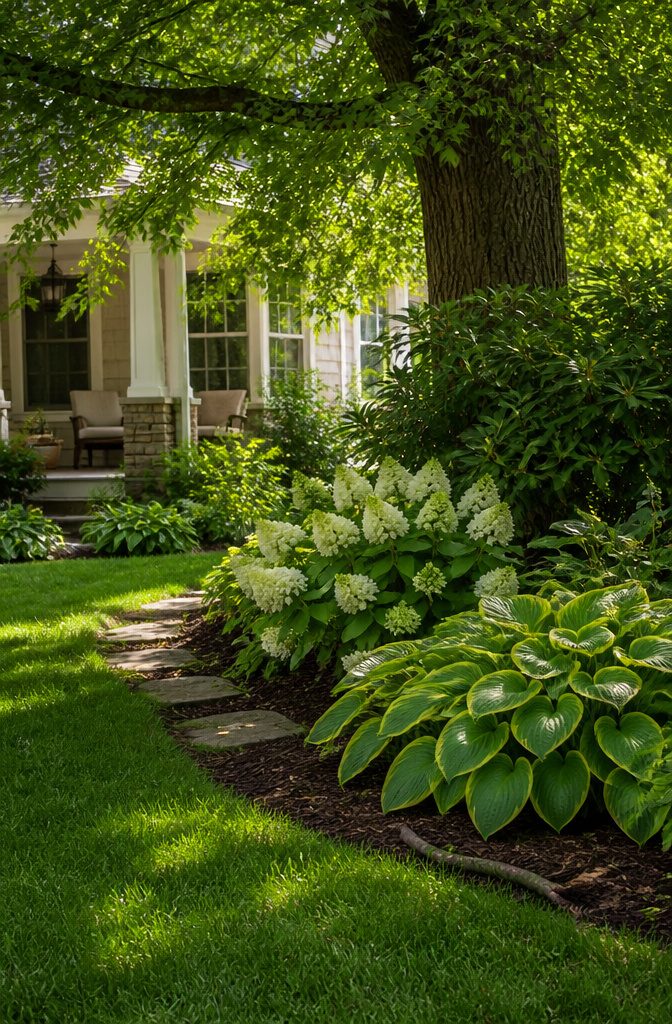
Shade under a mature tree doesn’t rule out a front yard garden.
Hostas, oakleaf hydrangea, and rhododendron all grow in the shade, so they make a reliable base layer under the canopy. Magnolias work as a supporting tree, and mulch around the beds finishes the look.
For the lawn itself, zoysiagrass and tall fescue tolerate some shade.
That means dappled light, not a corner that never gets sun. If the shade is heavier than your plants can take, an arborist can trim and prune the trees safely to let more light through.
A stone path is optional, but it guides visitors through the bed and gives you somewhere to step while you maintain it.
12. Trellises and Vertical Features
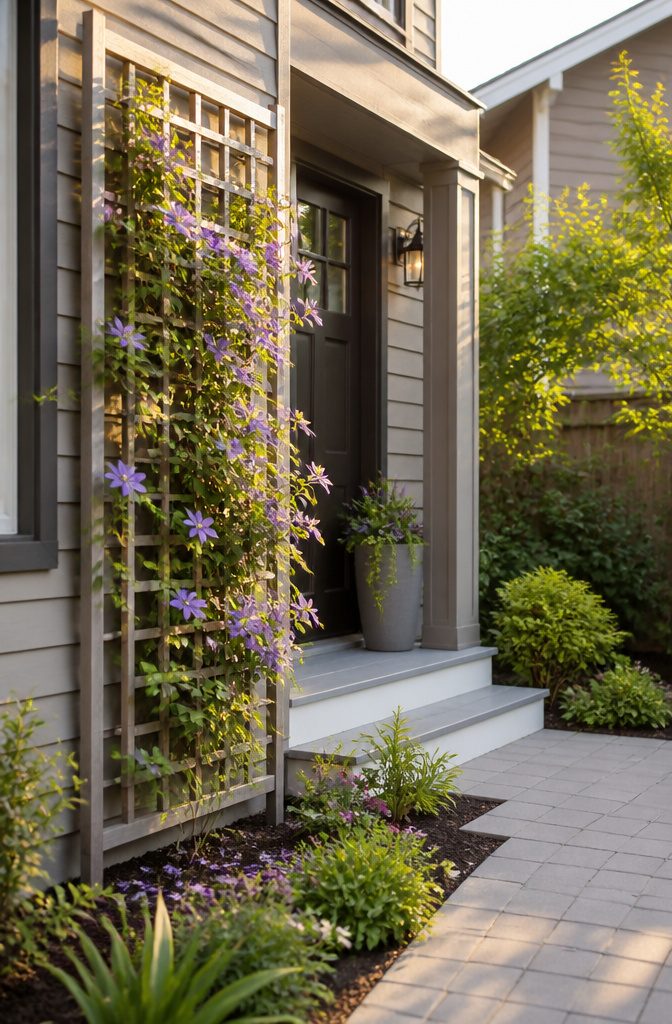
Vertical features suit narrow front yards because they add presence without using any ground space.
Set a trellis against the house wall, beside the front door, or along the entrance fence to cover a blank stretch and draw the eye to the entry.
Tall planters and decorative screens do the same job if you can’t attach anything to the house.
For flowers, clematis, bougainvillea, and jasmine are the vines most often named for this spot.
Climbing roses and hydrangeas give a fuller, heavier wall of bloom. Check each plant’s tag against your zone before buying, because these vines don’t share the same climate needs.
If privacy or street noise is the problem, a trellis of climbing ivy works better than flowers. An arbor pulls visitors toward your beds.
13. Rock Garden
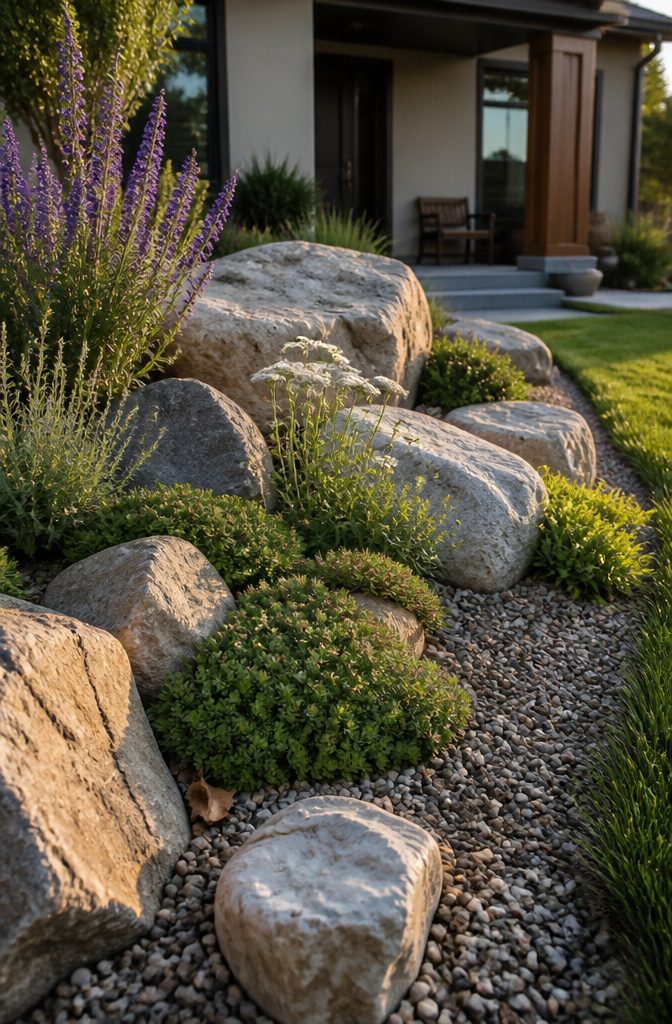
Rocks paired with drought-tolerant plants give a hot, dry front yard a feature that needs little watering or weeding.
Sedum, salvia, and yarrow make a dependable trio: all three handle dry soil, and together they give you low mats, spiky flower stems, and flat-topped blooms in one bed.
Fewer thirsty plants means less hose time, which is the real case for this in a water-saving yard. Succulents are another easy addition.
Skip it in a shady, damp spot, where these plants sulk and the stones just look like a pile.
It also looks out of place dropped into the middle of a lush lawn with no link to the house. Boulders are heavy, so hire a landscaper for the large rocks and do the planting yourself.
Match the Design to Your Yard
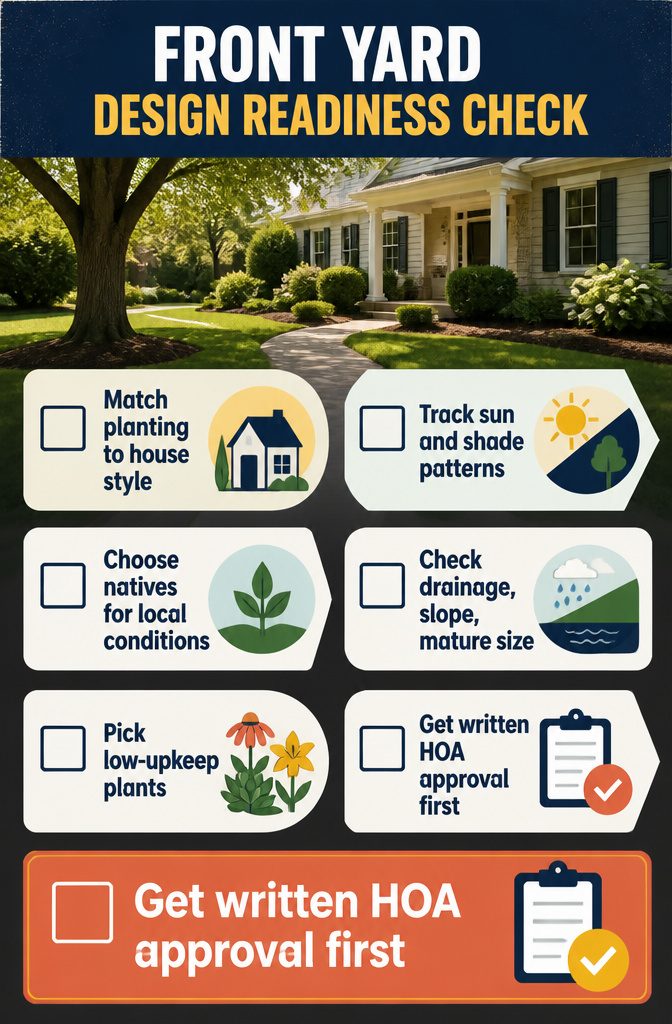
Run each idea through these checks before you buy anything:
- House style and scale: A modern house suits minimalist grasses and sculptural succulents. A traditional one pairs well with boxwoods, hydrangeas, or lavender.
- Sun and shade: Note where light falls through the day. Oakleaf hydrangea and rhododendron tolerate shade, and so do zoysiagrass and tall fescue in some shade. An arborist can thin trees if the yard is too dark.
- Climate and soil: Native plants are adapted to local conditions, so they need the least watering, fertilizing, and pruning once established.
- Drainage, slope, and mature size: Look at where water pools after rain, and check how large a plant gets before you set it near the walk or a window.
- Upkeep: Daylilies, echinacea, and sedum take little work.
- HOA rules: Submit a simple plan and get written approval before work starts. It prevents delays, fines, and costly revisions.
Curb Appeal Basics
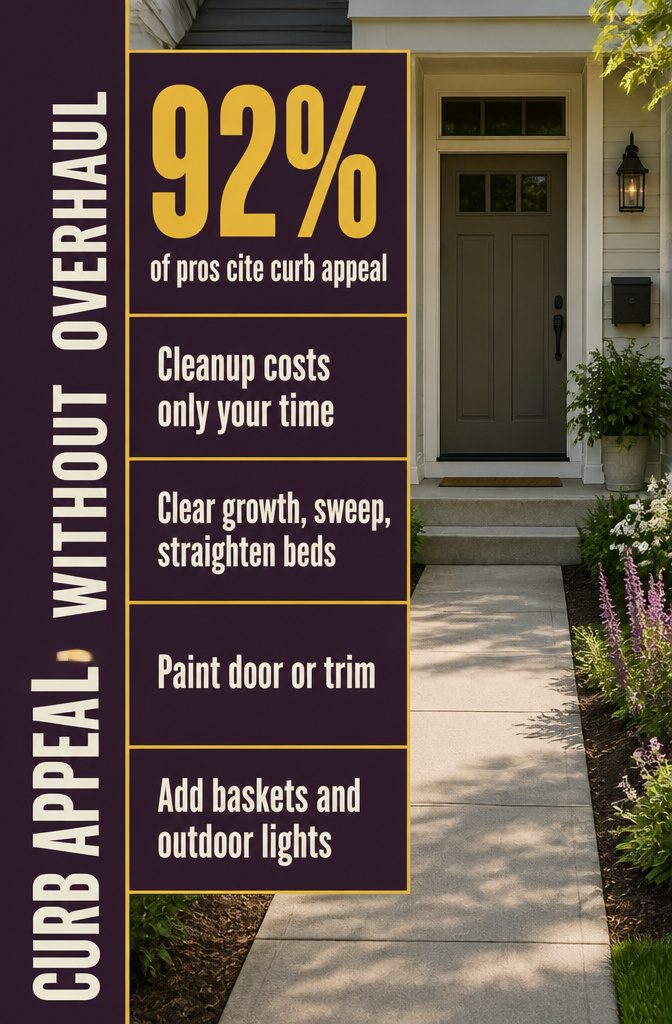
A front yard is the first thing anyone reads about your house, whether that’s a buyer, a guest, or you pulling into the driveway after work.
The National Association of Realtors puts the figure at 92%: that share of real estate pros say enhancing curb appeal is one of the most effective ways to attract buyers. You don’t have to be selling for it to matter.
A full overhaul isn’t required to get the effect. Start with a cleanup, which costs only your time: clear dead growth, sweep the walk, and straighten the beds.
Then add a fresh coat of paint on the front door or trim, hanging baskets by the entry, and outdoor lights. On a modest budget, those four changes make a yard look more expensive than it is.
Frequently Asked Questions
What is the cheapest way to landscape a front yard?
Perennials, mulch, and a simple path are the lowest-cost route. Perennials cost a one-time $10 to $30 per plant because they return every year, while annuals must be bought again each spring.
Bagged mulch runs $2 to $5.50 per bag, and gravel is the cheapest path surface, with pavers and stepping stones at about $1 to $15 each.
How can I make my front yard look more expensive?
Start by cleaning up, which costs only your time: clear dead growth, sweep the walk, and straighten the beds.
Then add fresh paint on the front door or trim, hanging baskets by the entry, and outdoor lights. These low-cost changes make a yard look pricier than it is.
How can I landscape a front yard without plants?
Use mulch, rocks, gravel, and water features in place of plantings. Decorative or pea gravel costs $25 to $67 per cubic yard and gives a clean, weed-free bed, and mulch can be laid in designs on its own.
A fountain or birdbath fills the spot where a plant bed would go, and a compact one suits a small yard better than a pond.
Do you need a permit for front yard landscaping?
Planting flowers or shrubs usually does not require one.
Retaining walls, fences, and significant grading changes may need approval from your city or county. A call to the local building or zoning office will tell you for certain.
How do I deal with HOA rules when landscaping my front yard?
Read your HOA guidelines first, then submit a simple plan and get written approval before any work begins. Approval in writing helps you avoid delays, fines, and costly revisions.
What are the best low-maintenance plants for a front yard?
Native plants are usually the easiest, since they are adapted to local climate and soil and need the least watering, fertilizing, and pruning once established.
Daylilies, echinacea, and sedum are popular choices, and ground covers, ornamental grasses, and hardy perennials also need little care.
What are common front yard landscaping mistakes to avoid?
The most common mistakes are planting trees too close to the house, crowding beds, and choosing plants that don’t suit your local conditions.
Poor planning ties them together. Check each plant’s mature size before you dig, and leave room for it to grow.
What is the difference between hardscaping and softscaping?
Hardscaping is the permanent, non-living part of a landscape, such as stone walkways, retaining walls, borders, and wooden fences.
Softscaping is the living part: grass, flowers, shrubs, and trees. The strongest front yard designs combine both, with hardscaping giving structure and softscaping adding color and texture.