The ideas run from a single bed along the front of the house to a fountain, the priciest option listed, and the upkeep you will actually do decides which fits.
Clipped plantings look formal only while you keep trimming, and a Zone 8 plant in a Zone 7 yard is likely to die in a hard winter.
1. Layout Around the House
Start with a bed directly in front of the house. On a small lot, it can turn the corner and run down one side to the street.
A single bed along the front of the house might be all you need, because a bigger garden means more upkeep and more cost.
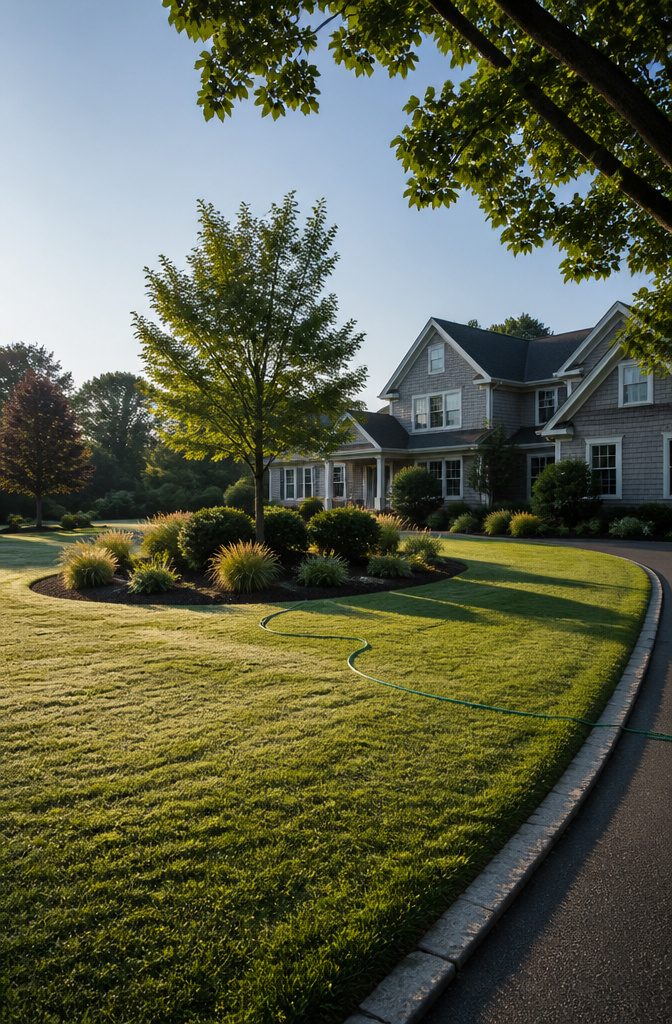
In a larger open lawn, an island bed with a tree and a few shrubs breaks up the space without a border around the whole yard.
Curves soften edges and pull the eye forward and around, even with modern plantings like a mass of grasses.
A very modern house may suit straight lines better. Mark either shape with a garden hose or rope before you dig.
Sorting layouts by design style is another way to narrow your choices once you know where the beds go.
Recommended Products

𝐅𝐥𝐞𝐱𝐢𝐛𝐥𝐞 & 𝐄𝐚𝐬𝐲 𝐭𝐨 𝐈𝐧𝐬𝐭𝐚𝐥𝐥: Each panel measures 40" (L) × 5" (H), including 3" underground stakes for strong anchoring, leaving 2" visible above ground for a clean, low-profile border. The hammer-in design makes installation fast and effortless—perfect for creating neat, professional-looking edges without digging.

Long-Lasting Use: Made of high-quality, weather-resistant plastic, this landscape edging is both sturdy and flexible enough to hold pebbles, mulch, and other materials in place
2. Formal Structure and Symmetry
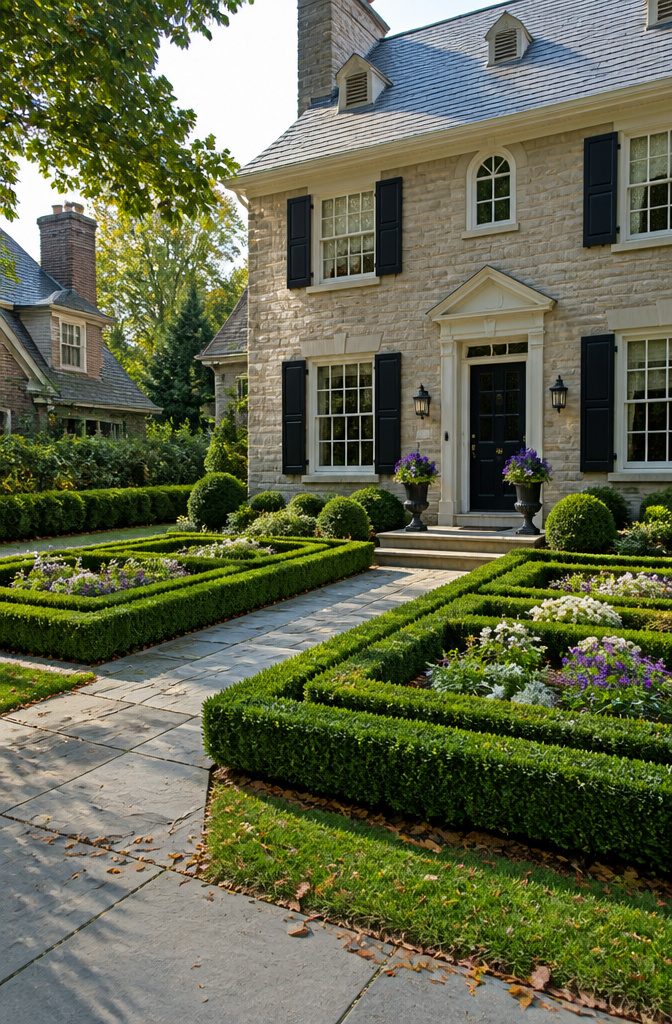
Formal design suits a house with a symmetrical facade: a centered door with matching windows on each side. Repeat that line with identical beds on both sides of the walk, and the yard reads as part of the architecture.
The classic move is a parterre, a geometric pattern of low clipped hedges, usually boxwood. Landscape architect Chip Callaway used an orderly parterre for a Richmond Regency home, taking cues from historic Tidewater Virginia gardens.
For a smaller budget, skip the parterre and set a matching pair of planters with topiary on either side of the entrance.
The cost is upkeep.
Clipped plantings look formal only while you keep trimming them, and one skipped season blurs the lines. If your facade is lopsided, or you won’t pick up shears, choose a looser style.
3. Relaxed, Naturalistic Planting
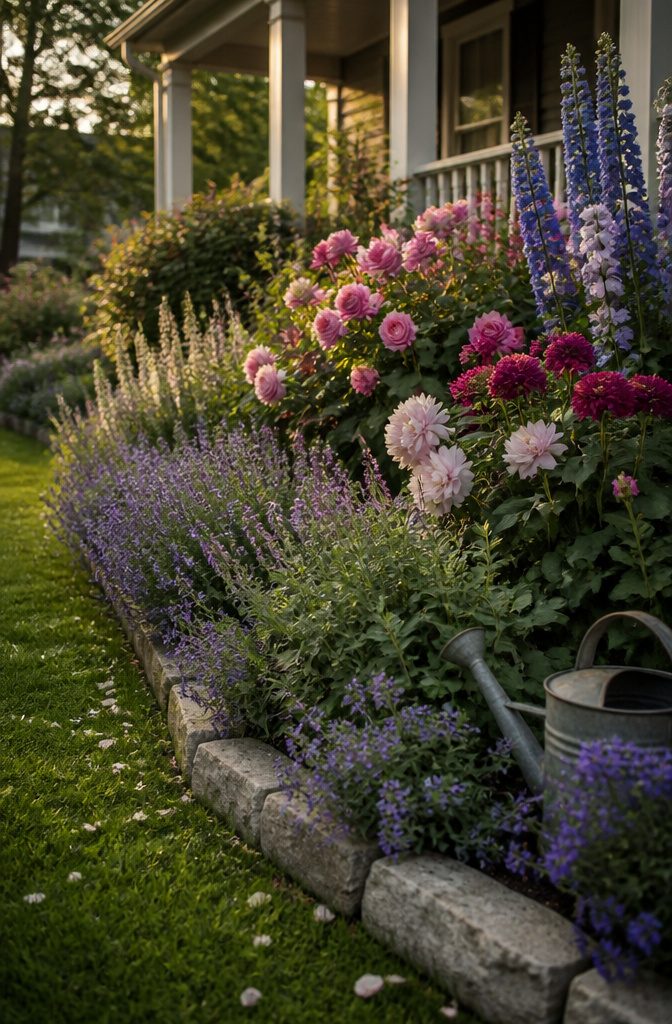
A cottage-style front yard depends on layers. Put roses and delphiniums at the back, peonies and lavender in the middle, and let catmint spill over the front edge.
For a meadow or prairie look, swap most of the perennials for ornamental grasses and wildflowers that sway in the wind and fill gaps on their own.
Informal mixed plantings sit between the two: a few shrubs, a drift of grasses, and perennials repeated in loose groups.
Loose planting reads as intentional only when it has a boundary. Give the bed a clear edge, such as a clean lawn line, stone or steel edging, or a low row of catmint.
With that frame, the same tumble of plants looks designed. Without it, the yard looks untended to anyone walking past.
4. Trees and Shrubs First
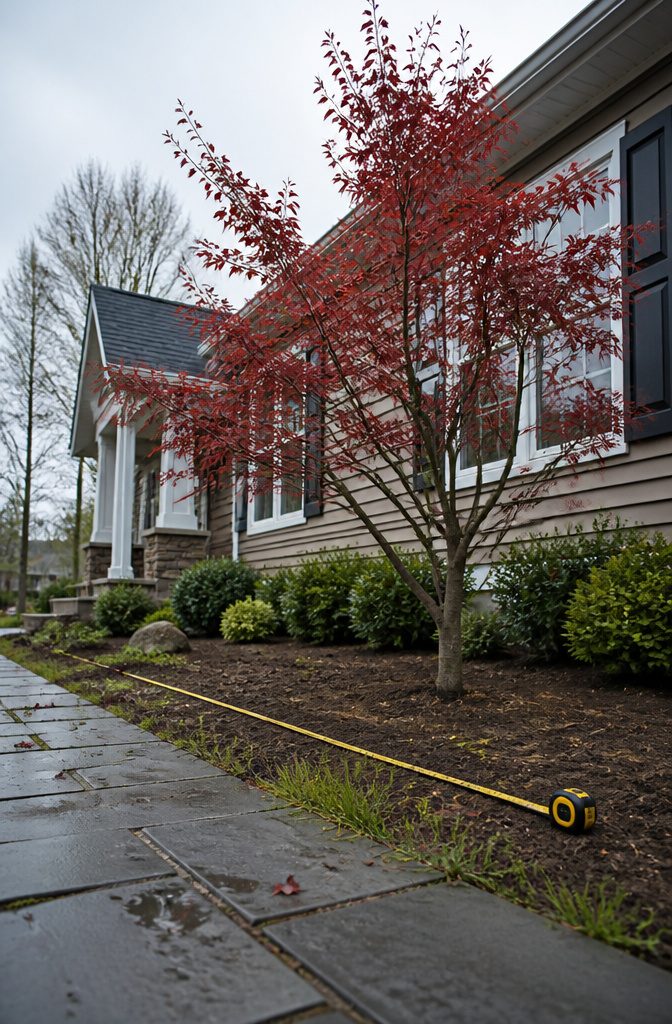
Place the trees first, then the shrubs, then the perennials. Trees set the sightlines, and they carry the yard through winter: even a bare deciduous tree gives you a focal point when the beds are empty.
Pick the spot where you want the eye to land and put a specimen tree there, such as a Japanese maple.
Foundation plantings should not exceed 1/3 the height of your house walls, and large trees belong at least 15 feet from the house.
Measure the wall before you shop for shrubs, and read the mature height on the tag, not the size in the pot.
If money is tight, plant trees and larger shrubs first and add perennials later.
5. Paths, Beds, and Level Changes
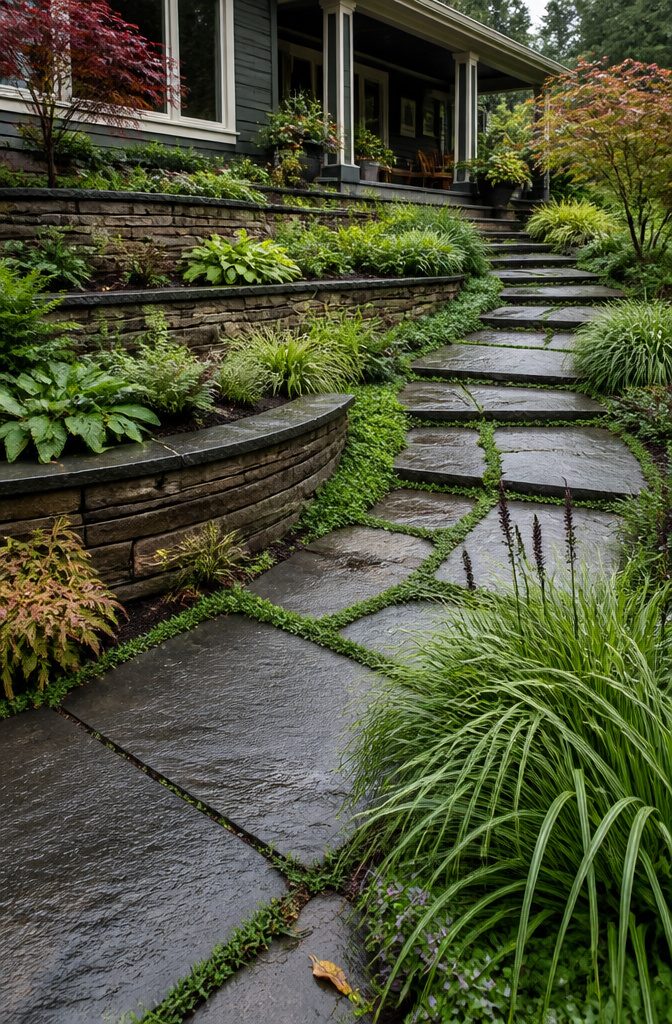
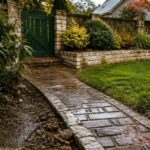
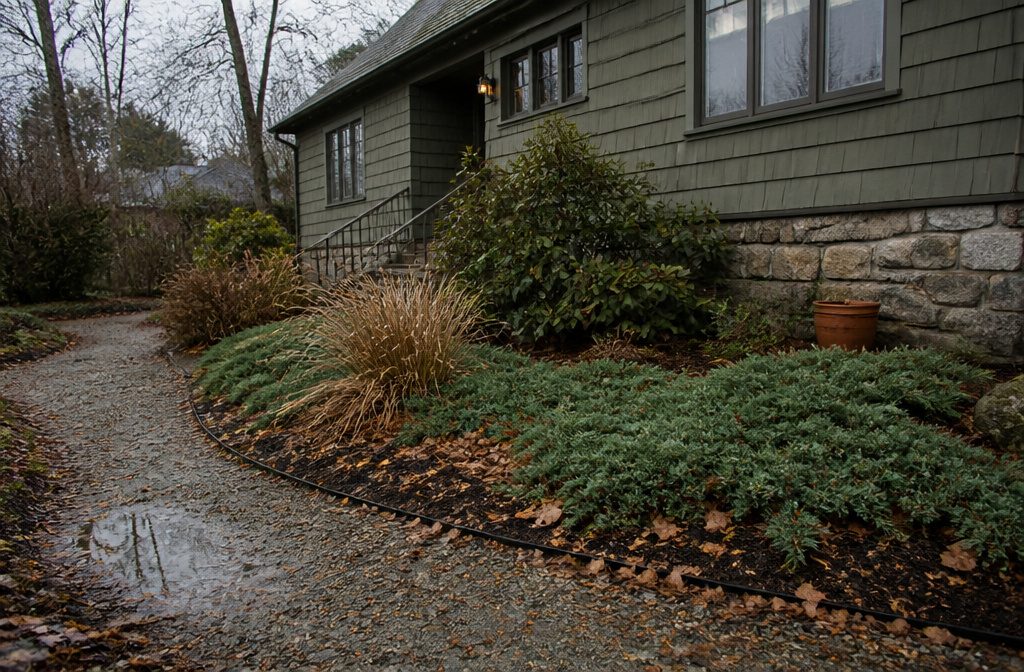
A walkway is part of the design, not just a route to the door. Let it curve gently or run straight, then plant along both edges so low foliage spills over and softens the hard line.
Set grass or gravel between pavers or flagstones instead of laying one solid surface.
The gaps break up the hardscape and let rain soak in. Gravel needs almost no upkeep, while grass looks softer but needs trimming along every joint.
On a sloped front yard, build tiers rather than fighting the grade.
Step the slope into terraces with a low retaining wall at each level, and each one becomes a planting shelf that holds soil in place. Passersby see every layer from the street, so the slope shows off your plants.
Recommended Products

Ultra-Realistic Greenery from an Original Industry Brand (Est. 2016) - Create a full, lush look with premium artificial greenery panels designed by one of the original brands in the greenery wall space. With over 30+ leaf styles and dense boxwood coverage, these panels deliver a natural, realistic plant wall appearance that elevates any home, event, or commercial setting—without trimming, watering, or upkeep.
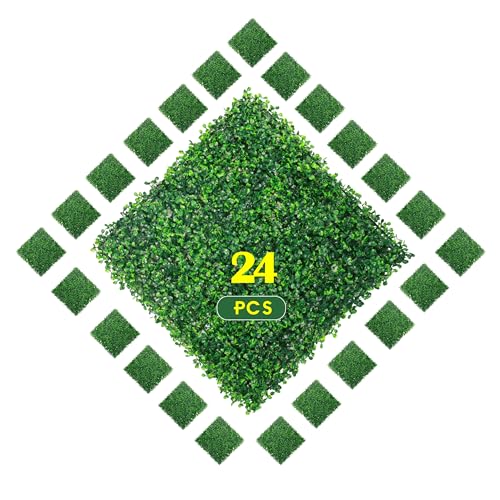
【Realistic & Thick Artificial Hedge】Our Boxwood Panels not only have realistic looking leaves and our panels are much more dense with 400 pins per panel and 8 branches per pin for a total of 3000+ realistic faux leaves are not “see through” and offer better privacy Hedges. It has sun protection and will not fade due to outdoor use.

REALISTIC FAUX HEDGE: Features lifelike artificial boxwood leaves that mimic the look of a natural green wall without any watering or maintenance
6. Rock, Stone, and Gravel
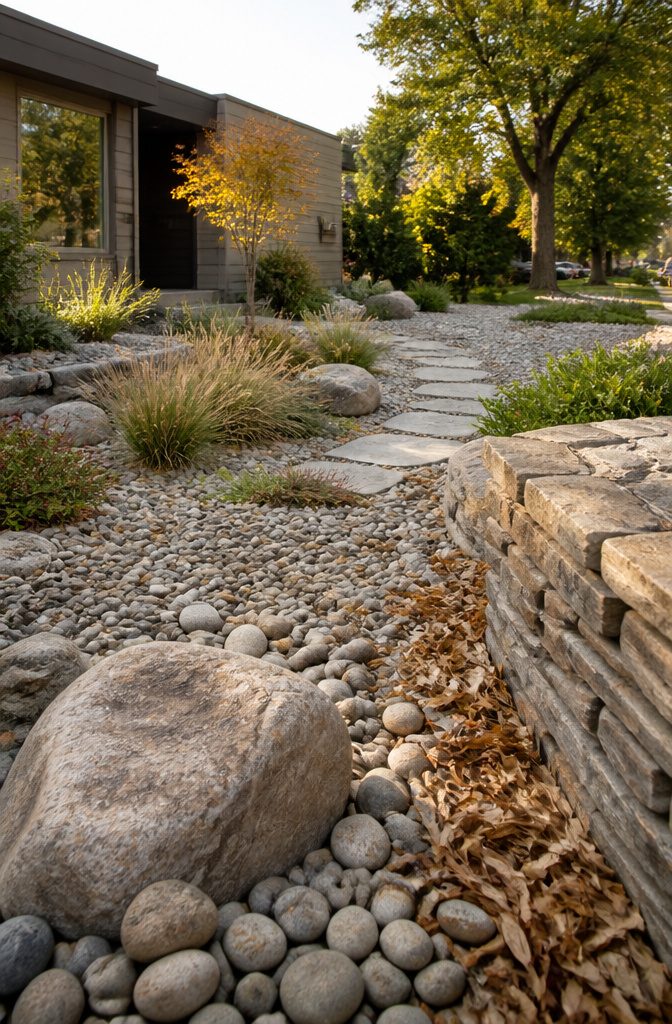
River rock covers a large front yard without planting all of it. Every square foot of stone is a square foot you don’t weed, water, or prune, so rock cuts upkeep by shrinking the planted area.
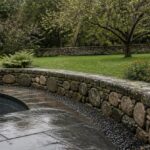
Boulders break up the flat surface and give the eye a place to rest, and gravel beds, stone paths, and low stone walls add texture the same way.
Rock costs more upfront than mulch, and gravel alone looks stark, so tuck shrubs or grasses into it.
To trim the bill, check what rock is available locally. Some may be free if you will haul it yourself.
Recommended Products
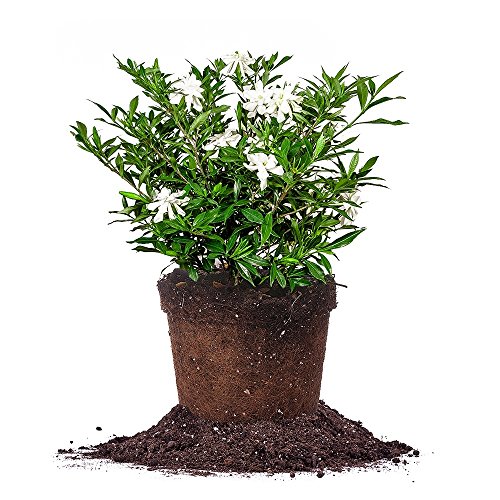
Live 1 gallon frost proof gardenia comes with easy to use plant food and features deep green, spindle leaves with fragrant, White flowers appearing every spring-summer
Live 3 gallon frost proof gardenia comes with easy to use plant food and features deep green, spindle leaves with fragrant, White flowers appearing every spring-summer
7. Fences, Walls, and Gates
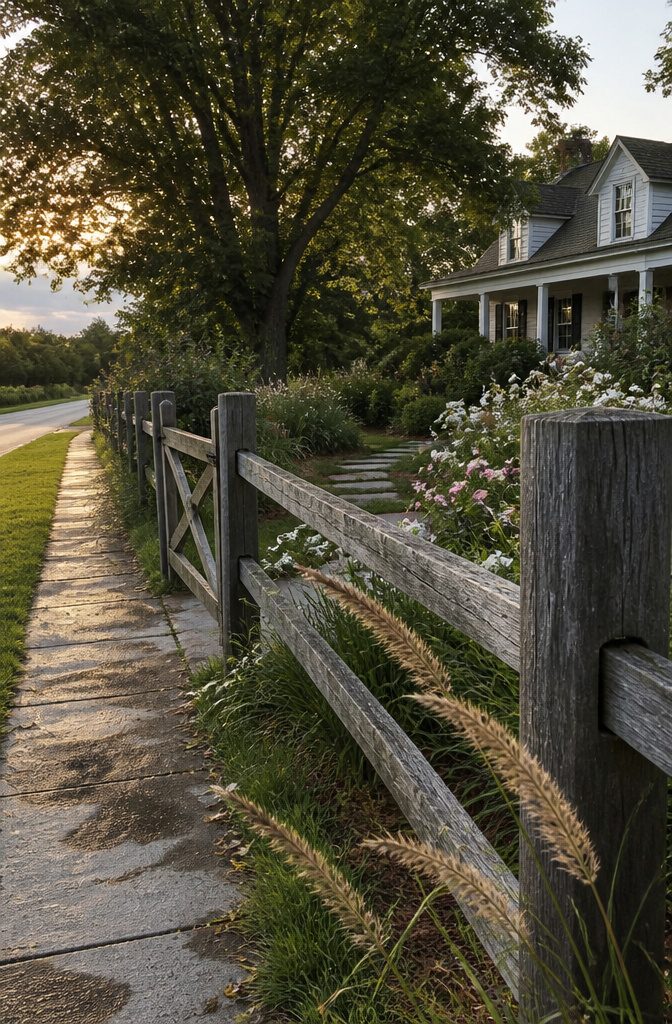
A split-rail fence marks where your yard ends and the path or sidewalk begins without closing anything off.
Split-rail is the best pick for an open, rural look, because you can still see the plantings through it and it reads as a boundary, not a barrier.
Picket fencing signals the opposite: a traditional, enclosed front yard.
It suits a cottage garden, where the pickets frame the plants behind them. Add a gate and the entry becomes a deliberate threshold, so set it in line with your front walk.
Bamboo screens give privacy. Keep them to a patio or side edge, since a tall solid screen along the street side shuts the house off from the neighborhood.
8. Repeat Plants and Materials
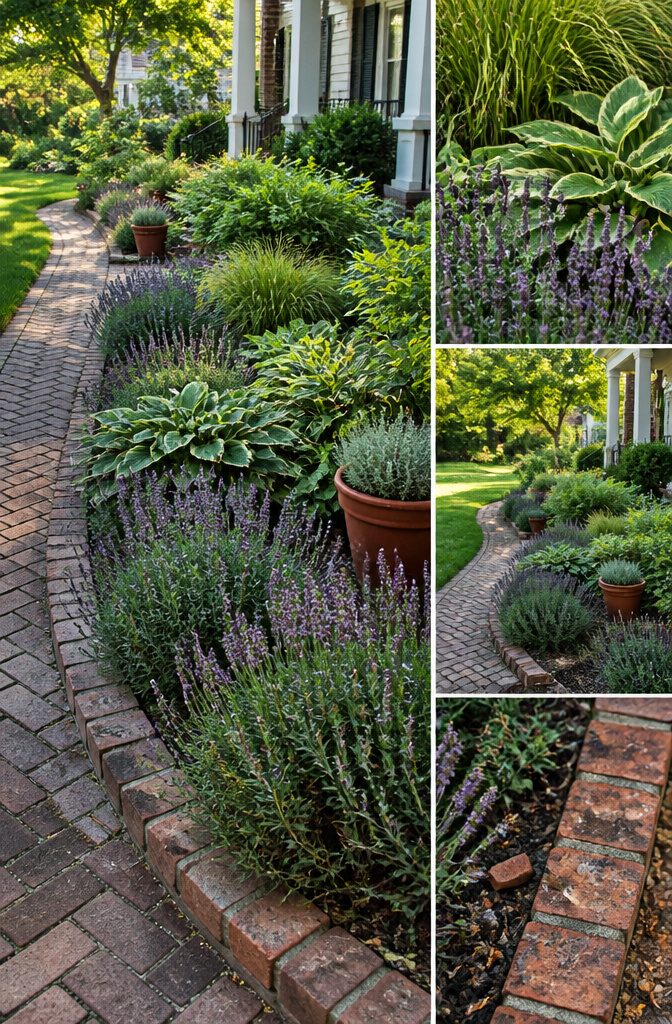
Plant perennials in groups of at least 3, or 5 or more, always in odd numbers.
Set them in a row or staggered so they grow into one mass, which they should do by the third summer. Then repeat the same plant farther along the bed.
Color follows the 60-30-10 rule: 60% green foliage, 30% seasonal flowers, 10% bright accents.
Mix texture the same way. Ornamental grasses read as fine, most shrubs as medium, and large-leafed hostas as coarse.
Geometric plantings, such as repeated rows or blocks of one plant, make a front yard look planned.
Hardscape can repeat too. Choose brick, gravel, steel, concrete or terracotta and let it return in beds, pots and edging.
Recommended Products

Dimensions: 48" Width x 12" Deep 79" Height ) Easy assembly as well as convenient assembly and disassembly. have installation instruction in the package

【Heavy-duty Structure】 The Black Base Planter Box features a sturdy design that ensures a stable support for our artificial boxwood hedge wall. (Note: The inner size of base is 2" larger than the hedge wall panel to prevent the grass from being squeezed.)

Efficient Coverage, Ultimate Privacy: The 40-inch x 40-inch grass panels are designed for flexible combination, enabling efficient coverage of large areas. Whether it's for outdoor patios, exterior walls, or indoor spaces, they effortlessly create a private and aesthetically pleasing green barrier, offering you excellent privacy protection
9. Climate-Specific Planting Palettes
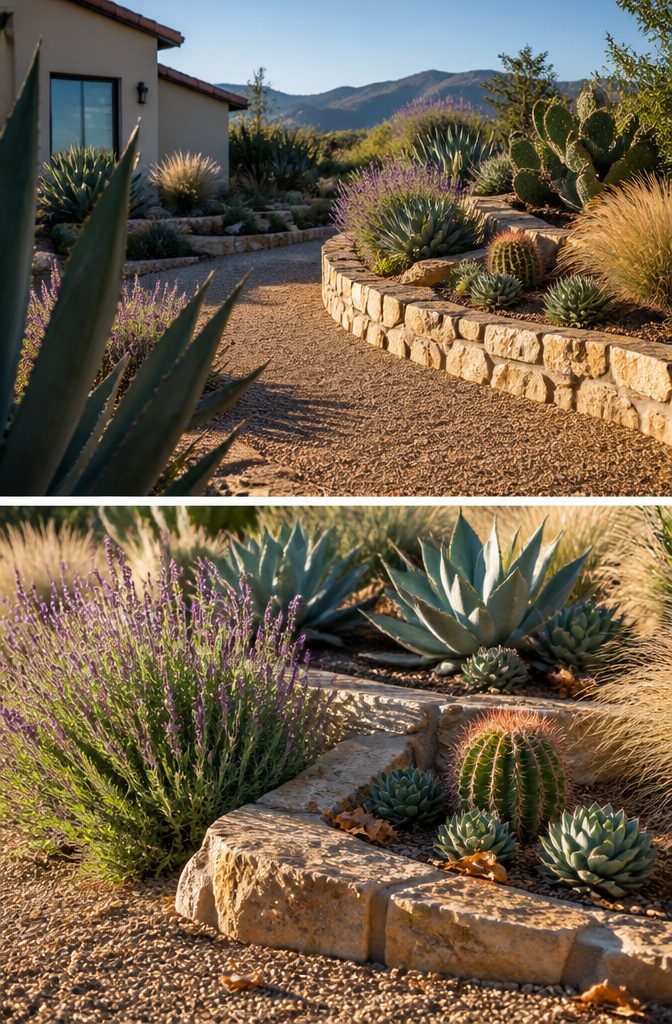
For hot, dry summers, drought-tolerant plantings win. Cacti and ornamental grasses set along a path mark its edge and live on little water, a pairing used on a terraced Oaxacan garden between mountains and sea.
Mediterranean plants come a close second. Olive, lavender, and succulents want full sun and sharp drainage, so they suit a south- or west-facing yard and sulk in soil that stays soggy.
Skip tropical palettes on a small budget. They need steady watering and often protection in cold snaps.
Hostas and Japanese maple also want moisture, so plant them only where shade keeps the soil damp, such as a north- or east-facing side, and keep them out of afternoon sun.
Recommended Products

Jubilation Gardenia produces sweetly fragrant white flowers from late spring through fall, offering one of the longest blooming seasons of any gardenia variety. Its rich, dark green leaves provide year-round structure and contrast beautifully with the pure white blooms.
Attention: California and Arizona residents cannot order this item due to state restrictions.
10. A Focal Point
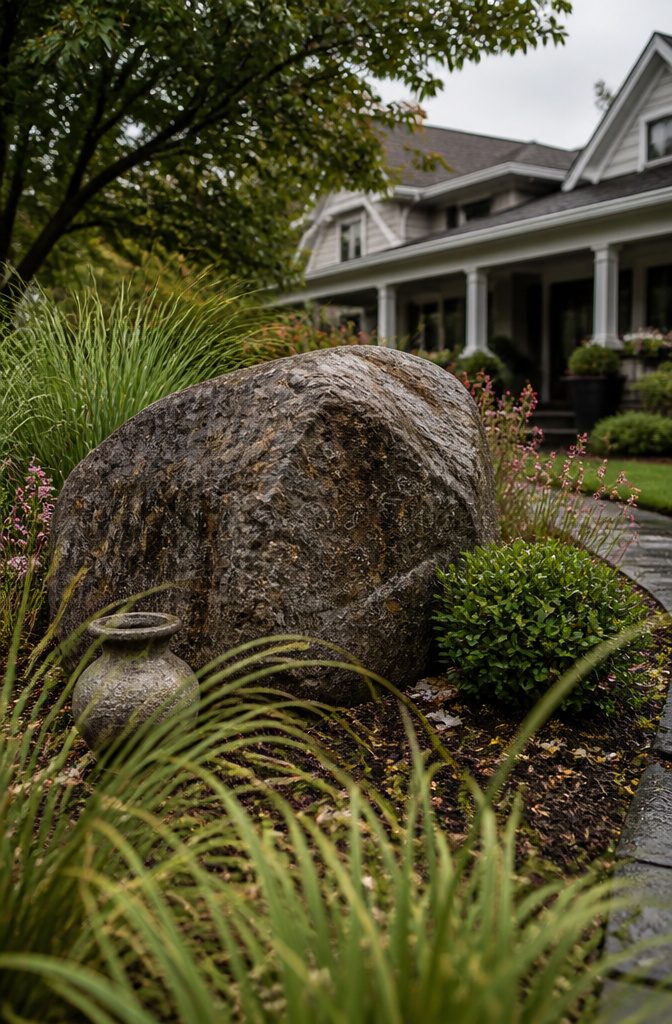
Choose one main focal point and support it with 2–3 smaller elements. A specimen tree or a large boulder is the most affordable anchor, and both cost less than a fountain.
A fountain or water feature gives you the sound of moving water, which no tree can, but it is the priciest option on the list.
Sculpture and urns work well as the supporting pieces. Stone and sculpture look good with no flowers around them, so they carry the yard through the off-season.
Driftwood is worth using if you can get it free. A single large piece takes up a big chunk of space, adds texture, and breaks up a run of plantings.
Curb Appeal and Home Value
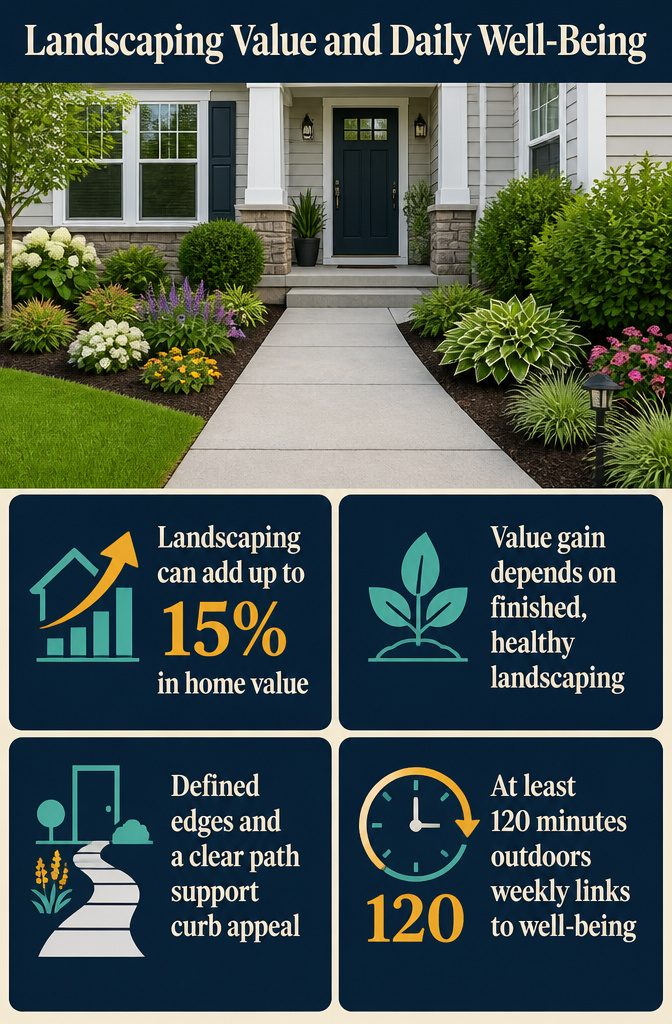
The front yard is the first thing a visitor or buyer sees, and well-executed landscaping can add up to 15% to a home’s value.
Treat that as a ceiling. The gain comes from finished work: healthy plants, defined edges, and a clear path to the door.
The payback also starts well before a sale. Spending at least 120 minutes a week in nature is linked to better well-being, and a front yard you actually use gets you there in small pieces.
Watering by the walkway, pulling a few weeds, or sitting on the step with coffee all count toward that total. A yard you enjoy daily pays you back whether or not a For Sale sign ever goes up.
Match Plants to Zone and Sun
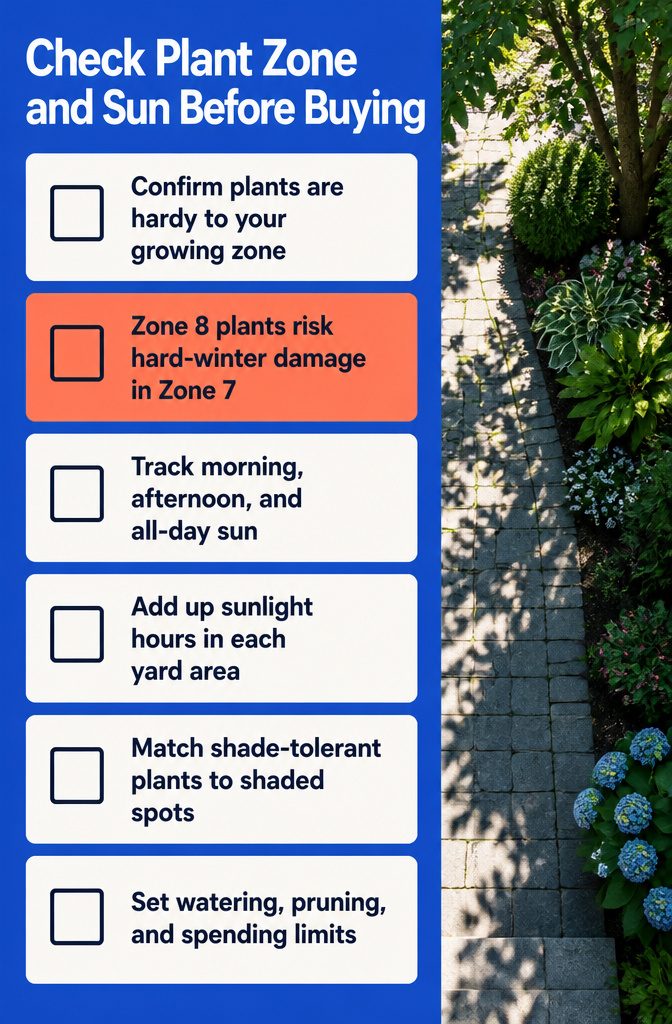
Run these checks before you buy anything:
- Confirm your growing zone. Plants must be hardy to your zone, or you will likely lose them over winter.
- Read the plant tag, not the nursery’s shelf. In Zone 7, nurseries in town and nearby towns still stock Zone 8 plants, and a Zone 8 plant is likely to be damaged or die in a hard winter.
- Watch the yard for one sunny day. Note when each area gets morning sun, afternoon sun, all-day sun, or little to none, then add up the hours.
- Match each plant to the light of its spot. A shaded side of the yard calls for shade-tolerant plants.
- Set your limits on time and money. Choose only what you will water, prune, and pay for. A dead plant wastes both.
Plan and Budget in Stages
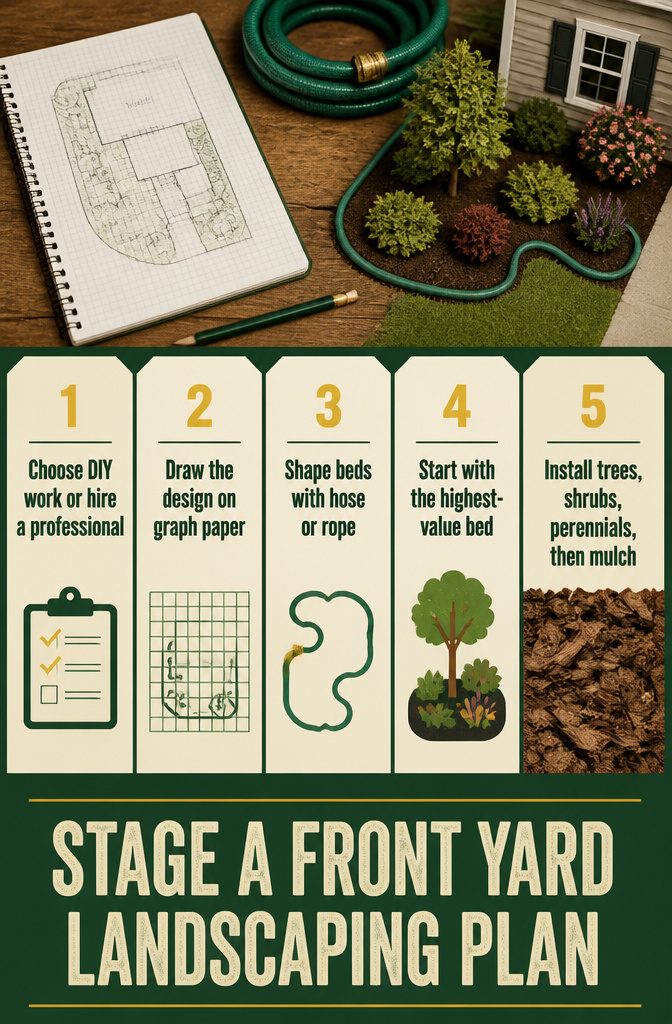
- Decide early whether you will do the work yourself or hire a professional. That choice sets your budget and how fast the yard comes together.
- Draw the design on graph paper before you buy anything.
- Lay the bed shapes out with a garden hose or rope. The hose shows you the true size of each bed and lets you estimate how many plants to buy.
- Start where it pays off most, usually a bed directly in front of the house. An island bed with a tree and a few shrubs can break up a larger yard without a border around the whole thing. Bigger planted areas cost more and take more upkeep.
- Install in stages. Cut the beds and plant trees and larger shrubs first, add perennials in fall or the next spring, and top-dress with mulch the following year. Use free or readily available materials where you can.
Frequently Asked Questions
How can I do front yard landscaping design on a budget?
Start with a single bed directly in front of the house, because larger planted areas cost more to install and maintain.
Plant trees and larger shrubs first, add perennials in fall or the next spring, and spread mulch the following year. Local rock is often cheaper than you would expect and sometimes free if you haul it yourself.
How do I design a front yard from scratch if I have never landscaped before?
Decide first whether you will do the work yourself or hire a professional, since that sets your budget and timeline.
Sketch the design on graph paper, then lay out the bed shapes with a garden hose or rope to see their true size.
Check your growing zone and how many hours of sun each area gets before you buy plants, and install the design in stages rather than all at once.
How do I make a front yard low maintenance?
Shrink the planted area. Every square foot of rock or gravel is a square foot you do not weed, water, or prune.
Choose only plants suited to your zone and the light in their spot, and only as many as you are willing to water and trim.
Formal clipped hedges need regular shearing, so pick a looser style if you will not keep up with it.
Should front yard beds be curved or straight?
Curves suit most yards. They soften edges and draw the eye forward and around the space, even with modern plantings such as a mass of grasses.
A very modern house may look better with straight lines. Outline either shape with a garden hose or rope before you dig.