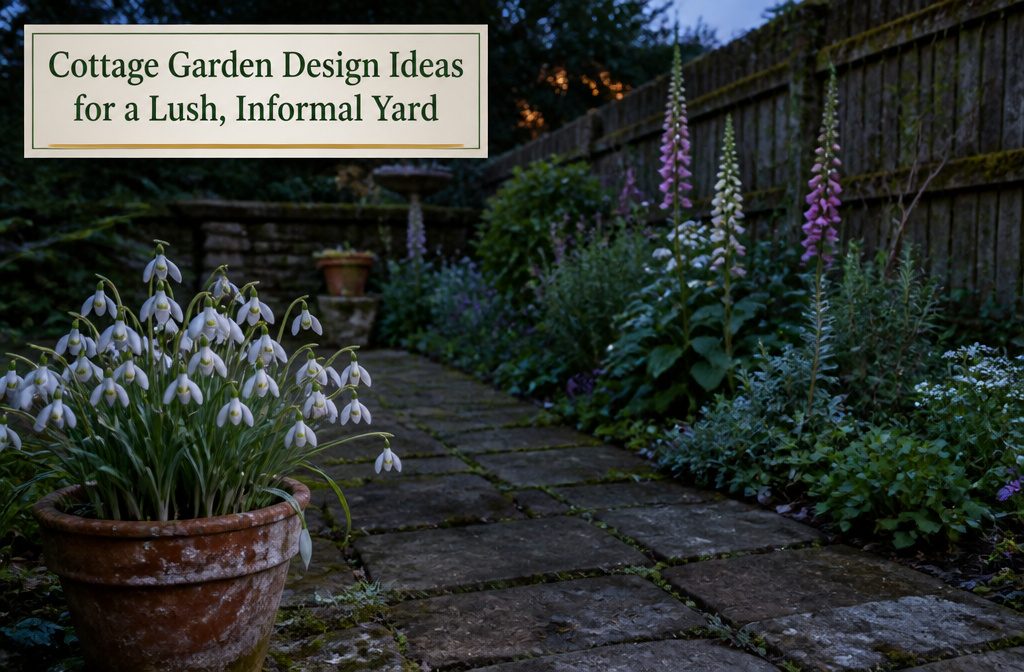
The ideas run from a pot of snowdrops on a patio slab to a Lady Banks rose covering a whole fence, and what your yard already has picks the starting point: a tree, a fence, bare paving, or open soil.
Check your zone and your state’s invasive plant list first, since the self-seeders these gardens depend on are invasive in some areas.
1. Dense, Informal Planting
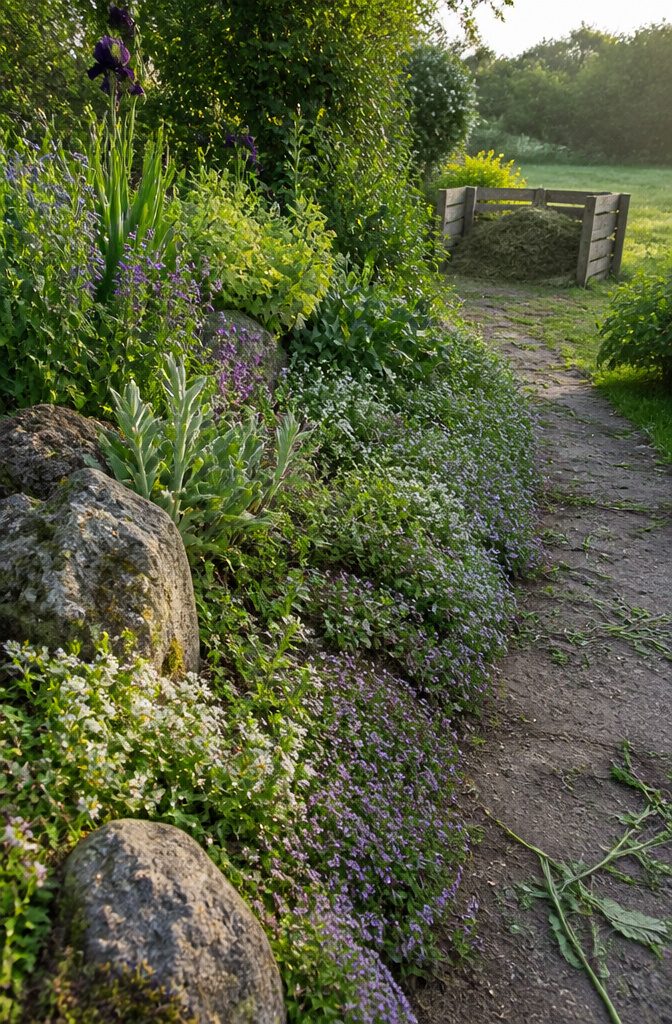
Cottage beds are planted so tightly that neighbors knit together and spill over path edges, and bare soil is the one thing you rarely see.
Fill gaps with creeping thyme, wall germander or snow in summer, and let them snake around a few rocks or boulders. Cover every patch of soil, and weeds have little room or light to get started.
Looser areas can run as a small meadow. Cut it once or twice a year, then remove all the cuttings and compost them.
Crowding has a cost: dense beds need more thinning and staking than spaced ones, so plan time for both each season.
Recommended Products

🌱 10000+ Lemon Thyme Seeds for Planting Includes 10000+ lemon thyme seeds for planting, ideal for herb gardens, borders, containers, and outdoor landscaping projects with long-lasting aromatic foliage.

LOW-GROWING CREEPING THYME GROUND COVER: Purple Creeping Thyme creates a dense, low-growing ground cover with attractive foliage and seasonal blooms. Suitable for garden borders, pathways, landscape beds, and other decorative outdoor planting areas.
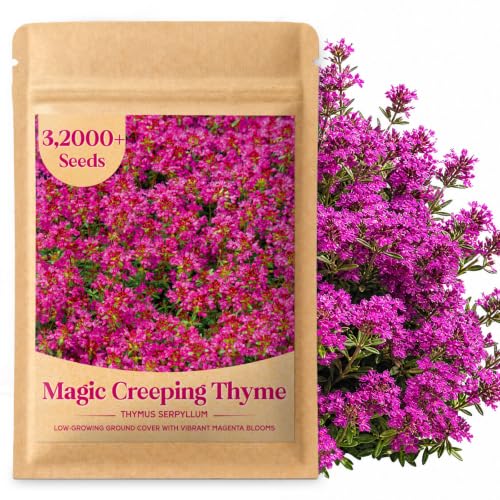
32000+ Seeds For Large Planting Areas: Over 32,000 Magic Creeping Thyme seeds provide generous coverage for pathways, garden borders, rock gardens, slopes and landscape projects. A great choice for creating a fuller planting area with a single packet
2. Layer Height and Seasonal Color
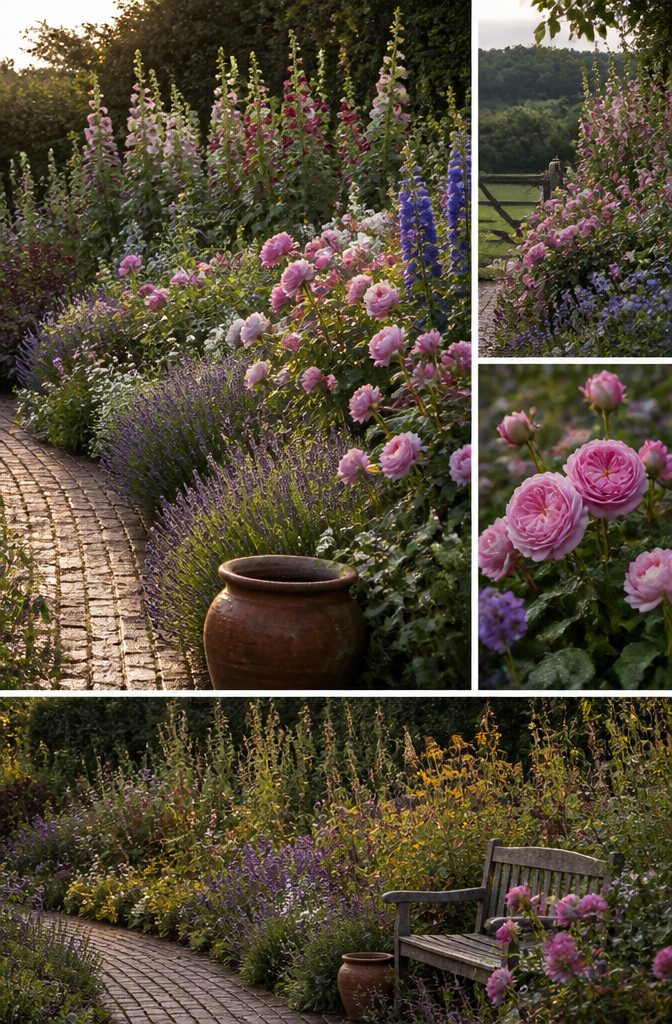
Plant in three tiers: low plants along the path edge, medium plants in the middle, and tall ones at the back.
Put the tallest plants behind everything else so each layer shows. Hollyhocks can reach 10 feet, and Confederate Rose hibiscus is another tall pick, but both need a sheltered spot so wind doesn’t flatten them.
The heirloom cottage flowers are English rose, everlasting sweet pea, hollyhock, garden peony, English lavender, and delphinium. Choose some for spring, some for summer, and some for fall, so one group is always blooming as another fades.
Annuals fill the gaps between them. Cleome (spiderflower), zinnia, marigold, cosmos, Shirley poppies, nicotiana, asters, and delphinium (larkspur) can all be tucked in wherever a perennial has finished.
Recommended Products

GIANT COTTAGE GARDEN FLOWERS – 5 TO 8 FT TALL – Transform your garden with hollyhock seeds that produce dramatic 5–8 ft plants crowned with lush double blossoms up to 3–5 inches wide. These hollyhocks flower seeds build a classic vintage wall of color, perfectly suited for borders, fences, and pollinator habitats across sunny landscapes in USDA Zones 3–9.

Versatile Garden Placement: This hollyhock features tall flower spikes and is suitable for cut flowers. It can be planted in cottage gardens, flower beds, balconies, at the back of borders, or in front of fences and walls, attracting hummingbirds, bees, and butterflies

Great for dried flower arrangements and borders
3. Edibles and Herbs
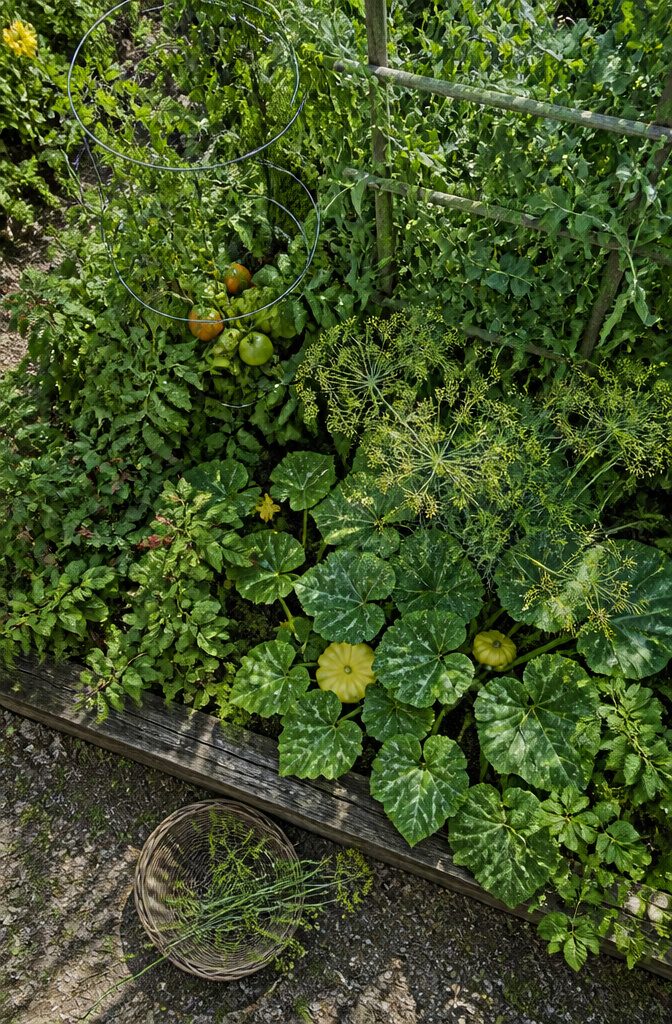
The cottage garden dates to the late 1800s in England, where it began as a working food garden. Crowded beds leave little sunlight at ground level, so choose plants that are bushy or grow vertically:
- Patty pan squash ‘Sunburst’: a yellow, scalloped squash that earned All-America Selections recognition in 1985.
- Heirloom tomato: give it a cage so it grows up instead of sprawling.
- Red raspberry: canes fruit in their second year, and berries keep only 1–2 days refrigerated.
- Dill: dry the foliage and seeds to store them.
- Peas: train them up a trellis.
- Cucumber: choose slicing types for fresh eating and pickling types for jars.
Recommended Products

Abundant Non-GMO Seeds: Each pack includes 1500 lavender seeds for planting, perfect for starting a fragrant outdoor or window herb garden with heirloom seeds and fresh herbs.

Fragrant Blooms: English Lavender seeds to plant of Lavandula angustifolia produce purple flower spikes on slender green stems; late spring–summer color with vigorous growth - ideal for fragrant flowers and classic herbs borders.

4. Climbing Roses and Vines
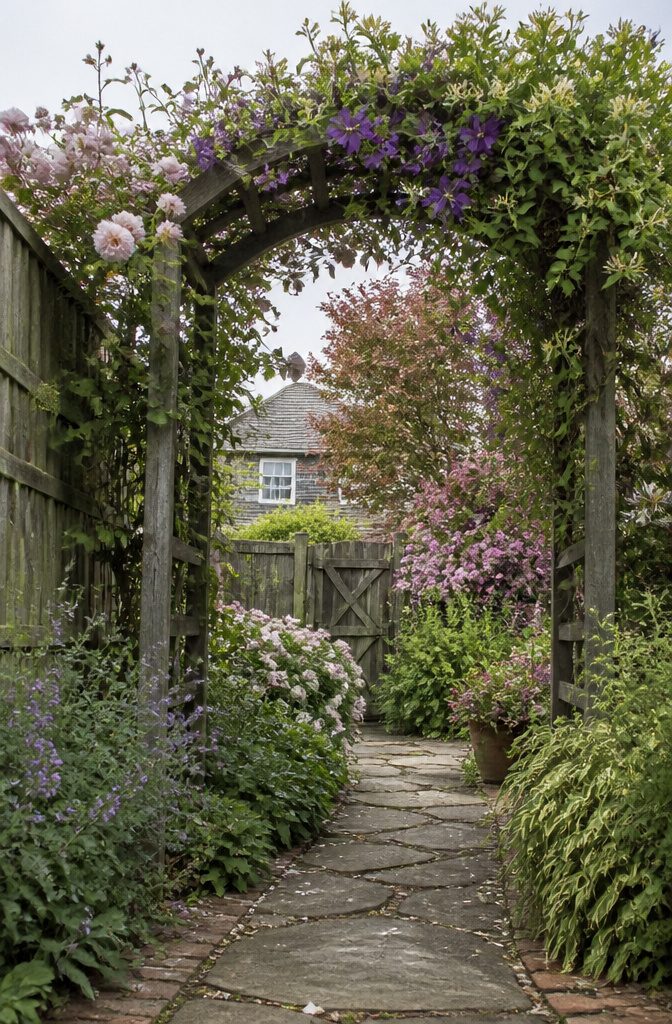
Climbers give a cottage garden its height and the look of having grown over the house on their own. Train them up walls, fences, arbors, and pergolas to cover bare structure.
Clematis and honeysuckle are the flowering vines to choose for screening a neighbor’s window or a utility corner. Lady Banks Rose covers a fence or a large structure, so skip it if your yard is small.
Build the support before you plant: a sturdy trellis, wire system, or arbor set in place first. Retrofitting a heavy vine onto a flimsy frame rarely works.
Beginners do best with clematis and honeysuckle. For roses without fuss, Knock Out, Drift, and Sunrosa are low-maintenance and disease resistant.
Recommended Products

ELEGANT GARDEN ARCH TRELLIS – Transform your backyard into a beautiful garden retreat with this classic black metal garden arch. Create an inviting entrance along pathways, over garden beds, or among your favorite flowers and climbing plants.

【Trellis for Climbing Plants Outdoor】Adjustable Height (70 inches) is the ideal size for outdoor climbing plant trellis, with three heights of 36, 52 and 70 inches, you can adjust the height you need according to the growth of your plants, providing enough space for the plants you want to grow while creating a visually appealing display.
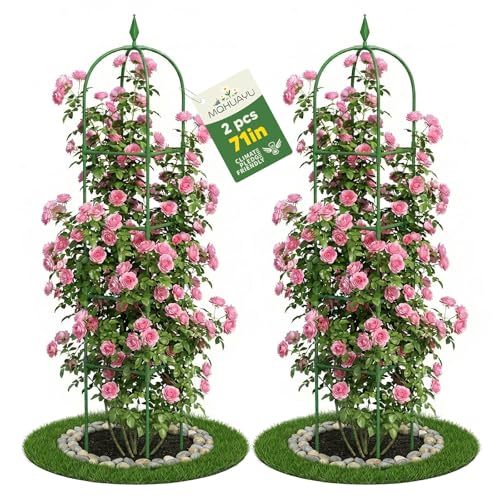
【6 Ft Adjustable Height】This 4-tier garden trellis for climbing plants provides ample space to plant thrive. With removable 4-way connectors, you can easily adjust the height as your plants grow—reaching up to 6 feet tall. It offers the flexibility needed for healthy vertical development
5. Paths and Steps
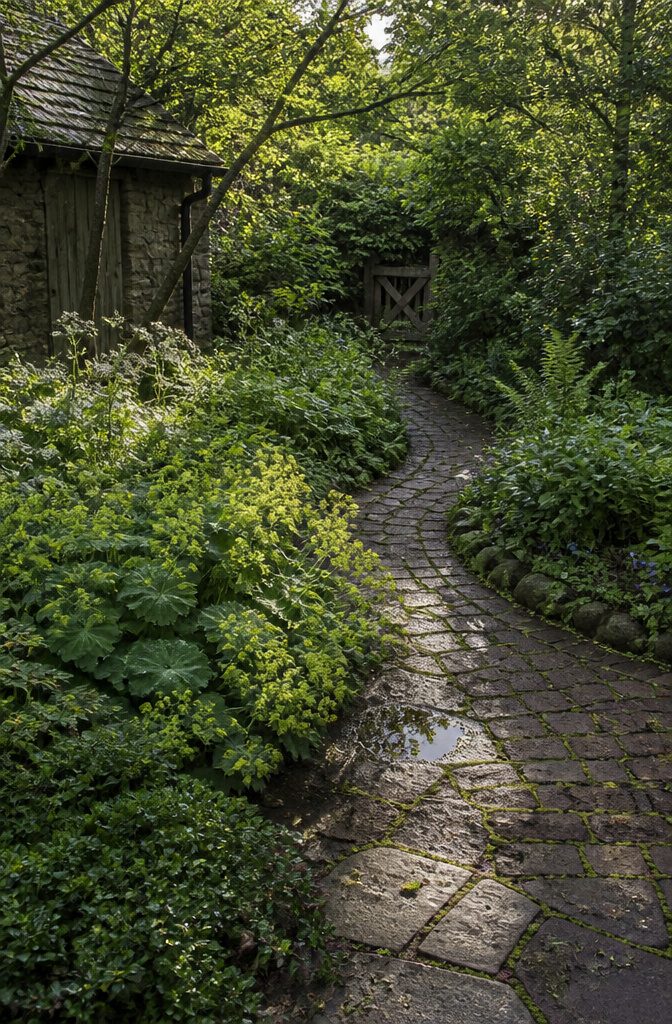
A straight path reads as formal. Curve it so each bend hides the next stretch, and the route gives access while pulling you on to see what’s around the corner.
Keep it winding and seemingly random, even though planning that casual look takes careful thought. Brick, stone, and cobblestone all suit the style, and weathered brick or flagstone looks settled fastest.
Plant low to tall as you move back from the edge. Lady’s mantle (Alchemilla mollis) makes a hazy, scalloped border, and low natives like bearberry or lingonberry cover bare soil along the margin.
Behind them, airy cow parsley blends the hard boundary into the planting. Hold back the pruners and let stems flop across the path edge, so the paving softens and nearly disappears.
Recommended Products
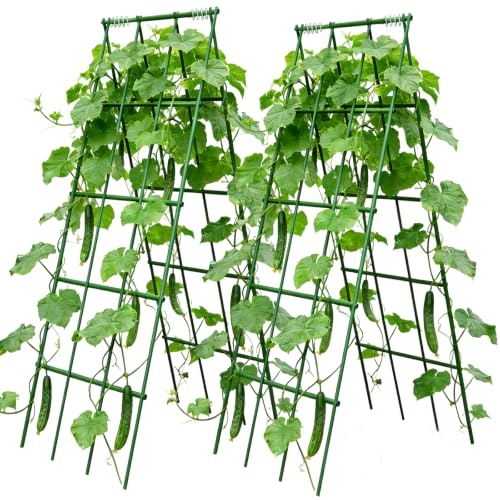
【No Assembly Required】Cucumber Trellis Out of the Box - From Packaging to Garden, Only 3 Minutes. While Other Bracket Kits Force You to Wrestle with More Than Ten Parts and a Wrench, Our No-Assembly-Required Bracket Panel Has Already Been Moved to the Garden for You, Providing a Simple and Quick DIY Erection Experience

Customizable A-Frame Structure: Elevate your garden with our versatile Adjustable-size A-frame garden trellis for cucumbers. Crafted with 37 straight stakes of 15.74 inches, 2 longer straight stakes of 18.1 inches, 4 A-Fork connectors, and 4 straight connectors, this trellis adapts to your garden's needs, providing optimal support for cucumber plants and other climbing vegetables.

【Rust-Resistant Material】: Cucumber trellis is constructed with high-quality galvanized steel inner pipes and an exterior plastic coating, forming a dual-layer rust-proof barrier to ensure long-lasting durability
6. A Tree or Focal Point
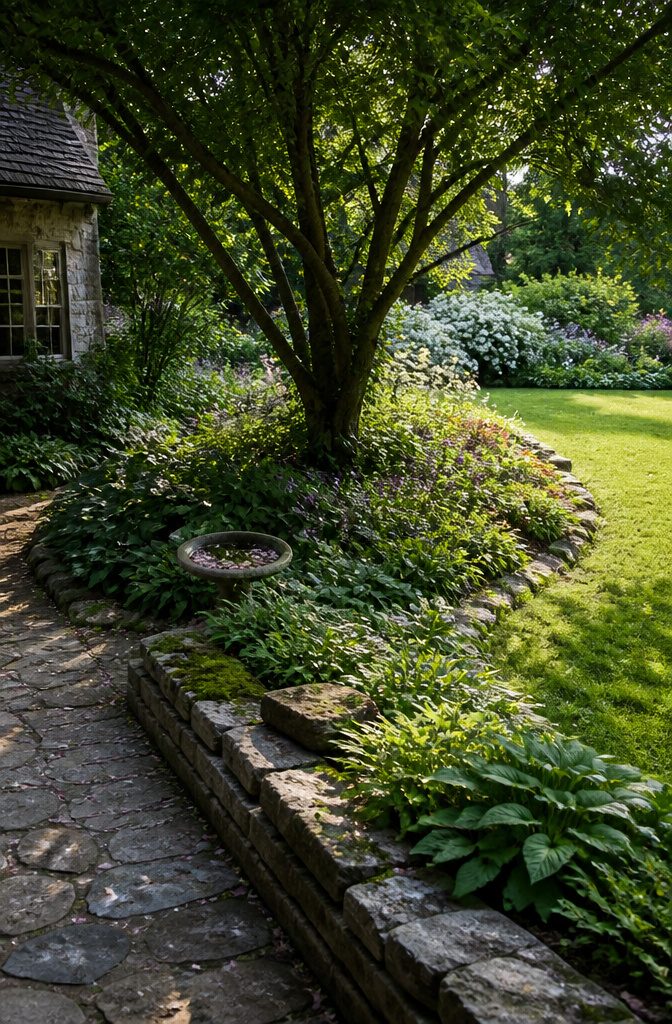
An existing tree already does the anchoring. Leave it where it stands and plant the beds in a loose, widening ring around it, working carefully by hand near the roots so you don’t damage them.
Shade-tolerant plants go closest to the trunk, and sun lovers go toward the outer edge.
If you have no tree, plant one.
Crape myrtle suits hot summers and can flower for up to 100 days of summer, long after spring bloomers fade. Set it where you’ll see it from a window, then build the planting around its base.
A yard that can’t take a tree can use a birdbath, arbor, bench, or sundial instead. Choose one and center the beds around it.
Recommended Products

62,000+ Seeds for Larger Areas: This generous pack of red creeping thyme seeds provides plenty for larger planting areas, multiple garden spaces, and reseeding

The Best Value - Organo Republic Thyme Seeds Pack contains 0.50g or 1350 of Non-GMO heirloom thyme seeds. Thyme (Thymus vulgaris) is known for its mint flavor, and is the perfect addition to fresh vegetable salad or culinary creations.

Heirloom Common Thyme Seeds: Thyme seeds for planting produce compact 8 inch perennial plants. These thyme heirloom seeds thrive in Hardiness Zones zones 5–12 and are ideal herb seeds for home garden beds or containers.
7. Fences and Screens
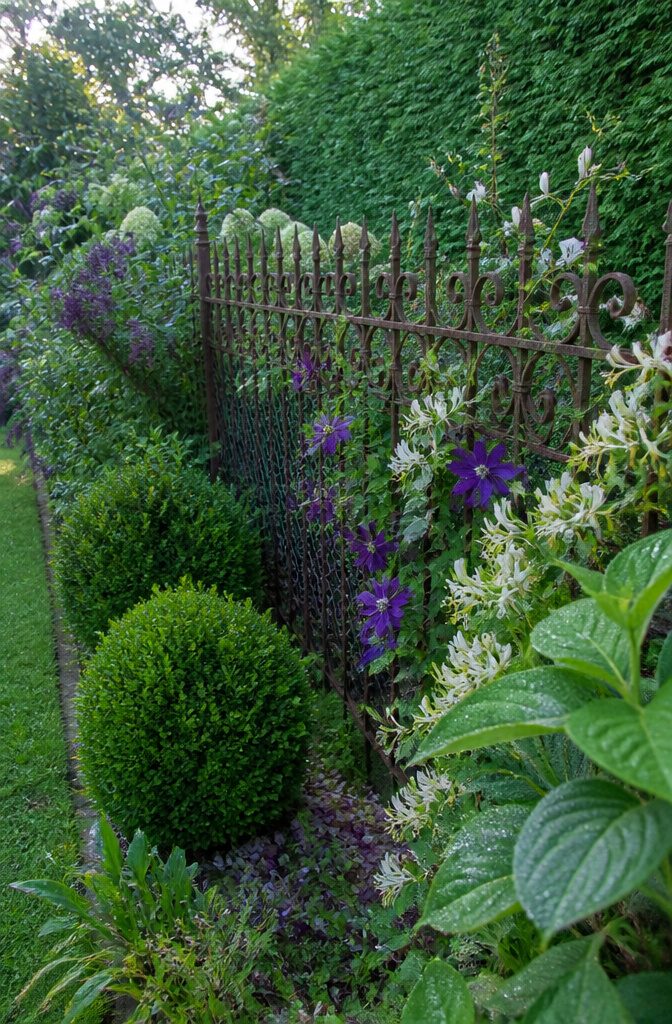
A fence gives you a backdrop for the border and a frame for vines to climb.
The cost is ground: the fence line plus the bed in front of it. Choose wood so it blends in, or aged decorative metal for a bold look that adds interest all year.
To hide chain link, cover it with honeysuckle or clematis, or plant a boxwood hedge or a background of butterfly bush, Reeves spirea, viburnum or holly.
Stagger the shrubs instead of lining them up. A screen can also block an unattractive view, add privacy, and divide the yard into separate areas.
Recommended Products

Abundant Garden Coverage: With over 3000 hollyhock seeds (Alcea rosea), this value-packed set is ideal for large-scale planting in outdoor gardens, flower beds, or backyard borders, offering tall and vibrant perennial blooms in a beautiful mix of red, yellow, pink, white, and more.

Layered flowers bring a double-flower look to cottage-style garden planting.

Colorful Flowers: Hollyhock, Carnival Mixture is a perfect mix for a backdrop plant. The plants reach 72 inches tall and produce colorful blooms in shades of red, yellow, pink & white.
8. A Personal Style
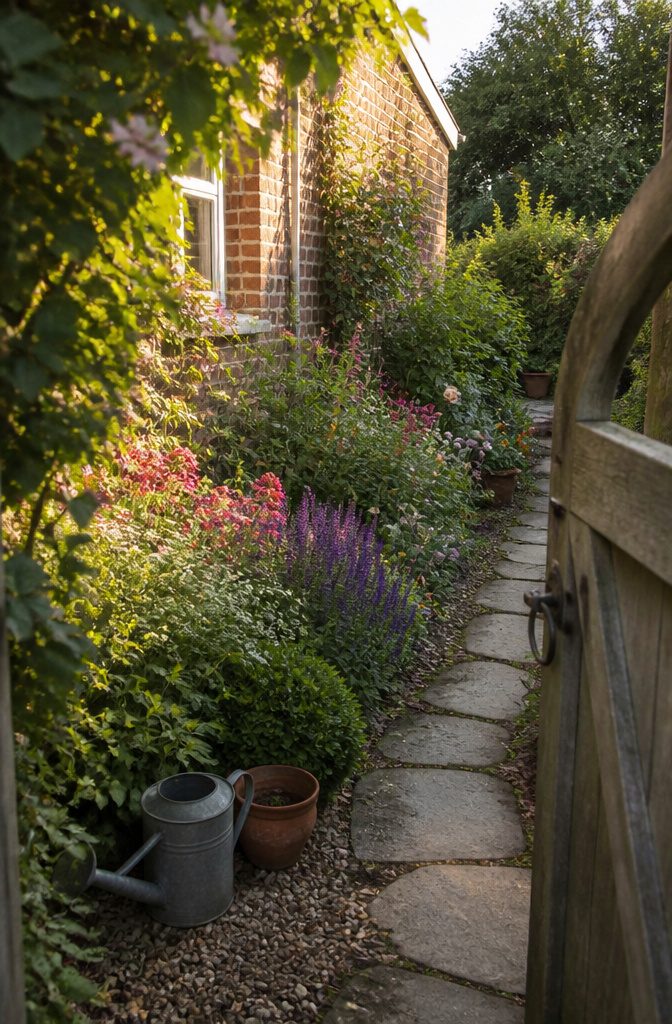
Cottage gardens have no fixed template. The style took shape in late 1800s England as a reaction to the straight, manicured lines of formal gardens, so rambling over rigid is built into it.
Your house, your site, and your taste set the plan, and the exterior of your home is a good place to borrow ideas.
Interest has grown in recent years partly because of cottagecore, an aesthetic trend from the 2010s that idealizes rural life, including gardening, baking, and embroidery.
If your yard is small or your budget is tight, bending the rules is part of the style. A compact plot can still be a cozy, colorful oasis that grows some food and supports pollinators and wildlife.
Recommended Products

The Best Value - Organo Republic 5-Pack Lavender Seeds set contains 11,000 non-GMO heirloom seeds. English Lavender (Lavandula angustifolia) is known for its colorful flowers, and is the perfect addition to any garden.

5,000+ ENGLISH LAVENDER SEEDS: 0.25 oz of English Lavender seeds. Generous quantity for garden borders, raised beds, containers, herb gardens, meadows, and pollinator-friendly landscapes

💜 Abundant Heirloom Seeds - Start your fragrant garden with over 1500 premium, heirloom seeds! This generous quantity ensures dense, vibrant lavender patches perfect for borders, containers, or creating a serene garden corner. Our seeds are open-pollinated.
9. Containers
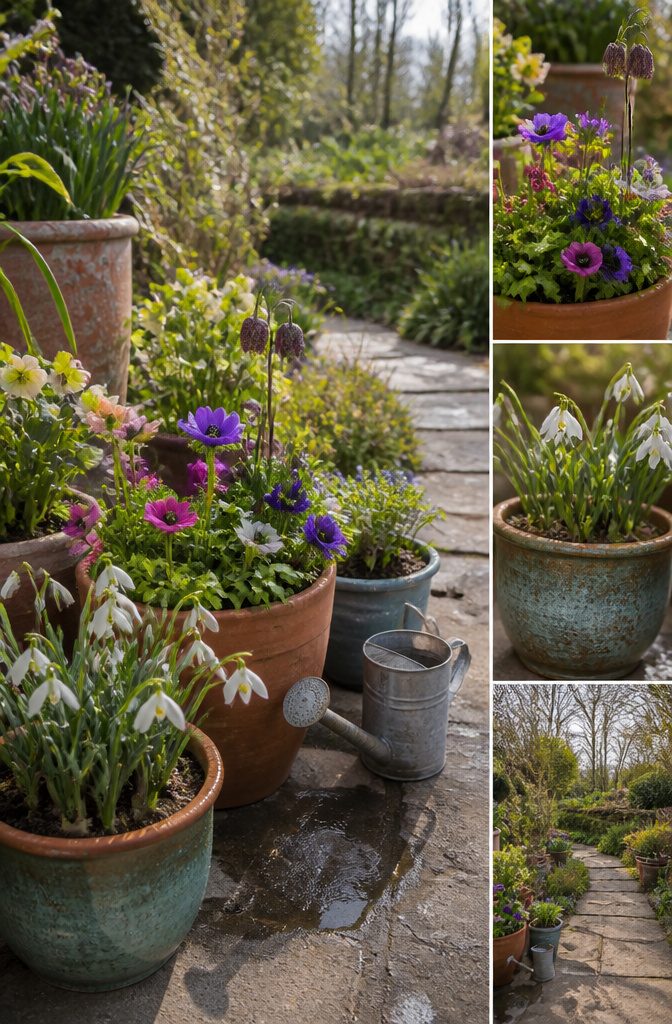
Pots break up hard surfaces. A cluster of containers on a patio slab, along a paved path or on a balcony gives a cottage garden its overflowing look where there is no soil to plant in.
Containers also let you start early. In cold early spring, pots of snowdrops, anemones or bergenias sit above the ground and catch the sun’s warmth before the soil does.
When summer annuals fade, swap in fall planters to bridge the gap to winter. Coordinate colors in one pot for calm, or contrast colors and textures for a livelier look.
Pots dry out faster than beds, so expect to water them more often than anything planted in the ground.
Recommended Products

【Premium Material】: Garden trellis features galvanized steel pipes coated with PE material, offering protection against corrosion and adverse weather, while also preventing plants from high-temperature burns
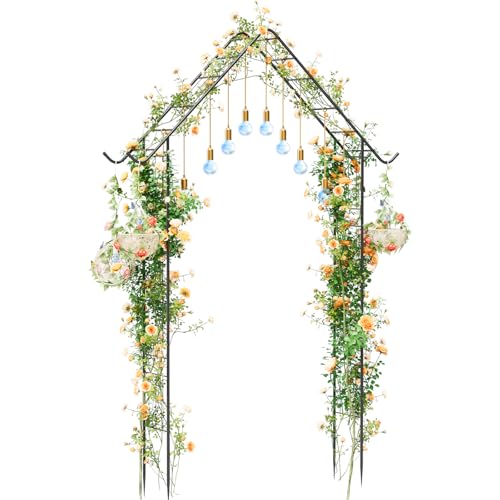
【Garden Arch Trellis with Hooks】 This pointed top metal garden arch comes with 4 integrated hooks, ready to hang flower baskets, lanterns, and outdoor decorations instantly. It functions as a sturdy trellis for climbing plants like roses and vines, and transforms into a decorative arch for weddings and parties, offering unmatched versatility for your garden and backyard.

Better Rust Resistance with Galvanized Metal Material: Crafted from high-quality galvanized metal.After repeated salt spray tests,this garden arbor offers at least 200% better rust resistance compared to standard metal garden arbor. It’s a versatile centerpiece for weddings, Halloween, Christmas, and anniversaries, adding romance or cheer to any event.
10. Seating and Structures
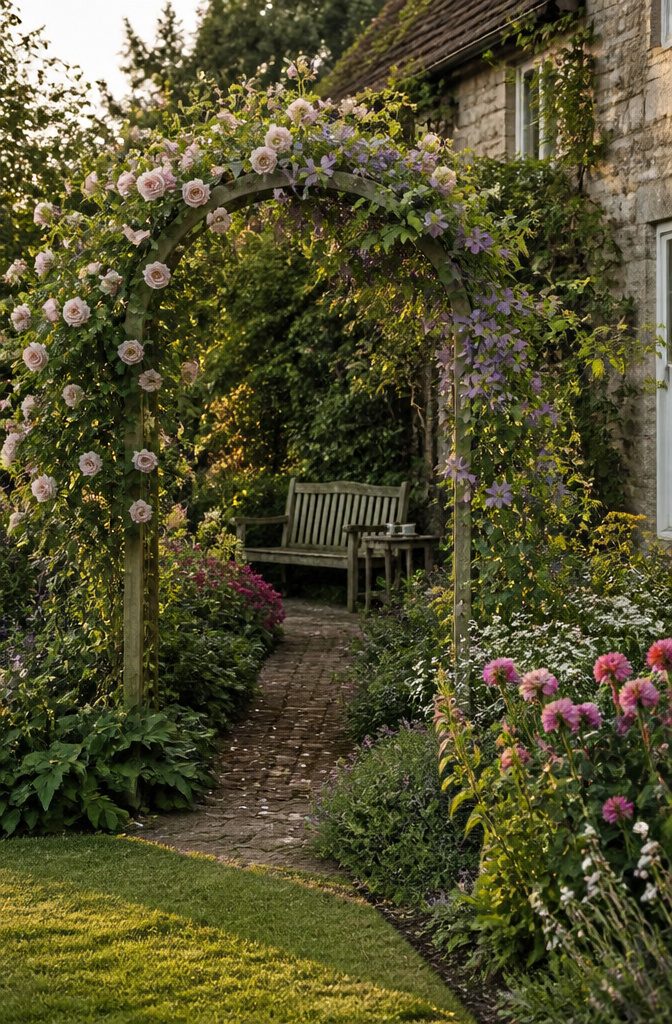
A bench or chair makes a cottage garden something you sit in, not just look at. Put a bench where a path ends so the walk has a destination, with a side table nearby for a cup of tea.
Choose wood, stone, or wicker, and pick a piece with character. A slightly mismatched set suits the style.
Place an arbor or archway over an entry, where it marks the move from lawn into planting.
Use a trellis wherever climbers need support or a bare wall needs cover. A rambling rose paired with clematis works well on either, since a rambler grows faster than a standard climber and covers more surface.
Recommended Products

Garden Trellis Size for Raised Beds: This 48" L x 48" H cucumber trellis for raised bed adjusts from 16" to 26" wide, fitting many 4 ft raised garden beds. Use it as a trellis for raised garden bed layouts to save ground space while guiding vines upward.
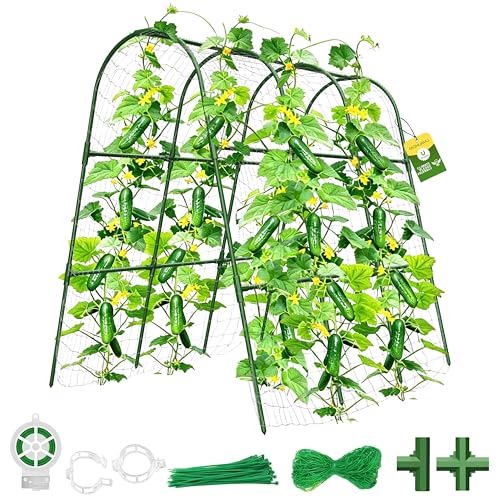
【U-Shape Stability Structure 】 U-frame trellis is more stable than A-frame trellis. Allowing you to plant a row on both sides. The arch design maximizes the garden space.

【Abundant Cucumber Trellis Set】You will get a complete garden cucumber trellis set, which includes 1 pcs U shaped cucumber trellis, 1 pcs plant grow bag, 1 pcs heavy duty plant climbing netting, 20 pcs tomato clips, 100 pcs plant ties, 1 roll of 65ft twisted wires, 1 roll of 6.5ft velcro straps, 1 pair of gloves and 1 sheet of instruction. Whether you have a garden or an open space outside, you can easily grow various vegetables and plants with it and be ready for a great harvest
11. Plants for Pollinators
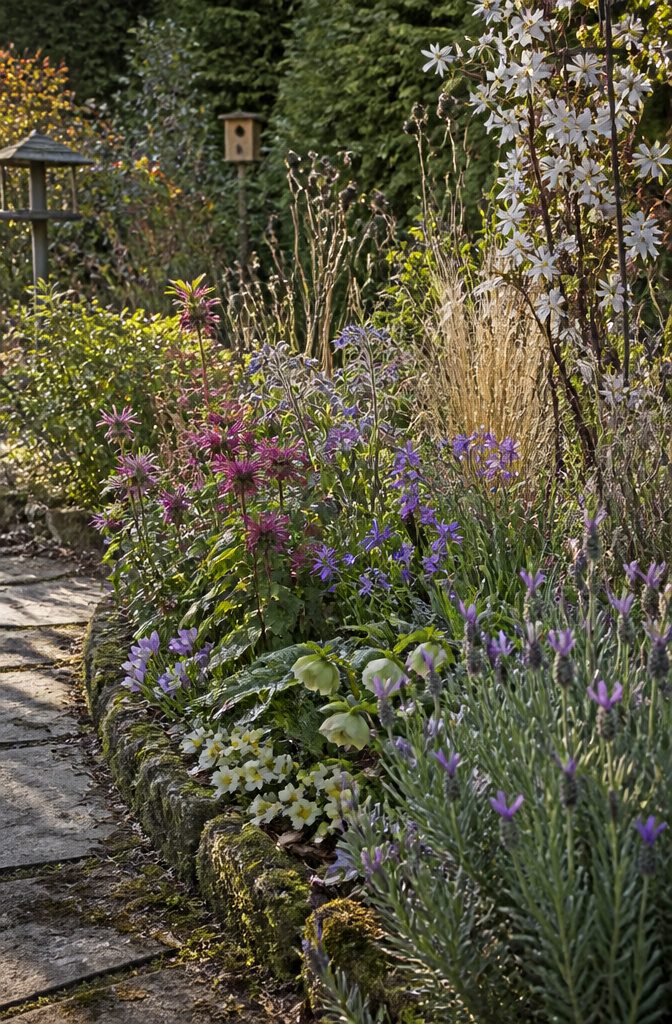
Fluffy double blooms are the easiest mistake to make in a pollinator border.
Double flowers, though attractive in a cottage border, should be avoided as bees can’t get into the plants and many are sterile.
Choose single-petaled flowers instead.
Geranium ‘Rozanne’ suits small yards, lavender edges a path, and borage refills its nectaries every couple of minutes. Pollen in late winter and early spring matters too, so plant hellebores, primroses, crocus and winter flowering clematis for early bumble bees.
Bee balm, pineapple sage and honeysuckle keep hummingbirds visiting all summer. Leave grass plumes and seed heads standing for birds, and add bird feeders and bird houses.
12. Rustic Materials
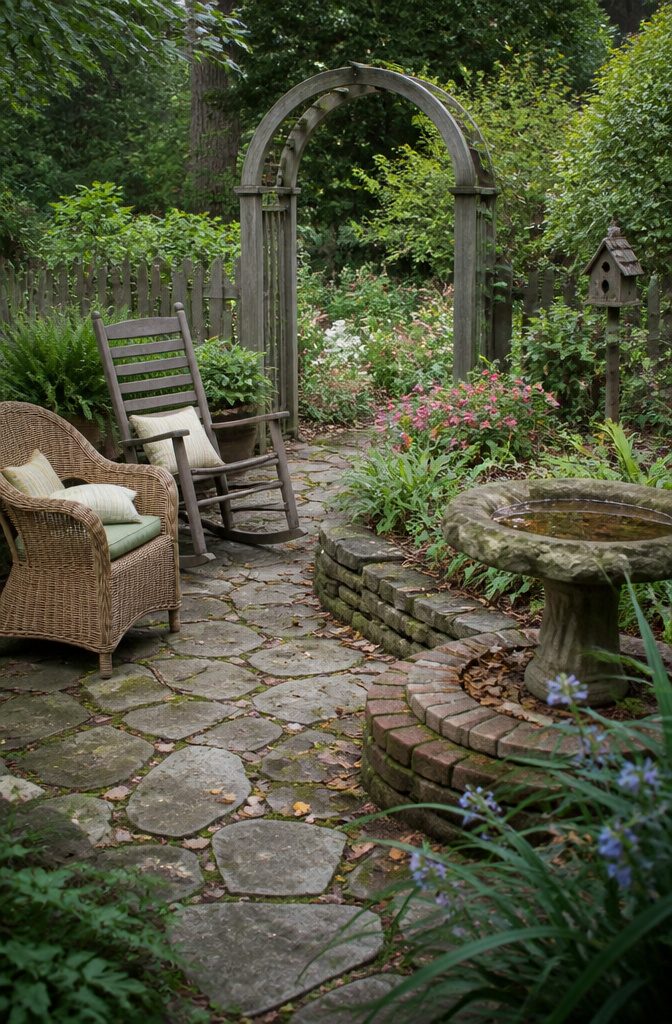
Stone, brick, and wood do most of the work in a cottage garden.
Use them wherever the yard needs a hard edge or a structure: a low stone border along a bed, brick around a bird bath, a picket fence or wooden arch at the gate.
Wicker chairs and a wooden rocking chair bring the same rural feel to seating height.
Choose real stone, wood, and wicker over anything that imitates them. Then pick pieces with character: a bird house, a bird bath, even a garden gnome.
Skip matching sets of ornaments. The style looks best when the yard seems a little thrown together, and identical pieces undercut that.
13. A Pink and Mauve Palette
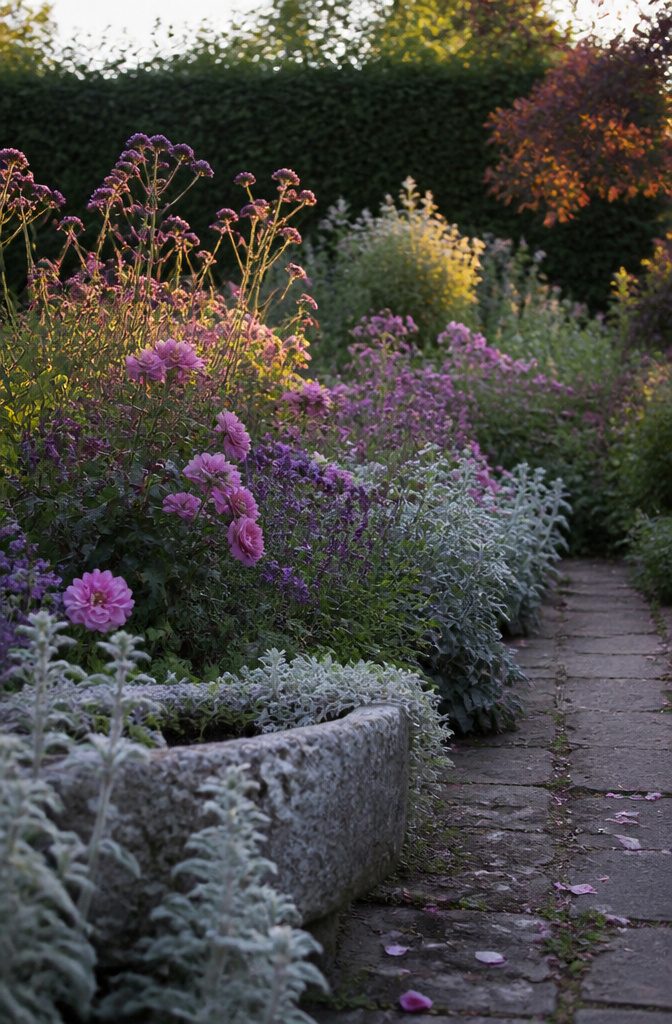
A limited palette of soft pinks and mauves gives a cottage garden a calmer, more painterly look. Build it from mauve lavender, old-fashioned pink roses, and Verbena bonariensis, whose purple and magenta flowers bloom for much of the summer.
Add a dash of deeper purple for drama and a few touches of vintage cream, all against a green backdrop. Once the scheme feels settled, pale greys, washed-out blues, and silvery foliage add depth.
The cost is the mixed, spontaneous look many cottage gardens rely on, where every color jostles for space. Treat this as one option, not a rule.
Keep to the palette strictly, or it reads as a muddle instead of a scheme. For fall interest, spindle tree (Euonymus europaeus) carries pink and orange seed pods from late summer.
Prepare the Soil and Water Well
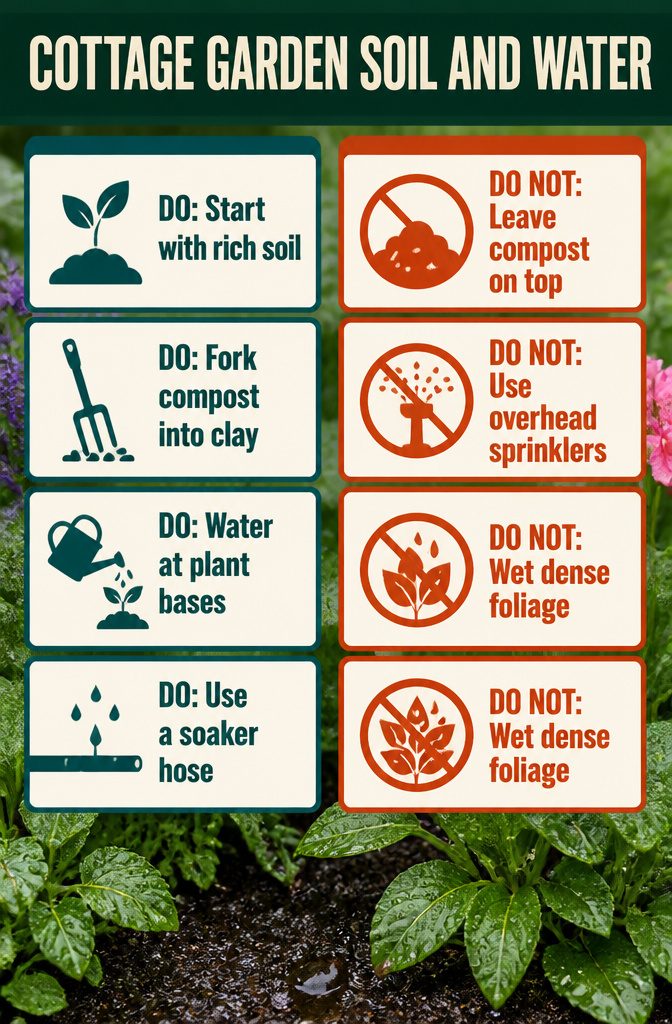
Cottage plantings crowd close together, so the soil has to feed a lot of roots at once.
Start with healthy, rich soil. If yours is compacted or heavy clay, work in organic matter such as mushroom compost or composted manure before planting, and fork it into the bed rather than leaving it as a layer on top.
Clay drains slowly and packs down; compost opens it up.
Water at the base of the plants, by hand or with a soaker hose threaded through the bed.
Skip the overhead sprinkler. Much of its spray never reaches the roots, and wet foliage invites mildew and leaf spot, which dense, overlapping plants are slow to dry out from.
Match Plants to Your Region
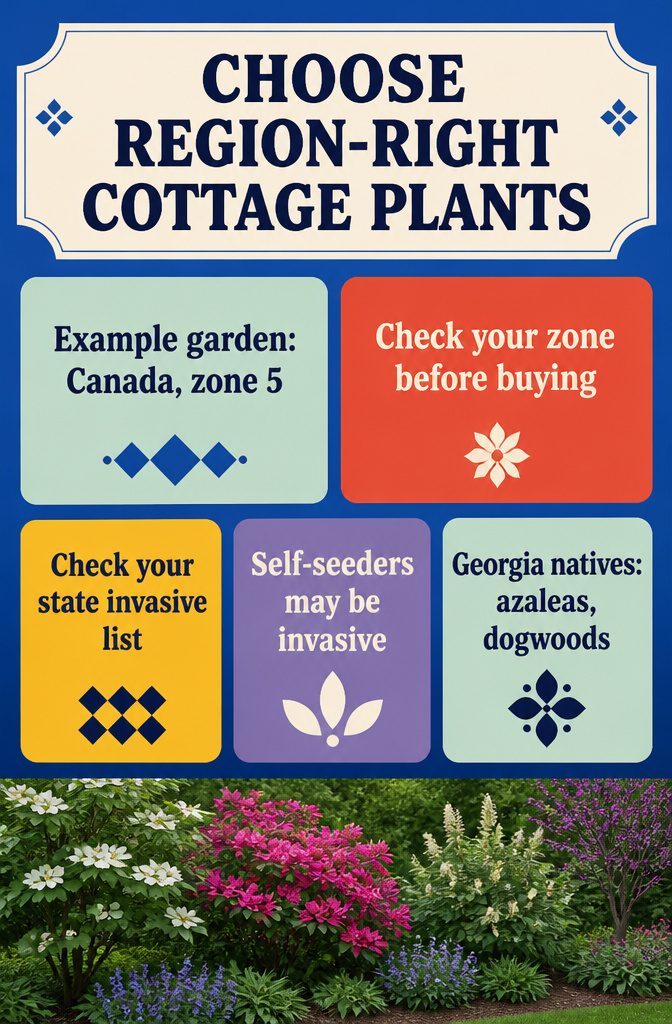
Plant lists in cottage garden guides rarely match your yard.
A popular example garden sits in Canada, in zone 5, so its choices need adjusting if your zone is warmer or colder. Check your zone and your state’s invasive plant list before you buy anything.
Self-seeders need the closest look. Cottage gardens depend on plants that sprout wherever they like, and some of those are considered invasive in certain areas.
Start with natives instead, since they are hardy and suit the region’s style.
In Georgia, that means native azaleas, sweetshrub, summersweet, dogwoods and redbuds. Your county extension office or local native plant society can give you the matching list for your area.