
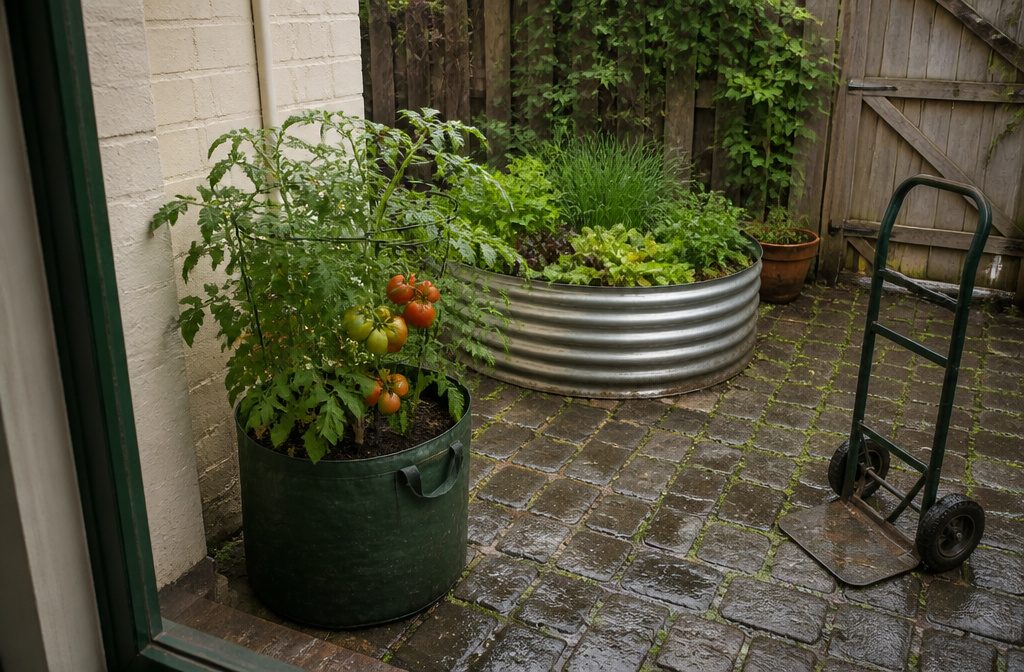
These ideas run from one 15-gallon tomato pot to a potager of four L-shaped beds, and how long you will stay put decides which fits.
Renters should favor containers light enough to lift onto a dolly, since those leave with you at the end of the lease. A raised bed, like the 4-by-4-by-1-foot galvanized circle, stays with the yard.
1. Raised Beds and Containers
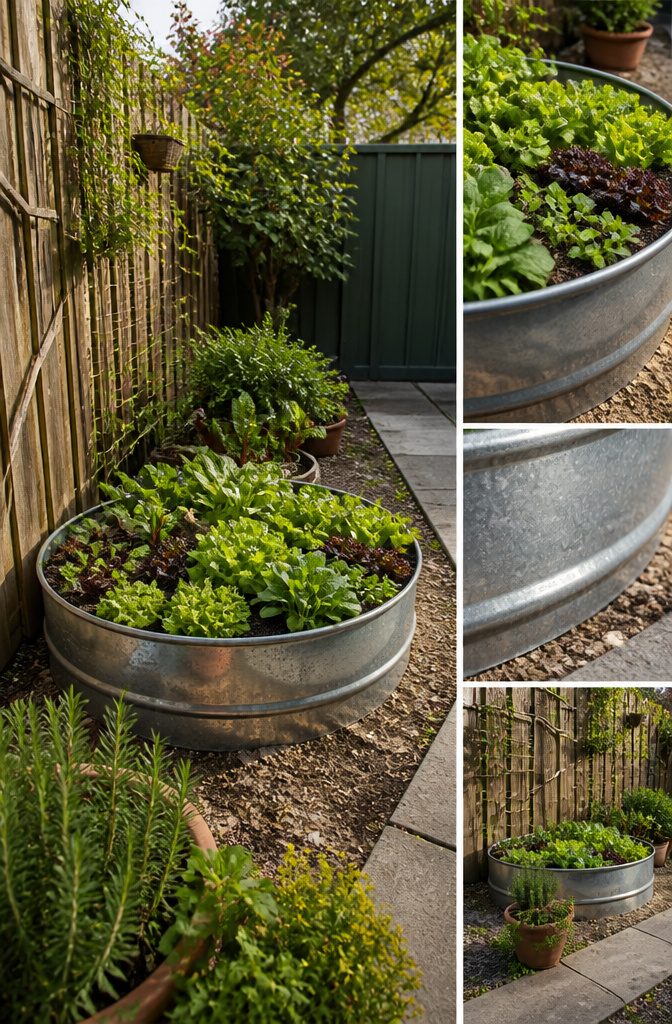
A raised bed lets you set the soil and the layout before a single seed goes in, and for a small yard it beats planting in rows.
Beds planted in tight blocks can produce double the conventional row yield, because you stop giving up ground to walking space between plants.
Vego Garden Beds come in white, grey or green, so the bed can match a fence or patio instead of clashing with it.
For a round shape, Plant and Plot makes a galvanized-steel circular bed that measures 4 by 4 by 1 feet. At 4 feet across, you can reach the center from any side, so you never have to step on the soil.
Recommended Products

【Spacious and Versatile Design】: The CATMANOR raised garden beds outdoor provide ample growing space for a variety of vegetables, herbs, and flowers. The raised bed design maximizes planting capacity, making it an ideal solution for gardening enthusiasts who want to grow medium to deep-rooted plants such as broccoli, beans, and more.

What You Get: we have included Galvanized raised garden bed kit with detailed assembly instructions, rubber edge strips, safety gloves , wrench tools and with galvanized nuts and bolts in the box .These essential tools elevate your overall planting and gardening adventure

What You Get: we have included Galvanized raised garden bed kit with detailed assembly instructions, rubber edge strips, safety gloves , wrench tools and with galvanized nuts and bolts in the box .These essential tools elevate your overall planting and gardening adventure
2. Mix in Herbs and Flowers
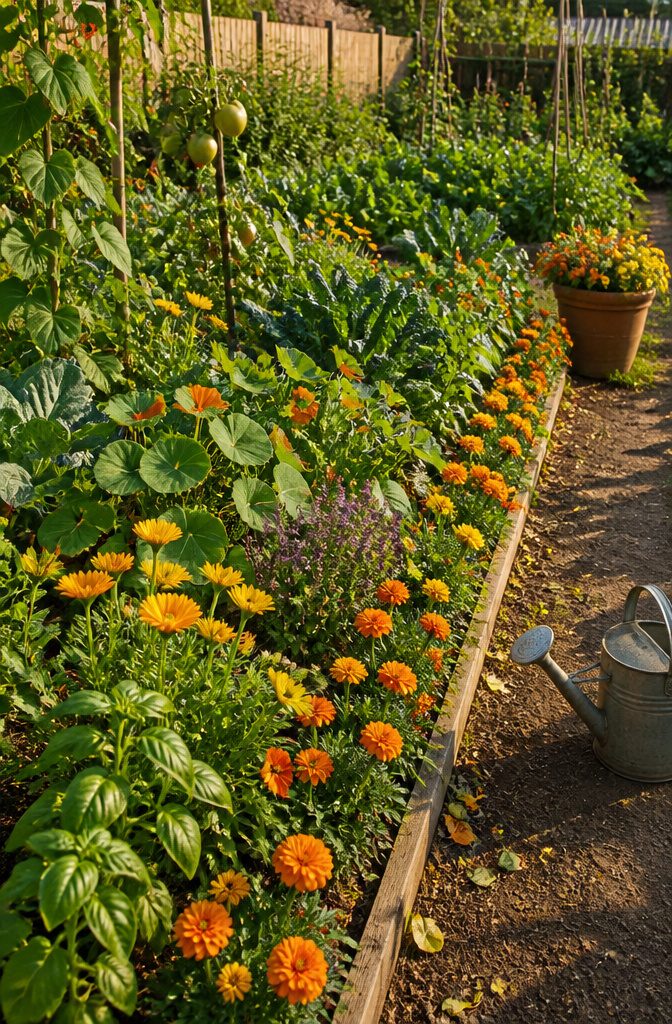
Tuck flowers and herbs between the vegetables instead of giving them a separate bed, and the garden stays colorful while it keeps producing food.
Nasturtiums, marigolds and calendula are the easiest picks. Their orange and yellow blooms stand out against green leaves, and they fill the gaps between crops.
Herbs add texture and scent beside tomatoes and beans. This works in beds and pots alike, so a container with one pepper plant and a marigold at its base counts.
Give the flowers a job. A tall plant or a pot of bright blooms at the end of a row becomes a focal point that draws the eye.
A line of marigolds or herbs along a bed’s edge marks a boundary and keeps the planting looking tidy.
Recommended Products
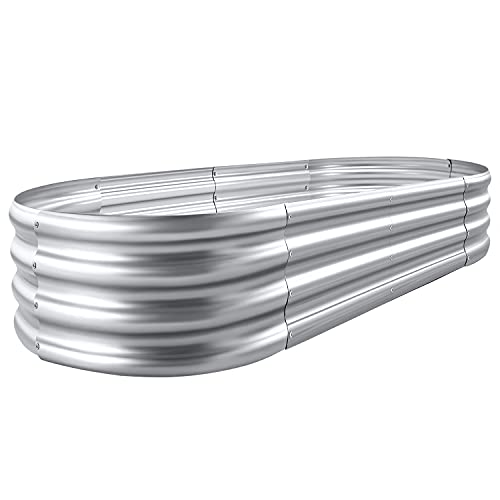
Each raised metal garden bed size: 4×2×1ft ,7.14Cu

SPACIOUS GROWING AREA: The generous planting space of this large garden bed provides plenty of room for nutrient-rich soil, helping vegetables, herbs, and flowers develop stronger roots and produce bigger harvests in the backyard garden. These raised beds for gardening measure 59.5 inches wide by 59.5 inches deep by 11.75 inches high, weigh 20 pounds, and have a soil capacity of 15.4 cubic feet or 115 gallons.
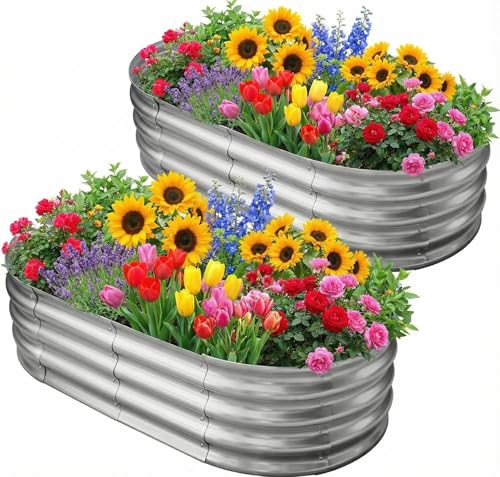
Discover the ergonomic elegance of our oval design—engineered for stress-free gardening and visual appeal. Raised flower bed features a heavy-duty construction using secure clamps and bolts, making it the best choice raised garden bed for hassle-free assembling and long-term garden fun, even for beginners or seniors.
3. Add Garden Lighting
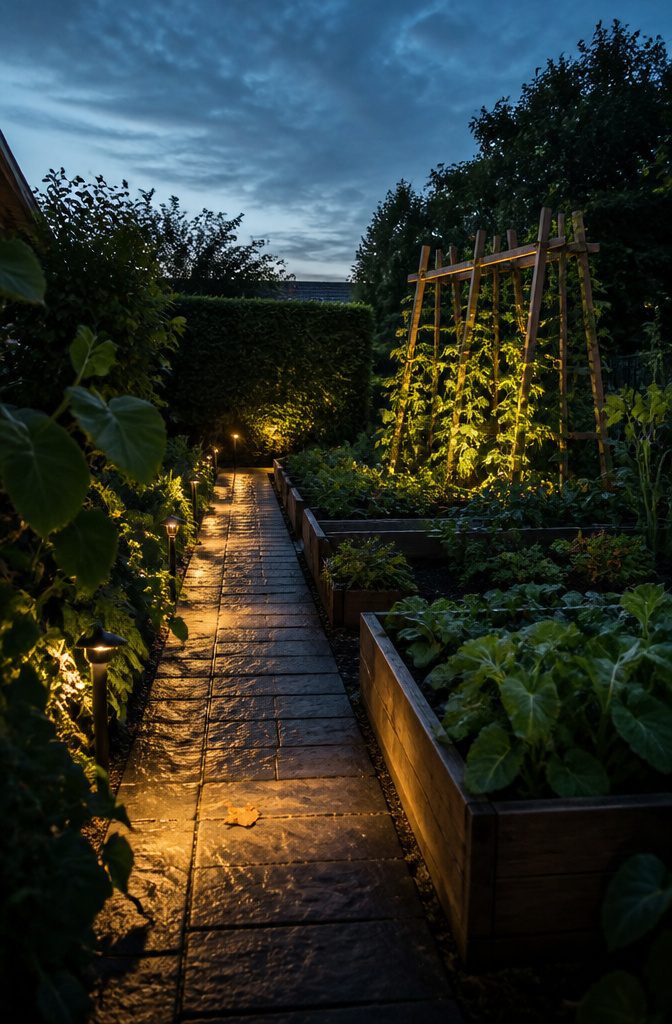
Lighting does two jobs in a vegetable garden: it shows you where to step, and it gives the space an evening look.
Lights along a walkway let you cross the garden after dark without stepping on a seedling or off the edge of a bed.
Once the path is covered, pick one or two features worth lighting, such as a trellis, a raised bed, or a fruit tree.
Light the path first and the features second, so the garden reads as a place to walk through at night.
Keep the fixtures few. A yard lit from every angle loses the nighttime atmosphere you added the lights to create.
Recommended Products

Arranging your garden with this in mind can double your bounty!


SIX BEDS, TWO CLASSIC PROPORTIONS — Four 6x3x1.5ft rectangles and two 4x4x1.5ft squares, all 18in tall. Matching beds create a coordinated foundation for a traditional kitchen garden
4. Lay Out Walkways and Paths
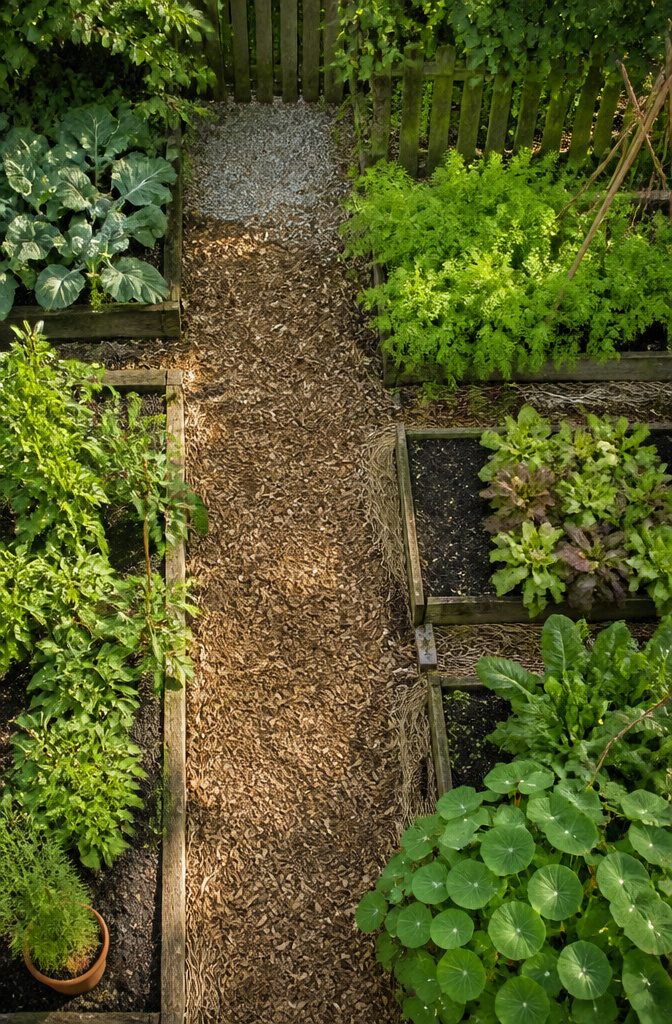
A path does two jobs in a veg garden: it keeps your feet off the growing soil and gives the plot a line the eye can follow. Temporary paths suit renters, beginners and anyone still deciding where beds belong.
Wood chips, straw, or flattened cardboard under mulch cost little, hold back weeds, and can be raked up when you rearrange. They break down, so top them up each season.
Permanent paths suit a layout you have settled on.
Brick, pavers, flagstone and compacted gravel drain well and look finished all year, but they cost more and are hard to move. Mulch the first season, then pave only the routes you actually walk.
Recommended Products

【Magnetizes Securely to Garden Beds】 These solar garden lights have a built-in magnet, allowing them to easily attach to metal planter raised beds. Just switch on the light, attach them to your garden bed with the magnet, and experience the cozy atmosphere of an evening walk in your garden

UNIQUE PATENTED SOLAR PATHWAY LIGHTS: US Patent intellectual property protected. Upgraded solar garden lights adopts a one-piece lamp head design, the lamp head imitated the diamond look, with high transparent acrylic material, which makes the light with strong transmission, large lighting area, super bright light output; The style is modern and simple, compact and delicate. landscape lighting to creates a romantic atmosphere for your home. Extremely pretty solar garden yard decor