Your site’s sun, soil and USDA zone decide which of these styles fits, from desert agave to boxwood hedges to potted coleus.
Soil can rule out a whole look: olive, lavender and rosemary die in heavy clay or any spot that stays wet. Fill a test hole with water and time the drain first.
1. Desert and Rock Gardens
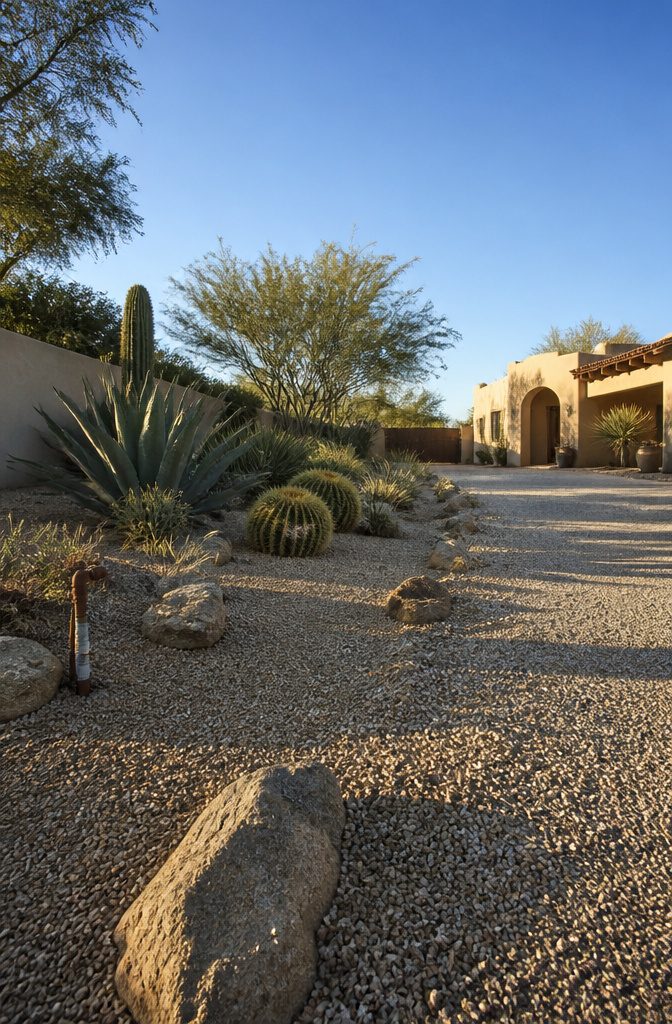
Tucson soils are sandy or rocky and low in organic matter, which is what desert plants want. For a hot, dry yard, this style wins: it asks for the least water and attention once plants settle in.
Pick a look first.
Southwestern relies on ocotillo, saguaro and mesquite for height. A desert oasis softens that with Texas sage, red yucca and desert marigold.
Modern minimalist uses agave, barrel cactus and desert spoon, with plenty of bare gravel between them. Native habitat mixes brittlebush, chuparosa and soaptree yucca.
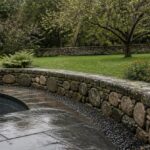
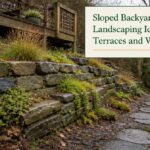
A rock garden is the same idea at smaller scale. Alpine plants, succulents or natives set among stones suit poor soil or poor drainage, and lean soil is the goal, so skip the rich compost.
Recommended Products

Wonderful High End Gift. Reward yourself or bring calm & happiness to loved ones. Desert version of a desk Zen Garden gorgeously packaged with the elements for inner peace. A deluxe Zen decor gift set

【Well Drainage】This succulent gritty mix is super well in water drainage, best for drought tolerant succulents and cactus, help your plants grow beautiful colors and also effective prevent rover water
2. Mediterranean Plants
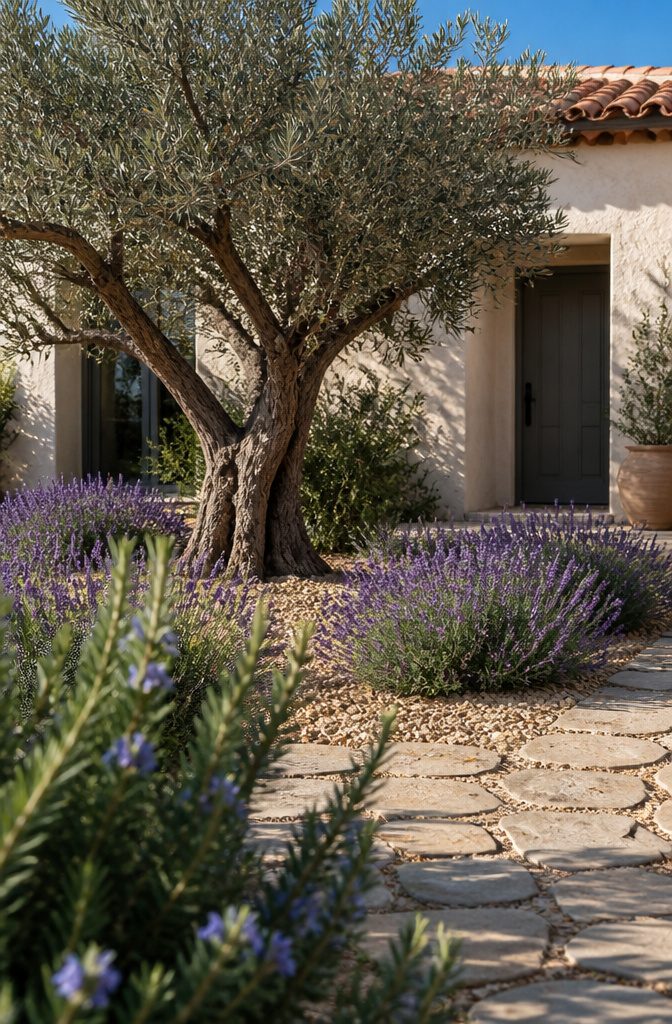
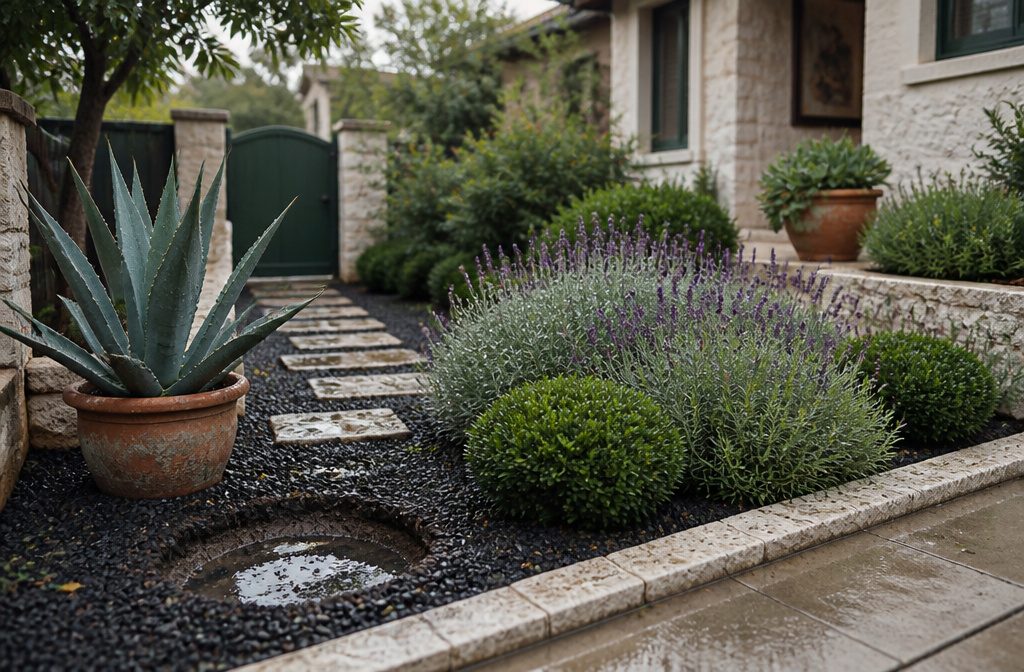
Olive (Olea europaea) is the plant to build around. It is a drought-tolerant tree with silvery foliage and a sculptural form, and it makes a strong focal point against a stucco wall or tile roof.
Lavender (Lavandula) fills the edges with fragrant purple blooms and needs little water. Rosemary (Rosmarinus officinalis) stays evergreen, carries small blue flowers, and gives you a kitchen herb to clip on the way to the door.
All three want full sun and fast-draining soil. If your front yard has heavy clay or a spot that stays wet, skip this look, because roots sitting in soggy ground are what kill these plants.
Crushed gravel or natural stone as ground cover suits the style and keeps the surface dry.
Recommended Products

For delicious, fresh flavor in garden-to-table meals, choose easy-to-grow Bonnie Plants Rosemary with Miracle-Gro Pour & Feed Singles Ready-to-Use Plant Food 4-pack for your garden; trust the experts with more than 200 years of experience

Growing Environment: Thrives outdoors in hot, well-draining sun; can grow indoors in bright light with careful watering.

【Fragrant & Flavorful Herb】- Enjoy the refreshing aroma and robust flavor of fresh rosemary, perfect for seasoning meats, soups, roasted vegetables, and more. Includes a required winter heat pack for safe cold-weather shipping.
3. Silver Foliage Plants
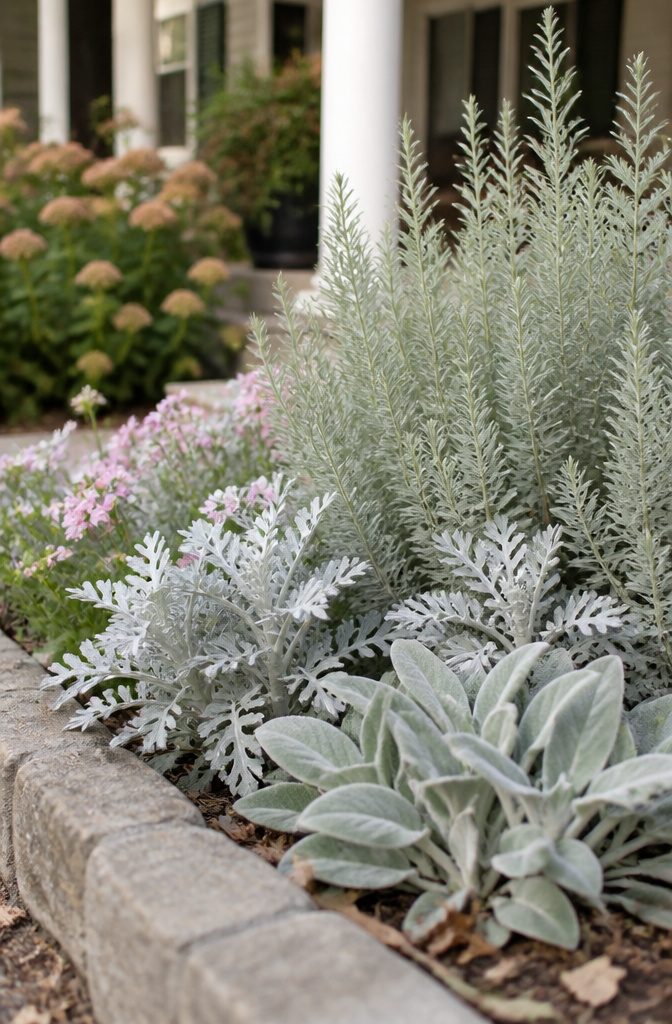
Silver foliage calms a front bed that mixes colors. Gray leaves sit comfortably beside pastels and bold tropical tones, so they tie unrelated flowers together.
Artemisia is the long-term pick. It’s a perennial for Zones 3–9 in full sun, 1–6 feet tall and 1–12 feet wide, with deeply lobed, finely cut leaves.
Proven Accents Silver Bullet is a named variety to look for. Check the mature spread on the tag before you plant, because that range is wide.
Dusty miller has velvety, lacy leaves and stays 6–24 inches tall. It is a perennial only in Zones 7–10 and is usually grown as an annual, so treat it as a seasonal filler for pots and bed edges.
Lamb’s ear, hardy in Zones 4–9 and 6–18 inches tall, has the softest leaves of the three and tolerates drought once established.
Recommended Products

Unusual Silver Foliage: A uniform, compact plant with silver-white leaves that grows 8-12 inches tall

Realistic Dusty Miller Stems: this set includes 6 artificial dusty miller stems, each measuring approximately 13.5 inches tall; The silver gray flocked leaves mimic the natural powdery texture of real dusty miller, making them ideal for wedding bouquets, farmhouse decor, and floral arrangements

Dusty Miller's silvery-gray foliage adds a unique, elegant contrast to vibrant flowers and plants in your garden.
4. Shade Foliage Plants
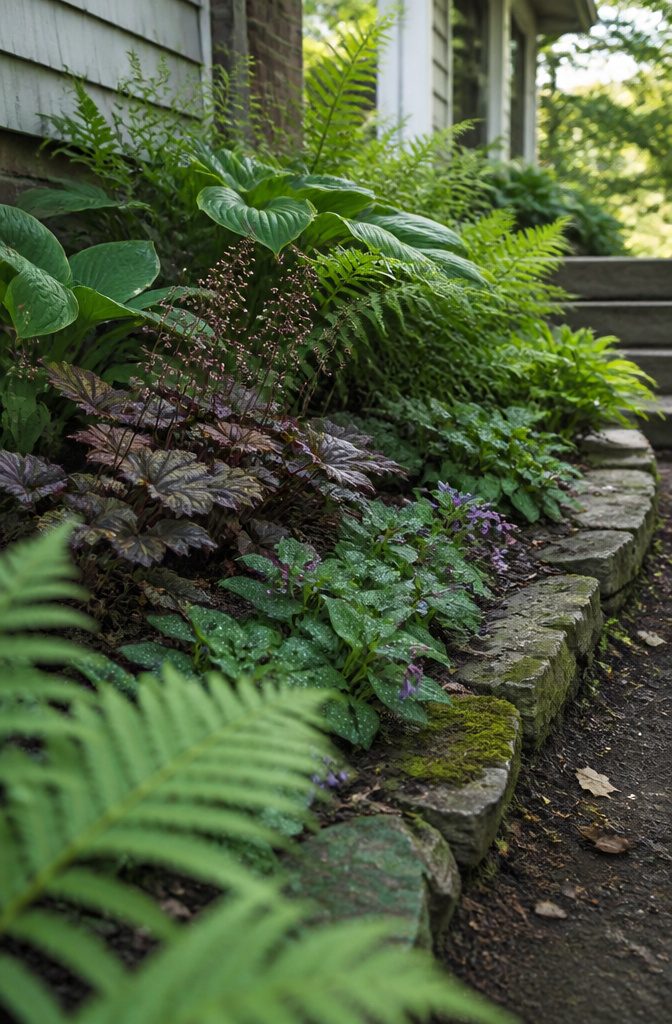
Hosta, ferns, lungwort and coral bells come back every year; caladium and rex begonia are tender. Coral bells are the easiest start: they need little care and tolerate varied light and soil.
| Plant | Zones | Light | Height | Type |
|---|---|---|---|---|
| Hosta (Shadowland ‘Autumn Frost’) | 3–9 | Partial or dappled shade | 2 inches–4 feet | Perennial |
| Ferns | 3–11 | n/a | n/a | Perennial |
| Lungwort (‘Pink-a-Blue‘) | 3–9 | n/a | 6–12 inches | Perennial, early-spring bell flowers |
| Coral bells (Primo) | 4–9 | Partial sun to partial shade | 6–18 inches | Perennial, evergreen to semi-evergreen |
| Caladium | 9–11 | n/a | 12–24 inches | Tender, annual in colder zones |
| Rex begonia | 10–12 | n/a | n/a | Tender, overwinter indoors |
Recommended Products

VIBRANT BLUE BLOOMS FOR A BEAUTIFUL LANDSCAPE: Our Blue Sage (Salvia Farinacea) Wildflower Seeds bring brilliant blue blooms to your garden, adding eye-catching color to borders, flower beds, and open spaces. This perennial salvia plant enhances any outdoor area with its tall, graceful flowers, providing a bold and lasting visual impact from early summer through fall.

Texas Sage Plant Pot: Texas Sage is a gorgeous plant featuring silver-gray oval leaves that are soft to the touch. Attractive to hummingbirds and bees, this resilient, cold-hardy plant is ideal for inviting wildlife into your living space.

***When received, the plant will be in seasonal condition with appropriate foliage. If shipped between November 1st and March 1st, the plant may be dormant and trimmed. Plant is fully rooted in the pot ready for immediate planting.***
5. Bold Tropical Foliage
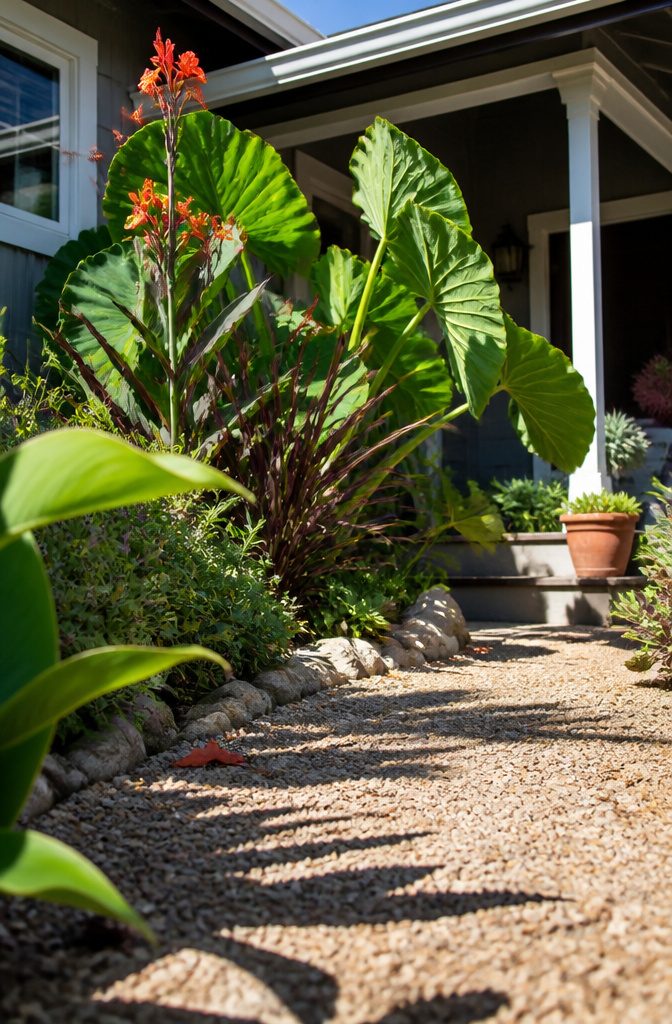
Canna, elephant ear, and New Zealand flax give a front bed an exotic focal point, and a single clump of any of them is enough.
Canna (Zones 7–11) wants full sun, grows 1½–8 feet tall, and flowers from summer into fall. Pretoria is a good variety to look for.
Elephant ear (Colocasia, Zones 8–11) stands 2–8 feet tall with leaves up to 2 feet across. New Zealand flax (Phormium tenax, Zones 9–11) sends up sword-like leaves in burgundy, orange, pink, or gold, and ranges from 1 to 12 feet tall.
Outside those zones, plan to replant.
Dig up canna and elephant ear bulbs and store them indoors over winter, or buy new ones each spring. Flax is easiest in a pot you can carry inside.
Recommended Products

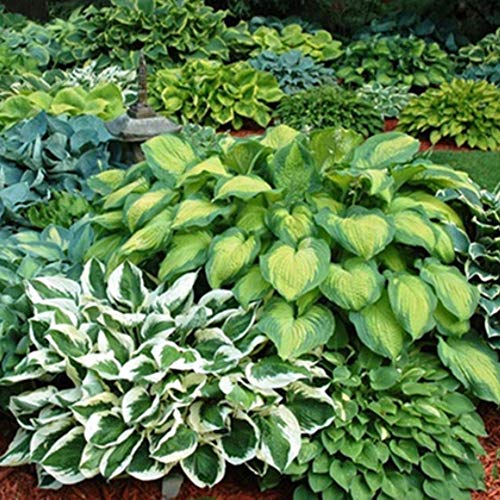
Bare Roots, Often Called Hosta Bulbs: Hostas grow from bare root crowns rather than true bulbs - many gardeners simply call them hosta bulbs. Pack includes 6 bare roots of mixed heart-shaped hostas.

💙 A Promise of Beauty Year After Year 'Leslie's Promise' unfurls magnificent powder-blue leaves that create a calming, elegant presence in the landscape. Its rich color and graceful form bring a sense of peace and beauty to every shaded garden.
6. Frame a Formal Entrance
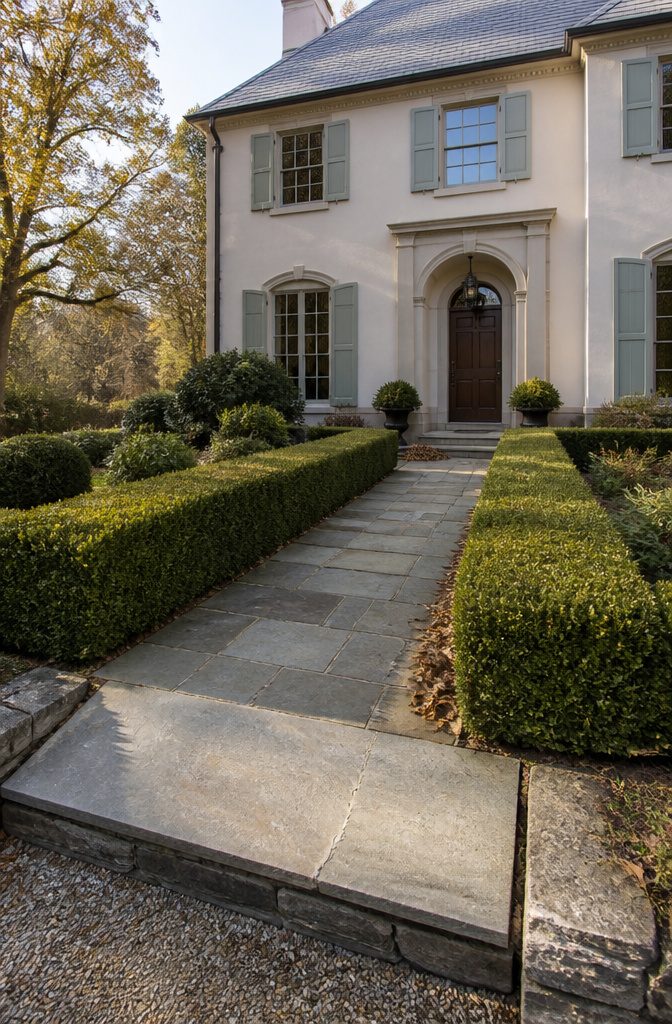
Symmetry does the work at a formal entrance: whatever sits left of the walkway should be matched on the right. Boxwood is the standard choice.
It is evergreen, clips into tight hedges, and ranges from 1 to 20 feet tall, so check the mature size on the tag before you plant. Sprinter is one variety to look for.
Boxwood grows in Zones 5–9, and a few varieties reach Zone 4. Topiaries or matched planters flanking the door give the same look with less digging.
For a bigger frame, plant a pair of trees or large shrubs on either side, and pick fragrant varieties so scent greets people at the door. Ginger Wine ninebark fits here.
It reaches 3–10 feet tall in Zones 2–8, and its foliage changes color as the season goes on. Give it full sun to partial shade.
Recommended Products

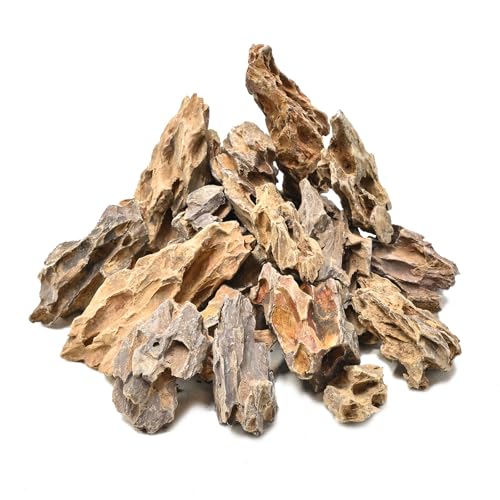
Natural Dragon Stones for Miniature Landscapes – 100% natural Dragon Stones with weathered texture, ideal miniature landscape rocks for bonsai decoration stones, fairy garden decor, and terrarium rocks.

DESERT-INSPIRED GARDEN DECOR: A matching 4-pack metal cactus sculptures in assorted sizes to create an instant desert-garden look. Arrange them together or spread them across planters, flower beds, and rock landscaping.
7. Ornamental Grasses
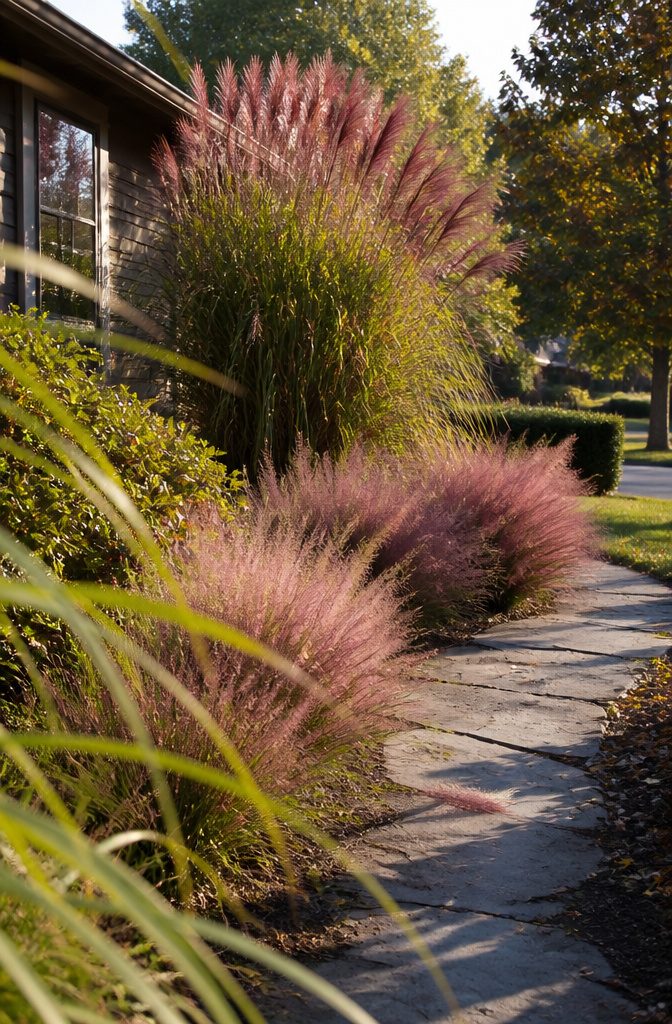
Mature height is the first thing to decide when you pick a grass for a front yard.
Giant plumegrass reaches 10 feet, and its plumes turn burgundy in fall. That makes it a screen or a corner anchor, and it will cover a window if you plant it beneath one.
Pink muhly grows in arching clumps with a purple-pink hue, and it needs well-drained soil. It suits the front of a bed or the edge of the walk.
Grasses add texture, movement, and sound. Seedheads appear from late spring to fall, depending on the variety.
Leave the clumps standing through winter for interest, and they give wildlife food and shelter. Hardiness runs from Zones 3–11 depending on species, in full sun to partial shade, so check the plant tag against your zone before you buy.
8. Native Wildflowers
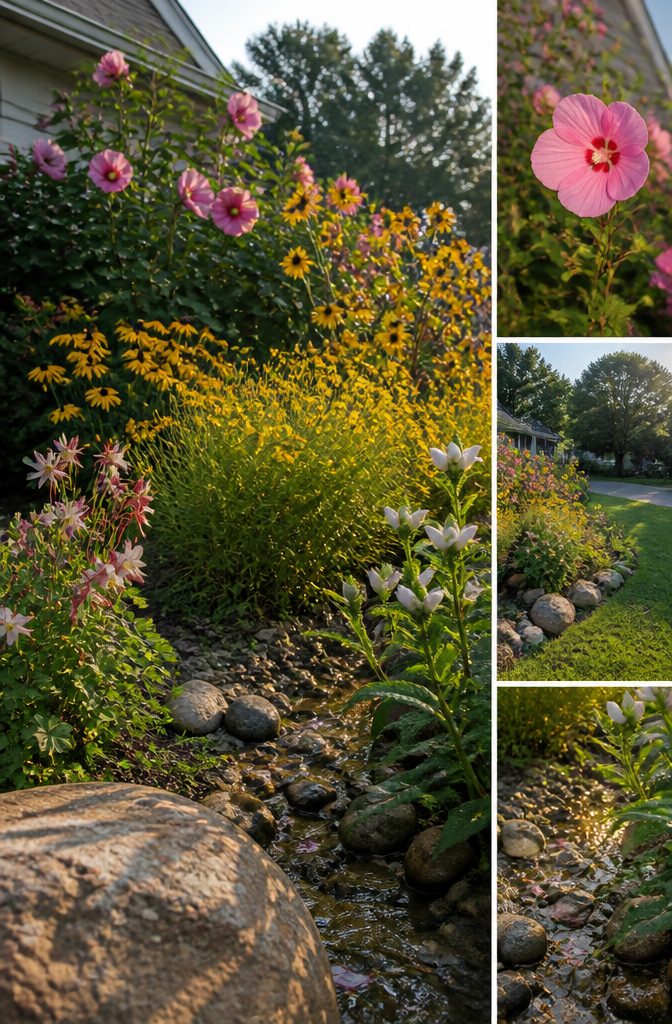
These six Virginia natives cover rocky ground, wet corners, and partial shade. Eastern rose-mallow reaches 7 feet, so give it the back of the bed.
| Plant | Height | Bloom | Site and visitors |
|---|---|---|---|
| Black-eyed Susan | 1–3 ft | Yellow flowers | Pollinators |
| Columbine | 1–3 ft | April–May | Rocky soil; butterflies, bees, hummingbirds |
| Eastern rose-mallow | Up to 7 ft | July–September | Wet areas |
| Ox-eye sunflower | Up to 5 ft | June–September | Moderate water |
| Threadleaf coreopsis | Up to 3 ft | June–September | Summer color |
| Turtlehead | 2–3 ft | August–October | Moist soil, partial sun |
Water all six regularly while roots establish. This list comes from Virginia, so check local equivalents for your region.
Recommended Products
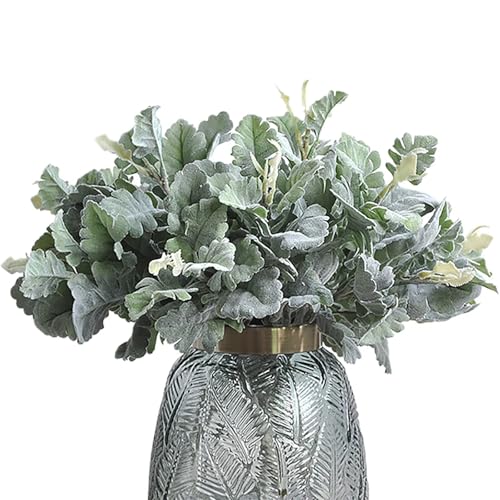
【Artificial Dusty Miller Bush Greenery】Highly adorable and durable, each stem is coated in a flocked material to make it look and feel as realistic as possible, whilst the soft green and Grey tones compliment any stem. They can stay fresh and beautiful year after year.
Dusty Miller's silvery-gray foliage adds a unique, elegant contrast to vibrant flowers and plants in your garden.

[CURATED SELECTION] – Hand-selected live decorative houseplants sourced from professional local growers.
9. Seasonal Flower Beds
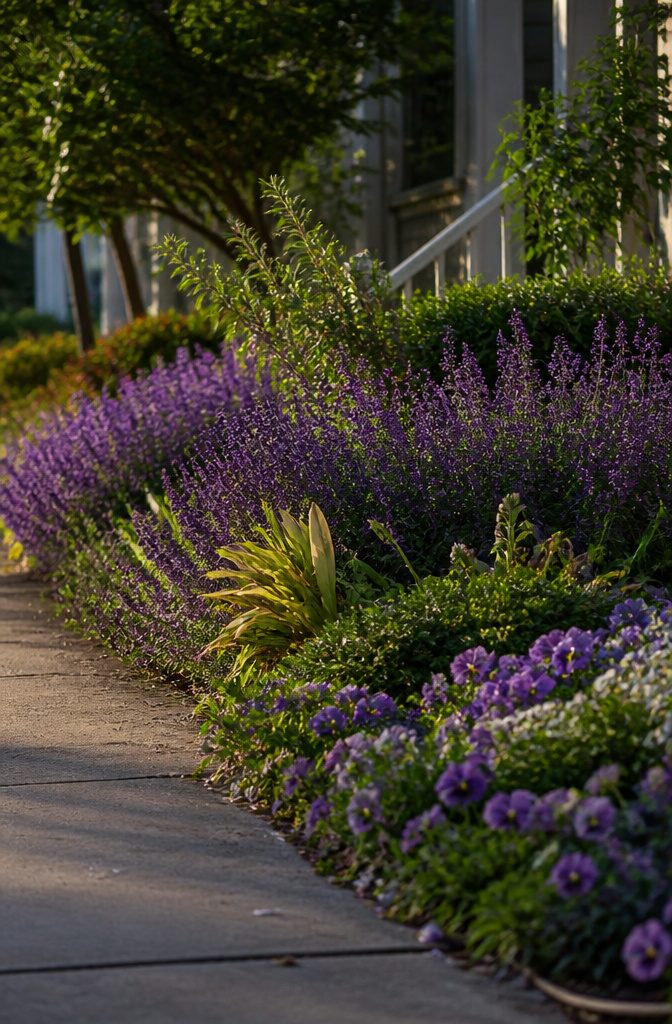
A seasonal bed works like a relay. Bulbs open first, while the soil is still cold.
Perennials take over as bulb foliage fades, and annuals fill the gaps from early summer to frost. Plant the perennials in front of or over the bulbs so their new growth hides the yellowing leaves.
Native wildflowers follow the same sequence, since spring, summer and fall bloomers each have their own window. Pick at least one plant for each season and mix them in the same bed, so something is always opening.
For impact from the street, mass one color or one species.
A single drift reads from the sidewalk, while a many-colored mix looks busy at that distance. Annuals are the cheapest filler, but they need replanting every year, so use them as patches, not the backbone.
Recommended Products

SOFT LEAF YUCCA PLANT: A 3-gallon live yucca plant featuring soft, dark green foliage that provides year-round visual interest in outdoor landscapes.

VIBRANT BLUE BLOOMS FOR A BEAUTIFUL LANDSCAPE: Our Blue Victory Salvia Farinacea Blue Victory sage wildflower seeds bring brilliant blue blooms to your garden, adding eye-catching color to borders, flower beds, and open spaces. This Perennial salvia plant enhances any outdoor area with its tall, graceful flowers, providing a bold and lasting visual impact from early summer through fall.
10. Grassy Paths and Ground Covers
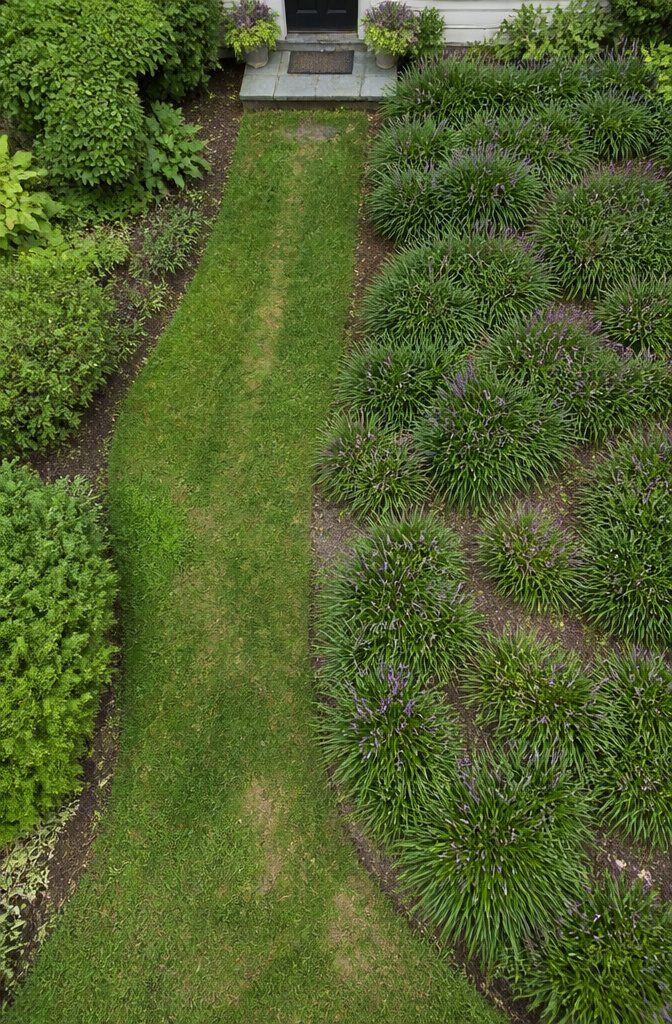
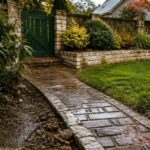
Grass or creeping thyme in place of a concrete walk softens the front of the house, but a living path wears where you step.
Grass needs regular mowing, and thyme needs weeding while it fills in. Plant the soft path only along the route you actually walk.
Lilyturf is the opposite case: a ground cover for places nobody walks. It grows in Zones 4–10 as evergreen mounds of strappy leaves, 8–24 inches tall and wide, with purple, pink, or white flower spikes in late summer.
It tolerates drought once established. Lilyturf replaces turf only where there is no regular foot traffic, so mass it on a slope to hold soil, or use it as edging beside the path rather than in it.
Recommended Products

Unlock Effortless Gardening for Beginners & Enthusiasts: Kick-start your botanical journey with these colorful hosta seeds! Perfect for both novice gardeners and experienced plant lovers, these perennials require minimal care—just plant them once for years of returns. Ideal for busy lifestyles, as they establish quickly with only basic watering and light soil attention needed.

Unlock Effortless Gardening for Beginners & Enthusiasts: Kick-start your botanical journey with these colorful hosta seeds! Perfect for both novice gardeners and experienced plant lovers, these perennials require minimal care—just plant them once for years of returns. Ideal for busy lifestyles, as they establish quickly with only basic watering and light soil attention needed.

ELEGANT AND UNIQUE FOLIAGE The Holly Fern features dark green, glossy fronds with distinct, holly-like leaves that bring a classic and sophisticated look to any indoor or outdoor space Perfect for living rooms patios or shaded garden beds
11. Container Gardens
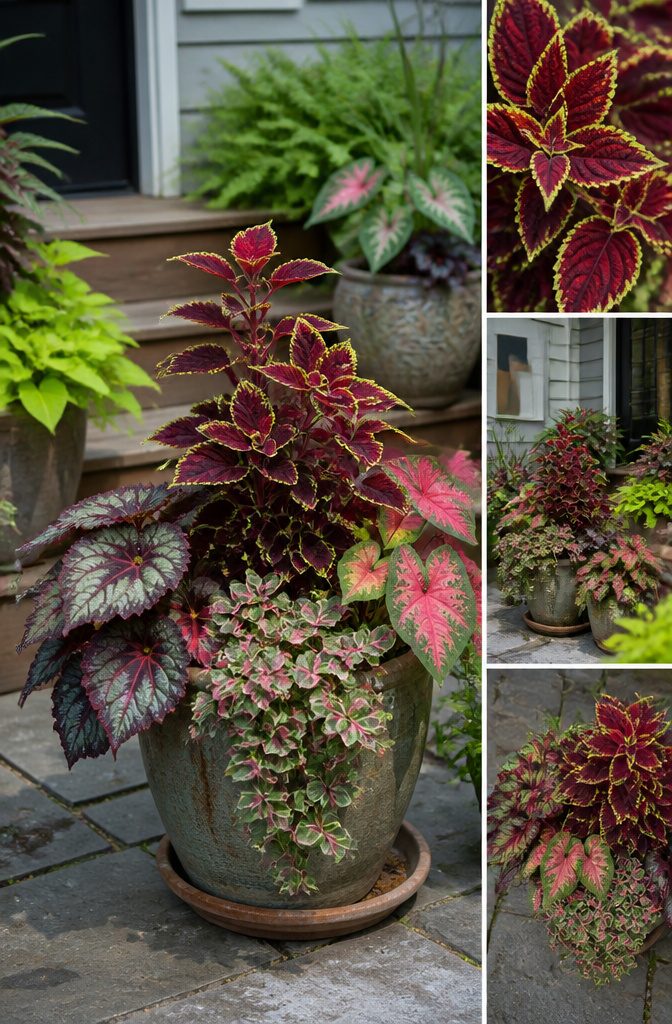
Mixed pots give a small patio or balcony a display you can rearrange all season.
Coleus makes the best anchor. This tropical annual grows in partial sun to shade and reaches 6–36 inches tall and 12–36 inches wide, so check the plant tag before you plant three to a pot.
Choose an upright form for the center and a trailing one for the edge. ColorBlaze Dipt in Wine suits pots, window boxes and hanging baskets, and coleus mixes well with fuchsias, begonias or elephant ears.
For shade, rex begonia stays 8–24 inches tall and wide and wants part to full shade.
Caladium fills the same role. Both can come indoors before cold arrives, and a rex begonia will overwinter as a houseplant.
12. Water Features
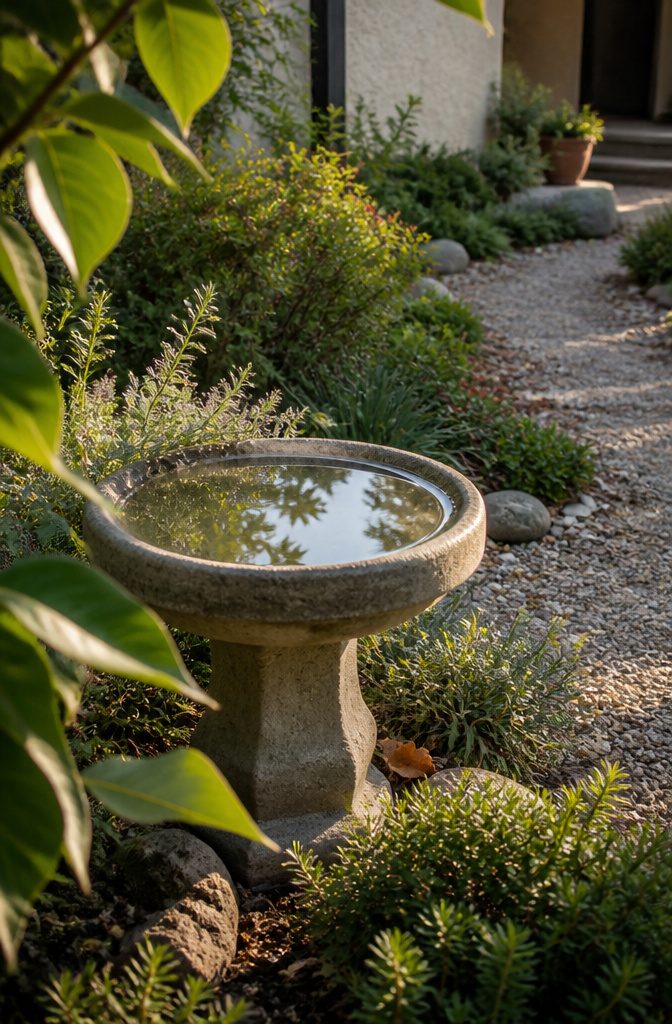
A fountain, pond or birdbath is a design addition, not a plant, so it won’t count toward your planting list. It gives the yard movement and sound, and it may bring in birds.
It also breaks up a long stretch of lawn or bed and gives the space some personality. Match it to your style: a stone basin suits a native planting, and a sleek metal bowl suits a modern layout.
In a small front yard, choose a birdbath over a pond.
A birdbath takes up only the footprint of its base and needs just a refill and an occasional scrub. A pond means digging, a liner, and steady upkeep, and it uses space you would rather give to plants.
Match Plants to Your Site
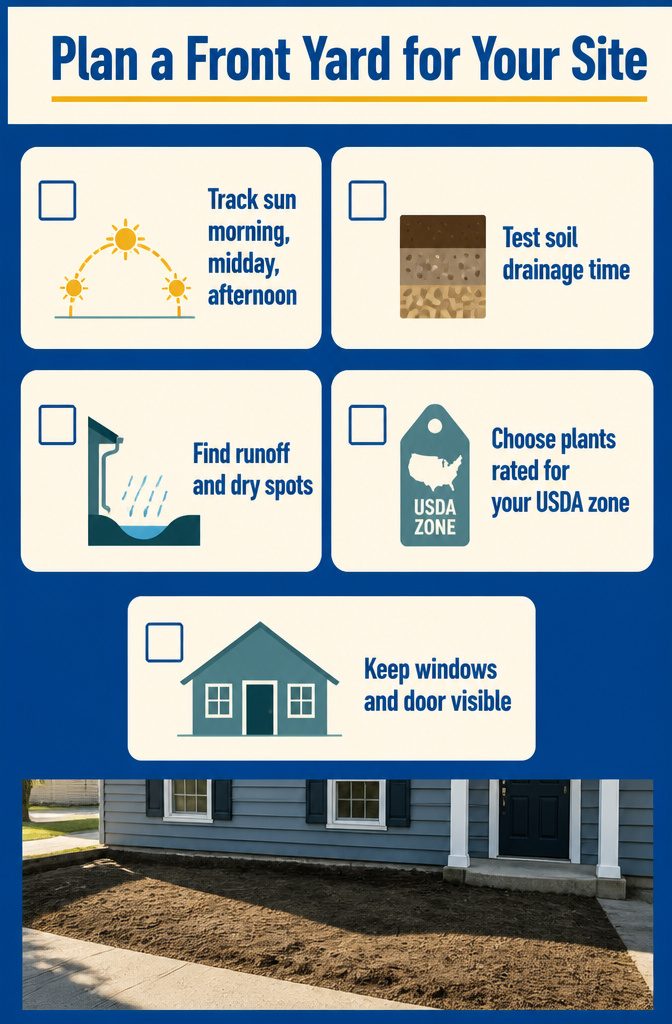
Check four things before you buy anything, then let the house set the style:
- Sun: Watch the bed in morning, midday and late afternoon. South- and west-facing walls run hottest, and the north side stays shaded most of the day. Match the plant tag to the hours you see.
- Soil: Fill a test hole with water and note how long it takes to drain. Clay holds water and sand dries fast, so pick plants that suit what you have.
- Water movement: Look for where roof, downspout and driveway runoff collects. Low spots suit moisture-tolerant plants, while slopes and wall bases dry out first.
- Hardiness zone: Buy plants rated for your USDA zone, since a cold snap kills the borderline ones.
- Architecture: Clean lines and tight shapes suit a modern home, and loose mixed beds suit a cottage. Keep plants low enough to leave windows and the door visible.
A front yard is the first impression, so a well-matched few plants beat a crowded mix.
Layer Plants in Groups
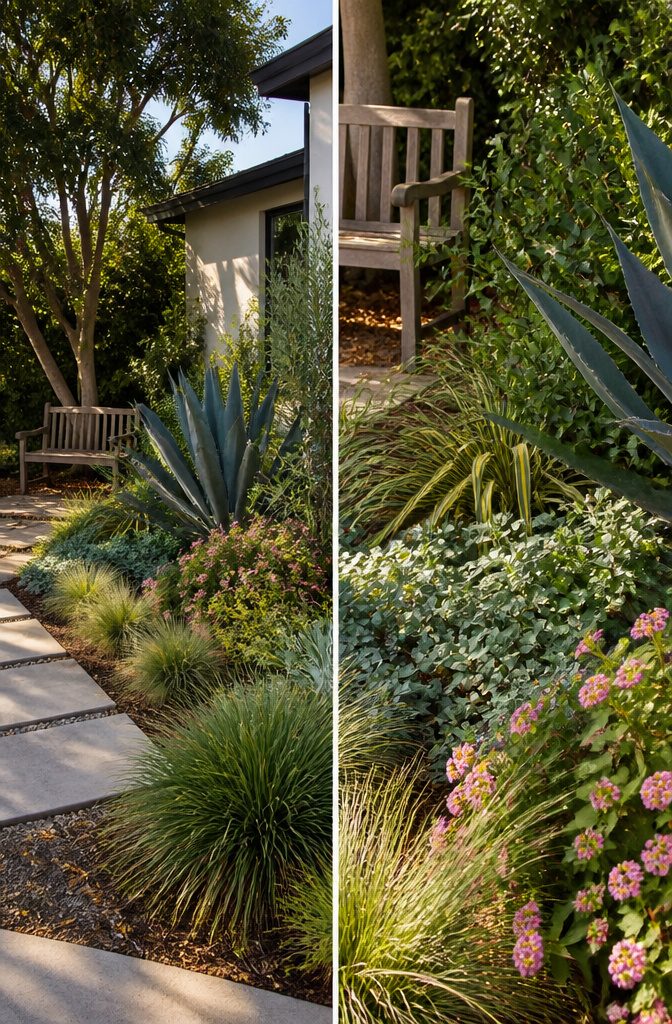
Start with one to three larger plants or trees as anchors: a medium-to-large native tree, a flowering shrub, or a sculptural succulent. Skip a fourth; the eye needs one place to land.
Fill in around them with smaller shrubs, grasses, and groundcovers, stepping down in height toward the walk.
Pair bold shapes like agave with soft grasses or trailing vines, and vary leaf size and color so foliage carries the bed between blooms. A mass of one plant, repeated, reads calmer than single specimens of everything.
For a miniature-forest look, stack trees and shrubs at different heights, colors, and textures, then set a bench beneath them. Group plants by water needs so one irrigation schedule works, and leave each room to grow.
Water and Upkeep
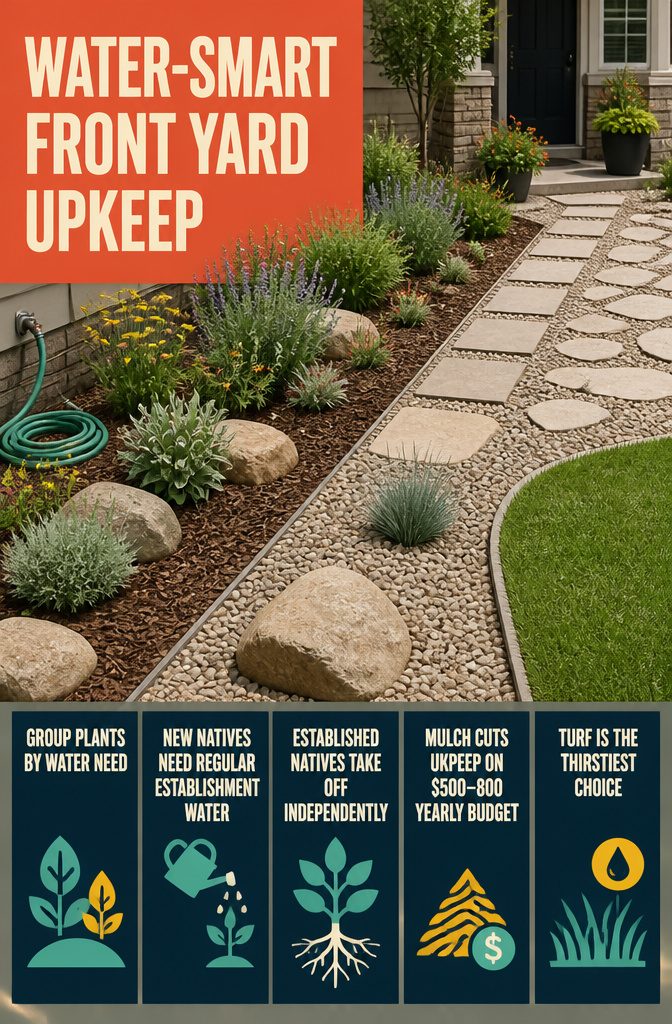
Group plants by water need: keep thirsty ones together near the hose and give drought-tolerant ones their own bed, so a single schedule doesn’t drown half the yard.
New native plants need regular watering while their roots establish, and once established they take off on their own. Mulch holds moisture and suppresses weeds, which makes it a low-cost way to cut upkeep on a $500–800 yearly budget.
Gravel, decomposed granite, flagstone and concrete pavers each shrink the planting area and reduce weeding. Gaps between pavers or stones still need filling or edging.
Boulders add structure and need no water at all. Turf is the thirstiest choice, so shrink it first.
Frequently Asked Questions
Which plant gives 12 months of flowers?
None of the plants covered here is listed as blooming all year, so continuous color comes from layering several plants.
Bulbs flower first in cold spring soil, perennials take over as the bulb leaves fade, and annuals fill in from early summer until frost. Include at least 1 plant for each season in the same bed so something is always opening.