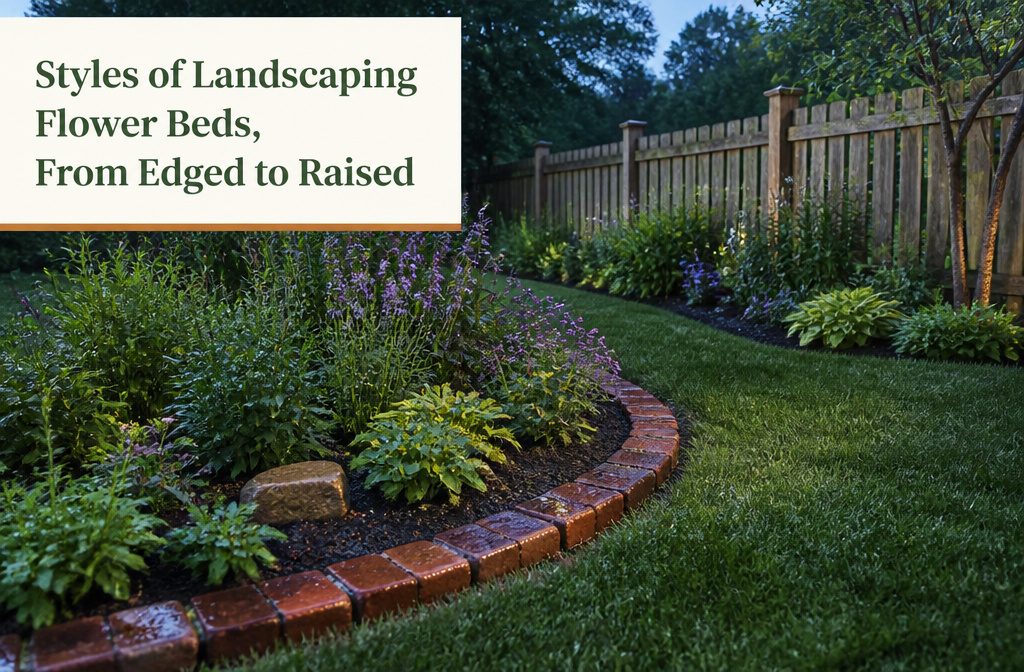
Let the bed’s shape choose the edging: a fence for straight beds, stone, brick or concrete for curves.
Stone also holds the sun’s heat, which helps warmth-loving plants. No edging suits only informal beds like cottage gardens, and even there the mower can clip the outer plants, so you’ll trim by hand.
1. No Edging
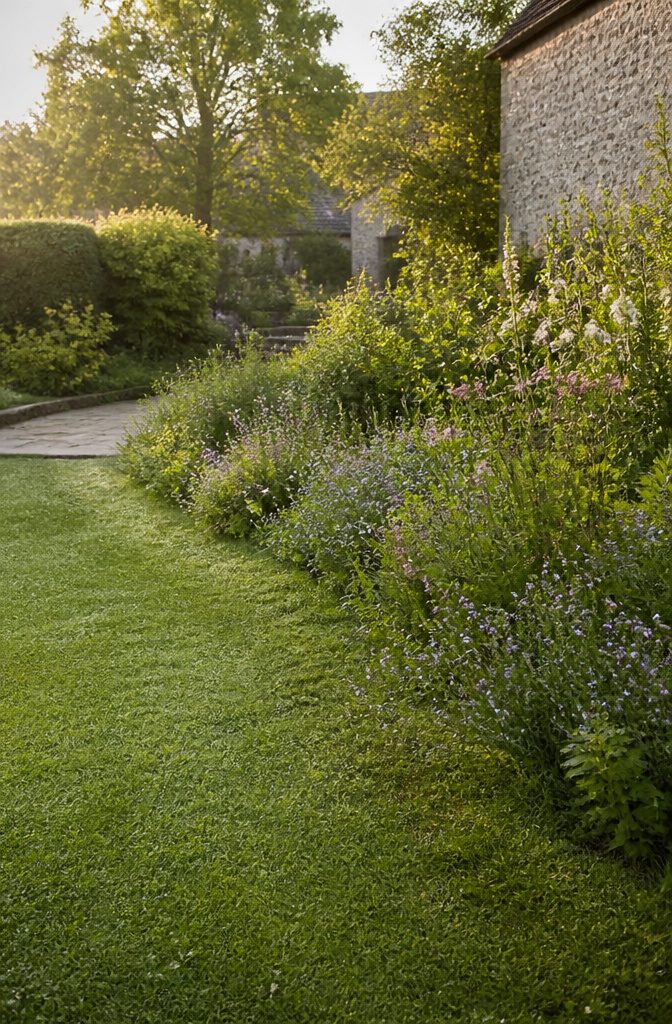
An unedged bed has no barrier at all.
The plants at the front spill over onto the grass and blur the line between soil and lawn. Put low, mounding plants in that front row so they hide the transition.
Mowing along the border is the drawback.
With no ledge or wall to guide the mower, it can clip the outer plants or leave a ragged strip of grass, and you will likely need to trim by hand along the edge.
This style suits cottage gardens, meadow-style plantings, and any informal, naturalistic bed where a crisp hard line would look out of place. In a formal yard, skip it.
Recommended Products

Stone-Look Decorative Landscape Edging: 2.75 inch tall rustic stone design complements any flower gardens and provide clean look for your gardens, flower beds, lawns, grass,...
2. Fence and Stone Edging
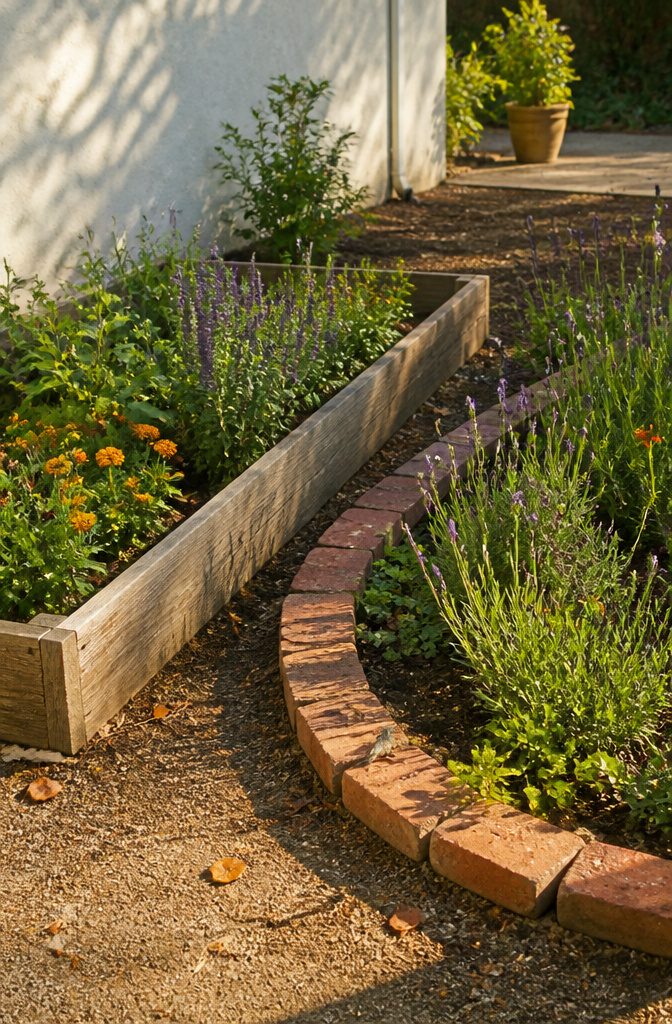
A bed fence suits rectangular or square beds, such as one along a garden path or against a building wall. It comes in wood, plastic or wire, and wood looks best of the three.
Garden centers sell ready-made sections, or you can build your own if you have the tools. Curves and wavy lines are hard to get from a fence, so fences win for straight beds and stone wins for curved ones.
Stone, brick or concrete pieces can follow any line you lay them on, which is why they handle a curve. They add texture, and they hold the sun’s heat, which benefits warmth-loving plants.
Small lizards like them too. Brick gives a warm, rustic look.
Recommended Products

EASYFLEX DECORATIVE NO-DIG LANDSCAPE EDGING: Get a beautifully landscaped yard without all the work of a dig-in lawn edging; simple installation without trenches or shovels; color may vary due to the unique manufacturing process.
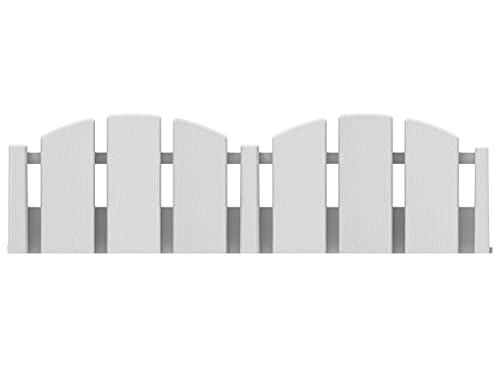
EASYFLEX DECORATIVE NO-DIG LANDSCAPE EDGING: Get a beautifully landscaped yard without all the work of a dig-in lawn edging; simple installation without trenches or shovels
3. Green and Flower Edging
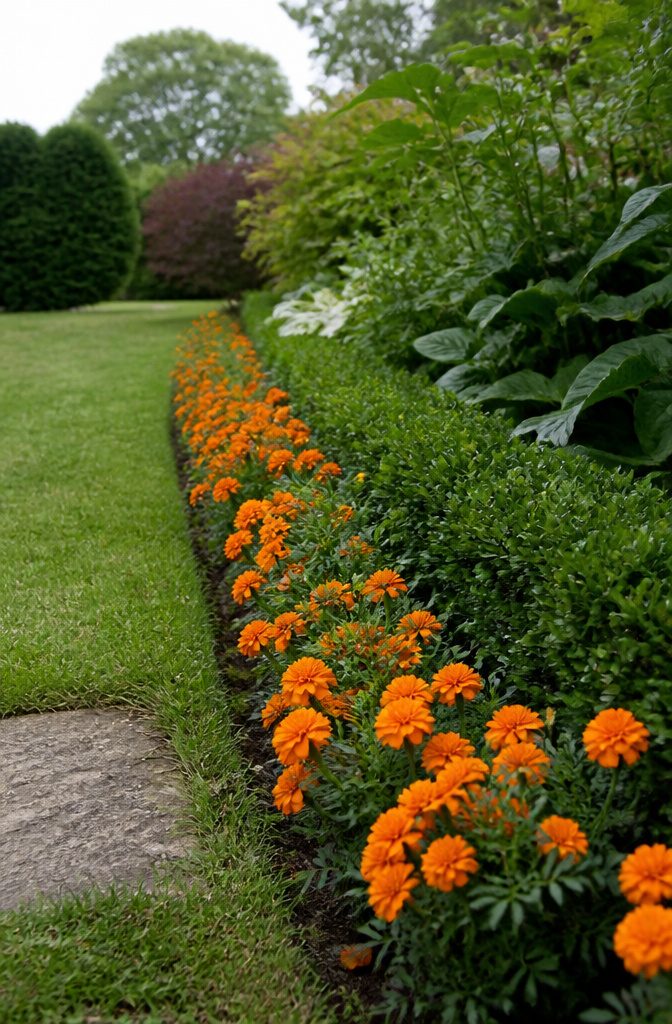
Hard edging is not your only option. Low shrubs make a living border that follows curves on its own, so a bed with deep, wavy lines needs no cutting or fitting.
Shrubs also last many years, which makes them the better buy if you want to plant the edge once and leave it.
For color, edge the bed with a single flowering species instead of a mix.
Choose something inexpensive that grows densely, such as marigolds, begonias, asters or chrysanthemums. Pick a plant hardy enough for life on the edge, since the front of a bed takes more wear than the middle.
One species repeated along the front reads as a clean line, and it looks best if the bed slopes. In a small yard, a row of inexpensive plants keeps edging costs low.
Recommended Products
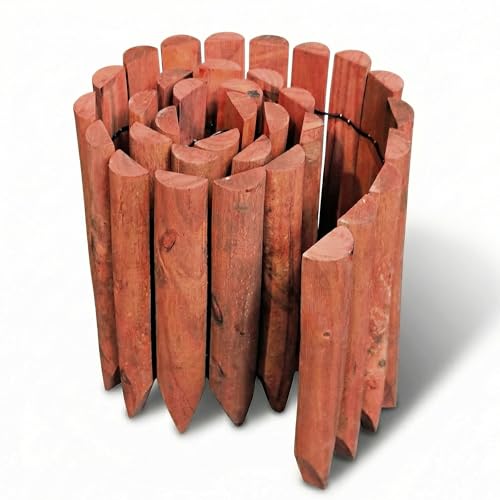
Decorative Brick Red Finish for Rustic Charm: This short wood fence features a warm brick red finish that adds natural beauty and a decorative touch to any outdoor space. Ideal as a wood garden fence for flower beds, pathways, and yard accents.

Natural Wooden Garden Border Design: This wooden garden border features a unique burnt wood finish that adds rustic charm and warmth to your outdoor space. Perfect as decorative garden fence edging for flower beds, walkways, and landscaping accents.
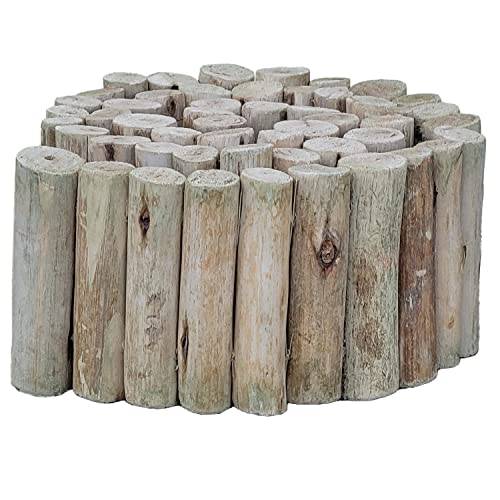
DECORATIVE GARDEN BORDERS: Create a beautiful floral display in your garden and enhance your landscape curb appeal with Eucalyptus wood flower bed borders
4. Oval or Circular Beds
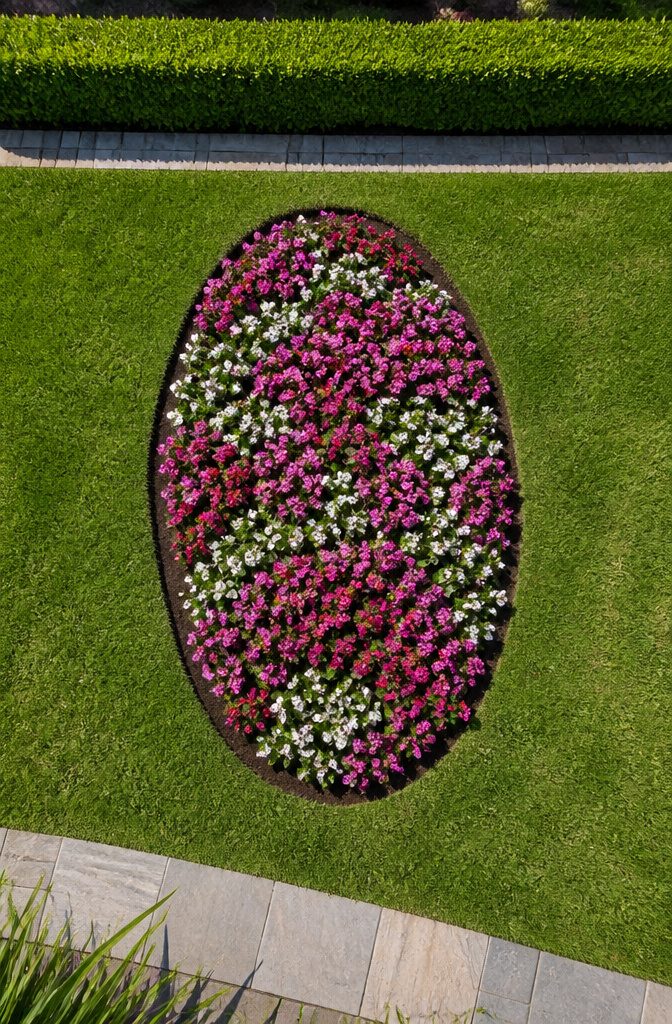
A round or oval bed in the middle of a lawn is the most formal shape you can cut into a yard.
The symmetry looks deliberate, and because the bed has no back, it reads as finished from the patio, the street, and every window that faces it.
It only holds that look against a well-kept lawn, since shaggy grass around a clean curve shows up fast.
Planting is where beginners stumble. A single color, or a loose mix of two, is the safest choice and still looks tidy.
Rings of different colors that follow the curve are striking, but they’re hard to pull off, and one plant out of step breaks the pattern. Skip the rings your first season.
Recommended Products

Premium Quality Seeds : Harvested from high-quality marigolds to ensure freshness and vibrant blooms! Vibrant Blooms, Effortless Beauty: French Marigolds, a timeless garden...
5. Geometric and Complex Patterns
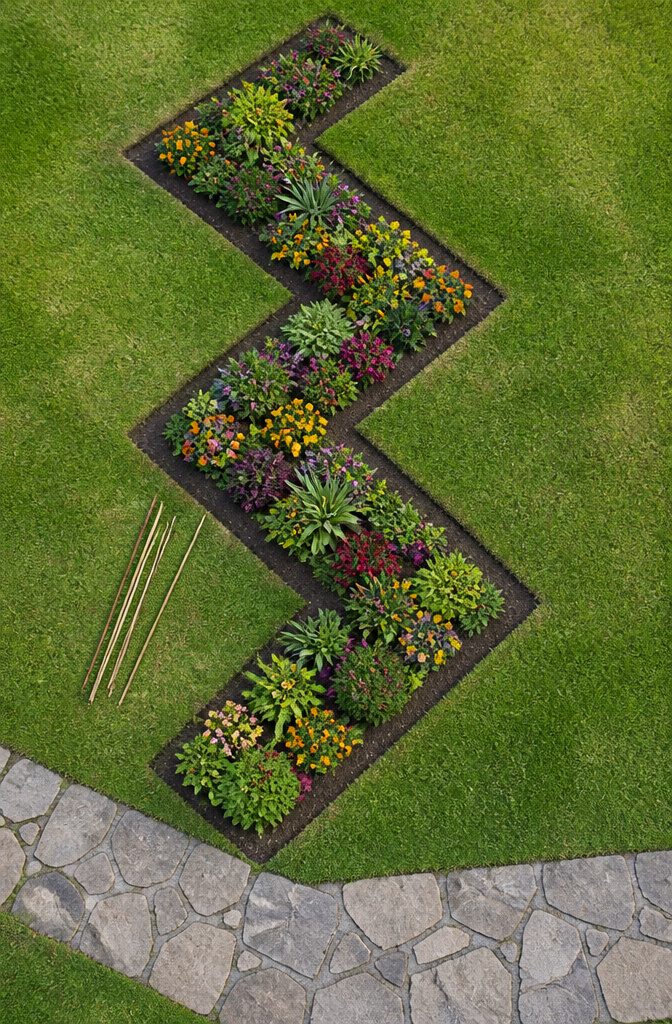
A zigzag is the simplest geometric bed to try, and it looks far more deliberate than the effort suggests. Lay the outline on the ground with sticks or tape before you dig anything.
Then walk around it and adjust the angles until they read cleanly from the spot where you’ll view the bed most. Plant carefully inside the marked borders, since a geometric bed depends on crisp lines and stray plants blur them.
Intricate designs are another matter.
They call for drawing, pre-planning and measuring first, and you can’t improvise them on the spot. Of every bed shape in this article, this one takes the most effort, though it draws plenty of attention.
Recommended Products

Long-Lasting Galvanized Steel: Made from high-quality galvanized steel with a rust-resistant coating, this metal landscape edging built to resist fading, cracking, and rusting. It withstands all weather conditions, providing long-term durability for any outdoor environment.

𝐅𝐥𝐞𝐱𝐢𝐛𝐥𝐞 & 𝐄𝐚𝐬𝐲 𝐭𝐨 𝐈𝐧𝐬𝐭𝐚𝐥𝐥: Each panel measures 40" (L) × 5" (H), including 3" underground stakes for strong anchoring, leaving 2" visible above ground for a clean, low-profile border. The hammer-in design makes installation fast and effortless—perfect for creating neat, professional-looking edges without digging.

【Premium Material & Durability】MTART Corrugated Metal Garden Edging is crafted from high-quality galvanized metal, offering outstanding weather resistance and long-term durability. This robust material ensures it stays rust-free and maintains its integrity even under extreme weather conditions, making it a reliable choice for your patio, lawn, and garden.
6. Wave Beds in the Lawn
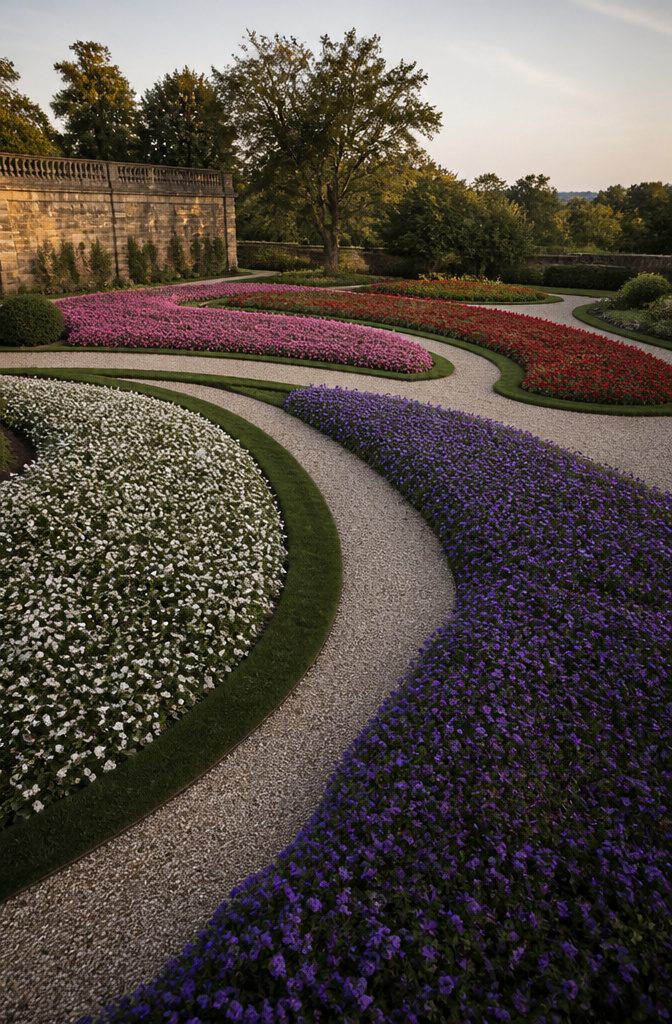
Let the beds take over and leave the grass as the path.
Large, irregular beds pushed out across the lawn reduce the turf to a strip that winds between them like a river, and the mismatched curves of the beds give that strip its natural flow.
Because the grass is now your walkway, choose a lawn grass that tolerates heavy foot traffic, or the path wears thin first.
The wave bed swaps the grass for a curved gravel path running between asymmetrical beds.
Plant each bed as its own wavy or rounded drift of a single color. The overlapping curves and solid color blocks read as mellow, almost psychedelic, and that loose look suits a relaxed, naturalistic yard better than clipped, symmetrical borders.
Recommended Products

[3D NATURAL ROCK FACE FOR CURVED BORDERS] Upgrade your yard effortlessly with our curved concrete curb molds. Unlike plain smooth blocks, the deep 3D chiseled stone texture creates an authentic, high-end rock face finish. Ideal for wrapping around trees, curved flower beds, and winding garden walkways without expensive professional masonry.

STAYS IN PLACE - Our edging stays securely in place, keeping mulch and other materials from migrating into other areas of your landscape for a pollished look

Easy installation – Install garden edging border quickly with our patent-pending connection system. Simply hammer spikes to secure for a stable it firmly in place. Ideal for landscape edging border projects.
7. Natural Guilds
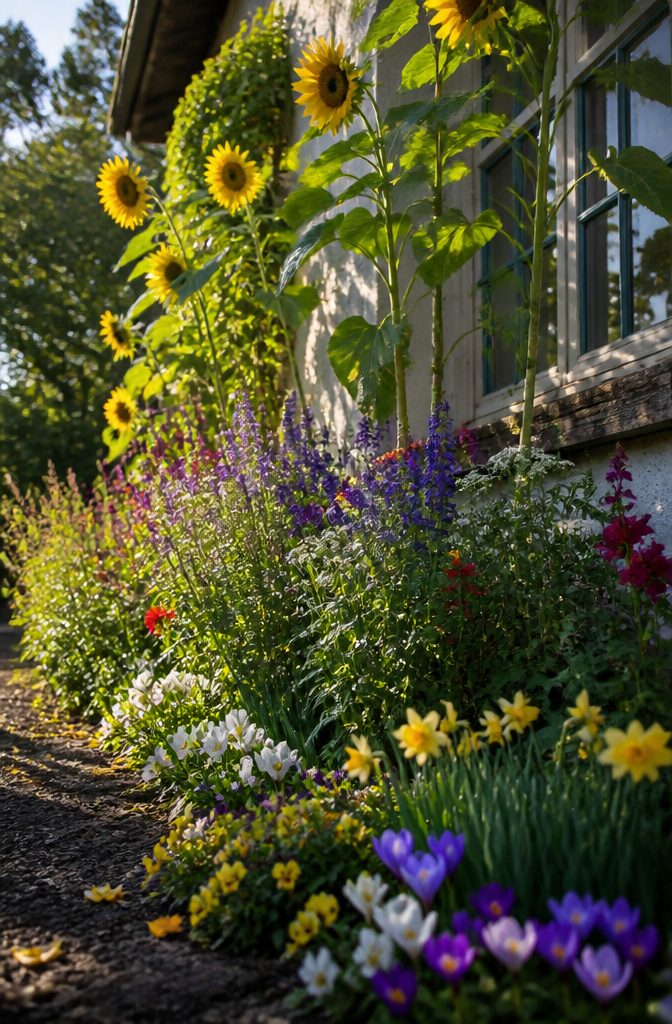
Wild plant communities sort themselves by height, and a flower bed can copy that: tall perennials at the back, lower annuals and perennials in front.
Sunflowers and native wildflowers suit the back row. Daffodils, crocuses and freesias fill the front.
Put the annuals in the front row.
You can pull and replace them each season without disturbing the perennials behind them. Tall plants also cast shade on the lower ones, which helps any low plant that struggles in full sun.
Along a south-facing window, a row of sunflowers can shade the glass as well as the bed below. Stepping the heights down from back to front gives you a lush slope of plants, and nothing blocks the shorter ones.
Recommended Products

Decorative Brick Red Finish for Rustic Charm: This short wood fence features a warm brick red finish that adds natural beauty and a decorative touch to any outdoor space. Ideal as a wood garden fence for flower beds, pathways, and yard accents.

Durable & Flexible Material GTSABWAY garden edging is Made from high-quality metal, ensuring superior durability and flexibility. Easily shape it into straight lines,curves, circles, or unique contours ,without cracking,Can withstand all kinds of weather conditions, ensuring long-term durability and reliability. providing reliable Garden Border solutions.

EASYFLEX DECORATIVE NO-DIG LANDSCAPE EDGING: Get a beautifully landscaped yard without all the work of a dig-in lawn edging; simple installation without trenches or shovels
8. Beds Against Walls and Under Windows
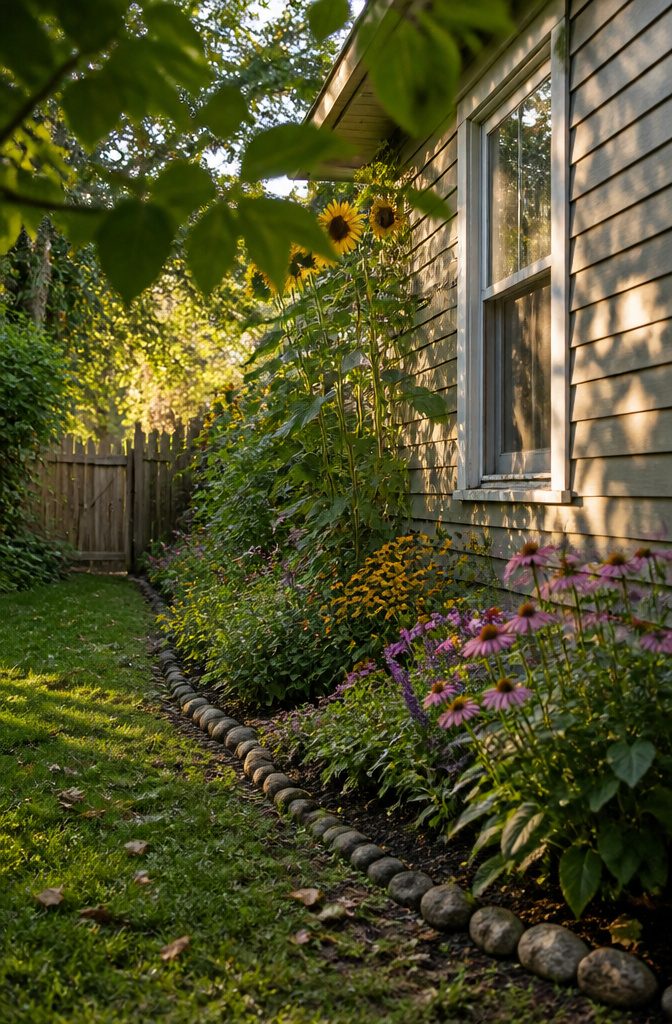
A bed against a wall or tall fence gives a boxy yard something it lacks: depth.
Plant tall at the back and step down toward the lawn, and the eye travels through layers instead of stopping at the boundary, so a small fenced square reads as larger than it is.
Skip a single row of same-height plants lined up along the fence. It flattens the effect.
Under a window, plant for what you will see from inside. A bed there brings color and fragrance into the room, and you can watch it in any weather from indoors.
On a south-facing window, tall plants such as sunflowers can shade the glass. Native wildflowers and pollinator plants bring bees and butterflies right to the view.
Recommended Products
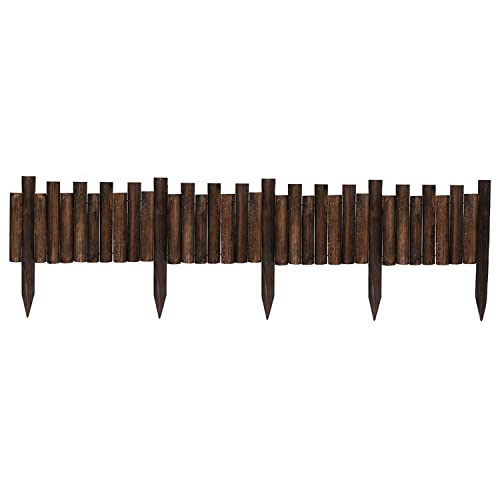
About the Edging: 8 inch height above ground, stakes Height 4 inch, 3.6 Feet total Length; Made from sturdy wood with a carbonized finish, this short fence is durable and long-lasting, standing up to outdoor elements.

Natural Wooden Garden Border Design: This wooden garden border features a unique burnt wood finish that adds rustic charm and warmth to your outdoor space. Perfect as decorative garden fence edging for flower beds, walkways, and landscaping accents.

9. Beds Around a Tree
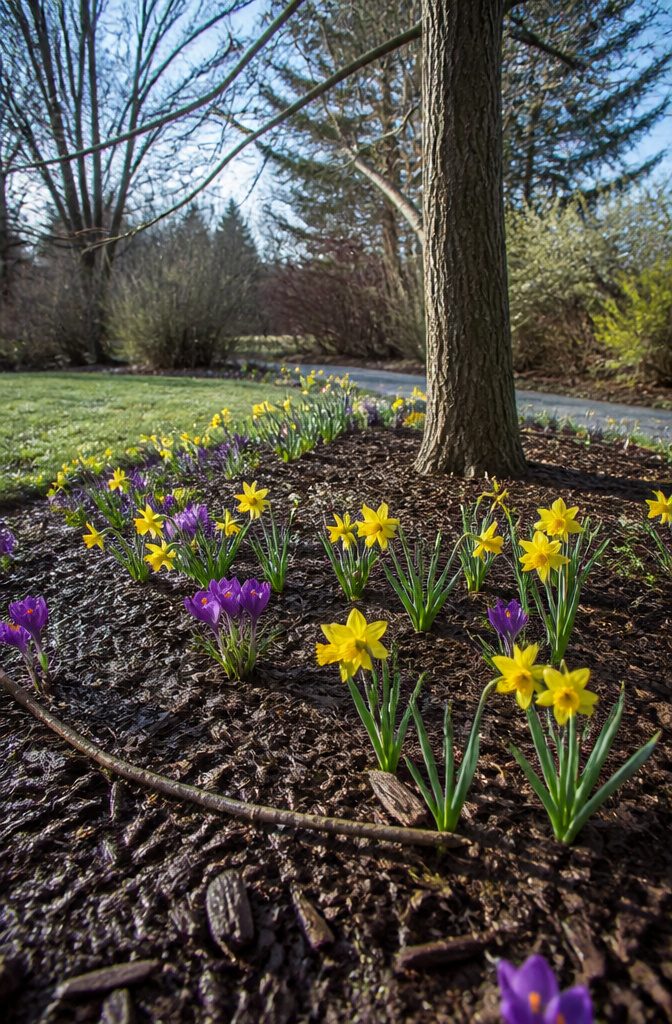
A deciduous tree is bare in early spring, so the ground beneath it gets full sun before the canopy fills in.
That window suits early spring bulbs such as daffodils and crocuses, which bloom while the rest of the yard still looks dormant and give the tree some color before it leafs out.
Plant them in a loose ring or drift around the trunk rather than in a tight circle, which can look like a target.
Mulch the bed after planting. It suppresses weeds among the flowers and helps the tree too, so one layer does both jobs.
Pull it back a few inches from the trunk so bark stays dry. Mulch piled against the base invites rot.
10. Classic Wooden Raised Beds
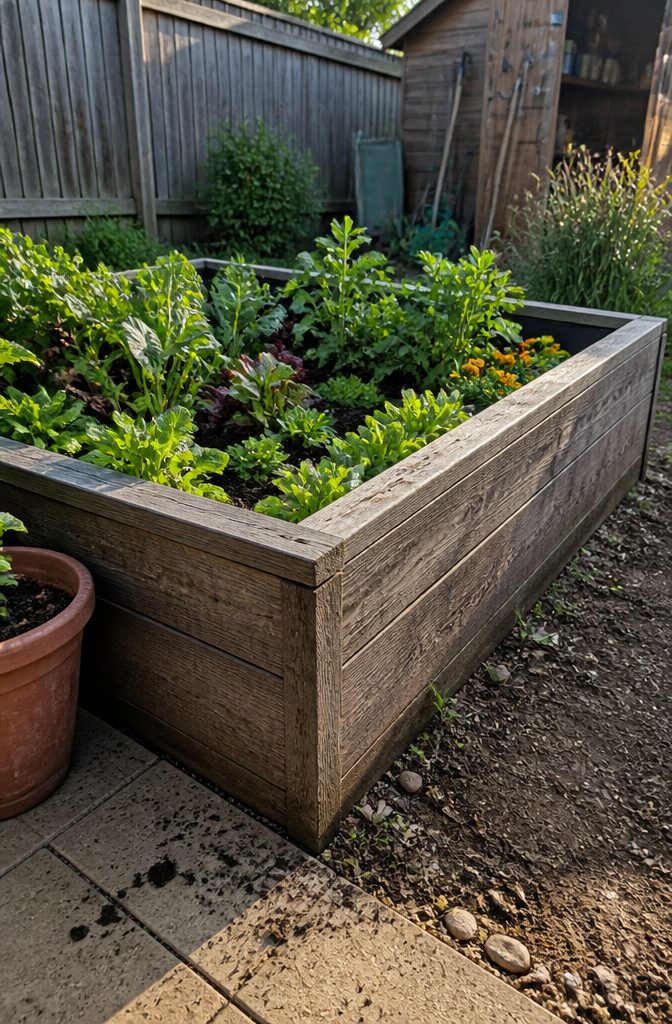
A bed of plain boards is the easiest raised bed to build.
It suits balconies, concrete, rented yards you can’t dig up, and any spot where the soil is too poor or contaminated to work. Fill it with good soil and plant what you like.
Make it at least 6 inches tall.
A 12-inch bed opens up more plants, and an 18-inch bed gives you an edge to sit on. On bare ground, scrape the surface with a pickaxe first so the two soils blend.
Wood rots, so line the boards with a pond liner.
Treated beams need a durable plastic liner if you grow edibles or medicinal plants. Weathered boards suit a rustic yard.
Recommended Products

GARDEN EDGER BORDER KIT: The landscape edging kit includes 38 pieces of edging borders, each size is 6.3 inches(L) * 5.12 inches(H), with a total length of approximately 6 m / 20 ft. Perfect for defining straight edge, curved flower beds, or circular planting areas, these edging borders help create a clean, organized, and attractive garden landscape

SHIPMENT CONTAINS: One 5 inch x 40 foot brown flexible landscape edging coil with 10 matching stakes for securing garden borders

Quality Metal Material: Our galvanized garden edge is processed using high-precision CNC technology, ensuring accuracy down to every millimeter. Innovative 3D ripple design not only enhances the aesthetic appeal of the fence but also strengthens its structural integrity.
11. Stone Raised Beds and Terraces
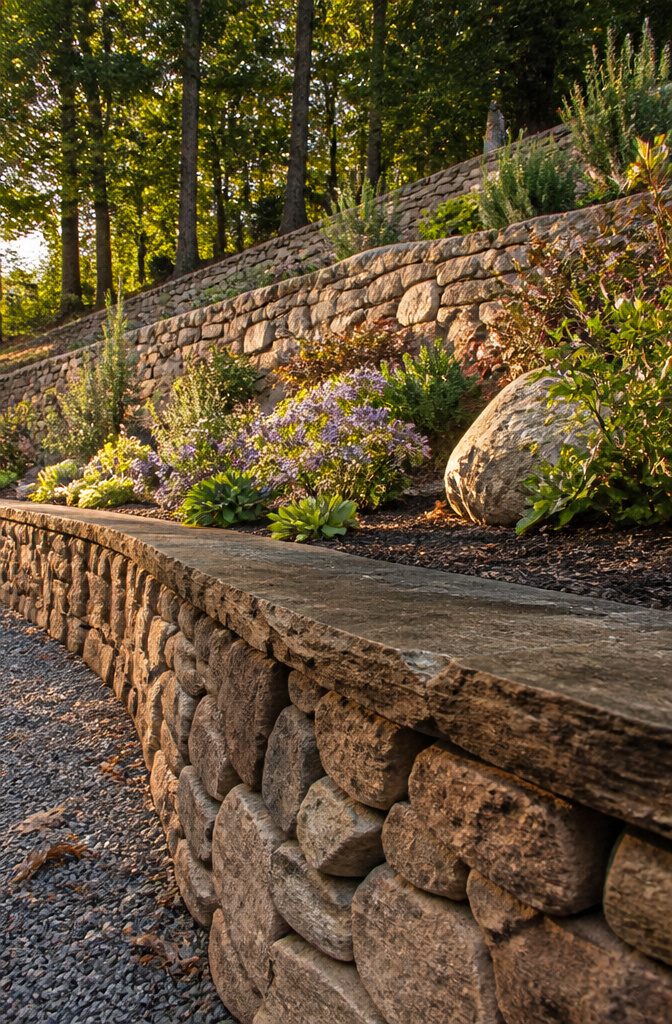
A stone raised bed adds volume and texture, and a wall at a comfortable height doubles as a place to sit.
It also gives the lawn a clean, elegant edge, so it suits a flat yard where you want the bed to read as a feature.
A stone terrace puts a similar wall inside the bed instead of along its border.
The result is a raised, dramatic slope that looks like a rocky mountain hillside, so choose plants that suit that look. Stone holds the sun’s heat, which means warmth-loving plants do best beside the terrace walls.
For a sloped yard, the terrace wins. It builds the grade into the design, while a raised bed at the edge only frames it.
12. L-Shaped Raised Beds
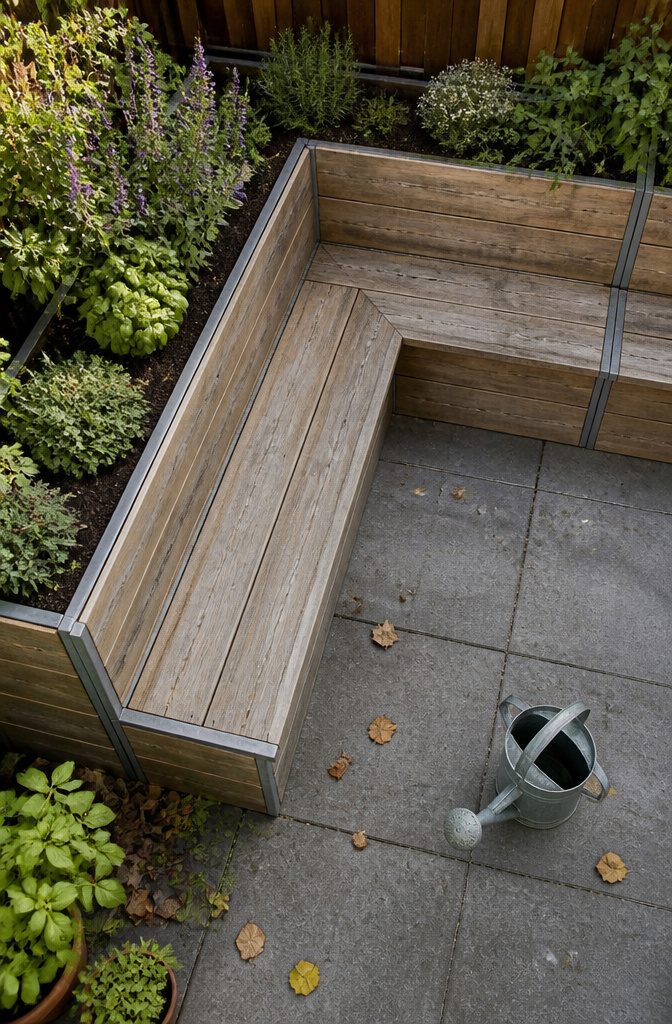
An L-shaped bed turns a corner or an awkward leftover space into planting room, which makes it a good fit for small patios, balconies, and tight yards. There are two ways to build one.
Panels of almost any type work if you add metal profiles to the frame, and that extra stiffness matters when a wooden bench sits inside the L, giving you a seat that faces your plants.
Thick wooden beams are the other option, and they can be reclaimed construction material. Their broad tops also work as seating.
Beams are often chemically treated, so line the bed with a durable plastic liner, especially if you plan to grow edible or medicinal plants. On a balcony, the panel-and-bench version uses the corner best.
13. Repurposed Container Beds
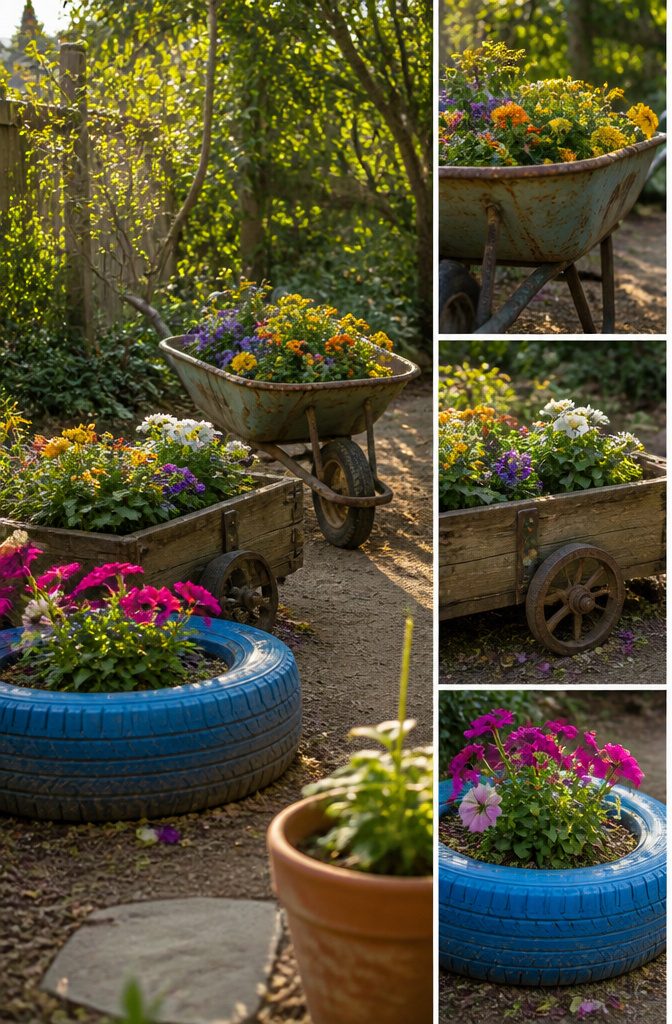
Almost anything that holds soil can become a bed, but each reuse has a weak point.
- Trolleys act like raised beds on wheels, and the extra height helps if a dog likes to dig. They can be pricey and hard to find, and moisture will rot one in time.
- Old bed frames make a quick rectangular border, but wood rots where it meets damp soil.
- Tree trunks give a natural planter. Hollowed and filled with wet soil, the wood decays from the inside, so expect a limited lifespan.
- Wheelbarrows can be moved to follow the sun. Drill drainage holes in the bottom, or roots sit in standing water.
- Tires are the easiest to find and look good painted in bright colors. Keep them to flowers and avoid edible plants, because tires may leach chemicals into the soil.
Choose Plants for Your Zone
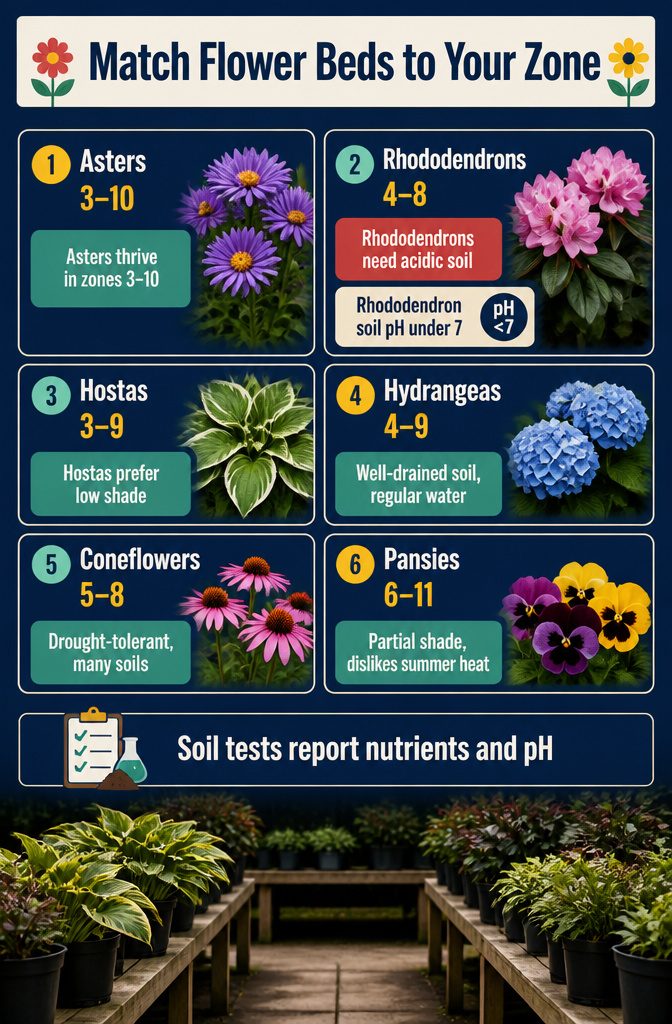
Zone range decides whether a plant returns; light and soil decide how well it does.
| Plant | Zones | Needs |
|---|---|---|
| Chrysanthemums | 5–9 | n/a |
| Asters | 3–10 | n/a |
| Geraniums | 9–11 | n/a |
| Rhododendrons | 4–8 | Filtered sun, acidic soil |
| Coneflowers | 5–8 | Drought-tolerant, many soils |
| Hostas | 3–9 | Low shade, little maintenance |
| Hydrangeas | 4–9 | Well-drained soil, regular water |
| Pansies | 6–11 | Partial shade, dislikes summer heat |
A soil test reports nutrients, pH and organic matter, and tells you what to add. Rhododendrons need acidic soil, a pH under 7, so test before you buy them.
Group and Layer Plants
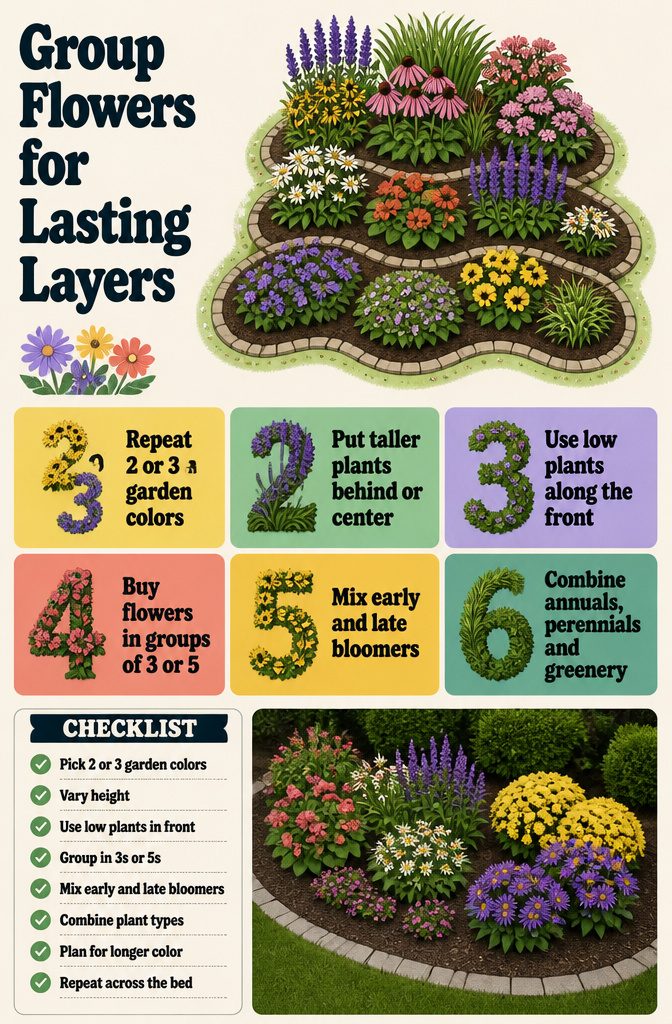
Four moves set up the layers:
- Pick 2 or 3 garden colors and repeat them across the bed.
- Vary height, with taller plants behind or in the center and low ones along the front.
- Mix annuals, perennials and greenery, so foliage fills the gaps between blooms.
- For longer color, try mums (zones 5–9), asters (zones 3–10) or geraniums (zones 9–11).
Grouping matters more than any single plant:
Install your plants in groups of 3 or 5 –odd numbers create the best look! And, group flowers based on bloom times.
Buy in 3s or 5s, and mix early and late bloomers so one group opens as another fades.
Frequently Asked Questions
How do you arrange flowers in a flower bed?
Pick 2 or 3 colors and repeat them across the bed, with taller plants at the back or center and shorter ones along the front.
Plant in groups of 3 or 5, since odd numbers look better than even ones. Grouping by bloom time keeps any one area from going bare when a plant finishes for the year.
What are the best plants for a flower bed?
The best plants are the ones rated for your hardiness zone.
Asters grow in zones 3–10, hostas in 3–9, chrysanthemums in 5–9, coneflowers in 5–8, and geraniums in 9–11. For color over a longer stretch, combine mums, asters or geraniums that suit your zone with early and late bloomers.
What should you add to garden soil before planting flowers?
Run a soil test first, because it reports nutrients, pH and organic matter and shows which amendments your soil needs.
Rhododendrons, for example, want acidic soil with a pH under 7. Testing before you buy tells you whether your soil already suits the plants you want.
Are raised flower beds a good idea?
Yes, particularly where the soil is poor or contaminated, or where you can’t dig, such as on concrete, a balcony or a rented yard.
Build the bed at least 6 inches tall; 12 inches lets you grow a wider range of plants, and 18 inches gives you an edge to sit on. Wood beds rot over time, so line the boards.
What are some creative ideas for a front garden bed?
Wave beds push large, irregular curves across the lawn and leave the grass as a winding path. A zigzag or other geometric bed gives crisp, deliberate lines, and you can mark it out with sticks or tape before digging.
Other options are a stone terrace on a slope, a ring of spring bulbs around a tree, or a repurposed wheelbarrow you can move to follow the sun.