Ideas range from a single row of large stones edging a border to a dry creek bed or a lined pond, and the shape of your space picks the one to build.
Prices start at $12 for Mission Cobble, but fabric under the stone does not make the bed weed-proof, so expect to pull seedlings by hand.
1. Edge the Bed With Large Stones
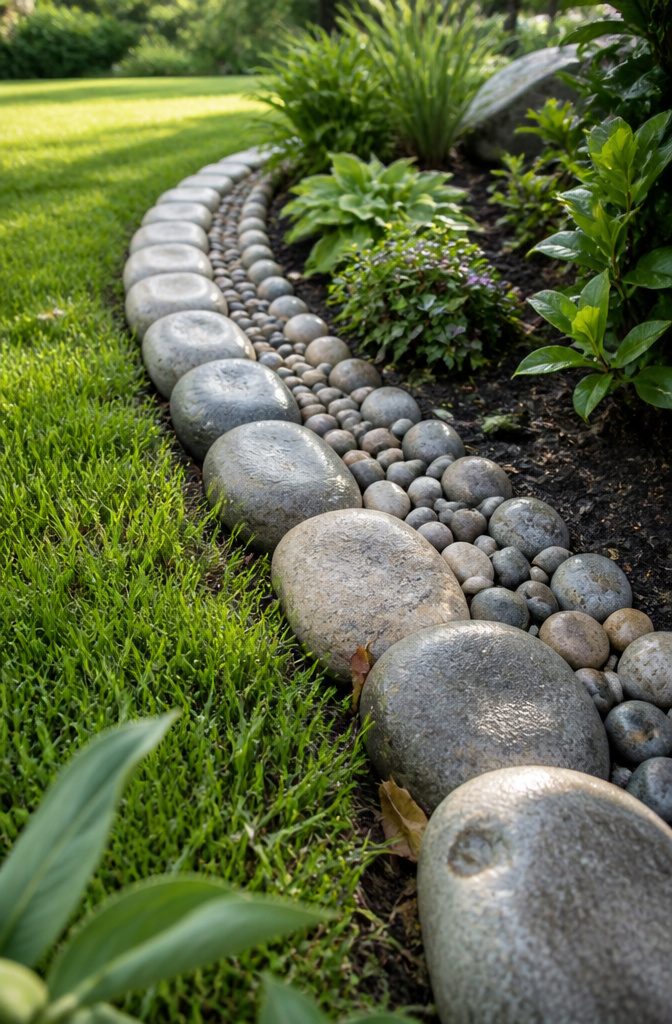
Set the largest stones along the outer line of the bed, touching or nearly touching, and fill the strip behind them with medium stones.
The change in size is what makes the border read as a border: big rounded rocks hold the line, and medium ones soften the step down to the soil and plants behind.
River rock’s smooth, rounded shape suits a curved bed, because round stones sit against each other around a bend without the hard angles that blocky edging leaves.
Lay all the large stones along the full line before adding any medium rock, so you can nudge the curve until it looks right. Keep the stones close in color, and let the plants supply the contrast.
Recommended Products

EASYFLEX DECORATIVE NO-DIG LANDSCAPE EDGING: Get a beautifully landscaped yard without all the work of a dig-in lawn edging; simple installation without trenches or shovels; color may vary due to the unique manufacturing process.
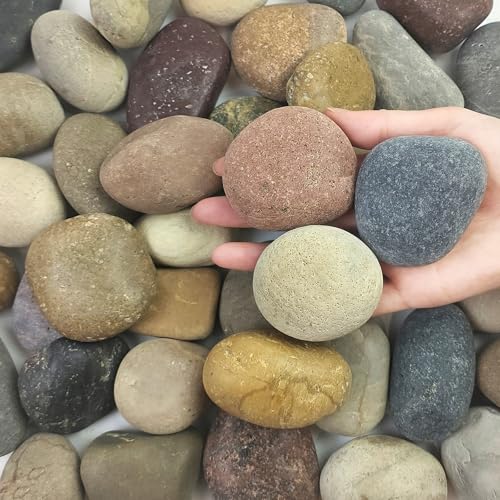
【Weight & Size】Weight: 5 pounds. Size:2-3 inches. Mixed color river rocks are clean and smooth,and contains a variety of different colors, shades and shapes. Keep in mind that stones are heavy, so 5 pounds doesn't seem like as much as one might think
2. A Meandering Dry River Bed
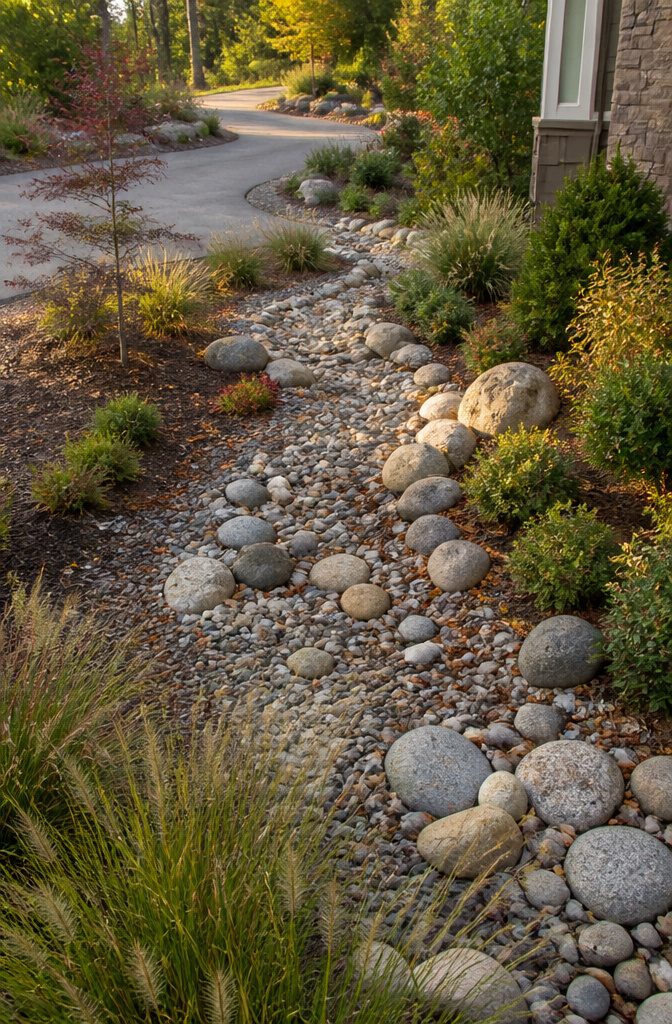
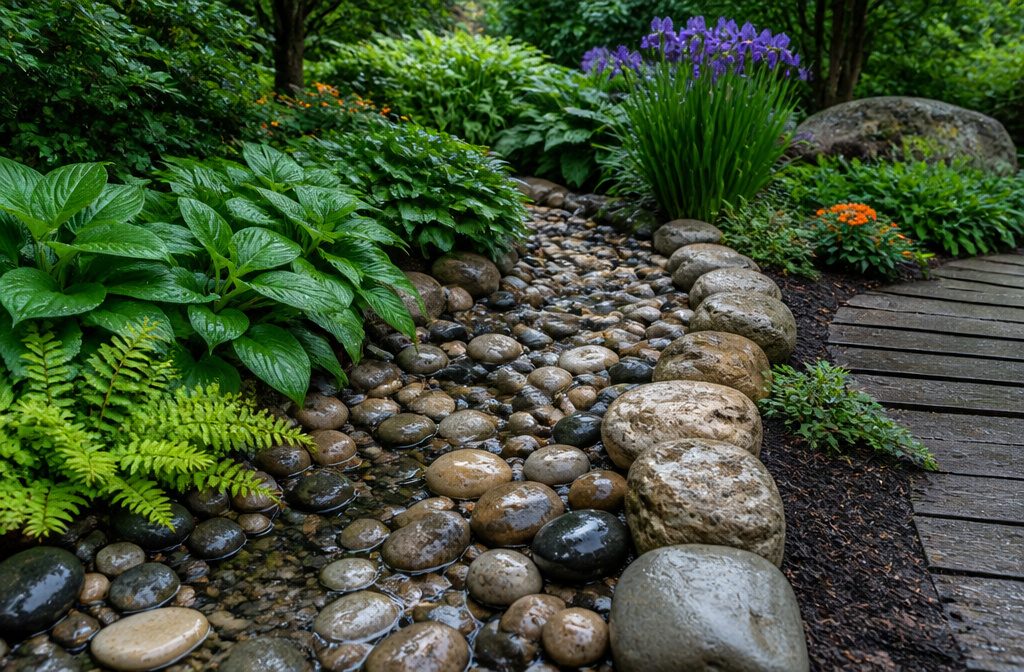
A dry river bed looks real when it curves. Mix pebble with larger cobble and a few boulders, and vary the colors, so the stone reads as a stream that cut its own path.
Bend the bed and vary the rock sizes, because a straight band of one size looks like a gravel strip.
A former ditch is a good place to build one. One yard filled a ditch at the top of a driveway with old beach rock, covered that with landscape fabric, and finished with a mix of river rock.
Plant the banks with native riverbank plants, and run garden beds alongside so growth leans toward the edge over time. Once planted, the bed needs very little upkeep.
Recommended Products
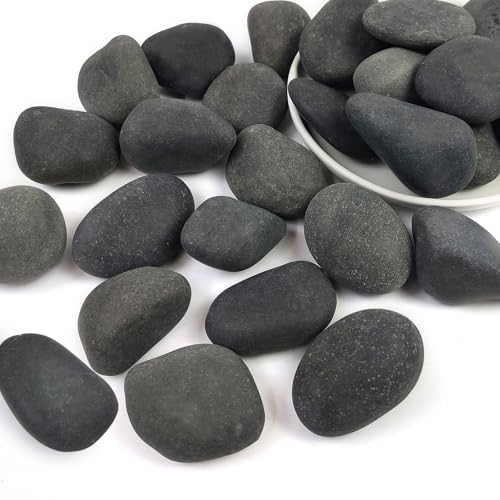
【Size And Weight】: The main image shows two states of pebbles: dry and wet. The color is brighter and the appearance is better in the wet water state,These black natural decorative river rocks measure approximately 2 to 3 inches and weigh 20 pounds per package. They are round and smooth black stones

【Weight & Size】Weight: 40 pounds. size:3-4 inches. Mixed color river rocks are clean and smooth,and contains a variety of different colors, shades and shapes

🌑【SIZE & PARAMETERS】Weight:7pounds. Rocks range in length about to 1"
3. Cover the Whole Bed
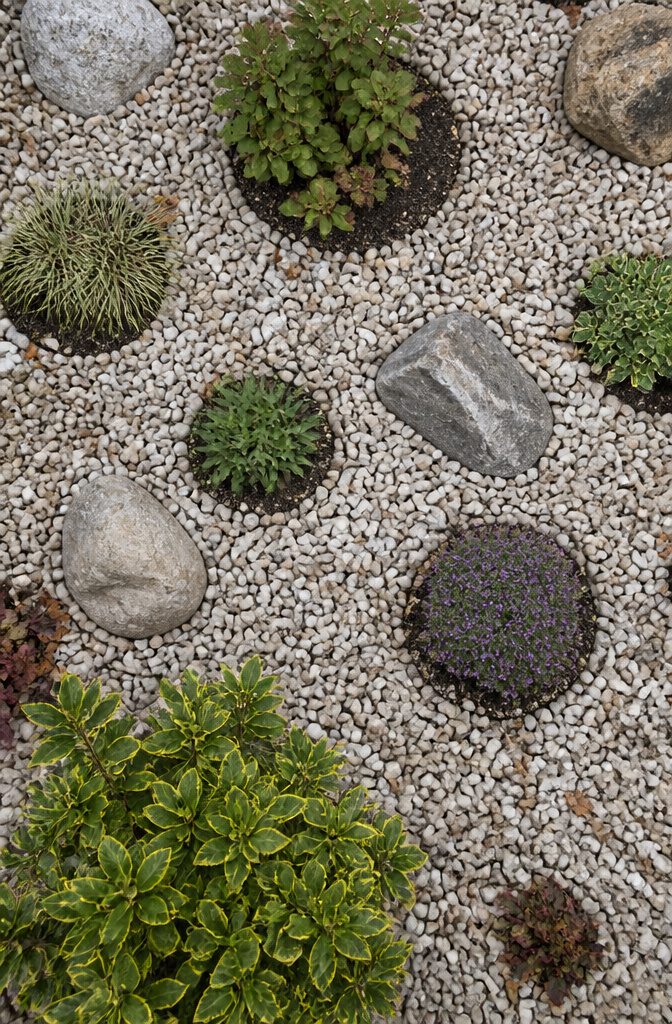
A bed with no room for a winding dry river bed can take the same stone across its whole surface.
River rock replaces mulch or bare soil, so the planting area becomes one pale, rounded ground cover with plants coming up through it.
Mixing stone sizes keeps the surface from looking like a parking lot. Larger rocks set among smaller ones give it a natural, streambed look.
Stone covers the soil, but plants still need openings to grow through.
Set shrubs and perennials first, then lay the rock around them, because cutting holes in a finished layer is harder. Leave a ring of open soil around each plant, and keep stone off crowns and stems.
Recommended Products

Professional Grade Weed Barrier: LAVEVE weed barrier fabric is made of woven polypropylene material. Its high-density and permeable characteristics effectively stop weed growth and protect soil health so your plants can grow well.

WHAT'S IN THE BOX: One 3 ft x 50 ft non-woven roll covering 150 sq ft, plus 20 steel landscape pins
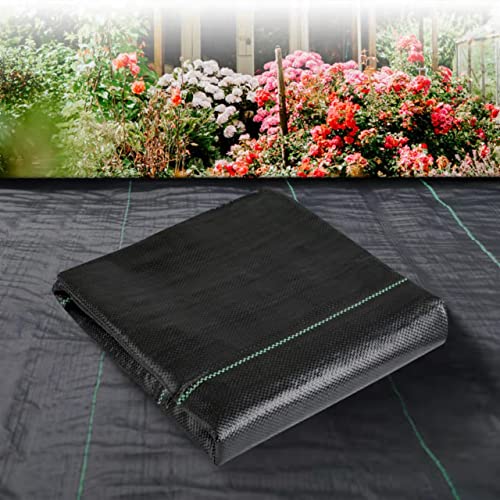
Premium Weed Barrier Fabric:Weed barrier landscape fabric is a type of geotextile fabric that is commonly used in landscaping and construction.With excellent weed control properties, providing a clean and tidy landscape.Very strong and durable,Pro landscape weed barrier will provide you with premium weed protection for a very long time.
4. River Rock With Ornamental Grasses
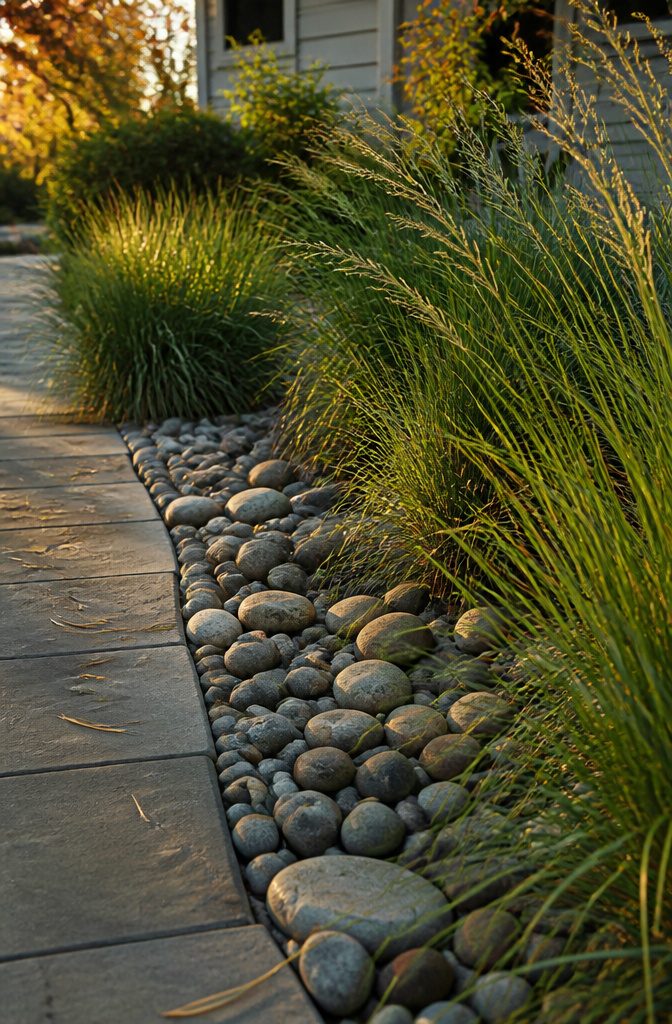
A dry river rock bed along a path behind the house is a good place to pair stone with ornamental grasses. Plant the grasses at the edge of the bed instead of burying them in the middle of the stone.
Over time they grow and lean toward the rock, which blurs the line where the bed ends. Mix stone sizes and edge the bed with grasses, and the whole thing reads as natural rather than laid down.
Fine, moving blades against hard, smooth, rounded stone give the bed its look, so skip tidy rows and let the grasses crowd the border unevenly.
Recommended Products

PROTECT YOUR LINER: The underlay protects the pond liner from being punctured by rocks or other debris, as well as damage from rodents.

【THICKER 7.5OZ POND LINER UNDERLAYMENT】 Convivium geotextile fabric is 250GSM / 7.5 oz/yd², thicker than common 4.5–6 oz pond liner padding. Built to create a tougher protective base under pond liners for koi ponds, fish ponds, water gardens, and landscaping

Pond-Tex Puncture Protection: Engineered 4.5 oz non woven geotextile underlayment cushions your pond liner or preformed pond tub against punctures from rocks, roots, stones and rough terrain. Works with EPDM rubber, HDPE, LLDPE, RPE, LDPE and PVC liners. Lays underneath your liner as a protective layer, not a water barrier.
5. A Gravel Sitting Area
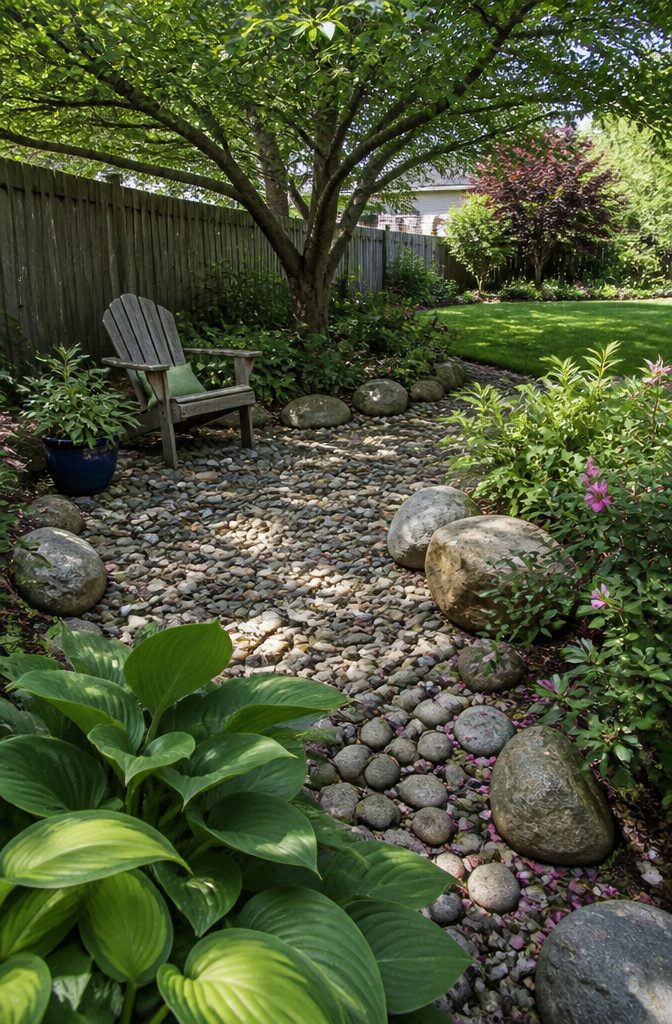
Spread river rock across a small sitting area beside the bed and it reads as a dry creek bed, even on flat ground.
Mix stone sizes and colors, then set a few larger cobbles and a boulder or two along the edges. That variety makes the surface look shaped by water instead of poured from a bag.
The stone gives the seat texture underfoot and a sense of movement that plain lawn or mulch lacks. It also needs little upkeep.
Plants from the neighboring bed can spill toward the edge, which softens the line between planting and seating. Vary the stone sizes rather than using one uniform size, since that is what sells the creek look.
Pebble paths and walkways use the same idea. One color works, or you can mix colors to form patterns or mosaic-like designs underfoot.
Recommended Products

Complete Package: with your purchase, you are treated to a 32.8 ft stone themed paper bulletin border; It's conveniently packaged and do remember to get some glue point as it does not have an adhesive back; Create memorable decorations hassle free

【Premium Quality】Handpicked natural stones, meticulously polished and quality-controlled. Sleek finish and long-lasting luster elevate elegance of any space.

【Size And Weight】:The main image shows two states of gravel: dry and wet. The color is brighter and the appearance is better in the wet water state, These natural decorative river rocks measure approximately 3 to 4 inches and weigh 20 pounds per package. They are round and smooth mixed color river rocks
6. Lining a Pond or Water Feature
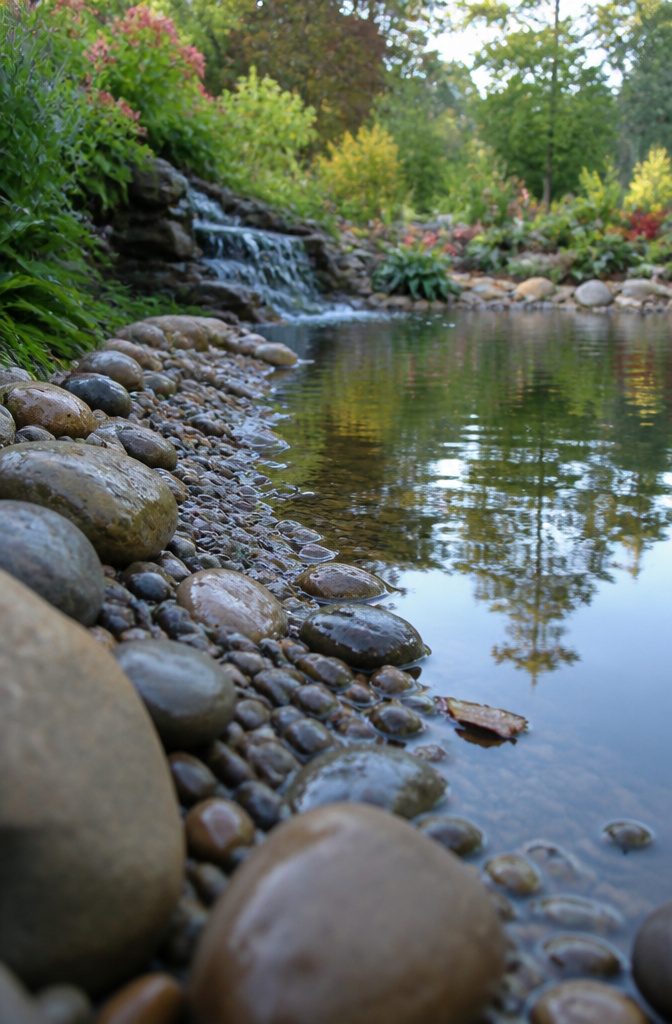
Smooth, water-worn stones look right at the water’s edge because they resemble what moving water leaves behind. Line a pond or basin with river rock and the hard line between soil and water disappears.
The shore reads as a gradual slope from land to water instead of a cut edge, which suits a flower bed that runs up to the pond.
Size of the water feature decides what you can build. A small basin works with a simple ring of rock.
A larger pond has room for a cascade, a miniature waterfall, or a small pebble beach along one side. Rounded stones paired with running water also add a calm, soothing sound and look to the spot.
Recommended Products

Realistic Faux Stone Texture: Our landscape edging boasts a lifelike stone texture with detailed surface patterns that add depth and a polished look to your outdoor space. It beautifully enhances garden beds, lawns, pathways and flower beds, bringing a natural, decorative touch to any yard.

Multiple Size Options: Our painting stones come in two size options, 2-3 Inches and 3-4 Inches, catering to various creative needs. Whether for children's crafts or professional art projects, you’ll find the perfect size for your artistic endeavors

【Five Large River Rocks】Includes 5 natural decorative stones measuring approximately 4-6 inches. This compact set is suited to focused garden accents, planter arrangements and small outdoor landscape projects.
River Rock Versus Beach Pebble
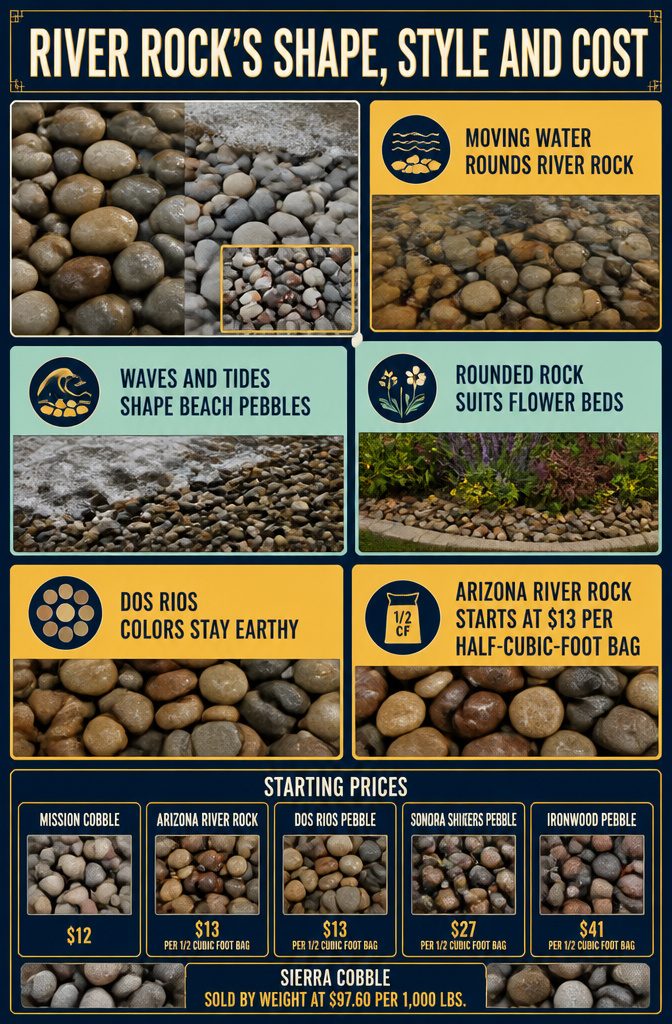
River rock is stone smoothed by moving water, which leaves it rounder than most other pebbles. Beach pebble gets its shape from waves and tides, and decorative pebble can be rounded, angular, or flat and smooth.
For a flower bed, rounded river rock is the better pick because it looks natural next to plants and suits rustic, contemporary, or Zen-inspired designs.
Dos Rios Pebble sits at the earthy end of the color range, while Arizona River Rock and Sonora Shiners Pebble run bolder.
Starting prices: Mission Cobble costs $12, and Arizona River Rock and Dos Rios Pebble cost $13 each per 1/2 cubic foot bag.
Sonora Shiners Pebble is $27 and Ironwood Pebble is $41. Sierra Cobble is sold by weight at $97.60 per 1,000 lbs.
Recommended Products
【Size And Weight】: The main image shows two states of pebbles: dry and wet. The color is brighter and the appearance is better in the wet water state,These black natural...
Installation Steps
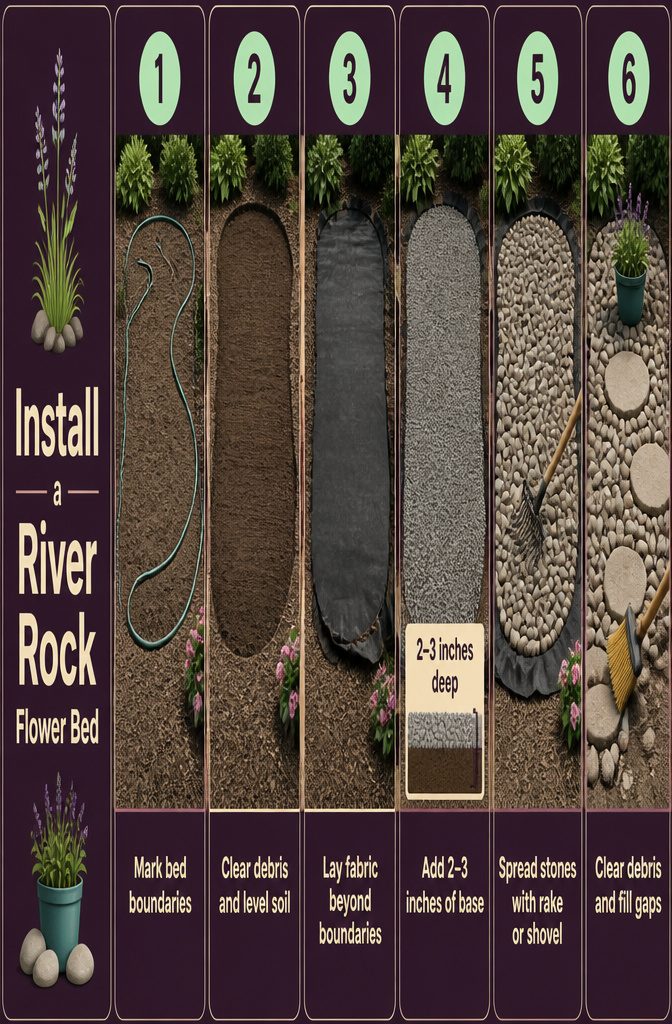
- Mark the boundaries of the bed. A garden hose laid on the ground lets you adjust the curves before you dig.
- Clear all vegetation, rocks, and debris. Pull the weeds, then level the soil with a garden rake.
- Lay landscape fabric over the area, extending it past the boundaries.
- Add a base of crushed gravel or compacted decomposed granite, 2–3 inches deep. Go thicker where people will walk or sit.
- Bring the stones in by wheelbarrow or bucket, then spread them with a rake or shovel.
- Clear loose debris and stray stones with a leaf blower or broom. Check for gaps, fill them, and add finishing touches such as stepping stones or a potted plant.
Recommended Products

【Premium Weed Barrier Fabric】 Weed barrier landscape fabric is a type of geotextile fabric that is commonly used in landscaping and construction. With excellent weed control properties, providing a clean and tidy landscape. Very strong and durable, Pro landscape weed barrier will provide you with premium weed protection for a very long time.

【High-quality Landscape Fabric】: Our weed barrier fabric heavy duty is woven from high-quality polypropylene material, featuring strong tensile strength and durability for long-term ground coverage.

【Professional High-Quality Weed Barrier Fabric】 Our weed barrier fabric is meticulously crafted from 3.2oz heavy-duty professional polypropylene, boasting exceptional tensile strength and tear resistance. It can handle extreme weather conditions such as scorching heat and freezing cold with ease, as well as withstand wear and tear in various complex scenarios, maintaining a stable performance over an extended period.
Weeds and Upkeep
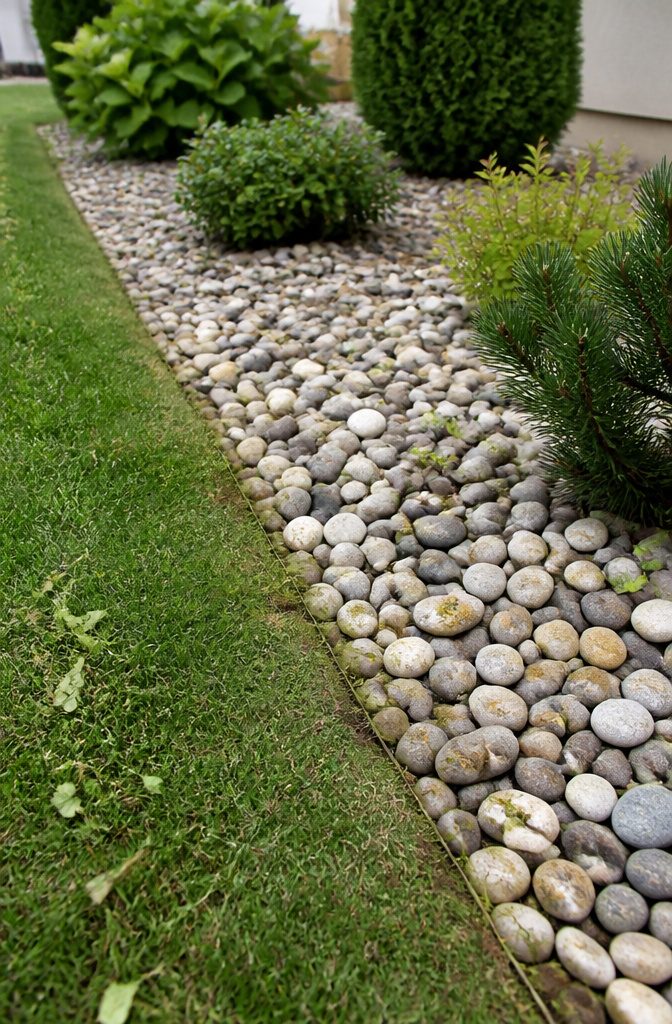
Landscape fabric under the stone suppresses weeds, and stone does not rot the way mulch or wood chips do, so you will not be topping the bed up every year or two. That is the real savings in upkeep.
Fabric does not make the bed weed-proof, though. Gardeners with rock beds report seedlings still turning up between the stones over time, so plan on pulling the occasional one by hand.
Where lawn meets the rock, grass is what invades. Run an edging tool along the lawn side a few times each growing season to cut it back before it creeps into the stone.
Recommended Products
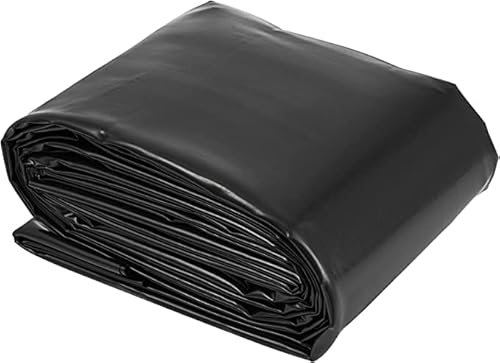
Quality Materials: HDPE pond liners are the most heavy-duty and long-lasting option, made of a thick, high-density plastic material that is resistant to punctures and tears. HDPE liners, which are more leak-proof than LDPE liners, are ideal for large is of utmost importance.ications where durability is of utmost importance.

THICKER - Pond liner 20 mil, thick pond liners for outdoor ponds; Ultra-durable yet lightweight, easy to install, while flexible for a variety of creative designs
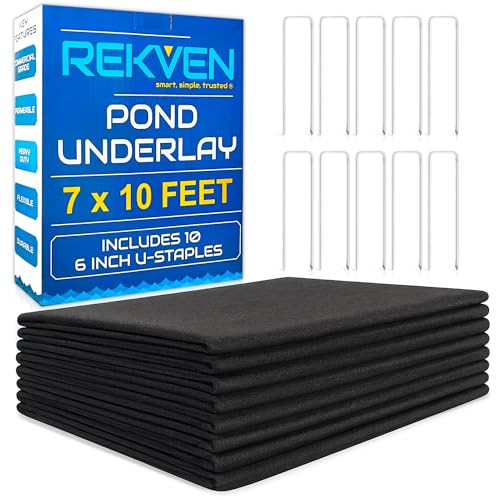
Pond Underlayment Fabric: Engineered 4.5 oz non woven geotextile underlayment provides Pond-Tex puncture protection, cushioning your pond liner or preformed pond tub against rocks, roots, stones and rough terrain. Works with EPDM rubber, HDPE, LLDPE, RPE, LDPE and PVC liners. Lays underneath your separate waterproof liner as a protective layer, not a water barrier.