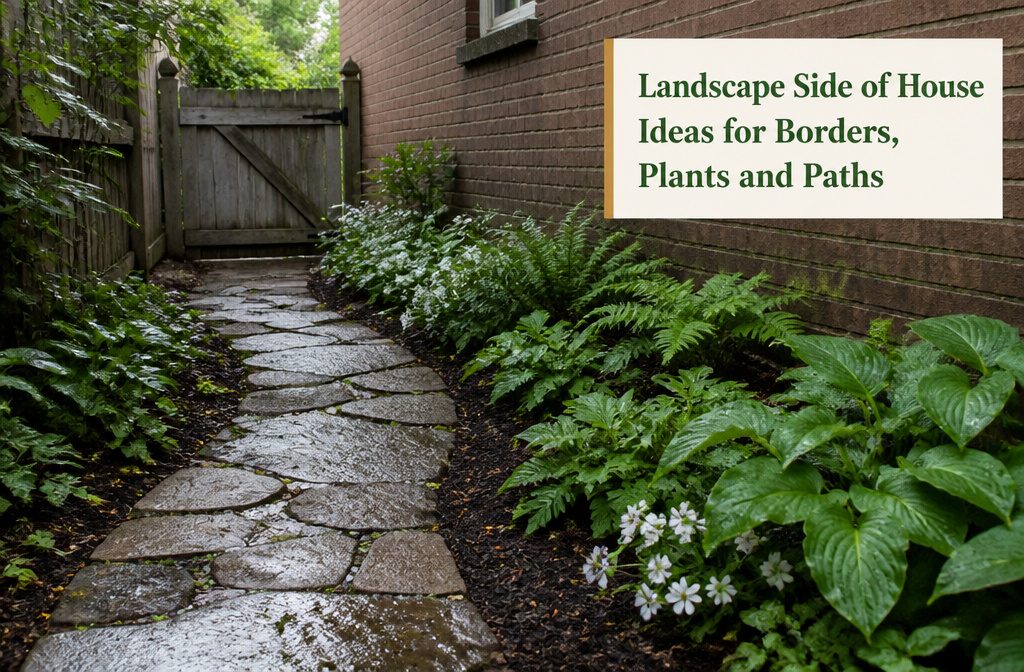
These ideas run from free leaf mulch to stone paths and wall fountains, but the direction your side yard faces decides which plants work.
A south wall gets extremely hot in summer, while a north side gets little light, and a sun plant in a north bed will struggle. Width matters too: past 8 feet, there’s room for seating.
1. Curving Borders and Edging
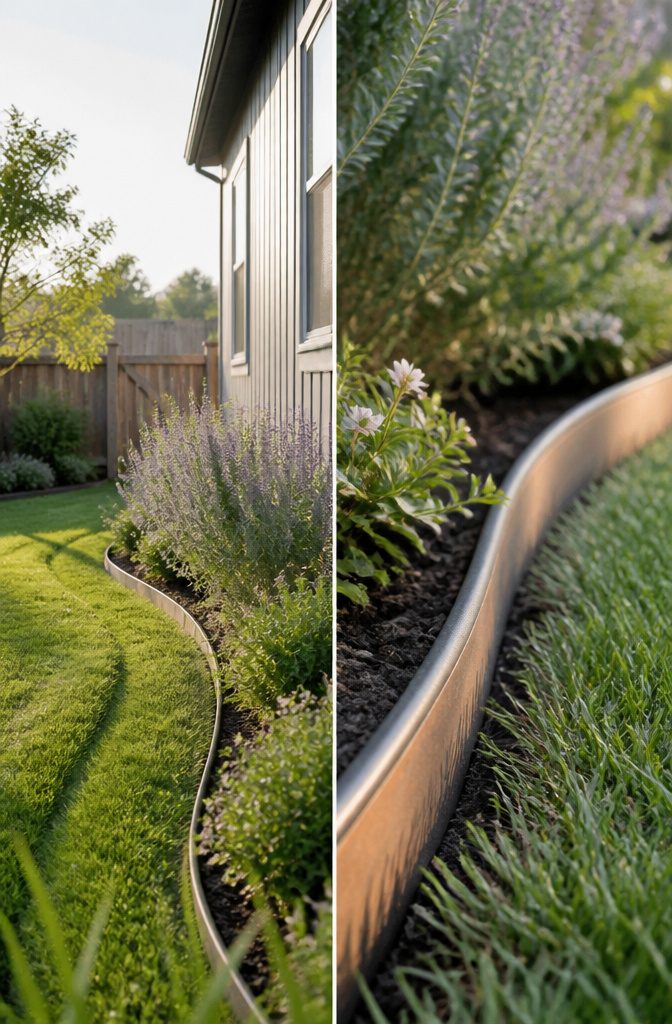
Side yards are long and narrow, so a straight bed along a straight wall and fence reads as a strip.
A curved line breaks that up. Jane at Home makes the case:
I like the natural look of curvy, free flowing borders rather than straight lines.
Lay a garden hose on the ground to test the curve, and match it to your house style.
Edging keeps grass out and gives your mower or trimmer a line to stop at.
Steel with a rubberized lip gives the neatest edge, but tight curves take effort to bend. Concrete looks clean and costs more than steel or plastic.
Plastic is cheaper and plainer. Natural stone, brick and cinder blocks suit a rustic look, and stone or block can double as a low retaining wall, though stacking them is slower work.
Recommended Products

SHIPMENT CONTAINS: One 5 inch x 40 foot brown flexible landscape edging coil with 10 matching stakes for securing garden borders
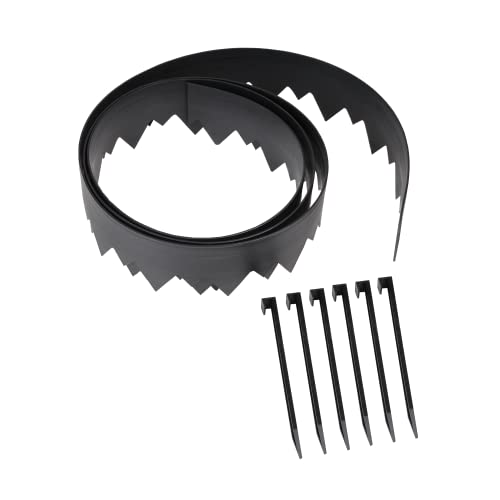
Pound‑In Lawn Edging – Create clean, defined garden borders without hiring a professional; installs with minimal ground preparation.
2. Plants for Sun and Shade
A south-facing wall gets extremely hot in summer, so that bed needs plants that take full sun and heat.
Salvia, Russian sage, hyssop, dianthus, allium and potentilla all fit. Russian sage is the one to start with, since it does well in warm temperatures and abundant sunshine.
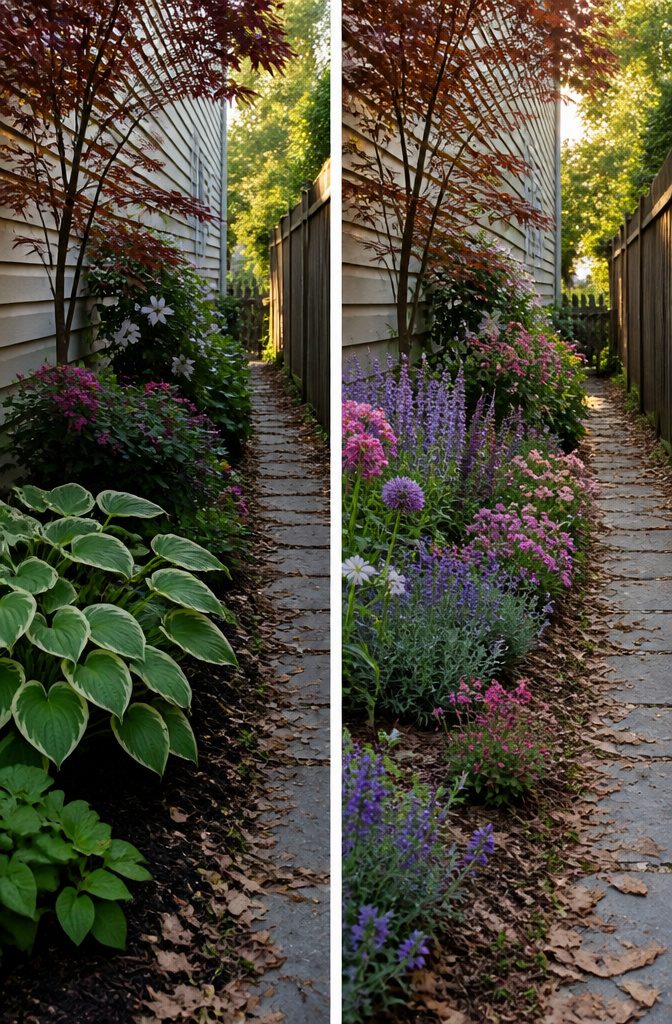
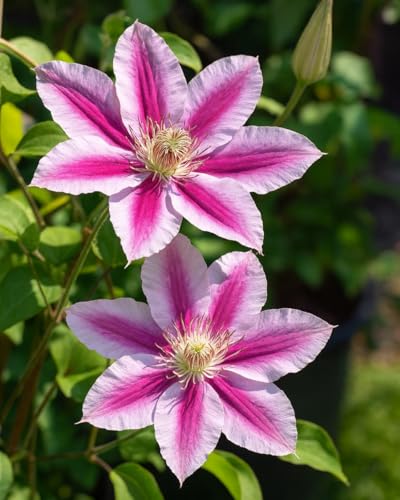
North-facing sides get little light, so choose shade-tolerant foundation plants: hostas, Japanese maple, pink spirea and clematis.
Hostas cover the ground, and a Japanese maple adds height above them. Pink spirea has delicate leaves and blooms, and it works in a border that winds from the front yard around to the side.
Work out which way the side faces before you buy. A plant sold for sun will struggle in a north-side bed.
Recommended Products

Unlock Effortless Gardening for Beginners & Enthusiasts: Kick-start your botanical journey with these colorful hosta seeds! Perfect for both novice gardeners and experienced plant lovers, these perennials require minimal care—just plant them once for years of returns. Ideal for busy lifestyles, as they establish quickly with only basic watering and light soil attention needed.

Unlock Effortless Gardening for Beginners & Enthusiasts: Kick-start your botanical journey with these colorful hosta seeds! Perfect for both novice gardeners and experienced plant lovers, these perennials require minimal care—just plant them once for years of returns. Ideal for busy lifestyles, as they establish quickly with only basic watering and light soil attention needed.

3. Drought-Tolerant Plants
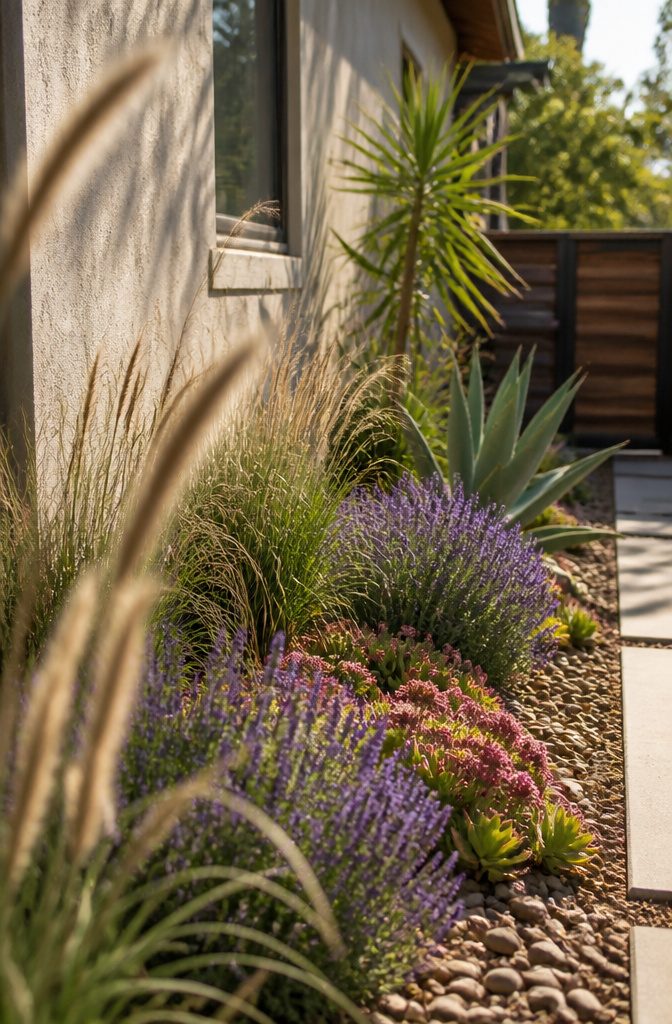
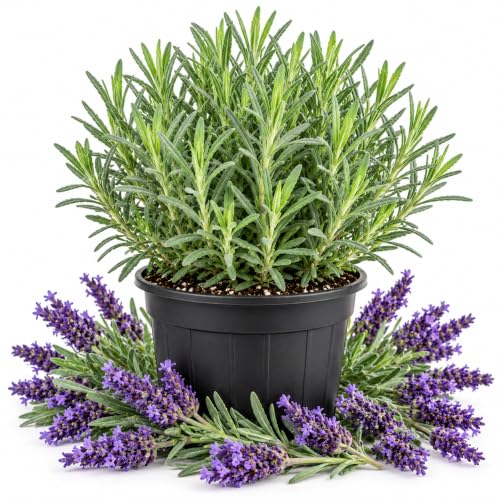
Side yards often bake against a wall, and that suits lavender, sedum, ornamental grasses, agave and yucca. All five handle heat, add texture and color, and cut your watering once they settle in.
Lavender and sedum also draw pollinators, so a narrow strip gets some life without extra work. Grasses soften the hard line of a foundation, while agave and yucca add sharp, upright shapes that read well from a window.
Even the toughest of these plants needs regular watering through its first season, because the roots have to reach deeper soil before they can carry the plant through a hot summer or a dry spell.
After that, they rarely need more than an occasional check.
Recommended Products

DESIGNED FOR SHADE – Unlike traditional wildflower mixes intended for full sun, this blend contains 16 annual and perennial species selected for woodland edges, beneath trees, and other partially shaded locations.
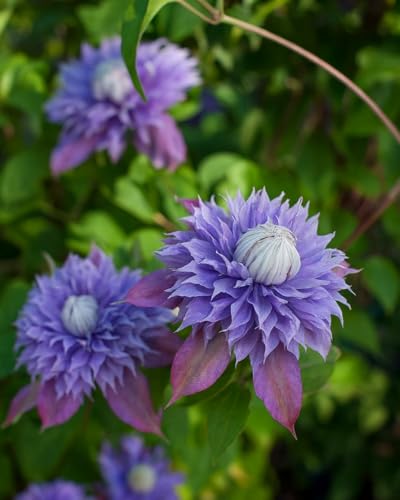
When received, the plant will be in seasonal condition with appropriate foliage. If shipped between November 1st and March 1st, the plant may be dormant and trimmed. Plant is fully rooted in the pot ready for immediate planting
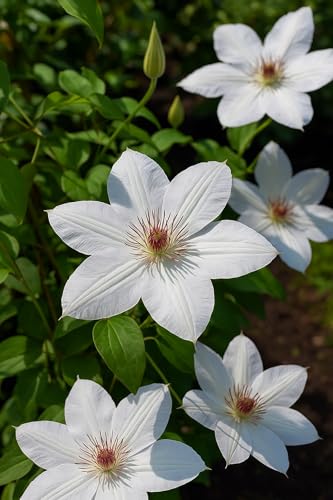
When received, the plant will be in seasonal condition with appropriate foliage. If shipped between November 1st and March 1st, the plant may be dormant and trimmed. Plant is fully rooted in the pot ready for immediate planting
4. Evergreens for Year-Round Structure
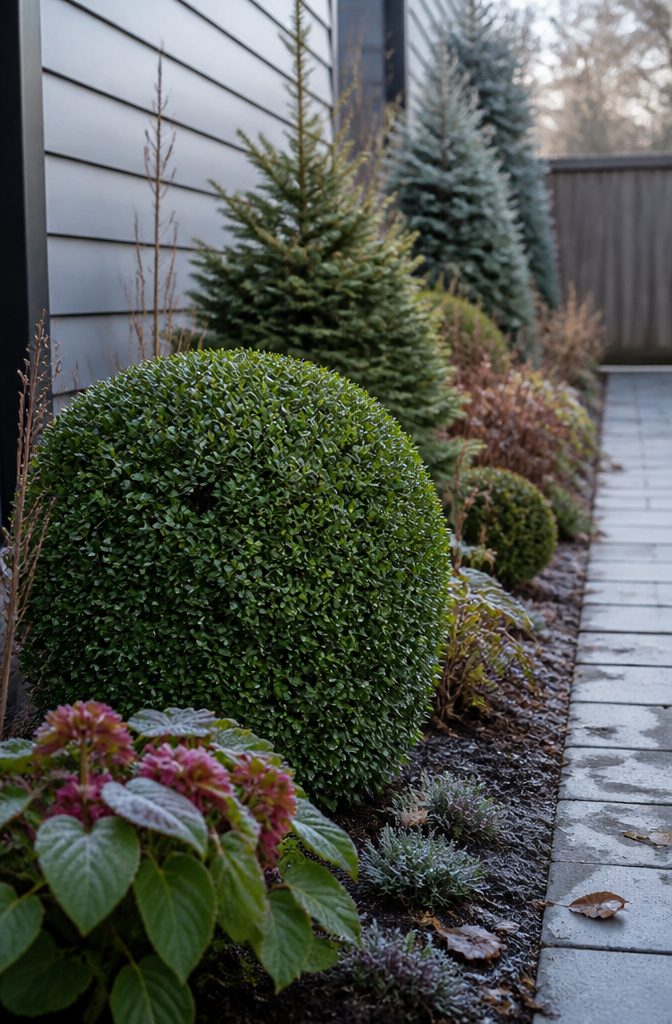
When perennials die back, a narrow side yard can shrink to bare soil and a fence line.
Evergreens keep the strip looking finished through winter. Boxwood and dwarf conifers are the two to start with, since both hold their color and shape in every season and still pair well with the seasonal blooms planted around them.
In a space this tight, choose dwarf forms, which stay in scale with the strip and are less likely to crowd the path or the house wall as they mature.
Boxwood can also be trimmed into shapes, which gives the border a polished, intentional look.
Recommended Products

Fragrant Blooms: English Lavender seeds to plant of Lavandula angustifolia produce purple flower spikes on slender green stems; late spring–summer color with vigorous growth—ideal for fragrant flowers and classic herbs borders. Common name: English Lavender; Scientific name: Lavandula angustifolia


Quick Germination: Surface-sow purple rockcress flower seeds; light required. Sprouts in 10–14 days at 60–65°F. Start indoors 6 weeks before last frost — garden seed planting, great seeds for planting.
5. Gravel Instead of Grass
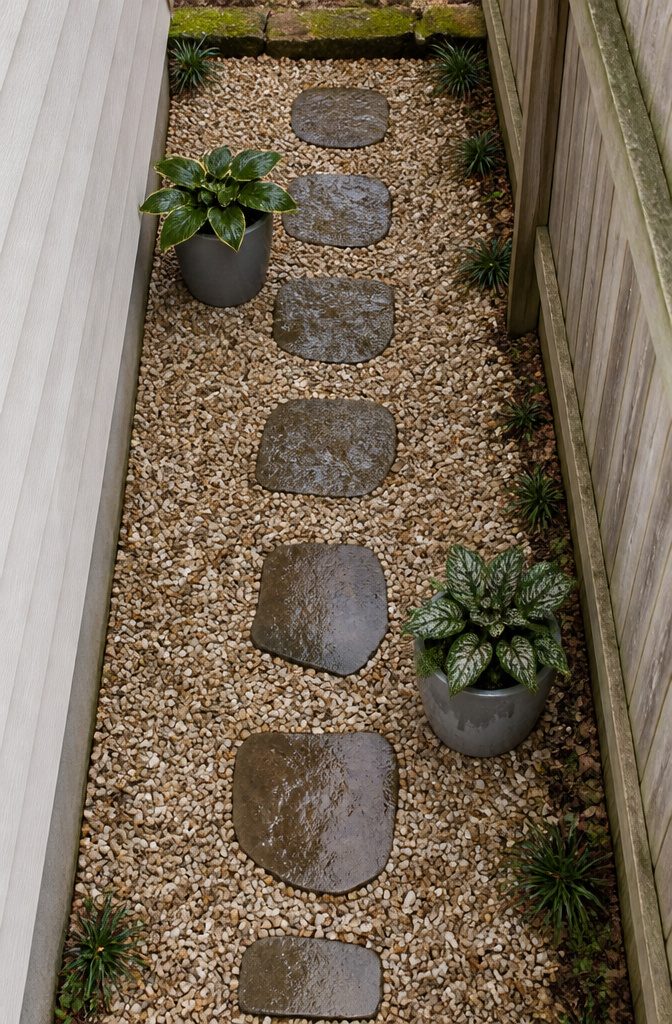
Grass in a narrow, shaded side strip thins out and goes patchy, so replace it with gravel, crushed rock, or stepping stones. None of these needs mowing or frequent watering, which saves you both time and water.
Stepping stones set into gravel work best if you walk the strip, because they give your feet a firm line. Any of the three also makes a clean backdrop that lets a few plants stand out.
Add color with fiberglass planters. They are light enough to rearrange as the season changes and they stand up to weather.
Look for a 3-year warranty. Delivery can take about a week off-peak and two weeks from May through July, so order before the summer rush.
Recommended Products


WHAT YOU WILL RECEIVE: You will receive 3 Harbor Dwarf Nandina live shrub in quart pot, ready for planting in your yard, garden beds, or landscape areas

This dwarf variety, only half the size of others, creates a lush groundcover of dense, dark green grass-like clumps. Excellent as an edging plant or tucked into rocks for a pleasing contrast. Striking in mass plantings in the landscape. Evergreen.
6. Mulch and Decorative Stones
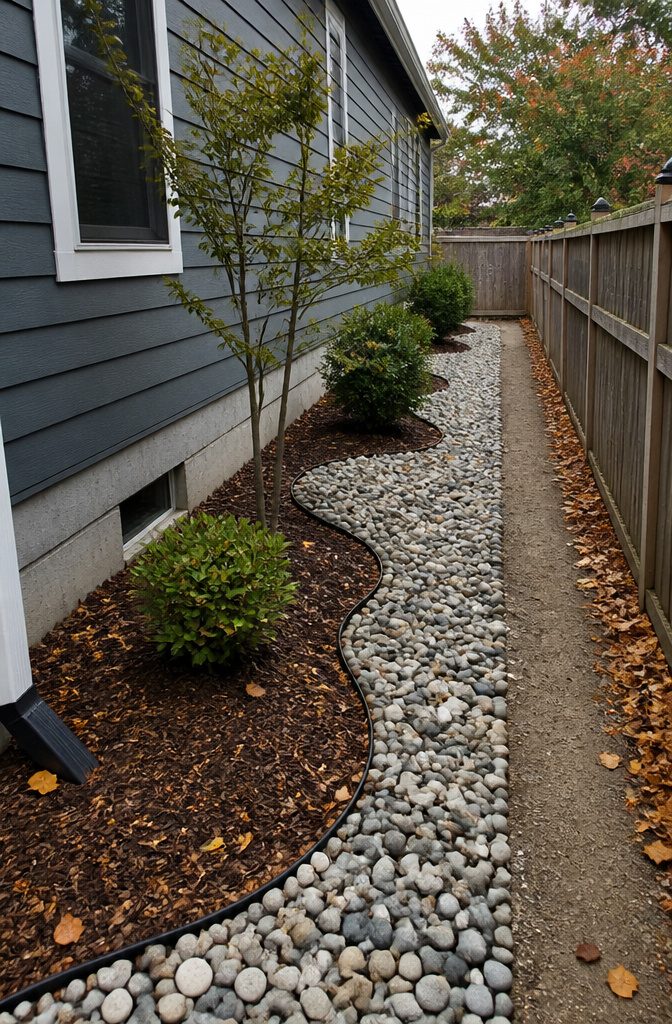
Wind decides which cover you pick.
In a windy side yard, use river rock in the border beds. Large bark chips blow into your yard and the neighbors’ until you are replacing them constantly, while rock stays where you put it.
Where the air is calmer, small bark mulch is the better choice around trees and shrubs. It holds moisture well and gives the bed a finished look against the house wall.
Either material cuts down weeding and watering, and either one evens out soil temperature so roots are protected from heat and cold.
Bark breaks down, so plan to top it up once or twice a year. If money is tight, fallen leaves make a free mulch.
Recommended Products

Weather-resistant Metal: crafted from heavy-gauge, weather-resistant metal, this edging is engineered to endure extreme temperatures and moisture for years, guaranteeing reliable performance with minimal maintenance

Durable & Flexible Material GTSABWAY garden edging is crafted from premium galvanized steel, ensuring superior durability and flexibility. Easily shape it into straight lines,curves, circles, or unique contours ,without cracking,Can withstand all kinds of weather conditions, ensuring long-term durability and reliability. providing reliable Garden Border solutions.

Size:The edging is 5.5 inch tall,the length is 16ft.
7. Vertical Planting
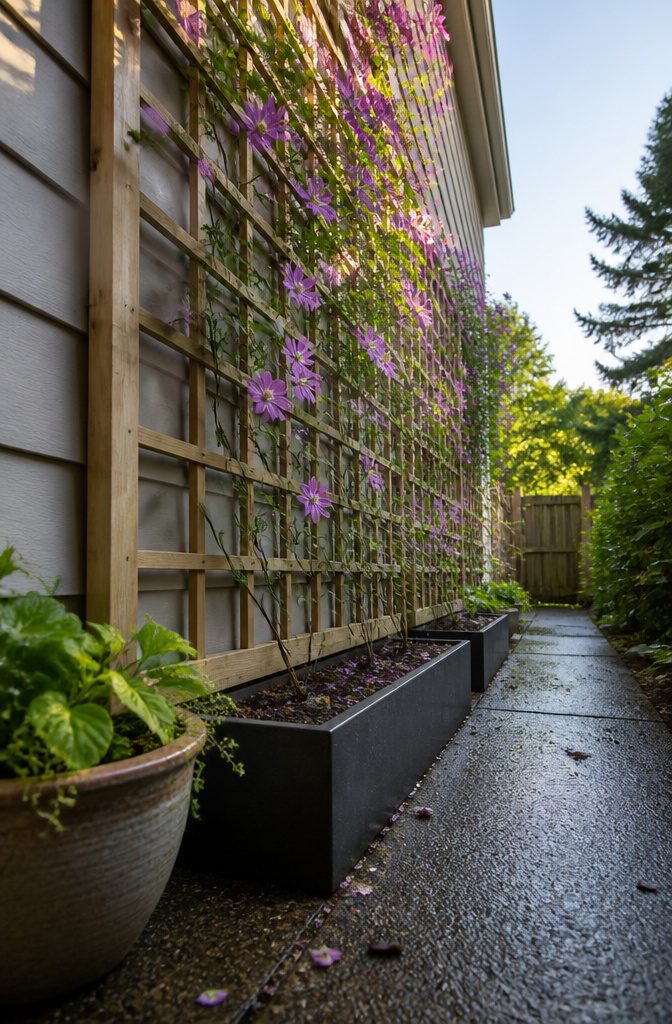
A narrow side yard reads as a corridor until something pulls the eye upward. Trellises, wall-mounted containers and slim rectangular planters set against the foundation do that, and they take almost no ground, so the path stays clear.
Climbing roses or clematis on a trellis add height and romance without a solid fence closing the space in. Wood lattice with flowering vines gives the wall texture and softness.
Mounting is where this goes wrong. Match the anchor to the wall: masonry anchors for brick or concrete, and screws into studs or solid framing for wood siding.
A container full of wet soil is heavy, and a plastic wall plug in siding will not hold it.
Recommended Products
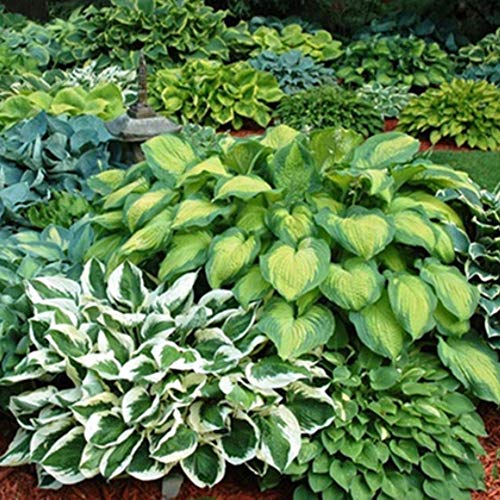
Bare Roots, Often Called Hosta Bulbs: Hostas grow from bare root crowns rather than true bulbs - many gardeners simply call them hosta bulbs. Pack includes 6 bare roots of mixed heart-shaped hostas.
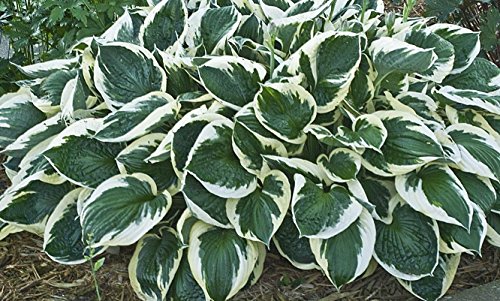

Bare Roots, Often Called Hosta Bulbs: Hostas grow from bare root crowns rather than true bulbs - many gardeners simply call them hosta bulbs. Pack includes 12 bare roots of mixed heart-shaped hostas.
8. A Walkway Through the Space
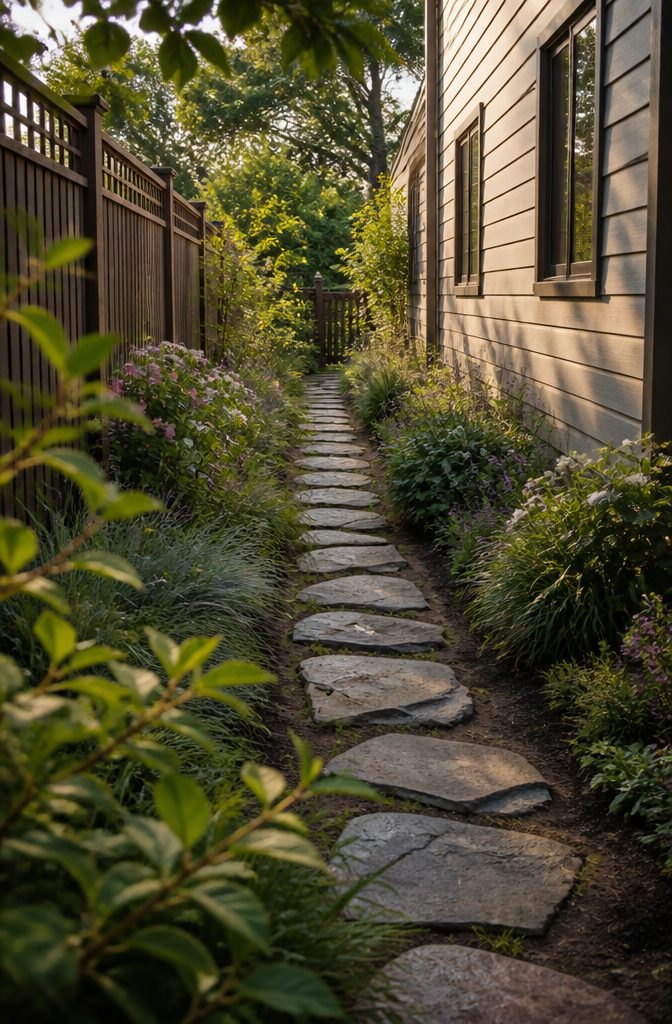
A path gives a long, narrow side yard a reason to exist. It breaks up the length, pulls the eye along the house, and makes the space look planned rather than leftover.
The material sets the tone for the whole space, so choose the style first.
Concrete pavers give a contemporary look. Irregular natural stone feels timeless and elegant.
Brick brings a traditional character. Crushed gravel is the relaxed option, with a cottage-style charm that suits loose plantings along the edges.
You can also combine materials. Stepping stones surrounded by gravel add texture and personality, and the stones show you exactly where to walk.
Recommended Products

Hardy in zones 4-9
When received, the plant will be in seasonal condition with appropriate foliage. If shipped between November 1st and March 1st, the plant may be dormant and trimmed. Plant is fully rooted in the pot ready for immediate planting

For best results, plant in USDA Zone:4-8 - Mature size: -in H x -in W
9. Privacy Plantings and Screens
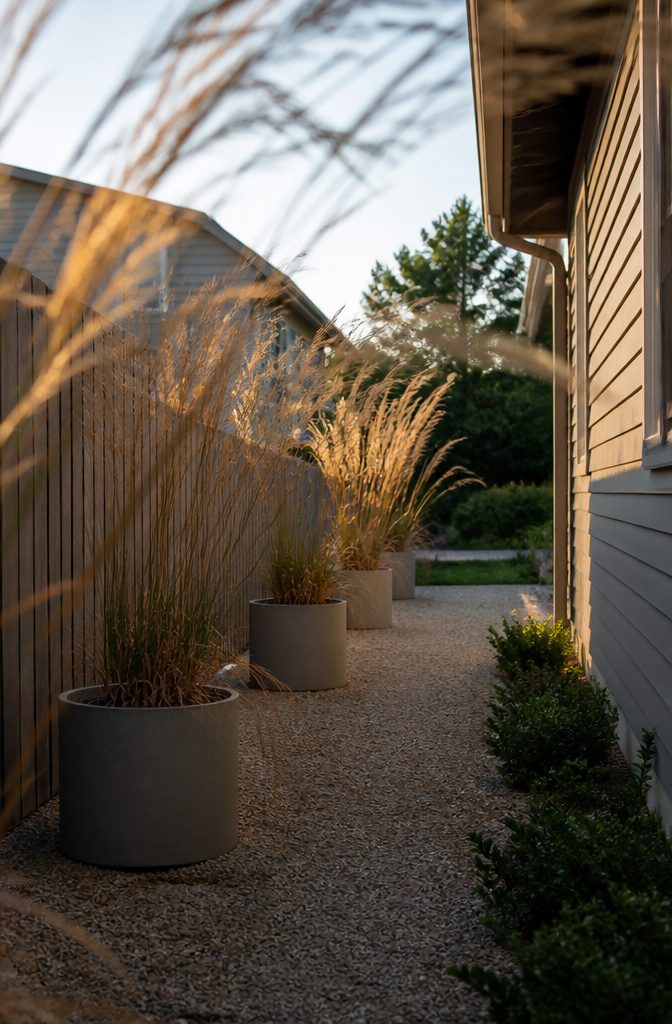
A side yard rarely needs a solid fence to feel private.
Tall grasses or slim trees in large fiberglass planters block a view and stay movable, so you can shift them until the neighbor’s window is covered. Feather reed grass is a good grass for this.
For a permanent screen, plant a tall hedge.
Golden privets are one example, and bamboo is another quick way to block a view. A row of potted trees gives similar coverage without digging.
Where the strip is too narrow for a hedge, go vertical. A trellis or lattice panel with climbing vines takes almost no width, and an espaliered fruit tree grown flat against a wall does the same.
Pergolas or arched trellises over the walkway frame the path and add a sense of enclosure.
Recommended Products

LIVE SEDUM TILE: 10" by 20" live plant mat featuring a combination of sedum succulent plants with earthy colors and contrasting shapes. These easy ground cover plants offer endless DIY possibilities.
Produces plump flower heads giving it a unique, eye-catching look all season

Premium Non-GMO Heirloom English Lavender Seeds with 10000+ Seeds: Grow a stunning fragrant garden with these high-quality Lavender Seeds for Planting. This Lavandula angustifolia variety produces beautiful purple flower spikes on slender green stems. Each packet contains over 10000 Non-GMO, open-pollinated heirloom seeds, offering exceptional value for creating a spectacular, low-maintenance perennial display that returns year after year.
10. Storage, Seating or a Work Area
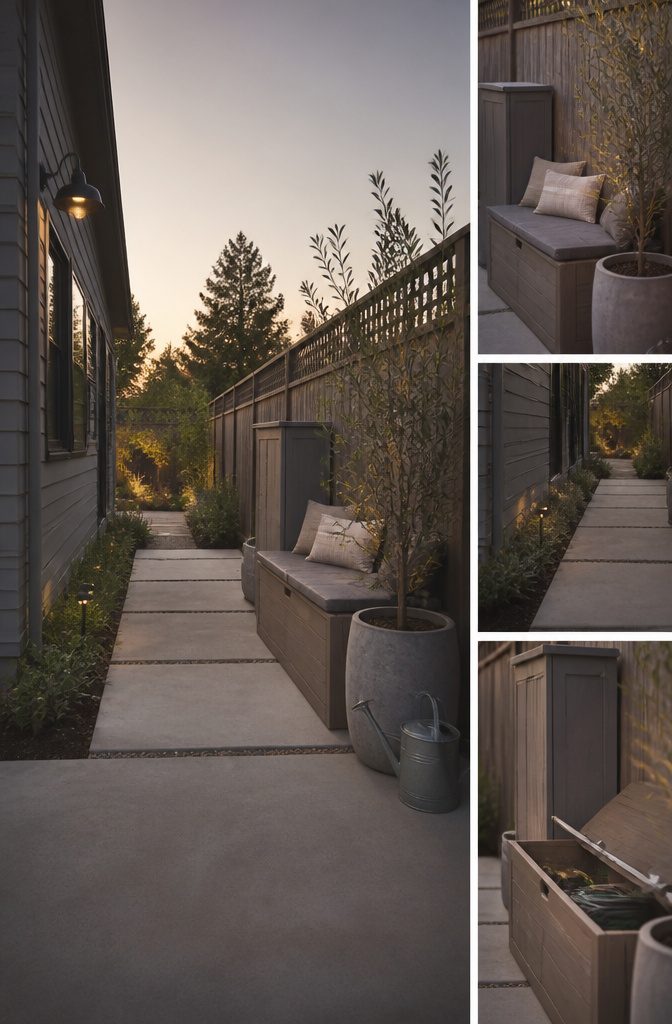
Give the side yard one main job.
In a narrow strip, pick one of the options below. A side yard wider than 8 feet can hold an entertaining area, larger plantings and a storage nook together.
- Hidden storage: A built-in bench with storage or a slim cabinet keeps tools, hoses and recycling bins out of sight.
- Seating nook: Cushions and soft lighting make it an evening spot. Two tall planters separate it from the rest of the yard.
- Grill spot: A slim counter, the grill and weatherproof storage make a compact outdoor kitchen.
- Vertical shelving: Mount shelves for plants, lanterns or decor so the ground stays clear.
- Potting bench: A compact workbench handles repotting and small DIY projects.
Recommended Products

WHAT YOU WILL RECEIVE: You will receive 3 Harbor Dwarf Nandina live shrub in 4 Inch pot, ready for planting in your yard, garden beds, or landscape areas

One of the best coloring nandinas! New foliage has fresh green coloration, with red highlights as it ages. Brilliant red foliage develops in the fall and persists through winter. Neat, low evergreen mounds are terrific for borders, massing and containers. Requires little care and no pruning. Developed in New Zealand.

EVERGREEN SHRUB: Dwarf Yaupon Holly maintains its dense, dark green foliage year-round, making it perfect for foundation plantings and borders
11. Lighting and Water Features
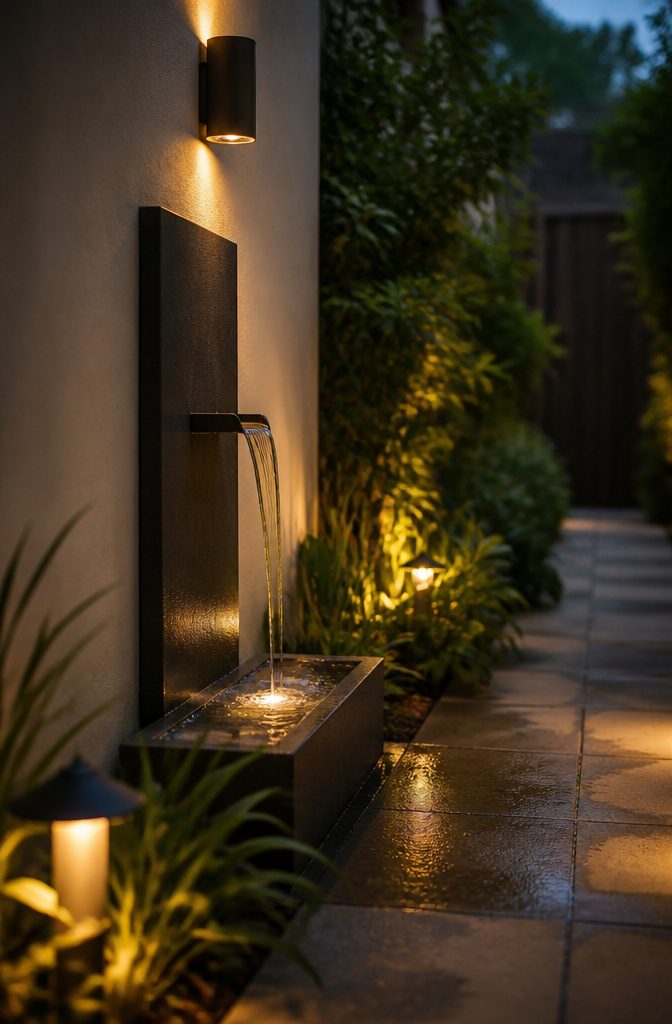
Path lights along a narrow walkway handle safety, and wall sconces on a fence or house wall add a polished look while lighting the way.
Start there, then layer in lanterns or string lights for softer mood lighting once the functional lights are in.
A slim wall-mounted fountain, a bubbling ceramic pot, or a narrow trough-style feature fits a side yard without crowding it, and each adds movement and sound.
Match the size of the feature to the space. Before you buy, check that water and power can reach the spot safely, since a fountain with no practical outlet becomes a dry ornament.
If you want a set-it-and-forget-it setup, choose the lowest-maintenance design. A little soft light aimed at the water makes it a focal point at night too.
Check Sun, Drainage and Width First
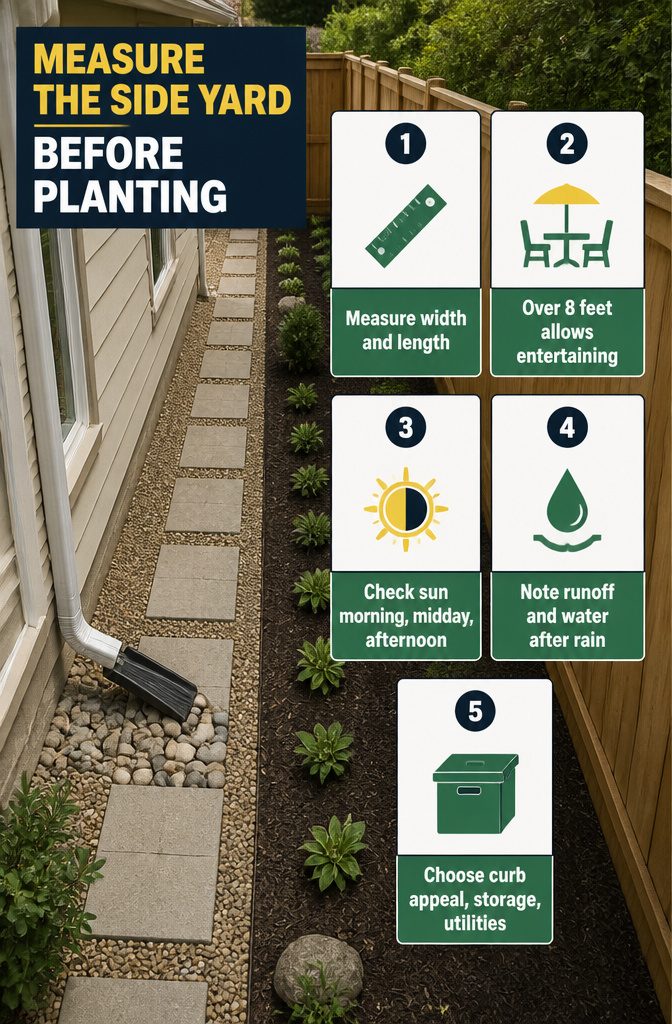
Walk the strip with a notepad and settle four things before you buy anything:
- Size: Measure the width and length so beds, paths or furniture fit without crowding. A side yard wider than 8 feet can hold an entertaining area, larger plantings and a storage nook. A narrower strip suits a path with planting beds and maybe small seating.
- Sun: Check it morning, midday and afternoon. One side of the house may sit in shade while the other gets full sun. South-facing walls get extremely hot in summer, so choose heat-tolerant, full-sun plants there and shade plants on the north side.
- Drainage: Look for runoff from the roof or a neighboring property, and note where water collects after rain.
- Purpose: Decide whether the strip is for curb appeal, hidden storage or utilities, or both.
Keep a Garden Journal
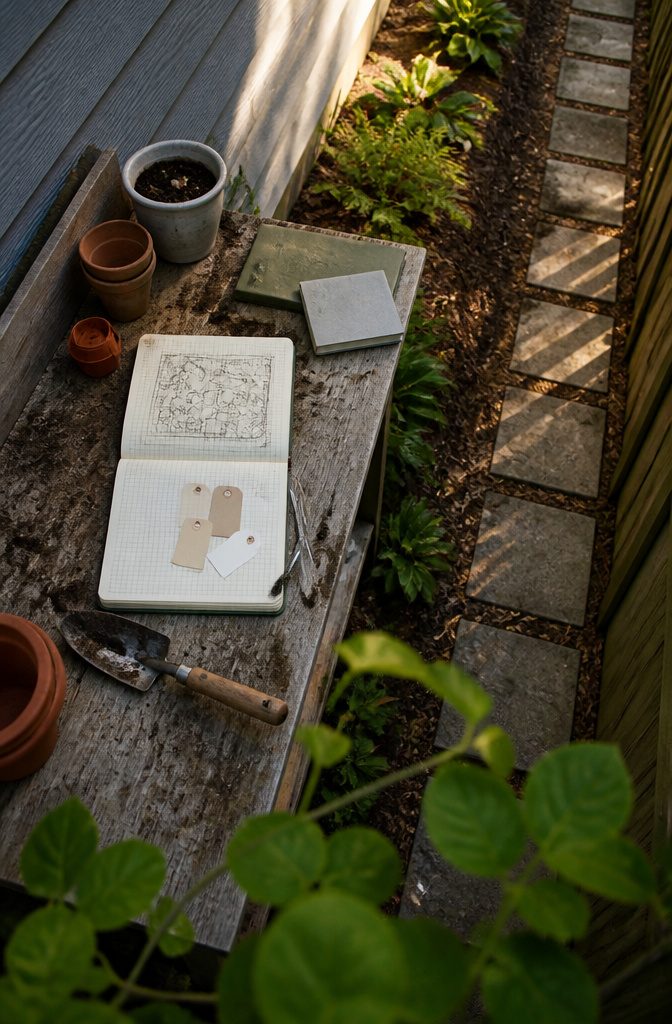
Keep a notebook or folder by the back door. Sketch a rough garden map of the side yard and mark where each plant went in, so you can still identify it after winter cuts everything back.
Staple each plant care tag to a page beside the plant’s name, because the tag holds the sun, water and spacing details that disappear once the pot is recycled.
Clip the receipt to the same page and jot down the planting date, the price, and how the plant is doing.
After one season, the pages show what survived, what each plant cost, and what to replace. On a tight budget, that record keeps you from buying the same failing plant twice.
Frequently Asked Questions
How do I make the sides of my house look good?
Match the plants to the sun each side gets. South-facing walls heat up a lot in summer, so Russian sage, salvia or hyssop hold up there, while north-facing sides suit shade plants such as hostas, Japanese maple and pink spirea.
Once the planting is settled, a curved border with clean edging and a gravel or stepping-stone path gives a long, narrow strip a finished look.