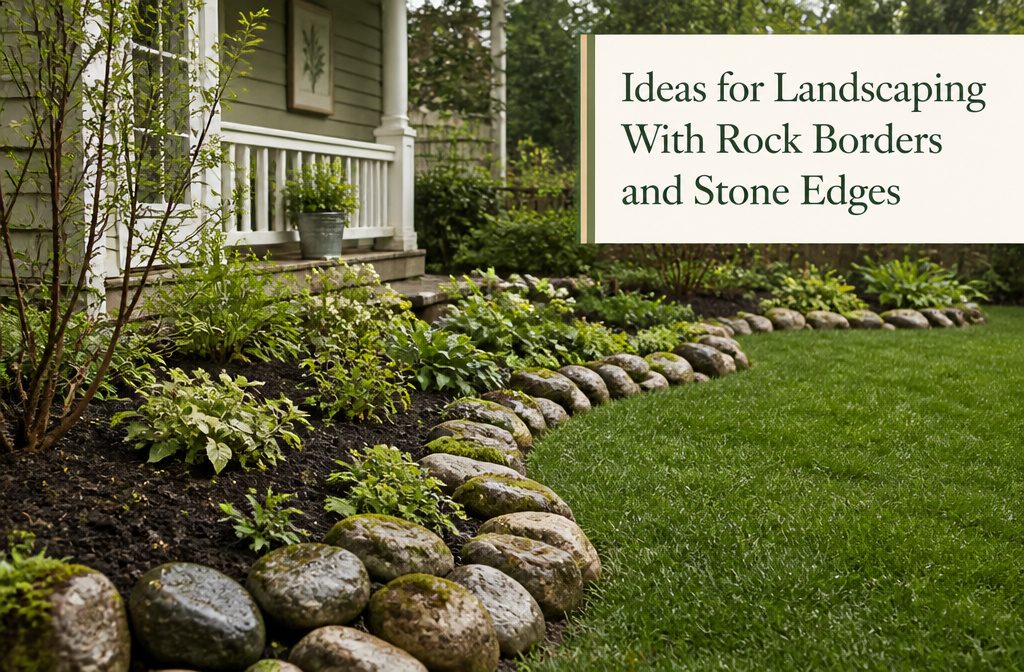
Borders range from a gravel trench 4 inches deep and 6 inches wide to wire gabions that last 20+ years, and your house style decides between them.
Gabions read as modern and can look out of place beside a cottage garden or traditional house. Soft, rustic yards suit stacked stone or creek-bed edges better.
1. Rock and Stone Borders
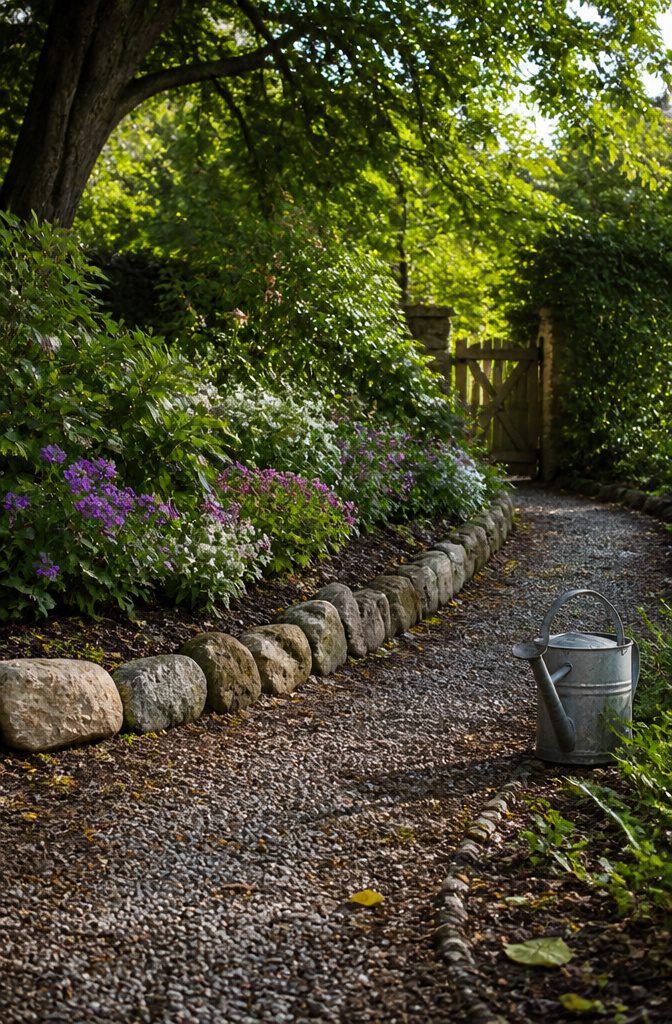
Natural stone or large rocks make the broadest edge, a rugged line that suits most garden styles.
Pale stone brightens shade, and dark stone recedes behind flowers. Rounded stones look soft, angular ones look rough, and bigger ones look bolder.
Spacing does the work:
Mid- to large-sized stones (the size of a large potato or bigger) placed close together around the perimeter of the flower bed will help retain mulch and prevent grass from creeping through the rock garden edging.
Leave no gaps for grass.
Free stone is easy to find. Ask at construction sites, with permission first, and at farms.
Check what limits public land sets on rockhounding. Craigslist, Freecycle and Facebook often list free piles.
Recommended Products

Stone-Look Decorative Landscape Edging: 2.75 inch tall rustic stone design complements any flower gardens and provide clean look for your gardens, flower beds, lawns, grass, raised garden beds, shrubbery, pathways, yard trees, ground pool, etc.

Decorative Brick Red Finish for Rustic Charm: This short wood fence features a warm brick red finish that adds natural beauty and a decorative touch to any outdoor space. Ideal as a wood garden fence for flower beds, pathways, and yard accents.
2. Gravel Borders
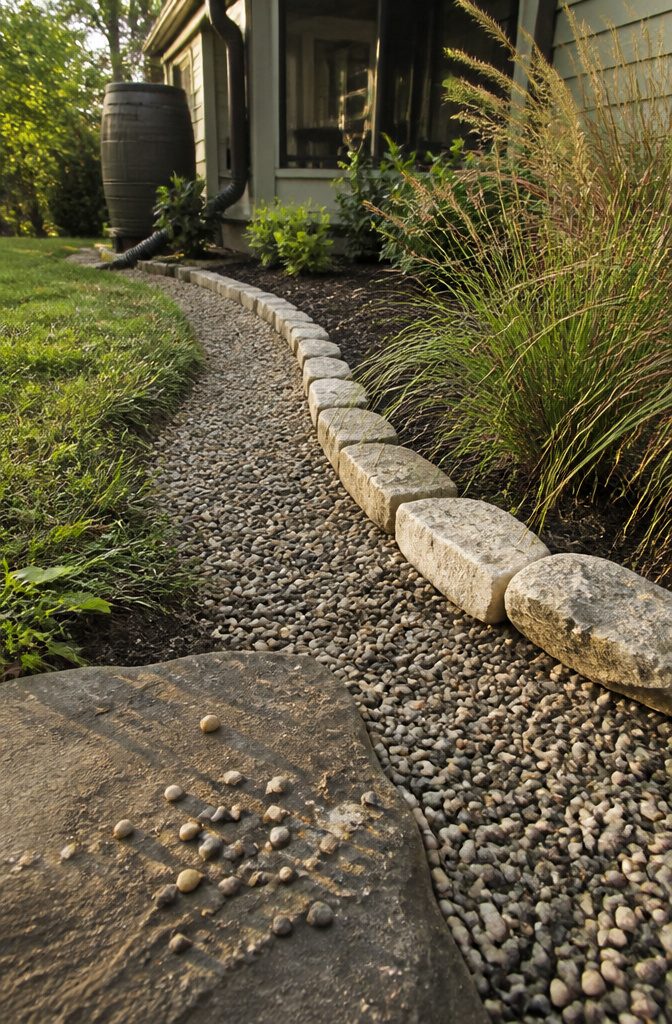
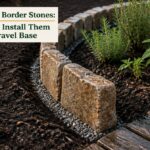
Loose gravel is the cheapest border you can build, and it needs almost no upkeep. Dig a trench 4 inches deep and 6 inches wide, line it with weed barrier, and fill it with crushed granite or pea gravel.
For a thin line along a bed, a 4-inch-wide trench also works. Gravel comes in several colors and sizes, so match it to your house and beds.
Gravel alone can look flat. Set an edging stone along one side, and the larger stone against the fine gravel gives a textured, layered look.
The pairing also drains well. Fountain grass or blue oat grass planted along the inner edge softens the line and needs only one cutback in late winter.
Recommended Products

Product Specifications: MIGHTY109 Granite Gravel 3/4" Size, 40 LBS per Bag

Natural Crushed Granite Material: MIGHTY109 Granite Pea Gravel made from natural crushed granite with approximate diameter of stone 1/8 inch average

Realistic Stone Texture: Our stone landscape edgings feature a lifelike stone texture design. The raised surface patterns add depth and dimension to your outdoor spaces. Each piece measures 1180x95x57mm/46.46x3.74x2.24in, making them perfect for enhancing pool edges, garden beds, and pathways. These lawn edging provide a clean, refined look for both large and small spaces.
3. Stacked Stone
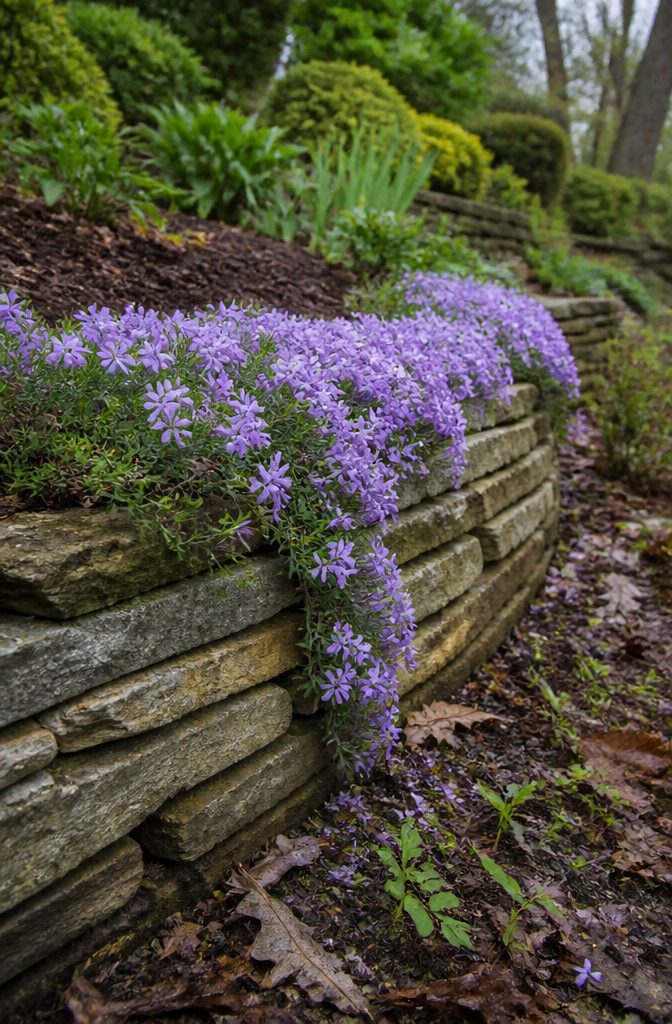
Flat stones stacked into a low wall 6–12 inches tall need no mortar, because the weight of the stone holds the edge in place.
Limestone, sandstone, granite, and shale all stack well, and small to medium fieldstones work if flat ones are hard to find.
Lean each course slightly back toward the bed, a small batter, so the wall tilts into the soil instead of toppling out of it.
Once built, the wall holds mulch in and keeps grass from creeping into the bed.
It suits sloped yards, terraced gardens, and rustic cottage styles. Plant trailing creeping phlox or candytuft along the top so they spill over the stones and soften the line.
Recommended Products

Easy installation – Install garden edging border quickly with our patent-pending connection system. Simply hammer spikes to secure for a stable it firmly in place. Ideal for landscape edging border projects.

Easy installation – Install garden edging border quickly with our patent-pending connection system. Simply hammer spikes to secure for a stable it firmly in place. Ideal for landscape edging border projects.

Refined Carbonized Pine Wood: Crafted from premium pine, our wood landscape edging is carbonized for durability, sanded smooth, and coated for superior weather resistance. Unlike untreated wood, it won’t leave messy carbon residue on your hands.
4. Stone and Plant Combinations
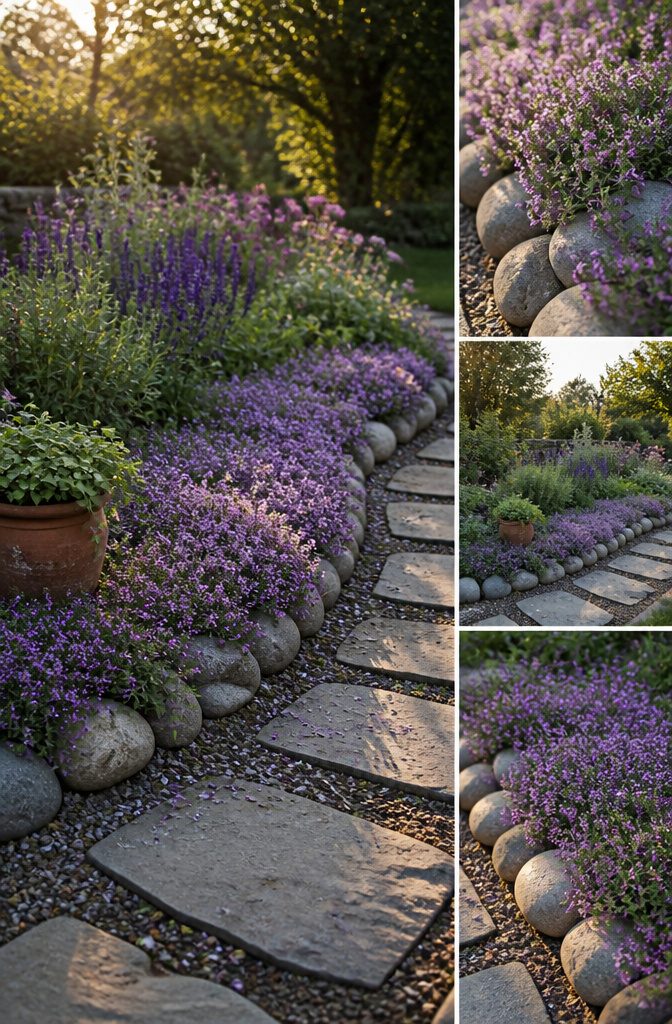
Creeping thyme (Thymus serpyllum) is the best softener for a river rock edge. It stays 1–6 inches tall, tolerates foot traffic, smells fragrant, and blooms purple in summer.
Plant plugs 6 inches apart along the inner edge, and it will spill over the rounded stones of a curved bed. For stacked stone, creeping phlox does the same job, trailing over the wall’s face and breaking up its hard lines.
Space plants by habit: ground covers every 6–8 inches, mounding plants every 12–15 inches, accent perennials every 18–24 inches. Put the accent perennials farthest back so the low plants leave the stone visible.
5. Dry Creek-Bed Edge
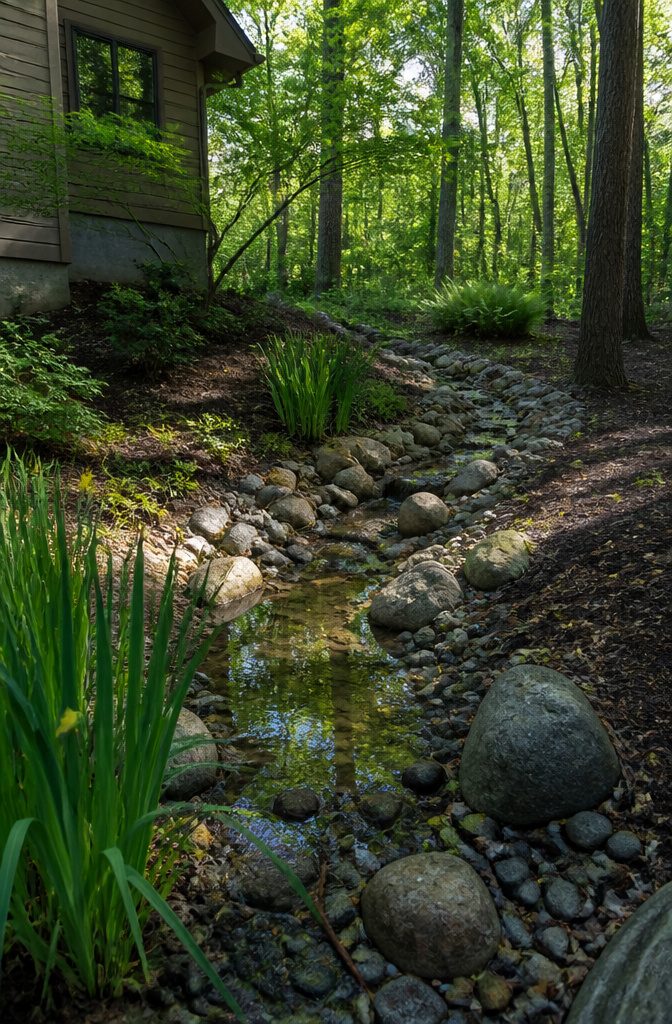
Lay varied-size stones in a winding line, the way a streambed wanders, and the border becomes a channel that carries runoff away from your foundation.
Mix large anchor stones with smaller ones so the line looks natural rather than ruled. This version suits rain gardens and woodland-style yards best.
Plant the "banks" with moisture-loving irises, rushes, or cardinal flower. They sit where water collects along the stones, so they get the wet soil they want.
Near a patio or in a formal bed, use flagstone as stepped pieces instead.
Bury one-third of each stone so it stays put, and angle each one slightly outward for a layered look. The step-down version suits contemporary and formal yards better than the looser creek bed.
Recommended Products

Large Geotextile Fabric: The geotextile driveway fabric has 625 Sq. Ft coverage area, length: 50 ft/15.2 m, width: 12.5 ft/3.8 m. According to your needs, it can be cut to function for driveway stabilization, gardening, agriculture, and drainage.
Large Geotextile Fabric: The geotextile driveway fabric has 375 Sq. Ft coverage area, length: 30 ft/9.15 m, width: 12.5 ft/3.8 m. According to your needs, it can be cut to function for driveway stabilization, gardening, agriculture, and drainage.
6. Stone Mosaic
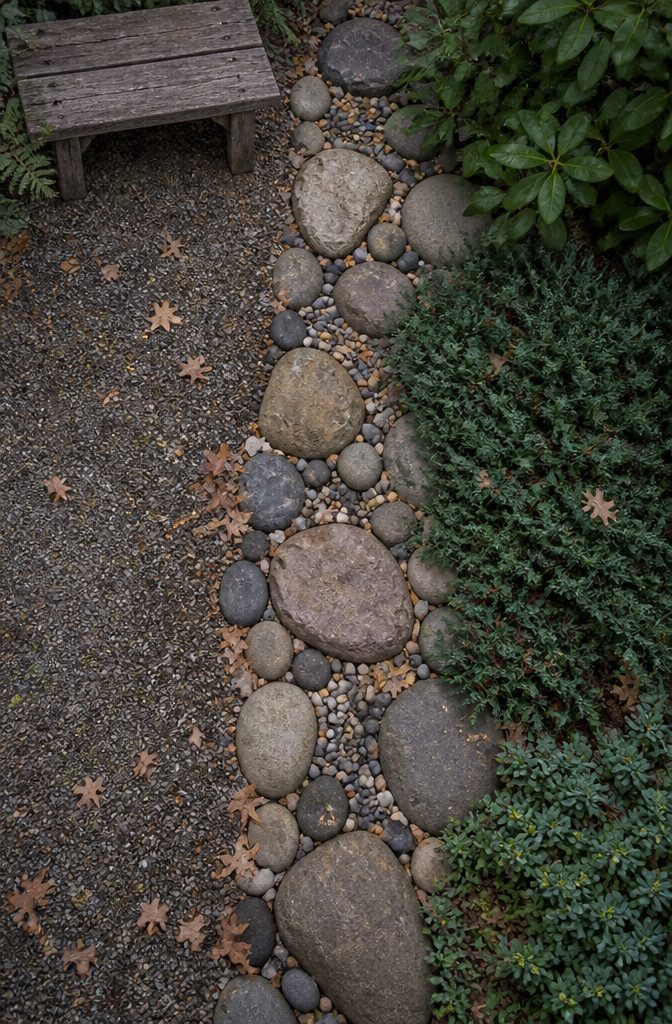
A mosaic edge mixes three sizes: small pebbles, medium river rocks, and large accent stones.
Set the large stones first, one every 18–24 inches, and treat them as anchors. Then fill the gaps between them with smaller materials, medium rocks first and pebbles in the tightest spots.
Spacing the anchors evenly gives a designed rhythm. Nudging them off the measure and varying the fill gives a looser, random look.
This style suits eclectic gardens, Zen spaces, and any spot where you want the edge to read as a focal point. Underplant it with creeping juniper or stonecrop so the border keeps some green through winter.
Recommended Products

Long-Lasting Use: Made of high-quality, weather-resistant plastic, this landscape edging is both sturdy and flexible enough to hold pebbles, mulch, and other materials in place

STAYS IN PLACE - Our edging stays securely in place, keeping mulch and other materials from migrating into other areas of your landscape for a pollished look

20ft L & 5.1" Exposed Height - This garden edging has a total height of 6.73", with 5.1" exposed above the ground after installation. The added height is specifically designed for better protection of your cherished plants, keeping them safe and secure while enhancing the visual appeal of your garden.
7. Lava-Rock Mulch Border
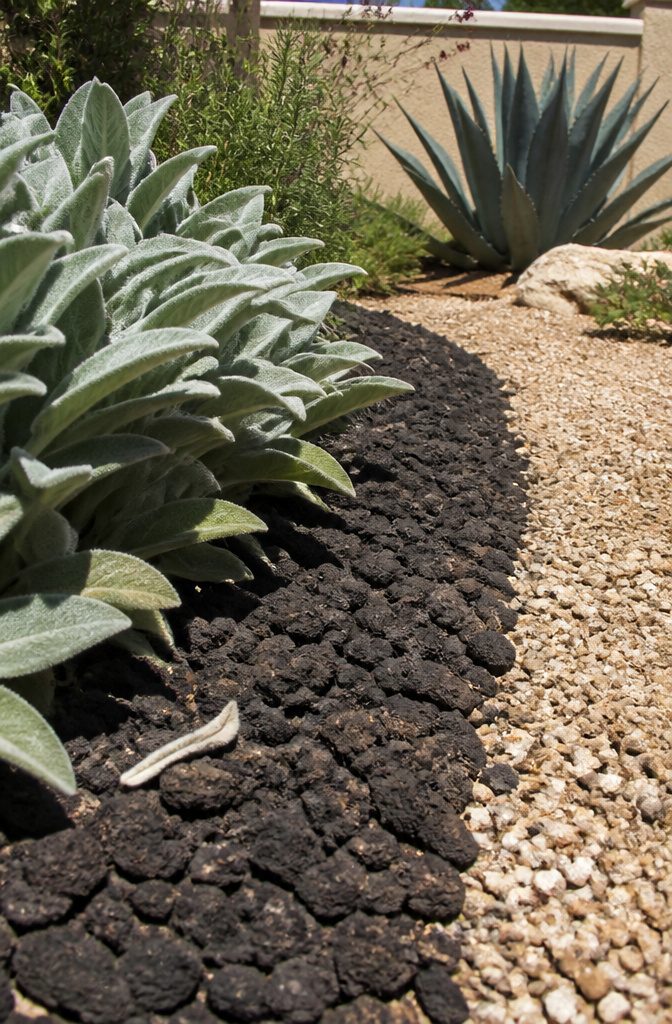
Dark, porous lava rock sets off green foliage sharply, and it looks darker still beside pale stone.
Spread it as a mulch layer 3 inches deep along the bed edge. Silver-leaf plants such as lamb’s ear or artemisia work best against it, because their gray foliage stands out from the dark rock instead of blending in.
Lava rock also holds heat, which warms the soil and can give plants a head start in early spring.
That makes it a good match for Southwestern designs, fire-wise landscapes, and accent beds. Keep it to an accent bed or a single run of edge rather than the whole yard, so the dark band reads as a deliberate line.
Recommended Products

STAYS IN PLACE - Our edging stays securely in place, keeping mulch and other materials from migrating into other areas of your landscape for a pollished look PROTECTS FLOWER...
8. Boulder Accents
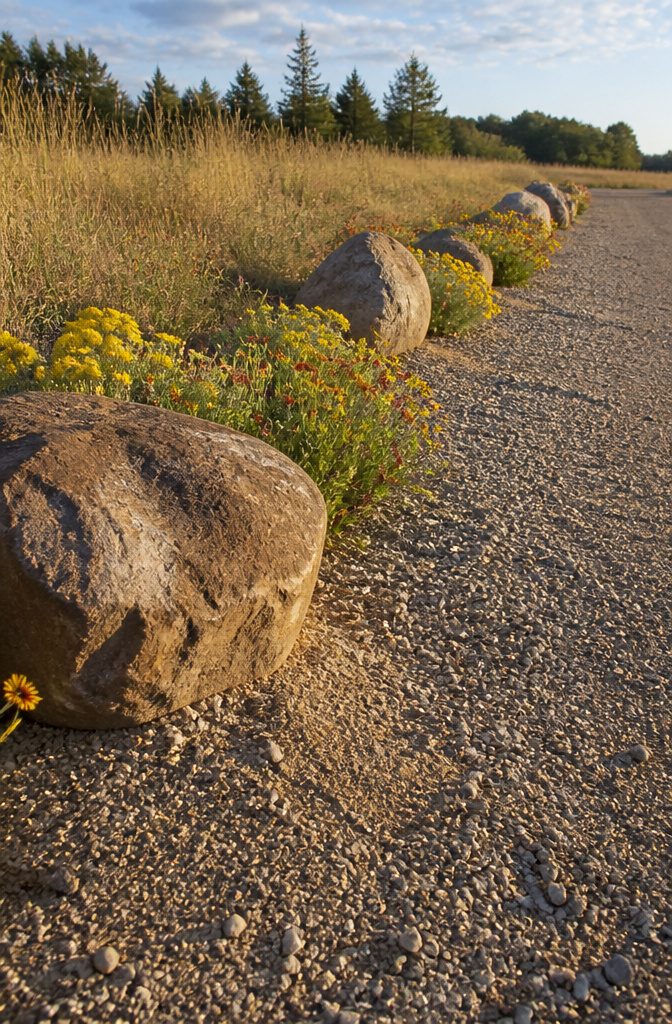
Boulders 12–24 inches across give an edge presence that small stone can’t match, so they hold their own along a driveway or property line where a thin border would disappear.
Set them with a gap between each one instead of shoulder to shoulder, because the gaps are where the planting goes.
Yarrow and blanket flower are drought-tolerant perennials that fill those pockets with color and stay in scale with the stone.
This look suits rural properties, xeriscapes, and large yards that need dramatic definition.
On a small lot, 24-inch boulders can crowd the space, so stay near the low end of the range. To cut costs, source them from local quarries or construction sites, which reduces delivery fees.
Recommended Products

Easy installation – Install garden edging border quickly with our patent-pending connection system. Simply hammer spikes to secure for a stable it firmly in place. Ideal for landscape edging border projects.

Refined Carbonized Pine Wood: Crafted from premium pine, our wood landscape edging is carbonized for durability, sanded smooth, and coated for superior weather resistance. Unlike untreated wood, it won’t leave messy carbon residue on your hands.

【Product Dimensions】Size: 5.9" in height and 47" in length (comes in 2 packs). Each pack includes 4 U - shaped nails. This small garden fence is great for dividing areas or clearly marking borders.
9. Limestone Chunk Border
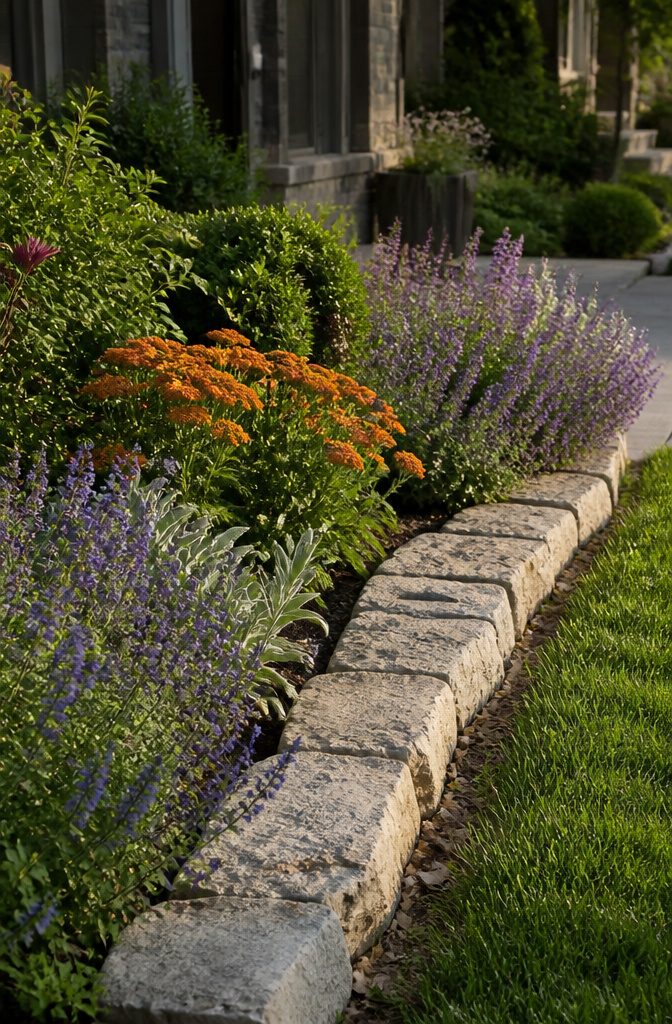
Rough-cut limestone is a warm, pale neutral, so it sits easily beside almost any plant color. Purple, orange, silver foliage and deep green shrubs all read clearly against it because the stone never competes with them.
Turn the best face of each chunk outward and leave the cut surfaces rough, so the edge looks natural rather than manufactured.
Choose limestone over darker stone when your planting is soft, pale, or mixed. Dark stone gives sharper contrast and suits bold, light-colored blooms or modern layouts.
Limestone gives a gentler line that blends with the bed instead of outlining it, which makes it the safer pick for a front yard with several colors going at once.
10. Slate-Shard Edge
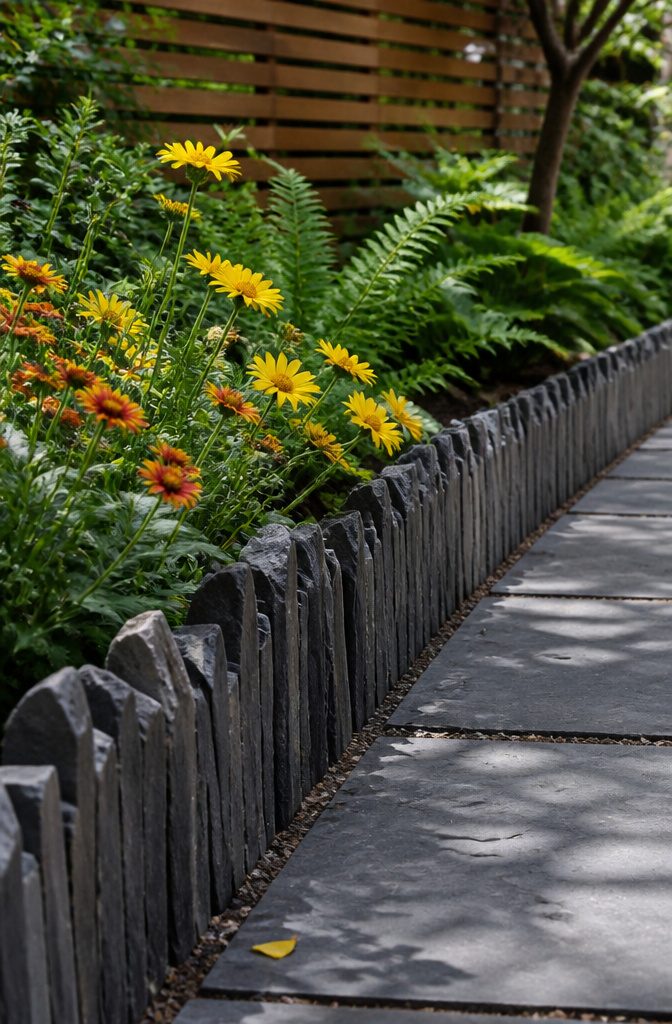
Slate shards set on end make a dark, jagged line, not the horizontal bands you get from stacked or laid stone.
Because the pieces stand upright, you see their broken edges instead of their flat faces, so the border reads as a crisp, sculpted strip. It suits modern gardens, shade borders, and contemporary front yards.
The dark color gives bright plants something to stand against. Yellow coreopsis or orange blanket flower planted right behind the line makes the strongest contrast.
Press each shard into the soil along your bed line, tight against its neighbor, so the tops form an even edge. Wear gloves while you work, because broken slate is sharp.
11. Crushed-Granite Path Edge
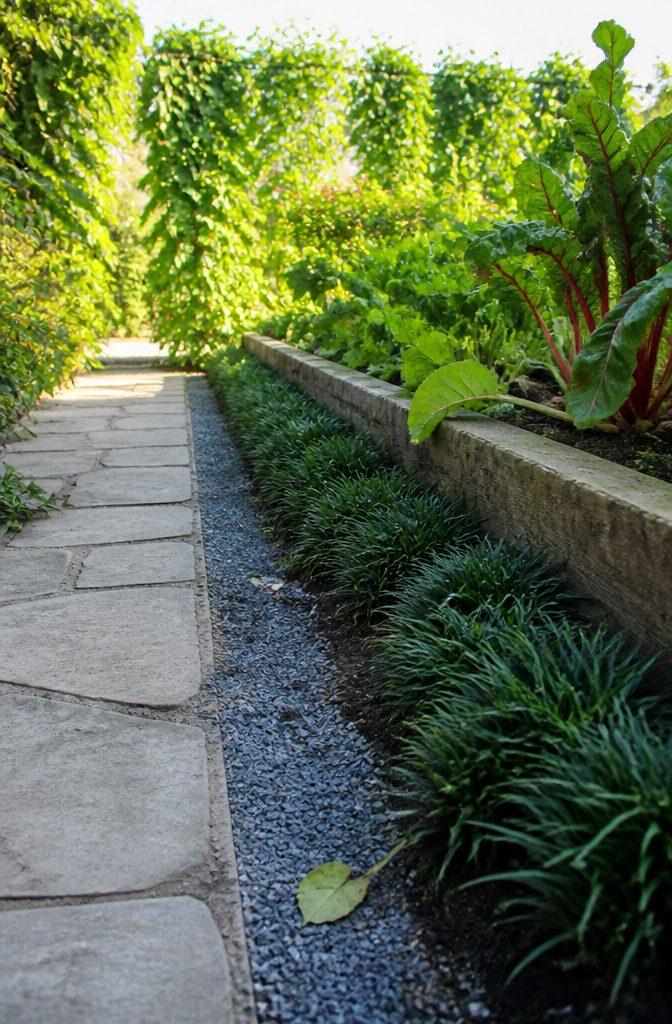
Fine crushed granite holds a straighter line than chunky gravel. Its small, angular particles lock together when packed, so no single stone rolls out of place and blurs the edge.
Along a walkway or around a vegetable bed, it reads as a narrow, tidy band. That suits a small yard, where a wide stone border would crowd the space, and it stands up to foot traffic.
Build it in layers: wet and tamp the granite in 1-inch layers, which gives the most stable edge.
Skipping this leaves a loose strip that scatters onto the path. Then soften the hard line with low mounding plants such as dwarf mondo grass or creeping Jenny.
12. Rock-Filled Gabion Edge
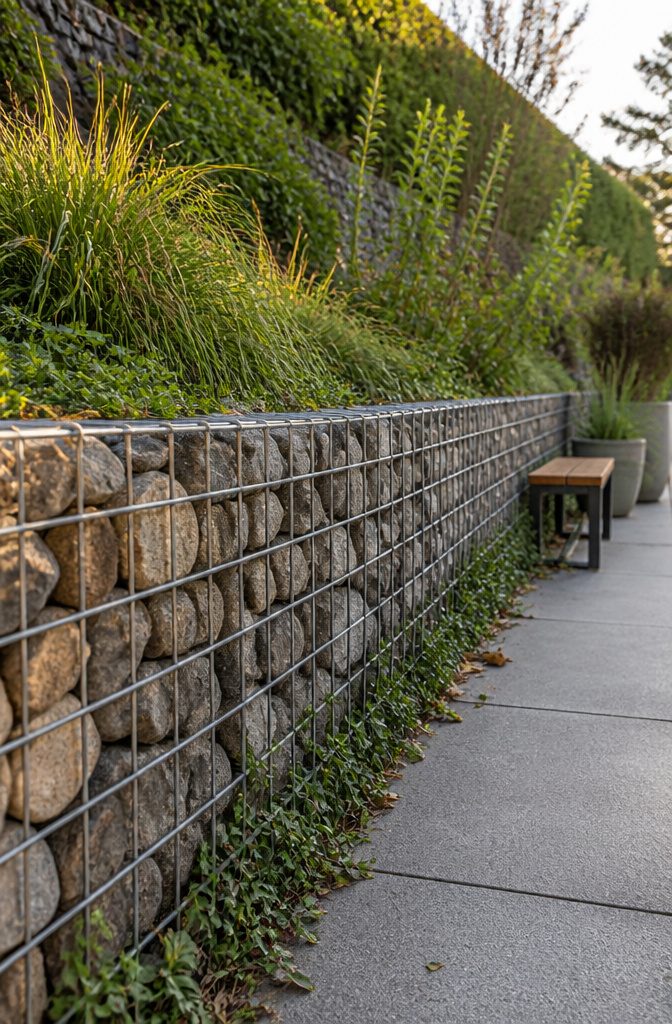
Gabions are wire mesh baskets packed with rock, set in a line to make a hard, industrial-looking border.
They suit urban lots, modern designs, and erosion-prone slopes. Once they are filled, they last 20+ years and need no maintenance, so you build the edge once and leave it.
The look is the limit.
Bare wire and stone read as modern, and beside a cottage garden or a traditional house they can look out of place. If your yard leans soft and rustic, skip them.
If you like the structure but want it less severe, plant a trailing vine such as creeping fig or star jasmine at the base. Over time it softens the metal.
Choosing Your Edging Material
Brick-look, wood-look, concrete, and metal edging all do the basic job of separating a bed from the lawn, and each gives the yard a different feel.
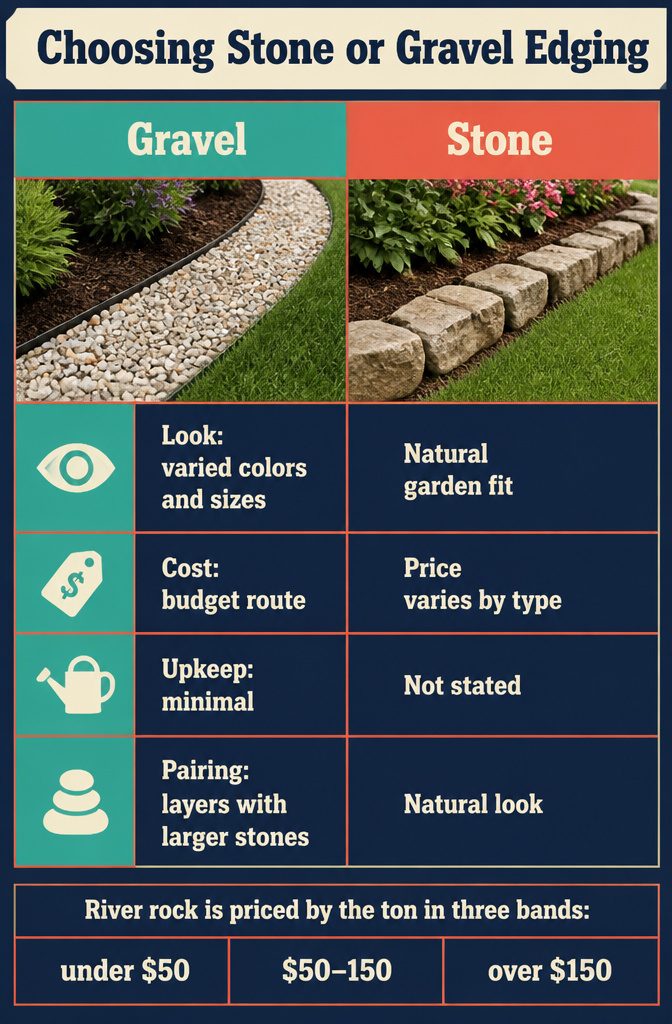
Man-made products suit a formal, uniform line. Stone wins when you want a natural look, because it reads as part of the garden rather than a fence around it.
Gravel is the budget route.
It’s inexpensive, needs minimal upkeep, and comes in many colors and sizes. Set it next to larger stones and you get a layered, textured edge with good drainage.
River rock is priced by the ton in three bands: under $50, $50–150, and over $150. Find out which band your stone falls in before you measure the bed and order.
What a Rock Border Does
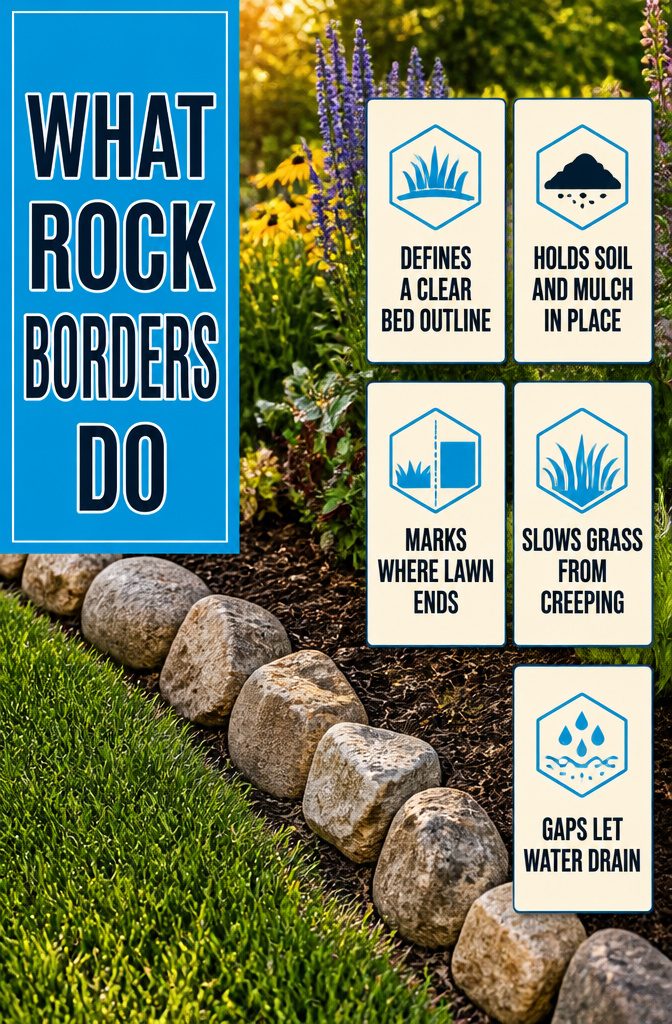
A rock border does more than frame the bed:
- It defines the bed, giving the planting a clear outline against the lawn.
- It holds soil and mulch in place, so rain and raking don’t push them onto the grass.
- It works as a physical and visual barrier. The stones mark where the lawn stops and the bed begins.
- It keeps grass from creeping across the surface, so you recut the bed line less often.
- It supports drainage, because water moves through the gaps between stones instead of pooling at the edge.
- It helps control erosion on a gentle slope, since the stones’ weight slows runoff and anchors the soil behind them.
Installing a Rock Border
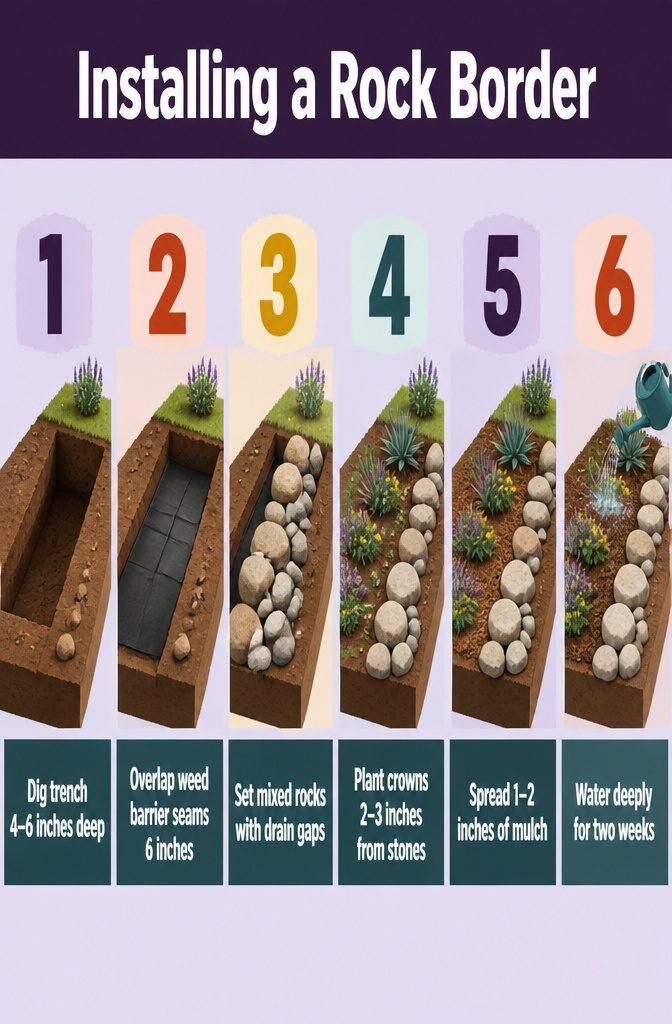
- Dig a trench 4–6 inches deep and 6–12 inches wide. A shallow trench lets rocks shift and tip, so bury at least one-third of any vertical stone.
- Lay weed barrier in the trench and overlap the seams by 6 inches.
- Set the rock, mixing sizes so the edge looks natural, and leave paths for water to drain through.
- Plant drought-tolerant species with each crown 2–3 inches from the stones, spaced so air can move between them.
- Spread a 1–2 inch layer of mulch behind the rock.
- Water deeply every few days for the first two weeks.
Skipping the barrier means constant weeding. Thirsty plants defeat the low-care goal.
Weed quarterly, rinse the rock once a year, and top it up every 3–5 years. A 100-foot border takes about 1–2 hours a year.