Front yard rock work runs from nearly free DIY to tens of thousands of dollars, and the problem your yard has picks the idea: runoff, a slope, a bare walkway, or no focal point.
Boulders are hard to move twice, and loose gravel scatters without edging, so plan access and a base first.
1. Rock Garden or Rockery
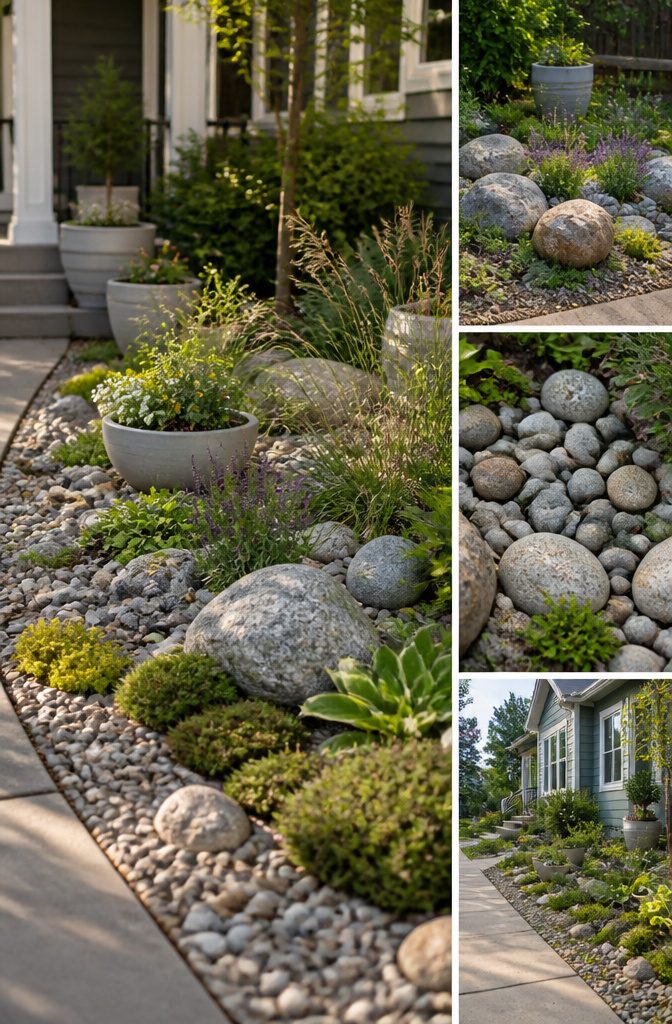
A rock garden works because stone and plants set each other off: the rock gives hard edges and weight, the plants give softness and color.
Mix small boulders and crushed granite with sedum, lavender or ornamental grasses, which handle dry spells without much watering.
Add moss rock or river stones for a more natural look, and vary stone sizes and textures so each plant stands out.
In full sun, cacti and succulents suit the same setup.
In shade, pair big and small stones with hostas and ferns, and use pebbles as a modern mulch between them. That combination stays low-maintenance and reads calm from the street.
If your front yard is small, keep several planters in the mix and rotate them so something is blooming in every season.
Recommended Products

[indoor and outdoor decor] This section uses head-turning agave for interior and exterior. Take your home to the next level of beauty, attracting attention on any level or home space. Perfect garden figurines can also be used as garden party supplies or birthday/holiday gifts for friends and family.

【Premium Quality】Handpicked natural stones, meticulously polished and quality-controlled. Sleek finish and long-lasting luster elevate elegance of any space.
2. A Boulder Focal Point
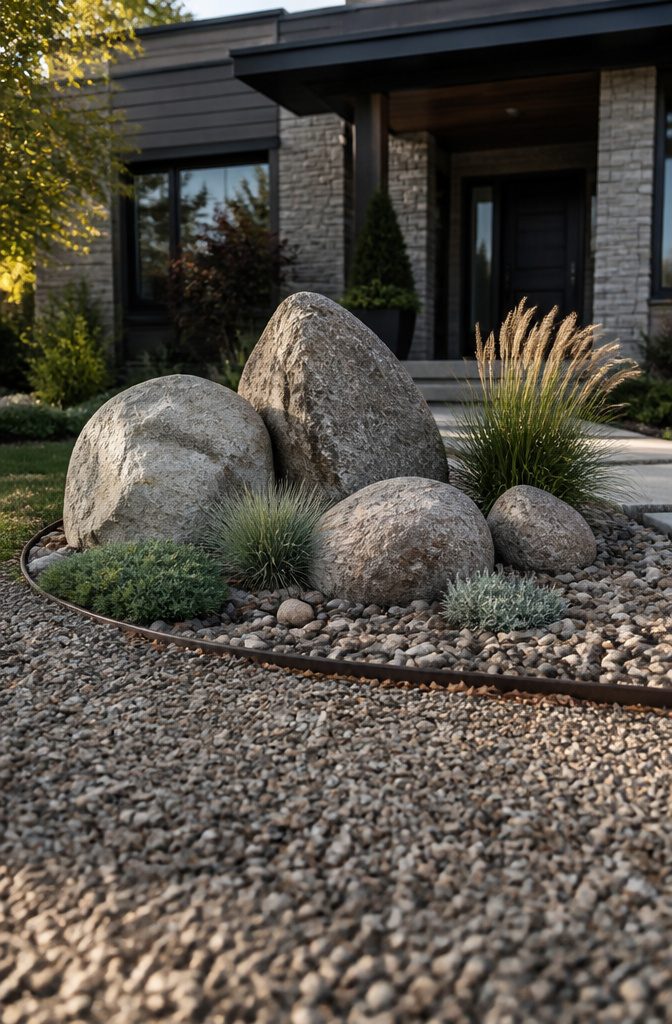
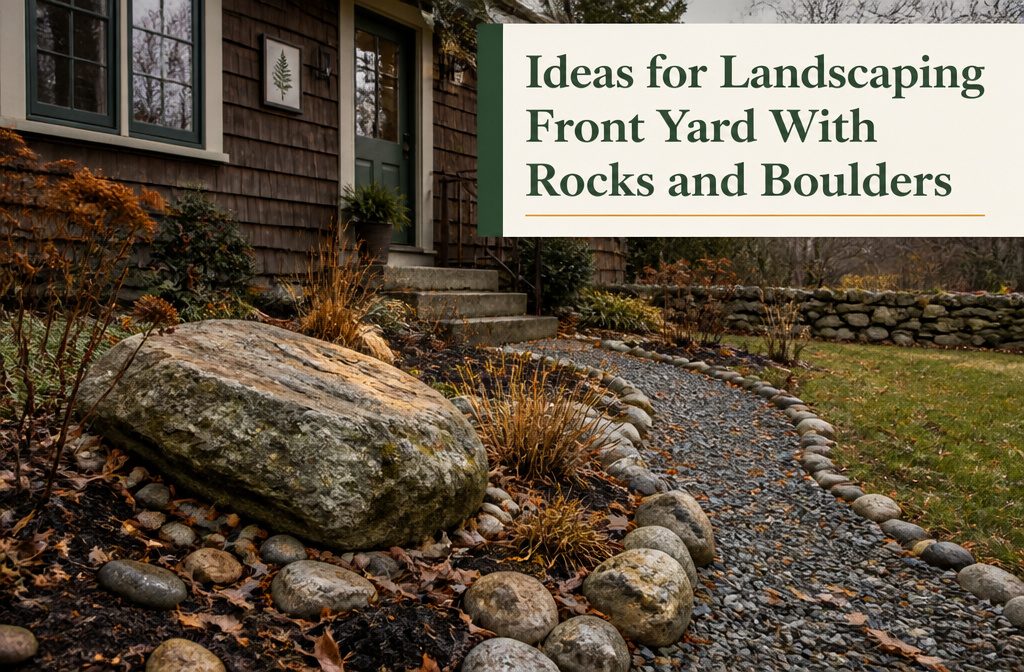
A cluster of boulders near the entry gives a plain front yard one place for the eye to land, and it works best when the rest of the yard stays minimal.
Group 3–5 boulders in slightly different sizes instead of matching stones; varied sizes look natural, while a row of equals looks placed. Tuck low plants or ornamental grasses around the base to soften the edges.
Fill the gaps with smaller stone or gravel so the group looks finished instead of random, then add a simple border to keep the area clean and contained.
Choose drought-tolerant perennials for the planting and the display also cuts watering. It frames the approach and gives visitors a memorable first impression before they reach the door.
Recommended Products

3. Dry Creek Bed
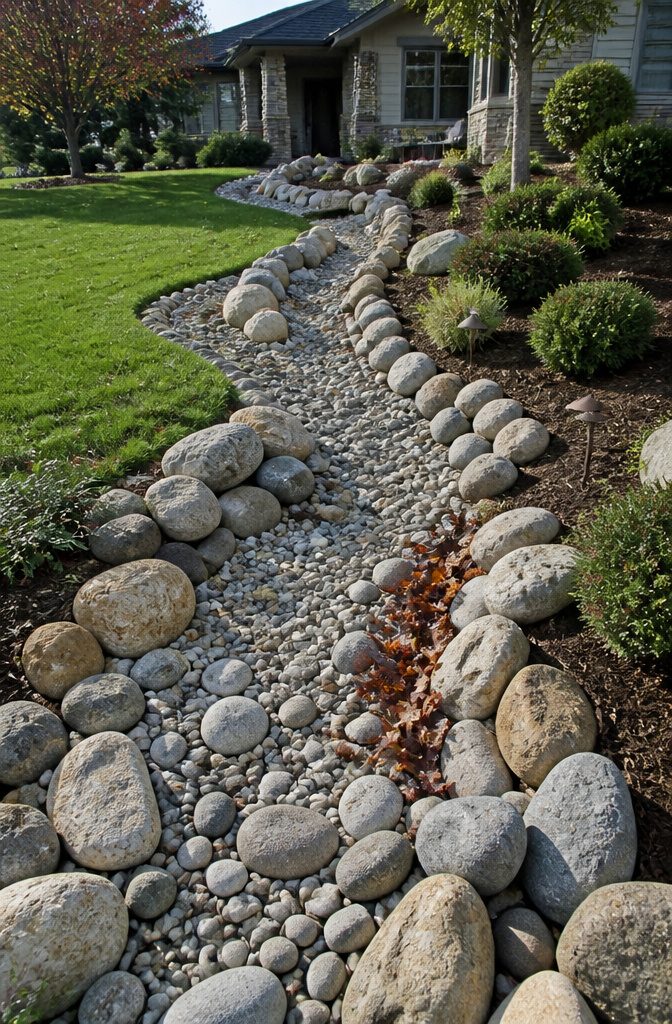
A dry creek bed is a shallow trench lined with river stones to look like a waterway, and it does real work: on a slight slope or a spot where runoff collects, it gives water a path across the yard.
It also breaks up the lawn and adds movement without the upkeep of a real stream.
Line the edges with larger rocks, fill the center with river rock or pea gravel, and set a few statement boulders in the middle like stones rising from water.
Mix stone sizes so the channel looks natural, because small gravel alone looks flat. Plant hardy groundcovers or lay mulch along the banks to anchor it.
Recommended Products

𝐅𝐥𝐞𝐱𝐢𝐛𝐥𝐞 & 𝐄𝐚𝐬𝐲 𝐭𝐨 𝐈𝐧𝐬𝐭𝐚𝐥𝐥: Each panel measures 40" (L) × 5" (H), including 3" underground stakes for strong anchoring, leaving 2" visible above ground for a clean, low-profile border. The hammer-in design makes installation fast and effortless—perfect for creating neat, professional-looking edges without digging.

Kit contains (1) 100 ft. coil of 1.5 in. tall landscape edging and (32) anchoring spikes
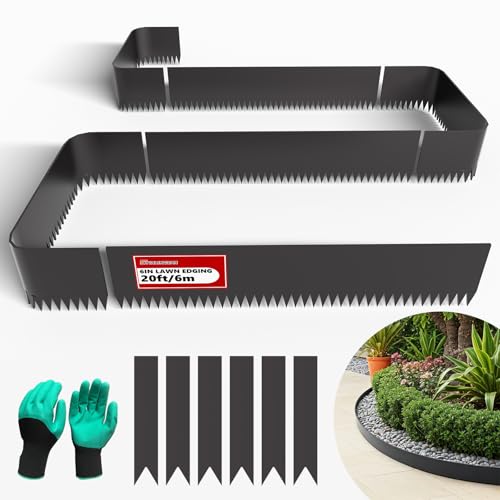
Rust-Resistant Galvanized Steel: Crafted from durable galvanized steel, our lawn edging is built to withstand various weather conditions and resist rust, ensuring long-lasting performance. This material maintains its aesthetic appeal over time, offering a reliable and low-maintenance solution for outdoor spaces.
4. Retaining Wall or Terraced Slope
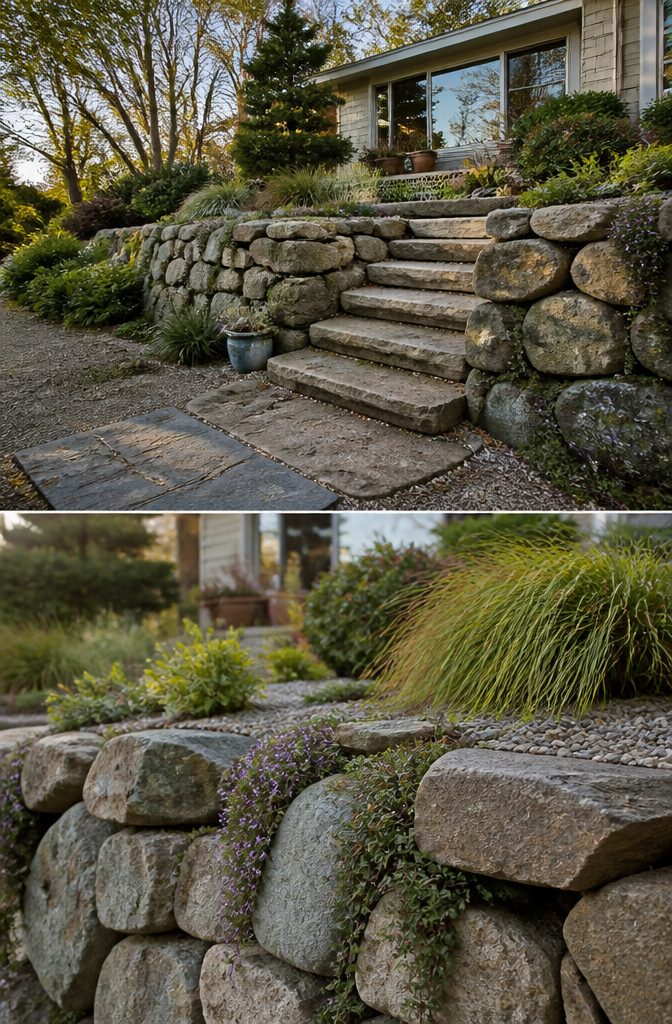
On a sloped front yard, stacked boulders or stone pavers hold soil in place and give you flat tiers to plant.
Split the wall into two sections with flat stones between them as steps. Finish the top edge with gravel and drought-tolerant plants.
Creeping thyme and other spreading ground covers tucked into the wall’s gaps trail over the stone and cut down on mulch.
Choose evergreens if your winters bring little snow cover. Flower pots fit in the gaps too.
Large boulders are heavy, so check that a truck or machine can reach the slope before you commit.
Recommended Products


ORIGINAL DESIGN: All Our Products Are Original Designs By OUUJUOZ Designers. Please Do Not Plagiarize, Plagiarism Will Be Prosecuted.

【High Polished】 These natural decorative stones add a dazzling shine to your garden.
5. Rock Mulch Around Trees and Shrubs
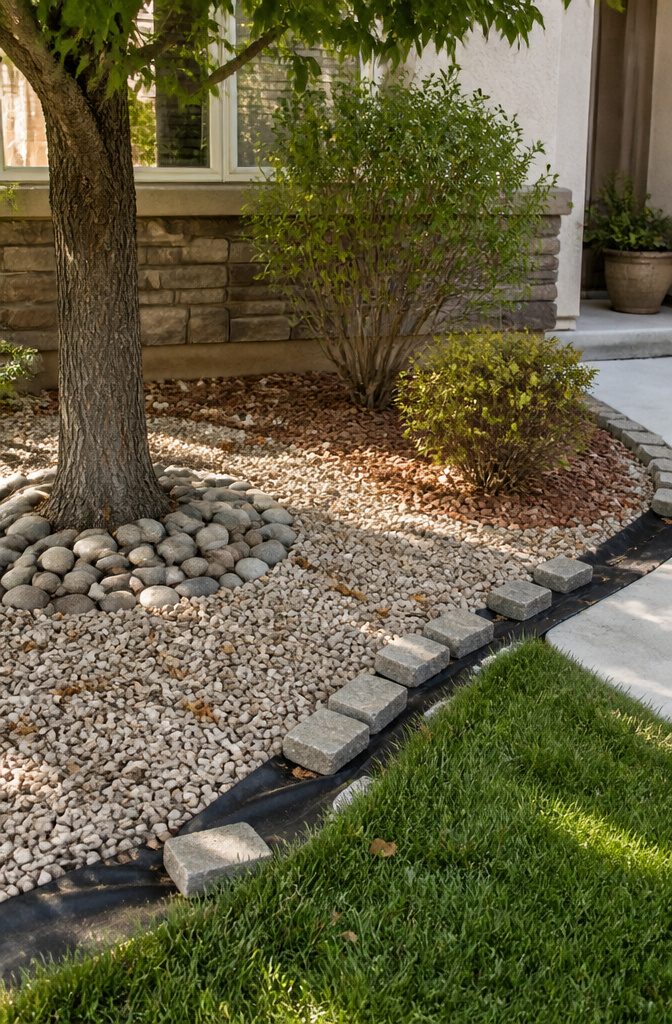
Small decorative gravel around a tree or shrub does what wood mulch does: it suppresses weeds, holds moisture, and leaves a clean, defined surface.
Match the color to your house. Brick chips look warm against white or neutral exteriors and suit shrub beds, while smooth river rock gives a softer look, and lighter stones brighten shaded spots.
Lay the weed barrier before the stone.
Landscaping fabric is the longer-lasting choice. Cardboard or newspaper costs almost nothing, though both break down over time.
Wood mulch has to be topped up again and again. Stone is mostly a one-time job, which makes it one of the cheaper rock ideas for a front yard, with little upkeep afterward.
6. Boulder Accents
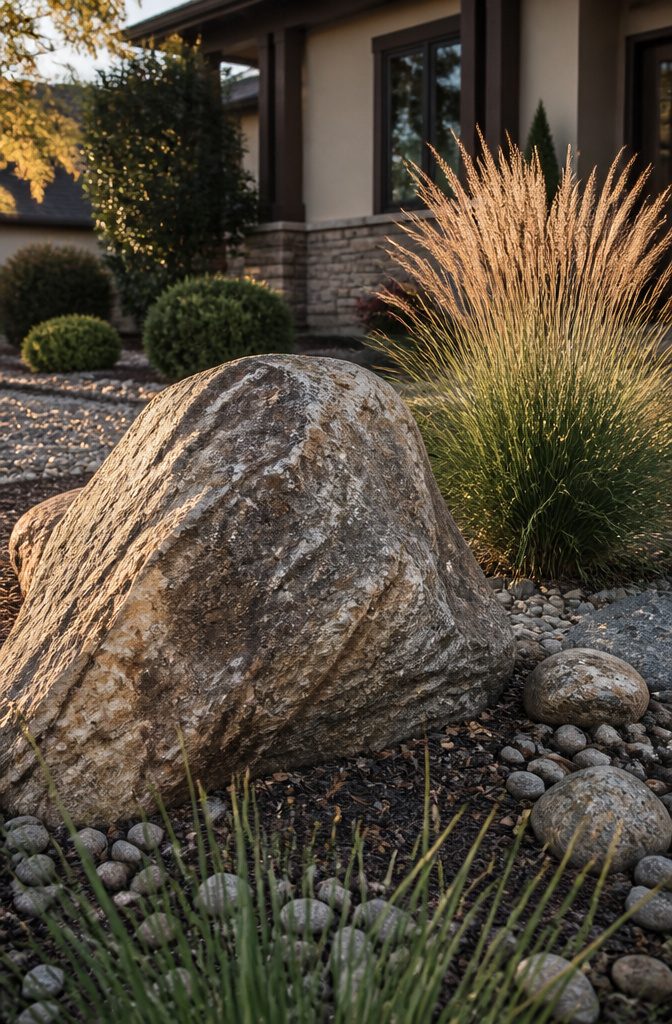
A single stone in an open stretch of the yard works best when it stays quiet.
Choose one with a weathered face and a broad base, then sink the bottom into the soil so it looks like it surfaced there on its own. A boulder sitting on top of the ground looks delivered.
Fountain grass is the easy companion. Its arching blades soften the stone’s hard edge and sway in the slightest wind.
Other fine-textured grasses do the same job. Set the grass slightly to one side, not directly against the rock, and surround both with smaller stones or gravel so the size contrast shows.
If you want two stones, pick different sizes and set them apart. Matching pairs placed side by side look like gateposts.
Recommended Products

What You Get: Landscape edging kit included a 20ft edging coil 4 inch tall, 30Pcs metal staples. More staples help you design more professional landscape

Size:Quibbay flexible landscape edging is 2 inch height and 50 ft length, with 75pcs 6.5 inch spiral edging stakes. Garden edging is great for landscape edging,flower beds, garden pathways, tree rings and grass.
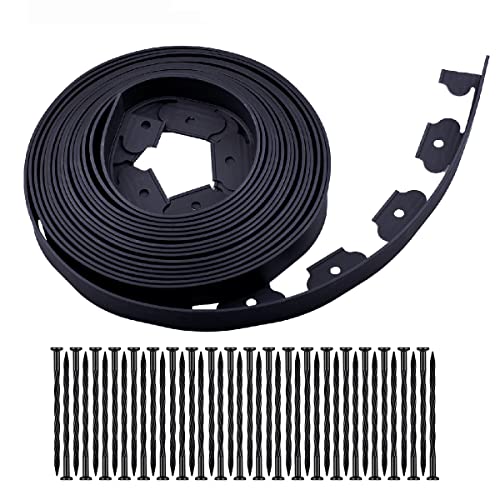
PRODUCT DIMENSIONS:480*2 *2 inches,lawn edging kit suitable for landscape edging,flower garden and grass lawn for the yard
7. Rock Paths and Stepping Stones
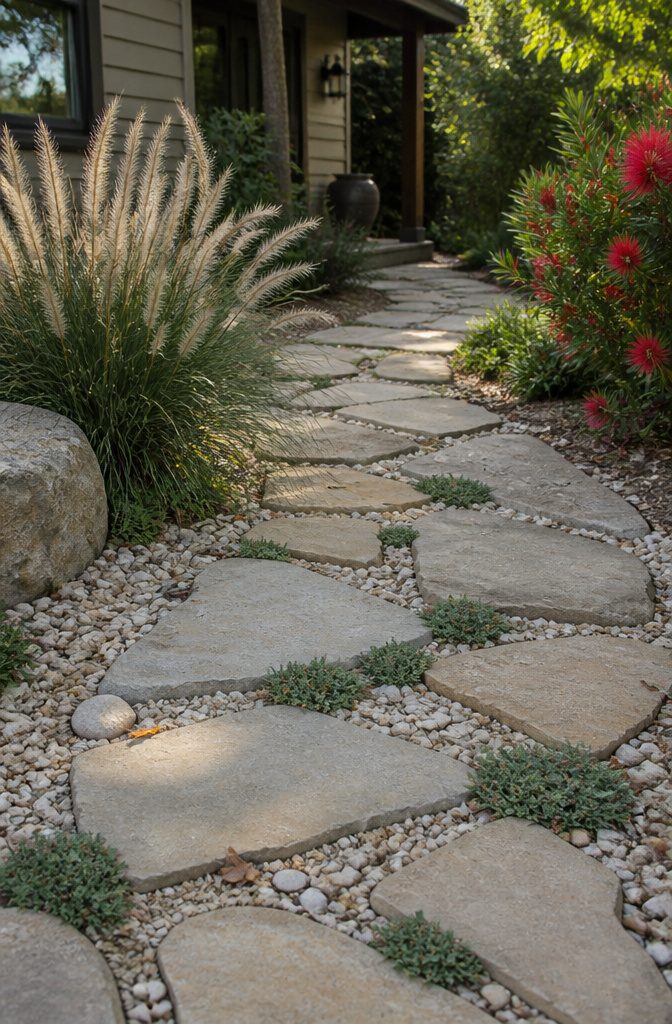
Flagstone makes a front walk look finished faster than any other rock.
Use it as the walking surface, then fill the gaps with pea gravel, brick chips, or smaller stone. Moss or creeping thyme between the stones adds texture.
Loose gravel and crushed granite look good but feel unstable underfoot, and they are rough on bare feet and stroller wheels.
If you choose them for the whole path, keep it narrow and edged so it reads as intentional instead of messy.
Plant along the sides rather than in the path. A pebbled path in an Arizona xeriscaped garden pairs a clump of fountain grass with ‘Little John’ dwarf bottlebrush, which carries bright red flowers.
Recommended Products

Stems Size: 15.2" tall x 9.5" Diameter (adjustable length); 28 bundles outdoor artificial plants on each package. Each artificial grass has 5 branches with dense leaves. The fake greenery stems can be disassembled and adjusted in shape at will

DAYTIME ART, NIGHTTIME AMBIANCE: Enjoy the beauty of this handcrafted metal agave sculpture by day, then watch it come alive at night with the included solar-powered color-changing light. The soft glow shines through the metal leaves, creating a charming decorative accent for your garden, patio, or backyard.

【Weight & Size】Weight: 20 pounds, Size:3-4 inches. The rock is natural not man made. So the stones are heavy and 20 lbs is not a lot, please refer to the picture for the amount of area to be covered
8. Rock Borders and Edging
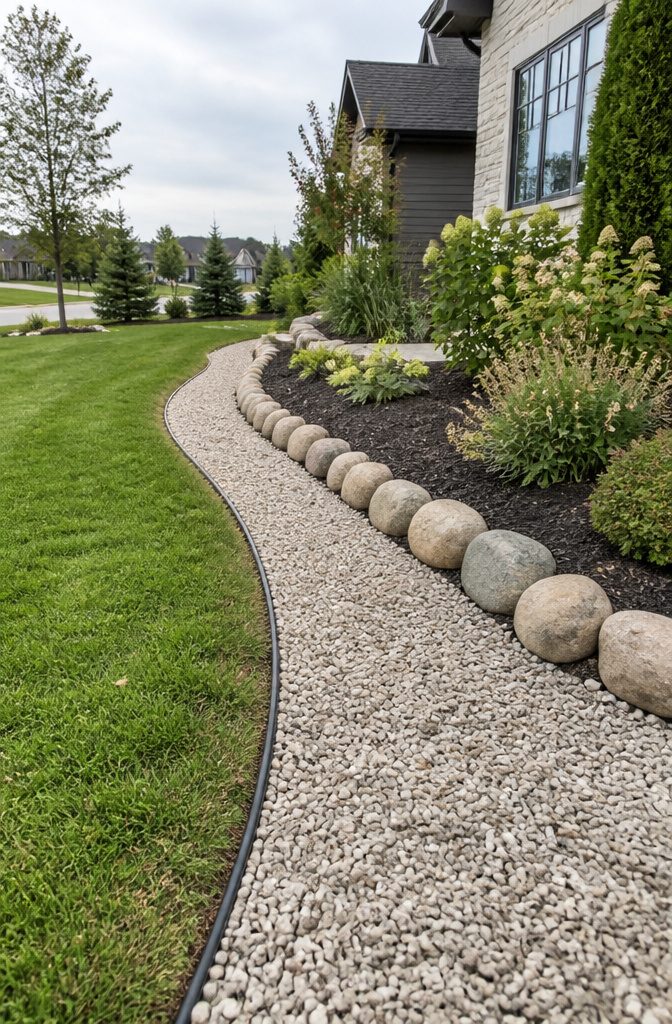
Medium-sized stones along a bed line hold mulch in place, slow soil erosion, and give the lawn a clean transition.
Flagstone or small boulders also work as the edge itself, and moss rocks laid in a curve give a looser, more organic line.
For a crisp, modern break, run a strip of pea gravel between grass and planting. Pea gravel is light, though, and storms or foot traffic push it into the lawn.
Install metal or heavy-duty plastic edging early, before the gravel goes in, on a base of larger crushed rock. The edging keeps the stones where you put them.
9. Zen or Japanese Rock Garden
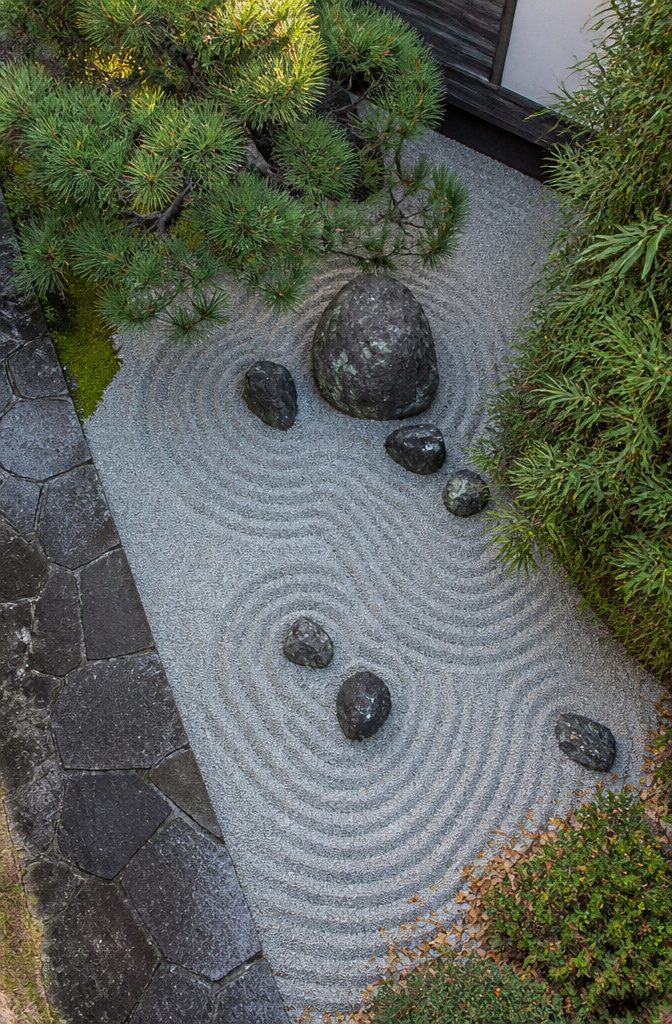
Large boulders set in a thick layer of gravel form the base of this design. In the Japanese-inspired version, lines raked into fine gravel read as water flowing around the stones.
Fine gravel holds a pattern better than chunky rock, so choose it if you want the raked look. Anchor the bed with one large feature stone and keep the rest smaller, so the eye has somewhere to land.
Shrubs around the edge add privacy and seclusion. Dwarf pines or bamboo keep the lines clean and calm.
The style works in a small yard or a side space and suits modern or minimalist houses. Raking is the main upkeep, so redraw the lines whenever rain or leaf fall blurs them.
Recommended Products

Durable Steel Landscape Edging – Made of heavy-duty galvanized steel with rustproof black finish, this metal landscape edging is built to last through rain, snow, and sun while keeping your garden borders strong and stylish.

Long-Lasting Use: Made of high-quality, weather-resistant plastic, this landscape edging is both sturdy and flexible enough to hold pebbles, mulch, and other materials in place

150 UNBREAKABLE STEEL STAKES – Unlike common brittle plastic spikes that snap instantly in hard soil, our flower bed edging kit is equipped with 150 premium steel stakes. These solid metal anchors easily penetrate clay. Secure your landscape edging firmly with confidence and say goodbye to frustrating plastic tools.
10. Gravel Patio or Seating Area
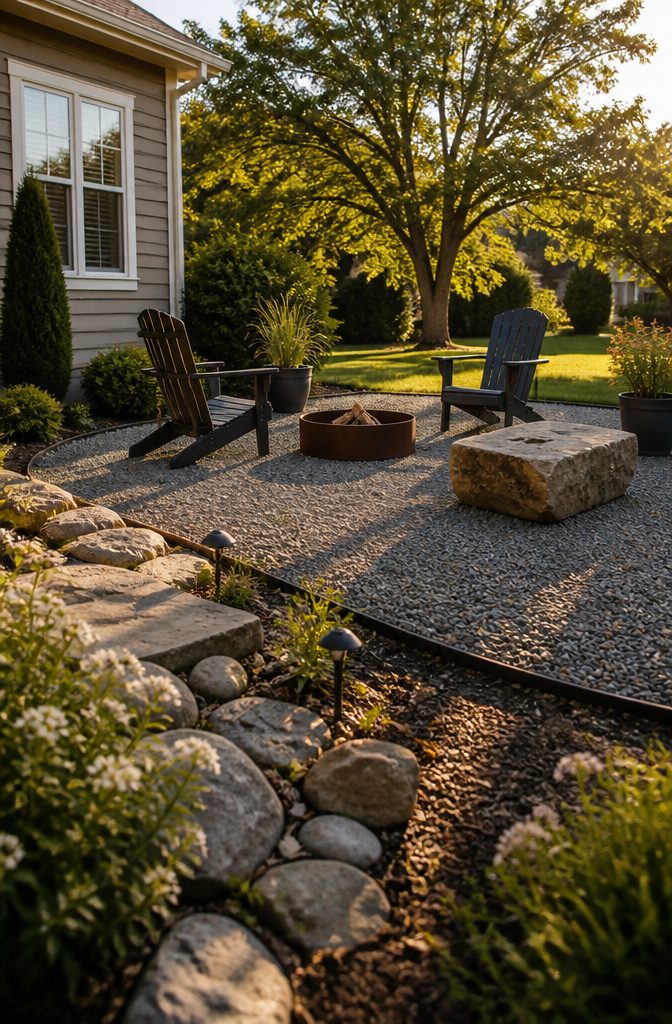
A gravel patio skips the concrete pour.
Level the area, lay weed barrier, then spread a base of larger crushed rock and top it with smaller gravel. Without that base, pea gravel shifts underfoot and wanders into the lawn.
Metal or heavy-duty plastic edging keeps it contained. Plan on raking and leveling pea gravel now and then, mostly where chairs sit and where people walk.
Furnish the space with a few chairs, a fire pit and potted plants.
Large flat boulders can double as bench-style seats, and a stone ring around a mature tree makes a natural place to sit. If the patio sits higher than the yard, a few big rocks work as steps up to it.
11. Water Feature
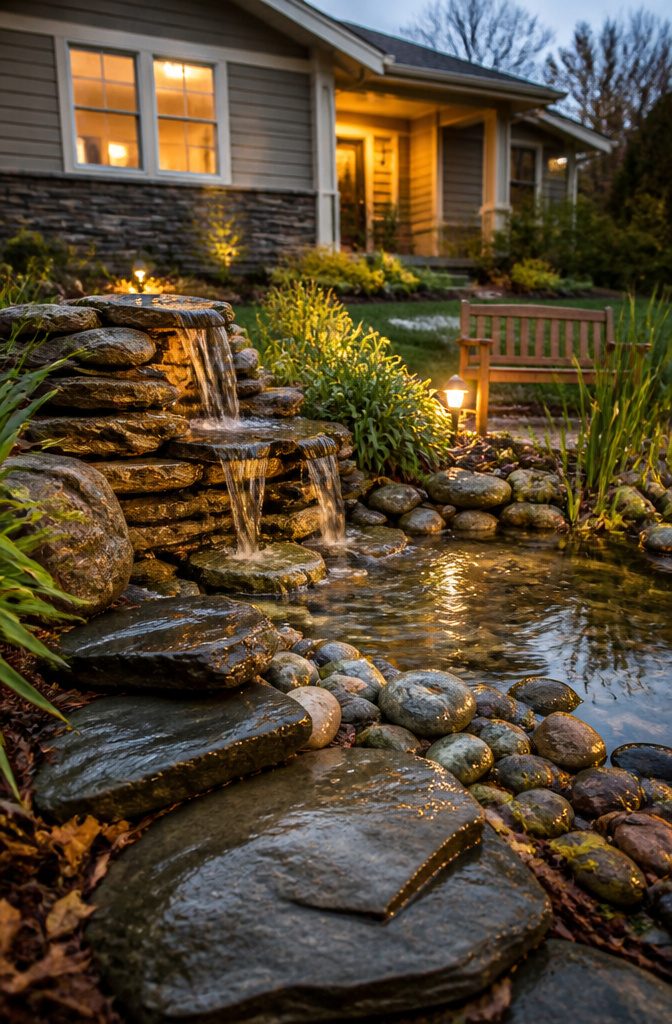
A small pond and a pump are enough to send a stream of water tumbling over a stack of rocks, and the sound of that falling water is most of the appeal.
River stones, slate, and fieldstone all suit a cascade or a bubbling fountain. Even a small fountain holds its own at the front of a house, so a large waterfall is unnecessary.
Plant water-loving species around the edges so the stone looks settled rather than dropped in.
Then put a bench or chair within earshot of the water, because a feature you can’t sit beside gets looked at once and forgotten. Soft lighting aimed at the stones carries the effect into the evening.
12. Xeriscaping with Stone
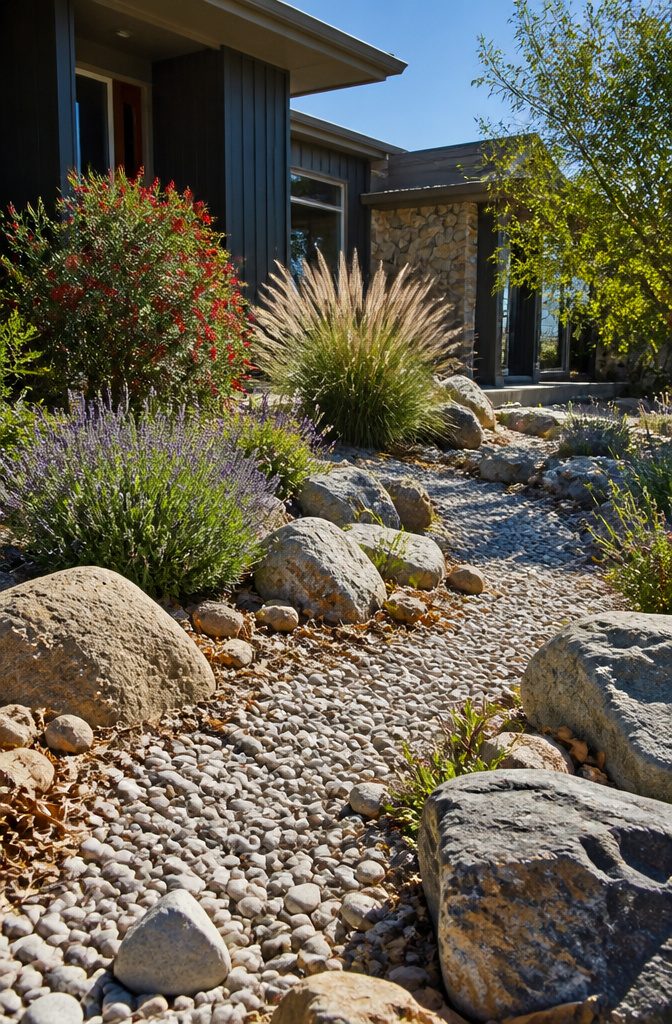
Pairing stone with drought-tolerant plants is the simplest way to cut water use in a front yard, because the gravel and boulders take the place of thirsty lawn.
A xeriscaped garden in Arizona shows the formula: a ‘Little John’ dwarf bottlebrush with bright red flowers, a clump of fountain grass beside it, and a pebbled path running through.
The red blooms stand out against pale pebbles, and the grass softens the hard edges.
For hot summers and dry spells, sedum, lavender and ornamental grasses are the plants to build around.
Set them among small boulders and crushed granite, and add moss rock or river stones for a natural look. Mix stone sizes and textures so each plant stands out instead of blending into the gravel.
Rock Types and How to Mix Them
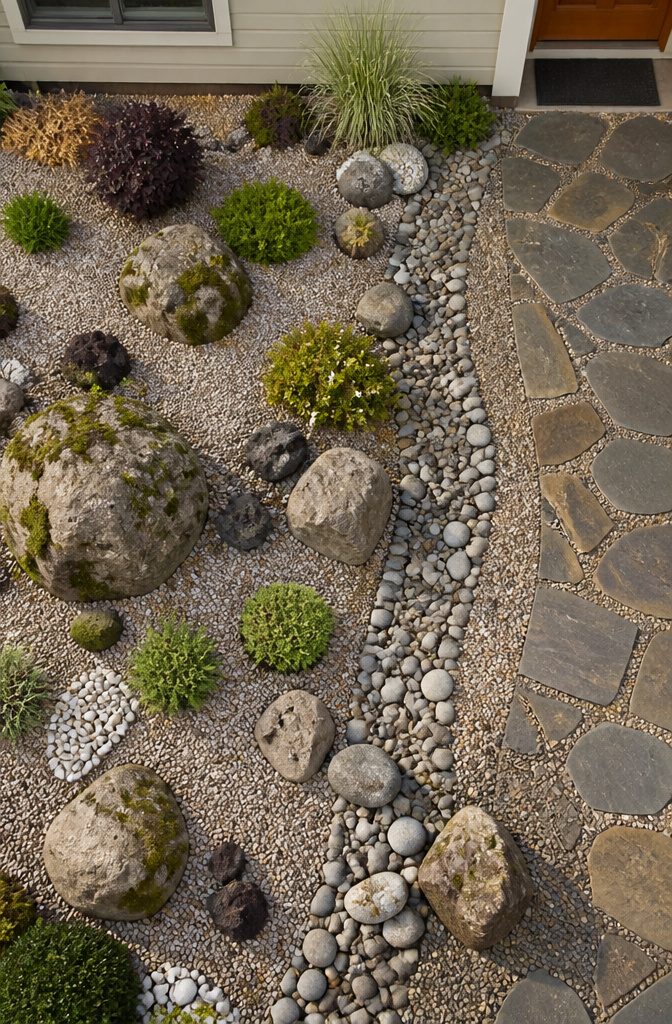
Choose one main rock and let a second support it. Match the colors to your house exterior before you buy.
- River rock: smooth, in mixed gray, pink and green. It suits a dry creek bed with a pea gravel border.
- Flagstone: walkways, with pea gravel filling the gaps.
- Boulders: focal points, with brick chips as filler.
- Lava rock: a darker tone that sets off lighter stone.
- Crushed granite and moss rock: a rock garden with small boulders. Moss rock adds a weathered look.
- Quartz and marble chips: accents only. Quartz comes in white, pink, green, purple, yellow and clear. Marble reads crisp against dark rock.
Vary the sizes too. A few large stones keep small gravel from looking flat.
Planning, Permits and Budget
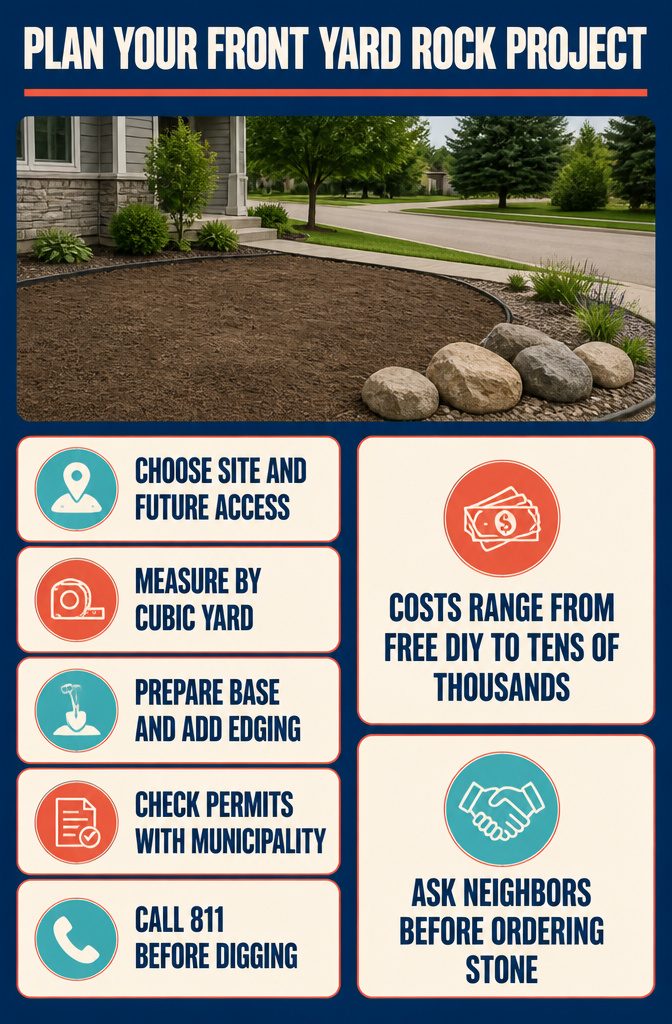
Rock is heavy and hard to move twice, so settle these before you order:
- Choose the site for its plants and future access. Larger jobs may need truck or machinery access.
- Measure first, because rock is sold by the cubic yard.
- Clear and dig down so the rock sits below grade, tamp the soil, lay landscaping fabric, cardboard, or newspaper, and add edging early.
- Ask your municipality about permits, which can depend on placement.
- Call 811 before you dig.
Budgets run from nearly free DIY to tens of thousands of dollars for a designed installation, and sourcing is where you save:
Buying stone at a landscape center is frightfully expensive, but ask around, and you may get some rocks from farmers or gardeners for free or a pittance.
Ask neighbors before you order a truckload.
Common Problems and Upkeep
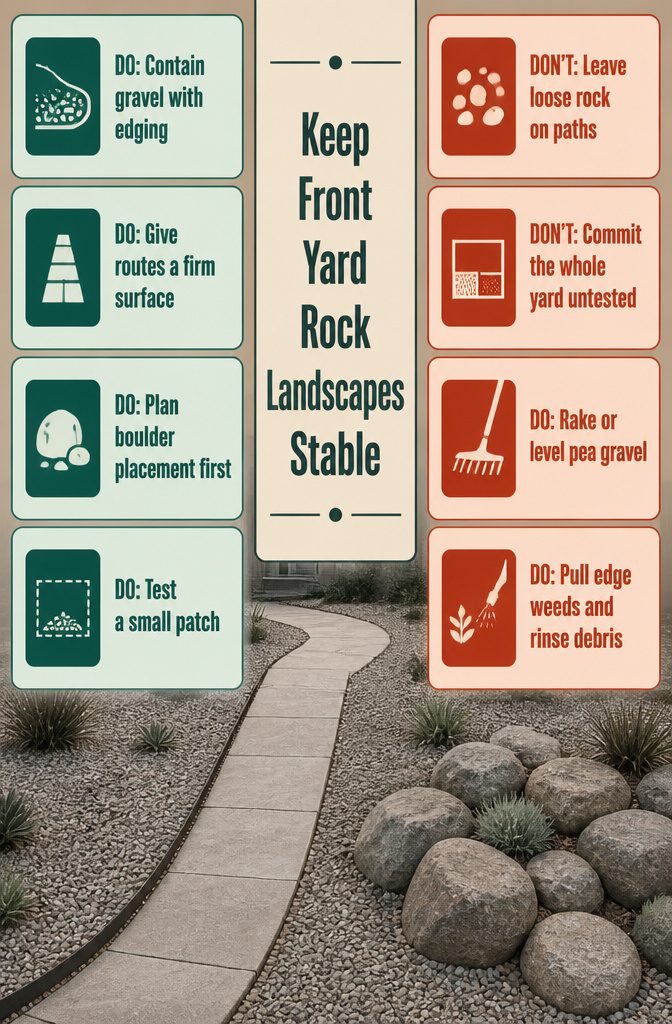
Most problems come from skipping the base, edging, or path planning, so sort them out before the first load of rock arrives.
- Small stones scatter. Install containment edging along every border so gravel stays off the lawn and sidewalk.
- Loose rock is unstable and uncomfortable to walk on. Give walking routes a firm path surface instead of bare gravel.
- Boulders are hard to place. Plan the layout first, because moving one later is a bigger job than placing it right.
- Rock is hard to remove. Reddit owners describe stones sinking into the soil, weeds growing through, and leaves collecting between them. Test a small patch before committing the whole yard.
Routine upkeep stays light:
- Rake or level occasionally, mainly pea gravel areas.
- Pull the occasional weed near the edges.
- Rinse off dust or debris with a hose.