Projects run from a solar-powered fountain built in about 10 minutes to a dry creek bed dug through your wettest spot, and the yard problem you have picks the one to start with: pooling water, erosion, or a weedy strip.
A wall on a real slope, or taller than a couple of feet, needs a local code check.
1. Rock Garden or Gravel Bed
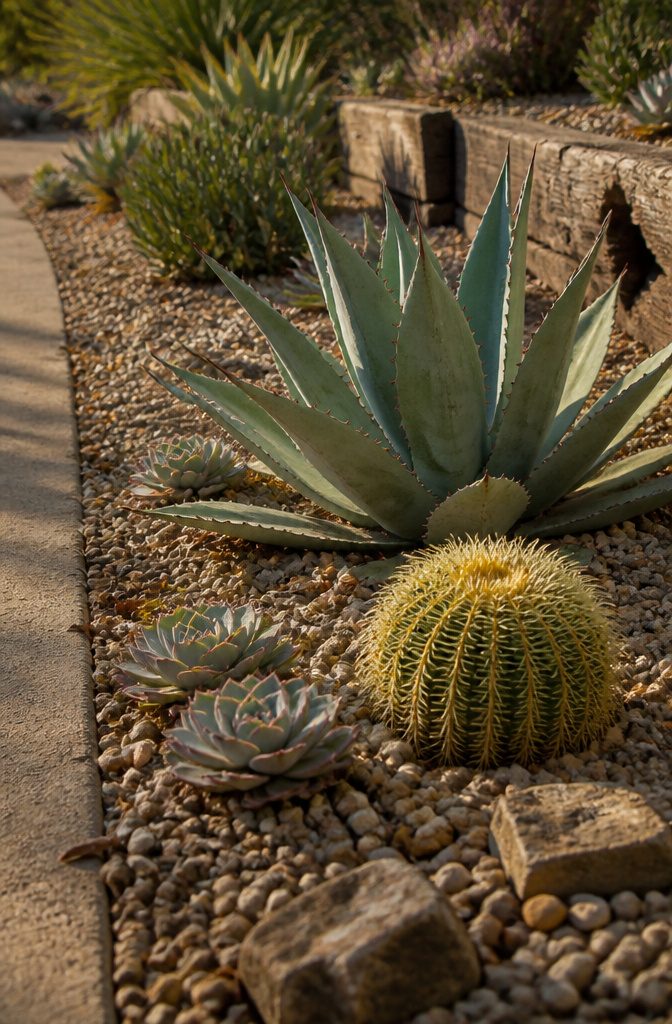
A rock garden uses stone or gravel as the ground cover or centerpiece of a bed, with plants added for color and texture.
It also goes by rockery, desert landscape, or alpine garden, and it can replace lawn or separate a walkway from a planting bed.
Choose plants that suit your USDA Hardiness zone, and give them well-drained soil.
Succulents and other drought-tolerant plants rot without it. Foxtail Agave, Golden Barrel Cactus, Echeveria ‘Black Prince’ and Aloe ‘Blue Elf’ fit a desert-type bed if your winters allow them.
Water a desert bed about every 2–3 weeks, or less depending on the plant and your climate.
Overwatering does more harm than drought here. Alpine beds hold plants from cooler, wetter climates, so they need water more often.
Recommended Products

Realistic Faux Stone Texture: Our landscape edging boasts a lifelike stone texture with detailed surface patterns that add depth and a polished look to your outdoor space. It beautifully enhances garden beds, lawns, pathways and flower beds, bringing a natural, decorative touch to any yard.

Quality Metal Material: Our galvanized garden edge is processed using high-precision CNC technology, ensuring accuracy down to every millimeter. Innovative 3D ripple design not only enhances the aesthetic appeal of the fence but also strengthens its structural integrity.
2. Dry Creek Bed
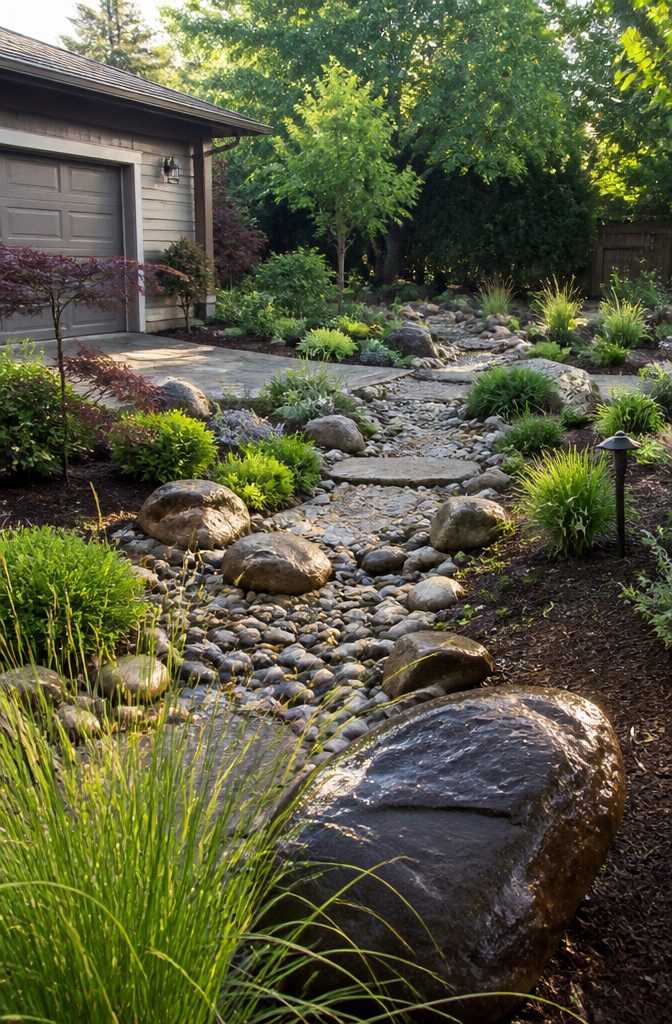
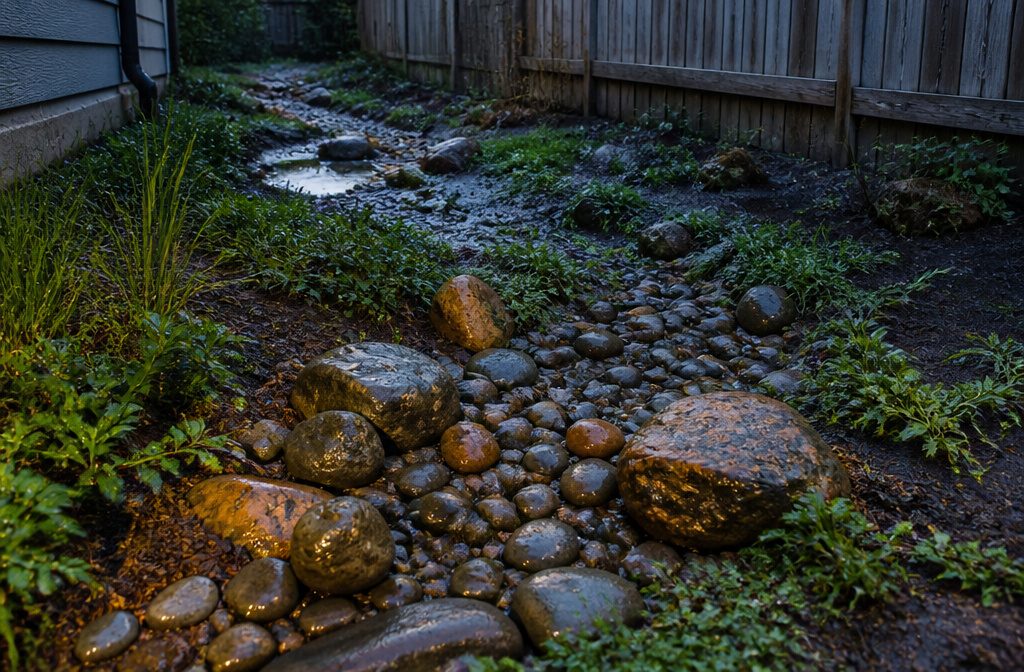
A dry creek bed is a winding channel of stone that looks like a stream and carries water like one.
It is one of the main fixes for poor drainage and wet ground. Dig it through the low spot where water collects, and rain has a path to follow instead of pooling.
Mix your stone sizes.
Set large boulders at the bends and along the banks, fill the middle with cobbles, and work smaller gravel into the gaps. Curve the channel instead of running it straight, because a bend reads as natural and slows the flow.
Drought-tolerant plants along the edges soften the banks, and a few flat stepping stones make a crossing, though both are optional. What goes under the stone is covered in the weed control section.
Recommended Products

RUBBER STEPPING STONES: Elevate your outdoor space with these lightweight simulated flagstone rubber pavers that offer the timeless beauty of real stone without the heavy lifting.

NATURAL SLATE - 100% real Slate stone will add beauty and realism to your creations. Because these are natural stones, each bag is a mix of stones from 1/2 to 1 inch. They are safe to use in your scenery and will last much longer than resin stones. Product of the USA.

Sturdy & Anticorrosive Pine Wood Material: This 8.2ft x 16.5in garden walkway is made of carbonized pine for improved UV, moisture, and corrosion resistance—durable for year-round use. Note: Carbonisation improves weather and corrosion resistance, but extreme sun, heat, or dry climates may still cause aging or cracking; applying an outdoor sealant helps extend service life
3. Rock Pathway
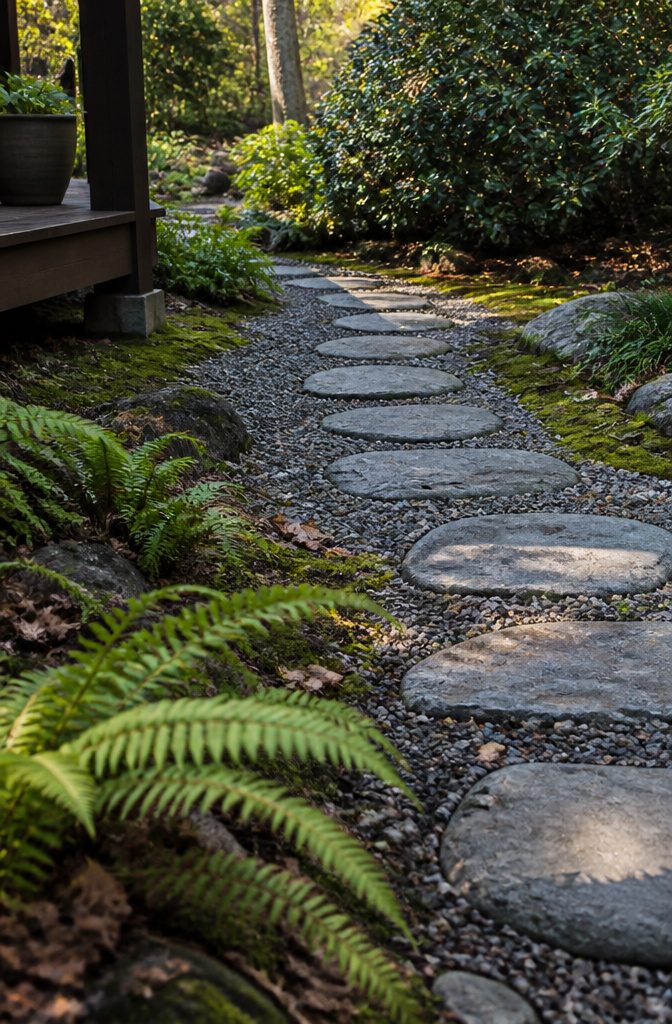
A rock path tells people where to walk before they think about it.
Gravel, pebbles, small stones, and flat flagstone-like pieces all work, and a curve slows the walk. A curved gravel run looks like a stream of stone moving through the yard.
For a calmer look, pair light and dark gravel, set stepping stones through it, and let moss gather at the edges. The contrast marks where to step, and you slow down to match.
A flagstone path can sit directly on dirt once you clear the weeds or sod.
Leftover bulk stone suits paths and hard-to-mow patches. Homemade concrete stepping stones are another option when you need more.
Recommended Products
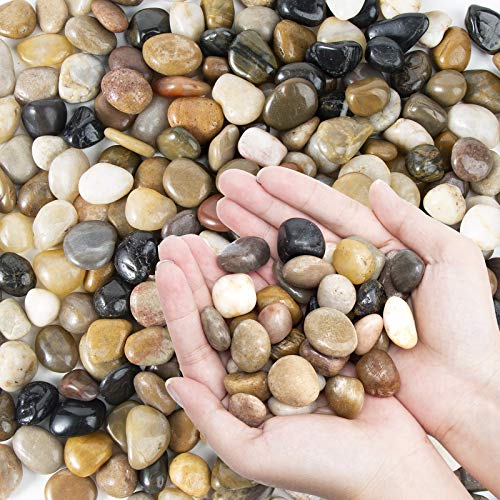
Natural Stones: This river rocks are natural lightly polished for smooth effect, comes in a variety of natural colors, Resists fading for long-lasting beauty. The color of this river rock is natural so it may include a variety of different shades of browns, whites and black rocks. (rocks are natural and as a result some may be broken or out of shape, oval or round, thick or thin.

100% PERMEABLE ROCK GLUE FOR LANDSCAPING AT AN UNBEATABLE VALUE: Our 100% permeable stone glue covers up to 200 sq ft, securing rocks, pea gravel, pebbles & decomposed granite with lasting strength, while staying permeable to support soil hydration & nutrient flow

BUILT FOR YARDS WHERE ROCK AND MULCH MEET – One binder for mixed landscapes: bark mulch, wood chips, pine straw and rubber mulch alongside pea gravel, pebbles, crushed stone and decorative rock. Helps reduce shifting, scattering and rain washout around garden beds, tree rings, borders and walkways — no need to buy separate mulch glue and rock glue.
4. Rock Borders
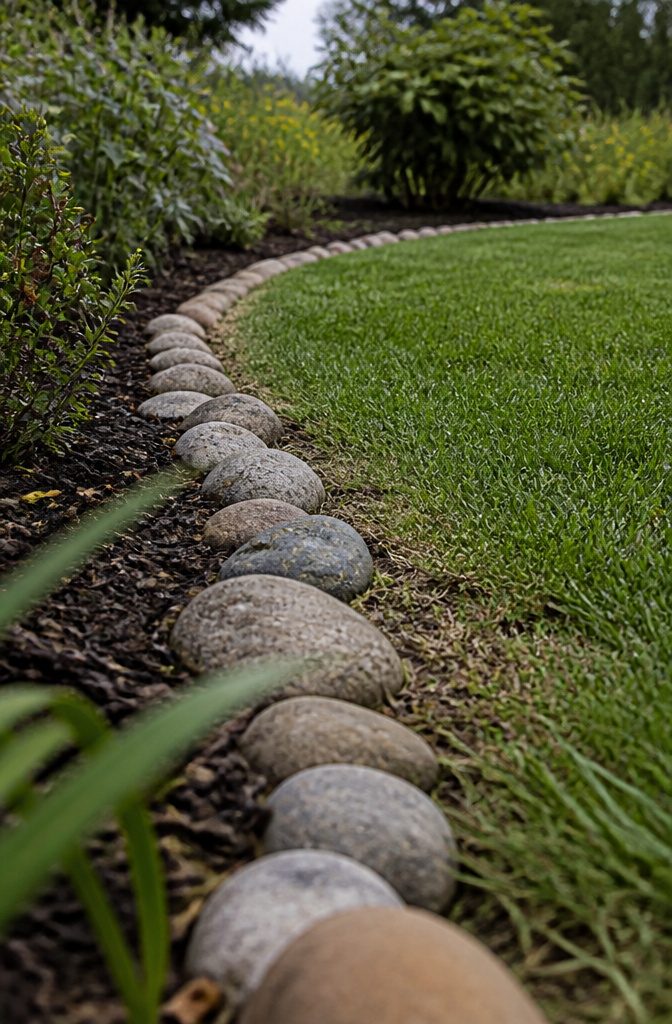
Stone edging holds mulch in the bed, keeps grass from creeping in, and draws a clean line where two materials meet, such as gravel and lawn.
Matching, squared-off stones in a straight run, pale against dark mulch, look crisp and formal, which suits a modern front yard. Rounded river rock or irregular fieldstone along a gentle curve looks looser and suits cottage and native plantings.
Set the stones partly into the soil rather than resting them on top, so they stay put and the border looks planted, not dropped. Along a lawn, keep them low enough for the mower to pass over.
Recommended Products

🌱【100% Natural Stones 】Our 3lb stones are mixed of red lava rock, black lava rock, maifanitum, and green mineral stones that provide essential mineral trace minerals for your plants to grow.

Natural Multicolor Decorative Stones: These 1/5 inch natural decorative stones are vibrant and colorful, adding a lively and natural atmosphere to your home and garden. Available in 5 lb and 10 lb packaging options, they are perfect for succulent planters, glass container pots, vase fillers, Zen gardens, and outdoor landscaping. Their multicolored appearance makes them a versatile and eye-catching choice for various indoor and outdoor application

Promoting Moisture Circulation: Our colorful lava rocks for plants act as a succulent soil mix, bonsai rocks, and succulent soil potting mix, helping to avoid root rot caused by overwatering
5. Rock Retaining Walls
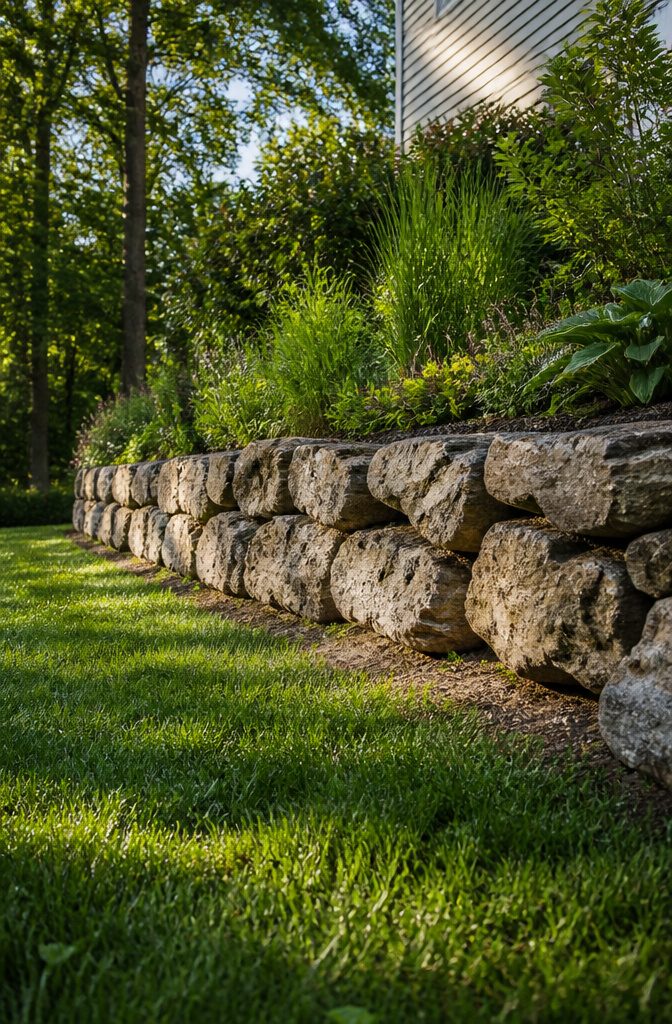
Large rocks stacked along the edge of a raised garden bed hold the soil in and give a flat, empty stretch of lawn some shape.
A big patch of grass with no recreational use is a good place for one: the rock wall doubles as the bed’s retaining wall, so you get structure and planting space from one project.
Erosion is the yard problem this solves best. Soil that slumps or washes downhill after heavy rain needs something with weight behind it, and large stone supplies that without needing paint, sealing, or replacement.
This covers the idea, not the construction. A wall on a real slope, or one taller than a couple of feet, is worth checking against local code or with a pro before you start stacking.
Recommended Products

𝐅𝐥𝐞𝐱𝐢𝐛𝐥𝐞 & 𝐄𝐚𝐬𝐲 𝐭𝐨 𝐈𝐧𝐬𝐭𝐚𝐥𝐥: Each panel measures 40" (L) × 5" (H), including 3" underground stakes for strong anchoring, leaving 2" visible above ground for a clean, low-profile border. The hammer-in design makes installation fast and effortless—perfect for creating neat, professional-looking edges without digging.
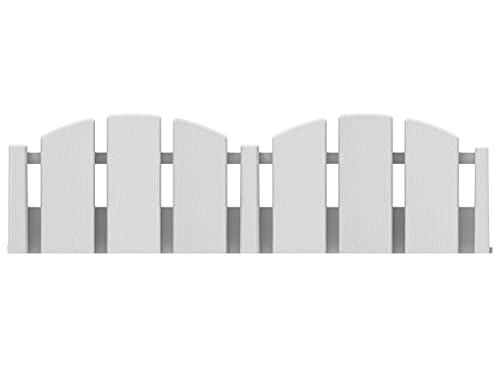
EASYFLEX DECORATIVE NO-DIG LANDSCAPE EDGING: Get a beautifully landscaped yard without all the work of a dig-in lawn edging; simple installation without trenches or shovels

STAYS IN PLACE - Our edging stays securely in place, keeping mulch and other materials from migrating into other areas of your landscape for a pollished look
6. Rock Water Features
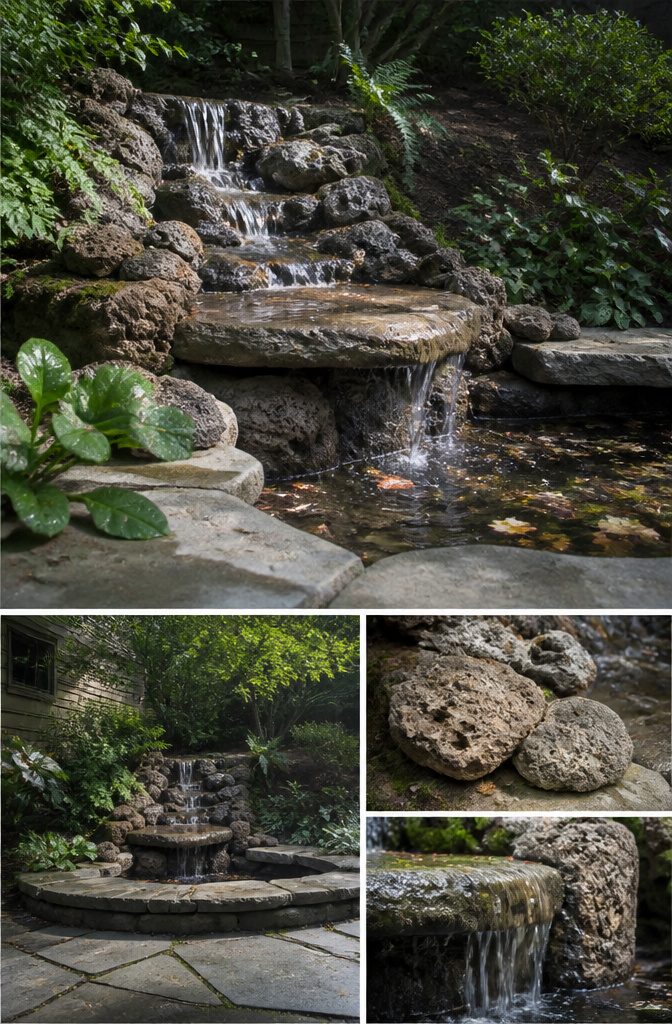
Lava rock is the material to reach for in a waterfall.
It is lighter than most stone, so not every large rock has to be a heavy lift. Put the big, flat natural stones where they carry the water or anchor the base, and use lava rock for the upper tiers.
Artificial stone is another way to cut weight if natural boulders are hard to move or hard to find. A waterfall built this way needs relatively few materials and costs less than most people expect.
For a small yard, patio or balcony, a solar-powered fountain made from decorative stone and a barrel takes about 10 minutes to put together.
It needs no outlet or wiring. Place it where it gets full sun, because the pump runs on it.
Recommended Products
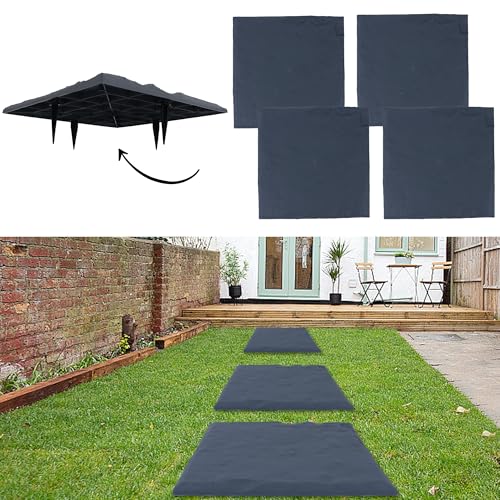
Durable & Easy: These 15.5" stepping stones are made of weatherproof resin, so they can withstand rain, hail, UV rays, and cold temperatures. They also feature four ground stakes for secure installation, making them perfect for patios, walkways, and gardens.


9-inch Standard Size:Each circlular paver measures 9 inches in diameter,,the smooth poslished pebble surface delivers a comfortable barefoot walking experience.
7. Rock Focal Point
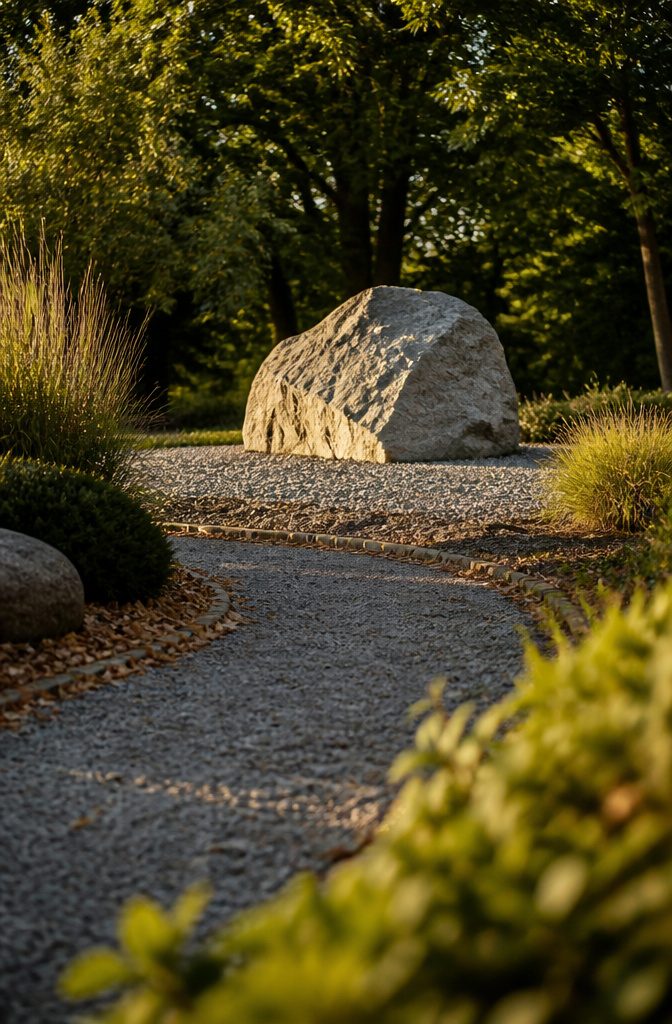
One striking piece does more than a dozen scattered ones. Choose a boulder, a sphere, a sculpture, or a stack of flat stones, and leave open space around it so nothing competes.
A rock garden with no focal point reads as a pile of gravel, while one distinctive element gives the eye somewhere to land.
Place it where people already look: at the end of a path, or at the center of a bed so the walkway leads straight to it.
A dry creek bed can use the same move, with a statue or a specimen tree set near the stepping stones.
Skip a second feature close by. Two focal points split attention, and neither one wins.
8. Rock Edging Along a Sidewalk
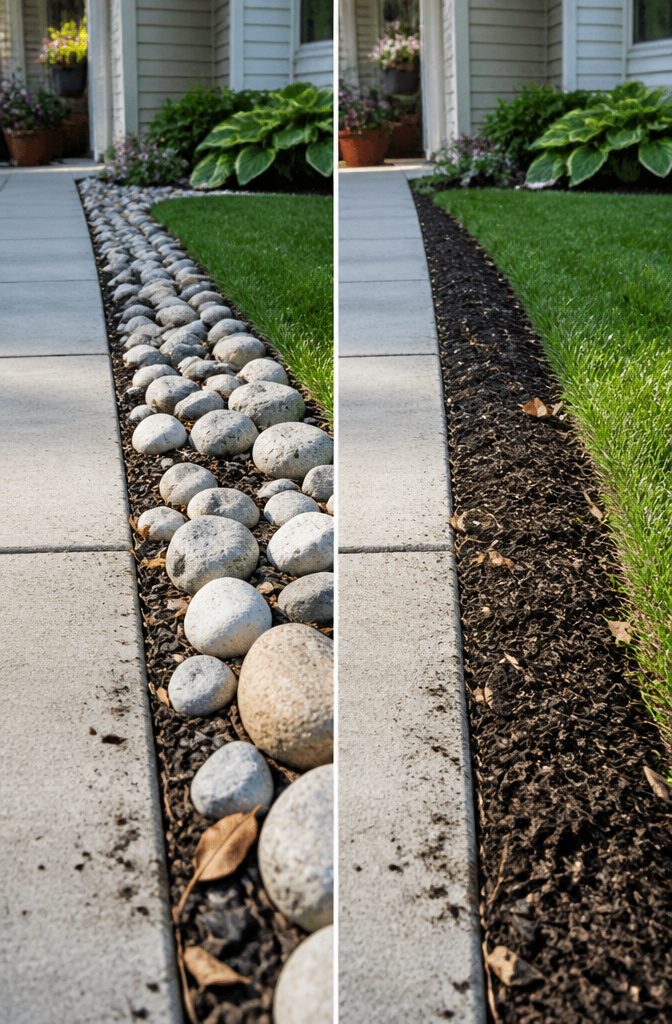
A narrow strip of grass beside a sidewalk is awkward to mow and easy to ignore, which makes it a good place for a bed. Start by covering the whole strip with a landscape barrier.
It controls weed growth in a spot you will not want to be weeding. Spread dark mulch over it, then set rocks of different sizes on top.
Dark mulch under light rock gives the contrast that makes the strip look planned, and mixing large and small stones looks more natural than a row of matching ones.
Because the bed sits right at the walkway, everyone passing sees it, so it adds curb appeal to a patch that used to do nothing.
Recommended Products

【Well Drainage】This succulent gritty mix is super well in water drainage, best for drought tolerant succulents and cactus, help your plants grow beautiful colors and also effective prevent rover water

【Note】Jade pebbles are natural rocks polished and waxed and processed, we do not recommend placing it in a fish tank, if you need to put it in a fish tank, first wash the wax off the surface with hot soapy water or detergent, then rinse with clean water

【Succulent Rocks】Jade rock size is about 1/4 inch ( 3-6 millimeter). Weight of a bag: 1 pound, smaller than expected in quantity. Great for small succulent and cactus plants as well as any type of vase or planter
9. Rock Steps on a Slope
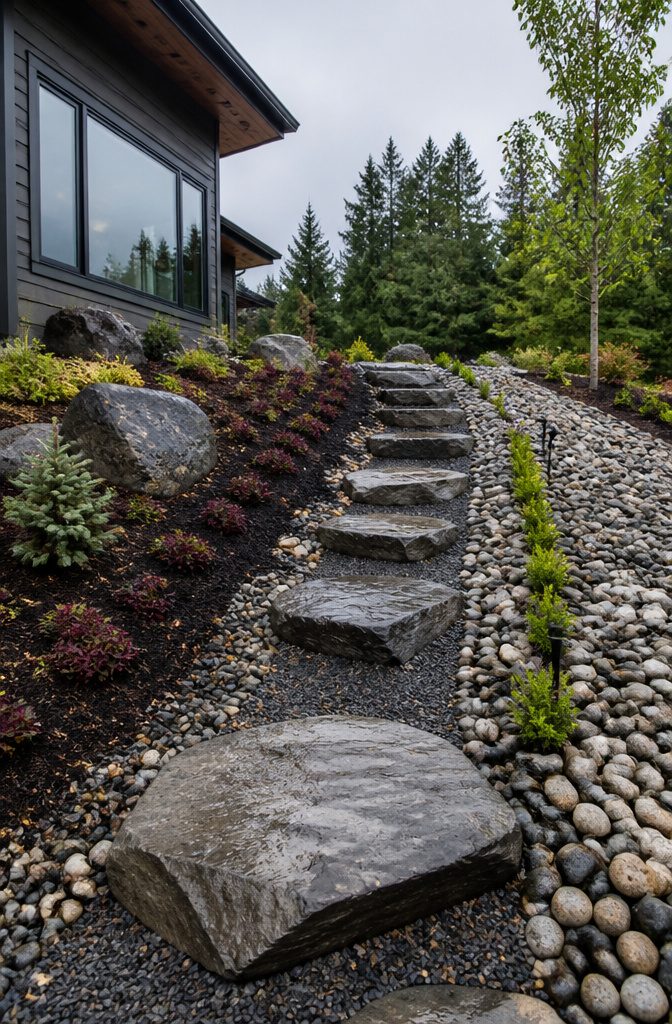
Stone steps turn a steep grade into a path you can walk, but the ground beside them needs as much thought as the treads. Bare soil on a slope washes out in heavy rain, so cover the flanks with rock.
Dark gravel paired with lighter river rock keeps erosion in check, and the two tones add visual depth that a single color of stone can’t.
Run a line of plants along the slope to keep the layout orderly.
The stones carry the structural work while the planting stays tidy, and the result is easy to maintain. Skip lawn on ground this steep: mowing a grade is a chore, and rock needs no mower.
Recommended Products
Simple installation, no digging required - suitable for all soil types

Durable & Flexible Material GTSABWAY garden edging is Made from high-quality metal, ensuring superior durability and flexibility. Easily shape it into straight lines,curves, circles, or unique contours ,without cracking,Can withstand all kinds of weather conditions, ensuring long-term durability and reliability. providing reliable Garden Border solutions.
10. Rock Accents Around a Patio
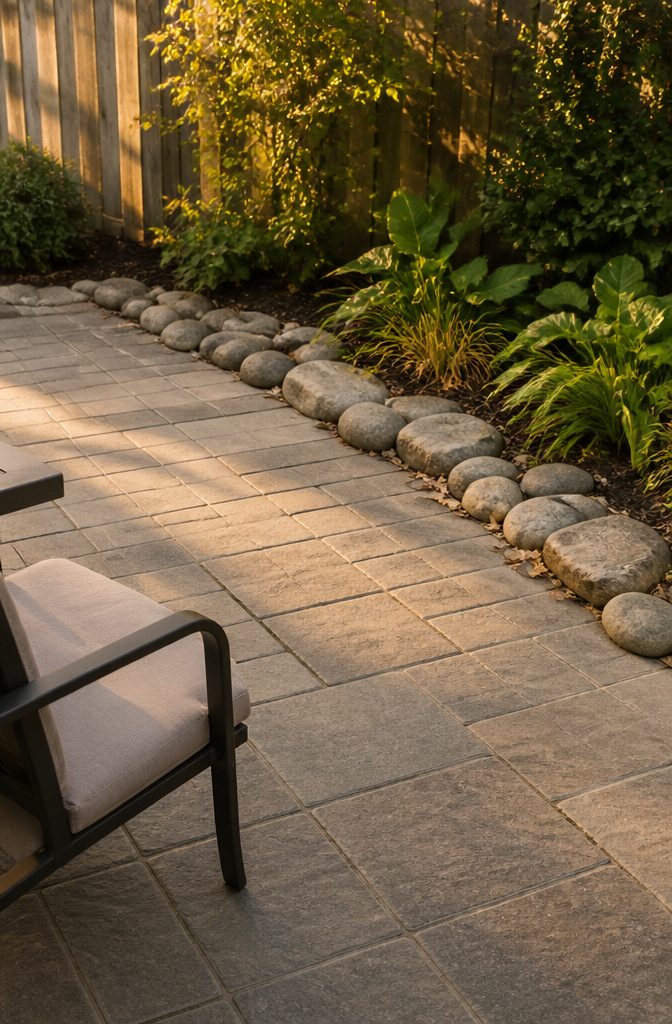
Straight-edged pavers read as hard and a little cold, especially around a plain rectangular patio.
Rocks set along the edge break up those lines with irregular shapes, and the contrast works both ways: the pavers look crisper, and the rounded, uneven stones look more natural beside them.
Restraint matters here. A band of rock along one or two sides softens the hardscape and adds warmth without cluttering the design, while stone along every edge starts to compete with the paving.
Pick rock in a tone close to the pavers so the patio still feels solid underfoot. A plain, purposeful layout like this also ages well and doesn’t depend on what’s popular this year.
Recommended Products

SmartYeen stepping stones super value pack,include 8-pack high quality balance stones in bright colors,designed for kids coordination play.

Vintage Charm: Natural gray finish features subtle color variation that replicates the look of weathered stone, adding visual texture to gardens, pathways, and outdoor spaces

Weather-Resistant & Built to Last: Crafted from durable PC+ABS resin, these stepping stones are heat-resistant, crack-proof in freezing temps, and impact-resistant. Designed for year-round outdoor use, they won’t fade, warp, or lose their shape—rain or shine.
11. Desert-Modern Rock Design
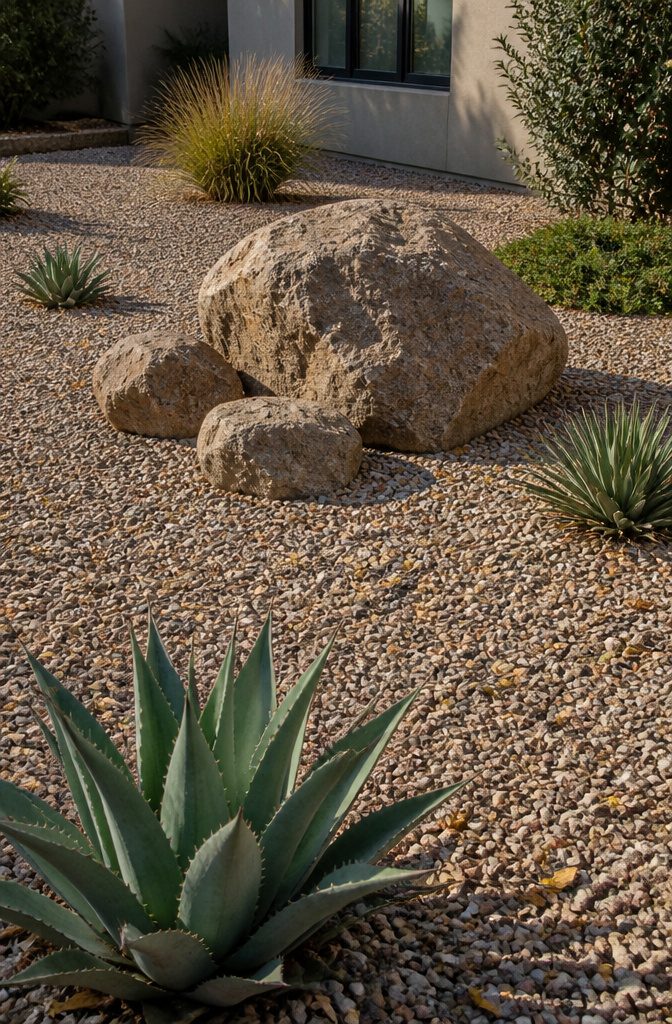
Desert Modern Simplicity depends on restraint: a wide sweep of light gravel, a few large boulders, and plants spaced far enough apart that each one reads as a distinct shape.
Multi-colored granite is a good gravel choice. Its mix of tans, grays and soft pinks hides dust and fallen leaves better than a single pale color, and it sits comfortably next to most siding.
Group boulders in uneven numbers, make one clearly larger than the rest, and bury the base of each one partway so it looks like it surfaced from the ground rather than being set on top.
The style suits dry spells because gravel keeps soil from baking and crusting, and drought-tolerant plants need only an occasional deep soak once established.
12. Rock Design for Lush Planting
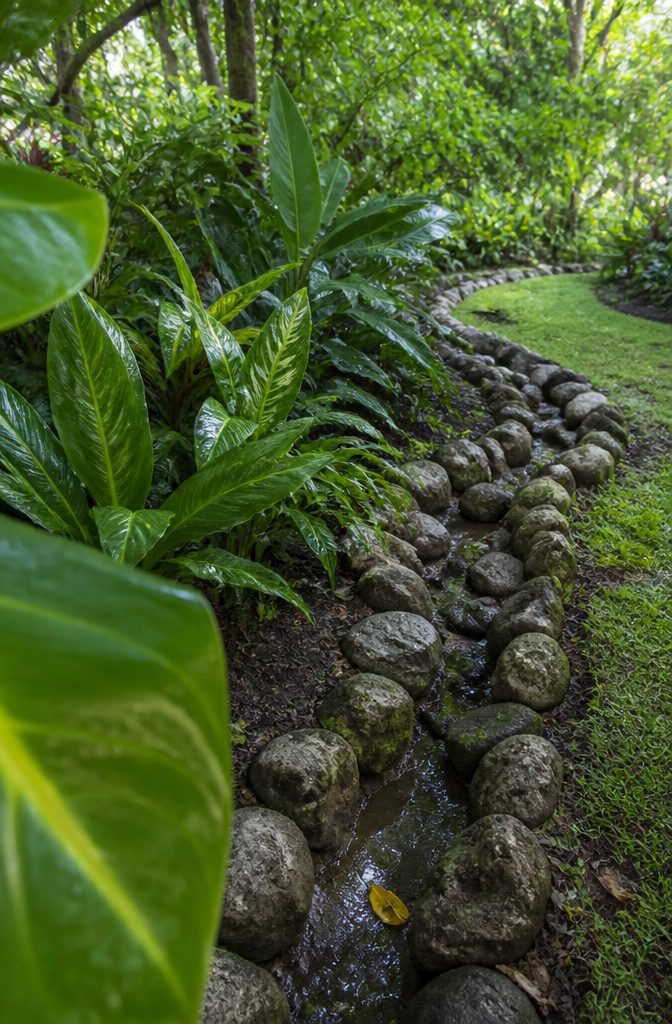
Let the plants carry this look and give the stones a supporting job.
Rocks ground the bed while foliage supplies the life and movement, so aim for harmony rather than contrast. Plants should cover most of the bed, with stone showing in the gaps and along the edges.
A tropical-style bed shows how it works. Rocks set along the path water already wants to take will steer it, and the eye follows the same curve.
Bold, broad-leaved plants fill the space around them. The stones also handle drainage, so the bed works as hard as it looks.
This style needs more water than gravel or succulent beds. Plan on watering through dry spells, and group thirsty plants together so you aren’t irrigating the whole yard for a few of them.
Contrast and Layers
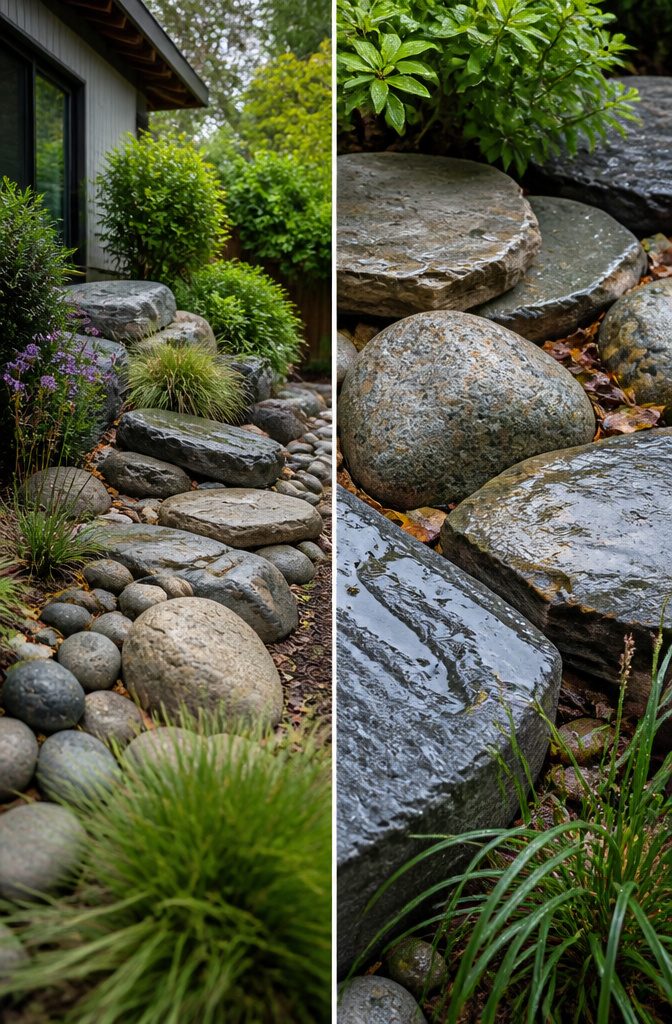
Start with one thing the eye should land on: a special plant, a tree, a sculpture or a water feature. Every stone should point back to it.
Build layers by mixing large and small rocks.
Set a few big stones first, then fill in with smaller ones around and in front of them. Pair flat stones with round ones, and smooth surfaces with jagged ones.
The contrast gives the group depth that a single rock type can’t. Vary size, shape and color, and arrange the stones along curves instead of straight lines.
Keep it restrained.
Layered stones, small height changes and sparse planting read as deliberate. Grasses or flowers in front of the stones finish the backdrop.
Gravel Depth and Weed Control
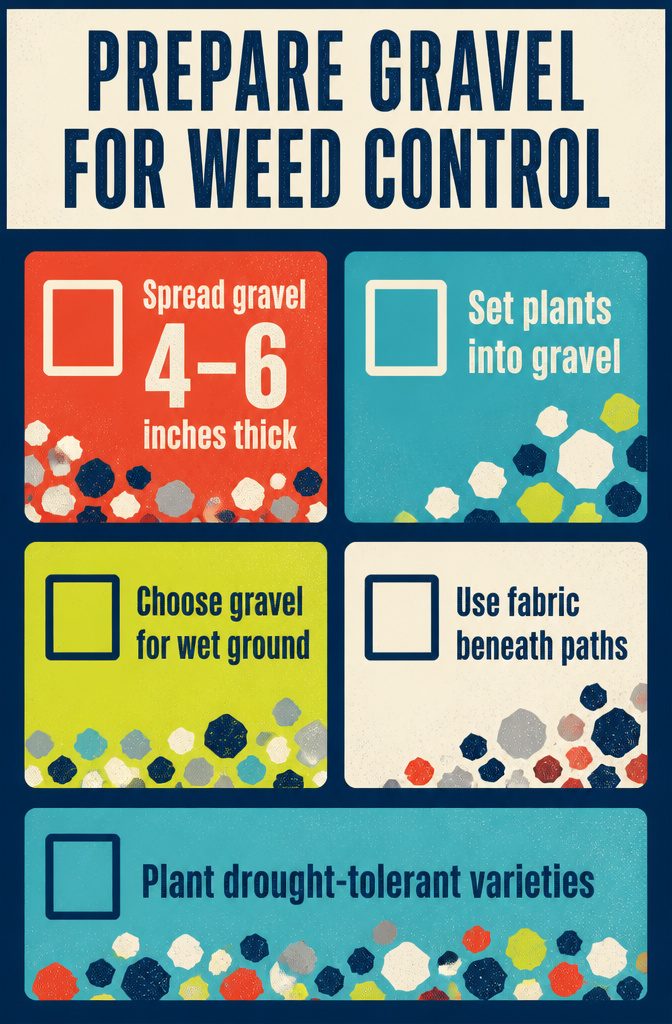
Gravel cuts weeding in beds, paths, and soggy spots, and it works best when you set it up this way:
- Spread gravel 4–6 inches thick over a muddy, weedy area. Set the plants into the gravel instead of planting them in the soil they came in. The bed becomes close to maintenance-free over time.
- Wet ground and soil erosion are good reasons to choose gravel over mulch.
- Small stones or gravel can replace wood chips in garden beds.
- Landscape fabric under dry creek beds and pathways holds weeds back.
- Plant succulents, cacti, or drought-tolerant grasses. They need little watering and do best in well-drained ground, which gravel provides.
Frequently Asked Questions
What yard problems can rock landscaping help with?
Rock suits erosion, poor drainage, wet or sandy ground, and awkward spaces where a regular garden struggles.
A dry creek bed handles low, soggy spots, a stone wall holds back soil that washes downhill, and a gravel bed covers muddy, weedy ground. Rock also works on slopes too steep to mow.
How can I make a rock garden look more interesting?
Start with one focal point, such as a boulder, a specimen plant, a sculpture, or a water feature, and leave open space around it.
Then layer large and small rocks, pairing flat with round and smooth with jagged, and vary the colors. Avoid adding a second focal point nearby, because two features compete for attention.
Can gravel replace wood chips in a garden bed and cut down on weeding?
Yes. Small stones or gravel can stand in for wood chips, and shrubs, trees, and perennials can still be planted in the bed.
On muddy, weedy ground, spread gravel 4–6 inches thick and set plants into the gravel instead of the old soil. Landscape fabric underneath holds weeds back, and gravel also handles wet ground and erosion better than mulch.
How does a dry creek bed fix a drainage problem?
A dry creek bed gives rain a channel to follow through a low spot, so water stops pooling there. Dig it through the area where water collects and curve it.
Put boulders at the bends, cobbles in the middle, and gravel in the gaps. Drought-tolerant plants along the edges and flat stepping stones are optional.
What can I do with leftover rocks from a bulk landscape order?
Use them for paths, hard-to-mow patches, and places that need drainage. Scattered stone can also break up a plain stretch of lawn.
Are rocks a good choice for paths and stepping stones?
Yes. Gravel, pebbles, small stones, flat flagstone-like pieces, and homemade concrete stepping stones all work.
A flagstone path can sit directly on dirt once you clear the weeds or sod, and landscape fabric under a gravel path holds weeds back. A curved route slows the walk and looks more natural than a straight one.
How can I use rocks in a water feature?
Rocks can be the backdrop or main material in ponds, streams, waterfalls, and small fountains.
For a waterfall, use lava rock on the upper tiers because it is lighter than most stone, and set big flat natural stones where they carry the water or anchor the base.
A solar-powered fountain made from decorative stone and a barrel takes about 10 minutes to build and needs no outlet. Place it in full sun so the pump runs.