These projects range from about $60 of mulch for 100 square feet to a $1,500 picket fence, and your yearly spending cap decides where you stop.
At $500–800 a year, that cap is your whole season, so the fence is out, and artificial turf at $3,000–$10,000 is well out of reach.
1. Survey and Set a Budget
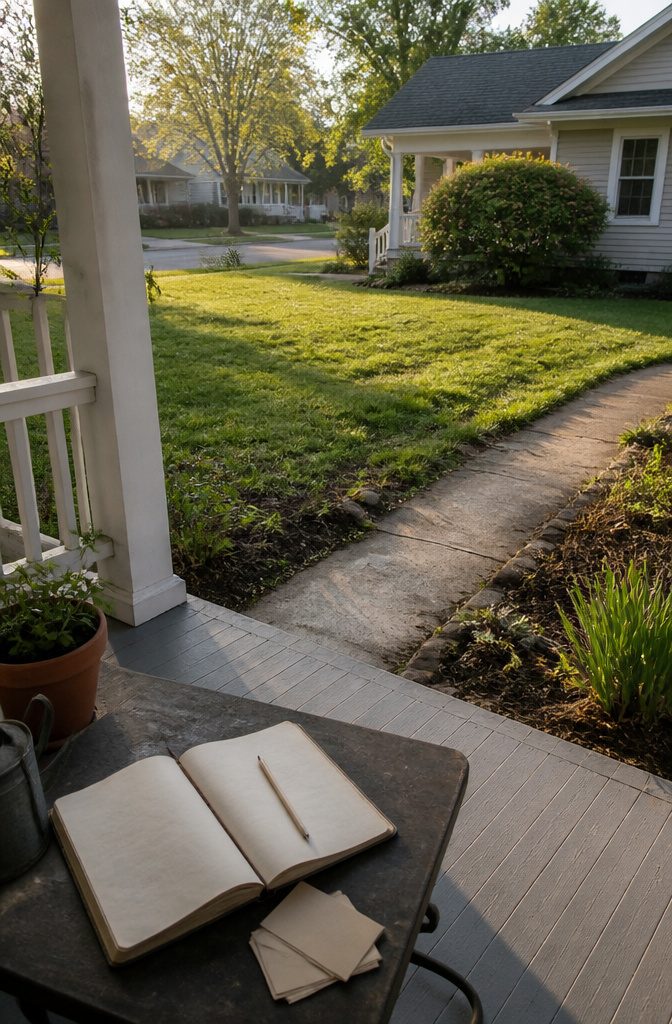
Walk the front yard in the morning, at noon, and at dusk, and write down anything that looks out of place, is in poor condition, or takes more upkeep than you can give.
If an inherited flower bed is beyond you, offer the plants to a neighbor or a Buy Nothing group and replace them with something tougher.
Next, list every project you want and price each one online or by asking neighbors.
Set a spending cap; at $500–800 a year, that cap is your whole season. Sort the list into four columns: must do now, would like to do now, can do later, maybe someday.
Fund column one first, then column two. A sprinkler system ($2,000–$4,000) or artificial turf ($3,000–$10,000) belongs in the last two.
Recommended Products

100% PERMEABLE ROCK GLUE FOR LANDSCAPING AT AN UNBEATABLE VALUE: Our 100% permeable stone glue covers up to 200 sq ft, securing rocks, pea gravel, pebbles & decomposed granite with lasting strength, while staying permeable to support soil hydration & nutrient flow
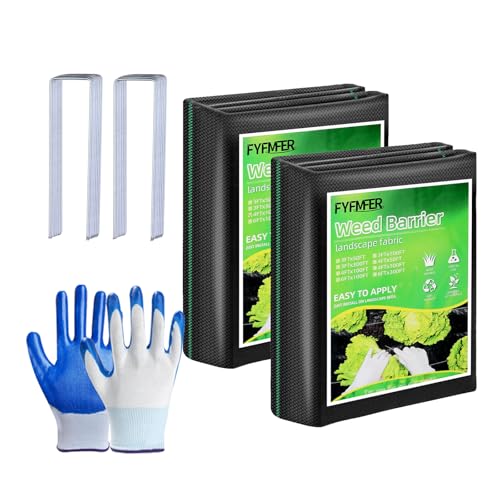
2-PACK, 400 SQ FT TOTAL COVERAGE: Includes two folded 4FT x 50FT landscape fabric pieces for 400 sq ft of total coverage. The two-piece format makes it convenient to cover separate garden beds, vegetable rows, pathways and landscaping areas one section at a time.

Restores faded mulch & adds instant curb appeal with a pure midnight black color
2. Rocks and Mulch Instead of Turf
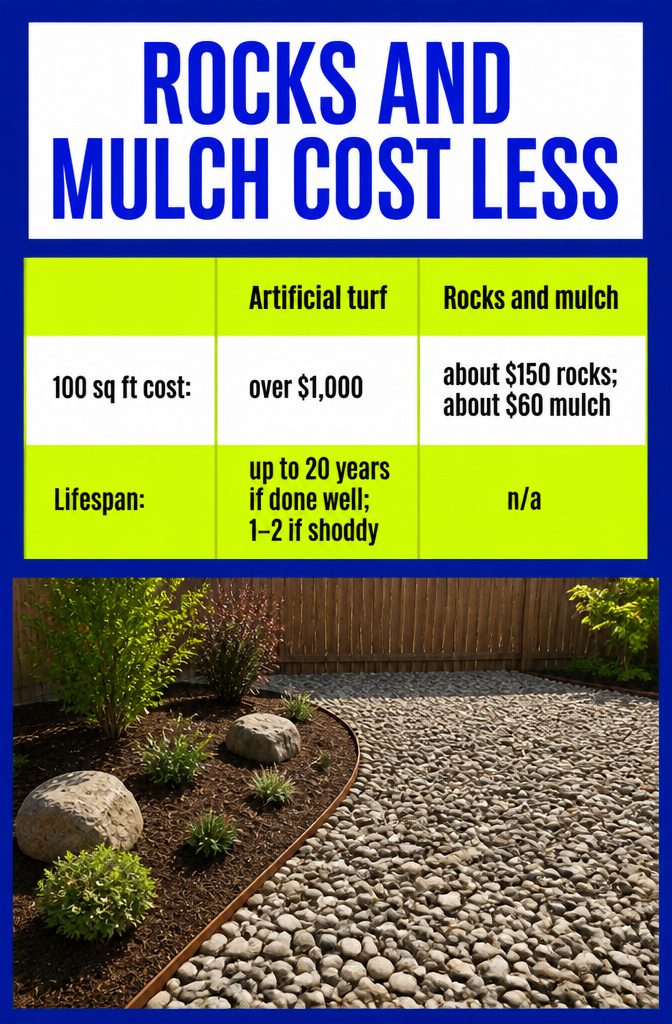
Rocks and mulch beat artificial turf on cost.
Turf runs $3,000–$10,000 installed, at about $2 per square foot for material and about $5 per square foot installed in larger cities. It can take up to 5 years to break even.
| Option | Cost for 100 sq ft | Lifespan |
|---|---|---|
| Artificial turf | Over $1,000 | Up to 20 years if done well; 1–2 if shoddy |
| Rocks, 3 inches deep | About $150 DIY ($140 per ton) | n/a |
| Mulch | About $60 | n/a |
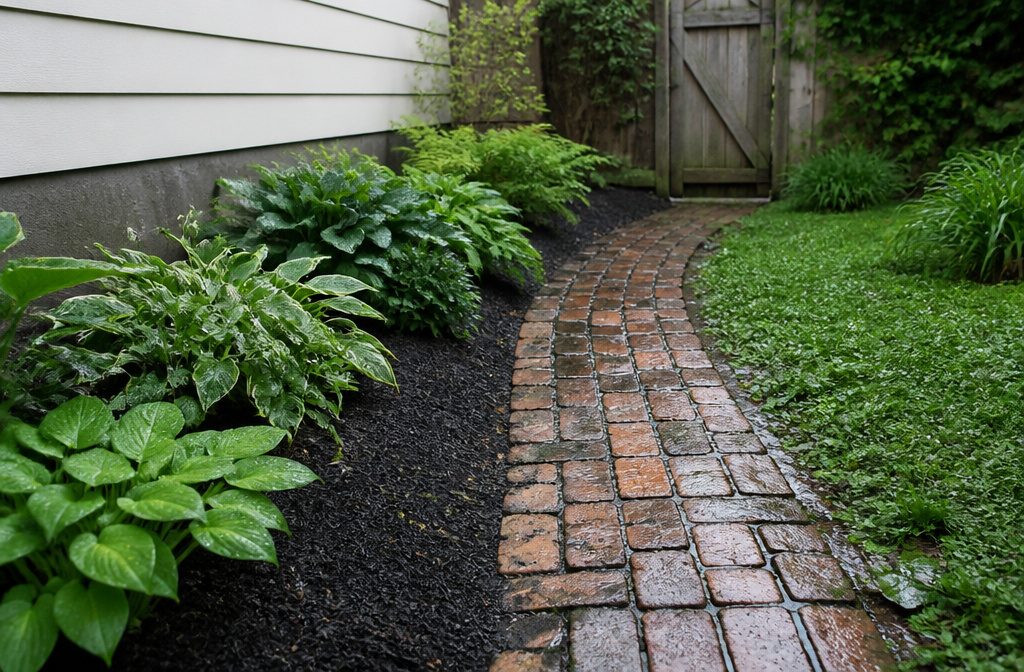
Use mulch to frame beds and walkways, and rocks for larger open areas.
A few large rocks set into a bed give a modern look, and in some places they cost nothing, as can local mulch. Dig large rocks in well so they stay put.
Recommended Products

This gravel has a variety of uses including landscape and garden decoration, drainage, and building walkways.

Product Specifications: MIGHTY109 Granite Gravel 3/4" Size, 40 LBS per Bag

【Weight & Size】Weight: 20 pounds, Size:3-4 inches. The rock is natural not man made. So the stones are heavy and 20 lbs is not a lot, please refer to the picture for the amount of area to be covered
3. Xeriscape Instead of Lawn
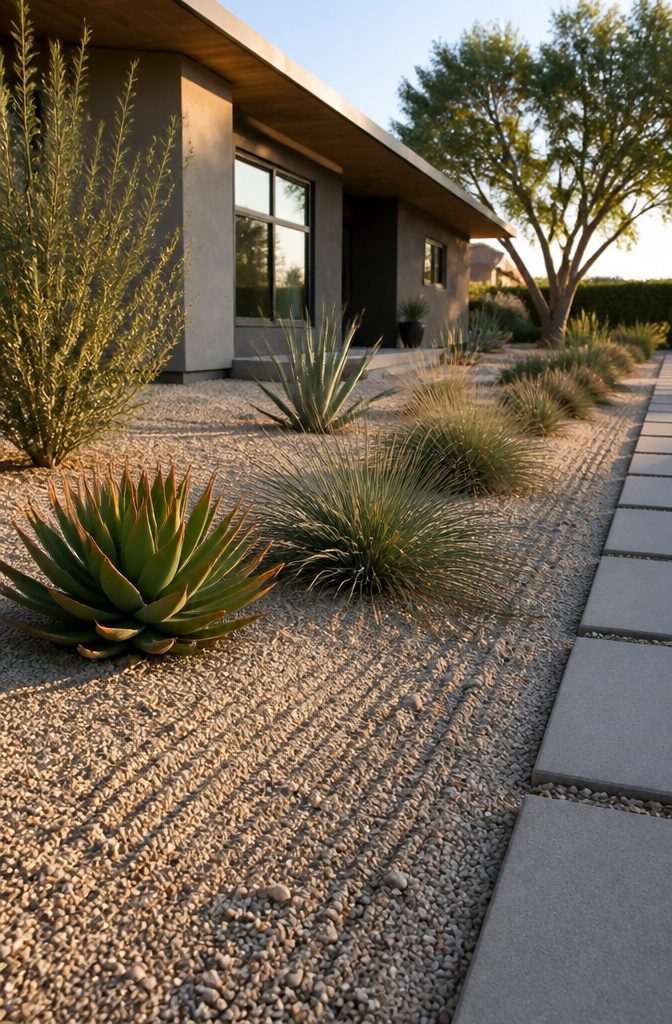
Lawn costs more than it looks. It needs an irrigation system, a mower you have to buy and store, and regular reseeding.
A xeriscape skips all three: drought-tolerant plants set in beds covered with gravel, which helps the soil hold moisture. Leaving out the sprinkler system alone avoids $2,000–$4,000, and the finished yard uses far less water than turf.
The minimalist look works in your favor on a tight budget. A few larger plants make an attractive, textured ground cover, so you buy fewer of them.
Aloe and ornamental grasses are inexpensive, low-maintenance picks, and their spiky and feathery shapes stand out against the gravel. The style suits modern homes especially well.
Recommended Products

16 Drought-Tolerant Native Wildflower Seeds - This xeriscape wildflower seed mix features Coreopsis, Coneflower, Evening Primrose, Prairie Clover, Lupine, Spiderwort, and Scarlet Sage. Water-wise native flower seeds for Eastern heat and drought.

Quick Germination: Surface-sow purple rockcress flower seeds; light required. Sprouts in 10–14 days at 60–65°F. Start indoors 6 weeks before last frost — garden seed planting, great seeds for planting.

High Germination Ease: Sow aubrieta cascade purple aubrieta deltoidea seeds in 60–65°F soil. Aubrieta rockcress sprouts in 10–14 days, ideal as flower seeds for airy borders, walls, rock gardens.
4. Native Plants for Your Zone
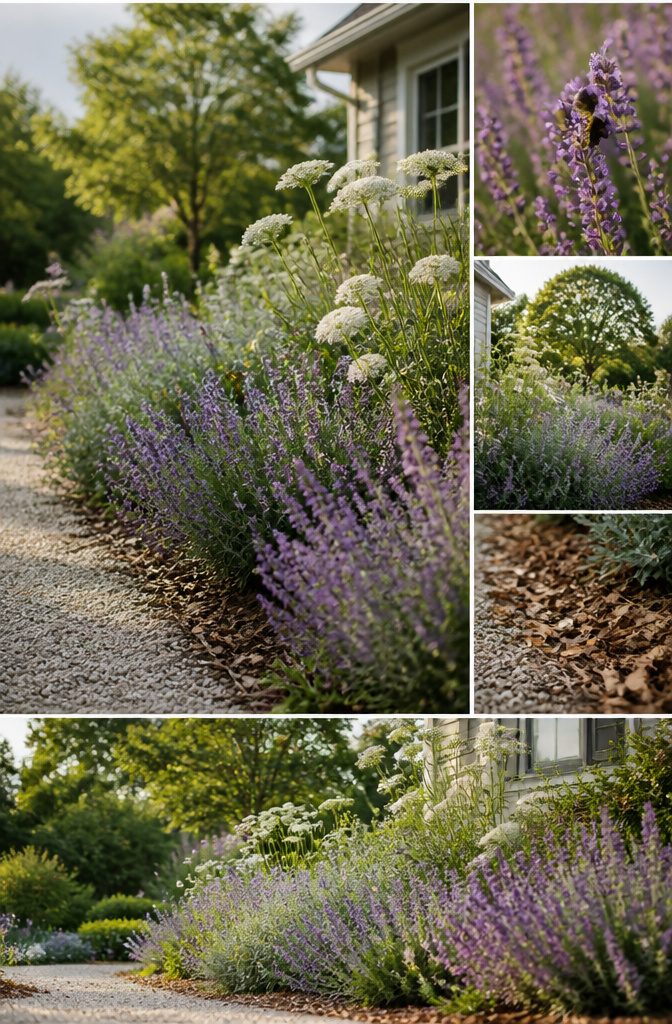
The USDA Hardiness Zone Map splits the country into 11 zones, and your zone number is the first filter for every plant you buy. A plant outside its range dies, and replacing it costs you twice.
Check what is thriving in your neighbors’ yards, since a shrub that has looked good on your street for years is a safe pick. For soil and rainfall questions, ask a local nursery or your county extension service.
Catmint stays 1–2 feet tall and grows in zones 4–8. Lavender covers zones 5–9.
Queen Anne’s lace is the most flexible at zones 1–10, and it is cheap. Where you can, choose natives: they tend to need less water, fertilizer and upkeep, and they draw bees and butterflies.
Recommended Products

NATIVE BEAUTY – New England Aster, Smooth Blue Aster, Purple Coneflower, Narrow-Leaved Coneflower, Black-Eyed Susan, Dense Blazing Star (Gayfeather), Bee Balm (Wild Bergamot), Lanceleaf and Plains Coreopsis (Tickseed), Showy, Common, and Swamp Milkweed, Purple Prairie Clover, Joe Pye Weed, Spiderwort, Common, Prairie, and Maximilian Sunflowers, Little Bluestem, Switchgrass, Indian Grass, Blue Vervain, Canada Wild Rye, and White Yarrow.

Native Pollinator Magnet: Spotted bee balm seeds produce aromatic wildflowers that attract honeybees, butterflies, and hummingbirds. Ideal native bee balm seeds for planting outdoors in full sun gardens.
5. Seeds and Bulbs
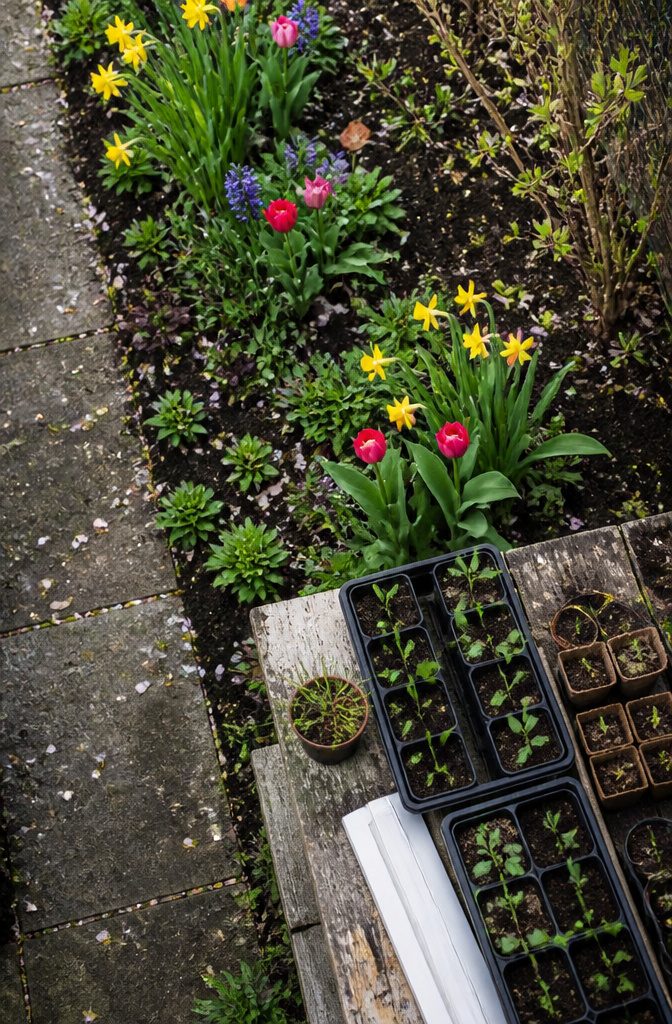
Starting from seed or cuttings is the cheapest way to fill a yard with plants, but the supplies cost something upfront.
Grow lights and seed trays are the main expense. Starting indoors also gets you ahead of the spring season, so plants are ready when the weather warms.
Bulbs work differently. Daffodils, tulips and hyacinths come back every year, and many of them self-divide, multiplying underground so you don’t keep replanting.
Over several seasons, bulbs give the cheapest return: you buy once, then get blooms each spring with no trays, lights or restarting.
Use seeds to fill a bed with color this year. Put your bulb money into the front bed you want to keep paying off.
Recommended Products

【Easy Programming Program】Through the Sprinkler Timer to program, you can set the Start Time, Watering Duration is 1min-3h59min, Watering Frequency from 1h to 12h or 1 day to 7 days, so you can customize your watering time, and can be more accurate.

Effortless Smart Watering Control: The Orbit B-hyve XD 2-Port Smart Hose Watering Timer delivers effortless auto watering, automatically adjusting watering schedules based on local weather data

Experience the Revolution - The valves have been fully upgraded, reducing flow resistance by 40%. The screen structure has also been improved, achieving an IP65 waterproof rating. It has passed 20,000-cycle lab testing, making the product more durable.
6. A Small Flower Bed
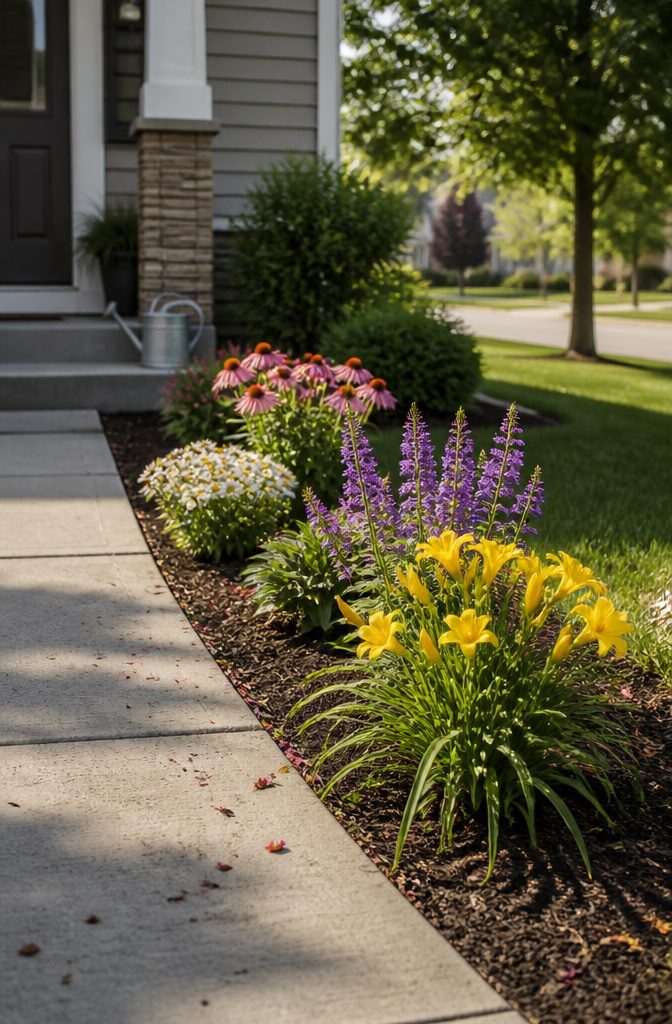
Pick the one or two spots people see first, such as beside the front door or along the walkway, and leave the rest of the yard alone this year.
A small bed you can finish properly looks better than a large one filled with leftovers, and every square foot you skip is money you don’t spend.
Plant in clusters rather than scattering single plants. Groups of 3 to 5 of the same perennial read as a deliberate block of color from the street, while one of each looks like a sampler.
Odd numbers also tend to look more natural than even ones. Perennials return each year, so you can add another cluster or a second bed next season when the budget allows.
Recommended Products

STRONGER MULCH DYE: One quart of this black mulch dye color concentrate can cover up to 2,500 sq. ft. while 1 gallon can cover up to 10,000 sq. ft., coating your faded mulch with rich black color.

OUR ADVANTAGES - ERCorArt mulch glue application convenience: Supports brush, spray, and roller application with extended open time (5-30 minutes) for easy position adjustment. Flexible Curing: Gravel glue room-temperature curing or heat acceleration (initial cure at 60°C within 10 minutes). Environmentally Friendly & Safe: Low VOC (<50 g/L), solvent-free (water-based or 100% solids). User Experience: Landscape glue simplifies operation, reduces reliance on specialized equipment, suitable for DIY and industrial assembly lines.

NO DILUTION NEEDED - READY TO SPRAY FORMULA: Skip the mixing & messy measuring. Our Lockscape rock glue max is ready to use straight from the bottle. Simply shake & pour into your sprayer, and enjoy professional results that lock rocks in place with zero hassle.
7. Frameless Raised Beds and Edging
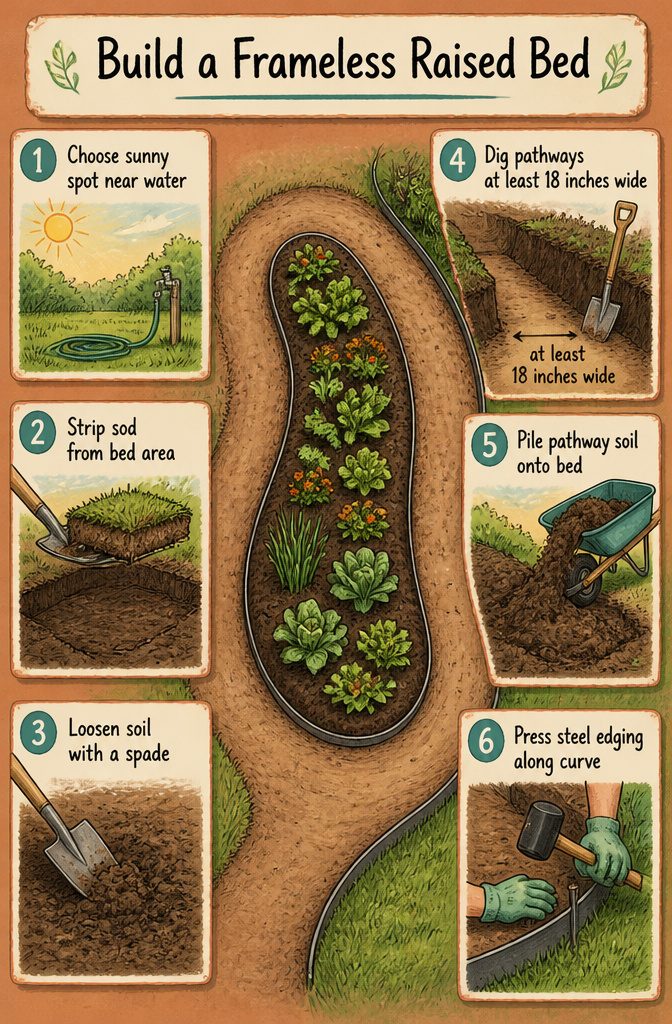
A frameless bed costs little because the soil does the job a wooden frame would. It takes more labor than a kit, but you get a clean-looking bed with healthy topsoil.
- Pick a spot with strong sun and water within reach.
- Strip the sod off the bed area.
- Loosen the soil underneath with a spade.
- Dig pathways beside the bed at least 18 inches wide.
- Pile the soil from the pathways onto the bed to raise it.
- Press steel edging along the bed’s curve and the lawn side. It costs a few dollars, goes in easily, lasts years, and keeps the lawn edge neat.
Recommended Products

【Exceptional Quality】Carefully selected premium stones, meticulously polished and quality-controlled, with a refined appearance and lasting luster that add a touch of elegance and beauty to any space.

【Note】Rocks are natural,the surface of the stone has its own powder. Some powders in package from processing and shipping. After receiving it, please clean it with water. The powder will decrease but will not completely disappear. If you receive a product that is missing weight or has quality

【SIZE and PARAMETERS】Color: Yellow; Material: Natural Stones;Diameter(Approx):1/5inch;Weight:45LB
8. Stepping-Stone or Gravel Paths
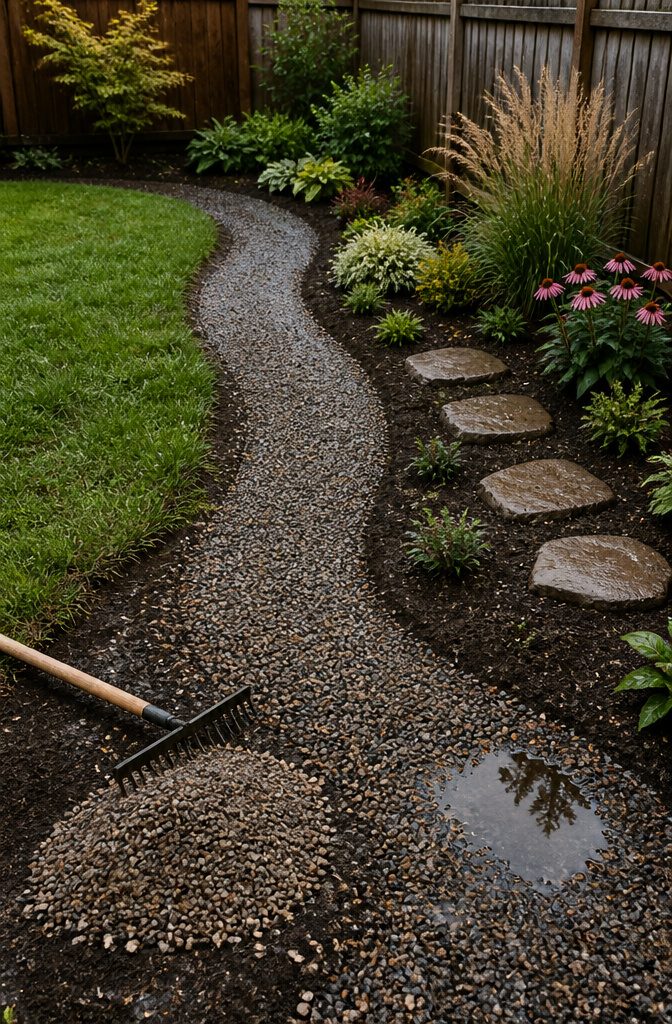
Stepping stones cost about $10–$30 each, so a long path adds up fast, and the stones are only half the job. Each one has to be dug in so its top sits level with the soil.
A stone set on the surface rocks underfoot and shifts after heavy rain. Getting the spacing comfortable for your stride and every stone level takes labor and some practice, and mistakes show.
A DIY gravel path is the better choice for a beginner. You mark the route, dig out the strip, and fill it with gravel.
The material is forgiving: a misjudged edge or a low spot is fixed with a rake and another scoop. Save stepping stones for a short run across a bed once you’ve done one path.
Recommended Products

LIVE SEDUM TILE: 10" by 20" live plant mat featuring a combination of sedum succulent plants with earthy colors and contrasting shapes. These easy ground cover plants offer endless DIY possibilities.

Lithops Live Plants Mix Lithop Succulents Plants Live Bulk, 20Pcs Rock Living Stone Succulent Live Plants Large Size Live Houseplant

Sedum ternatum ‘Larinem Park’ - Woodland stonecrop is a low growing perennial with fresh green succulent foliage and delicate white star-shaped spring flowers, bringing seasonal interest to shaded and woodland-inspired garden spaces
9. Trellis or Arbor
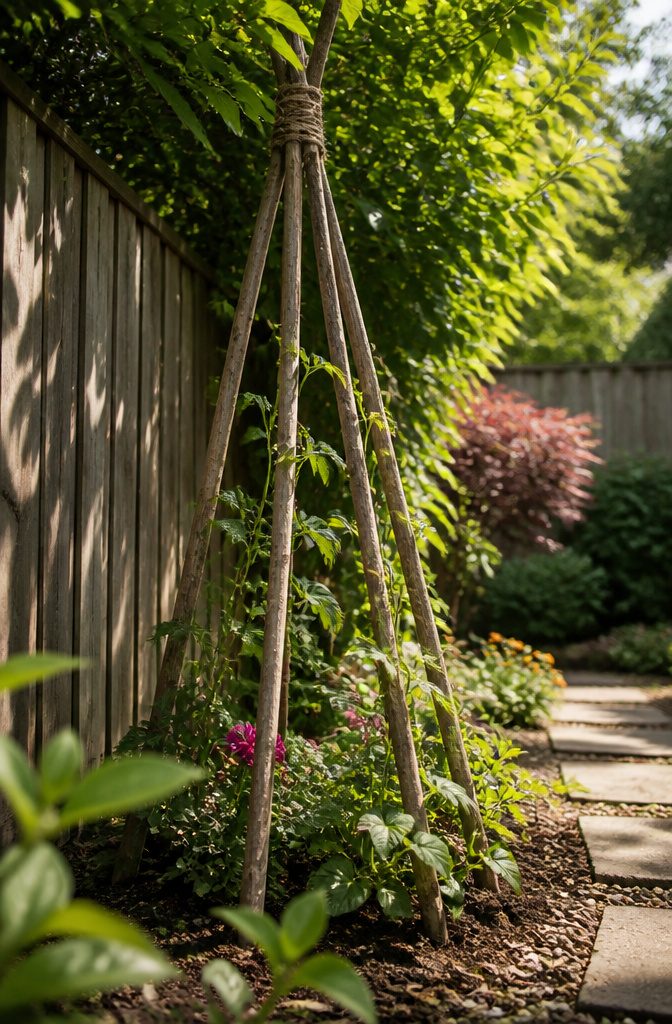
A trellis is one of the cheapest ways to add height to a front yard or a small backyard, and you may already own one.
An old arbor, a fence section, or any sturdy upright structure can hold a vine as well as a store-bought frame.
If you have nothing to climb on, build a cone. Cut 5–6 hardwood branches, push the thick ends into the soil with a spade shovel in a rough circle, lean the tops together, and bind them with twine or wire.
It takes minutes. A saw, a spade, and twine or wire are the only tools, and a hardware store carries all of them.
Plant climbing vines or flowers at the base and guide the stems up the branches as they grow.
Recommended Products

Milkweed Butterfly - Monumental multi-tiered installation - an emerald mantle for neon-orange spheres of umbellate inflorescences. High-efficiency Premium Heirloom category seeds (USA): Non-GMO, Untreated, High germination rate. Architectural expressionism for sophisticated gardeners and perfectionists.

10. Birdbath or Water Feature
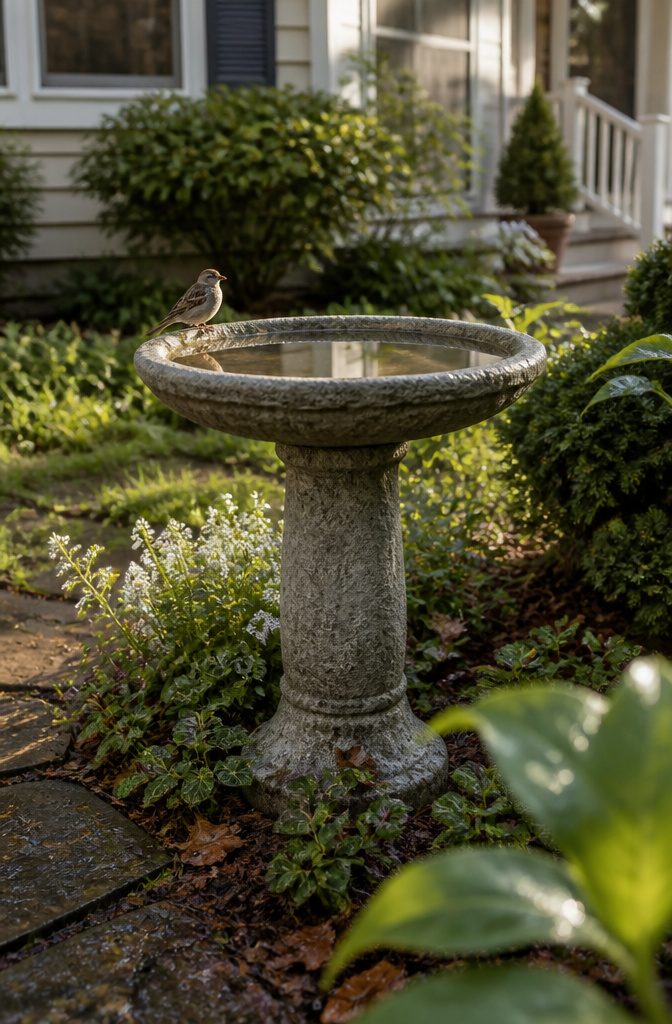
A stone-effect birdbath costs about $100–$200 and gives local birds a place to drink and bathe.
It needs no digging or plumbing, and it works as a focal point on its own. Place it so it complements the plantings around it, ideally within view of a window so you actually see the visitors.
A pond is a different project. A DIY water feature is the most ambitious idea on a budget list, and it asks for real time and money before it becomes the focal point you pictured.
If you’re a beginner and still want one, buy a pond kit instead of designing from scratch. Otherwise, start with the birdbath and revisit a pond once the rest of the yard is in.
Recommended Products

ULTIMATE FLEXIBILITY FOR ANY GARDEN SHAPE – Place sprinklers exactly where you need them- Perfect for lawns, flower beds, raised gardens, and more.
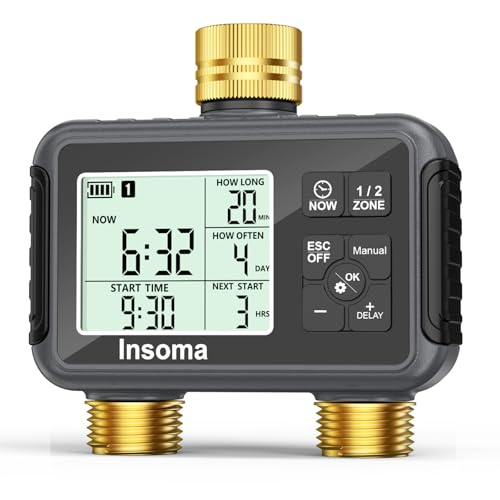
【Brass Inlet & Outlet】: Upgraded brass water inlet and outlet are stronger and more durable than ABS inlet which can withstand up to 116psi and not easily deformed due to long-term use or high temperature exposure. Built-in metal filter can effectively prevent sediment and other larger particles from entering the irrigation system.

Easy to Read & Set Up: The water faucet timer with a large LCD screen display, which can display the watering time, frequency, power, and other detailed content, which is convenient and easy to read.
11. Outdoor Lighting
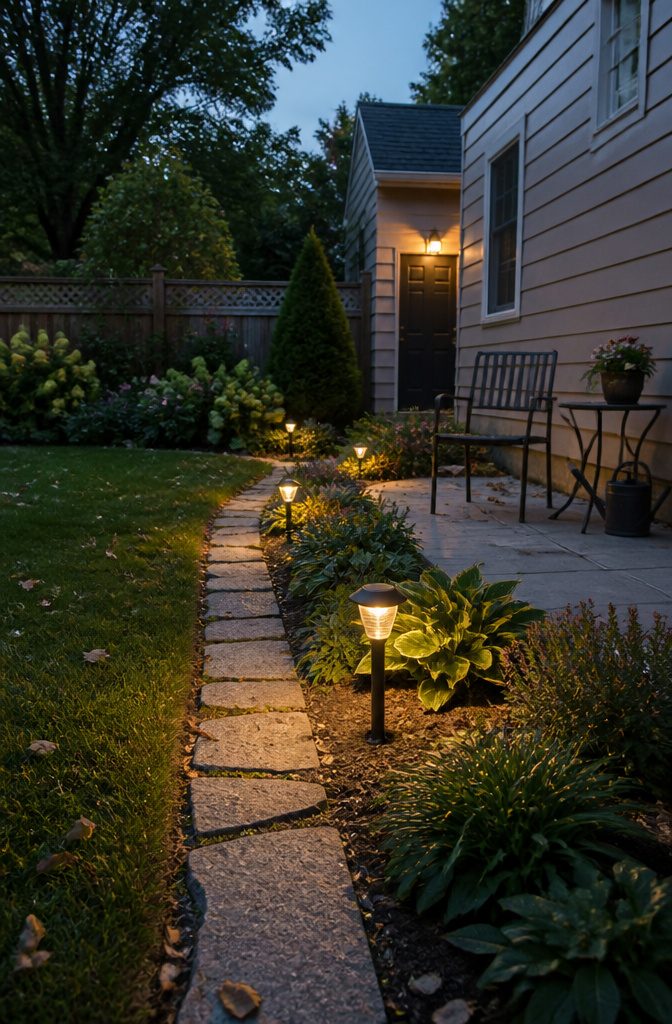
Solar lights are the cheapest way to light a yard, because they need no wiring and no electrician.
- Solar stake lights: Push them into the soil along a path. They are very cheap and need no installation, so they suit a small budget best.
- String lights: Hang them over a patio or seating area to set a mood.
- Fluorescent fixtures: Expect to pay $80–$220.
- Statement lights: One modern sconce or vintage outdoor chandelier gives the entry a focal point. Wall-mounted fixtures run $70–$200.
- Professional whole-yard lighting: This costs $1,000–$4,000, so skip it on a tight budget.
12. Garden Decor
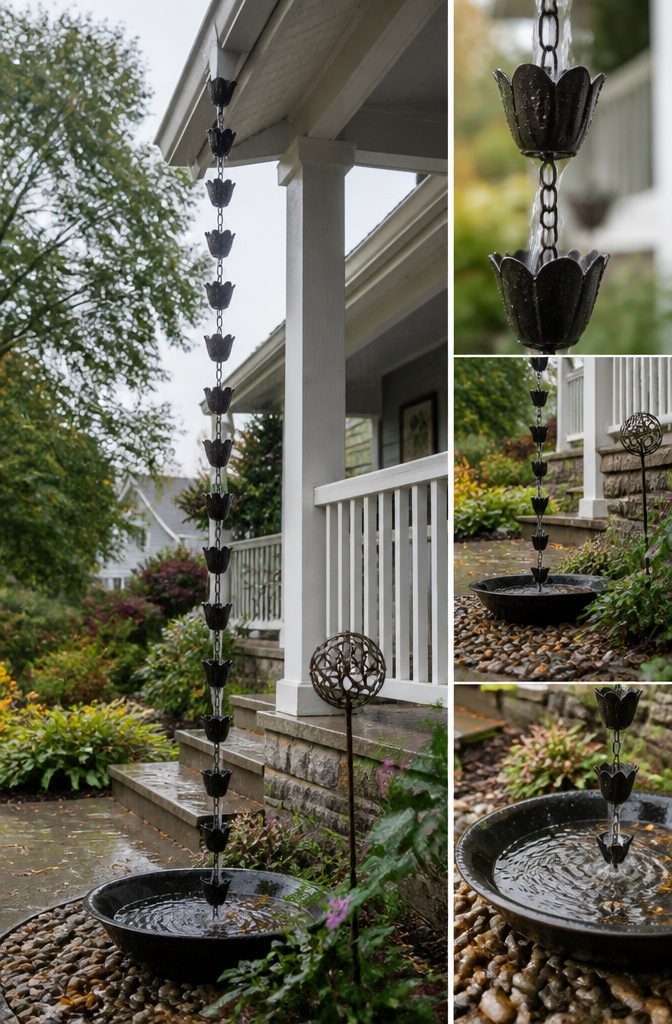
A rain chain is the decor piece that also does a job.
It started in Japan and carries water from a gutter down to a drain or a decorative basin, and most cost $40–$80. A lily cup style adds a playful touch beside the front door.
Wind chimes, garden stakes and statues add character in the same way.
Pick one or two pieces, not all of them. A rain chain plus a single stake in the bed by the walkway looks deliberate.
A chime, three statues and a row of stakes looks like clutter, and it works against the clean front yard you’re building. Hang a chime near the porch or entry, where you’ll hear it daily.
13. White Picket Fence
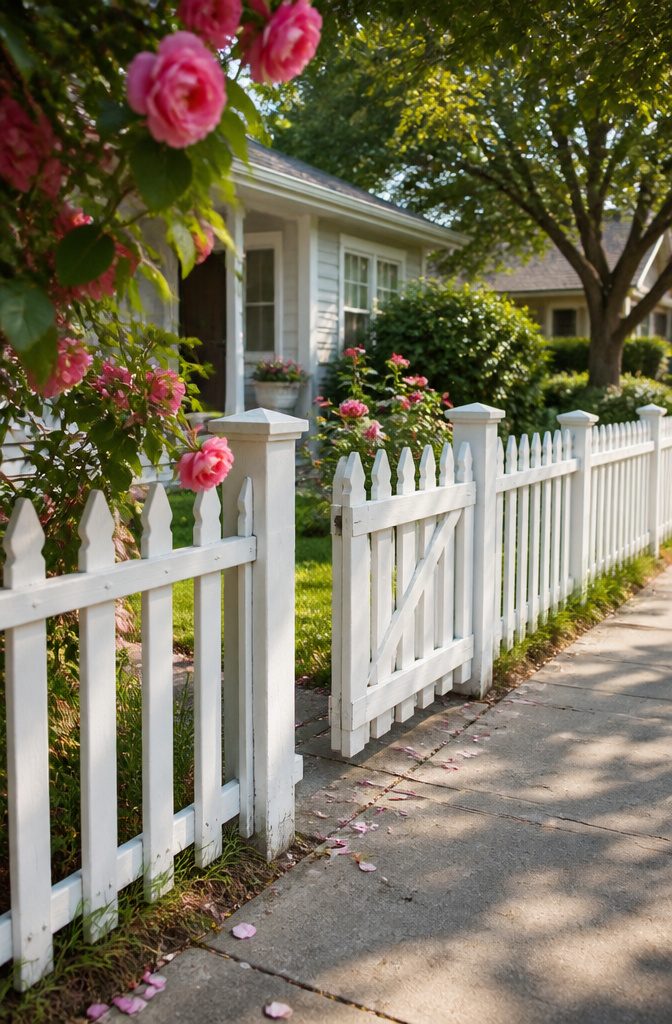
A white picket fence can be installed for as little as $500, and a really nice one around a larger front yard runs about $1,500.
That makes it the priciest item on this list, so skip it if your budget is closer to $500 for the whole year.
What you get for the money is a focal point that does much of the landscaping work by itself.
The white pickets are distinctive enough that a lawn and a few traditional plants like roses are all the planting you need alongside them.
If you would otherwise spend on a flower bed, a trellis, and decor to give the front yard some character, the fence can replace all three.
Plant a Young Tree
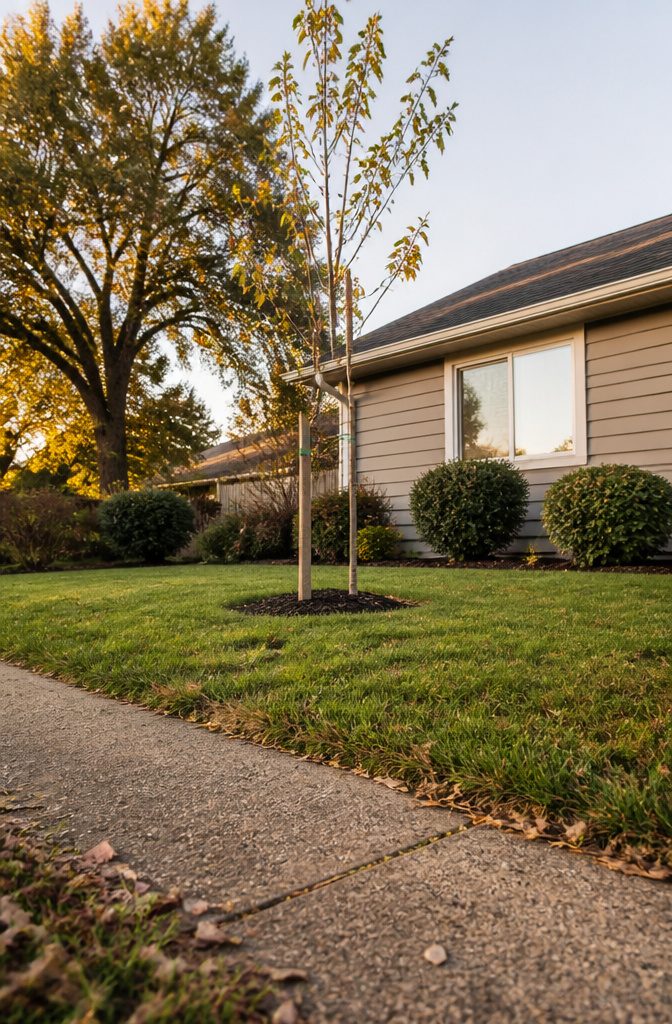
A sapling is the cheapest way to change a front yard.
A young tree costs about $100, or about $200 for a rarer type. A tree bought with planting labor starts around $1,000 and goes up from there, so buying small saves roughly $200 to $3,000 or more.
You give up time.
The tree won’t look like the nursery photo for years. In a small front yard, though, one tree makes a strong focal point, and you only need the one.
The return is better than anything else here. A tree may cut at least 30 percent of your heating and cooling costs, and a mature one may add as much as $7,000 to your home’s value.
Make It Look Expensive
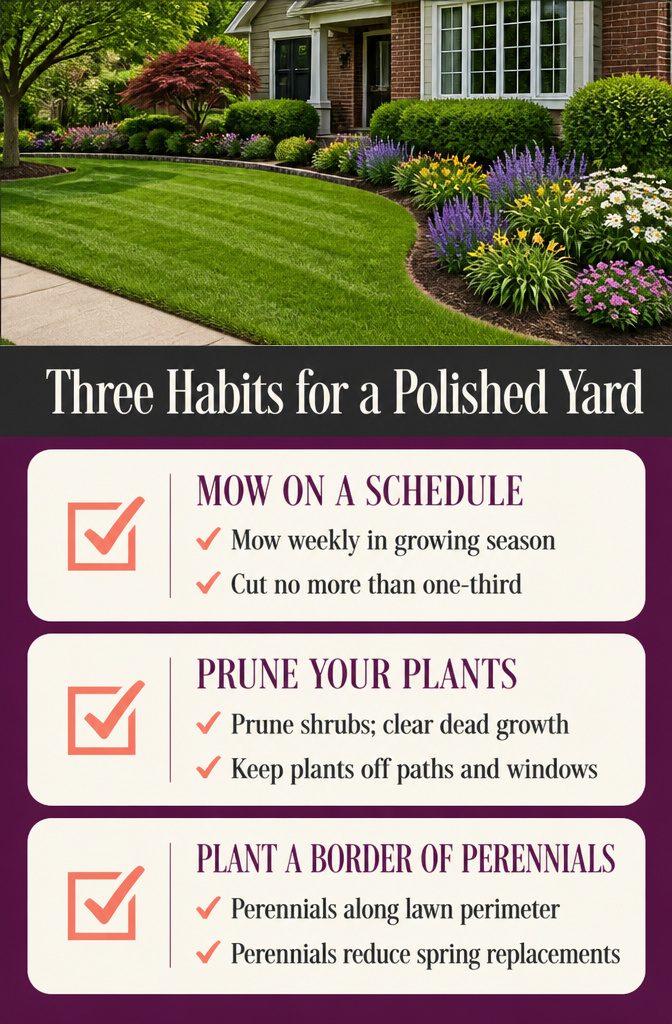
These three habits cost almost nothing and make a yard look cared for:
- Mow on a schedule. A clean, sharp lawn looks more expensive than a fancier yard with ragged grass. Weekly during the growing season is the usual rule, and cutting no more than one-third of the blade height at a time keeps the lawn from browning.
- Prune your plants. Trim overgrown shrubs and remove dead growth so each plant keeps a defined shape and stays off walkways, windows, and the lawn edge.
- Plant a border of perennials. Set perennials along the lawn perimeter. They look elegant, and because they last longer than annuals, you aren’t buying replacements every spring.
Frequently Asked Questions
What is the cheapest form of front yard landscaping?
Planting a single young tree is the cheapest option.
A sapling costs about $100, or about $200 for a rarer type, while a tree bought with planting labor starts around $1,000. Buying small saves roughly $200 to $3,000 or more, but the tree takes years to fill out.
How can I make my front yard look more expensive than it is?
Mow on a schedule, prune your shrubs, and plant a border of perennials along the lawn edge. Mow weekly during the growing season and cut no more than one-third of the blade height at a time.
Pruning keeps each plant in a defined shape, and perennials return every year, so you don’t buy replacements each spring. Solar stake lights along a path add more polish for very little money.