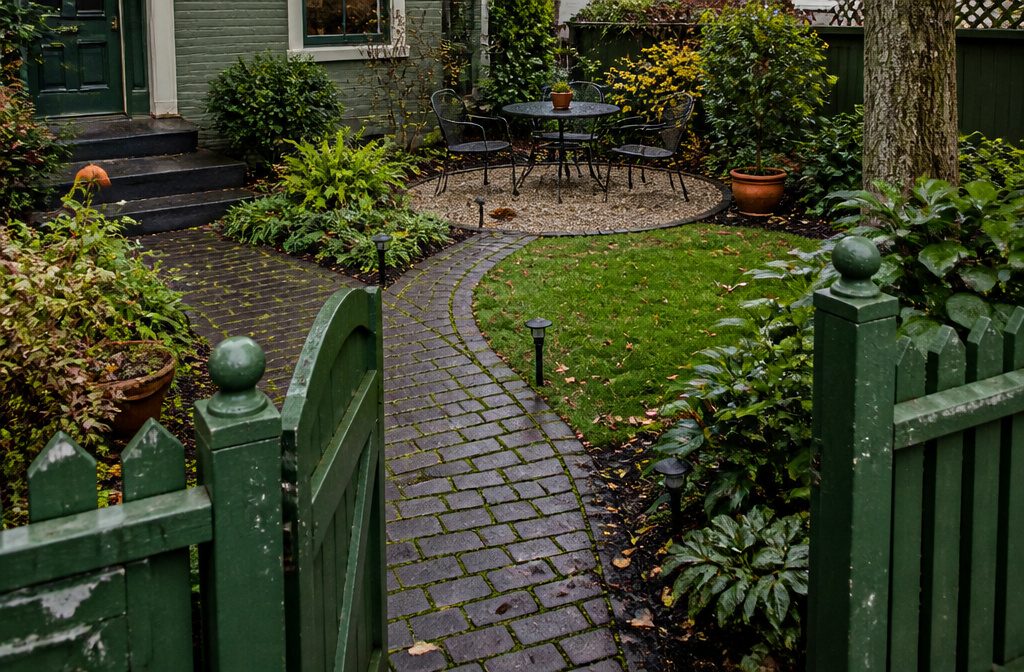
The ideas range from a sketch to path lights spaced 5–6.5 feet apart, and the job your yard has to do (seating, play space, or planting bed) decides which ones to use.
Each choice takes ground from another: a 16–27 square foot seating nook comes straight out of your beds or lawn.
1. Plan the Layout and Style
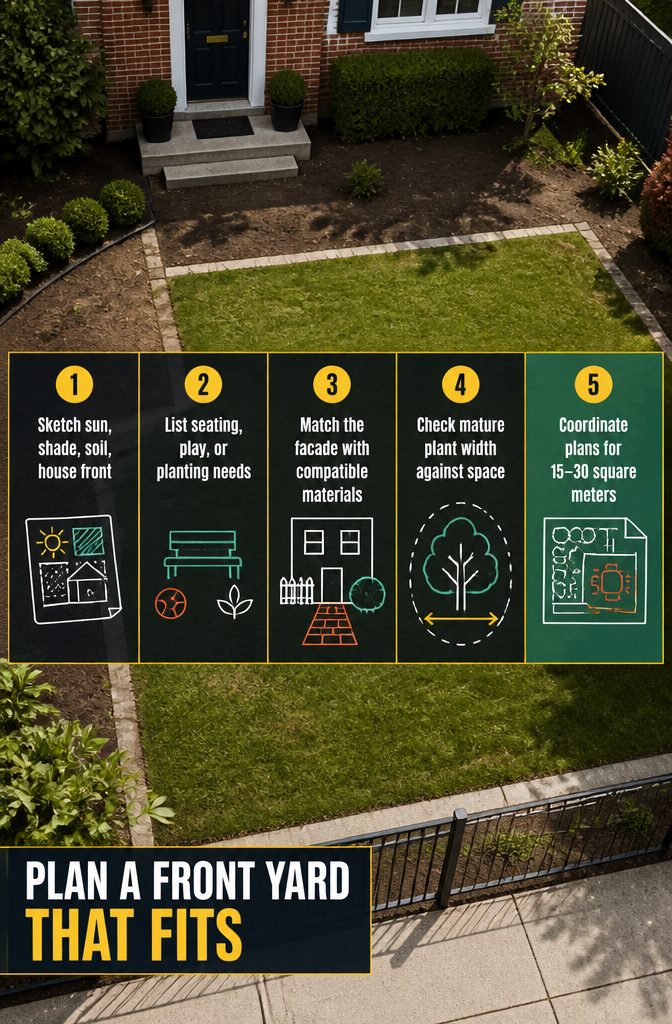
- Sketch the yard first, marking sun, shade, soil, and the front of the house.
- List its jobs: seating, a play space, or a planting bed.
- Match the facade. A picket fence, brick path, and clipped boxwood suit a Colonial; a sleek fence and aggregate walk suit a contemporary home.
- Size plants to the space and picture each one in two years.
- In 15–30 square meters (about 160–320 sq ft), a professional master plan can coordinate plants, hardscape, and daily use.
Crowding usually comes from plant size:
Choose plants that are in scale with the yard. … Leave enough room for plants to reach their mature size.
Check each plant tag’s mature width against your sketch.
Recommended Products

Sturdy Cast Iron Construction: Lawei turtle stepping stone is made of heavy-duty cast iron with genuine verdigris finish, this metal stepping stone withstands all weather extremes—perfect for year-round outdoor use in gardens, lawns and patios without rusting or cracking.

【GLOWING STEPPING STONES】Turn an ordinary garden path into a nighttime feature. Luminous glass stones absorb light during the day and create a beautiful blue-green glow after dark.

Weather-Resistant & Built to Last: Crafted from durable PC+ABS resin, these stepping stones are heat-resistant, crack-proof in freezing temps, and impact-resistant. Designed for year-round outdoor use, they won’t fade, warp, or lose their shape—rain or shine.
2. Lawn Alternatives
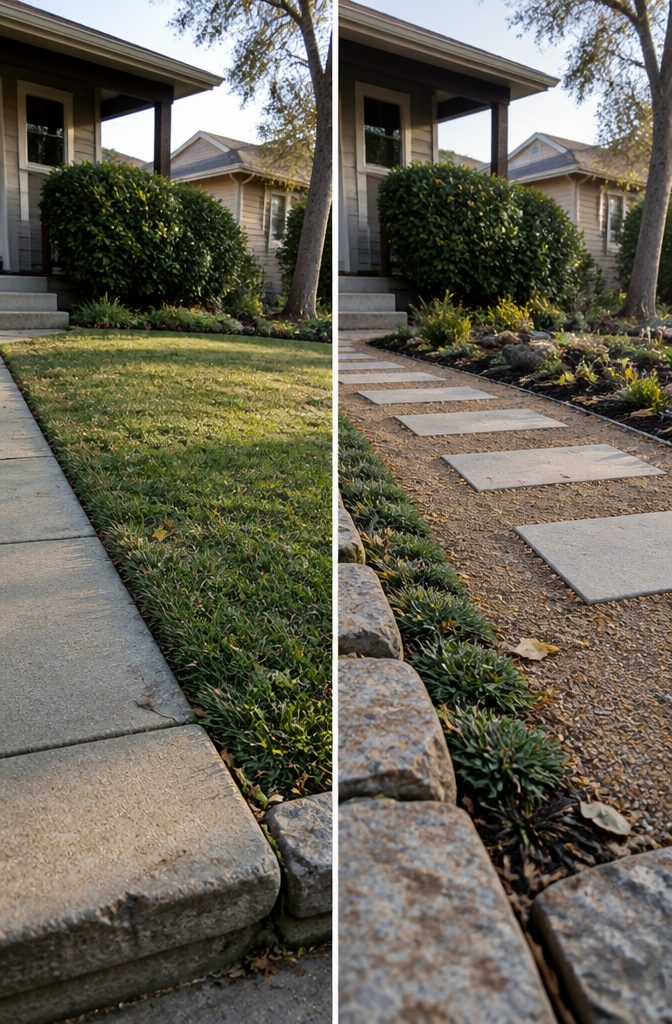
A traditional lawn takes time and resources, so replace part of it or all of it. Dwarf mondo grass and creeping thyme spread on their own and need only occasional trimming.
Gravel or decomposed granite suits a hard-wearing spot, especially with stepping stones or pavers. Mulch new beds to suppress weeds and hold moisture.
Synthetic turf is the other route. Noble Grass stays soft underfoot and drains quickly after heavy rain, though it is designed for tropical climates, so confirm it suits your soil and weather before buying.
Check your city or HOA lawn rules first, since some have specific lawn requirements. A small patch of real grass is still the right call if kids or pets need room to play.
Recommended Products

【Landscape Edging Kit】 -- Includes 3 rolls of landscaping edging (33ft each) and 150 spikes, offering flexible layout options for various landscaping length needs,instead of having to take out long and heavy edging and cut it

DURABLE AND ECO-FRIENDLY: Crafted from 100% recycled PPE plastic, our gravel paver system delivers exceptional strength and longevity; This set includes 22 units with a 1-inch depth, covering an area of 65 square feet

What You Will Get: Landscaping edging kit included a 102ft edging coil 4 inch tall, 110Pcs metal spikes and 1Pcs hammer. You don't need any extra tools to easily beautify your garden
3. Layer Your Plants
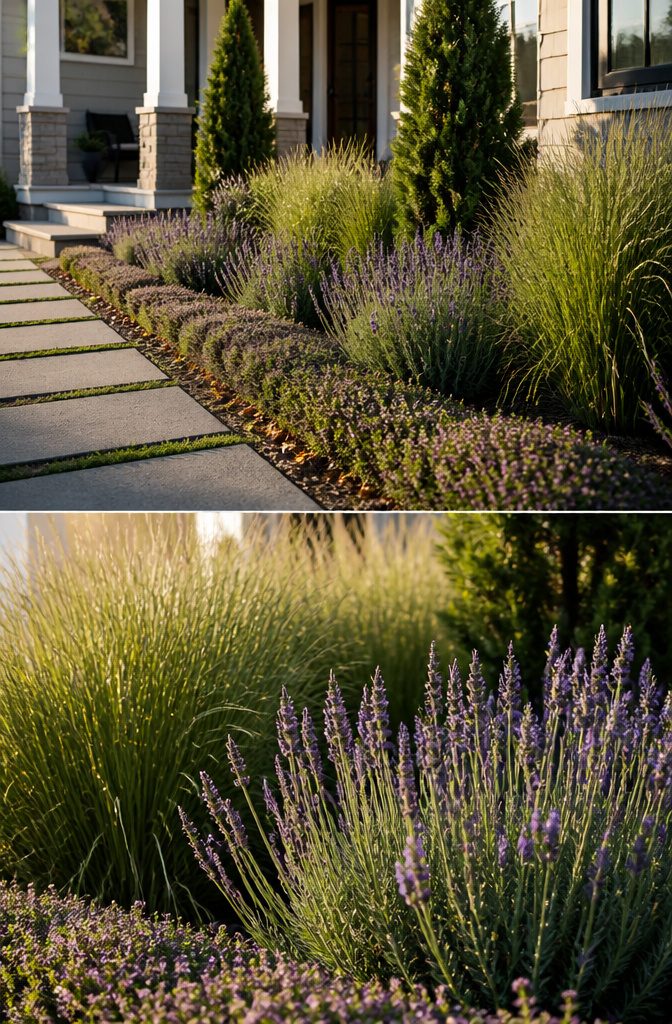
Flat planting makes a small yard read smaller, so build three tiers: taller plants or an architectural accent at the back, medium shrubs or ornamental grasses in the middle, and low groundcover along the edge.
Set the medium layer 24–36 inches back from the edge. That leaves room for the groundcover to spread and gives the border depth you can see from the street.
Plant in groups of 3 or 5 instead of singles.
One plant looks lonely, while a small cluster looks planned. Ornamental grasses behind lavender, with creeping thyme in front, follows this pattern.
Leave space for mature size. Too many plants collapse the layers back into one mass.
Recommended Products

LOW-GROWING CREEPING THYME GROUND COVER: Purple Creeping Thyme creates a dense, low-growing ground cover with attractive foliage and seasonal blooms. Suitable for garden borders, pathways, landscape beds, and other decorative outdoor planting areas.

The Best Value - Organo Republic Thyme Seeds Pack contains 0.50g or 1350 of Non-GMO heirloom thyme seeds. Thyme (Thymus vulgaris) is known for its mint flavor, and is the perfect addition to fresh vegetable salad or culinary creations.
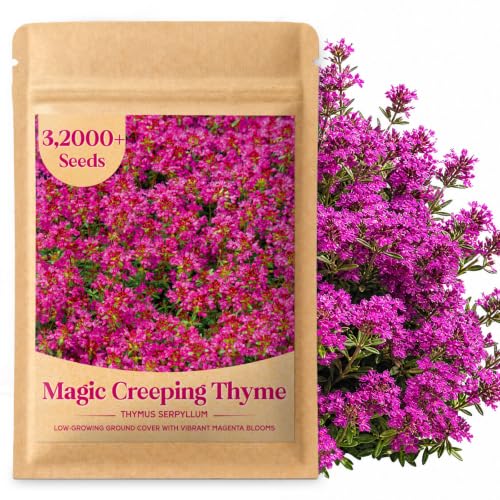
32000+ Seeds For Large Planting Areas: Over 32,000 Magic Creeping Thyme seeds provide generous coverage for pathways, garden borders, rock gardens, slopes and landscape projects. A great choice for creating a fuller planting area with a single packet
4. Match Plants to Your Site
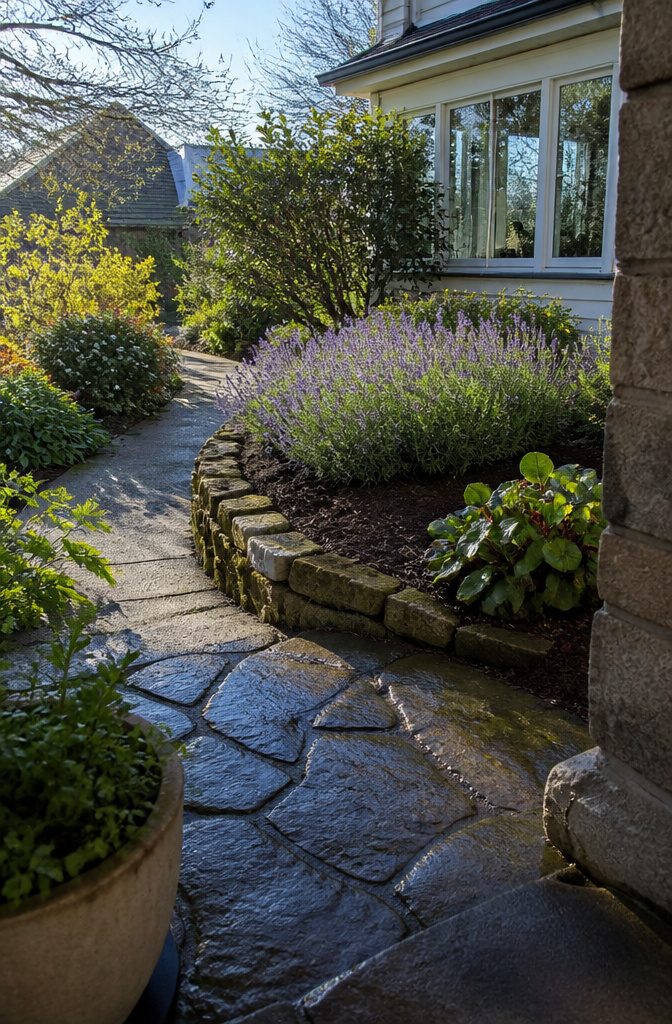
Lavender wants full sun and soil that drains fast.
Bergenia handles shade, and bigleaf hydrangea does best with some shade and steady moisture. Cotoneaster is a tough, adaptable shrub that copes with ordinary or poor soil, so it suits a spot where little else cooperates.
Check the light first: look at the bed in morning, midday and late afternoon, and note where shade falls.
For drainage, dig a hole, fill it with water, let it empty, then fill it again. If water is still standing hours later, the soil drains poorly, so skip lavender there or build up a raised bed.
Confirm your USDA hardiness zone before you buy, then mix plants so something flowers, colors or holds berries in each season.
Recommended Products

Quality Metal Material: Our galvanized garden edge is processed using high-precision CNC technology, ensuring accuracy down to every millimeter. Innovative 3D ripple design not only enhances the aesthetic appeal of the fence but also strengthens its structural integrity.

【Upgraded Landscape Edging】These edging for landscaping are made of protection PP material, stable and not easily crushed. No peeling, no corrosion and not deformed, And include 20Pcs anchoring stakes can withstand 60mph strong wind. You don't worry about your garden damaged by strong winds.And the garden edging is suitable for long-term use, creating clean lines in your garden with some landscape edging.

5. Hedges and Topiaries
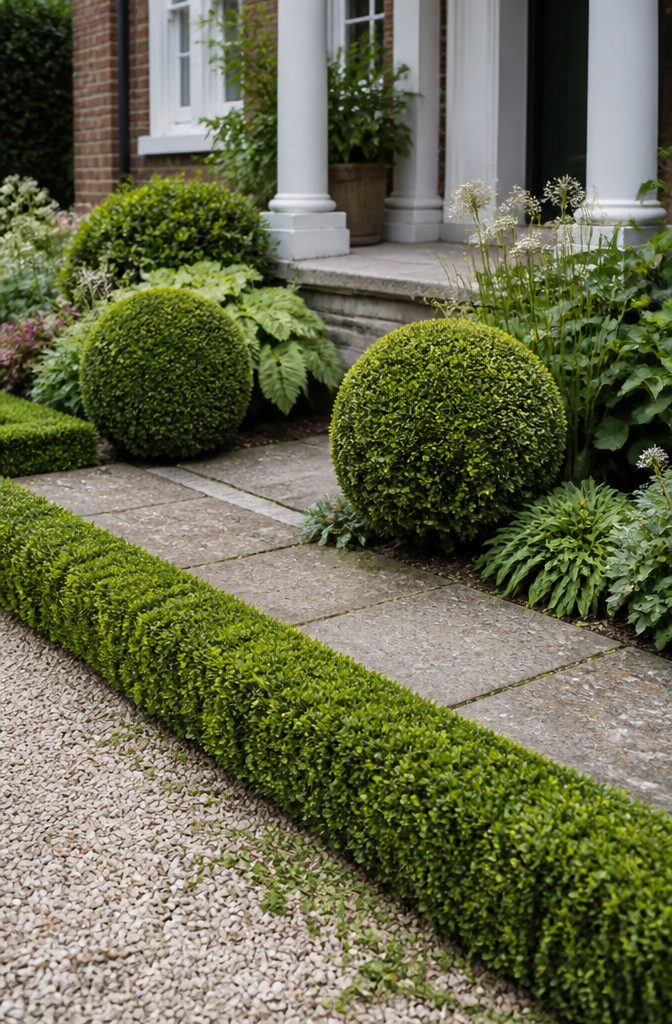
Clipped greenery gives a small yard structure, and each form does a different job:
- Hedge: A low boxwood hedge along the walkway brings order and frames the path. Keep it at 12–16 inches (30–40 cm) so it edges the walk without closing in the yard. It can look too neat next to looser plantings at first, then settles in and balances the space.
- Topiary: Two sphere-shaped shrubs by the door pull the eye straight to the entrance. Stop at one or two shapes, because more starts to look like a theme park.
- Upkeep: Both need regular clipping. Once the shape is established, each trim gets easier.
In a tiny yard, a pair of topiaries wins.
They use little ground and give the door a focal point. Choose the hedge instead if you have a longer path to define.
Recommended Products
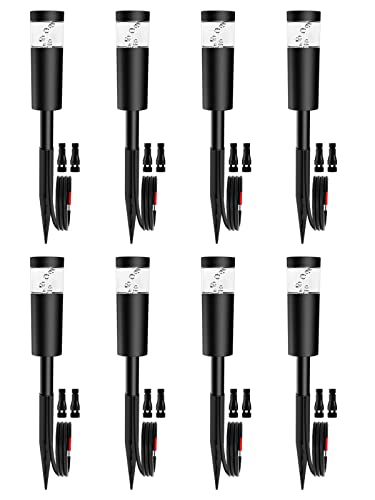
【Unique & Ornamental】The Low Voltage Path Light with a unique appearance. The interior bubble design makes the Sidewalk Light look more crystal and clear. Light your garden at night and decorate your garden during the day

【Modern Design】 SUNVIE low voltage landscape lights have a modern appearance. They light up at night, improving safety and visibility. By day, they integrate with the surroundings, adding aesthetic charm to your outdoor space. Perfect addition to any pathway, walkway, yard, garden, patio.

【Warm & Sufficient Light】With brightness of 85lm, this 3.2W 12V AC/DC low voltage LED landscape pathway light is bright enough to illuminate your front/back yard, walkway and driveway; 3000K warm white light and CRI of 80 to beautify your alley, garden, fences, patio, and swimming pool, creating a comfortable dreamy night scene
6. A Tree as Focal Point
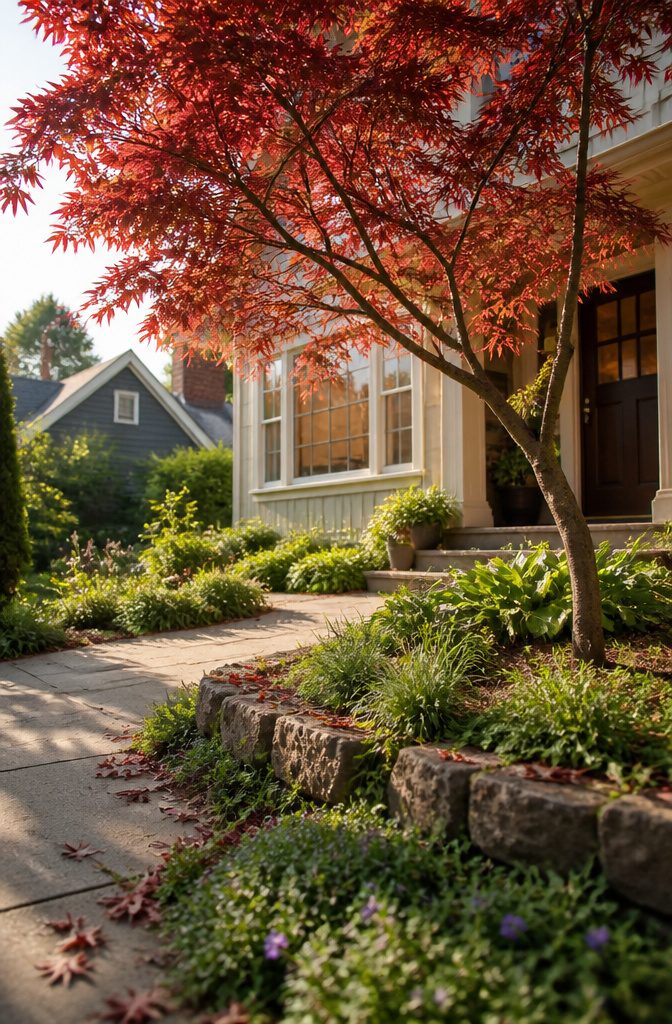
A single small tree gives a short yard the vertical line it lacks.
Set a Japanese maple slightly off-center rather than dead in the middle, and the yard looks composed instead of symmetrical and stiff. ‘Red Dragon’ contorted filbert is a good alternative if you want twisting branches that stay interesting after the leaves drop.
Buy for the size the tree reaches at maturity, not the size in the nursery pot. Check the plant tag, and skip anything that will outgrow the space or climb past the eaves.
Place the tree so it screens the front window from the sidewalk while the trunk and canopy stay clear of the line between the street and your front door. The tree should frame the house, not hide it.
Recommended Products

UNIQUE OUTDOOR WALKWAY SOLUTION: Elevate your garden, lawn, or backyard with BIRDROCK HOME Rubber Stepping Stones. These durable pavers create a functional and stylish walkway, enhancing your landscape while providing a solid and reliable surface to walk on.
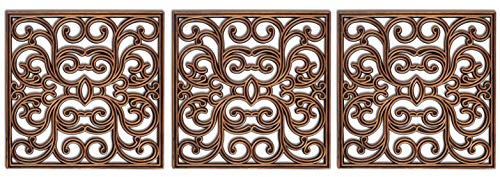
UNIQUE OUTDOOR WALKWAY SOLUTION: Transform your garden, lawn, or backyard with BIRDROCK HOME Rubber Stepping Stones. These durable pavers provide a beautiful and practical pathway through your outdoor spaces. The modern design not only enhances the look of your landscape but also offers a sturdy and solid surface to walk on.

RUBBER STEPPING STONES: Elevate your outdoor space with these lightweight simulated flagstone rubber pavers that offer the timeless beauty of real stone without the heavy lifting.
7. A Front Path 3–4 Feet Wide
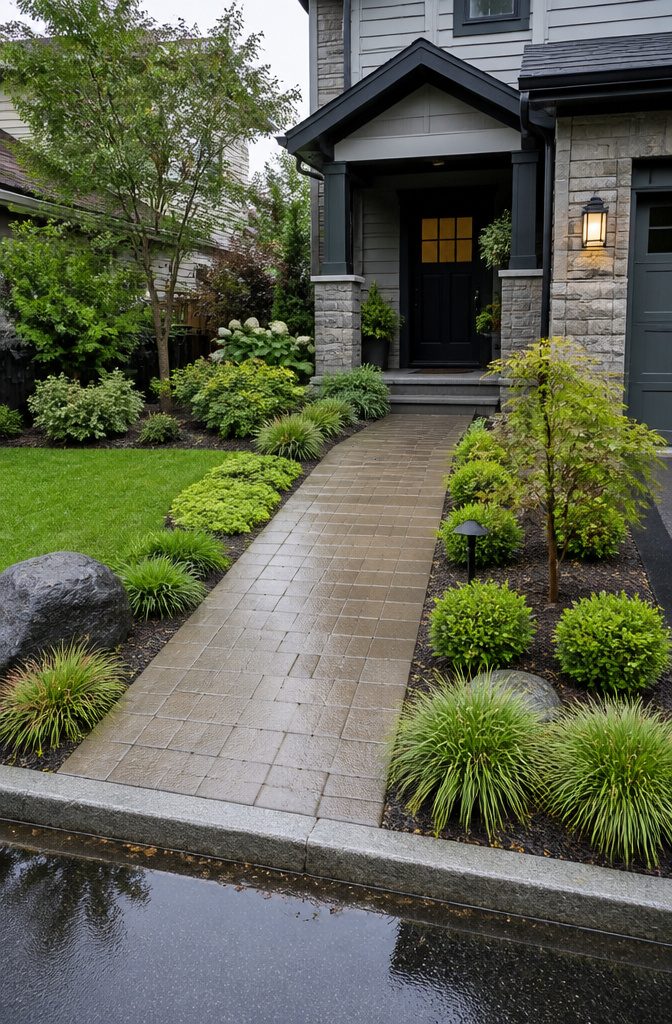
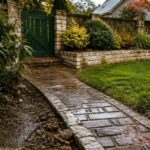
Make the path 90–120 cm (about 3–4 feet) wide.
That gives two people room to walk side by side without taking much planting space from a small yard. The path also organizes the yard, because it divides the space into planting zones and keeps foot traffic off the beds.
A walk from the street to the door is usually straight. From the driveway, a gentle curve looks better, and it adds visual length, so the trip to the door feels longer than it is.
Choose a surface that stays non-slip when wet, and keep any steps clear and even. Put house numbers where visitors can read them from the street.
Recommended Products
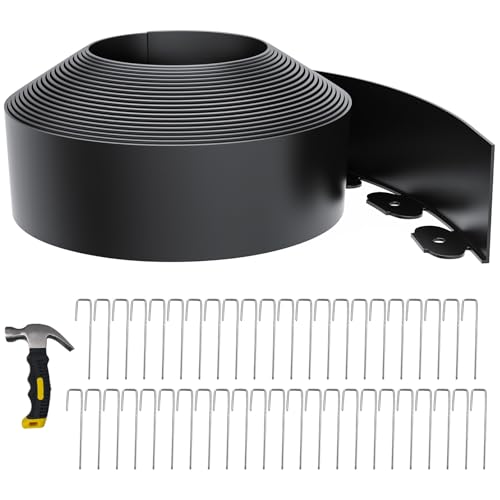
What You Will Get: Landscaping edging kit included a 33ft edging coil 4 inch tall, 45Pcs metal spikes and 1Pcs hammer. You don't need any extra tools to easily beautify your garden
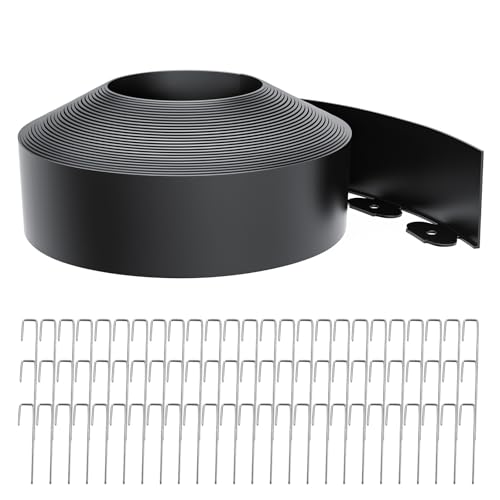
What You Get: Landscape edging kit included a 60ft edging coil 4 inch tall, 75Pcs metal staples. More staples help you design more professional landscape

【4in Tall for Better Lawn Coverage】 -- MIXC 4in 33ft garden edging is higher than 1.5in/2in models on the market. This extra height effectively prevents soil erosion, mulch runoff and grass invasion, providing better wrapping protection for lawn edges and keeping garden borders neat
8. Frame the Entrance
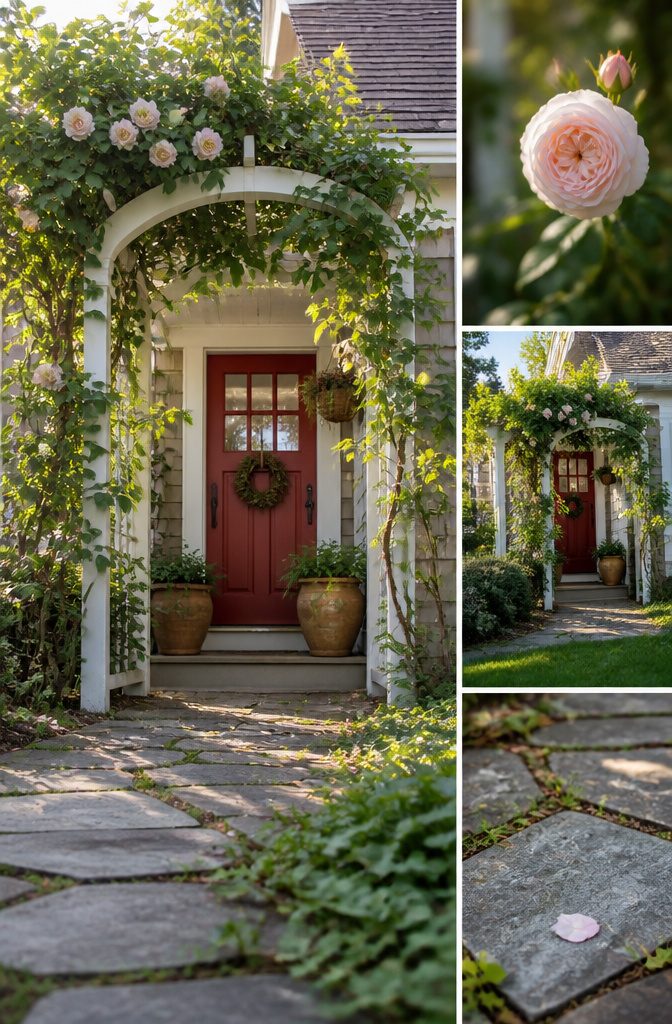
Your front door is the first thing anyone sees, so build the yard around it. Set a matching pair of planters 24–36 inches (60–90 cm) from each side of the door frame, in resin or terracotta to suit the house.
Fill them with plants that carry interest through foliage, flowers, or both. A self-watering model like the Ziant Hydro Planter stores water in a built-in reservoir, which cuts the watering small containers demand.
An arbor over the walkway frames the door better than any pot. Train an ‘Eden’ climbing rose over it for a cottage look.
A wreath and a hanging basket add the finishing touches, and a red door is thought to bring good luck. A commonly cited estimate puts the property-value gain from landscaping at around 10–15%.
9. Vertical Planting and Screens
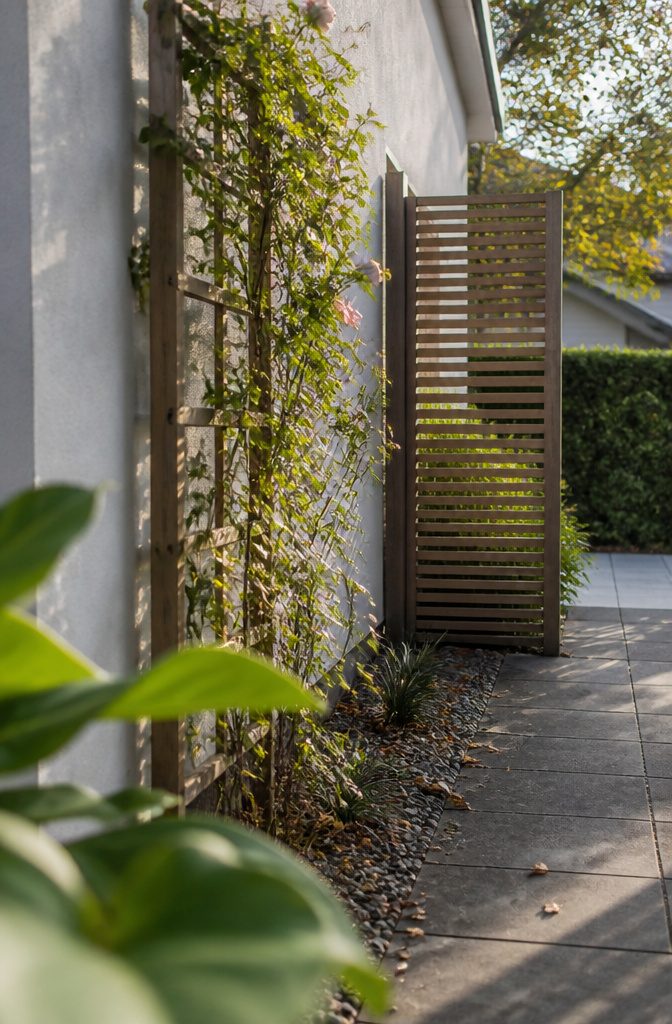
Vertical planting pays off most where ground is the scarcest thing you have, such as a narrow strip beside the walkway or a bare wall facing the street.
Train climbing roses or perennial vines up a trellis or screen and you add planting area without losing any floor space.
Modular vertical planters and living walls do the same job on a flat wall, which otherwise contributes nothing to the yard.
A screen also blocks sightlines from neighbors and passing traffic while keeping the ground level open, and the added height draws the eye up so the yard reads larger.
If you have spare ground, plant there first; it costs less effort.
Recommended Products

🌼 These garden edging panels are made with polypropylene (PP) plastic material that can withstand the toughest outdoor conditions. The style resembles the wrought iron fences. It is flexible to minimize crack, peel, or chip occurrence and also corrosion resistance to fight against fading or rotting thus improving its durability and prolonging product life expectancy.

This perennial evergreen grass is dense with dark green foliage. Its slow and clumping growth habit reaches only 4-6 inches tall(4-6 inches wide). This ornamental grass is widely used in rock gardens, seashore plantings, borders and groundcovers.

Basket Of Gold Alyssum is an early spring bloomer that adds dazzling golden yellow flowers to gardens.
10. A Seating Nook
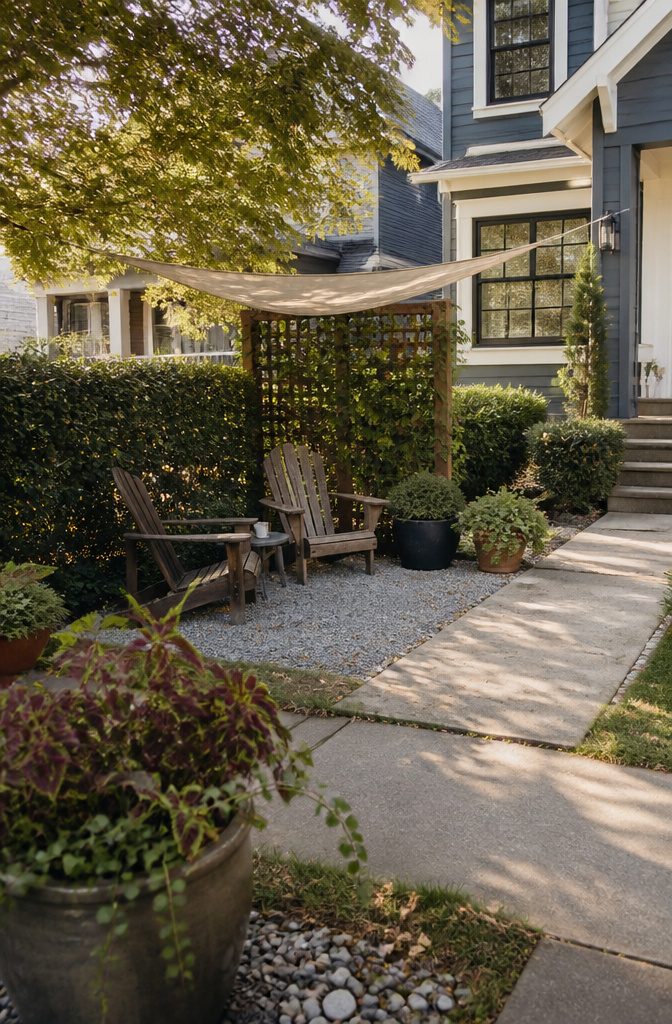
A corner of 1.5–2.5 square meters (about 16–27 square feet) is enough for a small bench or two chairs, and Adirondack chairs fit the larger end.
Lay pavers, decking, or decorative gravel so the spot reads as its own room. Then frame it with pots, a low hedge, or a vine on a trellis for enclosure and privacy.
A small side table gives you a place to set a mug. A shade sail or pergola extension adds cover from sun and rain.
The cost is planting space: those 16–27 square feet come straight out of your beds or lawn.
In a 20-square-meter (about 215 square feet) yard, a nook still leaves room for several zones. Give up the corner bed before you give up the path.
Recommended Products

Durable Aluminum & IP65: Crafted with heavy-duty die-cast aluminum, these ground lights withstand decades of outdoor abuse - from scorching summers to freezing winters. IP65 rating ensures full protection against rain, dirt, and accidental hose sprays

Replaceable light bulb: This low voltage landscape lighting comes with 7 LED bulbs(G4,3W,3000K). It's not the integrated LED path light that needs to replace the whole light fixture if the light goes out. Save your money and time on replacing and reinstalling the walkway lights.

[Long-lasting Quality] With durable cast aluminum housing and IPX5 waterproof, low voltage pathway lights can withstand various weather conditions, and offer excellent corrosion resistance and heat dissipation; built-in LEDs with longer service life of up to 50,000 hours, no need to replace bulbs frequently
11. Rocks, Groundcovers, Stepping Stones
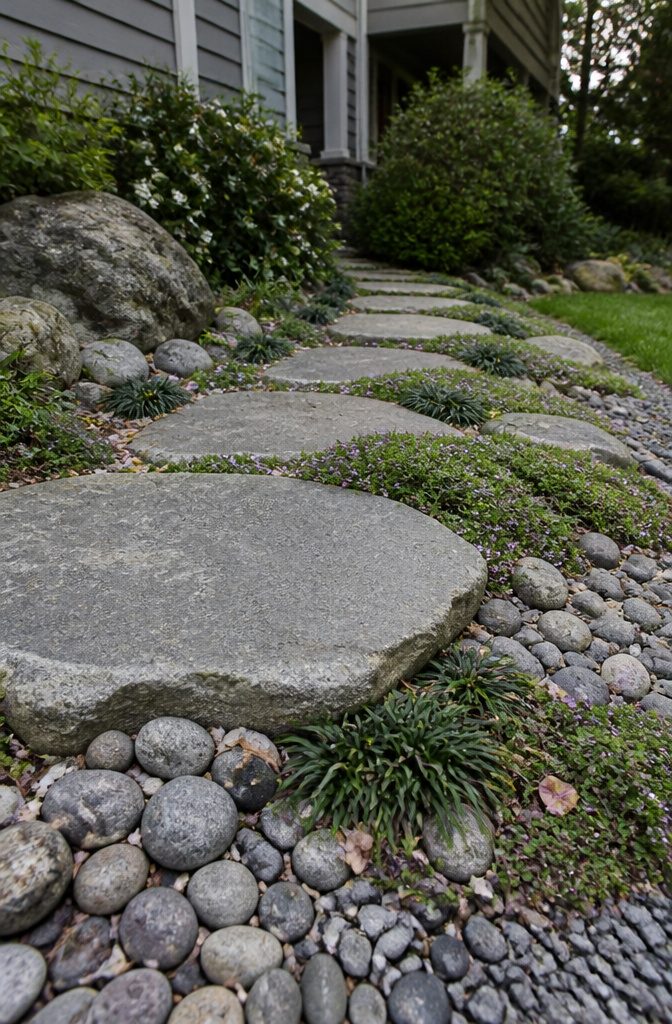
Hard and soft surfaces work best when each has its own job: stone sets the route, and plants soften its edges.
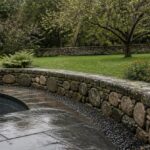
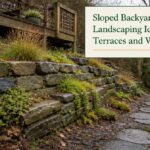
Space stepping stones 18–24 inches apart so each step lands at a comfortable stride. Place a few larger rocks beside the path as anchors, then fill in with fist-sized accent stones and smaller pebbles.
The size change gives the eye texture to read and marks where one zone of the yard ends and the next begins.
Plant groundcovers in the gaps between the stones. Creeping thyme, dwarf mondo grass, and periwinkle all spread into those spaces and contrast well with gray rock.
Hardiness differs by zone, so check each plant’s zone range before you buy. Pick the one that suits your climate rather than the one that looks best in a photo.
12. Landscape Lighting
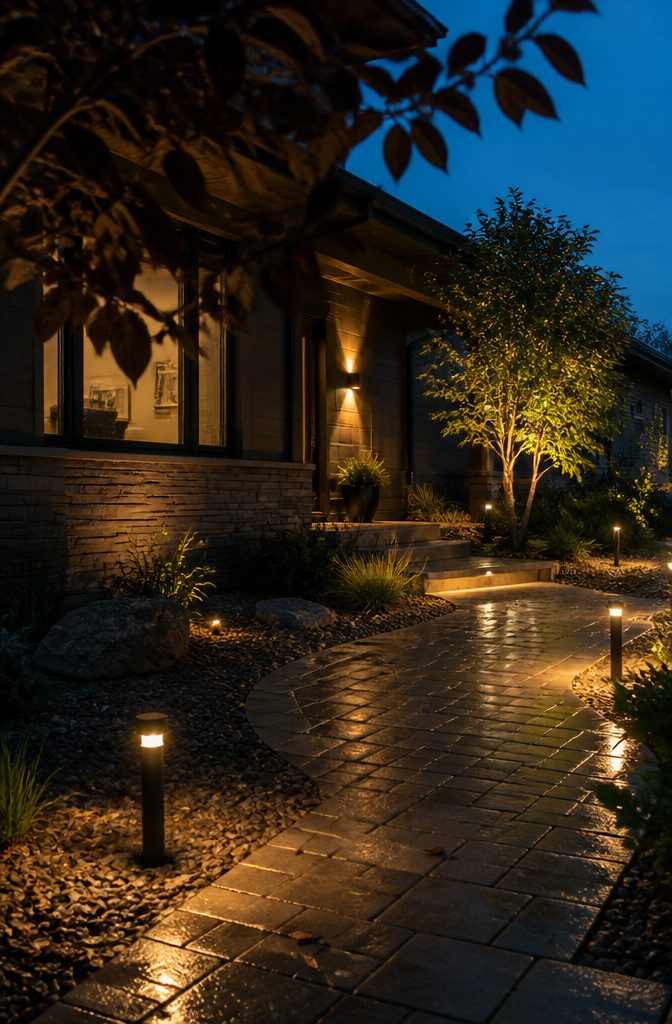
Space path lights 5–6.5 feet apart so each pool of light meets the next and the walkway reads as one continuous line.
In a small yard, low fixtures along the path look better than tall ones, since a soft glow on the walkway reads well and a lit-up lawn does not.
Put a light at every step. Steps are where people trip after dark, and a shadowed edge is hard to judge from above.
Light the house number as well, on the wall or a fixture beside the door, so visitors and delivery drivers can find you from the street.
If the budget allows, aim one uplight at a tree or tall shrub near the entry. A lit plant adds depth to the front of the house and pulls the eye toward the door.
13. Flowers, Grasses, and Foliage
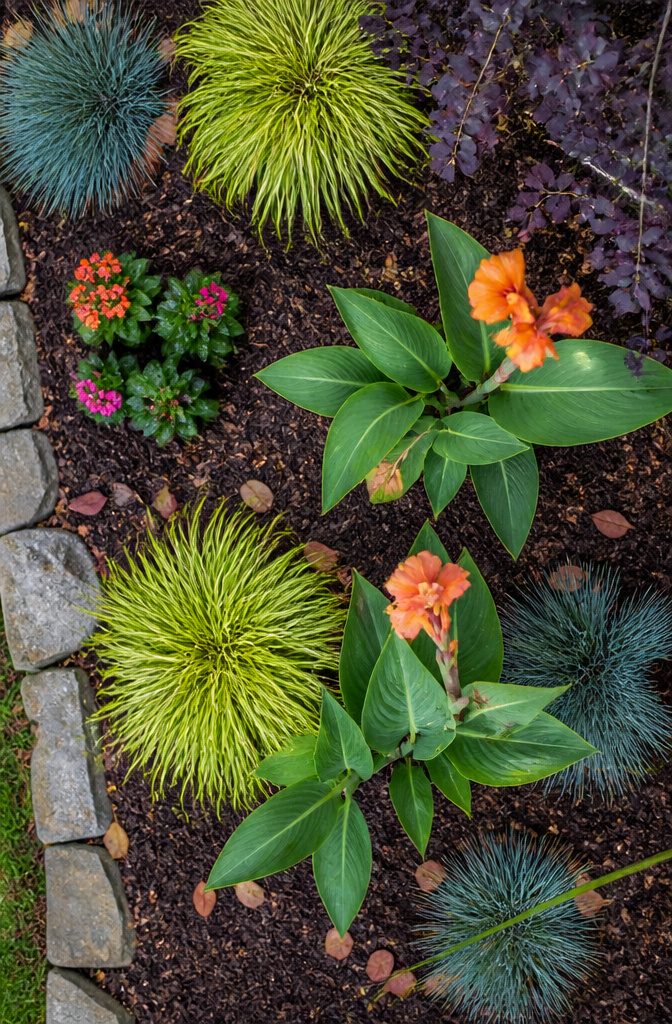
Foliage holds a small front yard together longer than flowers do.
A ‘Tropicanna’ canna lily beside chartreuse Japanese forest grass gives you two colors and two textures: the canna’s broad leaves read bold, and the grass spills out in fine, arching blades.
Hostas and a Japanese maple carry the same contrast in green and red. Pair one bold-leaved plant with one fine-textured plant, then repeat the pair instead of adding a third kind.
Gold and red make the loudest combination, and different shades of green and blue tone it down.
Repeat the red in something fixed, such as burgundy-toned steps or tree bark. Keep bright annuals grouped in one bed so they read as a single accent.
14. A Water Feature
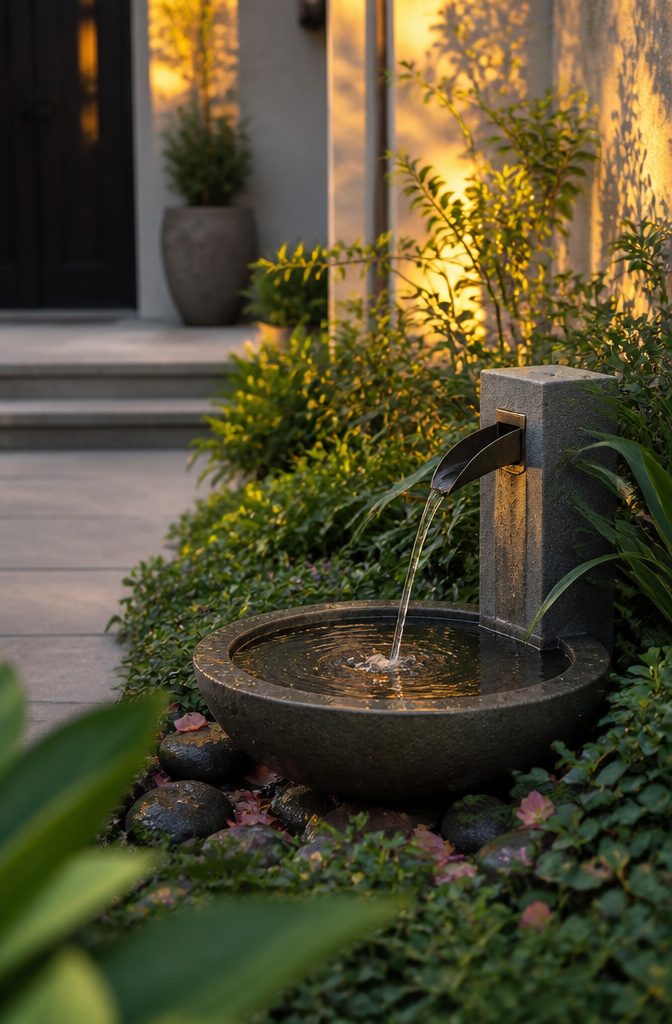
A water feature gives a small front yard something plants can’t: the soothing sound of moving water.
Put it beside the entrance, where you hear it on the walk to the door, and it also gives the eye a focal point next to the plantings.
Because the sound does half the work, a modest fountain or basin can be enough in a yard where a pond would never fit.
It does cost you something. The feature takes ground you could plant or sit on, and in a small yard every square foot is already spoken for.
It also needs regular upkeep, such as topping off the water and clearing debris. If you won’t keep up with that, skip it and spend the space on plants.
15. Fencing and Barriers
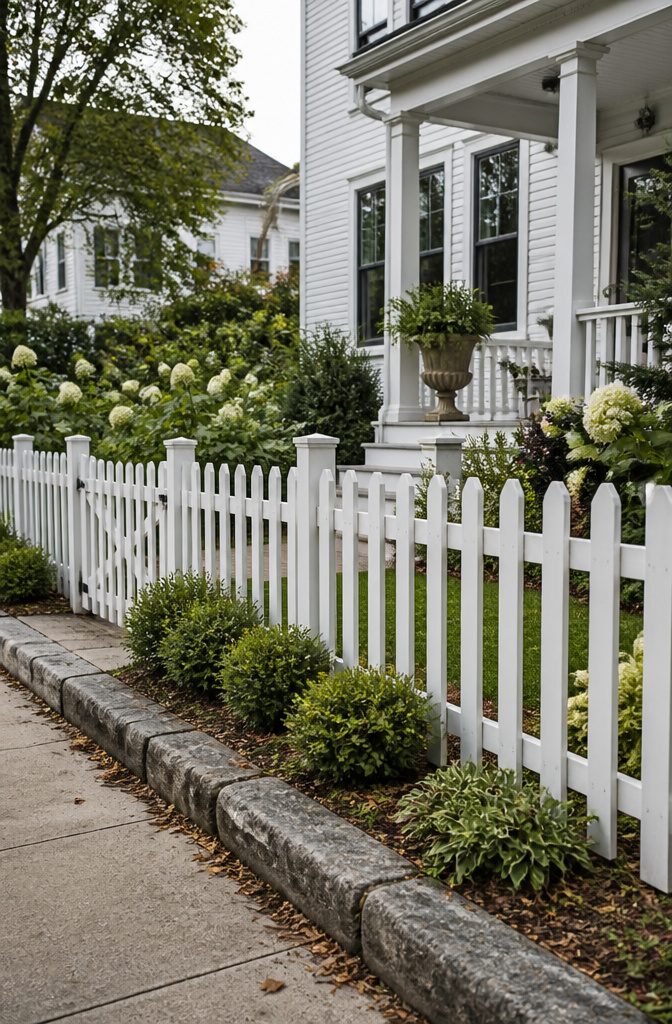
Choose the barrier for the job it has to do, then match the height and material to that job.
- Defining the yard: a low fence or short border marks where your property ends while keeping the yard open to the street. Light and views pass through, so a small space doesn’t feel closed in.
- Security: a taller fence with a latching gate keeps pets and kids in and discourages shortcuts across the lawn. It also makes a small yard feel boxed in, so reserve it for sides that need it.
- Privacy: a solid fence trades light and openness for seclusion. Put it only where a window or neighbor looks straight in, and leave the street side lower.
Check local rules before you build.
Cities and homeowners associations often limit front yard fence height and material, and some require a permit. Call first, before you buy anything.
Frequently Asked Questions
What is the cheapest way to landscape a small front yard?
Creeping thyme and dwarf mondo grass spread on their own and need only occasional trimming.
Mulch over new beds suppresses weeds and holds moisture. Skip features that demand ongoing upkeep, such as a water feature, unless you will maintain them.
What is the Rule of 3 in landscaping?
Plant in groups of 3 or 5 rather than single plants, because one plant looks lonely and a small cluster looks planned.
The number also applies to layering: 3 tiers, with tall plants or an accent at the back, medium shrubs or grasses in the middle, and low groundcover at the edge. Set the medium layer 24–36 inches back from the edge.
What are common front yard landscaping mistakes to avoid?
The most common mistake is buying plants for their nursery-pot size instead of their mature size, which crowds the layers into one mass.
Other errors include planting everything at one height, adding more than 1 or 2 topiary shapes, and leaving steps unlit. Check city or HOA rules before changing the lawn or building a fence, since both are often regulated.
What are some ideas for a small front yard landscape?
Good options include swapping part of the lawn for groundcover or gravel, layering plants in 3 tiers, and adding a 3–4 foot wide path.
A single small tree such as a Japanese maple, set slightly off-center, gives height. A pair of topiaries or matching planters frames the door, and path lights spaced 5–6.5 feet apart make the walkway read as one line at night.