Projects range from a $20 pallet planter to a water feature that can reach $10,000, and the grade of your slope decides which one fits.
Plantings can stabilize a slope of 33 percent or less. At 50 percent or more, roots alone won’t hold topsoil, so a wall or terrace has to share the job.
1. Terraces and Retaining Walls
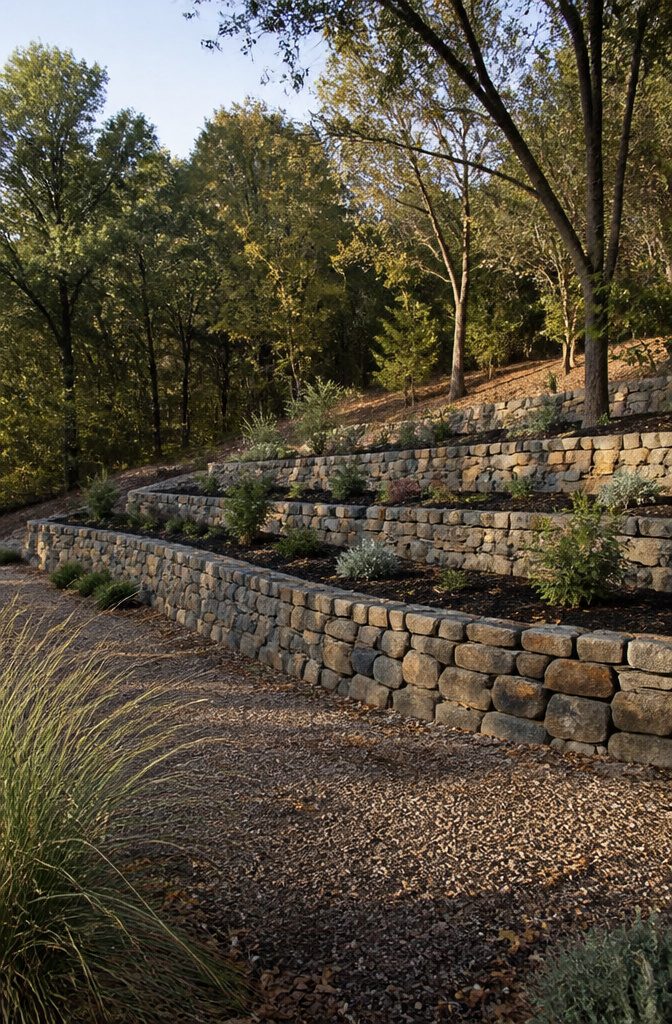
Low walls beat raised wooden boxes on a slope.
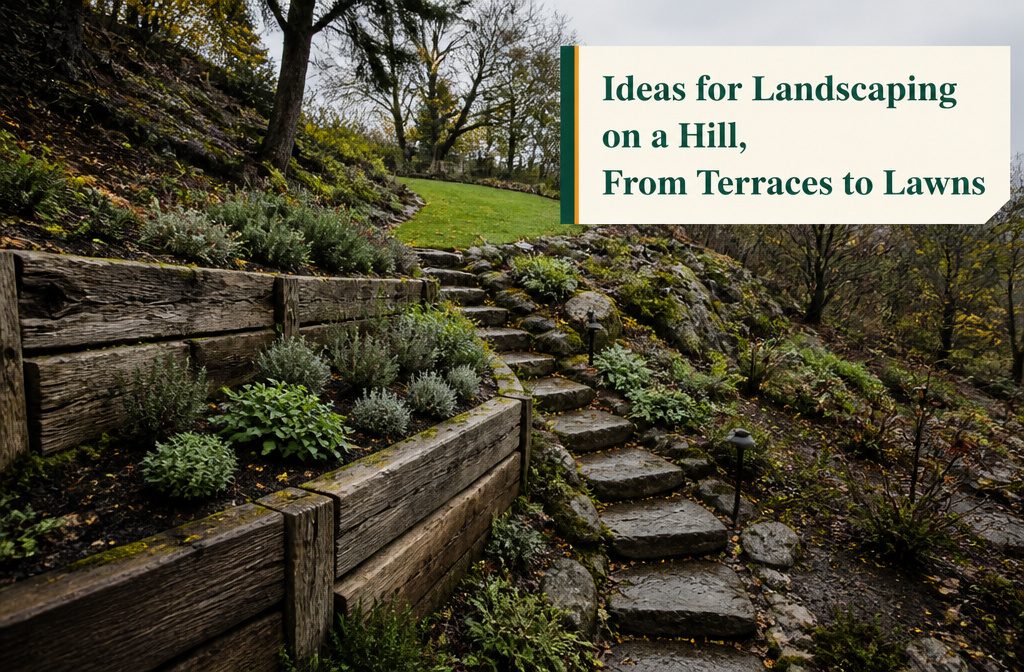
In one garden, 2-foot stacked Napa fieldstone walls replaced disjointed wood tiers and gave the hill flat, connected beds. Stone terraces run $800–$5,000, gabion walls $700–$4,000, and horizontal fence panels $600–$3,000.
Salvaged timbers or concrete blocks cost less. A slope that is too steep can be cut and filled into terraces, and a permit may be needed depending on wall size.
Walls slow water, but roots hold the soil.
While steps or terraces reduce water flow and stop runoff, hardy shrubs and groundcovers lock soil in place.
Plant each new tier as soon as it is built.
Recommended Products
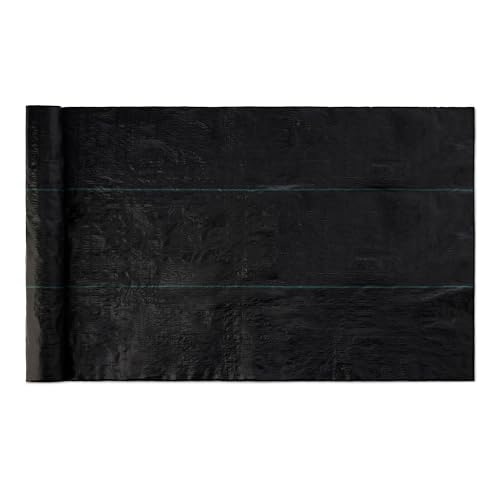
50x3-foot heavy-duty weed control fabric for helping prevent unwanted weed growth

8 GAUGE STEEL WITH CIRCLE TOP – EASY TO DRIVE: Made from 8-gauge (4.0mm) thickened galvanized steel. The circle top design concentrates hammer impact directly over the center, preventing slipping and ensuring each staple drives straight into the ground with minimal effort – saves time and energy on large farm and garden projects
2. Steps and Paths
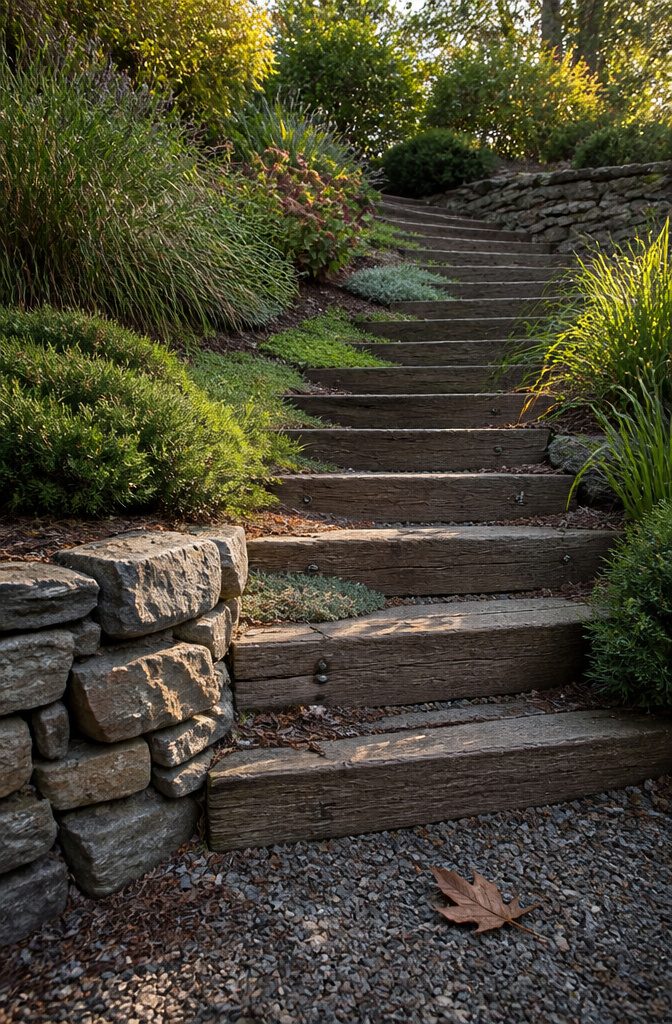
A slope you can’t walk is a slope you can’t weed, prune, or mow, so access comes first. Timber sleeper steps run about $400–$2,000 and suit steep faces.
Hardwood, railway, or treated sleepers age to a warm brown, and the gaps beside them take creeping thyme, sedum, or ornamental grasses. Stone and pavers read as more formal, while gravel suits a gentle path that needs no risers.
Steps alone don’t hold soil. Pair them with a short block or stone wall, a layer of mulch, and hardy shrubs or groundcovers, which slow runoff and lock the soil with their roots.
Keep each tier tied to the garden around it: repeat a plant above and below, such as two lavenders on the top tier and one on the next, so the eye travels up and down instead of along strips.
Recommended Products
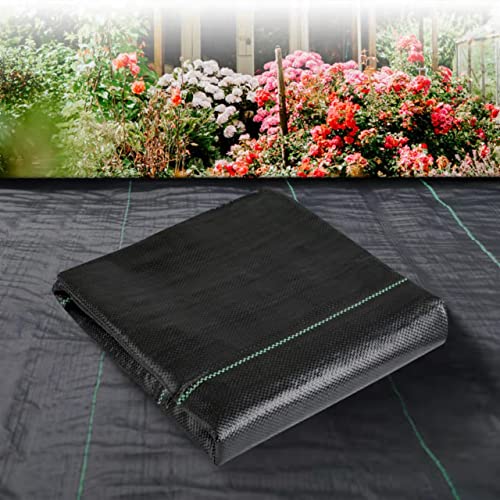
Premium Weed Barrier Fabric:Weed barrier landscape fabric is a type of geotextile fabric that is commonly used in landscaping and construction.With excellent weed control properties, providing a clean and tidy landscape.Very strong and durable,Pro landscape weed barrier will provide you with premium weed protection for a very long time.

【Durable PP Fabric】This 3.2oz landscape weed barrier fabric measures 3 ft wide and 300 ft long. The heavy duty weed barrier is here to fully cover 1950 sq. ft area, making your life easier and 100% hassle-free. It protects your garden and flower beds from weeds, highly increasing your productivity and efficiency.
3. Groundcovers
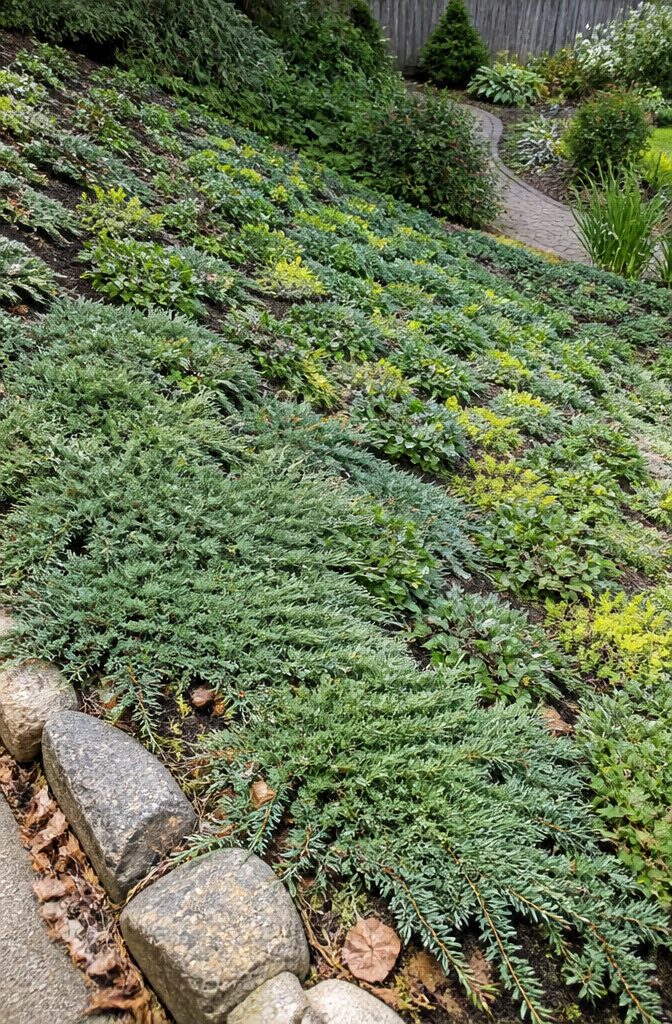
Pick low, spreading plants with deep, fibrous roots.
The roots bind the soil, and the foliage slows runoff. Creeping juniper, vinca minor, and sedum are the best soil holders here.
They grow fast into a dense carpet and need little care once established. Violet, periwinkle, and ice plants suit both small beds and large areas, but treat them as fillers rather than your first pick for a steep face.
Plant in staggered rows so water has to wind around each plant instead of running straight down.
Bare soil between young plants is the weak spot until the mat closes. A native ground cover planting runs about $100–$500, and it is the cheapest erosion fix for a large slope.
Recommended Products

【Professional Weed Barrier】Made of premium 3.2oz woven polypropylene, this weed barrier fabric heavy duty effectively blocks sunlight to prevent weed growth—saving you hours of backbreaking weeding while keeping your garden neat with minimal effort.
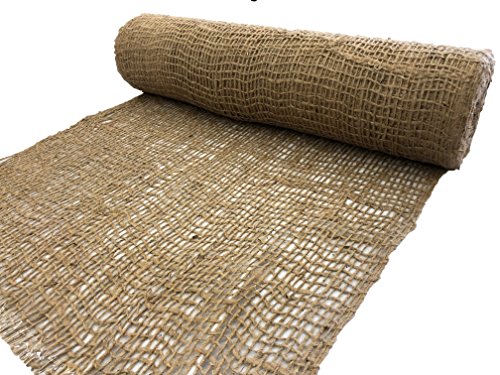
Premium Jute Construction: Our Soil Saver Erosion Control Fabric is made from premium-quality jute, a natural and biodegradable material renowned for its superior erosion control capabilities. Crafted with meticulous attention to detail, this 48-inch wide and 20-yard long fabric ensures a sturdy, reliable solution for preventing soil erosion.
4. Shrubs and Trees
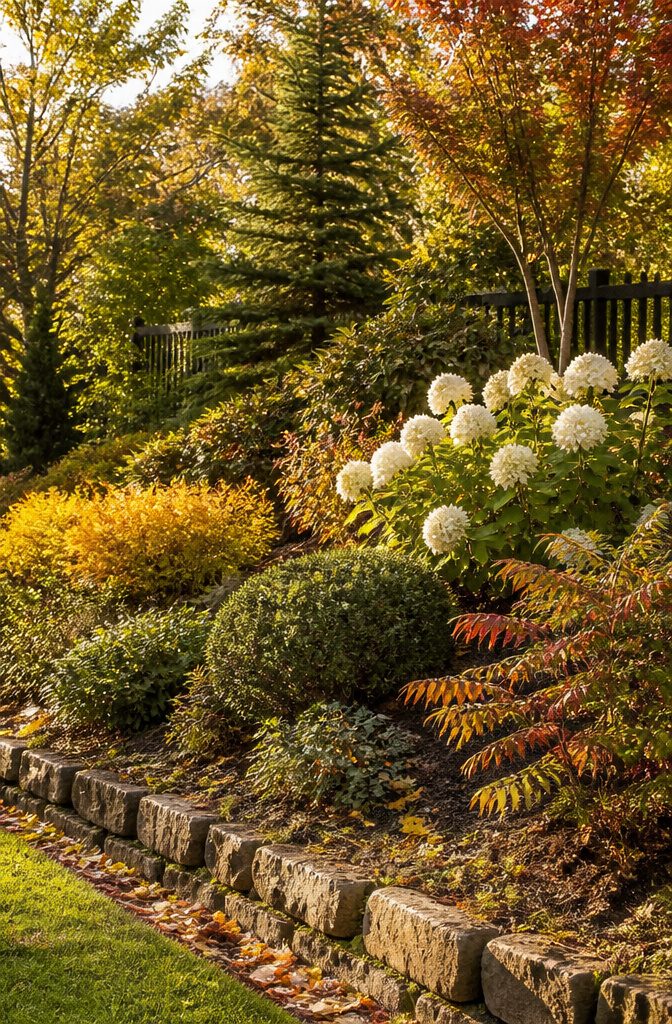
Yes, you can plant shrubs on a slope.
Choose shorter, deep-rooted ones, because tall shrubs are easier for gravity to tilt. Dwarf forsythia, Golden St. John’s wort, spirea, and dwarf sumac all fit.
For structure and bloom, add hydrangeas such as Annabelle, Endless Summer, Limelight, or Incrediball. Ceanothus ‘Highlights’ and native Toyon also work.
Plant in staggered rows to slow water running downhill. Flowering shrubs cost $200–$1,200, and a colorful shrub planting runs $250–$1,500.
For privacy, pair a fence with a planted border or hedge, about $300–$1,500. Trees are the slow, permanent option.
Their mature roots bind the most soil, and planting costs $200–$2,500. Mix deciduous and evergreen for year-round structure.
Recommended Products

【Extra Deep Anchoring Power】The 10-inch length penetrates deeper into the soil than standard landscape staples, providing increased holding strength in loose soil, sandy areas, and locations exposed to strong wind.

Products made in the USA Since 1888!
5. Rock Gardens and Boulders
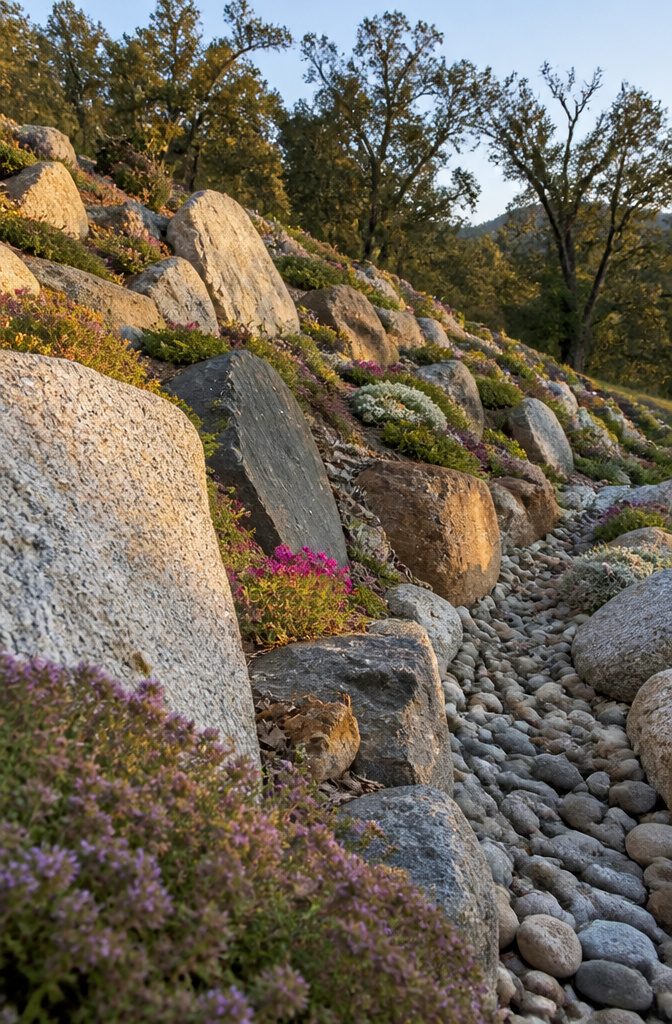
Boulders set across a steep, dry slope slow runoff and give the hill a permanent focal point. Granite, sandstone, slate, and limestone all work, and the pockets between them suit sedums, alpine dianthus, creeping thyme, and saxifrage.
A trench lined with river rock does similar work in a narrower strip. It gives fast water a defined path and slows it on the way down.
Plan on $300–$2,500 for a rock garden, depending on slope size and stone. Upkeep is low, though the layout is an intermediate job.
Rock alone only slows water. Roots are what lock soil in place, so pair the stones with hardy shrubs and groundcovers.
Recommended Products

MEDIUM DUTY – 4 Ounce Heavy Duty Geotextile – Don’t settle for lighter weights, the 4 ounce is tough and durable, non-woven fabrics are produced to be high-strength...
6. Mulch on a Slope
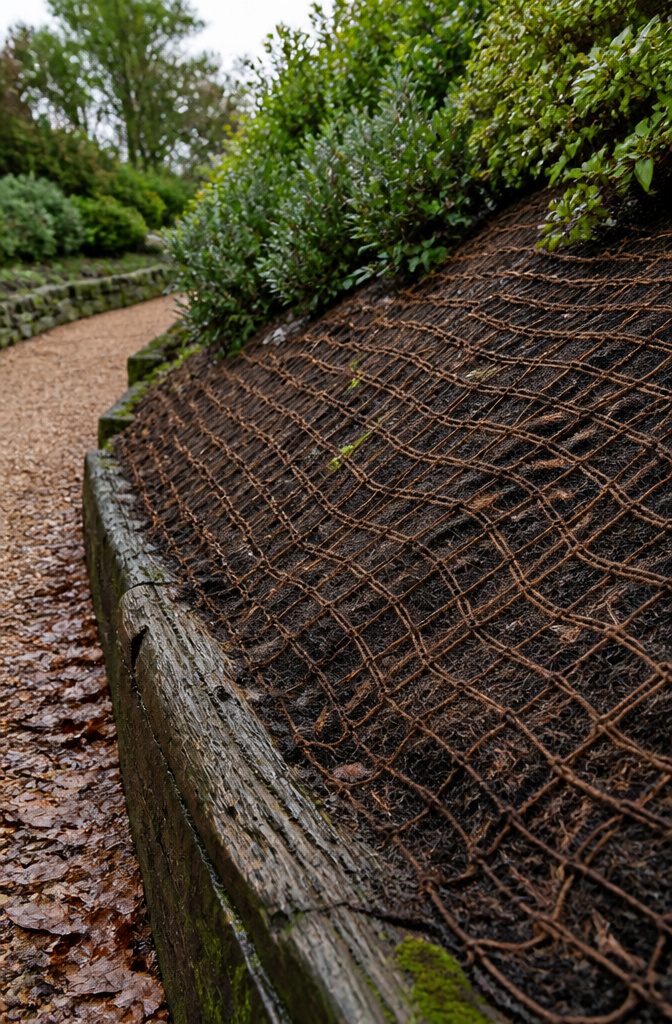
Runoff from a hard rain carries loose mulch downhill, leaving bare soil at the top of the bed and a pile at the bottom.
Mulch is still the easiest and least expensive way to cover a slope, so the fix is to choose the right kind and anchor it.
Pick gorilla hair mulch. It is fibrous, which gives it more traction on a grade than smooth, loose chips.
Lay landscaping fabric first to cut down on weeds, then put jute netting over the fabric before the mulch goes on so the netting holds it in place.
The extra layers cost more than a plain pile of mulch and take longer to install, but they keep you from re-spreading mulch after every storm.
7. Water Features
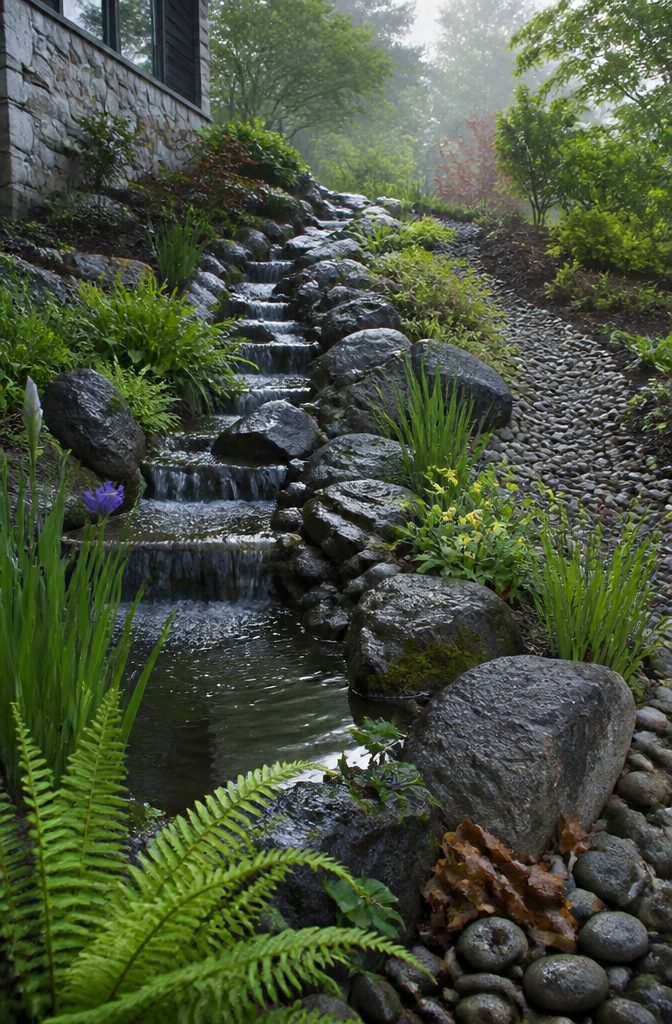
A slope does the work a pump would otherwise do.
Water runs down a boulder-lined stream, stone cascade, or formal rill under gravity alone, so you get movement and sound without a powerful pump. Water iris, rushes, primulas, and moisture ferns suit the wet edges.
This is the most expensive idea in the list. Budget $1,500–$10,000, which puts it well past a $500–$800 yearly budget.
It is also rated advanced to build, with moderate upkeep. If money is tight, skip it for now and save toward it.
Plan drainage first. Shape the channel, basin, and surrounding soil so overflow and storm runoff move away from your foundation, never toward it.
8. Layered Mixed Planting
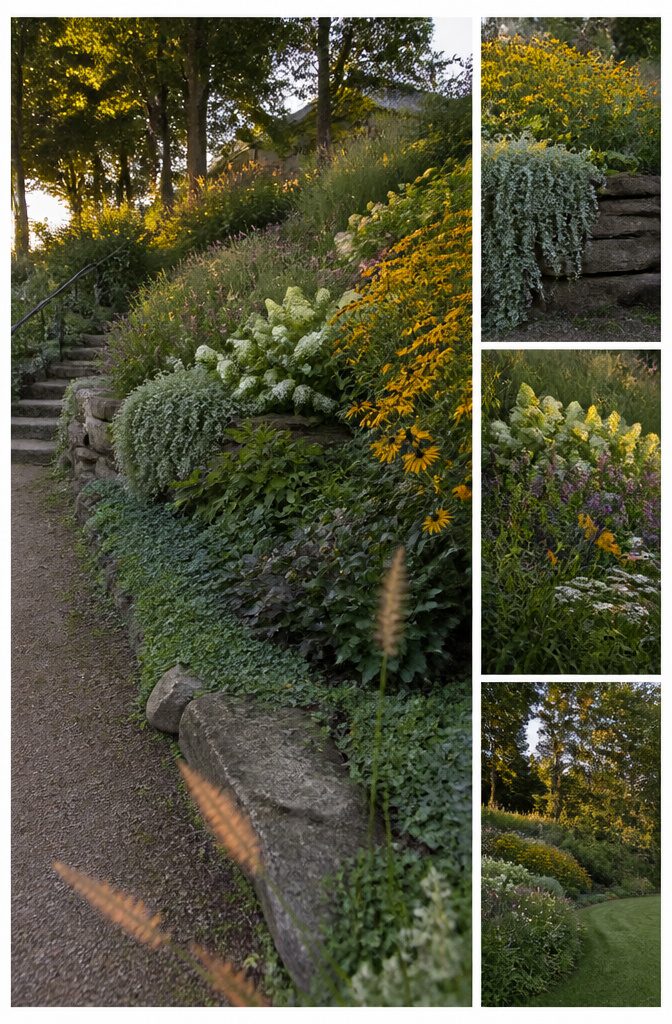
Build the slope in layers: groundcovers at the base, ornamental grasses and shrubs for structure, perennials for color, and annuals tucked between them that you swap each season.
Roots anchor the soil, so a mix holds a hillside better than a single plant.
Black-eyed Susan, yarrow, daylilies and switchgrass handle slopes with little upkeep and draw pollinators. Spirea, dwarf sumac and hydrangeas add the shrub framework.
For layout, plant in triangles instead of straight lines and repeat plants from nearby beds so the slope reads as part of the yard. Set each group in a drift, spaced close enough to crowd out weeds.
Let a trailing plant spill over a wall edge. Natives cause the fewest problems.
9. Native and Wildflower Planting
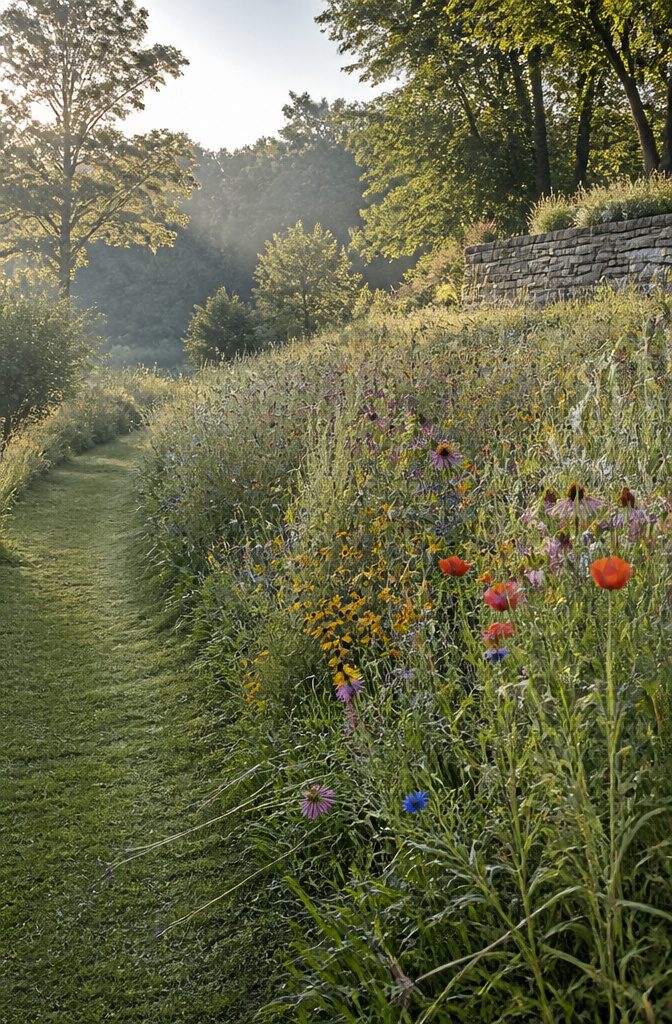
Scatter a native grass and wildflower seed mix over the prepared slope in autumn, then leave it alone through its first growing season.
Good choices are native grasses, echinacea, rudbeckia, poppy, and cornflower. Their roots hold the soil, the flowers feed pollinators, and natives suit your local climate, so they give you the fewest problems.
Lay a drip line across the slope for that first season, then taper it off, because established natives tolerate dry spells.
A meadow runs $50–$300, which makes it the cheapest way to cover a large slope per square foot.
Walls and terraces cost far more for the same area. Native plantings give a loose, wild-looking slope rather than a tidy one, so the appearance is what you give up.
10. Patio, Deck, or Overlook
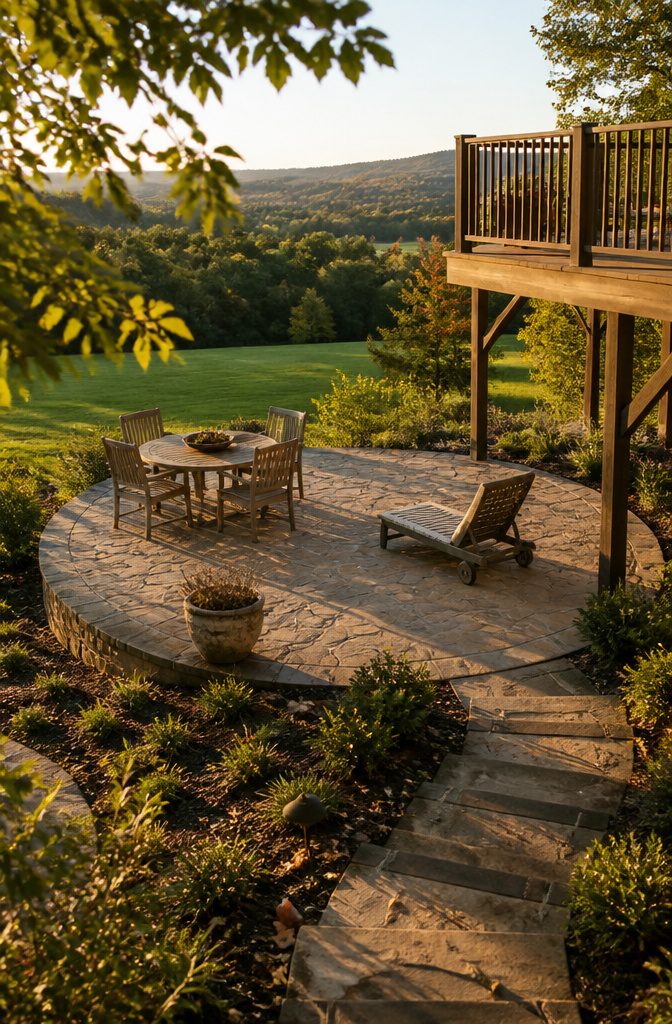
A level pad is the one place on a slope where a chair stays put, so build one before you buy any furniture.
If the hill drops toward a lake or a field, a round patio at the edge frames the view. Add a bonfire spot, an outdoor dining set, or a chaise lounge.
If the view is the street, a tiny front deck on a tiered soil bed works the same way. The bed holds plants, and the deck gives you flat ground to sit with neighbors while the kids play.
Wood accents suit a slope too, from a small reclaimed staircase to an elaborate arch or a sculpture. Plant the base of any wood structure into the slope so it stays stable, and plan on the extra digging.
11. Edible Planting
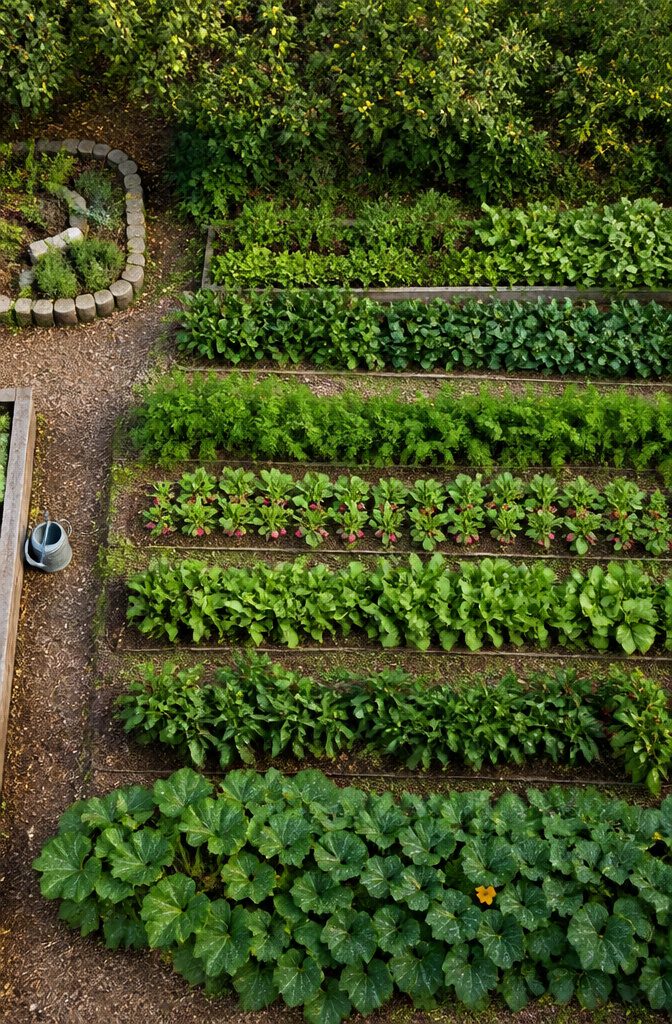
Yes, you can grow vegetables on a hill as long as the slope isn’t too steep.
Plant the rows perpendicular to the hill, so they run across the slope instead of up and down it, and pick crops with deep roots. Lettuce and spinach do best in a shaded spot.
Carrots and radishes suit the slope too. Squash works if you give the vines room to spread.
Set peppers out as seedlings after the last frost. A tiered bed is also worth considering.
If the slope is too steep for rows, plant a food forest of fruit trees, berry shrubs, herbs, and edible ground covers.
Budget $500–$3,500. It’s an intermediate project, needs little upkeep once established, and works best on large, sunny, south-facing slopes.
12. Living Walls and Pallet Planting
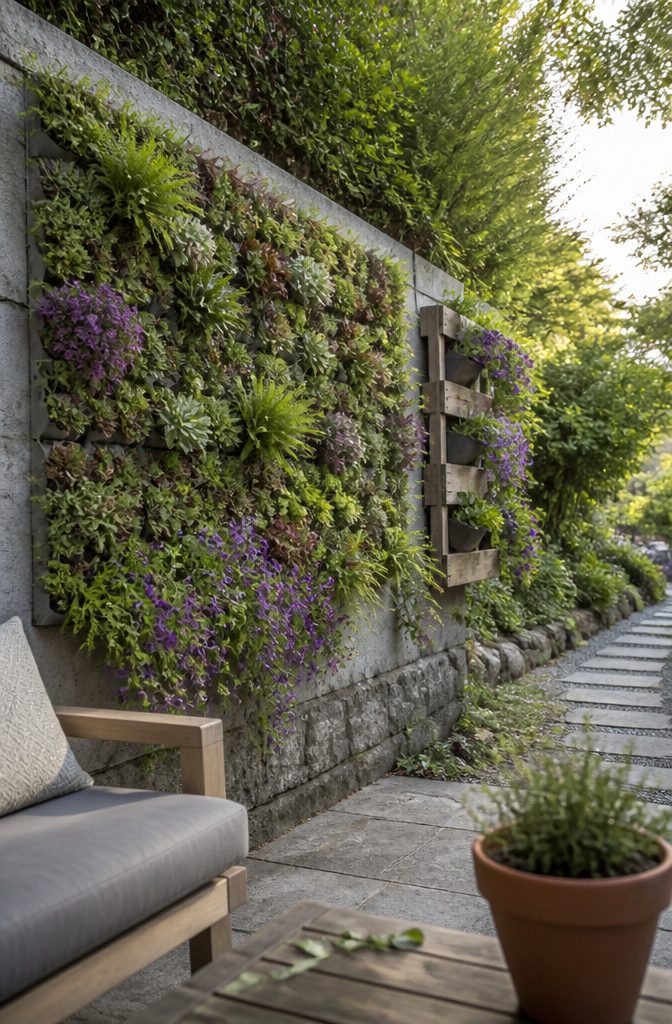
A vertical planting system on a retaining wall face gives you growing space where there was only masonry. It works on concrete, timber, and gabion faces, and succulents, sedums, ferns, and trailing flowers all do well in it.
Budget $200–$1,500, intermediate skill, and moderate upkeep. It pays off on a wall you see from the patio or street, not one hidden behind the garage.
Pallets staked into the slope are the cheapest idea in this article, at $20–$150. Fill them with trailing petunias, sedums, herbs, or strawberries.
They install quickly and suit beginners, but they only start to stabilize a slope. Treat them as a stopgap while you plan a permanent fix, and expect to water and maintain them.
13. Grass and Lawn
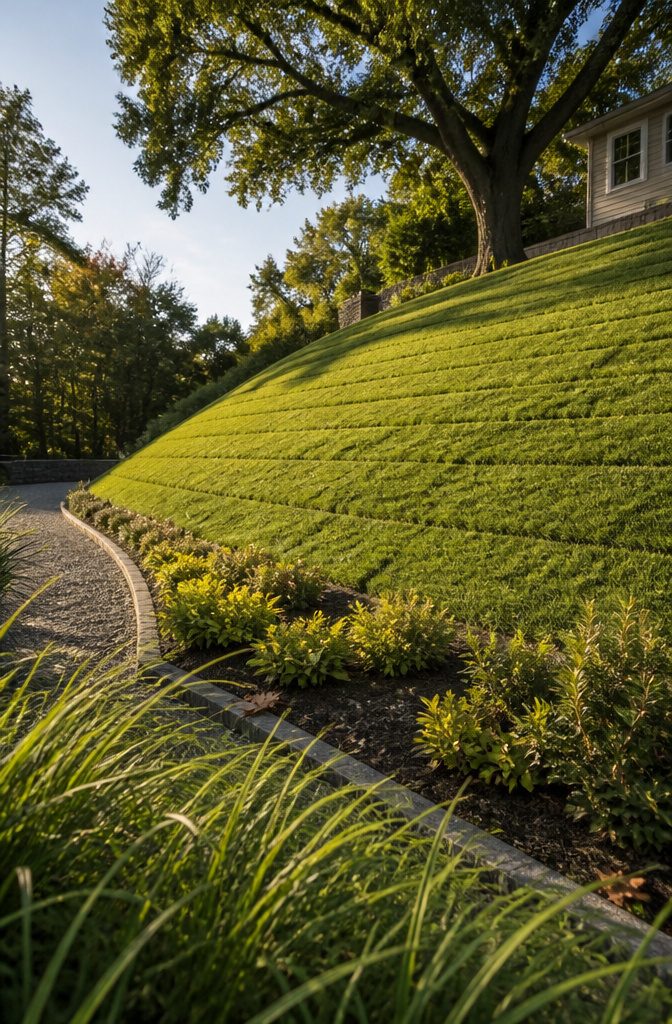
Seed is the cheaper way to get grass on a slope.
Till the soil thoroughly, sow as you would on flat ground, cover the seed with mulch, and water gently so the flow doesn’t wash it downhill. Pull the cover off once seedlings emerge.
Sod costs more but gives you a finished lawn almost at once. Lay the strips at right angles to the slope and pin them with sod stakes.
A riding mower goes up and over the hill, never across it, because a top-heavy mower can tip on its side. Check the manual for its slope rating.
With no guidance, keep to slopes of 15 percent or less. A bottom-heavy push mower runs along the slope instead.
Slope Grade Numbers to Know
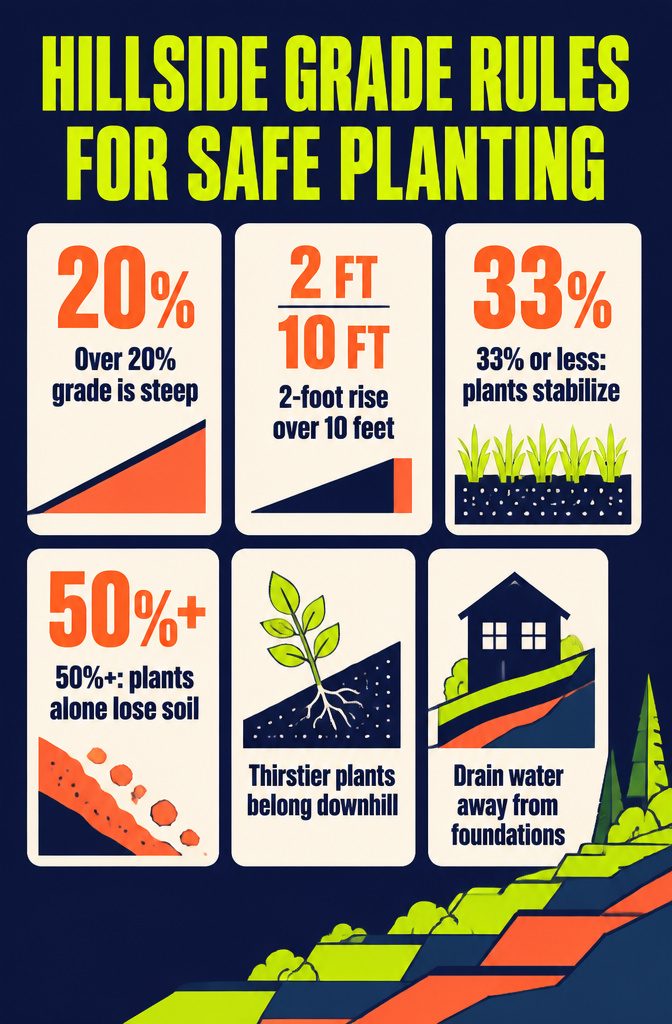
Three grade thresholds sort most hillside yards, and a few site conditions matter just as much:
- Over 20 percent is steep, according to Mississippi State University’s definition. That equals a 2-foot rise over 10 feet of ground.
- At 33 percent or less, plantings can stabilize the slope.
- At 50 percent or more, vegetation alone will not hold the soil. Pair plants with structural methods to stop topsoil loss.
- Soil near the top dries out faster than soil lower down, so put thirstier plants toward the bottom.
- Sun exposure changes from one part of the slope to another, so choose plants for each patch rather than for the whole hill.
- Grade the ground so water drains away from the foundation, never toward it.
Costs by Project
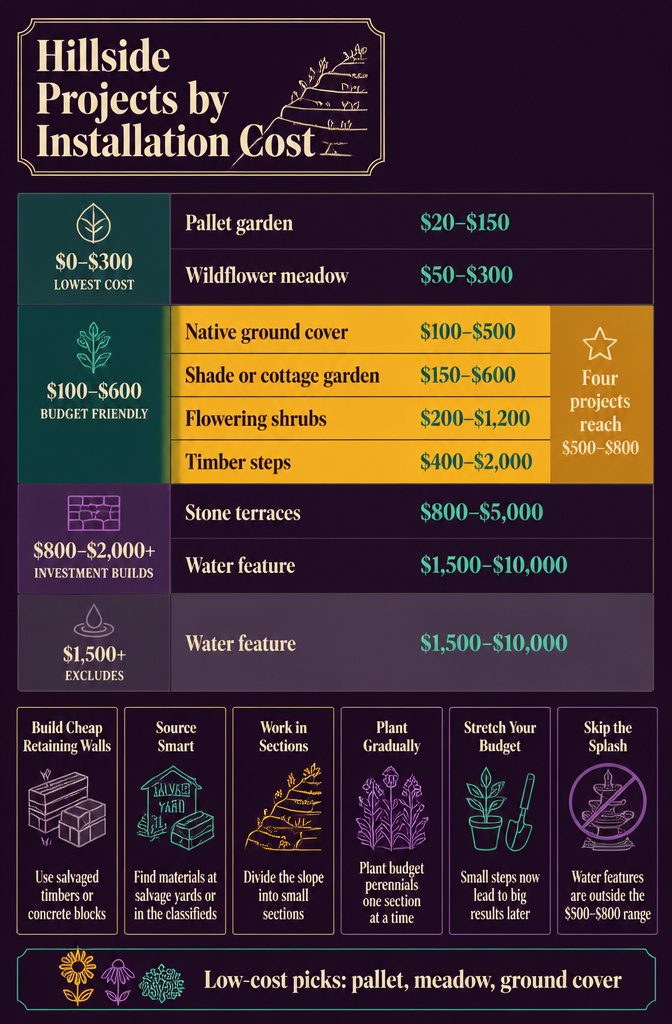
Four of the eight projects fit a $500–$800 year anywhere in their price range.
| Project | Cost | Fits $500–$800? |
|---|---|---|
| Wildflower meadow | $50–$300 | Yes |
| Pallet garden | $20–$150 | Yes |
| Native ground cover | $100–$500 | Yes |
| Shade or cottage garden | $150–$600 | Yes |
| Flowering shrubs | $200–$1,200 | Low end only |
| Timber steps | $400–$2,000 | Low end only |
| Stone terraces | $800–$5,000 | Only at $800 |
| Water feature | $1,500–$10,000 | No |
Build cheap retaining walls from salvaged timbers or concrete blocks, found at salvage yards or in the classifieds. Divide the slope into small sections and plant budget perennials one section at a time.
The low-cost picks are the pallet garden, wildflower meadow, and native ground cover.
Frequently Asked Questions
Can I plant shrubs on a slope?
Yes. Pick shorter, deep-rooted shrubs, since tall ones are easier for gravity to tilt.
Dwarf forsythia, Golden St. John’s wort, spirea, and dwarf sumac all suit a hillside. Set them in staggered rows so water running downhill has to wind around each plant.
Can I plant a vegetable garden on a slope?
Yes, as long as the slope isn’t too steep. Run the rows across the hill instead of up and down it, and choose deep-rooted crops such as carrots, radishes, lettuce, spinach, or squash.
If the slope is too steep for rows, a food forest of fruit trees, berry shrubs, herbs, and edible ground covers is the alternative.
If my slope is too steep, can I change it?
Yes. Cut soil from one part of the hill and fill it in another to form terraces, which lowers the grade.
A permit may be needed depending on wall size. Once a grade reaches 50 percent or more, add walls or other structure, because plants alone won’t hold the soil.
How do I stop soil erosion on a slope?
Combine structure with plants.
Terraces, retaining walls, rocks, and steps slow the water, and shrubs and groundcovers hold the soil with their roots. Cover bare ground with mulch, anchored with jute netting laid over landscaping fabric so storms don’t wash it downhill.
How can I create an affordable terraced garden?
Build the retaining walls from salvaged timbers or concrete blocks, which cost less than stone terraces at $800–$5,000.
Salvage yards and local classifieds are good places to find them. Divide the slope into small sections and plant budget-friendly perennials one section at a time.