These options run from a 2–4 inch layer of mulch to a paved patio, and your site decides which fits: how much sun the yard gets, how well the soil drains, and your climate.
A succulent rock garden needs full sun and well-drained soil, so skip it where water pools after rain or a tree shades the bed.
1. Xeriscape With Drought-Tolerant Plants
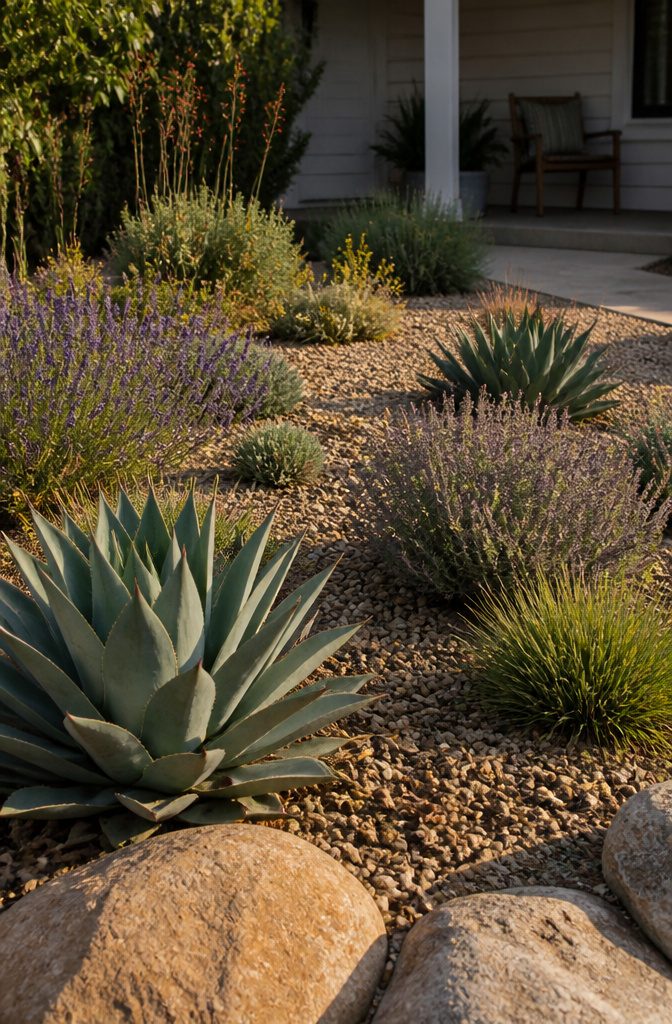
Xeriscaping is gardening built around saving water, and it starts with the plant list.
Choose natives or plants adapted to dry regions, since they need very little water once established. A mix of native perennials, succulents, and shrubs gives you height, texture, and different leaf colors without a thirsty lawn replacement.
Then arrange them by thirst. Put plants with similar water needs in the same bed, with the thirstier ones together and the driest ones in their own zone.
In a mixed bed, you end up watering everything at the level of the neediest plant, and the rest get more than they want. Grouped beds let you water one area and skip another, so total water use drops.
Recommended Products
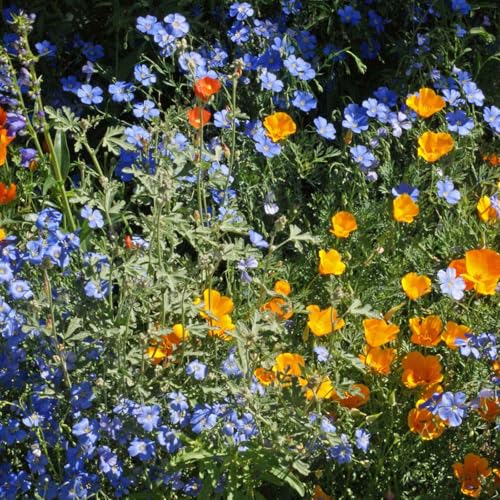
16 Western Native Wildflower Seeds - This premium wildflower seed mix features California Poppy, Arroyo Lupine, Palmer Penstemon, Blazing Star, Blue Flax, Tidy Tips, and more drought-tolerant native flower seeds built for sunny Western landscapes.

PREMIUM DROUGHT TOLERANT WILDFLOWER MIX: A carefully curated blend of hardy wildflowers selected to thrive in hot, dry, and low-water conditions. Suitable for xeriscaping, water-wise gardens, low-water landscapes, and challenging growing environments across the continental USA

2. Native Plant Gardens
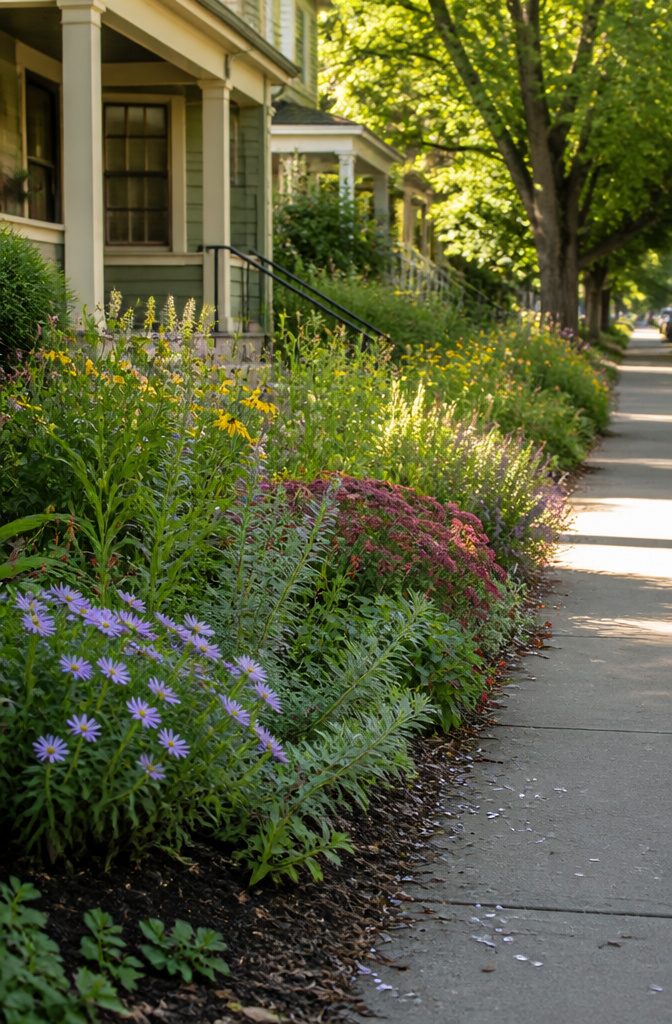
Native plants are made for your region’s weather and soil, so they need less water and less care than non-native plants.
Before you buy anything, check how much sun the bed gets, what type of soil you have, and what your local climate looks like.
A plant tag that matches all three beats a pretty one that doesn’t, and a local nursery can point you to species suited to your area.
Plant several native species instead of one.
A mix gives you different heights, textures, and bloom times, and it brings in helpful insects and pollinators. Group plants with similar water needs together so you can irrigate one zone and leave the rest alone.
Recommended Products

【Note】Jade pebbles are natural rocks polished and waxed and processed, we do not recommend placing it in a fish tank, if you need to put it in a fish tank, first wash the wax off the surface with hot soapy water or detergent, then rinse with clean water

Natural & Safe Material: Made from genuine natural jade pebbles, polished and coated with food‑grade paraffin wax to enhance color and shine – safe for plant roots and pets, suitable for both indoor and outdoor décor

HAND CRAFTED: Made from natural stone and ethically sourced from a river in the Philippines, these handcrafted stone vases create a natural aesthetic in the home. Fill with succulents, flowers or small plants to give a natural vibe to your space. Each stone has its own unique coloring and shape.
3. Rock Gardens With Succulents
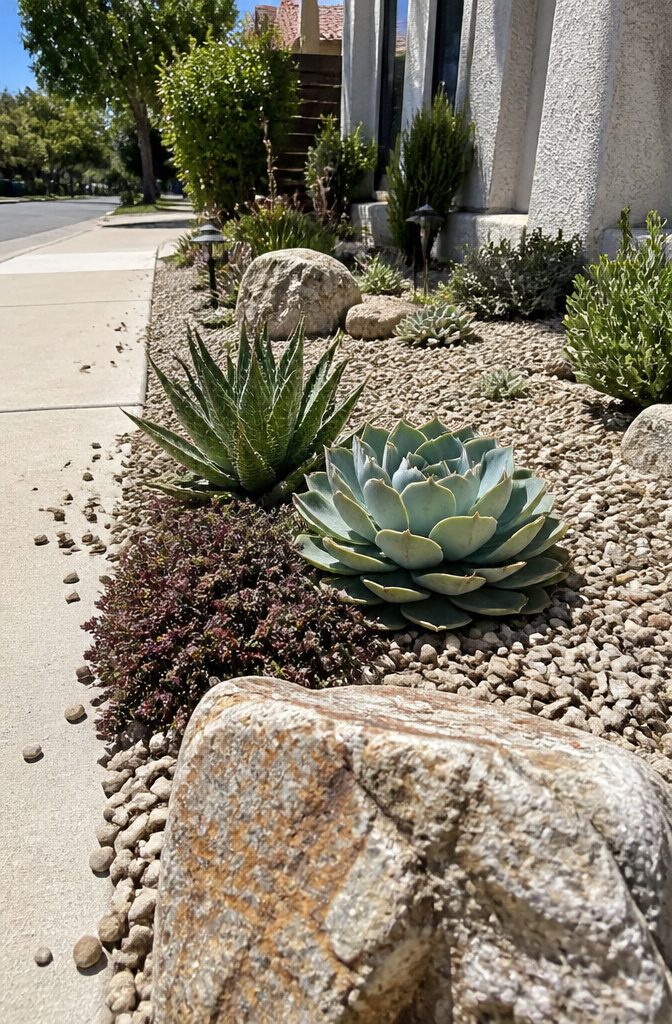
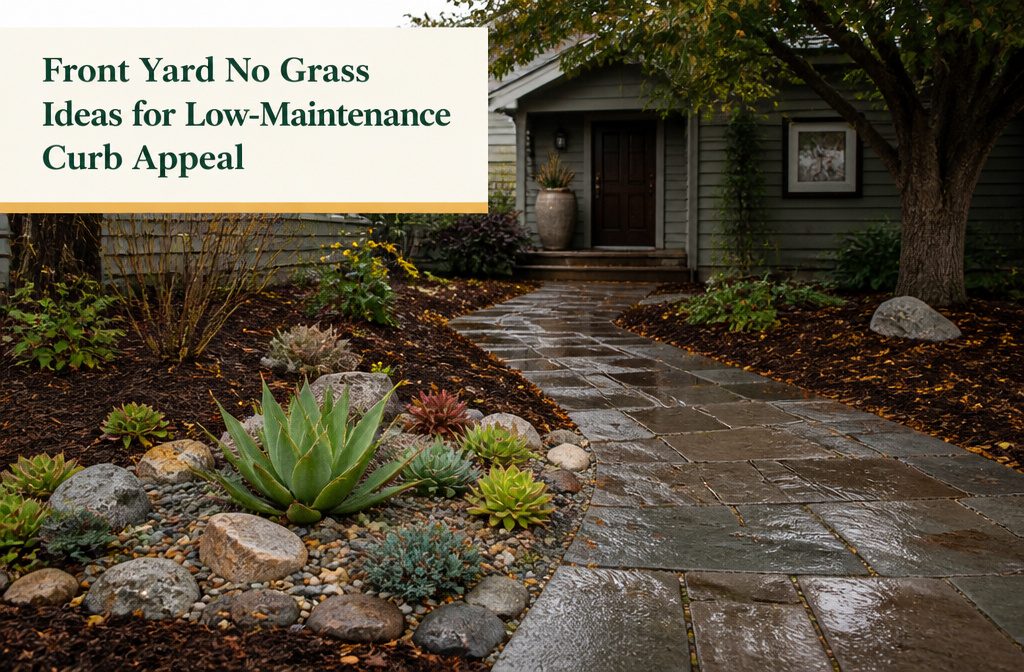
Succulents set into decorative rock, pebbles, or gravel make one of the lowest-water front yards you can plant.
Choose plants that differ in color, shape, and texture, such as a rosette beside a spiky clump beside a trailing mat. The stone fills in the rest of the look.
This design works best in full sun and soil that drains well. Succulents handle dry ground easily, so a gravel bed suits a hot, dry strip by the street.
It suits poorly drained soil and shady sites less well. If water pools in your front yard after rain, or a tree or the house keeps the bed in shade, pick a different idea from this list.
Recommended Products

Produces vibrant flowers that bloom throughout the summer

Produces vibrant flowers that bloom throughout the summer

4. Paved Outdoor Living Areas
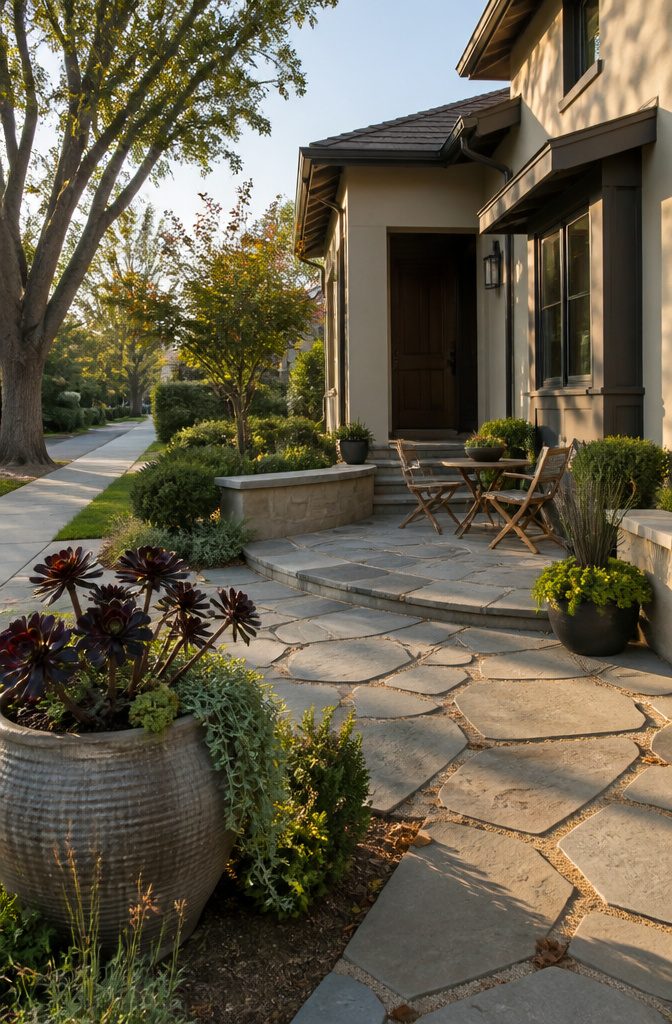
A front patio gives the least-used part of the lot a job. Natural stone has the most varied look and weathers well, brick suits traditional houses, and poured concrete is the plainest and fits modern ones.
Link the patio to the front door with a path in the same material so the two read as one design.
Furnish it with a bistro table and two chairs, a built-in stone ledge for seating, and a few large pots. A fire bowl or string lights makes it usable after dark.
Solid paving sheds rain instead of absorbing it.
Slope the surface slightly away from the house and keep planting beds beside it to catch runoff. Setting stone or brick on sand with open joints, rather than mortar, lets some water soak through.
Recommended Products

【Lifelike Craftsmanship】Our Lifelike Lavender Topiary Ball Trees(4 sets included) feature meticulously crafted leaves that replicate the texture and layered green tones of natural lavender. Combined with a realistic wood-grain trunk, this elegant faux tree delivers exceptional authenticity

HIGH GERMINATION & NON-GMO: Carefully selected for supreme quality, these non-GMO seeds offer fast germination to provide a strong start for your planting journey. They are easy to sow and ensure a vigorous growing process for homeowners.

【Grooy ARTIFICIAL CYPRESS TREE】Enhance your home's aesthetic with our artificial cedar ball tree. Each lifelike shrub includes a durable ground spike, allowing you to plant it in decorative pots and planters or directly into the soil. Its elegant design invites a touch of natural beauty into any setting
5. Mulch Beds
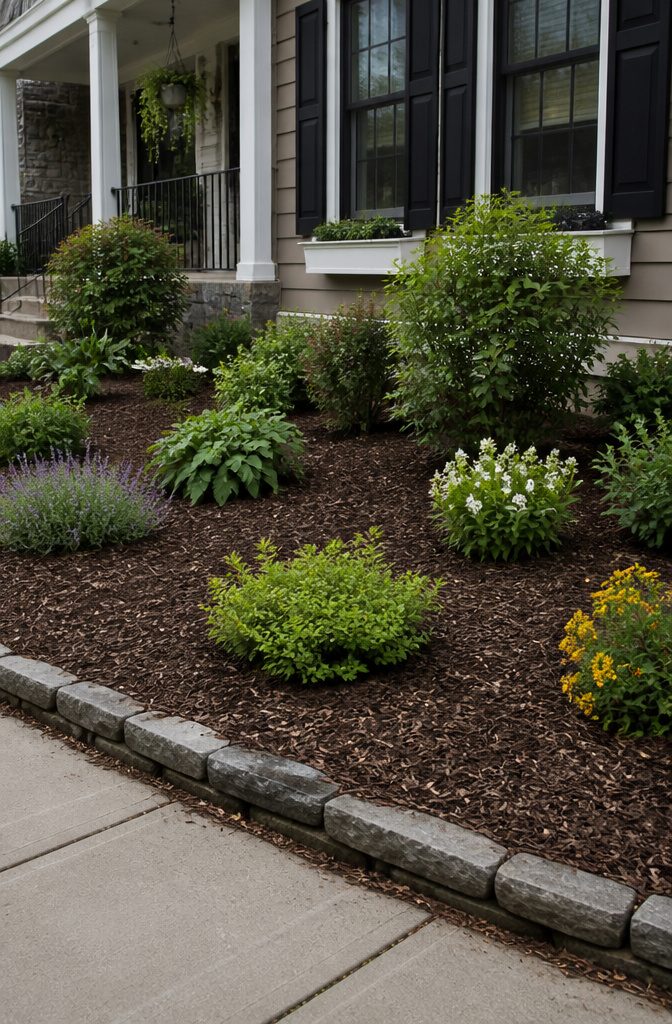
Wood chips or bark spread thick over the old lawn area turn it into a bed that never needs mowing.
The layer blocks weeds, holds moisture in the soil, and keeps soil temperature steadier through hot spells. A depth of 2–4 inches is the usual range, and the thick end suits spots where weeds were worst.
Mulch works best as the base around shrubs and perennials, where it covers the bare soil between plants.
It also breaks down over time, which improves the soil but means you’ll top it up now and then. Pick a color that suits your house, because mulch will be a large share of what people see from the street.
Recommended Products

Sturdy Cast Iron Construction: Lawei turtle stepping stone is made of heavy-duty cast iron with genuine verdigris finish, this metal stepping stone withstands all weather extremes—perfect for year-round outdoor use in gardens, lawns and patios without rusting or cracking.
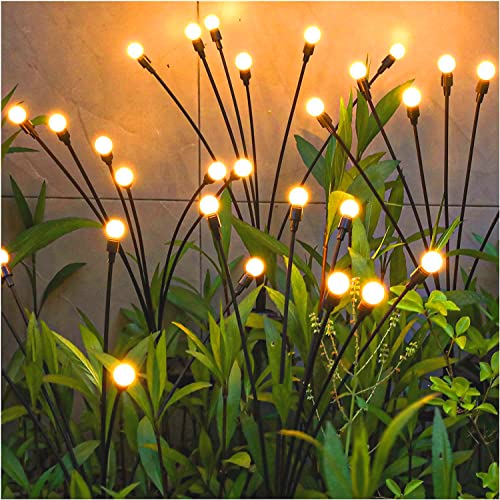
【SWAYING WHEN WIND BLOWS,IMITATE REAL FIREFLY】The most unique solar decorative lights in the market, our solar swaying light is propped by very soft & flexible wires, so the light sways when the wind blows, exactly like a cluster of firefly flying in the dark

Wet-Area Ready, No Sealing Required: Pre-finished with cured linseed oil — a natural plant-based wood finish — these tiles install straight from the box — no sealant, no prep, no waiting. Raised base channels water underneath for patios, balconies, pool surrounds, and shower floors
6. Permeable Pathways
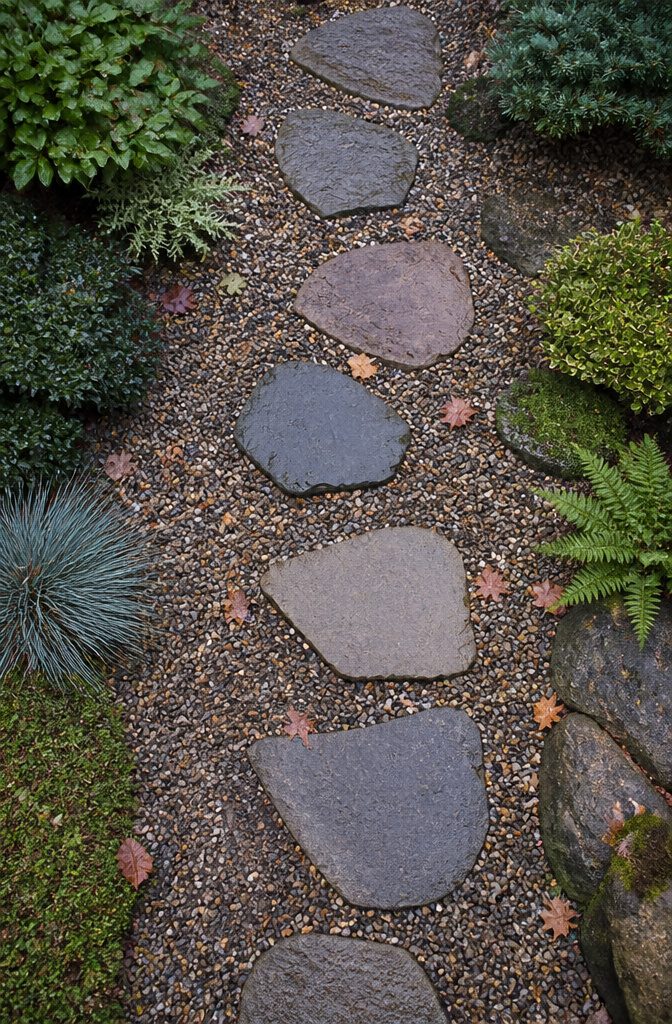
A path that lets rain through keeps water on your property instead of sending it toward the storm drain. Three materials do this:
- Stepping stones set in gravel or mulch leave the most open ground between steps, so the most rain soaks in. Mulch looks softer, and gravel stays tidier.
- Gravel alone is the simplest full path. Water drains straight through, and you can lay it along whatever route you actually walk.
- Porous pavers give a firmer, flatter surface than loose stone. They suit a path that gets daily traffic.
Concrete and asphalt shed water, and that runoff can carry pollution to storm drains and nearby waterways. Water that soaks in refills groundwater and lowers the risk of soil erosion.
Recommended Products

Used Book in Good Condition

NATIVE NORTH AMERICAN PURPLE PRAIRIE CLOVER WILDFLOWER SEEDS: Heirloom non-GMO open pollinated seeds for prairie restoration and xeriscape gardens, with high germination rates, adapted to USDA zones 3-8
7. Wildflower Meadows
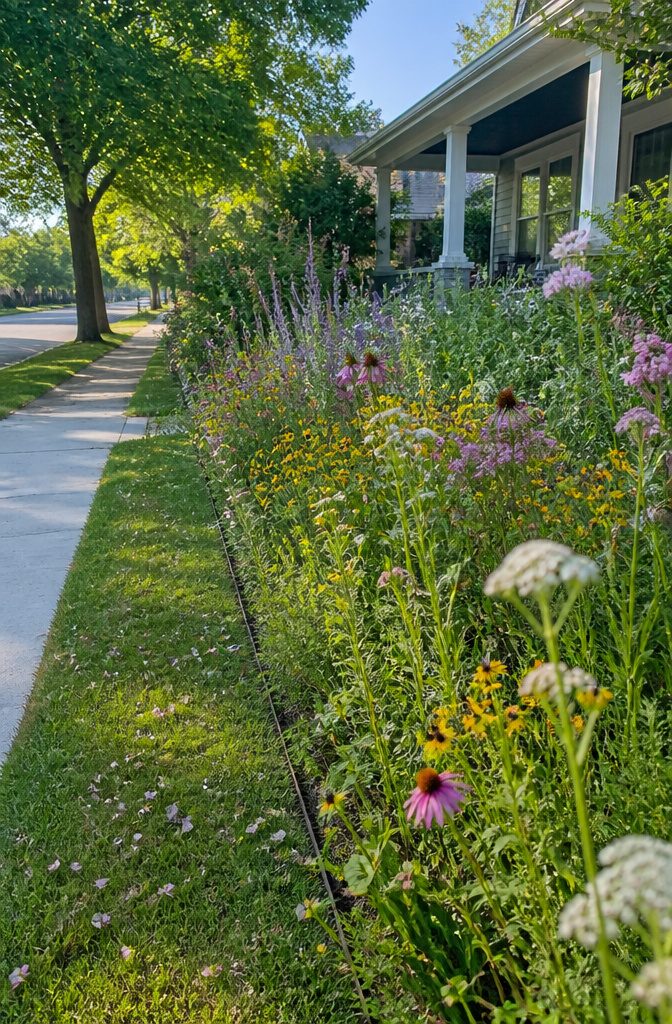
Plant native wildflowers that bloom at different times, so the yard has color all season instead of one short peak. Bees, butterflies, and hummingbirds feed on the nectar and pollen, and staggered bloom keeps that food available for longer.
Preparation decides how well it works.
Remove the existing grass and weeds before planting, then check that the soil drains well. Once established, a meadow needs very little care.
A meadow looks loose and informal, and parts of it will look untidy between bloom peaks. If that bothers you, keep a neatly cut strip of lawn or edging along the sidewalk so the planting reads as a choice.
Recommended Products

100% natural slate coarse sand/gravel that has been sourced, sorted, washed, and packaged by our family owned business in the USA. The color is a gorgeous deep grey. Each package is a mix of 1/32-1/8" stone (may be slightly above or below this range).

HAND CRAFTED: Made from natural stone and ethically sourced from a river in the Philippines, these handcrafted stone vases create a natural aesthetic in the home. Fill with succulents, flowers or small plants to give a natural vibe to your space. Each stone has its own unique coloring and shape.
【Lightweight Yet Durable】 Made from high-quality, weather-resistant plant based bioplastic this planter has the appearance of a concrete or ceramic pot without the weight or fragility 💧🪴.
8. Artistic Hardscaping
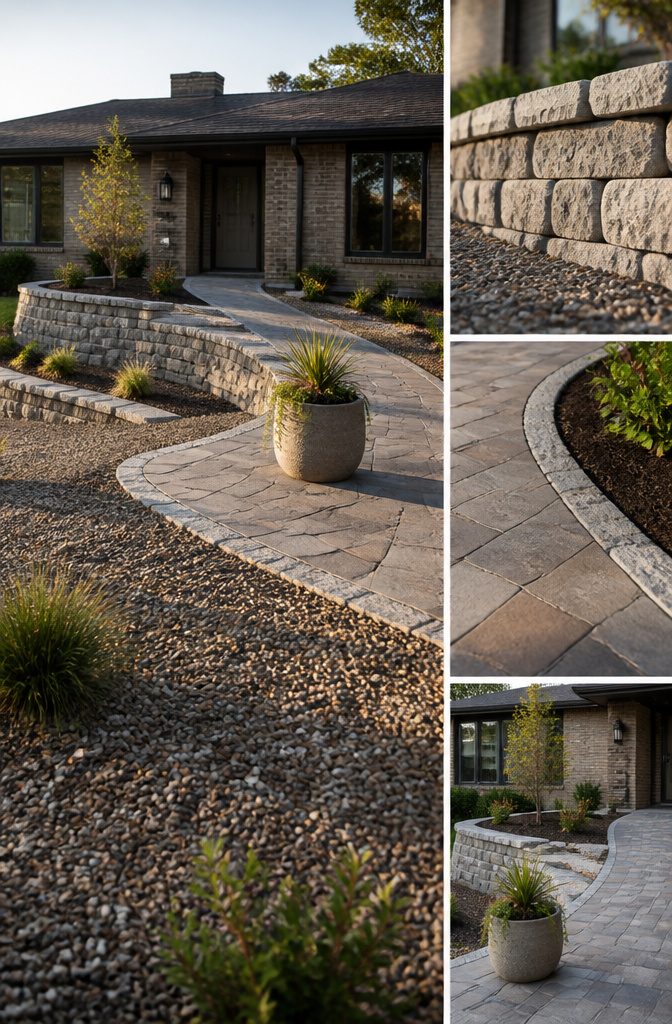
Natural stone, pavers, and gravel do the structural work in a yard without grass.
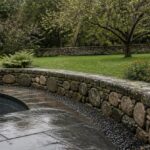
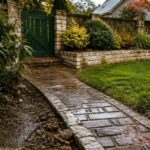
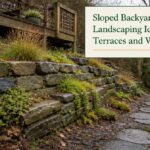
Use them for a path to the front door, a low retaining wall where the ground slopes, or a crisp edge that separates planting beds from the walkway.
Pick materials that echo your house.
Match the stone or pavers to your home’s style, including its brick, siding, or roof color, and the yard reads as one design. Pairing gravel with cut stone adds texture and color contrast without more plants.
Add one focal point, such as a sculpture, a water feature, or a special planter.
Set it where the path leads the eye, and skip a crowd of small pieces. One strong piece reads better.
Recommended Products


READY TO PLANT: Includes 6 Blue Chalk Sticks (Senecio Mandraliscae) starter plants in 2.5" nursery cubes—well-rooted and ready to grow. Natural variations in size, color, and appearance may occur. (also known as Blue Fingers, Blue Straws)

Garden DIY: Our pebble rocks for bonsai plants are the affordable,no hassle choice for DIY gardeners looking to decorate a meditation garden, reflection garden, fairy garden
9. Water-Saving Water Features
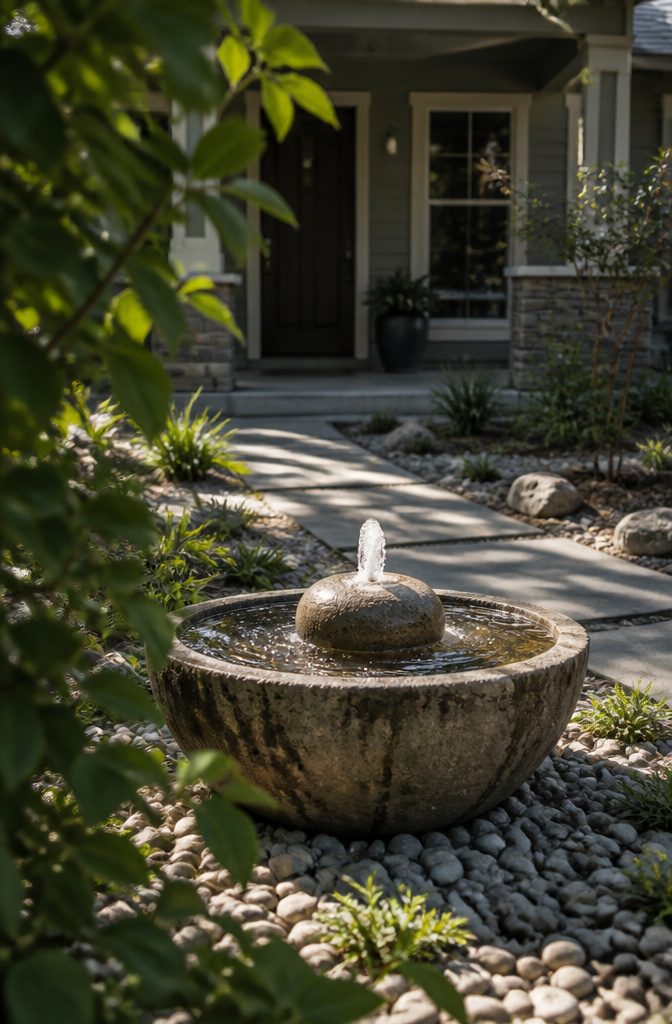
A recirculating fountain pumps the same water through its basin again and again, so the only water you add is what evaporates.
A small planted pond reuses its water the same way. Set either one in partial shade, since water sitting in full sun evaporates faster and you end up refilling it more often.
The feature also does real work in a yard without grass.
Moving water makes a soft sound that calms the front walk, and a fountain or pond gives the eye a focal point that a plain bed of gravel or plants doesn’t.
Put it where you can see it from the front door or a window, so you enjoy it every day.
Recommended Products

Fits any shape garden design and can be installed as a curved or round border or straight

Restores faded mulch & adds instant curb appeal with a beautiful dark brown color
Save time and money: Don't waste time and money on buying new mulch bags when your old mulch starts to fade. Use this dye for mulch to give it a fresh, new look.
10. Ornamental Grasses and Evergreens
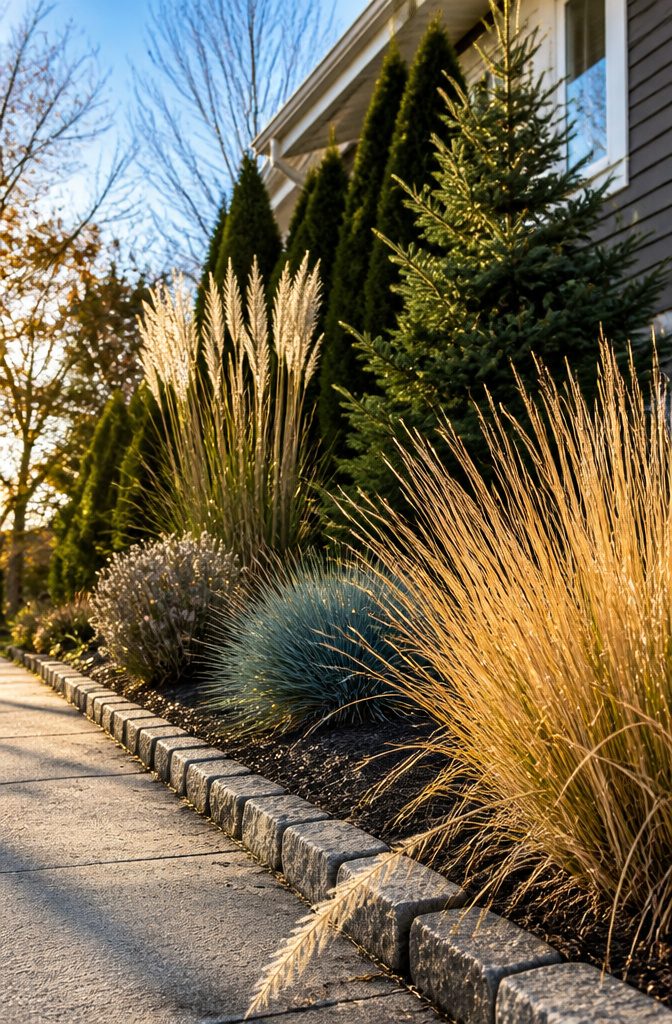
Grasses bring texture and movement to a front yard, and evergreens supply the shape and color that hold through winter.
Together they keep the bed looking planted after the flowers are gone. A grass-only planting depends on one season’s look, while evergreens give it a frame the rest of the year.
Choose grasses that differ in height, color, and flower shape, so the planting has depth instead of a single repeated clump. Then set evergreen shrubs or small trees behind and between them.
The taller evergreens form the backdrop, and the grasses soften their edges and sway in front. That layering is what makes the yard look designed rather than just filled in.
Recommended Products

Decorative beautification effect: using unique natural pebbles, can be freely spliced and combined to create a personalized patio path or pattern. It can also be separated into single pieces and flexibly embellished in various parts of the yard, adding natural wild fun. It is a unique and practical decorative element for lawn and garden

Wet-Area Ready, No Sealing Required: Pre-finished with cured linseed oil — a natural plant-based wood finish — these tiles install straight from the box — no sealant, no prep, no waiting. Raised base channels water underneath for patios, balconies, pool surrounds, and shower floors

Weather-Resistant & Built to Last: Crafted from durable PC+ABS resin, these stepping stones are heat-resistant, crack-proof in freezing temps, and impact-resistant. Designed for year-round outdoor use, they won’t fade, warp, or lose their shape—rain or shine.
11. Raised Edible Beds
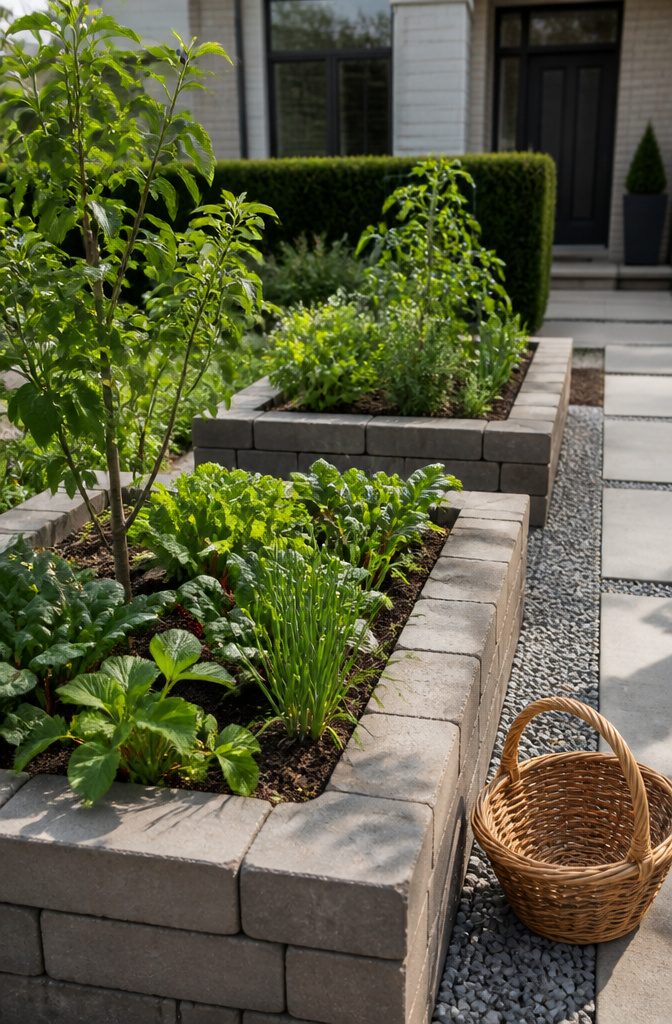
Raised beds let you grow vegetables, herbs, or fruit in a front yard without depending on the soil already there. Build the frames from rot-resistant wood, stone, or concrete blocks, then fill them with a quality soil mix.
Lifting the soil above grade improves drainage, which helps herbs and fruit that sulk in wet roots. The frame also raises the work closer to your hands and gives you a controlled growing space.
Keep each bed about 3–4 feet across so you can reach the middle from either side without stepping on the soil.
Stone or block frames look tidier from the street than bare lumber, which matters when neighbors see the bed every day.
12. Bee-Friendly Planting
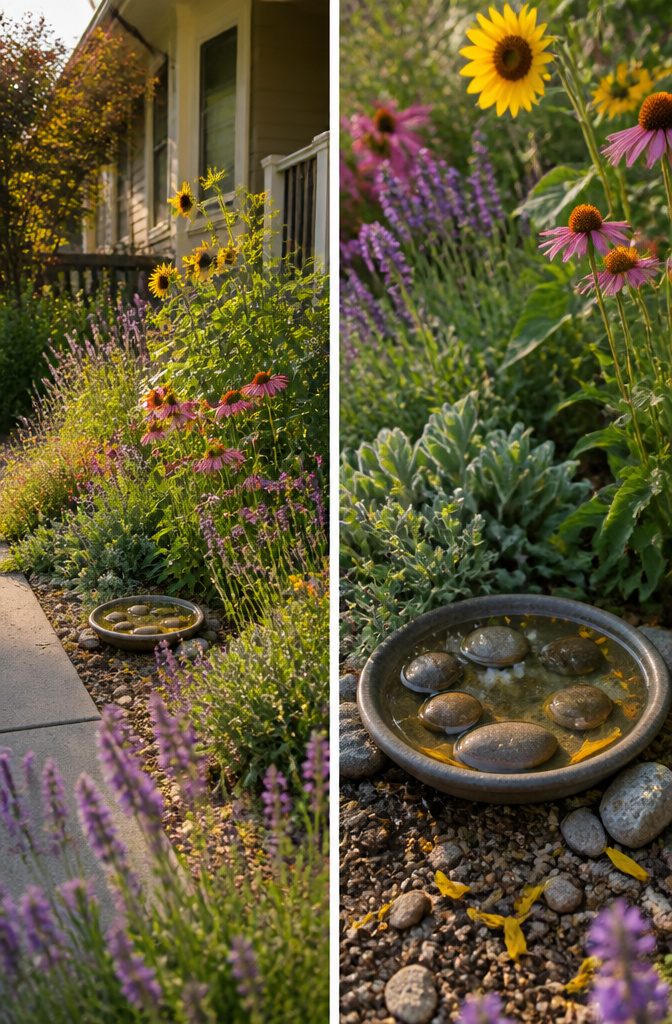
Bees need something in bloom for as long as possible, so choose plants that flower at different times rather than one big show.
A gap in the bloom calendar is a gap in nectar and pollen. Lavender, coneflowers, and sunflowers are reliable starting points, and adding a few native plants to the mix helps fill the weeks between their peaks.
Bees also need to drink. Set out a shallow dish of water with pebbles in it, close to the flowers.
The pebbles give bees a dry place to stand while they drink, so they don’t fall in. Refill the dish often, because an empty one does nothing in a hot, dry week.
Plan the Layout First
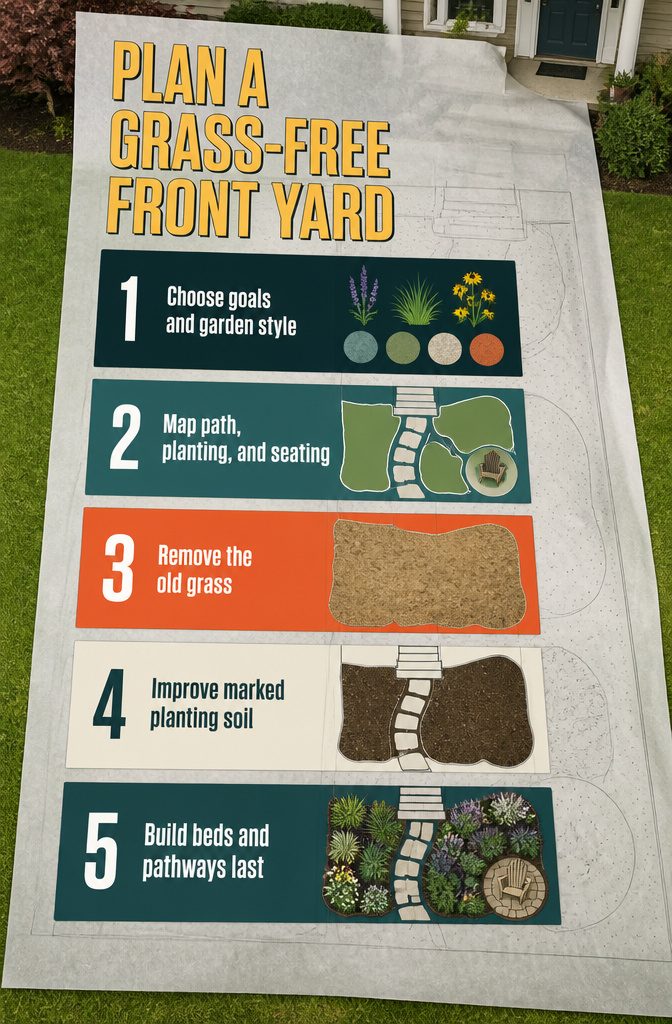
- Set your goals before you sketch. Curb appeal, water savings, lower care, and help for wildlife should all shape the plan. Pick a style, from modern to cottage, and mix textures, colors, and heights within it.
- Draw the layout around a main path to the front door. Then mark the planting areas and one shady spot for seating.
- Remove the old grass.
- Improve the soil in the areas you marked for planting.
- Add the hardscape, such as beds and pathways. Building it after the soil work means you won’t dig up finished paths later.
Low-Maintenance Ground Covers and Watering
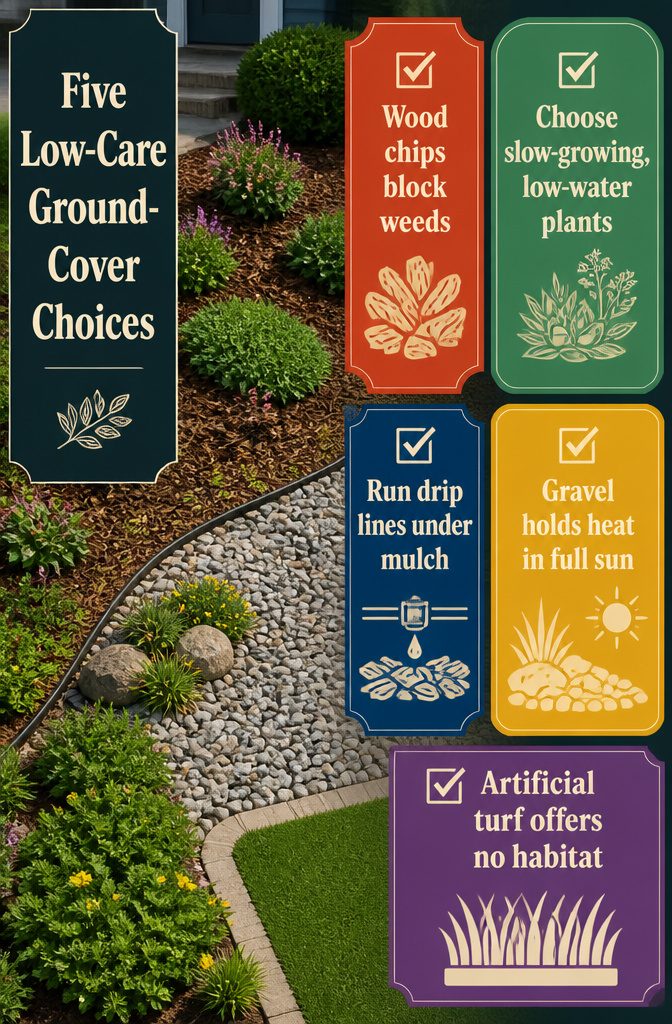
These options keep pruning, weeding, and watering to a minimum:
- Mulch: Spread a thick layer of wood chips or bark. It blocks weeds, holds soil moisture, and steadies soil temperature, and it feeds the soil as it breaks down.
- Slow-growing, low-water plants: They need little pruning and little watering. Choose them over fast fillers you’ll be cutting back all summer.
- Drip irrigation: Run drip lines under the mulch so water reaches the roots instead of evaporating from leaves. Check emitters for clogs each season.
- Gravel: It needs no mowing or watering, but it holds heat in full sun, and weeds seed into debris that settles between stones.
- Artificial turf: It stays green with no water, but it gets hot and gives wildlife nothing. Skip it if habitat matters to you.
Frequently Asked Questions
How can I make a no-grass front yard environmentally friendly?
Start with native or drought-tolerant plants, and group them by water need so you only irrigate the beds that require it.
Run drip lines under mulch so water reaches the roots, and use gravel, stepping stones, or porous pavers for paths so rain soaks in instead of running to storm drains.
Plants that bloom at different times also keep bees and other pollinators fed.
What are the best plants for a no-grass front yard?
Native plants that handle drought are the best starting point, because they suit your region’s weather and soil and need little water once established.
Mix native perennials, flowering shrubs, and, in hot full-sun spots, succulents. Match each plant to the bed’s sun, soil type, and your local climate before you buy.
What is the most low-maintenance landscaping for a front yard without grass?
A mulch bed planted with slow-growing, low-water plants and watered by drip irrigation takes the least work.
A 2–4 inch mulch layer blocks weeds and holds soil moisture, and slow growers need little pruning. Check drip emitters for clogs each season and top up the mulch as it breaks down.
What is the best ground cover instead of grass?
Wood chip or bark mulch is the best all-around choice: it blocks weeds, holds moisture, and feeds the soil as it breaks down.
Gravel needs no mowing or watering, but it holds heat in full sun and weeds seed into debris that settles between the stones. Artificial turf stays green without water, but it gets hot and gives wildlife nothing.
Can a no-grass front yard increase my property value?
It can.
A well-planned, low-care front yard improves curb appeal, which can raise the value of your property. Many homebuyers now look for sustainable features, and a yard without a lawn to mow or water fits that.