These ideas range from a low ring around a tree to a sunken pool deck, and the right one depends on whether your yard slopes or is already level.
Any of them needs drainage, because water trapped behind a wall adds to the pressure it holds back. A fire pit seat wall, for example, runs about 16–18 inches high.
1. Terraced Slopes With Stairs
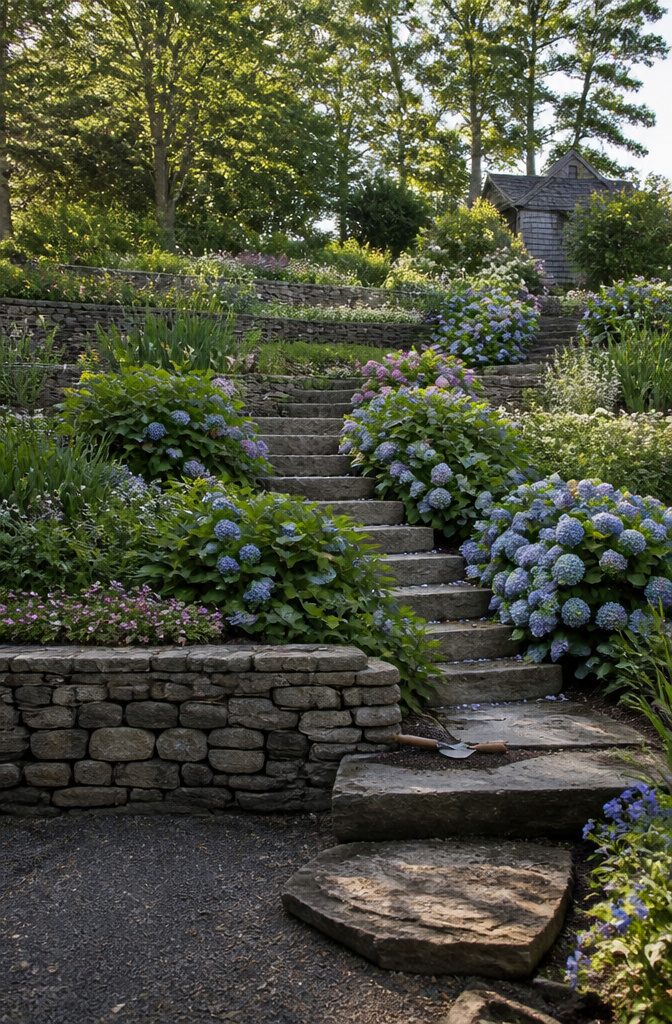
A steep slope that is hard to mow or walk can be cut into stepped levels, each held by its own retaining wall.
Every level becomes a small planting bed or raised bed with its own drainage and soil, which suits herbs, vegetables, flowers, or a mix of perennials and annuals for year-round interest.
Plan access before you plant.
Every terrace needs steps or a path to reach it, or the upper beds go untended. In one Maine garden, natural stone walls frame a staircase lined with hydrangea bushes, so the stairs become part of the planting.
Within each bed, put taller plants at the back and shorter ones in front, with paths between beds so you can reach every row.
Recommended Products

Builds strong retaining walls and stonework

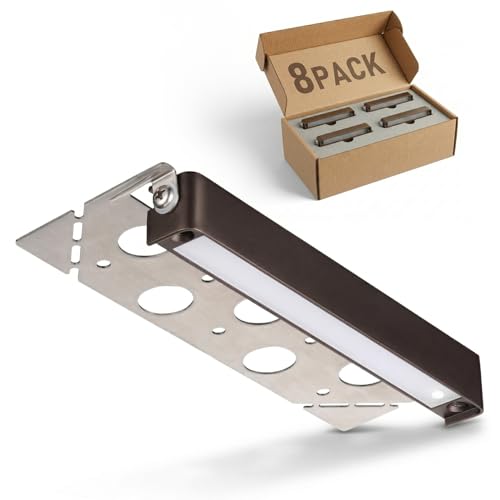
Widely Used: Powered by 12-24V AC/DC, this LED low voltage landscape light can be used to light barbecue fire pits, landscape steps, retaining walls, decks, rock brick column, outdoor kitchen, flowerbeds, and masonry walls. This hardscape paver light can be rotated to fits more applications
2. Flat Zones for Patios and Lawns
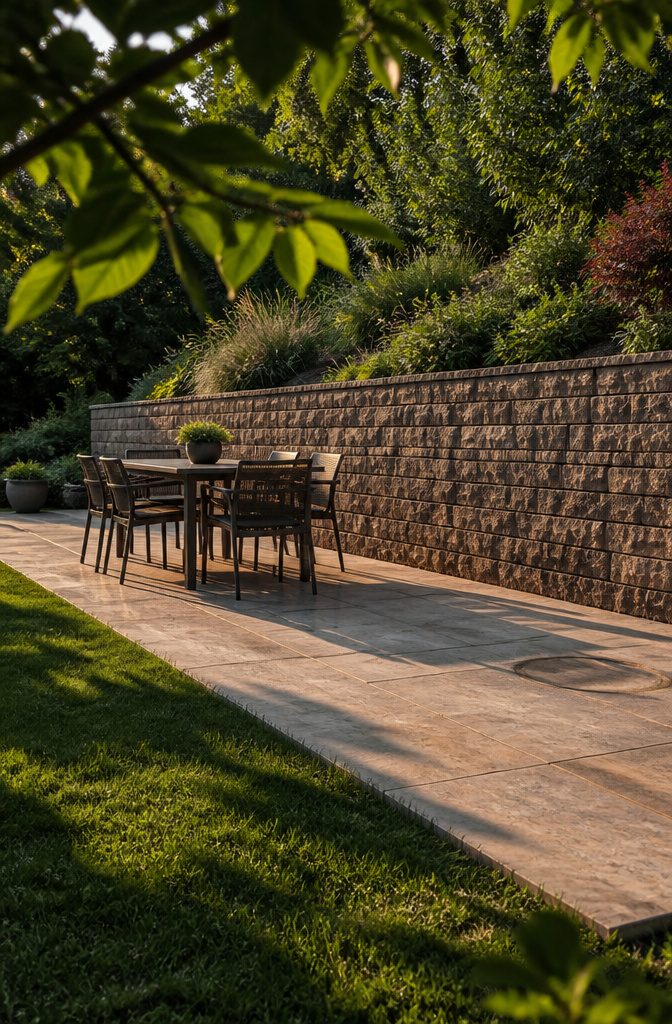
A retaining wall makes flat ground by cutting into the slope instead of building out from it.
You dig back into the uphill side, set the wall at the rear of the cut, and the wall holds the remaining hill off the new level pad. That pad gets a solid backdrop behind it.
In a small yard, make the pad a patio or dining area. A table and chairs need level ground more than anything else, and a cut-in patio gives you that without using up the whole yard.
A flat lawn is harder to justify, since it has to be big enough to mow and play on. Cut the pad wide enough for your furniture plus room to pull chairs out, then build the wall behind it.
Recommended Products

No cutting concrete wall block, timbers or stone

HEAVY DUTY 8 OZ GEOTEXTILE FABRIC: Heavy duty non woven polypropylene drainage and filter fabric for French drains, retaining walls, road stabilization, erosion control, landscaping, rip rap, geocell, and construction projects.
HEAVY DUTY 8 OZ GEOTEXTILE FABRIC: Heavy duty non woven polypropylene drainage and filter fabric for French drains, retaining walls, road stabilization, erosion control, landscaping, rip rap, geocell, and construction projects.
3. Wall Materials and Finishes
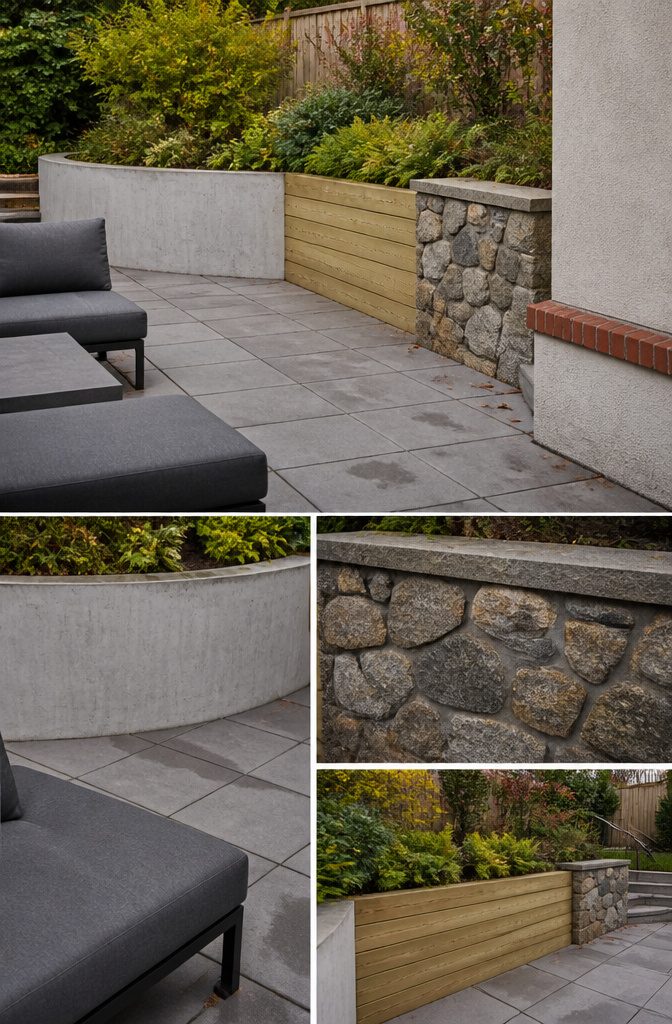
Poured concrete and pressure-treated pine are among the more affordable choices. Concrete gives a clean, modern look and can be molded into curves.
Pine looks natural but needs more upkeep over time. Granite usually costs more, though smaller granite pieces bring the price down and still give you a durable, traditional wall.
Skip used timber.
Old boards may carry preservatives that leach into the soil and harm nearby plants. Cedar resists fungus and rot naturally, so it suits a wall that holds flower beds.
To make a wall recede, match it to your patio, furniture, or surroundings.
A light gray concrete wall beside gray furniture nearly disappears. To add interest, contrast: brick paired with stucco breaks up an all-brick patio.
Recommended Products

Quality Metal Material: Our galvanized garden edge is processed using high-precision CNC technology, ensuring accuracy down to every millimeter. Innovative 3D ripple design not only enhances the aesthetic appeal of the fence but also strengthens its structural integrity.

Universal Compatibility: this 2 Pack drainage solution works with retaining wall materials from 3 to 8 inches including concrete timber and natural stone; It integrates with many landscape bricks modular blocks, flowerbed walls, and courtyard walls with no extra modifications needed
4. A Water Feature Backdrop
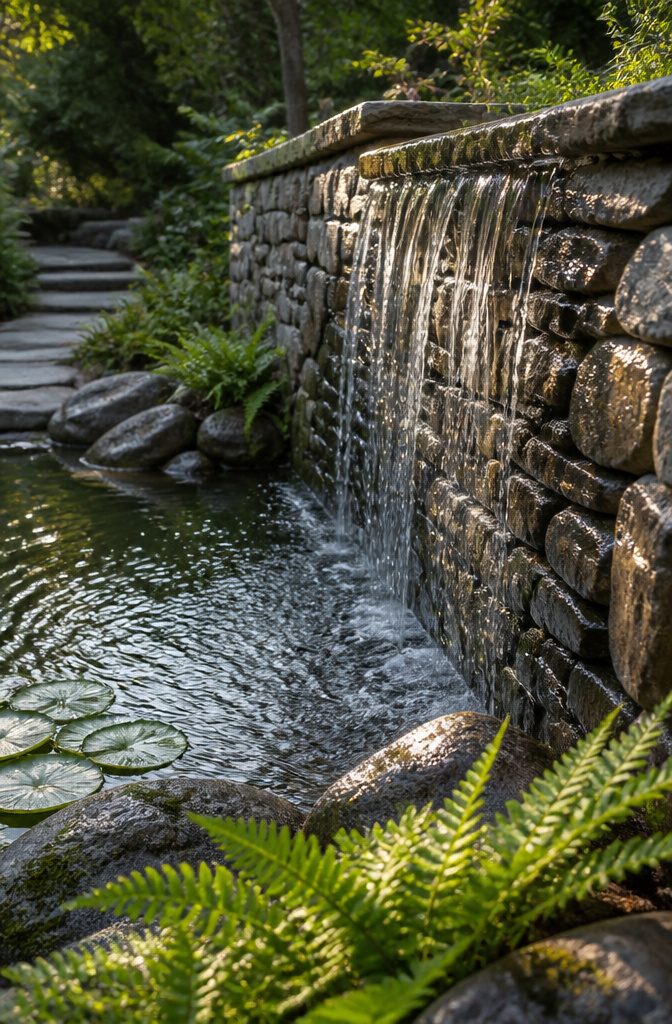
A retaining wall gives a waterfall something to fall down. Water can spill from the wall face and run into a basin below, which turns a plain slope holder into the focal point of the yard.
A small pond at the base works too. Stone or boulders blend best with moving water, so match them to the wall instead of adding a second look.
Moving water means a pump or plumbing, and it is easier to plan for that before the wall goes up than after.
Design the flow so the water circulates and never sits stagnant. Lily pads and other greenery around the basin soften the stone and may draw frogs.
Recommended Products

WALL MOUNTED WATER FOUNTAIN: Save space while adding a stunning vertical water feature. This water fountain measures 9.45"W x 17.72"L x 30.31"H and our meditating fountain is designed for both indoor and outdoor spaces

✅ SUPPORTS VARIOUS WATER FEATURES: Inside dimensions measuring about 24 inches x 24 inches x 12 inches deep (27" x 27" with the outer rim), the Custom Pro Heavy Duty Fountain and Waterfall Basin Reservoir is designed to hold a wide range of water features. It is perfect for a waterfall or fountain, such as bubbling rocks. It also can be used to support vases, pottery or imitation rocks. Sink it halfway into the ground, or use it above ground.

BASIN WATERFALL FOUNTAIN: Enhance your garden, patio, or backyard with the Alpine 41" Basin Waterfall Fountain. The cascading water creates a peaceful ambiance, offering a serene environment for relaxation and tranquility in your outdoor space.
5. A Fence on the Wall
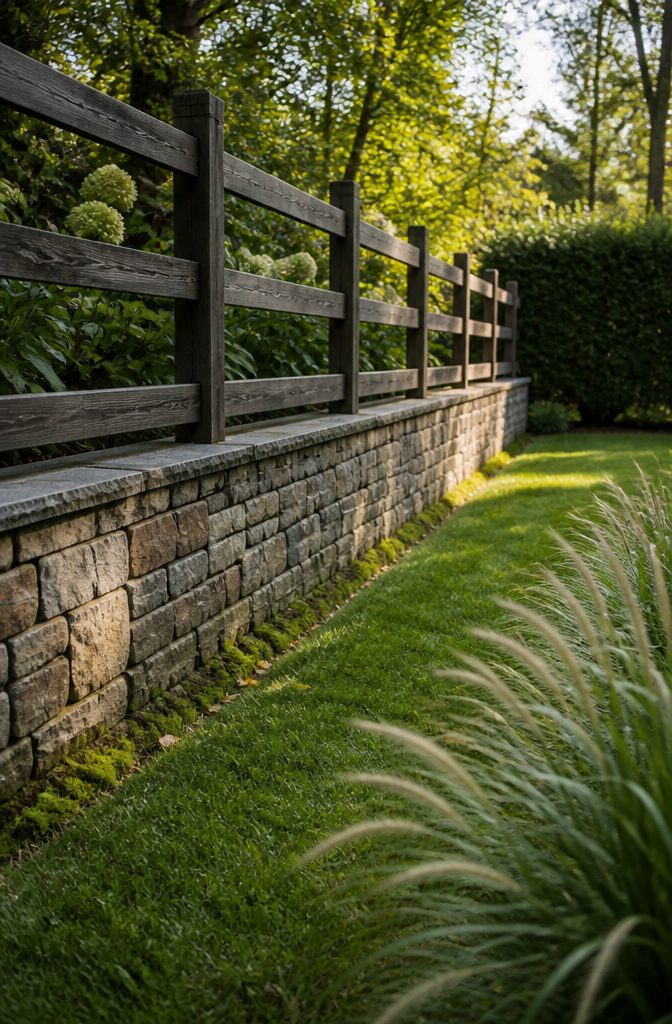
A fence on top of a retaining wall, or set just behind it, adds privacy and gives the property line a firmer edge.
Because the wall and fence read as one edge, choose them as a pair, with a fence material and color that echo the wall.
Check the wall first, because the wall material has to be able to support the fence.
Then pick an attachment method: surface mounting, face mounting, embedding, or a post-in system. A fence behind the wall keeps the posts off the wall entirely, which is the simpler route if you doubt the wall can carry them.
Local rules on height may apply, and some towns may count wall and fence together. Call your city or county office before you buy.
Recommended Products

Product Type: ABIS MUSIC

8-Pack Faux Stone Garden Edging: Includes 8 gray landscape edging panels designed to create a clean stone-look border for flower beds, lawns, mulch areas, walkways, patios, and paths

Widely Used: Powered by 12-24V AC/DC, this LED low voltage landscape light can be used to light barbecue fire pits, landscape steps, retaining walls, decks, rock brick column, outdoor kitchen, flowerbeds, and masonry walls. This hardscape paver light can be rotated to fits more applications
6. Pool Decks and Sunken Areas
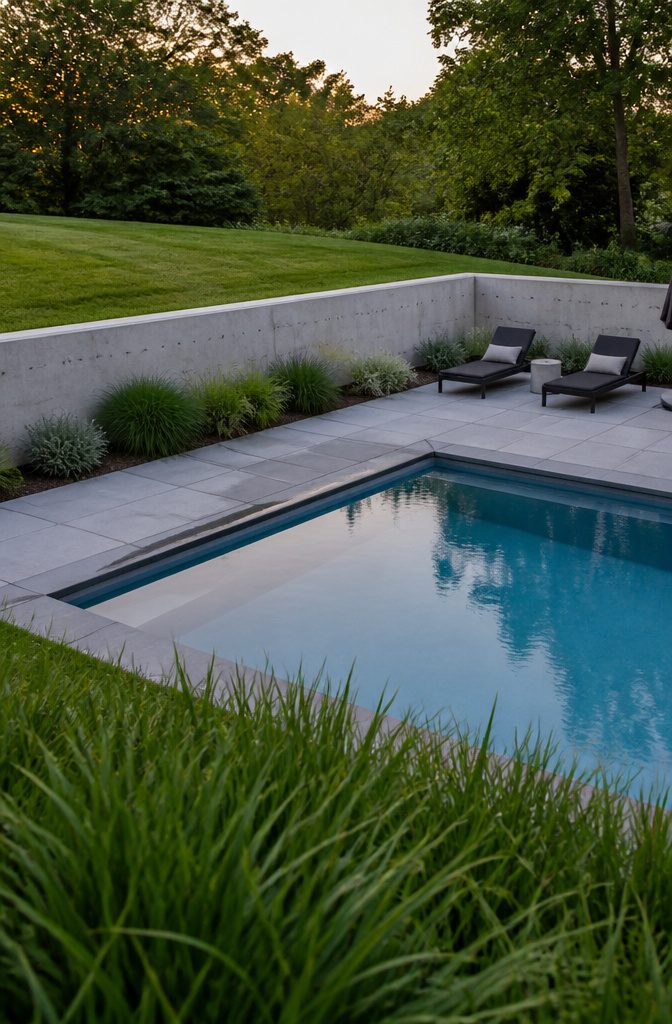
A wall can frame a pool from two directions. Where you want height, it builds a flat shelf that holds a raised pool and sundeck, and grasses and perennial shrubs along the edges soften the masonry.
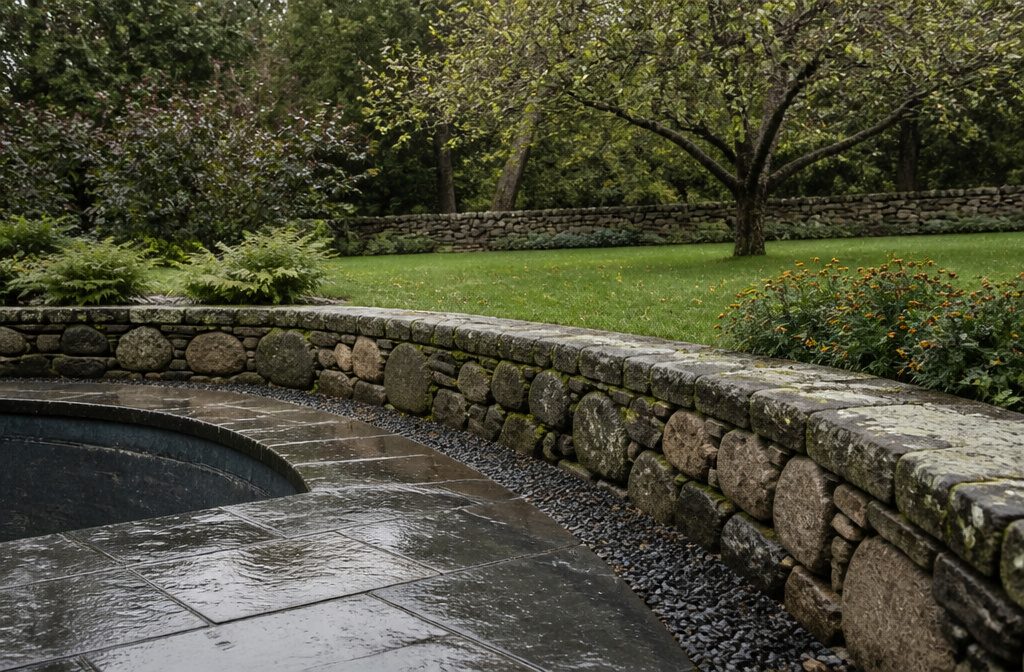
Where the yard is already level, reverse it: let a concrete wall hold back the lawn so the pool deck sits below the grass. That gives the retro sunken look and a deck that feels enclosed.
In a small yard, the sunken version is the better pick.
The wall marks off the pool area on its own, and the lawn stays as the open space around it. Plan where lawn runoff will go before you dig, because a lowered deck sits where water collects.
Recommended Products
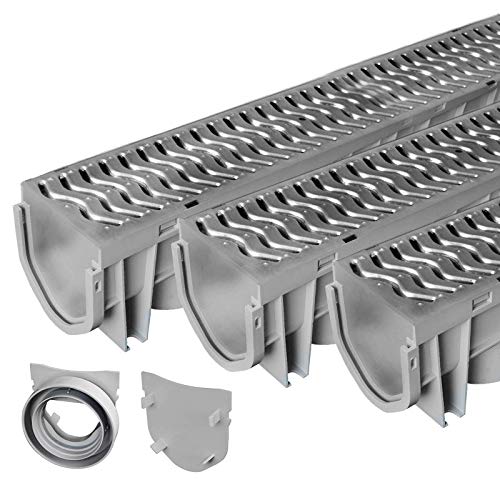
Stop Standing Water & Protect Surfaces: Capture and direct runoff away from driveways, patios, garages, and pool areas to help prevent pooling, erosion, and slippery spots—keeping outdoor spaces cleaner, safer, and easier to maintain.
HEAVY DUTY 8 OZ GEOTEXTILE FABRIC: Heavy duty non woven polypropylene drainage and filter fabric for French drains, retaining walls, road stabilization, erosion control, landscaping, rip rap, geocell, and construction projects.
HEAVY DUTY 8 OZ GEOTEXTILE FABRIC: Heavy duty non woven polypropylene drainage and filter fabric for French drains, retaining walls, road stabilization, erosion control, landscaping, rip rap, geocell, and construction projects.
7. Planters Built Into the Wall
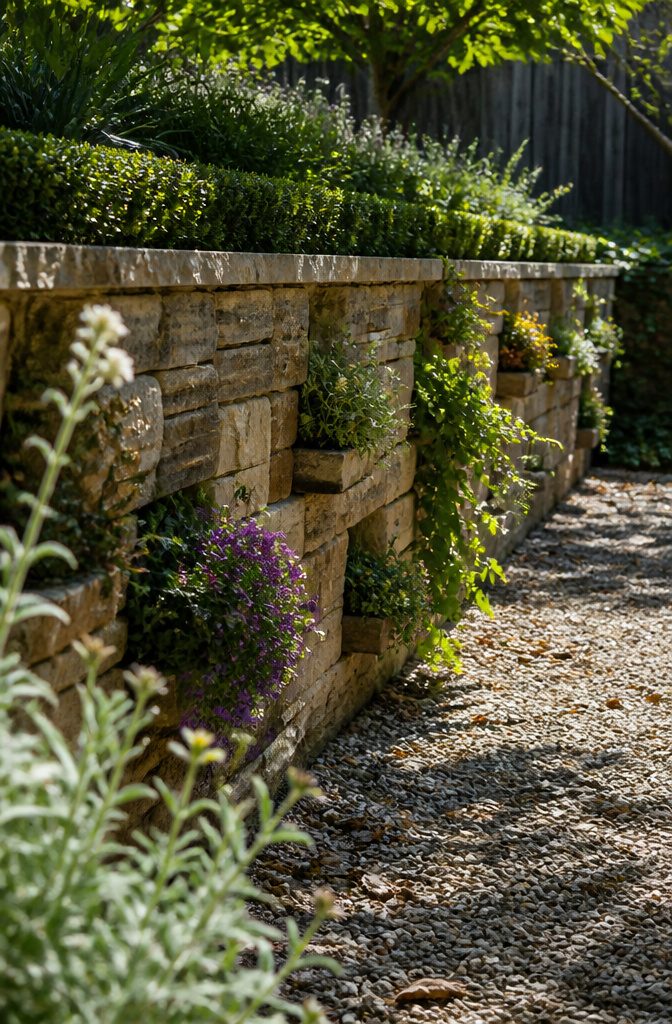
Boxwoods pruned to a tight shape leave most of the wall visible, while loose, spilling plants hide it, so decide which look you want before you buy.
A bed set into or on top of the wall can be natural stone or brick for a classic look, or concrete block for a plainer one.
Perennials come back each year and cut replanting. Shrubs along the top or base add structure, and small trees add shade and height, but choose species whose root systems won’t interfere with the wall.
Pockets in the face turn the wall into a vertical garden for cascading flowers or vines. Pick hardy, drought-resistant plants and fill the pockets with well-draining soil so water doesn’t sit.
8. A Wall Around a Tree
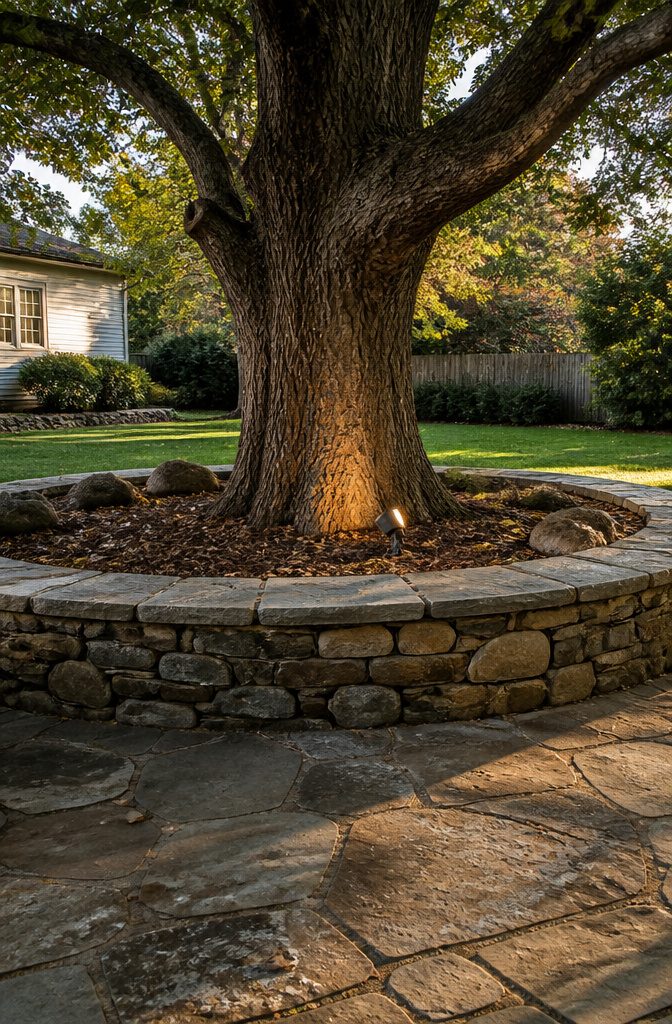
A low wall ringed around the base of a tree turns it into a focal point, and the ring does real work too. It protects the roots and defines a tidy bed inside for mulch or decorative stones.
The same idea suits a decades-old tree, a spa, or a garden bed. In one colonial home’s backyard in Kansas City, a wall encircles a sprawling tree at the center.
Keep the wall low so it frames the tree instead of competing with it.
Two additions are worth the effort: a light aimed at the trunk for a dramatic look at night, and a ring built wide enough to double as a bench.
Spend the effort on a tree that already deserves the attention, because the wall points every eye at it.
Recommended Products

【Specifications】 33" high x 17 1/2" wide x 9 1/2" deep. Holds 1 1/2 gallons of water. Weighs 20 lbs. San Pablo traditional wall fountain for patios and gardens. From the...
9. Fire Pit With Wall Seating
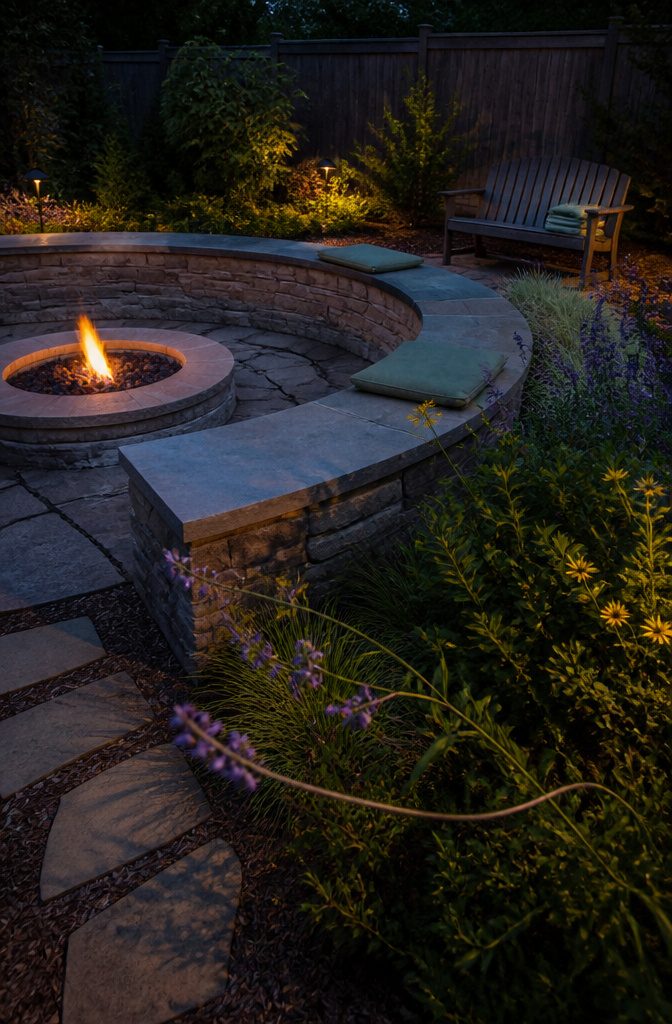
A low wall can mark off the fire pit area and double as the seating.
Curving it around the pit gives the spot a sense of privacy, and pollinator-friendly plants along the outside soften the stone. The wall top is your bench, so it has to be flat and wide enough to sit on.
Roughly 16–18 inches high and at least 15 inches deep is a common comfort range. Choose smooth, flat capstones over rough split-face blocks, which snag clothing and tilt a cushion.
Bare stone gets cold fast, so add bench cushions. Pick removable ones and store them dry between evenings, because a damp cushion on cold stone makes the seat useless.
Recommended Products

Widely Used: Powered by 12-24V AC/DC, this LED low voltage landscape light can be used to light barbecue fire pits, landscape steps, retaining walls, decks, rock brick column, outdoor kitchen, flowerbeds, and masonry walls. This hardscape paver light can be rotated to fits more applications

Widely Used: Powered by 12-24V AC/DC, this LED low voltage landscape light can be used to light barbecue fire pits, landscape steps, retaining walls, decks, rock brick column, outdoor kitchen, flowerbeds, and masonry walls. This hardscape paver light can be rotated to fits more applications

【Wide Application】This retaining wall lights can be used to light barbecue fire pits, landscape steps, retaining walls, planters, decks, and masonry walls etc. Fully meet your various requirements
10. Hedge or Trellis on Top
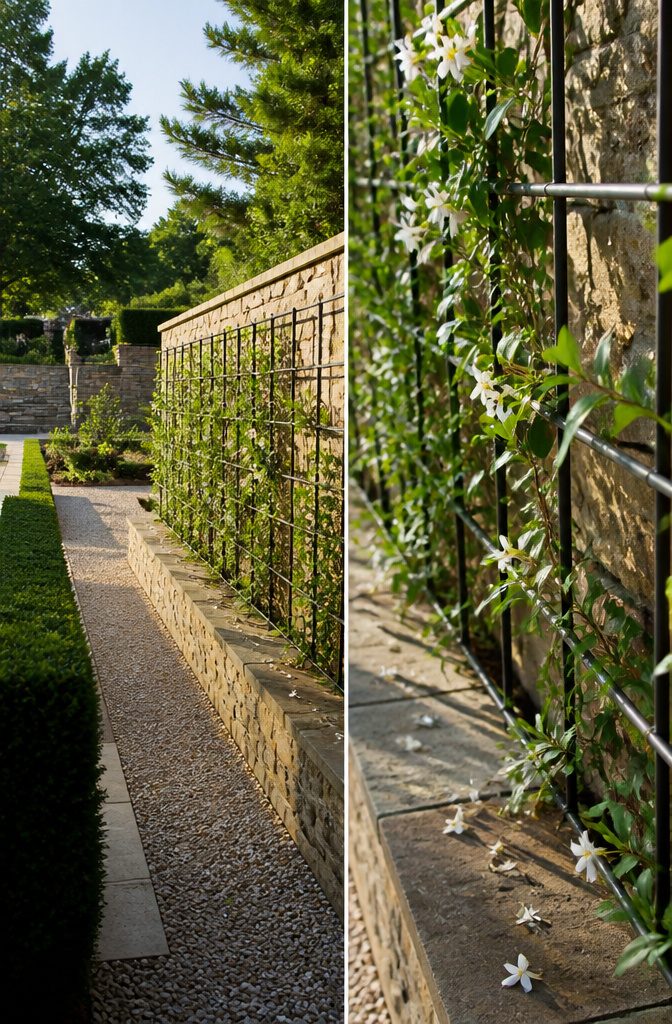
A hedge along the wall top gives you privacy for less money than building the wall taller, which gets pricey fast.
It also adds a green backdrop that softens the hard face of stone or block. Hedge roots and branches need room, so a hedge suits a deeper terrace and not a thin ledge.
For a narrow strip, fix a trellis to the wall instead. It takes almost no ground, and attaching it is fairly easy as long as you get the dimensions right.
Measure the wall face and the height you want before you buy. Add fragrant climbing plants and the scent carries on hot summer days.
Recommended Products
HEAVY DUTY 8 OZ GEOTEXTILE FABRIC: Heavy duty non woven polypropylene drainage and filter fabric for French drains, retaining walls, road stabilization, erosion control, landscaping, rip rap, geocell, and construction projects.

No cutting concrete wall block, timbers or stone
11. Outdoor Kitchen Backdrop
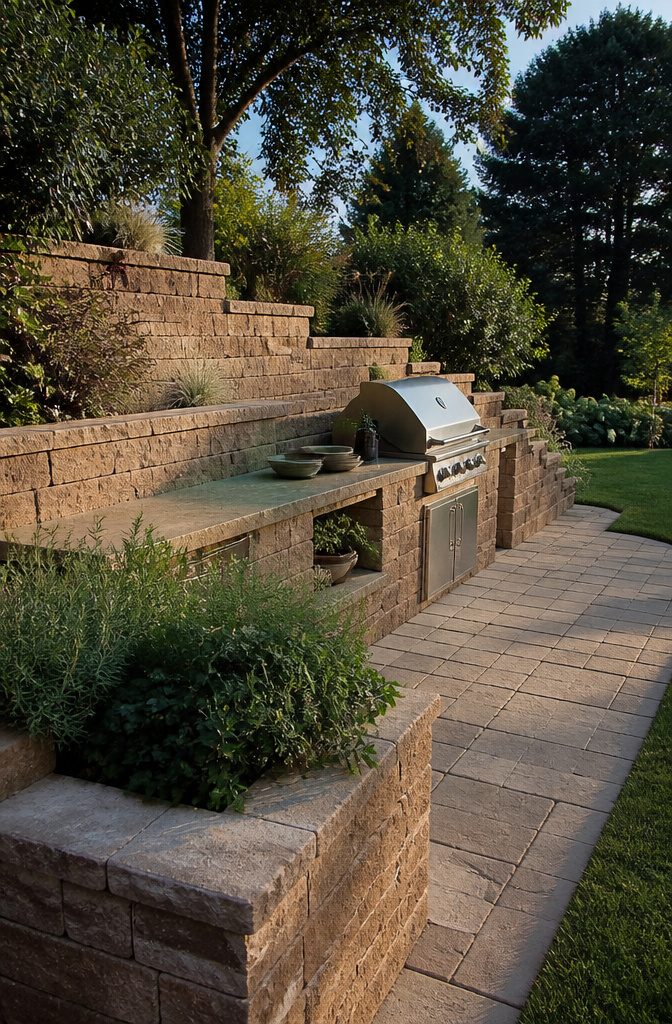
A cooking area set in the middle of a lawn looks stranded.
Tuck it alongside a retaining wall and the wall does two jobs: it gives the kitchen a solid backdrop, and it marks where the cooking zone ends and the rest of the yard begins.
A tiered brick wall is a strong choice because each step frames the space and gives it a finished, built-in look.
Set the kitchen on level ground in front of the wall or beside it, with the wall at the back so guests face the cook and the view.
Keep wood trellis and dry, leggy plants off the stretch of wall directly behind anything that makes heat or smoke.
12. Storage on the Wall Top
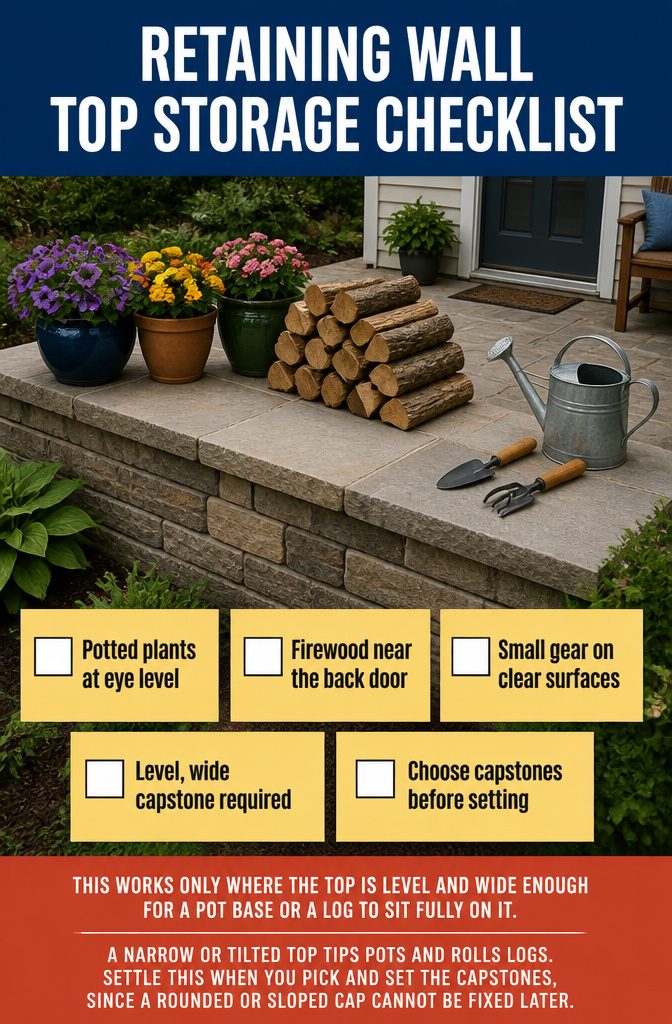
A flat wall top works as shelf space in a yard with no room for a shed or garage. Good uses:
- Potted plants. A row of pots along the top puts color at eye level and keeps them off the patio floor.
- Firewood. A short stack near the back door stays dry and out of the way. Flat river rock makes a good surface for this.
- Small gear. A watering can or hand tools fit, as long as the surface stays clear.
This works only where the top is level and wide enough for a pot base or a log to sit fully on it.
A narrow or tilted top tips pots and rolls logs. Settle this when you pick and set the capstones, since a rounded or sloped cap cannot be fixed later.
Soil Support and Drainage
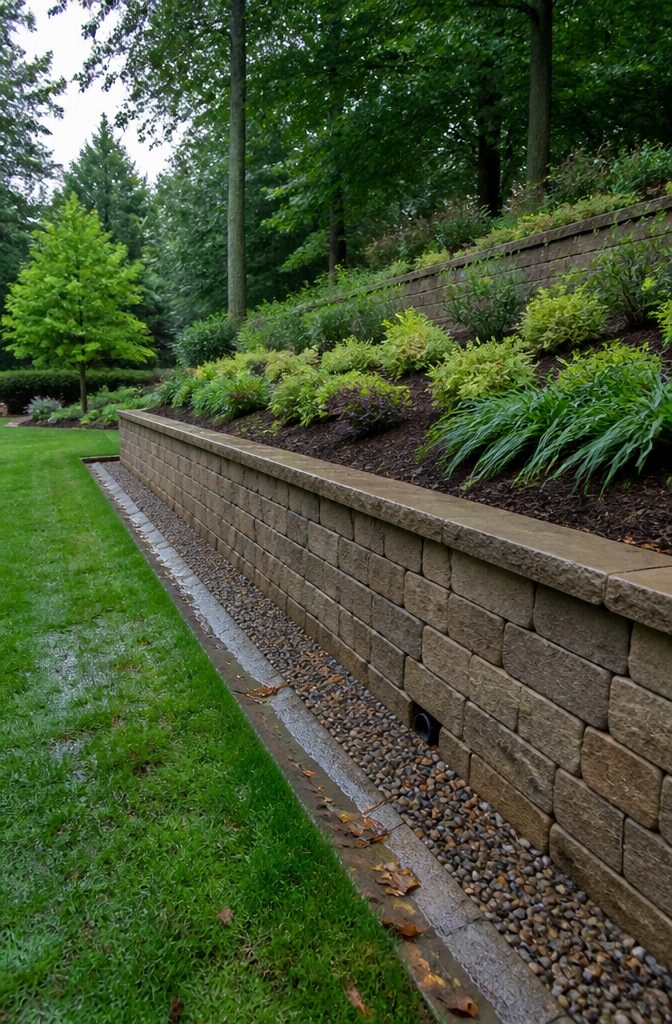
Soil on a slope pushes downhill under its own weight, and that pressure causes slumps, landslides and erosion.
A retaining wall carries the load so the ground stays where you put it. This matters most in a yard with few tree and shrub roots, because bare ground has nothing else binding it.
A wall also changes how water moves. Replacing one steep drop with a gentler grade slows surface runoff, and slower water carries off less soil.
Build drainage into the plan from the start. Water with nowhere to go collects behind the wall and adds to the pressure it must hold back, while a drained wall helps protect the lower yard from flooding.
4 Retaining Wall Types
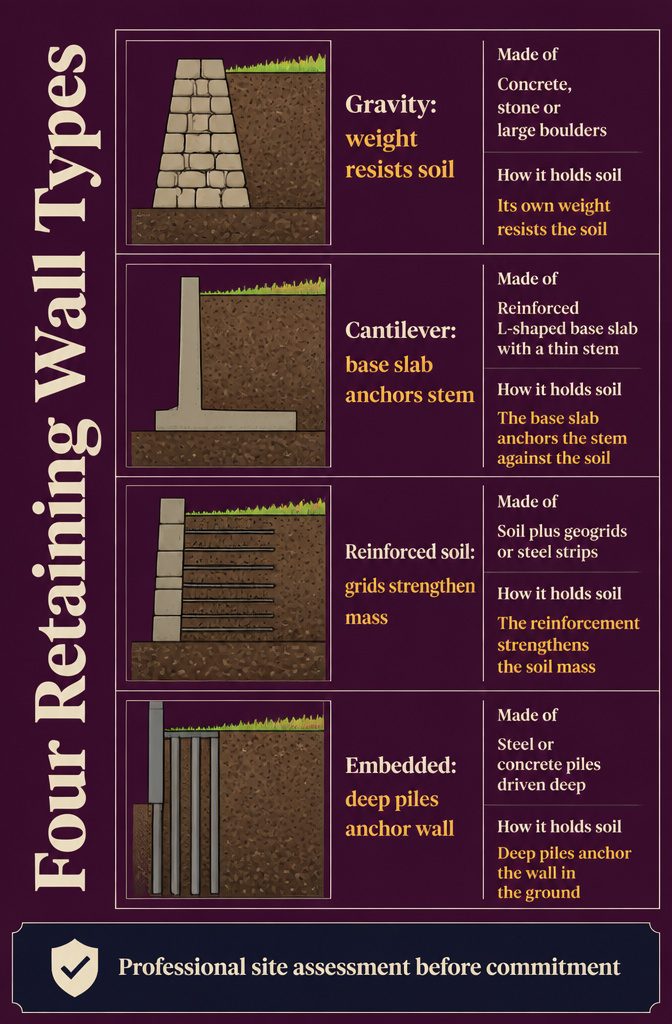
Four types cover most retaining walls: gravity, cantilever, reinforced soil and embedded. Reinforced-soil walls suit large projects and many soil types, but they need careful installation and regular maintenance.
| Type | Made of | How it holds soil |
|---|---|---|
| Gravity | Concrete, stone or large boulders | Its own weight resists the soil |
| Cantilever | Reinforced L-shaped base slab with a thin stem | The base slab anchors the stem against the soil |
| Reinforced soil | Soil plus geogrids or steel strips | The reinforcement strengthens the soil mass |
| Embedded | Steel or concrete piles driven deep | Deep piles anchor the wall in the ground |
Your choice depends on what the yard needs, your soil and the look you want. Have a professional assess the site before you commit.
Building a Block Wall
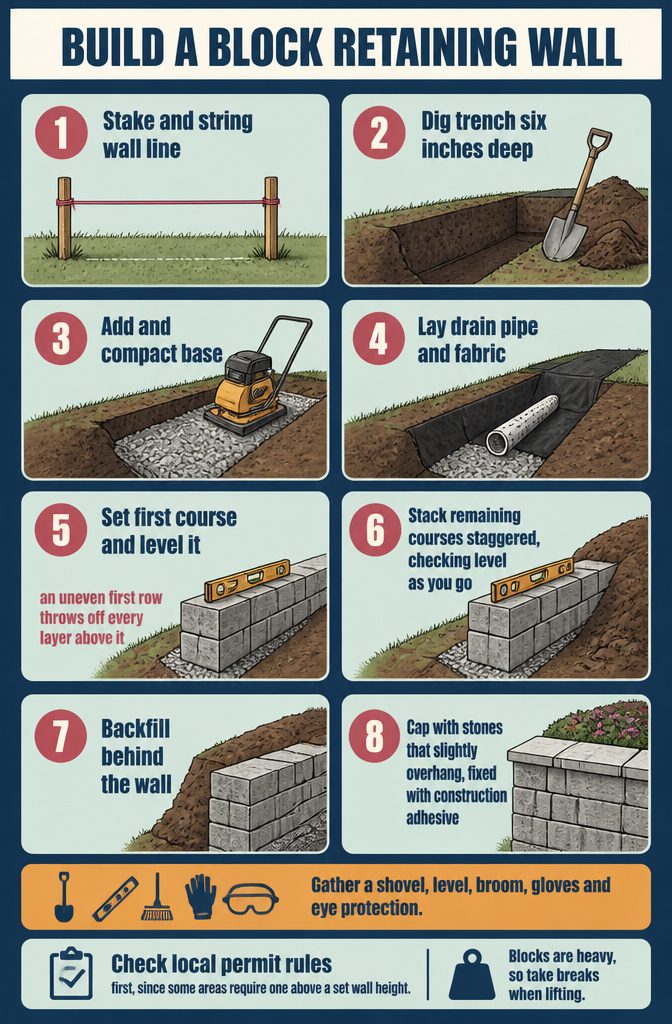
Check local permit rules first, since some areas require one above a set wall height. Gather a shovel, level, broom, gloves and eye protection.
- Stake and string the wall line.
- Dig a trench about 6 inches deep and twice the block width.
- Add a gravel or sand base and compact it.
- Lay perforated pipe with a drain sleeve, and line the back with landscape fabric.
- Set the first course and level it, because an uneven first row throws off every layer above it.
- Stack the remaining courses staggered, checking level as you go.
- Backfill behind the wall.
- Cap with stones that slightly overhang, fixed with construction adhesive.
Blocks are heavy, so take breaks when lifting.
Frequently Asked Questions
Is a retaining wall considered landscaping?
Yes.
A retaining wall is part of landscape design because it does a practical job and a visual one. It holds soil back and slows erosion on a slope, and it creates levels and defined spaces for planting.
What is the cheapest type of retaining wall?
Poured concrete and pressure-treated pine are among the more affordable materials. Concrete looks clean and modern and can be molded into curves, while pine looks natural but needs more upkeep over time.
Granite usually costs more, though using smaller pieces brings the price down. Avoid used timber as a cost saver, since old boards may leach preservatives into the soil.
How do you landscape over a retaining wall?
Plant a bed along the top or base with perennials, shrubs, or small trees, and pick species whose roots won’t interfere with the wall.
Perennials come back each year, so you replant less. For a vertical garden, set hardy, drought-resistant plants into pockets in the wall face and fill them with well-draining soil so water doesn’t sit.