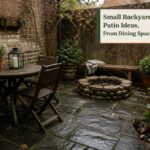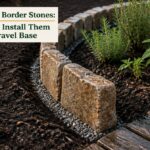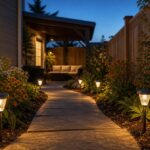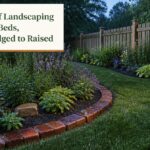
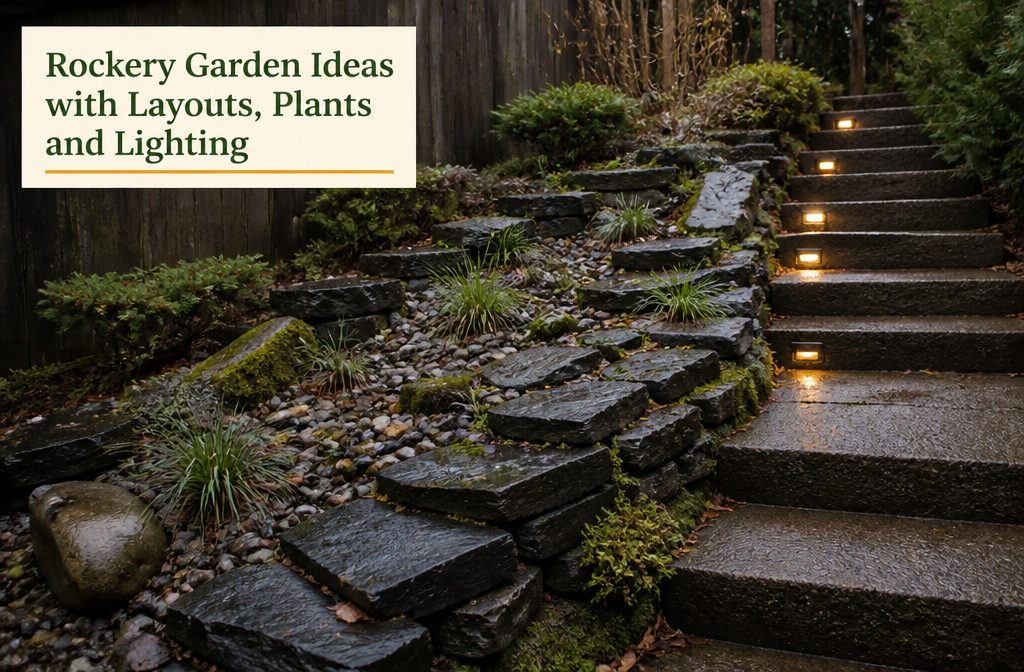
These rockeries run from a 6-step corner pile under gravel mulch to slate borders and LED-lit concrete stairs.
The light on your spot decides which fits, because it limits the plants. Check it in the morning, at midday and in late afternoon: a house, fence or tree can shade a bed that looked sunny at noon.
1. Corner Rockery
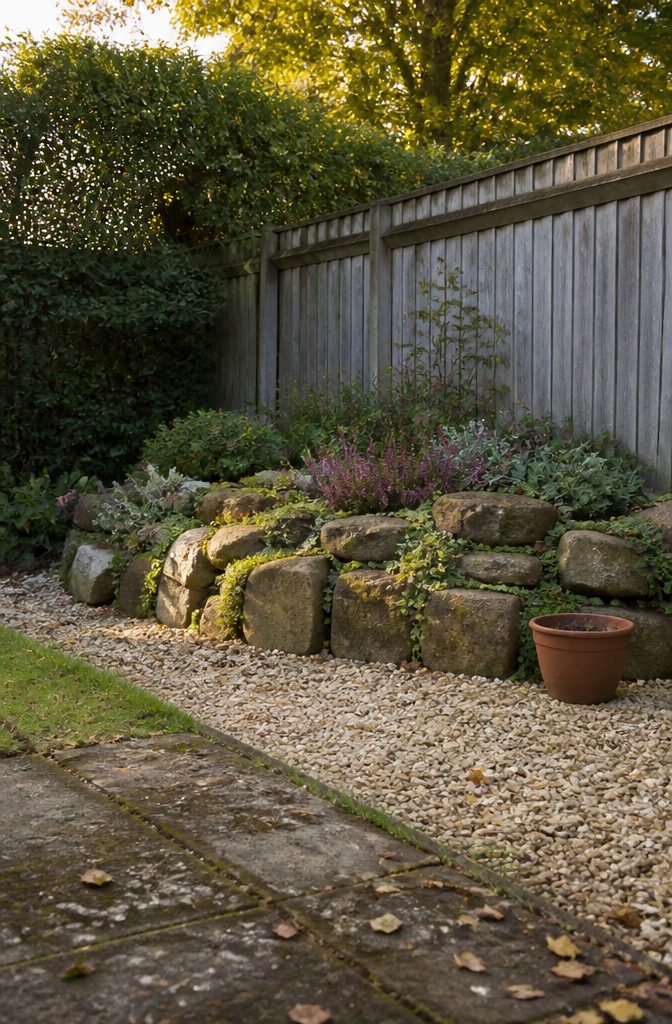
- Choose the corner and clear out all weeds and debris.
- Lay weed suppressant fabric over the bare ground. Put it down before any stone, because it is hard to tuck in around rocks later.
- Set the largest stones first as the base, then fill the gaps with smaller ones. Big stones placed last have nothing to sit on.
- Add well-draining soil mixed with gravel around and between the rocks.
- Plant your rockery plants and water them well so the roots establish.
- Finish with a layer of gravel mulch to hold moisture in.
Compact and trailing plants suit a corner because they soften the stone edges.
Recommended Products

【DURABLE CAST ALUMINUM CONSTRUCTION】IP65 waterproof heavy-duty die-aluminum housing and tempered glass lens cover are designed to withstand rain and snow. Frosted baking paint process makes it textured, corrosion-resistant, rust-resistant and more durable
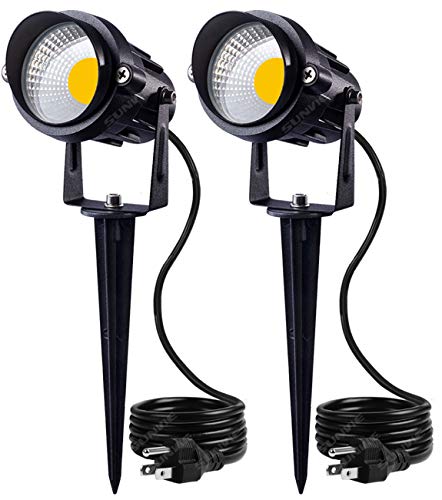
【Update 12W Landscape Lights Super Brightness Compared with others】2 Pack 12W LED Light, 900 Lumen 3000K warm white great for illuminating your Patio, Garden Path Back Yard fences—Both make security and decoration with beautiful warm white lights
2. Raised Rockery
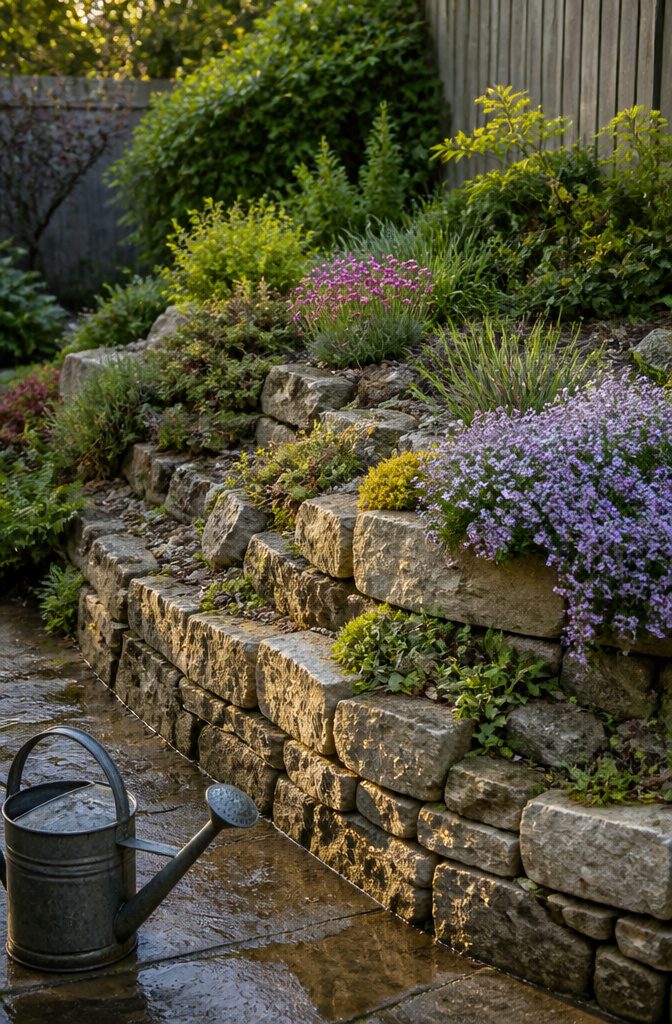
Building a rockery up instead of laying it flat gives a small yard the height and depth it usually lacks.
A raised bed lifts the planting off the ground, so plants sit at different levels and your eye reads layers instead of one flat patch.
Border the edge with natural stone to give the bed a clean outline, then let trailing plants spill over the top course to soften the line.
A raised rockery is also easier to maintain than one set at ground level, because the stone edge marks exactly where the bed ends and the planting sits closer to hand.
In a yard with little floor space, building up is the better choice over spreading rocks wide.
Recommended Products

【Well Drainage】This succulent gritty mix is super well in water drainage, best for drought tolerant succulents and cactus, help your plants grow beautiful colors and also effective prevent rover water

Eco-Friendly Recycled Smart Gravel: Made in the USA from 100% recycled plastics to help reduce environmental waste and plastic pollution
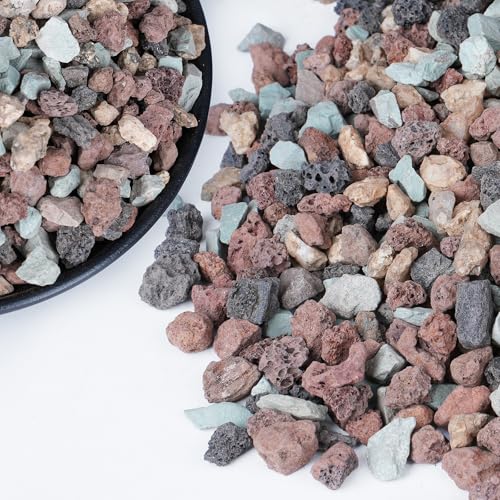
【Size】These rocks average about 3/8 inch in size, with slight variations in shape that add aesthetic appeal to your beloved plants and bring natural diversity to your garden.
3. Pond-Side Rockery
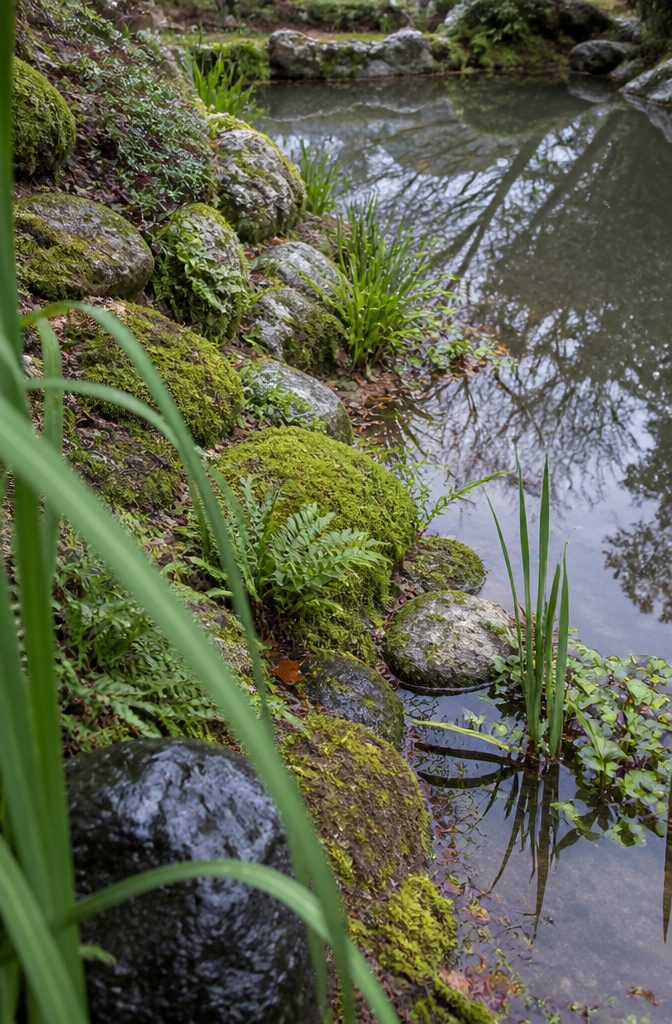
Run smooth stones from the rockery down toward the water so the planting and the pond read as one feature.
Set the larger rocks on a gentle slope, gently sloping rocks that resemble a creek bed, rather than stacking them steeply. A low grade looks like water shaped it, while tall stacked stone looks built.
Put moss-covered stones near the edge, where they give the pond an aged look that freshly cut rock lacks.
Plant ferns and irises in the damp ground beside them. Then add aquatic plants in the water itself, so the green carries across the shoreline instead of stopping at the rocks.
Recommended Products
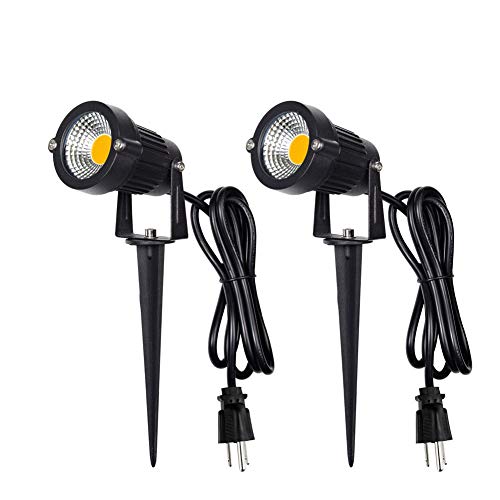
Premium Material: Landscape lamp is made of thick cast aluminum + glass lens + LED, This garden lights outdoor electric with UL Listed Adapter, 1.5 meters power cord length with US plug and 270 degree up and down rotating bracket and spike base, Applicable voltage: Between AC 85-265V

【DURABLE CAST ALUMINUM CONSTRUCTION】IP65 waterproof heavy-duty die-aluminum housing and tempered glass lens cover are designed to withstand rain and snow. Frosted baking paint process makes it textured, corrosion-resistant, rust-resistant and more durable

SOLID BRASS MATERIAL: Fixture housing made of die-cast brass, thickened tube walls make it stronger, unique finish acid washing process to maximize the life of the fixture, stable quality of CNC production process, corrosion and moisture resistant, prime choice for coastal or rainforest
4. Modern Minimalist Rockery
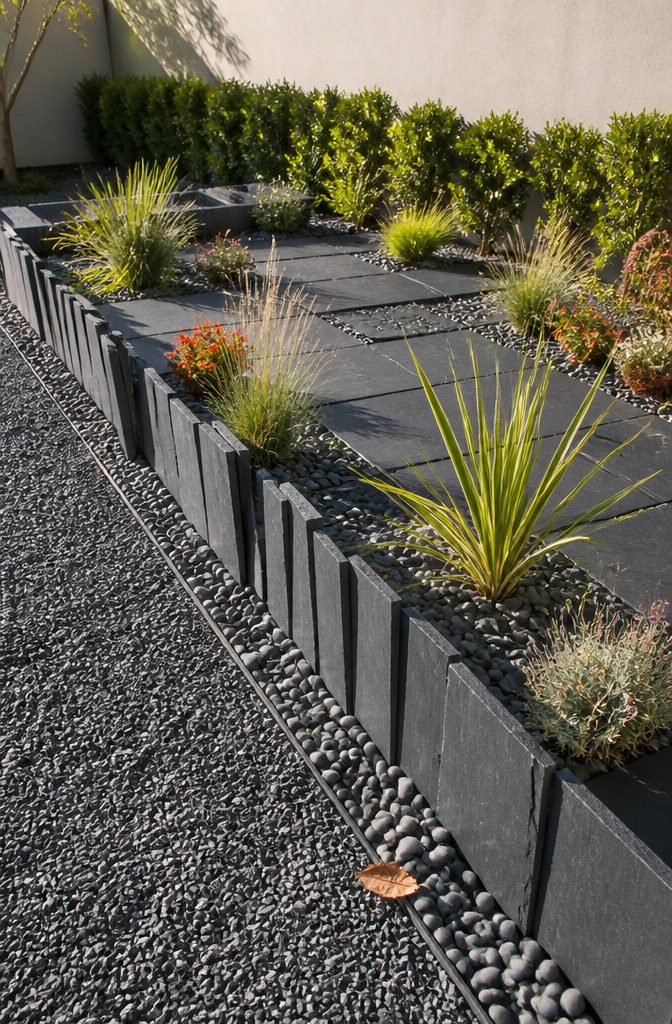
Slate suits a modern rockery because its dark gray looks sharp and flat against green foliage.
Stand the pieces upright to build a wall or border, or lay them flat for a patio-style surface. Either way, keep the layout geometric: straight runs, squares or repeating rectangles of stone, with smooth pebbles filling the spaces between plantings.
Plant sparsely so the texture of the slate stays visible.
Set soft grasses beside spiky plants, and let the contrast in shape carry the interest instead of a crowded bed. Bright flowers stand out well against dark stone, and a few are enough.
Recommended Products

🌱 OPTIMAL DRAINAGE FOR HEALTHIER PLANTS Say goodbye to soggy soil! Our eco-friendly gravel rocks promote healthy drainage, creating a porous layer underneath the soil to protect your plants from overwatering

[Fine 1/8" Size (About 4-6 mm)]: Mini pebbles spread evenly for a clean finish in fish tanks, terrariums and small planters. Natural stones may vary slightly in size and shape

Promoting Moisture Circulation: Made of premium colorful lava rocks these rocks for plants and plant rocks mix well with succulent soil mix succulent soil potting mix bonsai rocks and cactus soil. It improves air flow drains extra water to avoid root rot and balances water retention for succulents and bonsai
5. Vertical Rockery
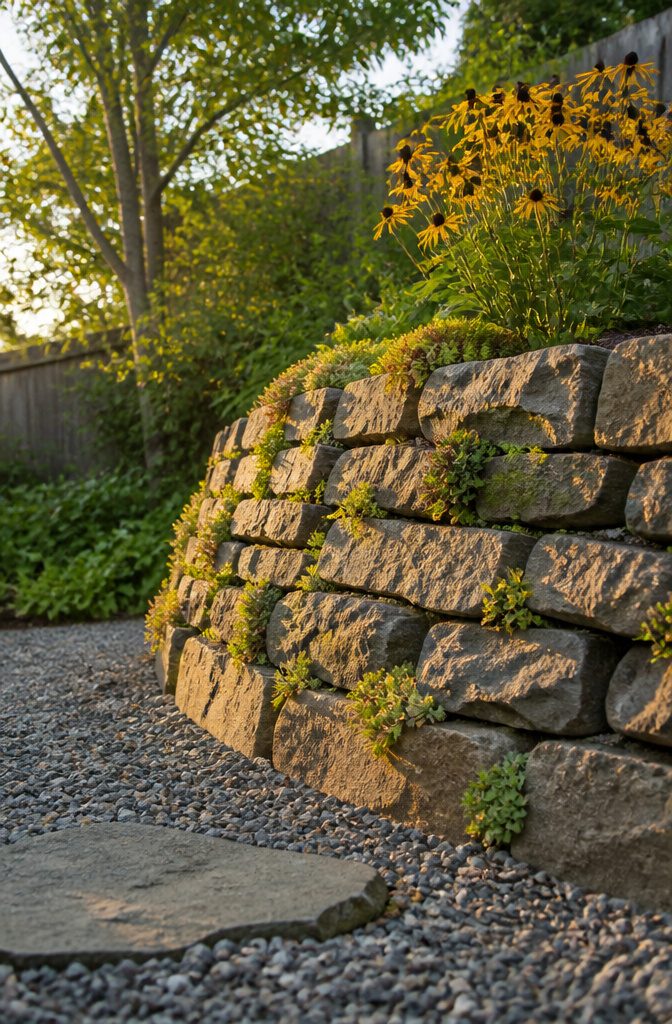
Going up saves floor space, which a small yard runs short of. A low, curved dry wall suits it well: the curve braces the stones against the soil behind them, so the wall steadies itself without mortar.
Keep the rocks in scale with the space. A few mid-sized stones read as a feature in a small yard, while one oversized boulder crowds it.
Set the largest stones at the base, stagger the joints like brickwork, and lean each course slightly back toward the soil. Tuck sedum into the gaps along the face, where it spills over the edges.
Plant Rudbeckia hirta in the soil on top so the blooms rise above the stone. Both handle dry spells.
Recommended Products

COMMERCIAL GRADE LANDSCAPE LIGHTING: Fixture housing made of die-cast brass, thickened tube walls make it stronger, unique finish acid washing process to maximize the life of the fixture, stable quality of CNC production process, corrosion and moisture resistant, prime choice for coastal or rainforest

COMMERCIAL GRADE LANDSCAPE LIGHTING: Fixture housing made of die-cast brass, thickened tube walls make it stronger, unique finish acid washing process to maximize the life of the fixture, stable quality of CNC production process, corrosion and moisture resistant, prime choice for coastal or rainforest

【RGB & Warm White Landscape Lights】ZUCKEO 12W low voltage color changing landscape lights combines warm white and RGB colors. The soft warm white is suitable for daily lighting, add a cozy atmosphere to your home; The 16 vibrant RGB colors suitable for all party and holiday decorations. It is a good choice for yard, tree, house, fence, wedding, Christmas, Halloween decoration
6. Varied Plant Texture and Color
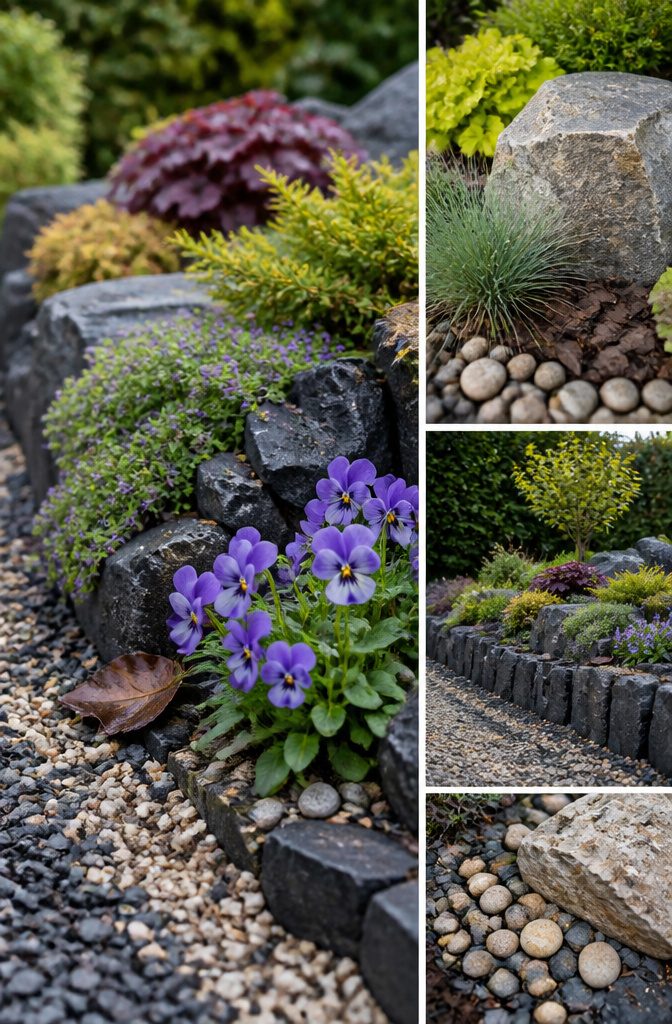
Pair plants that differ in shape and color, and let the stone act as a quiet backdrop. In a small summer rockery, blooming violets stand out against bare rock because nothing else competes with their color.
Aubretia works the same way among jura rock and basalt. The dark, angular basalt sharpens its soft spill of flowers, and jura and granite gravel in the gaps keep the bed from looking heavy.
Larger beds can start with gray granite boulders, mulched bark, and pebbles, which give you three textures before any plant goes in.
Set a soft, mounding plant beside a hard-edged stone, and put a fine-leaved plant next to a broad-leaved one so no two neighbors read alike.
Recommended Products
[Fine 1/8" Size (About 4-6 mm)]: Mini pebbles spread evenly for a clean finish in fish tanks, terrariums and small planters. Natural stones may vary slightly in size and shape

【Superior Drainage for Succulents and Cacti】Ensure your drought-tolerant plants thrive with this premium gritty mix that offers exceptional water drainage. Prevent overwatering and watch your plants blossom with beautiful colors.

Superior Drainage & Aeration for Healthy Roots: This lava rock horticultural grit improves airflow and water drainage, helping prevent overwatering and root rot. Perfect for succulents, cacti, orchids, and other moisture-sensitive plants.
7. Compact and Trailing Plants
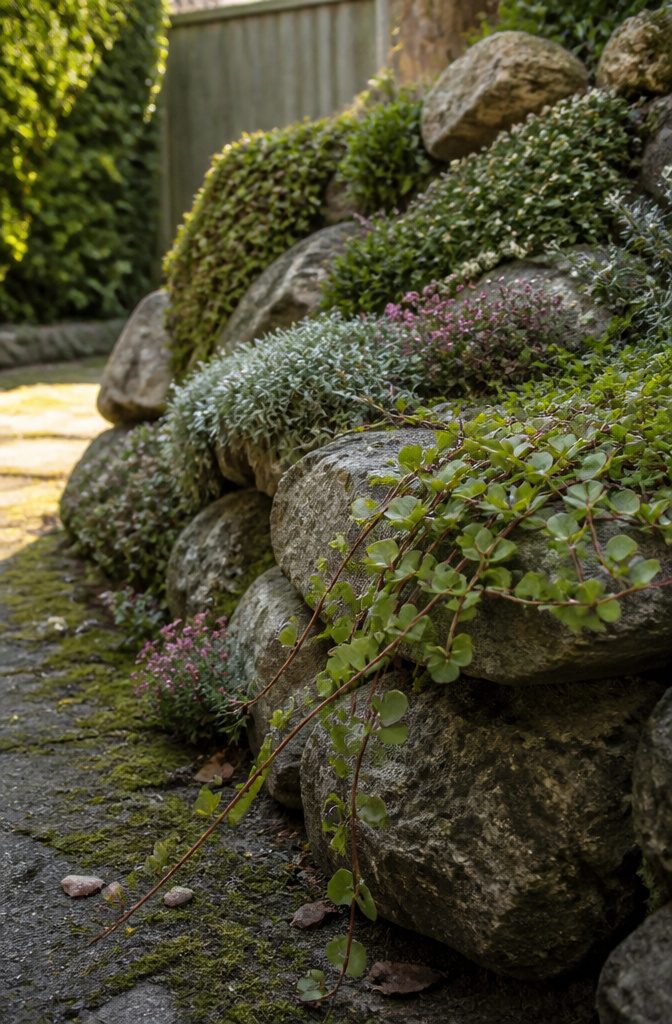
Hard rock edges look best when something spills over them.
Set trailing plants at the top of a ledge or in a gap between stones, and their stems will drape down the face and break up the straight lines that can make a small rockery look stiff.
Compact, mounding plants do the same job at ground level, filling pockets between stones without burying them.
Both suit small rockeries because they add movement without adding height. A tall plant can swallow a small pile of stone, while a low mound or trailing stem leaves the rocks visible.
Plant trailers where they can fall over a stone edge, and tuck compact plants into the gaps beside them. In a tight space, pick low and soft over upright, and let the stone stay the main feature.
8. Drought-Tolerant Plants
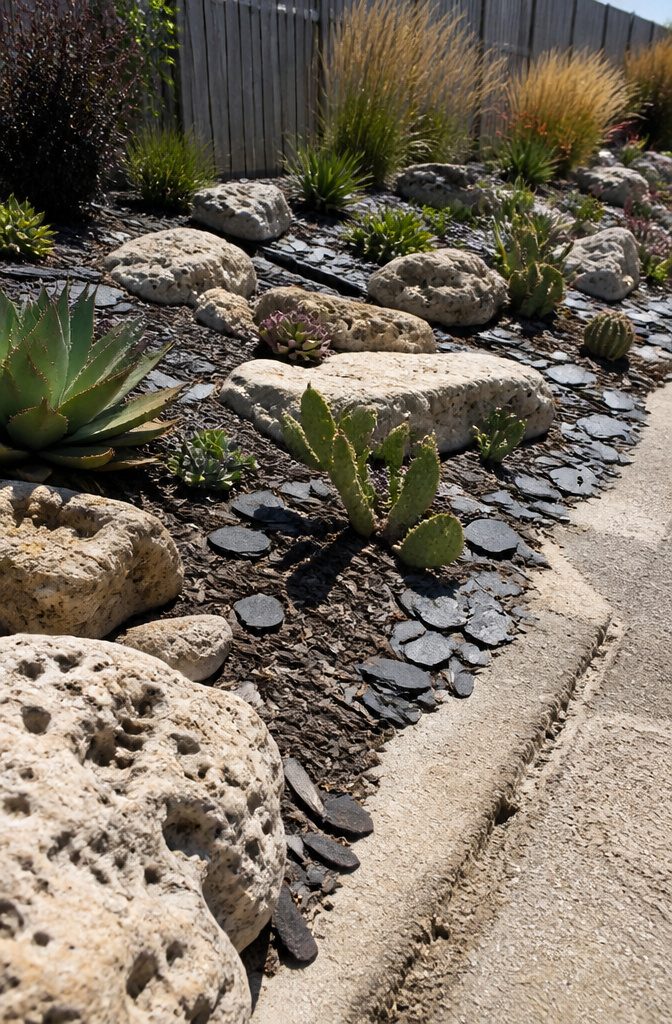
Succulents and cacti are the safest planting for a rockery in a hot-summer region. They need minimal watering and do well in rocky, well-drained spots, so a dry spell that stresses most of your yard barely touches them.
If you’re a season or two into gardening, they’re also the plants most likely to forgive a missed week of watering.
Set them against slate or limestone to get contrast between the plant shapes and the stone. Mixing a few kinds of stone adds texture, but in a small yard one or two keeps the look calm.
Space the rocks so soil doesn’t wash out between them, and spread mulch over any bare ground to hold moisture and hold down weeds.
9. Alpine Plants
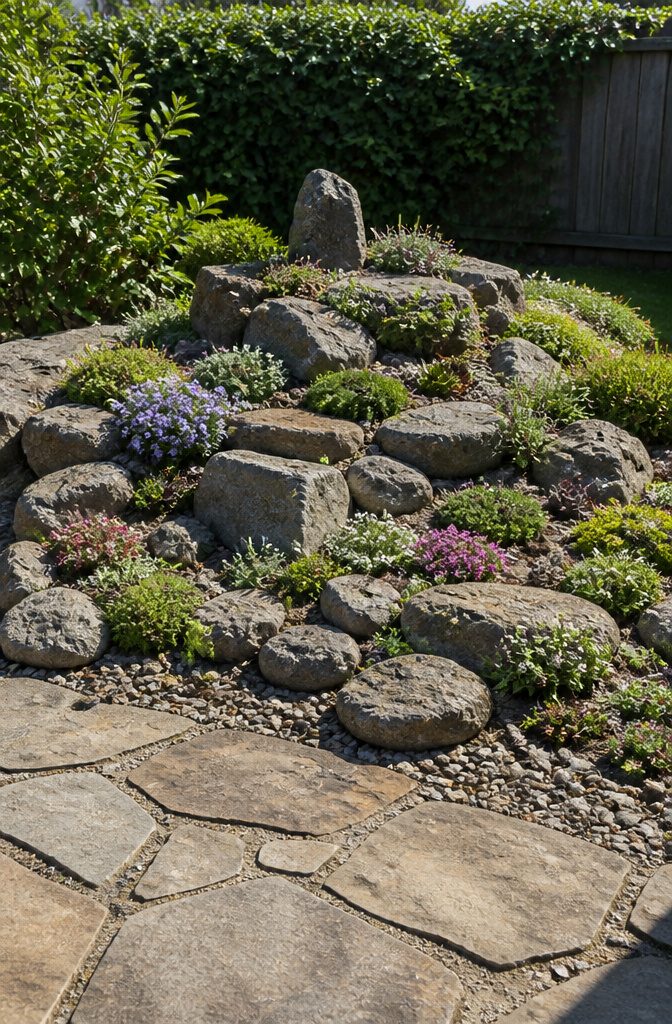
Alpine plants grow wild on rocky ground, so a rockery gives them the kind of setting they already suit.
Their main contribution is dense foliage, low and tightly packed, which fills the gaps between stones and keeps the rock from looking bare.
Choose them by habit and light before looks. Group plants by growth habit and sunlight needs, so compact types sit where larger neighbors won’t crowd them and sun-lovers get the brightest pockets.
"Alpine" on a label doesn’t guarantee a plant will handle your summers, so check the hardiness zone on the tag against yours. Buy a few plants and let them fill in over a season before adding more.
10. Ornamental Grasses
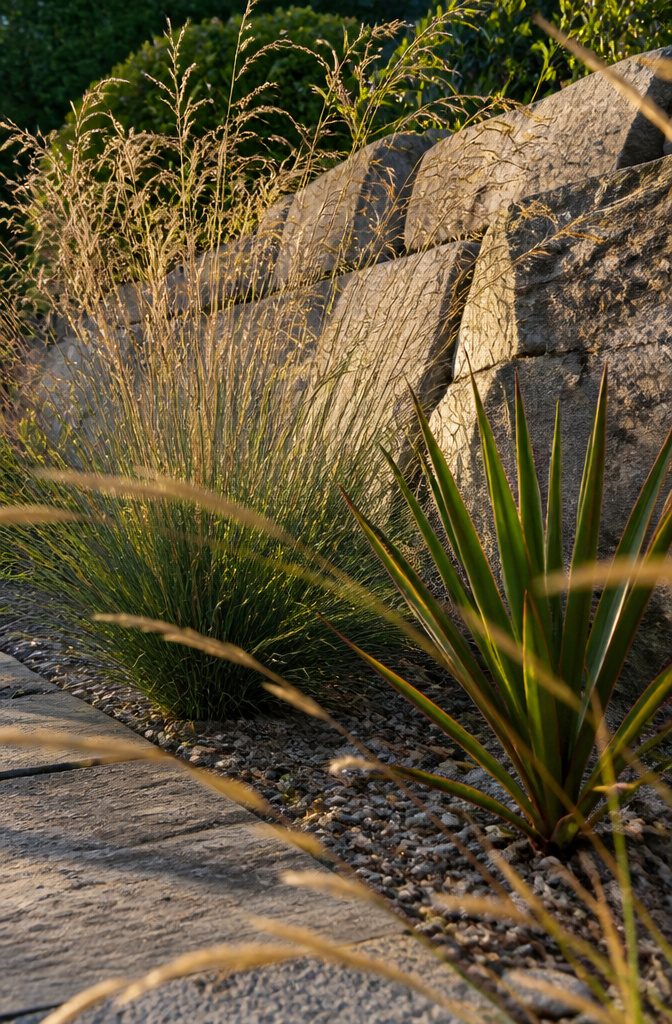
Stone stays still, and grass doesn’t.
Slender stalks sway in a light breeze, which gives a rockery a natural, unplanned look that boulders and low cushion plants can’t create alone. In modern designs, the strongest pairing is soft, fine-textured grasses beside spiky plants.
The blades blur the hard edges of the rock, and the spikes keep a sharp outline. Set the grasses against a plain stone face, where the movement reads clearly.
Match each clump to the sunlight it will get and the size it will reach, so a tall grass doesn’t swallow the rocks you built the bed to show off.
11. Groundcovers
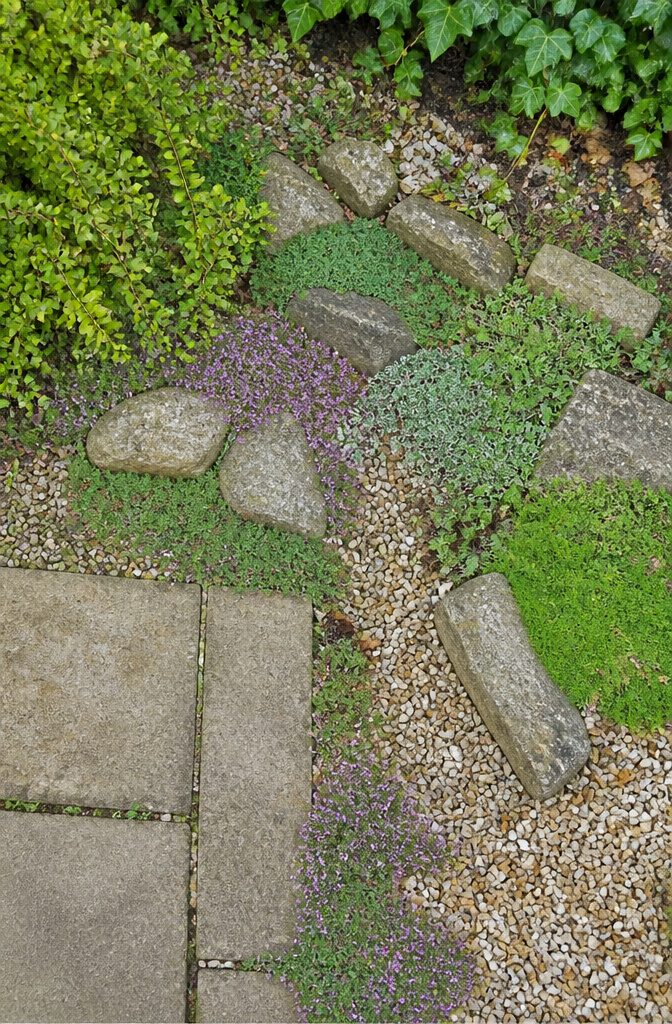
Creeping thyme and sedum are the two groundcovers to start with.
Both root into the pockets between rocks and fill the gaps with one continuous carpet of color. Thyme also earns a place beside a paved seat in a small herb garden, where you can sit with the plants within reach.
The budget version of a rockery leans on three things.
First, choose groundcover perennials that spread quickly, so a few small plants end up covering a large area. Second, use stones gathered from nature or reused from other parts of your yard instead of buying new ones.
Third, fill open ground with gravel or pea shingle, which tends to cost less than large stones. Plant the thyme and sedum into the gaps, and let the gravel cover everything else.
12. Lighting and Decorative Features
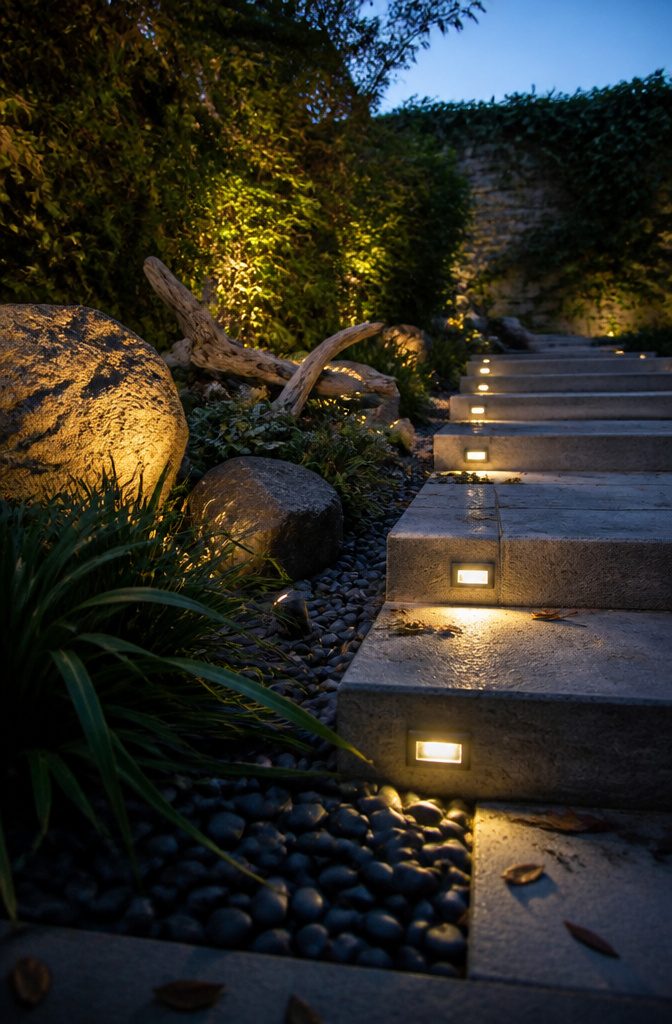
Lighting keeps a rockery working after sundown. Set LED fixtures low around a few chosen stones, and light the focal points rather than the whole bed, since lighting every rock flattens the view.
Metal or glass sculptures look best against rough natural stone, and straight lines or rectangles of rock add a sleek, modern edge.
Concrete garden stairs with built-in LED lights, set beside low plants, give you a lit path and a clear edge.
On a budget, skip bought art. A piece of driftwood or a homemade sculpture draws the eye just as well among the rocks.
Placement and Sunlight
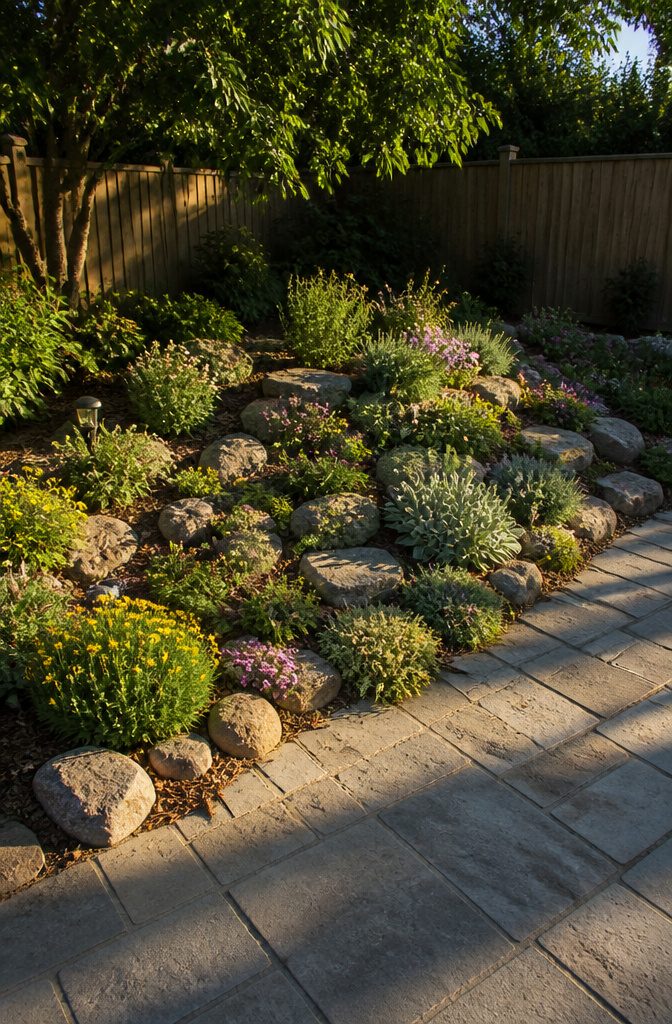
Watch the spot you have in mind in the morning, at midday, and in late afternoon before you move a single stone.
Shadows from the house, a fence, or a tree shift through the day and across the seasons, so a corner that looks sunny at noon may sit in shade by evening.
Sketch what you see, then site the rockery where the light matches the plants you want to grow, not the other way around.
Inside the bed, sort plants by their light needs. Sun-lovers go on the open, brightest side, and shade-tolerant plants tuck behind or beside larger stones that cast shadow.
Place taller or mounding plants toward the back or top, and give low spreaders room at the front so they don’t smother slower neighbors.
Low Upkeep and Drainage
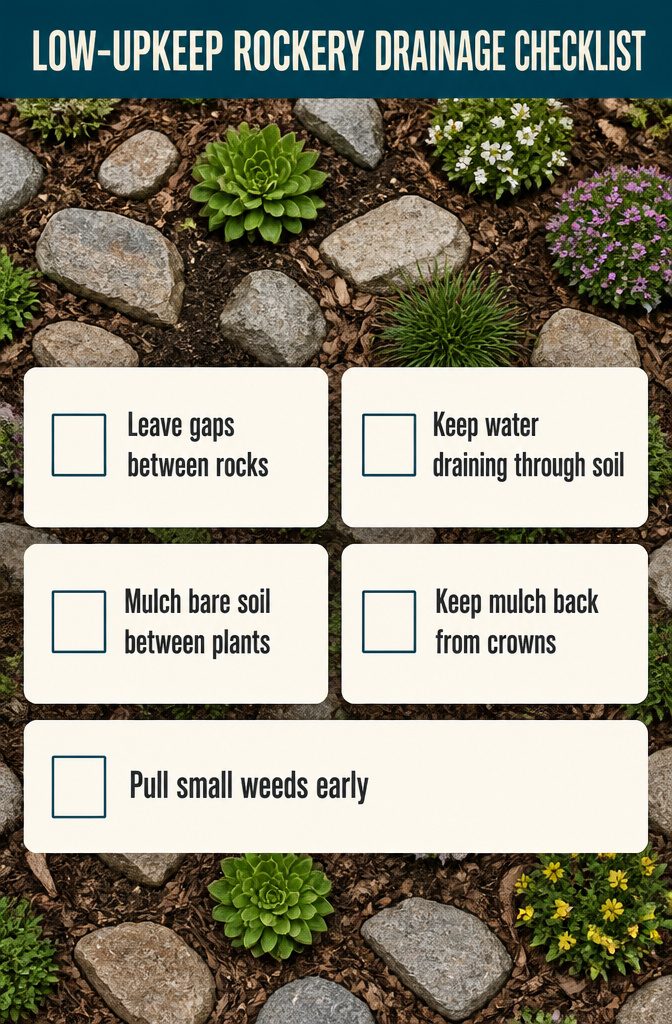
A rockery asks less of you than a typical garden bed once its plants are established. Three habits keep it that way:
- Leave gaps between rocks instead of packing them tight. Spaced rocks slow soil erosion and let water drain through the bed rather than pooling or sheeting off the surface.
- Spread mulch over the bare soil between plants. It holds moisture, so you water less often, and it blocks the light weed seeds need to sprout.
- Keep mulch a few inches back from each plant’s crown. Wet mulch piled against the base invites rot, which is the most common way a low-upkeep bed becomes a high-upkeep one.
- Pull the weeds that do get through while they are small. Under mulch, the roots slip out easily.
Frequently Asked Questions
How do you design a rock garden?
Pick the spot first by watching it in the morning, at midday and in late afternoon, and choose the location whose light suits the plants you want.
Set the largest stones first, leave gaps between rocks for drainage, and group plants by growth habit and sunlight. Taller or mounding plants go toward the back or top, and low spreaders go at the front.
Do you need soil in a rockery?
Yes, but use well-draining soil mixed with gravel around and between the rocks.
Plants need something to root in, and the gravel keeps water from pooling. Leaving gaps between the rocks also helps water drain and slows soil erosion.
What do you put down before rocks for landscaping?
Lay weed suppressant fabric over the cleared ground before any stone goes on.
It is hard to tuck the fabric in around rocks once they are in place. Clear weeds and debris from the site first.
What are the steps to building a small rockery in a corner of the yard?
Clear the corner of weeds and debris, then lay weed suppressant fabric. Set the largest stones first as the base and fill the gaps with smaller ones, then add well-draining soil mixed with gravel.
Plant, water well so the roots establish, and finish with a layer of gravel mulch. Compact and trailing plants suit a corner because they soften the stone edges.
What are some contemporary rockery ideas?
Combine natural stone with metal or glass sculptures, which stand out against rough rock.
Lay the stone in straight runs or rectangles for a sleek edge, and light a few focal stones with low LED fixtures. Concrete stairs with built-in LED lights beside low plants add a lit path.
How can I use slate in a rockery for a modern look?
Stand slate pieces upright to build a wall or border, or lay them flat for a patio-style surface. Its dark gray looks sharp against green foliage.
Keep the layout geometric and plant sparsely so the texture of the slate stays visible. A few bright flowers stand out well against it.
What rockery designs work well with a pond?
Run smooth stones from the rockery down toward the water so the planting and pond read as one feature.
Set larger rocks on a gentle slope like a creek bed, and place moss-covered stones near the edge for an aged look.
Ferns and irises suit the damp ground beside the pond, and aquatic plants carry the green into the water.
What are some budget-friendly rockery ideas?
Use stones gathered from nature or reused from other parts of your yard instead of buying new ones. Fill open ground with gravel or pea shingle, which tends to cost less than large stones.
Choose groundcover perennials that spread quickly, so a few small plants cover a large area. For decoration, driftwood or a homemade sculpture works as well as bought art.