Effort runs from swapping a wreath to tending a fruit tree, and style from formal rows to rustic gravel, so choose by how much upkeep you’ll actually do and what suits your house and region.
Edibles ask the most: start with one raised bed of herbs. Even natives like coneflowers need a hardiness zone check.
1. Flower Beds and Butterfly Plants
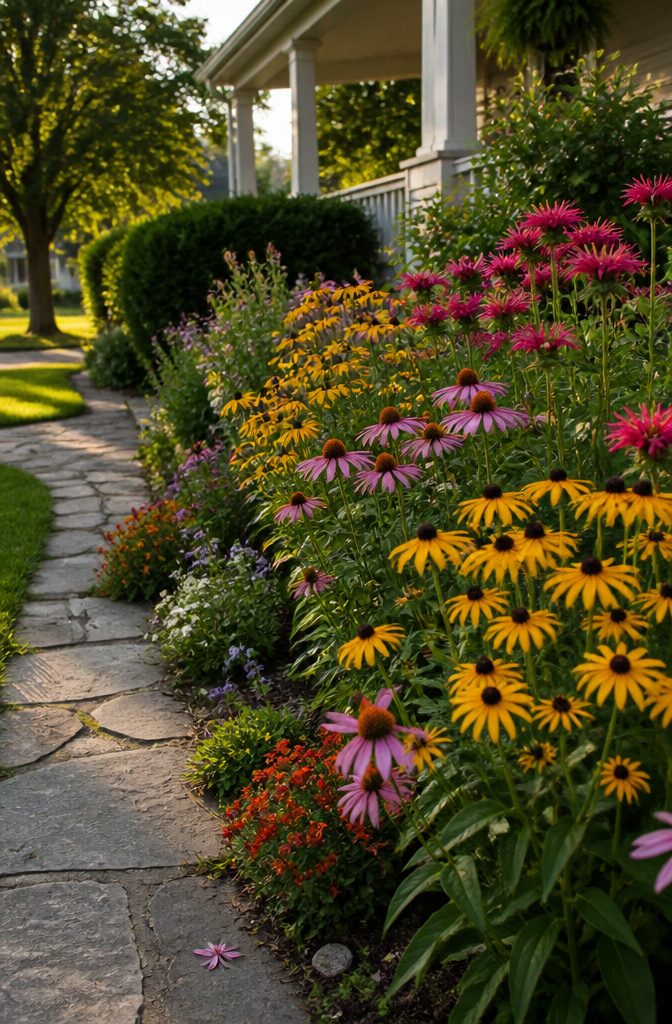
Build the bed on perennials and use annuals as accents. Perennials come back each year and stretch the bloom season, while annuals fill gaps with seasonal color, so the bed looks good in every part of the year.
Black-eyed Susans, coneflowers and bee balm are the perennials to start with, because they also draw butterflies and other pollinators.
Those three are recommended as natives for Pennsylvania yards, so check that they suit your own hardiness zone before you buy.
Planted together in one front bed, they double as a butterfly garden. Plants that add color also bring in pollinators, which makes a separate plot unnecessary.
Recommended Products
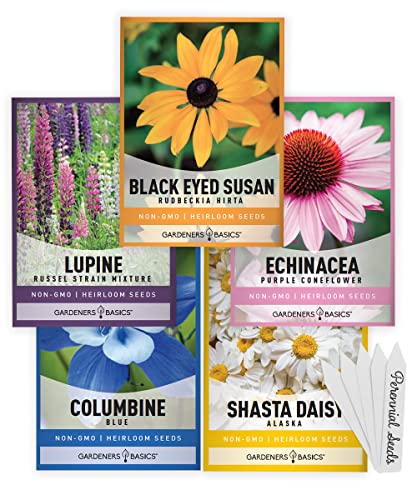
Five perennial flower varieties: Grow Russell strain lupine, blue columbine, purple coneflower echinacea, Black-Eyed Susan and Alaska Shasta daisy. Each variety comes in its own labeled seed packet so you can plan beds, borders and outdoor gardens.

NATIVE PERENNIAL WILDFLOWER SEEDS - Black-eyed Susan (Rudbeckia hirta) produces classic golden blooms with dark centers, a beloved flower that returns year after year and thrives across diverse North American climates

2. Ornamental Grasses
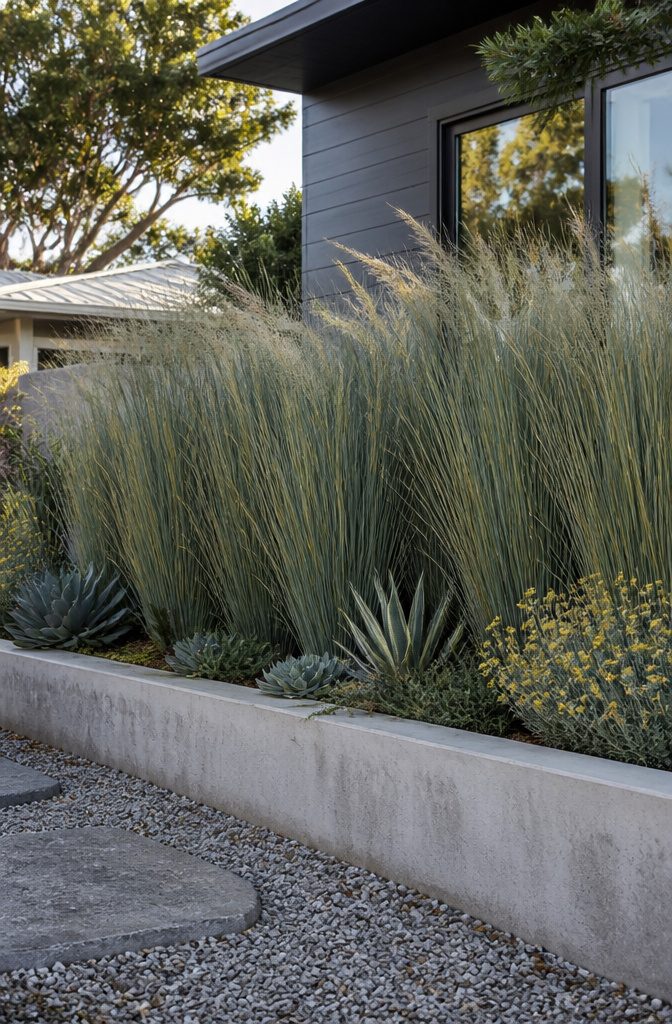
Tall ornamental grasses give a front yard what a flower bed can’t: texture, height and movement.
Foliage does the work from the street, so a grass looks good without any bloom, and even a light breeze keeps the bed from looking static.
For an informal modern look, plant them in large single-variety blocks rather than one of each.
Drop in an occasional flower or a sculptural succulent as an accent so the block doesn’t read as flat. Fewer, larger gestures look better than a scatter of small ones.
Grasses add little color compared with a flower bed, so they suit you best if you prefer foliage to blooms.
A tall block in front of a window will also cover your view from inside, so site it where you want height or screening.
Recommended Products
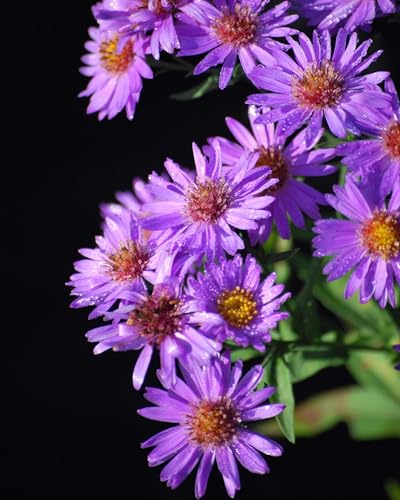
When received, the plant will be in seasonal condition with appropriate foliage. If shipped between November 1st and March 1st, the plant may be dormant and trimmed. Plant is...
3. Paths and Walkways
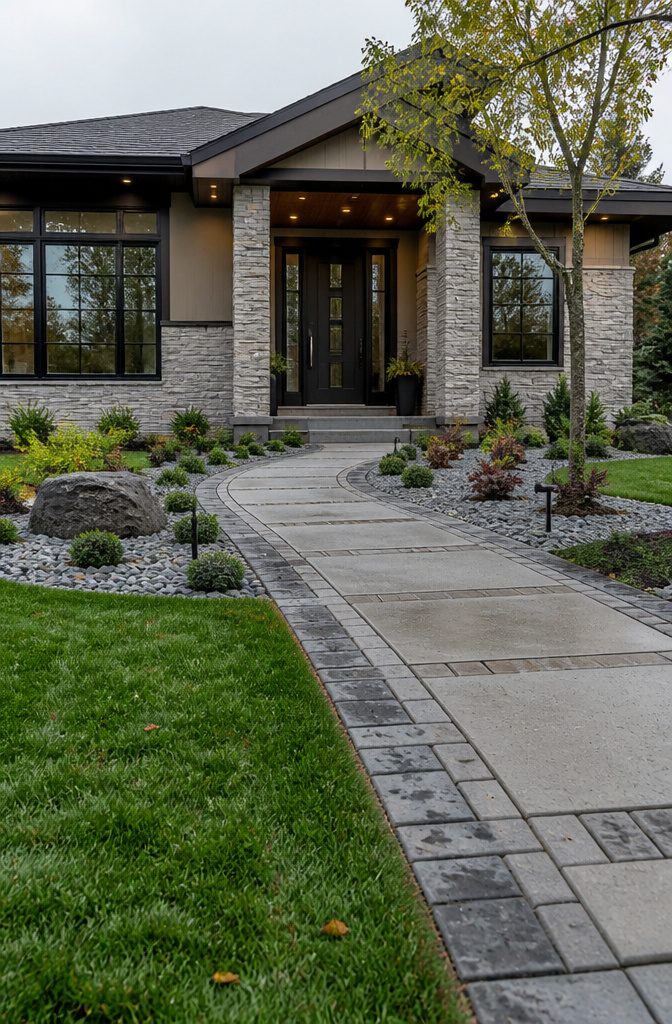
A path is the route that guides visitors to your front door, so it should read clearly from the street.
Use straight edges, and turn corners at 90 degree angles. An occasional curve is fine, just make it long, graceful, and intentional.
— Yardzen
That means one long curve at most, never a wavy line.
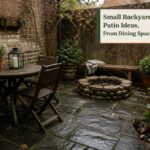
Concrete is the go-to modern material, but don’t overdo it: pair large pavers or slabs with smaller pavers to humanize the scale. Precast pavers in three close grays, blended in a fixed pattern, echo natural stone.
Rustic modern yards can add gravel or decomposed granite as a rough counterpart; formal yards should skip both. Brick feels warm and welcoming.
Recommended Products

17.7'' Garden Stepping Stones: you will receive 8 pieces stake down stepping stones outdoor and per stepping stone with 4 ground stakes;these decorative step stones with a...
4. Native and Sustainable Planting
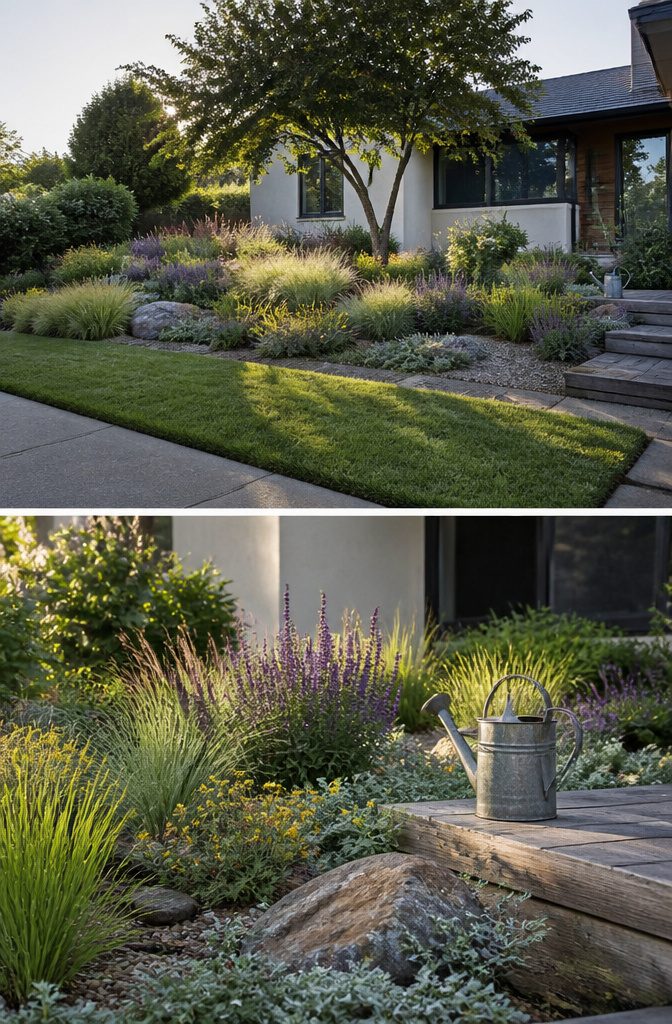
Native plants are the easiest way to build a front yard that looks good and keeps going.
They evolved for your climate, so they need less water and less upkeep than plants brought in from other regions, and they support the local ecosystem. Put them in the beds nearest the street first.
Xeriscaping applies the same logic.
Pair drought-resistant plants with a smaller lawn, since turf is usually the thirstiest part of a front yard. Cut the grass back to a patch or a border and fill the rest with plants that handle dry spells.
If a deck or porch is part of the plan, composite decking is a lower-footprint substitute for wood. TimberTech offers a range of colors and finishes.
Recommended Products


1. Fortify Your Garden Fortress: Say goodbye to pesky pests and unwanted critters! Our 4'x10' Plant Netting Pest Barrier acts as a sturdy shield, protecting your precious plants from insects, birds, and other garden invaders. It's like having a fortress around your garden beds, ensuring your plants thrive and flourish.

Effortless Assembly: This raised garden bed kit comes with pre-cut panels, clear step-by-step instructions, and all necessary hardware, allowing you to assemble it in minutes—no complex tools or construction experience required. Even gardening beginners can finish the setup easily, saving your time and energy for planting instead of assembling.
5. Edible Landscaping
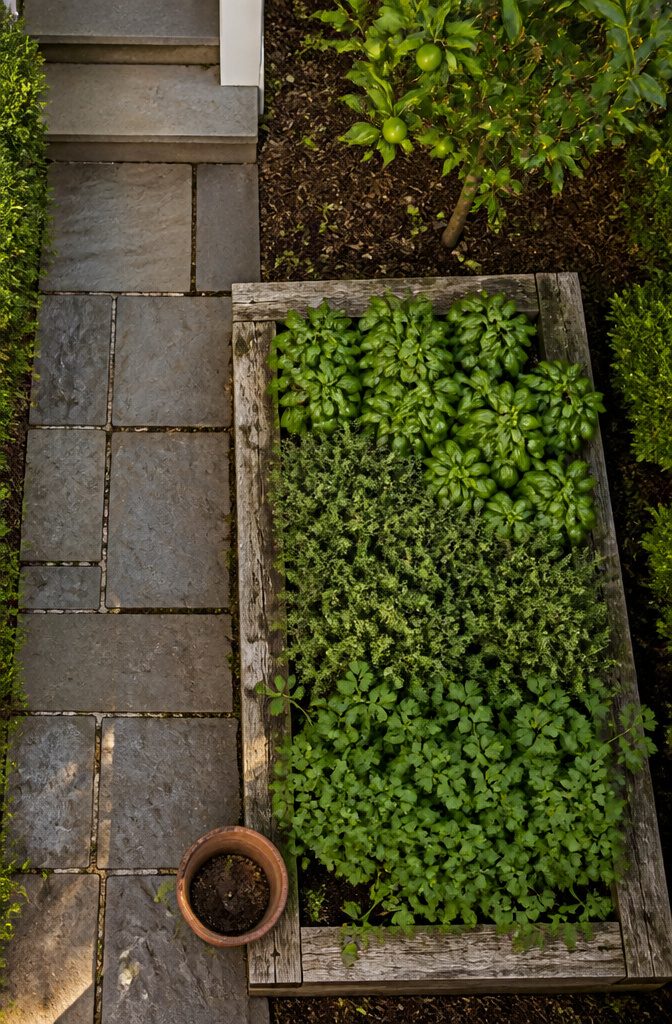
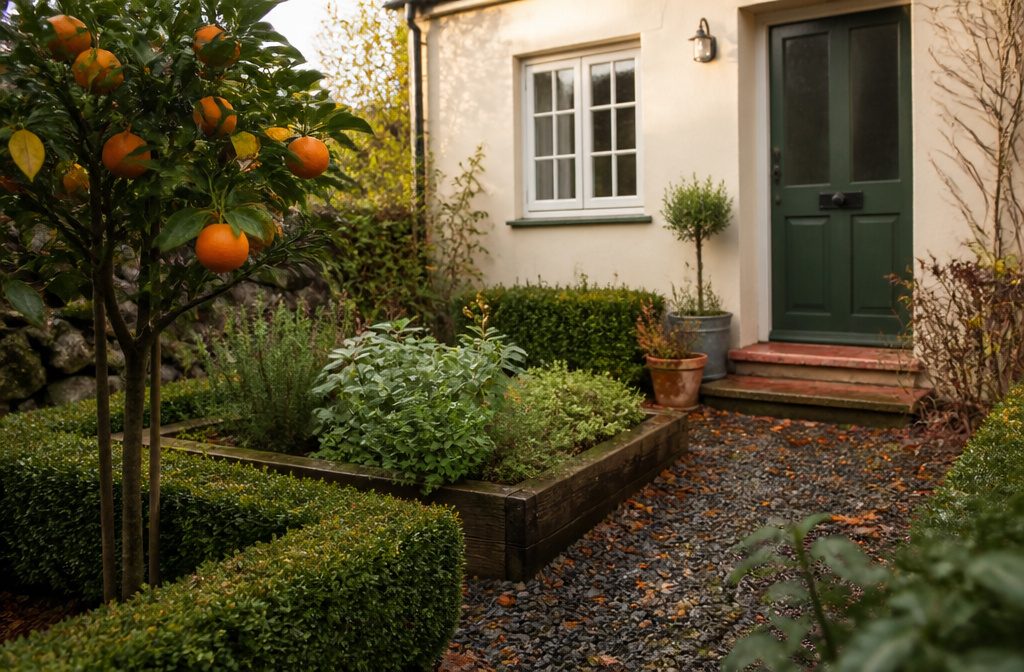
Herbs, vegetables and fruit trees can replace part of a front lawn or bed, and they give the yard a productive look that purely ornamental plantings don’t.
Herbs are the easiest start: they stay compact and tuck in along a walkway. Raised beds work well for herbs or vegetables because their defined edges keep the planting looking intentional from the street.
Edibles take more tending than shrubs or perennials. Vegetables need regular watering, picking and clearing out of spent plants, and fruit trees need pruning and cleanup of dropped fruit.
Start with one raised bed of herbs or a single fruit tree, and add more only once you’ve kept the first up for a full season.
Recommended Products

[Three Distinct Wildflowers] Includes Tricolor Chrysanthemum with ringed patterns, Purple Coneflower with raised cone centers, and Black-eyed Susan with golden petals and dark centers. Diverse shapes and colors.

NATIVE BEAUTY – New England Aster, Smooth Blue Aster, Purple Coneflower, Narrow-Leaved Coneflower, Black-Eyed Susan, Dense Blazing Star (Gayfeather), Bee Balm (Wild Bergamot), Lanceleaf and Plains Coreopsis (Tickseed), Showy, Common, and Swamp Milkweed, Purple Prairie Clover, Joe Pye Weed, Spiderwort, Common, Prairie, and Maximilian Sunflowers, Little Bluestem, Switchgrass, Indian Grass, Blue Vervain, Canada Wild Rye, and White Yarrow.

NATIVE PERENNIAL WILDFLOWER SEEDS - Black-eyed Susan (Rudbeckia hirta) produces classic golden blooms with dark centers, a beloved flower that returns year after year and thrives across diverse North American climates
6. Rock Gardens and Boulders
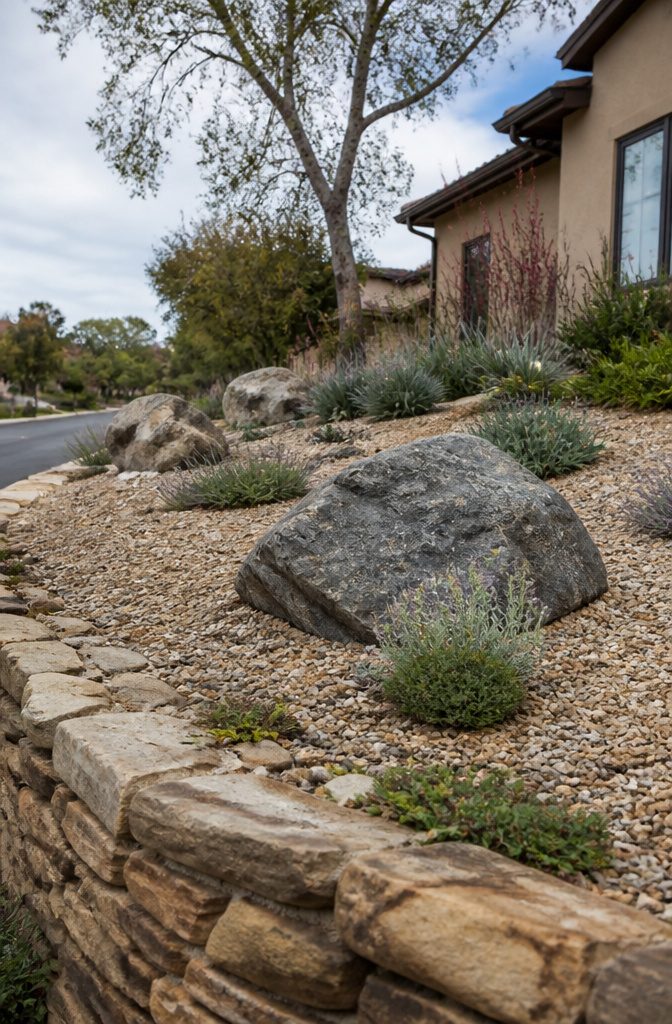
Rock gardens look natural and ask for little once they’re built.
Stone and gravel form the base, so there’s no lawn to mow, and the bed needs less water than the same area of grass. They also suit slopes, where turf is awkward to maintain.
Skip the scatter of fist-sized rocks, which reads as leftover material. Use a few boulders about 2–3 feet across, each set on its own, with gravel filling the space between them.
A single large stone looks like an outcrop that was always there, while a cluster of small ones looks arranged. Leave each boulder enough room that you can see its full shape from the street.
7. Water Features
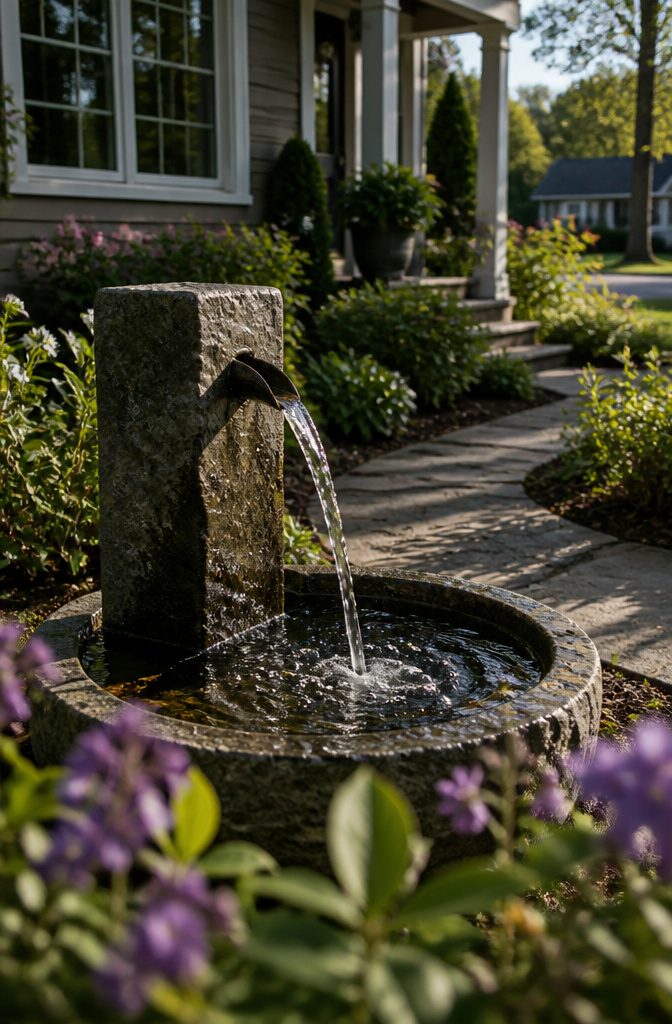
A small fountain or birdbath gives the front yard a focal point that reads clearly from the street and from your window.
Of the two, the fountain wins for sound. The gentle noise of running water is what makes the spot feel calm, and it also helps cover street noise, so the yard feels quieter even when the road isn’t.
Moving water attracts wildlife too, which makes the front yard feel alive instead of just tidy.
Place the feature where you’ll see and hear it every day, such as beside the entry path or within view of a front window. A birdbath is the simpler, cheaper-looking choice, but it stays silent and won’t mask traffic.
8. Seating Areas
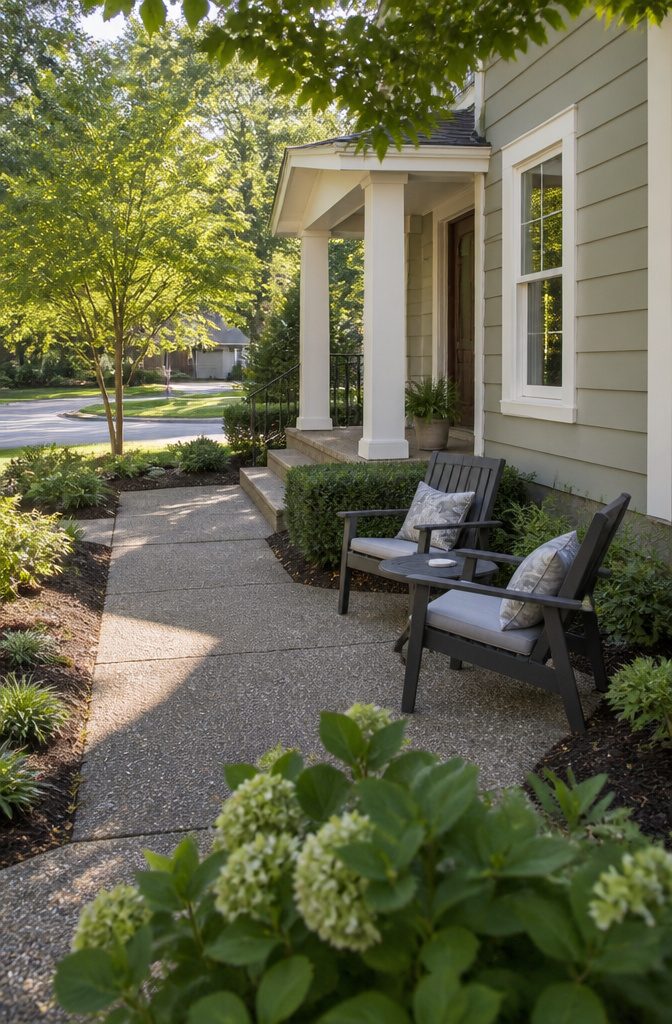
A bench or two chairs is enough to make a front yard somewhere you actually sit, whether for morning coffee or a chat when a neighbor walks by.
Two chairs angled toward each other invite conversation better than one bench facing the street.
In a modern layout, set the seating beside the walk, not on it.
Keep the route to the door clear, roughly 3 feet wide, and tuck the seats into a corner of the yard or against the house wall so they read as part of the design instead of a roadblock at the entrance.
Choose clean-lined furniture in one finish that matches the rest of the planting. Two chairs and a small table are plenty; a full set crowds a small yard.
Recommended Products


Durable Construction: The 5FT diameter round galvanized garden raised bed is made with strong galvanized steel material with crimped edge and corner,no sharpe, ensuring safely using it and long-lasting durability and resistance to rust

9. Outdoor Lighting
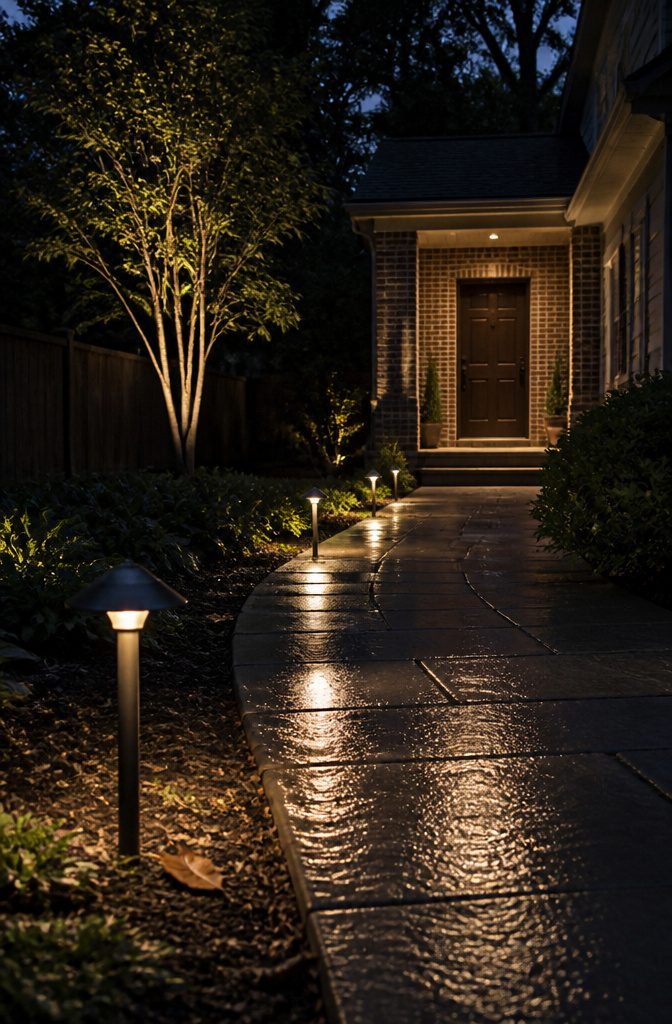
Good lighting shows its work at night and disappears by day.
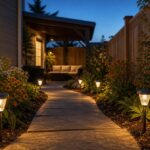
Small black fixtures fade into the plantings, while showy modern ones cost more and crowd a small yard. Solar lights along a walkway are the easy budget choice, and LED fixtures use less power wherever you do wire.
Space path lights no closer than 15 feet apart, and tuck them back from foot traffic so they light the way without becoming something to trip over. That is enough to make steps and walks safe after dark.
Aim spotlights at a tree, a porch column, or one specimen shrub.
Light one or two things, because if everything is accented, nothing stands out. Turn the lights off when you go to bed, which also helps local birds and insects.
Recommended Products

BRIGHT BLOOMS ATTRACT POLLINATORS: Grow Rudbeckia hirta for golden-yellow flowers that draw butterflies, bees, and hummingbirds. These cheerful wildflowers bring lasting color and movement to gardens, borders, and wildflower landscapes.

BRIGHT BLOOMS ATTRACT POLLINATORS: Grow Rudbeckia hirta for golden-yellow flowers that draw butterflies, bees, and hummingbirds. These cheerful wildflowers bring lasting color and movement to gardens, borders, and wildflower landscapes.
BRIGHT BLOOMS ATTRACT POLLINATORS: Grow Rudbeckia hirta for golden-yellow flowers that draw butterflies, bees, and hummingbirds. These cheerful wildflowers bring lasting color and movement to gardens, borders, and wildflower landscapes.
10. Mulch and Ground Cover
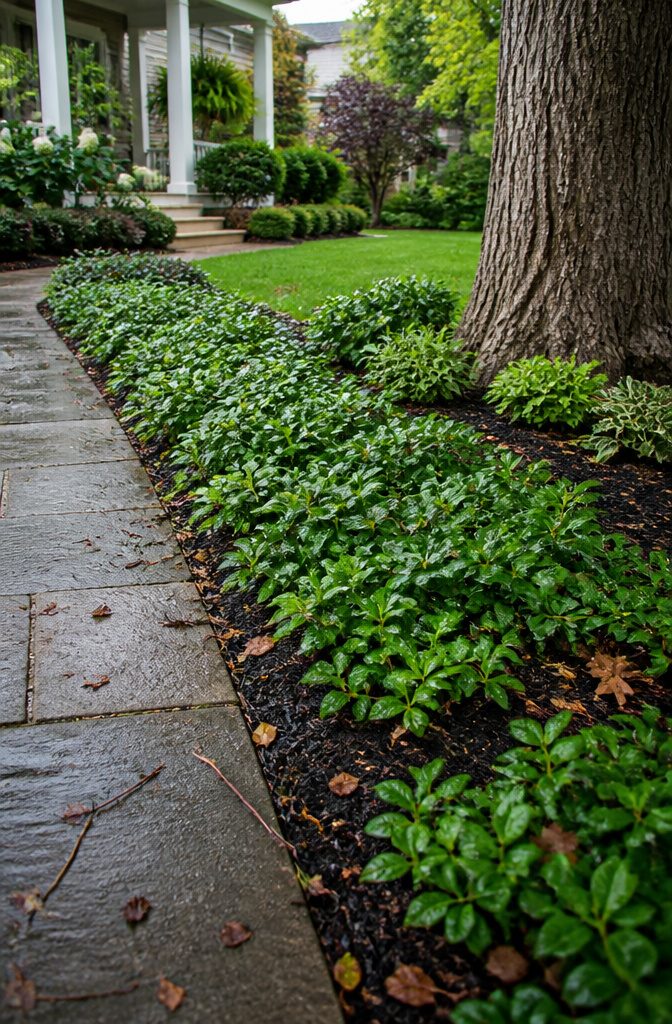
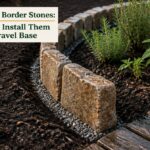
Mulch holds moisture in the soil and keeps weeds down, so a mulched bed needs less watering and less pulling. It also gives the bed a finished, tidy edge that reads well from the street.
Ground cover plants do similar work with living leaves, and they also cut down the lawn area you have to mow.
Swap the grass along a walk, under a tree, or on an awkward slope for ground cover, and that ground comes off your mowing list.
Mulch the bare soil between young plants while they fill in, because open soil is where weeds get started.
11. Vertical Gardens
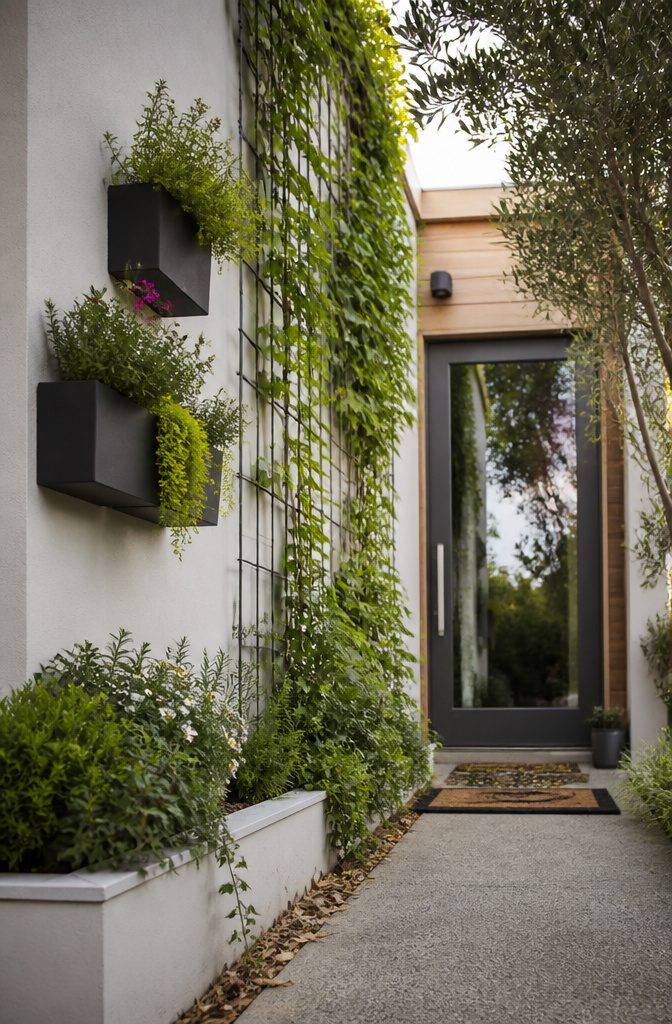
When a walkway and a doormat already use up the ground, go up.
Wall planters and trellises put plants on the wall instead of in the soil, so a narrow entry or small front yard gets greenery without losing floor space.
That makes vertical gardens the best fit for small yards and urban settings, and the one place they clearly beat a traditional bed.
Choose a trellis if you want a climbing plant to cover a blank wall, and wall planters if you want flowers or herbs at eye level.
Either way, keep them clear of the walking path, so nobody brushes against leaves on the way to the door. Small wall planters hold little soil and dry out faster than a bed, so plan to water them more often.
12. Decorative Fencing
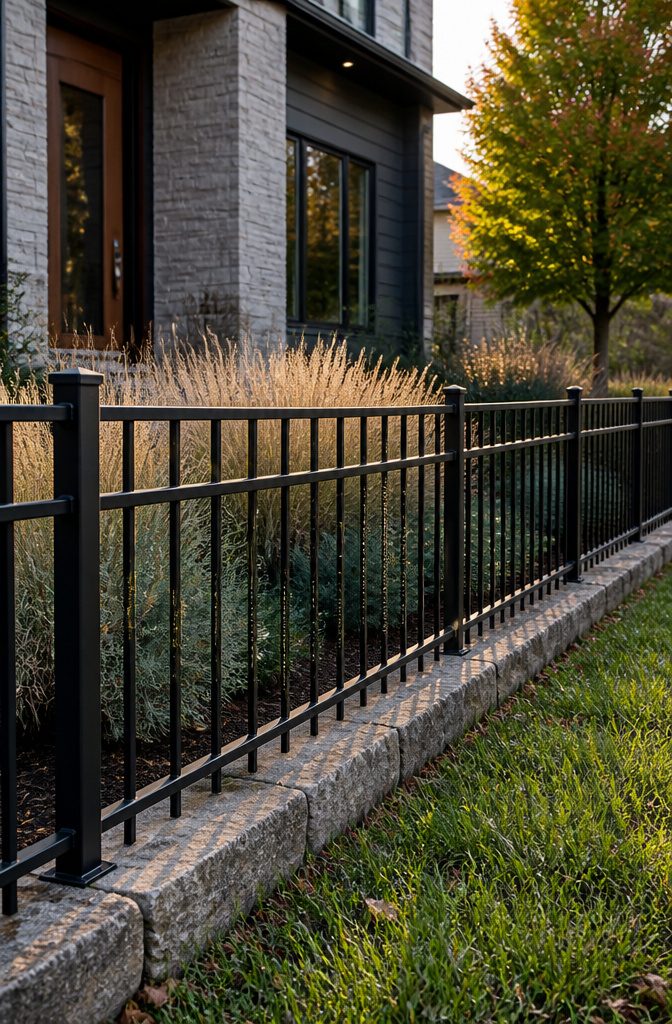
A fence outlines the yard and should match the home’s style.
A picket fence suits a traditional or cottage house. Black metal suits nearly any modern one, since it fades beside anything more interesting.
Wire grids or horizontal pickets cost more than standard vertical pickets and look more elevated. Keep black metal plain, because chunky or tricky designs defeat it.
Wood adds warmth. Skip ornament, keep corners at a clean 90 degrees, minimize post caps, and mount boards horizontally if the budget allows.
Hardwoods, or cedar stained to look like hardwood, read as formal. Reclaimed or weathered wood suits rustic modern.
Corten and raw steel give a rustic modern look as edging or low walls over gravel. Stainless steel cable costs more but is nearly invisible in short runs.
13. Seasonal Decor and Repurposed Planters
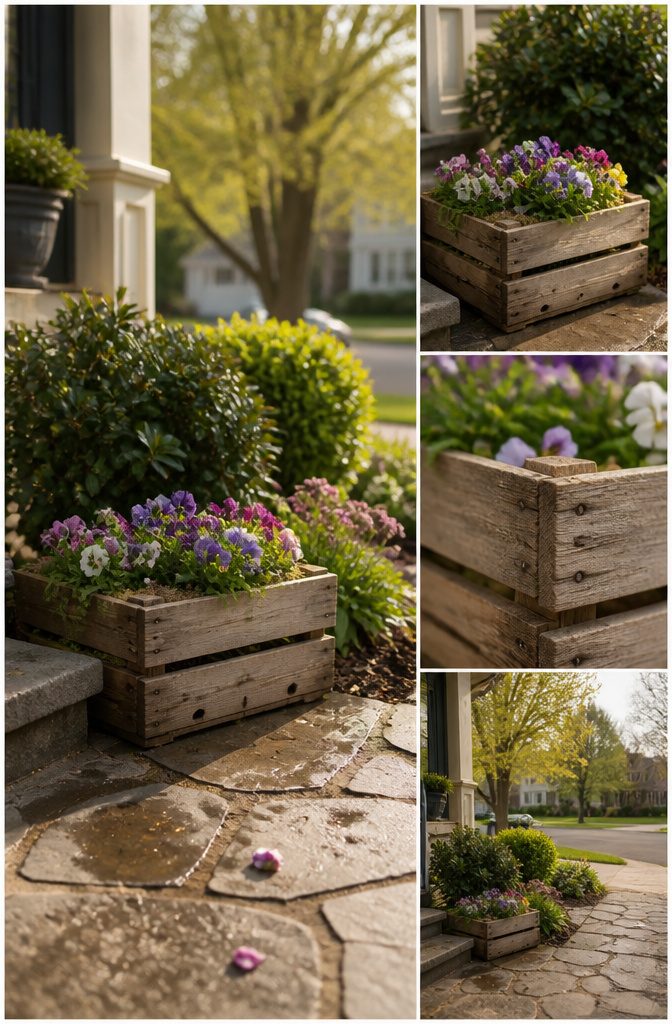
Swapping wreaths, planters and garden ornaments as the seasons turn changes the look of a front yard without putting a single new plant in the ground.
Leave your shrubs and perennials as the steady backbone, and treat the accents as the part you rotate.
Repurposed objects do the same job for even less money.
An old wheelbarrow or a wooden crate works as a planter, and a bike with baskets mounted on it gives the yard a feature nobody else has, especially if you ride.
Choose objects that reflect something you like, so the yard reads as yours. Drill drainage holes in anything that holds soil, because a wheelbarrow tray or a solid crate will otherwise sit in standing water after rain.
Front Door and Entry Details
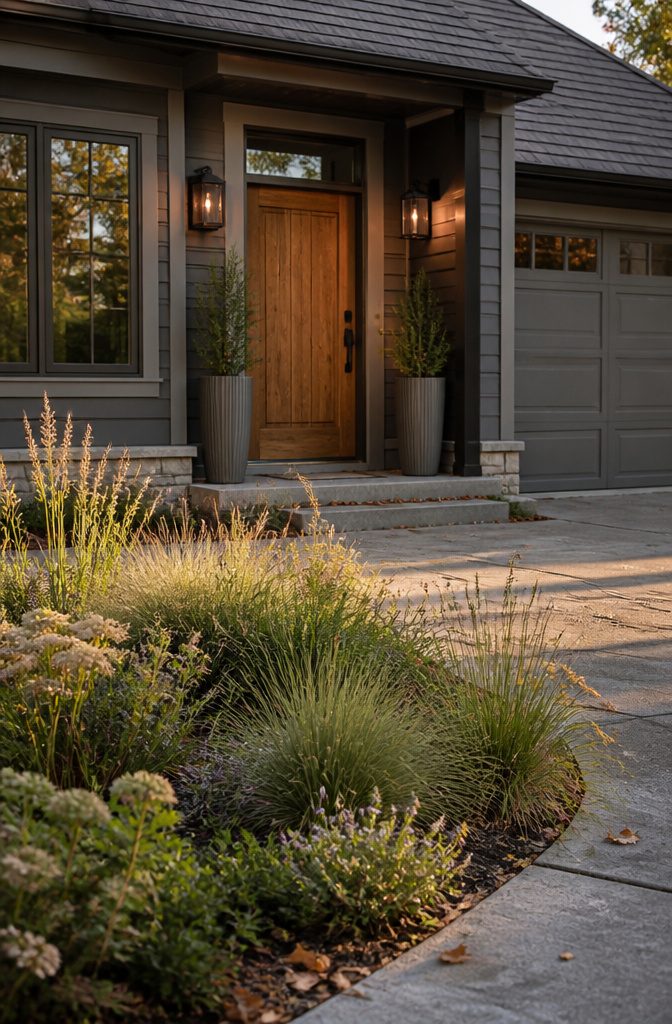
The house color sets the mood, and the front door, garage door, windows, address numbers and hardware should read as one set.
For the front door, paint it to match the trim, use a bold wood tone, or go with an accent color bolder still.
Metal and glass work too. Paint the garage door to match the house, since it is large and faces the street, and a matching color blends in rather than drawing the eye.
If you’re replacing it, Marvin makes handsome doors; rectangular glass or horizontal wood detailing looks modern.
Frame either door with tall, slender containers, ideally a species already growing in your front beds. Light the door well, and spend real money on the porch paving and path, because they lead the eye straight to it.
Formal or Informal Style
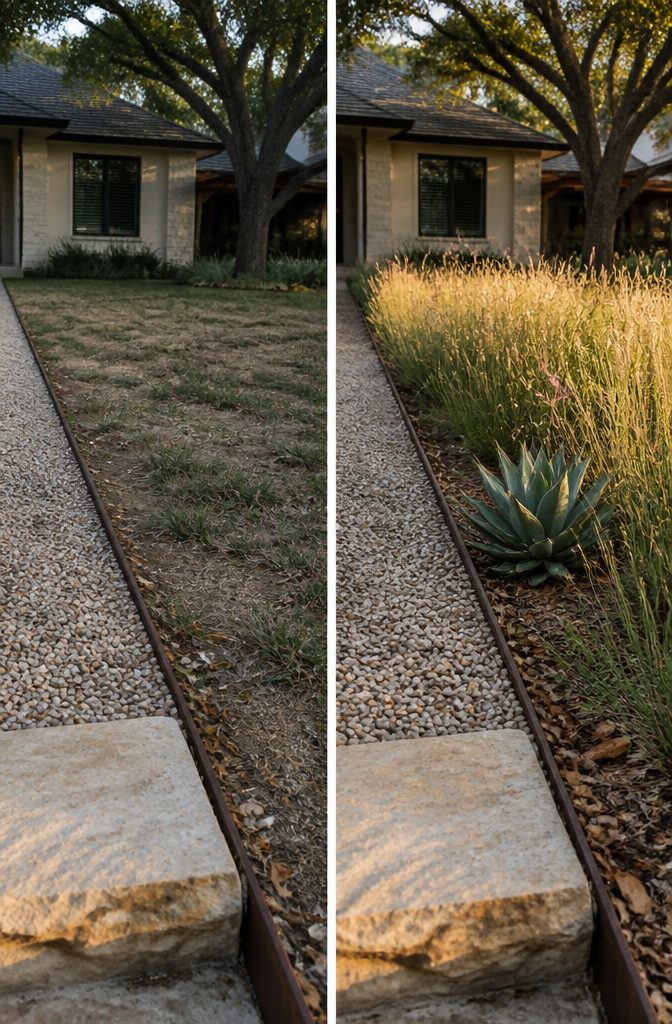
Formal and informal differ mainly in how plants are arranged. A formal front yard sets plants in straight rows with healthy room between each one.
In shady spots, smooth gravel or river rock fills the gaps. An informal yard imitates wild planting in a simplified form: tall grasses in solid blocks, with an occasional flower or sculptural succulent.
Modern design works either way, but it keeps clean lines, restraint and control even when the planting looks wild. Cottage, urban and woodland-inspired yards are the other directions, each with its own plant mix.
Choose plants and materials that suit your house and your region’s conditions, because a style borrowed from a different climate or architecture will struggle to look right.
Frequently Asked Questions
How can I landscape my front yard on a small budget?
Work in steps, and start with one drought-tolerant vine or small shrub that has good color.
Mulch holds moisture and keeps weeds down, and an old wheelbarrow or wooden crate makes a cheap planter if you drill drainage holes in it.
A regional gardening book from the library, or a couple of hours with a garden designer who knows you’re working to a tight budget, can help you plan the rest.
What front landscape ideas work in a hot, dry climate?
Pair drought-resistant plants with a smaller lawn.
One gardener’s plan for a Phoenix yard was large agave, a few desert shrubs, one small tree and a low succulent repeated to tie the bed together, with gravel instead of mulch and a decomposed granite path.
A few boulders, each about 2–3 feet across and set apart, add structure. Bougainvillea is drought tolerant once established but does not suit areas with hard freezes.
What can I plant in my front yard instead of grass?
Ground cover plants. Swap the grass along a walk, under a tree or on a slope, and that ground comes off your mowing list.
Creeping thyme is one option: gardeners report that it tolerates drought and poor soil, spreads fast, crowds out weeds and never needs mowing. Nursery plants are easier to find in spring, and a rock garden is another no-mow choice.
How do I attract butterflies and birds to my front yard?
Plant black-eyed Susans, coneflowers and bee balm together in one front bed. They draw butterflies and other pollinators, which makes a separate garden unnecessary.
For birds, add water, such as a birdbath that is easy to keep clean, plus shrubs and trees for cover. A small fountain also attracts wildlife.
How do I know which plants will grow well in my front yard?
Check your hardiness zone before you buy, since a plant that thrives in one region can struggle in another. Native plants are the safest start because they evolved for your climate and need less water and upkeep.
A local plant nursery can tell you what does well in your area, and some online plant sellers let you filter by hardiness zone.