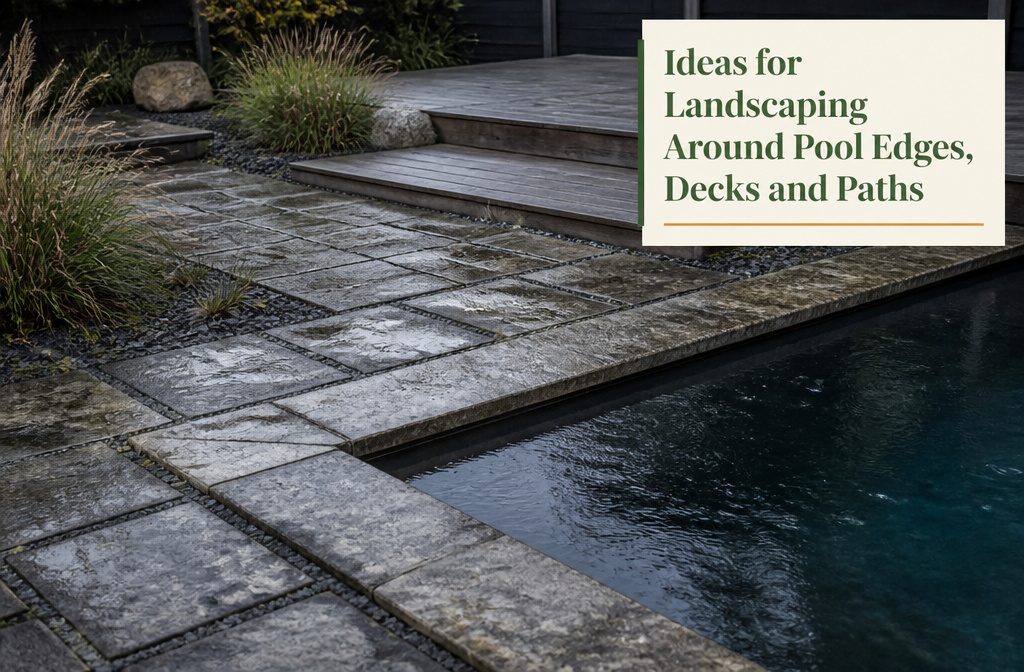
Ideas here run from a $150 freestanding shower kit to a bare concrete edge with one plant per corner.
The right one depends on how much skimming and upkeep you will tolerate. In-ground beds need to sit 2–3 feet from the water to limit debris, and wood decking needs regular sealing, so low-effort yards favor grasses, gravel and pavers.
1. Ornamental Grasses
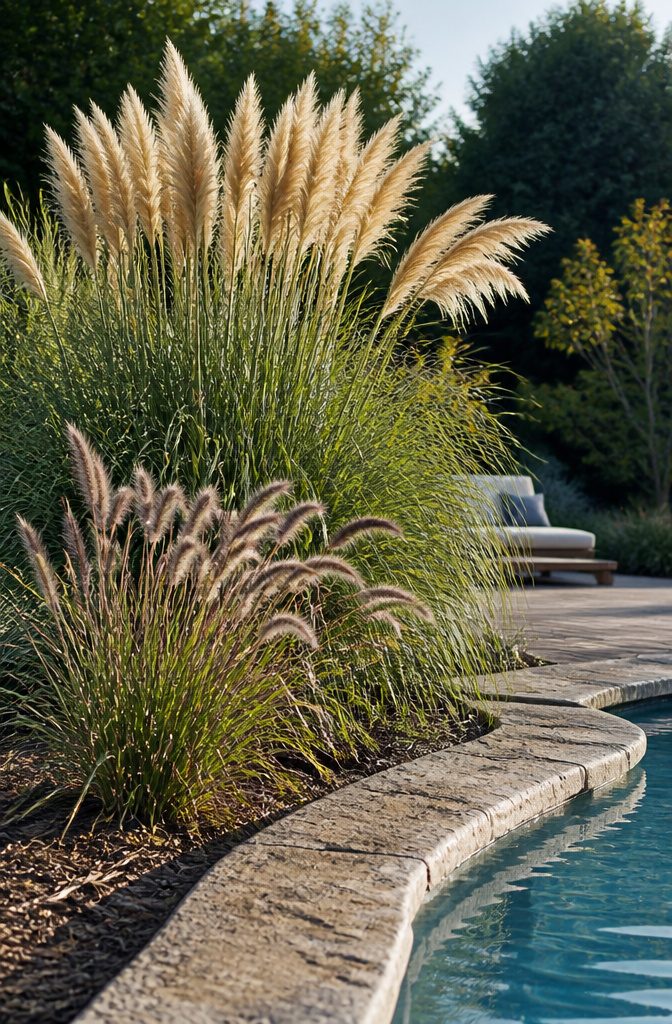
Maiden grass, pampas grass and fountain grass give you height and movement beside the water without dropping a leaf into it, which makes them the pick if you hate skimming.
They tolerate splash, need almost no water once established, and look good about 10 months of the year. In the off months the clumps go dormant, and you cut them back to make room for new growth.
Pampas grass is the biggest of the three, so give it the back of a bed or a corner.
Fountain grass suits the front, where its arching plumes can sway closer to the coping. Low debris, little water and one annual cutback cost no more than a few nursery pots.
Recommended Products

Hardy in USDA zones 4-9. Due to varying agricultural regulations, we do not ship to the following states: AK, AZ, CA, CO, ID, MT, NV, OR, UT, WA and HI. Full Sun, Part Shade...
2. Privacy Planting
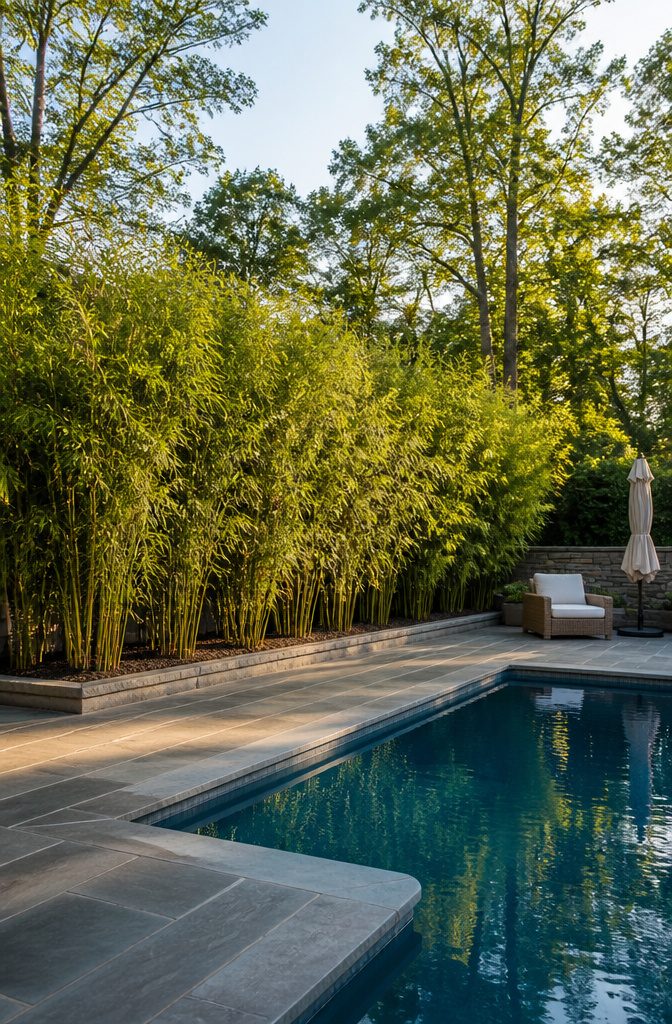
Clumping bamboo is the fastest screen you can plant.
It reaches 10–15 feet in a couple of seasons and forms a swaying wall, but only the clumping kind stays put, so skip running types entirely. Set it in a contained bed or a large pot.
For a clipped evergreen wall, podocarpus (zones 8–11) or wax myrtle (zones 7–10) handles pool-side conditions and sheds little. Plant either 3–4 feet apart and the row closes into a solid wall in 2–3 years.
Tall grasses also fill in within one season.
While any of these plants are young, stake a reed or fabric screen in front for immediate cover. Climbing vines on a trellis and a few tall trees can then soften the top of the line.
Recommended Products

COVERS A WHOLE WALL, NOT A POSTAGE STAMP: One panel shields a wide stretch of fence line, measured to the stalk top at a true [4ft/5ft/6ft/6.6ft] plus a 6 in canopy, so a single fake bamboo plant panel screens a window or a hot tub, and two or three butted together wrap a whole patio edge or balcony rail with no bare gap in the middle. Behind it: [16/16/16/24] thick canes, [6/8/10/12] branches, [1920/2560/3200/5760] leaves per tall bamboo plant, dense enough that these artificial bamboo plants read as a solid green wall, not the see-through row of sticks most fake bamboo screens are. For artificial bamboo for privacy, density is the whole game.

1 SCREEN PURCHASE: You will receive 1 screen with planter box with your purchase. Please note primary image displays 3 separate screens with planter boxes

🌿 [ULTIMATE 20-PACK VALUE & DENSE COVERAGE] Double the quantity for a fraction of the cost! Our 4ft artificial bamboo tree comes in a generous 20-pack, providing an expansive 17 sq. ft. of lush, dense coverage. Perfect for creating a full bamboo privacy fence, this value bundle gives you the maximum amount of high-quality faux greenery to instantly transform your empty spaces without breaking the bank.
3. Decking and Terraces
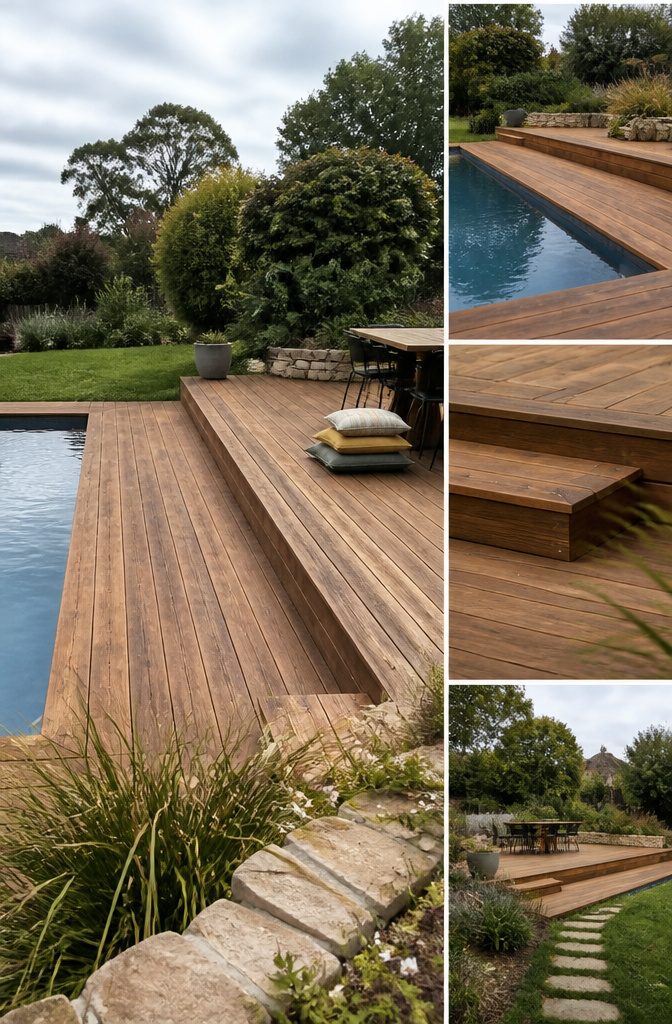
Treated wood decking adds levels, color depth and a natural feel that flat paving can’t match, and it can cost less to lay.
Raise one section a step above the pool surround and you get a separate zone for a terrace, a covered sunbathing area, or an outdoor kitchen and bar, with no walls to build.
Decking beats paving on sloped or uneven ground, where it levels the space without heavy digging, and wherever you want the pool area to read as part of the garden. Paving wins where you want little upkeep.
Wood needs regular sealing or staining, and it wears faster than stone under constant splashing and wet feet. If you hate yearly maintenance, keep decking to one entertaining zone and pave the rest.
4. Paving and Non-Slip Surfaces
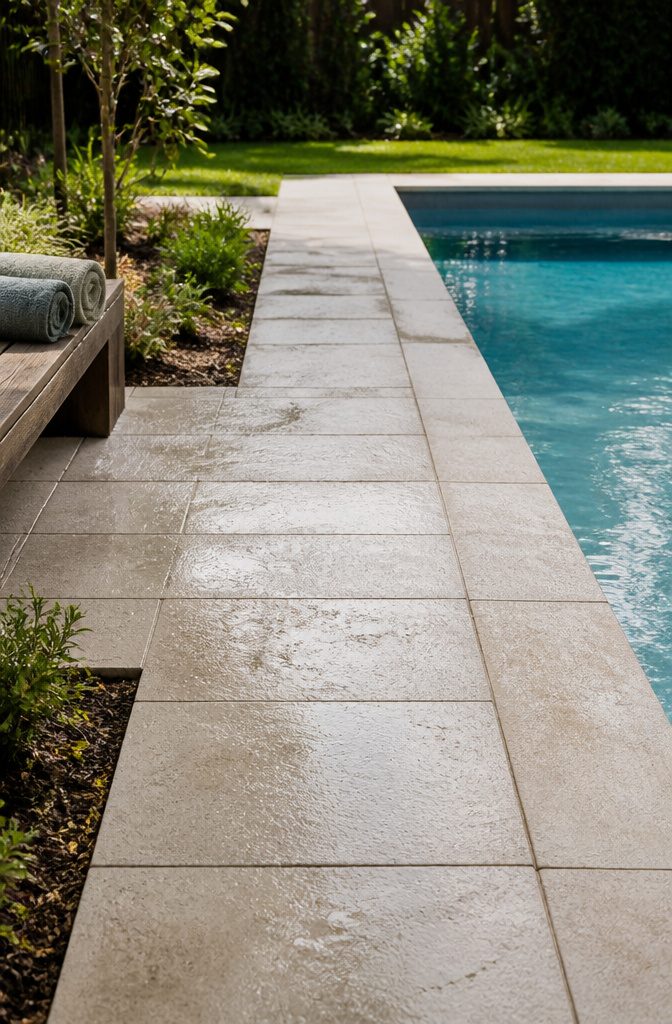
Slick paving is the first hazard to rule out, so choose textured paving or smoothed pebbling for the surround, especially if children will swim often.
A firm, stable route from the house to the water also helps keep the pool cleaner than a path of bare dirt or loose lawn.
A large pool surround in one material feels heavy. Run paving stones from the deck or terrace out through the grass, and cut planting beds into the edges so hard and soft surfaces alternate.
If you would rather swim than garden, a plain, clean concrete or paver edge with minimal planting is a legitimate choice. It leaves very little debris to sweep and almost nothing to maintain.
Recommended Products

BAREFOOT-FRIENDLY RUBBER SURFACE: Unlike sandpaper-style outdoor stair treads that scratch and irritate skin, LifeGrip rubber anti slip traction treads feature textured rubber particles that deliver reliable traction with a noticeably softer, comfortable feel underfoot. Ideal for families with babies, kids, seniors and pets — providing confident, gentle grip anywhere you walk barefoot, from bathrooms to poolside areas.

★Large Size and Cuttable-- The wet area floor mat size is 3' x 10' (0.9M x 3M), 5.5mm thickness. Easy cut, you can cut freely with scissors according to the space of the room. Made of high quality Polyvinyl Chloride (PVC) strong tough, not easy to shrink or deform, good wear resistance
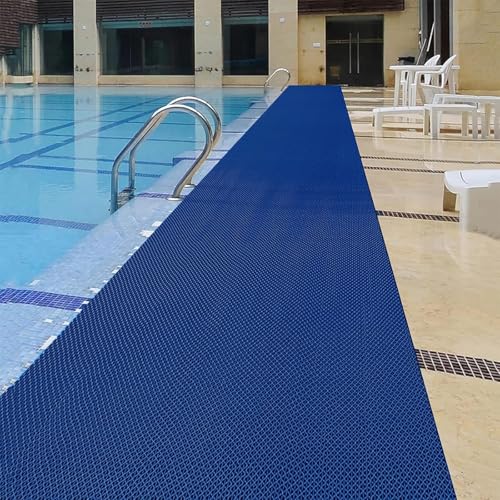
Large Size and Cuttable-- The wet area floor mat size is 3' x 10' (0.9M x 3M), 5.5mm thickness. Easy cut, you can cut freely with scissors according to the space of the room. Made of high quality Polyvinyl Chloride (PVC) strong tough, not easy to shrink or deform, good wear resistance
5. Poolside Lighting
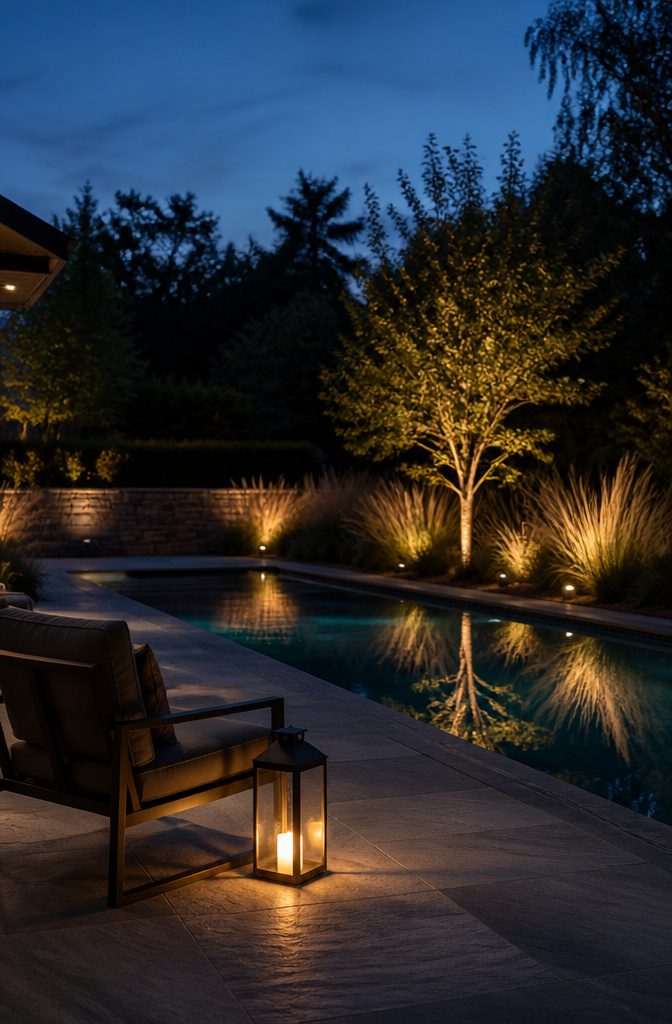
Uplights set in the planting beds around the pool do two jobs. They make the foliage look good after dark, and they give off enough ambient light that you can skip harsh floodlights.
Choose warm-white bulbs at 2700K, which keeps the resort mood. Cooler white makes a backyard pool look like a parking lot.
Add a few spotlights aimed into individual plants, such as a tall grass or a small tree, so the beds get a focal point instead of one even wash of light.
Near the seating and lounge areas, switch to lanterns or a fire feature. Their low, flickering glow gives evening swimmers a reason to stay out after the last lap.
Recommended Products
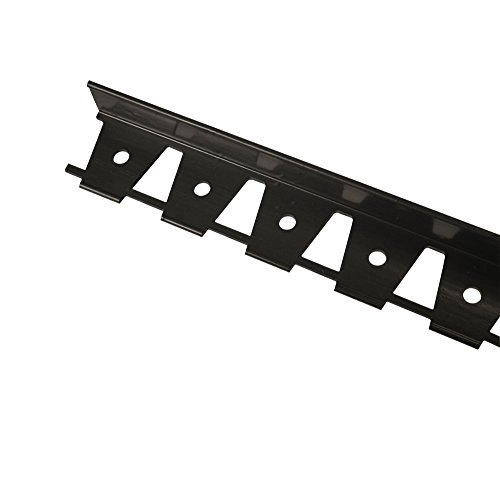
SNIP TO FLEX PAVER, BRICK, OR LANDSCAPE EDGING: Create a beautifully landscaped yard and paver designs without having to hire a professional with easy to install commercial grade edging

Realistic Faux Stone Texture: Our landscape edging boasts a lifelike stone texture with detailed surface patterns that add depth and a polished look to your outdoor space. It beautifully enhances garden beds, lawns, pathways and flower beds, bringing a natural, decorative touch to any yard.
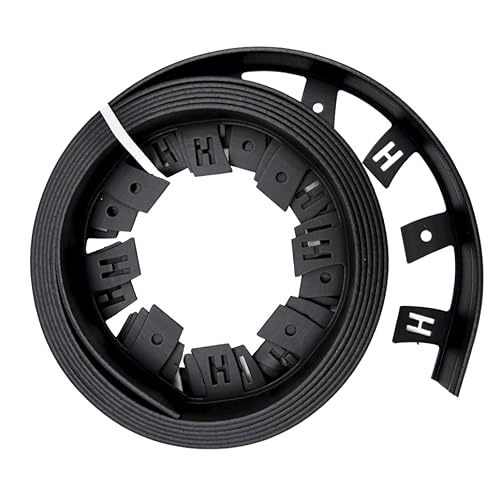
Uses - Designed for areas to be prepared with pavers, bricks, or stones along walkways, driveways, or patios.
6. Gravel and a Minimal Edge
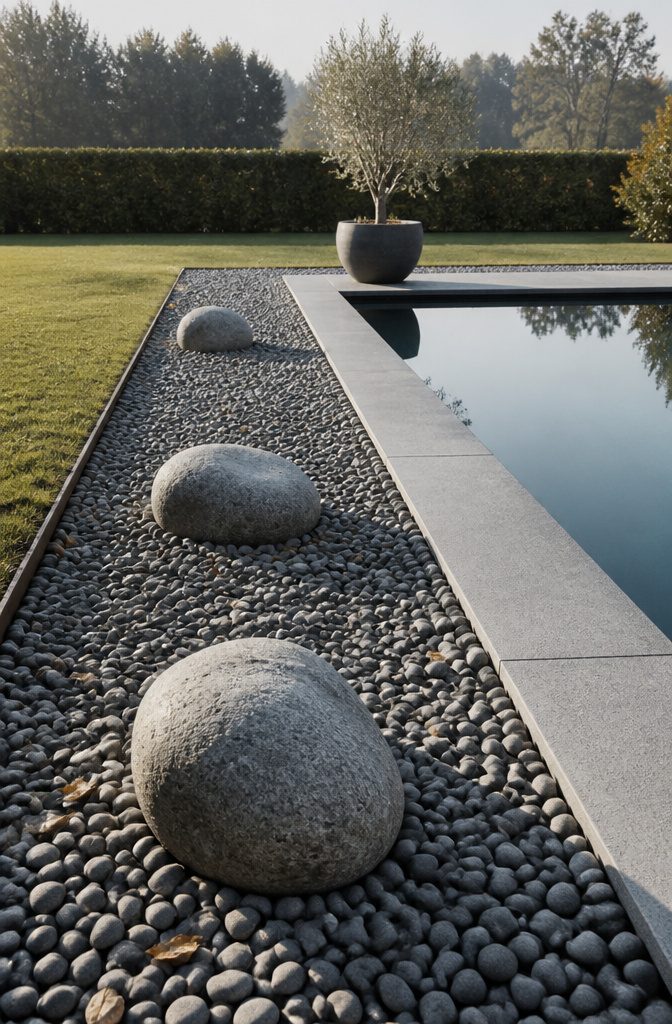
Lawn that runs right up to the water wears out first. Foot traffic turns it into a muddy, trampled ring, and every mowing sends clippings into the pool.
Replace that strip with river rock or decomposed granite, then set a few sculptural boulders into it. Nothing near the water needs mowing, and the rough stone against smooth water gives a contrast that looks high-end.
For the leanest version, keep the surround to clean concrete or pavers and give each corner one sculptural plant: an agave, an olive tree, or a cordyline.
Add nothing else. Fewer plants means less debris in the pool, and this layout suits anyone who would rather swim than garden.
7. Raised Planters
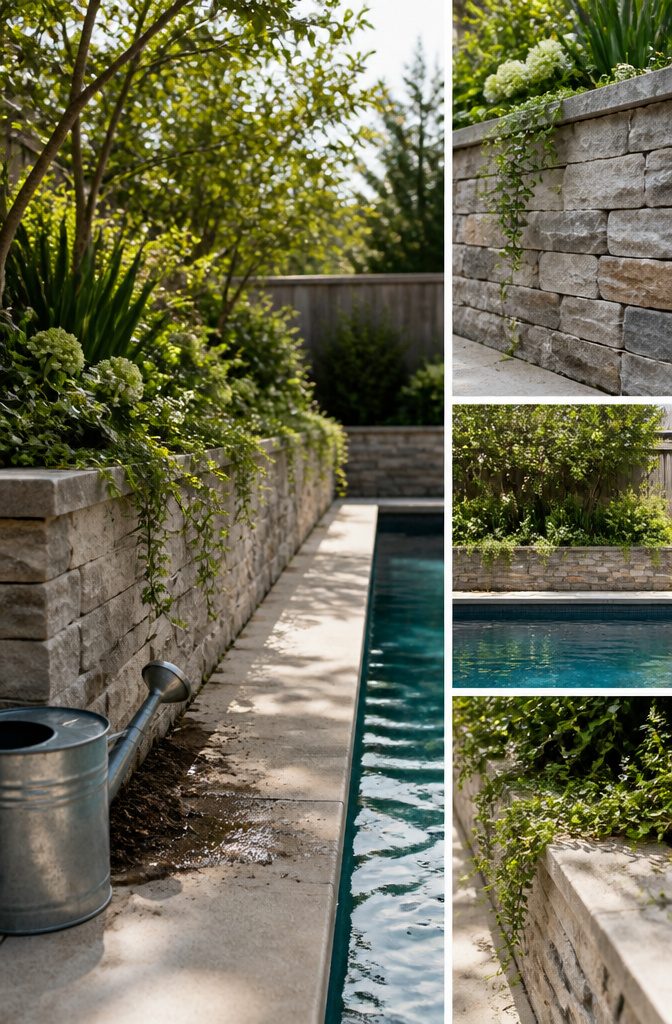
Build the planters 18–24 inches tall along the pool’s edge.
At that height, soil and mulch stay in the box instead of washing across the deck and into the water, and the fill drains better than it would in a flat bed.
Plant in layers, with tall plants at the back and trailing ones at the front. The planter wall then reads as a finished edge, which a flat bed can’t match.
In-ground beds need to sit 2–3 feet from the water to cut down on debris and leave room for maintenance access.
Because planters are contained, they can sit closer. On a narrow pool deck, that extra foot or two of usable space is the main reason to choose them over a bed.
Recommended Products

Privacy Fence Screen:Reed Fences are Amazing in Color and Opacity,The Bamboo reed Fencing Blocks the sun and the view of Neighbours,In additionour reed privacy screen can help hide flawed walls,replace old fences,improve backyard/balcony privacy and even prevent pets from jumping out from the balcony

STYLISH NATURAL WOOD: This FSC certified wood screen is made with real wood meaning no two boards have the same grain color, finish, or wood knots differing it from vinyl outdoor privacy fence screen panels.

Natural Reed: The bamboo curtains for patio outdoor uses strictly selected natural wild reeds as weaving materials, which are fine and uniform, tough and straight, and have a delicate and smooth feel. The bamboo privacy fence is made using original hand-woven methods. The workmanship is fine and unique, creating a classical work of art. The faint scent of grass fills the surroundings, creating a simple and elegant atmosphere.
8. Trailing Plants at the Coping
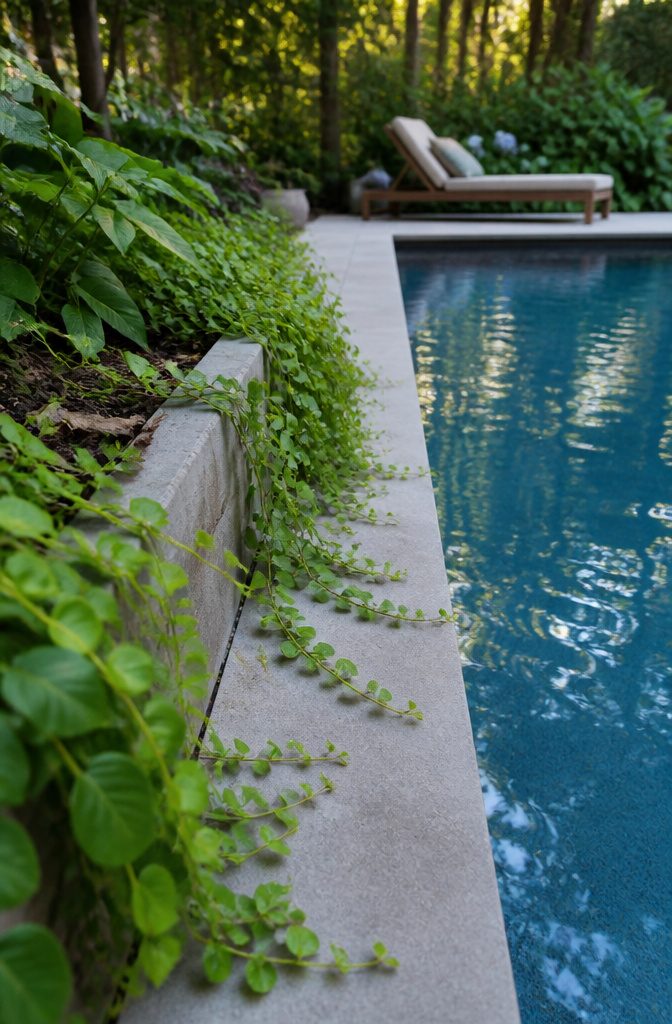
Hard coping stone looks stark around a modern pool, and a trailing plant is the quickest way to soften it.
Creeping jenny, trailing rosemary and dichondra all spill over an edge in a loose curtain, so the straight line of the stone fades behind green.
Plant them in or beside planters, set back from the water rather than at the waterline, and let the stems drape over the lip of the coping.
Trailing plants rarely drop debris into the pool, so you skim less than you would under flowering or leafy plants. Pick one plant per run of coping; mixing all three along a short edge looks busy against clean stone.
Recommended Products
WATERPROOFING STAIN – Bring out the beauty of your outdoors with Thompson’s WaterSeal Clear Multi-Purpose Waterproof Stain. Proven to waterproof concrete, brick, exterior wood and other exterior surfaces.

MARINE SEALANT: Our liquid formula creates a UV-stable coating for protection against the elements, saltwater spray, and water damage. Marine is a protector for outdoor furniture, thermally modified wood, and boat docks. Marine is safe for use over open water and is non-hazardous to aquatic life. ** This product is NOT intended for hardwoods such as ipe, mahogany and teak. NOT intended for wood submerged under water or on wooden boats **

NO LAPS, RUNS OR STREAKS: Goof Proof formula with no back brushing required; ideal for exterior wood projects
9. Potted Citrus
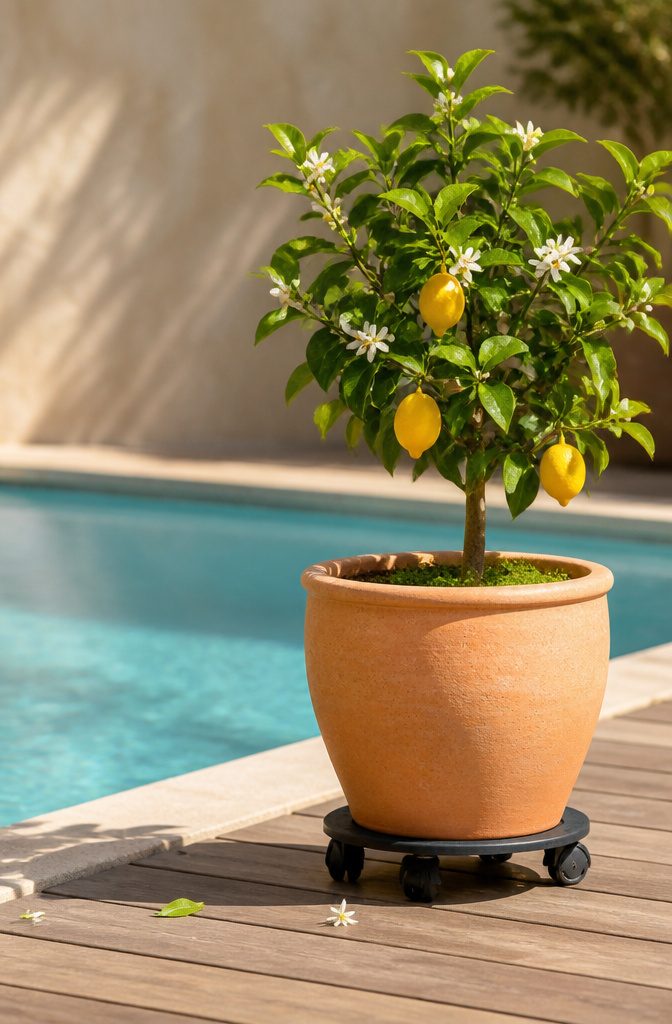
Dwarf Meyer lemon and lime trees in large pots give a pool deck fragrant flowers, fruit you will actually use, and a scent that feels like a vacation.
Citrus thrives in the heat and full sun of a pool deck, which makes it one of the few edibles that suits the spot.
The pot is what makes this work for renters and cold zones.
Because the tree lives in a container, you can shift it to a better spot or shelter it indoors when frost is forecast, and it moves with you when you do.
Choose a large pot so the roots have room, and set it on a wheeled plant caddy so moving it is a one-person job.
Recommended Products

★Large Size and Cuttable-- The wet area floor mat size is 3' x 10' (0.9M x 3M), 5.5mm thickness. Easy cut, you can cut freely with scissors according to the space of the room. Made of high quality Polyvinyl Chloride (PVC) strong tough, not easy to shrink or deform, good wear resistance

REPLACEMENT POOL LADDER PAD - This Swimming Pool Ladder Mat used as a cushion between ladder base and pool liner and protects swimming pool liner from damage caused by ladder base. The high quality Protective Pool Ladder Pad Step Mat makes you feel more at ease with it.

Excellent anti-slip system: The surface of the drainage floor tiles is designed with a unique anti-slip texture and drainage grooves, which is first-class anti-slip effect and drains quickly
10. Outdoor Shower Corner
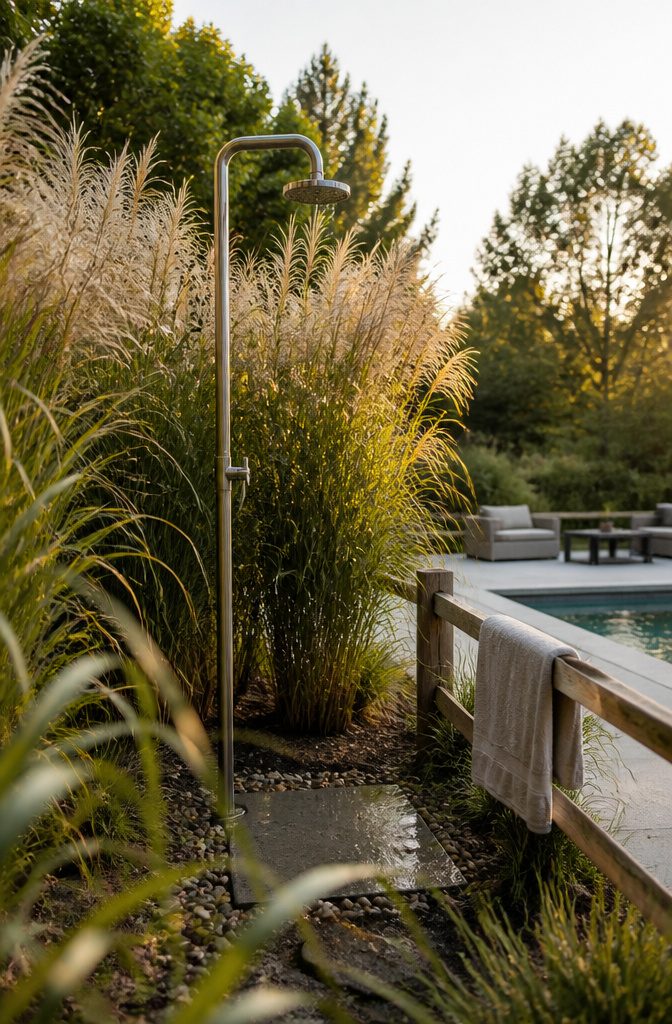
A freestanding shower kit runs as little as $150, and it solves a bigger problem than its price suggests.
Put it in a planted corner of the pool area, and swimmers rinse off before they reach the back door. Sunscreen and chlorine wash off outside, and the wet footprints stay on the patio instead of crossing your kitchen floor.
Screen the open sides with tall grasses so the corner feels private without a built wall.
Pick a spot where runoff can soak into the planting bed rather than pool on the deck. A corner away from the seating also keeps the splashing out of everyone’s way.
Recommended Products
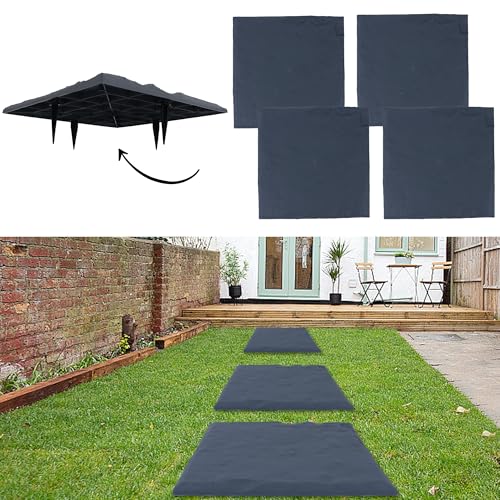
Durable & Easy: These 15.5" stepping stones are made of weatherproof resin, so they can withstand rain, hail, UV rays, and cold temperatures. They also feature four ground stakes for secure installation, making them perfect for patios, walkways, and gardens.

Weather-Resistant & Built to Last: Crafted from durable PC+ABS resin, these stepping stones are heat-resistant, crack-proof in freezing temps, and impact-resistant. Designed for year-round outdoor use, they won’t fade, warp, or lose their shape—rain or shine.

Weather-Resistant & Built to Last: Crafted from durable PC+ABS resin, these stepping stones are heat-resistant, crack-proof in freezing temps, and impact-resistant. Designed for year-round outdoor use, they won’t fade, warp, or lose their shape—rain or shine.
11. Herb Wall
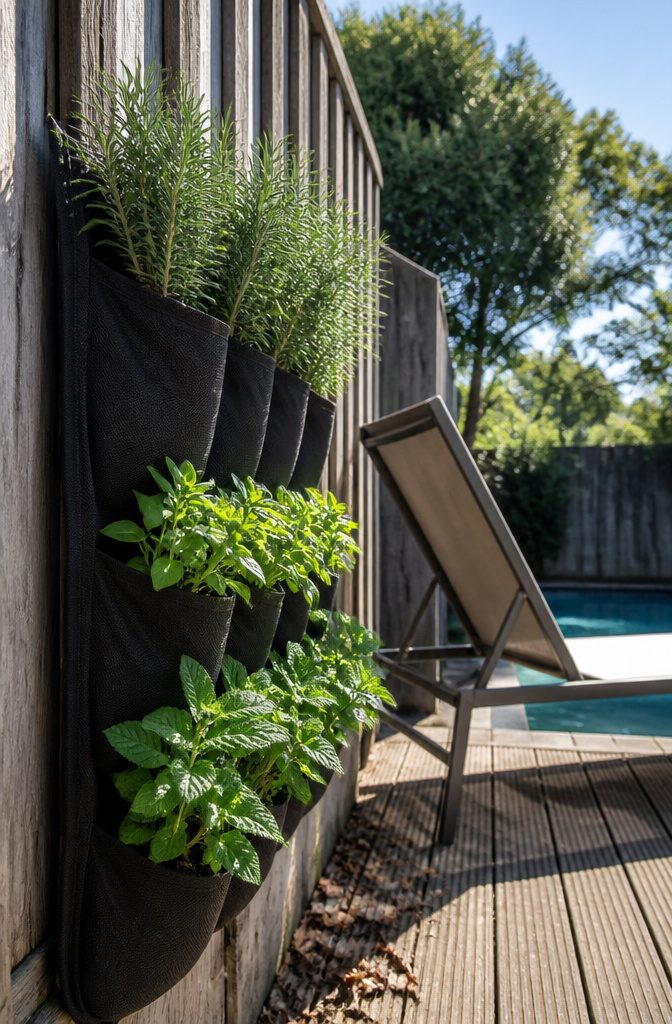
A fence-mounted planter beside the lounge area gives you fresh herbs without using any deck space.
Mint, basil and rosemary cover most poolside drinks: mint for lemonade or a mojito, basil muddled into a spritz, and a rosemary sprig as a garnish.
Hang it within arm’s reach of your chair so you can pick a sprig without getting up. Brushing past the leaves also releases their scent.
Mint spreads fast in a garden bed, so a wall planter keeps it contained.
Rosemary prefers drier soil than the other two, and water runs downward in a vertical planter, so give it the top pocket and put the thirstier mint and basil below.
12. Stepping-Stone Path
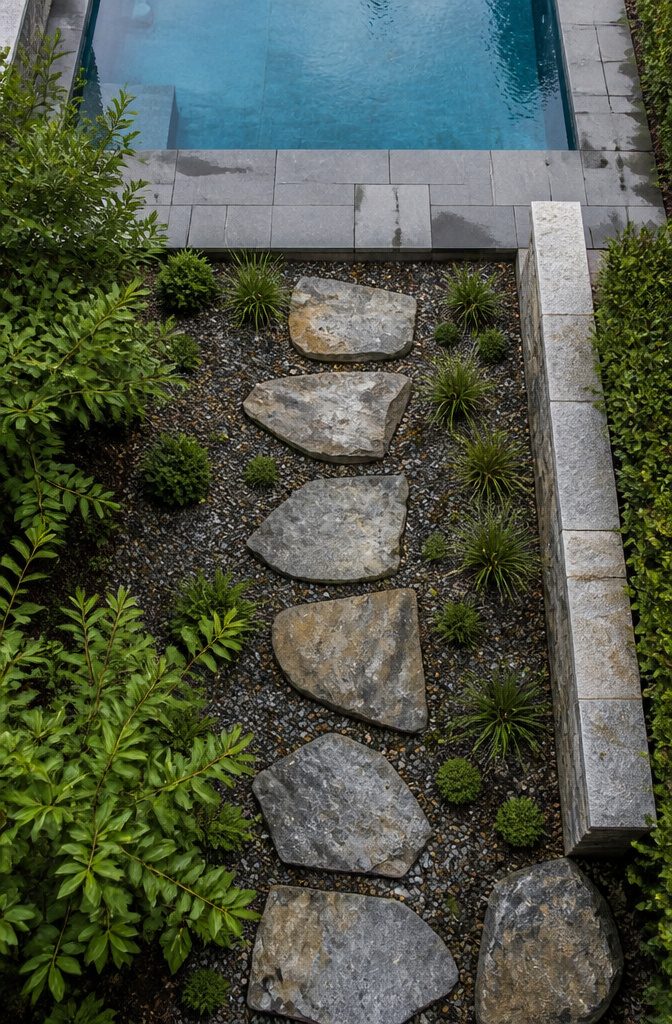
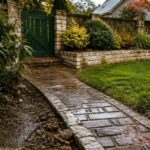
Large natural stones laid through planting beds give wet feet somewhere clean to land between the house and a detached pool, and they make the walk feel like an arrival.
Set each stone in gravel, not mud, so it stays level and doesn’t sink or splash after rain. Dig out the soil under each stone, add a few inches of compacted gravel, and bed the stone on top.
Space the stones for a natural stride, usually about 2 feet from center to center. Walk the route in the shoes you’d wear to the pool and nudge any stone that makes you shorten or stretch your step before you dig.
13. Child Safety
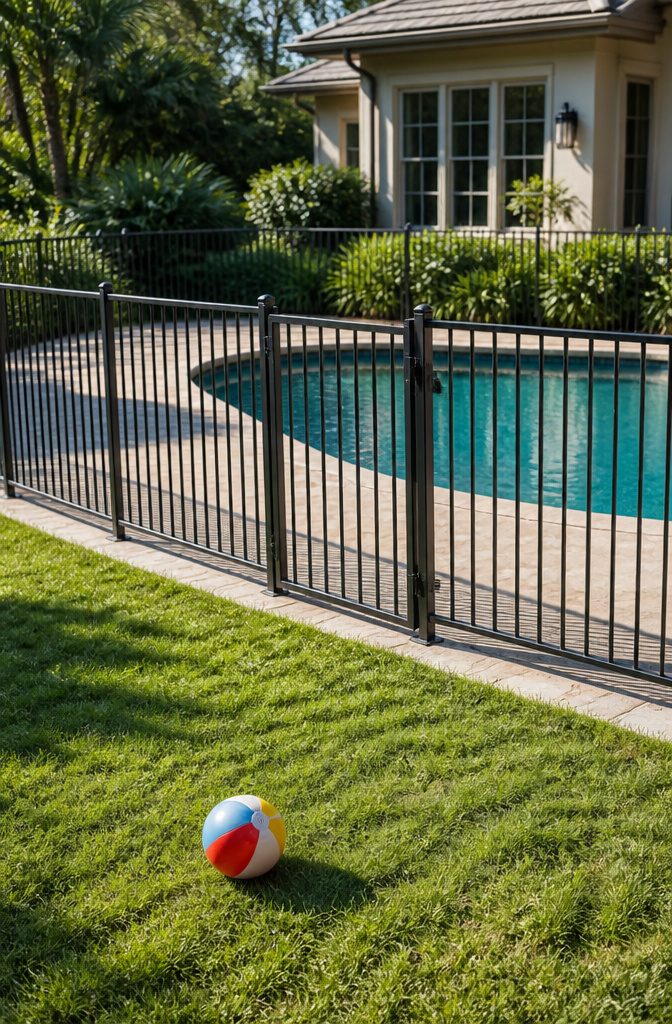
Design the yard so a child who wanders out alone meets as few hazards as possible.
- Fence the pool on every side, with a self-closing, self-latching gate that swings away from the water. Check your local code for required height.
- Round off the corners of walls, planters and benches near the water, and skip jagged rock edging within a child’s reach.
- Give kids a soft place to play outside the pool fence, such as lawn or a thick bed of shredded bark, where you can see them from the house.
- Choose textured, non-slip paving anywhere children climb out or run, since smooth wet stone is where most falls happen.
- Keep roses, agave, yucca and other thorny or spiky plants away from any path wet bare feet will take.
Plants That Handle Splash
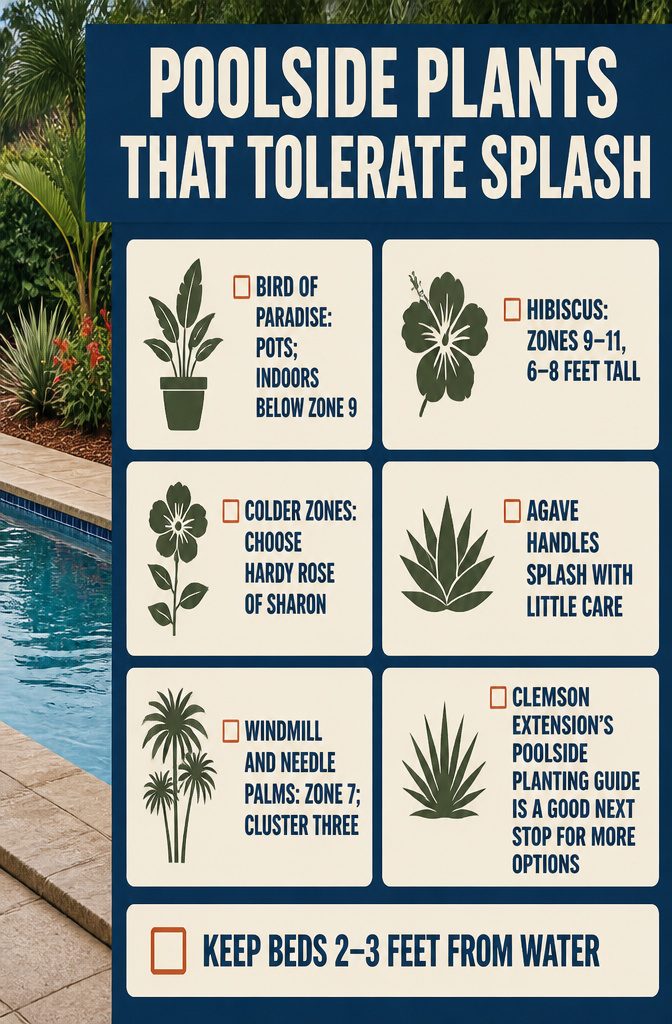
Plant shorter shrubs and succulents closest to the water, where the occasional splash of chlorinated water lands. Set taller trees and tropical plants farther back.
- Keep beds 2–3 feet from the water’s edge. That cuts debris in the pool and leaves room for you to reach the plants.
- Bird of paradise: grow it in large pots. Below zone 9, move them indoors for winter.
- Hibiscus: in zones 9–11 it grows into a flowering hedge 6–8 feet tall. In colder zones, plant hardy Rose of Sharon.
- Agave: handles splash well and needs little care.
- Windmill and needle palms: hardy to zone 7. Cluster three at varied heights.
Clemson Extension’s poolside planting guide is a good next stop for more options.
Plants to Keep Away
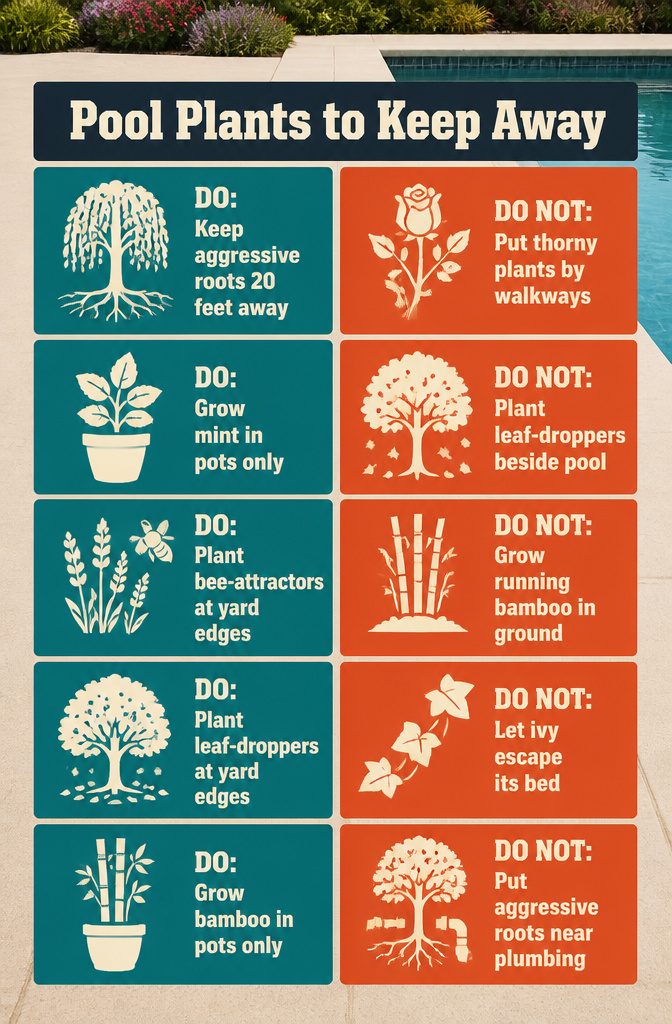
Five groups of plants cause most of the upkeep trouble around a pool:
- Willow, ficus, silver maple and elm have aggressive roots that go after the plumbing and the pool shell. Plant them at least 20 feet away.
- Crepe myrtle and jacaranda drop leaves, flowers and seed pods, which can mean skimming every day.
- Roses and bougainvillea are fine in beds, but their thorns are a hazard along walkways where wet, bare feet land.
- Lavender and bee balm draw bees, so plant them at the edges of the yard instead of beside the loungers.
- Mint, running bamboo and ivy escape their beds and spread. If you want them, grow them in pots only, never in the ground near the pool.
Frequently Asked Questions
What do you put around a swimming pool?
Most pool surrounds combine planting, decking, paving and lighting.
Plants soften the edge, a raised deck section adds a separate zone, textured paving gives non-slip footing, and warm-white 2700K uplights in the beds light the space at night without harsh floodlights.
You can mix them to suit your yard, and gravel or raised planters work too.
What plants survive around a chlorine or saltwater pool?
Ornamental grasses, bird of paradise, hibiscus, agave, and windmill and needle palms all tolerate the occasional splash.
Put shorter shrubs and succulents closest to the water and taller trees and tropical plants farther back. Bird of paradise does best in large pots that move indoors below zone 9.
How far should plants be from the pool edge?
Keep in-ground beds 2–3 feet from the water’s edge.
That gap cuts the debris that blows in and leaves you room to reach the plants for upkeep. Raised planters can sit closer because the soil and mulch stay contained.
What should I not plant near a pool?
Skip willow, ficus, silver maple and elm, whose aggressive roots go after the plumbing and pool shell; keep them at least 20 feet away.
Crepe myrtle and jacaranda drop leaves, flowers and pods, and roses and bougainvillea have thorns that hurt wet bare feet along walkways.
Plant lavender and bee balm at the yard’s edges to keep bees away from the loungers, and grow mint, running bamboo and ivy in pots only.
How do I get privacy around my pool fast?
Plant clumping bamboo, which reaches 10–15 feet in a couple of seasons, or tall ornamental grasses, which fill in within one season.
For cover right away, stake a reed or fabric screen in front of the young plants. Take the screen down once the planting has filled in.