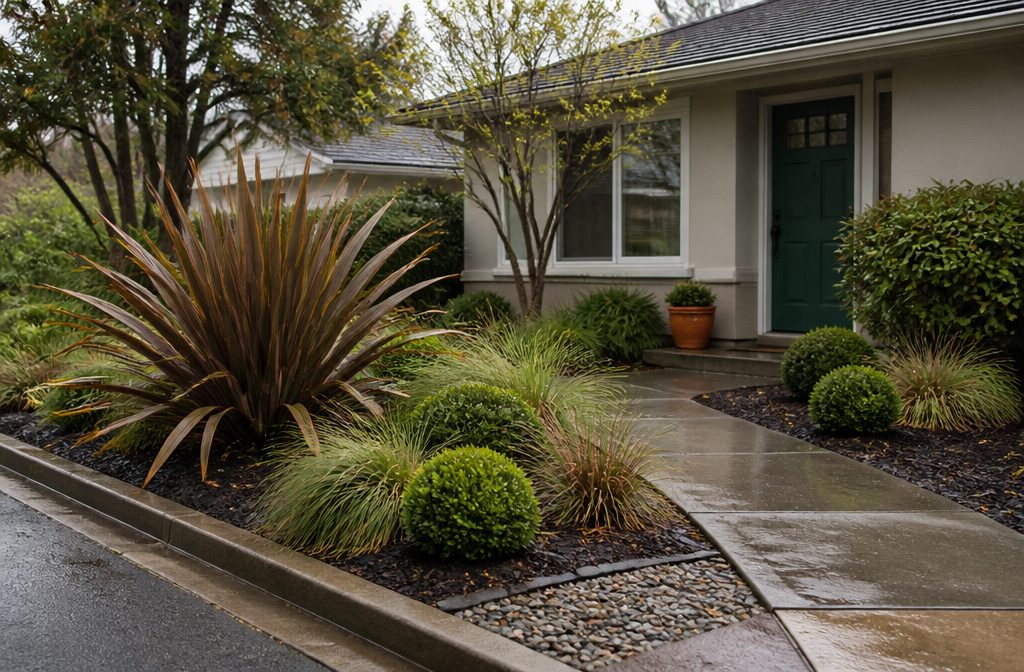
The planted strip between the street and your door is the one part of the yard that can’t go wild for a few weeks, so its style should match the house and its size should match your upkeep time.
Formal Colonial boxwoods show every missed trim; a contemporary ranch’s grasses and New Zealand flax forgive a busy month.
Match the House Style
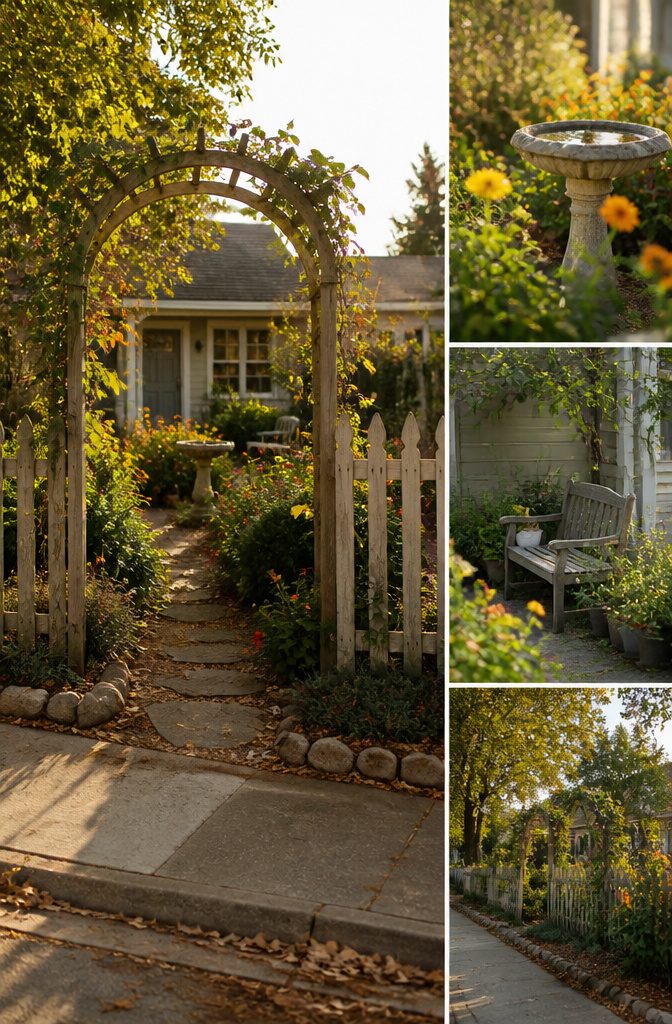
The house sets the style, and the style sets the plant list. Jeni Webber’s article in Fine Gardening Issue 79 shows 4 ways this plays out in an older Palo Alto neighborhood.
A cottage gets a picket fence, an arbor, an herb garden, a birdbath, a bench, and a yellow, orange, and red palette.
A Colonial gets a brick walk, symmetrical foundation plantings, boxwoods, roses, clematis montana, and lavender. A Craftsman bungalow gets hardscape built with matching craftsmanship, mixed borders, and tumbled bluestone lawn edging that doubles as a wet-weather path.
A contemporary ranch gets curved beds, ornamental grasses, low-maintenance perennials, New Zealand flax, an olive tree, and 2 retained loquats.
Pick the style you will actually keep up. Formal symmetry shows every missed trim, while grasses and loose borders forgive a busy month.
Recommended Products

UNIQUE OUTDOOR WALKWAY SOLUTION: Elevate your garden, lawn, or backyard with BIRDROCK HOME Rubber Stepping Stones. These durable pavers create a functional and stylish walkway, enhancing your landscape while providing a solid and reliable surface to walk on.

Surface Texture: Natural fir wood is selected with exquisite processing technology, coated with waterproof coating, and has anti slip patterns on the surface, greatly improving the safety and stability during walking, and isolating water stains and sediment. Exquisite workmanship, suitable for various weather conditions and scenes, not easy to fade, and more crack resistant

RUBBER STEPPING STONES: Elevate your outdoor space with these lightweight simulated flagstone rubber pavers that offer the timeless beauty of real stone without the heavy lifting.
Mark the Entrance
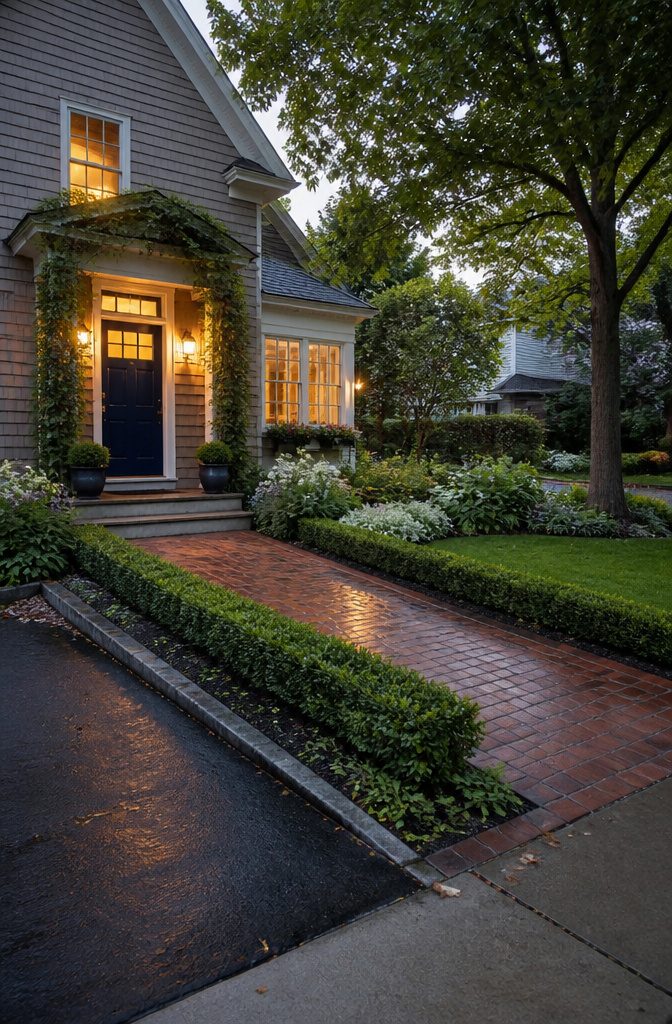
A visitor standing at the curb should be able to pick out your front door without hunting for it.
Paint the door a color you love, then add one more cue: an arbor over the entrance, a group of eye-catching containers on each side of the door, a fountain or sculpture in an entry courtyard, or a vine trained up and over the doorway.
Landscape lighting aimed at the entry, beyond the usual porch light, does the same job after dark.
Every one of those cues needs a path leading to it. Connect the street or driveway to the door with an even, nonslip surface so nobody trips, and make it wide enough for two people to walk side by side.
Recommended Products

ELEGANT GARDEN ARCH TRELLIS – Transform your backyard into a beautiful garden retreat with this classic black metal garden arch. Create an inviting entrance along pathways, over garden beds, or among your favorite flowers and climbing plants.

Versatile garden arch, perfect for event, wedding, and garden decoration. A must-have for your special occasions.

【 Trellis with Dual Planter Box】This rust-resistant metal garden arch combines integrated dual planter boxes with a sturdy trellis to support climbing plants like roses, grapes, and vegetables. Its heavy-duty design creates lush vertical gardens or decorative entrances, maximizing space and beauty in any outdoor area.
Year-Round Foundation Plantings
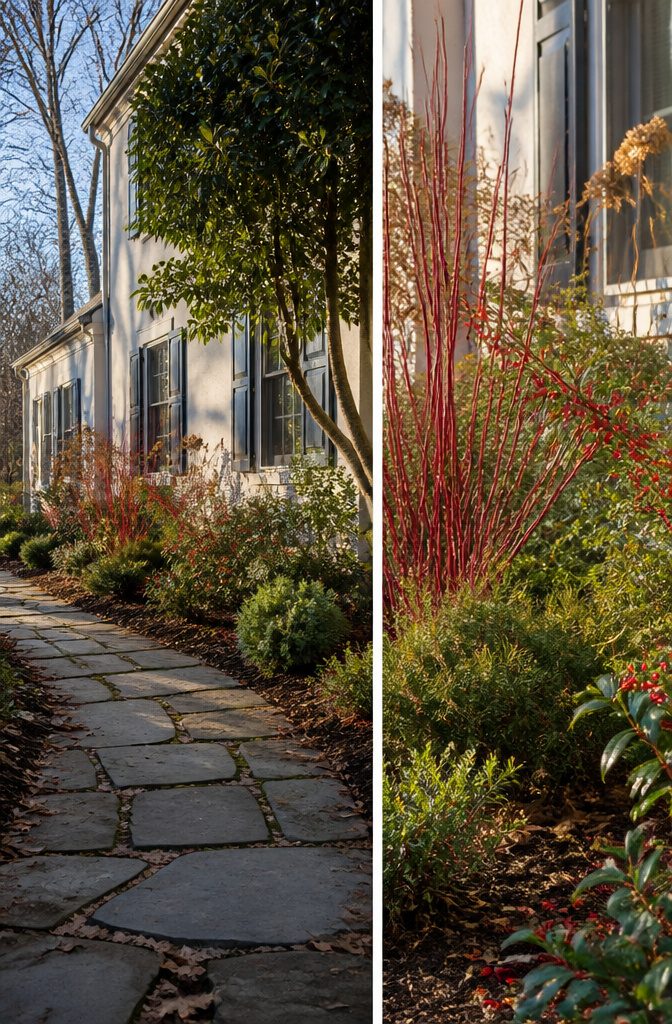
Check what already grows along the house before you buy anything. Mature camellias and hollies can be limbed up into small trees, which suits the corners of the house or either side of the front door.
Overgrown rhododendrons and boxwoods can be pruned hard and left to regrow under windows. Healthy shrubs that no longer fit can move elsewhere in the yard.
Then plan a mixed border, not a strip of evergreens. Start with well-spaced evergreen groups that differ in leaf shape, texture, color, and habit.
Add bulbs and flowering shrubs for spring, perennials and annuals for summer, and burning bush for flaming autumn foliage. For winter, redtwig dogwood gives red stems and winterberry gives scarlet berries, with seed heads and bark filling in.
Recommended Products

PREMIUM NURSERY GROWN: Arrives established with healthy root development to help your plant thrive. We cannot ship our plants to the following states: AK, AZ, CA, CO, HI, ID, MT, NM, NV, OR, UT, WA, or WY. All orders to these states will be automatically cancelled

MATURE SIZE: Wintergreen boxwood grows into a dense, compact evergreen shrub reaching 3-4 feet in height and width at maturity
MATURE SIZE: Wintergreen boxwood grows into a dense, compact evergreen shrub reaching 3-4 feet in height and width at maturity
Choose a Size You Can Maintain
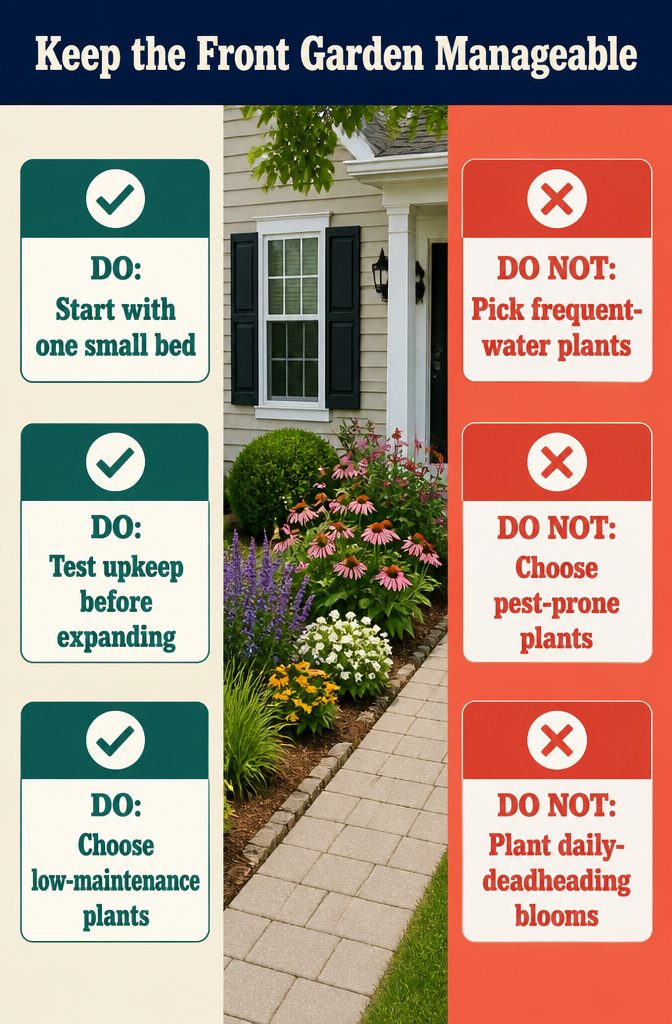
Your backyard can go wild and woolly for a few weeks. The front can’t.
Since the front garden is always on display, you want to keep it looking as good as possible.
If you’re unsure how much time you have, start with one small bed and see what it takes to maintain before you add more. Then leave out three kinds of plants:
- Plants that need frequent watering. They tie you to the hose all summer.
- Plants prone to pests or disease. Each one means sprays or replacements, which drain a small budget.
- Plants that require daily deadheading. Skip a few days and the spent blooms show from the street.
Recommended Products

✅ Landscape Spotlight (12V, Low Voltage): Targeted landscape lighting for front door, walkway, and small yard. 10W MR16, 3000K warm white reduces glare and guides steps for safer entry at night. Ideal as outdoor spotlight and path lighting accents.

【Integrated LED Technology, No Need to Change Light Bulb】High-quality LED chips provide warm white glow. The upgraded lens makes the light well-balanced and glare-free without impact on eyes. LED landscape lights last longer than traditional lighting and use less energy

Structures and Backdrops
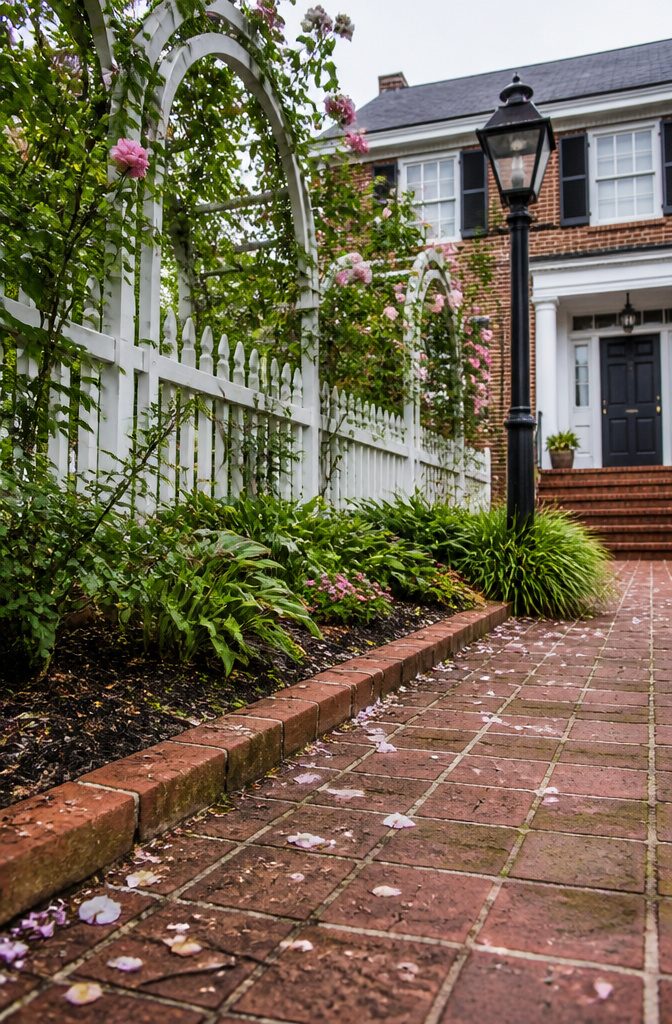
A bed planted in open lawn looks scattered. The same plants set against a fence, wall, or hedge look chosen, because the structure gives stems something to lean on and gives your eye an edge.
In a Colonial front yard, a picket fence with hoop arches supports roses as they grow.
Brick edging along the lawn, matched to the brick of the front walk, ties the beds to the house. A picket fence suits a cottage yard for the same reason, with looser plantings spilling over the top.
Choose fence and edging materials that echo what the house already has. Mailboxes and lampposts can anchor a bed too: plant a clump at the base so they read as part of it.
Recommended Products

【Realistic Appearance】This artificial cedar shrub is made of high-quality PE material and features dense layered branches and leaves, restoring the natural texture of real plants. Perfect for bringing lush evergreen vibes to your home, whether for daily display or Christmas & holiday seasonal styling


Features That Welcome Visitors
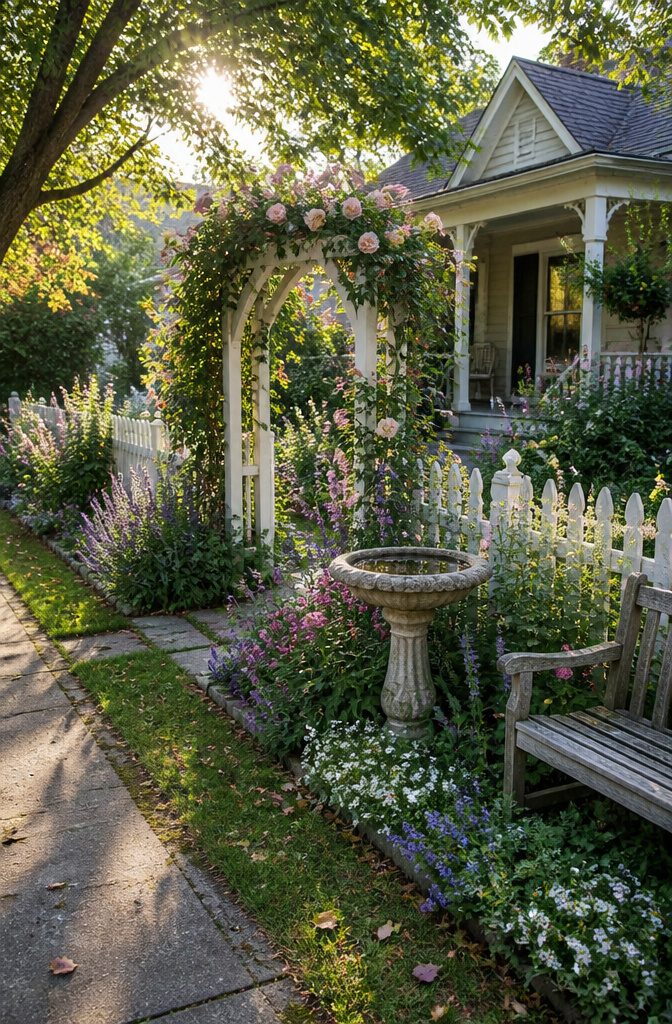
A bench turns a front yard from something people look at into somewhere they stay.
In the cottage example it sits at one end of the layout, where the owner reads the Sunday paper, and it tells neighbors the garden is meant to be used.
A birdbath works best where two paths cross, because the crossing gives anyone walking through a reason to pause.
A rose-covered arbor over the front gate greets guests before they reach the door. An herb garden along the walk to the entry gives them something to look at on the way in.
Set the picket fence back from the sidewalk and plant both sides of it, plus the grassy strip between sidewalk and street. Neighbors on a morning walk then move through the garden instead of glancing over a fence at one.
Recommended Products

UNIQUE OUTDOOR WALKWAY SOLUTION: Transform your garden, lawn, or backyard with BIRDROCK HOME Rubber Stepping Stones. These durable pavers provide a beautiful and practical pathway through your outdoor spaces. The modern design not only enhances the look of your landscape but also offers a sturdy and solid surface to walk on.

Sturdy Cast Iron Construction: Lawei turtle stepping stone is made of heavy-duty cast iron with genuine verdigris finish, this metal stepping stone withstands all weather extremes—perfect for year-round outdoor use in gardens, lawns and patios without rusting or cracking.

Decorative beautification effect: using unique natural pebbles, can be freely spliced and combined to create a personalized patio path or pattern. It can also be separated into single pieces and flexibly embellished in various parts of the yard, adding natural wild fun. It is a unique and practical decorative element for lawn and garden
Path Materials and Shape
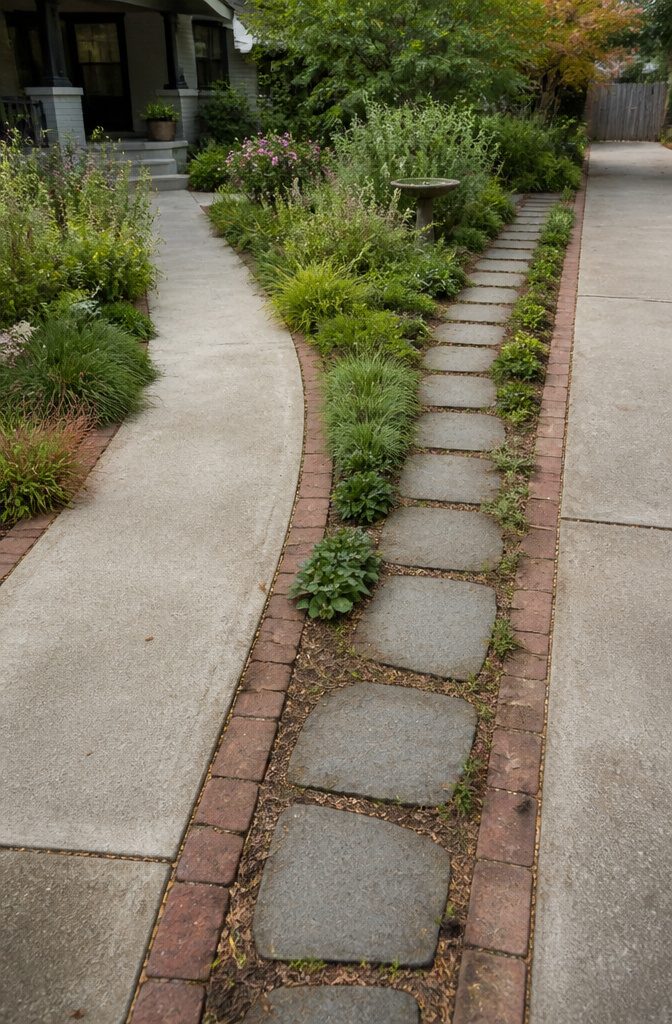
Poured concrete is the most commonly used material for a front path.
Brick, stone, and concrete pavers are the other main options, and each gives the path a more distinct look. If you already have a path you don’t want to replace, edge it with bricks or cobblestones to soften it.
Shape matters as much as material. A straight path is the easiest to build and the quickest route to the door, which is why most front yards have one.
A curved or jogged path is more interesting, especially when it winds through a garden, toward a birdbath, or alongside a bench.
If your main path runs to the driveway, a second path to the street may serve you better, even if it’s only a line of stepping-stones beside the driveway.
Easy-Care Plant Picks
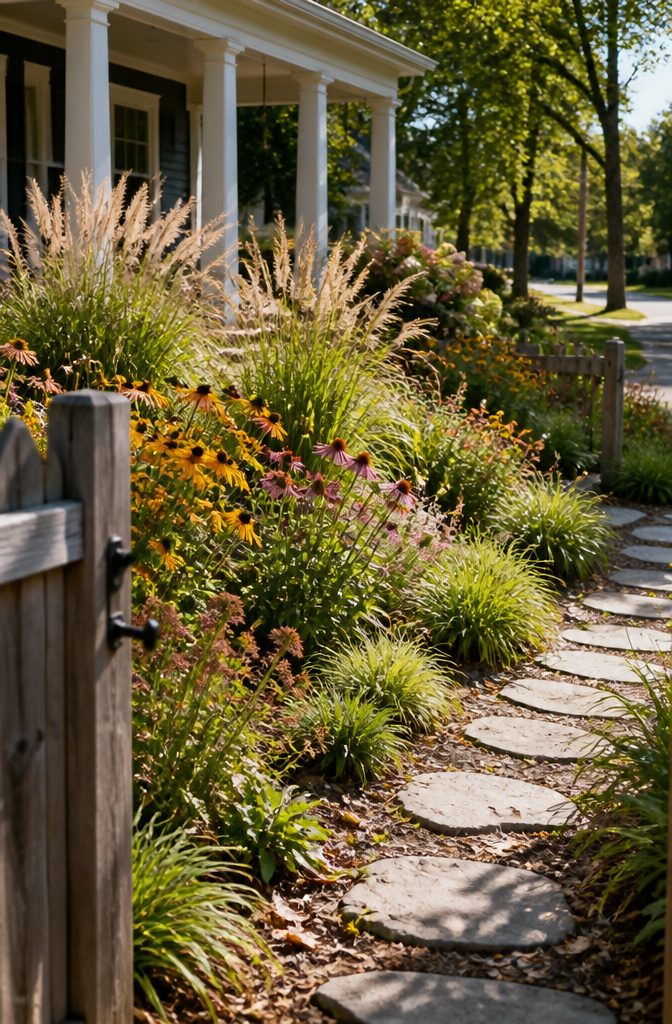
These six are dependable across much of the country, and each gives a long season of interest with little fuss:
- Black-eyed Susans (Rudbeckia spp.)
- Daylilies (Hemerocallis cvs.)
- Coneflowers (Echinacea spp.)
- Sedges (Carex spp.)
- Fountain grasses (Pennisetum spp.)
- Miscanthus sinensis
The first three bring the flowers. The sedges and grasses add texture and movement around them.
Skip creeping Jenny (Lysimachia nummularia) if you garden in a state where it is considered invasive: CT, IL, MA, NH, PA, TN, WI, and WV.
Check your own zone before buying any plant, and look up its status for your state at invasiveplantatlas.org.
Recommended Products

PREMIUM NURSERY GROWN: Arrives established with healthy root development to help your plant thrive. We cannot ship our plants to the following states: AK, AZ, CA, CO, HI, ID, MT, NM, NV, OR, UT, WA, or WY. All orders to these states will be automatically cancelled

Thrives in USDA zones 5-9

This item can not be shipped to in HAWAII, TENNESSEE, OR ALASKA - Ships in a pot with soil
Frequently Asked Questions
Recommended Products

Premium Quality Construction: Best Pro Lighting's 3-Tier Pagoda Light is constructed with heavy-duty cast aluminum and a powder-coated finish, ensuring durability and resistance to outdoor conditions. This high-quality construction ensures the fixture's longevity and performance.

【 Low Voltage Pathway Lights】:Solid cast aluminum low voltage pathway lights,greatly ideal for low voltage landscape lighting walkway lights pathway lighting path lights driveway lighting outdoor lighting wired sidewalk light night scape lighting,low voltage landscape light.Replaceable bi-pin G4 socket design,so users can change the light source easily if replacement applicable

What should I put in a front yard garden?
Build a mixed border instead of a strip of evergreens: evergreen groups with different leaf shapes, plus bulbs and flowering shrubs for spring, perennials for summer, and redtwig dogwood or winterberry for winter.
Add one cue that marks the front door, such as an arbor or paired containers. Black-eyed Susans, daylilies, coneflowers, sedges, fountain grasses, and Miscanthus sinensis are easy-care picks for much of the country.
How do I turn my front yard into a garden?
Start with one small bed and see how much upkeep it takes before you add more. Look at the shrubs already along the house first, because camellias, hollies, rhododendrons, and boxwoods can often be pruned or moved instead of replaced.
Set the bed against a fence, wall, or hedge, and choose plants and materials that suit your house style.
Can I have a garden in the front yard?
Yes. A front yard garden works with a cottage, Colonial, Craftsman, or contemporary ranch house, and each style has its own plant list.
The main difference from a backyard is that the front is always on display, so pick a size and style you can keep tidy.