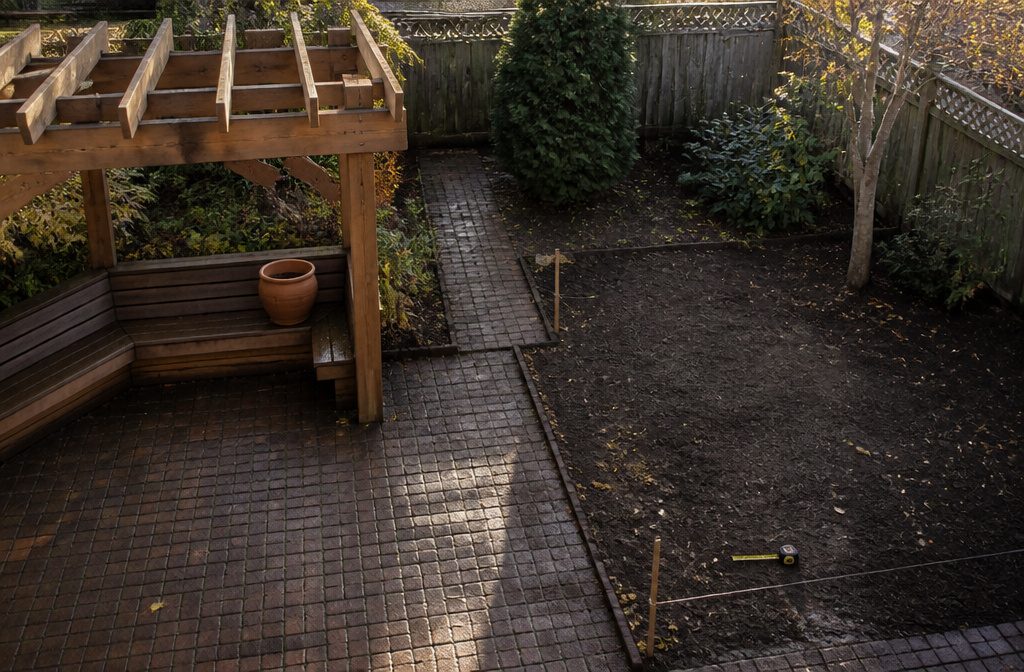
Backyard landscape design is a scaled, bird’s-eye drawing that places paving, structures and seating before anything is planted.
Plants wait because their spots depend on where beds, power sources and seating end up, and a favorite like lavender can lose its place to a taller evergreen. Begin by ranking 5 priorities.
Set Your Priorities
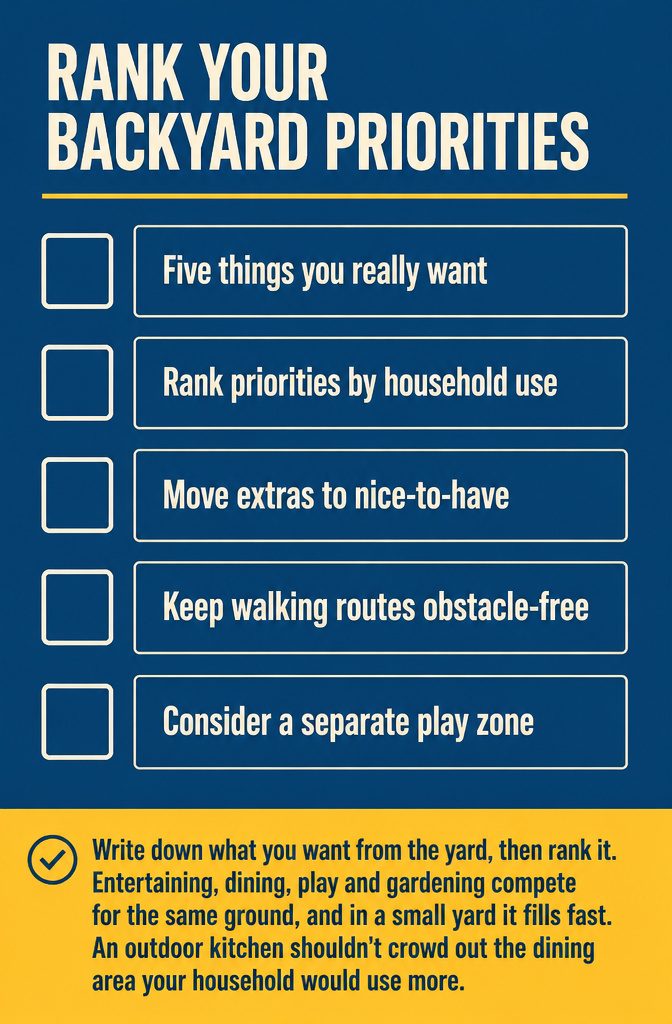
Write down what you want from the yard, then rank it.
Entertaining, dining, play and gardening compete for the same ground, and in a small yard it fills fast. An outdoor kitchen shouldn’t crowd out the dining area your household would use more.
Designer Monji caps the list at five:
"I ask people to come up with five things they really want."
Pick your five, and move everything else to a "nice to have" list. Then trace how people and pets will walk through the yard, keep access clear of obstacles, and decide whether a separate play zone makes sense.
Recommended Products


【Weight & Size】These mexican beach pebbles weigh about 5 pounds and measure about 2-3 inches. The surface of the smooth rocks will attract dust. Please be sure to wash them 2-3 times with water before use.
Assess Your Site and Make a Plan
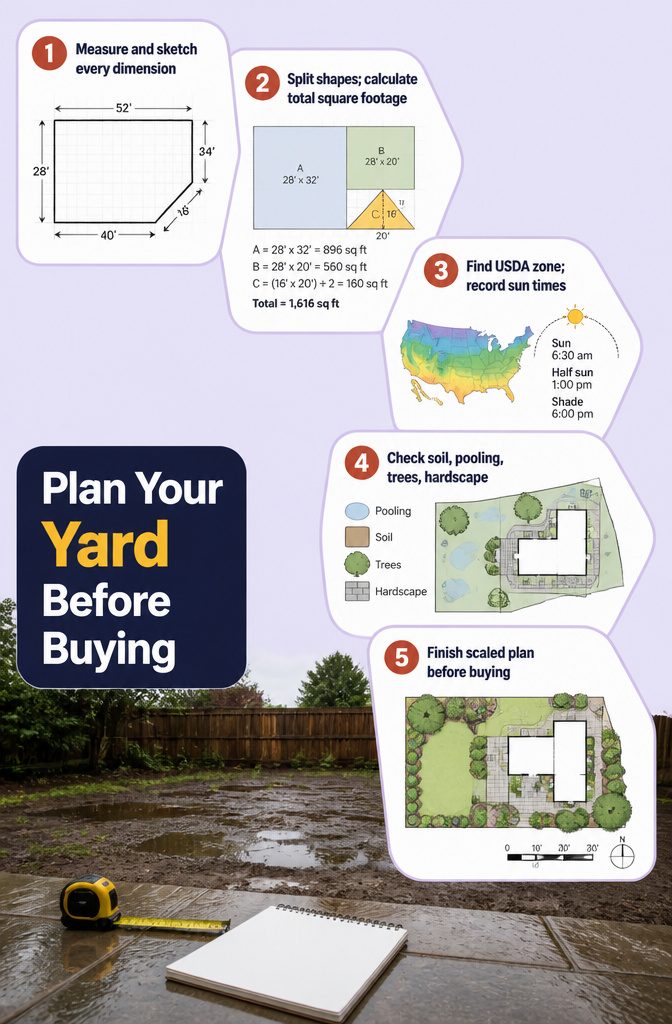
- Measure the yard with a tape and sketch the outline with each dimension.
- Split the sketch into rectangles and triangles. Multiply width by length for each rectangle. For a triangle, divide that result by 2. Add the pieces for your total square footage.
- Find your zone on the USDA Plant Hardiness Zone Map, then note which spots get sun and at what times of day.
- Check your soil and where water pools after rain. Mark mature trees and any hardscape you plan to keep.
- Draw a landscape plan, a scaled, aerial diagram of hardscape and softscape. Finish it before you buy anything. A full plan prevents backtracking and costly mistakes, and it lets you phase the work.
Recommended Products

MOBILE GARDEN ON WHEELS — Two all-terrain wheels and an ergonomic handle let you roll a 200+ lb planted bed wherever sunlight goes. Move your garden across patio, balcony, or backyard in minutes.

More suitable raised garden bed size and Volume:67"L x 20"W x10"H, 7 Cu. Ft. You can cultivate plants, like vegetables, flowers, herbs in your patio, yard, garden, and greenhouse.

Size: 60×29×11 in, 68 gallons of soil required.
Lay Out Hardscape and Activity Areas
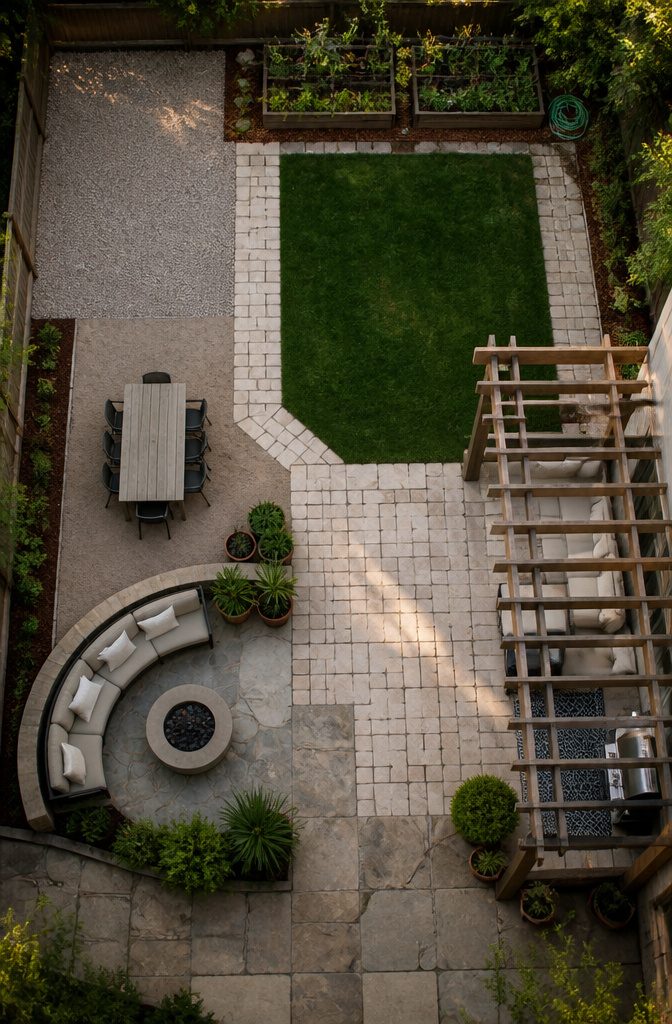
Lay out the fixed, expensive pieces first: paving, lawn, and raised beds.
Structures come next, such as a pergola, water feature, shed, or bocce court. Dining and seating go in last, because a table moves easily and a concrete pad does not.
Sketch any feature you might add later, like a hot tub or outbuilding, and keep that space clear of utility lines and future footings. Have lines marked before you dig.
In a small yard, divide the space into zones rather than adding more stuff.
A few potted plants can separate a dining table from a hot tub, and an outdoor rug can mark the grill area off from an outdoor living room.
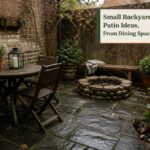
Built-in seating around a fire pit or dining area sits off the ground and tucks into the perimeter, so it seats more people than loose chairs. Choose benches with hidden storage so they also hold cushions and tools.
Recommended Products

Modern Boho Style: The combination of a taupe cushion and champagne frame is both warm and bold, effortlessly pairs with various table styles, adding elegance and vibrancy to your indoor and outdoor spaces.


Modern Boho Style: The combination of a khaki cushion and wood grain frame is both understated and natural, effortlessly pairs with various table styles, adding warmth and sophistication to your indoor and outdoor spaces.
Choose Plants After the Plan
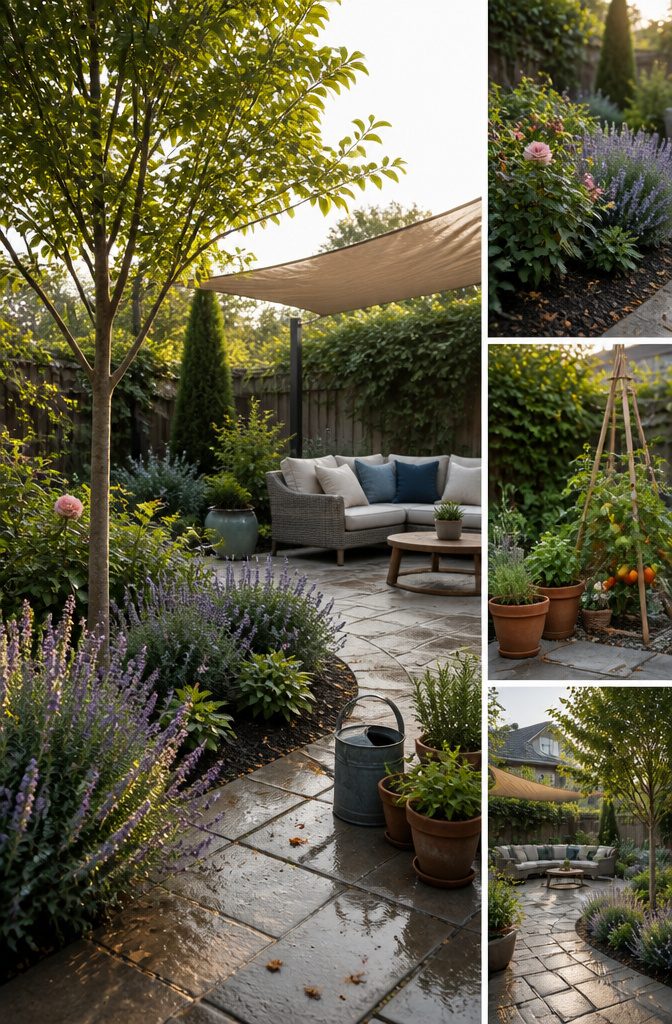
Choose plants last.
Until you know where the beds, power sources and seating go, you can’t say where a plant belongs, and the lavender you had your heart on may lose out to a taller evergreen that looks as good in December as it does in June.
Look up your zone on the USDA Plant Hardiness Zone Map, then match each plant to your sunlight, soil, drainage and the size of the space.
Keep plants with similar water needs together. A rose and a cactus will not share a bed well.
In a small yard, grow up: tomatoes on a vine, potted herbs. One tree or a single bold plant makes a focal point.
For shade, a shade sail suits a small patio and a cantilever umbrella tilts with the sun. A tree is the better choice if it fits your space at full size.
Recommended Products
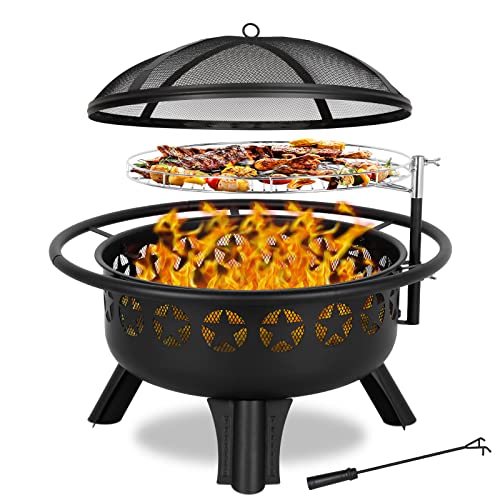
【2 in 1 Outdoor fire pit with grill】: 31” Dia x 24” H, this wood burning fire pit features a multi-functional design ideal for outdoor heating or grilling. The fire pit with cooking grate is designed with an outer ring around the central fire area allowing for easy movement. The creative pentagram vents help increase airflow for the firewood and brings a brighter flame. Air circulation burns longer and vigorously, and a mesh cover can prevent from flying sparks.

[3 IN 1]: OutVue fire pit is equipped with 2 cooking grills, 1 lid and tabletop[No waterproof cover]. When you fix grills and tabletop to the fire pit, you can enjoy the roast and bonfire. When it not make fire and cover the lid, you will get a 42 inch round table to have a meal or coffee for 8-10 persons. OutVue provide a wood fire pit has 3 functions: bonfire, barbecue and table, which can be used all year for your garden, yard, patio. This's also a very thoughtful gift to friends.
[3 IN 1]: OutVue fire pit is equipped with 2 cooking grills, 1 lid and tabletop. When you fix grills and tabletop to the fire pit, you can enjoy the roast and bonfire. When it not make fire and cover the lid, you will get a 36 inch round table to have a meal or coffee for 6-8 persons. OutVue provide a wood fire pit has 3 functions: bonfire, barbecue and table, which can be used all year for your garden, yard, patio. This's also a very thoughtful gift to friends.
Draw the Plan to Scale
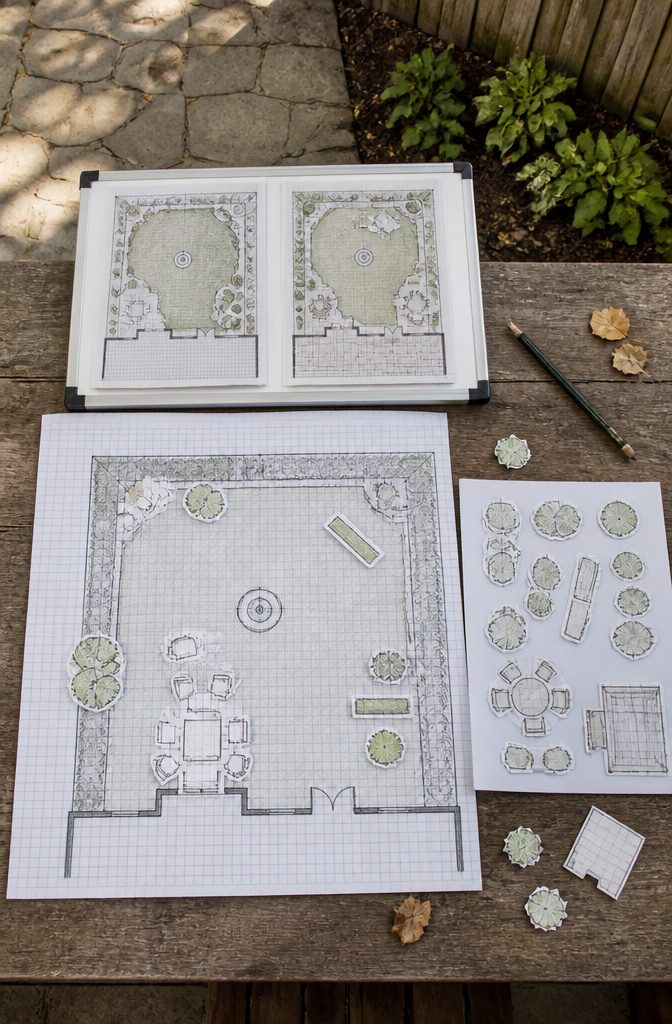
- Use pencil and graph paper to draw a bird’s-eye view of the whole yard, including the house wall, fences, and any fixed feature you can’t move.
- On a separate sheet, draw the movable pieces: plants, lawn furniture, a fountain, a tool shed. Draw every piece at the same scale as the plan, or the comparisons mean nothing.
- Cut the pieces out.
- Slide them around the plan in pencil-free positions, so you can swap a patio set for a shed without erasing anything.
- Prefer a screen? Online templates and drag-and-drop editors do the same job, and whiteboard tools let you keep several versions side by side.
This is a way to see and compare options. Nothing here is a construction drawing.
Recommended Products

Expertly sized to fit into economical and easy to find standard frames.


Hardscape and Softscape
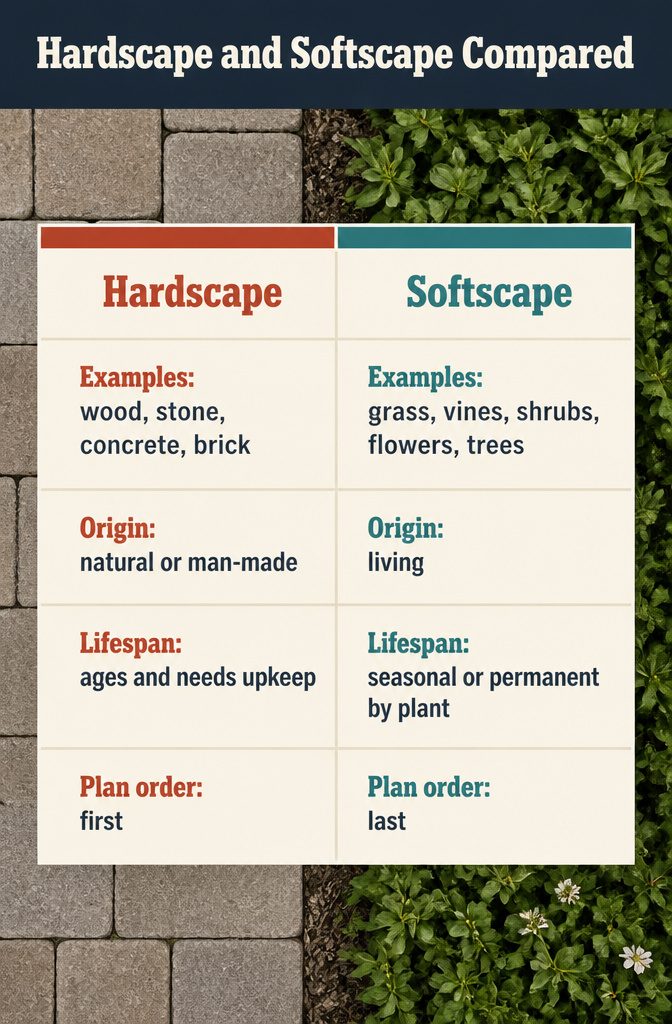
Hardscape is the inanimate part of a yard: wood, stone, concrete and brick.
Softscape is the living part: grass, vines, shrubs, flowers and trees. Fix the hardscape and bed outlines first and add plants last, because planting spots depend on where the seating, power sources and beds end up.
| Hardscape | Softscape | |
|---|---|---|
| Examples | Wood, stone, concrete, brick | Grass, vines, shrubs, flowers, trees |
| Origin | Natural or man-made | Living |
| Lifespan | Ages and needs upkeep | Seasonal or permanent, depending on the plant |
| Order in the plan | First | Last |
Choose materials you will still like in 5 or 10 years. A wood deck and a brick patio will both wear, and each asks for different maintenance.
Recommended Products

[DIY BOARD] This concrete board is design for DIY lovers, who want to decorate their garden road as they like, to give their pavement and yards some artistic sense.


【Weight & Size】These mexican beach pebbles weigh about 45 pounds and measure about 1-2 inches. The surface of the river rocks will attract dust. Please be sure to wash them 2-3 times with water before use.
Design Principles and Styles
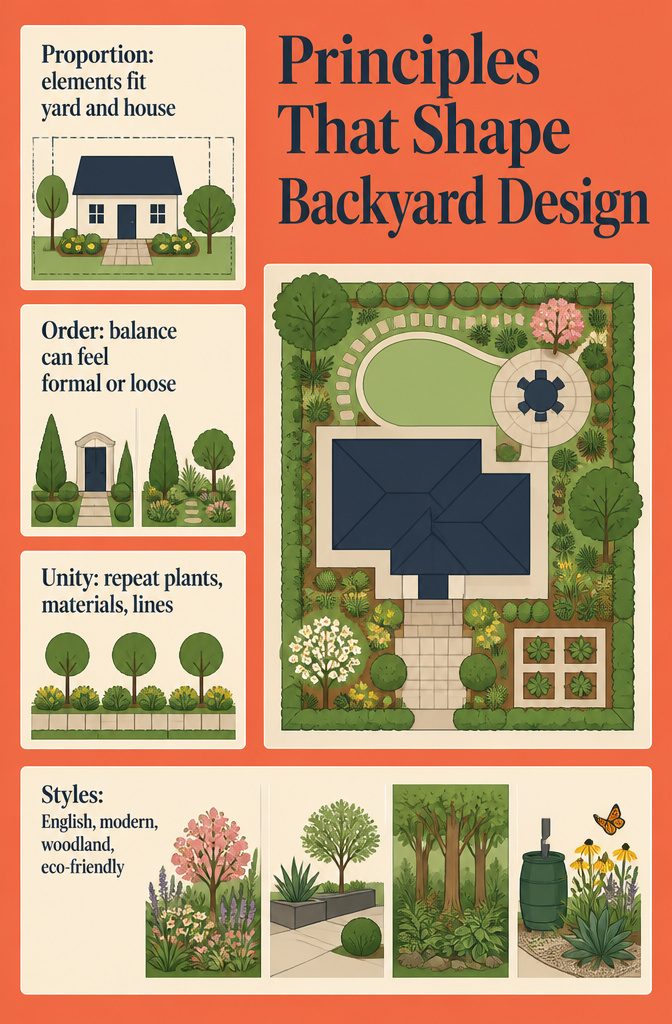
Three principles give you a way to judge a sketch before you buy anything. Proportion asks whether each element fits the yard and the house; a patio that crowds the lot fails it.
Order is balance. Two matching evergreens at an entry read formal, while evergreens with defined shapes set against softer plantings give a looser balance with contrast.
Unity means plants, materials and lines repeat so the yard reads as one space. Canva’s list adds transition, balance and focalization: how areas connect, and where the eye lands first.
Treat styles as starting points.
English means layered, informal borders. Modern means clean lines, though naturalistic planting around a modern house can set off its architecture.
Woodland leans on trees and shade. Eco-friendly uses native pollinator plants, rain barrels and drought-tolerant xeriscape.
Recommended Products


Spacious Planting Area: This elevated raised garden bed measures 36" x 12", offering a generous 21.8-gallon planting capacity and supporting up to 300 lbs. Ample space provides enough room for plants to grow freely, ideal for large-scale planting needs.
Designer or Landscape Architect
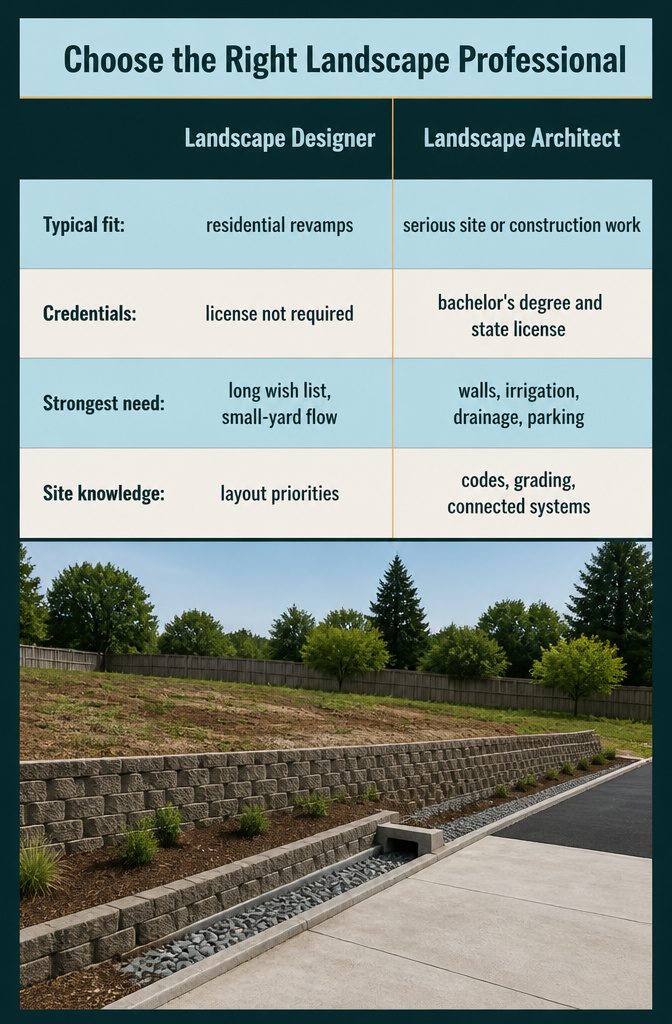
A landscape designer fits most residential revamps. Hiring one pays off when your wish list is long and unranked, because a designer narrows your priorities and cuts the guesswork.
It also helps in a small yard, where traffic flow and how you plan to use the space decide whether the layout works.
Landscape architects need at least a bachelor’s degree and a state license. Bring one in for serious site planning or construction work, such as retaining walls, irrigation, drainage, or adding a parking area or driveway.
They know local codes, grading, and how the site’s systems fit together. Designers don’t need the license, though many hold similar credentials and experience.
Recommended Products

Garden Arbor Bench: Sit down and take in the ambiance of your garden. Our combination wood garden bench and arch trellis is an excellent source of outdoor decor that doubles as seating for two.

STURDY METAL FRAME: Designed for reliable outdoor use, this 10' x 12' hardtop gazebo features triangular aluminum posts, a reinforced all-metal frame, and a durable galvanized steel roof for enhanced stability. When properly anchored, the sturdy structure provides dependable resistance to everyday wind and seasonal weather, making it a practical shelter for patios, decks, gardens, and backyards

Sun-protective PE Rattan: This patio loveseat with ottoman features high-quality sun-protective PE rattan that ensures long-lasting durability. Moreover, the hand-woven design adds an elegant touch.
Frequently Asked Questions
Recommended Products

Premium Canadian Hemlock Wood: Adirondack chair made of durable, weather-resistant Hemlock with water-based paint for lasting outdoor furniture beauty.

Fun Moments Around the Campfire: If you want to create a welcoming atmosphere in your backyard for gatherings where you can enjoy delicious marshmallows and endless conversations together with your family and friends, the Gas One portable fire pit for camping is the ideal solution!

Wanting a Great Patio Party?: Having a patio party is different from an indoor party. Outdoors you need to consider the coldness and a center of attention to gather everyone. A propane fire pit table can provide the atmosphere needed for a great time!(note:1:use soapy water to check for leaks before use 2:The reminder card contains interface size instructions and interface inspection instructions)
What are the 3 major principles of landscape design?
The 3 principles are proportion, order and unity. Proportion is how well each element fits the yard and the house.
Order is balance, and unity means repeating plants, materials and lines so the yard reads as one space. Use them to judge a sketch before you buy anything.
What is the difference between a landscape designer and a landscape architect?
A landscape architect needs at least a bachelor’s degree and a state license, while a designer does not need the license.
A designer fits most residential revamps. Hire an architect for serious site planning or construction work, such as retaining walls, irrigation, drainage or a new driveway, since they know local codes and grading.
How do you design a landscape plan?
Start by ranking what you want from the yard and keeping it to 5 priorities.
Then measure the yard, note your USDA hardiness zone, sun, soil and drainage, and decide how the space will be used. Place hardscape and activity areas first, add plants last, and check the layout against proportion, order and unity.
What is a landscape plan?
A landscape plan is a scaled diagram, drawn from above, that shows how the hardscape and softscape in your yard are arranged.
Finish it before you buy materials or plants so you avoid backtracking and can phase the work. It is a tool for comparing options, not a construction drawing.
What is the difference between hardscape and softscape in landscaping?
Hardscape is the inanimate part of a yard, such as wood, stone, concrete and brick.
Softscape is the living part: grass, vines, shrubs, flowers and trees. Fix the hardscape first and add the softscape last, because planting spots depend on where seating, power sources and beds end up.