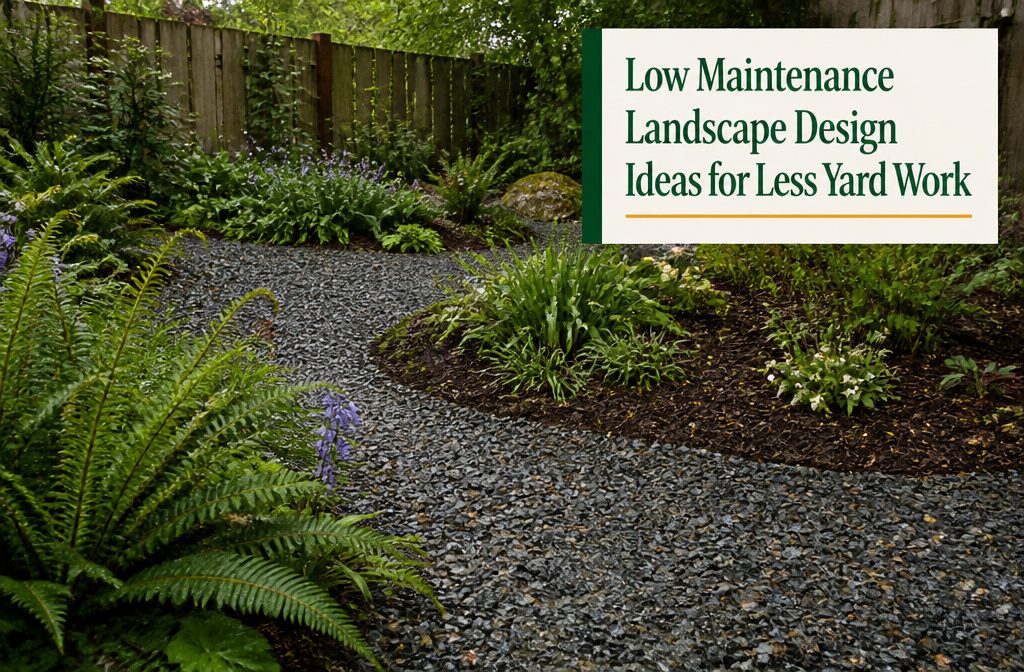
Costs run from a $2 bag of mulch to artificial turf at $5.45–$20 per square foot, and your climate decides which fits: gravel and drought-tolerant plants in arid regions, natives and perennials in wetter ones.
Plantings sleep in year 1 and creep in year 2, so watering and weeding drop only after year 3.
1. Native Plants
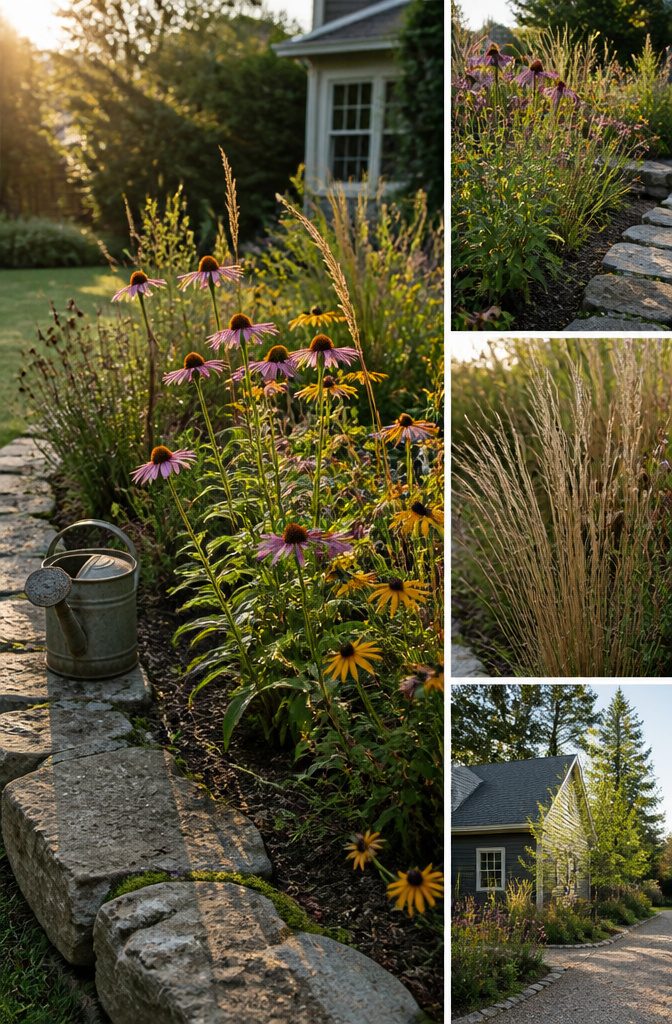
Plants adapted to your local climate, soil, and rainfall need far less water and fertilizer than imports, and they feed local pollinators. In the East, start with purple coneflower and black-eyed Susan.
In the West, try California poppy and ceanothus. In the Southwest, Texas sage and Mexican feathergrass are the picks.
Little bluestem, switchgrass, yarrow, and sage add more low-effort options. Your state’s cooperative extension service or the National Wildlife Federation’s Native Plant Finder will show which species suit your yard.
Natives are lower maintenance, not no maintenance.
Expect to water them for the first two to three years while the roots establish. After that, the workload drops.
Recommended Products

Used Book in Good Condition

LOW MAINTENANCE STRAWBERRY CLOVER SEEDS FOR LAWNS: O.M. Scott & Sons Strawberry Clover Seed is crafted with premium strawberry clover which grows a naturally low-maintenance green space with small, pink flowers

2. Xeriscaping With Drought-Tolerant Plants
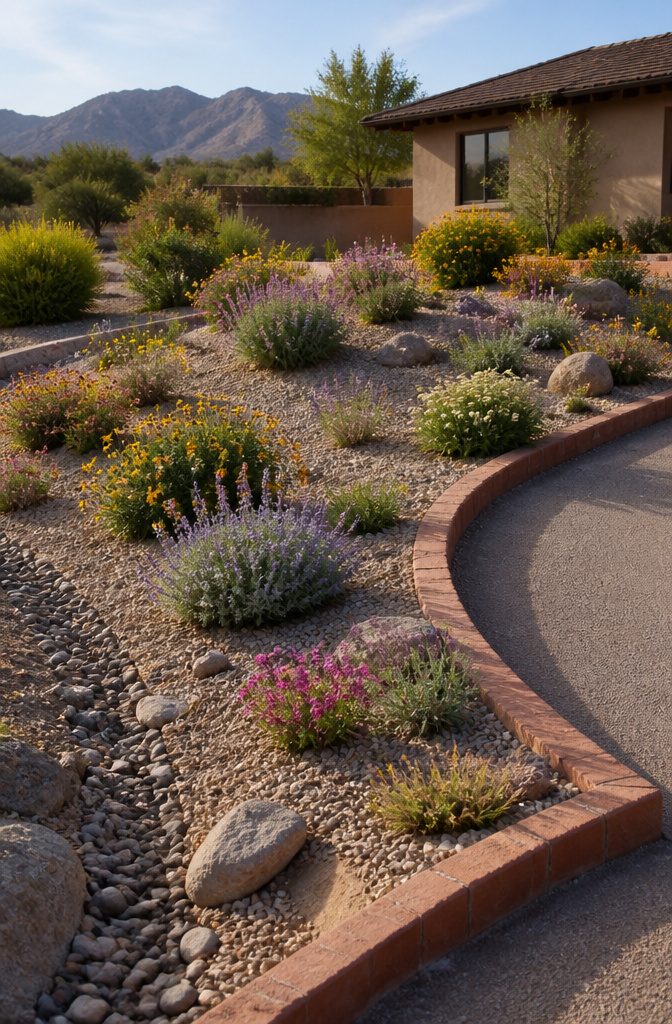
Xeriscaping swaps lawn for drought-tolerant plants, rock, and mulch, and in a dry climate it can cut irrigation to almost nothing.
That matters because up to 50% of outdoor irrigation water is lost to evaporation, wind, and runoff, so a sprinkler on a lawn is often watering the air.
Start the planting with yarrow, beardtongue, black-eyed Susan, and catmint.
All four handle heat and dry spells, resist deer, and draw pollinators. Set them in beds finished with gravel or stone.
Match the approach to your region. In arid areas, go full xeriscape with gravel; in wetter climates, skip the gravel-heavy look and build on perennials and native plants, which need little help once established.
Recommended Products

【Well Drainage】This succulent gritty mix is super well in water drainage, best for drought tolerant succulents and cactus, help your plants grow beautiful colors and also effective prevent rover water

English, How To Garden, Xeriscape, Dry
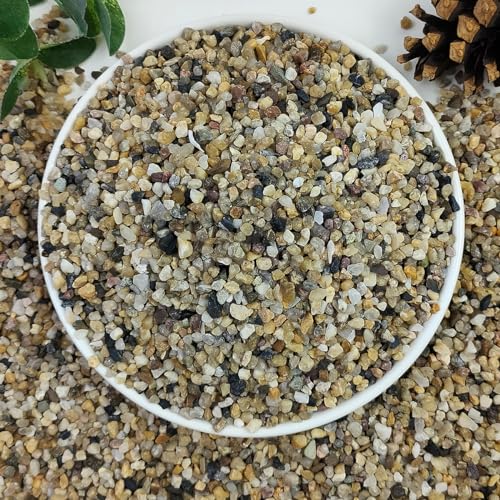
Natural Aquarium Gravel: No fading natural stones are non-toxic no additional fillers, dyes, or oils, these beautiful outdoor decorative rocks are perfect for fish tank, turtle tank, aquarium, garden, and any landscaping project
3. Low-Care Plants
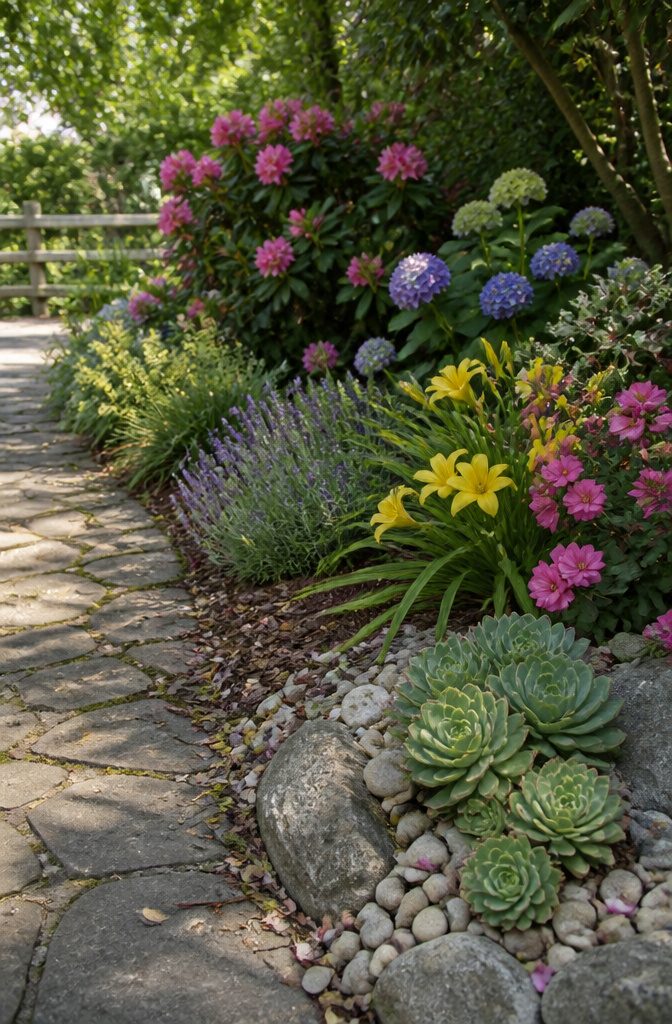
These six earn their place by trait: little water, little pruning, few pests.
- Succulents: thick leaves store water, so they want sun, rocky or sandy soil, and water only when the soil is bone dry.
- Lavender: full sun, minimal watering, and it resists pests and disease.
- Daylilies: they handle drought and harsh conditions with few pest or disease problems.
- Knock-out roses: they need very little pruning and drop spent petals, so you never deadhead.
- Rhododendrons: they resist pests and many diseases, and need little care once established.
- Hydrangeas: they suit partial or shady spots, and you should pick a species for your climate.
Check the ASPCA toxic plant database before buying: rhododendrons are toxic to pets and children, daylilies to cats, and hydrangeas to dogs and cats.
Recommended Products
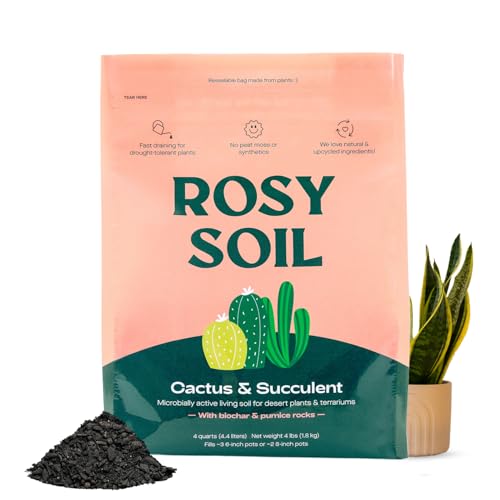
THE CHUNKY TEXTURE YOUR SUCCULENTS ACTUALLY NEED: Most potting soils for succulents pack too dense and hold too much water; our chunky succulent soil potting mix stays loose and airy, letting roots breathe and excess moisture drain fast – no compaction, no soggy pots
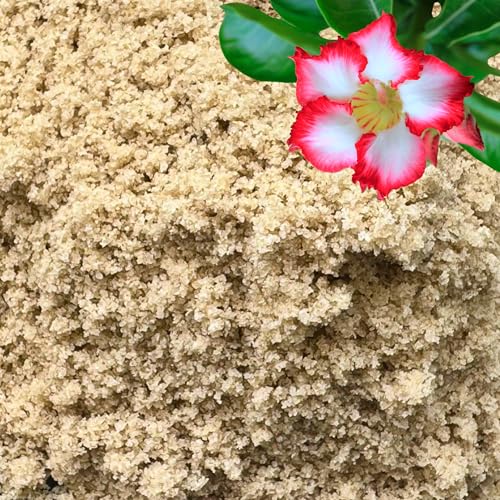
🌿 Transform Your Potting Mix – Plants Will Thank You Improve soil structure and drainage in seconds. This soft, fine-grain potting sand adds gentle aeration to indoor mixes, helping roots grow stronger, faster, and healthier in every pot.
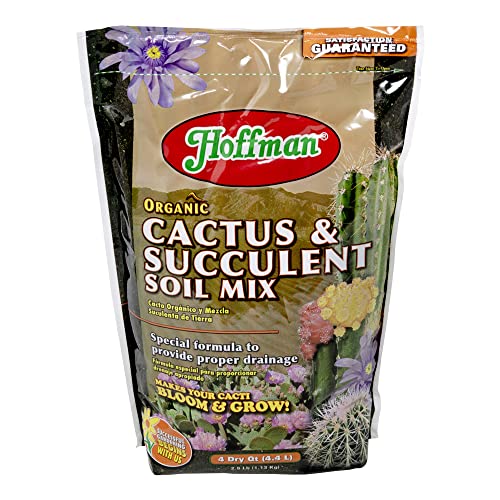
Provides the drainage cacti need to flourish.
4. Perennials Instead of Annuals
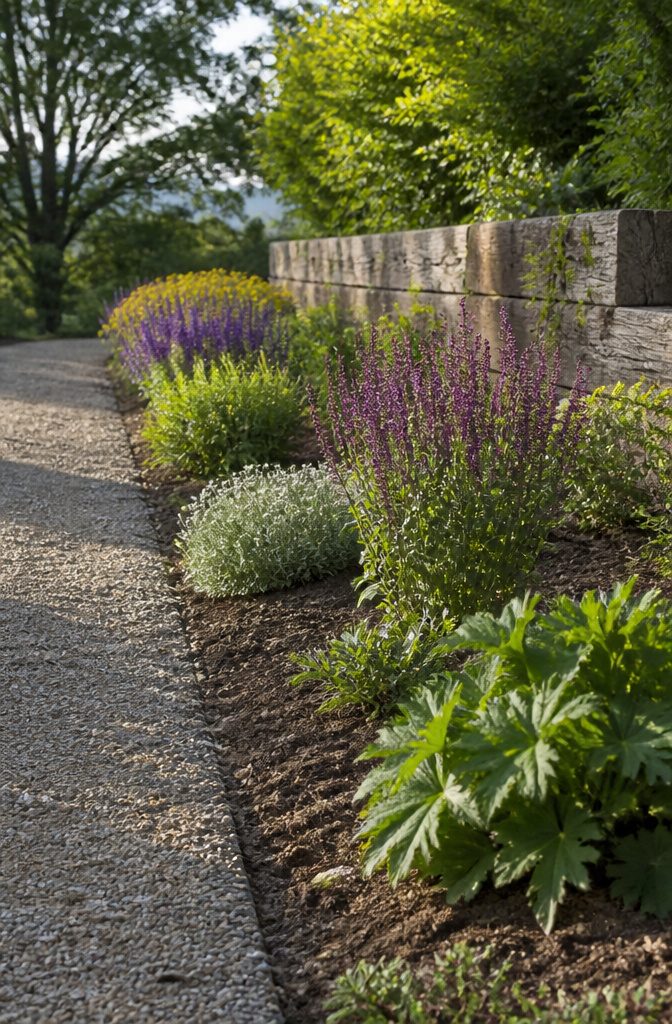
Perennials come back every year, so you buy them once instead of refilling beds with annuals each spring.
On a $500–800 yearly budget, that leaves money for the rest of the yard. They do take patience: perennials should be fairly well grown by the third summer, so expect some thin spots for the first two seasons.
Plant them in groups, not as singles. A cluster of 3 to 5 or more of the same plant grows together into one mound and looks calm, while one of everything looks random.
Stick to odd numbers, and set the plants in a row or stagger them so they knit together.
Recommended Products

USDA zones 3-9

Rounded blue to violet-blue flower clusters above clean strap-leaf foliage for classic seasonal color

Daylilies are a great addition to any garden.. They are easy to grow, provide spectacular color, and come back as a perennial every year. Grows in most zones and grow in most soils, but best in nice rich soil. And there are so many different colors to choose from, so please check our many varieties to add color to your garden throughout the yea
5. Low-Maintenance Turfgrass
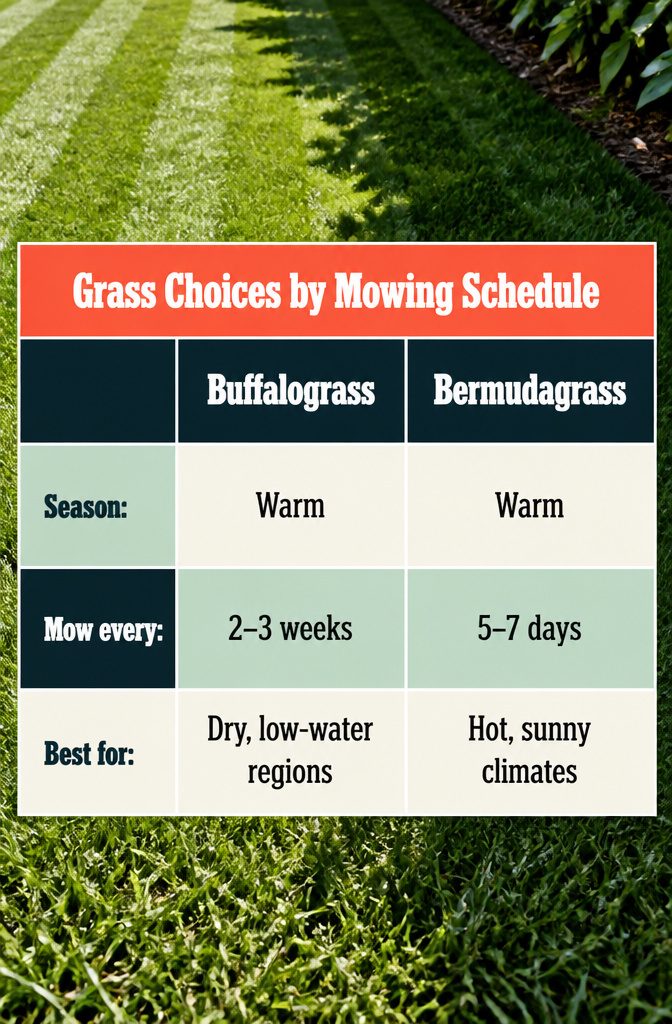
Grass type sets your mowing schedule, and warm-season grasses tend to be more drought-tolerant and need less mowing. Buffalograss wins for low effort, with a mow only every 2–3 weeks, but it suits dry, low-water regions best.
Bermudagrass is the most work at every 5–7 days. If your yard is shady, tall fescue is the one to pick.
| Grass | Season | Mow every | Best for |
|---|---|---|---|
| Buffalograss | Warm | 2–3 weeks | Dry, low-water regions |
| Bahiagrass | Warm | 1–2 weeks | Sandy or poor soils |
| Zoysiagrass | Warm | 7–14 days | High-traffic lawns, heat zones |
| Tall fescue | Cool | 7–10 days | Shade, transitional climates |
| Bermudagrass | Warm | 5–7 days | Hot, sunny climates |
Recommended Products

VIBRANT BLUE BLOOMS FOR A BEAUTIFUL LANDSCAPE: Our Blue Sage (Salvia Farinacea) Wildflower Seeds bring brilliant blue blooms to your garden, adding eye-catching color to borders, flower beds, and open spaces. This perennial salvia plant enhances any outdoor area with its tall, graceful flowers, providing a bold and lasting visual impact from early summer through fall.


🌾 Vibrant Golden Color for Stunning Landscapes Create eye-catching curb appeal with Golden Sunset Yellow Prairie Grass live plugs featuring tall golden blades that add texture, movement, and warm seasonal color to any garden or landscape design
6. Lawn Alternatives
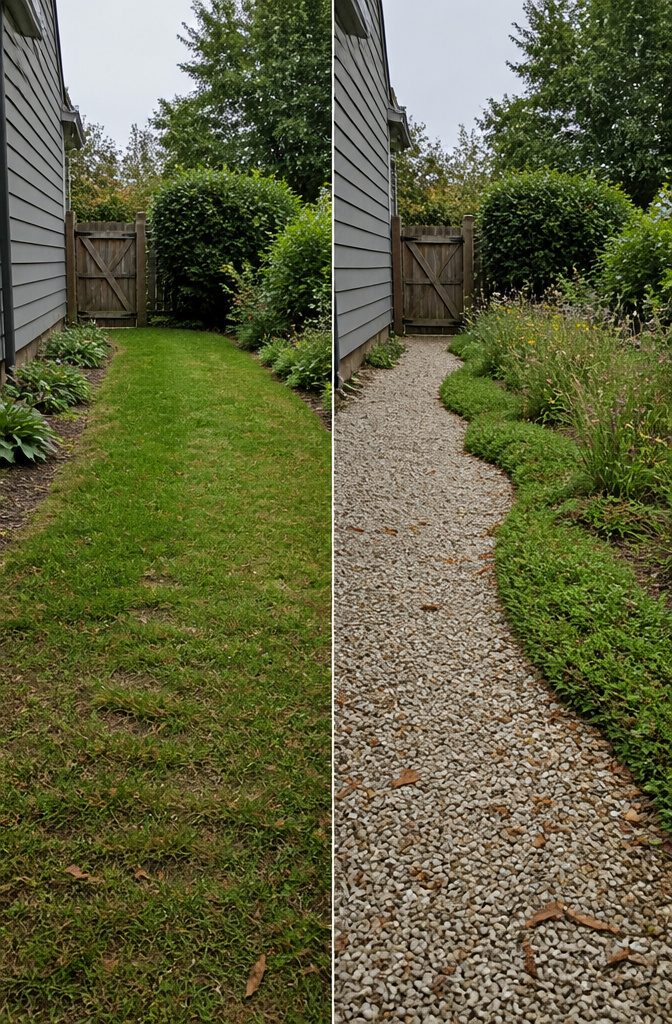
Gravel is the lowest-effort swap for most budgets, though it still needs occasional raking for leaves and hand-pulling of weeds. Check what rock is available locally; some areas have it free if you’ll haul it yourself.
Artificial turf looks like a real lawn and needs no mowing or watering, but it runs $5.45–$20 per square foot installed. Decking costs about $21 per square foot, so keep it to a small or medium yard.
Clover, rupturewort, bugle and some thymes cover ground without mowing, and a native grass and wildflower meadow becomes a pollinator lawn once it naturalizes. Both cost far less than hardscape.
On a tight budget, replace only the section you mow least happily, such as a side strip or the far corner, and keep a small lawn where you actually use it.
Recommended Products

Shade-Loving Native Plant – Thrives in partial to full shade; ideal for woodland gardens and low-light areas.


7. Low-Maintenance Trees and Shrubs
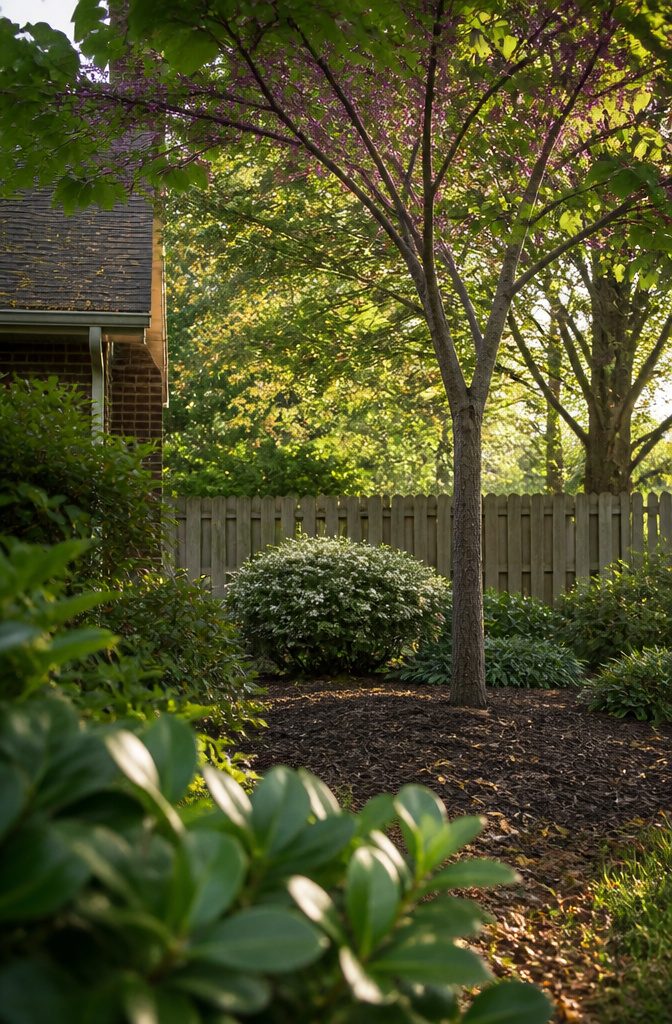
Eastern or Western redbud is the best pick for a small yard.
It grows fast and handles heat, drought, insects and disease. Serviceberry also fits a modest lot and gives you edible fruit.
Japanese maple adds color once established, crape myrtle tolerates heat, drought and many soil types, and magnolia needs very little ongoing care. Jacaranda suits warm, sunny yards, and once established it resists pests, disease and drought.
For a larger yard, Bur Oak tolerates varied conditions and needs only simple annual pruning. Native oaks, dogwoods and sagebrush are also good choices, depending on where you live.
Whichever you plant, keep mulch a few inches back from the trunk to prevent crown rot, root rot and vole activity.
Recommended Products

【5lbs Succulent Rocks】Jade rock size is about 1/4 inch. Weight of a bag: 5 pounds. Great for succulent and cactus plants as well as any type of vase or planter

Promoting Moisture Circulation: Made of premium colorful lava rocks these rocks for plants and plant rocks mix well with succulent soil mix succulent soil potting mix bonsai rocks and cactus soil. It improves air flow drains extra water to avoid root rot and balances water retention for succulents and bonsai

LIVE SEDUM TILE: 10" by 20" live plant mat featuring a combination of sedum succulent plants with earthy colors and contrasting shapes. These easy ground cover plants offer endless DIY possibilities.
8. Hardscaping
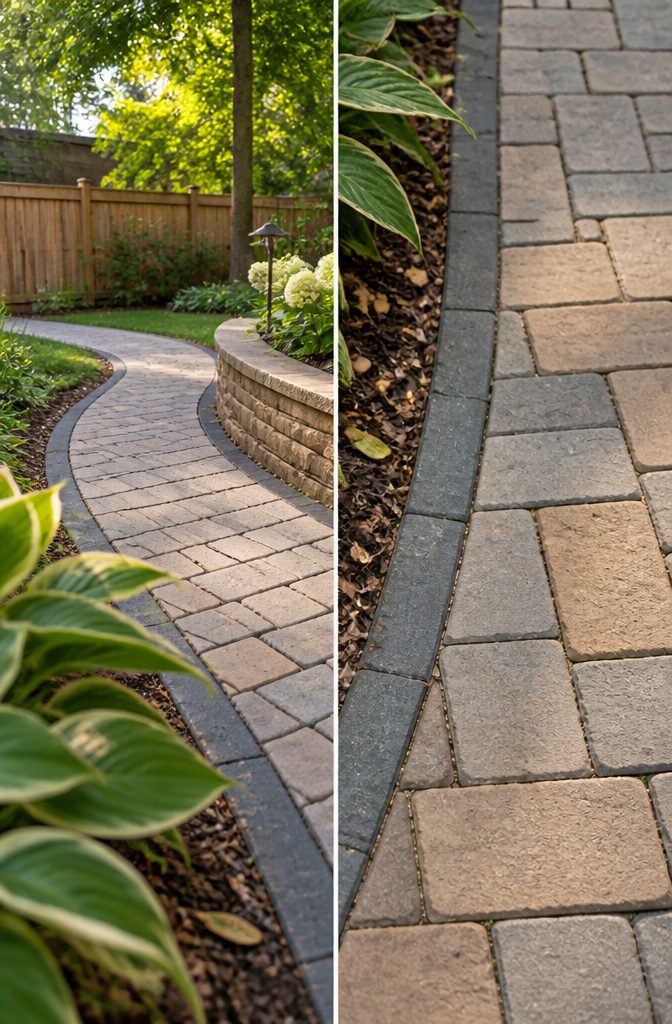
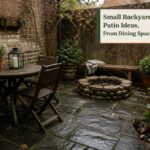
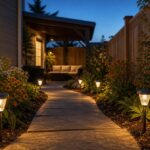
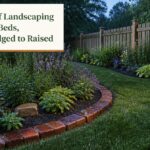
Every square foot of path, patio, retaining wall, or raised bed is a square foot you don’t mow. Brick gives formal or informal patterns, but its alignment needs regular attention.
Composite decking lasts and is eco-friendly, though it costs more than the rest. Concrete can be stained or textured, but plain slabs often need upgrades for looks and safety.
Natural stone is durable and reads rustic or formal depending on cut and finish. For most beginners, pavers are the best pick, with one rule: set a permanent border around them or they shift.
Outdoor tiles look great, but check the slip rating and make sure the tile suits your climate. Install them correctly too.
Recommended Products

Come in well-rooted in a 4-inch pot, ready to grow and thrive indoors

Pre-Mixed 7-In-1 Blend: This 7-in-1 succulent soil potting mix indoor combines perlite, pumice, lava rock, peat moss, pine bark, worm castings and vermiculite in one pre-mixed, ready-to-use formula. No need to buy or mix separate ingredients before repotting your cactus and succulent plants. Simply open the bag, fill the pot and adjust your watering routine based on plant type, pot size and light conditions.
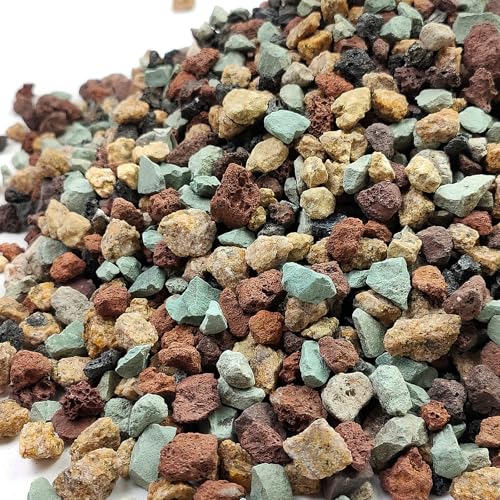
【Succulent Soil Potting Mix】Mix Horticultural Lava stone consists of a variety of particles, including lava stone, Maifanitum stone and green zeolite, mainly as a succulent planting soil particles, especially suitable for succulent cactus bonsai planting
9. Container Plantings
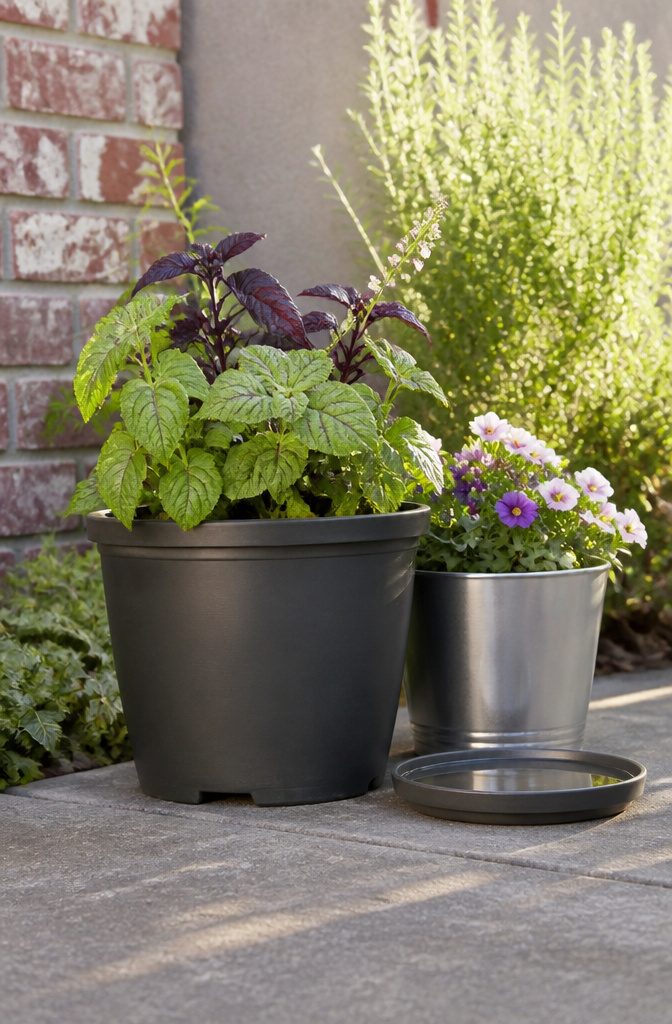
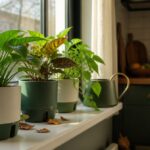
Pots suit patios, balconies and other small spaces, and you can move or swap them whenever a plant fades. The material sets your watering schedule:
Porous materials like clay and wood dry faster than plastic or metal.
— Yardzen
Choose plastic or metal if you want fewer waterings. Clay and wood look good but need more frequent checks.
Every pot needs holes or slits in the bottom so excess water can escape, since standing water rots roots.
Raise pots on potting feet or bricks to help it drain. For a decorative pot with no holes, double-pot: keep the plant in a holed inner pot, lift it out to water, and set it back once it has drained.
Recommended Products

Pretty Flowering Perennials Daylilies Provide a wonderful selection of color in your home garden, and also look great in spectacular cut flower bouquets.


25 wild daylily bare root plants, Hemerocallis fulva
10. Automatic Irrigation
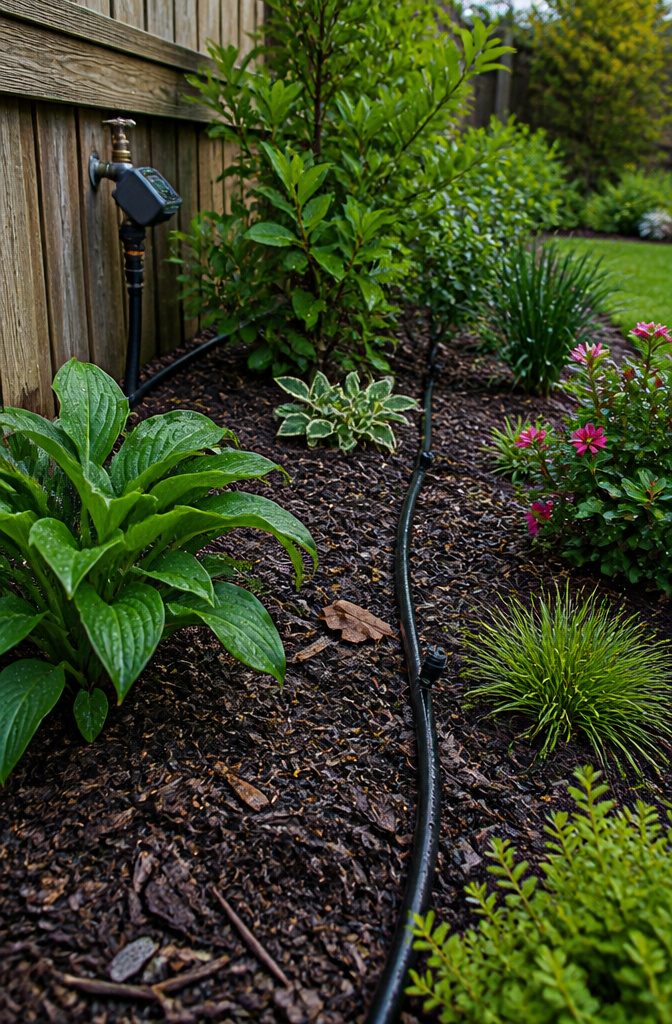
Drip lines and a timer take hand-watering off your list and deliver water to the roots instead of the leaves, the path, and the air.
That matters because the EPA’s WaterSense program puts the loss from outdoor irrigation at up to 50% of the water, through evaporation, wind, and runoff.
A sprinkler on a timer still loses water that way, just on schedule. Efficient delivery matters more than automation alone, so use drip for beds, shrubs, and trees, and save spray heads for lawn.
Set the timer for fewer, longer cycles.
Shallow watering leads to shallow roots, and those dry out fast in summer. A smart controller can run separate schedules for sunny and shady parts of the yard.
Recommended Products


PREMIUM DROUGHT TOLERANT WILDFLOWER MIX: A carefully curated blend of hardy wildflowers selected to thrive in hot, dry, and low-water conditions. Suitable for xeriscaping, water-wise gardens, low-water landscapes, and challenging growing environments across the continental USA

11. Mulch Your Beds
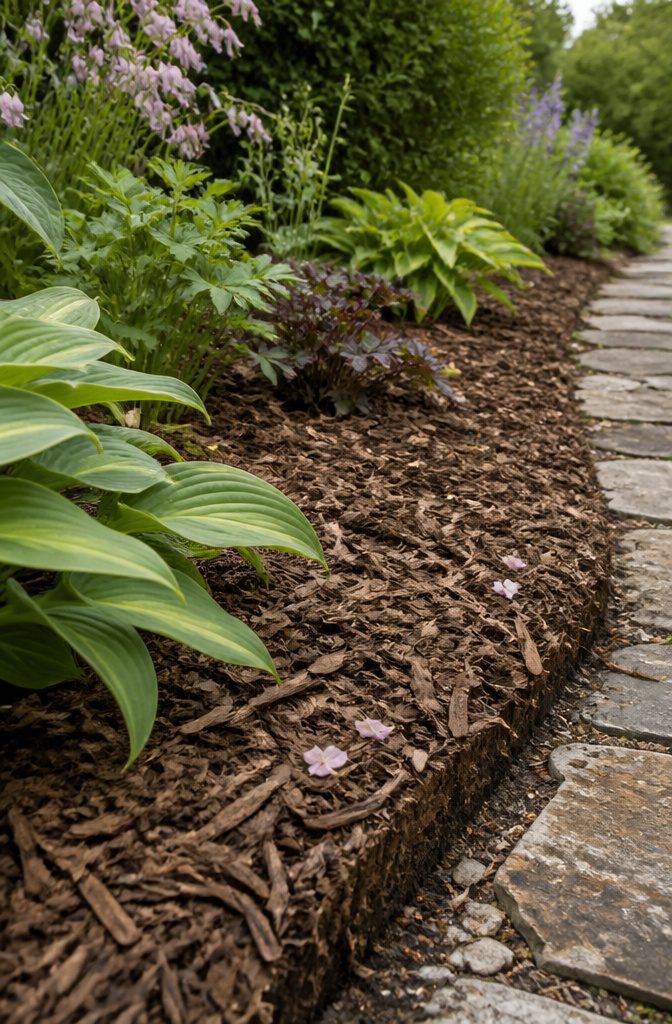
Spread wood chips, shredded bark, or pine straw 2–3 inches deep over bare soil. That layer blocks the sunlight weeds need, holds moisture so you water less often, evens out soil temperature, and slows erosion on slopes.
Thinner than 2 inches and weeds push through; much thicker than 3 and you’re buying mulch that does no extra work.
Bagged mulch runs $2–$13 per bag, which suits a single bed or a balcony planter. Bulk delivery and installation costs $72–$87 per cubic yard, and a yard covers roughly 100 square feet at 3 inches.
Once you’re mulching more than a couple of beds, bulk wins, because someone else spreads it. Before you pay for either, call local tree services or your city’s municipal program, which often give mulch away free.
12. Ornamental Grasses Instead of Hedges
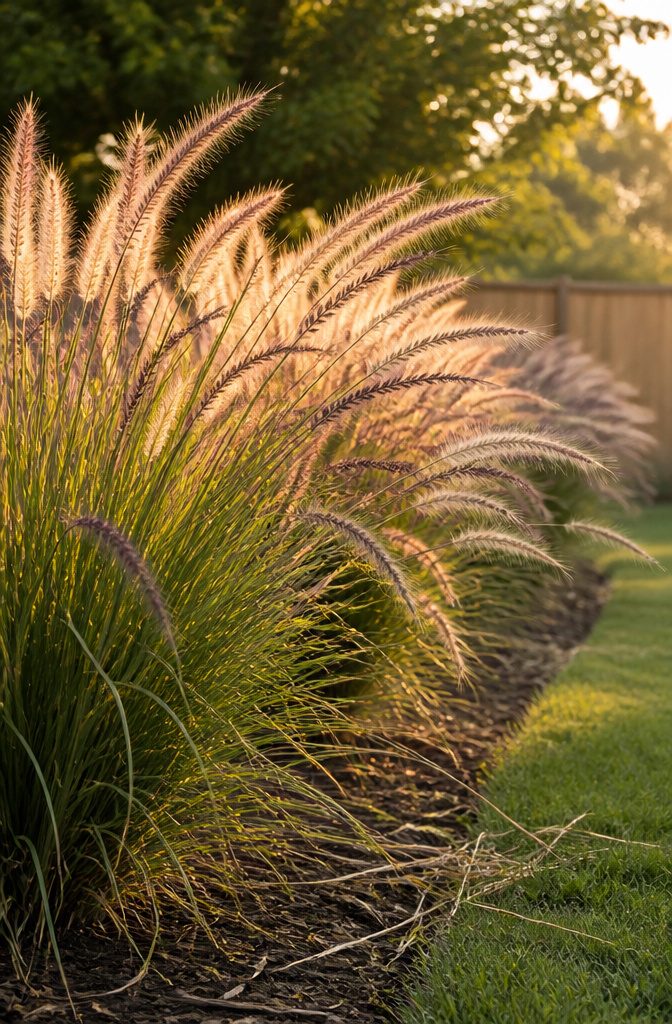
Laurel, arborvitae, and western red cedar hold a clean line only if you keep clipping them. Ornamental grasses keep their shape naturally, so a row of grasses can replace a clipped hedge and may eliminate regular pruning and watering.
Fountain grass, panic grass, and purple needlegrass are all drought-tolerant choices for a privacy screen or living fence.
The cost is formality. Grasses arch and sway instead of standing as a flat-topped wall, so the result looks soft and loose.
If your house or street calls for a crisp, squared-off edge, keep the hedge. If a relaxed screen suits the yard, the grasses win on upkeep.
13. Close Plant Spacing
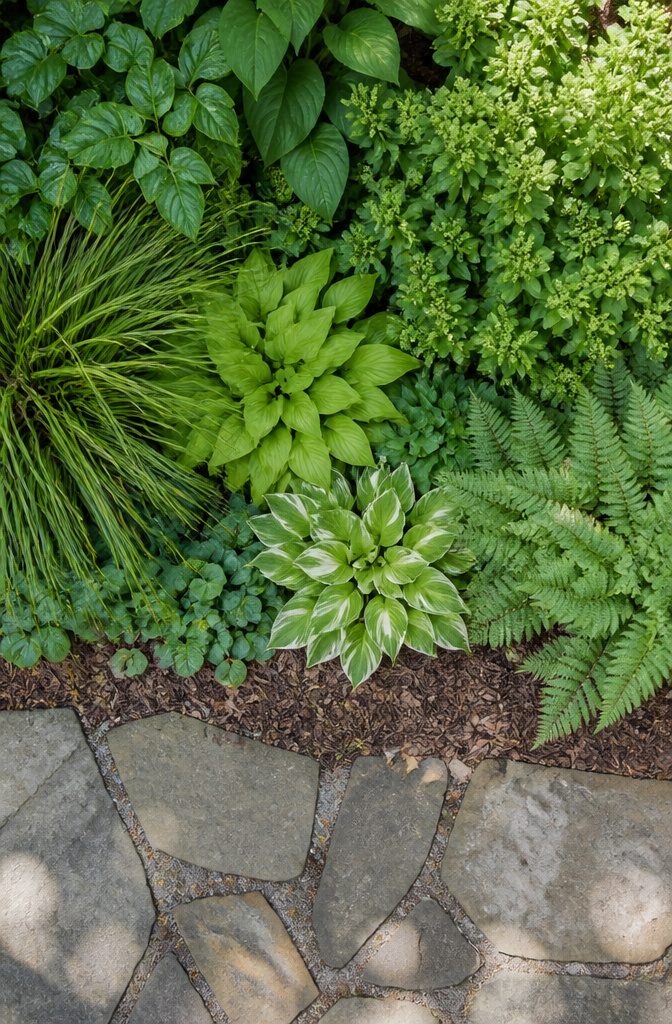
Set shrubs, perennials, and ornamental grasses slightly closer together than the plant tag recommends, so their leaves meet and shade the soil between them.
Shaded soil gives weed seeds less light to sprout in, and it loses less water to evaporation.
Young plants leave gaps, and that is where mulch carries the load.
A 2- to 3-inch layer blocks light and holds moisture until the foliage closes over it. After that, the plants do most of that work themselves.
The cost is plant count. Tighter spacing means buying more plants on day one, which strains a small budget.
Smaller, cheaper pots fill the gaps at a lower price. Expect to thin or divide crowded plants as they mature.
14. Sketch the Layout and Repeat Plants
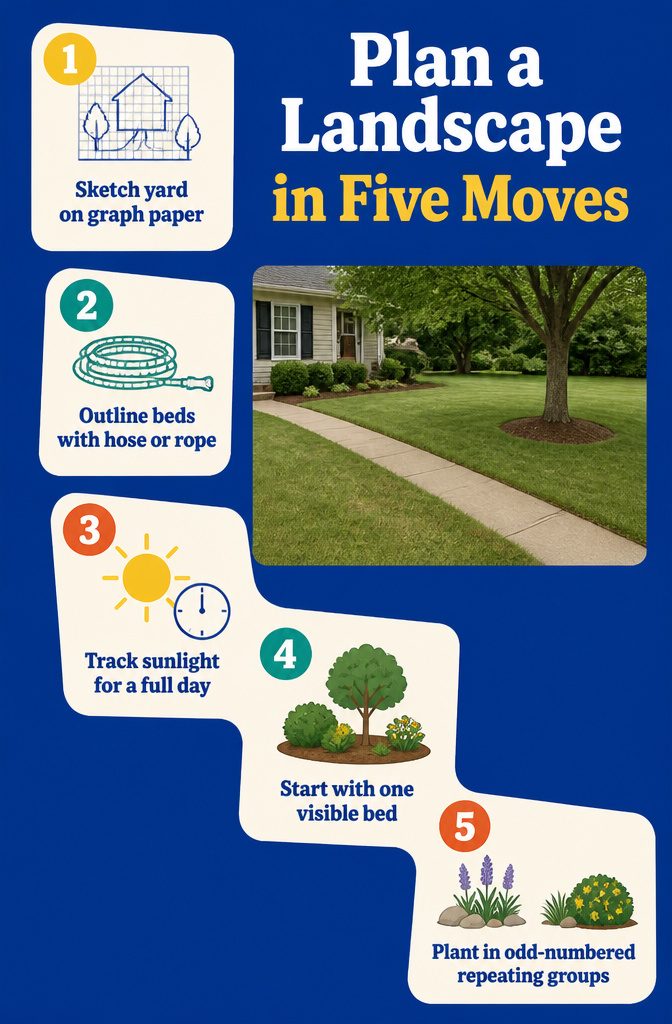
- Sketch the yard on graph paper before you buy anything. Mark the house, walkways, and any trees.
- Lay a garden hose or rope on the ground to outline each bed. You will see its true size and can estimate how many plants it needs.
- Watch the yard for a full day and note where the sun lands. Pick plants that suit your zone and that light.
- Start with one bed in front of the house, or an island bed with a tree and a few shrubs to break up a big front yard. Bigger beds cost more to plant and maintain, so work in stages, starting where it shows most.
- Plant in odd-numbered groups of 3 to 5 or more, then repeat those plants, or rocks and shrubs, farther along the bed.
Sleep, Creep, Leap Over 3 Years
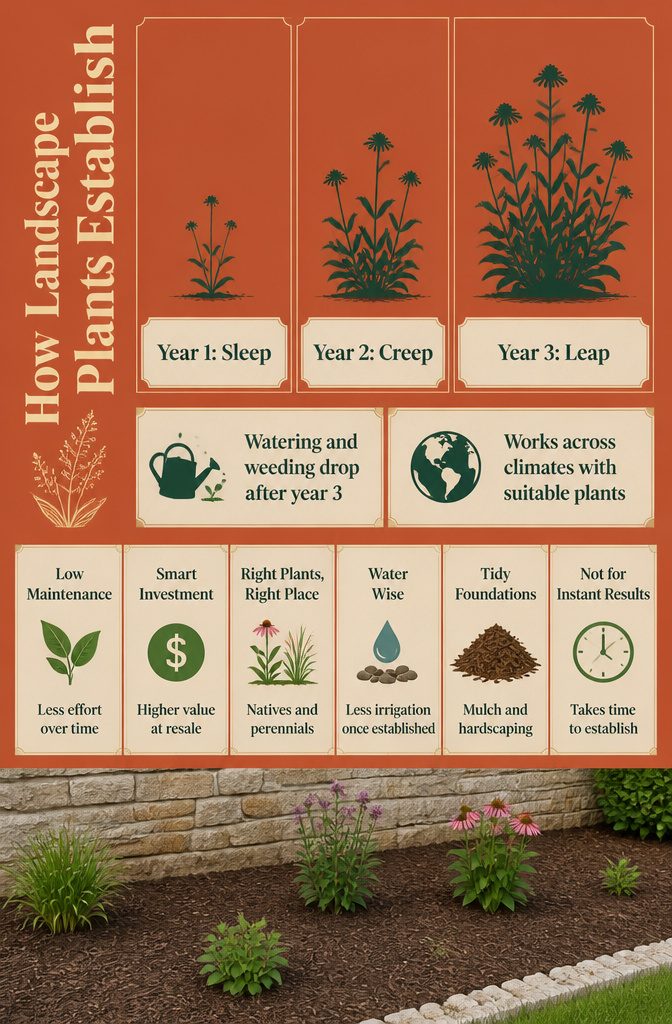
Most low-maintenance landscapes are fully established within 3 years.
Perennials, natives and ground covers follow a pattern: sleep in year 1, creep in year 2, leap in year 3. A sparse first summer is normal.
By year 3 the plants fill in and start working for you, so watering and weeding drop only after year 3. Until then, plan on keeping up with both.
The approach works in any climate. Arid yards use drought-tolerant plants and gravel to cut irrigation to almost nothing, and wetter regions suit natives and perennials that need little once established.
Resale value improves rather than suffers: healthy plants, attractive hardscaping and tidy mulched beds signal care to buyers.
Frequently Asked Questions
How long does a low maintenance landscape design take to establish?
Most low maintenance yards take about 3 years to fill in.
Perennials, native plants, and ground covers barely grow in year 1, spread in year 2, and mature in year 3. Keep up with watering and weeding until then, because both chores drop only after year 3.
Does low maintenance landscape design work in every climate?
Yes, though the plant choices change by region.
Dry areas suit xeriscaping with drought-tolerant plants and gravel, which can cut irrigation to almost nothing. Wetter climates do better with native plants and perennials, and the gravel-heavy look is best skipped there.
Will a low maintenance yard hurt my home’s resale value?
No, a well-designed low maintenance yard tends to raise resale value.
Healthy plants, attractive hardscaping, and tidy mulched beds tell buyers the property has been cared for. In drought-prone areas, gravel or native plantings can also add curb appeal.