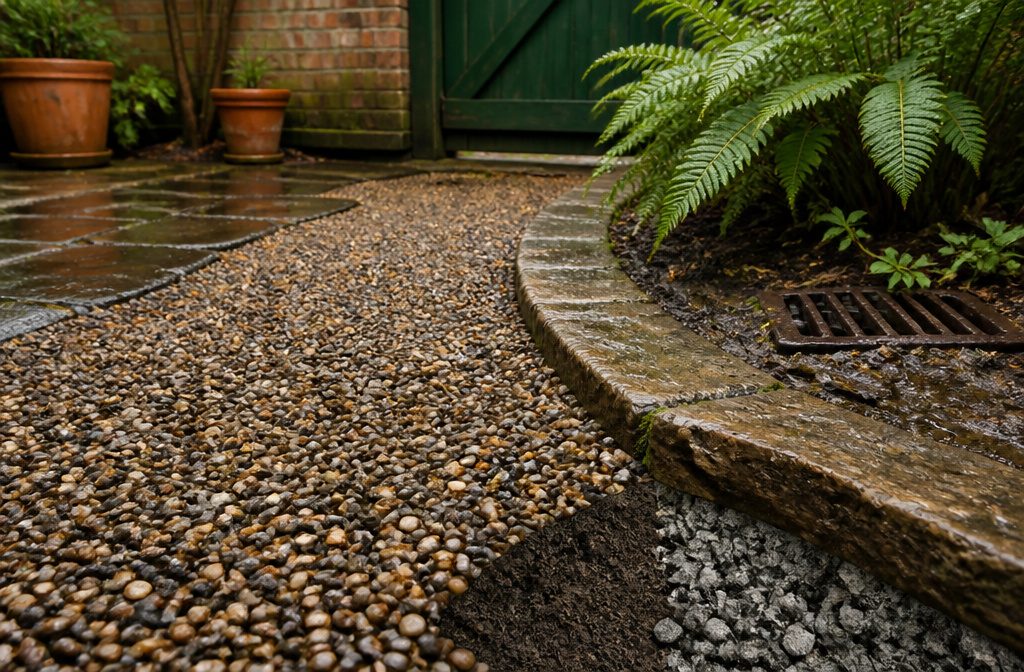
Pea gravel is smooth, rounded stone, usually 1/4 to 3/8 inch across, spread loose over paths, patios, plant beds, drains, and driveways.
Loose stone gives no support of its own, so the base and edging beneath carry the load. A driveway, for example, needs 8–12 inches of excavation and 4–6 inches of crushed stone first.
Pathways and Walkways
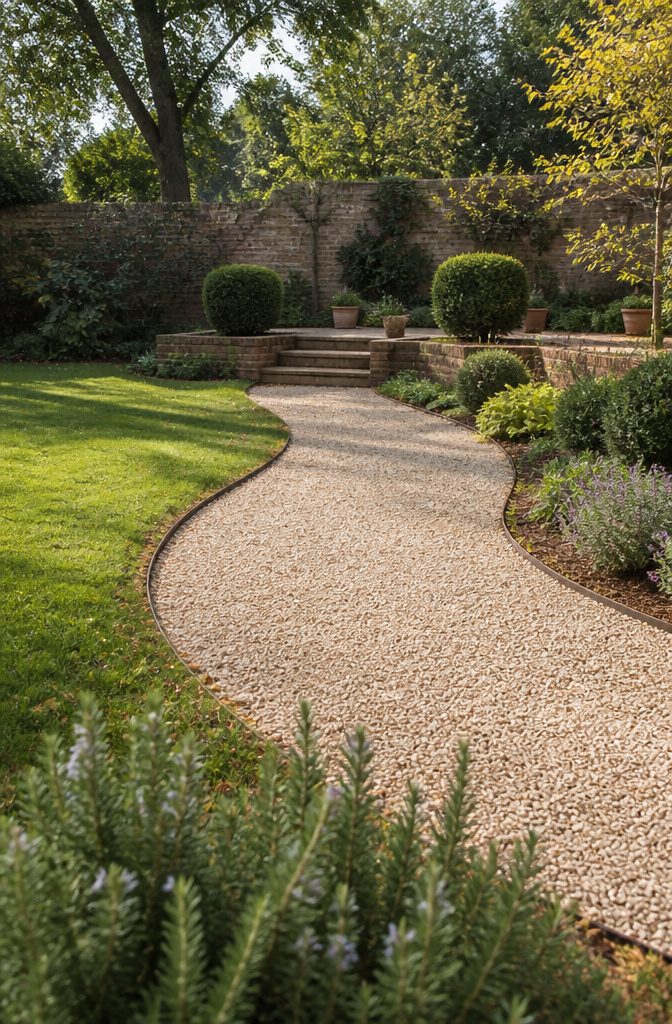
- Mark the route with stakes and string, and set the width now. A main path should be at least 36 inches wide. Make it 42–48 inches if two people will walk side by side, and 24–30 inches for secondary garden paths.
- Clear the grass, weeds, and debris, then dig 4–6 inches deep. Firm soil needs only 3–4 inches. Compact the bare soil.
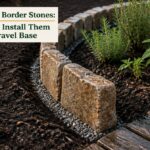
- Install edging along both sides. Flexible bender board or aluminum edging bends to follow a curve.
- Lay landscape fabric over the trench, overlapping seams by 6 inches.
- Spread 2–3 inches of pea gravel and rake it evenly.
- Rake level, then compact the surface by walking over it or running a tamper across it.
Recommended Products

This gravel has a variety of uses including landscape and garden decoration, drainage, and building walkways.
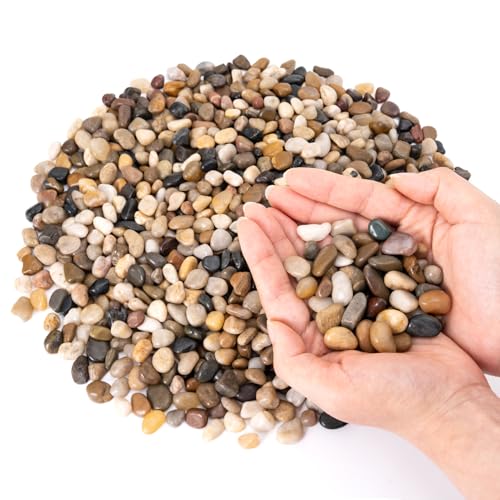
[DURABLE NATURAL MATERIAL] - Crafted from hard natural stone, these fish tank gravel resist fading and cracking, ensuring long-lasting beauty even under harsh sun and rain. Perfect for enhancing your garden paths or outdoor landscaping with a touch of nature's resilience. Ideal for homeowners seeking durability without compromising style.

【Versatile Pebbles for Plants, Succulent & Aquarium】Use the 3/8 inch pebbles as top dressing for plants to keep soil clean, succulent rocks, terrarium gravel, aquarium gravel. Great for vases, craft, garden path and humidity trays.
Garden Beds and Borders
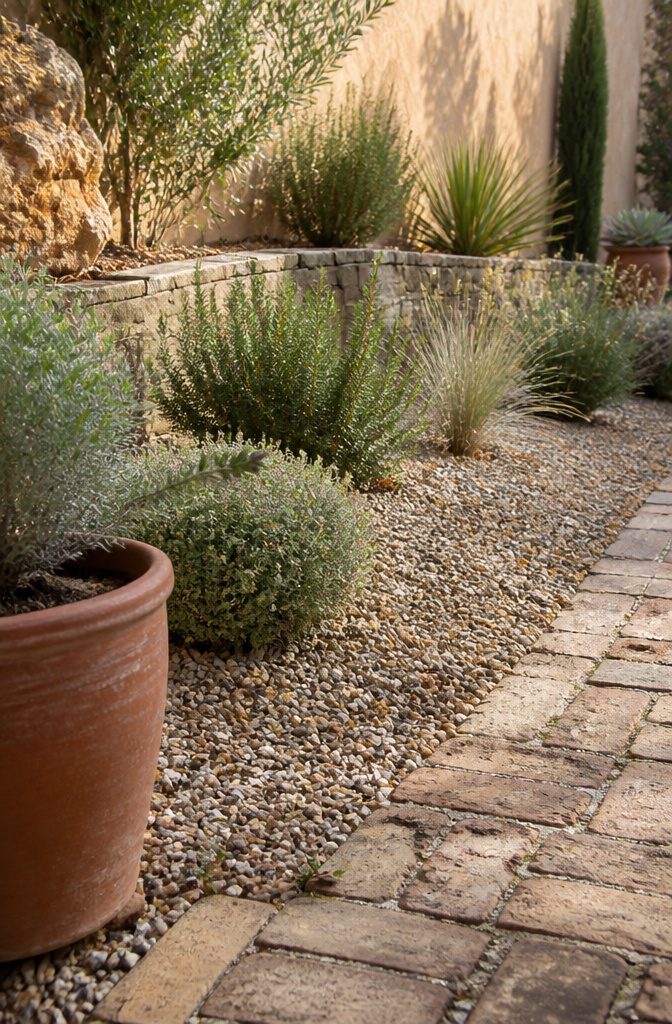
Pea gravel suits shrubs, ornamental grasses, and Mediterranean plants that like dry conditions. Unlike bark, it never rots, needs no yearly top-ups beyond minor settling, and does not attract termites or carpenter ants.
Start by clearing the bed of weeds, rocks, and debris.
Lay landscape fabric over the soil, cut holes where each plant goes, and plant through them. Then spread gravel around the plants.
The range is 2–3 inches, but 2 inches is plenty for mulch. Deeper gravel buries plant crowns and wastes money.
Skip it around azaleas, blueberries, and other plants that want acidic, moisture-holding soil. Gravel warms up fast and reflects heat, and those plants want cool, damp roots.
Recommended Products

【Professional Grade Weed Barrier】 The weed barrier is crafted from high-quality and durable material. Made of woven polypropylene material, it's a strong and reliable barrier that's resistant to UV rays, water, and other outdoor elements. This means that you can trust it to provide long-lasting protection against weeds in your garden.

Package Include: The garden weed barrier fabric is 6ft wide and 100ft long(folded in half along the width and then packaged in rolls), coming with 40 u-shaped securing staples. Our landscape fabric is 3 oz/sq yd polyethylene geotextile fabric, tightly woven for tear resistance and UV-stabilized against sun degradation.

NO DILUTION NEEDED - READY TO SPRAY FORMULA: Skip the mixing & messy measuring. Our Lockscape rock glue max is ready to use straight from the bottle. Simply shake & pour into your sprayer, and enjoy professional results that lock rocks in place with zero hassle.
Pea Gravel Patios
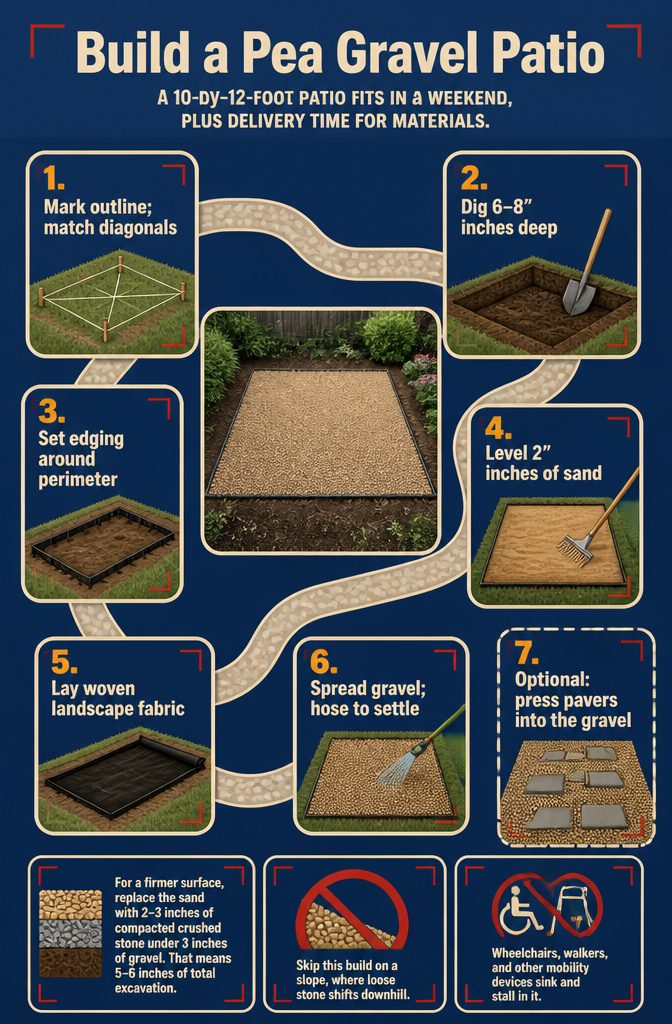
A 10-by-12-foot patio fits in a weekend, plus delivery time for materials.
- Mark the outline with stakes and string. Measure both diagonals; if they match, the corners are square.
- Dig 6–8 inches deep, clearing grass, roots, and rocks.
- Set edging around the perimeter before any gravel goes in.
- Spread 2 inches of sand and rake it level.
- Lay woven landscape fabric over the sand.
- Pour 2–3 inches of pea gravel, rake it even, and lightly hose it down to settle.
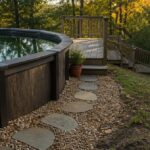
- Optional: press pavers into the gravel as stepping stones.
For a firmer surface, replace the sand with 2–3 inches of compacted crushed stone under 3 inches of gravel. That means 5–6 inches of total excavation.
Skip this build on a slope, where loose stone shifts downhill. Wheelchairs, walkers, and other mobility devices sink and stall in it.
Recommended Products

Will not rust, crack, rot, or become brittle, virtually maintenance free

EASY TO INSTALL: EasyFlex Aluminum No-Dig Edging provides an easy installation for a permanent and maintenance-free edging solution
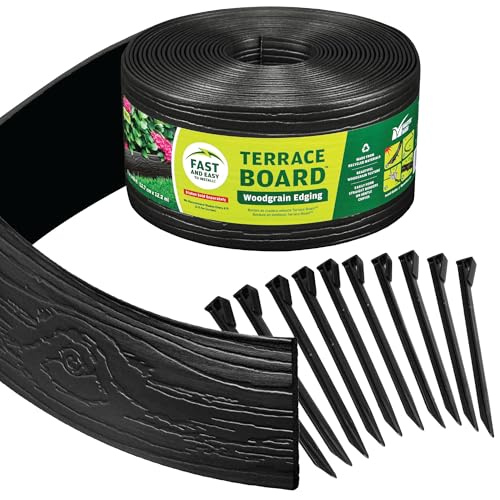
CREATE A CAPTIVATING SPACE – Unlike many other options, Master Mark Terrace Board Edging provides a textured, wood grained look to your landscape edging making borders around planting beds and walking paths and creating raised layers of mulch, rock or soil. This edging creates depth and elegance for your perfect yard.
Water Features and Drainage
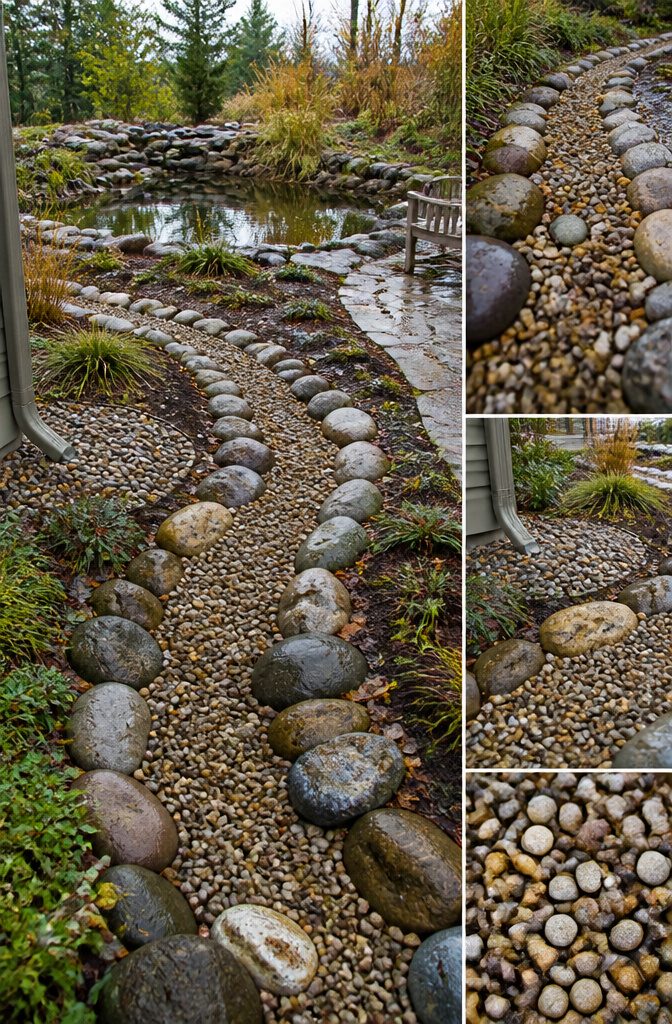
Dig the pond or fountain hole deep enough to hold the liner or pre-formed pond, set the liner snugly, and trim the excess. Stack rocks and boulders along the edge to hide the liner.
For a fountain, set the pump in the water and connect it to power. Then spread pea gravel over the pond bottom or around the fountain base.
Pea gravel sheds water fast, so it suits French drain backfill, the ground under downspouts, and the space around air-conditioning condensers. Fill a drainage trench completely with it.
In a dry creek bed, mix larger river rocks through the gravel. That fixes a soggy side yard and looks planned.
Recommended Products
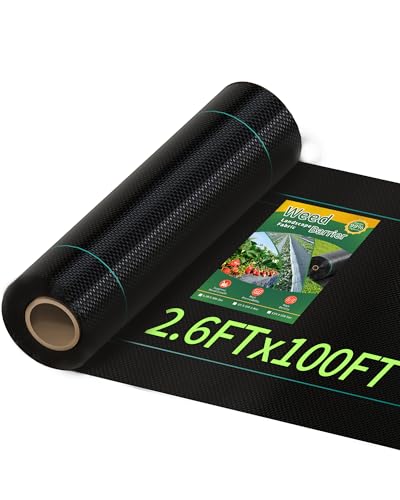
Weed Control: Woven polypropylene physically blocks sunlight to prevent weed seed germination, keeps flower beds, vegetable gardens, and landscaping weed-free without chemical herbicides.

Garden Weed Barrier Fabric: This landscape fabric heavy duty is made from woven polypropylene, offering high tensile strength and tear resistance. It handles harsh weathe. Its dense weave, UV resistance, and sun tolerance ensure lasting performance. As a weed control fabric, it delivers premium, long-term weed protection

Large Geotextile Fabric: The geotextile driveway fabric has 625 Sq. Ft coverage area, length: 50 ft/15.2 m, width: 12.5 ft/3.8 m. According to your needs, it can be cut to function for driveway stabilization, gardening, agriculture, and drainage.
Pea Gravel Driveways
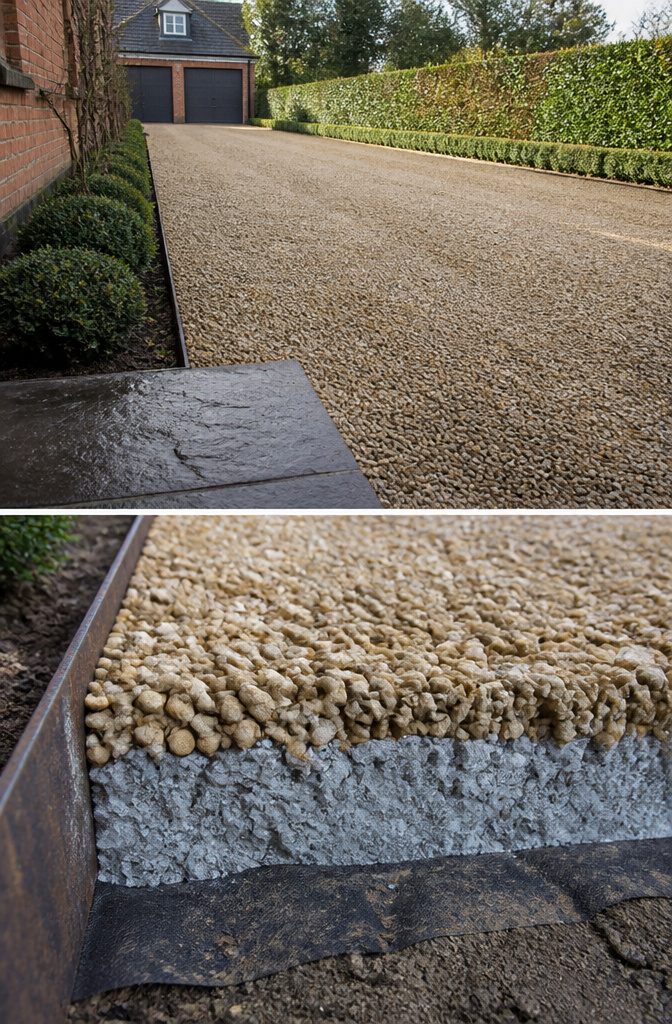
Pea gravel stays loose under tires, so the base underneath does the structural work. Build it in this order:
- Plan the layout and mark the drive with stakes and string.
- Excavate the area 8–12 inches deep.
- Set edging along both sides to hold the stones in.
- Spread a 4–6-inch layer of crushed stone and compact it with a tamper.
- Cover the base with landscape fabric to block weeds.
- Pour on 4–6 inches of pea gravel and spread it with a rake.
- Rake level, then compact by driving over it several times.
The stones never bind together, so they shift under wheels. If the drive will see heavy traffic, crushed stone is the better surface.
Recommended Products
【10 lbs Pebbles】The size is about 3/8 inch. Total weight of a bag: 10 pounds. The mixed color gravels contains 5 colors: white, red, yellow, gray and apple green. Perfect size for succulent and cactus, as well as any vase or fish tank

Natural Crushed Granite Material: MIGHTY109 Granite Pea Gravel made from natural crushed granite with approximate diameter of stone 1/8 inch average
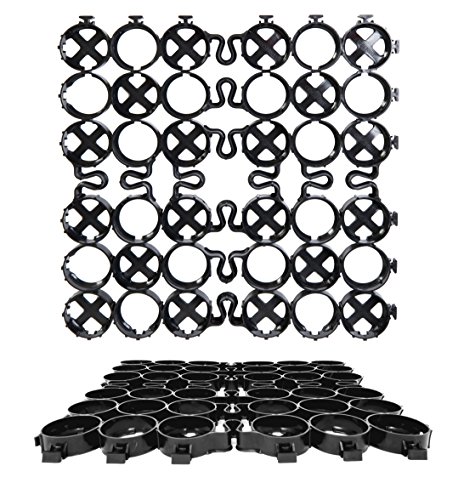
EASY TO USE: Our lightweight permeable pavers are easy for any level of DIYer to install; Feel proud of your own outdoor home improvements!
What Pea Gravel Is
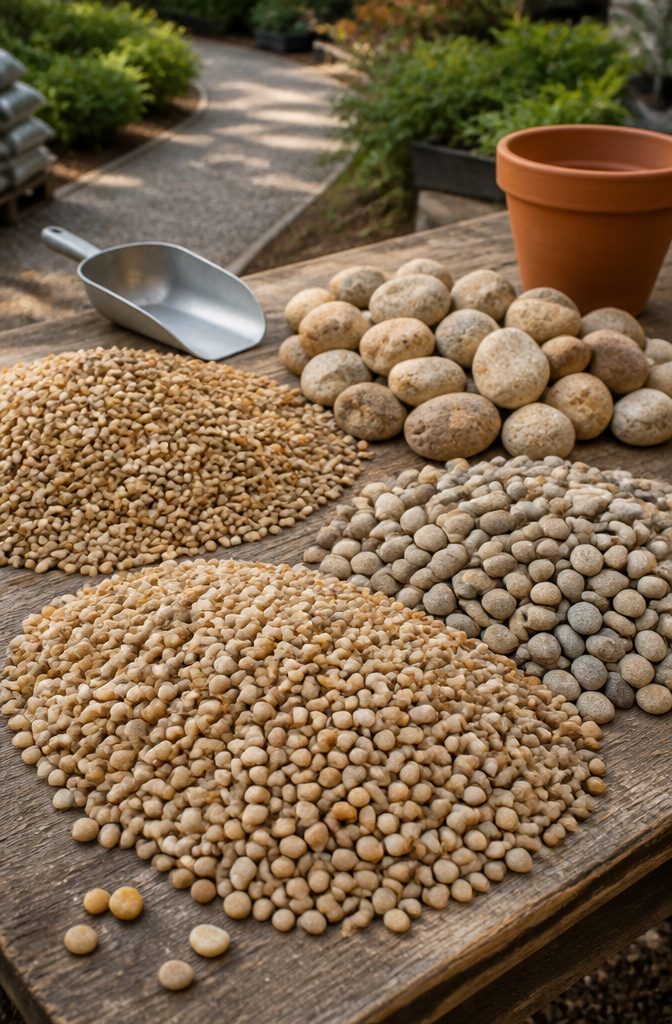
Pea gravel is naturally rounded stone, dredged from riverbeds or quarried and screened to size.
The standard grade runs 1/4 to 3/8 inch. A larger 3/8 to 3/4 inch blend suits accents around trees better than walking areas, since it feels chunky underfoot and migrates more easily.
The rounded stones never lock together, so they shift underfoot. Older nursery price sheets may list it as "p gravel," but it is the same stone.
Color depends on where the stone was dredged: tan, beige, warm gray, multicolor blends, and occasionally pale gold.
Tan and beige suit brick homes, gray suits concrete and steel, and pale gravel can glare in full desert sun. Ask for a sample before ordering a truckload.
Recommended Products
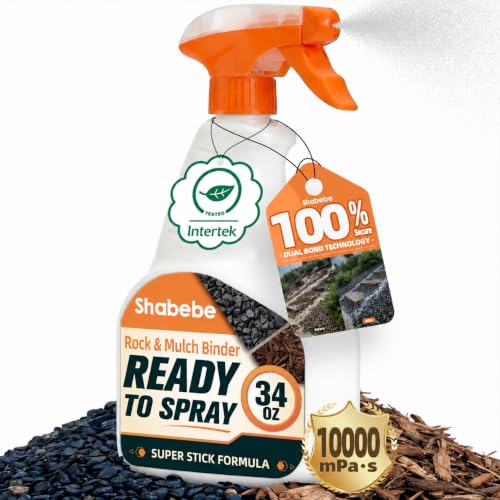
【PROFESSIONAL MULCH & ROCK STABILIZER】Keep mulch, pea gravel, decorative stones, wood chips, and small landscaping materials securely in place. Designed to help reduce shifting, scattering, erosion, and washout while creating clean, well-maintained garden beds, pathways, patios, and landscape borders.

【𝗖𝗢𝗠𝗣𝗟𝗘𝗧𝗘 𝗥𝗢𝗖𝗞 𝗚𝗟𝗨𝗘 + 𝗣𝗨𝗠𝗣 𝗦𝗣𝗥𝗔𝗬𝗘𝗥 𝗞𝗜𝗧】 Get everything you need in one box: 1 gallon of concentrated rock glue plus a heavy-duty 1 gallon manual pump sprayer. No need to purchase a separate applicator—simply mix, pump, spray, and bond. An easy all-in-one solution for securing pea gravel, decorative rocks, mulch, pebbles, and other loose landscaping materials.
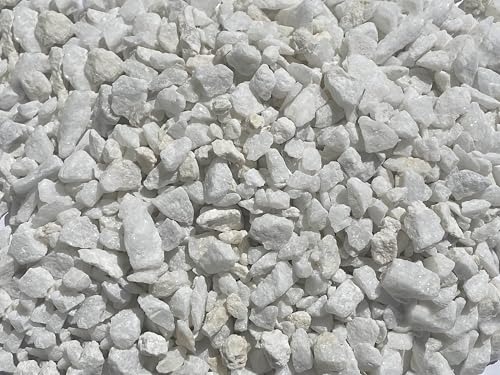
PREMIUM DOLOMITE: Natural white dolomite pea gravel for landscaping and garden decoration, featuring a clean, bright appearance
Planning, Edging, and Cost
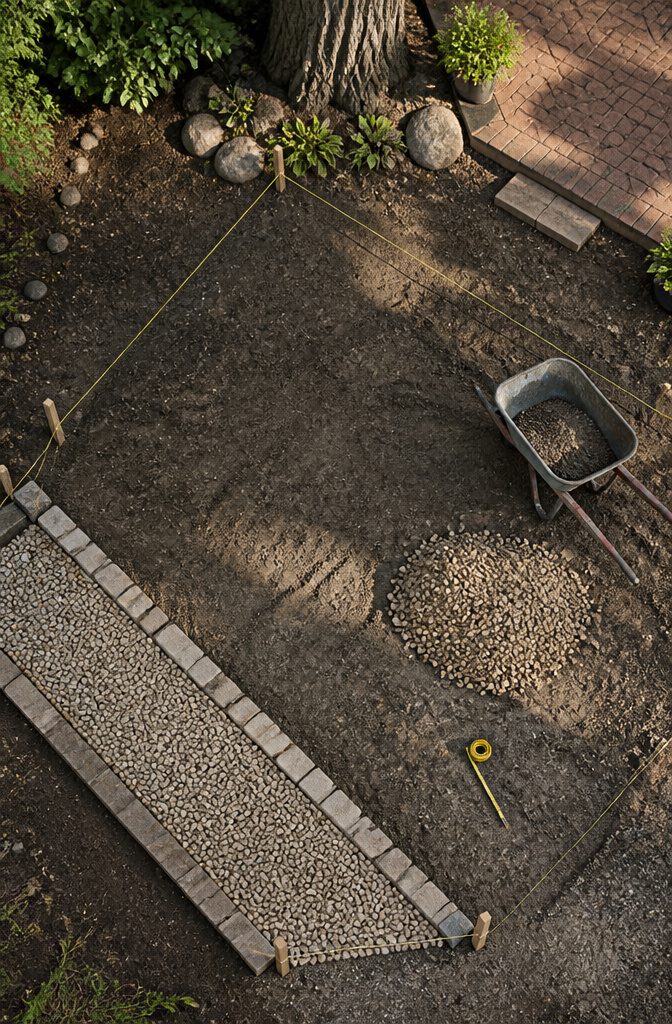
Stake and string the outline, then check foot traffic, slope, drainage and who will use the space. Landscape timbers (8 feet long, usually 3.5 by 3.5 inches) cost little but rot in 5–10 years.
Steel, aluminum, composite, or stone and paver borders outlast them. Bender board is about 1/4 inch thick.
Length × width × depth in inches ÷ 12 gives cubic feet; ÷ 27 gives cubic yards.
A 10-by-12-foot area at 3 inches needs about 1.1 cubic yards, so order 10–15 percent extra. One ton covers about 100 square feet at 2 inches.
Bulk costs $25–$60 per ton plus $50–$100 delivery.
A 0.5-cubic-foot bag runs $4–$7. Past a dozen bags, get a bulk quote, which can save up to 50%.
Recommended Products

【Professional Grade Weed Barrier】 The weed barrier is crafted from high-quality and durable material. Made of woven polypropylene material, it's a strong and reliable barrier that's resistant to UV rays, water, and other outdoor elements. This means that you can trust it to provide long-lasting protection against weeds in your garden.
【Professional Grade Weed Barrier】 The weed barrier is crafted from high-quality and durable material. Made of woven polypropylene material, it's a strong and reliable barrier that's resistant to UV rays, water, and other outdoor elements. This means that you can trust it to provide long-lasting protection against weeds in your garden.

COMPLETE LANDSCAPE KIT W/ ROCK GLUE SPRAYER + GLOVES INCLUDED – READY TO SPRAY FORMULA: Save time & money with everything in one bundle. Our ready-to-use Lockscape rock glue max comes with a professional HD101 sprayer with 6 nozzle tips, PLUS protective gloves. No mixing needed. Just pour & spray.
Suitability and Upkeep
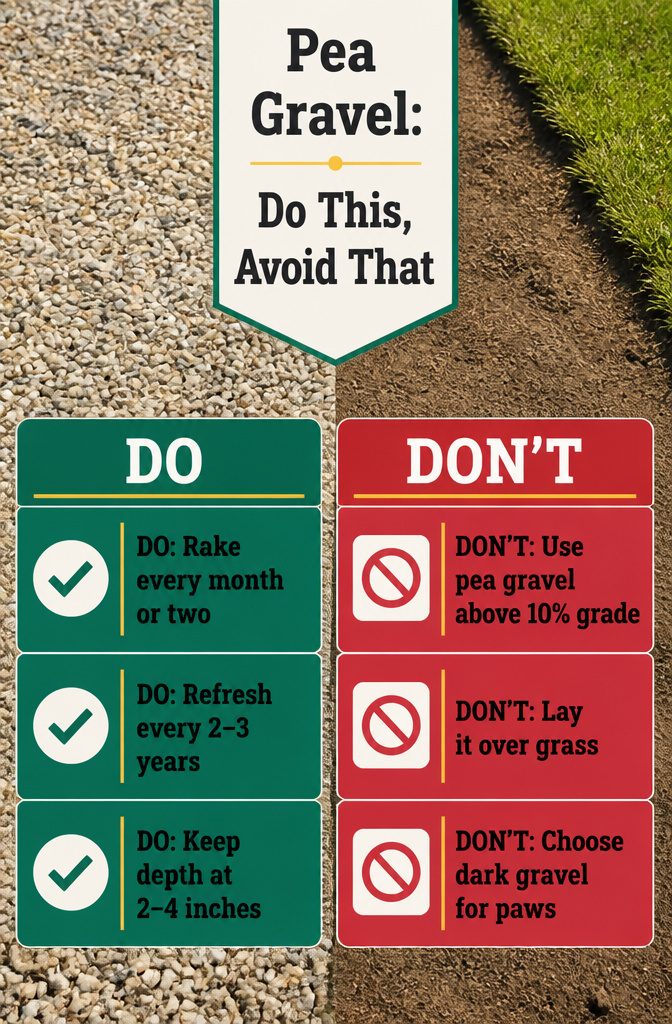
Skip pea gravel on slopes steeper than about a 10 percent grade.
It migrates downhill with every rain and footstep, so use crushed stone or large river rock there. Wheelchairs, walkers and heavy loads also sink into loose stone.
Dog runs and playground bases work if the stone is light-colored or shaded, because dark or sun-baked gravel burns paws. Never lay it over grass: the lawn grows through and the stone sinks into the soil.
Upkeep is light.
Rake every month or two, pull weeds that sprout in settled dust and leaves, and refresh the layer every 2–3 years. Keep depth at 2–4 inches, since thinner shows soil and deeper feels like wading.
A well-built patio lasts 10–15 years, but only with a crushed stone base and edging. Without a base you get dips within a season.
Recommended Products

EASY TO INSTALL: EasyFlex Aluminum No-Dig Edging provides an easy installation for a permanent and maintenance-free edging solution

𝐏𝐫𝐨𝐟𝐞𝐬𝐬𝐢𝐨𝐧𝐚𝐥-𝐆𝐫𝐚𝐝𝐞 𝐂𝐨𝐫-𝐓𝐞𝐧 𝐒𝐭𝐞𝐞𝐥 𝐄𝐝𝐠𝐢𝐧𝐠: Create sharp, long-lasting garden borders with our 6-pack of 8-inch tall Cor-Ten steel edging. Each piece measures 4 inches above ground and 4 inches below ground, making it ideal for flower beds and vegetable patches. This flexible metal border helps prevent grass overgrowth and keeps landscaping clean and organized.
Frequently Asked Questions
Recommended Products

HEAVY DUTY WEED BARRIER FABRIC: True 5 oz dual layer landscape fabric; a woven polypropylene layer for strength plus a needle punched layer to help filter and retain water
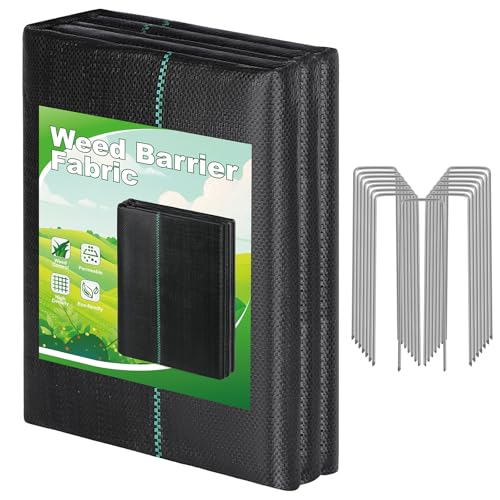
Reliable Weed Control Without Blocking Water: FEED GARDEN Weed Barrier Fabric is designed to effectively help reduce unwanted weed growth in garden beds, flower beds, and landscaping areas while allowing water and air to reach plant roots. The breathable garden fabric promotes healthier soil conditions and helps reduce maintenance throughout the growing season

【5OZ Driveway Fabric】-Our 5 Ounce Heavy Duty Geotextile made from High-Quality Polyethylene Material,tear-resistant, sturdy and durable.
Does pea gravel attract weeds?
Some weeds will show up, but landscape fabric under the stone blocks most of them from below.
Weeds still sprout in the dust and leaves that settle on top. Pull them as they appear when you rake every month or two.
Can you put pea gravel over grass?
No.
The lawn grows up through the stone, and the stone sinks into the soil. Clear the grass and dig out the area first, then add fabric and edging before the gravel goes down.
Is pea gravel good for dogs?
Yes, it works for dog runs because it drains urine and doesn’t turn to mud. Dark or sun-baked gravel gets hot enough to burn paws, so pick a light-colored stone or put the run in shade.
How long does pea gravel last?
The stone itself doesn’t wear out.
A well-built patio lasts 10–15 years, but only with a crushed stone base and edging. Plan to refresh the top layer every 2–3 years, and expect dips within a season if there is no base.
What is the best rock to replace mulch with?
Pea gravel is a good choice around shrubs, ornamental grasses, and Mediterranean plants that like dry conditions.
It never rots, and 2 inches is enough in a bed. Skip it around azaleas and blueberries, which want cool, damp roots.
How much does a dump truck load of pea gravel cost?
Bulk pea gravel runs $25–$60 per ton plus $50–$100 for delivery. Multiply the per-ton price by the tons you need, then add the delivery fee.
Ask your supplier how many tons their truck carries, since load sizes vary. For scale, one ton covers about 100 square feet at 2 inches.
What can you put on pea gravel to keep it in place?
Sturdy edging along the sides holds the stones in, and a compacted crushed stone base underneath keeps the surface from developing dips.
Raking the layer level and compacting it also helps. On slopes steeper than about a 10 percent grade, switch to crushed stone or large river rock, because pea gravel migrates downhill.
Is pea gravel nice to walk on?
Yes, the standard 1/4 to 3/8 inch grade is comfortable underfoot, though the rounded stones shift as you step.
The larger 3/8 to 3/4 inch blend feels chunky and is better kept to accents around trees. Keep the depth at 2–4 inches, because a deeper layer feels like wading.