The ideas run from a $2 bag of mulch to a retaining wall and stairway for a slope, and your yard’s light and grade decide which fit.
A sunny spot suits Thuja, which generally wants several hours of direct sun; a shady one needs oakleaf hydrangea or rhododendron. Check the light first.
1. Trees and Evergreens
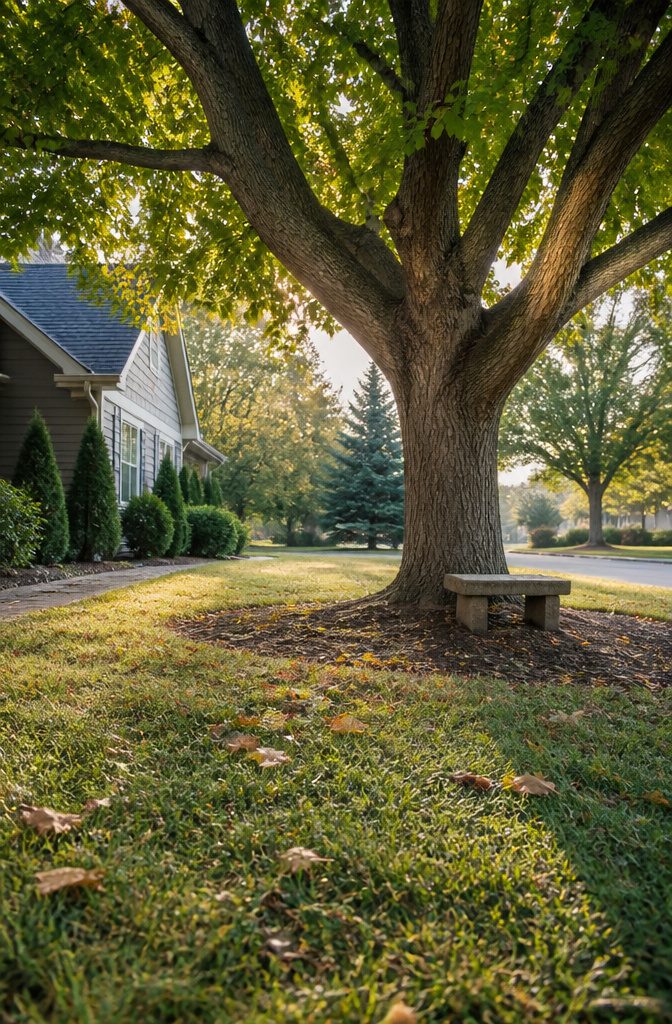
A tree gives a front yard its focal point and a pool of shade to plant or sit under.
A mature tree will absorb more than 48 pounds of carbon dioxide from the atmosphere every year.
That makes one tree worth planting even in a modest yard, if it fits.
Match the tree to your yard’s size and sun before you buy: check the hours of light the spot gets and the room a full-grown tree will need. Crowding one against the house or walkway usually ends in removal.
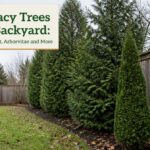
Evergreens are the lower-waste option because they drop little through the year, so you rake less. Thujas are a common pick.
Recommended Products
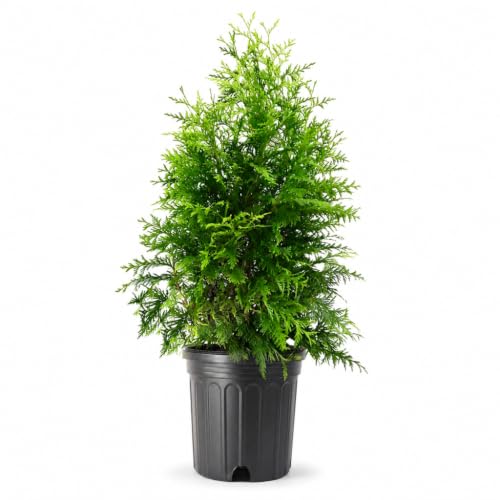
Rapid Growth for Quick Privacy: Offers fast growth, making it an excellent choice for a privacy hedge or screen.

For sale are 30 Thuja Green Giant Arborvitae plants that are approximately 6-12" tall and shipped in pots
Rapid Growth for Quick Privacy: Offers fast growth, making it an excellent choice for a privacy hedge or screen.
2. Flower Beds
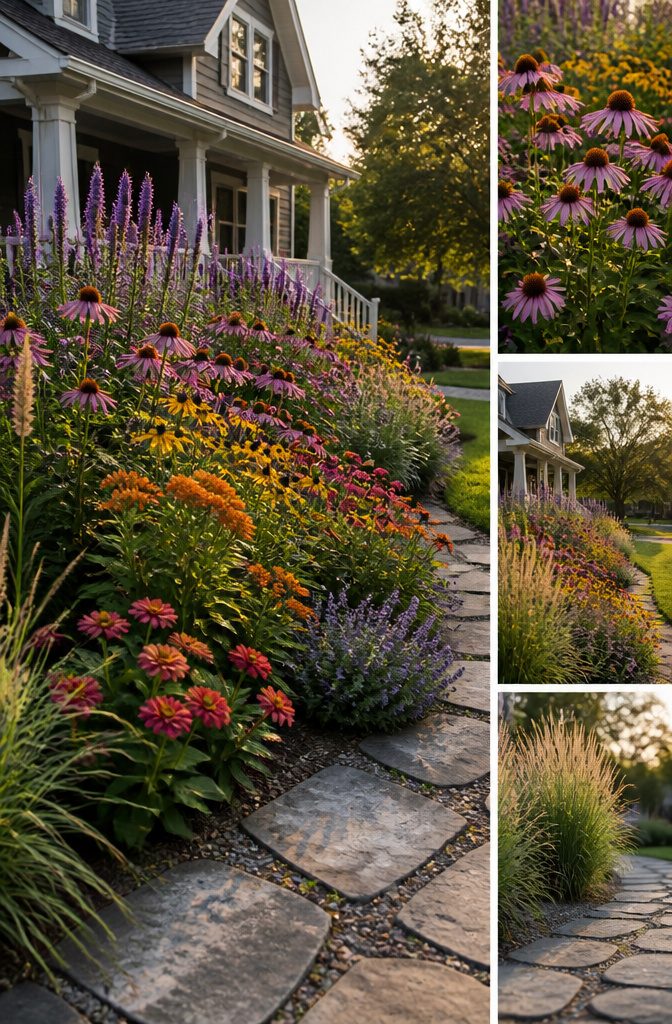
Perennials give a front bed the best return on a small budget: a $10 to $30 plant comes back every year, so you buy it once.
For full sun in the Midwest and Zone 6b/7a, purple coneflower, Black-eyed Susans, butterfly milkweed and prairie blazing star are the reliable core.
Zinnias are annuals, so use them as filler between young perennials. Little bluestem adds fine, upright texture.
Bed shape changes the look as much as plant choice. A deep, curved bed looks fuller than a thin strip along the foundation.
Plant tall blazing star at the back, mid-height coneflowers in the middle, and low growers at the front edge. Mix bloom times and leaf shapes, and put something fragrant near the walkway.
Recommended Products


This Plant will Ship in a fabric Grow Bag ( see pics ) - The plants are currently growing in a 1 Pint nursery pot However they will NOT ship in a plastic pot.

These are ready to plant and should be put in the ground according to the included instructions upon arrival. All pictures are of fully grown plants. Sizes shipped are in the title and description. Deciduous plants do not have leaves in the winter.
3. Mulch for $2–5.50 a Bag
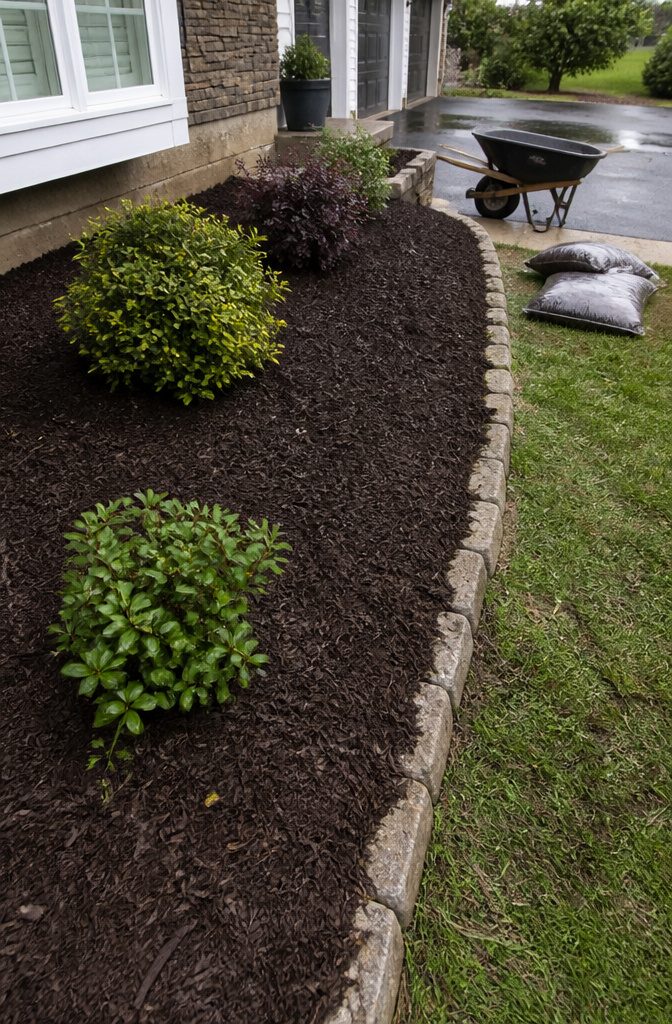
Mulch is the cheapest add-on in a front yard.
It adds texture and color, smothers weeds, holds moisture in the soil, and slows erosion on a slope. It also works as a plant-free way to cover ground, which suits a strip you don’t want to mow or plant.
Bagged mulch runs $2 to $5.50 a bag, and bulk runs $17 to $68 per cubic yard.
Buy bags for one bed or a small patch. If you’re covering several beds, bulk usually costs less for the same amount, but you’ll need a spot in the driveway for the pile and a wheelbarrow to move it.
Recommended Products

100% Organic & Peat-Free: Our organix mulch mix is 100% organic & peat-free. Peat is one of Mother Nature’s most important stores of carbon. Instead of imported peat, the base of our soils is made from upcycled plant matter or wood fines from the United States!

PREMIUM DARK WOOD MULCH: Rich, dark-colored shredded wood mulch creates a clean, finished appearance around gardens, flower beds, trees, shrubs, borders, and pathways

PREMIUM LANDSCAPING LOOK Enhance flower beds, pathways, gardens, and outdoor spaces with rich Red rubber mulch designed to create a clean, modern, professional landscape appearance year-round.
4. Landscape Edging
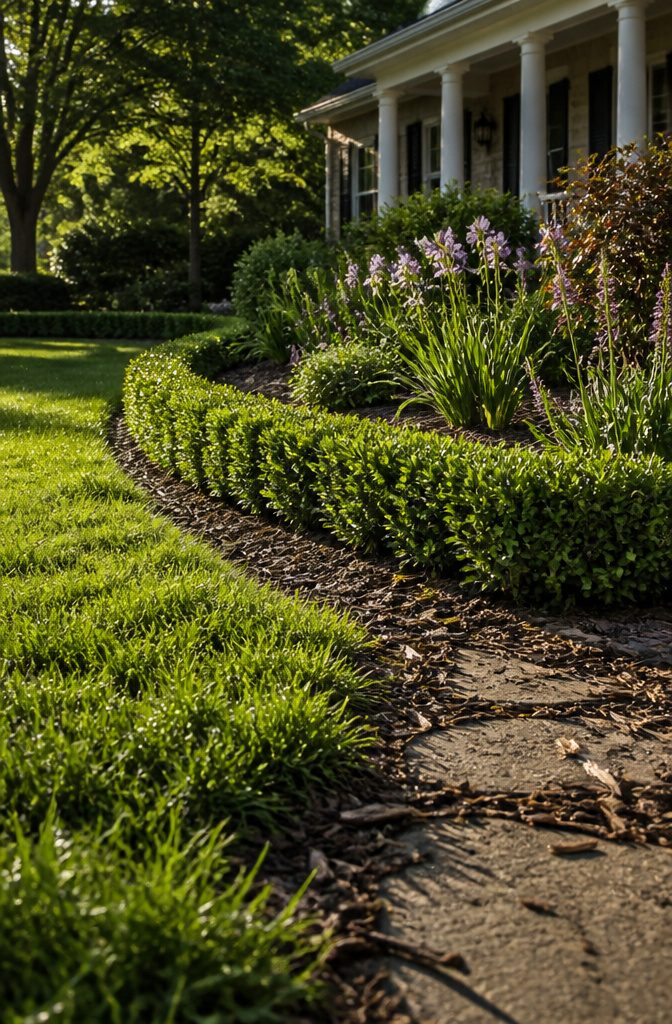
Edging holds mulch in place after heavy rains, keeps turfgrass from creeping into the bed, and protects plants from sharp mower blades. Stone or brick gives the cleanest, most formal line along flower beds, walkways, and evergreen shrubs.
A short hedge costs more patience but softens the border and frames the bed like a picture frame, so it works best where you want the edging to be part of the design.
Edging also directs traffic.
A short hedge or low fence steers visitors toward the part of the garden you want them to see. Around a freshly planted bed, it keeps guests from stepping on new plants.
Recommended Products

EASYFLEX DECORATIVE NO-DIG LANDSCAPE EDGING: Get a beautifully landscaped yard without all the work of a dig-in lawn edging; simple installation without trenches or shovels; color may vary due to the unique manufacturing process.

EASYFLEX DECORATIVE NO-DIG LANDSCAPE EDGING: Get a beautifully landscaped yard without all the work of a dig-in lawn edging; simple installation without trenches or shovels

150 UNBREAKABLE STEEL STAKES – Unlike common brittle plastic spikes that snap instantly in hard soil, our flower bed edging kit is equipped with 150 premium steel stakes. These solid metal anchors easily penetrate clay. Secure your landscape edging firmly with confidence and say goodbye to frustrating plastic tools.
5. Landscape Lighting
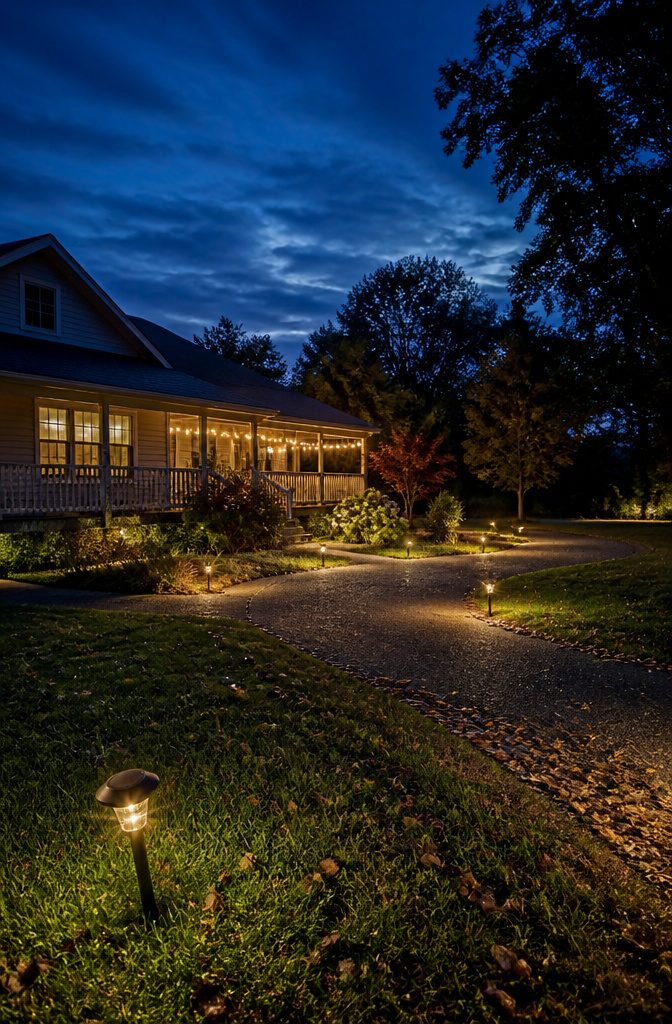
Lighting keeps the front yard working after dark. Aimed at the house, it brings out the architecture.
Aimed at trees, shrubs and flower beds, it lets you enjoy the planting you did all season, and it puts light along the paths and entry where dark corners would otherwise be.
For low effort and a low budget, start with string lights along the porch railing and solar-powered lights along the walkway and driveway. String lights need only a few hooks and an outlet.
Solar stakes need no wiring, so a renter or first-season gardener can install them in an afternoon and move them when the beds change. Hold off on wired fixtures until you know which tree or bed deserves a spotlight.
6. Window Boxes
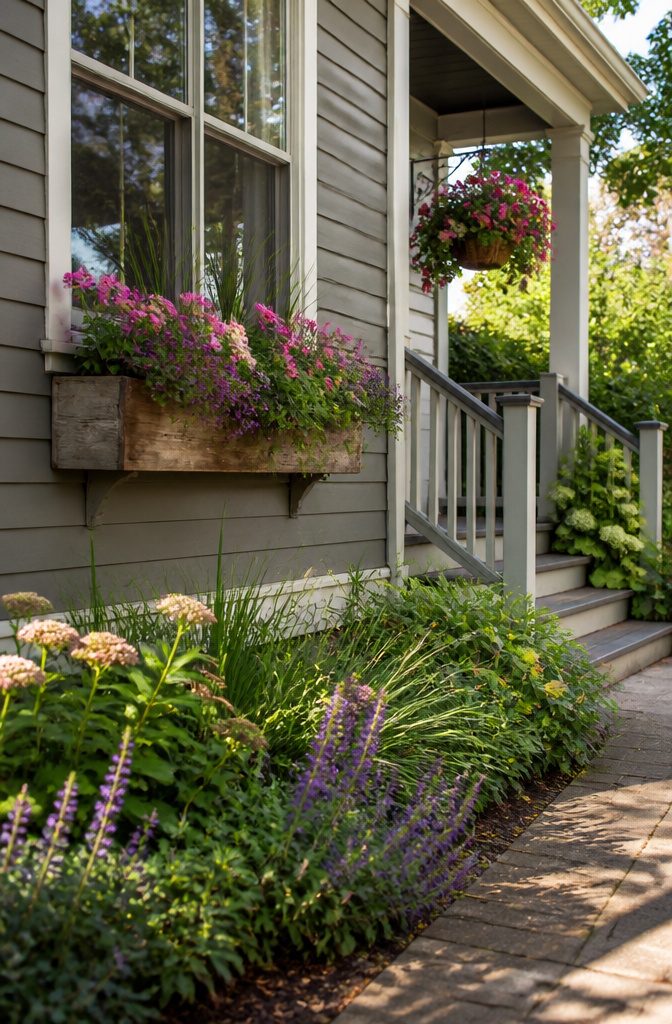
A window box puts flowers at eye level on the house itself, which ties the walls to the planting below.
It also gives you a view of the same flowers from inside, and it covers scuffs and scrapes on the window that paint alone won’t hide.
Choose a box about as wide as the window, so it reads as part of the facade instead of an add-on.
Hanging baskets add the same color with no bed to dig. Hang them from a porch beam or a bracket beside the door.
They suit renters and anyone with compacted or rocky soil. Water them more often than a bed, since a small basket dries out fast in summer heat.
Recommended Products

LIVE PLANT: Enjoy this outdoor Thuja Green Giant tree all year around. An upright, fast growing evergreen tree with rich medium green foliage.

Fast-Growing Evergreen Tree – Reaches impressive heights quickly, creating a dense, natural privacy screen for yards, driveways, and commercial landscapes.
Rapid Growth for Quick Privacy: Offers fast growth, making it an excellent choice for a privacy hedge or screen.
7. Walkway
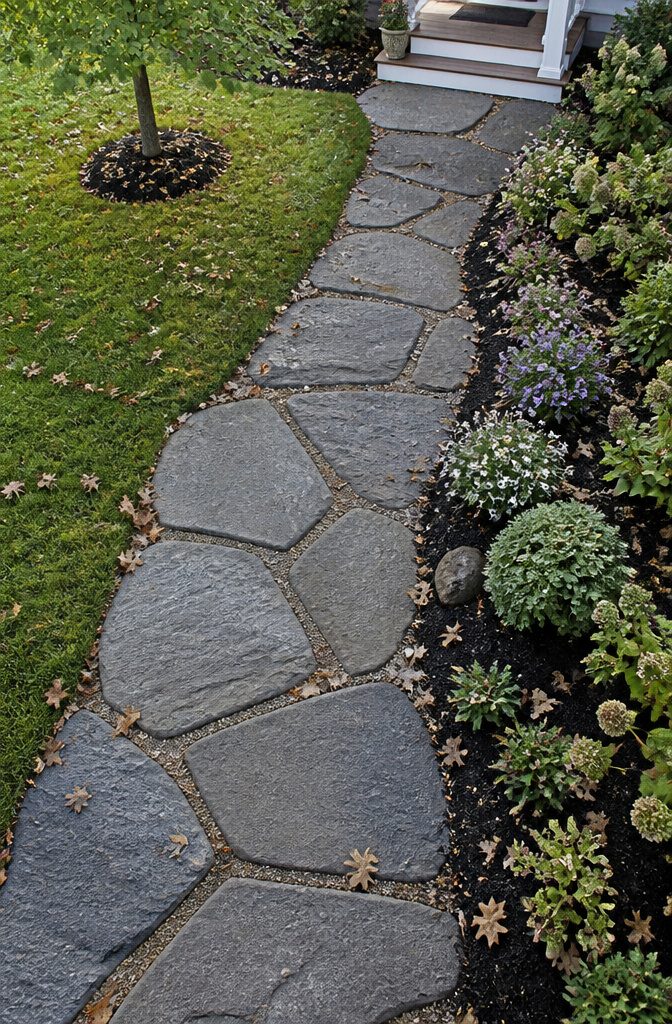
A walkway gives visitors a clear route to the door, so they stop cutting across the lawn.
It can also steer them past something worth seeing, like an oak or a cottage garden bed. The firm surface suits a wheelbarrow or luggage cart, and every square foot of path is a square foot you no longer mow.
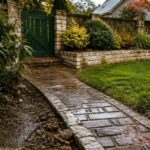
Pavers or stepping stones run $1 to $15 each, depending on whether you choose stone, brick, or concrete. Pea gravel costs $25 to $67 per cubic yard, averaging $46.
If you want the least upkeep, choose river rock or flagstone. Natural stone adds texture and interest all year with minimal care.
Recommended Products

Each offer includes one plant grown in a 4 inch pot

Released in 2010, it is a dwarf, compact shrub with dark green foliage that turns mahogany red in fall. Its white, 6.5 in. inflorescences are held upright above the foliage and gradually turn pink as they age.

This improved native hydrangea stands as strong as a toy soldier. Strong resistance to unsightly leaf spotting that's common among oakleaf hydrangeas.
8. Water Feature
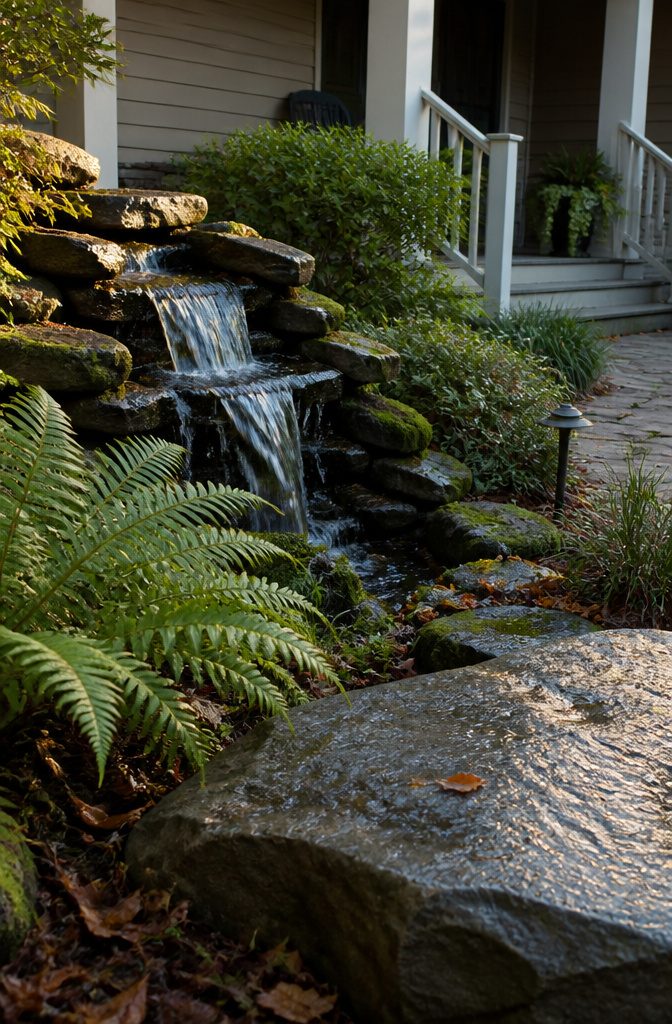
Natural features like waterfalls, water gardens and streams blend into the surrounding yard. A symmetrical fountain suits a formal front yard better, adding order and elegance.
Ponds, water gardens and bog gardens draw the most wildlife, and a koi pond gives you colorful fish to watch from the edge. They also demand the most upkeep.
For a small yard and a small budget, skip the pond.
A pondless waterfall, a solar-powered low-water fountain, or a bubbling rock gives you trickling sound and movement with far less work. The pondless waterfall has the most presence.
The solar fountain is the easiest to add. Place whichever you choose where you can hear it from the porch.
Recommended Products

Professional Grade Weed Barrier Fabric: Weeds are every gardener’s frustration. This heavy duty weed barrier landscape fabric creates a simple, long-lasting barrier that helps block weeds while protecting mulch and groundcover plants, keeping gardens neat

Versatile Mulch: This 42 quart bag contains red colored hardwood mulch, perfect for landscaping, gardens, and flower beds.

100% Natural Cocoa Mulch – Made from the outer shells of cocoa beans, this premium mulch is free from added dyes or fragrances and delivers a rich, natural chocolate aroma straight from the garden.
9. Arbor or Trellis
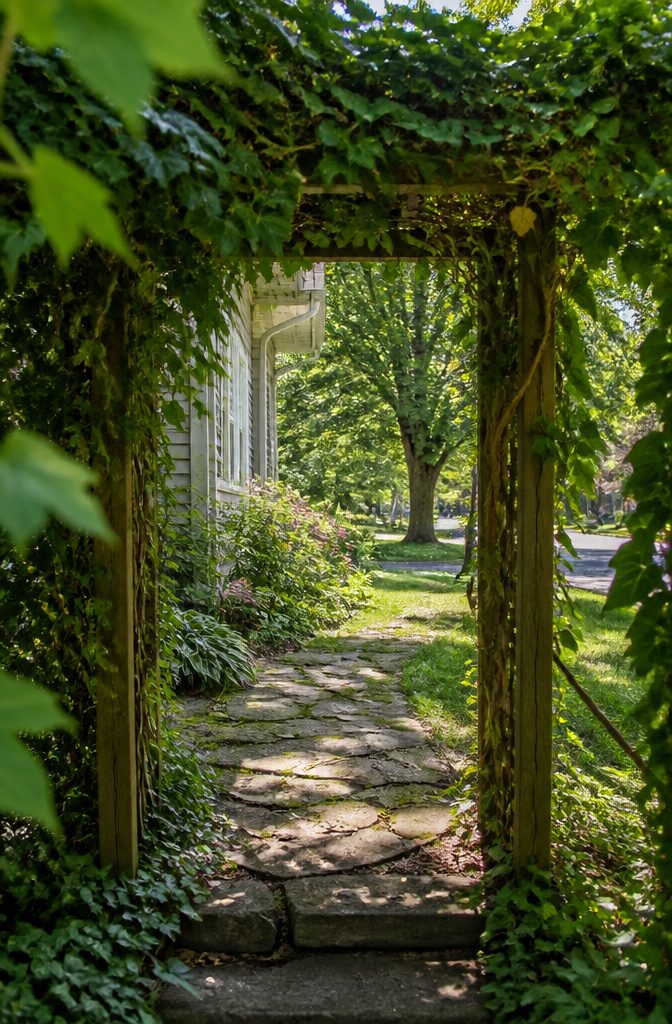
An arbor over the start of the walkway gives the eye a stopping point and invites visitors in to look at the beds behind it.
A trellis does the same job against a wall, beside the front door, or along the entrance fence. Both build upward, which matters in a small front yard where every square foot of bed is spoken for.
For the plant, Boston ivy is a good self-climbing choice. It fills a trellis into a dense screen that adds privacy and softens street noise.
Climbing roses or hydrangeas are the showier option. Flowering vines on an arbor turn it into a proper entryway.
Recommended Products
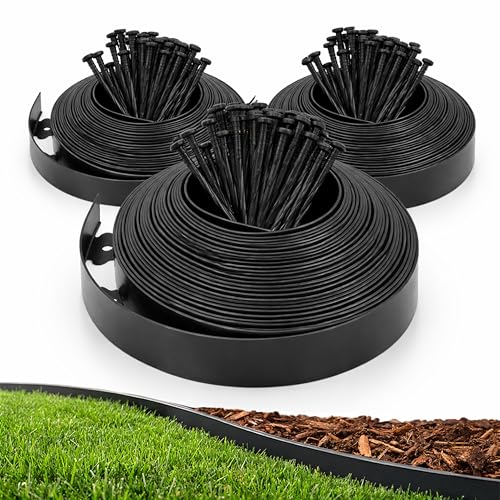
Dimension - Each landscape edging height is 1.5 inch and 33 ft length. Comes with 3 pack. The spiral spike is 6 inches height. Great for flower beds, pathways, tree rings and garden.
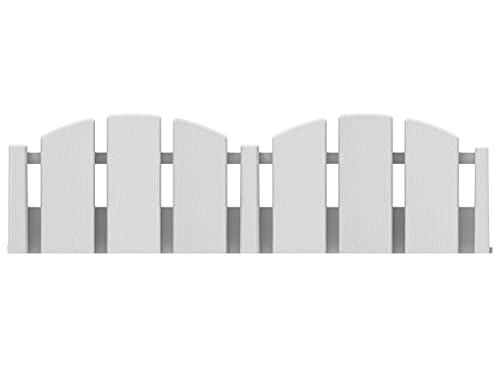
EASYFLEX DECORATIVE NO-DIG LANDSCAPE EDGING: Get a beautifully landscaped yard without all the work of a dig-in lawn edging; simple installation without trenches or shovels

10. Boxwoods and Other Shrubs
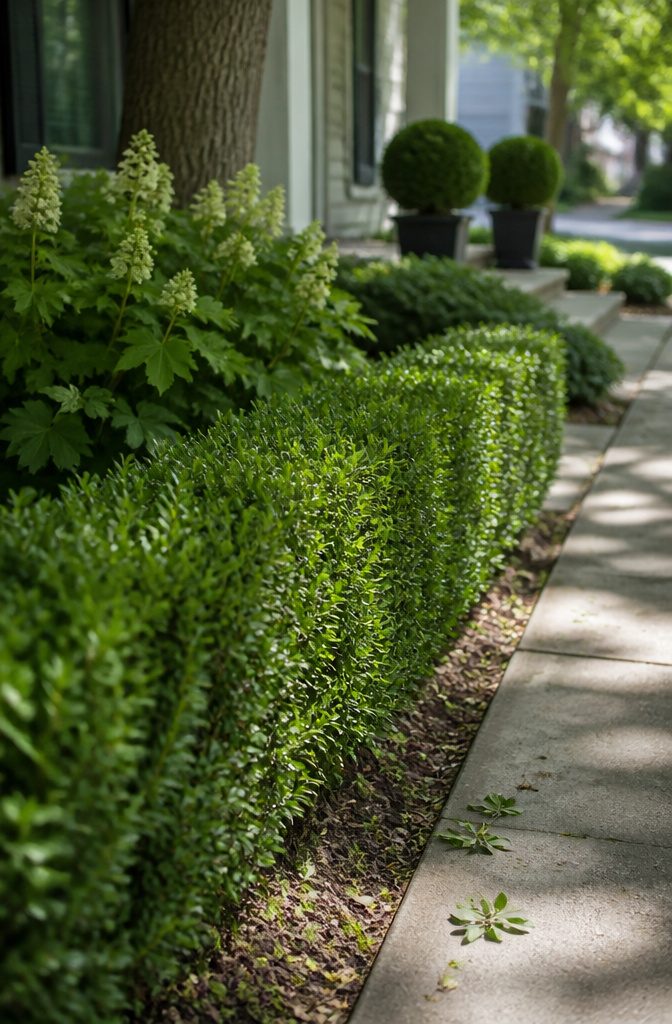
Boxwood is the shrub to buy first.
It stays evergreen, so the front of the house keeps its shape through winter, and it takes clipping into almost any form: a low hedge along the walkway, a pair of balls flanking the door, or a single plant in a pot.
Planted in a row, it also works as a privacy screen. The cost is upkeep, since a formal shape needs regular trimming to stay crisp.
For a shady front yard, plant oakleaf hydrangea or rhododendron. Both tolerate low light.
For a sunny one, Thuja makes a better tall hedge, since it generally wants several hours of direct sun. Other hydrangeas fall in between, usually doing best with morning sun and some afternoon shade.
Recommended Products

Tall Prairie Spikes: These blazing star seeds grow into upright perennial flower plants reaching about 48 inches tall, with pink-purple flower spikes that give perennial flower seeds strong vertical appeal in sunny garden beds.

Native Pollinator Favorite: Marsh blazing star seeds grow into a 48 inch upright perennial with pink to purple spikes that attract bees, butterflies, and hummingbirds in sunny garden beds.

Beautiful - Large premium packet of Gayfeather (Liatris Spicata) Flower seeds. Also known as Blazing Star, this native wildflower sends up beautiful, feathery spikes of purple flowers that sway in the wind. Minimum of 750 mg per packet (about 250 seeds).
11. Dress Up the Front Door
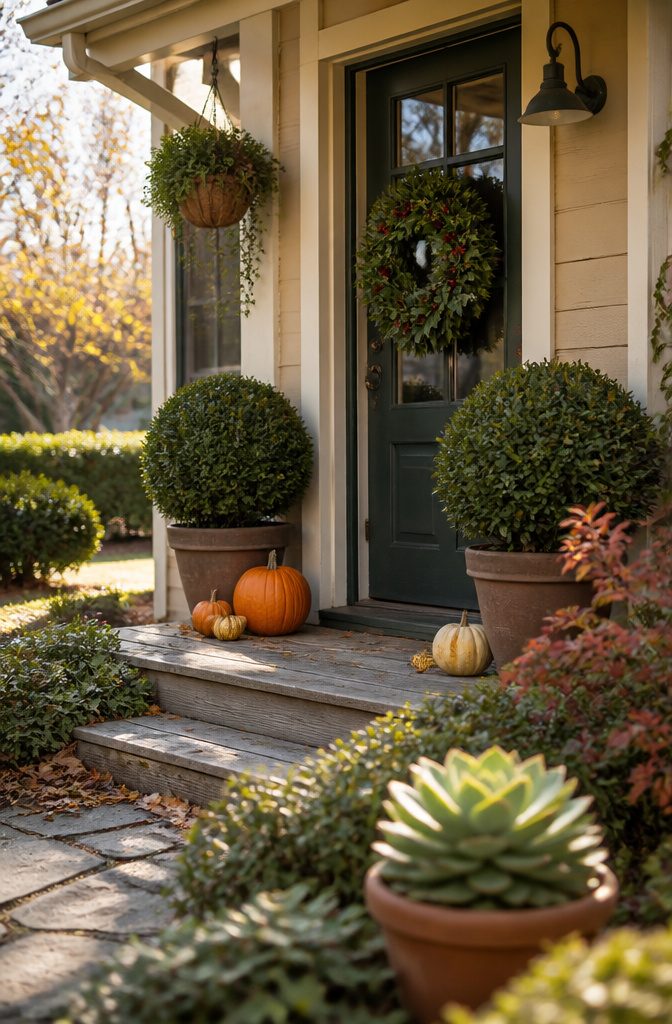
Potted boxwoods and succulents give a front door shape that lasts, and a wreath adds the personality. Boxwoods hold their form all year, and succulents suit a sunny step where watering tends to slip.
Keep the permanent plants the same and change only the seasonal layer: pumpkins beside the door in fall, a holly wreath in winter. It costs little and makes each month look planned.
Do the cleanup first. Sweep the porch, clear cobwebs and dead leaves, and repaint a tired door, since fresh paint is the cheapest big change here.
Then add a hanging basket, furniture that matches in color and material, and an outdoor light by the door so the entry still looks welcoming after dark.
12. Retaining Wall
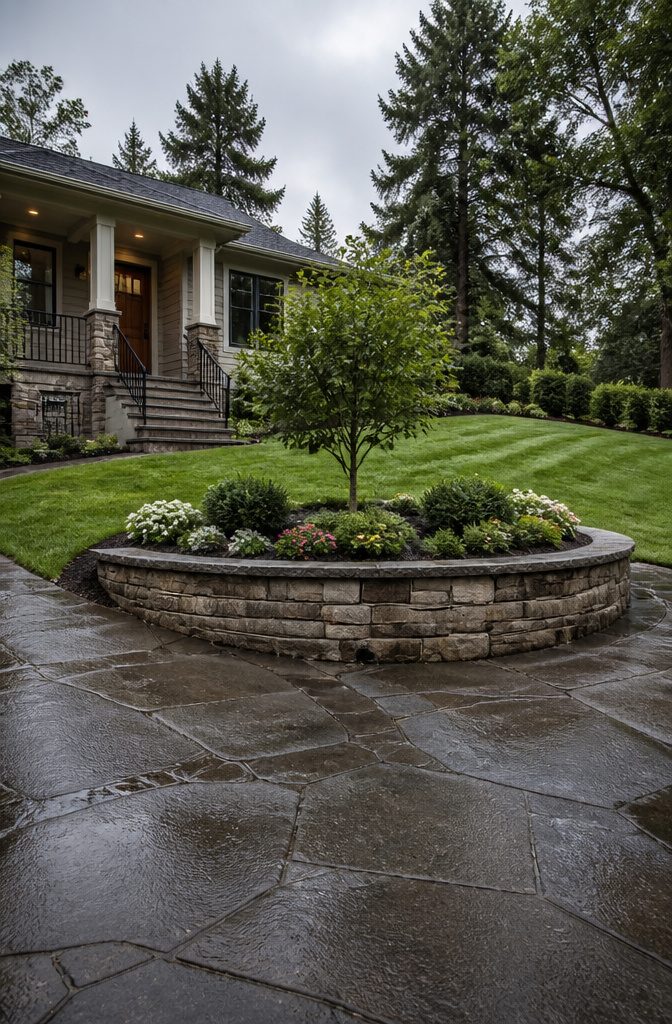
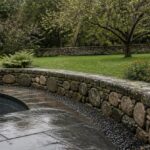
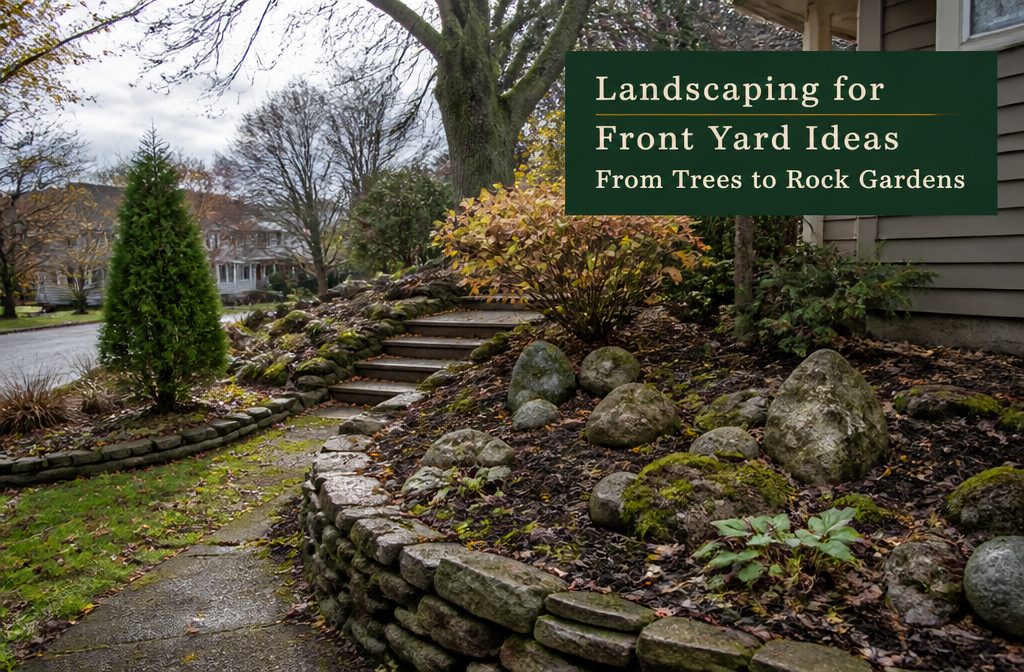
A retaining wall turns a slope into usable ground. It holds soil in place so rain doesn’t wash it downhill, and the level shelf behind the wall becomes a raised bed for flowers or shrubs.
On a steeper grade, two low walls stepped one above the other give you layers that a flat lawn can’t.
The same idea suits a small front yard. Building up adds height and texture where you can’t spread out, and a short curved wall around a single tree makes it a focal point.
Choose stone veneer, brick or wood to match your house’s siding or trim.
Soil behind any wall can become oversaturated after heavy rain, so plan a way for water to drain out rather than pool, especially if the beds on top get regular watering.
13. Shade Garden
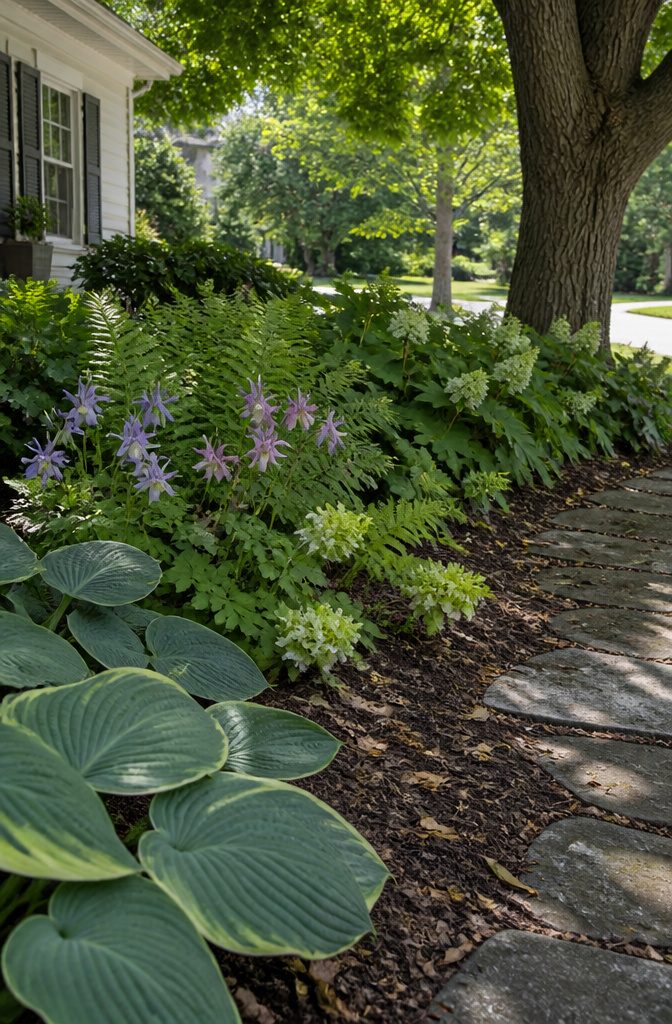
Shade under a tree is planting space, and the right plant depends on how much light reaches the ground.
- Full shade: columbine and bigleaf hydrangeas.
- Partial shade: lady fern, oakleaf hydrangea and flowering dogwood.
- Shrub with year-round leaves: rhododendron tolerates shade too.
- Finished look: hostas, magnolias and a layer of mulch dress up the ground beneath a shade tree.
- Turf: choose zoysiagrass or tall fescue, which do well in some shade. Grass types that need ample sun will struggle.
- More light: have an arborist trim and prune the trees safely instead of climbing up with a saw yourself.
14. Stairway
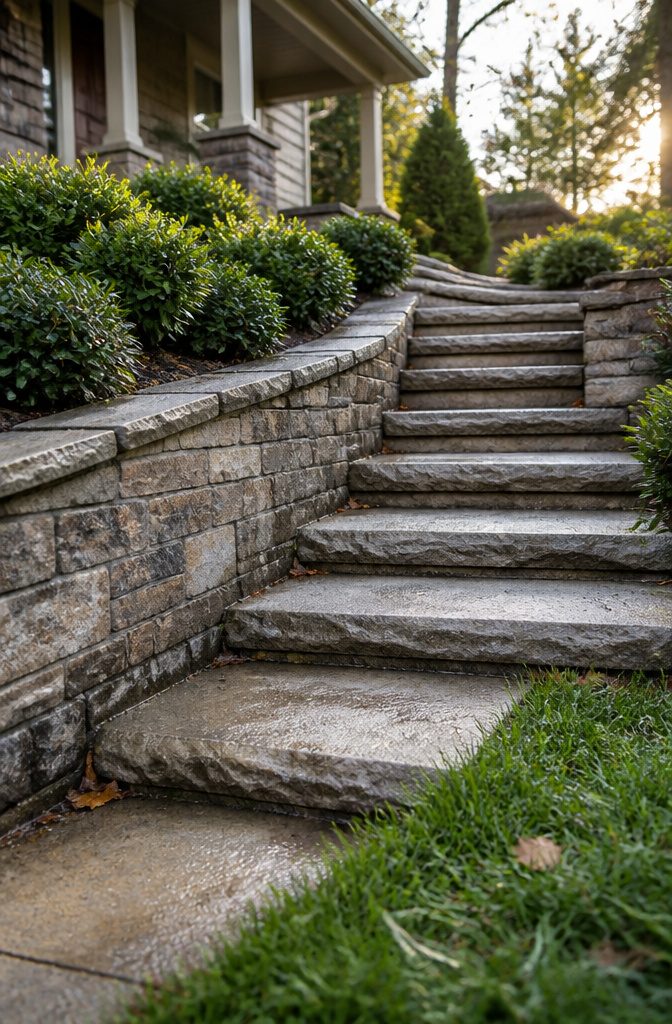
A slope is the hardest part of a front yard to use. After heavy rain a bare hill turns slick, and guests either slip on the way up or skip the walk altogether.
A stairway gives every foot a dependable surface and opens up areas that are hard to reach otherwise, such as a favorite garden planted near the top.
Build the steps as the front entry, since a stairway makes a strong first impression.
Pair the stairs with a retaining wall in stone veneer, brick, or wood to hold the soil and control erosion along the slope. Then plant shrubs beside the steps to soften the hard lines of the wall and treads.
15. Rock Garden
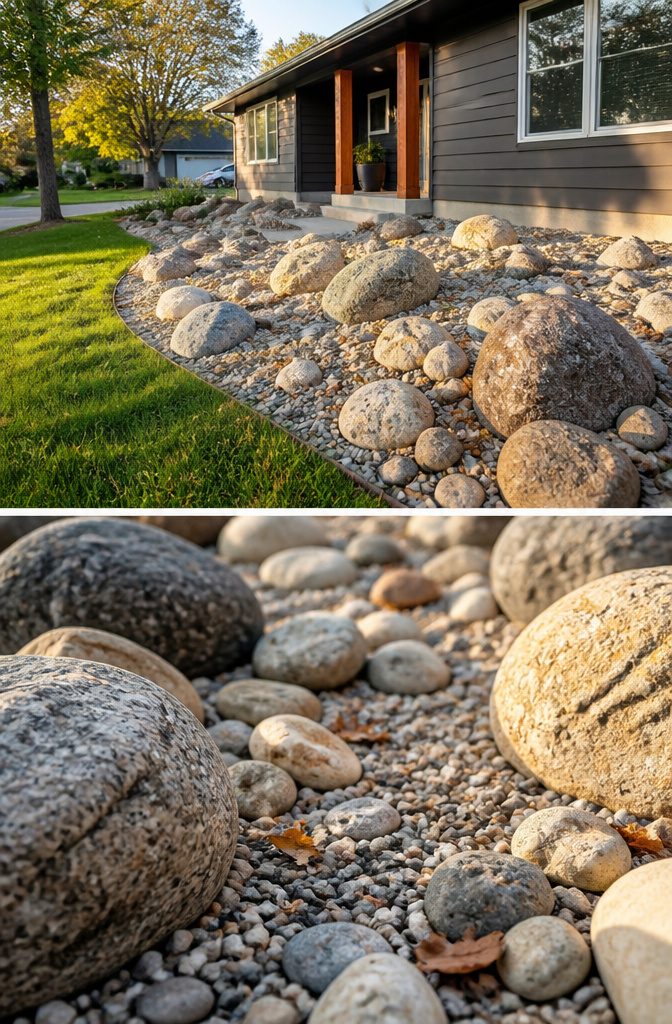
A rock garden suits a hot, dry front yard where a typical flower bed would struggle, and it can be built from boulders, rocks, and stones alone.
For the lowest upkeep, skip the plants entirely, since a plant-free bed has nothing to water or prune.
If you want green, sedum (stonecrop) and Sempervivum tectorum (hens and chicks) are succulents that need less water than most garden plants, so they tuck easily between stones.
Creeping thyme and clover also work as ground covers, and they need only one or two mowings a year.
Check municipal rules and your HOA before replacing turf. Boulders are heavy, so hire a local landscaping crew for the lifting.
Frequently Asked Questions
What is the cheapest way to landscape a front yard?
Perennials, mulch and a stone or gravel walkway give the most for the least money.
A perennial costs $10 to $30 and comes back every year, bagged mulch runs $2 to $5.50 (bulk is $17 to $68 per cubic yard), and pavers or stepping stones cost $1 to $15 each.
Pea gravel is $25 to $67 per cubic yard, averaging $46. Annuals cost more over time because you replace them every year.
How can I landscape a front yard without plants?
Build with mulch, rocks, natural stone and water features. A rock garden made of boulders, rocks and stones has nothing to water or prune, and mulch can cover a strip you don’t want to mow.
A pondless waterfall, a solar-powered fountain or a bubbling rock adds sound and movement. Check city rules and your HOA before replacing turf, and hire a local crew to move heavy boulders.
How can I make my front yard look more expensive?
Start with a cleanup: sweep the porch, clear cobwebs and dead leaves, and repaint a tired door, since fresh paint is the cheapest big change.
Then add a hanging basket, furniture that matches in color and material, and an outdoor light by the door. The light keeps the entry looking welcoming after dark.
How do I start creating a low-maintenance front yard?
Plan the yard around upkeep first, then choose plants and materials that need little care. A plant-free rock garden needs no watering or pruning, and river rock or flagstone walkways hold up all year with minimal care.
Evergreens drop little through the year, so you rake less. If you want green in a dry spot, sedum and hens and chicks need less water than most garden plants.