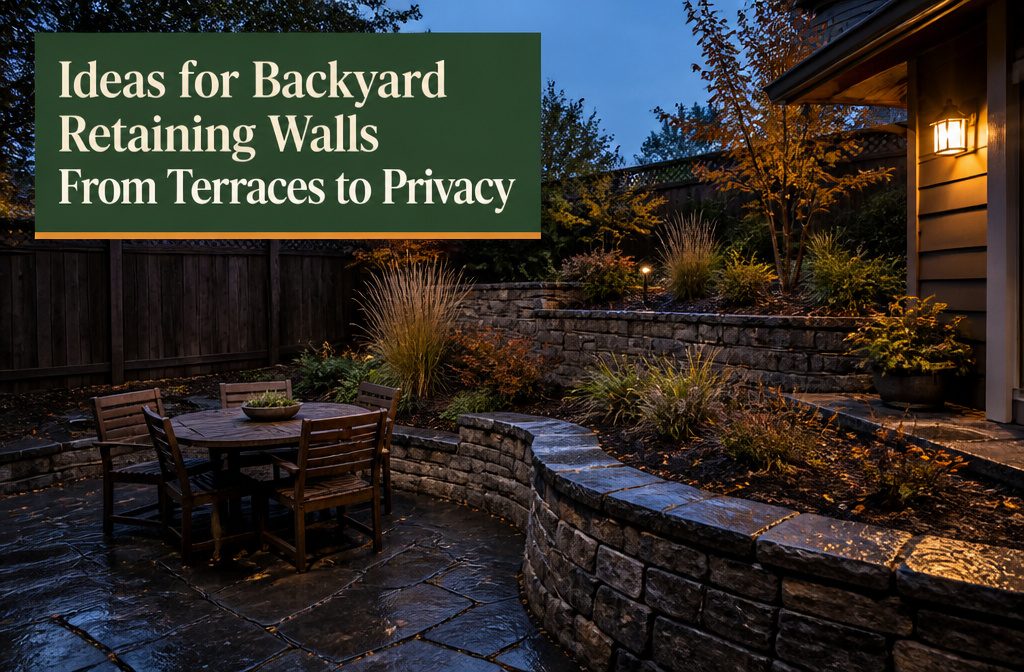
Ideas range from a purely decorative wall marking the dining area to terraced tiers holding back a slope, and the soil problem picks yours.
Any wall retaining a slope, driveway, or structure needs a professional design, and your building department may require a permit, so call before buying materials.
1. Terraces and Raised Beds
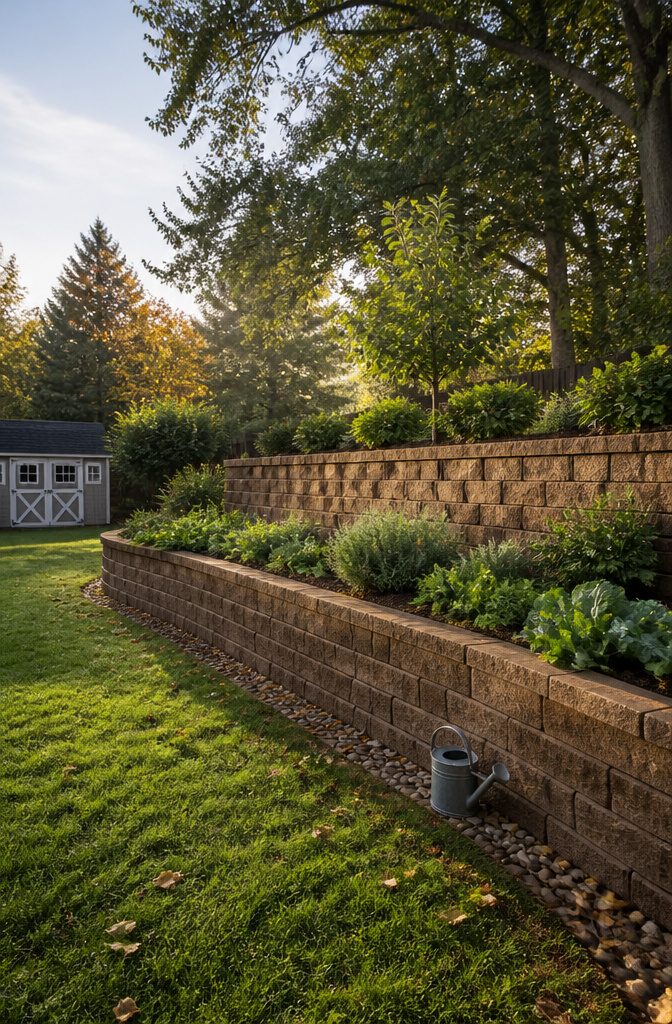
A slope sheds water and loses soil, so little grows on it.
Stepping it into level tiers gives each terrace a flat bed for flowers, herbs, vegetables, or even a small fruit tree. On a large, sloped backyard, this is the idea to start with.
A two-tier terrace is the simplest version. Two walls define plant beds at two levels, which adds depth without clutter, and on gentle slopes the same walls hold back erosion.
Mini-Creta Architectural blocks, shown in Chestnut Brown, are one way to build it. Put herbs and vegetables on the lower tier, within easy reach of the lawn, and save the upper tier for shrubs or fruit trees.
Because each level is flat, you can walk along a bed instead of leaning across a hillside.
Recommended Products

Create a stunning focal point in nearly any outdoor setting with the Backyard Waterfall Fountain Kit for Landscape and Garden

🐟 Complete bio & mechanical filtration :Includes a support tray for securing the foam filter pad and a 500-gram pack of 12-in-1 ceramic bio-filter media in a mesh bag. The foam filter pad traps large debris like leaves and fish waste, helping you maintain clear, balanced pond water.

Complete Waterfall Kit: You will receive a full set of items needed to build a beautiful waterfall, including a waterfall spillway, water pump, water hose, filter bag, and installation accessories. No need for additional purchases—easily create the perfect waterfall in your pond or water garden.
2. Water Features
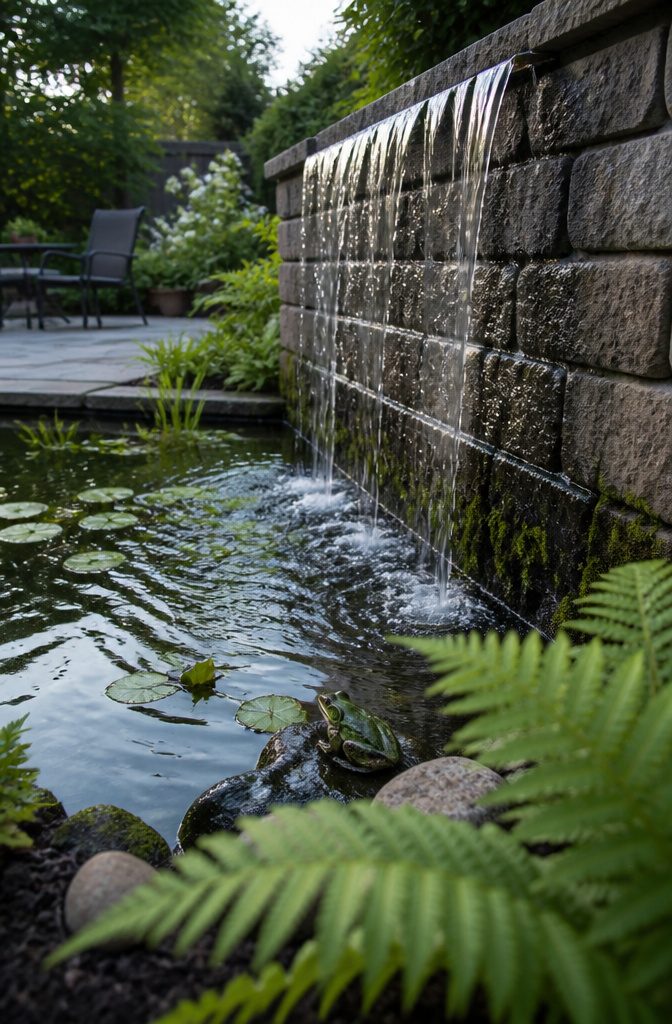
A retaining wall makes a natural backdrop for moving water. Pair a textured block wall such as the Iconic Wall with a gentle water feature, and water slipping over the face reads as calm, almost spa-like.
Choose between two forms. A thin sheet or small spout spilling into a basin at the base is quiet and suits a small yard.
A full waterfall down the wall face is louder and makes a bigger show, and the sound of cascading water carries well at outdoor gatherings.
Place the basin so every drop lands inside it, not on the soil beside it. Add lily pads and other greenery, and frogs may move in.
Recommended Products

【Pack of 2】If you want to decorate your walls with plants, this 18 pockets hanging planter is a good choice. Compared with normal planters, this kind of wall-mount grow bag allows you to grow large amounts of plants without taking up much space.

{Premium Material}: Our garden wall planters bags choosing high-quality felt materials with good air permeability can better store and release water to promote healthy plant growth. It is lightweight, sturdy, convenient, foldable, durable and anti-aging.

PREMIUM MATERIAL & WATER-PRESERVING REAR DESIGN - The hanging garden growth bag is made of high-quality and environmentally friendly felt. The planter bag retains moderate water for perfect growing conditions for plants. The rear water-preserving layer of the growing bag effectively protects the wall without stains, and the leakproof design of the bottom does not make your floor dirty.
3. Planting Built Into the Wall
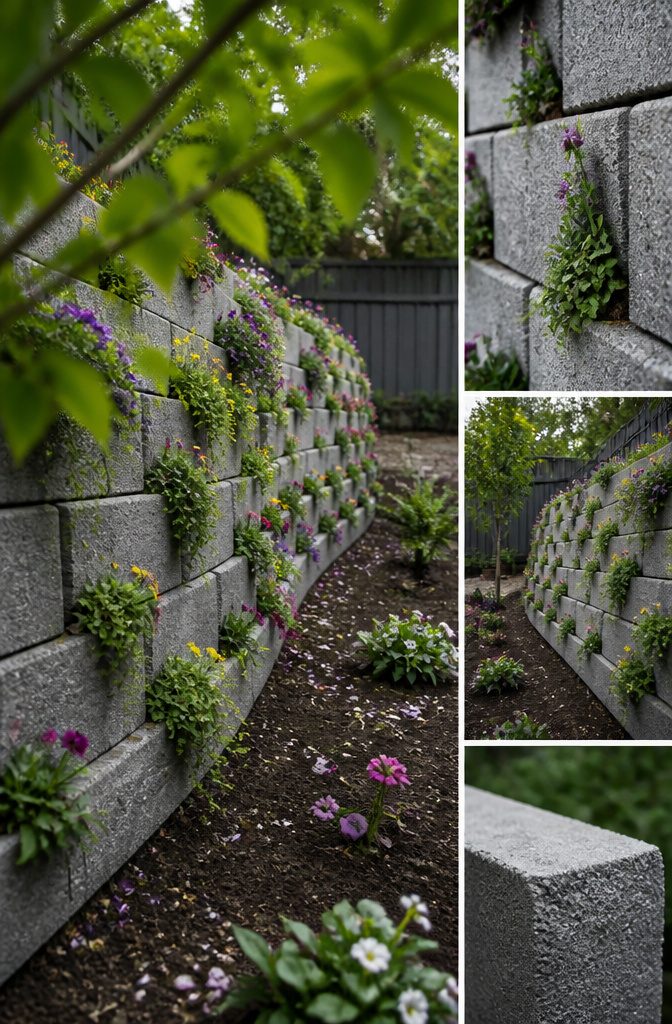
Soil pockets turn a wall face into a planting bed. They work in boulders, gabions, timber beams, and retained earth: leave openings as you build, fill them with soil, and plant or seed so growth comes through the face.
Cascading flowers and vines suit pockets best because they spill down over the wall.
In a tight yard, G-Force Wall block is the pick for vertical planting.
Its modular structure and contemporary shape set green against gray. Graphix Wall suits planter-wall combinations, where the wall and the bed are one build.
Brandon 90mm wall block handles the ground-level version. It lays out in soft curves around trees and flower beds, and it comes in multiple sizes for front or back yards.
Recommended Products

【Save Time & Space with Self-Watering Wall Planters】Transform any space into a lush vertical garden with this ready-to-use wall-mounted planter. Enjoy fresh herbs, vibrant succulents, or beautiful flowers effortlessly. Keep your indoor plants thriving with this self-watering wall planter featuring a 1L water reservoir. Includes four 4'' pots, self watering pots ideal for small plants, succulents, or herbs, turning cluttered floors into a tidy vertical garden

Environmentally Friendly Felt Material: This planting bag is made from environmentally friendly felt material, which is safe, durable. This makes it an ideal option for those who want to create a green space at home without compromising their safety or the environment.

【Automatic Watering System】: This vertical garden planter has an automatic watering pot that will automatically water the plants every few days, saving you the hassle of daily watering and saving time. Also a thoughtful gift for busy people or working moms.
4. Seating and Gathering Areas
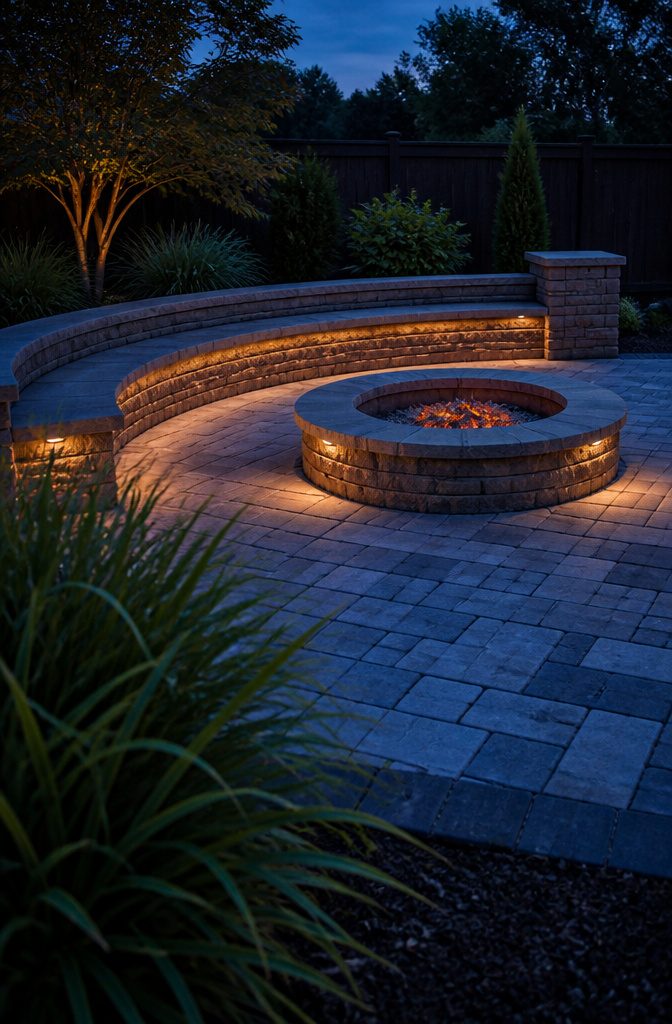
In a small yard, a wall built around a fire pit gives you a focal point and seating in one project.
The Prescott Wall pairs with pavers, so the pit, the patio floor, and the wall read as one set, and the top of the wall doubles as extra seating.
If people will sit on it, a top height of roughly 16–18 inches matches a standard chair.
Rocka Wall suits the other gathering spot, the outdoor kitchen.
It can support countertops, define the grill zone, and double as casual bar seating, so guests have somewhere to perch while you cook. Building the kitchen into a wall you already need saves you a separate structure.
Recommended Products

🍧【HEAVY DUTY】Our outdoor backless benches for fire pits are made of heavy-duty iron with a smooth, non-toxic coating. The T-shaped structure makes the fire pit benches more sturdy, with a maximum weight capacity of up to 300 lbs.

Agressively textured boulder style insert made to used in pairs in a 4 foot Sonotube to make the most realistic stone faced surface you can find. Measuring about 14 inches tall it leaves plenty of room to construct a nice decorative coping ledge or the finishing touch.

🔥DIY Flame Guard Parts: Make your own custom sized flame guard with this hardware kit. Kit does not include the tempered glass. You can purchase cut-to-size Thickness 5/16” or 1/4” tempered glass from your local glass store .
5. Decorative Finishes and Lighting
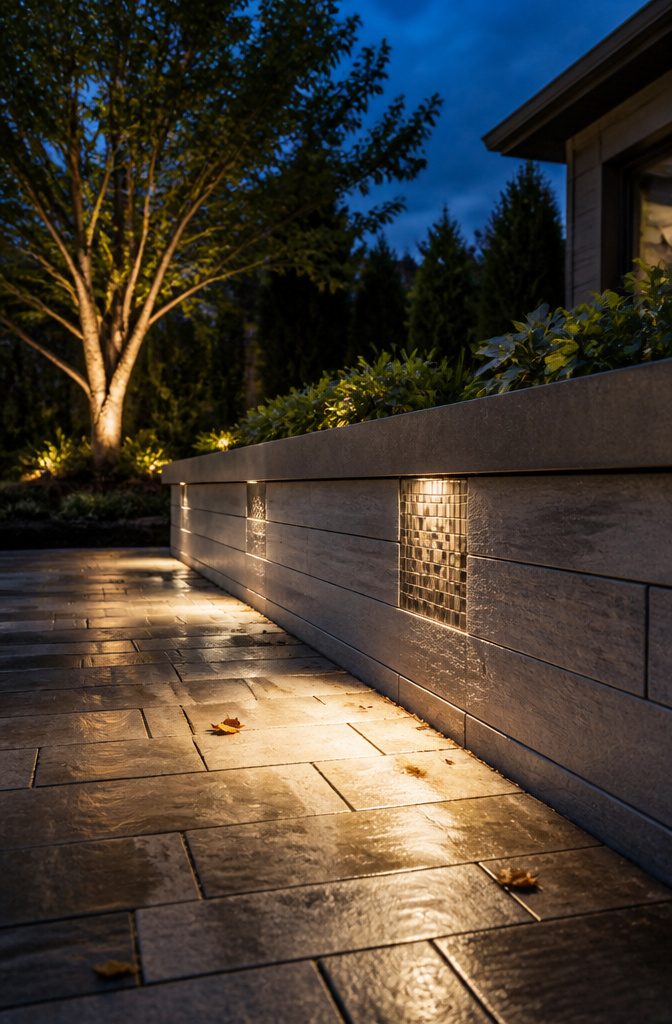
Raffinato Wall gives you a smooth, polished, brick-style face without the look of traditional brick, and its clean lines suit a minimalist yard.
Borealis Wall goes the other way: concrete with a wood-like grain, so you get a timber look with low maintenance.
Light turns either one into a focal point.
Raffinato’s clean lines hide built-in LED lights along walkways or patios, which give the yard a soft glow after dark. Aim extra fixtures at a tree or other feature you want noticed.
You can also set large rocks, sculptures, or mosaic pieces into the wall face and light them. Plan the artwork before the wall goes up, so it becomes part of the surface.
Recommended Products

EASY WATERFALL — easily create a waterfall or a disappearing water feature and enjoy the soothing sounds of moving water. Can be added to an existing pond for the simple addition of a waterfall.

【Waterfall Note】The LONGRUNNEW waterfall with lid cascades contains only the necessary accessories for installation you need, excluding the light strip and controller.Waterfall Blade can DIY your garden, waterfall, water games, stream fall, pond decor, water curtain walls, rockeries, artificial water features and fish ponds.

304 Stainless Steel – Lifetime Durability: Forget cheap plastic that cracks and fades. Our pond waterfall spillway kit is crafted from premium, food-grade 304 stainless steel, offering exceptional resistance to rust and corrosion. Pond waterfall kit withstands harsh weather and freeze-thaw cycles, guaranteeing a beautiful, maintenance-free centerpiece for your pond for years to come.
6. Stairs Between Levels
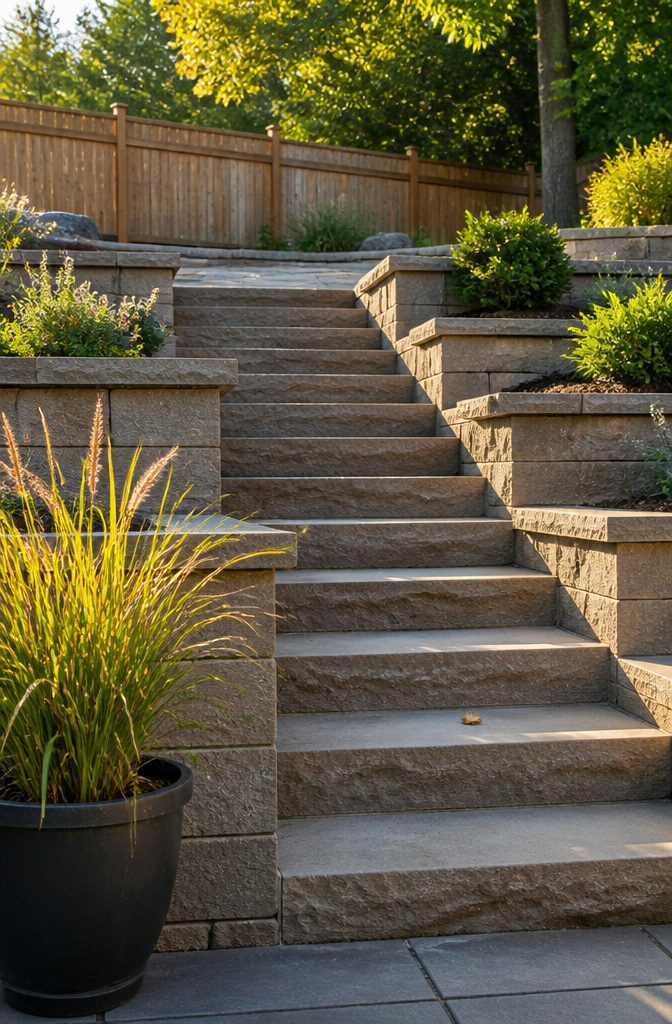
A wall that splits your yard in two is only useful if you can walk to both halves.
A staircase built into the retaining wall joins the upper and lower levels, so the lower part becomes a place you actually use: a zen meditation garden, or a secret gathering spot around a fire pit.
In a small yard, run the steps up through the middle of a terraced slope instead of tucking them at one edge.
The layered walls disguise the yard’s true size, and the steps climb to the top platform, which works well as a seating area. Matching the stair finish to the walls makes both levels read as one design.
Recommended Products
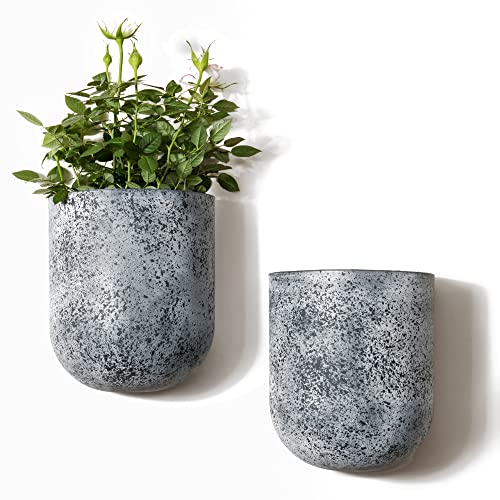
VERSATILE AND ELEGANT - Turn your greenery into wall art with our pocket-shaped hanging planter set. These wall planters are the perfect choice for showcasing a variety of plants such as pothos, spider plants, succulents, or cacti. They will add a touch of sophistication and beauty to any space, creating a stunning visual display. Size: 5.7L*4.1W*7H Inch.

Self-Watering System: Our self-watering feature allows you to go weeks without needing to water your plants.

Effortless Self-Watering Design:Built-in water reservoir reduces watering frequency to once every 7-10 days. Prevents over/under-watering, ideal for busy plant parents, travelers, and beginners—keeps basil, mint, rosemary, and succulents thriving with minimal care.
7. Privacy and Zoning
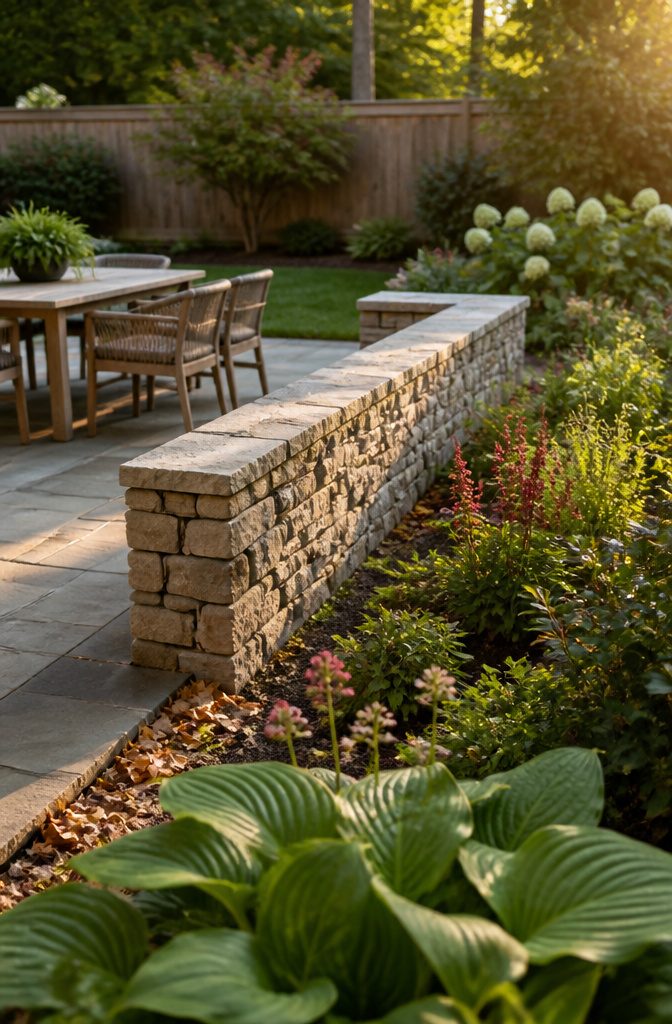
L-shaped retaining walls placed at the edge of a patio screen it from a public road or from neighbors beside or behind you.
The bend in the L matters: the short leg wraps the corner, so the screen covers two sides of the seating area instead of one.
In a small yard, a wall also lets each area do one job.
A raised level can hold the lawn while the lower level holds the seating, and the change in height separates them without a fence. Plan the split around how you actually use the space, not around dividing it evenly.
A wall doesn’t need to hold back soil to be worth building. A purely decorative wall can still mark where the dining area ends and the garden begins, even on flat ground.
Recommended Products

SPACE-SAVING VERTICAL GARDEN – Create a lush green wall with 12 plants in a compact 23.5"L x 25.5"H x 5.5"D frame, perfect for small apartments, patios, or balconies.

Innovative Space-saving Design: maximize your gardening potential with our stackable wall planter system; Each piece measures 9.45" x 5.71" x 5.51" and features two pockets, The overall dimensions are 47.5"x33"x5.5" offering ample growth space for a variety of plants; Nice for Fence Balcony Wall Decor, these vertical wall planters change limited spaces into gardens effortlessly

【Durable PP Construction】This 24 pack 13 inch dark green vertical planter set is made from impact-resistant PP using an injection molding process. The material is odorless, environmentally friendly and resistant to deformation for dependable outdoor use. Its structure suits wallpods garden wall arrangements and other vertical planting projects.
8. Walls Paired With Decks and Fences
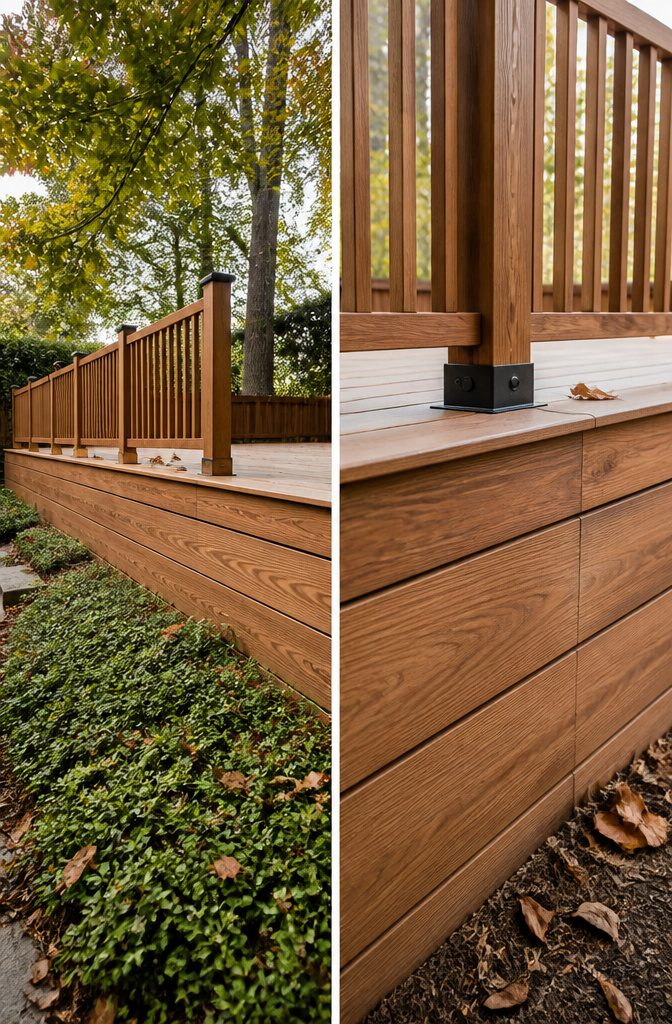
A fence can run along the top of a retaining wall or sit behind it.
Either spot adds privacy and finishes the look, and the wall helps reinforce the boundary if wind is a worry. Check that your wall material can support the fence before anything else, because that decides which hardware will work.
You then choose from four installation methods: surface mounting, face mounting, embedding, or a post-in system. Each suits a different wall setup, so match the method to how your wall is built before buying posts.
Decking pairs well with a wall made from a similar material. The two blend together, which suits minimalist, contemporary yards, and the wall adds support to the ground around a raised deck.
Recommended Products

【Rational Construction】 This fire pit screen is made of heat-resistant tempered glass, durability and heat resistance. To better visual presence and safety, we adopt the...
What a Retaining Wall Does
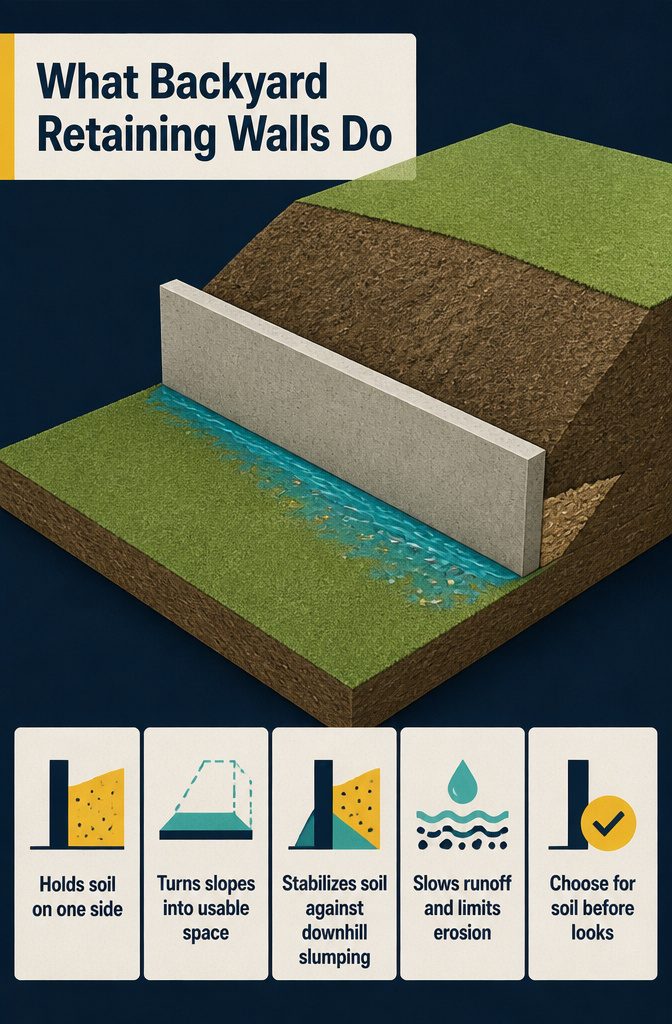
A retaining wall holds soil back on one side so the ground on the other side can stay level or open. In a backyard it does that job and also gives the yard a visible structure.
On a slope, the main benefit is usable space.
A steep bank you can’t mow or sit on becomes flat ground for a patio, lawn, or planting bed. The wall also stabilizes the slope, so soil stops creeping or slumping downhill.
It slows runoff too, because water that once sheeted across bare soil and carried it away meets a barrier, which cuts erosion and lowers the risk of flood damage near the house.
Choose the wall for the soil problem first, then for looks. A good-looking wall that doesn’t hold the slope fails, and a plain one that does can be dressed up later.
Recommended Products

Material and Function: This pond fountain will add a decorative touch to your pond or swimming pool and let you enjoy the relaxing sounds of the water for a sense of calm and well-being. The waterfall is made of 304 stainless steel, top wide open which is specially designed to guarantee a constant and uniform water flow.

Durable Brass Construction: Rough-in valve and tub spout constructed of solid brass for durability. The standard NPT 1/2" threads designed for use with standard US and Canada plumbing connections

8 Inch Wide Weir Waterfall Spillway: This pond waterfall box features an 8-inch wide weir, producing a smooth and even water curtain. It creates relaxing waterfall sounds and beautiful views, perfectly upgrading your garden pond and outdoor water decor.
Wall Materials
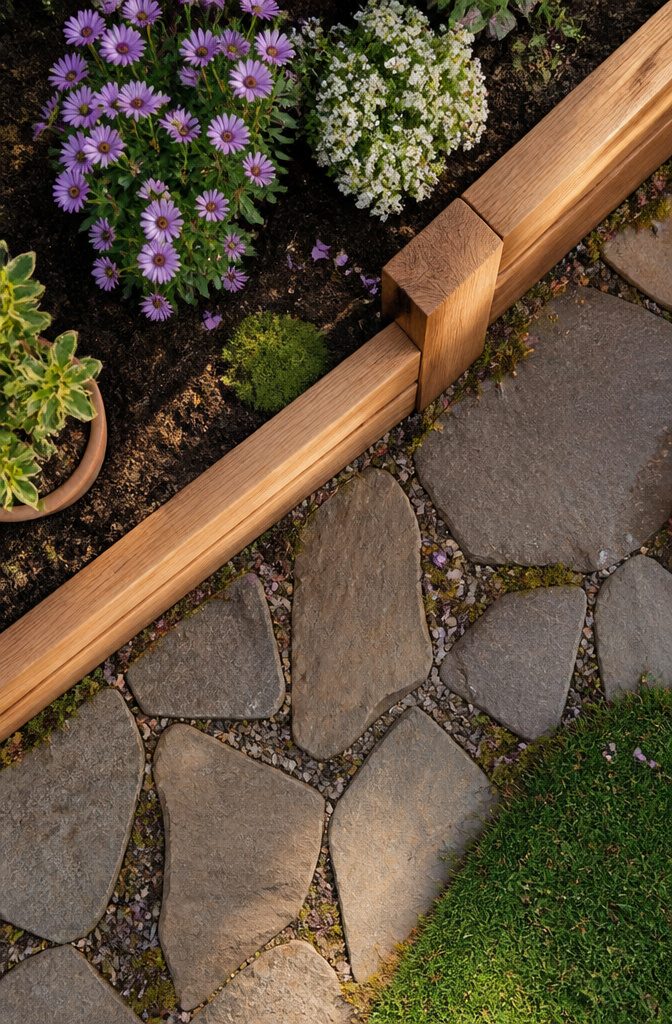
Choose the material by what the wall has to do and what look you want. For a first wall, interlocking concrete block is the easiest to build.
- Modular concrete blocks are strong and durable, and they can be molded to look like stone or brick. Interlocking types have a rear lip that locks each block to the next, so no mortar is needed.
- Natural stone, such as limestone or local fieldstone, gives the most natural look.
- Brick suits a more formal yard.
- Timber is inexpensive and popular for flower beds. Used wood may carry preservatives that leach into soil and harm plants, so choose cedar, which resists fungus and rot naturally.
- Large stacked boulders need no mortar or forms.
- Gabions are wire cages or baskets filled with rocks.
- Stacked soil held by mesh or anchors works when you want a planted face.
Recommended Products

VERSATILE AND ELEGANT: Turn your greenery into wall art with our pocket-shaped hanging planter set. These wall planters are the perfect choice for showcasing a variety of plants such as pothos, spider plants, succulents, or cacti. They will add a touch of sophistication and beauty to any space, creating a stunning visual display. Size: 5.7L*4.1W*7H Inch.

Self-Watering Design: The cotton wicking ropes automatically draw water from the outer pot, delivering consistent moisture straight to the soil – thriving foliage all year round! Simply check the water level indicator at a glance to know when to refill
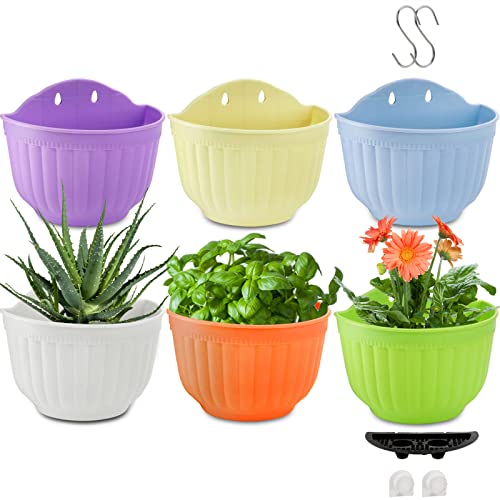
Our railing plant pots are made of premium tough PP resin material, non-toxic, weather-resistant and shatter-proof, sturdy and lightweight for indoor or outdoor uses. The matching S hooks are made of rust-proof and heavy-duty stainless steel
Drainage and Engineering
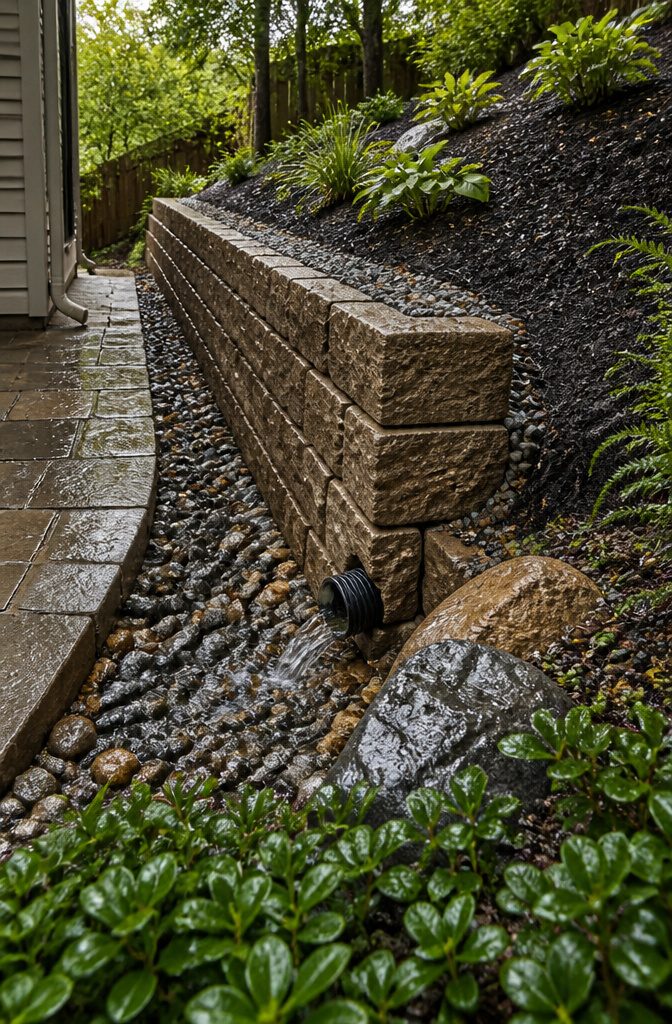
Water does the most damage to a retaining wall. Rain-soaked soil gets heavy and pushes against the wall, and if the water has nowhere to go, the pressure builds until the wall bows, cracks, or tips.
Plan the drainage before you pick the material: water needs a path out from behind the wall and away from the slope above it.
Get the wall engineered before anyone digs. A wall that holds back a slope, a driveway, or a structure needs a professional design, not a guess from a photo.
Your local building department may also require permits or plans, so call before you buy materials. A low garden border is a different job from a wall carrying real soil weight.
Frequently Asked Questions
What is the easiest way to build a DIY retaining wall?
Interlocking concrete block is the easiest material for a first wall. Each block has a lip on the back that locks it to the block below, so you don’t mix or lay mortar.
This works for low walls. A wall that holds back a slope, a driveway, or a structure needs a professional design, and your local building department may require permits.
What is the difference between a garden wall and a retaining wall?
A retaining wall holds soil back on one side so the ground on the other side can stay level, while a garden wall can be purely decorative and hold nothing back.
A decorative wall can still mark a boundary, such as where a dining area ends and the garden begins.
Because a retaining wall carries the weight of wet soil, it needs drainage behind it and often an engineered design, which a low garden border does not.