Low perennial ground cover stays 12 inches tall or less, spreads densely, and returns every year, so it can fill stone gaps, replace mowing, and crowd out weeds.
Check how each plant spreads first: runners carry Ajuga past its border and into the lawn. For stepping-stone paths, creeping thyme is the best choice.
Gaps Between Stones
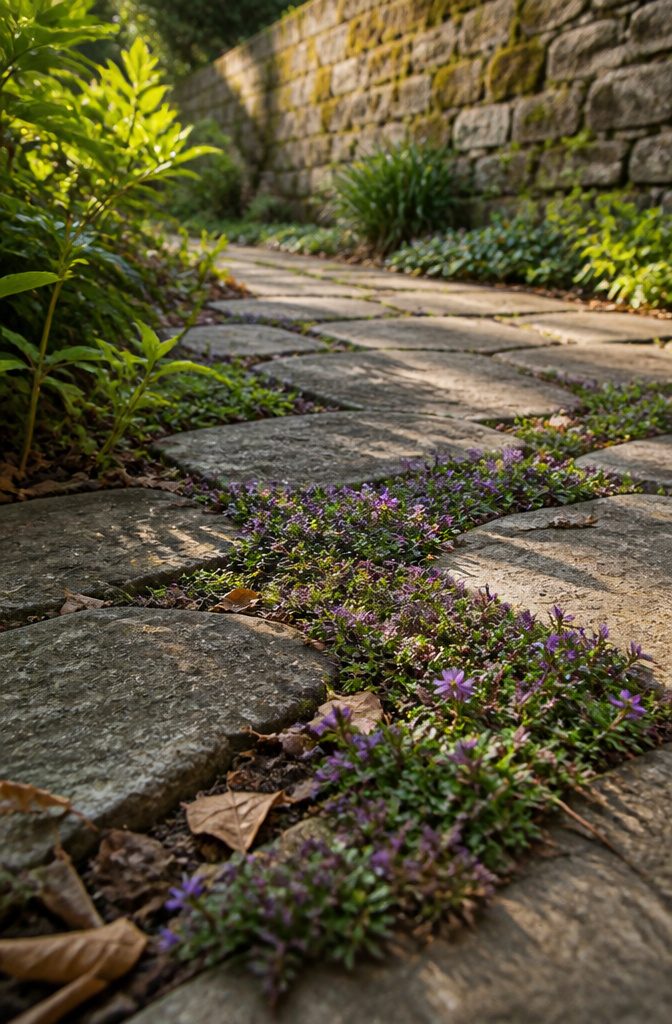
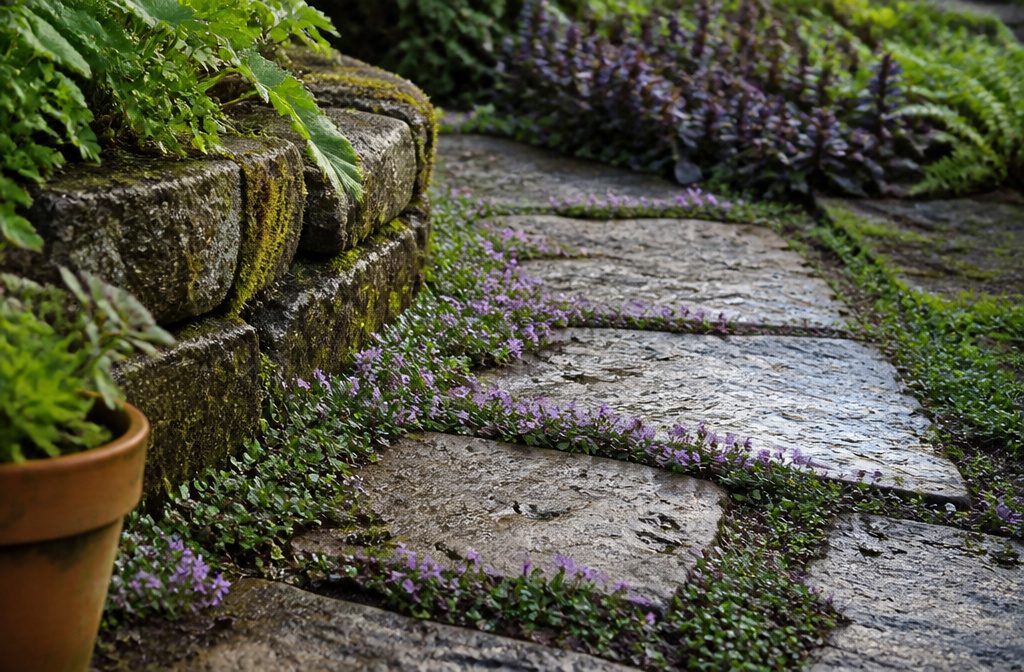
For stepping-stone paths, creeping thyme wins. It is forgiving of both pet and human traffic, and over time it fills the gaps between stones completely, leaving a soft, colorful edge along the walkway.
Blue Star Creeper is a good second choice, since it forms a 3-inch mat you can walk on. Check traffic tolerance before you buy anything else for a path, because not every groundcover handles footsteps.
For rock gardens and stone walls, choose sedum.
It is drought-friendly and needs little supplemental water, which suits a wall that drains fast and dries out. Sedum grows slowly and can take several seasons to fill in, so expect bare patches at first.
Recommended Products

UNIQUE OUTDOOR WALKWAY SOLUTION: Elevate your garden, lawn, or backyard with BIRDROCK HOME Rubber Stepping Stones. These durable pavers create a functional and stylish walkway, enhancing your landscape while providing a solid and reliable surface to walk on.

Vintage Charm: Natural gray finish features subtle color variation that replicates the look of weathered stone, adding visual texture to gardens, pathways, and outdoor spaces

DURABLE CEMENT CONSTRUCTION: Built to last through the seasons! Unlike flimsy plastic or resin alternatives, our outdoor stepping stones are crafted from high-quality cement. This ensures exceptional strength and weather resistance, providing a stable and permanent walkway through your garden, yard, or lawn for years to come.
A No-Mow Lawn
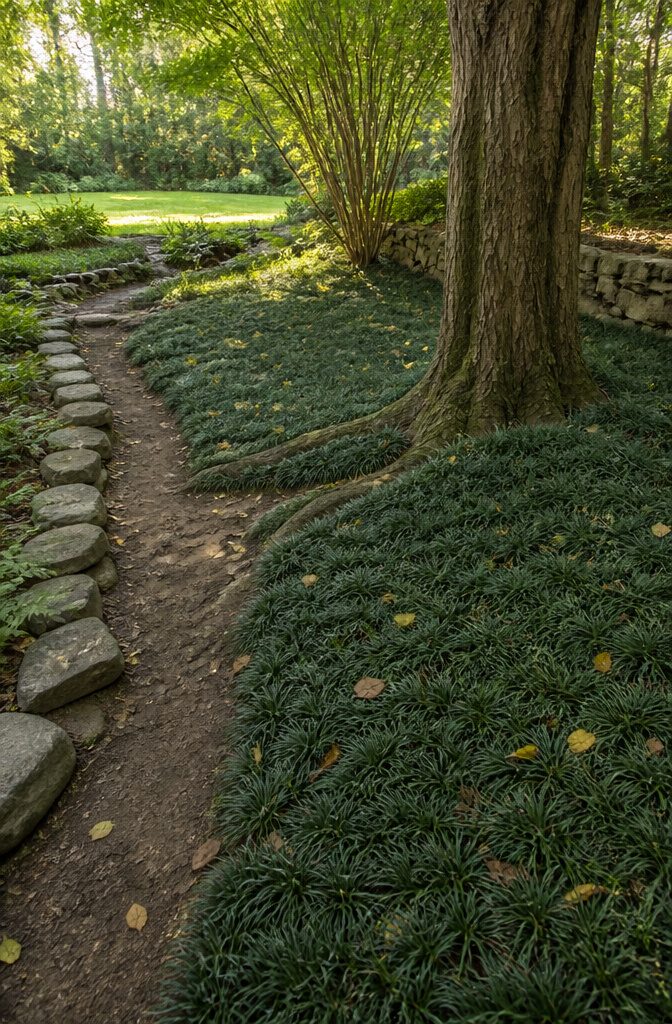
Perennial ground cover cuts mowing and needs few inputs once it fills in. Match the plant to the spot:
- Dwarf mondo grass is the closest thing to a no-mow turf substitute. It stays 2–3 inches tall, holds up to foot traffic, and stays evergreen in sun or shade.
- Steep, sunny slopes suit daylilies, creeping phlox, lamb’s ears, stonecrop, ornamental grasses, creeping juniper, fragrant sumac, bearberry, and Russian arborvitae.
- Shade under trees and shrubs suits lamium, which grows where grass struggles. Ajuga also works but spreads fast, so keep it in one area.
- Sedum handles extremely sunny, hard-to-reach corners with little supplemental water.
- For a lawn look, shop for plants under 6 inches tall.
Recommended Products

When received, the plant will be in seasonal condition with appropriate foliage. If shipped between November 1st and March 1st, the plant may be dormant and trimmed. Plant is fully rooted in the pot ready for immediate planting
PLEASE DO NOT ORDER IF YOU LIVE IN ONE OF THESE USDA RESTRICTED STATES: AK, AZ, CA, CO, ID, MT, NV, OR, UT, WA AND HI. Hardy in USDA zones 5-9.
Living Mulch for Weeds
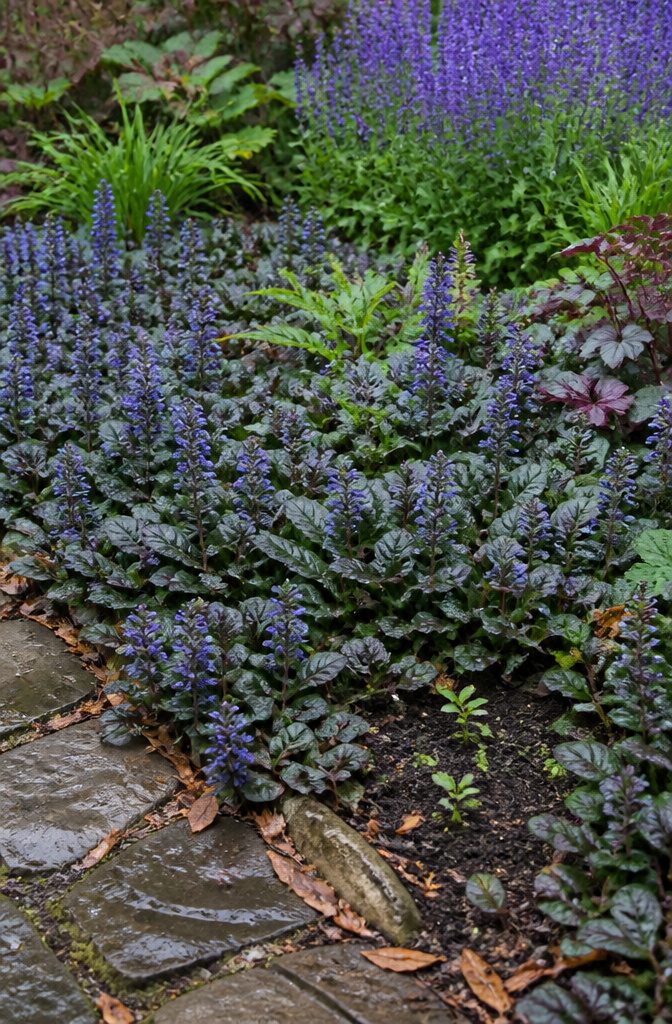
Bare soil between flowering perennials is where weeds get started, so fill it with a low cover. Lamium, Ajuga, and Lily of the Valley all block weeds well.
Tuck them in between the perennials and they crowd out seedlings with dense low growth while adding color and leaf texture. Lily of the Valley reaches up to 12 inches and spreads quickly and aggressively, so give it room.
Weeds can still show up before the plants fill in, so plan on hand-pulling through the first season.
Short herbaceous covers also let more weeds through than shrubs do, because shrubs shade more of the soil. Ajuga spreads quickly, while sedum fills in slowly, so expect a longer weeding stretch with sedum.
Recommended Products

Low-Maintenance Grass Seed Mix: Grows up to 12 inches, then naturally flops to about 6 inches for a manageable, no mow grass seed
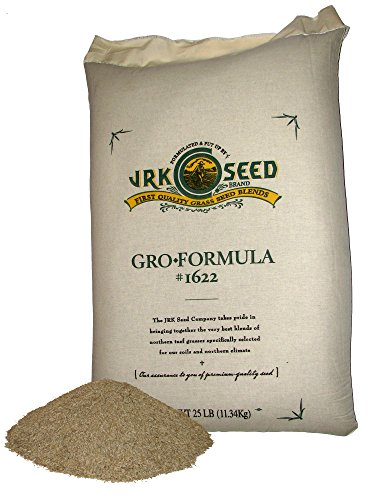
Great mix for sandy soils, ground cover, and no maintenance
Match Plants to Site Conditions
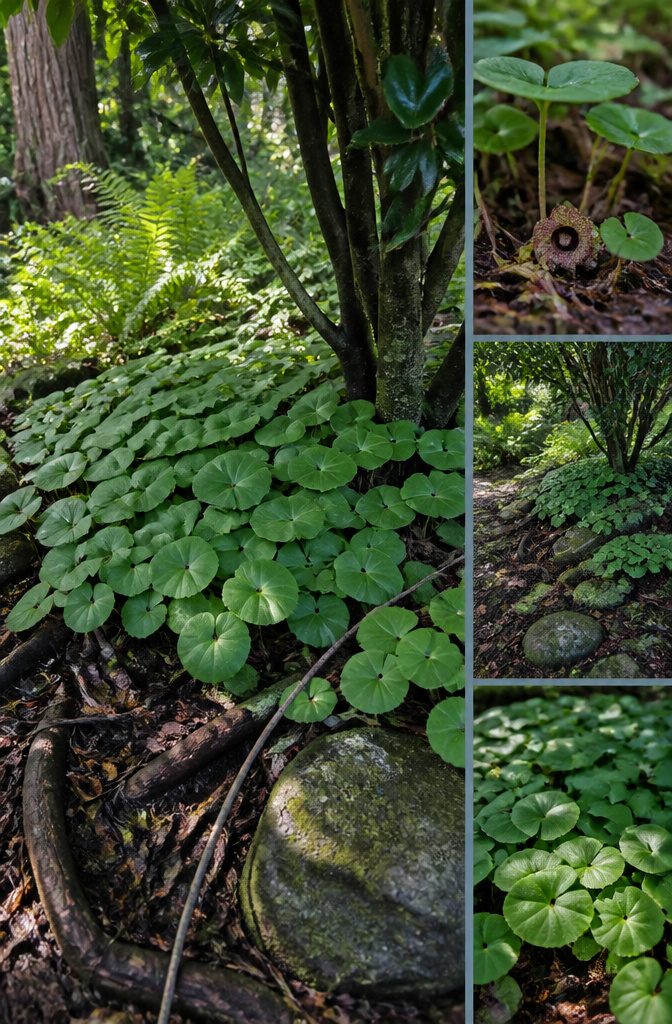
A perennial ground cover stays 12 inches tall or less, spreads densely, and returns every year. Match it to the site:
- Steep, sunny slopes: daylilies, creeping phlox, lamb’s ears, stonecrop.
- Lily-of-the-Valley: up to 12 inches, blooms March through April.
- Wild ginger: 6–10 inches, partial shade, moist soil; not edible for humans.
- Snow-on-the-Mountain: about 10 inches; can brown if dehydrated.
- Jack Frost: about 10 inches.
- Yellow Archangel ‘Hermann’s Pride’: about 12 inches wide and tall.
Spreading habit matters too:
Be wary of plants that propagate by suckers, stolons, or rhizomes. These perennials often spread quickly outside of their intended borders.
Check how a plant spreads before you buy it.
Control the Spread
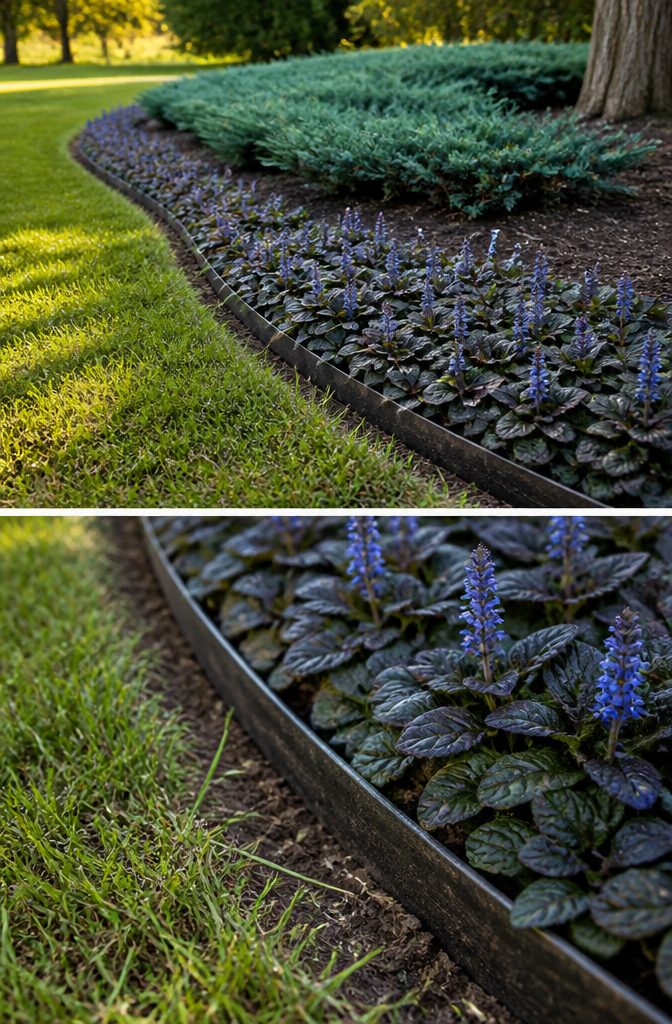
Ground covers fill space in two ways: a dense mat of stems, or suckers, stolons, and rhizomes that run underground or along the surface.
Check which one a plant uses before you buy it. Runners carry a plant past the border you drew and into neighboring beds, lawn, and woodland edges, and some verge on invasive.
Ajuga is the common example. If it sits near turf, put a deep edging or mowing strip between them, or it will take over the lawn.
Leave room for mature size, too. A Blue Rug juniper spreads 4–6 feet, so one small nursery pot needs a patch that wide.
Until plants root in, water through dry spells and pull weeds by hand, because bare soil between young plants is open ground for weeds.
Recommended Products

Hardy in USDA zones 4-8. Due to varying agricultural regulations, we do not ship to the following states: AK, AZ, CA, CO, ID, MT, NV, OR, UT, WA and HI.

🌸 BEAUTIFUL FALL BLOOMS Sedum produces stunning clusters of rosy pink flowers that bloom in late summer through fall, adding vibrant seasonal color to garden beds, borders, and pollinator landscapes.
🌸 BEAUTIFUL FALL BLOOMS Sedum produces stunning clusters of rosy pink flowers that bloom in late summer through fall, adding vibrant seasonal color to garden beds, borders, and pollinator landscapes.
Erosion Control
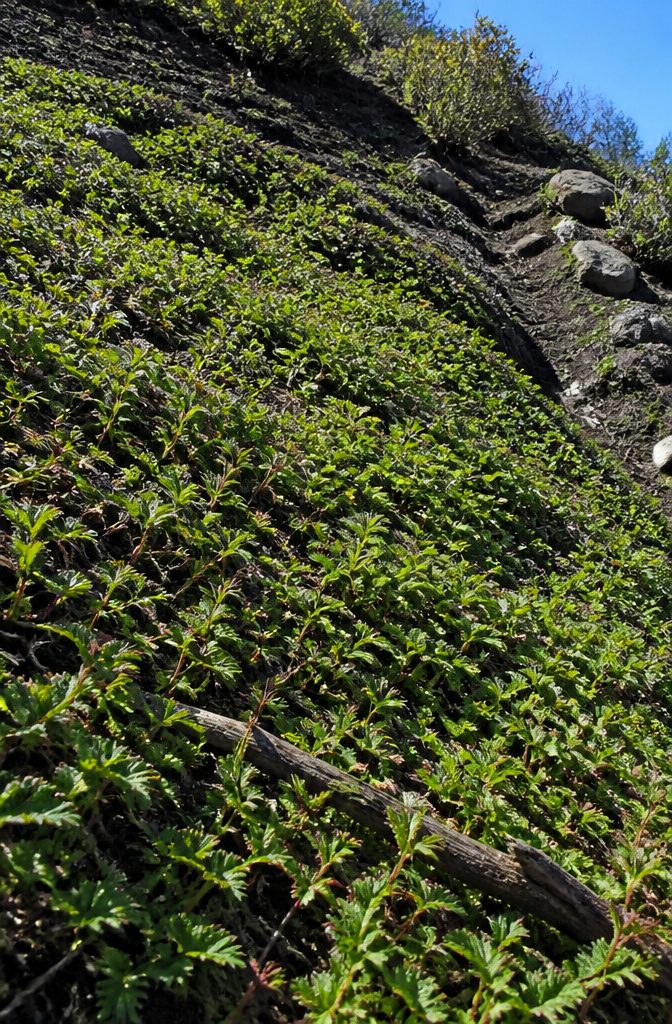
Bare soil on a slope washes and blows away, and a dense mat of foliage and roots holds it in place.
Ground cover shields the surface from wind and rain, and its roots fill the soil so invasive seedlings have less room to get started. Slopes are the hardest test because their soil is already unstable.
If you were about to plant English ivy, Creeping Raspberry is the better erosion-control choice. It binds soil and stays only 2–4 inches tall.
On a steep, sunny slope, woody plants like creeping juniper and bearberry work well. Dwarf Japanese Juniper spreads 4–6 feet wide into a mat 6–12 inches tall, so a few plants cover a lot of hillside once they fill in.
Recommended Products

Stepping Stone - Spoontiques’ stepping stones and decorative plaques are a lovely way to brighten up your indoor or outdoor space.

Maple Leaf stepping stone from Sunset Vista

【Handcrafted from Real Cement – Built to Last a Lifetime】Unlike resin or plastic alternatives, each Daisy Stepping Stone is made from real artisan cement, hand-mixed with the strongest ratio for extra hardness and durability. Each piece naturally strengthens over time, just like stone.
Frequently Asked Questions
What is a perennial ground cover?
A perennial ground cover is a plant that stays 12 inches tall or less, spreads densely across the soil, and returns every year.
The thick growth fills empty spots, shields soil from wind and erosion, shades the ground to hold moisture, and leaves less room for weeds and invasive seedlings.
What perennial ground cover can I plant on a sunny slope that is hard to mow?
Daylilies, creeping phlox, lamb’s ears, stonecrop, and ornamental grasses all suit steep, sunny slopes.
Woody choices include creeping juniper, fragrant sumac, bearberry, and Russian arborvitae. Shrubs shade the soil better than short herbaceous plants, so they let fewer weeds through while the planting fills in.
What are some good evergreen perennial ground cover plants?
Dwarf mondo grass is a strong pick: it stays 2–3 inches tall, handles foot traffic, and stays evergreen in sun or shade. Pachysandra (spurge) and English ivy are the typical evergreen covers.
For erosion control, Creeping Raspberry (2–4 inches tall) is a better choice than ivy. For other sites, creeping thyme suits stepping-stone gaps and lamium suits shade under trees.
What are creeping plants?
Creeping plants are ground covers that spread by runners, meaning suckers, stolons, or rhizomes that travel along the surface or underground.
They cover space quickly but can move past the border you planned and into beds, lawn, and woodland edges. Ajuga is a common example, so put a deep edging or mowing strip between it and any turf.