Styles run from a strip of creeping thyme along a path to a 246-foot perennial planting, and your site decides which fits.
Sun hours matter, but soil is the one thing a plant can’t adapt to: sandy ground suits succulents, damp ground suits hostas, and acidic ground suits azaleas.
1. Pathway Beds
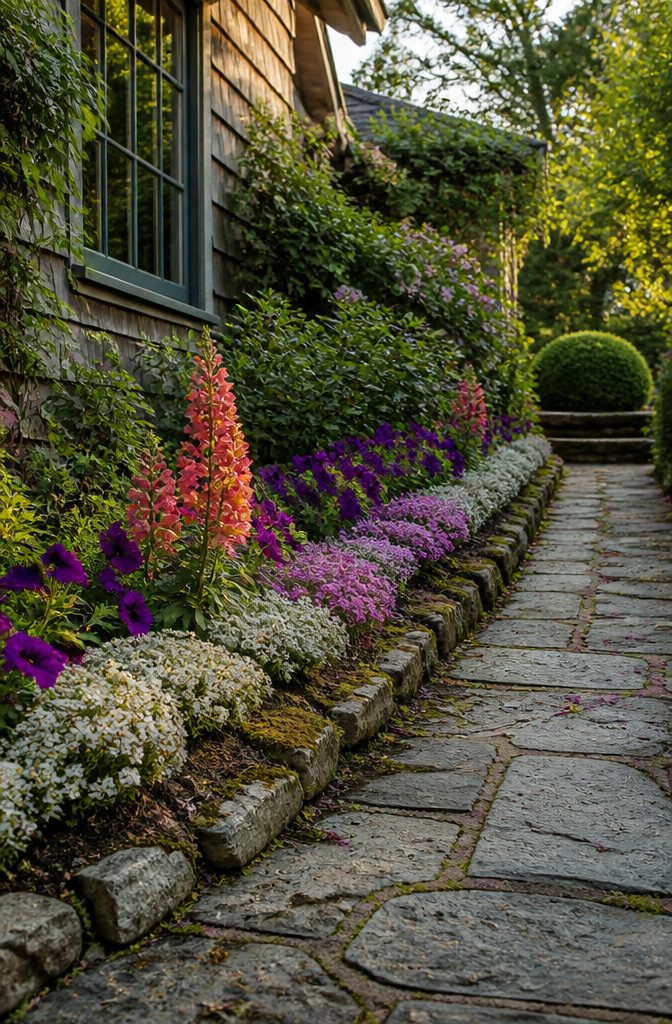
Beds along a walkway add color and show where the path runs. Put alyssum, creeping thyme and coral bells at the path edge, where their low growth stays off your footing.
Creeping thyme also adds fragrance as you brush past. Snapdragons suit a bed set back from the path, and petunias work in either spot.
Homes & Gardens makes the case for adding height behind that low front row:
Flower beds can make exceptional dividers for a garden path. This is especially the case when you bring tall, architectural plants into the mix.
On a short walkway, a low edge with one taller plant behind it is enough to mark the boundary.
Recommended Products

🌱 10000+ Lemon Thyme Seeds for Planting Includes 10000+ lemon thyme seeds for planting, ideal for herb gardens, borders, containers, and outdoor landscaping projects with long-lasting aromatic foliage.

62,000+ Seeds for Larger Areas: This generous pack of red creeping thyme seeds provides plenty for larger planting areas, multiple garden spaces, and reseeding

LOW-GROWING CREEPING THYME GROUND COVER: Purple Creeping Thyme creates a dense, low-growing ground cover with attractive foliage and seasonal blooms. Suitable for garden borders, pathways, landscape beds, and other decorative outdoor planting areas.
2. Formal Beds and Focal Points
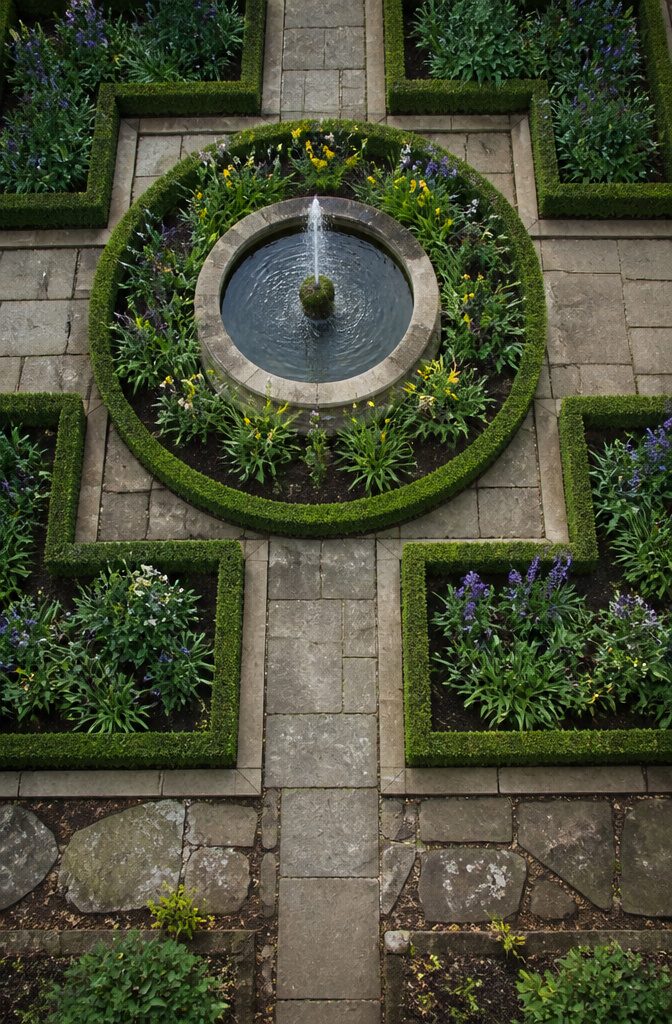
Formal beds rely on structure. Rectangular beds edged in flagstones, brick or timber, in natural finishes, suit almost any planting.
Crisply cut box hedges can hold a loose mix of perennials inside a tidy outline. Pick one edging material and repeat it along a straight path so the layout reads as a single plan.
Give the design a hub: a circular fountain ringed with perennials, topiary figures, a statue, a sphere or a birdbath.
Raise ornaments on a plinth so they stand above the plants rather than disappear into them, and keep the feature in proportion, large enough to draw the eye but not so large it overwhelms the beds.
Around a fountain, daylilies, columbine and irises all work well.
Recommended Products

Perfect for cut flower arrangements: These flowers are perfect for cut flower arrangements

Attract Pollinators: The fragrant blooms of Daffodil Fragrant Mix are irresistible to pollinators like bees and butterflies, providing them with nourishment while enhancing the biodiversity of the garden.

When received, the plant will be in seasonal condition with appropriate foliage. If shipped between November 1st and March 1st, the plant may be dormant and trimmed. Plant is fully rooted in the pot ready for immediate planting
3. Tall and Architectural Plants
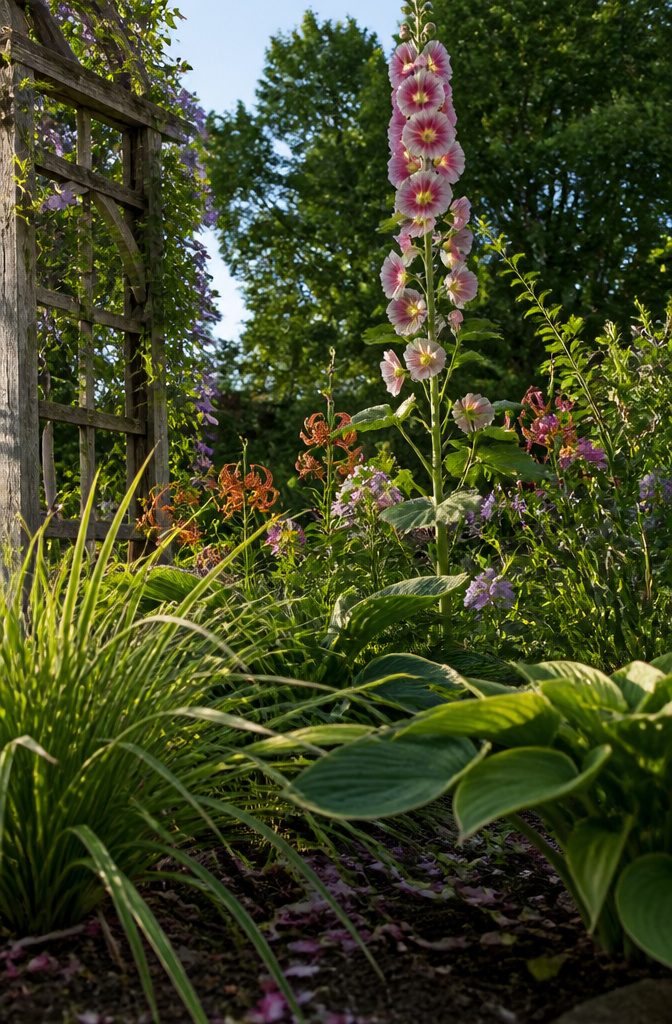
Hollyhocks, sunflowers and boxwood give a larger bed a focal point and a frame.
For structure that lasts all year, hardy evergreen exotics such as palms, bamboo and Musa basjoo are the main players. Big-leaved rodgersia and rheum, and bold-flowered kniphofia and allium, work the same way, as do topiary pyramids, spirals and spheres.
Grasses look messy grouped together, so plant them inside a mixed border. Their foliage contrasts with the broad leaves of hostas and the bright color of tiger lilies and phloxes.
For height on a wall, train clematis, red trumpet vine or wisteria up a trellis, fence or pergola. Choose varieties that bloom through the season, and check that they return in your climate.
4. Perennial Beds
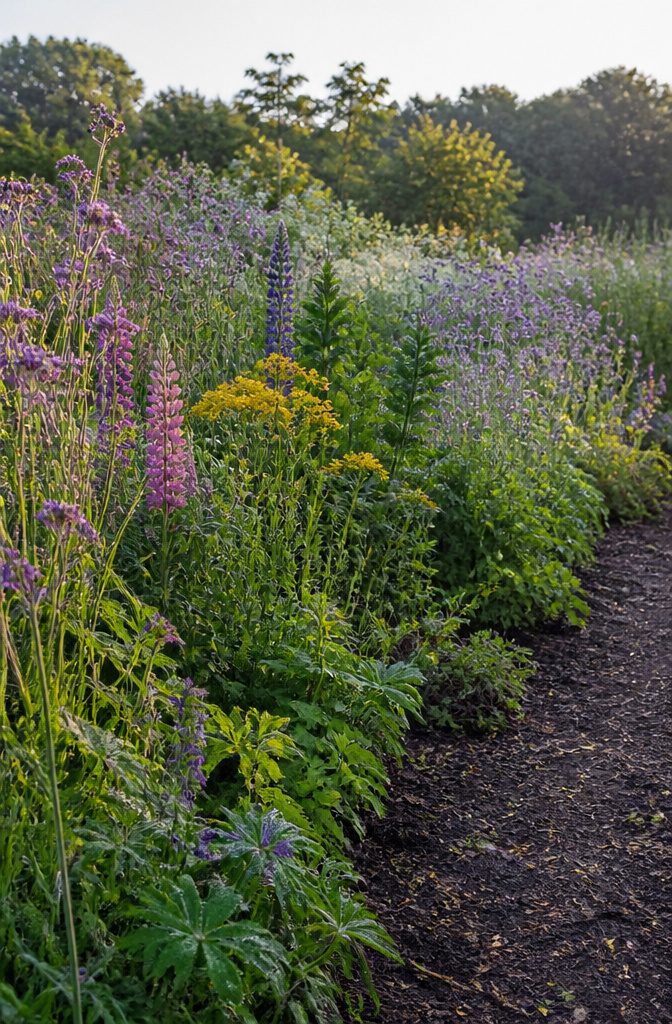
A perennial bed comes back on its own each year, so after the first planting your work is mostly editing.
Scale is no obstacle: one planting runs 246 feet and holds lupins, inula, campanula and meadowsweet, and as each takes its turn the bed keeps its color and structure through the seasons.
Yours can follow the same logic in a fraction of the space. Build around hellebores, then set see-through Verbena bonariensis toward the front, where it lets your eye pass through to the plants behind instead of blocking them.
Filling the bed costs very little.
Collect seed from perennials you already grow, and divide established clumps into new plants. Swapping divisions with neighbors adds variety for nothing.
Recommended Products
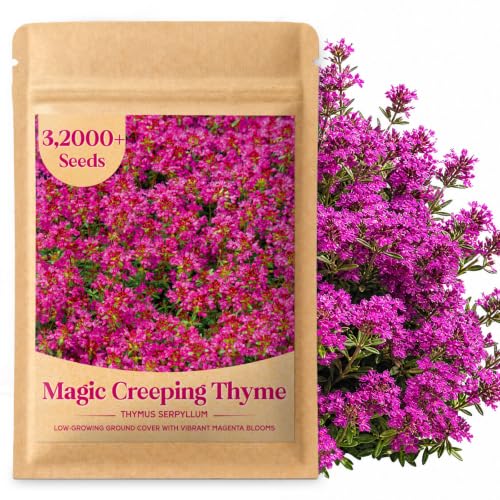
32000+ Seeds For Large Planting Areas: Over 32,000 Magic Creeping Thyme seeds provide generous coverage for pathways, garden borders, rock gardens, slopes and landscape projects. A great choice for creating a fuller planting area with a single packet


LIVE PLANTS: Each plug is a healthy, rooted creeping thyme plant ready to establish quickly in your garden or landscape.
5. Cottage Gardens
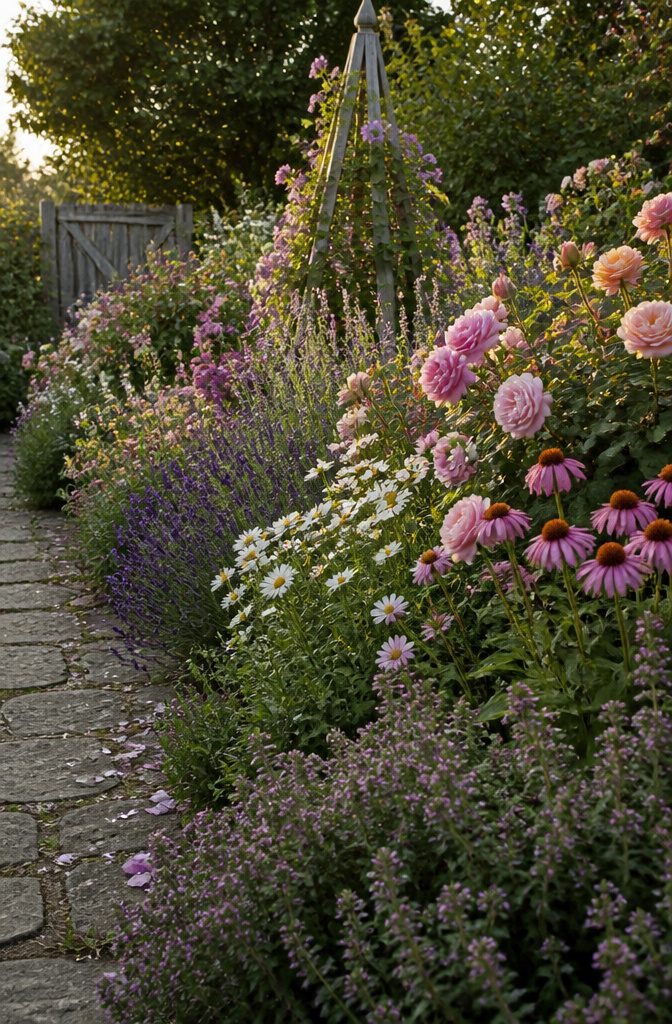
A cottage bed works by crowding. Annuals, perennials and herbs go in close enough that little soil shows and no single plant owns the view.
Roses and daisies carry the flowers, while basil and thyme fill the gaps and the front edge. Thyme stays low and softens the border where the bed meets a path or lawn.
Two pairings are easy to get right: roses with lavender, and daisies with coneflowers. Each puts a familiar bloom next to a different shape, so the bed looks loose without looking random.
For height, set an obelisk in the middle and train clematis, roses or sweet peas up it. Steel disappears behind the foliage, and wood adds warmth.
Recommended Products
Perfect for cut flower arrangements: These flowers are perfect for cut flower arrangements
Attract Pollinators: The fragrant blooms of Daffodil Fragrant Mix are irresistible to pollinators like bees and butterflies, providing them with nourishment while enhancing the biodiversity of the garden.
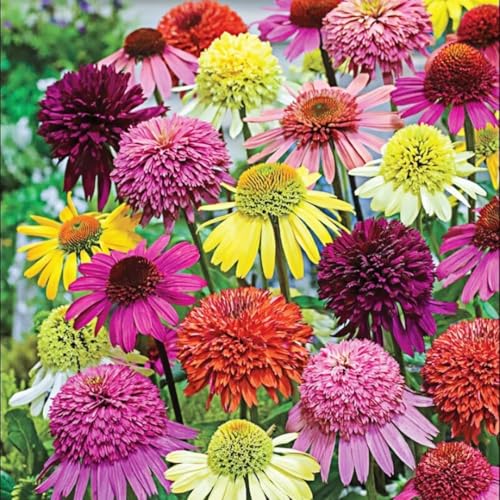
PACKAGE CONTENTS: 300+ Double Echinacea seeds perfect for creating a vibrant flower garden with stunning double-petaled coneflowers
6. Edible and Ornamental Beds
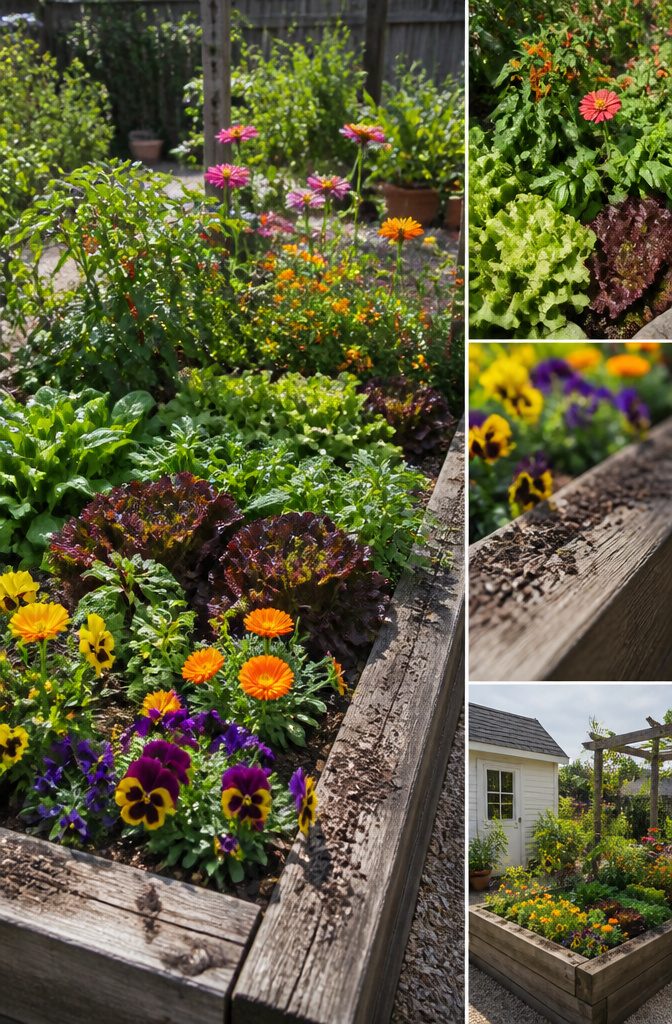
Lettuce, peppers and herbs grow well between zinnias, cosmos and marigolds, so one bed gives you cut flowers and dinner ingredients, and it trims the grocery bill. Fruit fits the same borders if you choose compact varieties.
Blackcurrant suits small spaces, Goji berry adds bright scarlet color, and ‘All Gold’ raspberry carries amber-gold fruit that looks as good as any ornamental. Raised beds let you tend all of it without stepping on the soil.
For the front edge, plant pansies, violas and calendula. Their flowers are edible, so you can pick them as colorful garnishes for salads and plates.
Recommended Products

HOME DECOR ACCENT: A beautiful lifelike plant that is the perfect accent for any room or space, allowing for year-round greenery. Elegantly greet guests with this triple boxwood topiary. Three perfectly trimmed boxwood balls sit in synergy and are made of realistic-looking boxwood foliage. You can now enjoy the sophistication of the boxwood without maintenance or care. Standing 3' from a black nursery planter (included in height), curate in compact spaces.


Lifelike Beauty & Zero Maintenance:Featuring ultra-realistic cedar foliage with natural color variations and textured branches, these outdoor artificial topiary christmas trees bring year-round greenery to your home or patio without pruning, watering or sunlight—perfect for busy lifestyles.
7. Raised and Container Beds
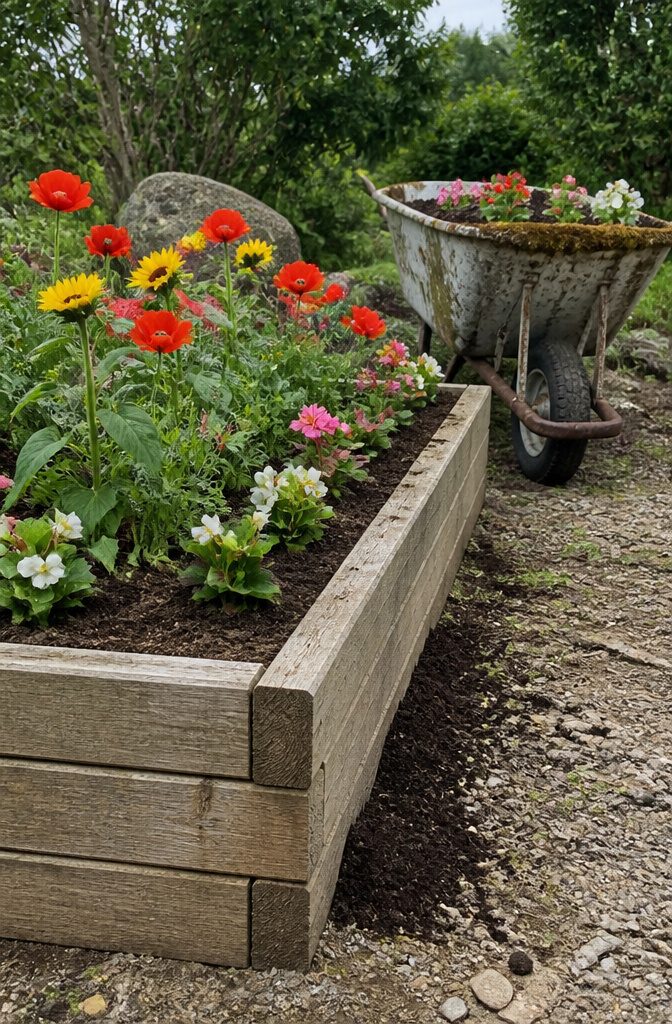
On uneven ground, a raised bed gives you a level planting surface that drains well.
It also brings the soil up to a height that spares your back during weeding and deadheading. Poppies, begonias and sunflowers are the best flowers to start with, and you can change what you plant with each season.
Old watering cans, bathtubs and wheelbarrows work as planters and cost little if you already have them. Punch drainage holes in the bottom of any that lack them.
Fill each one with a mix of garden soil, compost and peat moss, blended before it goes in. Mixing in the wheelbarrow itself saves you a bucket.
Recommended Products

🌼 Brilliant Golden Blooms – Produces masses of vibrant yellow flowers that create a stunning carpet of color in spring and early summer.

BRIGHT & COLORFUL BLOOMS ALL SEASON – Our moss rose seeds for planting outdoors (Portulaca grandiflora) produce vibrant blooms in a variety of colors, including red, pink, orange, yellow, white, and purple. As annual flower seeds, they add a brilliant touch to gardens, containers, and rock beds. Blooming from summer to fall, these flowers seeds for planting outdoors create a continuous display that’s ideal for transforming any outdoor space into a colorful paradise.

High Germination Ease: Sow aubrieta cascade purple aubrieta deltoidea seeds in 60–65°F soil. Aubrieta rockcress sprouts in 10–14 days, ideal as flower seeds for airy borders, walls, rock gardens.
8. Shade Gardens
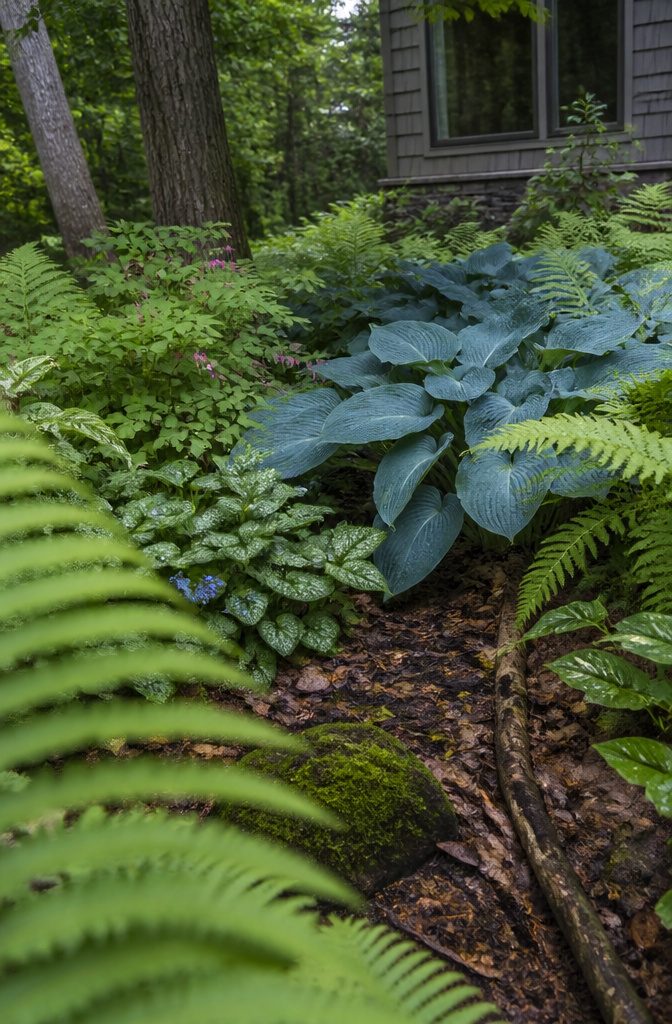
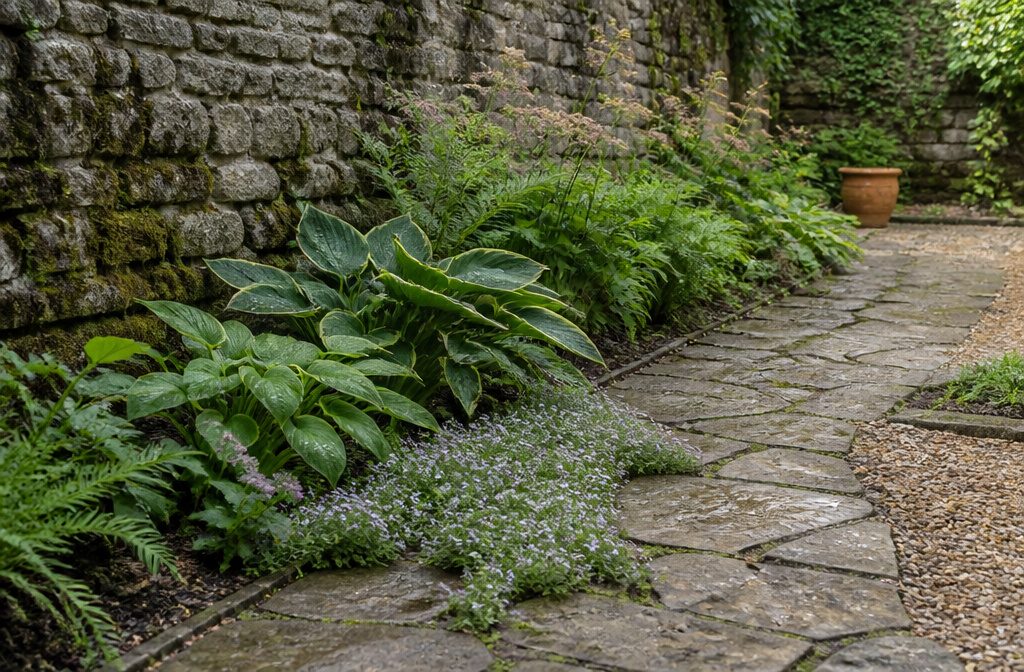
Beds under tree cover or along the shadier side of the house suit a woodland mix. Use ferns, hostas and bleeding hearts as ground cover, then add toad lilies, lungwort and brunnera, all of which handle shade without needing sun.
Hostas anchor the bed. Their lush, sculptural leaves add depth and drama where little else will.
They also attract slugs, though slugs don’t go after every variety. If damaged leaves have put you off hostas, choose ‘Halcyon’ or ‘Hadspen Blue’.
Both are popular, and their bluish leaves are among the most dependably slug-resistant. Plant one or two where you can see them from a window, and let ferns fill the gaps around them.
Recommended Products
Attract Pollinators: The fragrant blooms of Daffodil Fragrant Mix are irresistible to pollinators like bees and butterflies, providing them with nourishment while enhancing the biodiversity of the garden.

🌿 Popular Stained Glass Hosta Variety Features stunning chartreuse gold centers with deep green margins that create a glowing “stained glass” effect in shaded gardens.
When received, the plant will be in seasonal condition with appropriate foliage. If shipped between November 1st and March 1st, the plant may be dormant and trimmed. Plant is fully rooted in the pot ready for immediate planting
9. Succulent and Rock Gardens
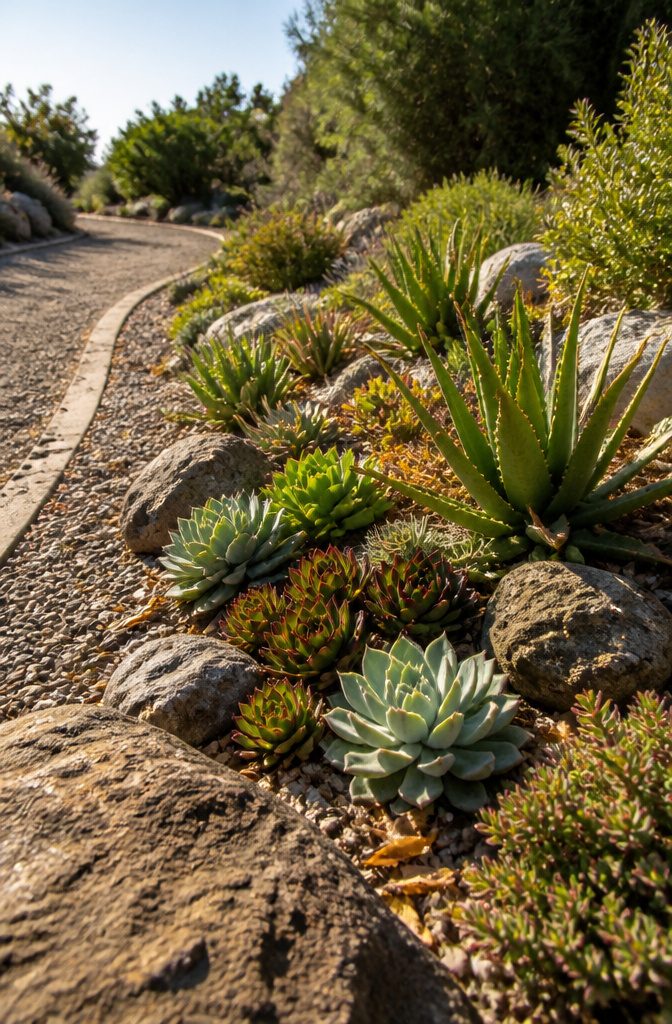
Succulents suit sandy, fast-draining soil, so a dry bed is the place to combine echeveria, sempervivum and aloe vera and let their different textures, colors and shapes do the work.
Plant them back from the edge of any path, because some have sharp spikes that scratch anyone walking past.
For a rock garden, set the stones first, then tuck sedums and ornamental grasses into the gaps between them.
If you want flowers, leave pockets of soil where you’d like color and put seasonal blooms there. Gravel or mulch beds follow the same logic: cover the ground, then break it up with drought-tolerant plants or a few seasonal flowers.
All three styles cut watering and upkeep, which makes them the best pick for a hot, sunny strip you rarely have time to tend.
Recommended Products

Each with approx. 1221 leaves, Grower Pot approx 7" W, 5" H

Heavy-Duty Metal Trellis for Climbing Plants: Our 4 round trellis obelisk is crafted from 2mm thickened rust-resistant metal with a black powder-coated finish. Built to withstand all-season outdoor weather without rusting or warping while supporting vigorous climbers like clematis, jasmine, and climbing roses

Lifelike Fake Plants - This 2-pack of artificial plants indoor is perfect for your garden or patio and will fit in with natural surroundings. Each leaf is made by hand so they look more natural and are arranged to look like a real cedar plant.
10. Color-Themed Beds
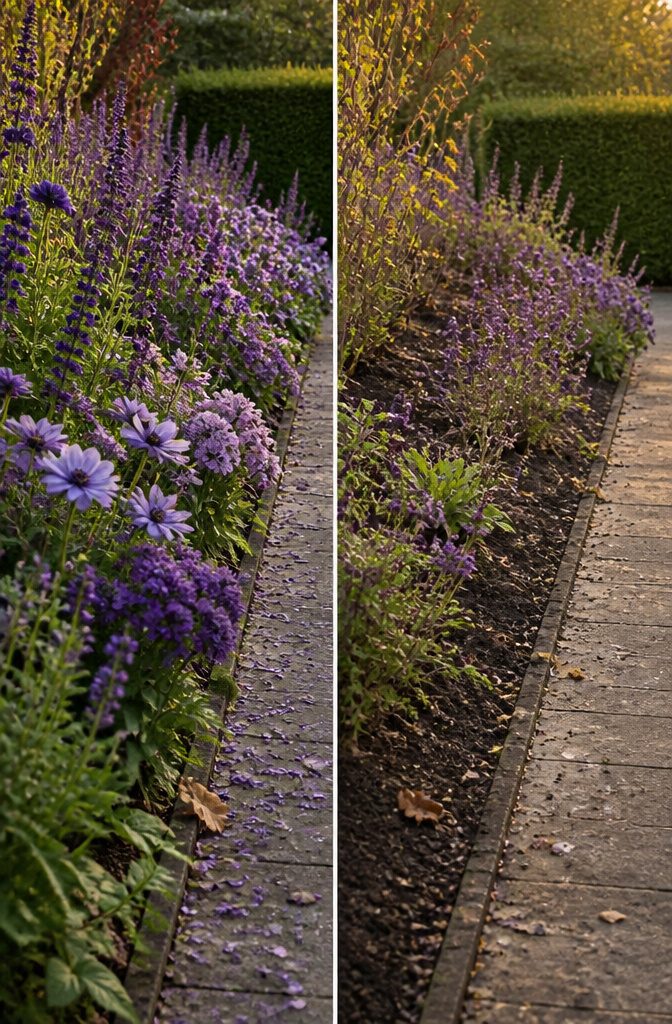
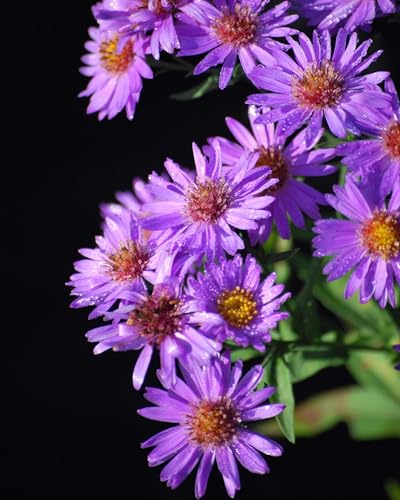
Warm beds built on reds, oranges and yellows look bold from the street, and black-eyed susans, butterfly weed and chrysanthemums make a good core. Cooler beds of blues, purples and lavenders, with anemones, asters and bugloss, look calmer.
For the most unified look, pick one hue and stay inside it, and vary the plants instead of the color. Different flower shapes and leaf types keep a single-color bed from going flat.
Plan the bed in three shifts so color doesn’t stop after one season.
Tulips and daffodils open spring. Zinnias, impatiens and border dahlias take over in summer.
Marigolds and lantanas carry autumn and match the turning leaves around you. That sequence beats a single planting that peaks once.
Recommended Products

PLANT TYPE: Creeping Thyme is a low-growing, spreading perennial herb known for its dense mat-forming growth habit. COMES IN A 3.5" POT: Each plant arrives in a 3.5-inch pot,...
11. Pollinator Beds
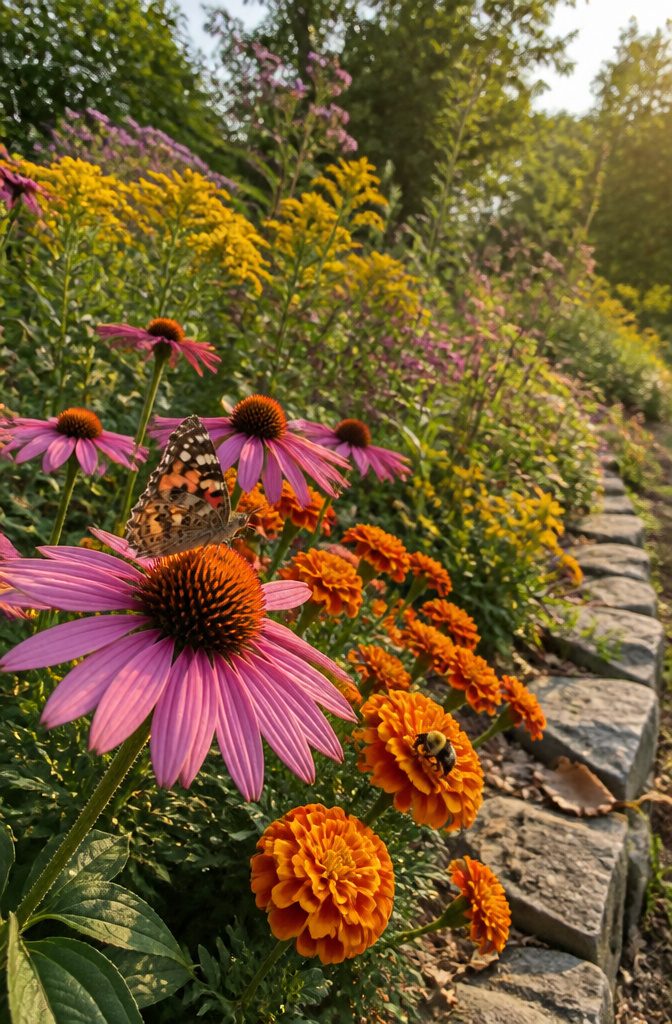
Butterflies and bees both come to a bed for nectar, so the plant list matters more than the layout.
For butterflies, plant butterfly bush, milkweed, and coneflowers. They give the insects a place to feed, which helps them through their long seasonal migrations.
For bees, plant goldenrod, bee balm, black-eyed Susans, and marigolds. Bees are under pressure from industrial pesticide use, so keep sprays out of this bed.
Coneflowers and marigolds work for both butterflies and bees, which makes them the best picks if you have room for only a few plants. Beyond that, choose colors by what you most want to see from your window.
12. Sensory and Moonlight Beds
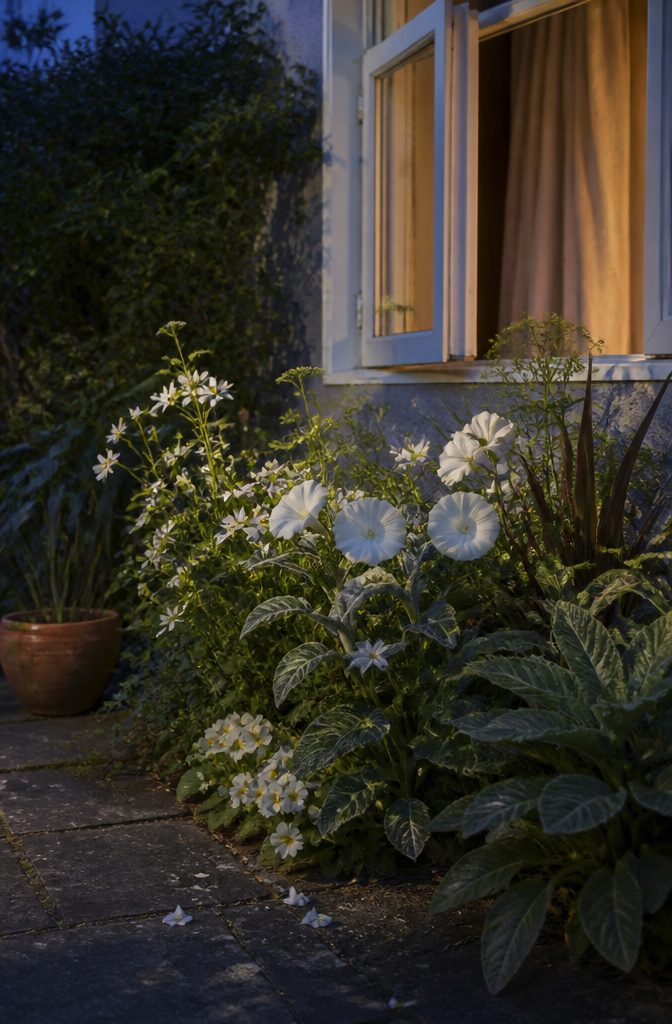
A sensory bed engages all five senses, and it matters most for people with sensory impairments.
Old-fashioned scented plants like lily of the valley can stir memory in older people and those with dementia. Edible plants draw children into touching and tasting.
Rustling leaves and varied textures let sight-impaired visitors read the garden by hand and ear. Color is your call: a bright palette works, and so does white flowers only.
White also makes the best moonlight bed.
Moonflowers, nicotiana and primroses release their fragrance after dusk, so site them beside the patio or a window you open in the evening. That puts the scent where you gather once the sun goes down.
Choosing Plants for Your Site
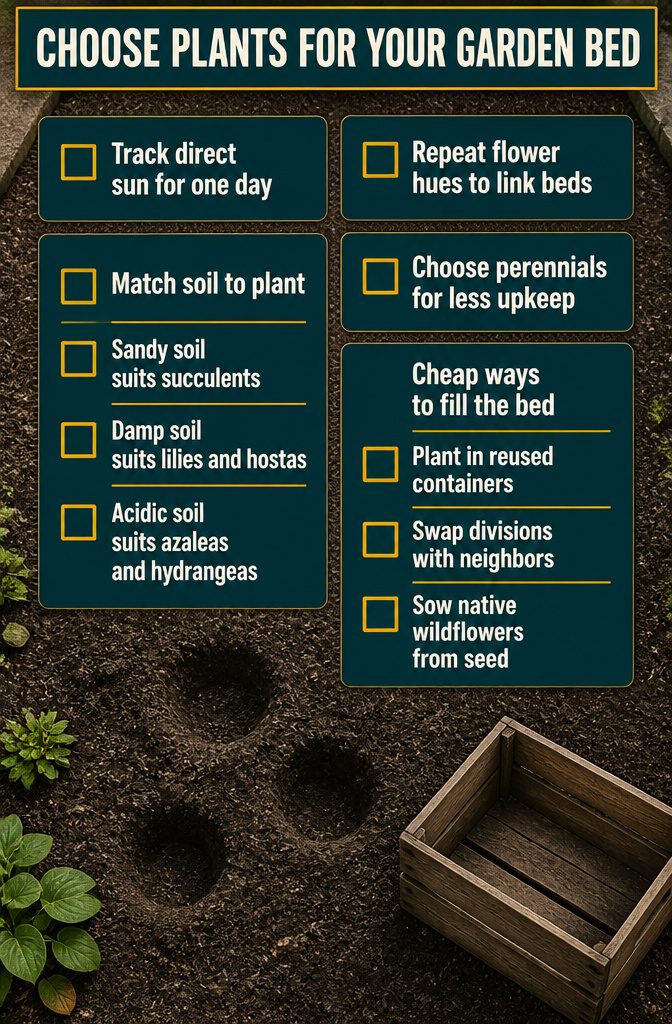
Match the plant to the bed you already have, because soil is the one thing a plant can’t adapt to.
- Sun: Watch the bed through one full day and note the hours of direct light before you shop. Then check plant tags against that.
- Soil: Sandy soil suits succulents. Damp soil suits lilies, hostas and astilbes. Acidic soil suits rhododendrons, azaleas and hydrangeas.
- Color: Pick hues you like. Many flowers come in several colors, so repeating one flower in different shades ties separate beds together.
- Upkeep: Daylilies, marigolds and roses suit a gardener who likes regular tending. For less work, choose perennials or succulents.
Cheap ways to fill the bed:
- Plant in reused containers, such as old buckets or crates with drainage holes added.
- Swap divisions with neighbors. Perennials like hostas and daylilies split easily.
- Sow native wildflowers from seed.
Layering by Height
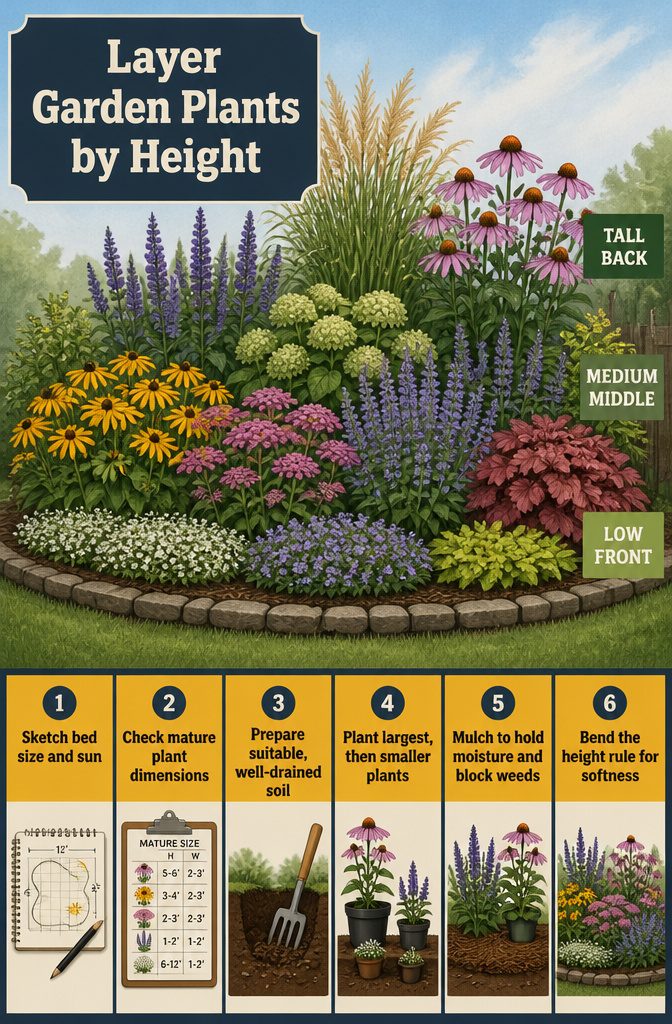
Taller plants go at the back, shorter ones in the middle, and low edging plants at the front. Bend that rule if you want a softer, more natural look.
- Sketch the bed on paper or in a gardening app. Mark its size, shape, and sun exposure.
- Look up each plant’s mature height, width, and light needs. Place it by those numbers, not by the size of the nursery pot.
- Prepare the soil so it drains well and suits the plants you chose.
- Plant the largest plants first, then fill in the middle and the edge.
- Spread mulch around the plants to hold moisture, suppress weeds, and even out soil temperature.
Picture the bed at full size before you plant. Gaps that look too wide on planting day will fill in, and overcrowded plants end up fighting for light.
Contrast and Foliage Texture
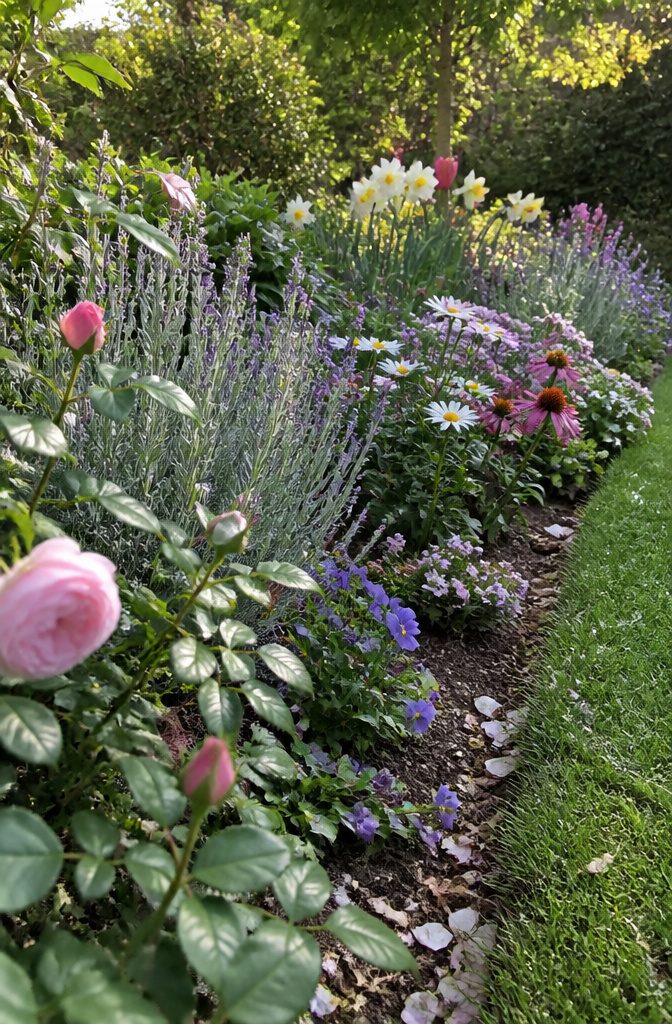
Contrast works best when the leaves differ as well as the flowers.
Roses and lavender are a classic pairing partly for this reason: the rose carries broad leaves and big blooms, while lavender adds narrow, silvery stems that still look good when nothing is flowering.
Daisies and coneflowers do the opposite, repeating a flat, open flower face so the bed reads as calm instead of busy.
To keep the bed going for months, stagger the stars.
Tulips and daffodils open first, zinnias, impatiens, or border dahlias take over in summer, and marigolds and lantanas carry fall. Plant the summer annuals in front of the bulbs so their growth covers the fading bulb foliage.
Frequently Asked Questions
What should I put in a flower bed?
Match the plants to your site first.
Watch the bed for one full day to count the hours of direct sun, then check plant tags against that. Sandy soil suits succulents, damp soil suits lilies, hostas and astilbes, and acidic soil suits rhododendrons, azaleas and hydrangeas.
After that, choose colors you like and a level of upkeep you’ll keep up with: daylilies, marigolds and roses for regular tending, perennials or succulents for less work.
How do you lay out a flower bed?
Sketch the bed on paper or in a gardening app, marking its size, shape and sun exposure, and place each plant by its mature height, width and light needs.
Work in layers, with taller plants at the back and low edging plants at the front.
Prepare soil that drains well, plant the largest plants first, fill in the middle and edge, then add mulch to hold moisture, suppress weeds and even out soil temperature.
How do you make a flower bed look nice?
Combine plants that differ in height, structure, tone and bloom season, so the bed has depth and something is flowering for months.
Keep taller plants toward the back, but don’t follow that rule too rigidly if you want a softer, more natural look. Contrasting leaves help too, such as broad rose foliage beside narrow, silvery lavender stems.
What is a cheap flower bed idea?
Plant in reused containers such as old buckets, crates, watering cans or wheelbarrows, adding drainage holes where they’re missing.
You can also divide perennials like hostas and daylilies and swap the divisions with neighbors. Sowing native wildflowers from seed is another low-cost way to fill a bed.