
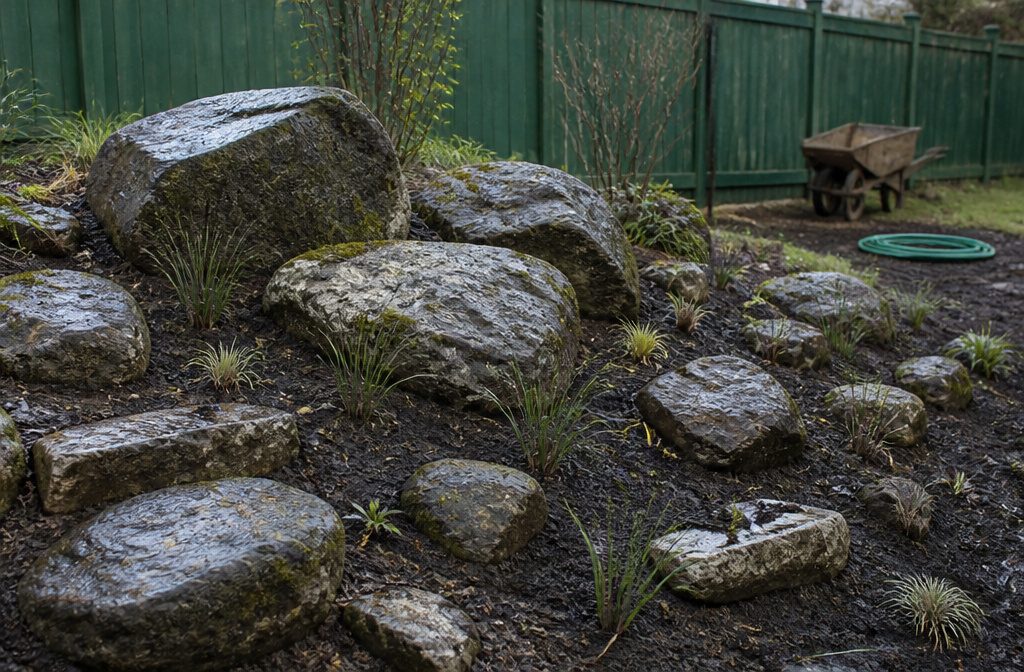
A rock bed runs $460 to $1,000 for stone and boulders, plus a trowel, shovel, tape measure, hose and wheelbarrow.
Order is the stage to get right: the largest rocks go in first, before soil or plants, because everything else rests on them. Tiers rising past roughly 3–4 feet call for a professional.
1. Boulders as a Focal Point
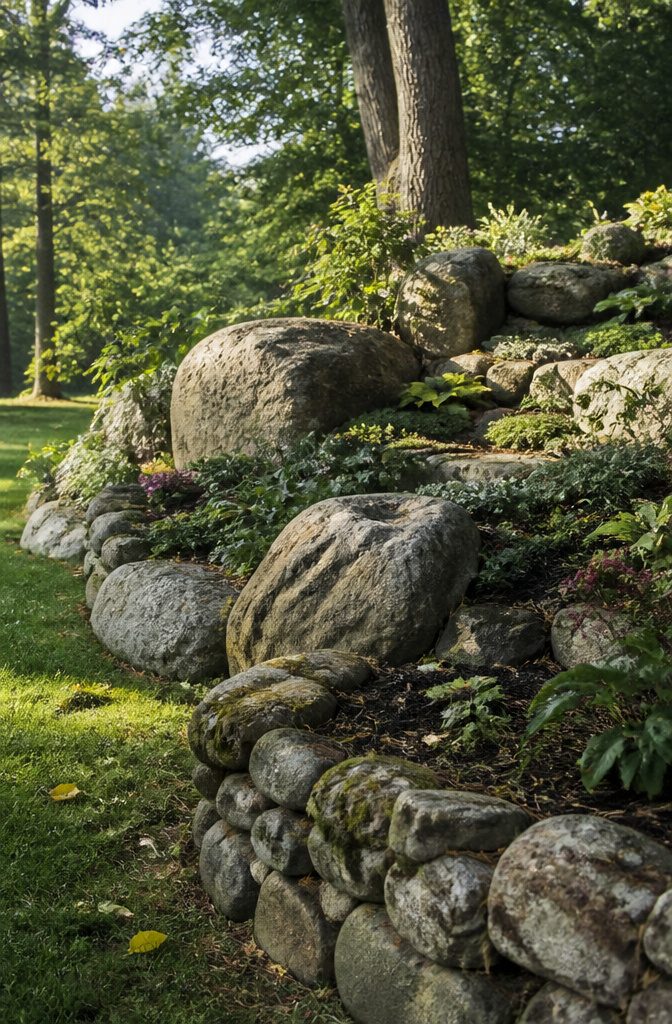
Set the largest boulders first, before any soil or plants go in. Their positions mark the edges of the bed, and you build the plantings around them.
In a small raised bed, use the biggest stones to form the circle or other shape, because they support every layer above. Your least attractive boulders belong at the bottom, where soil, plants and other rock hide them.
Boulders are heavy, and that stops many people.
Farmers and construction workers often give rock away, and your own yard may already hold some, so ask and look before you buy. If you can’t move the large ones yourself, hire a landscaper for that step.
Recommended Products

【Size And Weight】:The main image shows two states of gravel: dry and wet. The color is brighter and the appearance is better in the wet water state, These natural decorative river rocks measure approximately 3 to 4 inches and weigh 20 pounds per package. They are round and smooth mixed color river rocks

[Realistic Aesthetic] Featuring a rock texture and form, this faux provides an authentic aesthetic, for decorative fake rocks in any environment.

[Sophisticated Gray Finish] Designed in a versatile gray, this outdoor seamlessly with diverse palettes, adding a modern and refined touch to your garden or display.
2. Stepping Stones and Pebble Paths
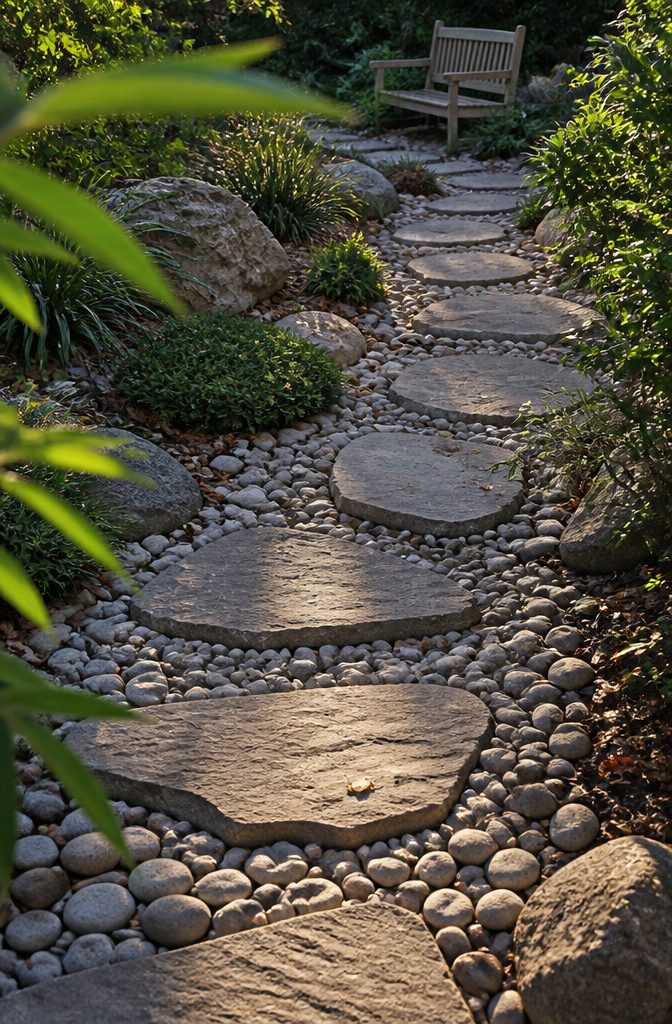
A path turns a rock bed from something you look at into something you walk through.
Flat stones set at a comfortable stride, roughly 18–24 inches apart center to center, give you a practical route for weeding and invite you deeper into the plantings.
Place them where you actually want to go, such as a bench or a favorite plant, because a path that leads nowhere gets ignored.
Fill the gaps between stones with pebbles rather than bare soil.
Smooth pebbles against rugged rock give you contrast in texture and shape, and a pebble path on its own works the same way. Stick to one pebble color so the larger stones stay the focus.
Recommended Products

Decorative beautification effect: using unique natural pebbles, can be freely spliced and combined to create a personalized patio path or pattern. It can also be separated into single pieces and flexibly embellished in various parts of the yard, adding natural wild fun. It is a unique and practical decorative element for lawn and garden

【Natural River Stone】Our stepping stones, made from river rocks, are naturally stunning. Each stone, crafted from genuine river stones, retains its natural texture to highlight its intrinsic beauty. With their unique natural colors, they can create an eye-catching garden path for your patio.

MONTESSORI-INSPIRED PLAY FOR CHILDREN: Nuby's Step Pebbles are inspired by the tenets of Montessori-inspired interactive learning and play; Encourages open-ended play; Includes 6 brightly colored Step Pebbles and 1 free balance board
3. Terraced and Sloped Beds
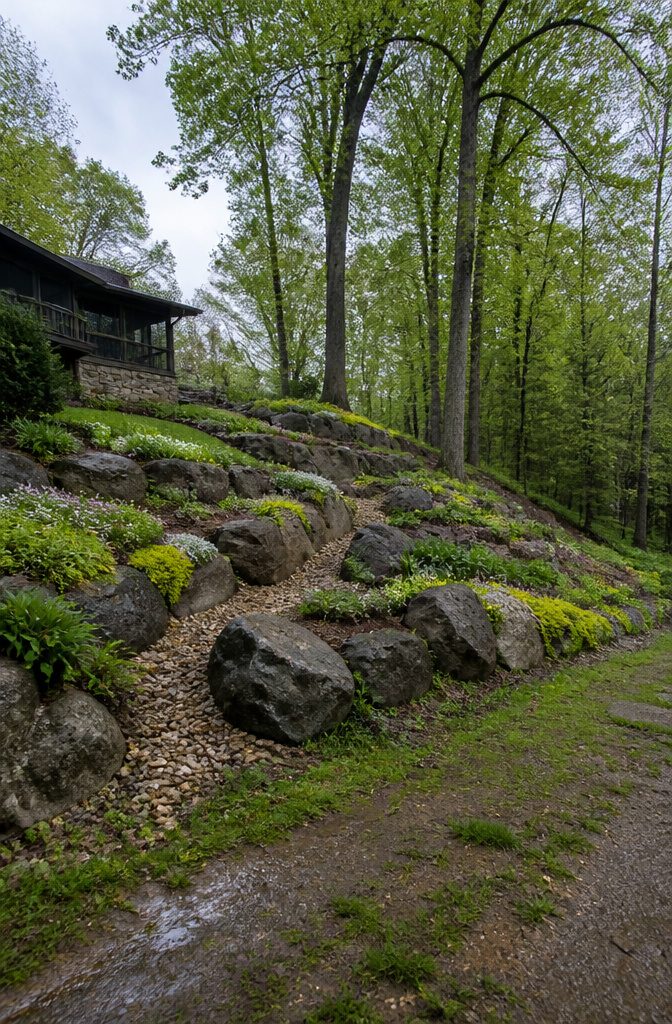
Uneven ground suits rock flower beds. On tiered levels, each step can hold a different kind of rock, with its own flowers planted along the edge.
On a natural incline, lay rock in bands across the slope and tuck flowers and plants between the layers, so the hillside reads as stacked texture instead of an eyesore.
Slopes change the job.
Water runs downhill, soil follows it, and young plants have little to anchor them. Use larger rocks than you would on flat ground, since small stones wash out in heavy rain.
Once a tier rises past roughly 3–4 feet, hire a professional, because tall walls often need engineered plans or a permit. Check your local code before you stack anything that high.
Recommended Products
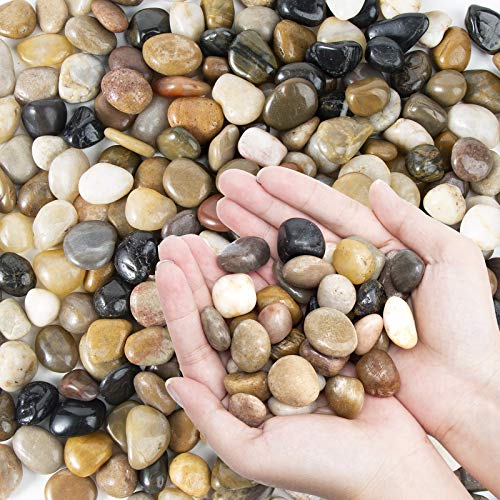
Natural Stones: This river rocks are natural lightly polished for smooth effect, comes in a variety of natural colors, Resists fading for long-lasting beauty. The color of this river rock is natural so it may include a variety of different shades of browns, whites and black rocks. (rocks are natural and as a result some may be broken or out of shape, oval or round, thick or thin.
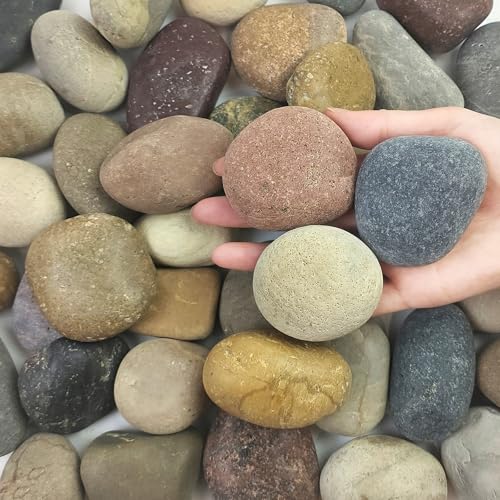
【Weight & Size】Weight: 5 pounds. Size:2-3 inches. Mixed color river rocks are clean and smooth,and contains a variety of different colors, shades and shapes. Keep in mind that stones are heavy, so 5 pounds doesn't seem like as much as one might think

2lbs Jade Pebbles - The diameter of each Jade river rocks is about 1-2 inch. Some maybe larger than 2 inches due to machine screening. Made of natural river rocks,irregular shapes and smooth surface
4. River-Rock Beds
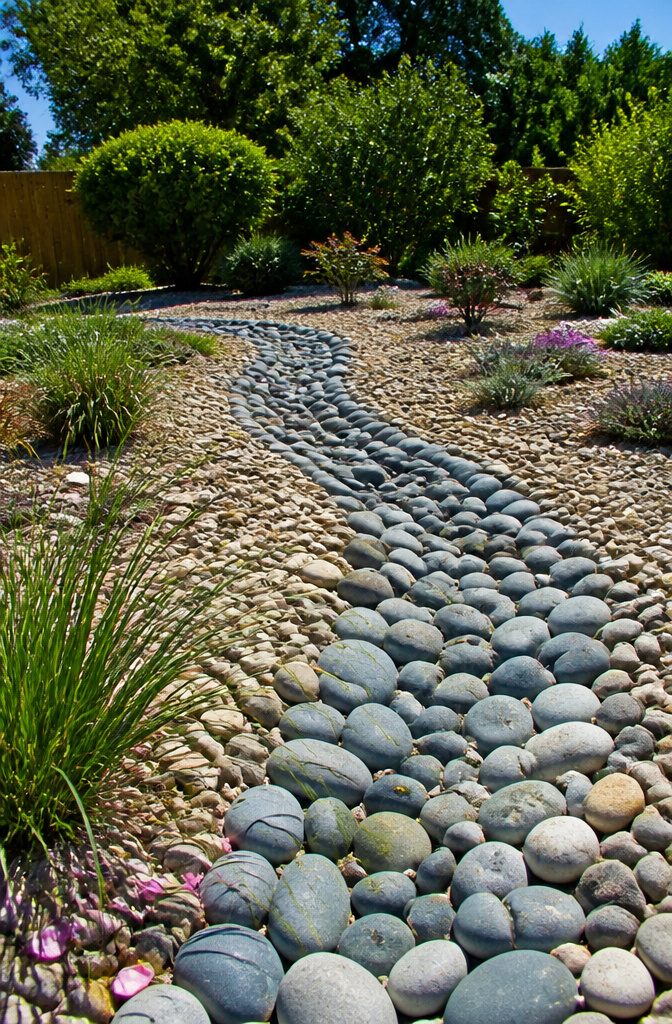
Lay blue and gray rocks in a winding band and the bed reads as a dry streambed, even where no water has ever run.
Color does most of the work: blue and gray stones read as water, while tan stones read as dry ground.
Shape does the rest. Give the band a few bends, and use rounded stones in the channel so it looks smoothed by current.
Fill the planted areas on either side with beach pebbles or pea gravel.
Beach pebbles make an excellent textured mulch, and their finer grain keeps the larger river rock as the clear focus. Sedum suits the banks, since it wants well-drained soil and full sun to partial shade.
Recommended Products

170OZ LARGE COVERAGE FOR BIG LANDSCAPE PROJECTS:Running out of landscaping adhesive before the job is finished? Teexpert’s 170oz concentrated formula covers up to 210 sq. ft., helping you complete larger projects with fewer refills. This rock glue for landscaping mixes easily with water and is ideal for securing gravel, stone borders, garden walkways, pavers, and slopes

【ARE YOU FRUSTRATED TO MAINTAIN MESSY LANDSCAPES?】Say goodbye to untidy landscapes! Tired of battling overgrown grass and wasted time sweeping? Frustrated by expensive gardener fees? Meet Shabebe Mulch Hold – the ultimate solution for garden enthusiasts! With our revolutionary product, maintaining a beautiful landscape is effortless. Say hello to year-round beauty, hassle-free!

【All-in-One Kit】 : ( Mulch Binder + Sprayer) Your ultimate landscaping game-changer is here! This bundle pairs our premium adhesive with a heavy-duty, leak-proof sprayer. Achieve professional results in three simple steps: mix, spray, and bond. It effortlessly creates a rock-solid stability for your gravel and pebbles.
5. Lava-Rock Beds
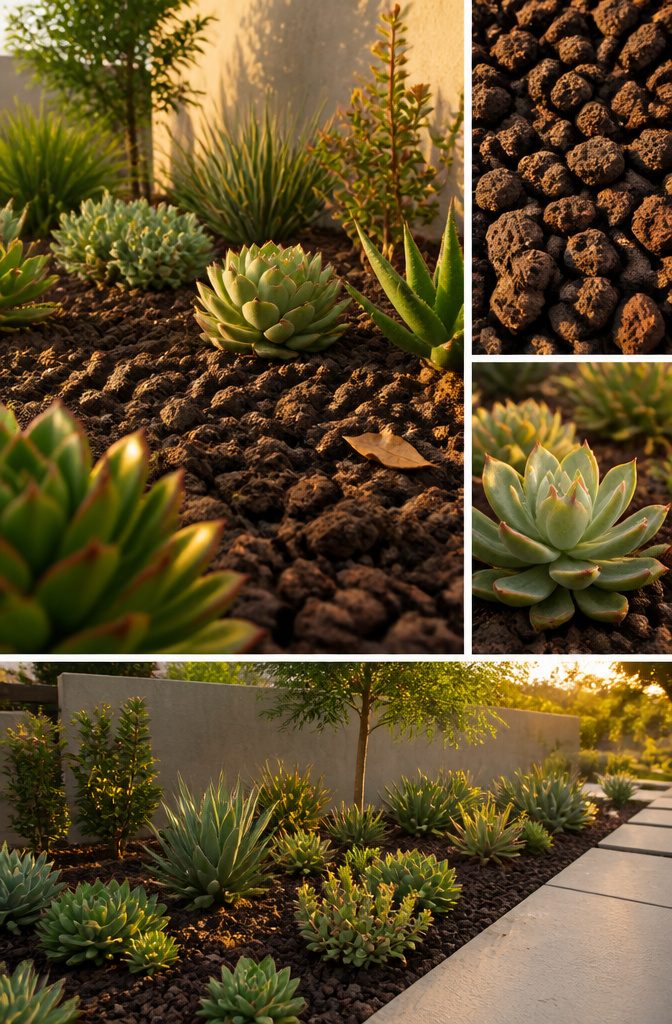
Lava rock is durable, and its porous, pitted surface gives a bed more texture than smooth gravel does. The color is strong enough to hold its own beside plants, so you can keep the planting simple.
Succulents are the best partner: their smooth, fleshy leaves set up a clear contrast with the rough stone, and you get a color pairing without adding much else.
Lava rock also works as a small-stone mulch.
Lay landscape fabric or a tarp over the soil, cut a planting hole for each succulent, and spread the rock on top. The fabric keeps weeds from coming up through the stone, and the rock hides the fabric.
6. Zen Gardens and Stacked Stones
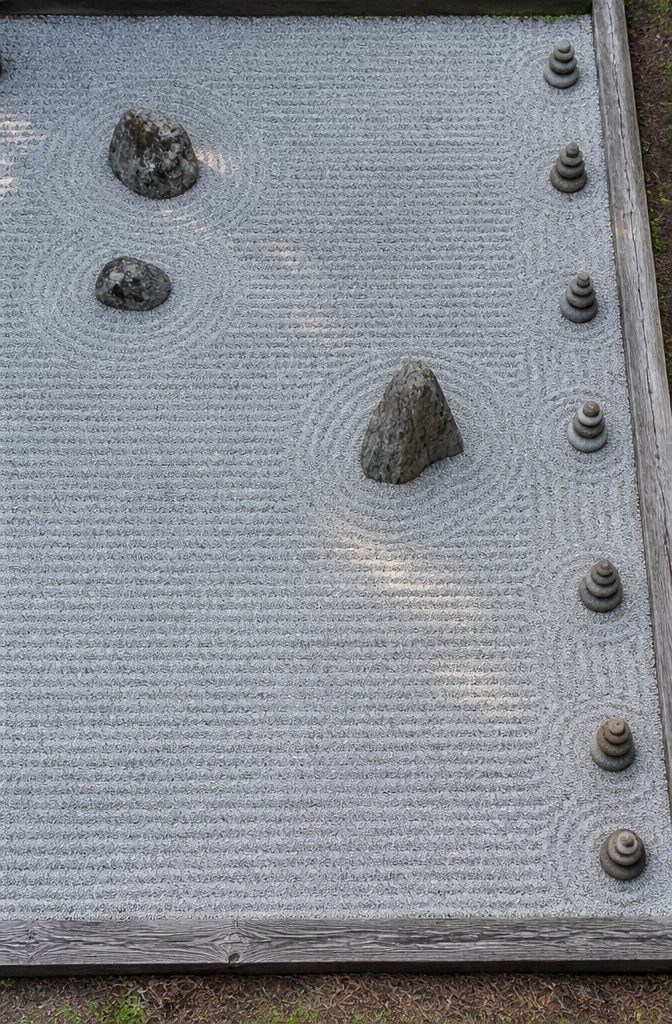
A zen rock bed works by subtraction. Raked gravel or sand stands in for water, and a few carefully placed rocks stand in for islands or mountains.
Keep the rock count low and leave open gravel around each one, because the empty space is what reads as calm. Raking the gravel into lines gives the bed its meditative look, and there are no plants to water.
Stacked stones suit the same bed. In Japanese culture, stones piled this way symbolize stability, creativity, self-worth, strength, and fragility.
Set a row of stacks along the edge of the gravel to complement the larger rocks. The meaning fits the form: a stack stands only while each stone balances on the one below it.
Recommended Products

Sturdy & Anticorrosive Pine Wood Material: This 8.2ft x 16.5in garden walkway is made of carbonized pine for improved UV, moisture, and corrosion resistance—durable for year-round use. Note: Carbonisation improves weather and corrosion resistance, but extreme sun, heat, or dry climates may still cause aging or cracking; applying an outdoor sealant helps extend service life

Weather-Resistant & Built to Last: Crafted from durable PC+ABS resin, these stepping stones are heat-resistant, crack-proof in freezing temps, and impact-resistant. Designed for year-round outdoor use, they won’t fade, warp, or lose their shape—rain or shine.

【GLOWING STEPPING STONES】Turn an ordinary garden path into a nighttime feature. Luminous glass stones absorb light during the day and create a beautiful blue-green glow after dark.
7. Succulents and Ice Plants
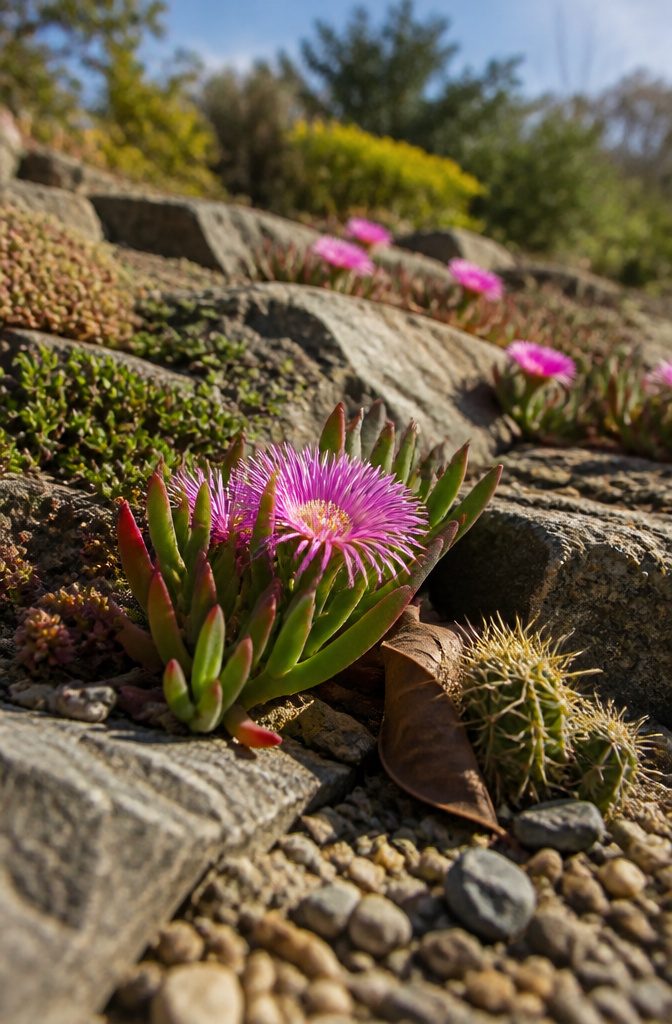
Ice plants suit a rock flower bed because they want what rock gives them: well-drained, rocky soil and little fuss.
Their blooms are bright and long-lasting, and they look best peeking out from between stones, not lined up in a row.
Succulents do the same job with more variety. Sedum (stonecrop) is the easy first pick, and cactus adds spiky contrast to softer mats of foliage.
To drop the hose entirely, plan the bed as xeriscaping: a design that needs little or no water beyond the rain you already get.
Keep the plant list short and drought-tolerant, with cactus and succulents as the core. One thirsty plant in the mix puts watering back on your schedule.
Recommended Products

Long-Lasting Beauty: Come with 3 pounds of decorative rocks for indoor plants, each rocks measuring around 1-2Inch(2-3cm). Dye and oil-free, they resist fading when washed or use in water. Eco-friendly and recyclable, maintaining enduring beauty and lovely at home.


Smooth River Rocks for Painting:This set includes 10 hand-selected river rocks with uniform size (2-3 inches) and ultra-smooth edges, perfect for small projects or first-time crafters. Their flat surface ensures easy painting with acrylics, markers, or chalk, while neutral tones (gray/white) make colors pop. Ideal for kids’ crafts or quick DIY gifts!
8. Perennials and Creeping Phlox
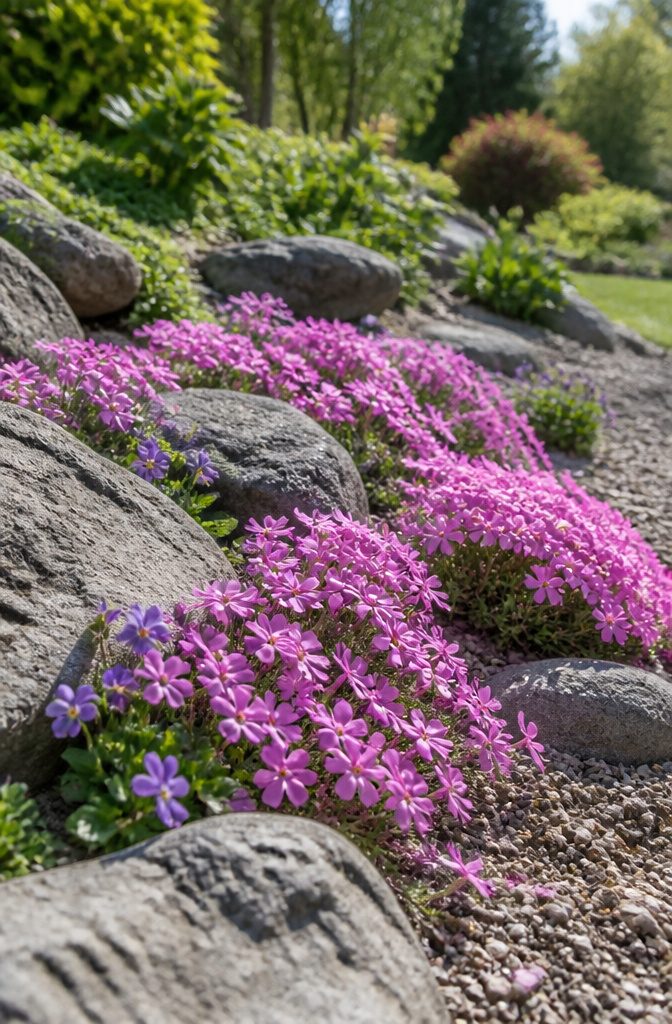
Perennials earn their place in a rock bed because you plant them once and they return and bloom every year.
Violets are a good example. Creeping phlox (Phlox subulata) is the one to buy first: it stays low, creeps across the ground, and fills gaps between stones with pink or purple flowers.
Match each plant to the sun the bed gets and to how well the soil drains.
Read the tag for light needs. A sandy soil mix drains fast, so choose plants that like it rather than fighting the soil.
Plan color the same way.
Repeating one or two shades, such as pink phlox against gray stone, looks deliberate. A scatter of many looks busy.
Recommended Products

【ARE YOU FRUSTRATED TO MAINTAIN MESSY LANDSCAPES?】Say goodbye to untidy landscapes! Tired of battling overgrown grass and wasted time sweeping? Frustrated by expensive gardener fees? Meet Shabebe Mulch Hold – the ultimate solution for garden enthusiasts! With our revolutionary product, maintaining a beautiful landscape is effortless. Say hello to year-round beauty, hassle-free!

SAY GOODBYE TO MESSY MULCH & PEBBLES FOREVER: Our Glue is the original landscape glue that powerfully holds garden mulch, wood chips, shells, sand, pine straw, small pebbles, hay and straw, small gravel, and leaf piles in place. No more mulch wash-outs on your sidewalk! Dries Clear

LOCKS LOOSE ROCK IN PLACE – Built for pea gravel, small pebbles and decorative stone that roll, scatter or wash out of place. The set binder helps stabilize loose rock so rock beds, garden borders and landscape paths need less resetting and cleanup, and a leaf blower clears leaves without sending stones flying.
9. Herbs Like Wild Thyme
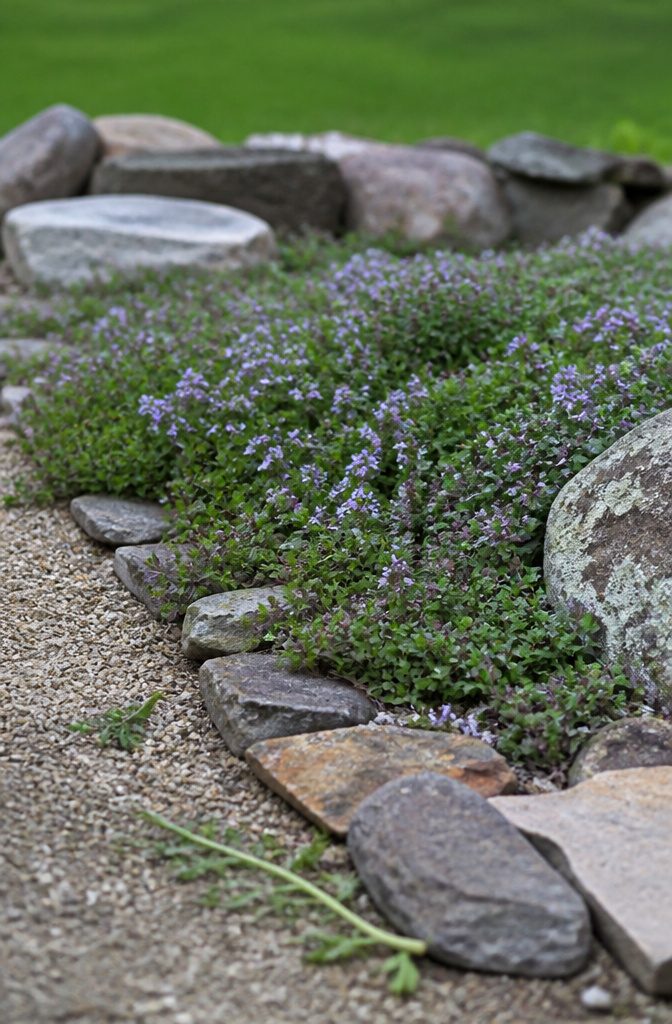
Wild thyme is the herb to plant among the rocks.
Its creeping habit forms a dense, low ground cover that fills the gaps between stones instead of crowding over them, and the foliage gives off scent when you brush past it.
That makes a rock bed something you smell as well as look at.
Low growth and drainage are why this works.
Thyme sits close to the ground and does best in sharply drained soil, and a bed of rock and gravel sheds water quickly. Tuck plants into pockets of soil between stones.
If you smother weeds first with sheet mulch, skip cardboard under herbs you plan to eat.
Some cardboard contains glues that don’t belong near edible plants. Pull the weeds by hand instead.
10. Small Shrubs
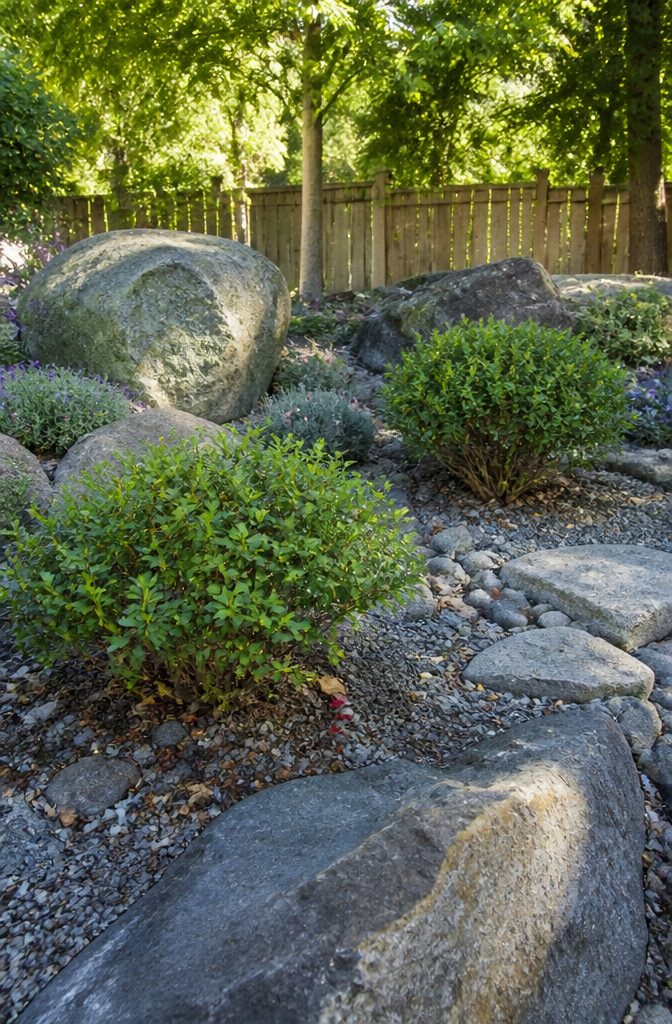
Shrubs add height and a softer texture than stone or flowers can, but only if they stay smaller than the rocks around them. Read the mature height and width on the plant tag, not the size of the pot.
Choose a shrub that will finish below your largest boulder, so the stone stays the main feature. A full-size shrub swallows a small rock bed within a few seasons, and you end up pruning around the rocks.
Use a couple of shrubs at most and leave open ground around each one, so the gravel and stone still show.
Shrubs also bring wildlife into the bed. Birds and small mammals use the branches to nest and hide, which low flowers and bare rock can’t offer.
Recommended Products

NATURAL SLATE - 100% real Slate stone will add beauty and realism to your creations. Because these are natural stones, each bag is a mix of stones from 1/2 to 1 inch. They are safe to use in your scenery and will last much longer than resin stones. Product of the USA.

RUBBER STEPPING STONES: Elevate your outdoor space with these lightweight simulated flagstone rubber pavers that offer the timeless beauty of real stone without the heavy lifting.

UNIQUE OUTDOOR WALKWAY SOLUTION: Elevate your garden, lawn, or backyard with BIRDROCK HOME Rubber Stepping Stones. These durable pavers create a functional and stylish walkway, enhancing your landscape while providing a solid and reliable surface to walk on.
11. Ponds and Waterfalls
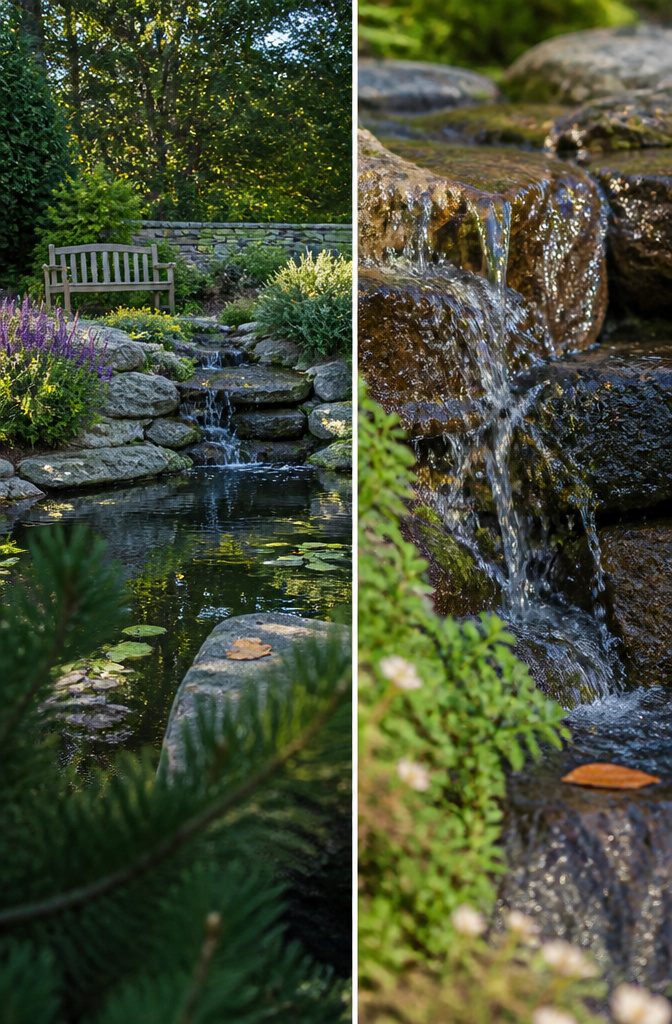
A waterfall cascading over natural rocks adds sound as well as a view, so set a bench or chair within sight of the pond. Turtles, frogs, and dragonflies may move in, and koi give you something to watch.
Shrubs beside the water give birds and small mammals places to nest and hide. Drought-tolerant hummingbird mints or hyssop bring in butterflies and hummingbirds.
For a tighter space, a bird bath or flower pot fountain set among the stones gives you the same water-and-rock pairing at a smaller scale.
12. Potted Plants
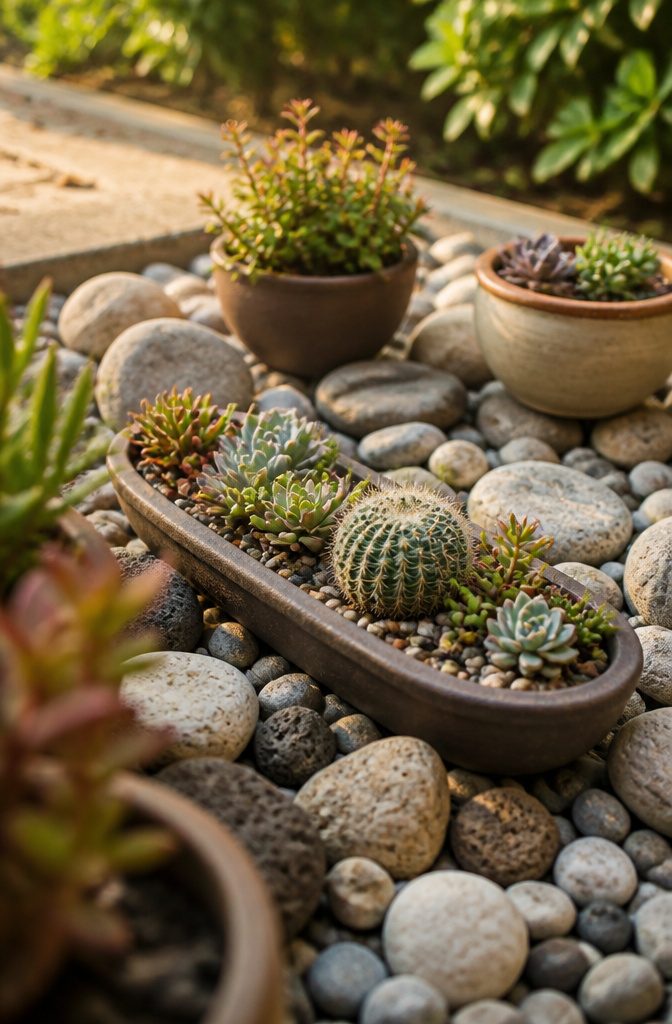
Pots are the one part of a rock bed you can rearrange in an afternoon.
Set a few among the stones, then move them through the season: swap a tired pot for a fresh one, or pull a tall one forward when the bed looks flat from your window.
Nothing gets dug up, so a bad placement costs you a minute, not a plant.
If your space is a patio or balcony with no bed at all, a container, trough or pot filled with mini succulents, cacti and pebbles works as a small rock garden on its own.
A trough beats a single small pot because it holds several plants and lets you arrange them around the pebbles the way you would in a full bed.
13. Log Borders and Sculptures
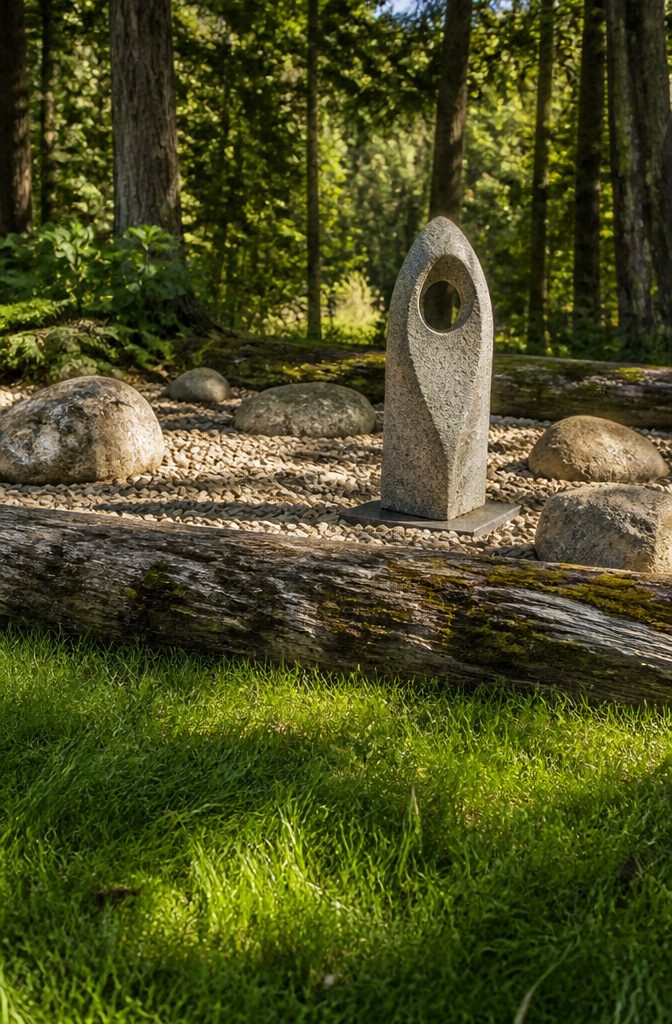
A rustic log border defines the edge of the bed and adds woodland charm.
Edging comes in wood, metal, plastic, stone, brick and concrete, and logs suit a bed beside trees or a informal lawn, where plastic or concrete would look out of place next to rock.
Lay the logs end to end so they mark a clear line between the rocks and the lawn. Wood weathers and eventually rots, so plan on replacing sections over time.
For the focal point, one abstract stone sculpture turns the bed into a small outdoor gallery.
Stone matches the rocks around it better than metal or plastic. Set it off-center with open gravel around it so it reads as art, not clutter.
How to Build a Rock Bed
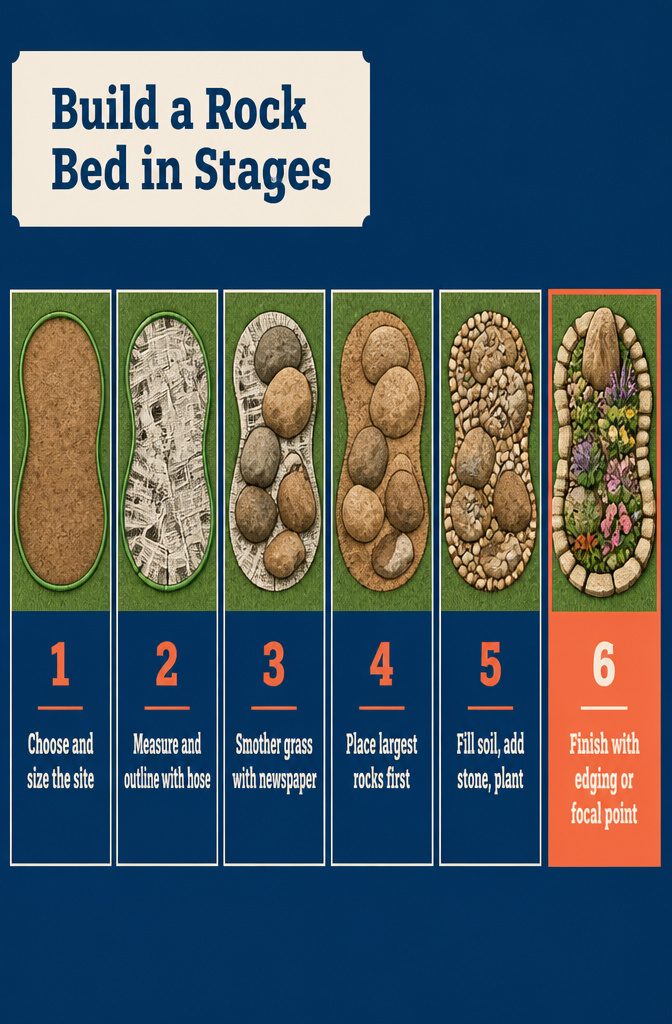
You need a trowel, shovel, tape measure, garden hose and wheelbarrow.
- Choose the site and scale. Large areas suit sprawling beds; small yards suit raised beds.
- Measure with the tape, then lay the hose out to outline the shape. Check any boulder against the gate before you buy it.
- Smother the grass with a layer of newspaper. Cardboard also works but breaks down more slowly.
- Place the largest rocks first, with your least attractive ones at the bottom.
- Fill in sandy soil for drainage.
- Optional: lay landscape fabric, which makes small stone easier to remove later.
- Add smaller rocks: 2 inches deep for stone ½ inch or smaller, 3 inches for ¾ to 1 inch, 4 inches for 1 inch or larger.
- Plant.
- Add features such as edging or a focal point.
What a Rock Bed Costs
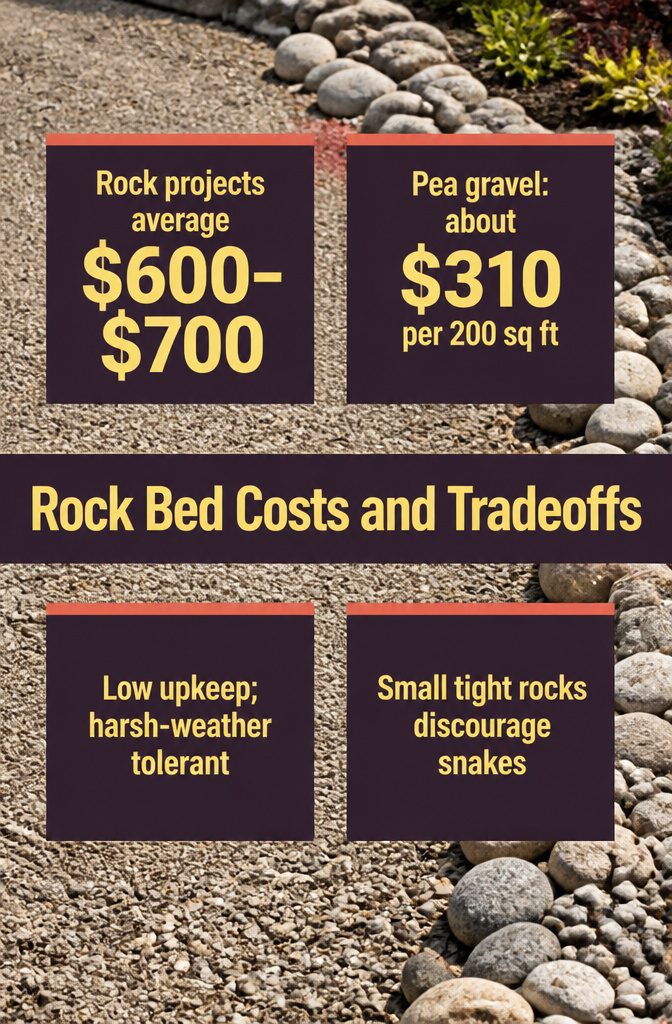
Landscaping rock projects average $600 to $700, and buying and installing stone, rock and boulders runs $460 to $1,000, depending on type, size and quantity. Pea gravel is among the cheapest fills, at about $310 for 200 square feet.
Mulch costs $17 to $68 per cubic yard, or $2 to $5.50 per bag. Crushed gravel adds up fast: a 2,200-pound bag averages $884.
After installation, a rock bed needs little upkeep, tolerates harsh weather, and may add resale value. The drawbacks are the heavy lifting and snakes.
Utah State University Extension says mulch and large rocks can give snakes a breeding or overwintering habitat. If that worries you, choose smaller, tight-fitting rocks.
Frequently Asked Questions
How deep should the rock layer be in a rock flower bed?
Match the depth to the stone size: 2 inches for stone ½ inch or smaller, 3 inches for stone ¾ to 1 inch, and 4 inches for stone 1 inch or larger.
A layer that is too thin leaves gaps, and one that is too thick can cause poor drainage.
How do you build a rock flower bed on a hill?
Use larger rocks than you would on flat ground, because heavy rain carries small stones downhill. A slope affects drainage, soil retention and plant support, so lay the rock in bands across the incline and plant between the layers.
Hire a professional once a tier rises past roughly 3–4 feet, since walls that tall often need engineered plans or a permit.
Can I get rocks for a flower bed for free?
Yes.
Ask local farmers and construction workers, who often have rock they plan to throw away. Your own yard may also hold small stones and pebbles, so look there before you buy anything.
Can I build a rock flower bed in a container?
Yes.
Fill a container, trough or pot with mini succulents, cacti and pebbles. A trough holds more plants than one small pot, so you can arrange them around the pebbles the way you would in a full bed.