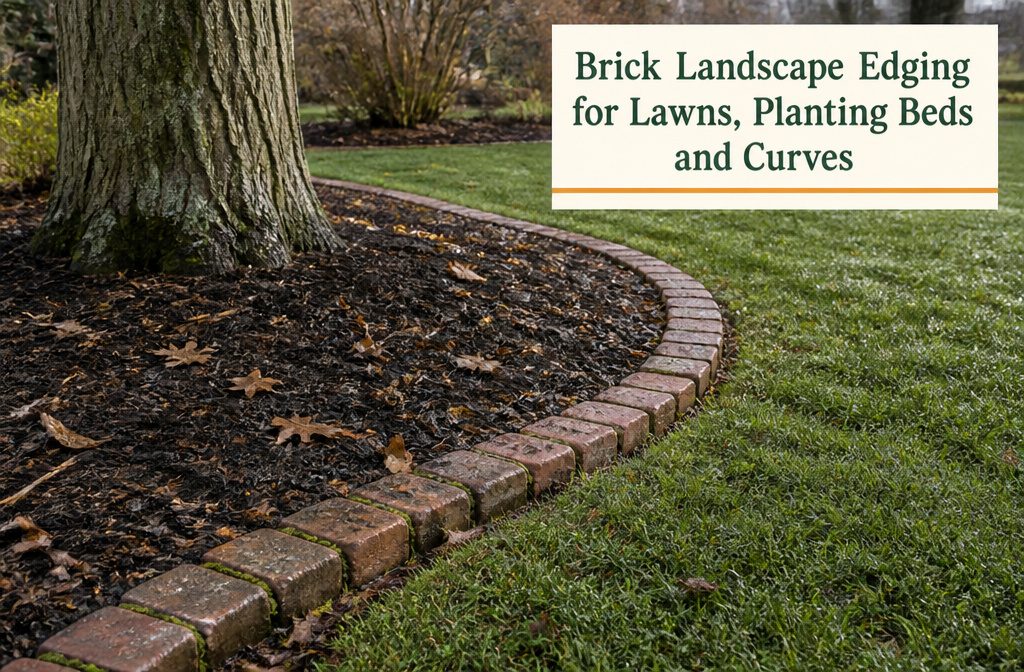
A row of brick set along the border of a lawn or planting bed keeps grass out of the mulch and mulch off the sidewalk.
It only looks deliberate if the spacing stays even, especially on curves, and around a tree the ring should follow the drip line or sit slightly wider.
Separate Lawn From Planting Beds
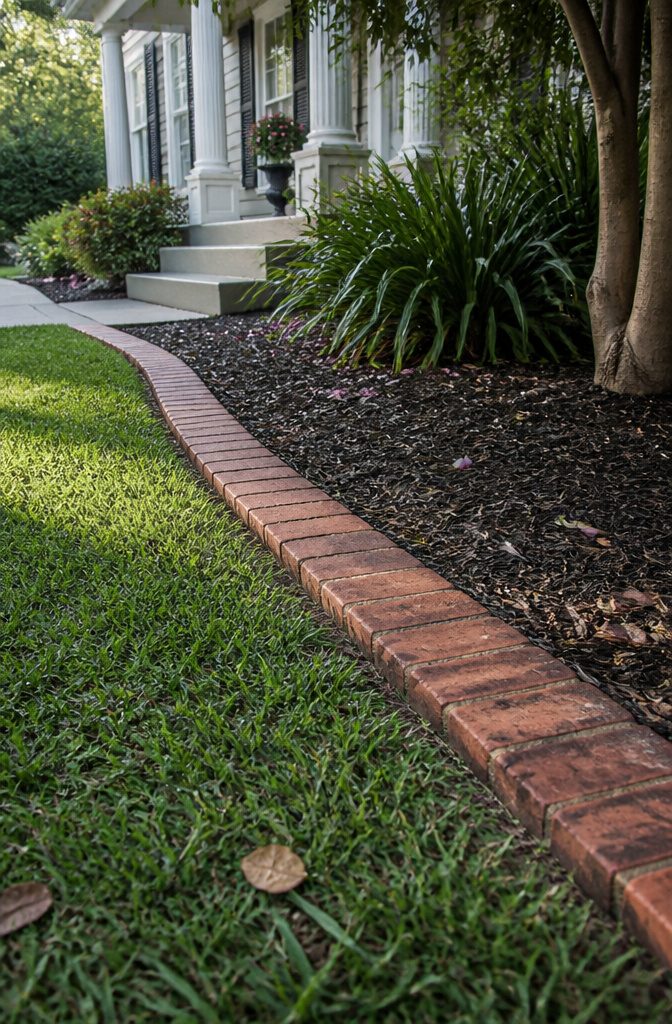
A front yard usually holds several zones: the lawn, a flower bed near the porch, maybe a mulched circle under a tree.
Without a border, they blur into one another. A row of brick along the edge of a bed shows exactly where the lawn stops, and even a small yard looks bigger and more deliberate once each section is marked.
The edging does two practical jobs. It keeps grass from creeping into the mulch, so you spend less time pulling turf out of your beds.
It also holds the mulch in place, so a hard storm doesn’t wash it onto the lawn or across the sidewalk, where you would have to sweep it up and refill the bed.
Recommended Products

EASYFLEX DECORATIVE NO-DIG LANDSCAPE EDGING: Get a beautifully landscaped yard without all the work of a dig-in lawn edging; simple installation without trenches or shovels; color may vary due to the unique manufacturing process.

Realistic Faux Stone Texture: Our landscape edging boasts a lifelike stone texture with detailed surface patterns that add depth and a polished look to your outdoor space. It beautifully enhances garden beds, lawns, pathways and flower beds, bringing a natural, decorative touch to any yard.

150 UNBREAKABLE STEEL STAKES – Unlike common brittle plastic spikes that snap instantly in hard soil, our flower bed edging kit is equipped with 150 premium steel stakes. These solid metal anchors easily penetrate clay. Secure your landscape edging firmly with confidence and say goodbye to frustrating plastic tools.
Plan Around Existing Features
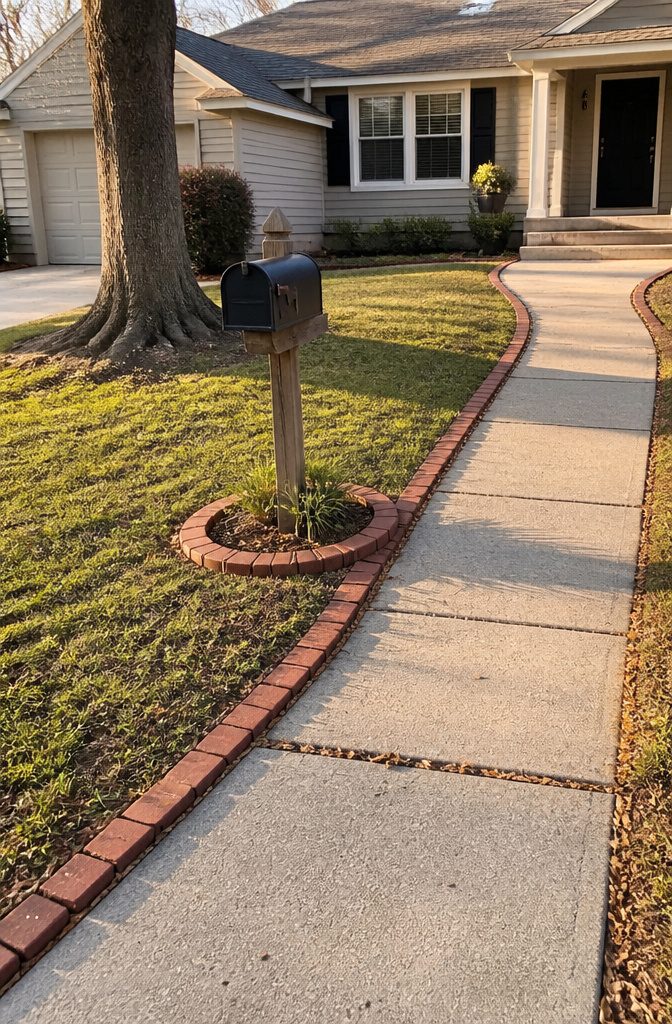
A mailbox post, a tree, a walkway and a porch step that juts into the lawn are fixed, so the edging bends around them.
A curve of brick around the mailbox base makes a small planting ring out of an awkward patch of grass.
Around a tree, follow the drip line or a slightly wider circle. That gives the roots room and still marks the boundary.
Along a driveway or sidewalk, brick runs parallel to straight concrete. Keep the same gap from the concrete along the whole run, or the strip between them looks like a mistake.
On a bowed lawn, trace the bow instead of squaring it off. Even spacing between bricks keeps the curve smooth.
Recommended Products

8-Pack Faux Stone Garden Edging: Includes 8 gray landscape edging panels designed to create a clean stone-look border for flower beds, lawns, mulch areas, walkways, patios, and paths

STAYS IN PLACE - Our edging stays securely in place, keeping mulch and other materials from migrating into other areas of your landscape for a pollished look

Long-Lasting Use: Made of high-quality, weather-resistant plastic, this landscape edging is both sturdy and flexible enough to hold pebbles, mulch, and other materials in place
Brick Color and Pattern
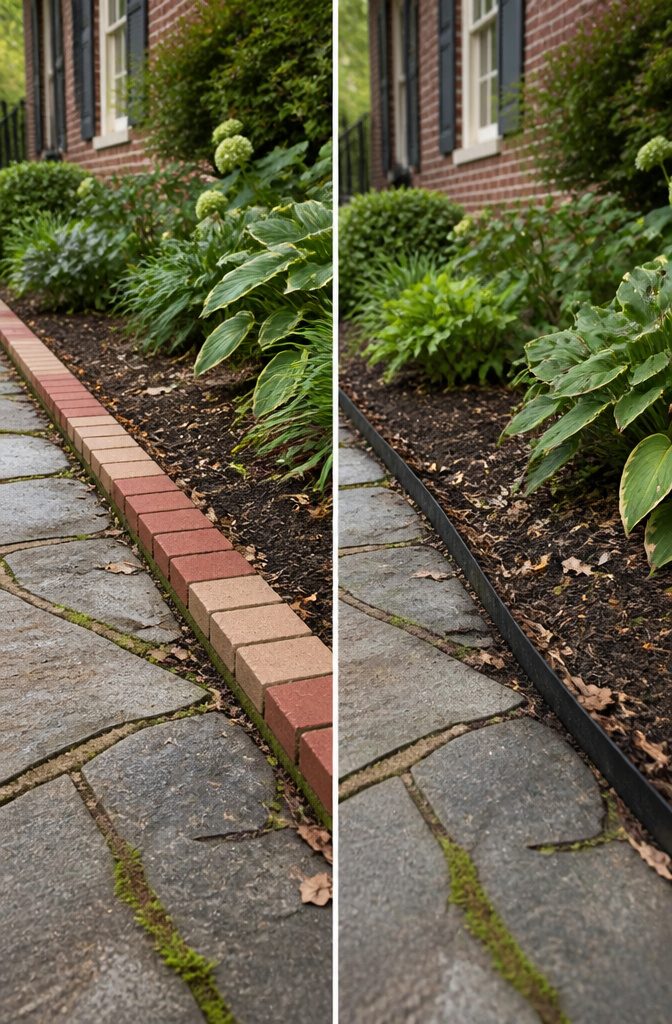
A brick that closely matches your house gives a blended, quiet border. A contrasting brick, such as a lighter tan against a red-brick home, makes the edge a visible line of its own.
If your beds are already full of color and texture, matching is the better pick. Choose contrast when you want the shape of the bed to read clearly.
Orientation changes the look as much as color does.
Standard bricks laid flat make a low, understated edge. Turning them on their side or setting them at a diagonal adds texture without much extra cost.
On a long bed, alternating two brick tones every few feet adds interest. Keep the pattern that simple, because the border should support the plants, not compete with them.
Recommended Products

The Lets Edge It decorative plastic brick edging snaps together and can easily be pressed into the ground

The Lets Edge It decorative plastic brick edging with built-in solar lights snaps together and can easily be pressed into the ground
Lawn Shapes and Curves
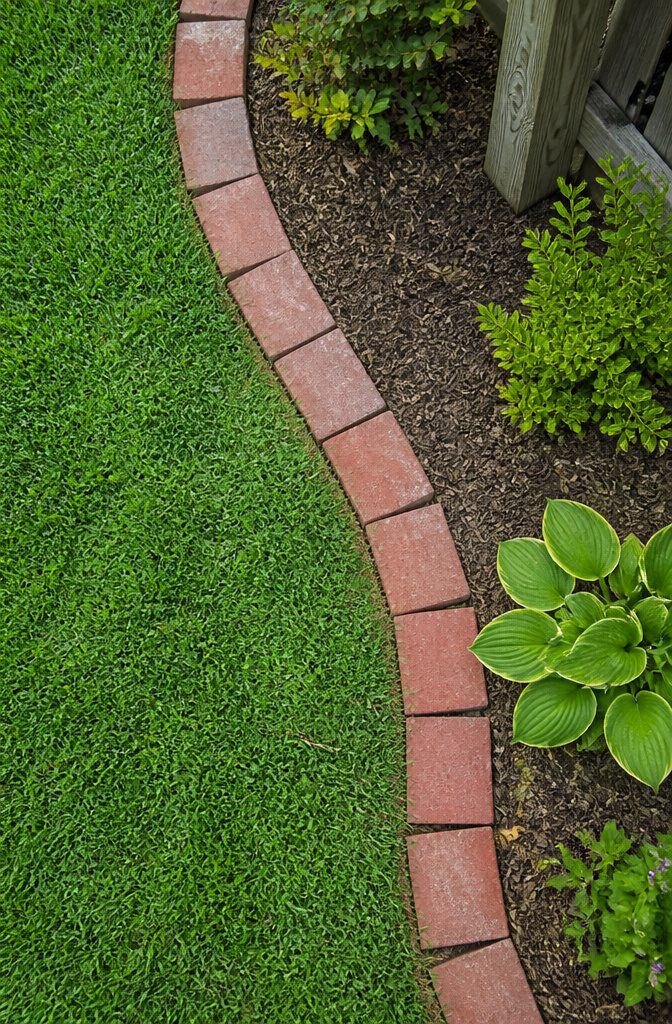
A straight run is the easiest to lay. Stretch a string line, press the bricks tight against each other, and the edge looks clean almost on its own.
Gentle curves still work with standard bricks.
Angle each one slightly against its neighbor and keep the gap between bricks the same all the way around. Even spacing reads as smooth from the street, while uneven gaps look choppy up close.
Irregular lawns need the most care, like one that narrows at a side gate or widens around a corner bed. Each time the line changes direction, shift the brick angle gradually and hold the spacing steady.
Uneven gaps make a curve look accidental. Check the line from the sidewalk before you finish.
Recommended Products

Decorative Brick Red Finish for Rustic Charm: This short wood fence features a warm brick red finish that adds natural beauty and a decorative touch to any outdoor space. Ideal as a wood garden fence for flower beds, pathways, and yard accents.

UNIQUE DESIGN: The top of the landscape edging stakes are curved and the unique reinforcing ribs in the middle ensure a firm and effective use. The curved top and unique reinforced rib design in the middle of the lawn edging stakes ensure firm and effective use. Paired with corrugated garden edging, they can remain upright and prevent toppling, quickly solving your problems.

STAYS IN PLACE - Our edging stays securely in place, keeping mulch and other materials from migrating into other areas of your landscape for a pollished look
Keep the Edging Neat
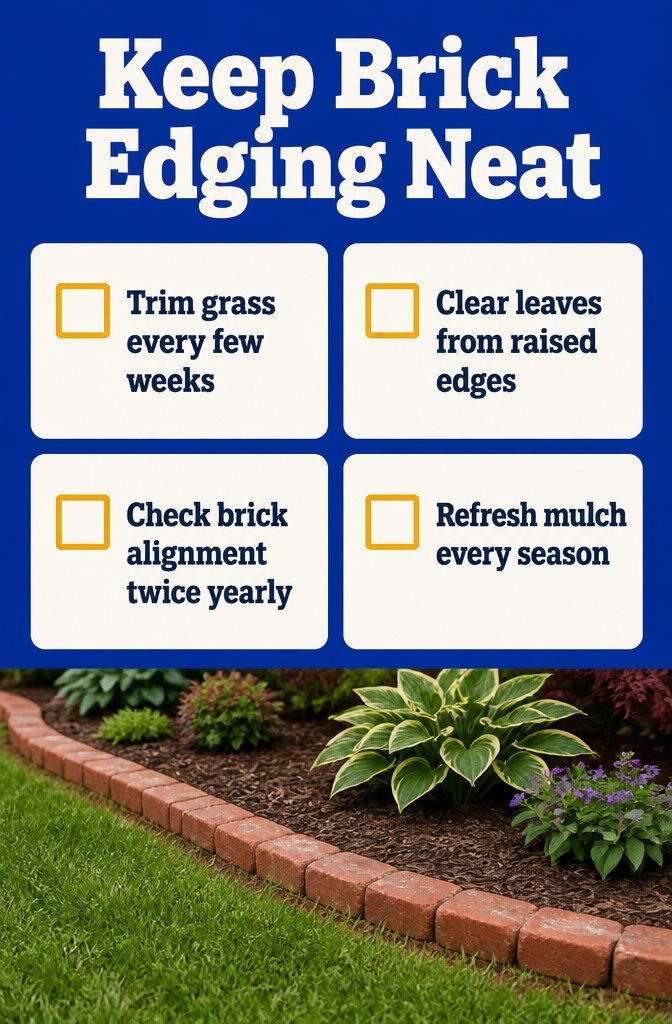
Brick edging stays sharp with a few light jobs spread across the year:
- Trim grass back every few weeks during the growing season. It creeps over the bricks and hides the line.
- Clear leaves and debris from along the raised edge, especially in fall. Piles against the bricks make a mulch bed look neglected.
- Walk the border a couple of times a year and look for bricks that have shifted or sunk out of line. Small corrections are easy to make by hand.
- Refresh the mulch or ground cover inside the bed every season. Faded, thin mulch makes even a perfectly straight edge look tired.
Recommended Products

Whopping 65ft Continuous Roll: Get a 65ft continuous red brick border trim in one super convenient roll. No splicing or messy connections needed! Simply unroll, cut to your exact length, and decorate with ease. Perfect for covering large bulletin boards or wrapping around doors and windows without any interruptions.

What You Will Receive: you will receive 1 roll of brick paper that can help you easily create beautiful bulletin board backgrounds to capture students' attention

All-in-one garden edging and outdoor solar lights
Trees and Mailboxes
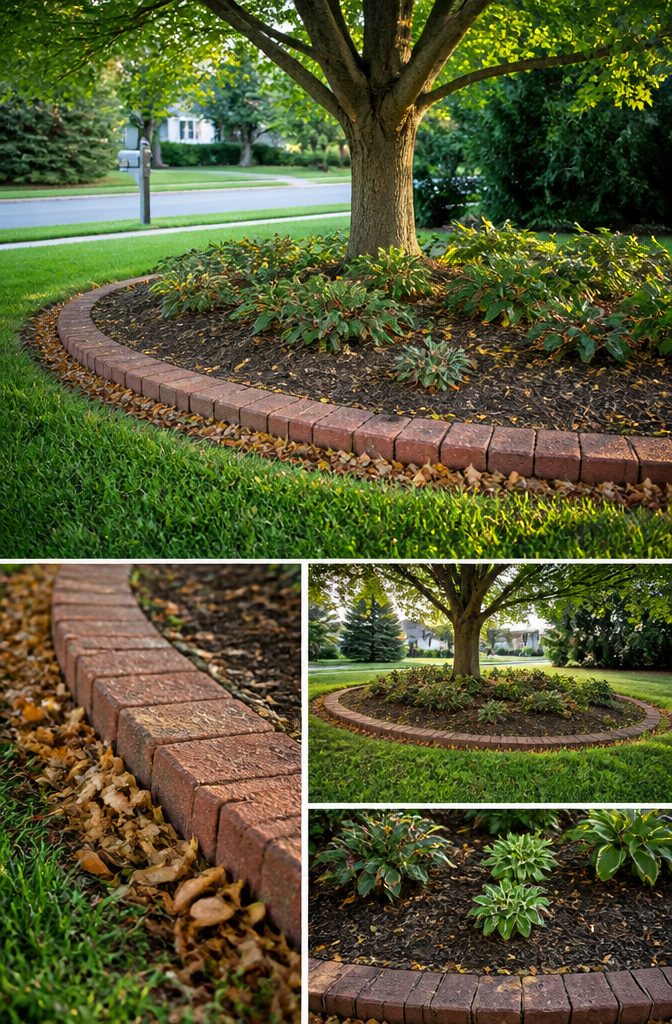
A mailbox post leaves a patch of grass that is awkward to mow around. Curve the brick around the base in a small ring and fill it with plants, and the patch looks planned instead of left over.
For a tree, find the drip line first: the circle on the ground under the outermost branches.
Set the brick along the drip line or a slightly wider circle, not tighter. A narrow ring crowds the roots, while the wider one gives them room and still shows clearly where lawn ends and bed begins.
A tree with a broad canopy makes a big circle, so count on needing more brick than you would guess by eye.
Recommended Products
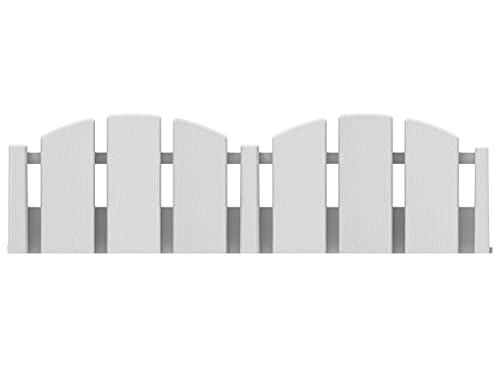
EASYFLEX DECORATIVE NO-DIG LANDSCAPE EDGING: Get a beautifully landscaped yard without all the work of a dig-in lawn edging; simple installation without trenches or shovels

EASYFLEX DECORATIVE NO-DIG LANDSCAPE EDGING: Get a beautifully landscaped yard without all the work of a dig-in lawn edging; simple installation without trenches or shovels

Stone-Look Decorative Landscape Edging: 2.75 inch tall rustic stone design complements any flower gardens and provide clean look for your gardens, flower beds, lawns, grass, raised garden beds, shrubbery, pathways, yard trees, ground pool, etc.
Brick Edging and Curb Appeal
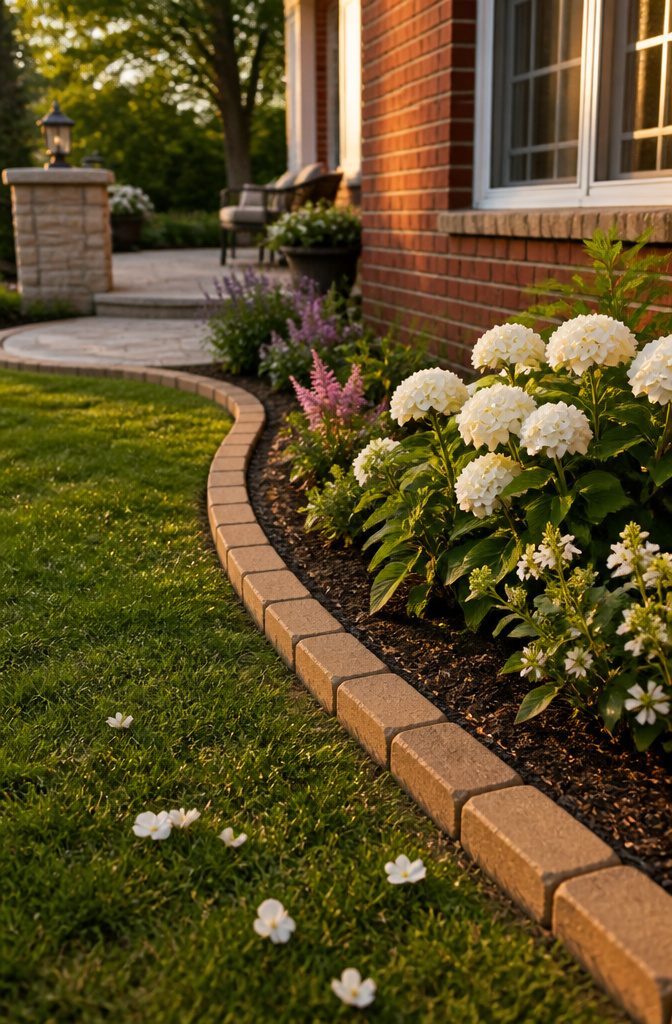
A continuous brick border makes a planting bed look planned rather than left over. Even spacing and an unbroken line matter more than the individual bricks, because the eye reads consistency from the street.
Brick color sets how loud that border is.
Brick that matches your house, or the hardscape already in place, blends in and leaves the plants as the focus. Brick that contrasts with the exterior turns the border into a feature of its own.
Match for a quiet look, contrast when you want the edge itself noticed. Hold a sample brick against your walls, walkway, and patio before you buy, since a third tone beside them can read as accidental.
Recommended Products

【Create Clean Landscape Borders with No Dig Installation】Create neat, professional-looking edges around flower beds, lawns, pathways, and garden features without trenching or heavy digging. Simply position the edging and secure it with the included spiral spikes for a fast DIY landscape upgrade.

STAYS IN PLACE - Our edging stays securely in place, keeping mulch and other materials from migrating into other areas of your landscape for a pollished look

Classic cobblestone design complements any landscape
Frequently Asked Questions
What is brick landscape edging used for in a front yard?
Brick landscape edging marks where the lawn stops and a flower bed or mulched area starts, which makes the yard look more defined.
It also keeps grass from creeping into the mulch and holds the mulch in place during hard storms, so it doesn’t wash onto the lawn or sidewalk.
Can brick landscape edging improve curb appeal?
Yes.
An unbroken border with even spacing makes planting beds look planned, and from the street that consistency counts for more than the individual bricks. Brick that matches or contrasts with the house also sets how much the border stands out.
Can brick landscape edging follow an uneven lawn border?
Yes. Standard bricks can trace gentle curves and irregular lawn shapes if each brick is angled slightly against its neighbor and the gap stays the same along the whole line.
Change the angle gradually where the border turns, then check the result from the sidewalk.
What brick color works best for landscape edging?
It depends on the look you want. Brick that matches your house or existing hardscape blends in and keeps the focus on the plants, while a contrasting brick, such as lighter tan against red brick, makes the edge a feature.
Set a sample brick next to your walls, walkway, and patio before buying, since a third tone beside them can look accidental.
How do you keep brick landscape edging neat?
Trim the grass back every few weeks during the growing season so it doesn’t hide the line.
Clear leaves and debris from along the bricks, especially in fall. A couple of times a year, walk the border and reset any bricks that have shifted or sunk, and refresh the mulch inside the bed each season.