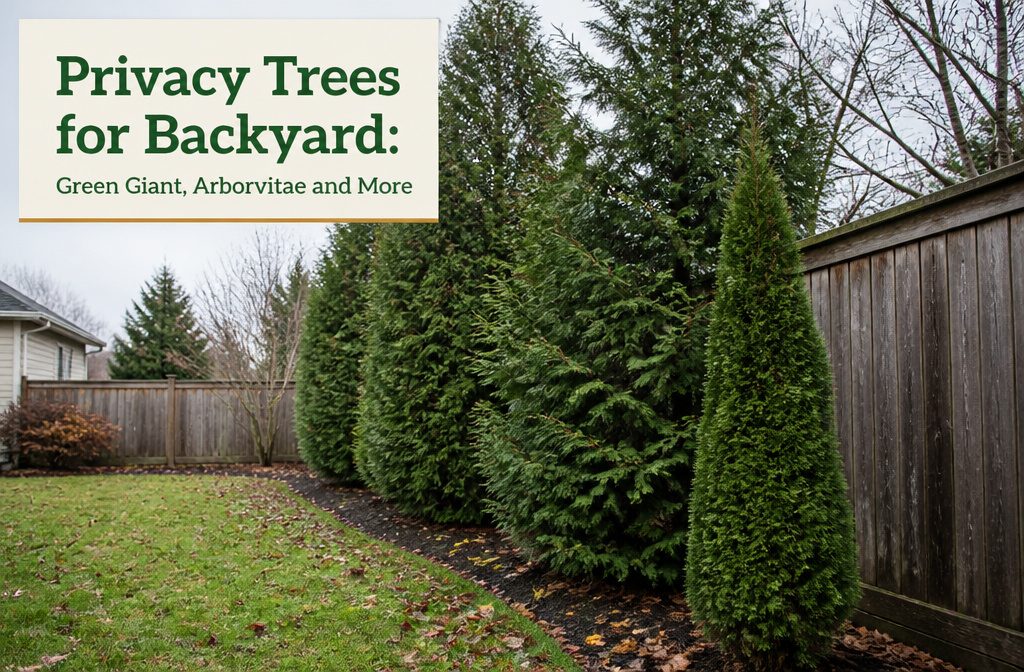
A backyard privacy screen is a row of trees and shrubs planted to block views, and the right choice depends on your yard’s width.
Green Giant and Leyland Cypress spread wide as they mature, while Emerald Green arborvitae stays narrow enough to plant close to a fence on a small lot.
Green Giant
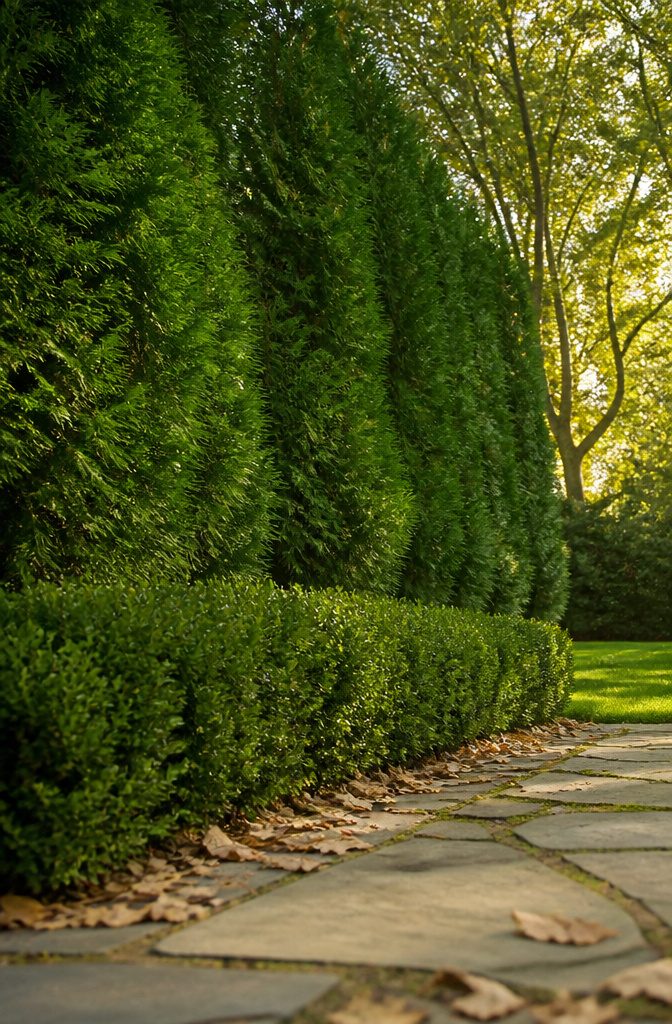
Green Giant grows fast and suits bigger spaces, and it tolerates partial shade, which makes it one of the few quick screening trees that still works on a yard with a shaded side.
It needs room to fill out, so skip it on a small patio yard.
A tree that wants to spread will crowd a narrow lot, and you’ll be fighting it with pruners within a few seasons. Emerald Green Arborvitae is the better pick for tight spaces.
If you have the space, plant Boxwood in front of Green Giant.
The tree forms the tall green wall at the back, and the shrub fills the bare lower zone with a neat evergreen edge. The layering section covers how to set up that pairing.
Recommended Products
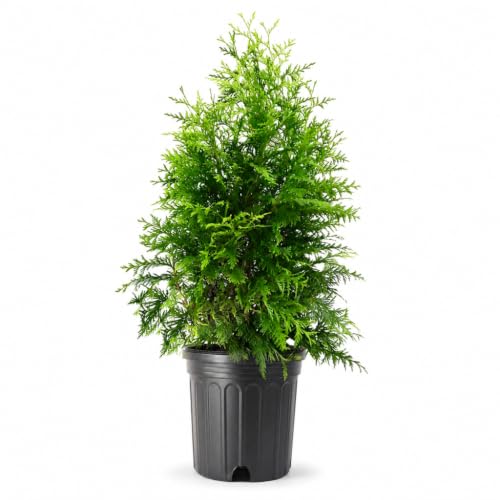
Rapid Growth for Quick Privacy: Offers fast growth, making it an excellent choice for a privacy hedge or screen.

Rapid Growth for Quick Privacy: Offers fast growth, making it an excellent choice for a privacy hedge or screen.
Leyland Cypress
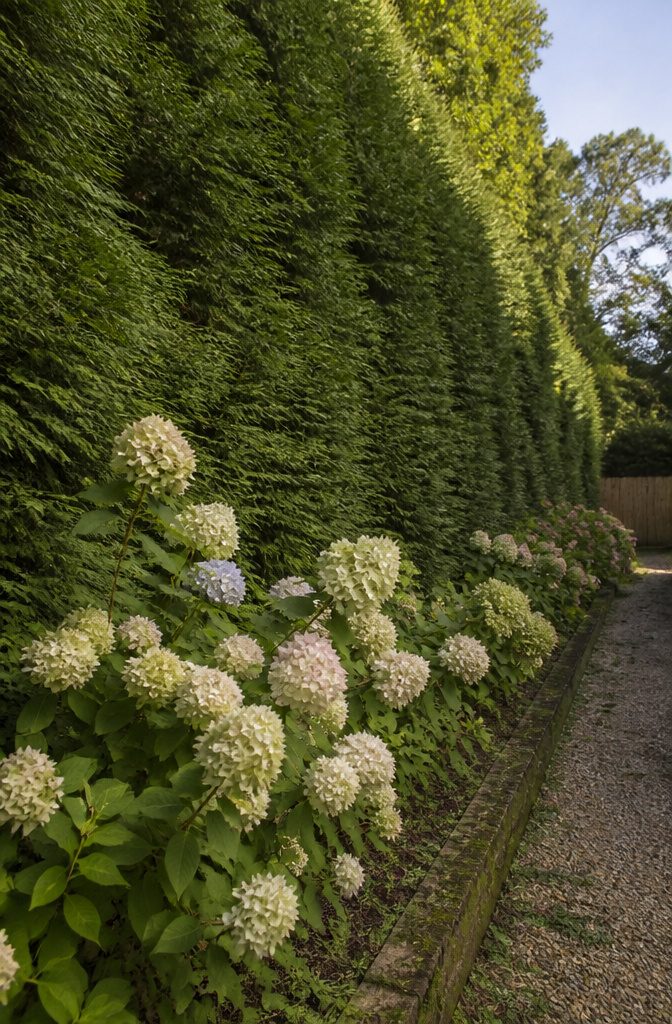
Leyland Cypress is a favorite for fast screening. It grows tall and wide, and its thick green foliage stays dense year-round, so a bare fence line fills in quickly.
The price is upkeep. Skip the pruning and the hedge turns on itself:
Some fast growers, like Leyland Cypress, need regular trimming to stay neat. Without it, they can get wild and even block their own light!
If you won’t commit to trimming on a regular schedule, choose a different tree.
If you will, plant hydrangeas in front.
The cypress gives a dense green backdrop, and the hydrangeas add flowers against it. Mixing the two also keeps one pest or disease from wiping out the whole screen.
Recommended Products

READY TO PLANT: Includes 4 Blue Italian Cypress (Cupressus sempervirens ‘Glauca’) starter saplings in 3.5″ cubes. Each plant is well-rooted and ready to thrive. Natural variations in size, color, or seasonal appearance may occur.

READY TO PLANT: Includes 6 Blue Italian Cypress (Cupressus sempervirens ‘Glauca’) starter saplings in 3.5″ cubes. Each plant is well-rooted and ready to thrive. Natural variations in size, color, or seasonal appearance may occur.
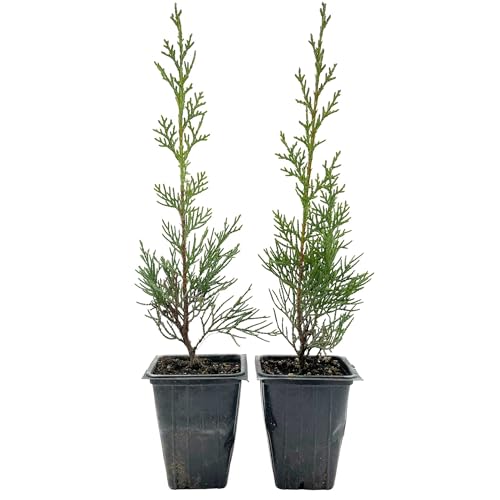
READY TO PLANT: Includes 2 Blue Italian Cypress (Cupressus sempervirens ‘Glauca’) starter saplings in 3.5″ cubes. Each plant is well-rooted and ready to thrive. Natural variations in size, color, or seasonal appearance may occur.
Emerald Green Arborvitae
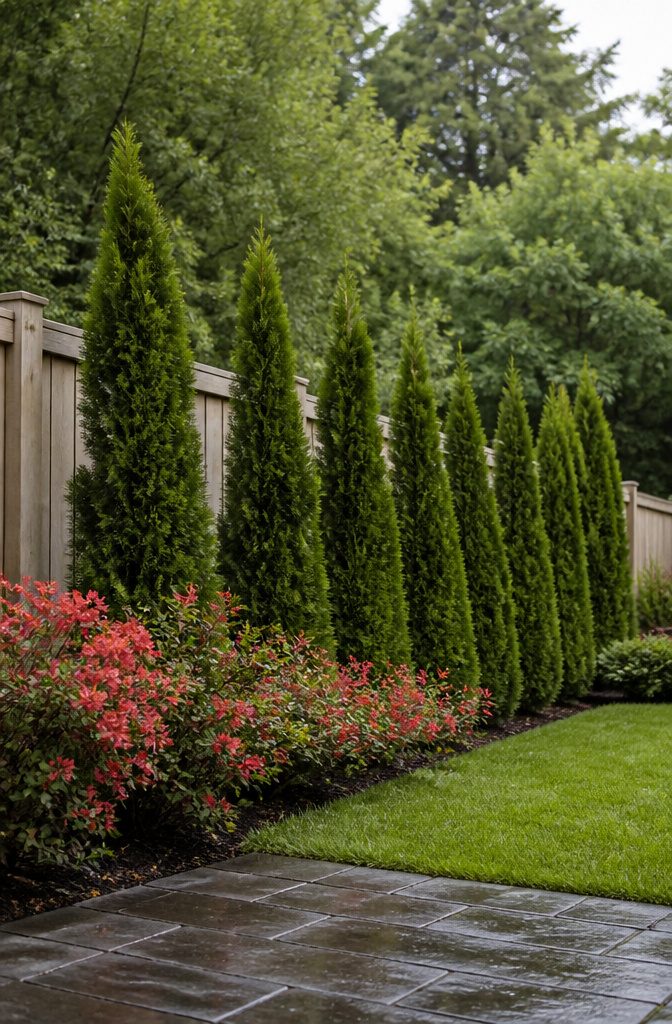
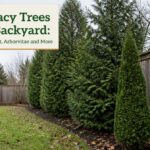
Emerald Green arborvitae, often sold as Emerald Greens, grow in a tight, upright form that stays narrow, which is why they suit small yards.
Green Giant and Leyland Cypress spread wide as they mature, and a homeowner planting along a short fence line on Reddit worried about exactly that.
If your yard is small, choose Emerald Greens over Green Giant or Leyland Cypress, because you can plant them close to a fence without losing the lawn or patio beside it.
For flowers, plant flowering quince or lilacs in front of the arborvitae. The evergreen backdrop stays green all year, and the quince or lilacs add fragrant flowers and color in late spring.
Recommended Products

For sale are 20 Leyland Cypress trees that are approximately 6-12" tall and shipped in pots

READY TO PLANT: Includes 6 Leyland Cypress (Cupressocyparis leylandii) starter saplings in 3.5″ cubes. Each plant is well-rooted and ready to thrive. Natural variations in size, color, or seasonal appearance may occur.

Fast-Growing Privacy Tree – Ideal for creating natural screens, property borders, and windbreaks with dense evergreen foliage for year-round coverage.
Boxwood
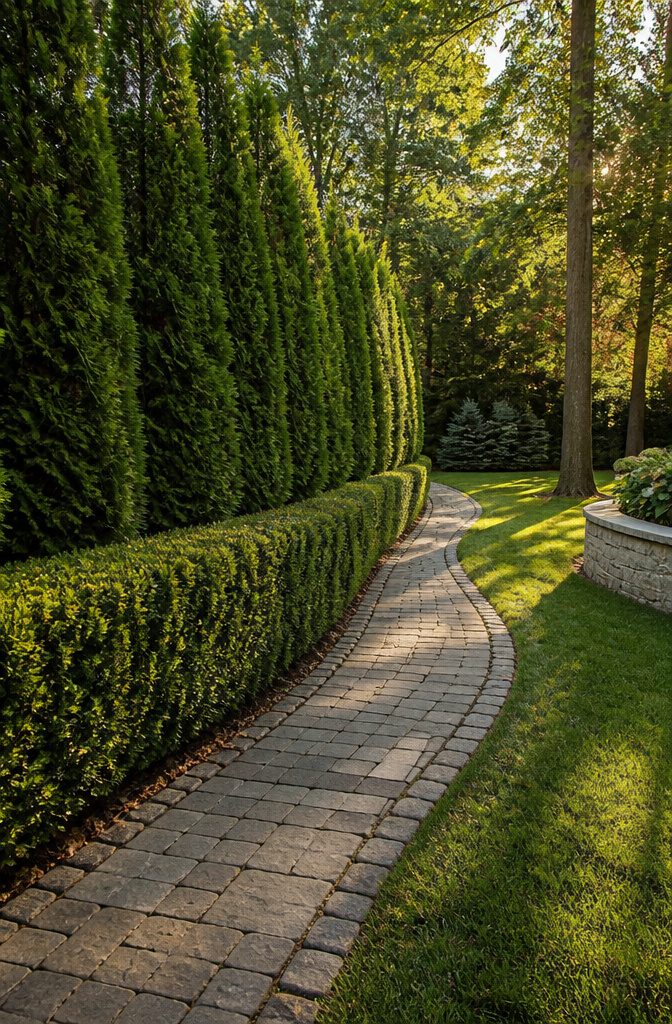
Boxwood is an evergreen shrub that holds a clean, formal shape, which makes it the front layer to plant ahead of Green Giant.
The tall trees behind carry the privacy, and the boxwood fills the lower view with dense foliage, so the planting reads as a rich green wall all year.
Pairing the two also spares you from relying on one plant to do every job.
A formal look asks for regular clipping. A boxwood hedge only looks crisp if you shear it back to the same line as it grows.
If you want a loose, hands-off border, skip it. If you like a tidy edge and don’t mind a trimming session, boxwood is the better choice for the front row.
Recommended Products

For sale are 2 Weeping Willow trees that are approximately 6-12" tall

Rapidly forms dense privacy screens

Rapid Growth Rate – Quickly matures into a tall and full evergreen, ideal for creating privacy and defining property lines naturally
Viburnum
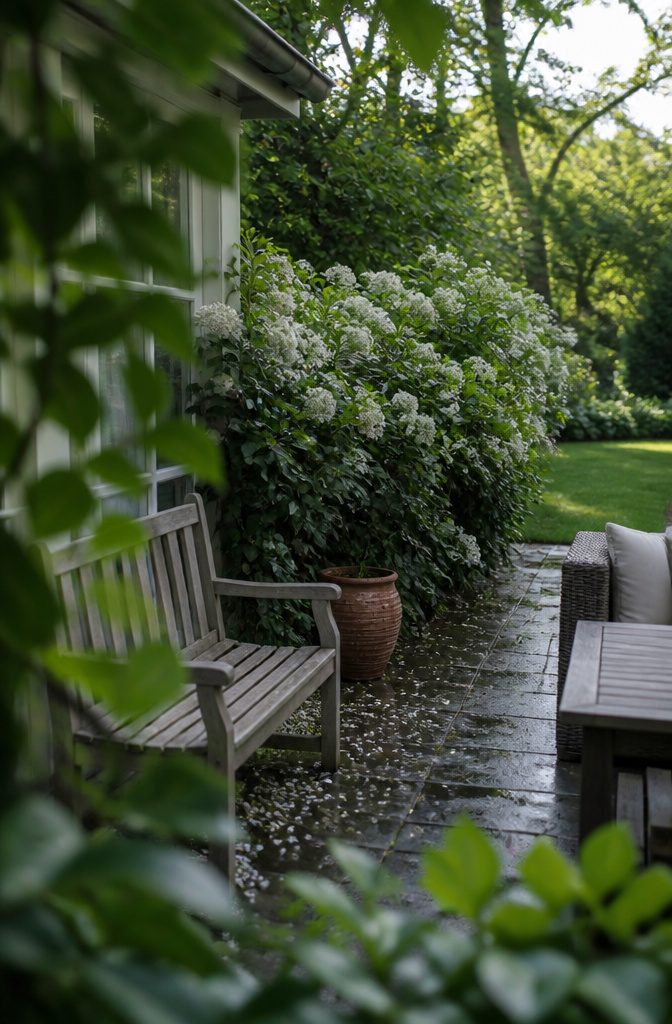
Viburnum suits a screen that should give you something to look at and smell, not just a wall of green.
It carries white flowers, and some types are fragrant, so a row planted near a patio or back door puts the scent where you sit.
Fragrance varies by type, so check the plant tag for a fragrant type before you buy if scent is your reason for choosing it.
Choose viburnum over a plain evergreen hedge if you want flowers to watch from the window. If you only want a uniform green backdrop, one of the conifers covered elsewhere in this article is the simpler pick.
Recommended Products

Artificial Conifer Hedge 1m high x 3m Long. Shade factor: 100%

These are ready to plant and should be put in the ground according to the included instructions upon arrival. All pictures are of fully grown plants. Sizes shipped are in the title and description. Deciduous plants do not have leaves in the winter.

Features:This boxwood panel looks a bit sparse, but it will become a good green background when connected together to form a large panel. Compared with other boxwood panels, it is cheaper and more cost-effective. Very suitable for outdoor large-scale use.
Forsythia
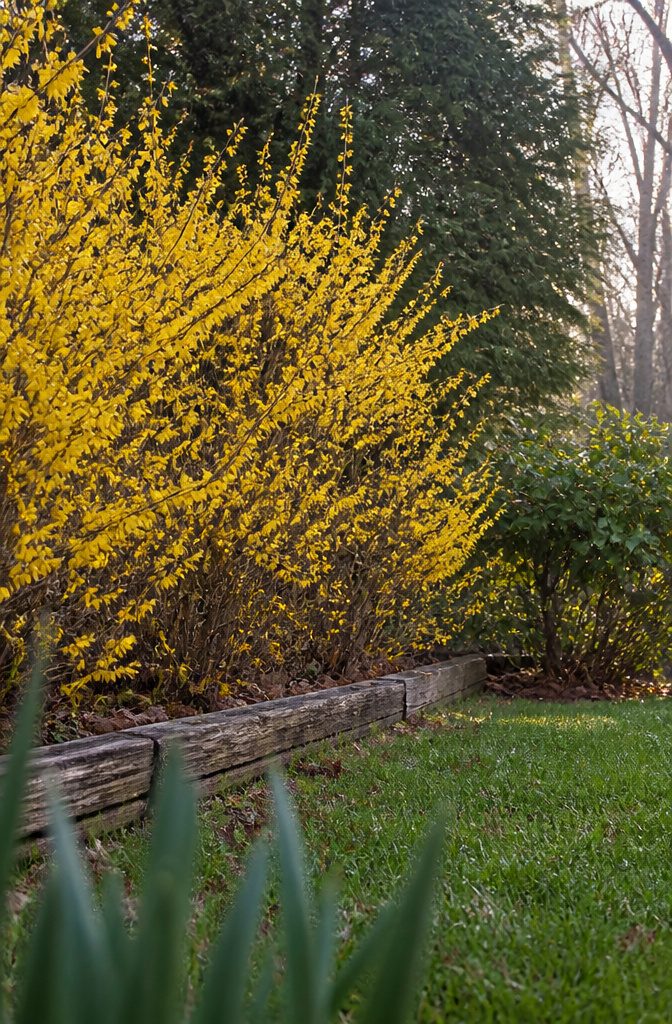
Forsythia is a deciduous shrub that covers itself in bright yellow blooms in early spring, often before the rest of the yard has leafed out. It’s one of the first signs the growing season has started.
The cost is winter.
Once the leaves drop, the bare branches let you see straight through. Forsythia gives you seasonal change, not year-round cover, so don’t make it the only plant along a line where you need privacy in January.
Use it as a partner for evergreens instead. Plant it in front of or between them, and the evergreens hold the screen through the cold months while the forsythia adds spring color and a leafy layer in summer.
Recommended Products
Rapid Growth for Quick Privacy: Offers fast growth, making it an excellent choice for a privacy hedge or screen.

One of the finest evergreens for use as screening or a windbreak, this upright conifer is versatile, strong-rooted and virtually disease-free.
Fast-Growing Evergreen Tree – Reaches impressive heights quickly, creating a dense, natural privacy screen for yards, driveways, and commercial landscapes.
Match Plants to Your Site
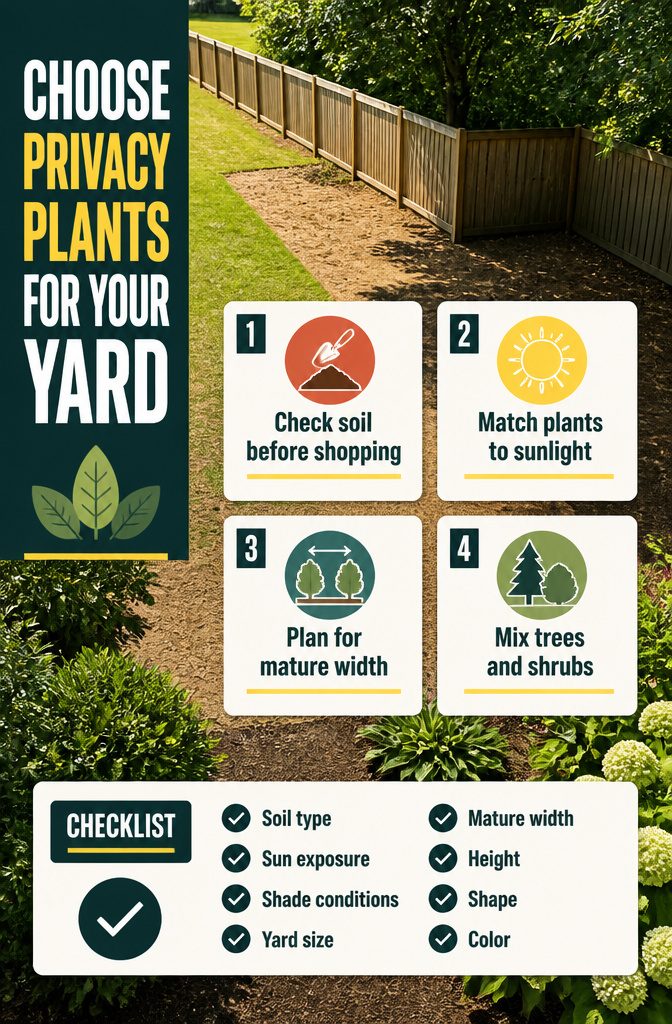
Pick the plant for the spot, not the other way around. Check these four things first:
- Soil: Some plants need richer soil, while others handle drought. Decide which kind of ground you have before you shop.
- Sunlight: Not every privacy plant wants full sun. Some do better in partial shade, so a shady corner and a baking fence line need different plants.
- Yard size: Dense foliage blocks views, but plants still need airflow between them. Plan for the width each one reaches at maturity, not its size in the nursery pot.
- Height, shape and color: Evergreens stay green all year. A mix of trees and shrubs blocks views more completely than one type of plant.
Recommended Products

Elegant, narrow columnar shape adds vertical interest to any garden, ideal for small spaces and landscape focal points
Elegant, narrow columnar shape adds vertical interest to any garden, ideal for small spaces and landscape focal points
Elegant, narrow columnar shape adds vertical interest to any garden, ideal for small spaces and landscape focal points
Layer and Mix Your Screen
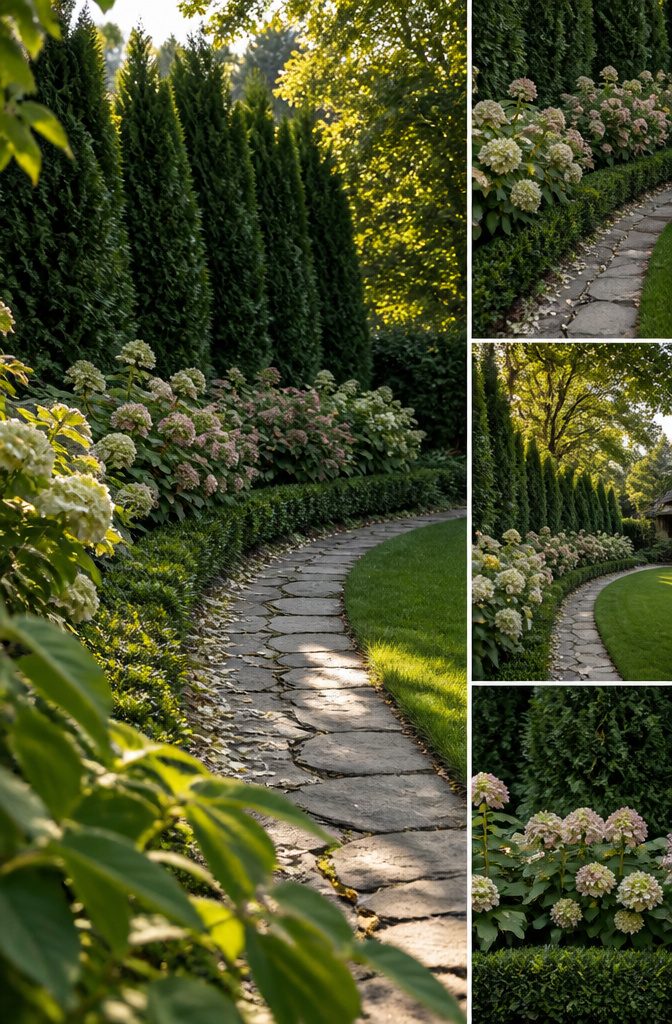
A single straight row leaves a thin screen.
Plant in layers: tall trees at the back, medium shrubs in the middle, lower plants in front. The depth blocks more views and noise than one line, looks less stiff, and gives wildlife a place to settle.
Mixing trees and shrubs gives fuller coverage and a more varied look, and a pest or disease is less likely to take out the whole screen.
Green Giant at the back with Boxwood in front makes a rich green wall all year.
Leyland Cypress with hydrangeas adds soft late-summer blooms to dense green. Emerald Green Arborvitae with flowering quince or lilacs brings fragrant color in late spring.
Recommended Products

READY TO PLANT: Includes 2 Leyland Cypress (Cupressocyparis leylandii) starter saplings in 3.5″ cubes. Each plant is well-rooted and ready to thrive. Natural variations in size, color, or seasonal appearance may occur.

LIVE LEYLAND CYPRESS: Elevate your living space with a live Leyland Cypress Evergreen Tree in a 1 gallon pot. This versatile and outdoor plant from American Plant Exchange is 1-1.5ft tall and ready to bring nature's charm to your home.
Fast-Growing Privacy Tree – Ideal for creating natural screens, property borders, and windbreaks with dense evergreen foliage for year-round coverage.
Spacing, Mulch and Trimming
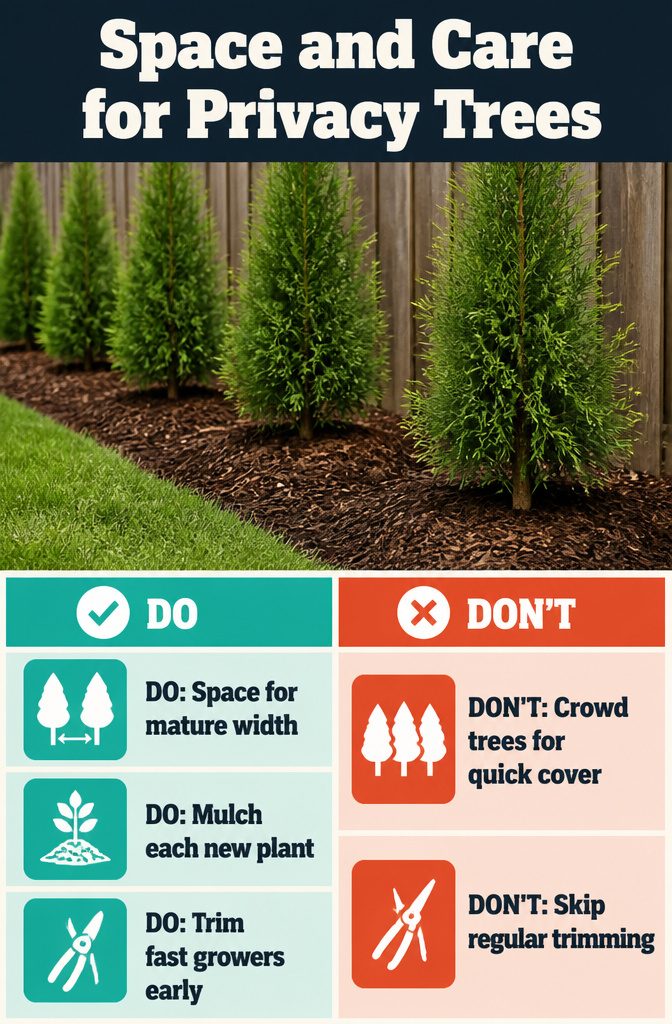
Planting close gives you quick privacy, but crowded trees compete for light and water, and the plants struggle later.
Leave each tree room to reach its full mature width, even if the screen looks gappy for the first year or two.
The plant tag lists the mature spread, so set your spacing from that. Room between trunks also lets air move through the hedge, which keeps the foliage healthier.
Spread mulch around the base of every new tree and shrub. It holds moisture in the soil, which matters most for newly planted woody plants.
Fast growers like Leyland Cypress need regular trimming to stay neat.
Skipped, they turn wild and shade their own branches. Start trimming early rather than waiting until the hedge looks shaggy.
Recommended Products

Rapid Growth Rate – Quickly matures into a tall and full evergreen, ideal for creating privacy and defining property lines naturally
Rapid Growth Rate – Quickly matures into a tall and full evergreen, ideal for creating privacy and defining property lines naturally
Rapid Growth Rate – Quickly matures into a tall and full evergreen, ideal for creating privacy and defining property lines naturally
Frequently Asked Questions
Recommended Products

Realistic & Thick Artificial Hedge: Show a more realistic appearance, our denser panels(400 stiches per tile panel, Each stiches contains 8 branches) are not “see through” and offer better privacy Hedges. It has sun protection and will not fade due to outdoor use.

Premium materials, rapid coverage: Made with 100% New PE. Our 48×120 inch (40 sqft) artificial grass roll offers seamless beauty without the work. This fake grass requires no complicated splicing, instantly covering walls, fences, and screens. Effortlessly create a professional, refined visual effect—without the need to plant or maintain real grass.

INSTANTLY UPGRADE ANY SPACE|Create a Fresh, Private & Stylish Green Oasis: Looking for an easy way to add privacy, cover an unattractive wall, or create a beautiful grass backdrop for parties and photos? These artificial boxwood hedge panels instantly transform empty walls, fences, balconies, or patios into a vibrant greenery wall or stylish grass wall decor. Perfect as a porch privacy screen, event grass wall backdrop, or natural accent wall for your home or office—without the maintenance of real plants
What are the best privacy trees for a small backyard?
Emerald Green arborvitae is the best pick for a small yard.
It grows in a narrow, upright form, so you can plant it close to a fence without losing lawn or patio space. Green Giant and Leyland Cypress spread wide as they mature and will crowd a tight lot.
What is the fastest-growing privacy tree?
Green Giant and Leyland Cypress are the two fast screening trees covered here, and both stay dense and green all year.
Green Giant needs plenty of room to fill out. Leyland Cypress needs regular trimming to stay in shape.
Can I grow privacy trees in partial shade?
Yes, Green Giant tolerates partial shade, which makes it a useful quick screen for a yard with a shaded side. Not every privacy plant does well without full sun, so match each plant to the light at its spot.
How far apart should I plant privacy trees?
Use the mature spread printed on the plant tag to set the spacing, not the size of the tree in its nursery pot.
The screen may look gappy for the first year or two. Trees planted too close compete for light and water and struggle later.
Should I mix trees and shrubs for a privacy screen?
Yes, plant in layers with tall trees at the back, medium shrubs in the middle and lower plants in front. A layered screen blocks more views and noise than a single row.
It also makes it less likely that one pest or disease takes out the whole planting. Green Giant with Boxwood in front is one pairing.
How much maintenance do privacy trees need?
Expect regular trimming for fast growers like Leyland Cypress and for formal shrubs like Boxwood.
Leyland Cypress left untrimmed turns wild and shades its own branches, so start trimming early. Mulch around new plants to hold moisture in the soil.
Are privacy plants better than a fence?
For blocking views, plants beat fences almost every time.
They also add shade, color and fragrant flowers, and a well-planned screen can work all year. Trees and shrubs together can also shield you from neighbors, busy streets and harsh winds.
Can a privacy screen have flowers or fragrance?
Yes. Viburnum carries white flowers and some types are fragrant, so check the plant tag before you buy.
Hydrangeas in front of Leyland Cypress, or flowering quince or lilacs in front of arborvitae, add blooms to an evergreen backdrop. Forsythia blooms yellow in early spring but is bare in winter, so pair it with evergreens.