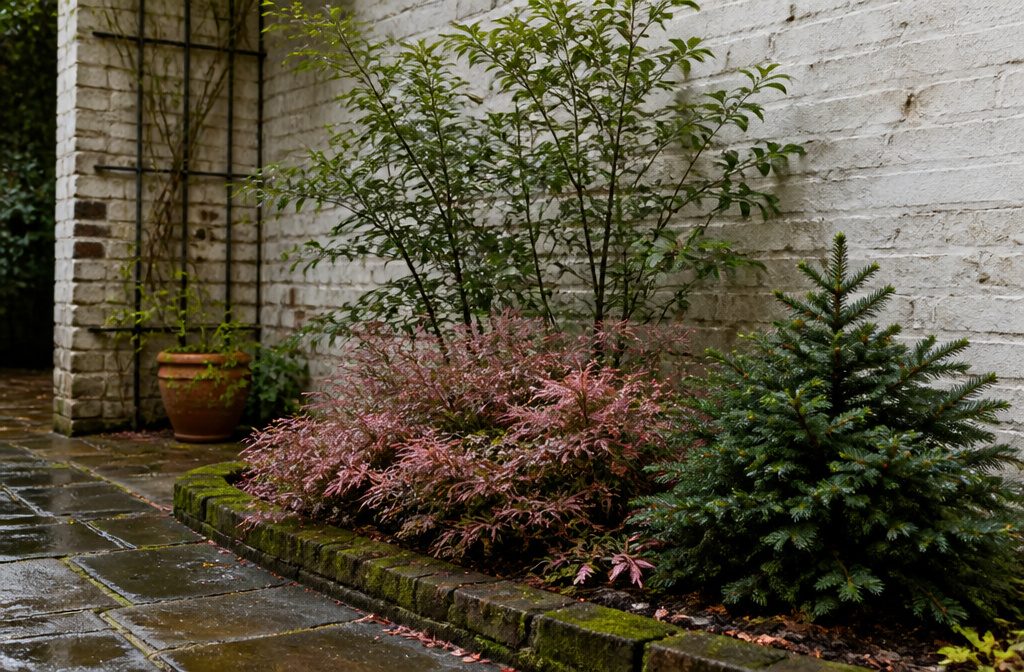
These evergreens run from dwarf firs 1–2 feet tall to small anise reaching up to 8 feet, and full-grown size should decide which fits your yard.
Width trips people up: Crimson Fire fringe flower is 3–4 feet tall but spreads 4–5 feet, so plan the footprint, not the height.
1. Dwarf Firs
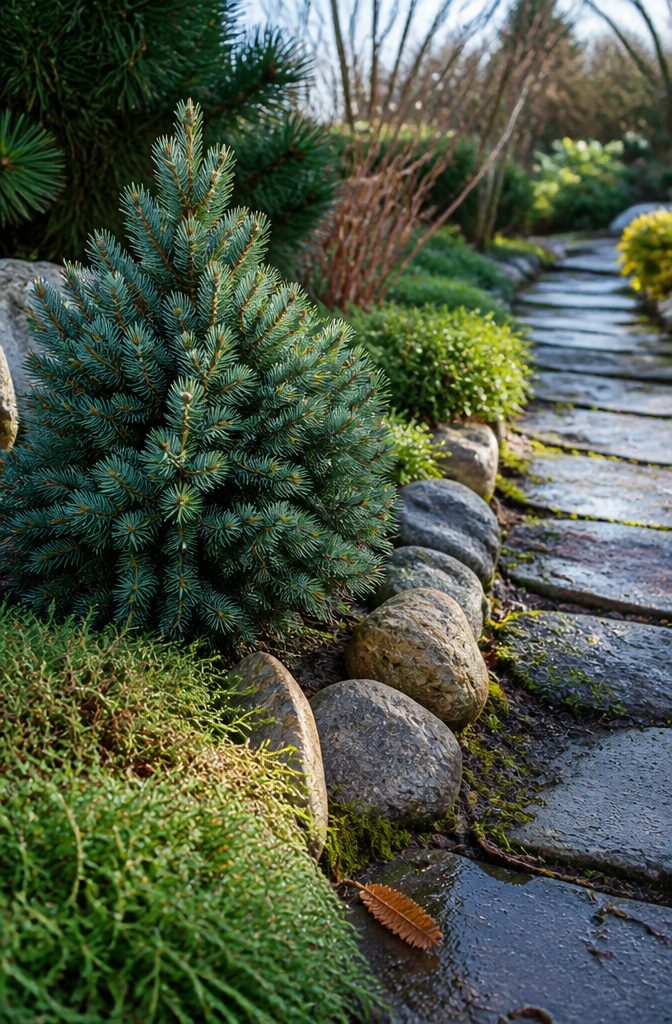
‘Nana’ balsam fir forms a broad mound of dark green, aromatic needles, adds 2–3 inches a year, and stays 1–2 feet tall and wide. ‘Kohout’s Ice Breaker’ Korean fir grows 1–3 inches a year and reaches 1–2 feet tall and 2–3 feet wide.
Its curled needles show silvery undersides, and the young globe turns into a broad pyramid with age. ‘Blauer Eskimo’ Korean fir has blue-green needles and resin-covered winter buds.
It grows 1 inch a year and tops out at 1–2 feet tall and just 10 inches–1 foot wide.
For a small bed or container, choose ‘Blauer Eskimo’.
Its narrow spread and slow growth keep it in scale longest, and it also suits rockeries. Give ‘Kohout’s Ice Breaker’ the extra width.
2. Boxwood
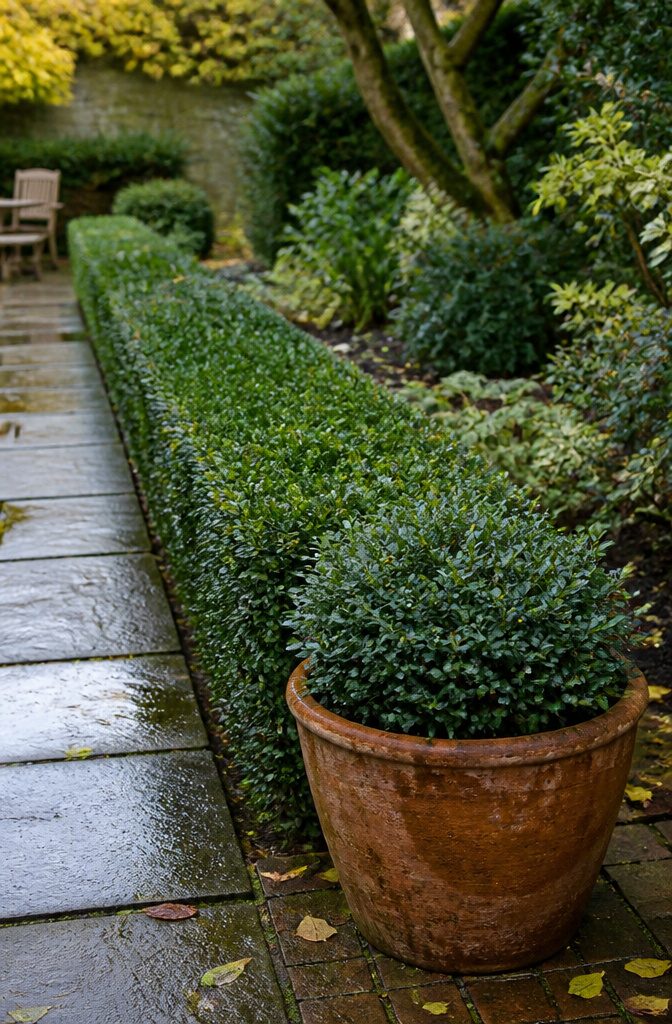
Both are Buxus sempervirens, and the difference is size. Choose ‘Blauer Heinz’ for a container and ‘Suffruticosa’ for a low hedge or edging.
‘Blauer Heinz’ stays 1–2 feet tall and wide. It grows slowly and keeps its glossy blue-green leaves all year, which makes it a good fit for a patio pot or a small garden bed.
‘Suffruticosa’ reaches 2–3 feet tall and 2–4 feet wide, with glossy leaves up to 1 inch long.
That extra spread lets neighboring plants meet in a continuous green line along a path or bed. In a pot it would outgrow the space.
Both take full sun, partial sun, or shade, so light rarely decides the choice.
Recommended Products

【WHAT YOU GET】12 Pcs Artificial Boxwood Panels, each size 10" x 10" x 1-1/2", total weight 3.3lbs. Covers about 8.33sq ft. 1 pack of cable ties(about 100pcs).
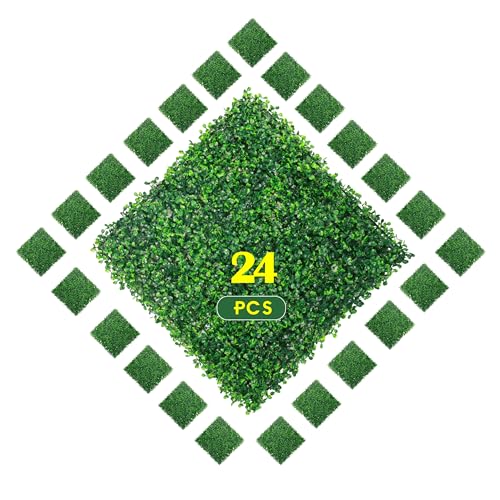
【Realistic & Thick Artificial Hedge】Our Boxwood Panels not only have realistic looking leaves and our panels are much more dense with 400 pins per panel and 8 branches per pin for a total of 3000+ realistic faux leaves are not “see through” and offer better privacy Hedges. It has sun protection and will not fade due to outdoor use.
3. Bottlebrush
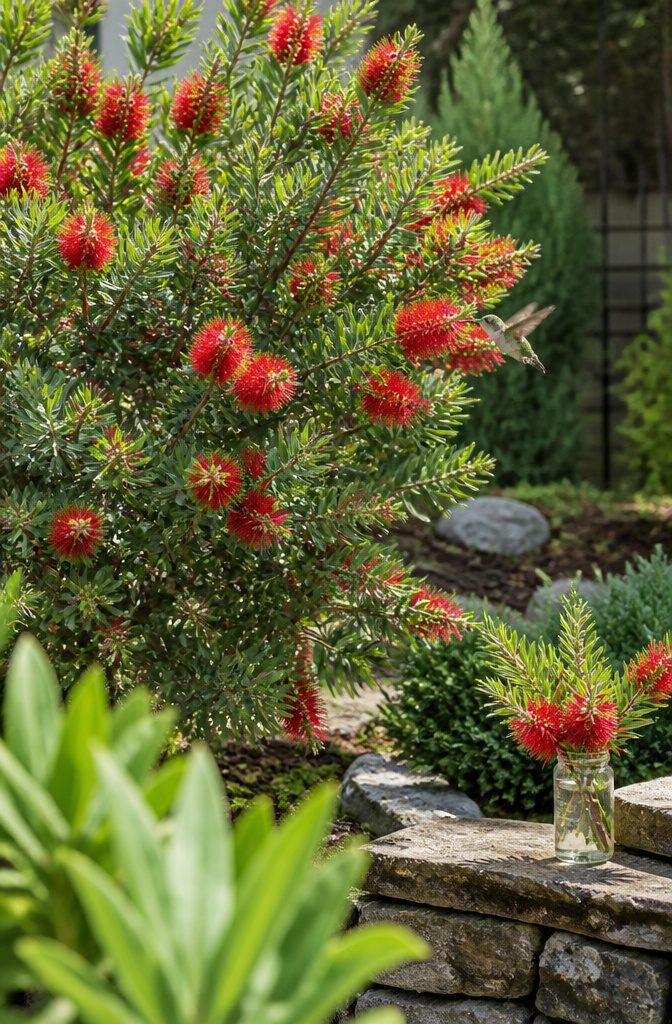
Bottlebrush ‘Little John’ (Callistemon viminalis) is the shrub to plant if you want birds in the yard.
Its blood-red flower spikes carry bristlelike stamens heavy with nectar, and that nectar draws both birds and hummingbirds. Because it blooms year-round, the feeding stops less often than with shrubs that flower for a few weeks in spring.
The dense, blue-green foliage stays on the plant in every season, so it works as an evergreen even when the flowers are sparse.
This Australian native is a dwarf and slow-growing, which suits a small yard and means less trimming to keep it in bounds.
The spikes also hold up as cut flowers, so you can bring a few indoors without losing the show outside.
Recommended Products

We cannot ship our plants to the following states: AK, AZ, CA, CO, HI, ID, MT, NM, NV, OR, UT, WA, or WY. All orders to these states will be automatically cancelled.

We cannot ship our plants to the following states: AK, AZ, CA, CO, HI, ID, MT, NM, NV, OR, UT, WA, or WY. All orders to these states will be automatically cancelled.

Bright pink blooms with golden stamens appear from mid to late winter, adding vibrant color and warmth to the season.
4. Camellia ‘Scentuous’
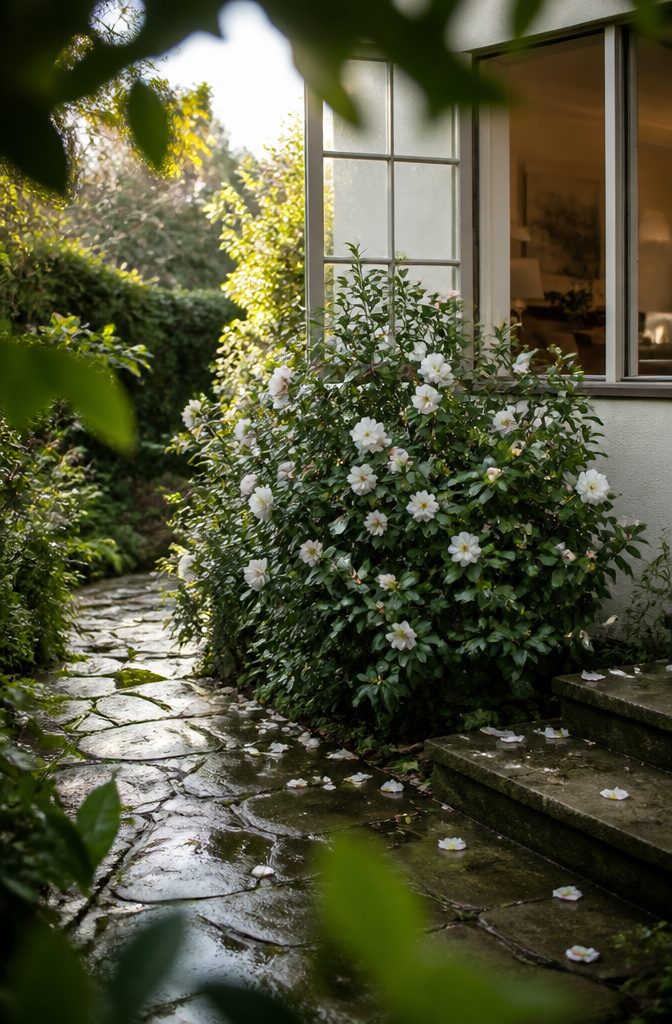
Camellia ‘Scentuous’ is an evergreen with fragrant flowers that look like apple blossoms. The semi-double to loose peony-form blooms are pure white with a pink flush on the outside, and each is 3 inches wide.
They cover the slender branches over a long stretch from mid to late season. The glossy, light green leaves stay on all year.
At 4–6 feet tall and 3–4 feet wide, this is the largest of the fragrant flowering shrubs in this group.
Plant it beside a door, path, or window you open in season, where you’ll catch the scent. Skip it for a bed narrower than its spread; a smaller shrub from this list will fit better there.
Recommended Products

DENSE FOLIAGE: Compacta Holly has lush foliage with small leaves about .75 inches long. It is a good choice for a tall ground cover that works well as a foundation plant, dense hedge, or other small group arrangements.

Thrives in USDA zones 5-9

5. Lawson Cypress
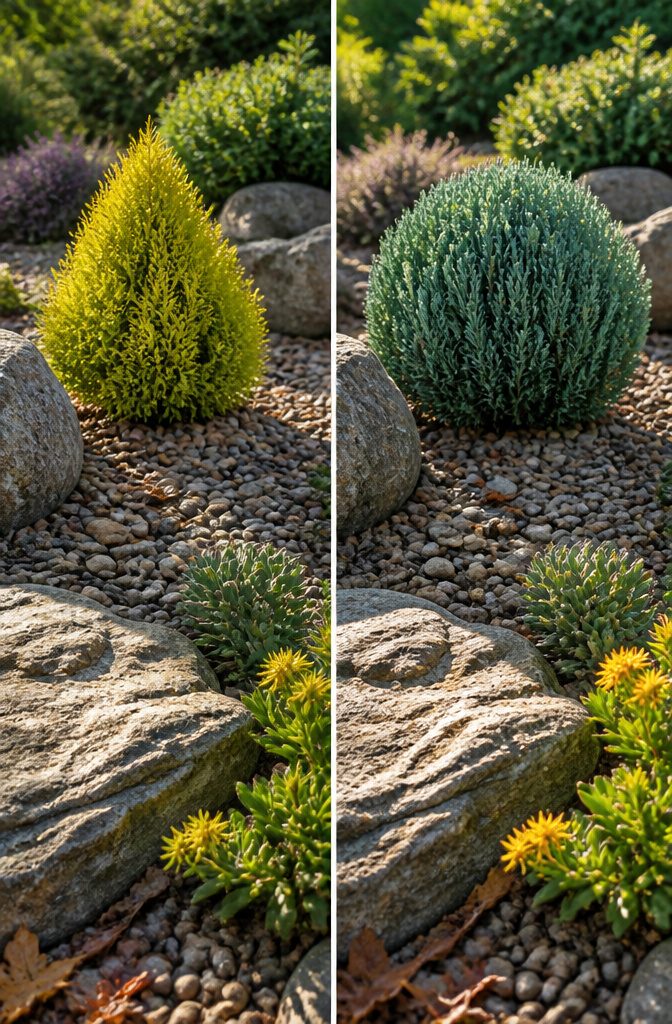
‘Minima Aurea’ is the color accent.
Its golden-yellow foliage rises in flat sprays on a conical shrub, and the color is at its best in a sunny spot. It grows 1–6 inches a year and reaches 1–3 feet tall and 1–2 feet wide.
‘Minima Glauca’ is the cooler option.
Its soft blue-green foliage grows in dense vertical sprays on a broadly globose shrub. It adds 2–3 inches a year and reaches 2–3 feet tall and 1–2 feet wide.
Both stay small enough for sunny borders, rock gardens, and containers. Choose ‘Minima Aurea’ for a bright accent and ‘Minima Glauca’ for a quieter, cooler tone, and plant either where it gets sun.
Recommended Products

Thrives in USDA zone 2-8

🌲 True Dwarf Mugo Pine – Extremely compact and slow-growing form.

LIVE PLANT: Enjoy this outdoor mini Christmas tree all year around. A slow-growing pyramidal spruce evergreen plants and shrubs with rich emerald green foliage.
6. Hinoki Cypress
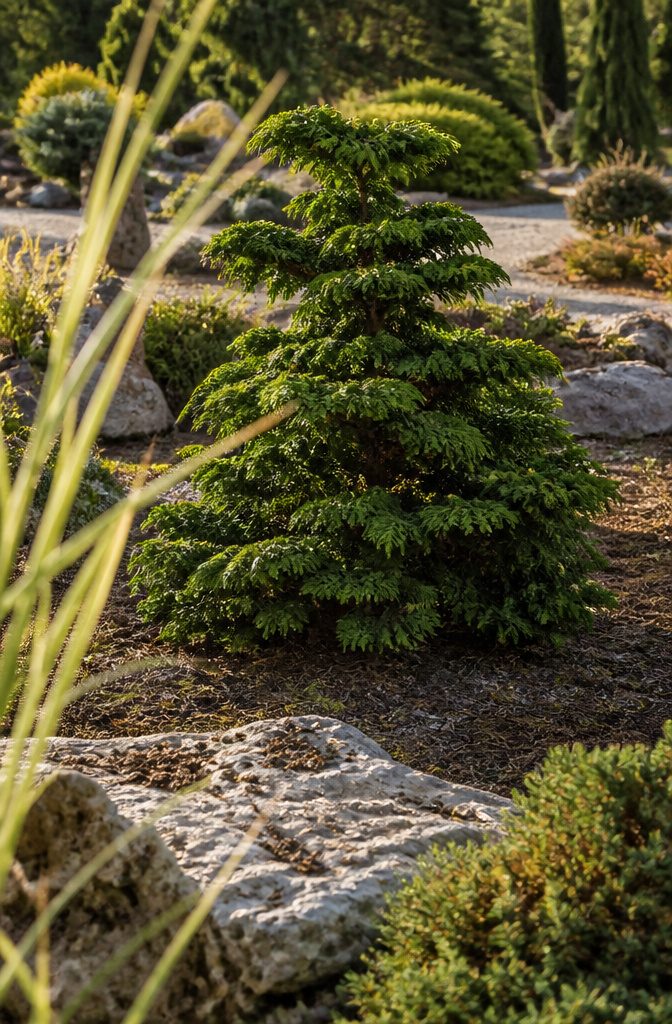
Glossy, dark green foliage in short, shell-like sprays gives Hinoki cypress (Chamaecyparis obtusa ‘Nana Gracilis’) a layered, sculpted look.
Young plants are dense globes. With age the shape broadens into a cone.
Growth runs 3–6 inches a year, so the plant fills in slowly.
Plan for 3–6 feet tall and 2–4 feet wide. That is larger than the other cypress on this list, so give it more room and don’t tuck it against a path or foundation.
It suits sunny borders and rock gardens, and a container works while it’s young.
Green-to-reddish brown cones add a little extra detail. This cultivar was introduced in 1867, and it has stayed a standard dwarf conifer ever since.
Recommended Products
【HEAVY-DUTY GALVANIZED STEEL】Say goodbye to flimsy aluminum. LAVEVE Garden Edging is built with a reinforced, thickened galvanized steel core, offering superior strength and durability while remaining flexible for custom-shaped borders.

[Package Included] Comes with 8 Pcs of Grass Wall Panels and 100 zip ties. Greenery Wall Panel size is 10 x 10 inch, can be cut to fit your requirement.

Made of Durable Plastic – Lightweight yet strong for long-term outdoor use.
7. Mexican Orange
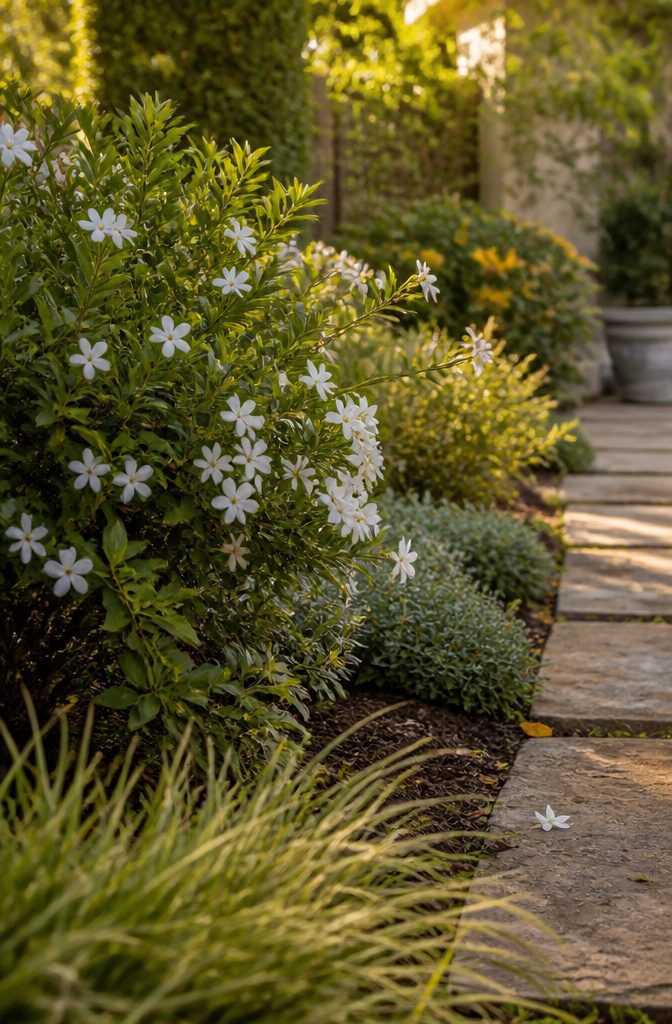
WHITE DAZZLER is a compact Mexican orange that reaches 4–5 feet tall and wide, so it fits a small yard, a sunny border, or a large container.
The finely divided, aromatic leaves stay evergreen, and star-shaped white flowers open in late spring, sweetly scented and popular with pollinators.
The fall bloom is the reason to choose it over a shrub that flowers once.
A yard that peaks in spring tends to turn to plain foliage by September, and this plant brings back flowers and fragrance for a second round.
The repeat is common but not guaranteed, so treat it as a bonus rather than the plan for your fall border.
Recommended Products

PREMIUM NURSERY GROWN: Arrives established with healthy root development to help your plant thrive. We cannot ship our plants to the following states: AK, AZ, CA, CO, HI, ID, MT, NM, NV, OR, UT, WA, or WY. All orders to these states will be automatically cancelled

FLOWERING PERIOD: Stunning Ruby-colored blooms appear from October through early winter, making it a standout feature in fall gardens

BEAUTIFY YOUR HOME LANDSCAPE — Increase Home Value & Add Flowering Shrubs
8. Cape Jasmine
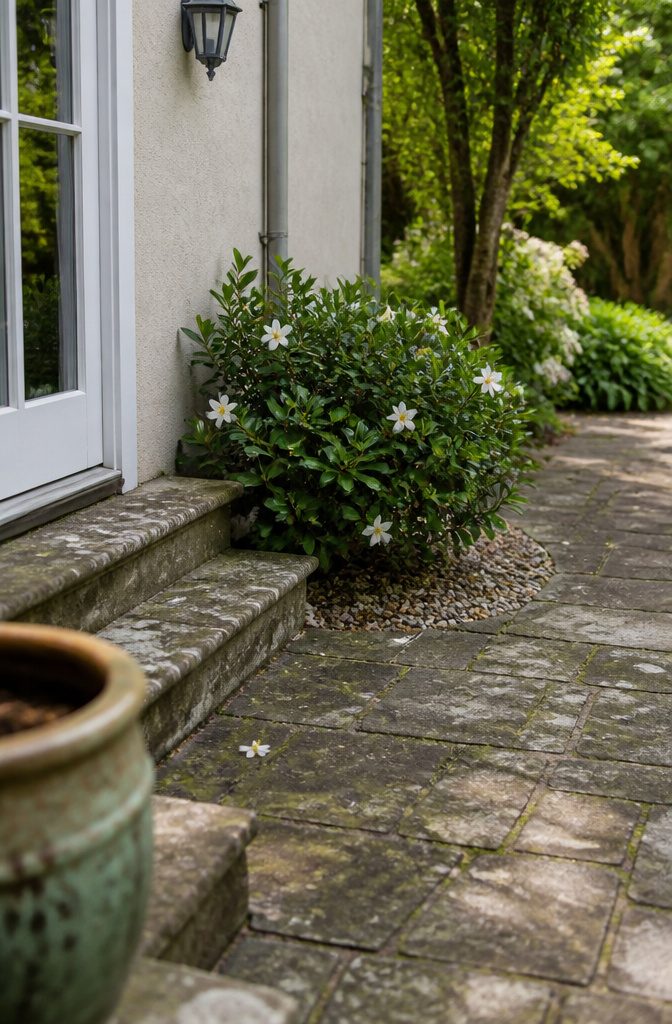
Kleim’s Hardy is a small, rounded evergreen gardenia that reaches 2–3 feet tall and wide, so it fits beside a front step without crowding it.
The leaves are thick and dark green. Ivory, star-shaped flowers with golden stamens open in late spring or early summer, with a few more now and then afterward, and the scent is strong.
Plant it within a few steps of a door or patio seating, where you’ll catch the fragrance as you pass.
It is sold as cold-resistant, but that is a description, not a zone rating, so check the plant tag against your own hardiness zone before you buy.
Recommended Products

Mature Size: 4“-6” tall & Spread: 6 to 8 feet. Spacing 4-6 feet apart.

GROWTH CHARACTERISTICS: Compact evergreen shrub with stunning gold-yellow foliage that maintains its vibrant color year-round without shedding

CLASSIC EVERGREEN SHRUB - Wintergreen Boxwood offers dense, glossy green foliage that provides year-round beauty and structure in any landscape
9. Varnished Hebe
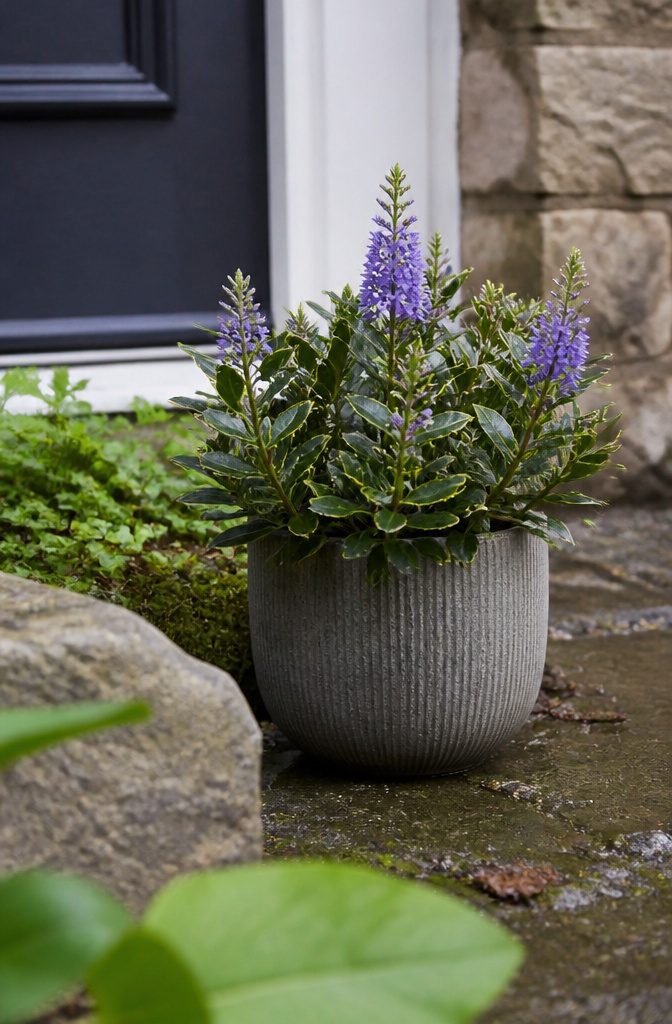
Varnished hebe tops out at 1–2 feet tall and wide, so it fits spaces where most shrubs on this list would take over.
The rounded, compact form holds its shape, and the glossy dark green leaves have a thin yellow edge that gives you color and contrast all year. Pale blue or white flower spikes open from late spring into early summer.
Plant it where you’ll see it up close: a pot by the front door, a balcony container, the front of a rock garden, or a small bed.
Skip it if you want a hedge or screen. At this size it works as an accent, and filling a long run would take a lot of plants.
Recommended Products
It is fully rooted in the soil and can be planted immediately upon arrival, weather permitting. Planting and how-to-care instructions will arrive with shipment.

🌿This holly variation is known for its lush green foliage and dense growth habit; makes for an excellent small to medium sized Hedge for border around garden beds, driveways, or pathways.

Excellent for evergreens, dogwoods, hydrangeas, magnolias and many other acid-loving trees and shrubs
10. Japanese Holly
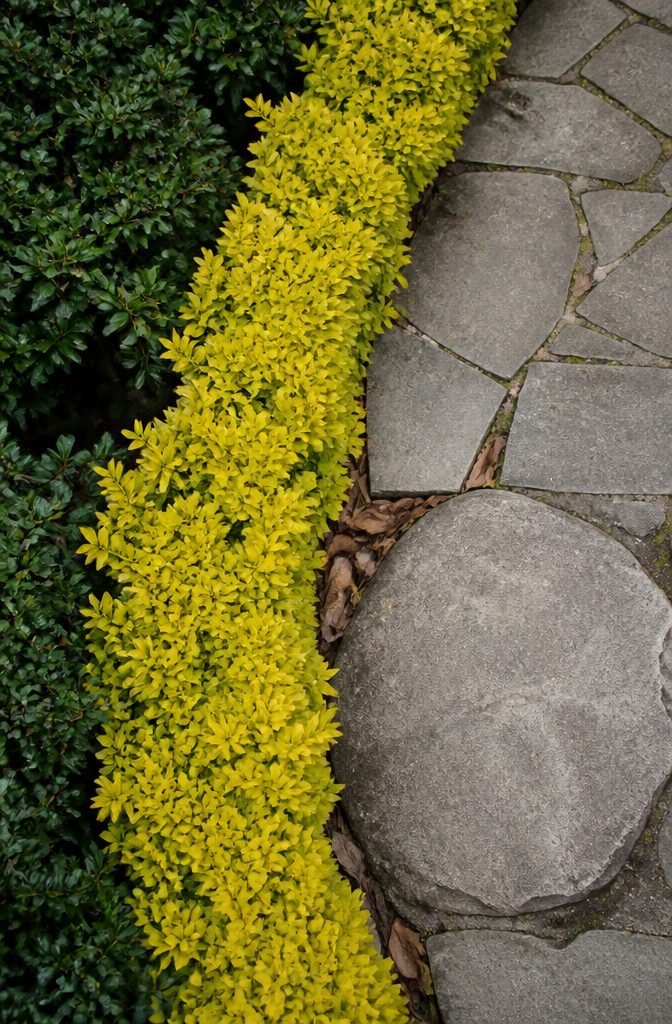
‘Brass Buckle’ Japanese holly (Ilex crenata) is a dwarf evergreen with small, shiny, clear yellow leaves that hold their golden color all year.
The leaves resist sun burn, so summer exposure is less of a worry. At just 1–2 feet tall and wide, it suits edging a walk or border, filling a container, or accenting a rock garden.
In winter, perennials have died back and deciduous shrubs stand bare. A low row of yellow foliage that stays yellow keeps color in the bed when little else has any.
Plant it against dark green shrubs or gray stone for the strongest contrast. Against those backdrops it looks like a patch of low sunlight, even on an overcast day.
Recommended Products

🌿【MORE DENSE, MORE REALISTIC】 The boxwood roll panels provides coverage for over 75 square feet, measuring 60x170 inches. Whether used for a privacy fence or decoration, our artificial grass panels is denser and more lifelike. It can be used directly without the need for assembly, and furthermore, it can be disassembled into smaller pieces or trimmed according to your needs.

【Realistic & Thick Artificial Hedge】 The package comes with 1 pieces 48”x120”, the total area is 40 sq ft . The thickness of the greenery backdrop is 2 inches which looks more realistic. The thick hedge is dense and can cover the background well and privacy. It can be used directly without assembly, and can also be disassembled into small pieces or trimmed as needed.

Premium PE Material: With SGS certification. Size: 10'' x 10". Quantity: 12 pcs. The polyethylene material is environment friendly, and sun-proof, which can avoid the leaves fading quickly. The artificial hedge panel will keep your fences or walls always looking good.
11. Inkberry
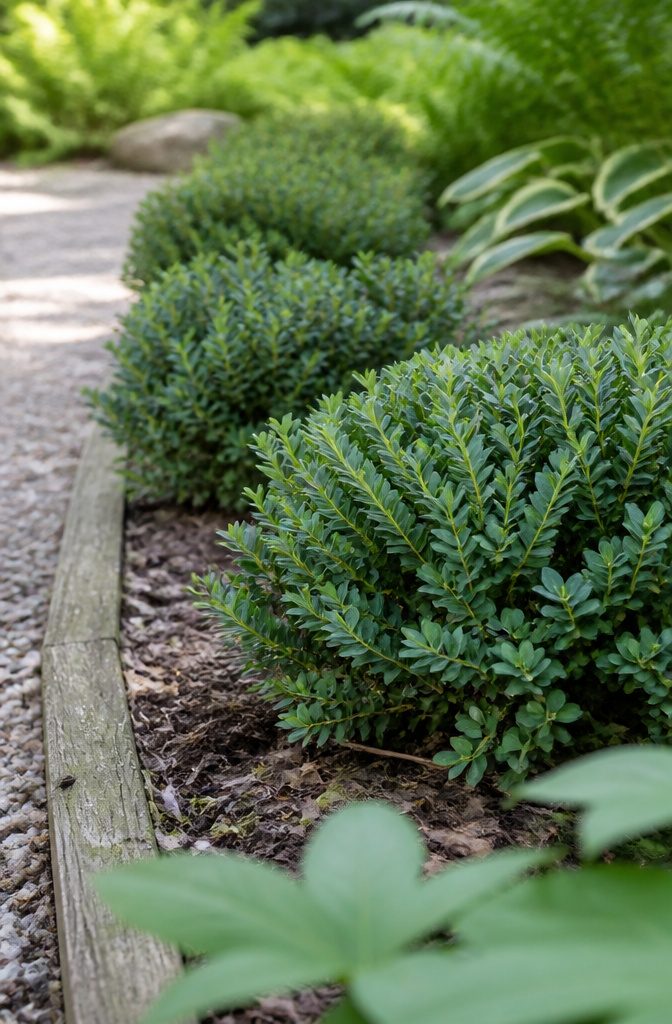
Strongbox inkberry (Ilex glabra Strongbox®) gives you the clipped, rounded look of boxwood, with thick, spineless, blue-green leaves. It grows 2–3 feet tall and wide, so it fits small beds and containers.
It resists disease, pests, and winter burn. The greenish-white spring flowers are small and easy to miss, so you’re growing it for the foliage.
Choose it over boxwood if you want a larger mound and fewer worries.
The dwarf boxwood ‘Blauer Heinz’ stays at 1–2 feet and grows slowly, which suits tight edging, but Strongbox fills more space. It’s also stoloniferous, meaning it spreads by runners, so give it some room.
12. Small Anise
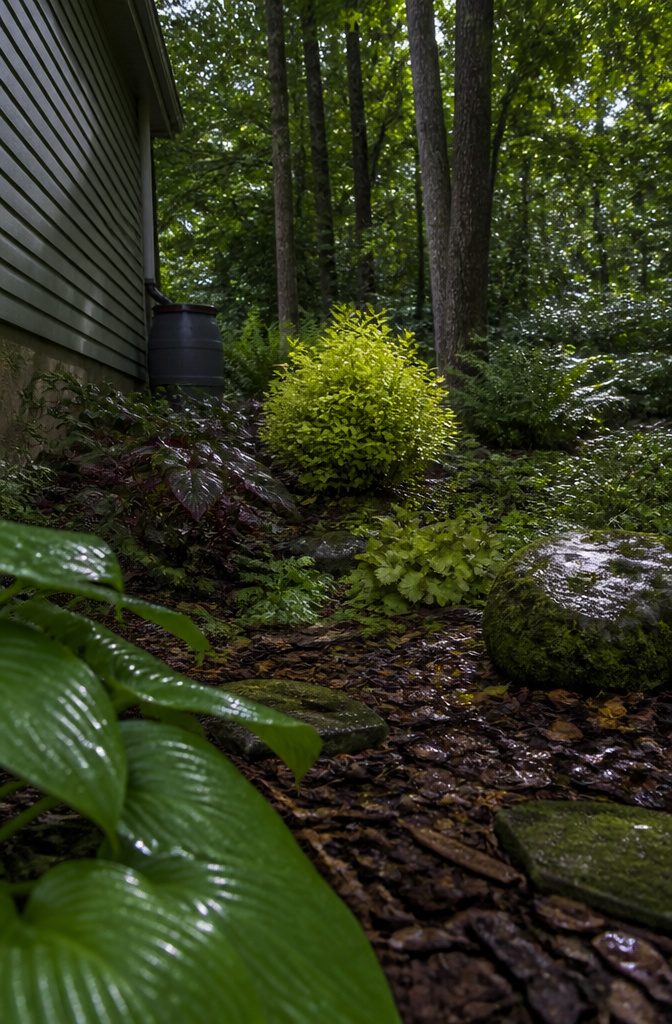
Small anise is the evergreen to try in a wet, shady corner where most shrubs struggle. ‘Florida Sunshine’ forms a rounded mound of chartreuse, golden leaves that light up dim spots and turn hot yellow in fall.
Crush a leaf and it smells of anise. Unlike the species, this selection does not sucker or send out long, gangly shoots, so the shape stays neat.
Plan for its height. It reaches 4–8 feet tall but only 2–3 feet wide, which makes it taller than most shrubs on this list.
That narrow spread suits a tight bed, the back of a border, or a small garden, as long as you leave room overhead.
13. Chinese Juniper
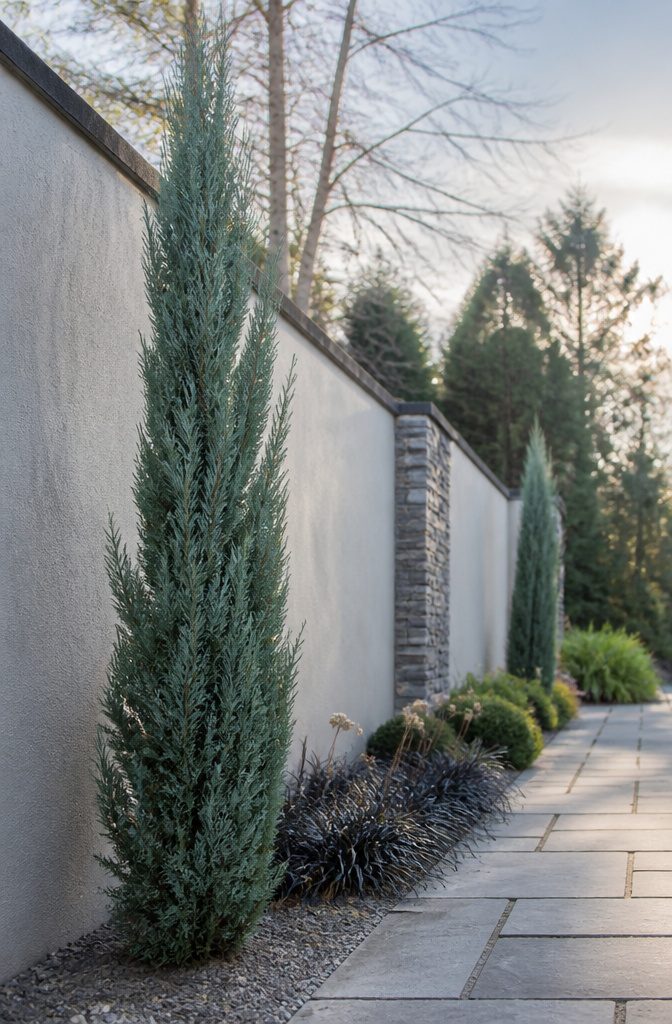
‘Stricta’ grows as a tight, pointed pyramid of soft blue-green foliage, much like a small Italian cypress.
It reaches 5–6 feet tall and only 2–4 feet wide, so it fits beside a walkway, door or wall where most shrubs would crowd the space.
Choose it for vertical accents, narrow screens and tight hedges.
Planted in a row, the dense branching blocks sightlines and breaks wind, and its slow growth keeps it compact. A single plant at a fence corner or flanking an entry adds an upright line that stays green all winter.
Skip it for low edging or a rounded foundation shrub. It is built to rise, not spread, and it will never fill a wide bed.
14. Chinese Fringe Flower
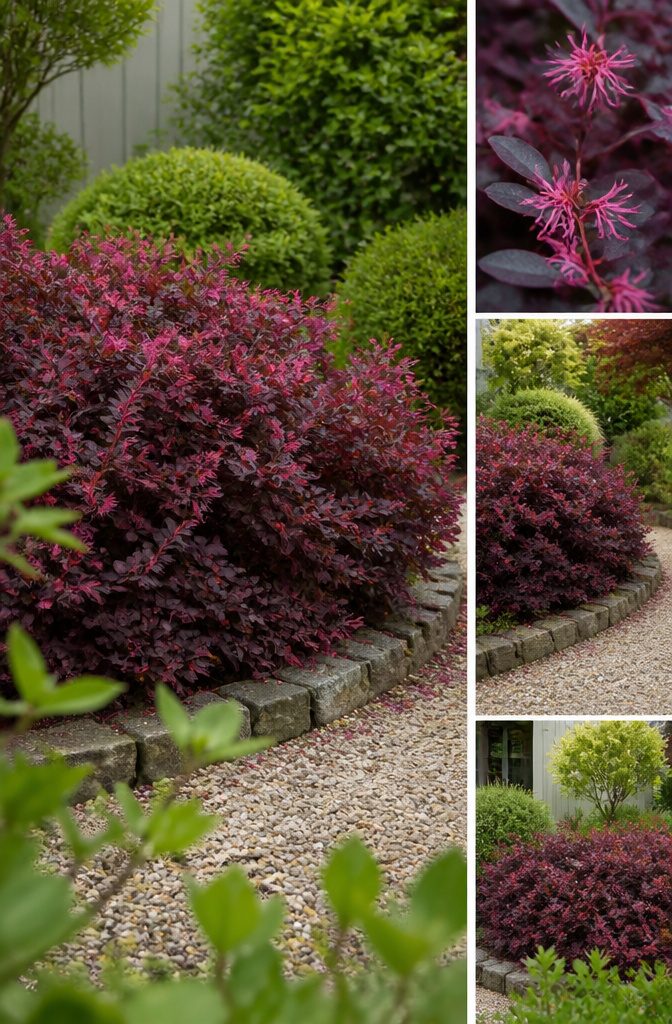
Crimson Fire™ holds its ruby-red leaves all year, and that is the reason to choose it over a plain green evergreen. In spring, neon-pink, spidery flowers open against the dark foliage.
It reaches 3–4 feet tall but spreads 4–5 feet wide, so plan a footprint wider than the shrub is tall.
Give each plant that much room, or set several together as a mass planting or low hedge. In a small yard or on a patio, it also works in a container.
It is deer-resistant and cold-tolerant, which suits an unfenced front border. Set it beside green shrubs, where the red stands out most.
Matching Shrubs to Your Yard
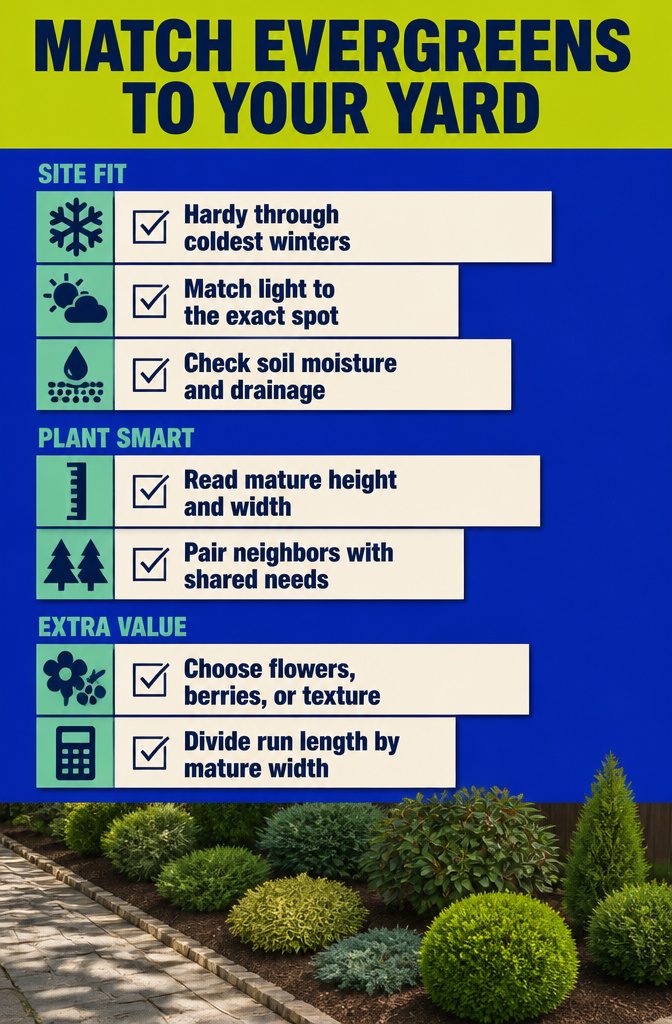
Match the shrub to the spot before you fall for the look. Site fit matters more than appearance.
- Climate: choose a shrub hardy through your coldest winters.
- Light: match sun, part shade, or shade to the exact spot.
- Soil, moisture, drainage: some shrubs need fast-draining ground, others steady moisture.
- Mature size: read the full-grown height and width, not the pot size.
- Neighbors: pair plants with the same light and water needs.
- Seasonal interest: flowers, berries, colorful new growth, or textured foliage add more than green.
- Quantities: divide the length of your planting run by mature width.
Compact evergreens suit low hedges, path edging, gaps between larger plants, and softening hardscape. They also keep structure among perennials and bulbs that disappear in winter.
Dense branches shelter birds, and flowering or fruiting shrubs feed pollinators.
Frequently Asked Questions
How do I choose compact evergreen shrubs?
Start with your climate, the light at the planting spot, and your soil and moisture.
Then read the full-grown height and width on the tag, not the pot size. Pair shrubs that share light and water needs, and divide the length of your planting run by the mature width to get the number of plants.
What are good small shrubs?
‘Blauer Heinz’ boxwood, ‘Blauer Eskimo’ Korean fir, varnished hebe, and ‘Brass Buckle’ Japanese holly all stay 1–2 feet tall. ‘Blauer Eskimo’ is the narrowest at 10 inches–1 foot wide.
If you have a little more room, Kleim’s Hardy gardenia and Strongbox inkberry reach 2–3 feet tall and wide.
What shrubs are deer resistant?
It grows 3–4 feet tall and 4–5 feet wide, and it also tolerates cold, which suits an unfenced front border.
What are the hardiest shrubs?
Crimson Fire Chinese fringe flower is described as cold-tolerant, and Strongbox inkberry resists winter burn, disease, and pests.
Kleim’s Hardy gardenia is sold as cold-resistant, but that is not a zone rating, so check the plant tag against your own zone before buying.