Costs range from free leaf mulch to artificial turf at $7 to $18 per square foot, but sun and drainage decide which ideas suit your yard.
Self-cleaning roses need at least 6 hours of sun, and succulents sit badly in wet soil, so check your sunniest and soggiest spots before buying anything.
1. Rock and Gravel Beds
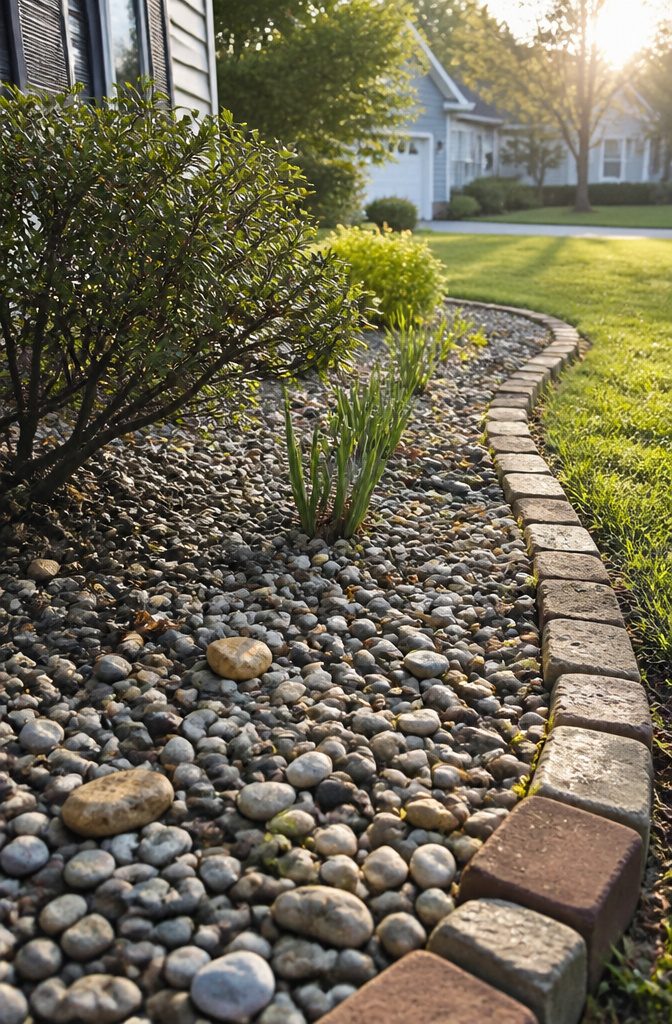
Pea gravel or river rock beats wood chips and pine straw as mulch because you don’t have to replace it every spring or fall. Bob Vila gives the depth:
For best results, aim for a 2- to 4-inch layer of one of these small-sized landscaping rocks, with the thinner layer for small-particled rock.
— Bob Vila
Go thinner with fine gravel, and pull any weed the day it shows, before it seeds.
For a path or small patio, man-made gravel holds up to foot traffic. Natural gravel is smoother but shifts, so save it for light use.
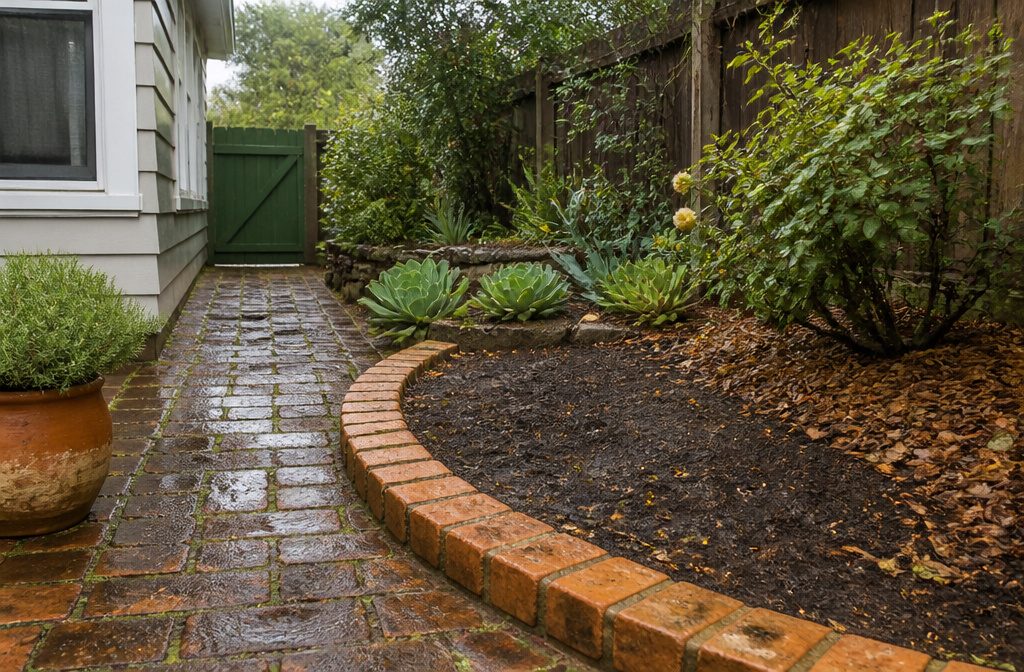
Bricks, stones or broken pavers you already have, set along a bed’s edge, define it without a store-bought border.
Recommended Products

EASYFLEX DECORATIVE NO-DIG LANDSCAPE EDGING: Get a beautifully landscaped yard without all the work of a dig-in lawn edging; simple installation without trenches or shovels; color may vary due to the unique manufacturing process.

150 UNBREAKABLE STEEL STAKES – Unlike common brittle plastic spikes that snap instantly in hard soil, our flower bed edging kit is equipped with 150 premium steel stakes. These solid metal anchors easily penetrate clay. Secure your landscape edging firmly with confidence and say goodbye to frustrating plastic tools.
2. Add a Walkway
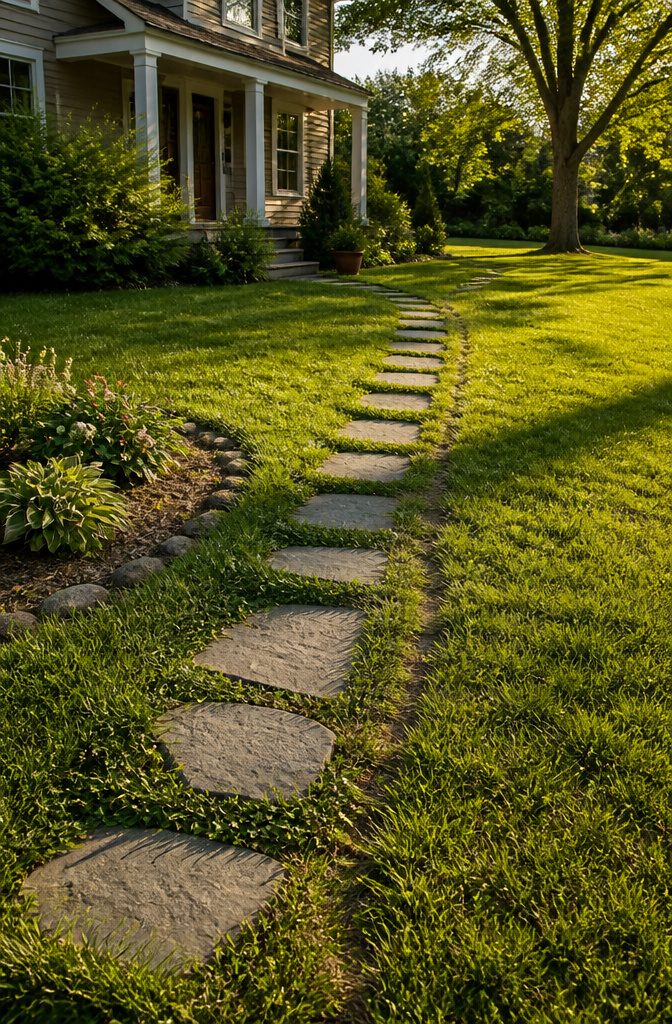
A walkway gives visitors a clear line to the door and makes a plain front yard look planned. Gravel is the cheapest material to lay yourself: dig out the path, spread it, and rake it level.
It creeps into the lawn without edging and is rough going for strollers. Stepping stones set into lawn or ground cover are nearly as cheap, but they suit a casual path better than a main entry.
Pavers cost more and need a level, compacted base, yet they stay put and look tidy.
Flagstone and other natural stone look best and cost the most; the pieces are heavy and uneven, so they fit slowly. Wood works in dry shade but turns slick and rots where it stays wet.
Recommended Products

RUBBER STEPPING STONES: Elevate your outdoor space with these lightweight simulated flagstone rubber pavers that offer the timeless beauty of real stone without the heavy lifting.

【Natural River Stone】Our stepping stones, made from river rocks, are naturally stunning. Each stone, crafted from genuine river stones, retains its natural texture to highlight its intrinsic beauty. With their unique natural colors, they can create an eye-catching garden path for your patio.

UNIQUE OUTDOOR WALKWAY SOLUTION: Elevate your garden, lawn, or backyard with BIRDROCK HOME Rubber Stepping Stones. These durable pavers create a functional and stylish walkway, enhancing your landscape while providing a solid and reliable surface to walk on.
3. Mulch Your Beds
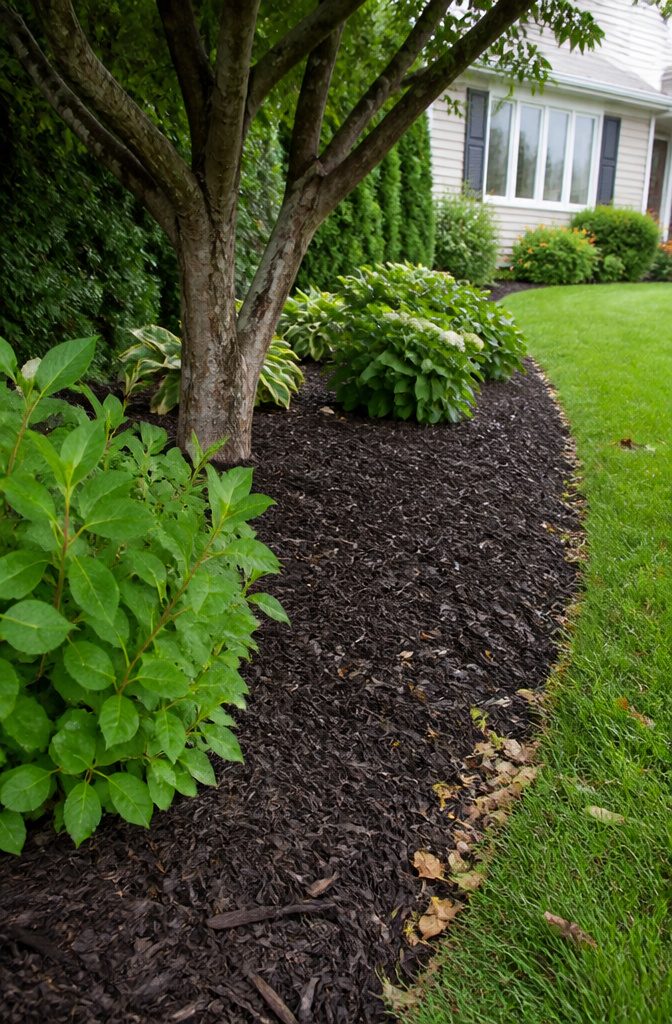
Mulch around trees, shrubs, and flower beds gives a yard a clean, finished edge for very little work.
Bark or wood chips are the best pick for most beds, because the dark color sets off green foliage and makes a bed look tended even before the plants fill in.
The layer also holds moisture in the soil, so you water less, and it suppresses weeds. Rock is a separate option, covered with the gravel beds.
Your own yard supplies free mulch every fall.
Run a mulching mower over fallen leaves instead of raking them, and leave the shredded layer on the lawn no thicker than 1 inch, since a heavier layer builds thatch. Spread any extra over your beds.
Recommended Products

Natural Organic Tree Ring: These tree mulch rings are made of natural coconut fiber, which is very thick, the fiber is evenly distributed, and sturdy, it can keep the soil moisture in the pot well, they can also prevent weeds from growing arbitrarily

ALL-NATURAL INGREDIENTS: No added fertilizers or pesticides

ALL-NATURAL INGREDIENTS: No added fertilizers or pesticides
4. Choose Native Plants
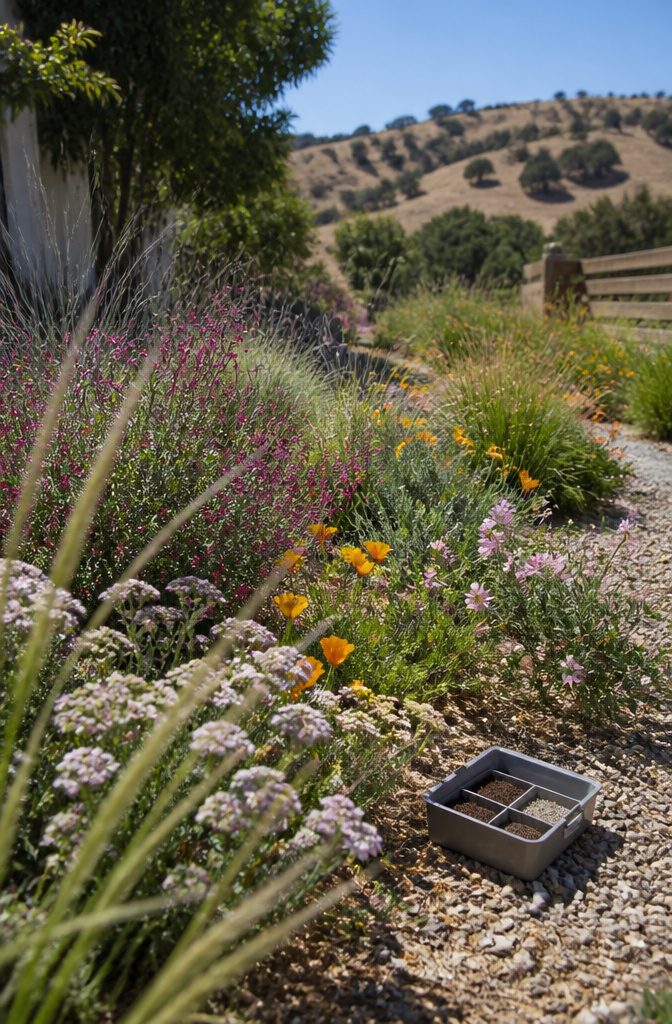
Native plants evolved in your local climate, so they need less water, fertilizer, pesticide and general care than imports, and they draw local birds and butterflies.
In Southern California, good examples include California fuchsia, De la Mina verbena, California buckwheat, California poppy, apricot mallow and deer grass, which stays green through summer without watering.
Those picks suit that region only. For your own list, search "native plants" plus your state.
Check each plant’s USDA hardiness zone before you buy, because anything too tender will fail and waste your budget.
A soil test shows what your dirt lacks and helps you choose plants for your soil type. Your local extension office can help you read the results.
Recommended Products

EXTRA LARGE PACKET contains over 1 full ounce of pure live seeds (7,500+ seeds) - Enough to cover 100 square feet.
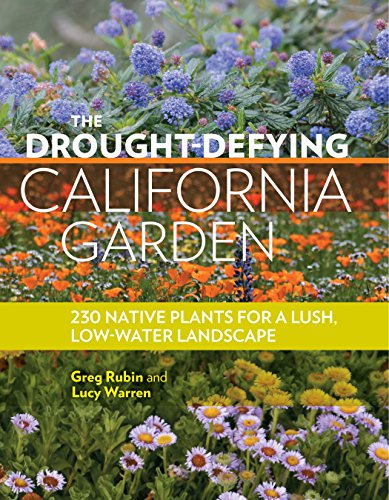

PREMIUM DROUGHT TOLERANT WILDFLOWER MIX: A carefully curated blend of hardy wildflowers selected to thrive in hot, dry, and low-water conditions. Suitable for xeriscaping, water-wise gardens, low-water landscapes, and challenging growing environments across the continental USA
5. Plant Perennials
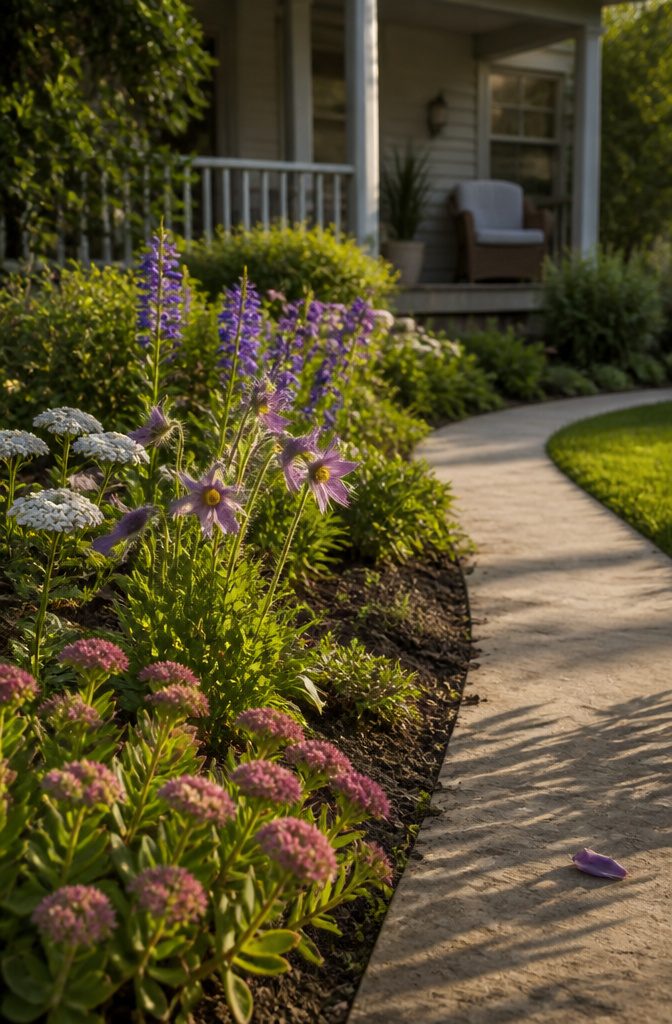
Annuals die at frost and get bought again every spring. A perennial costs more at the checkout, but you pay once and it returns, so the savings grow with every year it survives.
For a yard you tend casually, start with pasqueflower, which tolerates drought, and penstemon, which looks delicate but is durable.
In hot, dry spots, sedum and yarrow are the safest buys. Yarrow can look like a weed, but it earns its place.
Choose plants with different bloom times so something is always flowering. Buy a few kinds now and add more each season as your budget allows.
Recommended Products

Stone-Look Decorative Landscape Edging: 2.75 inch tall rustic stone design complements any flower gardens and provide clean look for your gardens, flower beds, lawns, grass, raised garden beds, shrubbery, pathways, yard trees, ground pool, etc.

【HEAVY-DUTY GALVANIZED STEEL】Say goodbye to flimsy aluminum. LAVEVE Garden Edging is built with a reinforced, thickened galvanized steel core, offering superior strength and durability while remaining flexible for custom-shaped borders.

Durable & Flexible Material GTSABWAY garden edging is Made from high-quality metal, ensuring superior durability and flexibility. Easily shape it into straight lines,curves, circles, or unique contours ,without cracking,Can withstand all kinds of weather conditions, ensuring long-term durability and reliability. providing reliable Garden Border solutions.
6. Solar and String Lights
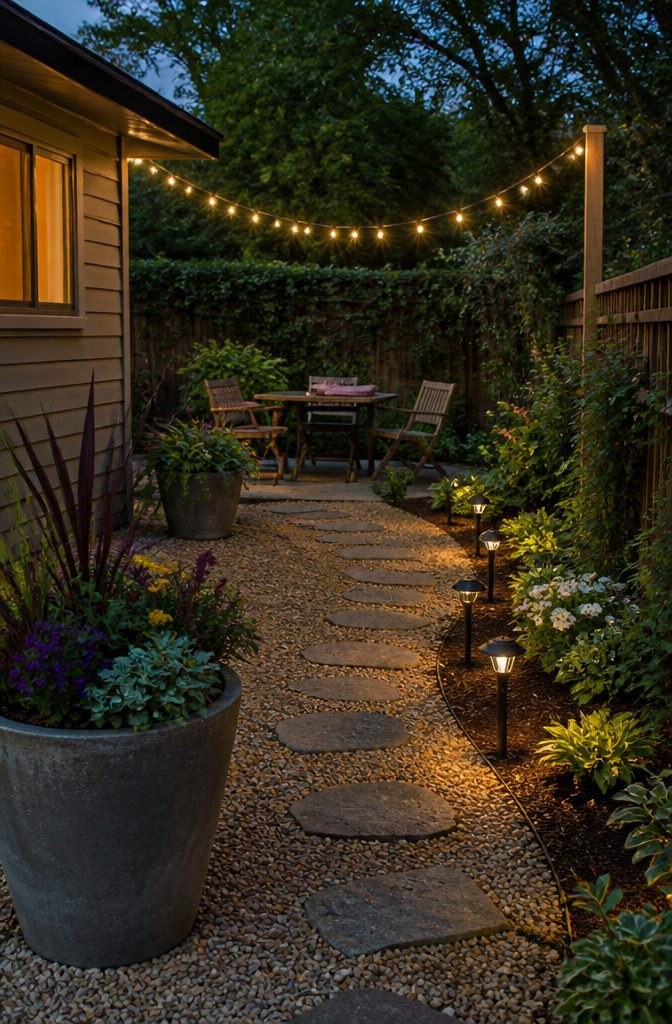
Solar lights need no wiring, so installation means pushing a stake into the soil. The panel charges during the day, the light comes on at night, and your electric bill stays the same.
Line them along a path, around a garden bed, or beside the front entry. Set each one where it gets direct sun most of the day, because under a shrub or porch roof it runs dim or quits early.
String lights suit a patio or backyard better. Hang them over the seating area, where a fence, post, or eave gives you something to anchor to.
Recommended Products

【Natural Stones】This river rocks are natural lightly polished for smooth effect, comes in a variety of natural colors. Resists fading for long-lasting beauty


Define a Garden Path: 8 pack 15 x 15 in rubber stepping stones provide about 12.5 sq ft of total surface area, giving homeowners enough pieces to create a short walkway through gardens, lawns, flower beds or backyard areas without buying individual pavers separately
7. Replace Part of the Lawn
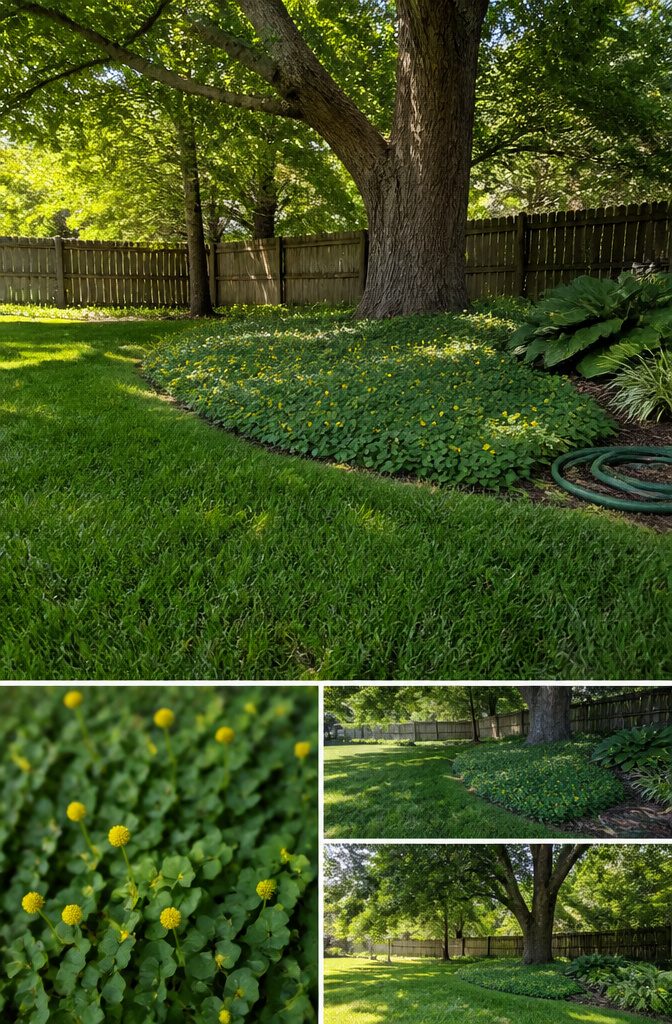
Start with the patch of lawn that costs you the most effort, like the corner you mow around or the bare spot under a tree, and replace only that.
Mat-forming ground covers such as New Zealand brass buttons (Leptinella squalida), Scotch or Irish moss (Sagina subulata), and low-growing clover make a plush carpet that cuts mowing, watering, and fertilizer.
Choose by your climate and how much foot traffic the spot gets. Where nothing needs to grow, gravel or pavers also work.
Artificial turf is the pricey option, at $7 to $18 per square foot for nylon or polymer.
A 100-square-foot patch runs $700 to $1,800, which can swallow a whole year’s yard budget. Skip it unless you truly want zero upkeep.
Recommended Products

【Biodegradable and Long-lasting】: These non woven tree rings are made of high-quality high-density thick non-woven fabric, which is durable and saves resources. Tree-based covering non-woven fabrics naturally degrade over time, reducing waste and the need for constant replacement.

Recycled Heavy Duty Rubber tree ring works great as tree weed barrier

🌳 Flexible & Cuttable for Custom Projects This tree bark panel can be easily bent or cut to fit any size or shape. Customize it to decorate anything from pillars and walls to garden features, providing you with endless design possibilities.
8. Automate Watering
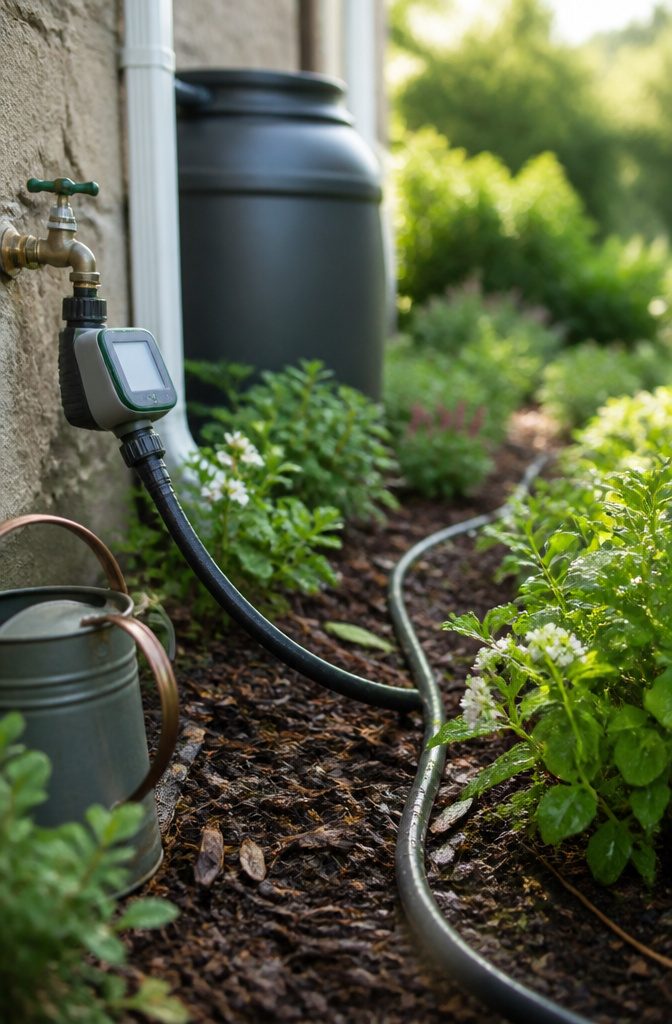
The Rain Bird hose-end timer costs $49.98 on Amazon, and it’s the easiest fix for forgotten watering.
It threads onto your hose bib, has a digital panel, and offers "water now" and "cancel watering" buttons that override the schedule. Run it to a soaker hose laid through your beds under a thin layer of mulch.
Add quick-connect fittings next.
Put a female end on the main hose and a male end on every sprayer, sprinkler and soaker. Swapping tools then takes one pull and a snap.
A rain barrel under a downspout gives you free water.
Empty it before winter so ice doesn’t damage it. If a barrel is more than you want to manage, redirect a downspout 15 feet to a tree and let each storm water it.
Recommended Products

🌾 Vibrant Golden Color for Stunning Landscapes Create eye-catching curb appeal with Golden Sunset Yellow Prairie Grass live plugs featuring tall golden blades that add texture, movement, and warm seasonal color to any garden or landscape design

🌵 23 Heirloom Varieties – Annuals + Perennials: A curated mix of 23 drought‑tolerant species. Annuals provide fast first‑season color, while perennials return year after year – creating a low‑water wildflower meadow that thrives on neglect.

PREMIUM CALIFORNIA WILDFLOWER MIXTURE. Elevate your garden with Sweet Yards California Wildflower Mixture, a bulk 1-ounce packet bursting with over 7,000 native seeds. This open-pollinated and non-GMO mix is thoughtfully curated for maximum beauty and biodiversity.
9. Evergreen Shrubs and Ground Covers
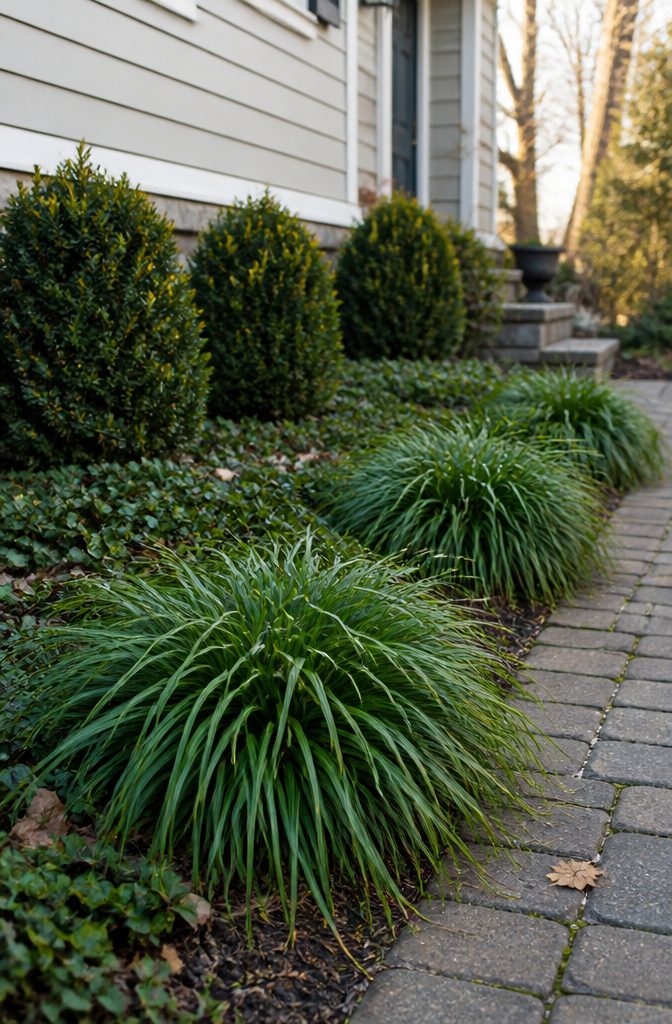
Evergreens keep their color all year, so a bed never goes bare in winter.
Use dwarf varieties in flower beds, set shrubs against the house to hide the foundation, and choose tall, columnar types for privacy. Creeping varieties work as ground cover.
For a border along beds and walkways, clumping monkey grass (Liriope muscari) is the low-effort pick.
It stands up to dogs, deer, bugs and weeds, and it grows in a range of soils and climates. It reaches about 15 inches, so trim it for a neat edge or let it grow long for a looser look.
Buy fewer plants and make each one count. Repeat the same shrub or grass in groups of 3 or another odd number, which reads as deliberate rather than scattered.
Recommended Products

Long-Lasting Use: Made of high-quality, weather-resistant plastic, this landscape edging is both sturdy and flexible enough to hold pebbles, mulch, and other materials in place

Quality Metal Material: Our galvanized garden edge is processed using high-precision CNC technology, ensuring accuracy down to every millimeter. Innovative 3D ripple design not only enhances the aesthetic appeal of the fence but also strengthens its structural integrity.
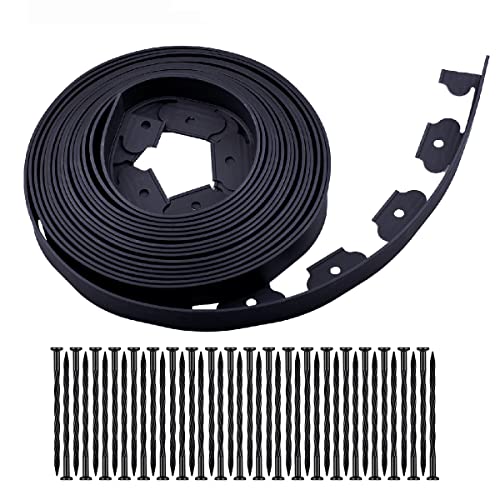
PRODUCT DIMENSIONS:480*2 *2 inches,lawn edging kit suitable for landscape edging,flower garden and grass lawn for the yard
10. Succulents in Sunny Spots
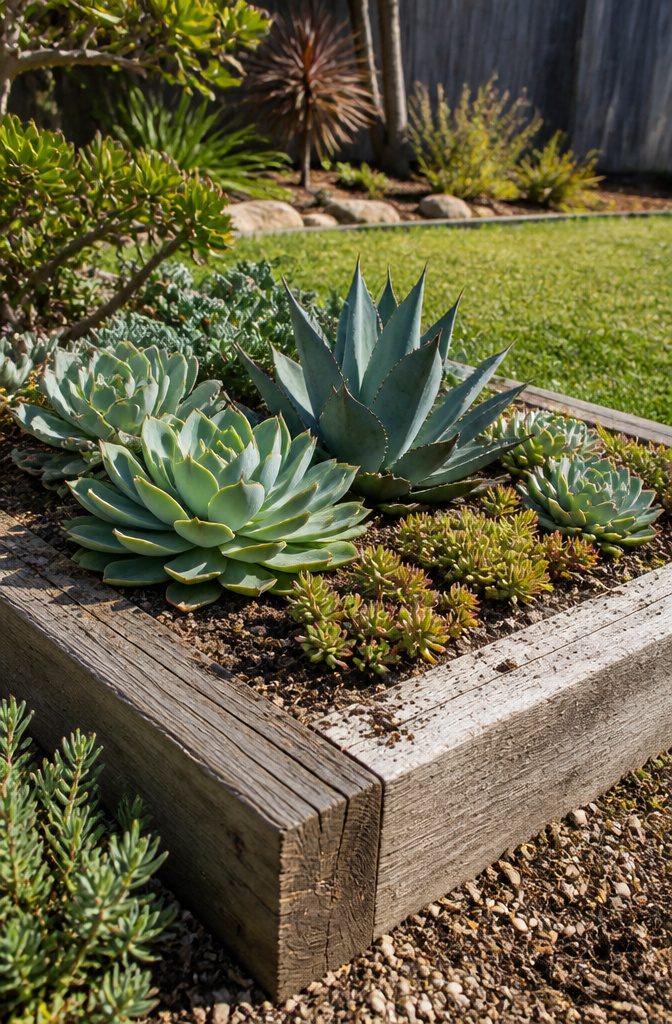
Echeveria, agave, and sedum are tough, colorful, and need little water once they settle in, which makes them a good fit for the hottest, sunniest bed you have.
They also mix well with other plants, so tuck them in among your other plantings instead of confining them to a separate succulent corner.
Drainage decides whether they live.
Their roots are shallow, and they sit badly in wet ground. If your soil is heavy or stays damp after rain, plant them in a raised bed filled with porous, well-aerated soil.
Skip them in shade, where they grow leggy and lose their color. Winter cold is the other limit.
Hardiness differs from plant to plant, so check the tag’s zone against yours. If it falls short, grow them in pots you can bring indoors.
Recommended Products

MASSAGE YOUR FEET: Put the stepping stones outdoor together with pieces on a flat proper place and walk on it. It will massage your feet and keep you fit.

Design and Details: the butterfly decor come with 6 pieces, measuring about 9.84 x 7.28 x 0.47 inches/ 25 x 18.5 x 1.2 cm, can easily satisfy your creative decorating needs; Arrange them in your flower bed to invite the spirit of renewal and life that comes with spring right into your garden
Build a Longer Garden Path: 16 pack 15 x 15 in rubber stepping stones provide about 25 sq ft of total surface area, offering enough pieces to create longer decorative walkways through gardens, lawns, flower beds, side yards and backyard landscaping
11. Self-Cleaning Roses
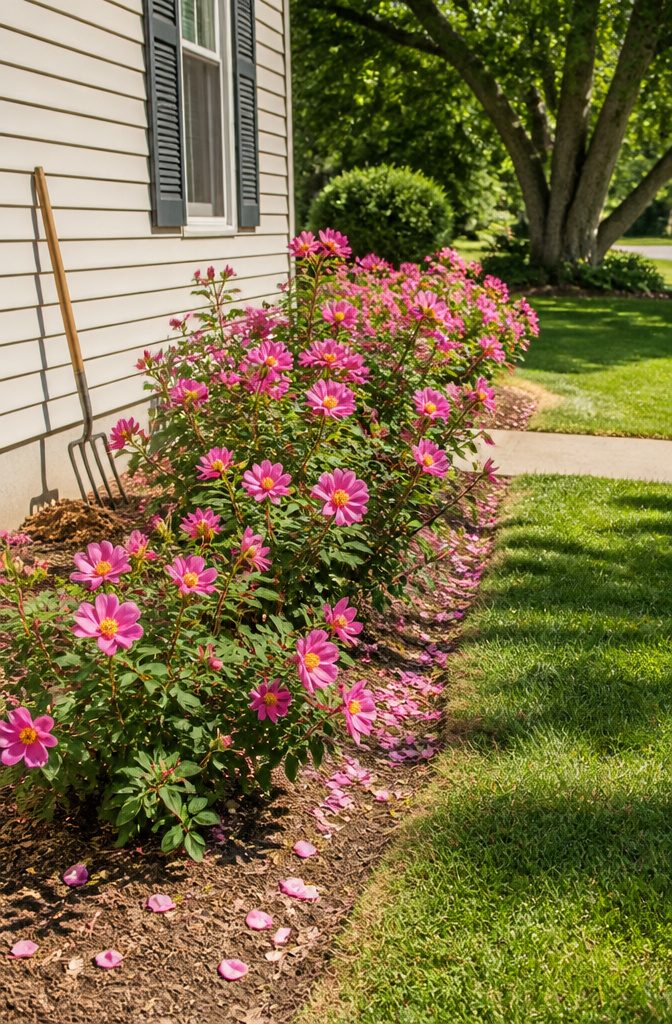
Self-cleaning roses, with Knock Out as the best-known name, give you color without the usual rose chores. They tolerate heat, need little to no pruning, and drop spent blooms on their own, so you skip deadheading.
Feed with an organic rose food in early spring, then apply a liquid fertilizer to the leaves (a foliar feed) through the blooming season.
They need at least 6 hours of sun a day, and that rules out many yards.
In a shaded bed they won’t thrive, so plant something else there. Reserve them for a sunny front strip or a bed along a south-facing fence, where they pay back the $0 effort you’d otherwise spend on trimming.
12. Grow From Seed
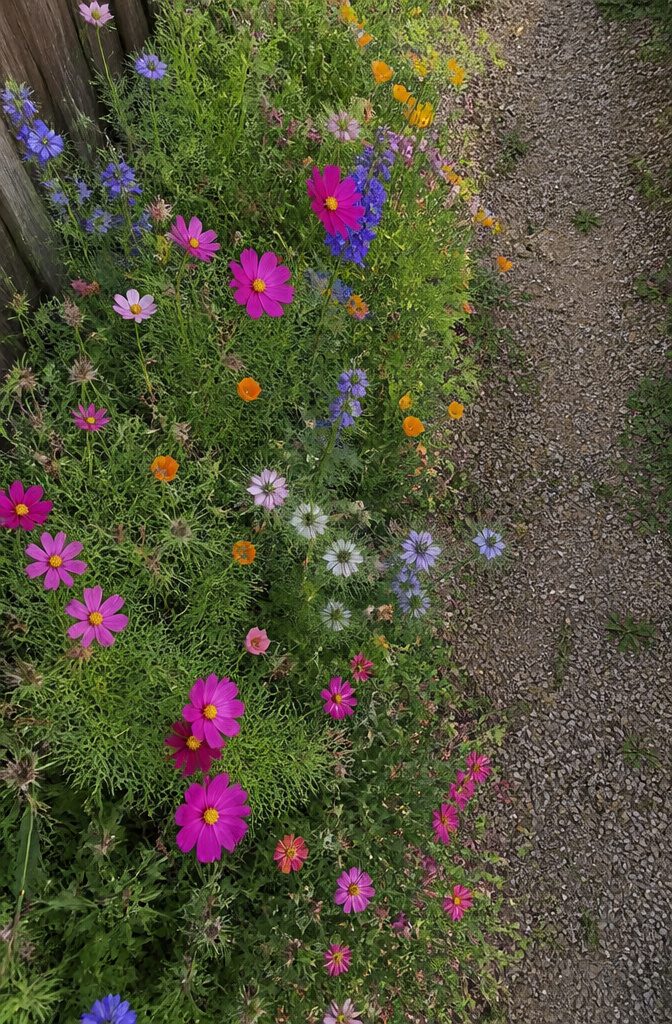
Seed packets cost far less than nursery plants, and some annuals refill the bed on their own.
Sow cosmos, California poppies, giant larkspur, nigella, or portulaca once, then leave the faded flowers on through late summer so the seeds drop or blow around.
Dill and parsley reseed the same way, and dill hosts butterflies. Save seed from your own plants and you only buy packets once.
Runners fill ground even faster.
Creeping Jenny, strawberries, and mint send out stems that reroot. Give mint a container or a border you can pull.
Seeds mean waiting a full season for a full bed, and self-sowers turn up where you didn’t plan them. Pull extras while they’re small.
13. Planters From Household Items
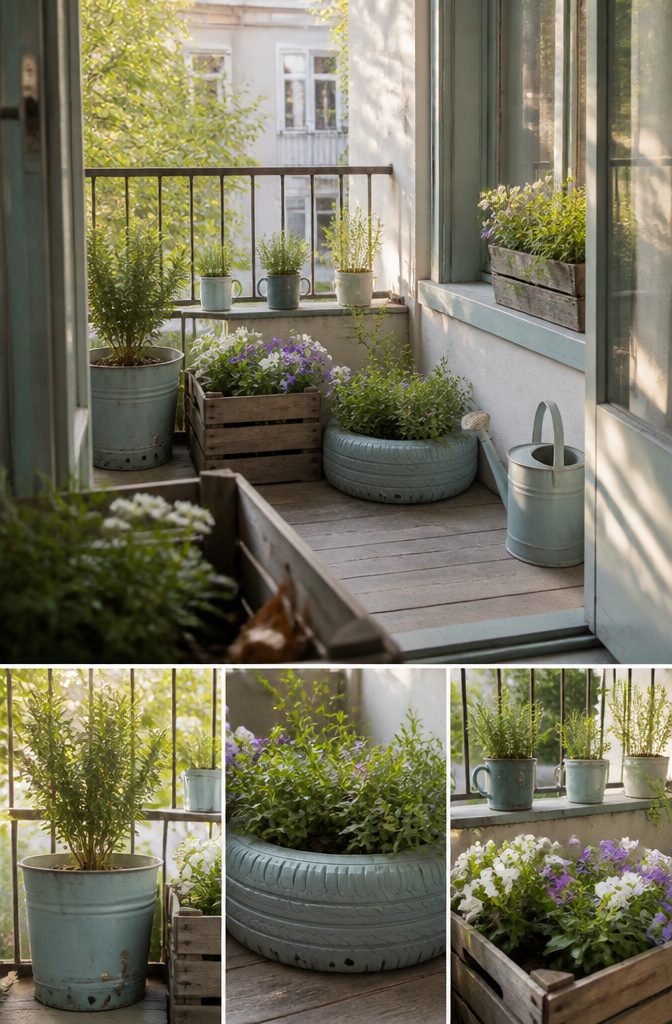
Old paint buckets, wooden crates, worn-out tires and broken mugs all make good planters, and most cost nothing.
Drill drainage holes in the bottom of anything that isn’t already perforated. Standing water rots roots faster than a dry spell kills them.
Paint the outside in a color that matches your door or trim, and a mismatched collection starts to look chosen. Mugs suit small herbs on a balcony rail, while buckets and tires have room for a small shrub.
Where ground space runs out, go up.
A window box mounted under a window holds flowers, trailing vines or herbs and takes no floor space. Swapping the plants each season keeps the front of the house looking fresh for very little money.
Clean Up Before You Plant
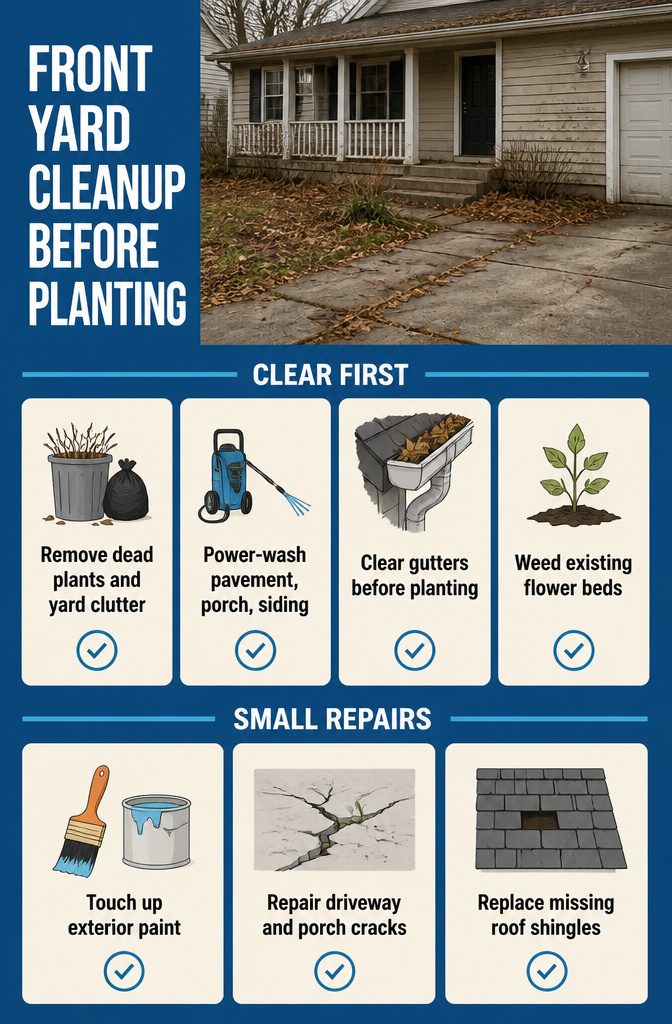
A clean property looks newer before you buy a single plant, and chipped paint and stray dirt are easier to fix once the clutter is gone. Work in this order:
- Pull dead or dying plants and clear clutter from the yard, driveway and porch.
- Power-wash the pavement, porch and siding.
- Clear the gutters.
- Weed the existing flower beds before anything new goes in.
Small repairs come next. They change how the house looks without replacing anything:
- Touch up exterior paint.
- Repair cracks in the driveway and on the porch.
- Replace missing roof shingles.
Where to Save on Materials
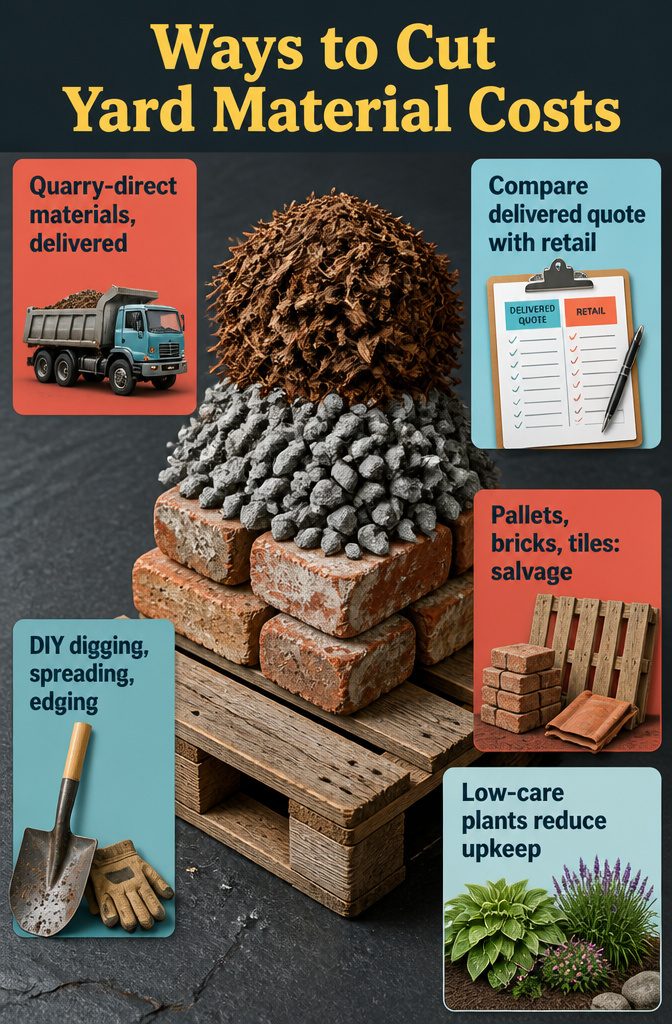
Materials are usually the biggest line in a yard project, and buying at the source cuts out the middlemen.
Pillar Aggregates, LLC sells everything from mulch to rock at quarry-direct pricing and delivers straight from its quarries, so you don’t pay the extra costs that stack up in retail.
Get a delivered quote and compare it with what a home center charges for the same material before you order.
Labor is the second place to save. Digging, spreading, and setting the edging yourself replaces a landscaper’s bill.
Salvage covers the rest: construction sites, home improvement stores, and even grocery stores may give away wooden pallets, and old bricks or leftover roofing tiles cost little or nothing. Low-care plantings then trim the upkeep bill after the first season.