
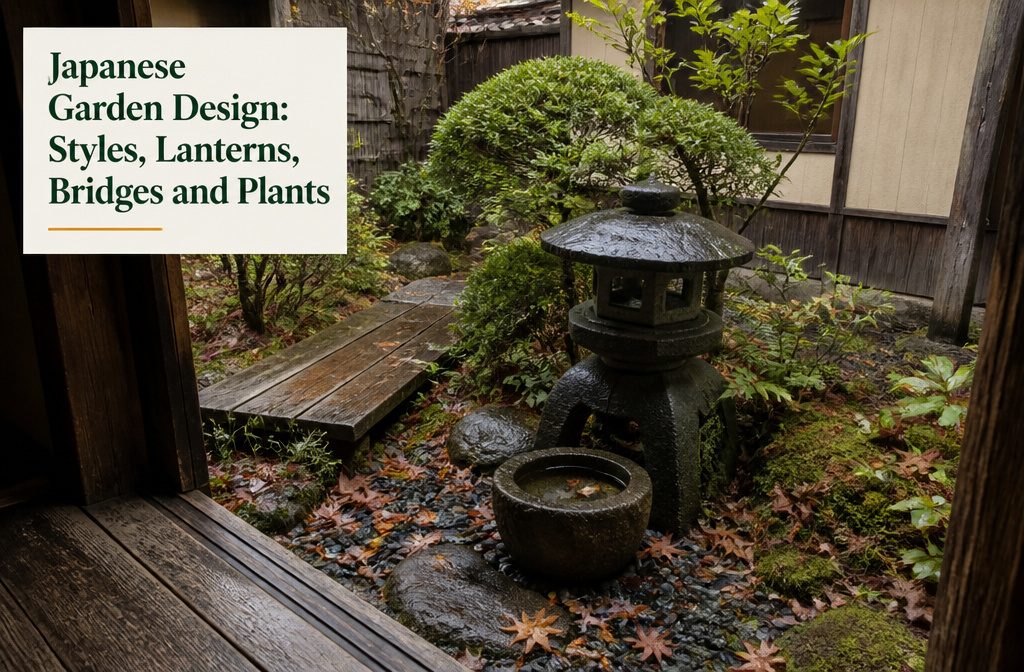
A Japanese garden arranges stones, moss, pruned trees and water, or raked gravel standing in for water, so the result looks natural.
Which style you can copy depends on space. A strolling garden needs lawns and ponds, while a tsubo-niwa courtyard, just under 11 square feet, suits a patio or balcony.
Strolling Garden (Kaiyu-Shiki)
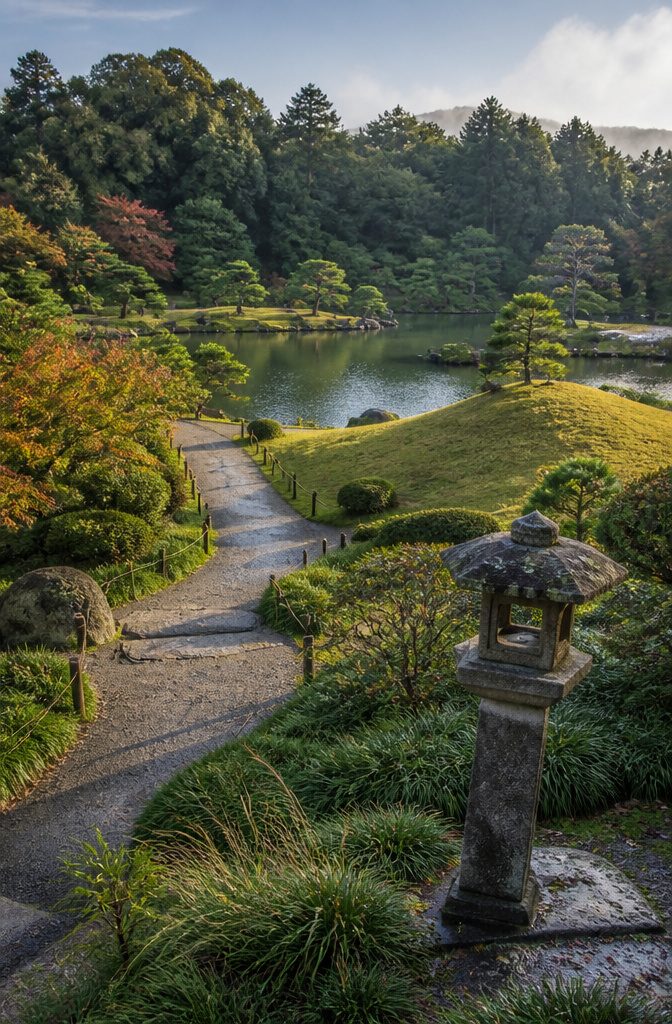
A strolling garden, or kaiyu-shiki, is built to be walked rather than viewed from one spot. Several routes lead through it, and along each path sits a place to stop or sit where the scene changes.
Koraku-en in Okayama and Kenroku-en in Kanazawa are two of the best examples, with vast lawns, large ponds and man-made hills (tsukiyama) that stand in for mountain ranges.
Small yards are the first place this style runs out of room.
It needs real space: routes, ponds and lawns only work with room to walk. On a patio, borrow one idea: a mound backed by evergreens or a Japanese maple, so you never see everything from one spot.
Recommended Products

Fine Craft: The color of this balanced stones is natural and beautiful, the details are realistic and fine craft, whether in the water or as normal home or garden statue, it can play a real effect.(Notice: The stones can’t be separated)


Exquisite Craftsmanship & Realistic Natural Design: Featuring natural, vivid coloring and highly detailed, fine craftsmanship, this balanced cairn statue delivers an authentic, nature-inspired aesthetic in any setting-whether fully submerged in water or used as a home or garden ornament. Important Note: Stones are permanently bonded and cannot be separated
Rock Garden (Karesansui)
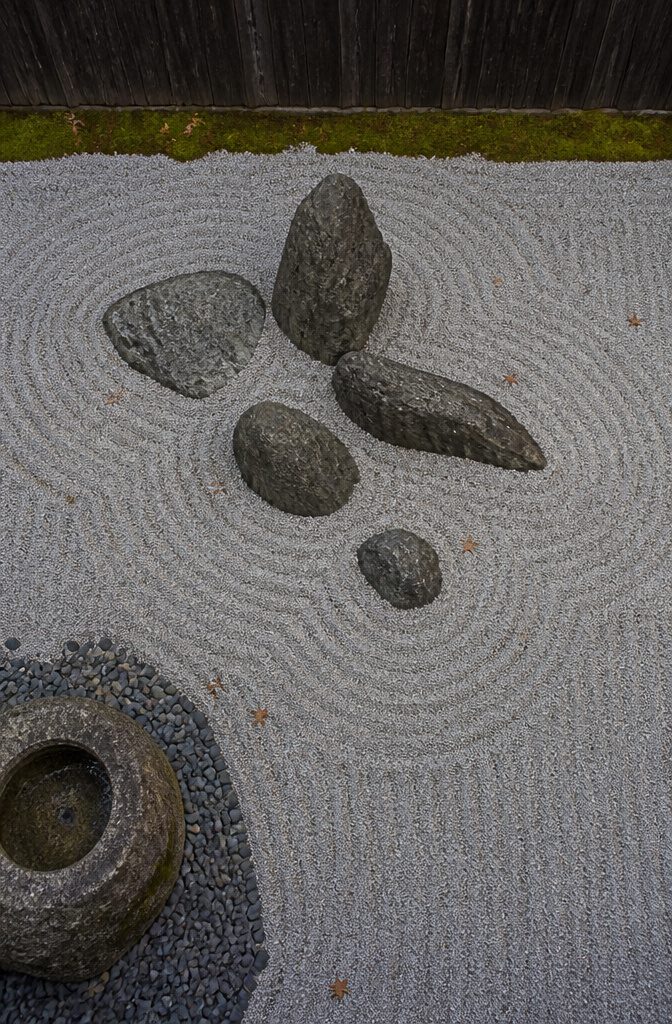
Karesansui is a dry rock garden: stones placed with intent, and raked gravel standing in for water. Stone placement and grouping get the most attention, and in Shinto belief each boulder carries a spirit.
A rock garden counts as a Zen garden only when a Zen temple or monk built it with that purpose.
Ryoanji in Kyoto is the famous example, and its raked sand shaped the popular image. Yours can be calm and contemplative without any of the religion.
If you add a hill or waterfall feature, give it a solid backdrop, such as a wall or fence. Japan is about 75% mountainous, which is why stone and hill imagery runs through the style.
Recommended Products

✔COMPLETE ZEN DECORATION KIT: Our mini Japanese zen sand garden kit includes all the accessories for a peacefully moment of meditation: solid wood tray 8.5 x 6.7 x 0.5 inches, white sand, bamboo rake, rocks, 2 figures. Ideal for desks, tables, countertops & more
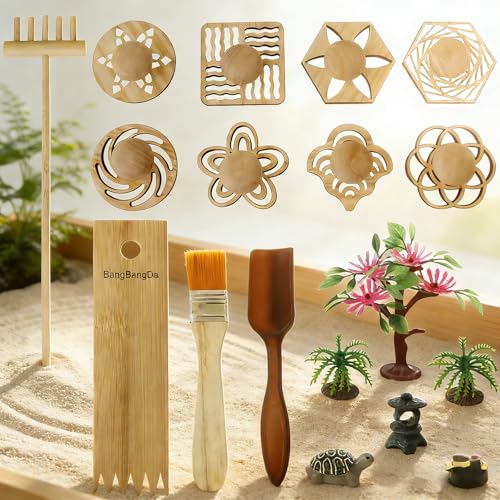
RESTORE FOCUS AND CLARITY: These mini Zen garden rake stamps set are nice accessories to add on to your desktop Zen garden. When you do something stressful, you can calm yourself by use rake raking a rock sand Zen garden or pressing the stamp through sand to see its markings.

Wonderful High End Japanese Gift- Reward yourself or bring calm & happiness to loved ones. Japanese Zen Garden for desk; gorgeously packaged with the elements for inner peace. A deluxe, Zen gift set
Courtyard Garden (Tsubo-Niwa)
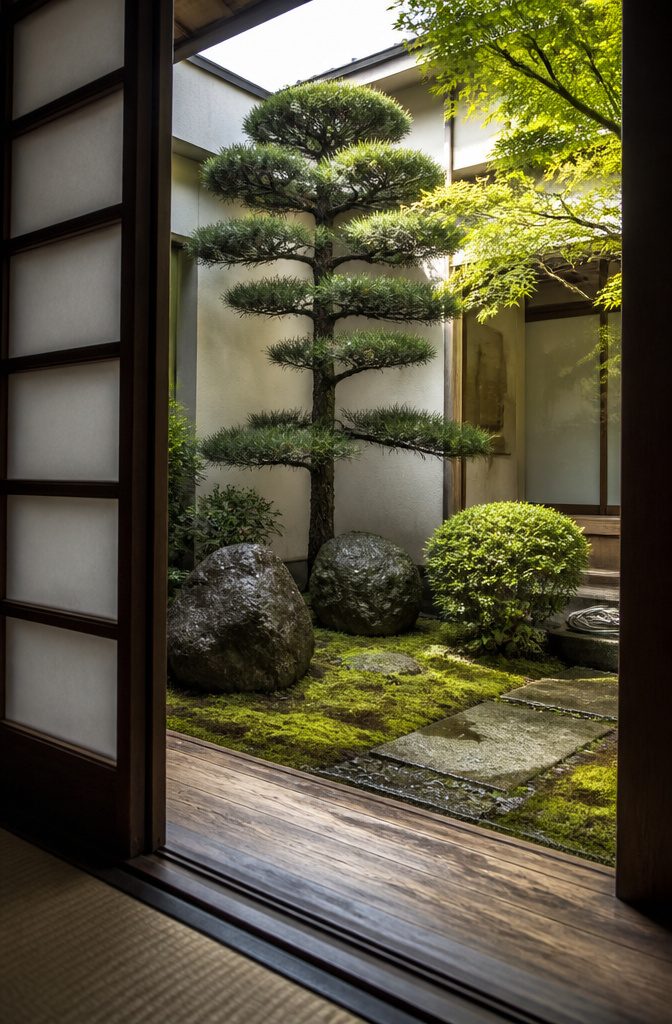
The tsubo-niwa is the Japanese garden for small spaces: a courtyard usually just under 11 square feet, set in the middle of a home so nature is part of daily life.
Windows or sliding doors give it several viewing points, and a hallway around it lets you notice weather and seasons as you pass. If you have a small yard, patio, or balcony, this is the style to copy.
Plant lightly, because a tree casts shade over a tiny space. Pick one or two specimens, such as a sculpted Japanese black pine as the focal plant, then add boulders and a few shrubs.
Thin the lower branches of a Japanese maple or dogwood to keep the space bright. For moss, keep a hose within reach and mist it in the evening or early morning.
Recommended Products

A classic and a great choice for landscaping Bonsai tree.

LIVE SPECIMEN: Young Japanese Black Pine bonsai tree seedling thriving in a -inch pot with healthy green needles and strong root development

Live Bonsai Tree: Pinus thunbergii Japanese Black Pine, approximately 10–12 inches tall in a 2-inch pot
Tea Garden (Roji)
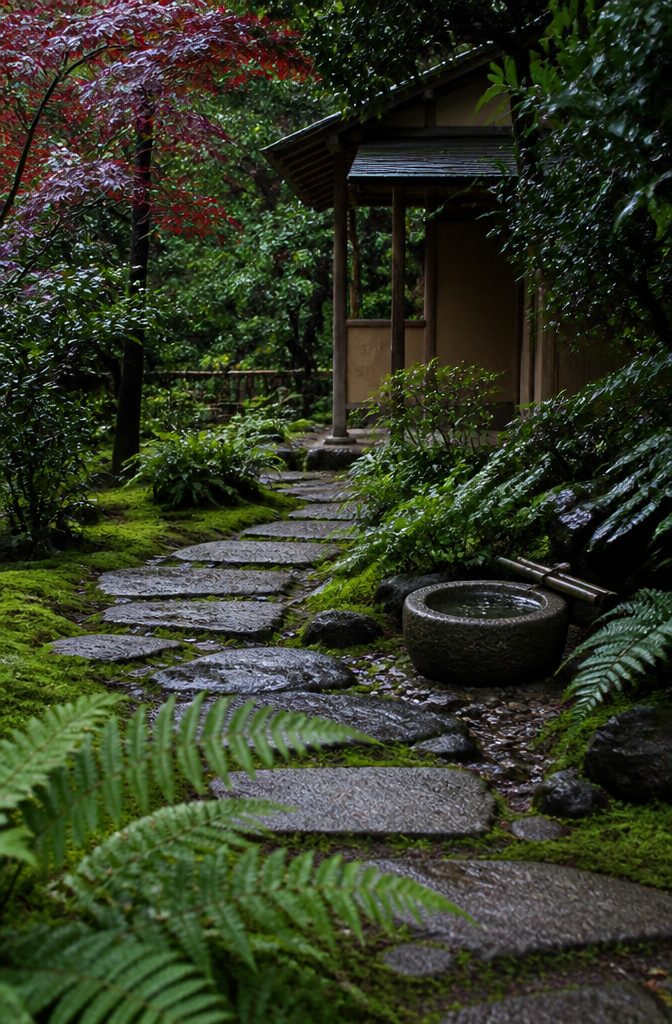
Roji means "dewy ground," and it is the garden you walk through to reach the teahouse. Sen-no-Rikyu and Kobori Enshu developed the style, with Rikyu favoring a natural look and Enshu adding creative touches.
Stepping-stones (tobi-ishi) and nobedan stone pathways, usually mortared underneath, lead you to a tsukubai, the basin where you rinse your hands and mouth.
Plantings stay close to nature: evergreens, ferns, hostas and moss, with a Japanese plum or Japanese maple as an accent. Skip bark and mulch, which look out of place here.
Moss, ferns or bare swept dirt suit a roji better, and moss only thrives if it stays moist. Tea gardens are pruned and swept regularly, so plan on that routine.
Recommended Products

UNIQUE OUTDOOR WALKWAY SOLUTION: Elevate your garden, lawn, or backyard with BIRDROCK HOME Rubber Stepping Stones. These durable pavers create a functional and stylish walkway, enhancing your landscape while providing a solid and reliable surface to walk on.

Sturdy Cast Iron Construction: Lawei turtle stepping stone is made of heavy-duty cast iron with genuine verdigris finish, this metal stepping stone withstands all weather extremes—perfect for year-round outdoor use in gardens, lawns and patios without rusting or cracking.

Five Stone Lantern Types
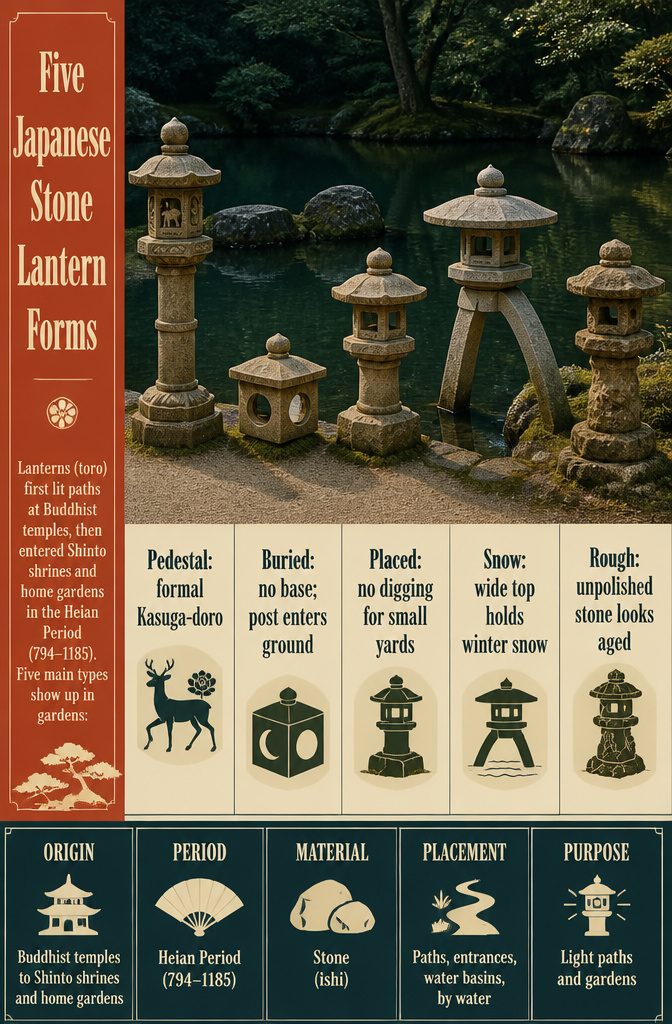
Lanterns (toro) first lit paths at Buddhist temples, then entered Shinto shrines and home gardens in the Heian Period (794–1185). Five main types show up in gardens:
- Pedestal (tachi-doro): The firebox is decorated with deer or peonies. The Kasuga-doro, named for Kasuga Taisha, is the best-known example and reads as formal.
- Buried (ikekomi-doro): No base; the post goes into the ground, so it sits low beside paths and tea garden water basins. The Oribe style is a cube with a crescent moon on one side and a full moon on the other.
- Placed (oki-doro): Simply set on the ground near entrances or along paths. It needs no digging, which suits a small yard.
- Snow (yukimi-doro): A wide umbrella top holds snow so the shape stays visible in winter. Set it by water, with some legs in the pond and one on land. Kenroku-en’s 2-legged version reaches far out over the water.
- Rough (nozura-doro): Unpolished stone that gives the garden an aged look.
Recommended Products

Covers soil for interior plants

Package Include: You will receive 6 quarts(Appx.4 oz) sphagnum moss, it will swell after absorbing water, it helps the plants to retain water while hiding the dirt, and looks good, these carnivorous plant soil mix can re-potting 1-2 medium plants or 3-4 small plants

Bridges of Stone and Wood
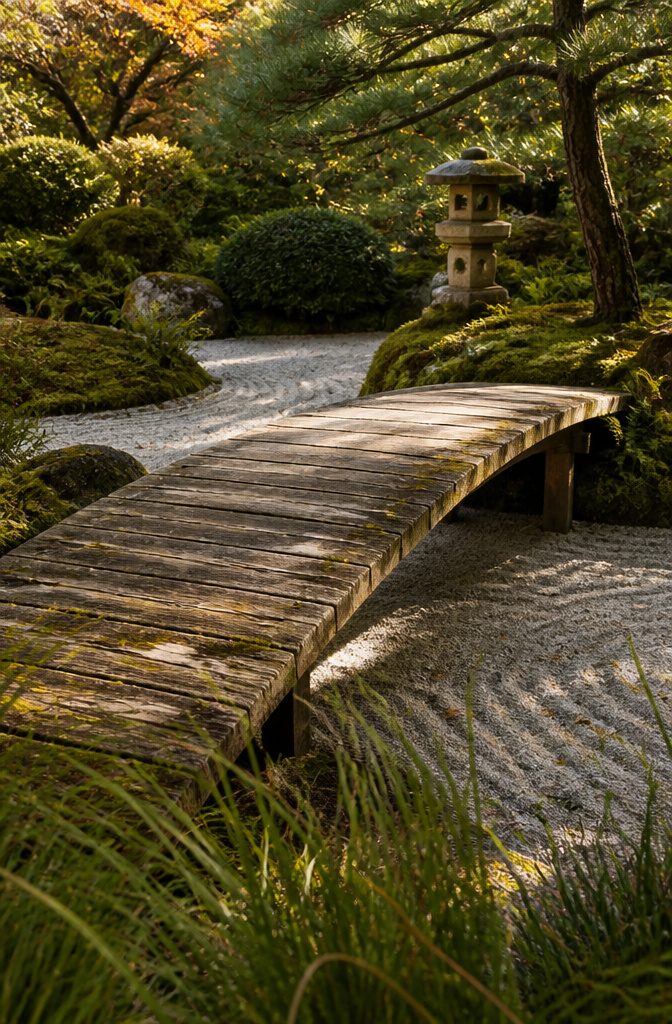
A bridge in a Japanese garden joins an island to the shore or carries a path over a pond or stream, and most are built of stone or wood.
Stone looks heavy and settled. Wood looks lighter and more casual.
Treat the bridge as part of the route through the garden: it makes the walker slow down at the crossing and gives the far side a view worth reaching. Put it where you want someone to stop and look.
Real water takes ongoing work, from keeping a pond clean to keeping a stream running.
In a small yard, a bridge over a dry gravel stream is the lower-maintenance choice. It still reads as a crossing once the gravel is raked into flowing lines.
Natural-Looking Composition
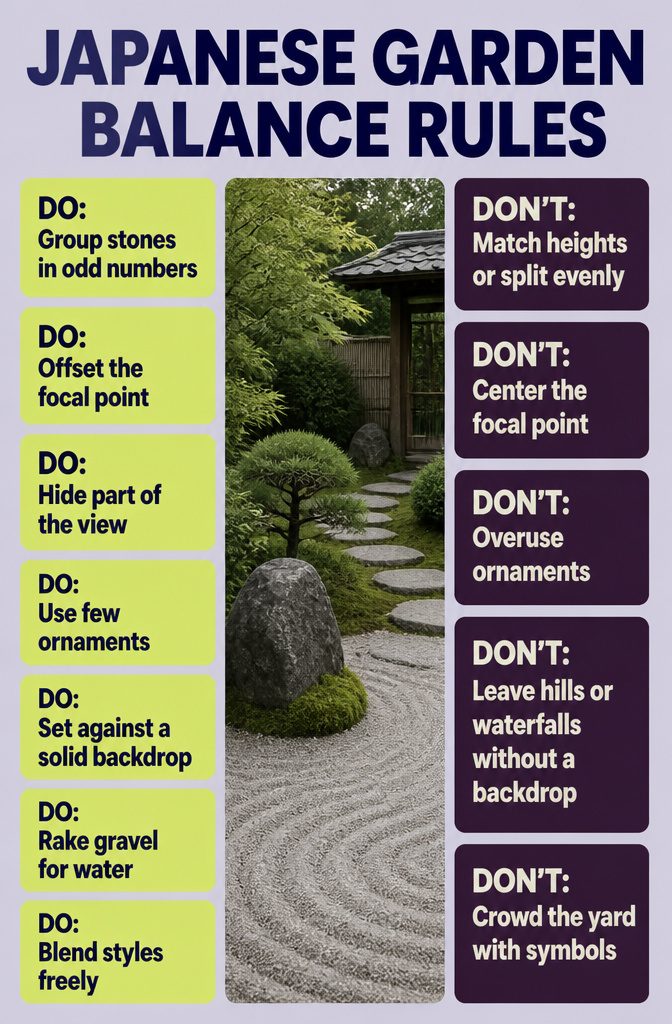
A Japanese garden looks effortless because every placement is planned. These rules do most of the work:
- Group stones and plants in odd numbers, such as 3 or 5, and avoid equal heights. Even splits look staged.
- Set the focal point off center. The photographer’s rule of thirds gives you asymmetric balance.
- Use few ornaments. One lantern beats five, and a bend or shrub screen that hides part of the view draws people further in.
- Place hills and waterfalls against a solid backdrop, like a wall or dense evergreens.
- Rake gravel to stand in for water. A stone basin costs less upkeep than a pond or running feature.
- Blend styles freely, since they overlap. Keep the space uncluttered, because a yard crowded with Japanese symbols looks worse than a plain one.
Plants, Moss and Upkeep
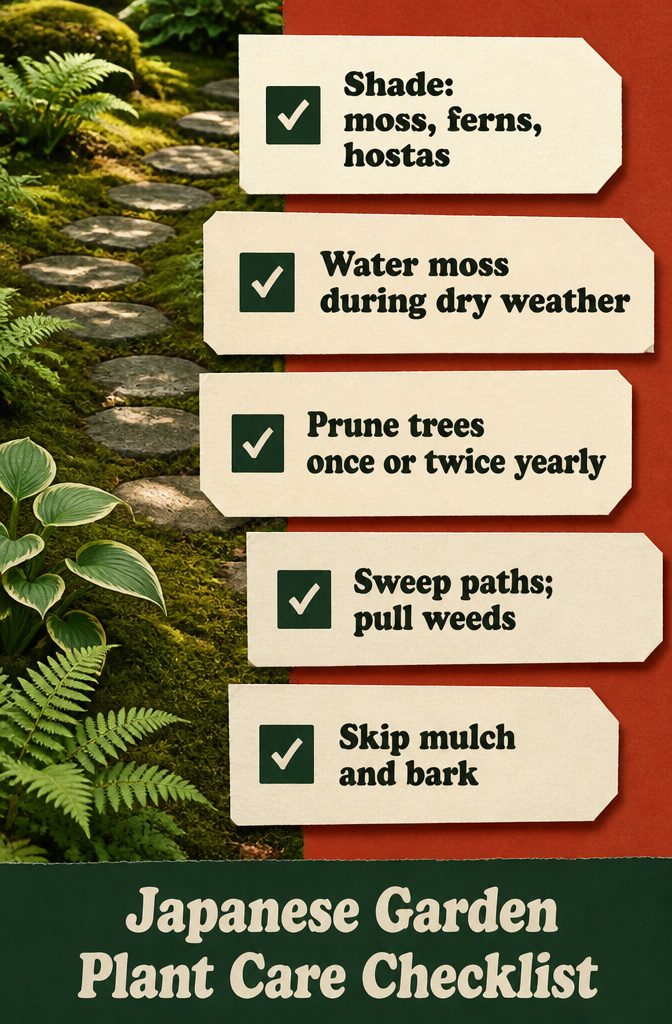
Match plants to the light you have, then keep the ground simple.
- Shaded courtyards suit moss, ferns and hostas. A tea-garden path rests on an evergreen base with ferns, hostas and moss, and little bold flower color.
- Moss stays green only while it stays damp, so plan on occasional watering or misting in dry weather.
- Prune trees once or twice a year, for shape and to thin the leaves. Keep them from getting tall and heavy on top so sunlight glimmers through. The Japanese call that light komorebi.
- Sweep paths and bare soil regularly with a bamboo broom, clearing small debris and pulling weeds as you go.
- Skip mulch and bark. Traditional Japanese gardens never use them. Moss, ferns or bare dirt cover the ground.
Frequently Asked Questions
Recommended Products

Stepping Stone-Place lovely stepping stones in your garden or patio to add color

MATERIAL: The stepping stone is made of cast iron, which is durable, resistance to weather and lasts long

UNIQUE OUTDOOR WALKWAY SOLUTION: Elevate your garden, lawn, or backyard with BIRDROCK HOME Rubber Stepping Stones. These durable pavers create a functional and stylish walkway, enhancing your landscape while providing a solid and reliable surface to walk on.
What are the main styles of Japanese garden design?
The four main styles are the strolling garden (kaiyu-shiki), the dry rock garden (karesansui), the courtyard garden (tsubo-niwa) and the tea garden (roji).
They overlap, so you can blend them. A strolling garden needs the most space, and a courtyard garden needs the least.
Which Japanese garden style works best in a small yard?
The courtyard garden (tsubo-niwa) is the one to copy for a small yard, patio or balcony.
Traditional courtyards are usually just under 11 square feet. Choose one or two specimen plants, such as a Japanese black pine, and add boulders and a few shrubs.
What types of Japanese stone lanterns are there?
Five types are common: pedestal (tachi-doro), buried (ikekomi-doro), placed (oki-doro), snow (yukimi-doro) and rough (nozura-doro).
The placed lantern simply sits on the ground with no digging, which makes it a good fit for a small yard. Snow lanterns belong beside water.
Is a Japanese rock garden the same as a Zen garden?
No.
A rock garden counts as a Zen garden only when a Zen temple or monk built it for that purpose, as at Ryoanji in Kyoto. You can build a calm, contemplative karesansui at home without any of the religious meaning.
How do you make a Japanese garden look natural?
Group stones and plants in odd numbers, such as 3 or 5, and vary their heights.
Place the focal point off center and use few ornaments, since one lantern looks better than five. Screening part of the view with a bend or a shrub also draws people further in.
Should you use mulch in a Japanese garden?
No. Traditional Japanese gardens do not use mulch or bark.
Cover the ground with moss, ferns or bare swept dirt instead. Moss stays green only while damp, so mist it in dry weather.
How often should you prune trees in a Japanese garden?
Prune once or twice a year, both to shape the tree and to thin the leaves.
Avoid letting it grow tall and heavy on top, so sunlight can filter through the branches. Sweep paths and bare soil regularly with a bamboo broom as well.