
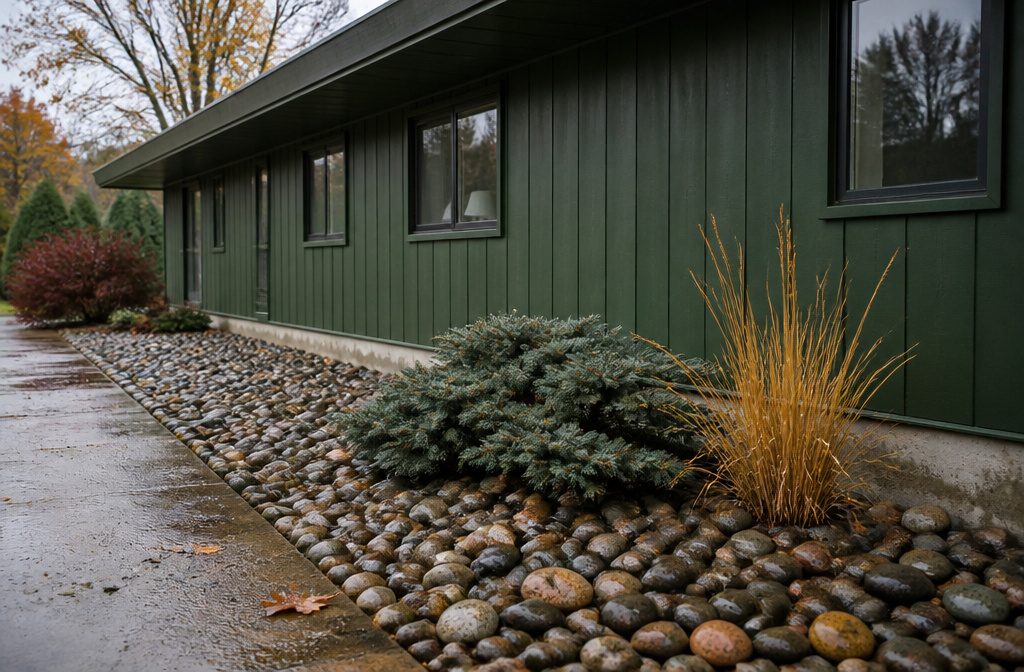
Yards for homes built from about 1945 to the 1980s repeat the house’s flat planes and clean lines, using a muted palette and a few sculptural plants.
Hardiness zone limits the choices: a plant can fail even one zone away. One Minnetonka, Minnesota rambler sets a river-rock bed against the wall like a plinth.
Agaves and Yuccas
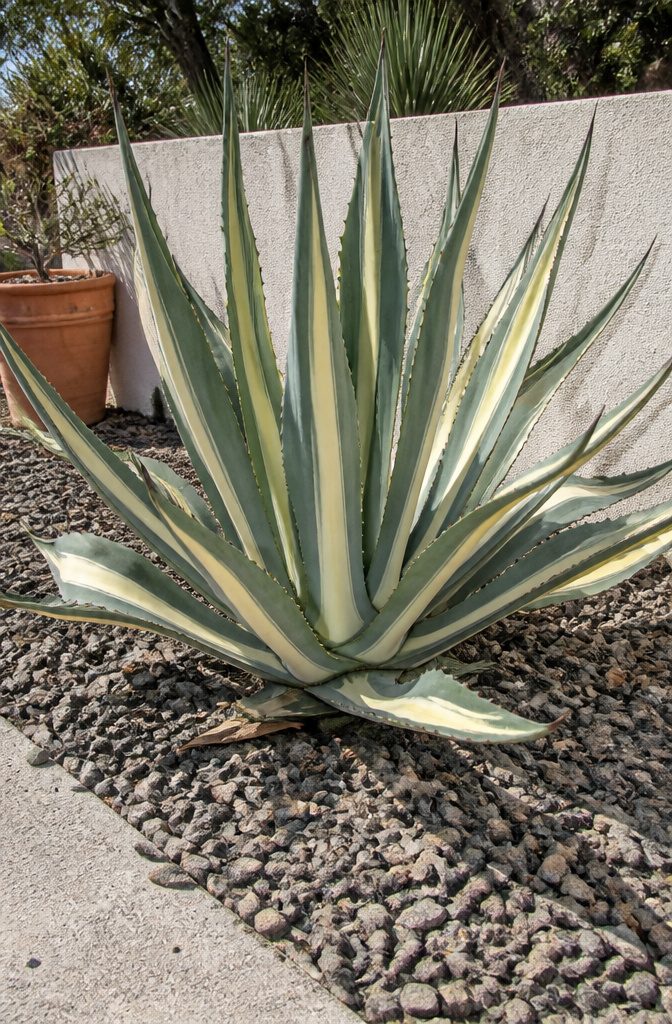
Agaves and yuccas give a mid century yard what it usually wants most: one sculptural shape that holds a bed together.
Their rosettes of stiff, pointed leaves read as architecture, so a single plant against a plain wall or a stretch of gravel does more than a cluster.
Agave americana ‘Mediopicta Alba’ is the showpiece, with massive rosettes and a pale stripe down the center of each leaf. Give it room, because it will outgrow a tight corner.
Both want full sun and sharp drainage. In a container, use a fast-draining, gritty cactus potting mix to prevent root rot.
Skip them in shade, heavy clay, or low spots where water pools. Keep them back from walkways, since the leaf tips are sharp.
Recommended Products

Lifelike Decorative House Plant --- With realistic texture and color, the fake yucca plant comes with dark red spiky leaves and light green leaves which lay on top of one...
Ornamental Grasses
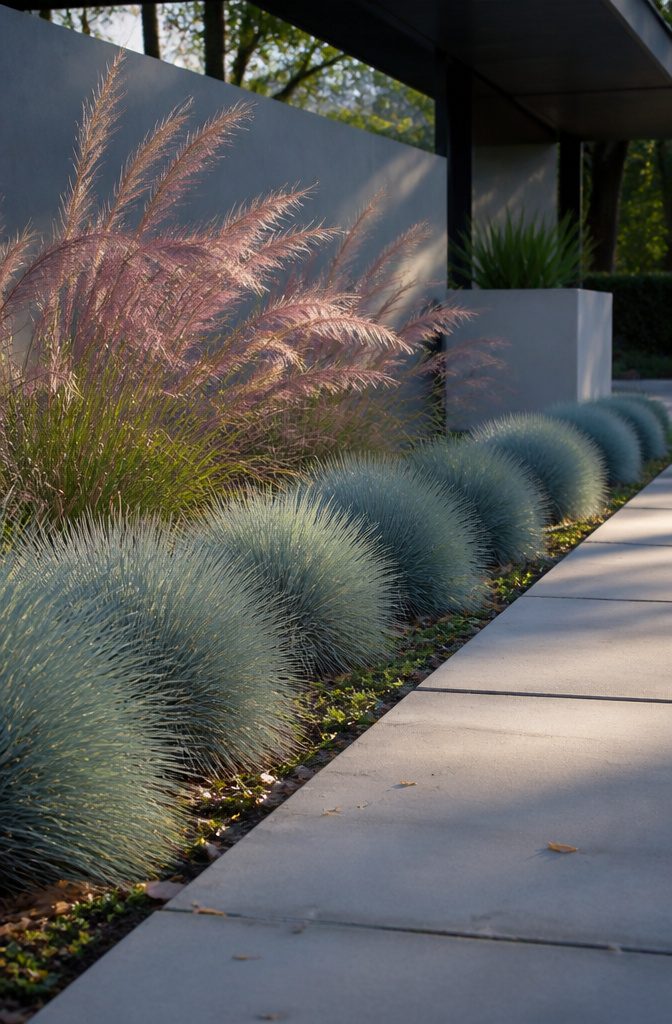
Concrete, flat walls, and square planters hold still.
Ornamental grasses are what move. Planted along the foundation or the edge of a patio, they blur the line where the house meets the ground and give a bed some rhythm.
Blue Oat Grass is the pick for structure.
It forms tidy, porcupine-like spheres of silver-blue, so it reads as geometry even though it’s a plant. Set it in a repeating row beside a straight path or wall, and the pattern stays crisp.
Muhly grass does the opposite job.
It makes a fine mound of texture that sways in the wind and softens the hard edges around it. Put it where the breeze reaches, and let a few Blue Oat spheres anchor the bed beside it.
Recommended Products

High Germination Rate: Evergreen dwarf grass seed show reliable germination in optimal conditions. This dwarf fescue grass seed thrives in USDA zones 4–8, ideal for gardens, containers, and ornamental borders. Perfect evergreen dwarf grass seed for four seasons for florida.

First Quality Native Grass Seeds – Current Lab Test Data Shown on Packet

NATURAL ORNAMENTAL GRASS: Outsidepride Little Bluestem Grass Seed adds texture and vibrant color to lawns and gardens, making it a favorite for ornamental plantings. Blends well with wildflowers, enhancing natural beauty in full sun landscapes with minimal maintenance needs.
Ornamental Allium
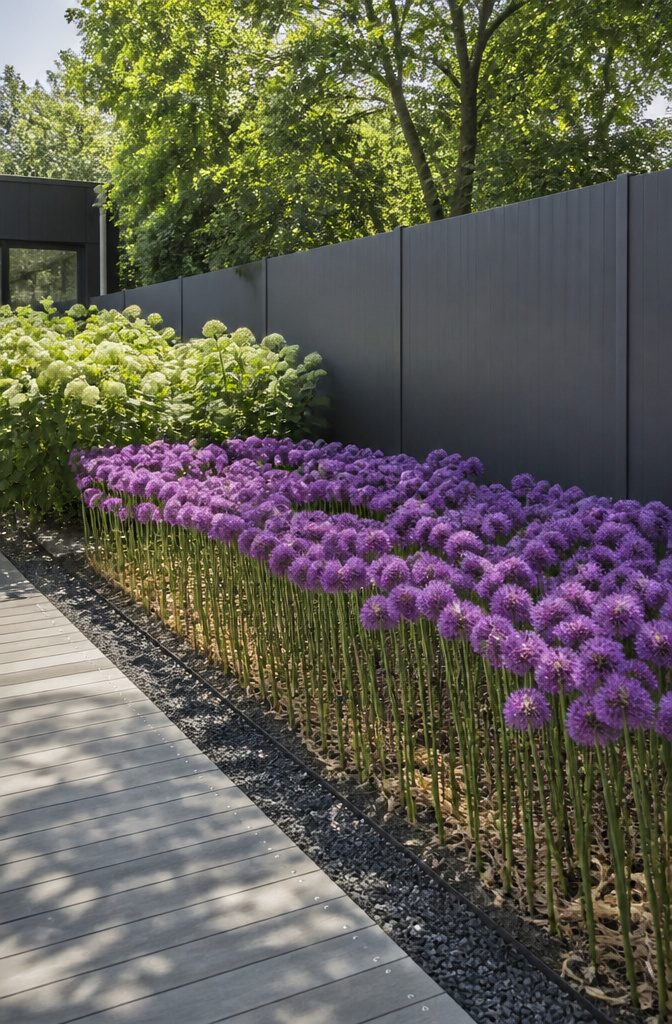
Plant ornamental allium en masse in full sun.
A single bulb looks like a mistake, but a drift reads as a deep-purple backdrop that sets off more eccentric plants around it. If your spot gets shade, pick something else.
The bare, upright stems suit the style on their own terms. They echo the era’s taste for manicured precision and controlled nature, so keep them in straight, tidy groups rather than scattering them.
For a deck, try ‘Summer Beauty’ allium as an edging beside ‘Little Quick Fire’ hydrangea. The allium gives you a low purple border, and the hydrangea gives the corner more body.
Recommended Products

Tall Architectural Blooms: These allium bulbs produce 36-inch stems topped with rich purple spheres in late spring. Ideal purple flower bulbs for fall planting for borders, naturalizing, mass plantings, and striking flower garden displays.

Bulb Size: 2.5" (6/+ cm) Circumference

Purple Sensation Allium Bulbs for Planting produce rich purple globe shaped flowers on tall upright stems for a dramatic late spring display. Growing approximately 24–36 inches tall, these Top Size ornamental onion bulbs add architectural height and bold color to perennial beds, mixed borders, walkways and cutting gardens.
Japanese Maples
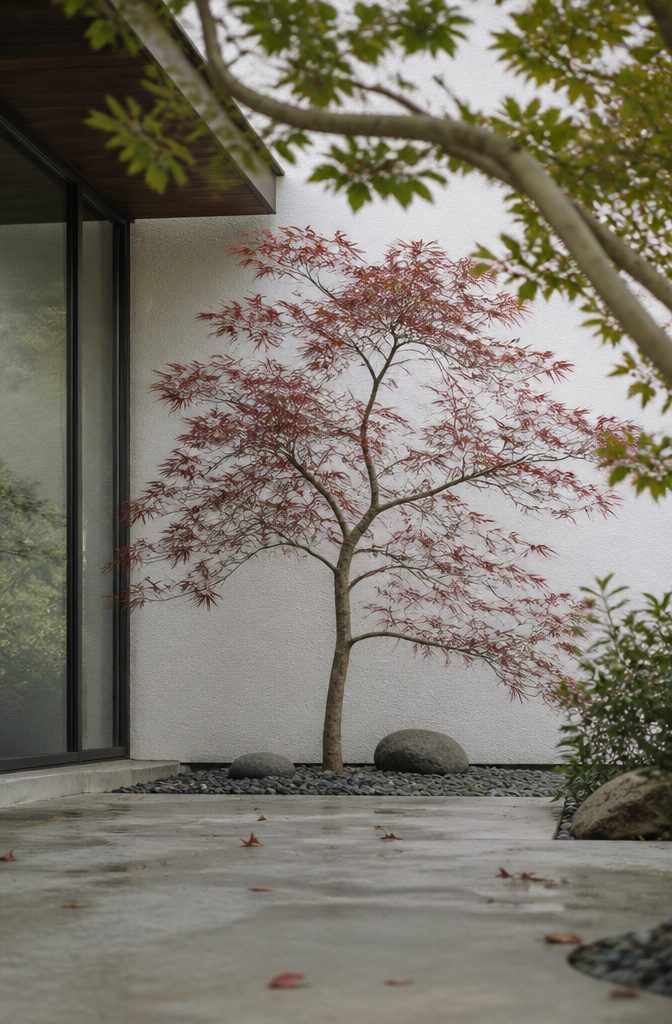
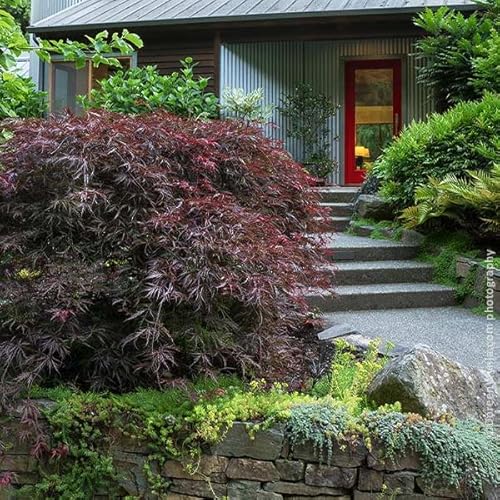
Acer palmatum earns its place in mid-century landscaping for its skeletal branch structure and delicate, lace-like foliage.
The style drew heavily on Japanese minimalism and Zen ideas about closeness to nature, so the tree suits the design logic as well as the look.
Plant one specimen where the house gives it a plain backdrop: against a white stucco wall or near a floor-to-ceiling window.
The foliage and bare branches form a living silhouette that changes with the seasons, so the same view looks different from one season to the next.
Keep it to a single tree.
A row or cluster of Japanese maples hides the branch pattern, and that pattern is the reason to buy one. Give it open space around it.
Recommended Products

Seasonal Color Display: Leaves stay red for most of the summer and turn greenish red during hot weather in the southern part of its range, with reddish fall color providing year-round visual interest

Used Book in Good Condition

This Plant will Ship in a fabric Grow Bag ( see pics ) - The plants are currently growing in a 2.5 Quart nursery pot However they will NOT ship in a plastic pot.
Mondo Grass as Green Grout
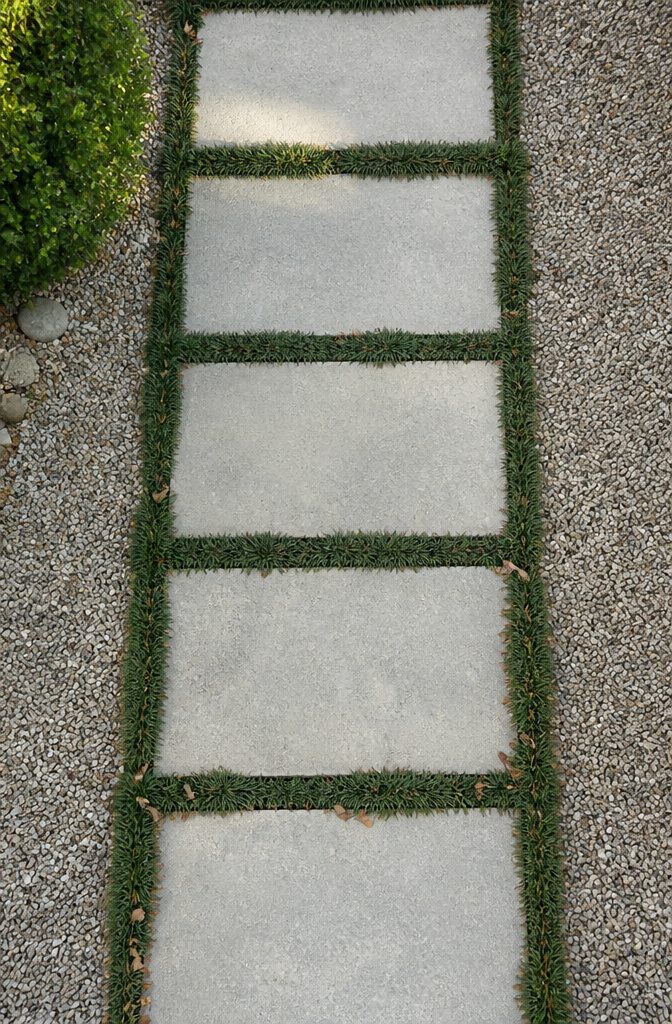
Dwarf mondo grass planted in the joints between large rectangular concrete pavers works like grout.
Its dark, tufted clumps outline every slab and make the grid of the walkway easy to read. A plain turf lawn around the same pavers looks more suburban and blurs those lines.
Run the path straight to the front door. The pavers and the dark green borders already pull the eye along it, so attention lands on the entry instead of drifting across the yard.
Mondo grass grows slowly and holds a neat, carpet-like look, so you skip the mowing and the joints stay crisp. The cost is patience: young plantings take time to knit together.
Bird of Paradise
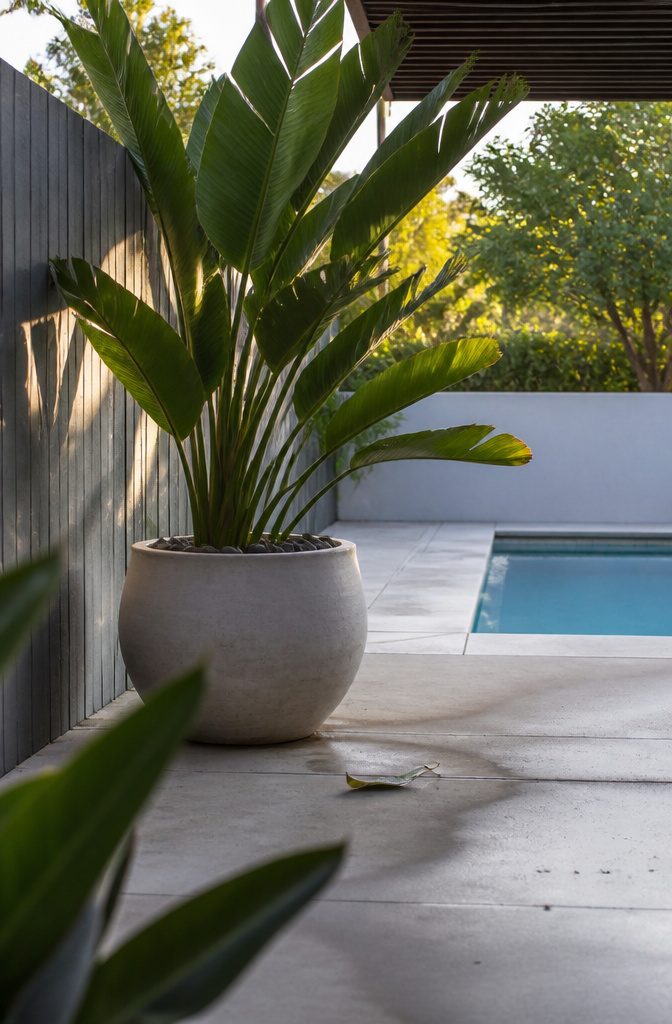
Bird of Paradise is one of the defining mid-century plants. Its large, paddle-shaped leaves and avant-garde flowers suit a Hollywood Regency courtyard as easily as a plain fence beside a pool.
Buy it for the foliage, not the flowers.
It does not bloom until it is quite mature, so a young plant may give you only leaves for a while. Even a mature plant blooms year-round only in perfect conditions, so treat flowers as a bonus.
In cooler zones, grow it in a planter and bring it indoors. A container also lets you move it to wherever the yard needs the drama.
Recommended Products

ELEGANT AND FLUFFY DECORATIONS: Exquisitely crafted with fine detail, this pampas grass design is crafted to provide a fuller, more luxurious look, adding an air of elegance to your home's aesthetic.

Easy to Cultivate: Western blue eyed grass seeds thrive in USDA zones 3–10, growing up to 4–16 inches tall. This low-maintenance blue eyed grass plant flourishes in partial shade or sunny areas.

Shade-Loving Native Plant – Thrives in partial to full shade; ideal for woodland gardens and low-light areas.
‘Black Knight’ Butterfly Bush
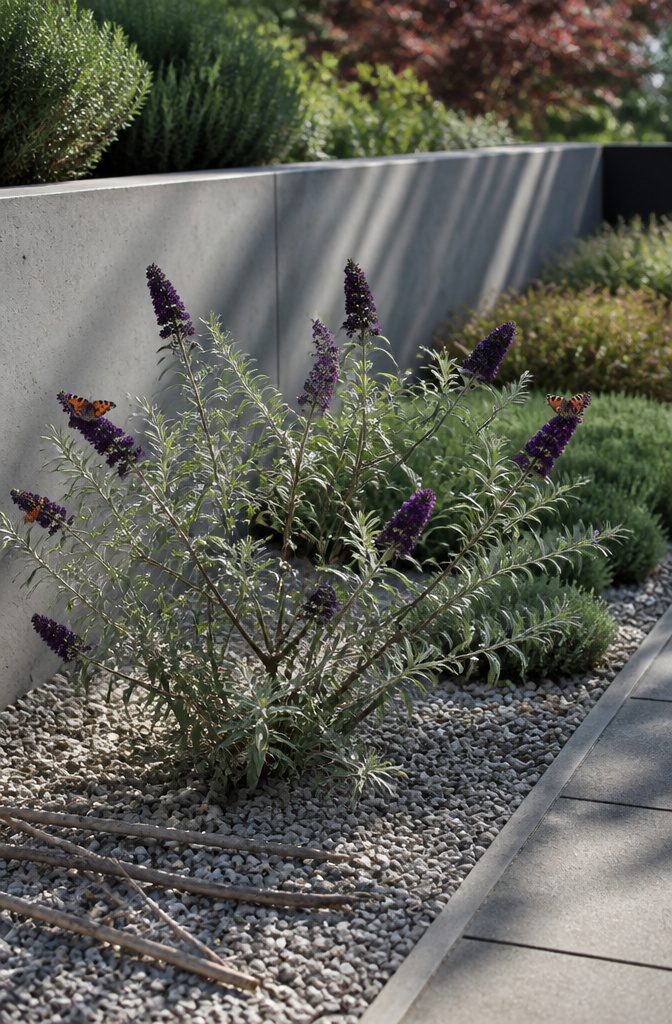
‘Black Knight’ sends up midnight-purple flower spikes above silvery-green foliage, so it gives you the darkest accent available against the cool grays common in mid-century yards. Pollinators crowd the spikes, which gives the shrub a job beyond looks.
Prune it back hard in spring to hold a sleek shape. In practice, that means cutting last year’s woody stems down to a low framework, roughly 12–24 inches above the ground, once new growth shows at the base.
The first cut feels drastic. Skip it, though, and the shrub turns leggy and loose, which works against the clean lines this style depends on.
Recommended Products

Brilliant Colorful Blooms for any Garden

TRUE BLUE ALLIUM FLOWERS: Allium Azureum, also known as Allium caeruleum, produces striking rounded flower clusters in beautiful shades of sky blue to azure blue.

Type: Perennial ornamental bulb
New Zealand Flax
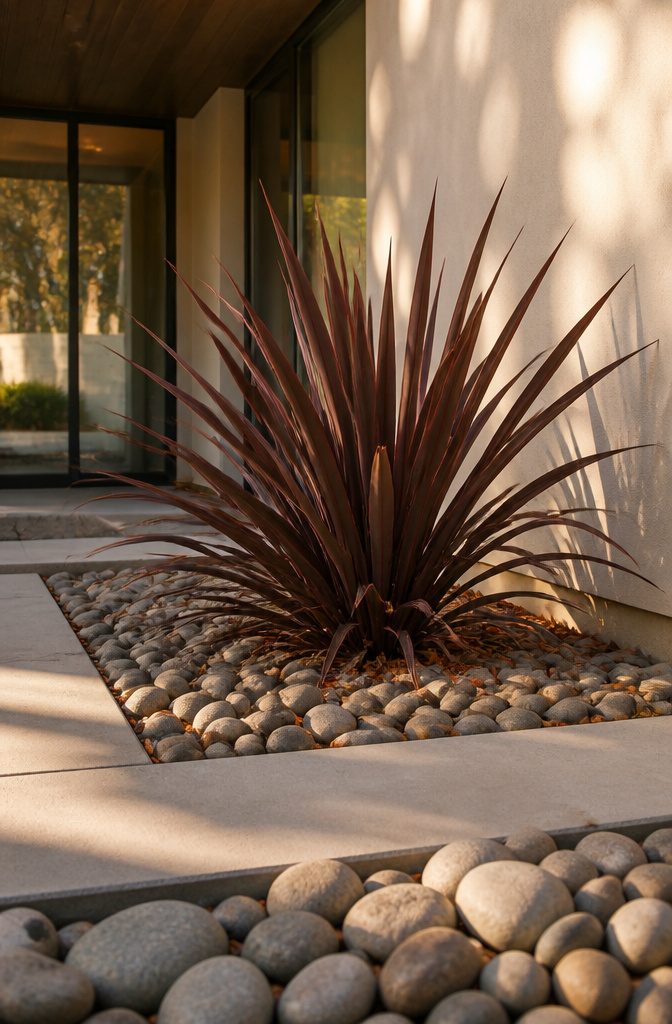
New Zealand flax (Phormium) sends up long, leathery, strap-like leaves in colors that suit the era: deep burgundy, bronze, and variegated lime green.
The blades arch outward from one point like a fountain, and that shape reads best against something flat and hard. Set it in river rocks or beach pebbles, and the smooth round stones make the leaves look sharper.
The same pairing works at the house. A bed of river rock mulch can run along the foundation as a plinth-like base that ties the concrete patio and walk to the wall.
One burgundy or bronze flax in that stone bed gives a low, linear facade a single upward gesture. Plant one or two rather than a row, so the fountain shape stays the focal point.
Recommended Products
A Showpiece in the Garden Why Tamukeyama Japanese Maple Trees? Incredible red foliage, cold-hardy strength and a silhouette that holds its color well throughout the season - the Tamukeyama is second to none,

Compact Size for Any Space – Total height 12.9 inches with a 6.6" L × 2.7" W ceramic pot, perfect for small desks, office tables, bookshelves, windowsills, or tabletop bonsai display.

USDA Hardiness Zones: Typically Zones 5-8
Windmill Palms
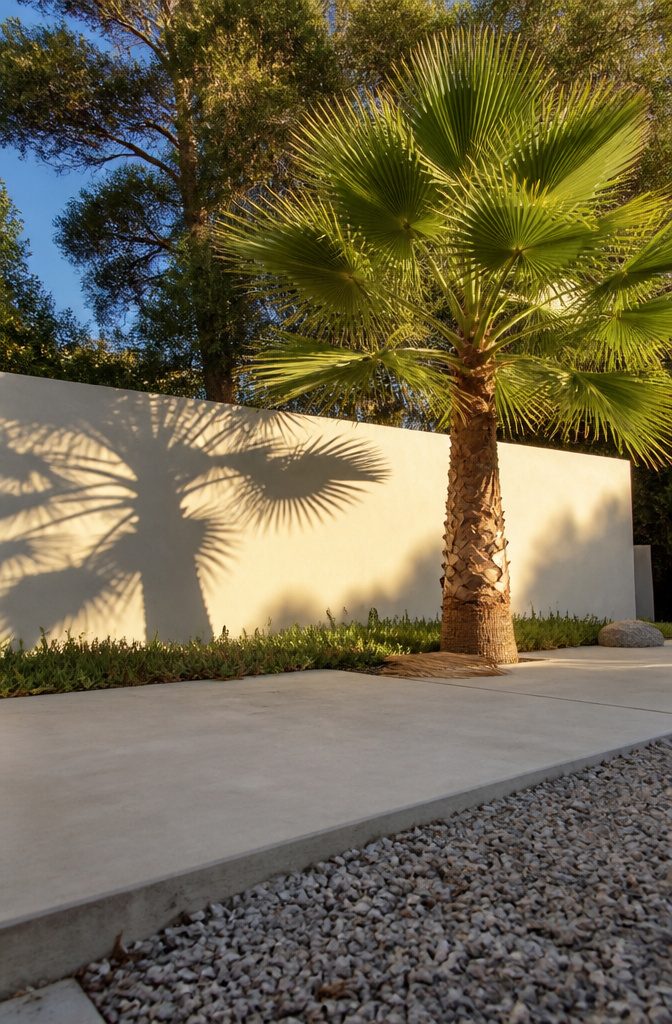
Windmill palms give a mid-century yard its California silhouette in a compact package. Each frond opens into a fan, and the fans radiate from one trunk, so the plant reads as a clean, sculptural shape rather than a shaggy mass.
Set one where the sun reaches it low and from the side.
The fan-shaped fronds throw crisp, patterned shadows across a patio, paving, or a plain wall, and that shifting shadow does the decorating the style usually asks of outdoor decor.
One palm against a flat surface beats a cluster, since the look depends on restraint and the shape needs room to be seen. Keep the underplanting low and simple so the trunk and fronds stay visible.
Clean Lines and a Tight Palette
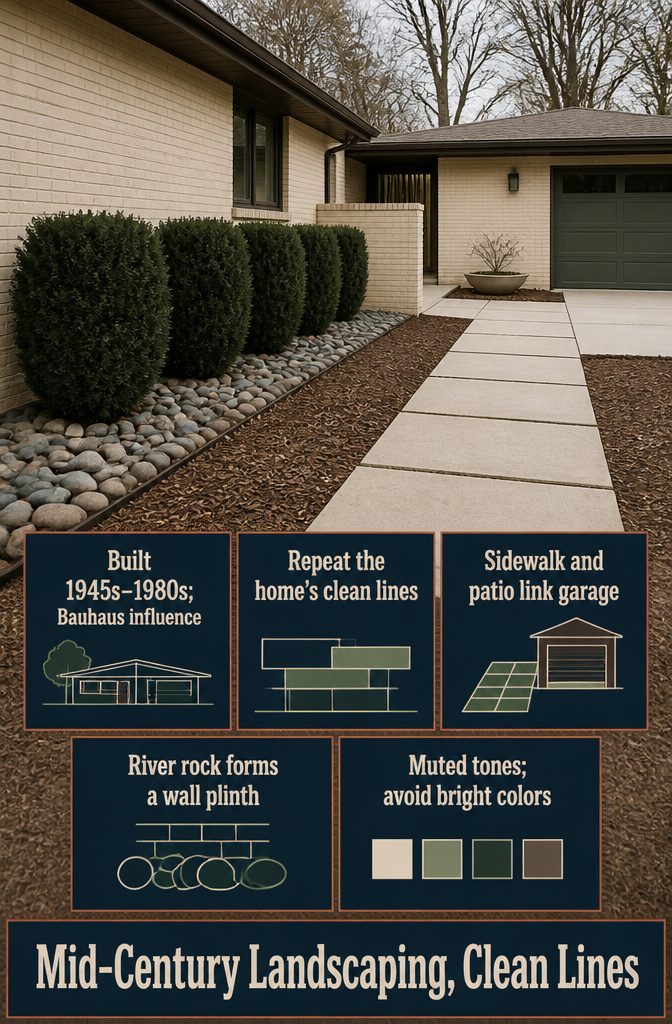
Mid-century homes, built from about 1945 to the 1980s, took flat planes and clean lines from Bauhaus design and Frank Lloyd Wright, so the yard should repeat those lines instead of competing with them.
A rambler in Minnetonka, Minnesota, shows how: the new sidewalk and side patio play off the planes of the house and tie it to the garage, while a river-rock bed sits against the wall like a plinth, with mink-colored hardwood mulch layered in front of it.
Keep the palette muted.
Dark green ‘Nova’ yews against cream brick get their contrast from the house, not from flowers. Avoid bright colors, and let texture and tone carry the design.
Recommended Products

[ Quantity & Size]: The package includes 9 stems of large blue faux pampas grass. Our tall fake pompas grass is approx 3.1 feet, 37''/ 95 cm. The feathers plume is about 23'' and the stem is 14''

Hardy in USDA Zones 4-9. Due to varying agricultural regulations, we do not ship to the following states: AK, AZ, CA, CO, ID, MT, NV, OR, UT, WA and HI.
Choosing Plants for Your Zone
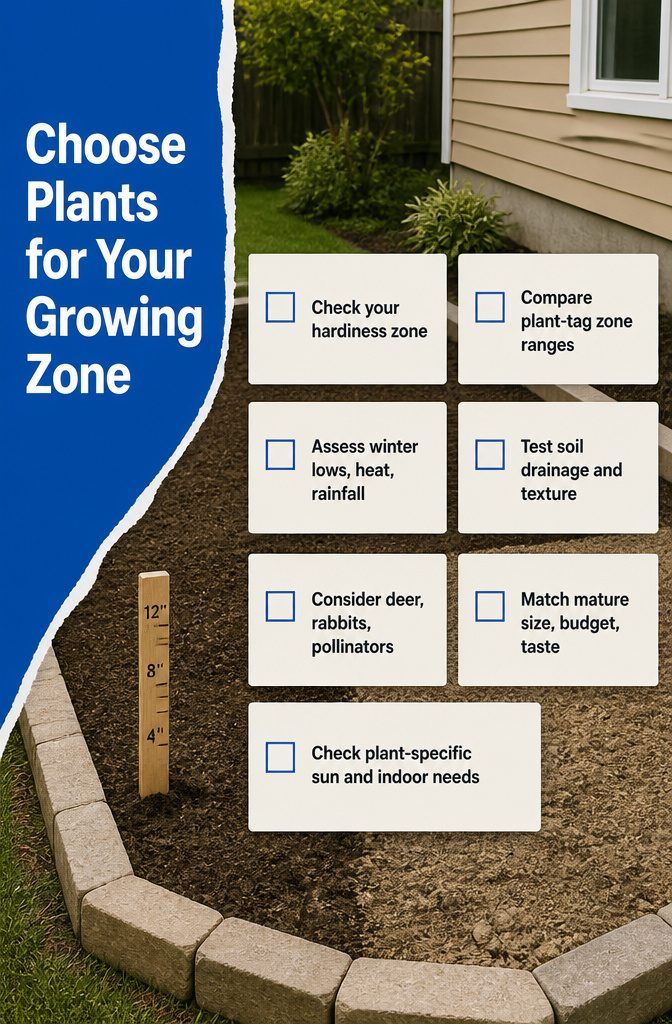
Settle these before you buy anything:
- Hardiness zone. Look up yours, then check the zone range on every plant tag.
- Regional weather. Winter lows, summer heat, and rainfall affect a plant as much as the zone number does.
- Soil. Check drainage and texture where the plant will actually go.
- Local wildlife. Deer, rabbits, and pollinators in your area decide what survives and what helps.
- Space, budget, and taste. Match mature size to your yard, spend within your limit, and pick plants you like looking at.
- Zone margins. A plant can fail even one zone away. The Midwest runs mostly Zones 4 through 6, with pockets of Zone 3 and Zone 7, so a plant that thrives in one town may not in the next.
- Plant-specific limits. Allium needs full sun. Bird of Paradise must be grown indoors in cooler zones.