The ideas run from a row of matching pots to a paved patio, a pond, or a Japanese garden, and the main use of your yard decides which one fits.
If a dog or kids run on the grass, keep the lawn; paving only suits a yard that mostly gets sat in.
1. A Bench Retreat
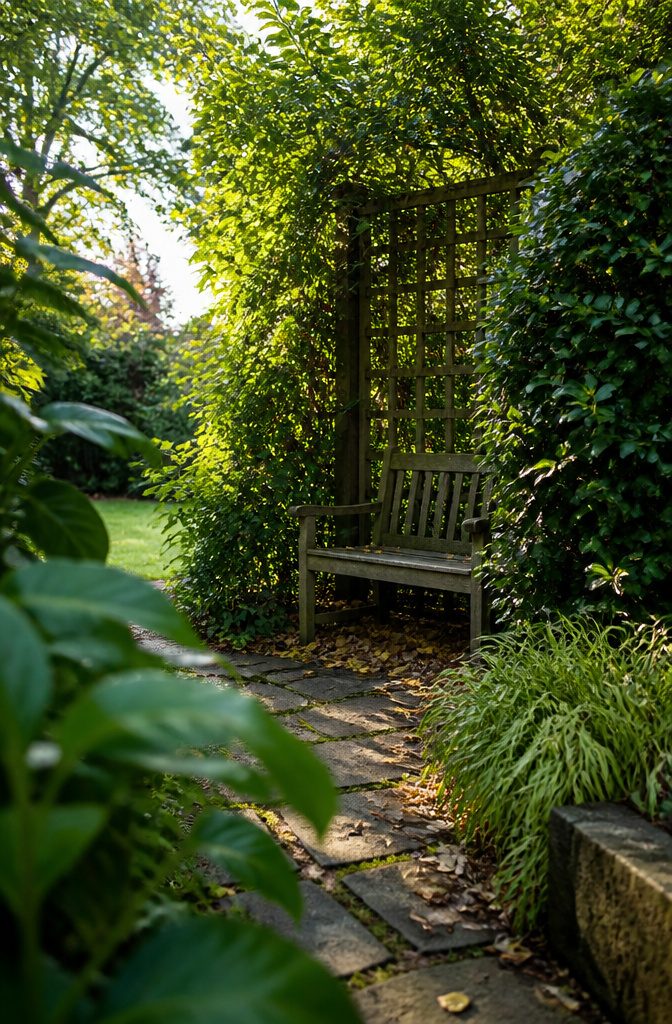
The bench is the whole idea. Pick one spot, set a seat there, and ring it with climbing vines and leafy bushes so the corner feels like a small room instead of leftover yard.
Put the vines behind the seat on a fence or trellis for height, and use the bushes on the sides to close it in.
This layout suits a yard where sitting matters more than lawn. If you rarely use the grass, give that square footage to the bench and the planting.
A small fountain in the corner is an add-on, and only if you have the room. In a tight yard, skip it and let the foliage do the work.
Recommended Products

Stylish Gardening Accessory: Classic grid-style trellis strong enough for a variety of plants, complementing your surrounding garden or patio

Perfect Support for Climbing Plants:Designed for climbing and vining plants, this tall plant trellis provides reliable support for indoor and outdoor potted plants, helping them grow upright and healthy.

🪴【Plant Trellis for Climbing Plants Indoor and Outdoor】:2 Pack of uniquely designed plant trellis 30 inches for taller climbers, and can be easily disassembled to 15 inches for smaller plants, also possible to use two stands for one plant to meet your multiple potted needs and provide the structure your indoor climbing plants need to develop. Let your potted vine plants become the decorations of your home.
2. A Patio Garden
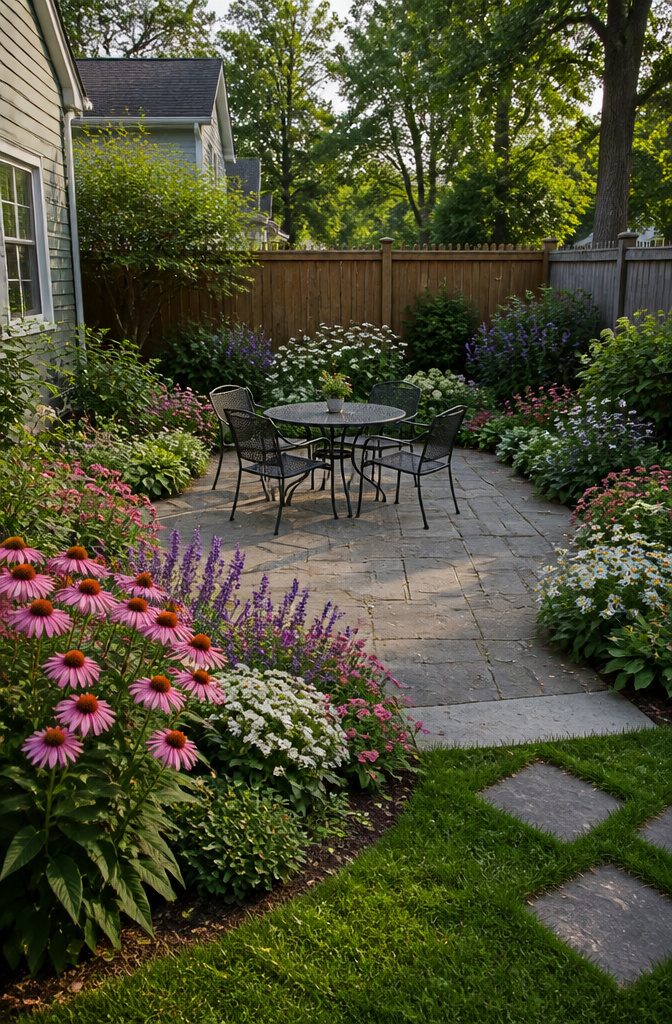
In a small backyard, a lawn is often the least useful ground you have. Paving it gives you a firm spot for a table and chairs, and you stop mowing a patch too small to enjoy.
Then ring the patio with flowers. Planting on every side, rather than leaving a bare edge, makes the paved area feel tucked away, like a secret garden you step into.
You give up the soft, open green of grass for hard surface, and the color now has to come from the planting beds around it.
If a dog or kids use the grass to run, keep the lawn. If the yard mostly gets sat in, paving with a flower border on all sides is the better use of the space.
Recommended Products

Protects outdoor floors & outdoor furniture – Perfect floor protectors for outdoor & patio furniture on wood / composite decks, stamped / smooth concrete patios and porches, tiled floors and more (For concrete pavers & rough concrete surfaces we recommend Slipstick Gorilla Outdoor Nylon Glide products).
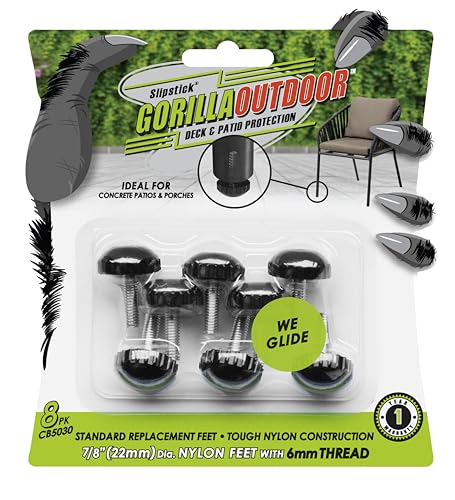
Hard wearing nylon furniture glide leveling feet – Premium adjustable furniture leg levelers for tables, chairs, patio furniture, deck furniture, outdoor furniture, and more. Great screw in furniture sliders for outdoor and indoor use. Please measure existing furniture socket to ensure you choose the correct size and review size / fit information images.
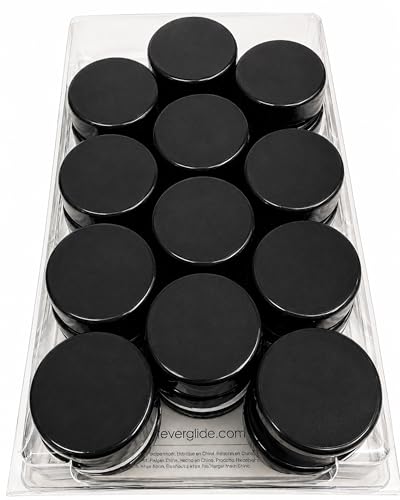
IMPORTANT: The 1.42" glide is slightly smaller than the 1-1/2" inside diameter cup it is designed to fit into. This allows the foam to flex and conform on uneven surfaces, providing self-leveling stability
3. A Small Pond
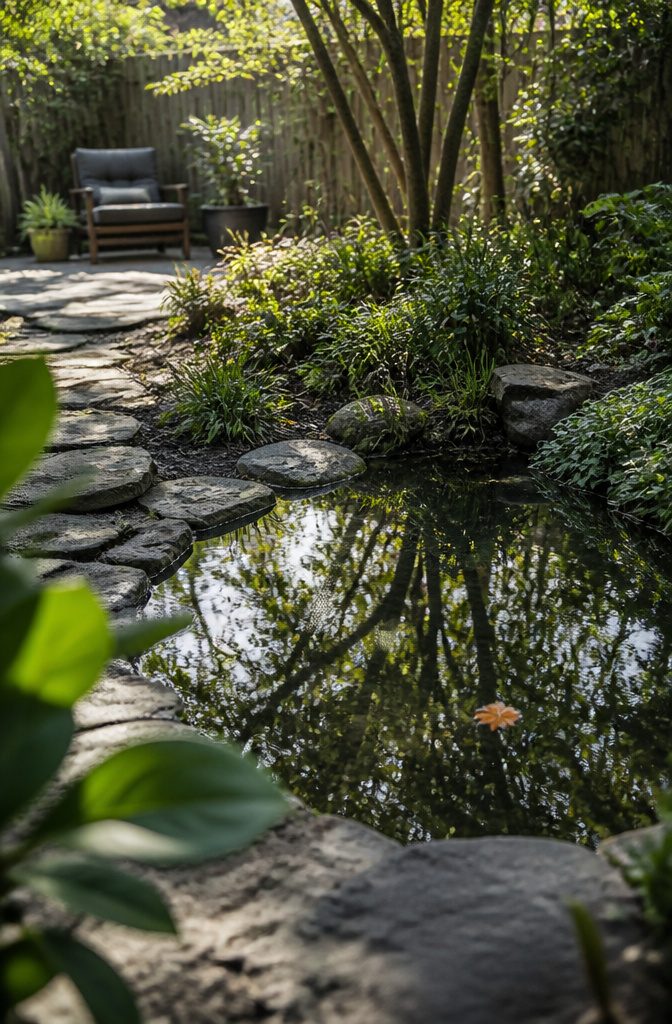
Living beside a lake or the ocean isn’t a requirement for enjoying water at home.
A small pond brings it into a yard of any size, which makes it one of the more flexible features you can add to a compact space.
Because a pond stays put once it’s dug, choose its spot before anything else.
Pick a place you can see from a window or from the patio seat you use most. A pond hidden behind a shrub, where you rarely look, takes up room without giving much back.
Keep it modest. In a small yard, a small pond looks planned, while an oversized one crowds the beds and paths around it.
Recommended Products


Solar Lights for Garden: Warm white light shines through clear geometric shades to accent flower beds and planting borders. These solar pathway lights link garden spaces with a consistent look along the route you choose.

4. Use Symmetry
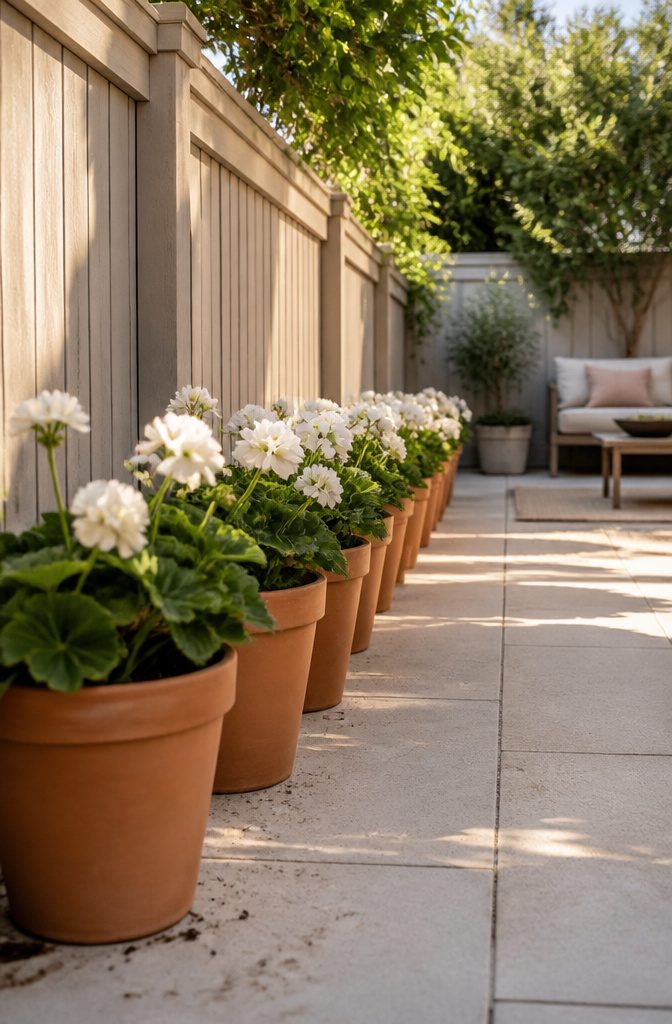
Arrange flowers in a row of matching pots, and a small yard starts to look more spacious. Repetition reads as order, and order reads as room.
That only works if the pots are truly alike, so choose the same size, material, and color for every pot, and plant them the same way. One odd pot breaks the rhythm and the row looks cluttered instead of planned.
Keep the spacing even and the row straight, so the two halves of the yard mirror each other. The result is a clean, modern look, and it takes little more than a few identical containers.
Recommended Products

RECYCLED MATERIALS: Made with a blend of recycled plastic, stone powder and wood dust

Also included is an easy to see rock fill line in pot

MADE WITH RECYCLED MATERIALS: A blend of recycled plastic, stone powder, and wood dust, this 18” planter is eye-catching and long-lasting for mindful gardening.
5. Flowerbed Islands
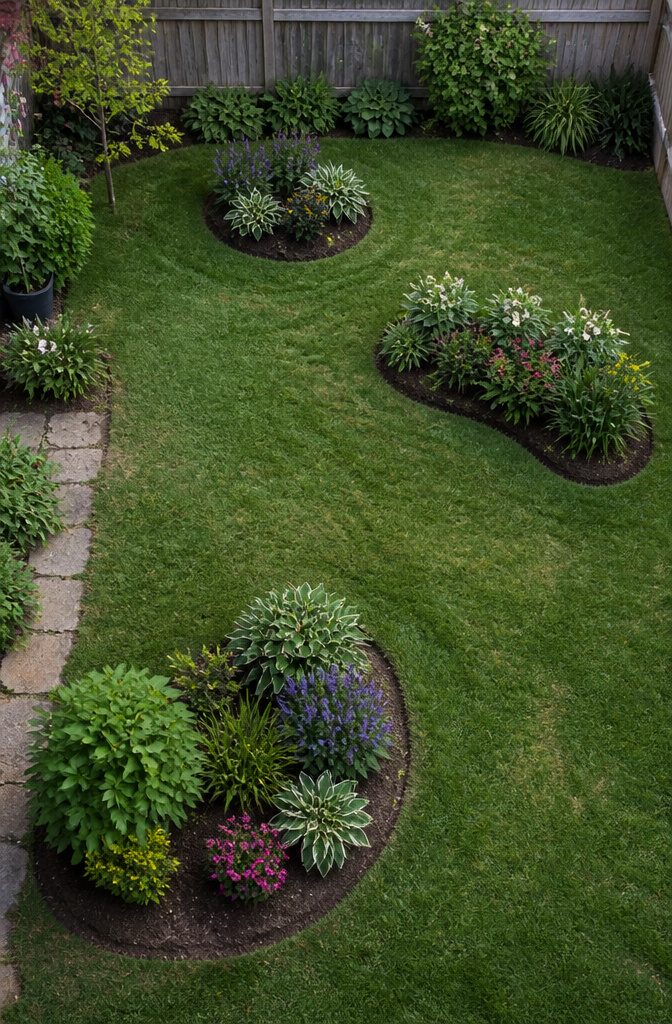
A flowerbed island is a freestanding bed with lawn on every side, not a border running along a fence or wall.
Scatter a few small ones across the grass and the lawn becomes a shape with something to curve around. That gives a small backyard a sense of space and sets it apart from the plain green rectangles next door.
Keep each island humble. Several small beds do more than one big bed, because the open grass between them is what reads as room, and a large center bed just eats the lawn you want to show off.
Stagger them instead of lining them up, and give each a soft oval or kidney outline. Leave curves gentle enough that a mower can follow them without a trimming pass.
Recommended Products

Packaging Details: The package contains 4 zen garden tools in four forms. Different forms can meet your different needs and your decoration requirements

Package Includes: You will receive 12pcs mini zen garden tools, one set each of black and beige, containing a traditional four-pronged Zen garden rake, a design rake, and a drawing pen, allowing you to unleash your creativity in creating Zen sand gardens

MINI ZEN GARDEN ACCESSORIES: These small hand rake tools are designed for creating intricate patterns in your sand tray, bringing a sense of calm to your desk
6. Garden Vertically
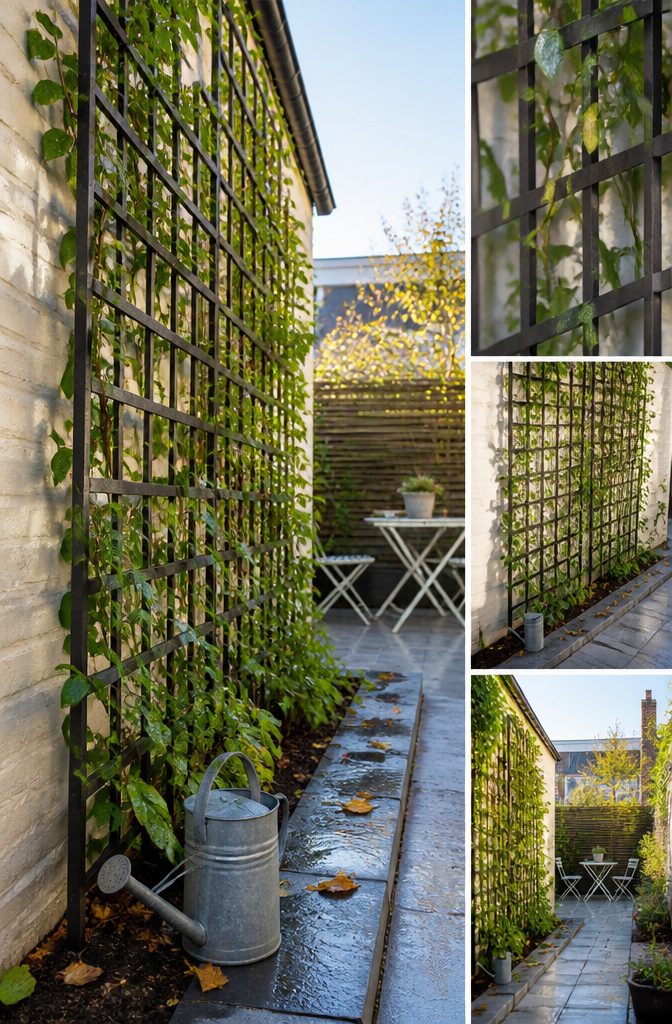
Walls and fences count as planting space. Pots or planting pockets mounted on them let you grow plants without giving up any ground or building a raised bed, which helps when your yard is mostly patio.
A pocket wall is also the costly version.
Every pot needs its own watering and upkeep, so the expense and the hours add up. If your gardening budget is tight or you only have a free hour on weekends, skip it.
Two simpler ways to gain height: train a fruit tree flat against a wall or fence, as an espalier or cordon, or put a climber on a trellis.
A trellis with a climber is the easiest place to start if you’ve never grown anything upward.
7. Plant a Tree
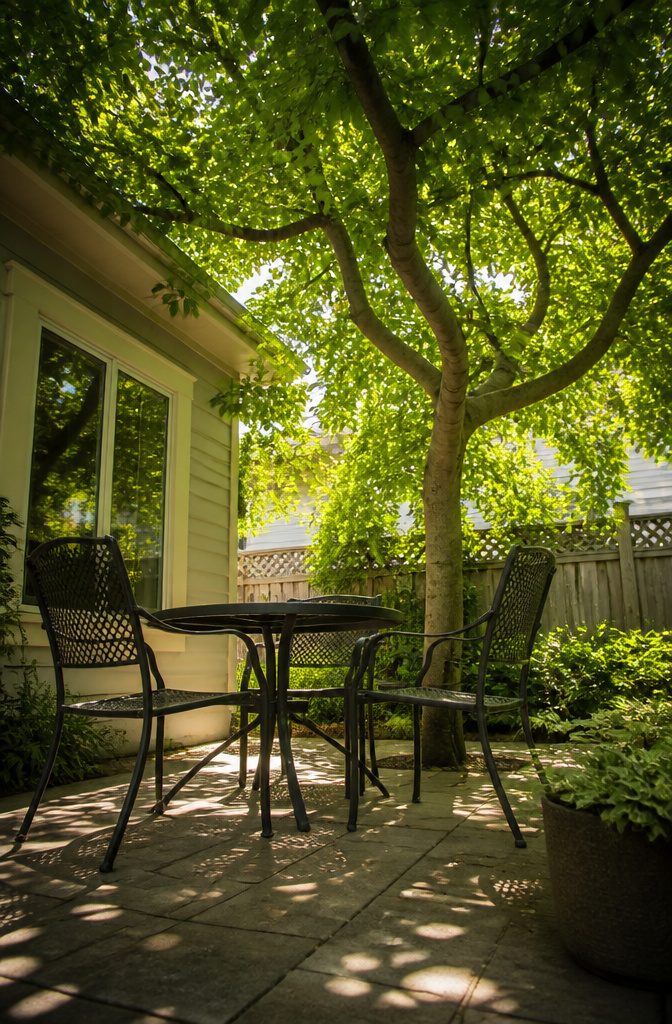
Most small yards read as one flat, undefined rectangle, and a single tree fixes that faster than a fence or a row of planters.
One tree gives a small yard its structure: a vertical line the eye follows upward, a canopy that works as a ceiling, and a clear center for everything else to arrange around.
The simplest use is a table and chairs set beneath the branches. The canopy marks off a dining area without walls, and the shade makes it comfortable to sit there.
Leave room behind each chair to pull it out without hitting the trunk, and put the set where you can see it from a window.
Stick to one tree. A second or third trunk crowds the table and makes the space feel smaller.
Recommended Products

Modern and Ergonomic Design: The design of our patio furniture set is simple, stylish and Ergonomic. It is perfect to decorate your your yard, poolside, balcony, patio and indoor area. Provide great comfort for you while you are enjoying your leisure time

DURABLE & WEATHER-RESISTANT: Crafted with a powder-coated steel frame and handwoven PE rattan, the patio furniture can withstand any harsh weather conditions. Perfect for year-round use

Hard wearing PTFE furniture glide leveling feet – Premium adjustable furniture leg levelers for tables, chairs, patio furniture, deck furniture, outdoor furniture, and more. Great screw in furniture sliders for outdoor and indoor use. Please measure existing furniture socket to ensure you choose the correct size and review size / fit information images.
8. Choose a Compact Tree
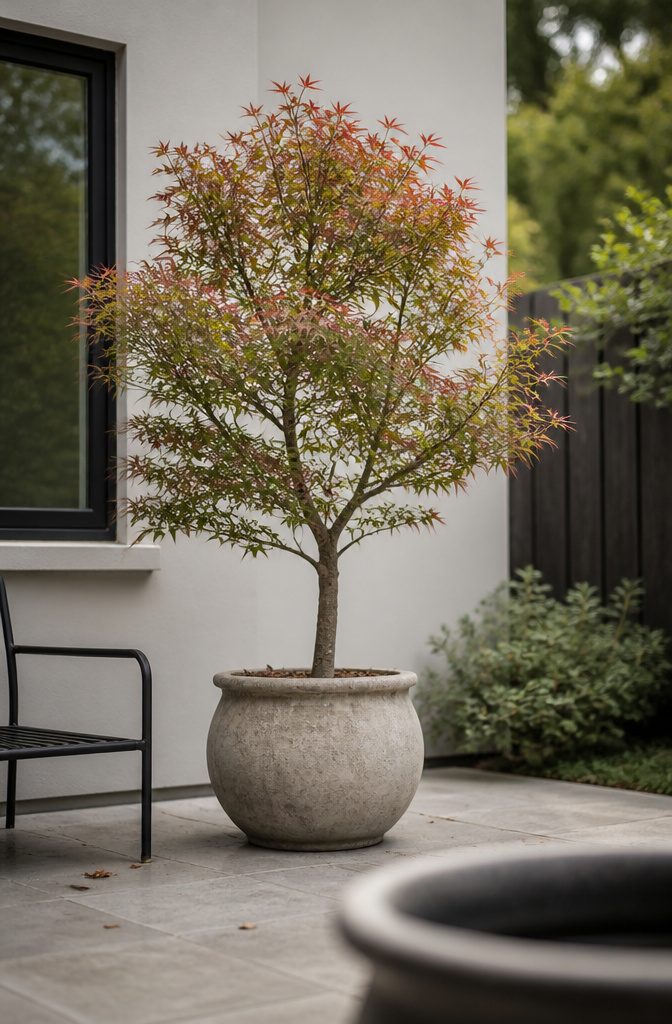
Before you buy, look up the tree’s mature height and how many years it takes to reach it.
A slow grower looks right on planting day, then keeps climbing until it blocks light from your windows and crowds the house. Roots and bulk close to the wall can also damage the foundation.
Compact cultivars exist for many tree species, and they stay in scale with a small yard.
A well-placed one gives you a focal point with interest through the seasons. If you only have a patio or balcony, buy a tree sold for pots.
For privacy, pick a species that works as a screen, and plant it where it hides the view you want hidden, not the sun you want to keep.
Recommended Products
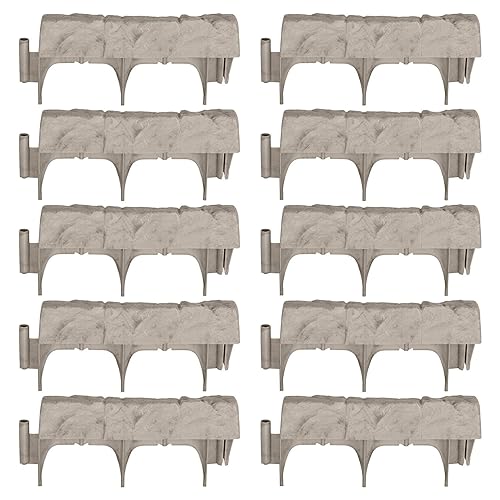
EASY INSTALLATION: Sections of edging simply slide together and can be tapped with a mallet, which eliminates digging

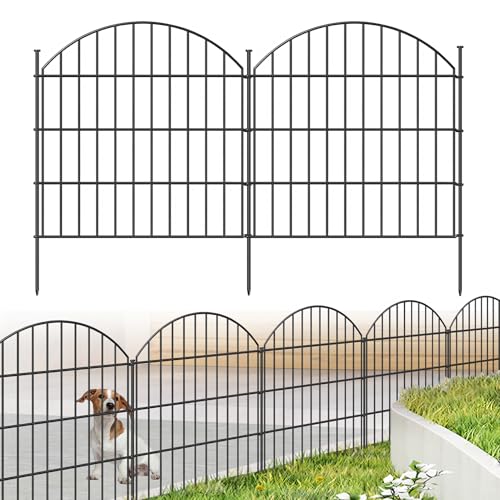
WHAT'S INCLUDED: 5 Fence Panels+6 Stakes in a bundle. Each fence Panel sized 28 inch (H) x 28 inch (W), each Stake 33 inches height, linear length 11.7 feet, Black color.
9. Dwarf Rhododendrons
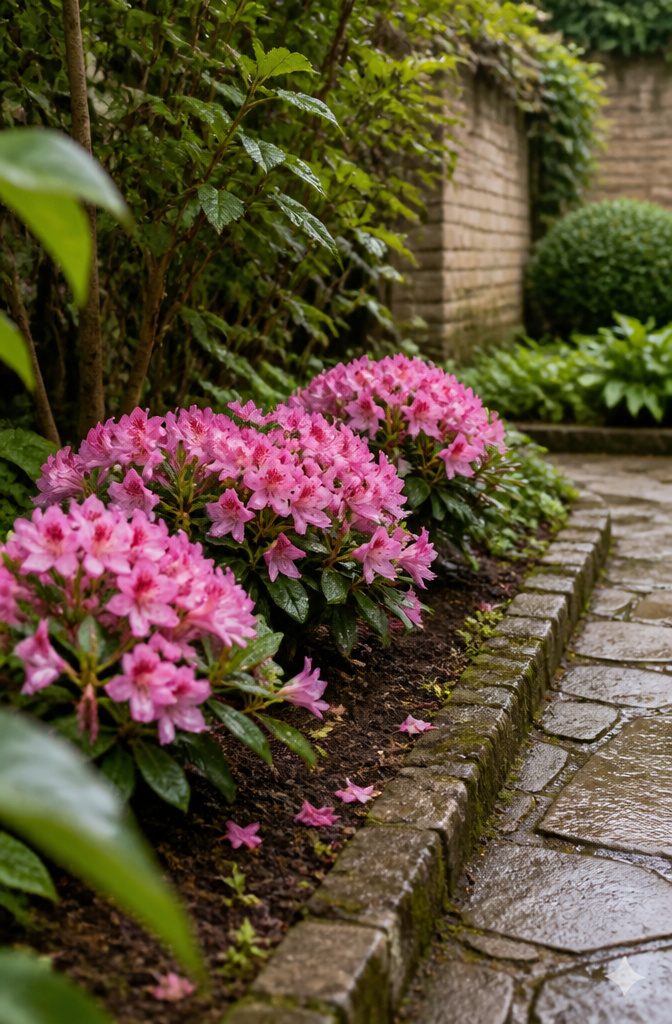
Dwarf and petite rhododendrons give a small yard the flowering drama of a full-size shrub without the footprint.
Types suited to colder, moister climates often stay under 3 feet, and their compact habit looks a little more formal, which suits a courtyard or city yard.
Check the plant tag for mature height, because the large types will outgrow a small space.
On a patio, grow one in a container of ericaceous (acidic) soil. In the ground, fit them into a rock garden or under taller shrubs in a border.
Plant them in clusters of 3, 5, or another odd number and they often start producing bell-shaped or tubular flowers around April, depending on how much room they have.
Recommended Products

Capacity: 13.5 Gallons / Size: 20.5 in. Top width x 13.5 in. Bottom width x 17 in. Height.

Classic design with a natural matte finish

Complete Planter & Saucer Bundle: Includes one TerraStone Round Planter measuring 16” L x 16” W x 13.5” H and one WaterGuard Saucer measuring 10” L x 10” W x 1.5” H for a coordinated planting solution.
10. Colorful Flowers
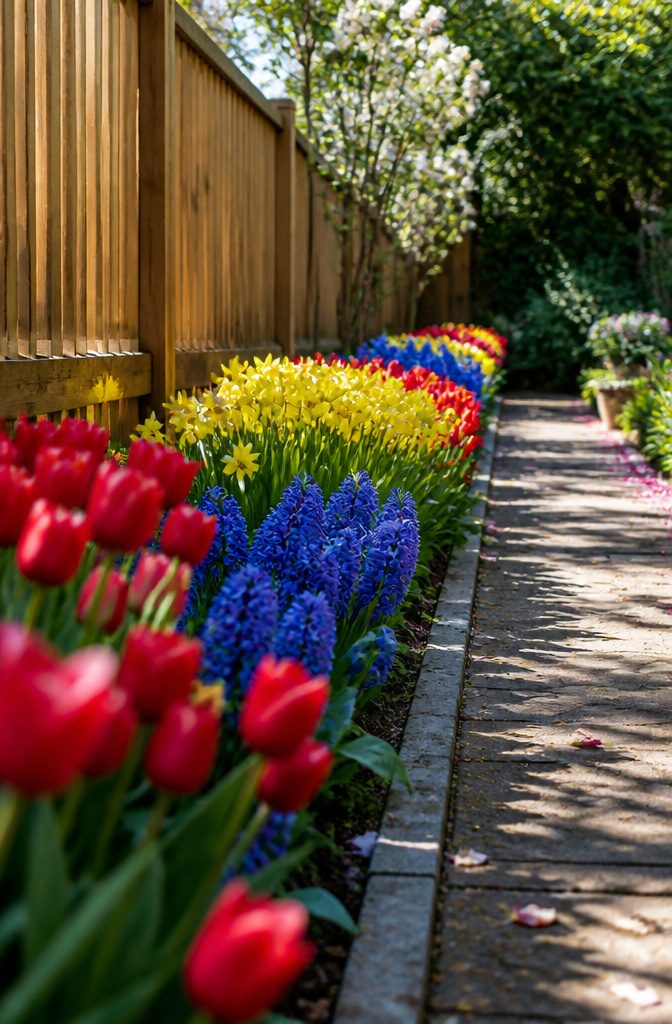
Yellow daffodils, red tulips and blue hyacinths each read as a single bright band when you plant them in a row.
A band repeated along a fence or path pulls the eye down its length, so a tight yard looks organized instead of crowded.
Keep one color per stretch of the row; scattering all three through a small bed tends to look busy. Alternating solid blocks of red, blue and yellow gives the painted, moving effect when the blooms sway in wind.
All three are spring bulbs that go in the ground in fall. Fill the same row with annuals once they fade, so the color carries into summer.
Recommended Products

✔COMPLETE ZEN DECORATION KIT: Our mini Japanese zen sand garden kit includes all the accessories for a peacefully moment of meditation: solid wood tray 8.5 x 6.7 x 0.5 inches, white sand, bamboo rake, rocks, 2 figures. Ideal for desks, tables, countertops & more
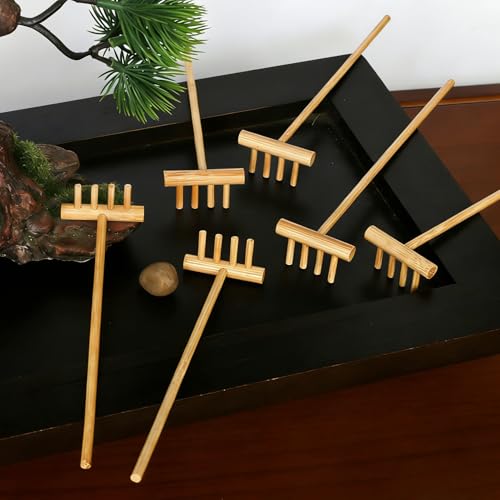
Set of 6 mini zen garden rakes which are made of nature bamboo.

Wonderful High End Japanese Gift- Reward yourself or bring calm & happiness to loved ones. Japanese Zen Garden for desk; gorgeously packaged with the elements for inner peace. A deluxe, Zen gift set
11. Edible Plants
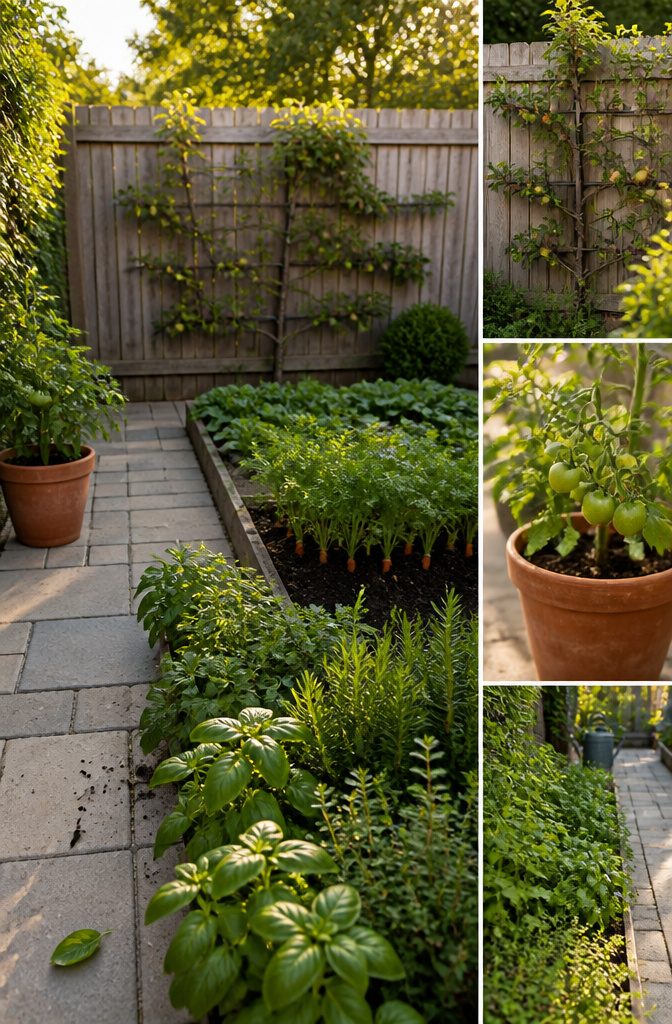
Planning is what lets a small yard grow food, and three categories are worth the space.
- Start with herbs. Their leaves are made for brushing and picking, so set them beside a path or the back door where you walk every day.
- Root vegetables such as carrots suit a small plot because the crop grows underground and the bed above stays compact. Pulling the first one is the reason many new gardeners keep going.
- Fruit trees need a decided spot before you buy, since they stay for years. Training one against a wall or fence keeps it narrow, as covered under vertical growing.
- Add a tomato plant if you have room. A ripe one picked from your own yard is a good test of whether you’ll enjoy this.
12. A Japanese Zen Garden
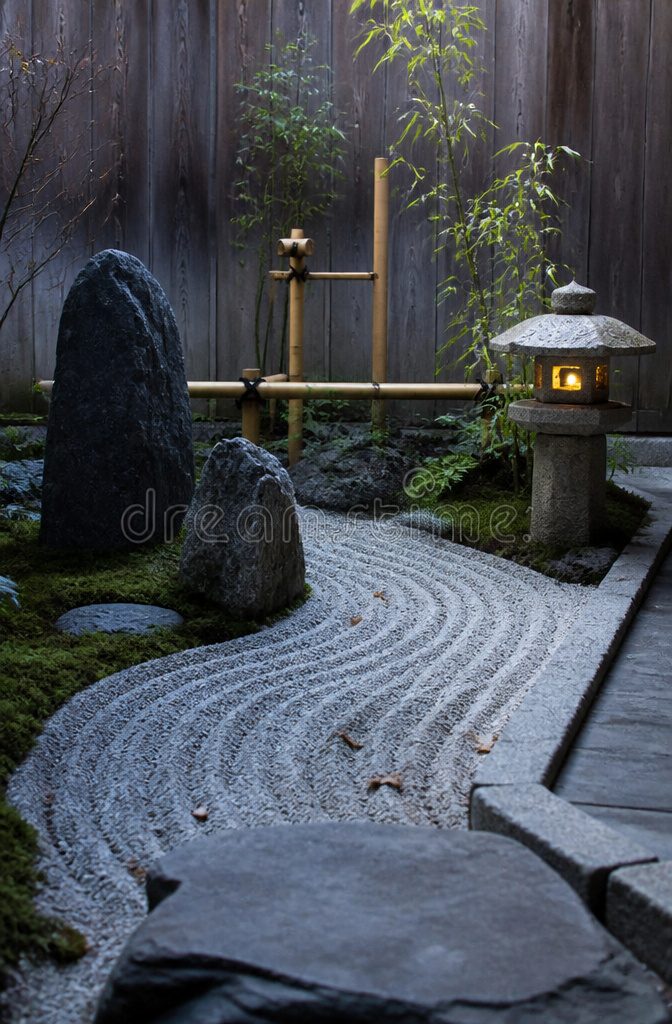
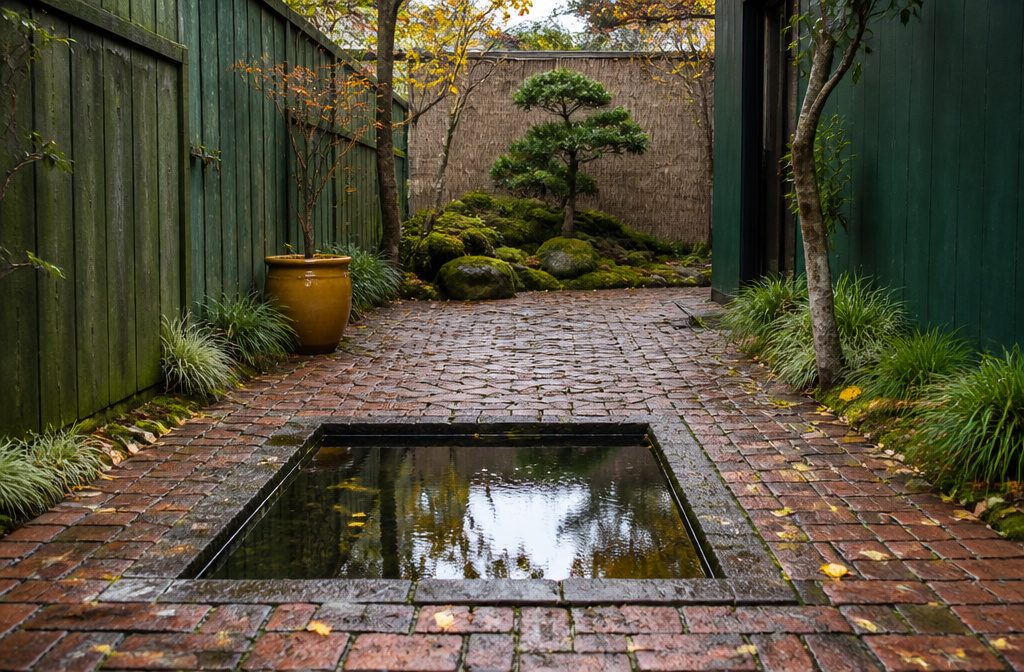
A yard with little grass or soil suits a Japanese garden well, because the materials are stone, bamboo, and paper lanterns rather than lawn and beds.
The idea is to condense nature: rocks stand in for mountains, and shaped ground stands in for a stream.
Settle the story before you buy anything.
Decide what the garden represents, such as a mountain valley with a stream running through it, then place each rock, bamboo stand, and lantern to serve that scene. Every piece is planned and controlled, so leave things out.
Extra ornaments crowd a small space and muddy the symbolism. The garden also develops slowly, so expect to adjust placements over a season or two rather than finishing in a weekend.
Plan Before You Buy
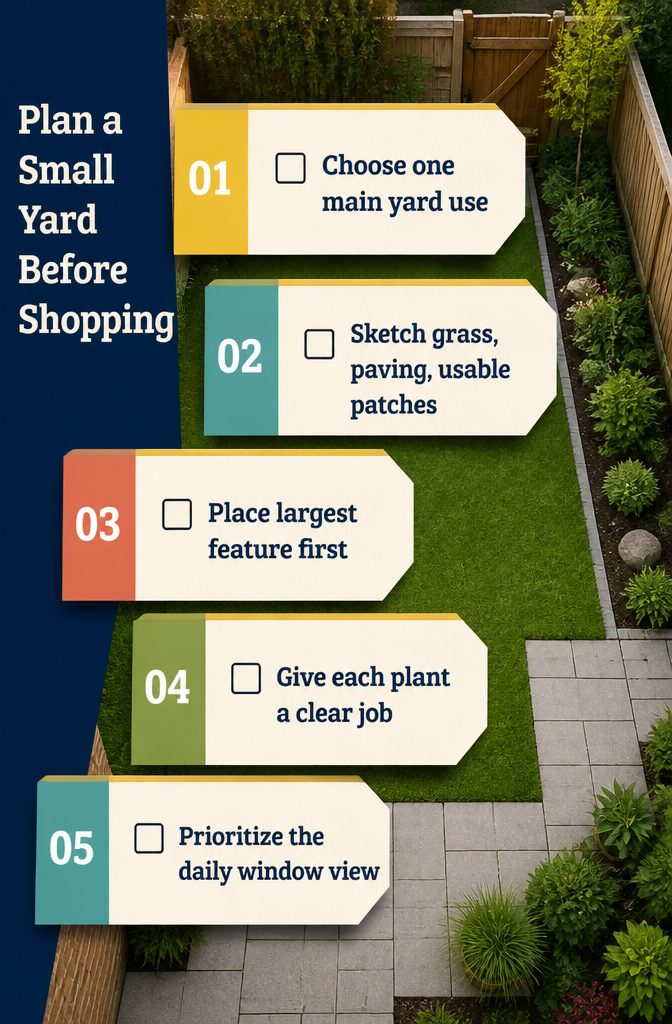
A small yard punishes impulse buying, because every plant and piece of furniture takes space you can’t easily get back. Settle these before you shop:
- Decide what the yard is for: sitting, grilling, play, growing food, or looking at from inside. One main use should win, and the others get what’s left.
- Sketch what you have, including the grass and paved areas, and mark which patches could take on a new job.
- Place the biggest feature first, whether that’s a bench, a rock garden, or a flowerbed, then fit everything else around it.
- Give every plant or tree a job, such as screening, color, or shade. Skip anything bought only because it was on the sale table.
- Stand at a window you use daily and put your best planting in that view.
Divide the Space
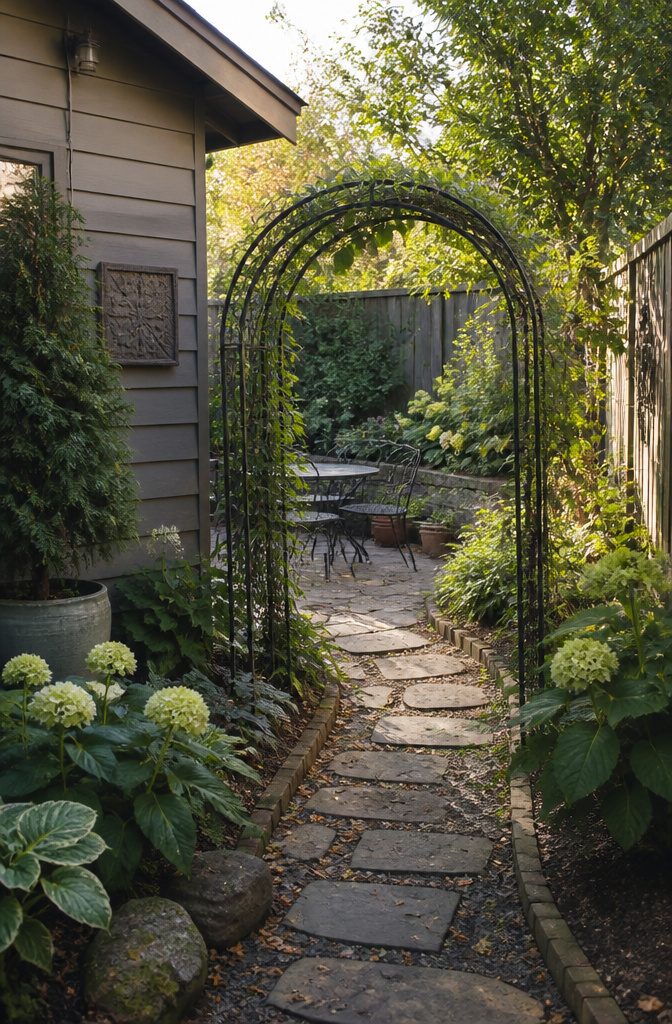
A small yard taken in at a single glance feels smaller than it is.
Split it into two or three parts and the eye has to travel. An iron arch over a path opening works fastest: you see through it to something beyond and want to walk there.
A hedge does the same with softer lines. Keep dividers low or open enough to see through, since a solid wall just makes two smaller yards.
Symmetry, flowerbed islands and vertical planting build on the same idea by giving the eye a structure to follow. One caution: a tree that outgrows the space will crowd every zone you just made.
Frequently Asked Questions
How do I make a small garden in my yard?
Pick one main use for the yard, such as sitting, play, or growing food, and sketch what you have now.
Place the largest feature first, like a bench, patio, or pond, then fit plants around it, giving each a job such as shade, screening, or color.
Add height with a climber on a trellis or a single tree, and use a low hedge or an open arch to split the yard so the eye has somewhere to travel.
What are some small outdoor plants that stay small?
Dwarf and petite rhododendrons are a good choice, since types suited to colder, moister climates often stay under 3 feet. Check the plant tag for mature height, because the large types will outgrow a small space.
Herbs and spring bulbs such as daffodils, tulips, and hyacinths also take little room. If you want a tree, choose a compact cultivar, or one sold for pots if you only have a patio or balcony.