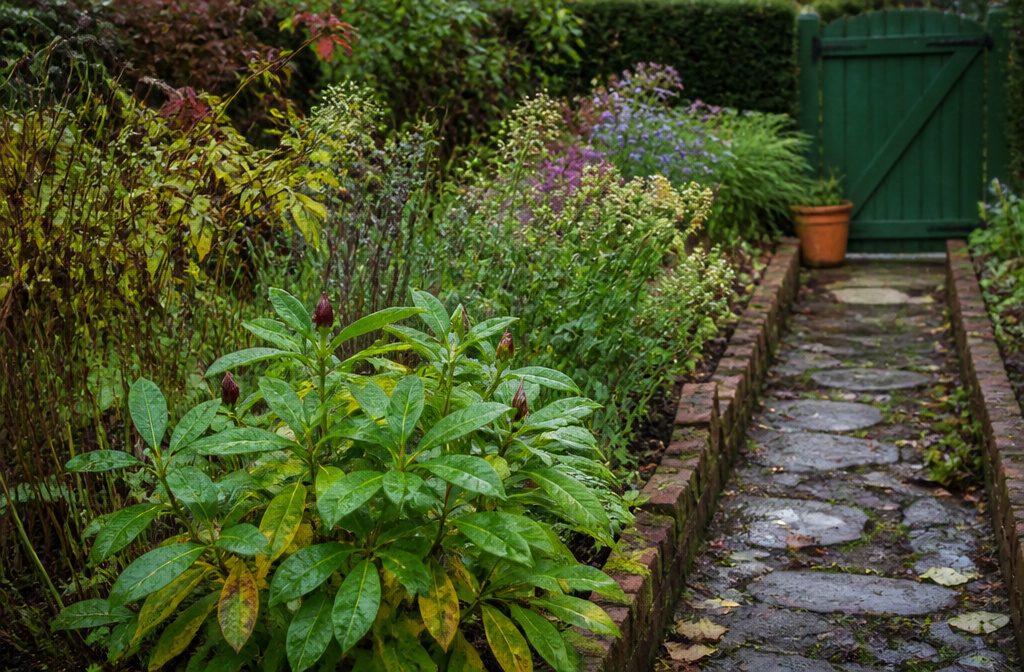
Plant most perennials 12–18 inches apart so the foliage knits together by midsummer, leaving little bare soil for weeds.
That spacing suits only small and medium plants: peonies need 3–4 feet, so read the mature width on each tag. Crowded beds also need rich soil, so work in compost before planting.
1. Go for the Romance
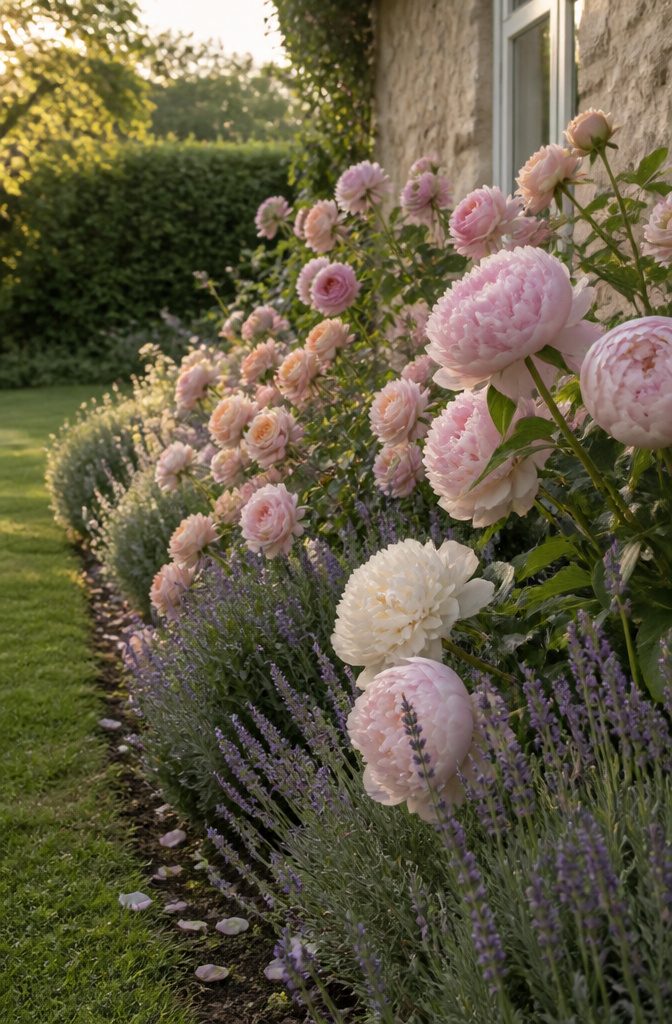
Pastel shades and fragrance set the romantic mood of a cottage garden, and peonies, old roses and lavender are the three plants to build around.
Peonies and old roses scent the air and add a lush, sensual note, while lavender layers a cleaner, herbal smell over them.
Garden Design’s Jan Johnsen puts this first in her list of cottage garden steps:
Pastel shades and fragrant flowers are hallmarks of the cottage style.
Treat scent as seriously as color. A pastel plant with no fragrance does half the job, so pick your anchors by nose as well as by eye.
Recommended Products

EASYFLEX DECORATIVE NO-DIG LANDSCAPE EDGING: Get a beautifully landscaped yard without all the work of a dig-in lawn edging; simple installation without trenches or shovels

[Fairy garden nature cottage]:Dear family,Miniature fence Fairy decor are so cute. The fairy garden accessories are easy to attach to Microscopic scene full of magic, bonsai, beautiful plants to create fairy houses.These mini garden fencing for around your yard.Let children have a good childhood and create a fairy tale world by themselves.

2. Enclose the Cottage Garden
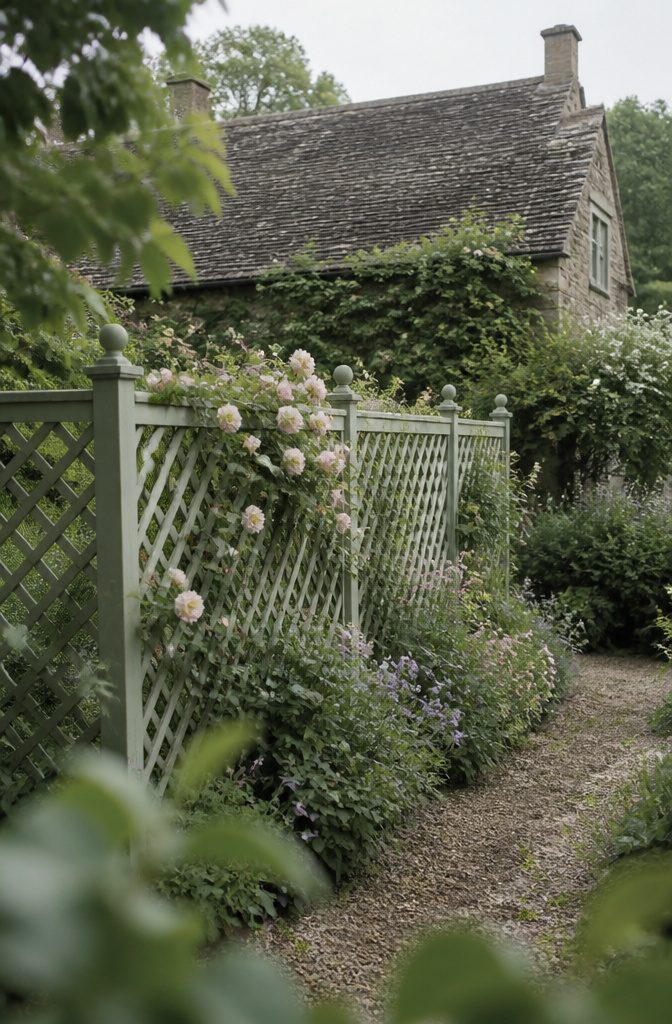
A fence is what makes a cottage garden feel like a room. In a small yard it is the one boundary you see from every spot, so its style sets the mood before a single flower does.
Keep it low. Traditional cottage fences stood lower than most modern ones, which lets the plants, not the wood, do the enclosing.
Picket is the classic and the safer choice, with many variations to pick from. Choose lattice if you want flowers climbing higher, because lattice can carry clematis, wisteria, or climbing roses.
Picket gives you a clean edge to plant against, while lattice turns the boundary itself into a planting bed. Paint either one any color you like.
Recommended Products

HIGH QUALITY MATERIALS :The willow trellis plant support are made of 100% real willow wood, nature willow color, willow sticks is about 1/4” to 3/8” thick, nice and sturdy.

✅【0.35“ Thickness】We’ve reinforced our garden lattice with a design that’s 30% thicker, now measuring 0.35” (0.9 cm). This white-painted cedar fence is sturdier than ever, resisting warping, cracking, and weathering. The smooth white finish adds a clean, bright look to your garden while reducing maintenance needs for long-lasting beauty.

WIDE APPLICATION:The willow lattice fence can widely used as fences,dividers,climbing plant supports,expandable door or trellis,ideal for indoor,outdoor, garden,patio,deck and backyard.
3. Plant Close and Feed the Soil
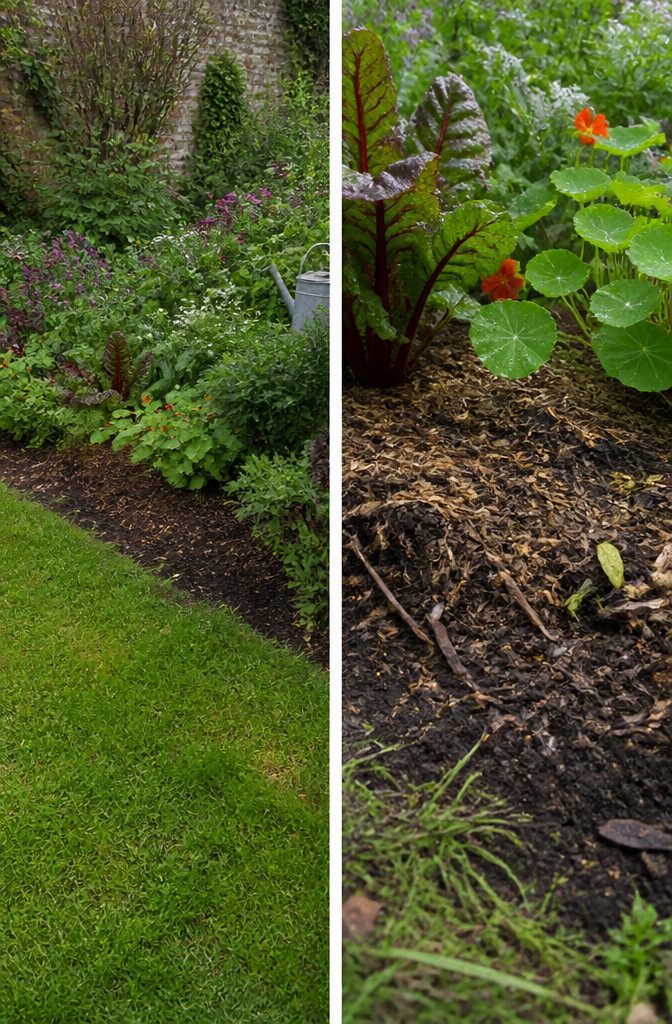
A cottage bed looks right when perennials, annuals, vegetables and foliage plants crowd together and twine through each other, with no bare soil showing between clumps.
Crowded beds need rich soil from the start, so work plenty of compost in before you plant.
Feed with compost tea or fish emulsion fertilizer, then cover the surface with undyed mulch 3–4 inches deep. It holds moisture, keeps soil temperature steady, and improves the soil as it breaks down.
Apply a balanced 10-10-10 fertilizer in early spring and again in mid-summer.
Water new plantings deeply 2–3 times a week for the first month, then drop to once a week. Check the soil 2–3 inches down before watering.
Recommended Products

Abundant 100+ Peony Flower Seeds: Each package contains more than 100 carefully selected Peony Flower Seeds, including premium Double Peony Seeds, with high purity, plump texture and uniform size. These top-grade seeds ensure a high germination rate (≥80%) and vigorous seedling growth, providing ample quantity for all your gardening needs, whether for small flower beds or large landscape projects.

Peony Seeds (50 Count): Start peonies from seed for a rewarding long-term flower garden—great for borders, cottage gardens, and cut-flower projects.

❤️ Floral Set: This set features a diverse mix of handcrafted flowers, including various types and colors of faux silk and foam blossoms, as well as greenery. Ideal for bridal and bridesmaid bouquets, floral arrangements, table centerpieces, and more.
4. Use Curving Pathways
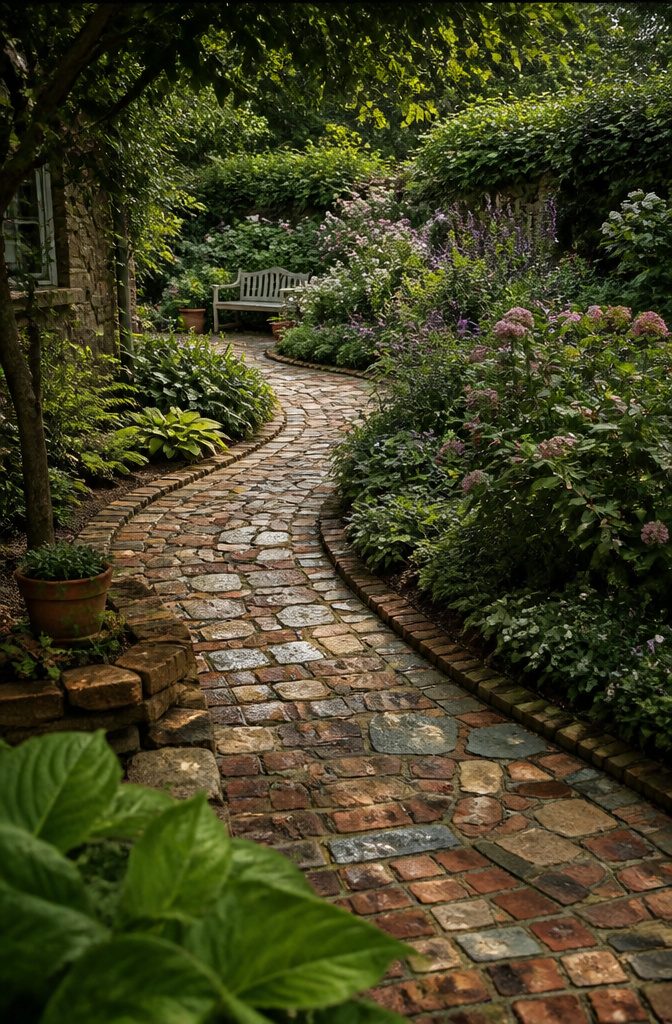
A straight path gets you from the gate to the door.
A gentle curve gives visitors a reason to keep walking, because they can’t see what’s around the bend. In a cottage garden, that pull toward the next corner is the whole job of the path.
For a hard surface, bluestone, brick, or a mix of old brick, tile, and stone all suit the style.
The mixed version is the one to pick if you have the odds and ends, since its patchwork look reads as collected over time rather than installed in a weekend.
Wood chips and gravel also work, but they creep into the beds and onto the lawn unless the path is edged along both sides to hold the material in.
Recommended Products

Boosts Growth & Root Strength – This fish fertilizer supports strong root systems, lush foliage, and consistent plant growth for indoor and outdoor gardens.

Develops deep green foliage, vigorous root systems and a solid plant structure

Combined for Maximum Growth: Neptune’s Harvest Fish & Seaweed organic fertilizer is an organic all-purpose liquid plant food formulated with 75% fish and 25% seaweed for a perfect blend of nutrients; this organic plant fertilizer delivers consistent feeding as a liquid fertilizer and plant food for vegetables, flowers, trees, lawns, and indoor plants, supporting balanced growth throughout the growing season and is safe for kids and pets
5. Mix and Match
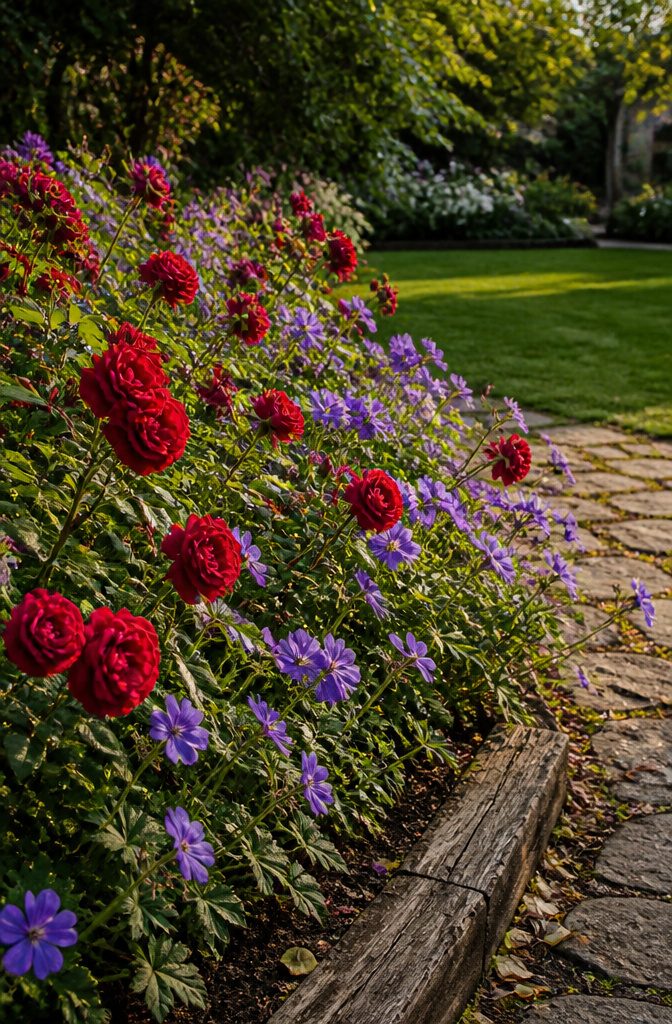
Color rules loosen in a cottage garden. A deep-red rose like Easy Elegance® ‘Super Hero’ looks good beside the lavender perennial geranium ‘Rozanne’.
Red against lavender breaks most color-wheel advice, and the pairing works anyway. The geranium has exceptional heat tolerance, blooms all summer, and grows easily among the roses.
Pink roses take unexpected partners too.
Flower Carpet® ‘Pink Supreme’ beside lavender Stachys officinalis ‘Hummelo’ gives an exuberant look. The Stachys tolerates some drought, and its scalloped leaves add texture. ‘Blue Star’ Laurentia, which flowers nonstop from June, is another easy companion.
Choose partners for how long they bloom and how well they handle your summers, and let the colors clash a little.
Recommended Products
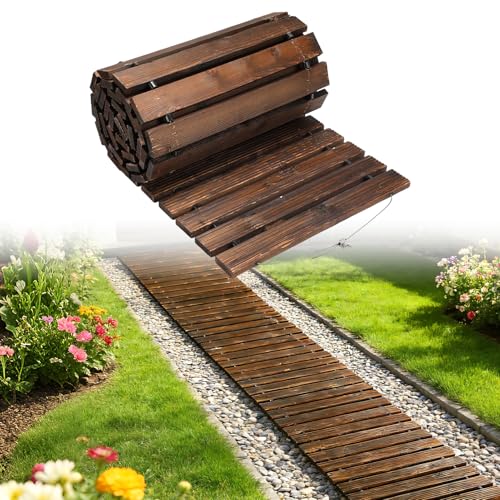
Thickened Carbonized Pine Wood Structure: Made from 0.6-inch-thick pine wood, it is stronger and more durable than ordinary fir wood, and less prone to cracking and deformation. The carbonization treatment effectively improves weather resistance, making it suitable for long-term outdoor use and an ideal choice for pathways in gardens, lawns, and backyards

Aesthetic Appeal: This wooden garden pathway measures 96 inches long and 17 inches wide, enhancing the visual attractiveness of any outdoor space while keeping your shoes clean and dust-free.

Must-Have Garden Path: How can a practical outdoor walkway haven't been added to your much valued garden? A wooden garden pathway is a hassle-free solution for both temporary and permanent pathways and can be adapted to a variety of surfaces such as grass, gravel, snow, sand and muddy ground. Keep shoes clean while spicing up the surroundings
6. Use Fun Elements
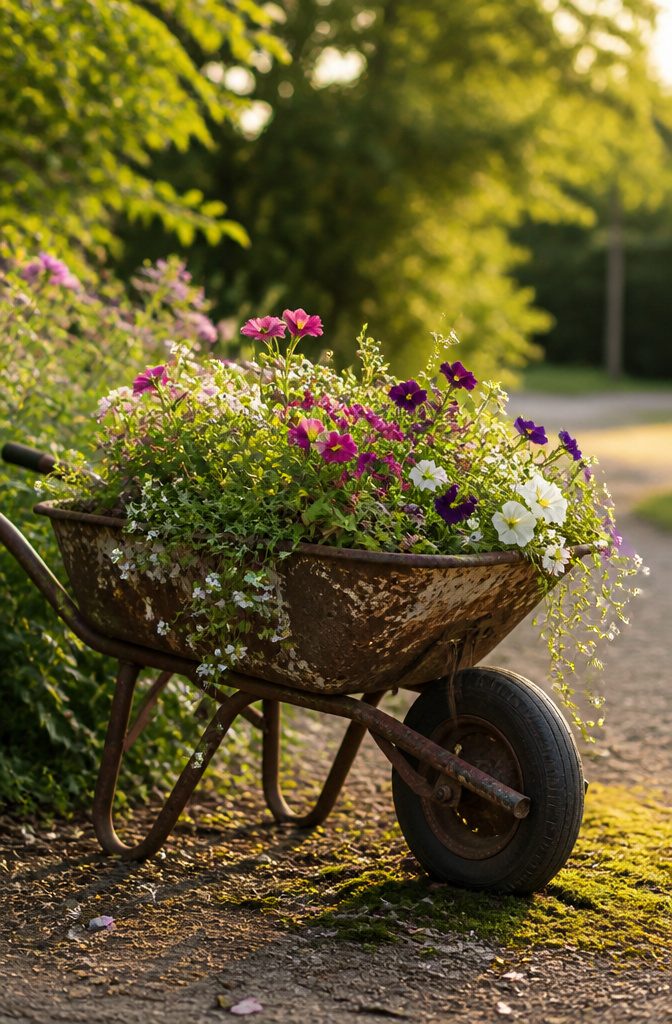
Personal objects make a cottage garden read as lived in. Choose a few that look like someone set them down on purpose:
- An old wheelbarrow in a corner. Rust and chipped paint help, and a pot or two of flowers makes it a planter.
- Moss-covered statuary tucked into a bed, partly hidden by foliage so you come upon it.
- Hand tools leaned against a fence or post, as if you just stepped away.
- Lanterns hung from a branch or set along a path edge.
- Stone finials on a post, a wall, or a low pedestal, for a bit of formal contrast.
On a tight budget, reuse what you already own before buying anything. A dented wheelbarrow, worn tools, and a mismatched lantern look better here than new pieces.
Recommended Products

PET & CHILD SAFE: Create a safe outdoor play area for fur babies and children. Rest assured that this fence will create a sturdy barrier to protect your family.

1.【Size】: 16*8*6.5cm/6.3*3.15*2.55 inch, mini size.

Long 35-Inch Length – Ample Coverage for Your Mini Garden – Each fairy garden fence measures 35 inches (90cm) in length. With 4 pieces in this set, you get a total of 140 inches of fencing – enough to surround a large succulent planter, create multiple garden sections, or build an elaborate diorama
7. Don’t Follow the Rules
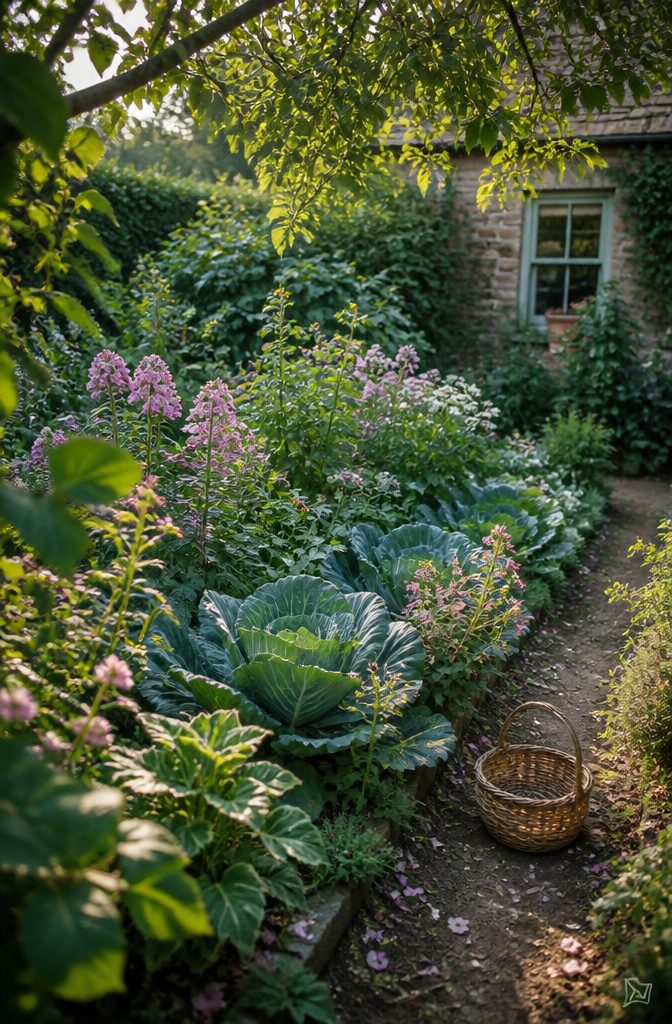
A cottage garden answers to your taste, not to a rulebook.
If you like a plant, put it in. That includes vegetables: tuck cabbage among the flowers or run Swiss chard along the path.
The first English cottage gardens were working plots beside rural cottages. Families grew vegetables, herbs and fruit trees, then added flowers for color and for cutting to put on the table.
Mixing edibles with flowers is the original form of the style. Gardens made only for ornament came later, after the look turned nostalgic in the late 1800s.
With a small yard or a few pots, pair the herbs you actually cook with next to the flowers you love.
Recommended Products

Willow Trellis:This plant support are made of 100% real willow,willow sticks is are about 1/4” to 3/8” thick

Easy to Install and Expand: Our expandable garden trellis is designed with convenience in mind. It can be easily installed in any garden or outdoor space without requiring any special tools or expertise. Plus, it can be expanded or adjusted based on your specific needs, allowing you to create a custom trellis that fits perfectly in your garden.

✅【0.35“ Thickness】We’ve reinforced our garden lattice with a design that’s 30% thicker, now measuring 0.35” (0.9 cm). This white-painted cedar fence is sturdier than ever, resisting warping, cracking, and weathering. The smooth white finish adds a clean, bright look to your garden while reducing maintenance needs for long-lasting beauty.
Plants for Every Season
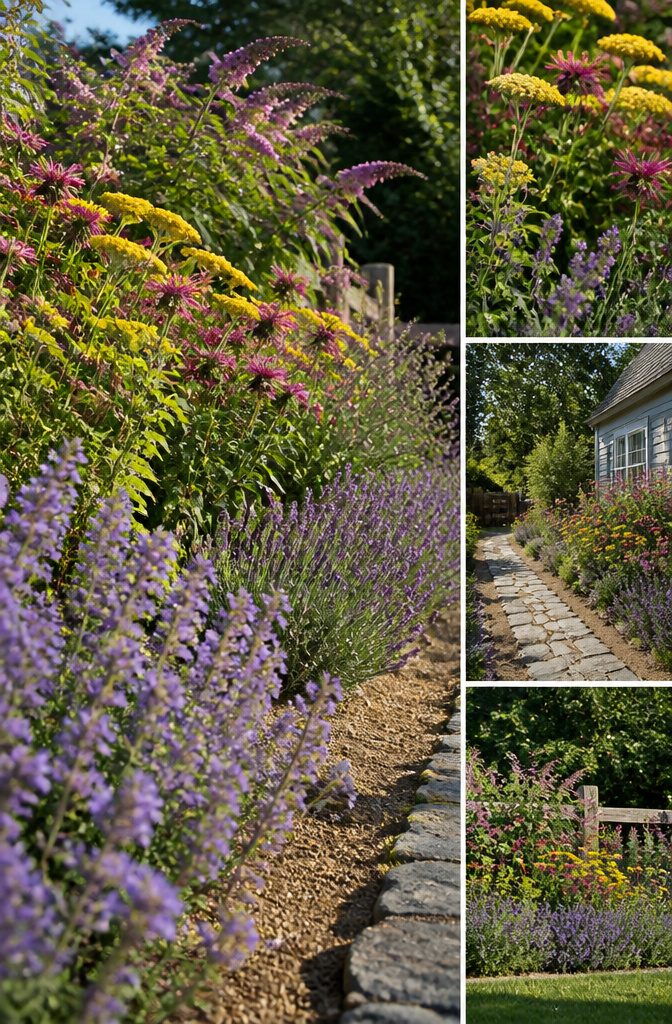
Four plants with staggered bloom times keep color going from spring into late fall. Set the 4–5 foot ‘Miss Molly’ behind yellow-flowered yarrow or tickseed for contrast.
| Plant | Height and spread | Exposure | Bloom time |
|---|---|---|---|
| Bee balm ‘Pardon my Rose’ | 14–18 in. tall, 22 in.–2 ft. 4 in. wide | Full to part sun | Summer |
| Butterfly bush ‘Miss Molly’ | 4–5 ft. tall and wide | Full sun | Mid-summer to late fall |
| Catmint ‘Cat’s Meow’ | 17–20 in. tall, 2–3 ft. wide | Full sun | Summer through fall |
| Lavender Sweet Romance® | 12–18 in. tall and wide | Full sun | Spring through fall |
Lavender needs well-drained soil, so skip it in heavy clay.
Catmint and yarrow are the easiest to keep going. Mix leaf shapes and heights, such as fine foliage beside broad leaves, so the border still has structure after the flowers fade.
Recommended Products

Perennial Herbaceous Flower: This peony seed belongs to a perennial herbaceous flower variety that returns year after year
When received, the plant will be in seasonal condition with appropriate foliage. If shipped between November 1st and March 1st, the plant may be dormant and trimmed. Plant is fully rooted in the pot ready for immediate planting

Vibrant Flowers: The peony is a species of herbaceous plant native to China; With its large, resplendent blooms, it stands as the quintessential symbol of beauty, embodying profound symbolic significance
Spacing Perennials 12–18 Inches Apart
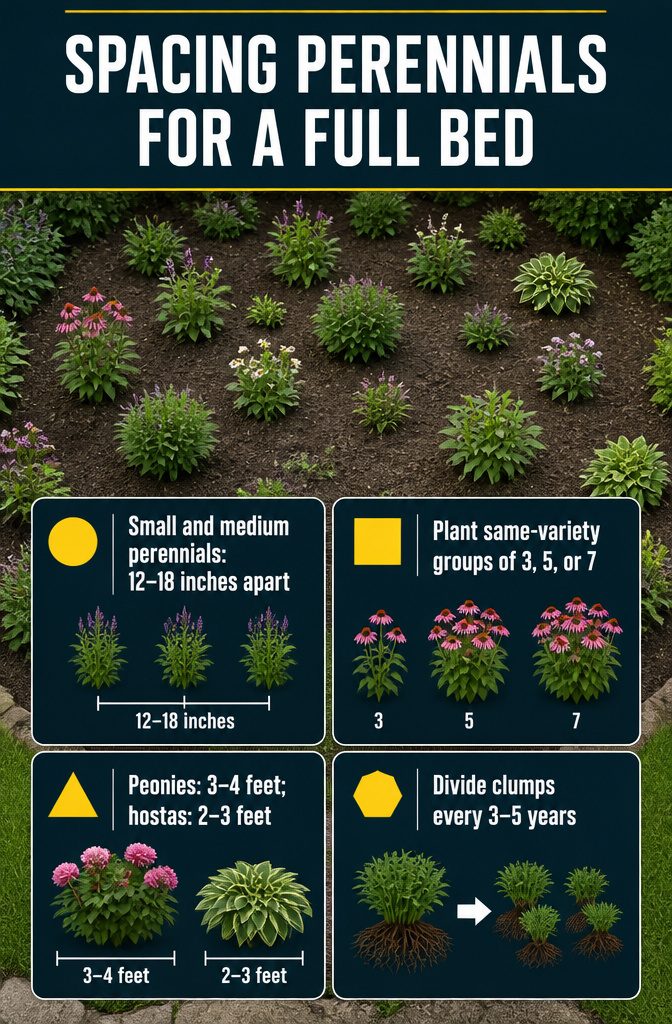
Set most perennials 12–18 inches apart, close enough that the foliage knits together by midsummer and leaves little bare soil for weeds to fill.
Plant them in groups of 3, 5 or 7 of the same variety rather than as singles. Odd-numbered drifts look natural, and a lone plant gets lost in a dense bed.
That spacing suits small and medium plants only. Peonies need 3–4 feet between plants and hostas need 2–3 feet, so read the mature width on each tag before you dig.
Crowding cuts air circulation and sets plants competing for room. Divide clumps every 3–5 years to keep them vigorous.
Fill early gaps with annuals while the perennials reach full size. Let unfamiliar seedlings grow until you can identify them, because self-seeders are easy to pull by accident as weeds.
Recommended Products

Fish Protein :12-2-2 NPK powder made from 100% fish dried liquid powder, ground, and highly water-soluble when mixed.

Supports Strong Roots & Healthy Foliage – Helps encourage balanced plant development.
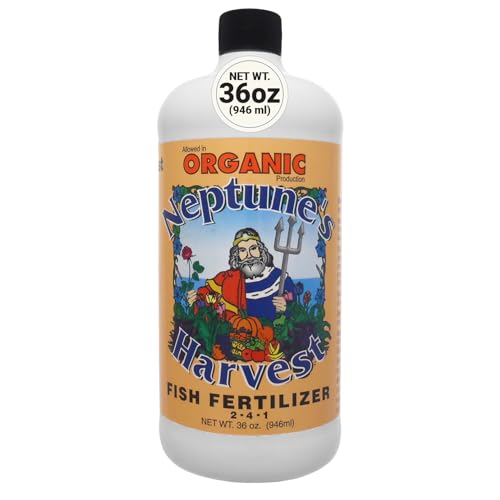
Derived for Maximum Growth: Start with nutrition designed to work with nature; Neptune’s Harvest Organic Fish Fertilizer 2-4-1 is a liquid fish fertilizer and organic fish plant food made using a unique cold process that protects the vitamins, amino acids, enzymes, and growth hormones; sourced from clean, mineral rich North Atlantic Ocean fish and never lake, farmed, or river fish; this fertilizer supports lawns, vegetables, flowers, and indoor plants throughout the growing season and is safe for kids and pets
Picking a Color Palette
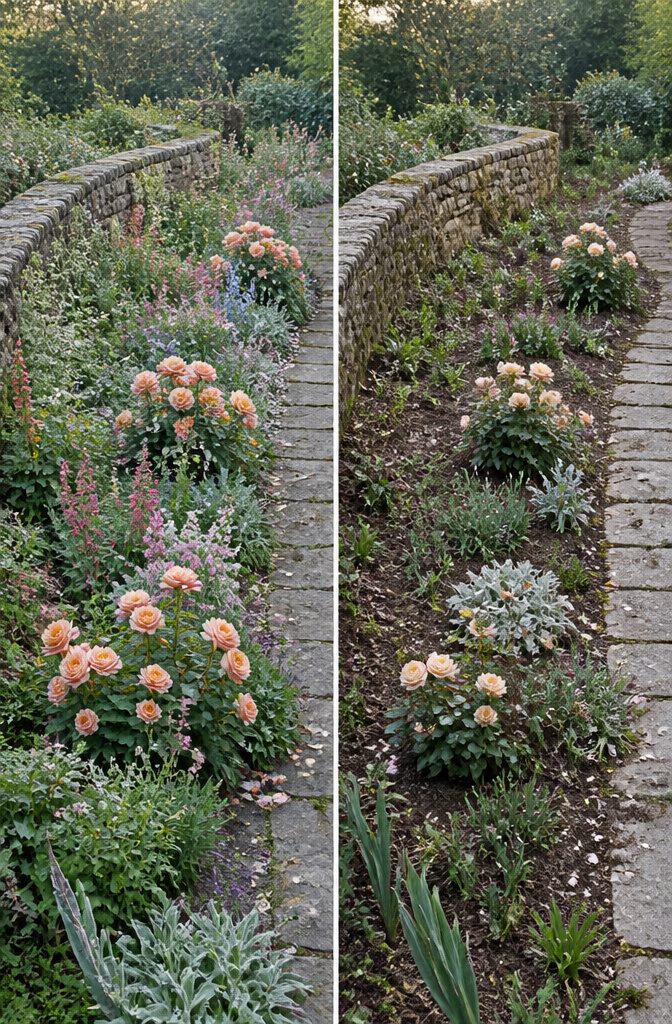
No palette is required, so the choice is between two moods. A soft scheme draws on soft blue, pink, pale green, silver, gray, white and lavender, and it stays calm even in packed beds.
A bold scheme of orange, yellow, red, purple, magenta and chartreuse is louder and needs a tighter hand.
Then decide how the scheme holds together.
A unified scheme repeats one anchor, such as the apricot-flowered shrub Rose ‘The Lady Gardener’ planted 3 times among soft pinks, peaches, blue and lavender. Unusual combinations are livelier but easier to get wrong.
For a first or second season, repeat one plant 3 times and keep everything else in one color family, soft or bold. Beds look chaotic when the colors share nothing.
Recommended Products

24Ft Large Size: this garden walkway is about 24 ft/ 7.3 meter long, 17 inches/ 0.43 meter wide, and 0.59 inch/ 1.5 cm thick, whether winding through flower beds or leading to a cozy patio, our walkways provide ample coverage

VERSATILE DESIGN: Roll-out wooden pathway made from premium Sycamore wood, perfect for gardens, backyards, patios, and special outdoor events

Anti-Slip Surface for Safer Walking: Designed with textured, non-slip slats, this wooden walkway provides enhanced traction on grass, sand, gravel, and uneven ground. It helps create more stable footing, making it ideal for outdoor events, garden paths, and everyday use.
Stepping Stone Spacing
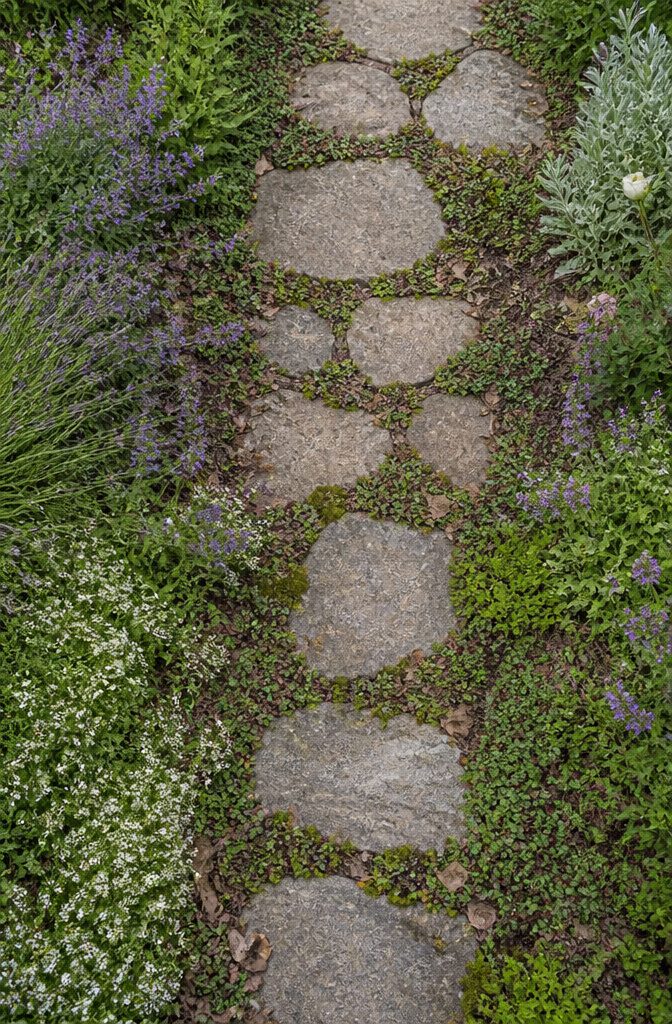
Set stepping stones 18–24 inches apart so each step lands comfortably and plants can spill into the gaps.
Lay them on a 2-inch sand base in spring, after your last frost date, so the surrounding plants can establish around them through the season.
Let the route wander instead of running straight. Put a larger anchor plant, such as a shrub rose or a tall perennial, at each curve.
Along the stone edges, lavender, catmint and sweet alyssum soften the hard line. Creeping thyme or moss between stones helps keep weeds out.
Finish the path at an arbor or trellis so the eye has somewhere to land. If your site requires a straight edge, let the plants spill over it.
Frequently Asked Questions
What is a cottage garden plan?
A cottage garden plan lays out a densely planted, informal garden that mixes flowers, herbs and vegetables, usually with a low picket or lattice fence, a curving path and an arbor or trellis.
The style started with English working plots beside rural cottages, where families grew vegetables, herbs and fruit trees and added flowers for color and cutting.
Gardens made only for ornament came later, after the look turned nostalgic in the late 1800s.
What are the best perennials for a cottage garden?
The old-fashioned favorites are bleeding heart, columbine, delphinium, dianthus, peony, phlox, Shasta daisy and yarrow.
They come from the traditional English cottage garden. For a longer season, add catmint ‘Cat’s Meow’, which blooms from summer through fall.
What are the best shrubs for a cottage garden?
Roses are the classic choice, and a shrub rose repeated 3 times makes a good anchor for the rest of the planting.
Lilac and hydrangea also suit the style, and spirea, weigela and potentilla bloom for months with little pruning. For late color, butterfly bush ‘Miss Molly’ grows 4–5 feet tall and wide and blooms from mid-summer to late fall.
What are the best low-maintenance cottage garden plants?
Catmint, daylily, foxglove, hydrangea, iris, lilac, stonecrop and yarrow are all easy to keep going, and plants native to your area are easier still.
Black-eyed Susans, purple coneflowers and Shasta daisies are hardy in zones 3–9. For low cost, add bulbs such as daffodils and tulips, plus self-seeding annuals like zinnias, marigolds and cosmos that return on their own.
What colors work in a cottage garden, and how do I pick a palette?
No color is required, so choose between a soft palette (soft blue, pink, pale green, silver, gray, white and lavender) and a bold one (orange, yellow, red, purple, magenta and chartreuse).
Keep to a core of 3–4 colors, then tie them together by repeating one plant 3 times. Beds look chaotic when the colors have nothing in common.
How do I layer cottage garden plants by height and bloom time?
Put tall shrubs of 6–8 feet, such as lilac, at the back, 3–4 foot perennials like peonies and delphiniums in the middle, and 12–18 inch edgers like sweet alyssum in front.
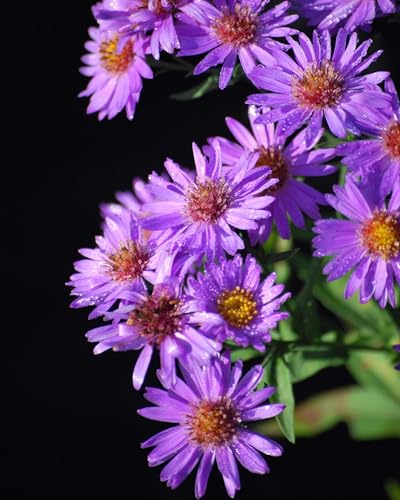
For color from spring into fall, combine spring bulbs, late-spring perennials such as columbine, summer bloomers such as roses, and fall plants such as asters and mums. Mixing leaf shapes and heights keeps the border interesting after the flowers fade.
How do I lay out stepping stones in a cottage garden?
Space the stones 18–24 inches apart on a 2-inch sand base, and lay them in spring after your last frost. Let the route wander, with a larger anchor plant such as a shrub rose or tall perennial at each curve.
Plant lavender, catmint or sweet alyssum along the stone edges, and use creeping thyme or moss between stones to hold back weeds.
What are some tall flowers for a cottage garden?
Foxgloves, ornamental alliums, delphiniums and hollyhocks are dependable tall choices.
Foxgloves are biennials that self-seed, so they keep reappearing around the border. Butterfly bush ‘Miss Molly’ reaches 4–5 feet, and it looks good set behind yellow yarrow or tickseed.
How often should I water and fertilize a cottage garden?
Water new plantings deeply 2–3 times a week for the first month, then once a week.
Check that the soil is dry 2–3 inches down before you water. Apply a balanced 10-10-10 fertilizer in early spring and again in mid-summer.
How do I prevent weeds in a cottage garden?
Plant tightly, with most perennials 12–18 inches apart, so the foliage knits together by midsummer and leaves little bare soil.
Cover the soil with undyed mulch 3–4 inches deep. Weed by hand, and learn what your seedlings look like first, because self-seeders such as poppies and foxgloves are easy to pull by accident.
What mistakes should I avoid in cottage gardening?
The common ones are ignoring the mature size of each plant, skipping soil preparation, and choosing plants that all bloom at the same time.
Choosing colors that share nothing also makes a bed look chaotic. Check that each plant suits your hardiness zone, and remember that plants native to your area are easier to care for.
How far apart should I space perennials in a cottage garden?
Space most perennials 12–18 inches apart, in groups of 3, 5 or 7 of the same variety.
Large plants need more room: peonies need 3–4 feet between plants and hostas need 2–3 feet. Read the mature width on each plant tag, fill early gaps with annuals, and divide clumps every 3–5 years.