These ideas range from a gravel path with a dry creek bed to creeping thyme between pavers, and your yard’s sun, soil, and drainage decide which ones fit.
The 70–80% cut is a ceiling against a traditional lawn and garden, and new plantings still need water until they root and spread.
1. Drought-Tolerant Groundcovers
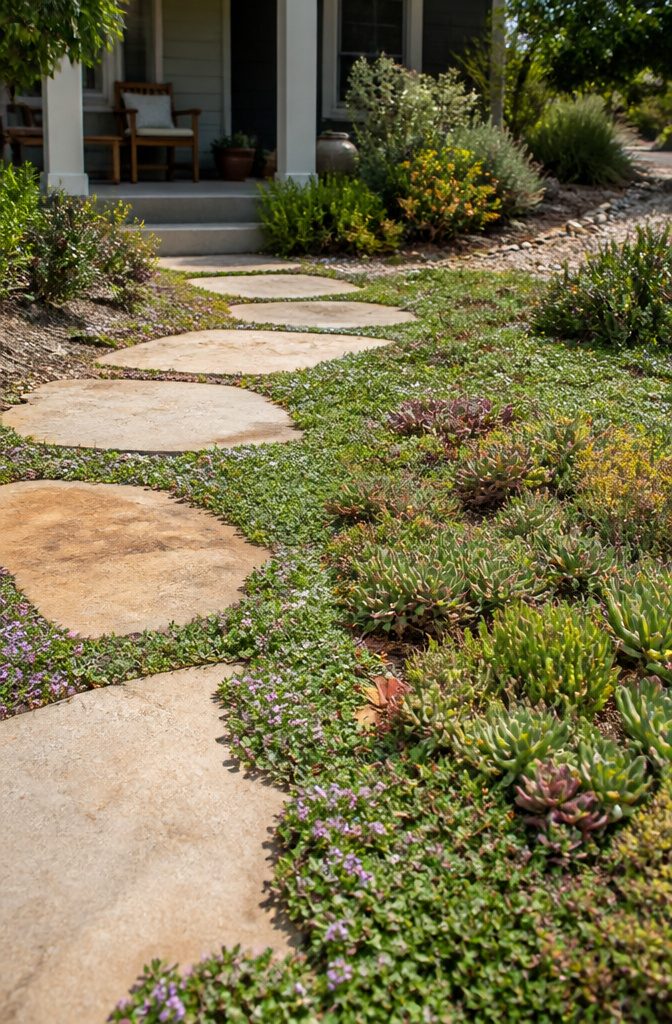
Creeping thyme is the groundcover to plant first between pavers.
It spreads into a lush green carpet with tiny, fragrant flowers, and it fills the gaps around stepping stones so a path looks soft instead of bare. Creeping Jenny works in those same joints if you want a different look.
Sedum, also called stonecrop, suits path edges and open patches of bare soil.
It comes in a range of textures and colors and holds up in dry conditions. Either plant covers ground that would otherwise be mown, so your lawn gets smaller and so does the weekly chore.
Neither is zero-water on day one. Keep new plantings watered until they have rooted and started to spread, then cut back to the low needs these plants are chosen for.
Recommended Products

🌱 10000+ Lemon Thyme Seeds for Planting Includes 10000+ lemon thyme seeds for planting, ideal for herb gardens, borders, containers, and outdoor landscaping projects with long-lasting aromatic foliage.
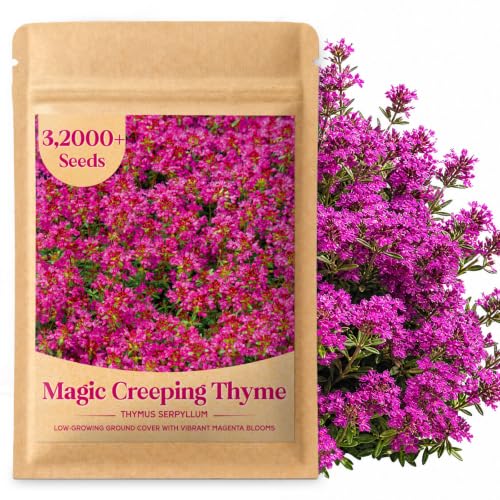
32000+ Seeds For Large Planting Areas: Over 32,000 Magic Creeping Thyme seeds provide generous coverage for pathways, garden borders, rock gardens, slopes and landscape projects. A great choice for creating a fuller planting area with a single packet

2. Gravel, Rock, and Stone
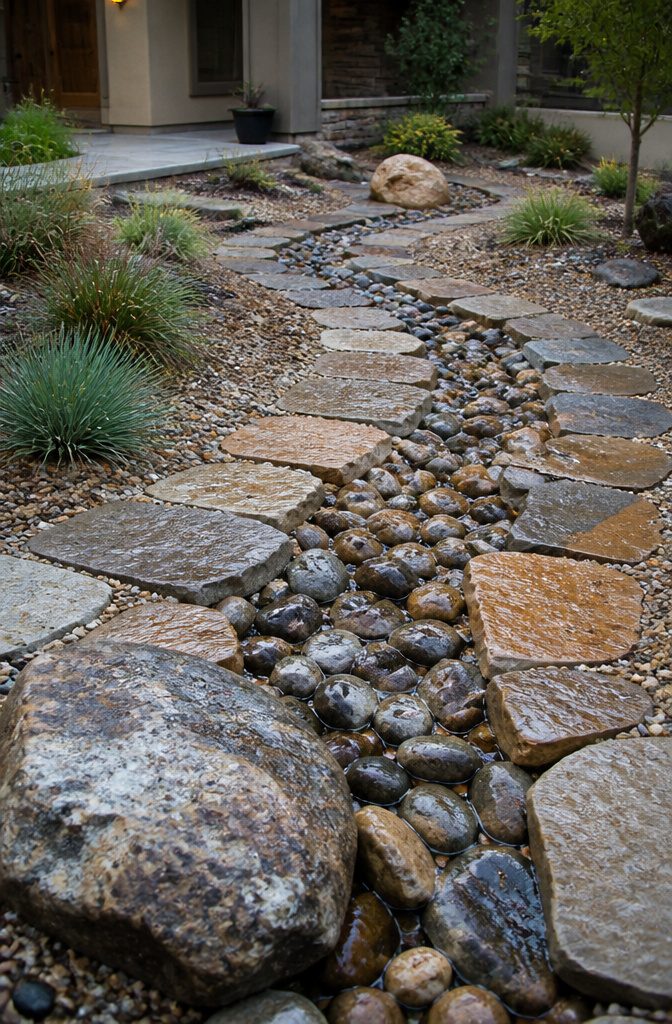
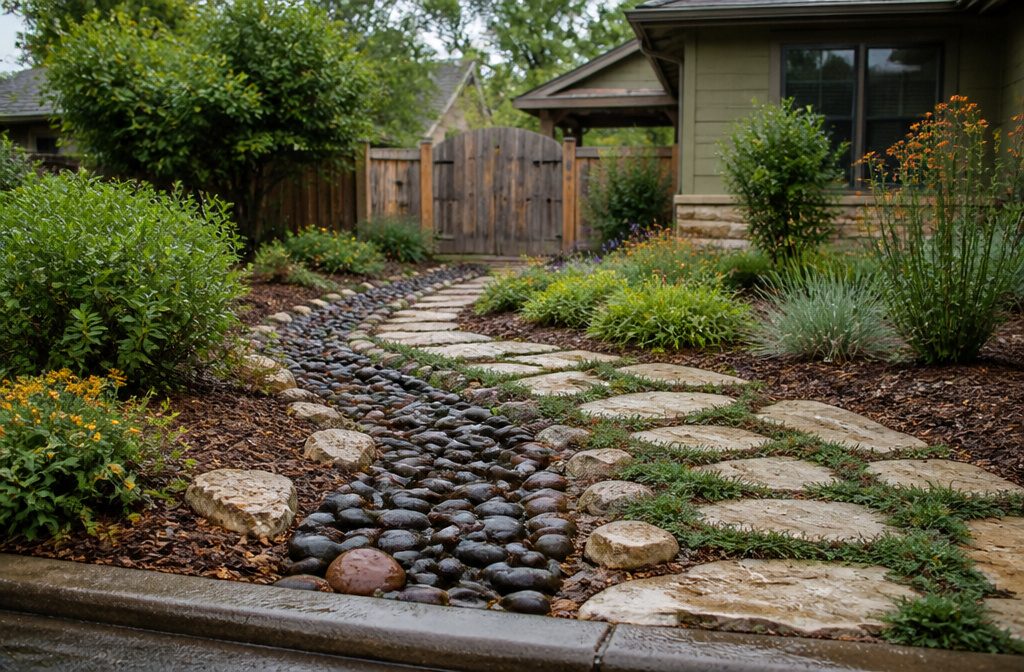
Every square foot you cover in rock is a square foot that needs no planting and no irrigation. Use gravel for paths and bed edges: it guides visitors to the door and defines the planting areas without using any water.
Flagstones and river rocks add texture and contrast, so set flat, angular stone against rounded river rock rather than using one type everywhere.
One or two boulders give the bed visual weight, and a few flagstone accents keep a gravel yard from looking like a parking pad.
A dry creek bed is the best feature of the group. It reads as a stream, and it also works as drainage during occasional downpours, so site it where runoff already travels across your yard.
Recommended Products

🌸 BEAUTIFUL FALL BLOOMS Sedum produces stunning clusters of rosy pink flowers that bloom in late summer through fall, adding vibrant seasonal color to garden beds, borders, and pollinator landscapes.

Longevity and Propagation: A long-lived perennial, Sedum sieboldii will return year after year with minimal care. Easy to propagate by stem or leaf cuttings, allowing gardeners to expand their collection effortlessly or share with friends.

Hardy in USDA Zones 3-9. Due to varying agricultural regulations, we do not ship to the following states: AK, AZ, CA, CO, ID, MT, NV, OR, UT, WA and HI.
3. Plants for Local Conditions
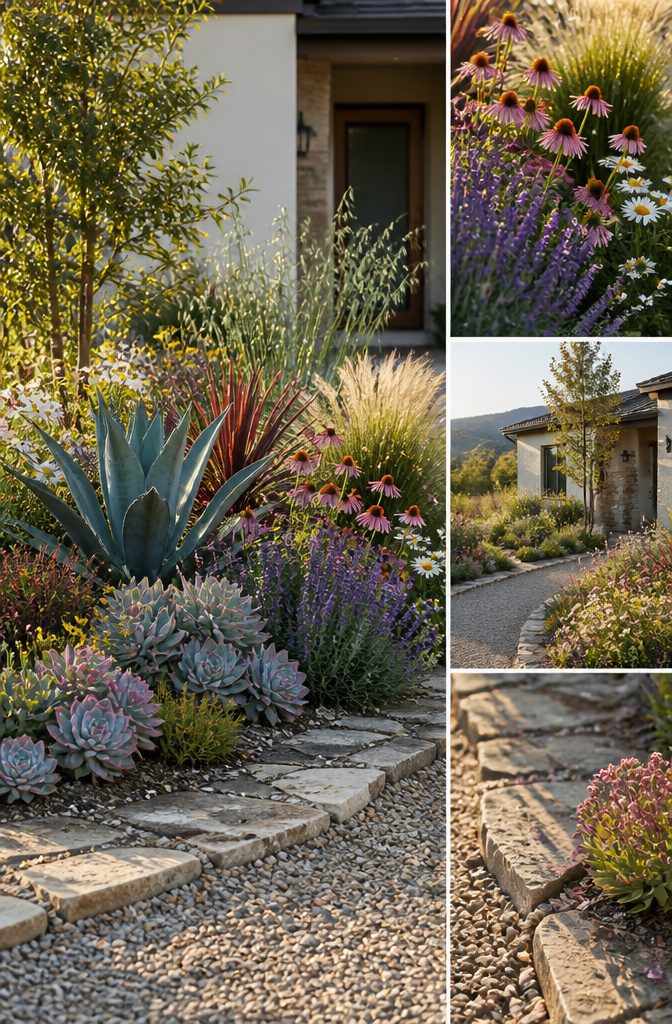
Plant choice splits into three tracks, and each pick should be matched to your own zone before you buy, because none of these lists fits every region.
- Sculptural succulents: Agave gives bold rosettes with spiky leaves. Aloe vera adds medicinal uses to its looks. Echeveria has pastel rosettes that read best in clusters. Plant them in defined beds or containers as focal points.
- Color from spring through fall: Coneflower, lavender, Shasta daisy, yarrow, and Russian sage give purple, white, and pink blooms. Mix bloom times so something is always flowering. Blue Avena or another ornamental grass near the entry adds movement.
- Natives: Utah serviceberry (Amelanchier utahensis), red yucca (Hesperaloe parviflora), and western sundancer daisy (Hymenoxys) suit conditions where they grow naturally. They also feed and shelter butterflies, bees, and birds.
Recommended Products
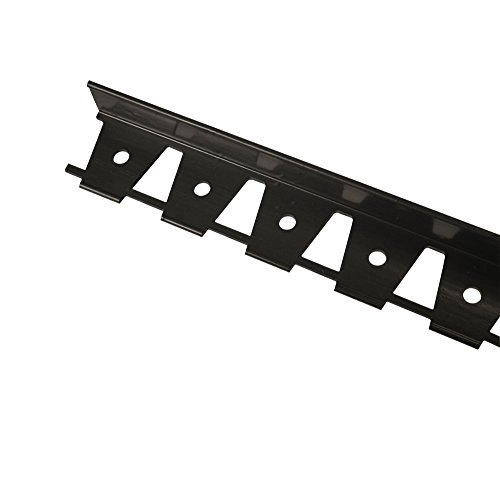
SNIP TO FLEX PAVER, BRICK, OR LANDSCAPE EDGING: Create a beautifully landscaped yard and paver designs without having to hire a professional with easy to install commercial grade edging

UNIQUE OUTDOOR WALKWAY SOLUTION: Elevate your garden, lawn, or backyard with BIRDROCK HOME Rubber Stepping Stones. These durable pavers create a functional and stylish walkway, enhancing your landscape while providing a solid and reliable surface to walk on.

【Natural River Stone】Our stepping stones, made from river rocks, are naturally stunning. Each stone, crafted from genuine river stones, retains its natural texture to highlight its intrinsic beauty. With their unique natural colors, they can create an eye-catching garden path for your patio.
4. Efficient Irrigation
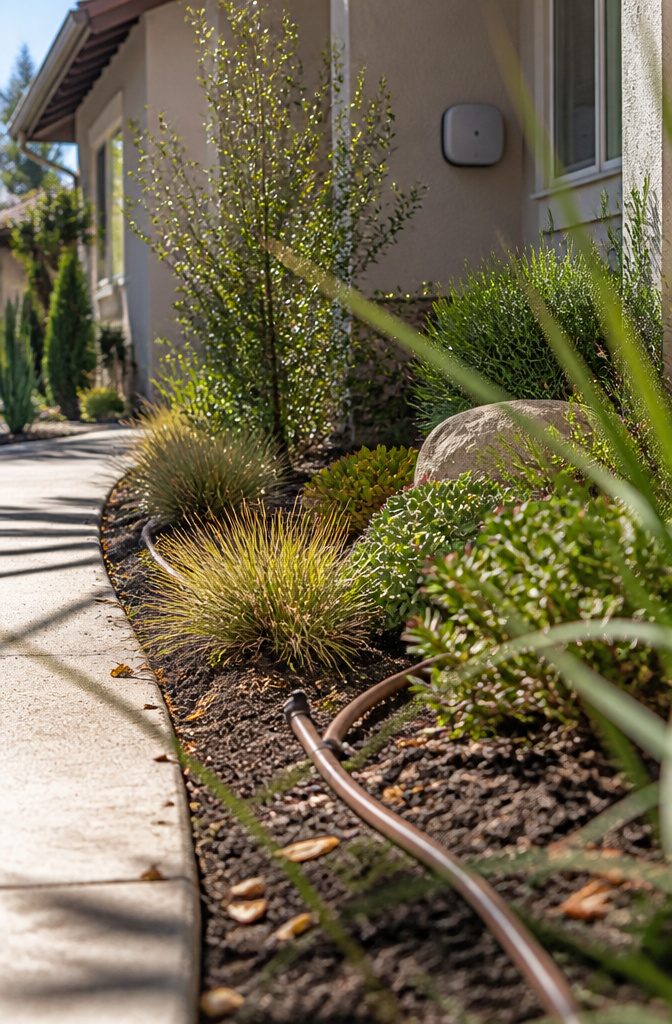
Water the roots, not the air above them. Drip irrigation, soaker hoses, and smart controllers all put water at the root zone, which is where a xeriscape plant takes it up.
Overhead sprinklers lose a share of their water to evaporation and runoff before it reaches the soil, so leave them out of a xeriscape front yard.
Drip wins for mixed plantings. Each line can be adjusted to the plant it serves, and a front yard with shrubs, perennials, and grasses rarely has two plants with identical needs.
Soaker hoses work for a simple bed of closely spaced plants, where one even line does the job. A smart controller handles the timing, so the schedule doesn’t depend on you remembering to turn a valve.
Recommended Products

【Ideal Package List】The 300 pieces set irrigation tubing connectors are including 10 * Adjustable Red Drip Emitters, 10 * Adjustable Nozzles, 10 * Nozzle Tees, 30 * Single barbs, 25 * 4-way Connectors, 40 * Barbed End Plugs, 30 * Barbed Elbows, 60 * Barbed Tees, 85 * Straight Barbs. all in a storage box. This set of drip irrigation parts can meet most needs for a automatic irrigation system, saving you time.

Convenient and portable storage kit contains 102 professional grade universal Drip irrigation parts

【230FT Drip Irrigation Kit】This drip irrigation system includes 33FT 1/2 in main line and 197FT 1/4 in drip line, helping you build a custom watering layout for outdoor plant areas.
5. Hardscape and Functional Features
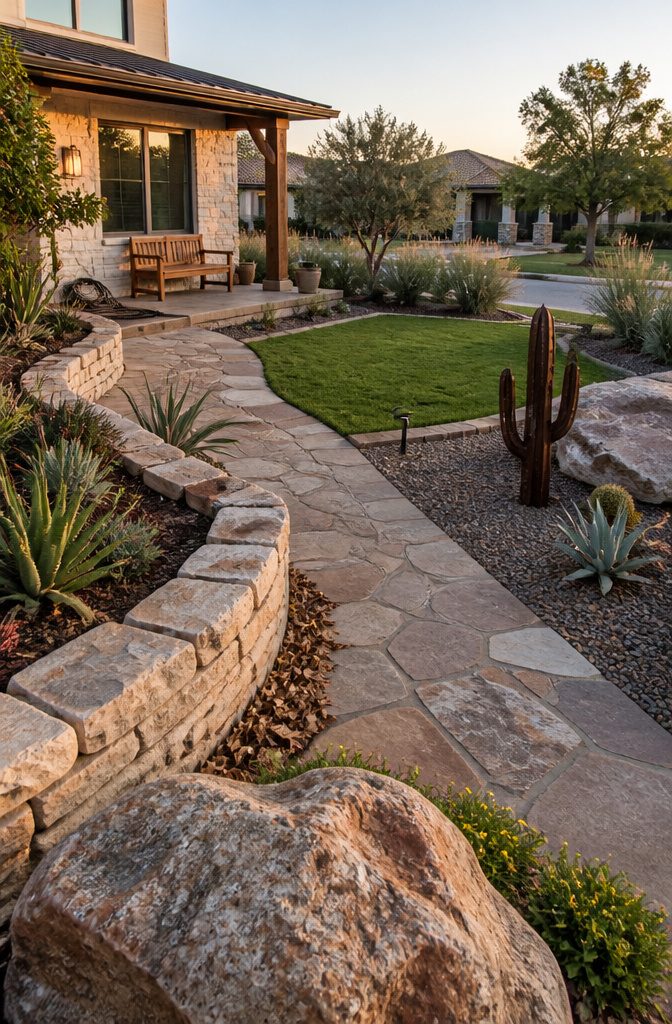
Hardscape gives a front yard its structure and shrinks the planted area you have to irrigate. These pieces do most of the work:
- Stone walls: Build them as terraced beds or use them to separate zones of the yard.
- Pathways: A defined path organizes the layout and gives you a fixed edge to plant against.
- Benches: A seat by the door or along the path gives the yard a use beyond looking at it.
- Metal art: Metal succulents and barrel cacti are sold as needing zero watering or maintenance. That is the sellers’ claim, but a steel cactus never needs a hose.
- One small lawn patch: Keep a defined square or curve of grass for the green, classic look, and plant the rest in drought-tolerant beds.
Recommended Products

Versatility in Landscaping: Alyssum, particularly sweet alyssum (Lobularia maritima), is widely used in gardens for its low-growing, spreading habit. It's excellent for borders, rock gardens, hanging baskets, and as ground cover because it forms a dense mat of foliage and flowers.

AAS WINNER & OUTSTANDING QUALITY: Verbena Moss is an All-America Selections winner, recognized for its exceptional decorative qualities and vintage appeal. This sustainability champion features a stunning color range, making it a must-have for any premium garden collection.

LOW-GROWING CREEPING THYME GROUND COVER: Purple Creeping Thyme creates a dense, low-growing ground cover with attractive foliage and seasonal blooms. Suitable for garden borders, pathways, landscape beds, and other decorative outdoor planting areas.
Water Savings of 70–80%
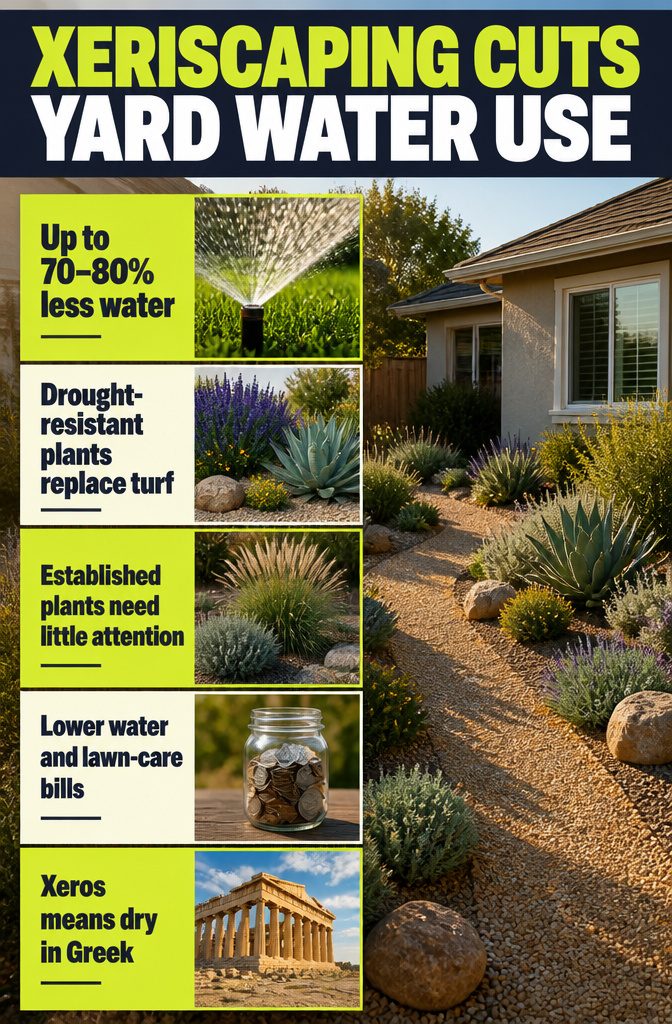
Xeriscaping takes its name from the Greek xeros, meaning dry, and the approach was first introduced in Denver, Colorado, in the 1970s.
A xeriscape front yard can cut water use by up to 70–80% compared with a traditional lawn and garden. The gain comes from replacing turf, which needs regular watering, with drought-resistant plants.
Upkeep drops as well. Once those plants are established, they need little attention, so mowing and weeding shrink to occasional tidying.
Both changes show up as savings.
Your water bill goes down, and lawn-care costs such as fertilizer and mower fuel shrink with it. On a small yearly yard budget, that money can go toward more plants.
Recommended Products
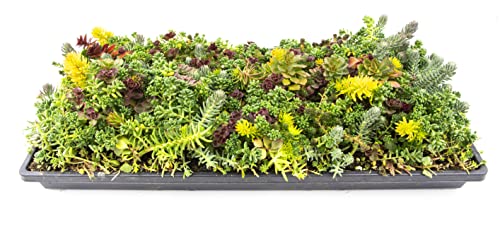
Use these decorative plants as outside plants for landscaping, patio plants, a sedum tile plant border, fairy garden decor, or in a succulent garden. Sedum plants like these and other real succulents live happily together.

Hardy in USDA Zones 3-9. Due to varying agricultural regulations, we do not ship to the following states: AK, AZ, CA, CO, ID, MT, NV, OR, UT, WA and HI.

Hardy in USDA zones 4-9. Due to varying agricultural regulations, we do not ship to the following states: AK, AZ, CA, CO, ID, MT, NV, OR, UT, WA and HI.
Check Sun, Soil, and Drainage
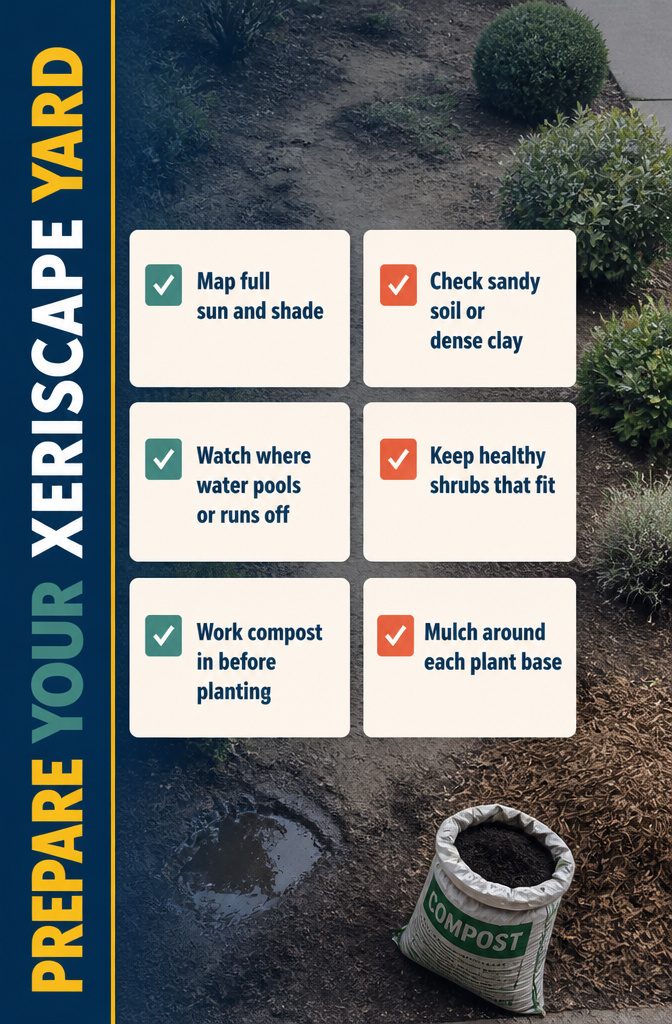
Walk the front yard before you buy a single plant and write down four things:
- Sun and shade: Mark which areas get full sun and which stay shaded. Each spot needs different plants and a different watering plan.
- Soil: Check whether it is loose and sandy or dense clay.
- Drainage: Water a patch and watch where it pools or runs off. Those spots shape your layout.
- Existing plants: Note what already grows well. A healthy shrub that fits your plan is one less thing to buy on a tight budget.
Then prep the ground:
- Work compost into the soil before planting. It improves water retention in sandy soil and drainage in clay.
- Spread mulch around the base of each plant. It holds moisture, suppresses weeds, and regulates soil temperature.
Recommended Products

What You Get: The garden edging border kit includes a 100 ft long, 1.5 inch high roll of lawn edging and landscape border and with 120 spikes which help you to create a lovely and warm garden (Note: The Hammer not included)

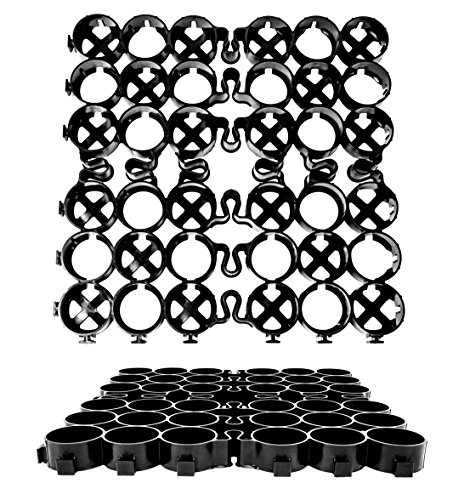
HEAVY DUTY: The PRO PLUS pavers are the industry strongest grid with patented flex joints, never-fail locking tabs handles 250,000+ lb vehicles with 1M psf compression strength
Frequently Asked Questions
Recommended Products

2.0 gallon per hour pressure-compensating emitter delivers same uniform flow rate from beginning to end of tubing runs

Connects up to six 1/4" Drip irrigation tubes to a 1/2" riser

✔Comprehensive Drip Irrigation Kit:MIXC drip irrigation system, equipped with a versatile range of components, caters to all your garden watering needs.Includes essential parts such as 197ft 1/4'' irrigation tube, 33ft 1/2'' irrigation tube, 1/2‘’ Lock Barbed Tee connectors, drip emitter streams, vortex emitters, Blue Mist Nozzles, Quick connection tees, Faucet Connector, and more.
What does xeriscape landscaping mean?
Xeriscape landscaping is a water-saving way to design a yard, using drought-resistant plants and efficient irrigation in place of thirsty turf.
The name comes from the Greek word xeros, meaning dry, and the approach was first introduced in Denver, Colorado, in the 1970s. A xeriscape front yard can cut water use by up to 70–80% compared with a traditional lawn and garden.
What are the 7 principles of xeriscape?
The 7 principles are planning and design, practical turf areas, soil preparation, efficient irrigation, appropriate plant selection, mulching, and timely maintenance.
Following all 7 is what gives you a healthy, good-looking yard that uses little water, rather than a bare one. In a front yard, planning starts with noting sun, soil, and drainage before you buy any plants.