Railroad ties are heavy 8-foot timbers that you can cut to length for retaining walls, bed borders, steps, and paths.
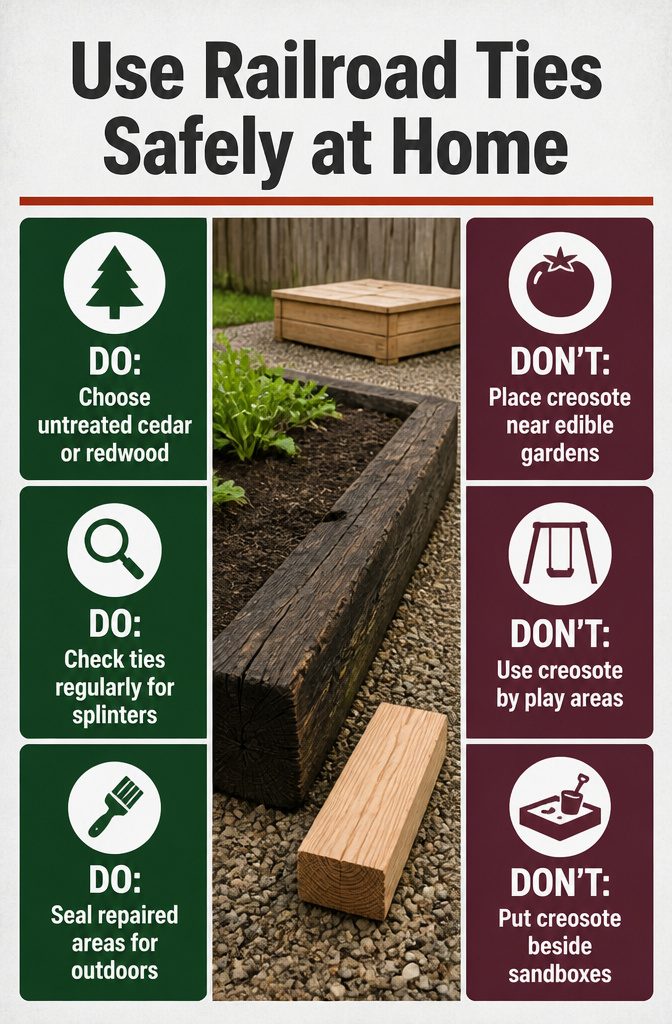
Creosote ties need care: the preservative is a carcinogen, so keep them away from edible gardens, play areas, and sandboxes. Pressure-treated ties or untreated cedar and redwood are safer.
Retaining Walls and Terracing
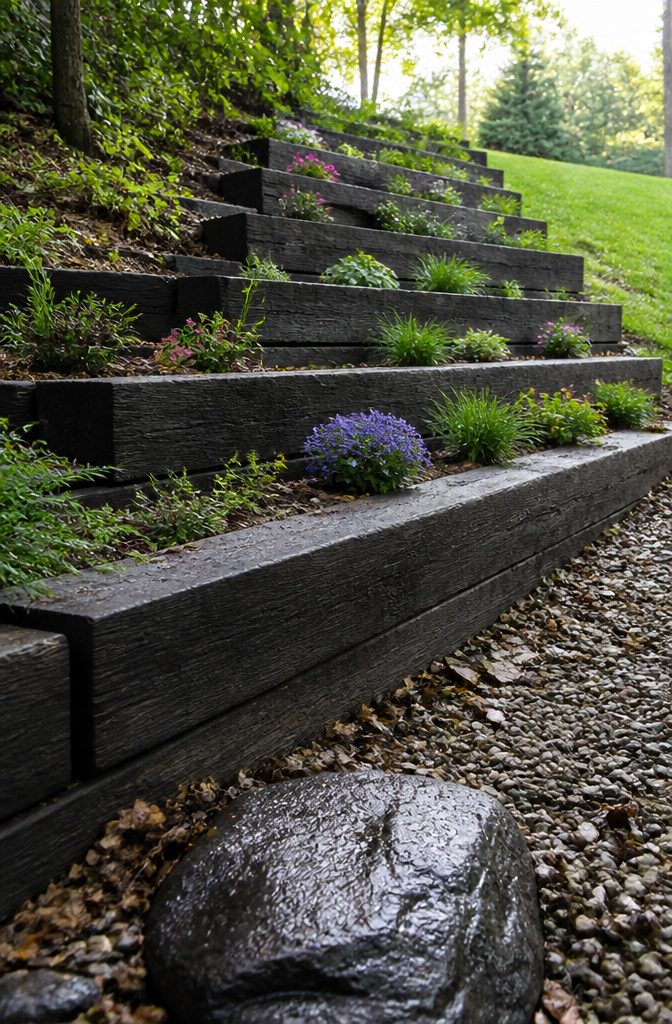
Ties are the usual pick for retaining walls because they go in easily and usually cost less than brick or natural stone.
They are also heavy and hard to move once set, so settle the wall’s line before you place the first one.
A single layer makes a low wall. Stack several in alternating layers for a raised bed of any height.
On a slope that is slowly washing away, skip one tall wall.
Terrace it with a series of short walls, even two ties high each, so every step holds its own share of soil. Plant a small garden along each row of ties to add color.
Recommended Products
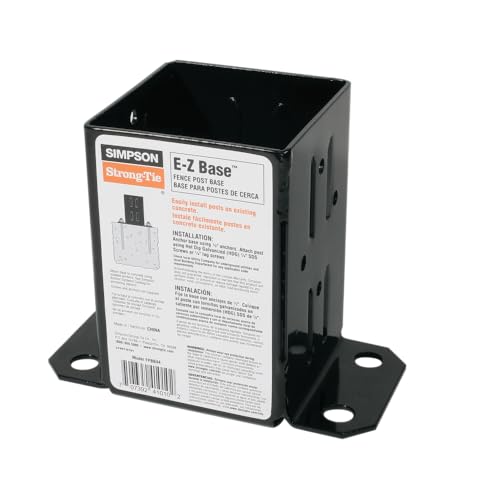
Easy to install on existing concrete Black powder-coated steel construction for reliable strength and decorative finish Approved for installation with the Strong-Drive SDS...
Garden Bed Borders
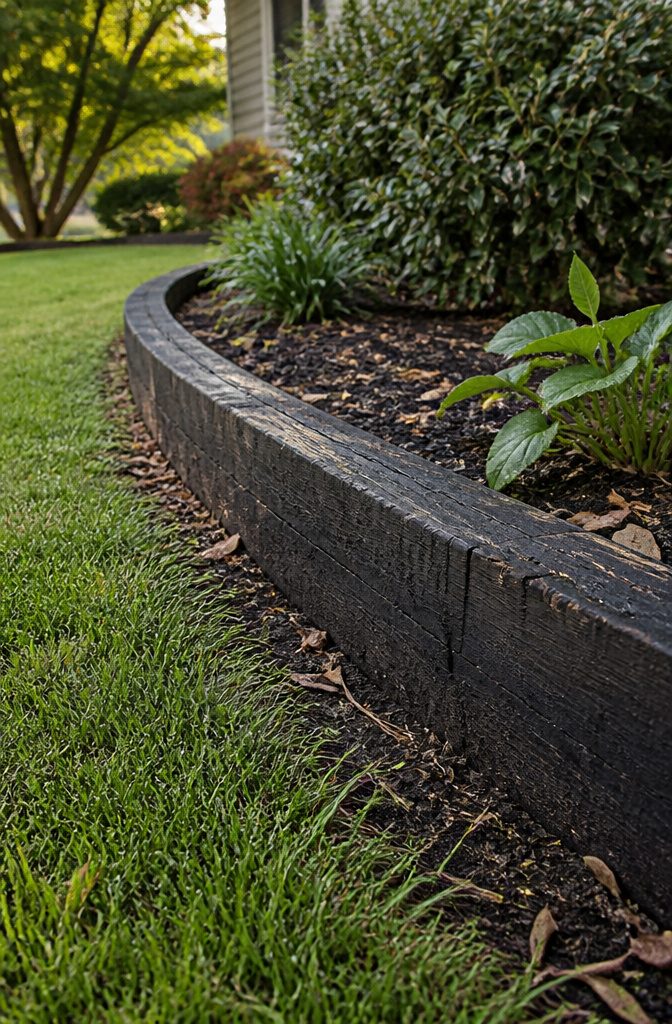
Ties come in 8-foot lengths, and you can cut them to whatever length your bed needs. That makes them an easy border for beds of almost any shape.
A tie is thick and heavy, so it holds its line along the bed’s edge and gives the soil a solid wall to sit against. Thin plastic or metal edging can’t match that.
The same weight works for beds set flush with the yard. Sink the tie in the ground and it marks a clear line between lawn and planting.
For a border, #2 ties are the practical pick.
They’re finished on 1–2 sides, so turn the better face toward the yard. They suit rustic settings and borders around a home.
Recommended Products

𝐅𝐥𝐞𝐱𝐢𝐛𝐥𝐞 & 𝐄𝐚𝐬𝐲 𝐭𝐨 𝐈𝐧𝐬𝐭𝐚𝐥𝐥: Each panel measures 40" (L) × 5" (H), including 3" underground stakes for strong anchoring, leaving 2" visible above ground for a clean, low-profile border. The hammer-in design makes installation fast and effortless—perfect for creating neat, professional-looking edges without digging.

Stone-Look Decorative Landscape Edging: 2.75 inch tall rustic stone design complements any flower gardens and provide clean look for your gardens, flower beds, lawns, grass, raised garden beds, shrubbery, pathways, yard trees, ground pool, etc.

SHIPMENT CONTAINS: One 5 inch x 40 foot brown flexible landscape edging coil with 10 matching stakes for securing garden borders
Driveway Edging
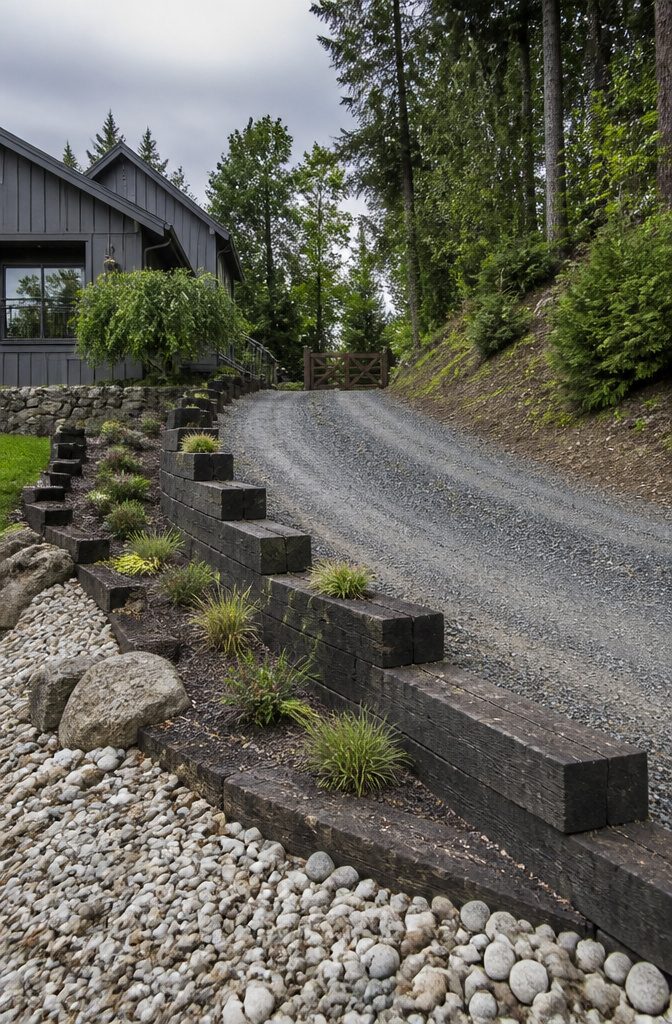
Ties laid along a driveway give the mower a wood edge to run against, so you can skip trimming along the drive.
On a gravel drive they also hold the stones in place instead of letting them drift into the grass.
Ties that are 8 feet long cover a lot of edge per piece.
A 40-foot run takes just 5 of them, which keeps both the cost and the number of seams low. On a sloped drive, stagger the ties so each one sits a little higher than the last.
The result looks like steps and breaks up a long, plain edge. Soften the line with decorative gravel or small shrubs in front of the wood.
Recommended Products

Realistic Faux Stone Texture: Our landscape edging boasts a lifelike stone texture with detailed surface patterns that add depth and a polished look to your outdoor space. It beautifully enhances garden beds, lawns, pathways and flower beds, bringing a natural, decorative touch to any yard.

Realistic Stone Texture: Our stone landscape edgings feature a lifelike stone texture design. The raised surface patterns add depth and dimension to your outdoor spaces. Each piece measures 1180x95x57mm/46.46x3.74x2.24in, making them perfect for enhancing pool edges, garden beds, and pathways. These lawn edging provide a clean, refined look for both large and small spaces.
Stairs and Steps
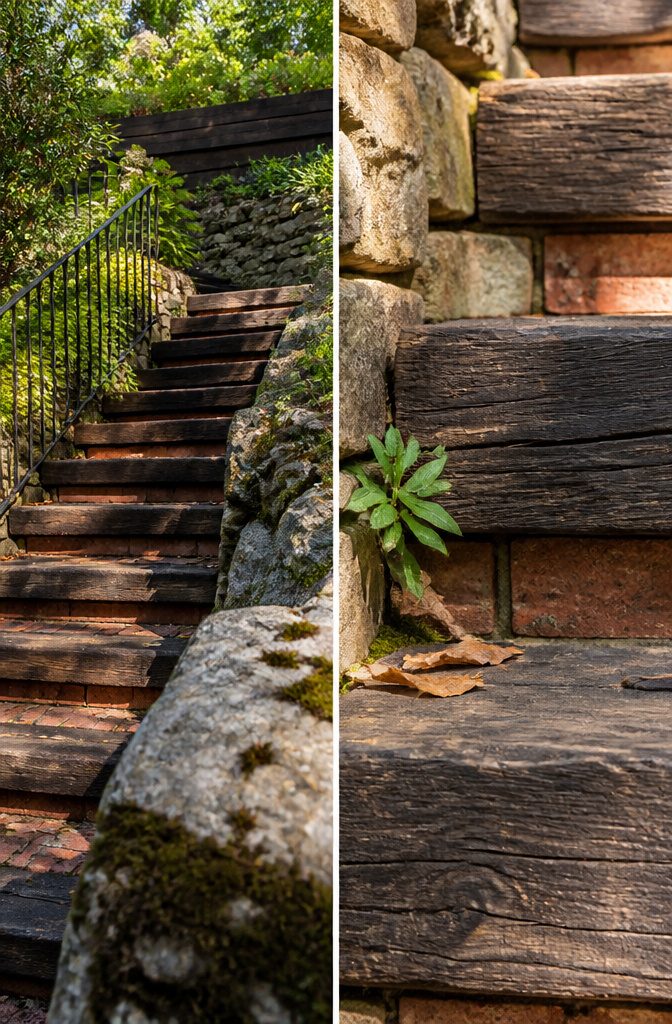
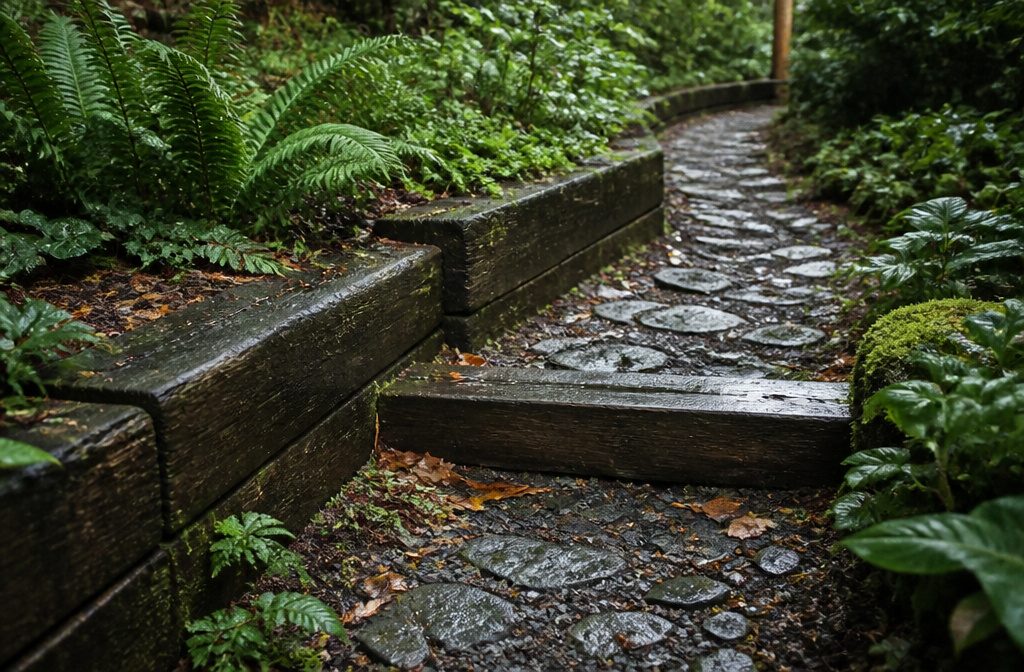
Ties make good steps up a slope, and they also work as the approach to a door, deck, or patio.
On a hill, the dark timber blends with the ground, so the stairs look like part of the yard rather than something added to it.
For a firmer, more finished look, lay the ties lengthwise over bricks so they serve as the treads. This costs more effort than stacking timber alone, but it gives you brick color under the wood.
Border the steps with natural stone to mix textures, or add a wrought-iron handrail.
On a short two-step entry, skip the rail. On a long hillside run, it earns its place.
Recommended Products

[No Pre-Drilling – Maximize Efficiency] Skip the pilot hole step and save 70% of your time. Our self-drilling wood screws bite directly into wood, saving 20 seconds per screw. Ideal for outdoor wood projects like deck construction, log building, or timber framing. Save both time and effort

[No Pre-Drilling – Maximize Efficiency] Skip the pilot hole step and save 70% of your time. Our self-drilling wood screws bite directly into wood, saving 20 seconds per screw. Ideal for outdoor wood projects like deck construction, log building, or timber framing. Save both time and effort

[No Pre-Drilling – Maximize Efficiency] Skip the pilot hole step and save 70% of your time. Our self-drilling wood screws bite directly into wood, saving 20 seconds per screw. Ideal for outdoor wood projects like deck construction, log building, or timber framing. Save both time and effort
Garden Walkway
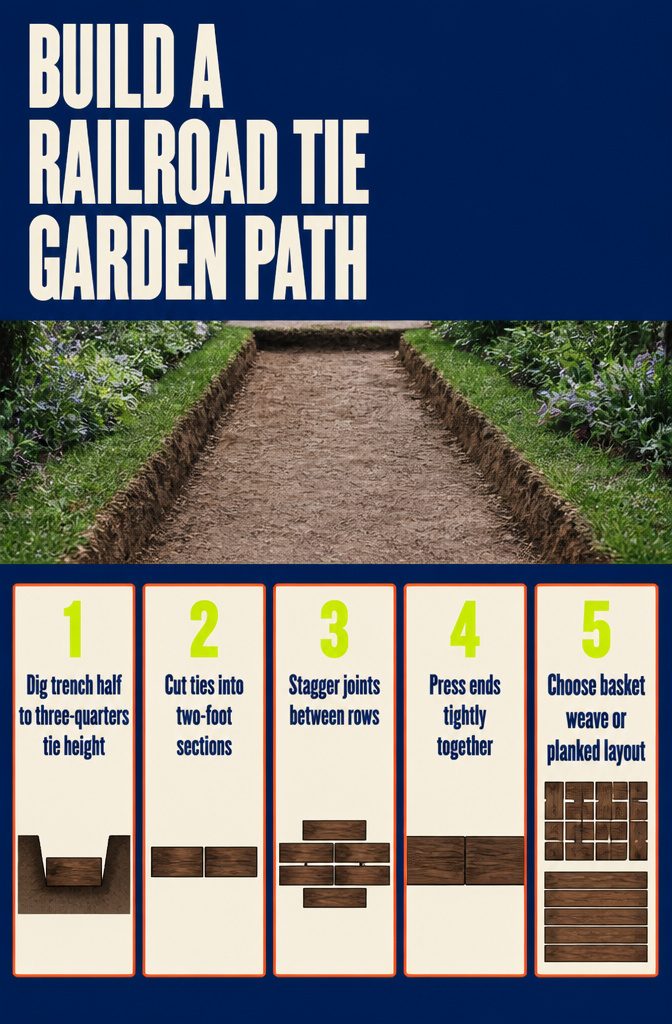
Ties cost less than stone and are easier to install than stone or concrete, so they suit a garden path well.
- Dig out the path so the trench is 1/2 to 3/4 the height of a tie laid flat. That leaves each tie partly buried and held in place.
- Cut the ties into 2-foot sections.
- Set the sections in the trench the way you would lay paving stones, staggering the joints from row to row.
- Press each end tightly against the next section so no gaps open along the path.
- Choose a layout. Alternate the orientation of the sections for a basket-weave look, or lay longer lengths across the path for a planked look.
Recommended Products

ANTI-SLIP FALL PREVENTION: Our stair grips non slip outdoor utilize powerful adhesive technology and 80-grit aluminum oxide material, enhancing foot traction through intricate textures. These peel and stick stair treads outdoor deliver exceptional slip resistance, effectively protecting you and your family from stair falls while minimizing accident risks. Especially suitable for seniors, children, pregnant women, infants, animals, pets, dogs, puppies, and kittens

NON-SLIP TPE GRIP & TOTAL SAFETY: Engineered with high-performance TPE self-adhesive backing, delivers maximum traction to stop slips and falls. Stays locked firmly on stairs through playful pets and heavy household flow. Zero shifting, zero curling, zero sliding—just reliable safety step after step

Easy Installation: Quick peel-and-stick application. Transform your wooden stairs in less than 30 minutes. No nails or staples required, and easy to adjust if misplaced.
Frame a Tree
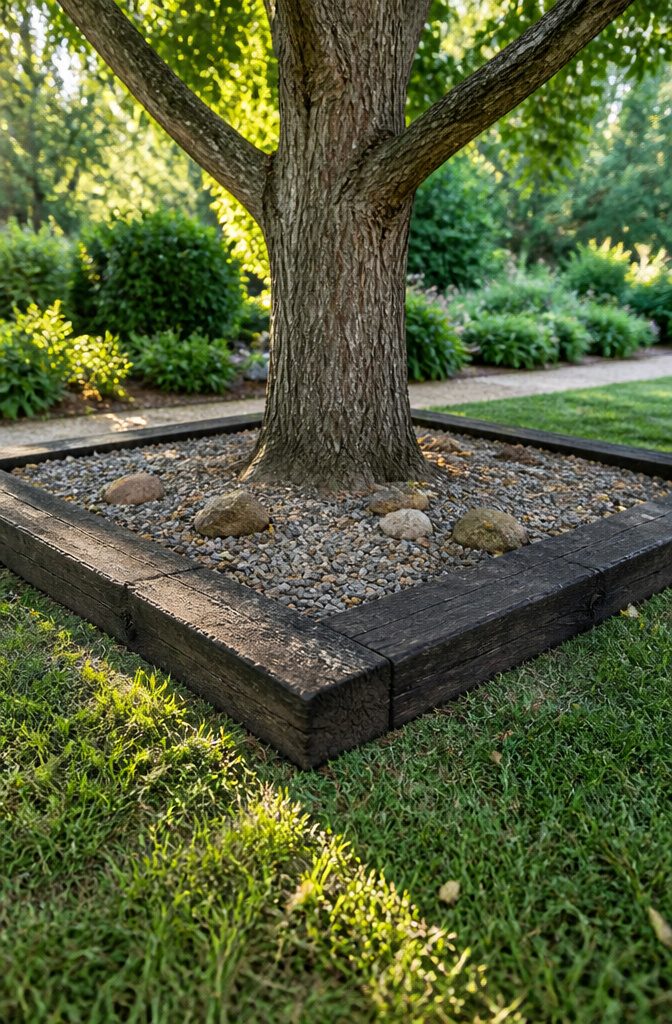
Ties laid end to end around a trunk form a square or rectangular frame, which turns the ground at the base of the tree into a defined planting bed.
Ties can be cut to any length, so you can size each side to the tree instead of working around a stock length. The dark, heavy timber gives the frame crisp edges that stand out against a lawn.
Inside the frame, you can fill the space with gravel or rocks for a tidy, low-care base, or plant it as a small bed under the canopy.
Leave a generous gap between the timbers and the trunk so the tree has room to widen as it grows.
Mailbox Posts
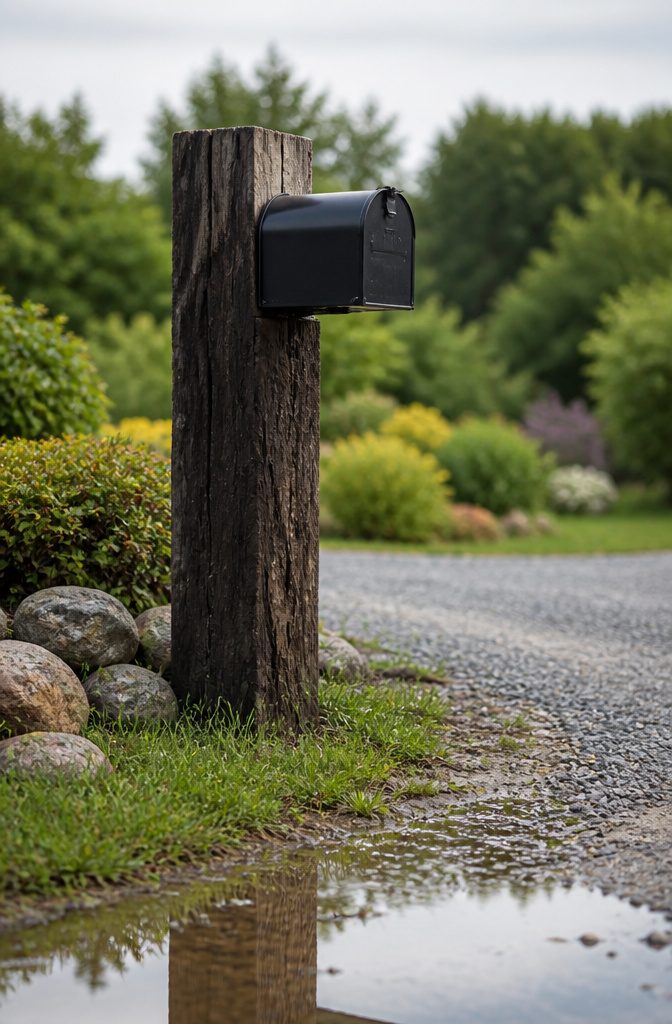
A railroad tie cut to your chosen length makes a mailbox post with more bulk than any standard wooden post. A full-size tie is a heavy timber, so it holds a mailbox steady and looks planted rather than installed.
The weathered, dark surface gives the curb a rustic look that suits a cottage garden, a rock garden, or a gravel driveway.
Settle the final height before you cut, because a tie can’t be lengthened once it’s shortened.
Check your local post office’s rules for mailbox placement first. A plain black or steel mailbox looks best on this post; a glossy decorative one competes with the timber.
Recommended Products

Durable Metal Construction: SnugNiture garden edging is made of high-quality metal materials. It is strong and durable, capable of withstanding outdoor sunlight, rain, and snow. Thus, it has a long service life.

Quality Metal Material: Our galvanized garden edge is processed using high-precision CNC technology, ensuring accuracy down to every millimeter. Innovative 3D ripple design not only enhances the aesthetic appeal of the fence but also strengthens its structural integrity.

【Landscape Edging Kit】 -- Includes 3 rolls of landscaping edging (33ft each) and 150 spikes, offering flexible layout options for various landscaping length needs,instead of having to take out long and heavy edging and cut it
Patio Mini-Piazza
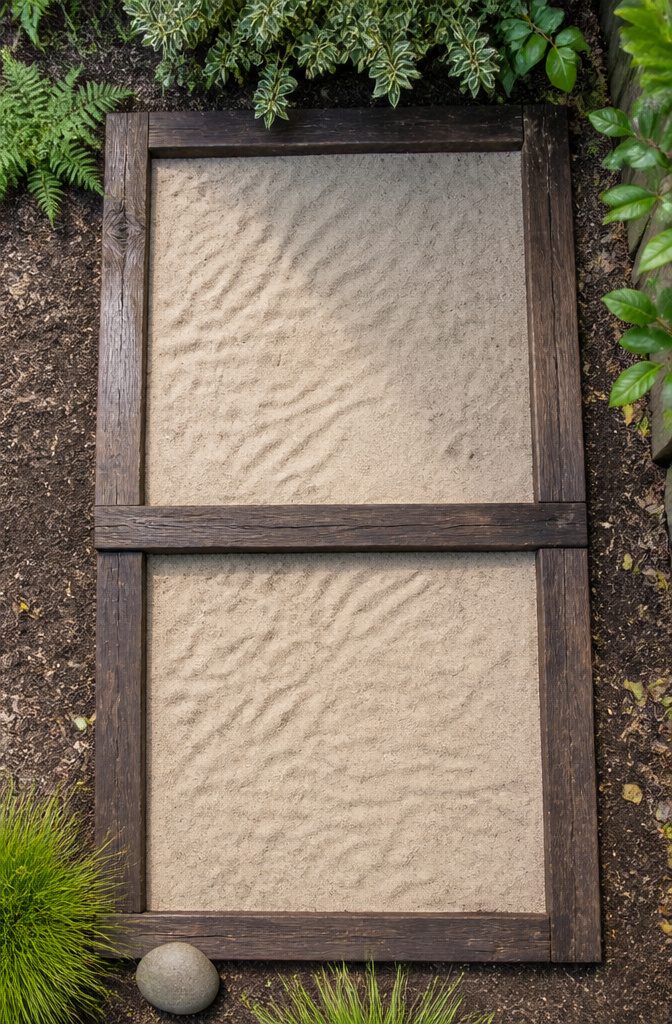
Lay ties on the ground to outline a square, then fill the inside with sand.
The ties are the frame and the sand is the fill, so the ties hold the sand in place and the sand gives you a surface to stand or sit on.
It makes a small patio with far less work than paving, which suits a corner of the yard where a full patio would be too much.
Level the ground before you set the frame.
A tie that tilts lets sand spill out at the low edge. Several squares set side by side, sharing the ties between them, read as a deliberate grid rather than a single sandbox.
Recommended Products

Classic cobblestone design complements any landscape Made in the USA from 100% recycled rubber that will not freeze or crack Ideal edging for flower beds, gardens, walkways,...
Ties With Other Materials
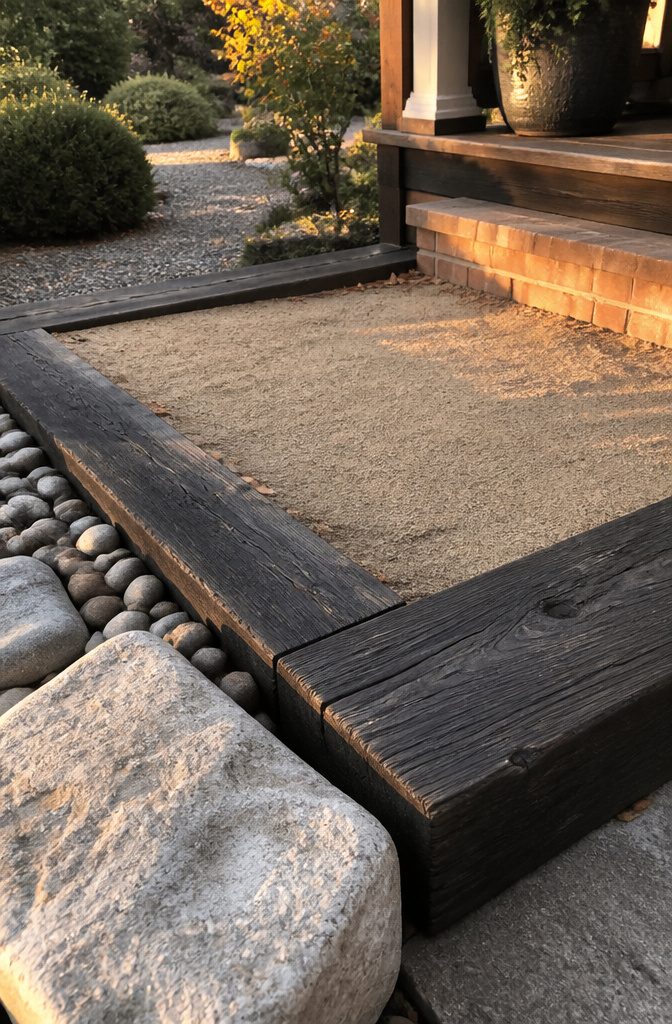
Ties look heavy and dark on their own, so give each one a lighter, rougher partner.
Beside a gravel driveway, a tie edge keeps the stones where they belong, and a strip of decorative gravel or a few small shrubs in front of it softens the line.
On steps, lay the ties lengthwise over brick and they work as the treads. Natural stone along the sides adds a second texture, and a wrought iron handrail adds a third.
For a front patio, set ties around squares filled with sand to get an old-world piazza look. Keep two or three materials in view at once, so the ties stay the main feature and the rest read as supporting material.
Recommended Products
[No Pre-Drilling – Maximize Efficiency] Skip the pilot hole step and save 70% of your time. Our self-drilling wood screws bite directly into wood, saving 20 seconds per screw. Ideal for outdoor wood projects like deck construction, log building, or timber framing. Save both time and effort
[No Pre-Drilling – Maximize Efficiency] Skip the pilot hole step and save 70% of your time. Our self-drilling wood screws bite directly into wood, saving 20 seconds per screw. Ideal for outdoor wood projects like deck construction, log building, or timber framing. Save both time and effort
[No Pre-Drilling – Maximize Efficiency] Skip the pilot hole step and save 70% of your time. Our self-drilling wood screws bite directly into wood, saving 20 seconds per screw. Ideal for outdoor wood projects like deck construction, log building, or timber framing. Save both time and effort
Tie Types and Grades
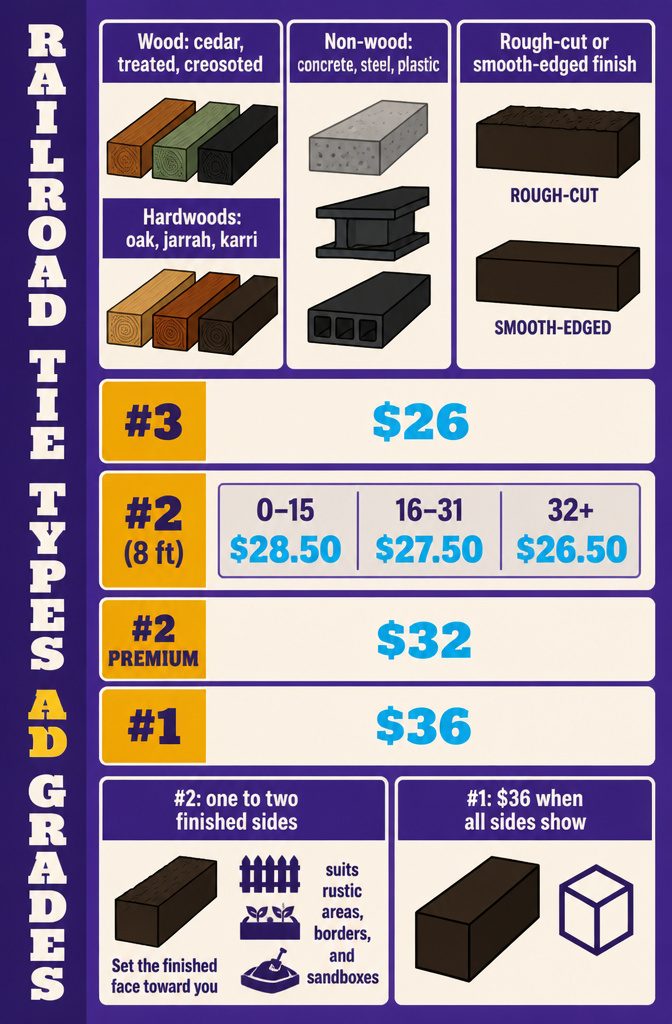
Wood ties come in cedar, pressure-treated (usually green), or creosoted, and the hardwood versions are oak, jarrah, and karri.
Concrete, steel, and plastic (including fiberglass) are the non-wood choices. Finish is either rough-cut or smooth-edged.
Prices for one yard’s grades show how much a better face costs:
| Grade | Price each |
|---|---|
| #3 | $26 |
| #2 (8 ft) | $28.50 for 0–15, $27.50 for 16–31, $26.50 for 32+ |
| #2 Premium | $32 |
| #1 | $36 |
The #2 has a good finish on 1–2 sides, which suits rustic areas, borders, and sandboxes. Set the finished face toward you and pay for #1 only where all sides show.
Recommended Products

ANTI-SLIP STAIR TREADS: Crafted with premium reusable TPE self-adhesive backing—no extra glue or tape needed. The textured non-slip surface delivers reliable grip to stop slips and falls. Locks firm onto stairs, won't shift, curl or slide—even with running kids, zooming pets and heavy daily traffic
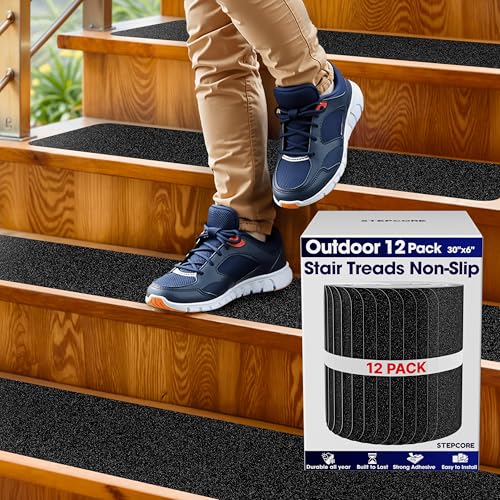
Reliable grip for outdoor stairs - Maximize safety on decks, porches, and outdoor stairs with our 12-pack of 30" x 6" non slip treads. These waterproof, weather-resistant grip strips provide reliable traction for wooden steps—even in rain or snow.

Thick and Comfortable:Crafted from wear-resistant Polyester fibers,the non-slip stair treads offers exceptional durability and a soft feel underfoot with fine stitching and edge-locking technology.The stair carpet treads is designed to withstand daily use without pulling or piling up,ensuring long-lasting comfort and protection for your family.The ideal thickness helps in noise reduction and keeps your feet warm against cold stairs,providing a cozy living environment
Creosote and Safe Placement
Creosote is a preservative made from coal and wood tar, and it helps ties stand up to weather. Week& is direct about using it at home:
Because it is a carcinogenic, it is not an ideal material for use in home landscapes.
— Week&
Keep creosote ties away from edible gardens, play areas, and sandboxes, where chemicals can seep. Untreated redwood or cedar, pressure-treated ties, or natural wood are safer picks.
Check any tie regularly for splinters. Sand or grind off rotted or splintered spots, fill holes with spike-hole filler compound, and apply a clear protective compound made for outdoor use.
Frequently Asked Questions
Are railroad ties safe to use for landscaping at home?
Creosote-treated ties are a poor choice for home yards because creosote is a carcinogen.
Keep them out of edible gardens, play areas, and sandboxes, where the chemicals can seep. Untreated redwood or cedar, pressure-treated ties, and natural wood are safer.
What types of railroad ties are available?
Wood ties come in cedar, pressure-treated (usually green), and creosoted, plus hardwoods such as oak, jarrah, and karri.
Concrete, steel, and plastic (including fiberglass) ties are the non-wood options. Wood ties are sold either rough-cut or smooth-edged.
Which grade of railroad tie is best for a garden border?
A #2 tie is the practical pick for borders.
It has a good finish on 1–2 sides, so you can turn the better face toward the yard. Buy #1 only where every side will be visible.
How much do railroad ties cost?
At one yard, a #3 tie is $26 and a #2 8-footer runs $26.50–$28.50 depending on quantity.
A #2 Premium is $32 and a #1 is $36. Better grades cost more because more of the tie has a clean finish.
How long are railroad ties, and can I cut them?
Ties come in 8-foot lengths, and you can cut them to fit your project.
That works for borders, walkway sections, tree frames, and mailbox posts. Decide on the final length first, since a cut tie can’t be made longer.
How many railroad ties do I need to edge a driveway?
A 40-foot run takes 5 ties at 8 feet each. Long pieces keep both the cost and the number of seams low.
How deep should I dig for a railroad tie walkway?
Dig the trench to 1/2 to 3/4 the height of a tie laid flat, so each piece sits partly buried and stays put. Cut the ties into 2-foot sections and press the ends tightly together to avoid gaps.
Can I use railroad ties to hold back a sloped yard?
Yes, but build several short walls instead of one tall one. Terrace the slope with walls as low as 2 ties high, so each step holds its own share of soil.