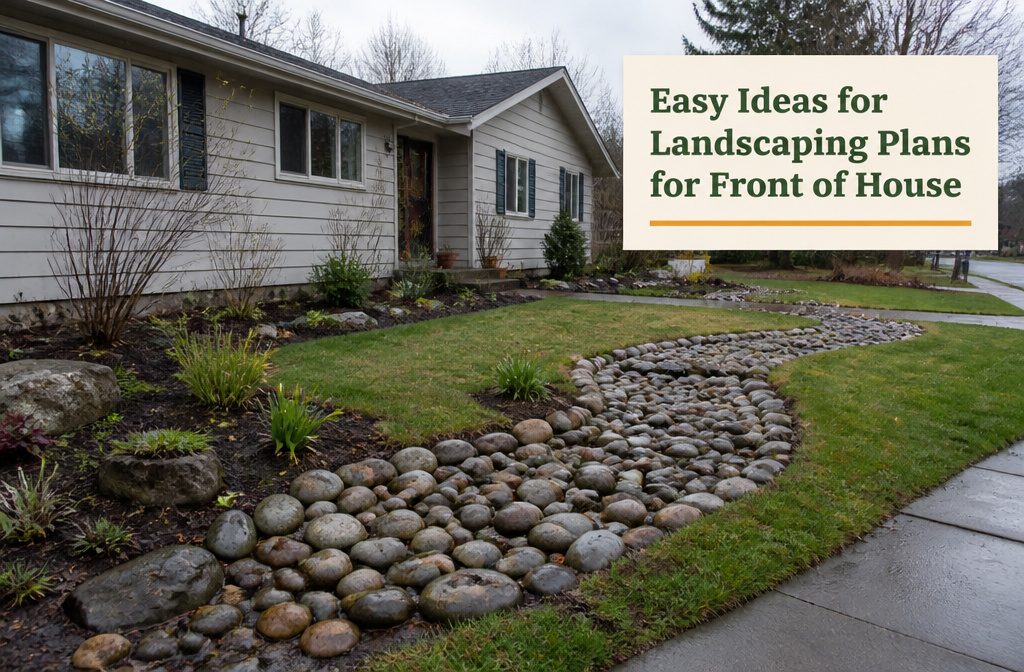
Plans range from one foundation bed to a dry riverbed or a lawn swapped for stone, and the lines of the house decide which fits: low and flat, or tall and gabled.
Whichever you pick, perennials take until the third summer to fill in, so the first two years look thin.
1. Match the House Style
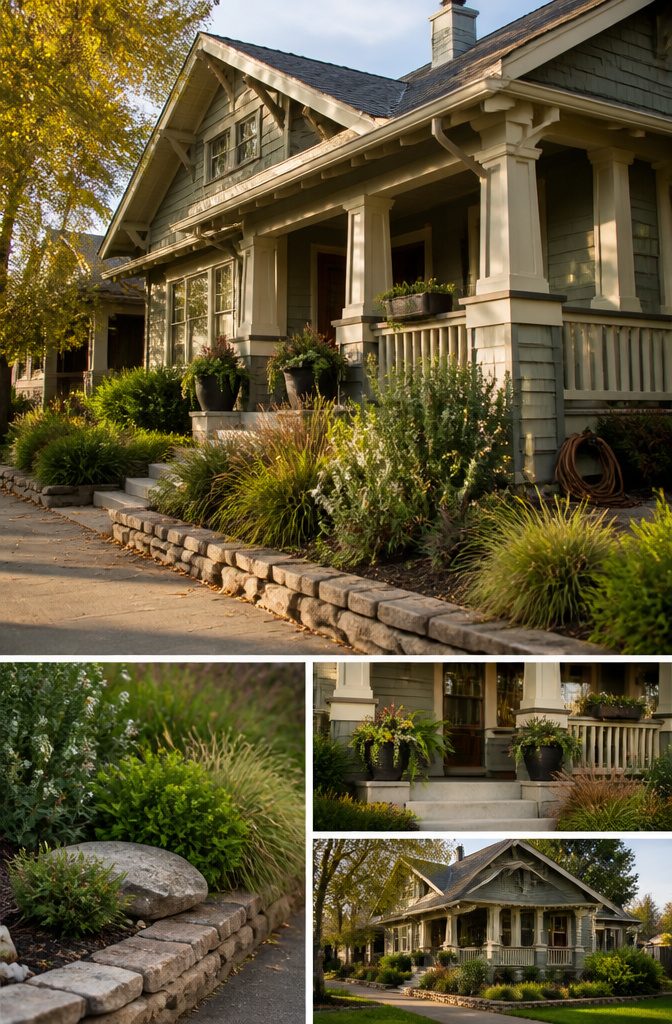
Match the lines of your plantings to the lines of the house.
A modern ranch in the desert can repeat its low, flat profile with stone and industrial brick beds around low-water desert plants, which keeps the yard as clean as the house and easy to maintain.
A farmhouse suits the opposite: soft florals and rustic details.
Bed shape matters too.
Curves soften a facade and carry the eye along the bed toward a destination, so they work on traditional homes and even with modern plants like a mass of grasses. On a strongly modern house, straight edges fit better.
Craftsman homes need the most restraint. Place beds and planters so they frame the house rather than overpower it, and let the architecture stay the star.
Recommended Products

STAYS IN PLACE - Our edging stays securely in place, keeping mulch and other materials from migrating into other areas of your landscape for a pollished look

Decorative beautification effect: using unique natural pebbles, can be freely spliced and combined to create a personalized patio path or pattern. It can also be separated into single pieces and flexibly embellished in various parts of the yard, adding natural wild fun. It is a unique and practical decorative element for lawn and garden
2. Check Your Zone and Sun
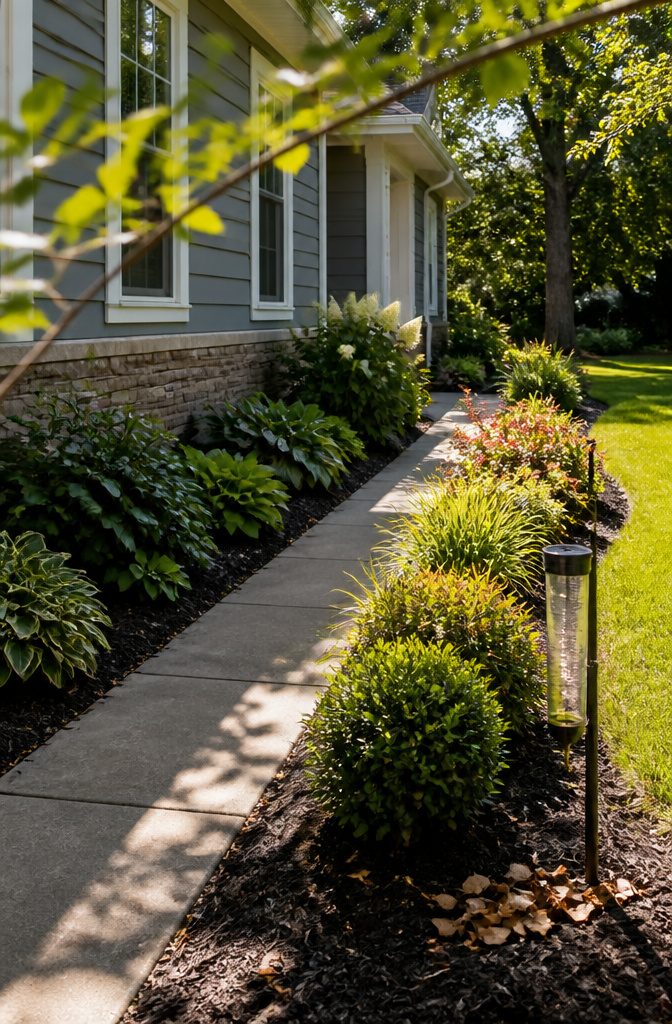
Find your USDA hardiness zone before you buy anything, then check every plant tag against it. Nurseries sometimes stock plants that sit at the edge of hardiness.
In a Zone 7 town, for example, you may see Zone 8 shrubs on the bench, and a hard winter can damage or kill them. Buy plants rated for your zone, not one warmer.
Sun matters just as much. Watch the front yard on a sunny day and write down when each area gets light: morning sun, afternoon sun, all-day sun, or little to none.
Add up the hours for each spot. A shaded side of the yard needs plants that tolerate low light, so make that sketch first and shop from it.
Recommended Products

Quality Metal Material: Our galvanized garden edge is processed using high-precision CNC technology, ensuring accuracy down to every millimeter. Innovative 3D ripple design not only enhances the aesthetic appeal of the fence but also strengthens its structural integrity.

𝐅𝐥𝐞𝐱𝐢𝐛𝐥𝐞 & 𝐄𝐚𝐬𝐲 𝐭𝐨 𝐈𝐧𝐬𝐭𝐚𝐥𝐥: Each panel measures 40" (L) × 5" (H), including 3" underground stakes for strong anchoring, leaving 2" visible above ground for a clean, low-profile border. The hammer-in design makes installation fast and effortless—perfect for creating neat, professional-looking edges without digging.

Decorative Brick Red Finish for Rustic Charm: This short wood fence features a warm brick red finish that adds natural beauty and a decorative touch to any outdoor space. Ideal as a wood garden fence for flower beds, pathways, and yard accents.
3. Choose a Bed Layout
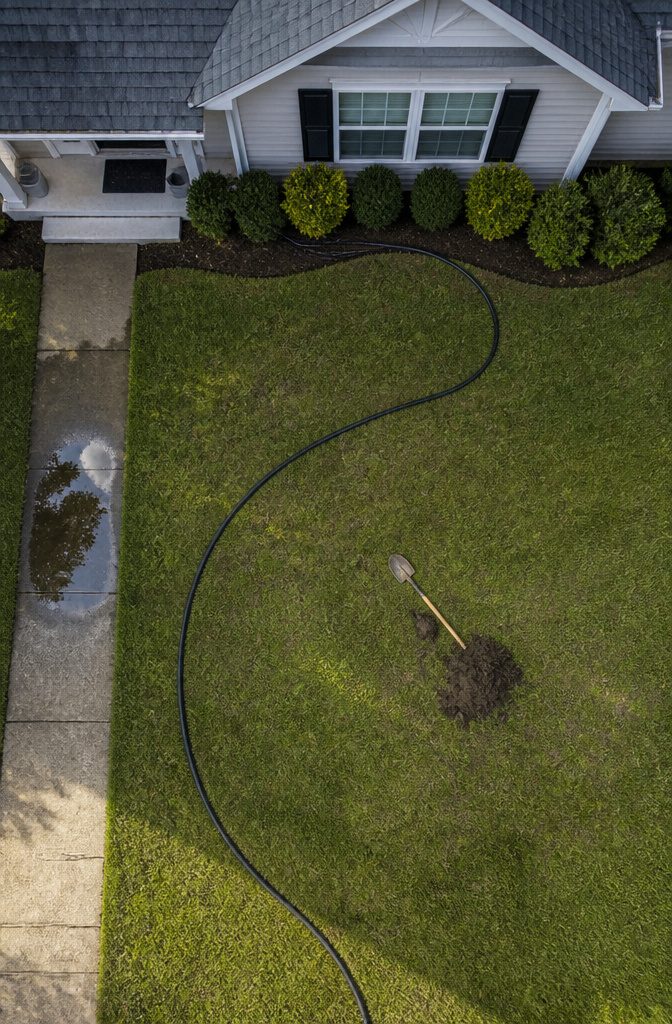
A bed along the house is the simplest start. It follows the foundation, hides the base of the wall, and suits a narrow yard.
If the yard is deeper, push the bed outward in a curve so it reaches toward the lawn and gives the house more presence from the street.
An island bed sits out in the grass, apart from the house, and breaks up a wide, flat lawn that otherwise feels empty.
Whichever shape you pick, mark the outline with a garden hose or spray paint before you plant anything.
Leave it down for a day, then look at it from the street and from your front window. Adjust the curves until it reads well from both.
Recommended Products

COLUMNAR GROWTH HABIT: Sky Pencil Holly grows in a tight, upright columnar form, reaching up to 5 feet tall, making it ideal for narrow spaces, borders, and privacy screens.
COLUMNAR GROWTH HABIT: Sky Pencil Holly grows in a tight, upright columnar form, reaching up to 5 feet tall, making it ideal for narrow spaces, borders, and privacy screens.
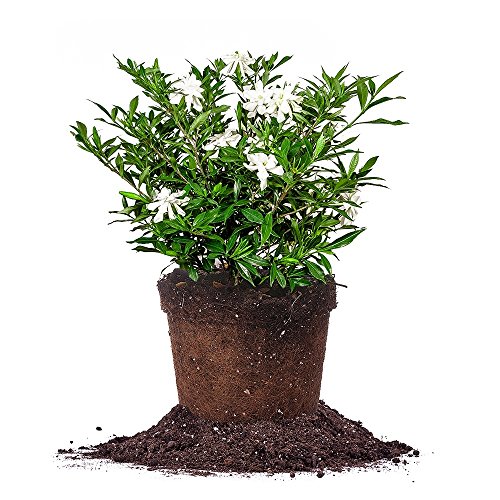
Live 1 gallon frost proof gardenia comes with easy to use plant food and features deep green, spindle leaves with fragrant, White flowers appearing every spring-summer
4. Start With Trees and Shrubs
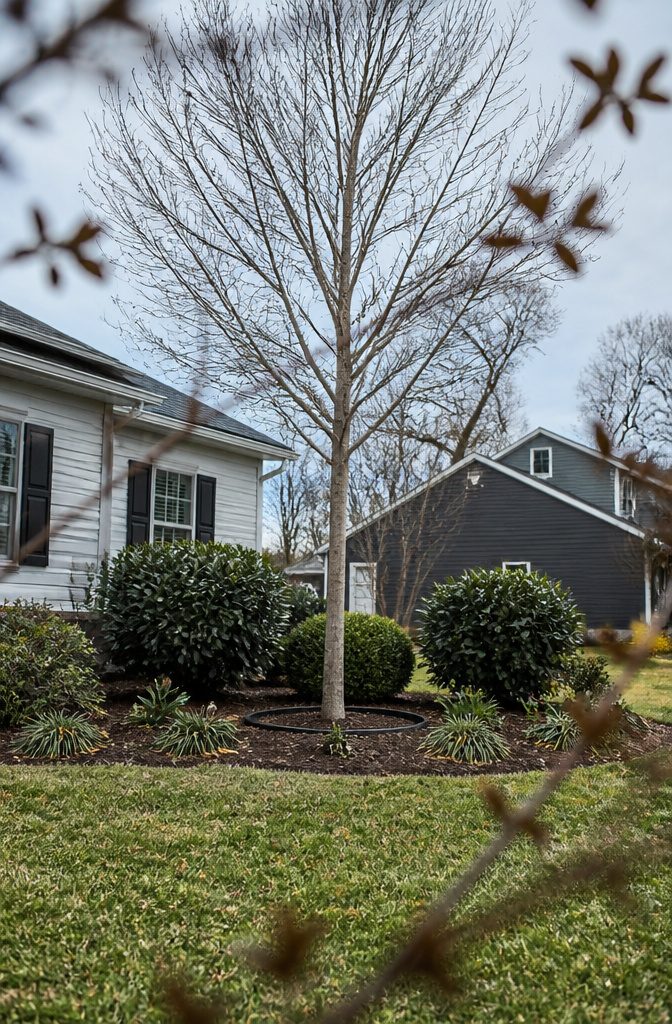
Decide where the eye should land, then put a tree there.
Plant in this order: trees, then large shrubs, then perennials. The biggest plants set the layout, and everything smaller fills in around them.
Trees and shrubs also carry the yard once perennials die back.
A deciduous tree still gives you a focal point in winter, and evergreens hold the same form and color all year, which makes them good anchors for a planting area.
If money or time is tight, work in stages. Get the trees and large shrubs in the ground the first year so they start growing early, then add a little more each season.
Recommended Products

Realistic Artificial Plants: Our plants are made of high-quality material (pots not included). Featuring intricate details and natural textures, our artificial plants are real-looking, adding a touch of elegance to any space.

5. Repeat and Group Plants
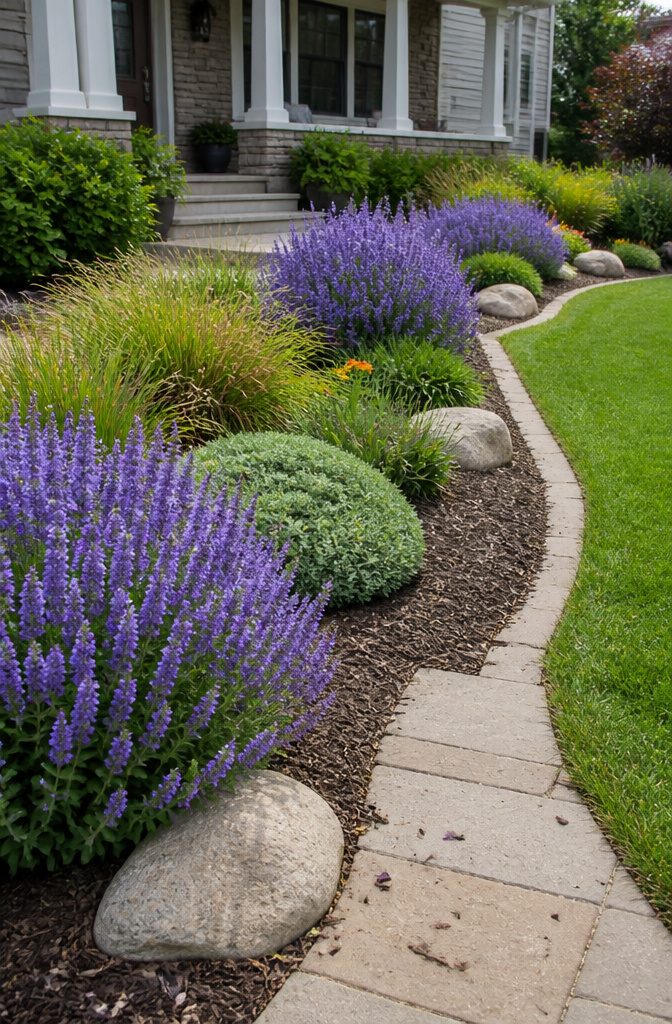
Scattered, one-of-everything planting is what makes a front yard look random. Group plants in overlapping masses by size, form, color, and growing needs, so each cluster reads as one shape.
Plant perennials in odd numbers, 3 at minimum and 5 or more where space allows, set in a row or staggered so they grow together into a single mound.
Expect them to be fairly well grown by the third summer, so the first two years will look sparse.
Repeat each mass farther along the bed. Rocks, driftwood, and shrubs can repeat too.
Choose a warm palette or a cool one for color harmony. Mixing annuals in with the perennials keeps color coming while the perennials fill out.
6. Keep Entry Plants Low
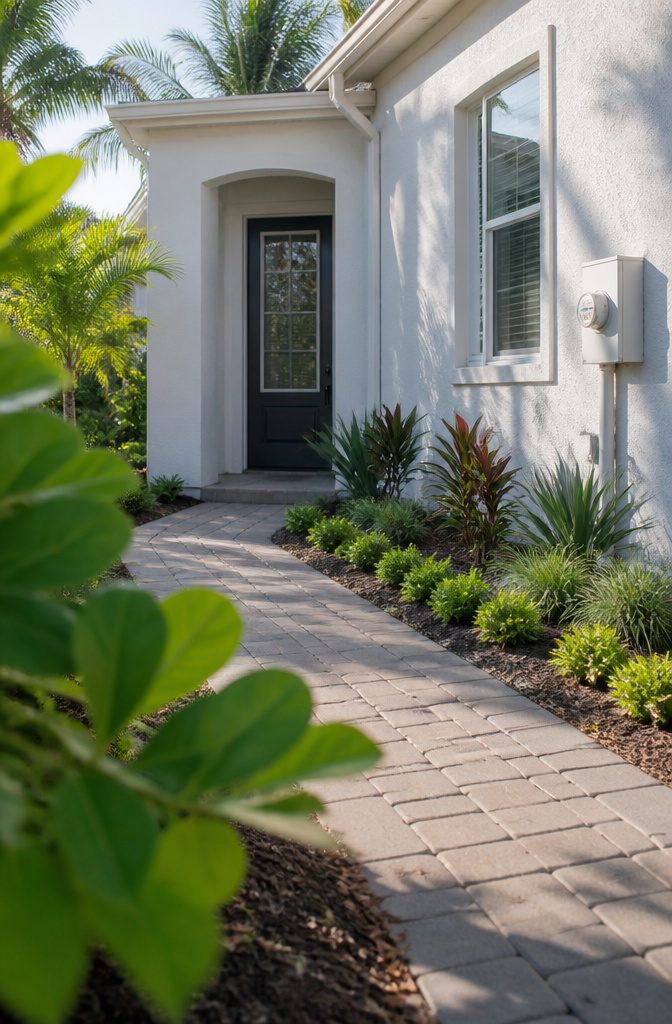
Plants beside the front door earn their place by staying small and staying put.
For the front entry you want low-growing and compact plants that will typically retain their form, without sprawling or growing over horizontal surfaces.
A tidy habit means less pruning and safer walkways for visitors and delivery people. Choose by mature size, not the size in the nursery pot, and check that plants won’t crowd windows or hide the door.
Leave a clear route to the utility meter, because workers need to reach it. The Florida-Friendly front yard in Sarasota designed for a project by UF/IFAS professor Gail Hansen is an example of this principle.
7. A Restrained Plant Palette
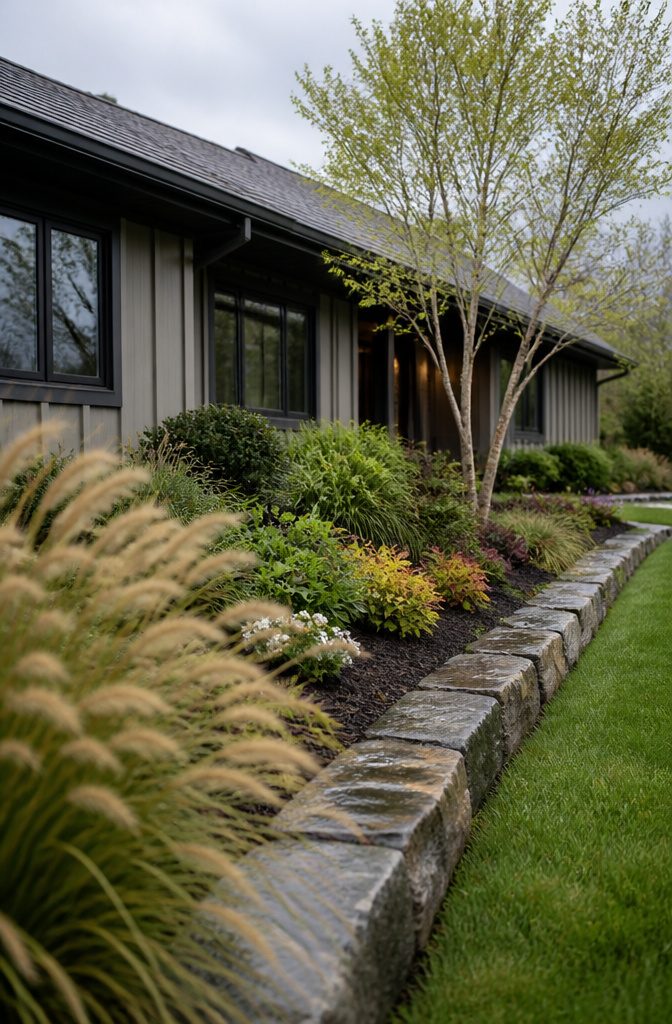
A house with long, low lines looks best with plants that repeat them: mounded shrubs and fine-textured grasses that run along the foundation like a second roofline.
A tall, gabled house takes upright shapes, such as columnar evergreens, that follow the same vertical pull. Keep the green backbone to a short list of plants, and let the same few appear again and again.
Then add one or two statement specimens where the eye naturally lands, near the entry or at a corner. A small tree with good branching or a shrub with unusual foliage works well.
Fewer species means fewer bloom windows, and a restrained bed can look flat for stretches of the year.
Pick specimens that give you more than one season of interest, such as spring flowers followed by fall color or winter bark. If a plant only performs for a couple of weeks, leave it out.
Recommended Products


Compact shrub with striking red foliage in fall
8. Frame the House, Keep Open Space
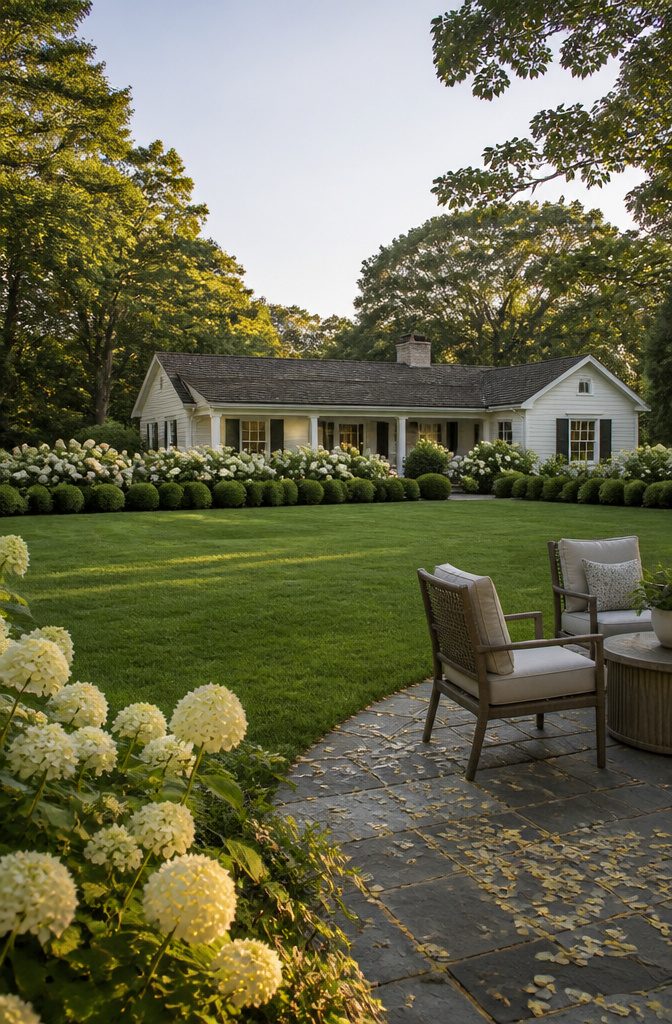
Beds work best as a frame, not a fill. A ranch-style house in Kansas keeps its rolling open lawn and gets its character from hydrangeas and boxwoods planted around the house, plus a small seating area out front.
Because the lawn stays open, the yard still has plenty of space to play.
Put the planting along the house and at the edges, and let the middle stay green. The beds should frame the house without taking over the yard.
Planters can do the same job on a craftsman-style home. Beds and pots placed with care add structure around it without pulling attention away from the house.
Recommended Products


Package Details: Includes 12 Bundles of lifelike artificial flowers stems and a eco-friendly coir hanging basket with semicircle green grass liner and the foam. The size after assembly is approximately 13inch, the basket measures 12 " x 12" x 5.9 "(LxWxH) and the chain length is 13.78 inches

UNIQUE AGAVE GARDEN ART: Add a desert-inspired touch to your outdoor space with KODIBO handcrafted metal agave plant sculpture. Featuring a realistic tequila agave design, it creates a stunning focal point for gardens, patios, yards, lawns, and outdoor landscapes.
9. Rock or a Dry Riverbed
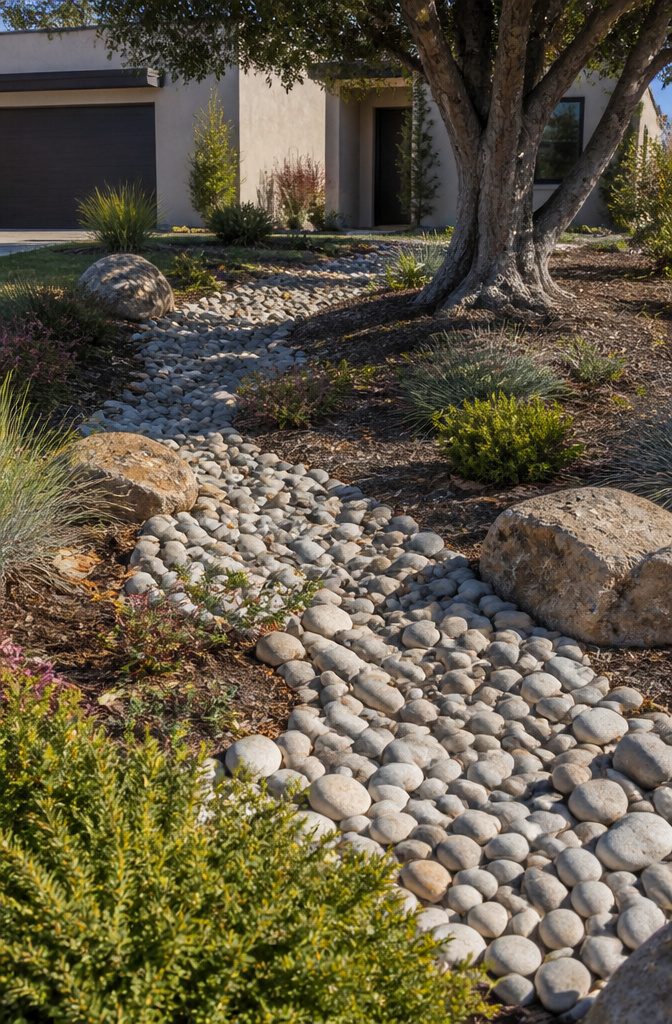
River rock lets you landscape a large front yard without planting all of it, so you water, weed and prune less. A dry riverbed takes the idea further.
Run it around existing trees and fill the edges with hardy, drought-tolerant plants, which suits a yard meant to save water. Set a few larger boulders along the bed to give the eye a place to rest.
The cost is plain: you trade greenery for a hard surface, and a yard that is mostly stone can look bare.
Keep planting pockets in the bed. On a tight budget, check what rock is available locally; some may be free if you will do the hauling.
10. Replace Part of the Lawn
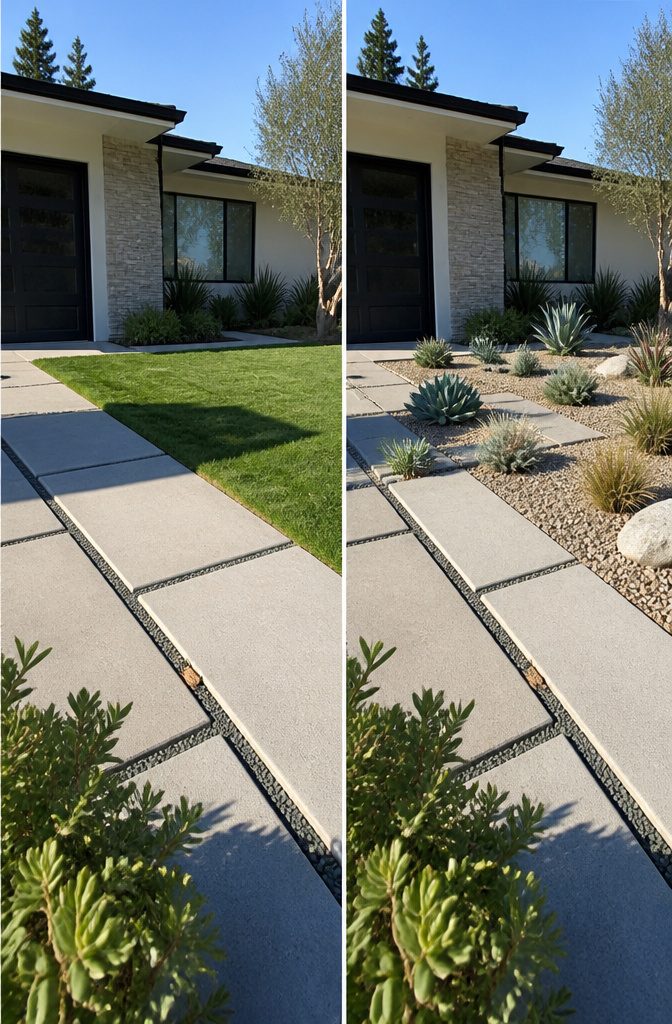
Three swaps replace a thirsty lawn, and each gives up something different.
Ornamental no-mow grasses end the mowing and keep a soft, green, yard-like look. A permeable groundcover also drops the water-hungry turf, and it lets rain pass through the surface instead of sitting on it.
In either case, low-growing plants keep the planting in proportion to a ranch-style house. Stone with desert plants is the lowest-water option, and stone or brick laid in clean lines suits a modern house.
What you give up is the lawn look. It reads dry and architectural, so it fits best where the house already has that spare feel.
Recommended Products

Stone-Look Decorative Landscape Edging: 2.75 inch tall rustic stone design complements any flower gardens and provide clean look for your gardens, flower beds, lawns, grass, raised garden beds, shrubbery, pathways, yard trees, ground pool, etc.

Interlocking Structure Design: The interlocking structure adopts thin tongue and groove style design which will tightly hold the each edgings, preventing the garden edgings peel off. Made of premium material, these interlocking garden border edgings stand the wear and tear, no fading, no crackling, no deformation. It can be used for a long time.

【HEAVY-DUTY GALVANIZED STEEL】Say goodbye to flimsy aluminum. LAVEVE Garden Edging is built with a reinforced, thickened galvanized steel core, offering superior strength and durability while remaining flexible for custom-shaped borders.
11. Add a Personal Feature
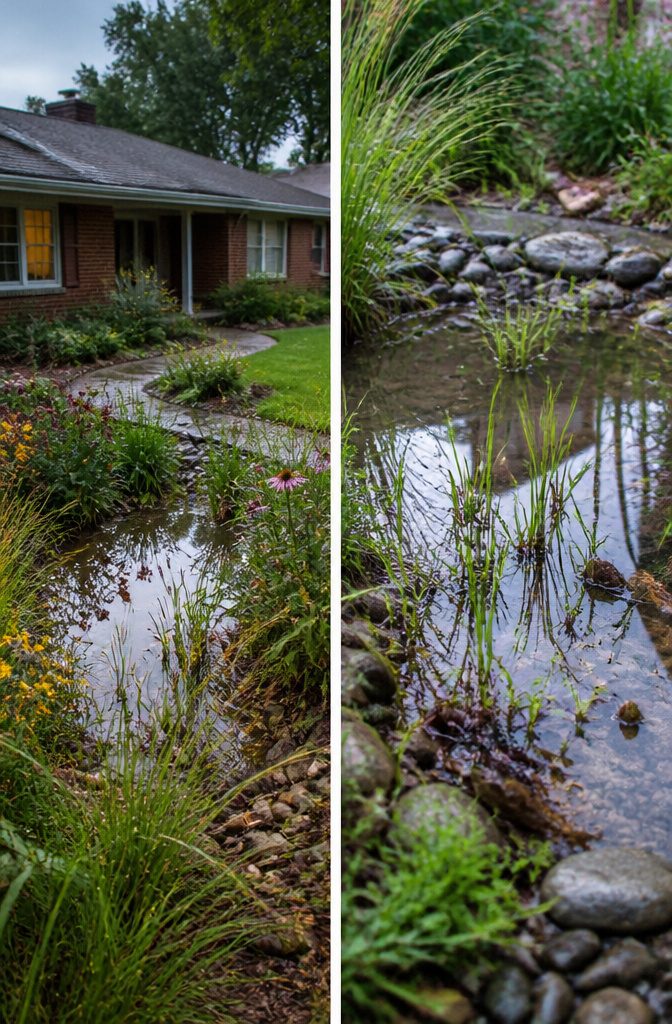
A front yard can carry one personal feature well. Pick one to lead and let the plantings support it.
- Butterfly or rain garden: These two fit a water-saving, wildlife-friendly yard best, and they are the ones to choose first.
- Vegetable bed: Keep it tidy and mix perennials with annuals, so the bed still looks good outside veggie season.
- Split-rail fence: It marks where your yard ends and the path begins without walling off the view.
- Driftwood: Use it only if you can get it free, such as near a lake or beach. A large piece fills a big stretch of bed, adds texture, and breaks up the plantings.
- Water garden with koi: It is the most dramatic choice and the most work, so skip it in your first season.
Ten Foundation Plants by Height
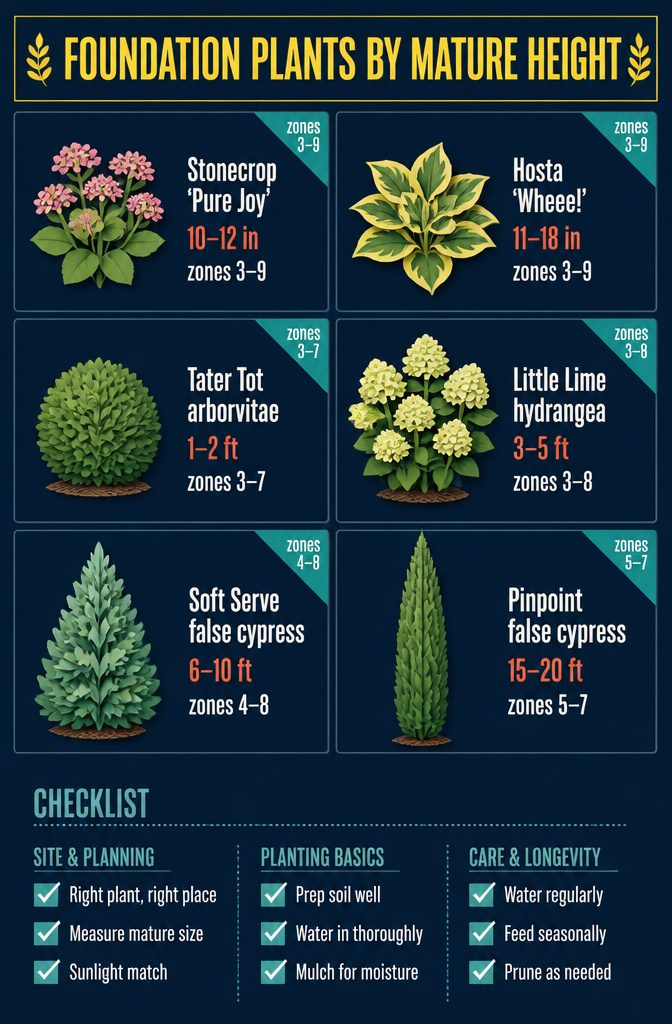
Plant front to back in this order. Soft Serve false cypress stays below the gutters of a 1-story house, and Pinpoint suits a corner.
| Plant | Height | Zones |
|---|---|---|
| Stonecrop ‘Pure Joy’ | 10–12 in | 3–9 |
| Catmint ‘Cat’s Pajamas’ | 12–14 in | 3–8 |
| Hosta ‘Wheee!’ | 11–18 in, 28–30 in across | 3–9 |
| Catmint ‘Cat’s Meow’ | 17–20 in | 3–8 |
| Allium ‘Serendipity’ | 15–20 in | 4–8 |
| Tater Tot arborvitae | 1–2 ft | 3–7 |
| Tortuga juniper | 2 ft, 3–4 ft across | 2–7 |
| Little Lime hydrangea | 3–5 ft | 3–8 |
| ‘Totem Pole’ switch grass | 6 ft | 4–9 |
| Soft Serve false cypress | 6–10 ft | 4–8 |
| Chiffon rose of Sharon | 8–12 ft | 5–9 |
| Pinpoint false cypress | 15–20 ft, 5–6 ft at base | 5–7 |
Budget, Upkeep, and Staging
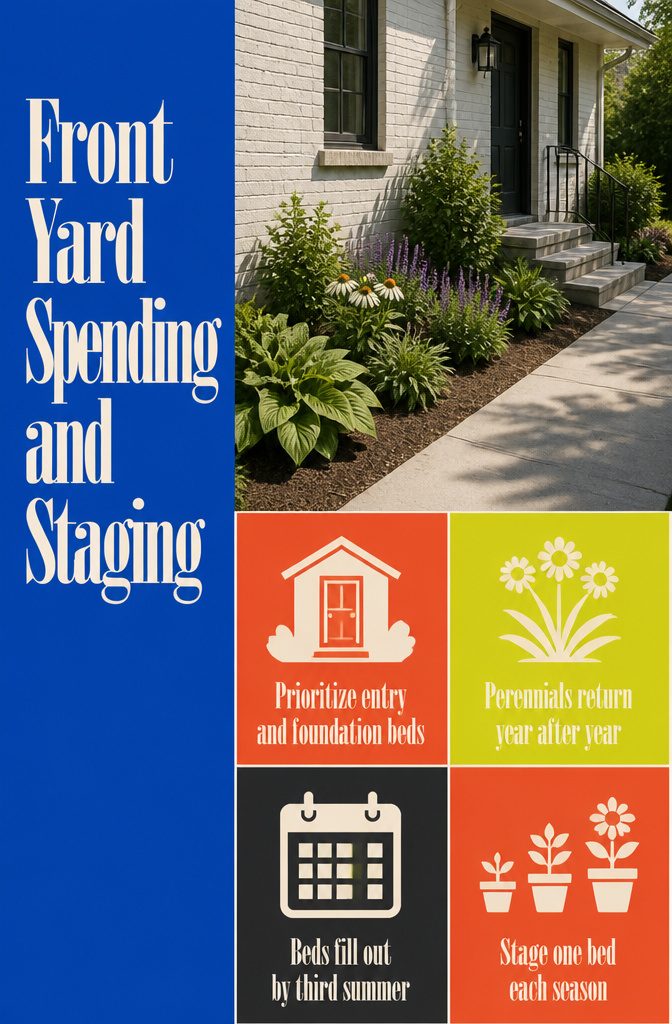
Spend first on what shows from the street and from your front door: the bed by the entry and the strip along the foundation.
Perennials earn that money because they come back every year, and they should be fairly well grown by the third summer. Until then the beds will look thin, so resist buying extra plants to fill the gaps.
A larger planting area costs more to fill and takes more weekends to weed, water, and cut back.
On a small yearly budget, plant one bed this season, add the next the following year, and finish the rest over later seasons. A small bed that looks finished beats a large one that stays half empty.
Frequently Asked Questions
Which plants are good for foundation plantings in front of a house?
Compact perennials and shrubs that grow in average, well-drained soil are the easy choices, such as stonecrop ‘Pure Joy’ (10–12 in), Little Lime hydrangea (3–5 ft), and Soft Serve false cypress (6–10 ft). Set them shortest in front and tallest in back.
Pinpoint false cypress, which reaches 15–20 ft and 5–6 ft at the base, suits a corner. Check each plant’s zone range against your USDA zone before you buy.