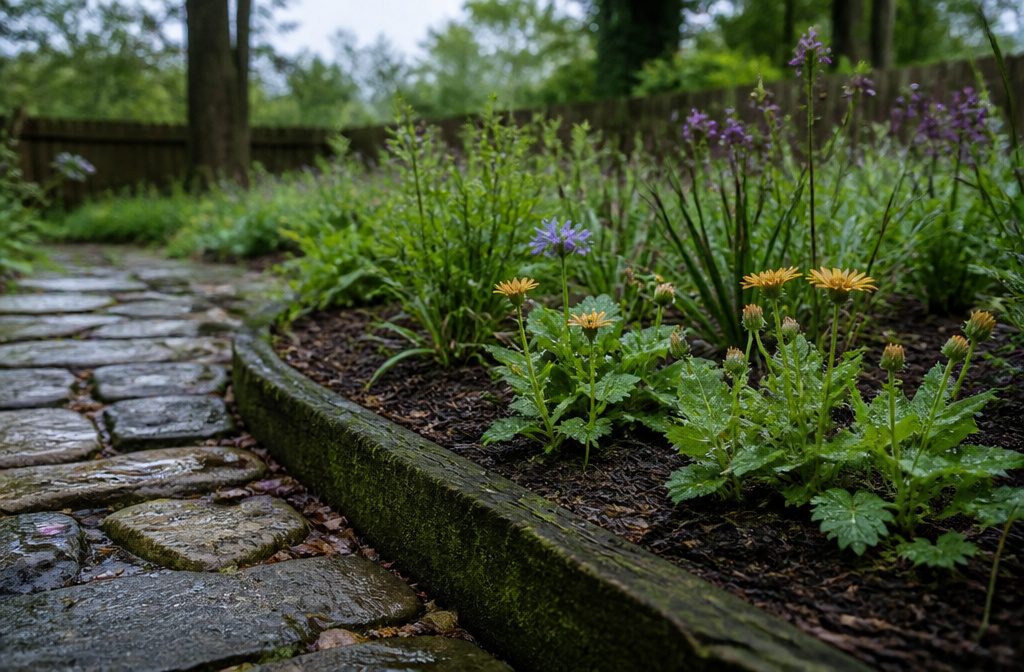
Gardening with native plants means growing species that lived in your region before Europeans began permanent settlements in the 1500s.
Native is set by region, not country, so Utah’s blue columbine is non-native in a mid-Atlantic yard. Beds also need weeding and re-mulching for 3 years before they run on their own.
What Native Means
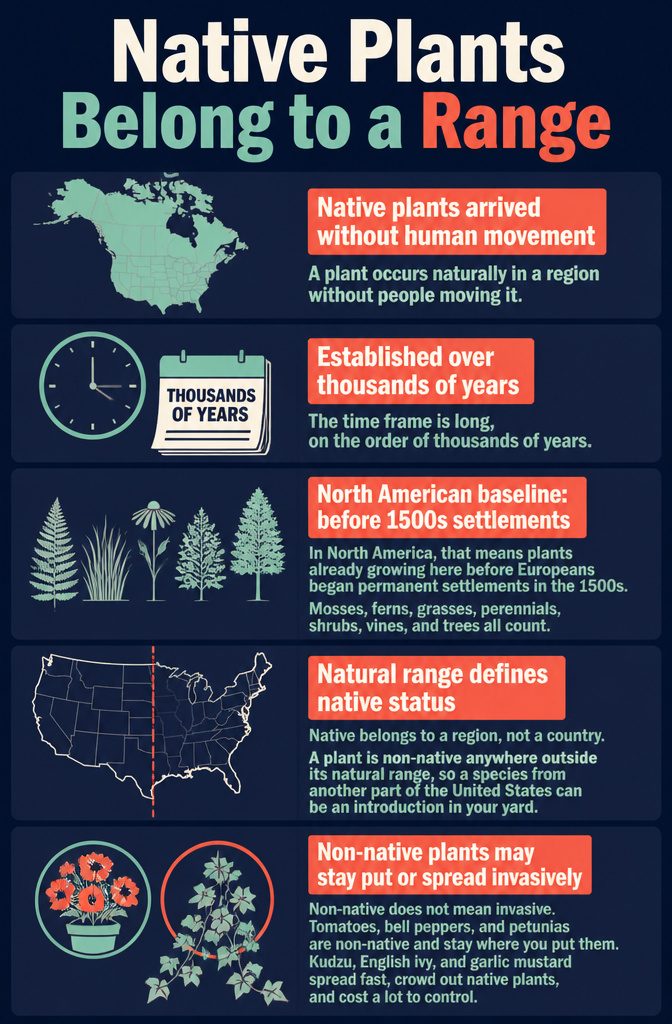
A native plant occurs naturally in a region and arrived without people moving it, on purpose or by accident. The time frame is long, on the order of thousands of years.
In North America, that means plants already growing here before Europeans began permanent settlements in the 1500s. Mosses, ferns, grasses, perennials, shrubs, vines, and trees all count.
Native belongs to a region, not a country. A plant is non-native anywhere outside its natural range, so a species from another part of the United States can be an introduction in your yard.
Non-native does not mean invasive.
Tomatoes, bell peppers, and petunias are non-native and stay where you put them. Kudzu, English ivy, and garlic mustard spread fast, crowd out native plants, and cost a lot to control.
Recommended Products

EXTRA LARGE PACKET: Embark on a wildflower journey with our generous 1-ounce packet, bursting with over 7,500 pure live seeds! Transform 100 square feet into a vibrant haven for nature.

Make a direct impact on the survival of monarchs by planting milkweed seeds for monarch butterflies. This essential plant serves as a breeding ground for monarchs and provides nourishment for their caterpillars, helping you play a role in saving these beautiful creatures.

Pollinator Garden Color: Grow bee balm seeds into purple summer blooms that attract bees, butterflies & hummingbirds, adding lively movement to beds, borders and native plantings
Why Native Plants Matter
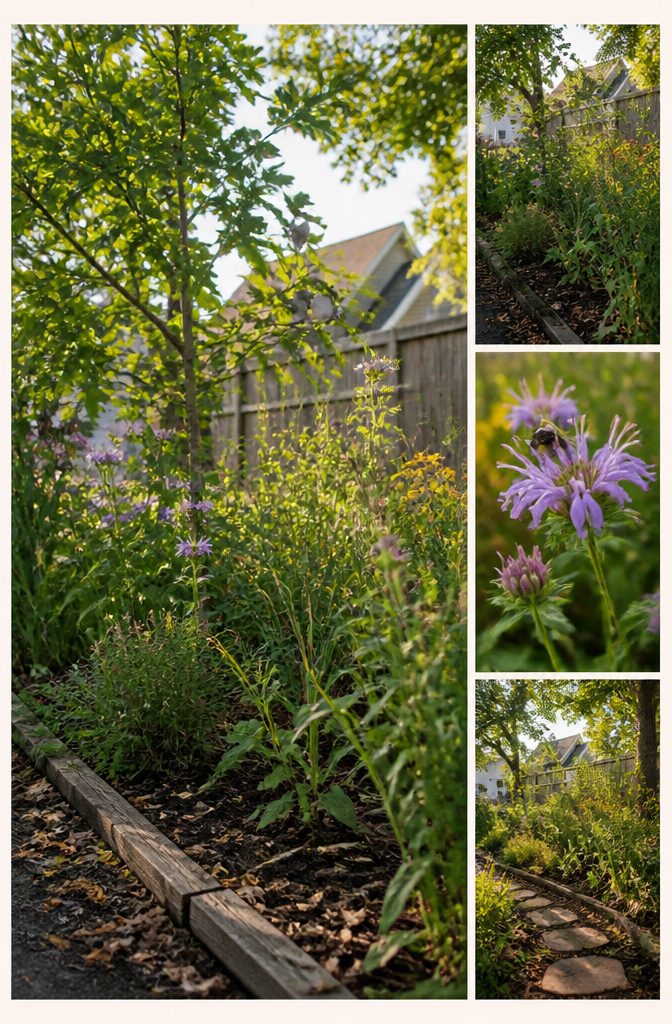
Native insects can’t eat most European or Asian plants sold at big box garden centers, and birds depend on those insects.
Insects that evolved with native plants feed on and help those plants flourish through pollination and the decomposition of organic matter. Insects also serve as food for other indigenous wildlife species in a very specific and delicate chain.
The Nature Conservancy reports that nearly half of insects worldwide, and nearly 70% of birds, amphibians, mammals, fish and reptiles, have disappeared in 50 years. Next to the 2030 goal of protecting 30% of lands and waters, one yard looks small.
Still, native plants in cities and suburbs supply food, shelter and nesting sites. Their deep roots also hold soil and need little water or pesticide once established.
Recommended Products

Kindly NOTE: This soil tester can not be applied to test pH value of any other liquid. If the soil is too dry the indicator will not move, and water it before testing.

【7-in-1 Features】This is a 7-in-1 multi-function soil tester. Our soil tester quickly measures soil moisture, pH, temperature and light intensity, and its fertility function helps you take better care of your plants. With this device you can measure the soil moisture, pH, temperature and light intensity for your plants and with the EC and TDS functions you will know when it is time to water the soil.

Accurate Soil pH Testing: Dewildetradingco Soil pH Test Strips offer measurements of soil pH levels (pH 3.5-9). As an essential tool for every gardener and grower, these test strips help determine the optimal pH for various plants, such as outdoor plants, indoor plants, gardens, grass lawns, fruit trees, flowers, vegetables, and forest shrubs.
Assess Your Site
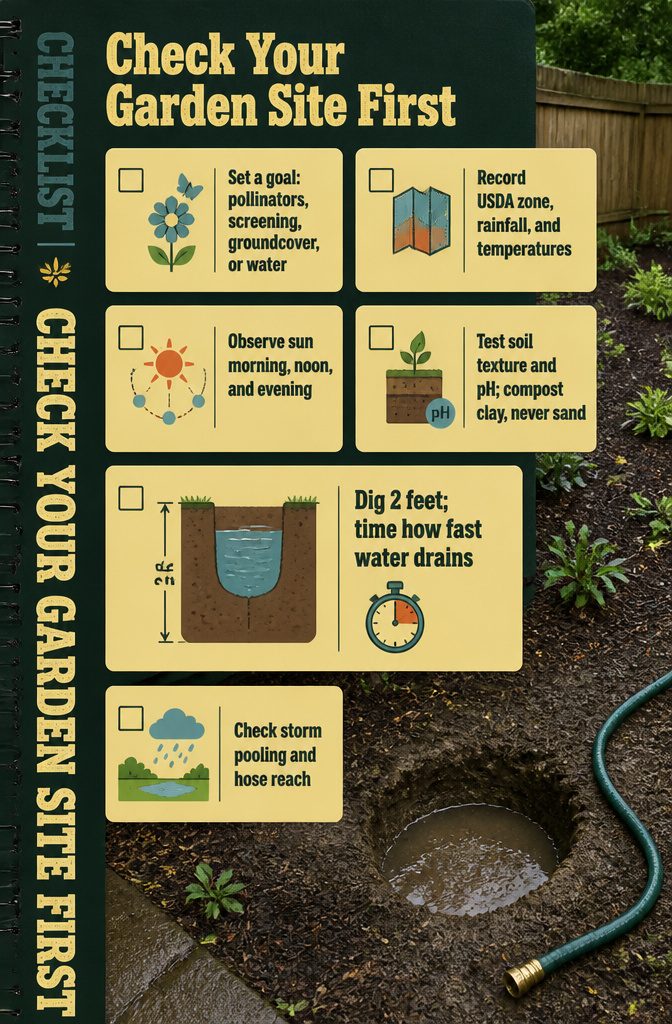
Decide what the space should do first: feed pollinators, screen a fence, cover bare ground, or cut your water use. Then check the site against that goal:
- Zone and climate: Look up your zone on the 2023 USDA Plant Hardiness Zone Map, and note typical seasonal rainfall and temperatures.
- Sun: Watch the spot morning, noon and evening. Shade shifts between seasons.
- Soil: Check texture (sand, clay or silt) and pH. Fix clay with compost, never sand.
- Drainage: Dig a hole 2 feet deep, fill it with water, and time how fast it empties. Soil beside newer houses is often compacted fill that drains poorly.
- Topography: After a big storm, see whether low spots stay flooded more than a day or clear in a couple of hours.
- Irrigation: Mark how far your hose or existing system reaches.
On a patio or balcony, sun matters most. The soil and drainage tests apply to in-ground beds.
Recommended Products

PREMIUM DROUGHT TOLERANT WILDFLOWER MIX: A carefully curated blend of hardy wildflowers selected to thrive in hot, dry, and low-water conditions. Suitable for xeriscaping, water-wise gardens, low-water landscapes, and challenging growing environments across the continental USA
Choose Local Plants
Start with a regional or state native plant list, then match each plant to the sun, moisture and drainage you found in your site check.
The Xerces Society publishes lists by region, Audubon and the National Wildlife Federation offer zip code searches, and your state Extension office likely has its own.
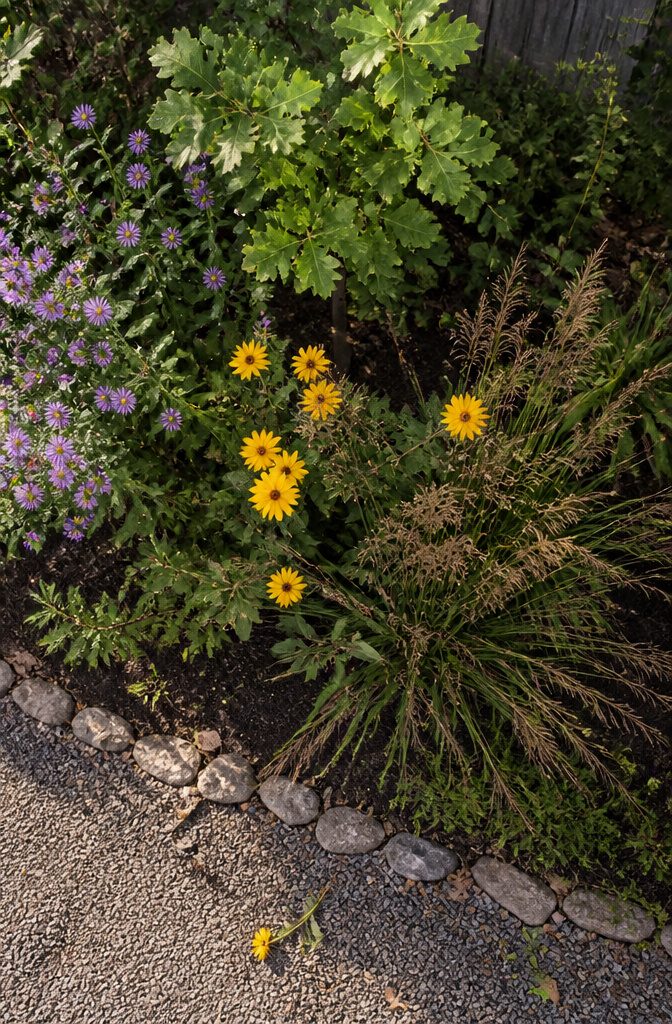
Local lists give very different answers. In the mid-Atlantic, New England aster, woodland sunflower, switchgrass and white oak are typical picks.
In Utah, you would see blue columbine, Utah serviceberry, showy milkweed and yarrow. Treat these as illustrations, not a shopping list.
Perennials such as the aster and woodland sunflower return every year, so one planting keeps paying off.
Begin with plants you like and can actually grow. A first success makes the second planting easy.
Recommended Products
Gives any landscape a finished look and feel

Sharp and Sturdy Blade: The all-steel blade of this Japanese sickle-style hand weeder is exceptionally sharp and sturdy. It effortlessly cuts through stubborn weeds, saving you time and effort. The blade maintains its sharpness for extended periods and can be easily maintained through regular polishing, ensuring efficient and precise cutting.

NATURAL GARDEN COVER: Creates a clean, polished garden surface while helping minimize weed growth naturally. This organic mulch also supports healthy soil structure and nutrient balance for thriving plants.
Prepare and Plant
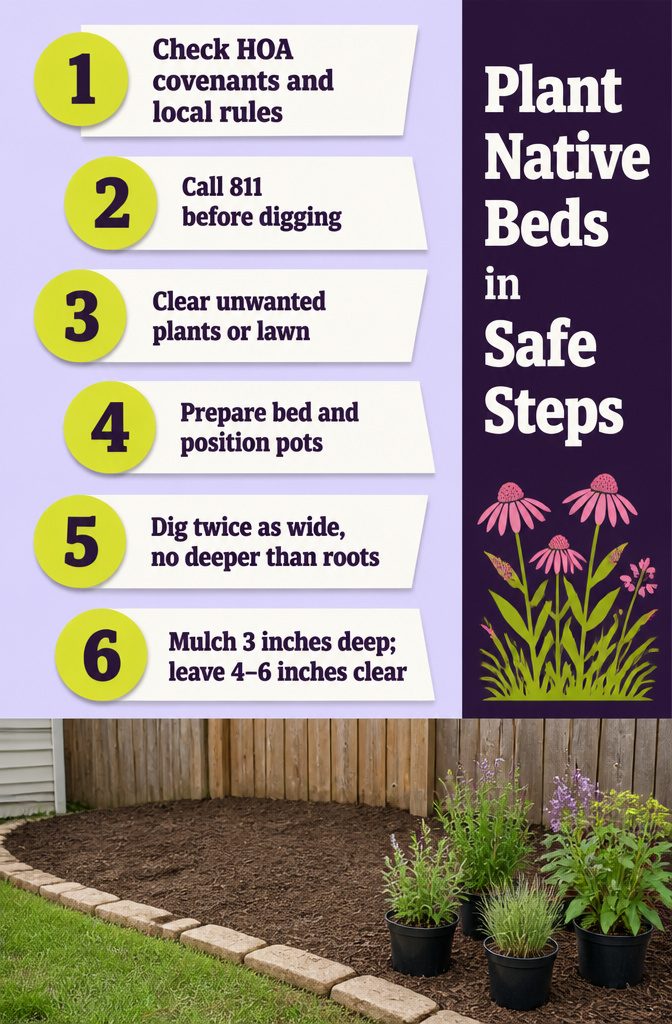
- Check your HOA covenants and local rules before you buy anything.
- Call 811, which is free, so buried utility lines are marked before you dig.
- Clear the unwanted plants or lawn from the planting area.
- Prepare the bed, then set the pots where you want them.
- Dig each hole twice as wide as the root ball and no deeper than its height. In wet spots, set the plant slightly higher.
- Mulch 3 inches deep, as wide as the foliage, and keep it 4–6 inches from the stem or trunk. Pine straw and FloriMulch® are the mulches named in a Florida guide, so choose what suits your region.
Recommended Products

Grow Your Own Pollinator Wildflower Mix from Seed: Cosmos, daisy, purple coneflower, and zinnia, the blooms bees and butterflies love. Everything included to raise them at home in plastic-free pots, a hands-on project for indoor & outdoor spaces.

Wild flower seed packets include a beautiful selection of 11 flowers seeds including; Bachelor Button, Cornflower, Calendula, Cosmos, Zinnias, Dwarf Sunflower, African Marigold, Sweet Sultan, Indian Paintbrush plants, Clasping Coneflower and Flanders Poppy.

Lowbush Blueberry Seeds for Planting: Grow compact native blueberry shrubs that produce sweet, flavorful berries perfect for fresh eating, baking, smoothies, muffins, pancakes, jams, jellies, syrups, and desserts. Excellent for edible landscapes, berry patches, woodland gardens, pollinator habitats, naturalized plantings, and home gardeners seeking delicious homegrown fruit.
Establish and Maintain
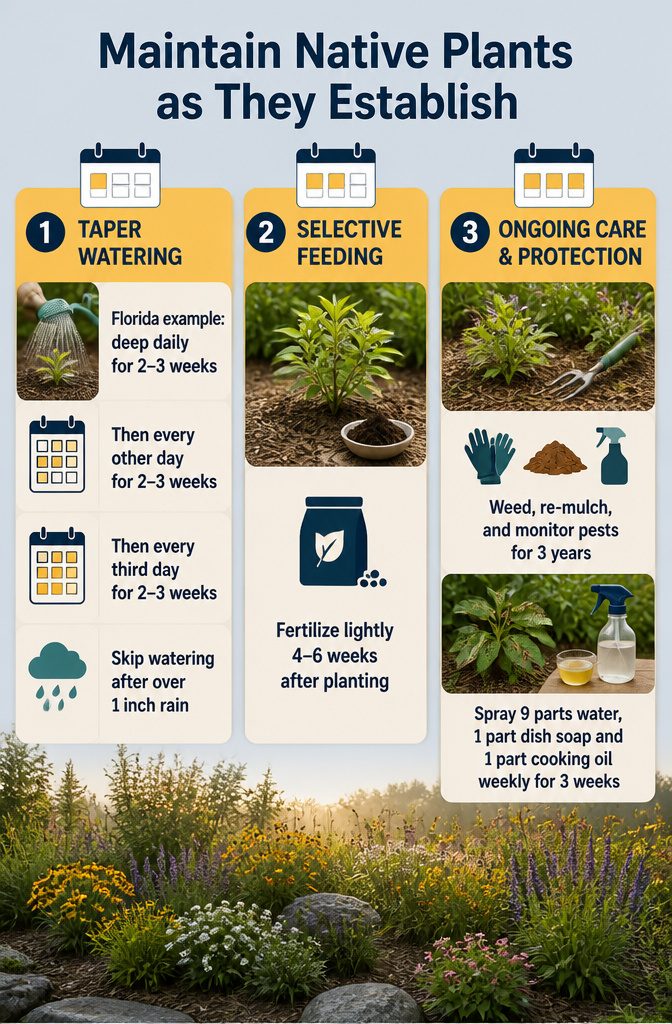
One Florida schedule tapers watering as roots settle: deep daily for the first 2–3 weeks, every other day for the next 2–3, then every third day for 2–3, skipping after more than 1 inch of rain.
Larger trees and shrubs need water at least twice a week in year one, and extra in hot, dry spells for 3 years. Treat that as one regional example; establishment takes several months to a year.
Fertilize only for faster growth, 4–6 weeks after planting, lightly, with compost or slow-release organic. Walk the bed daily, then weekly, weeding and re-mulching for 3 years.
For pests, spray 9 parts water, 1 part dish soap and 1 part cooking oil weekly for 3 weeks. Low maintenance is not no maintenance.
Recommended Products

Comprehensive Soil Analysis: Liquid soil test kits offer a comprehensive analysis of essential soil parameters, including pH, ammonia, nitrogen, phosphorus, and potassium. Having all these measurements in one kit provides a holistic understanding of the soil's fertility and health.

KNOW BEFORE YOU GROW | Grow the healthiest, sustainable lawn and garden with the most accurate and easy to use professional soil test kit on the market

3 in-1 Soil Test Kit : This soil tester has upgraded functions, which can easily test soil moisture, soil PH and fertility to meet your different needs. Compared with traditional single-function soil moisture meter, our soil meter is more helpful in comprehensively diagnosing soil conditions, this allows for better control when applying water and fertilizer to plants
Design in Layers
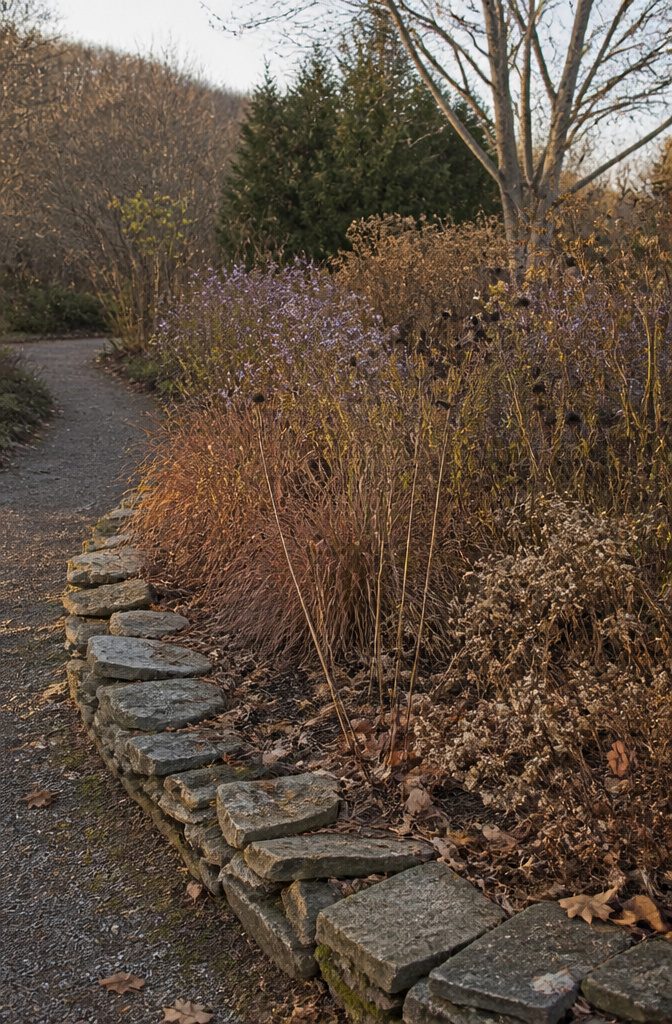
Group each species in a drift rather than dotting single plants around the yard, and stack the layers: trees and shrubs overhead or at the back, perennials in the middle, grasses woven between.
Then stagger the bloom so something is always open. Woodland sunflower flowers from July to September, New England aster opens in August and runs through September, and broom sedge turns reddish tan from September through November.
For a ready-made fall combination, pair rough goldenrod, brown-eyed Susan and New England aster.
That trio suits zones 4–8 in full sun. Leave leaf litter, hollow stems and seedheads standing through winter, because they give insects shelter and birds food.
Recommended Products

Shade-Loving Native Plant – Thrives in partial to full shade; ideal for woodland gardens and low-light areas.

[Feathery Smoke-Like Plumes] Produces distinctive pink, feathery seed heads that resemble drifting smoke. Each plume rises on slender stems 12-18 inches tall. A unique focal point in late spring through summer.

CALIFORNIA NATIVES SEED COLLECTION - One packet each of eight drought-tolerant natives: White Sage (Salvia apiana), Black Sage (Salvia mellifera), Purple Sage (Salvia leucophylla), California Poppy (Eschscholzia californica), Arroyo Blue Lupine (Lupinus succulentus), Nettleleaf Giant Hyssop (Agastache urticifolia), California Mugwort (Artemisia douglasiana), and White Yarrow (Achillea millefolium).
Buy Plants Carefully
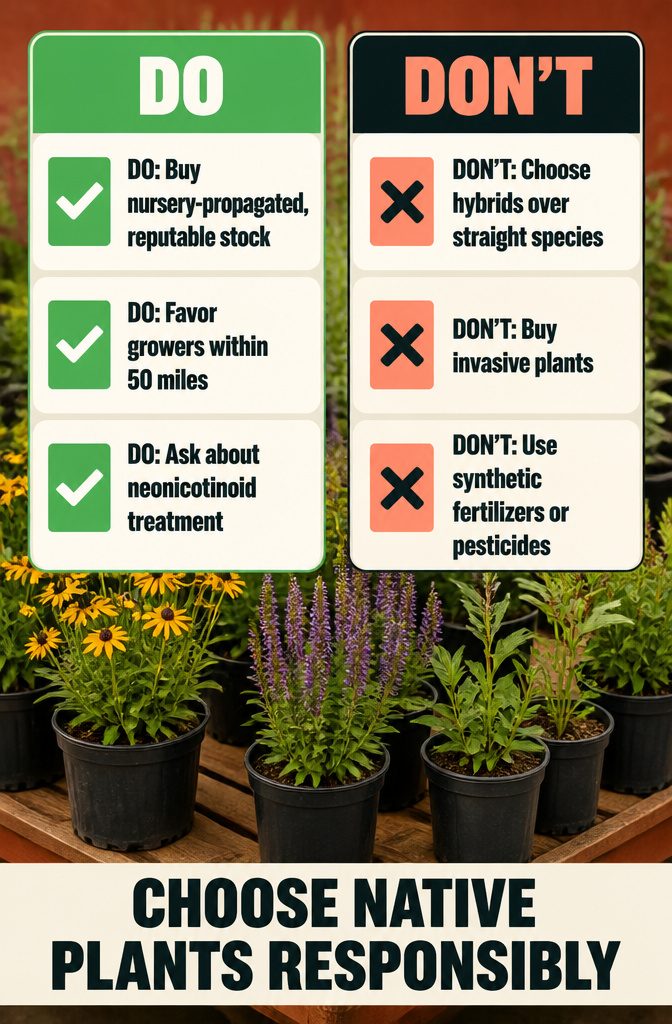
Check these before you pay:
- Buy nursery-propagated plants, not wild-collected ones, from reputable growers.
- Favor stock grown within 50 miles of your garden. Those plants are the most likely to thrive.
- At a conventional garden center, ask whether the plants were treated with neonicotinoids. These insecticides kill beneficial insects, and a native label doesn’t mean the plant is untreated.
- Pick straight species over hybrids and some cultivars. Bred for showy flowers or size, they often carry less pollen and nectar.
- Skip invasive plants, which outcompete natives for resources.
- Skip synthetic fertilizers and pesticides. Runoff carries them into streams and bays.
Recommended Products


Sharp carbon steel blades: durable, rust resistant, and easily cut weeds from the roots after polishing. No more pulling

Effortless weeding & edging in tight spaces – The razor-sharp curved high-carbon steel blade slices through stubborn weeds, roots and compact soil with minimal effort so you can tidy borders, paving slabs and vegetable beds without back-breaking force.