The ideas run from two packed beds on a $500–800 yearly budget to terraced tiers down a hill, and the one that fits is set by your site: sun, soil, drainage and slope.
Terracing needs a real slope, and plants that don’t suit the spot die and make the yard look cheap regardless of spend.
1. Dense Cottage Garden Beds
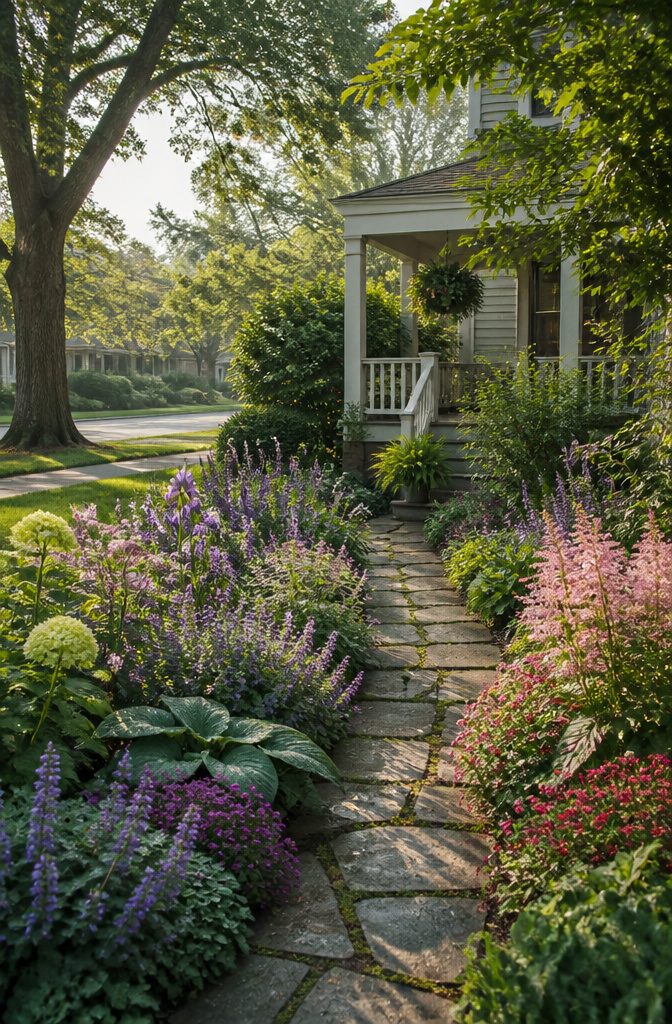
Two small, packed beds do more for a front yard than the same plants thinned out across the whole frontage.
Dense planting reads from the street as a deliberate picture, while sparse planting reads as gaps with bare soil between them. Plant each bed so the foliage touches.
Keep the plant list short and repeat the same perennials in different patterns, such as a broad drift in one bed and a few scattered clumps in the other.
Many varieties planted once each looks busy, but a few varieties repeated looks planned.
A small footprint also suits a yearly budget of $500–800. You can fill two beds completely instead of stretching that money across a large area and ending up with plants too far apart to make an impression.
Recommended Products

Abundant Garden Coverage: With over 3000 hollyhock seeds (Alcea rosea), this value-packed set is ideal for large-scale planting in outdoor gardens, flower beds, or backyard borders, offering tall and vibrant perennial blooms in a beautiful mix of red, yellow, pink, white, and more.


Beautiful - Large premium packet of Pastel Mix Yarrow (Achillea millefolium) seeds. Lovely mix of delicate shades of pink, yellow, apricot, and white blooms. Low-maintenance, drought tolerant perennial once established. Perfect for a cottage garden or use as cut flowers for delightful indoor arrangements! AAS Flower winner. Minimum of 200mg per packet (about 1300 seeds).
2. Micro Prairie or Tapestry Lawn
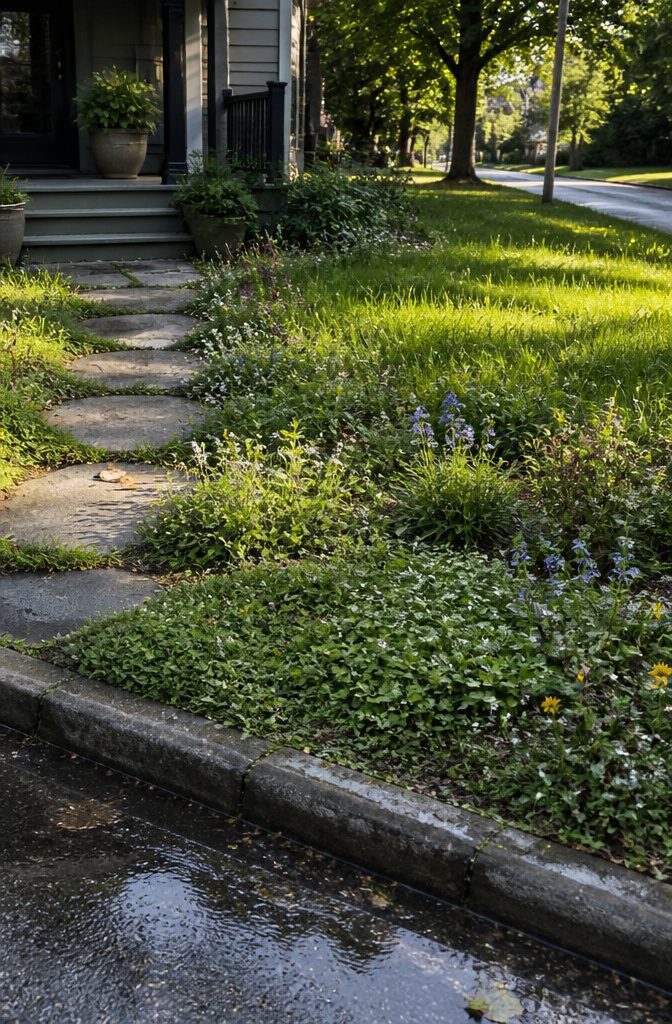
A micro prairie is a small planting of native flowers and grasses.
A mixed lawn of low-growing plants such as clover, thyme, and creeping speedwell grows among the turf grass, so the surface stays green and walkable but gains texture and flowers.
Natives have built a relationship with one region and grow there without human intervention, and they draw birds, butterflies and other insects.
Small front yards suit a micro prairie best: the smaller the space, the easier it is to manage.
It is meant to look wild, so there is no strict design to chase. Ask a local garden store which plants are native to your area.
Landscape designer Scott Shrader points to what a lawn costs by comparison: fertilizer, water and mowing to keep a green patch.
Recommended Products
Premium stepping stone mix is a specialized mix of super-fine cement, latex, and curing agents

Stepping Stone: Spoontiques’ stepping stones and decorative plaques are a lovely way to brighten up your indoor or outdoor space.

HAND CRAFTED STEPPING STONE: Realistically detailed sunflower-shaped stepping stone with a classic distressed verdigris finish for an aged outdoor look and feel
3. Sculptural Plants, Airy Perennials
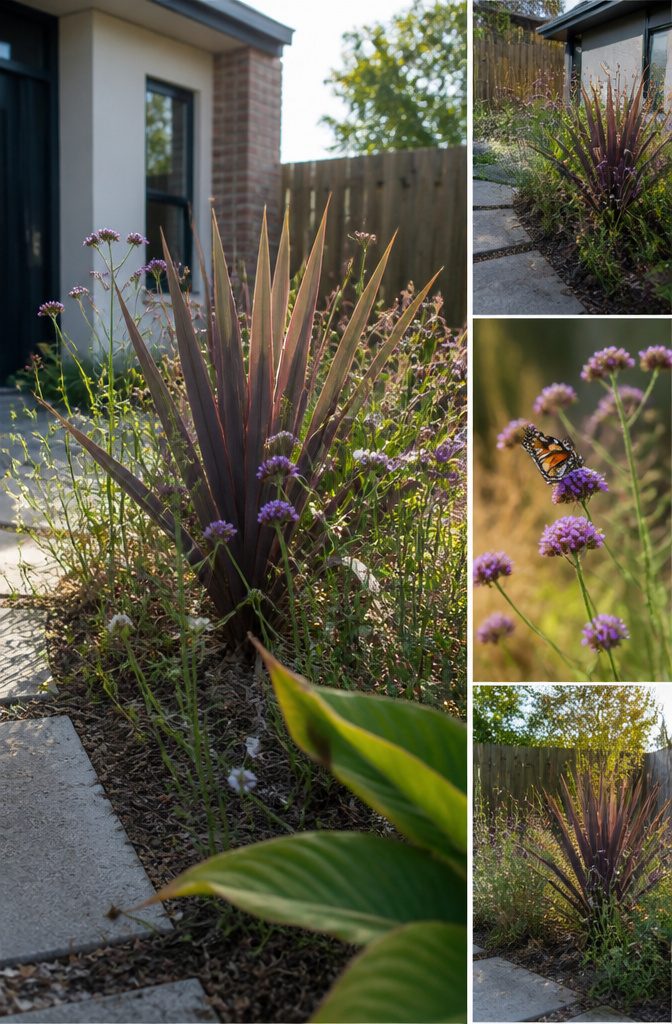
Pick one or two sculptural specimen plants, ones with a bold, defined shape you can read from the street, and set airy, butterfly-friendly perennials around them.
The contrast in form is what holds the eye. A solid shape beside loose, see-through stems makes each look sharper than it would alone, and the airy plants keep moving and changing while the specimen stays put.
This is also an inexpensive way to plant a front bed. Buy only one or two showpiece plants and let the perennials, which come back each year, fill the space around them.
You get structure, movement and butterflies without paying for a bed full of statement plants, and the arrangement keeps its appeal season after season.
Recommended Products


Premium 15-Variety Wildflower Seeds for Planting: Transform your outdoor space with this high-quality Wildflower Seeds mix. Featuring 5000+(5 packets in 1 bag) Non-GMO heirloom seeds, this blend includes Sunflower, Zinnia, Cosmos, February Orchid, Sulphur Cosmos, Safflower, Marigold, Cornflower, Four O'Clock, Forget-Me-Not, Chrysanthemum, Echinacea, Poppy, and Red Clover. Enjoy a season-long kaleidoscope of colors, textures, and heights that evolve beautifully from spring until frost.
4. Flowering Ground Cover
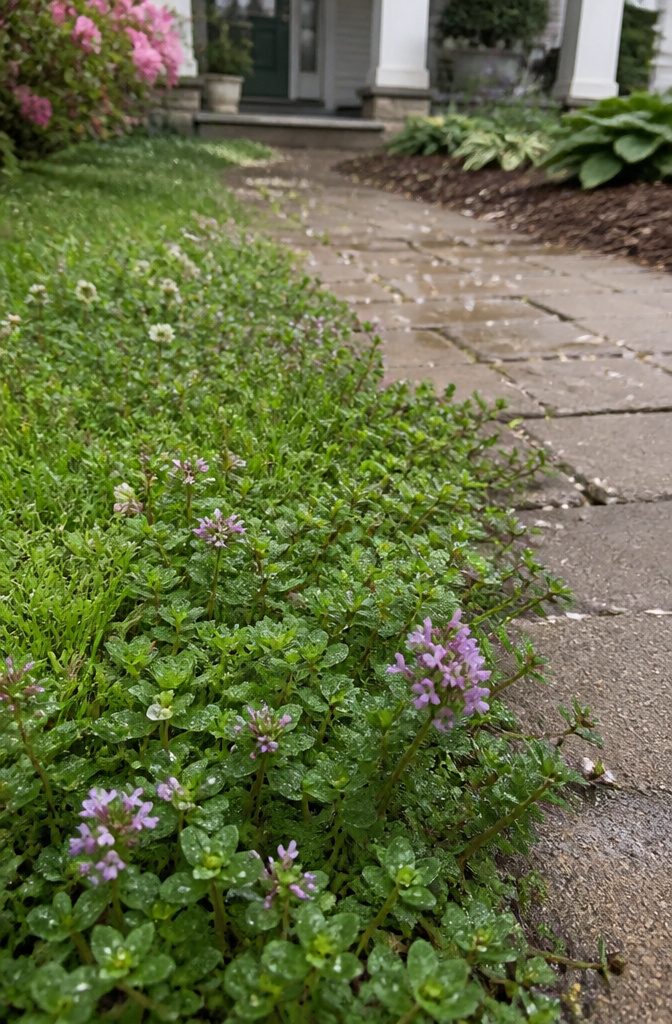
Creeping thyme and white clover are low, soft enough to walk on, and flower periodically through the season.
They handle foot traffic and need much less water and upkeep than a grass lawn, so they suit a front walk or entry.
You can plant them two ways.
Seeding into the grass you already have is the gentler method. It gives a mixed display of grass and blooms, takes less work, and never leaves you with a bare lawn.
Covering the grass with a tarp kills it, and you then reseed the cleared ground with the ground cover.
This method gives the cleaner result, a single planting instead of a patchwork. The cost is a bare stretch while the tarp is down and the new seed fills in.
Recommended Products

62,000+ Seeds for Larger Areas: This generous pack of red creeping thyme seeds provides plenty for larger planting areas, multiple garden spaces, and reseeding

LOW-GROWING CREEPING THYME GROUND COVER: Purple Creeping Thyme creates a dense, low-growing ground cover with attractive foliage and seasonal blooms. Suitable for garden borders, pathways, landscape beds, and other decorative outdoor planting areas.

🌱 10000+ Lemon Thyme Seeds for Planting Includes 10000+ lemon thyme seeds for planting, ideal for herb gardens, borders, containers, and outdoor landscaping projects with long-lasting aromatic foliage.
5. One Accent Color
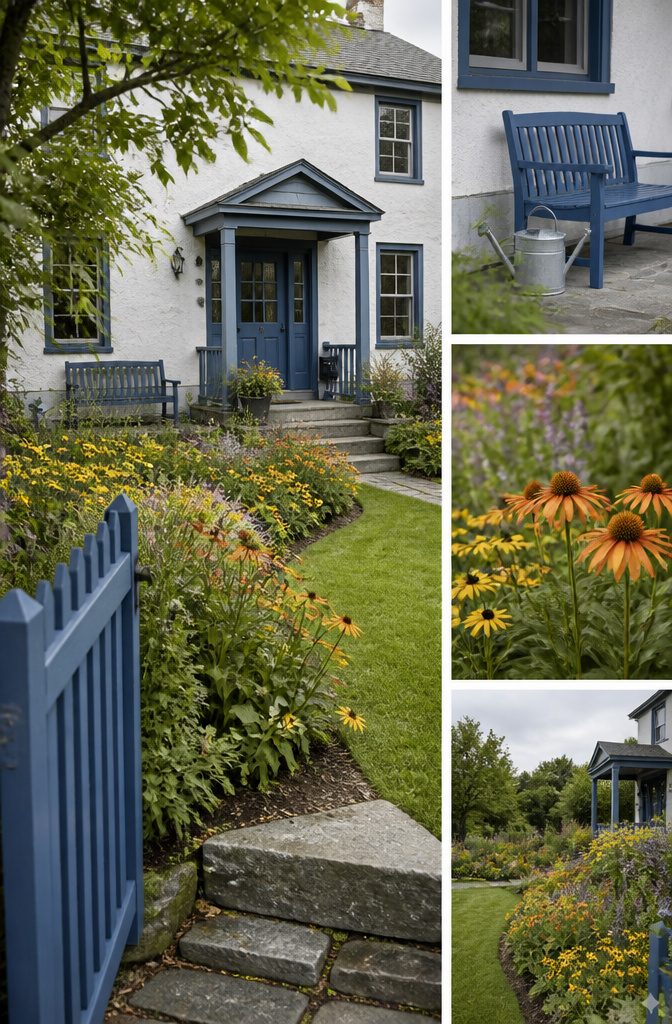
Pick one color and repeat it on the front door, the trim, a porch chair or bench, and a few flowers.
The repetition links the house to the beds, so the yard reads as one design instead of a house with plants in front of it.
Blue is the easiest choice because it contrasts well with pink, yellow, and orange blooms. A blue door behind a bed of yellow or orange flowers stands out, and pink gives a softer pairing.
Stick to one accent color.
A second one splits the eye and the front yard starts to look busy. Let the flowers supply the contrast, and keep the repeated color to the door, trim, and furniture so it stays the thread that ties everything together.
Recommended Products

PRODUCT WEIGHT AND COVERAGE: Each 1 lb. bag covers 2,276 to 4,552 sq. ft. at high or low density, ideal for creating a lush cottage garden or vibrant cottage flower display outdoors.


6. One Accent Flower
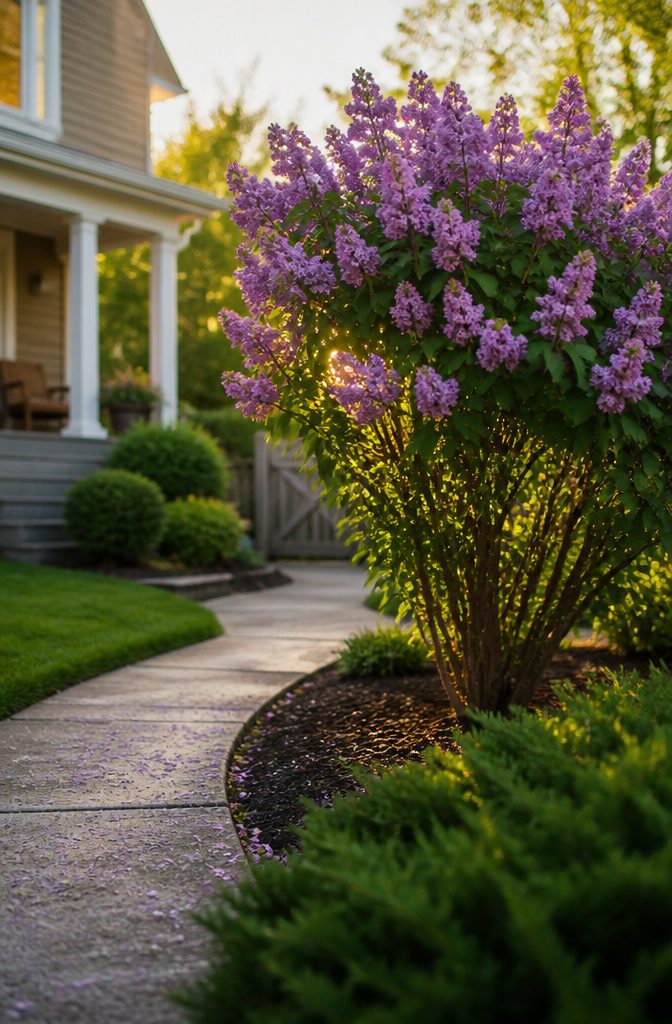
Pick the one flower you would happily see every time you pull into the driveway, and give it a quiet backdrop.
A flowering shrub does this best. Lilacs, camellia, and rose of Sharon each put a mass of bloom at eye level, so one plant can anchor a whole front yard.
Then keep everything around it plain: green foliage, a tidy lawn or mulch, and no competing blooms.
Neutral surroundings are what make a single flowering shrub look chosen on purpose. Surround it with other showy plants and it reads as one more thing in the bed, not the focal point.
Recommended Products


【Full of Life and Vitality】Our round stepping stones are colorful. Each stepping stone features a beautiful and unique pattern of butterflies, flowers, hummingbirds and daisies. These beautiful decorative stones can add charm to your garden and patio, showing life and vitality even in the depressed winter months.
7. Beds That Match the House
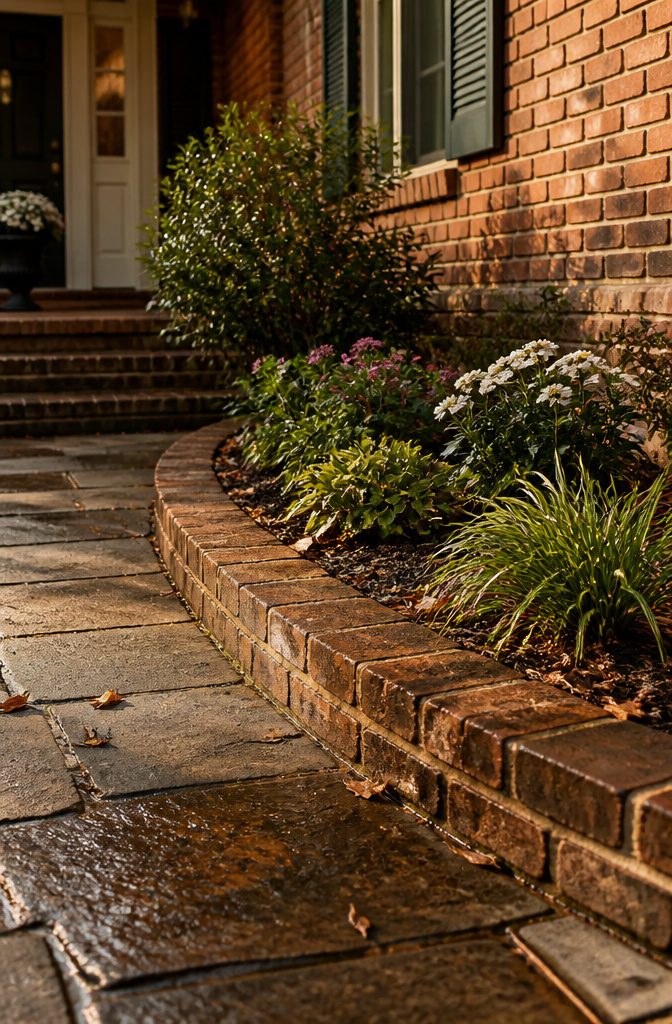
Build the bed from the same material as the façade. On a brick house, that means a brick-edged or brick-walled bed, and the repeated material ties the planting to the building so the front yard reads as one design.
If matching the material isn’t possible, choose a bed color close to the color of the house.
If a contractor is building or repairing your house, ask them to save extra brick for later projects. Leftover brick from the original job gives you an exact match when you add or extend a bed.
Costs and bed dimensions vary too much from house to house to give a fixed number, so price the edging against your own frontage before you commit.
Recommended Products

NATIVE BEAUTY – New England Aster, Smooth Blue Aster, Purple Coneflower, Narrow-Leaved Coneflower, Black-Eyed Susan, Dense Blazing Star (Gayfeather), Bee Balm (Wild Bergamot), Lanceleaf and Plains Coreopsis (Tickseed), Showy, Common, and Swamp Milkweed, Purple Prairie Clover, Joe Pye Weed, Spiderwort, Common, Prairie, and Maximilian Sunflowers, Little Bluestem, Switchgrass, Indian Grass, Blue Vervain, Canada Wild Rye, and White Yarrow.

When received, the plant will be in seasonal condition with appropriate foliage. If shipped between November 1st and March 1st, the plant may be dormant and trimmed.

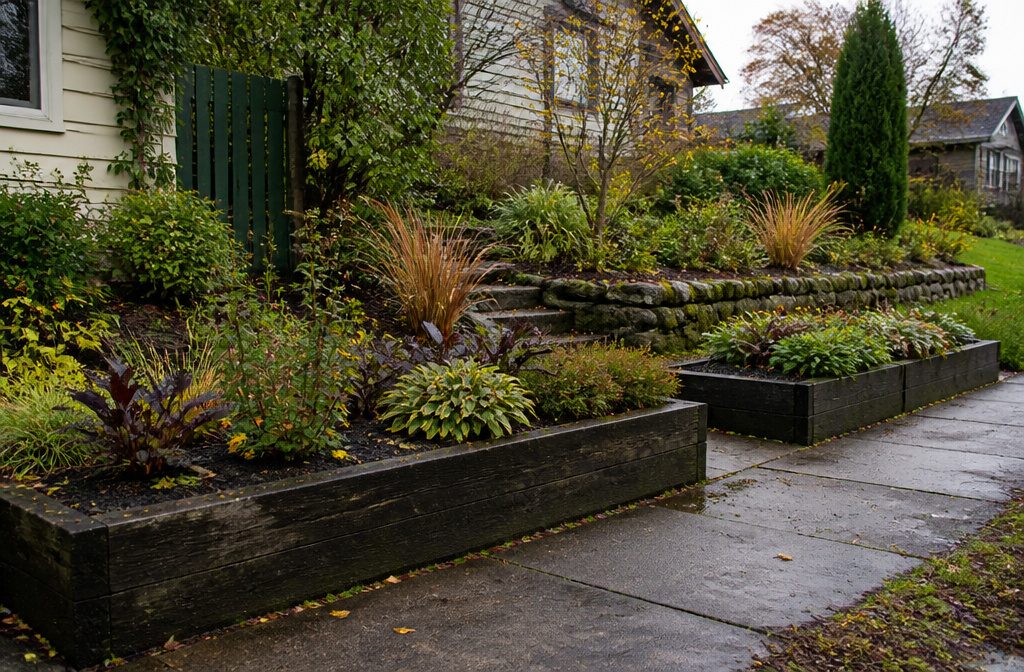
8. Terraced Plant Beds
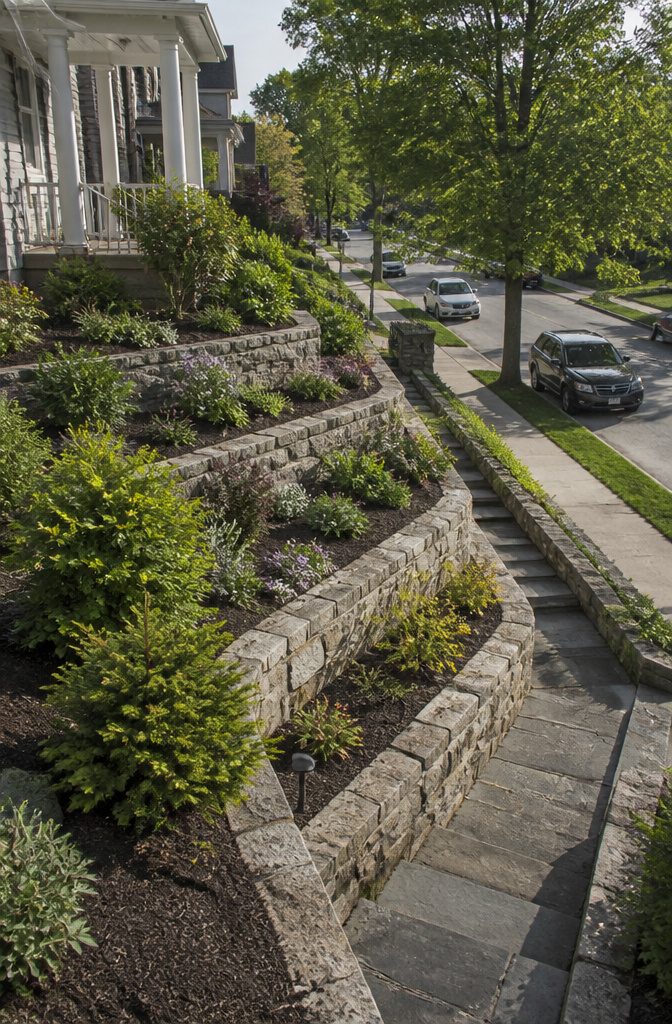
If your front yard drops toward the street, let the slope do the design work. Each step of the hill becomes its own planting bed, and the beds stack and spill downhill in a cascade.
Tiers also keep plants separate at close range. Each bed is a small unit, so you water and trim one level at a time instead of crossing the whole yard with a hose and pruners.
Putting plants with similar water needs on the same tier shortens the routine further.
This idea only works on a yard with a real slope.
On flat ground you would have to build the hill first, hauling in soil and wall material for an effect the land gives away elsewhere. Skip it there and spend the money on plants.
Recommended Products
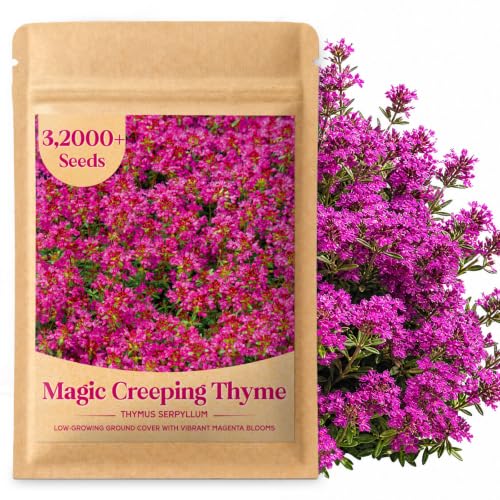
32000+ Seeds For Large Planting Areas: Over 32,000 Magic Creeping Thyme seeds provide generous coverage for pathways, garden borders, rock gardens, slopes and landscape projects. A great choice for creating a fuller planting area with a single packet

PLANT TYPE: Creeping Thyme is a low-growing, spreading perennial herb known for its dense mat-forming growth habit.

🌼 Brilliant Golden Blooms – Produces masses of vibrant yellow flowers that create a stunning carpet of color in spring and early summer.
Plan Around the House
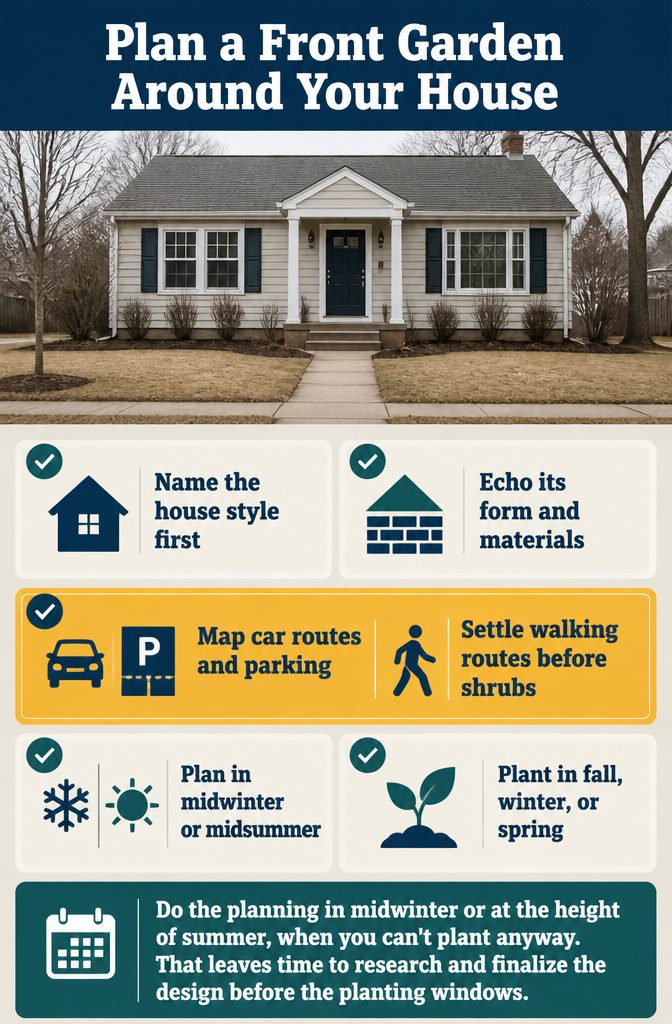
Look at the house before you look at plants. Its scale, form and materials tell you what the landscape should echo, so name the style first and let it narrow your choices.
Next, map how things move. Sketch where cars drive and park, and where people walk from the street or driveway to the door.
Settle those routes before you pick a single shrub, then add site features and planting that read as an extension of the house.
Do the planning in midwinter or at the height of summer, when you can’t plant anyway. That leaves time to research and finalize the design before the planting windows: fall, the onset of winter (before and after freezes), and spring.
Recommended Products

PREMIUM VARIETY: 24 perennial wildflowers seeds; High germination rate with non-GMO wild flower seeds; Creates stunning garden flowers with bold colors and textures; Perfect for butterfly garden seeds and pollinator seed mix

MEDICINAL HERB GARDEN SEED COLLECTION — A curated six-packet apothecary-inspired seed set featuring Echinacea, Wild Bergamot, Anise Hyssop, Hyssop, Marsh Mallow, and White Yarrow; plants with a long history in traditional herb gardens and herbalist plantings.

EXTRA-LARGE 1 OZ PACKET WITH 15,000+ SEEDS: Each SunHaven Seeds pouch contains over 15,000 fresh, Non-GMO seeds. This mix covers 100-150 square feet, which is enough to plant a generous cut-flower garden with long-lasting color throughout the season
Read Your Site Conditions
A yard’s look has little to do with budget.
No matter how much or little money you put into your front yard, dying plants, patchy grass, and general disorganization will make the space look cheap.
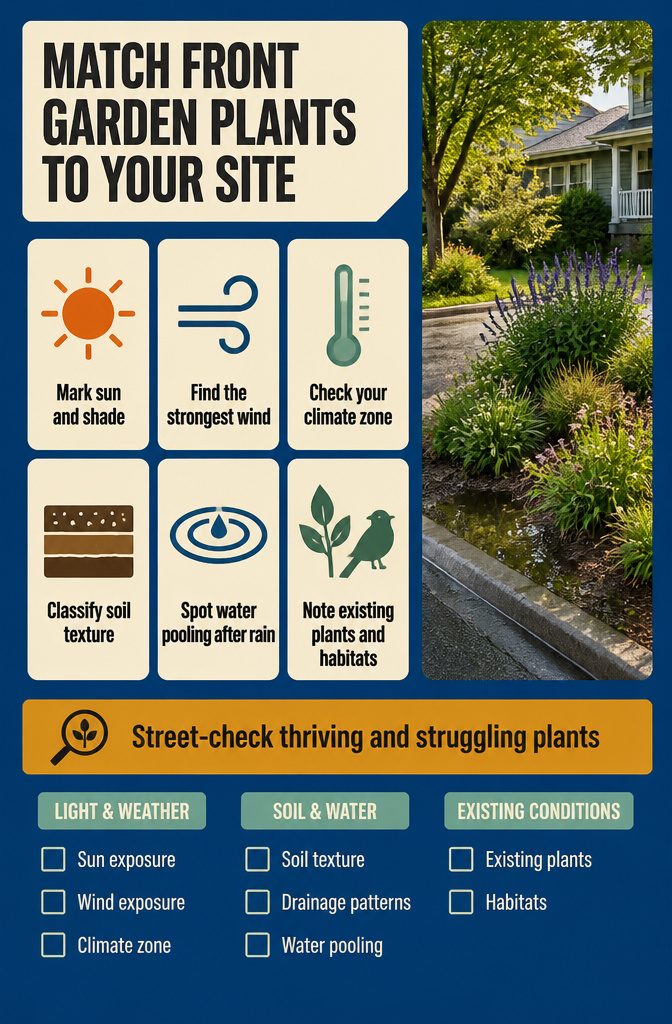
Plants matched to your site avoid all three problems. Note these first:
- Sun exposure: which beds get full light and which stay shaded.
- Wind: where it hits the yard hardest.
- Climate: your zone’s heat and cold.
- Soil: heavy, sandy, or in between.
- Drainage patterns: where water pools after rain.
- Existing plants and habitats: what already lives there.
Then walk your street and note which plants are thriving and which are struggling. A healthy plant already in your yard has proven it suits the spot.
Recommended Products

RUBBER STEPPING STONES: Elevate your outdoor space with these lightweight simulated flagstone rubber pavers that offer the timeless beauty of real stone without the heavy lifting.

Weather-Resistant & Built to Last: Crafted from durable PC+ABS resin, these stepping stones are heat-resistant, crack-proof in freezing temps, and impact-resistant. Designed for year-round outdoor use, they won’t fade, warp, or lose their shape—rain or shine.
Curb Appeal and Daily Life
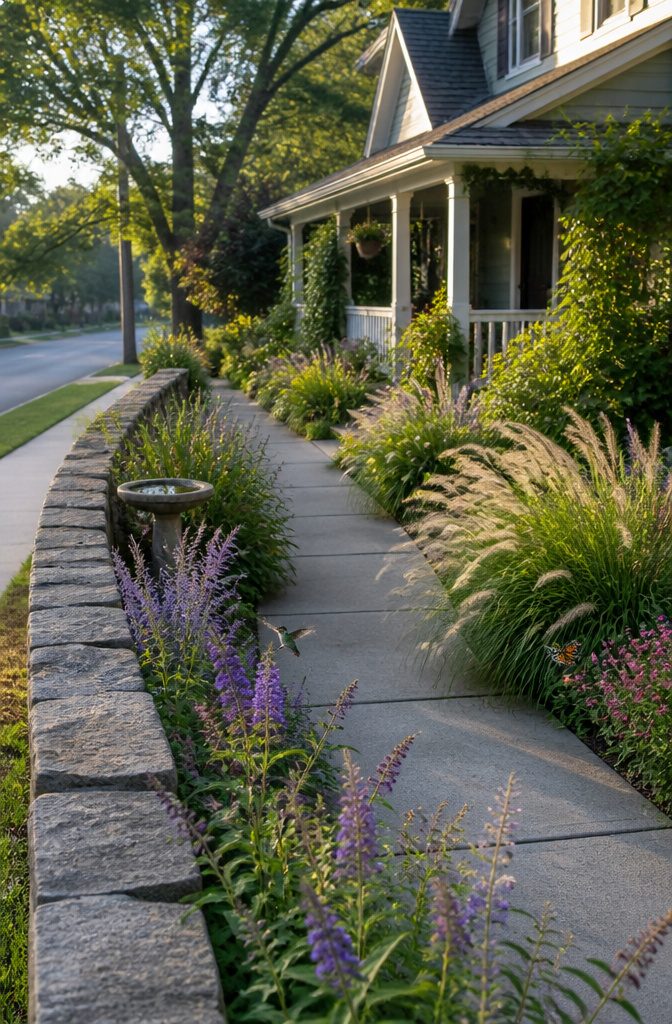
Your house starts at the street, not at the front door, so the front yard sets the tone for the whole property before anyone reaches the porch.
Austin designer Amy Hovis suggests putting at least 20% of your property’s worth into landscaping to protect resale value. That is a long-term figure, so spread it over several seasons rather than one big spend.
Hovis also points to how the yard feels on an ordinary Tuesday. Scent, texture, moving air and visiting wildlife all count.
Put something fragrant beside the walkway, something soft to brush past, grasses that sway in a breeze, and flowers that draw hummingbirds and butterflies. Coming home to that beats a tidy but silent lawn.
Frequently Asked Questions
How do I plan a front garden landscape?
Start with the house. Its scale, form and materials tell you what the landscape should echo, so name the style first.
Then sketch where cars drive and park and where people walk to the door, and settle those routes before choosing any shrub. Planting and site features come after, as an extension of the house.
What time of year is best to redo a front garden landscape?
Plan and design in midwinter or at the height of summer, when planting isn’t possible anyway.
That gives you time to research and finalize the design before the planting windows: fall, the onset of winter (before and after freezes), and spring.
How can I make my front garden landscape look more expensive?
Get rid of dying plants, patchy grass, and general disorganization, since these make a yard look cheap at any budget.
Choose plants that fit your sun, wind, climate, soil, and drainage. Walk your street to see which plants are thriving nearby, because those are proven for local conditions.