
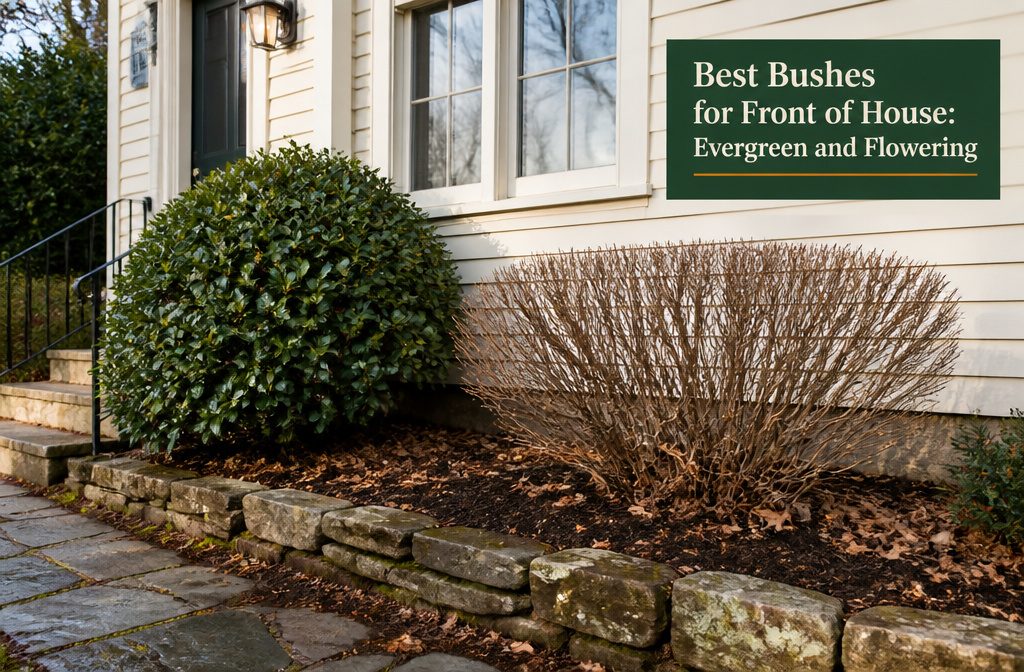
‘Little Princess’ spirea is the best pick for a bed under a window. It tops out at 30 inches, so it never blocks the glass, and its pink flower clusters open from late spring through summer.
It drops its leaves in fall, though. If you look out that window in January, build the bed around evergreens instead.
1. Dwarf Korean Lilac
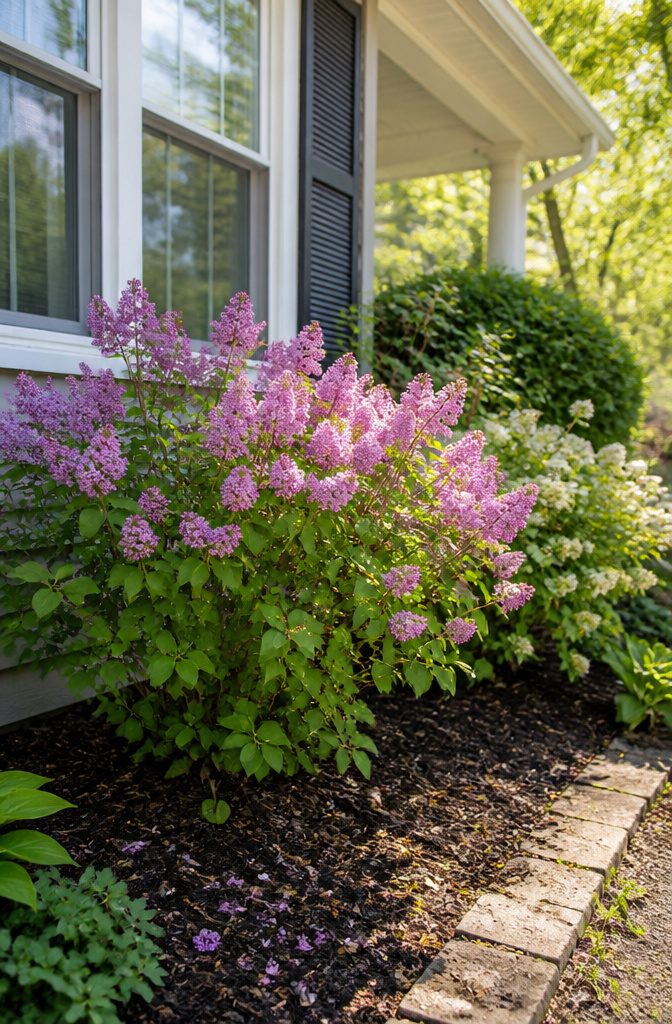
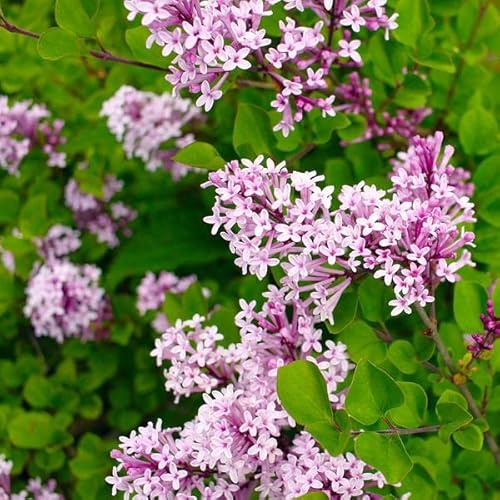
Dwarf Korean lilac (Syringa meyeri ‘Palibin’) covers itself in sweet-smelling pink to purple flowers in late spring.
In full sun it stays at 4 to 5 feet tall without pruning, which keeps it below most front windows and makes it a good compact flowering hedge.
Its leaves resist the powdery mildew that troubles traditional lilacs, deer tend to leave it alone, and it is hardy to -30°F.
Skip it if you want color through the whole season.
The flowers are a late-spring show, and the rest of the year you get plain green foliage. If you plant it, put a longer-blooming shrub beside it to carry the summer.
Recommended Products

Poprocks Petite Spirea is a lovely compact deciduous flowering shrub prized for its clusters of candy-pink button flowers that pop against rich green foliage. Its popcorn-like, bubblegum-colored blooms put on a show throughout the summer and into the fall.

Live Snowmound Spirea growing in a quart (Qt) nursery pot, approximately 5–8 inches tall. This compact starter shrub is carefully grown and ready to continue establishing in your landscape or garden.
We cannot ship our plants to the following states: AK, AZ, CA, CO, HI, ID, MT, NM, NV, OR, UT, WA, or WY. All orders to these states will be automatically cancelled.
2. Little Lime Hydrangea
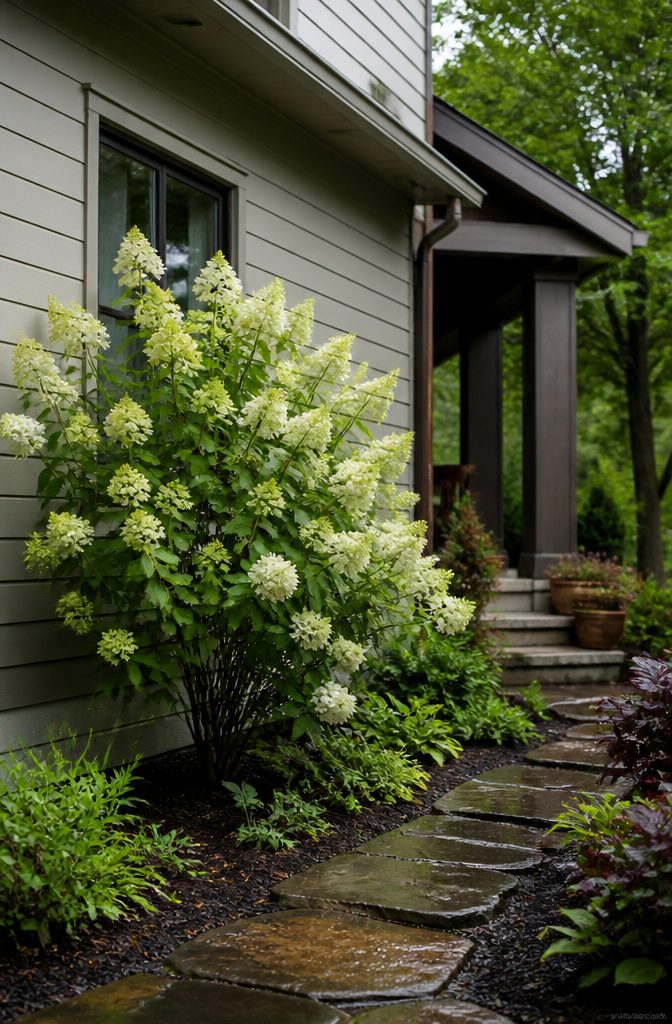
Little Lime hydrangea carries panicle-shaped clusters of light green to white blooms through summer and grows in full sun to part shade.
It is hardy to -30°F. The flowers form on stems that grow in spring, so winter can’t freeze out the buds the way it often does on mophead hydrangeas.
Give it moist soil. It is multi-stemmed and easy to care for beyond that.
Height is the limit. Little Lime reaches 5 feet, which will cover the glass under a low window.
If your planting bed is shallow or sits beneath short windows, skip it and pick a lower shrub. Along a blank wall or beside a taller entry, it suits the spot.
Recommended Products

This Plant Does NOT Ship to AZ, CA, HI, ID, MT, NV, OR, PR, UT & WA!!

3. Summersweet and Sweetspire
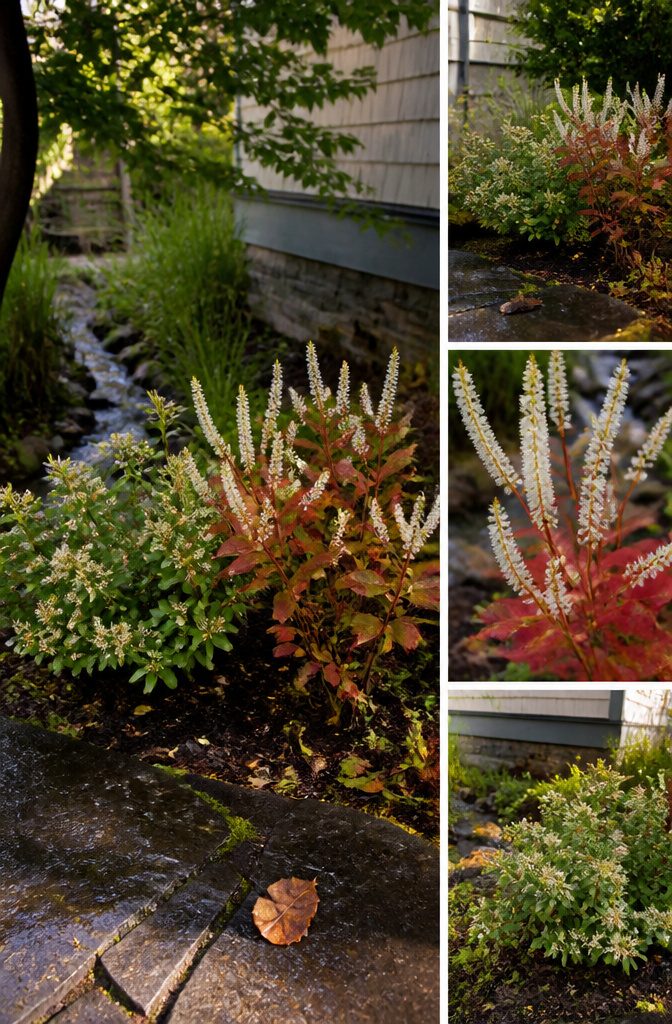
Both shrubs tolerate wet soil, and both are cultivars of North American natives. ‘Hummingbird’ summersweet grows slowly into a mounded shape that tops out at 4 feet.
Its creamy white flowers draw bees and butterflies, and it is hardy to -30°F. It accepts full sun to heavy shade, but under 4 hours of sun a day it blooms less.
‘Little Henry’ sweetspire gives you more to look at across the year: white spires from early June to late July, red-hued stems, and orange or red fall color.
It grows in full sun to partial shade and likes damp soil, as long as it never goes bone dry. Its -20°F rating is the weaker of the two, so in the coldest zones summersweet is the safer pick.
Recommended Products

💐 Fake Hydrangea Flower for Outdoor: Each fake hydrangea flowers stem features 5 full, lush white 5.91‘’ hydrangea heads with soft, layered petals and vibrant green leaves, perfectly mimicking the natural beauty of fresh-cut hydrangeas. The realistic texture and full-bloom shape create a stunning, lifelike display that fools even the most discerning eye, adding elegant, permanent floral charm to any space.

💐 Fall fake Hydrangea Flower for Outdoor: Each fake hydrangea flowers stem features 5 full, lush white 5.91‘’ hydrangea heads with soft, layered petals and vibrant green leaves, perfectly mimicking the natural beauty of fresh-cut hydrangeas. The realistic texture and full-bloom shape create a stunning, lifelike display that fools even the most discerning eye, adding elegant, permanent floral charm to any space.

Lifelike Decor: Our artificial hydrangea tree is indistinguishable from real blooms even at a distance. The clustered flowers and textured branches blend seamlessly into any setting, making it perfect for home interiors, entryway displays, or garden landscapes.
4. Shrubby Cinquefoil
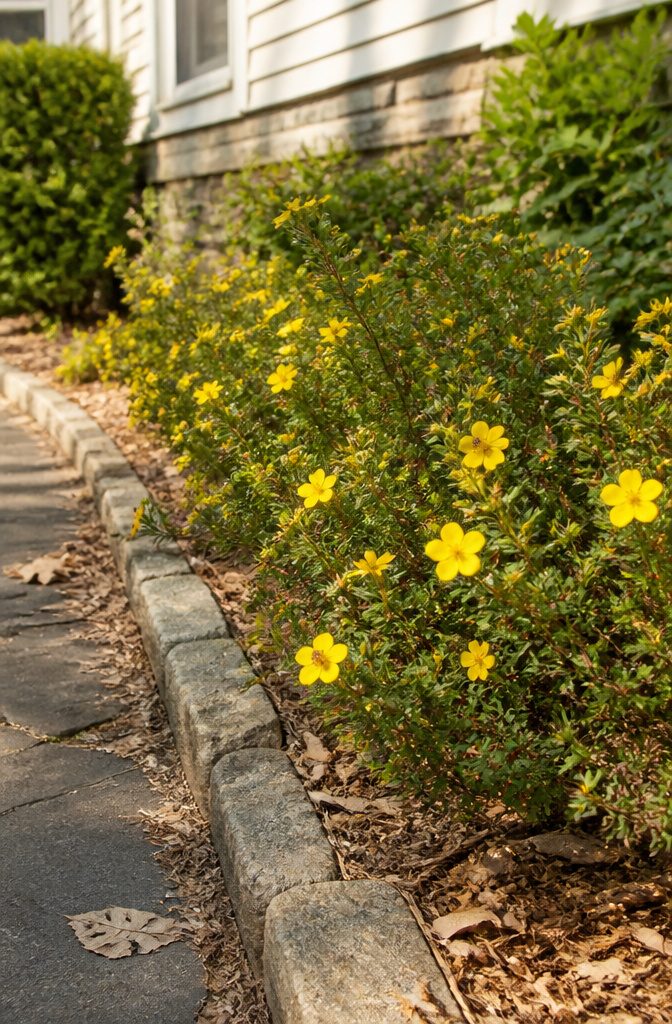
Shrubby cinquefoil stays under 4 feet tall and blooms in yellow, orange, pink, or white depending on the variety. It can flower from early summer through autumn, which is a longer run than most small front-yard shrubs manage.
Give it full sun to part shade. It is hardy to -30°F, attracts bees and butterflies, and deer tend to leave it alone, so it works as a low flowering hedge or a foundation plant.
Snip off the spent flowers and it often reblooms, sometimes staying in near-continual flower.
Skip it if you won’t do that. Left alone, it still blooms, but you lose the long season that makes it worth buying.
Recommended Products

VERSATILE PLANTING: Thrives in both full sun and partial shade conditions, making it adaptable to various garden locations

We cannot ship our plants to the following states: AK, AZ, CA, CO, HI, ID, MT, NM, NV, OR, UT, WA, or WY. All orders to these states will be automatically cancelled.
5. Spirea
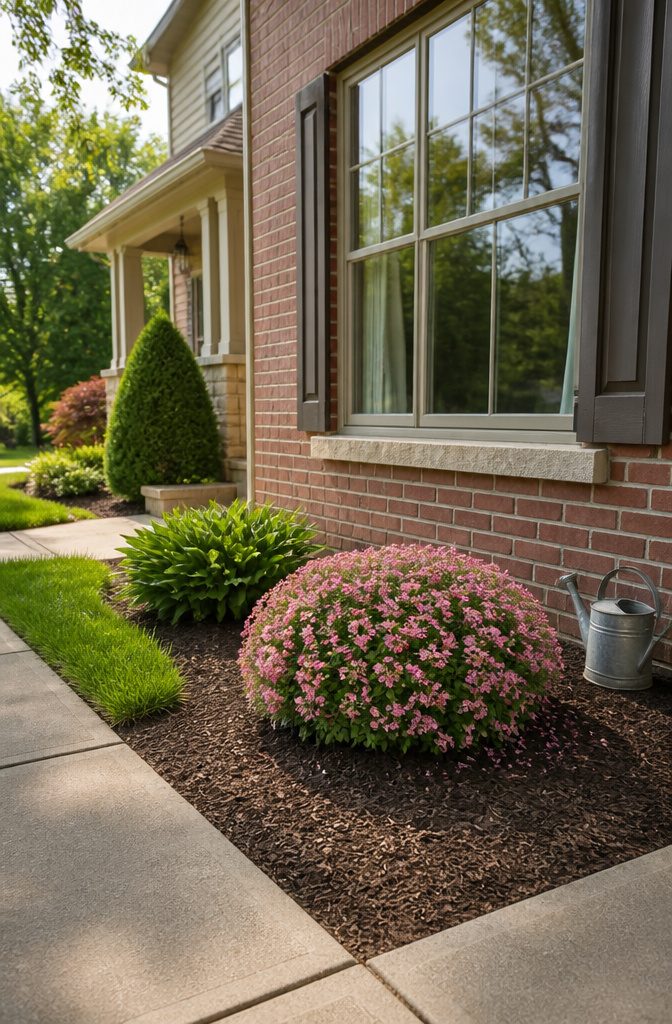
Many Japanese spirea varieties outgrow a front bed and need regular pruning to stay in bounds. ‘Little Princess’ avoids that problem.
It tops out at 30 inches, low enough to sit under a window without blocking the glass. The growth is dense and rounded, and flat-topped pink flower clusters open from late spring through summer.
Give it full sun and almost any soil. It tolerates a wide range of conditions, and deer tend to leave it alone.
Spirea in general is a quick way to fill empty spots.
It grows in poor soil, takes sun or partial shade, and becomes drought tolerant once settled. For small beds under windows, ‘Little Princess’ is the spirea to buy.
Recommended Products
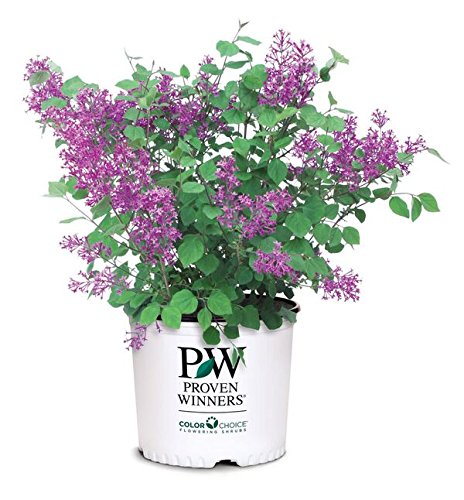
LIVE PLANT: Enjoy these dwarf lilac bush shrubs that are ready to plant and grown in our nursery by experienced growers. Thrives in well-drained soil and in partial shade to full sunlight. Plant will be dormant (no leaves) late fall through the winter months, this is normal. It will leaf out in spring.

Fragrant Blossoms: Experience the delightful scent of Early Lilac's abundant, pale lilac to pink flowers, blooming early to mid-spring before many other lilacs. Adaptable and Hardy: Thrive in various soil types and climate zones, as Korean Lilac tolerates cold winters and a wide range of pH levels, perfect for different landscapes.

For sale is one Common (Old Fashioned) Lilac shrub that is approximately 10-16" tall and shipped in a quart pot
6. Azaleas
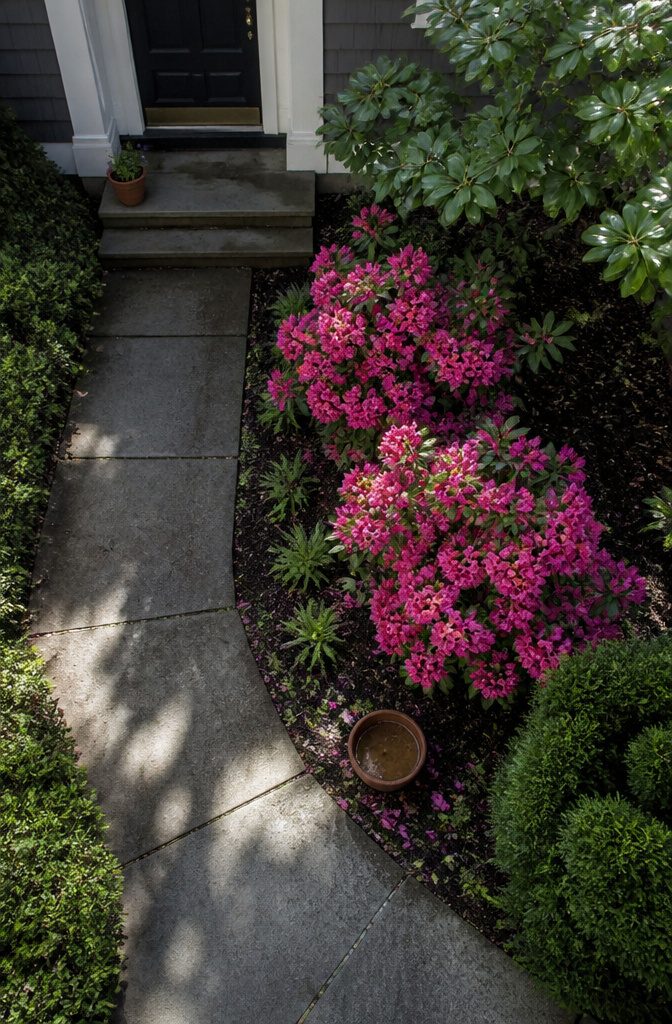
Azaleas bloom in spring with fragrant flowers in colors that run from bright pink to soft white. Pick the shade by what’s behind it: white reads cleanly against a dark wall, while bright pink makes the front yard announce itself.
You have two ways to use them. Planted as a mass along the foundation or front bed, they give one block of color that shows from the street.
Used as accents, a pair or even a single shrub beside the entrance pulls the eye to the door. The accent route needs fewer plants, which matters on a small budget.
Placement decides whether they thrive.
Give them morning sun and afternoon shade, which usually means an east-facing bed. They also want well-drained soil with plenty of organic matter, so mix compost into the planting hole.
Recommended Products

Realistic Hydrangea Blooms: These artificial hydrangeas feature lush, layered petals in rich purple and blue hues, paired with textured green leaves. They closely mimic the full, rounded shape of fresh hydrangeas, bringing a lifelike pop of color to any space without wilting.

【Real Touch & Washable – real touch hydrangea, real touch flowers】Latex-made, soft and moist like real flowers. Washable with water. Rose Red is deep and saturated – it won't look cheap or plasticky. Works for real touch hydrangea arrangements that need a bold accent.

【Faux Hydrangea Visual Presence】: Brings refined visual focus and lush greenery to patios, porch corners, balconies, or front yards with 10 large layered faux hydrangea flowers outdoor, 27.6" height and 23.6" width, silk leaves creating natural fullness and layered texture, filling the space with vibrant greenery, forming a balanced and inviting focal point, enhancing morning or evening light with realistic shadows, elevating the overall atmosphere for family and guests, providing an immersive premium visual experience, blending seamlessly into curated indoor or outdoor settings, letting the space convey refined, luxurious, and authentic botanical presence
7. Dwarf Mugo Pine
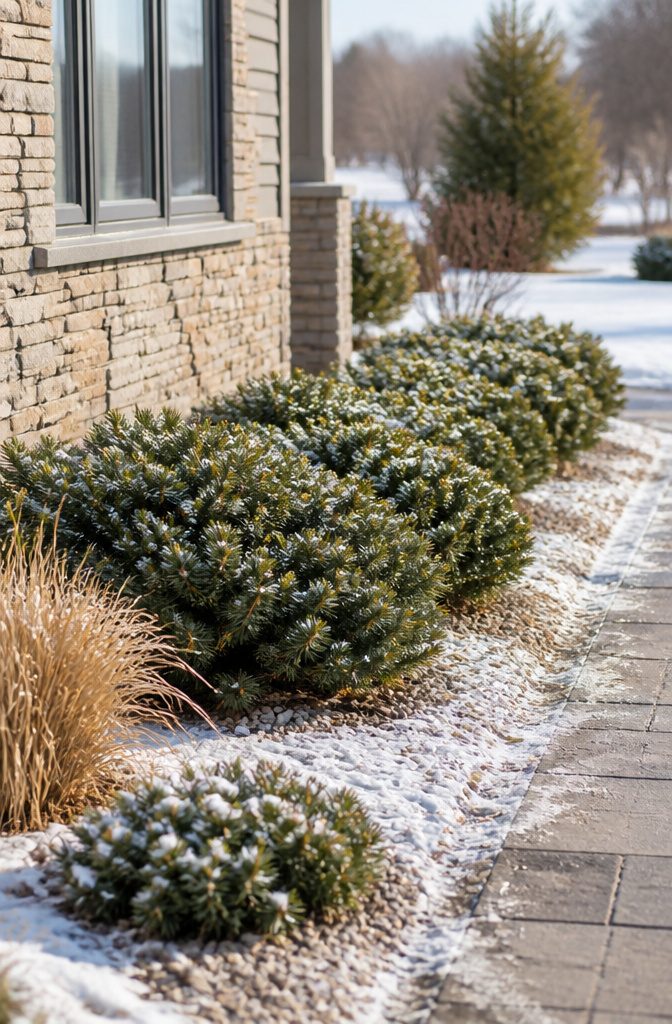
A plain mugo pine can reach 20 feet, so the cultivar decides everything. Skip any plant not labeled as a dwarf form, and leave tags that say only "mugo pine" on the shelf.
Three dwarfs suit a front bed. ‘Teeny’ tops out at 1 foot, ‘Paul’s Dwarf’ at 3 feet, and the dwarf mugo pine (P. mugo variety pumilio) at 5 feet.
Pumilio is the one to line up as a low hedge; ‘Teeny’ fits a spot beside a walkway.
All three stay evergreen and never flower, so they hold green through winter and need little care. They tolerate drought, resist deer, and survive cold down to -40°F. Plant them in full sun.
Recommended Products

We cannot ship our plants to the following states: AK, AZ, CA, CO, HI, ID, MT, NM, NV, OR, UT, WA, or WY. All orders to these states will be automatically cancelled. Double...
8. Dwarf Hinoki Cypress
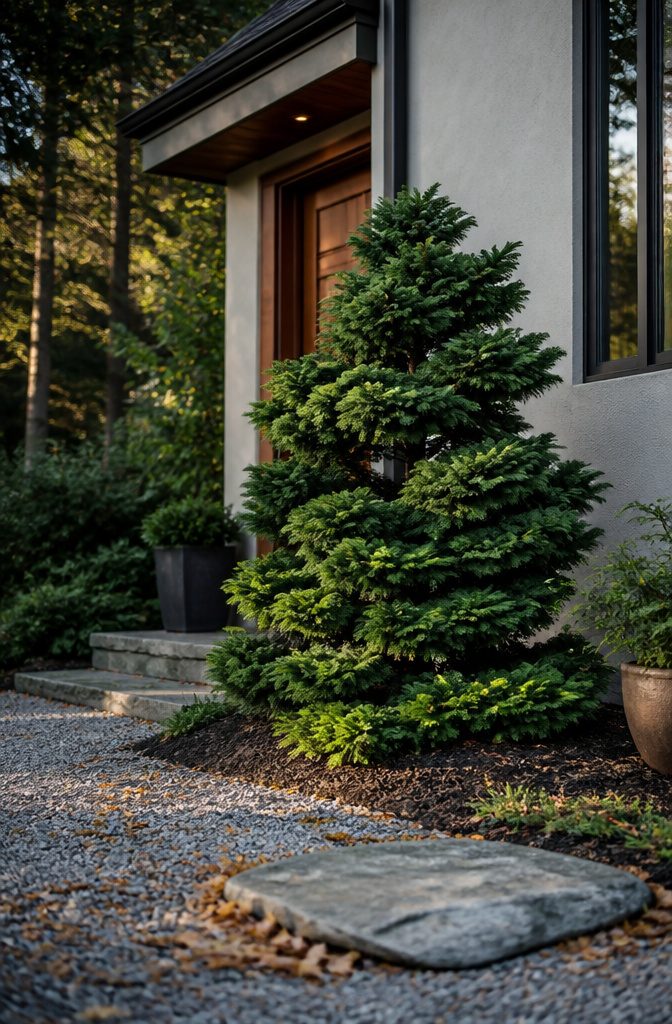
Deep green, fan-shaped foliage sets dwarf Hinoki cypress (Chamaecyparis obtusa ‘Nana Gracilis’) apart from other low evergreens at the front of a house.
Growth is very slow: it takes 10 to 15 years to reach its maximum height of 6 feet, so it stays in scale beside a door or under a window for years.
It is hardy to about -30°F. Give it full to partial sun and soil that drains, because waterlogged ground is what it dislikes. Check the tag for the dwarf form, since the straight species grows very tall.
Skip it if deer visit your yard. They favor it, and the one workaround is a layer of deer netting left on year-round.
Recommended Products

It is fully rooted in the soil and can be planted immediately upon arrival, weather permitting. Planting and how-to-care instructions will arrive with shipment.

The Syringa known for its hardy nature and stunning clusters of blooms, A hybrid that boasts the delightful charm and fragrance of lilacs with a unique twist. It is one of the most popular scents world wide. Lilacs can be pruned to form a small shrub or a tree.
9. Round Arborvitae
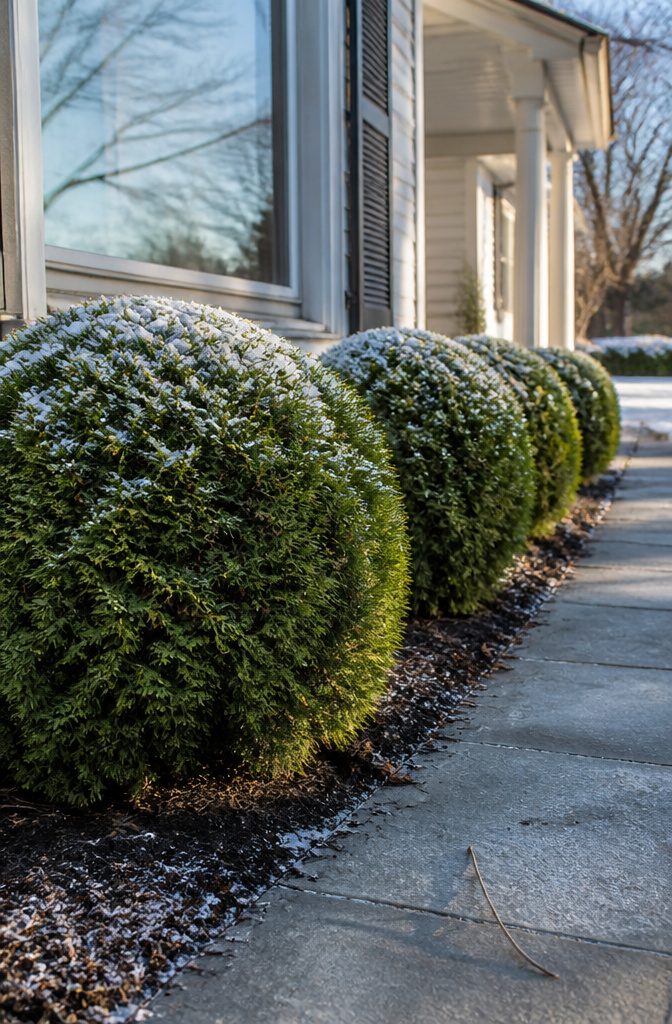
Round arborvitae gives you a tidy evergreen globe without a hedge trimmer.
Mr. Bowling Ball®, ‘Little Gem’, ‘Hetz Midget’ and ‘Globe’ are all rounded forms of Thuja occidentalis that stay compact on their own, so you skip the yearly shearing most foundation shrubs need.
Plan for a height of 3 feet, low enough to sit under a front window or repeat in a row along a walk.
Plant them in full sun to partial shade.
Most varieties are hardy to -40°F, and a dusting of snow on the green globes looks good in late winter. New growth comes in each spring.
Skip this shrub if deer visit your yard.
Recommended Products

【Faux Hydrangea Visual Presence】: Brings refined visual focus and lush greenery to patios, porch corners, balconies, or front yards with 10 large layered faux hydrangea flowers outdoor, 27.6" height and 23.6" width, silk leaves creating natural fullness and layered texture, filling the space with vibrant greenery, forming a balanced and inviting focal point, enhancing morning or evening light with realistic shadows, elevating the overall atmosphere for family and guests, providing an immersive premium visual experience, blending seamlessly into curated indoor or outdoor settings, letting the space convey refined, luxurious, and authentic botanical presence

💐 Fake Hydrangea Flower for Outdoor: Each fake hydrangea flowers stem features 5 full, lush white 5.91‘’ hydrangea heads with soft, layered petals and vibrant green leaves, perfectly mimicking the natural beauty of fresh-cut hydrangeas. The realistic texture and full-bloom shape create a stunning, lifelike display that fools even the most discerning eye, adding elegant, permanent floral charm to any space.

UV Protection: These fake hydrangeas outdoors feature a built-in UV protection layer that prevents fading and brittle petals. Their waterproof, anti-aging plastic stems resist sun, wind, and rain. Our blue hydrangea artificial flowers are perfect for outdoor party decor
10. Dwarf Spruces
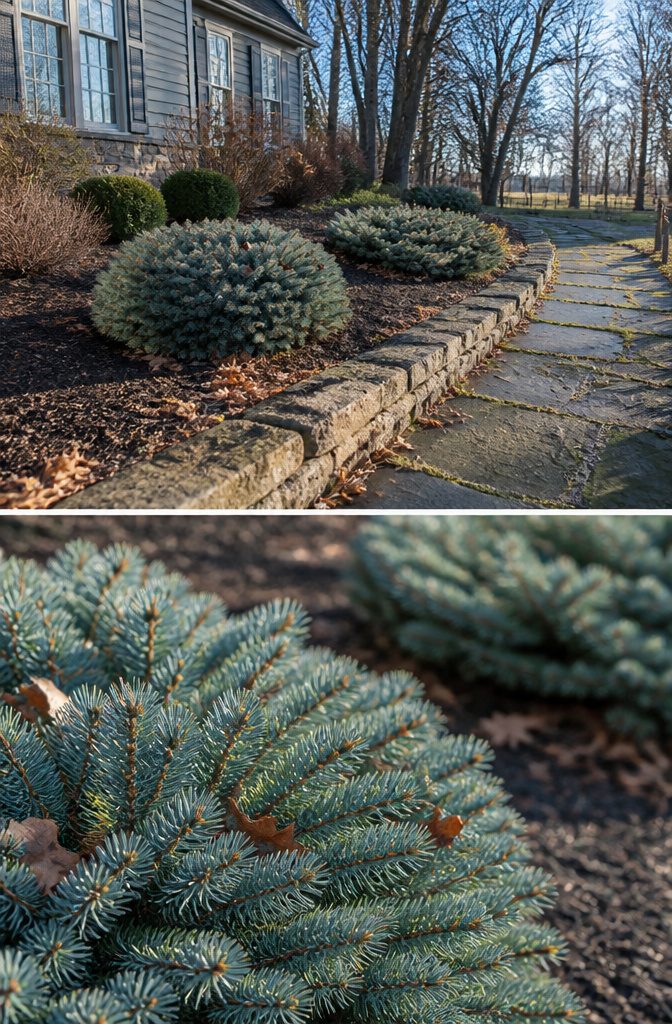
Dwarf globe blue spruce (Picea pungens ‘Globosa’) is a classic blue spruce shrunk to a rounded mound that reaches 4 feet tall and wide.
It is hardy to -40°F, drought tolerant, and deer resistant, which makes it the better pick for yards with deer. Very hot summers are its weak spot.
Bird’s nest spruce (Picea abies ‘Nidiformis’) has a flattened top that looks like a nest.
It is hardy to -30°F, prefers full sun, and resists deer too. The straight species is a Norway spruce that tops 150 feet, but this cultivar adds only a few feet over several decades.
Skip it if you want fast fill, because a shrub that slow leaves a gap in your bed for years.
11. Boxwood and Yaupon Holly
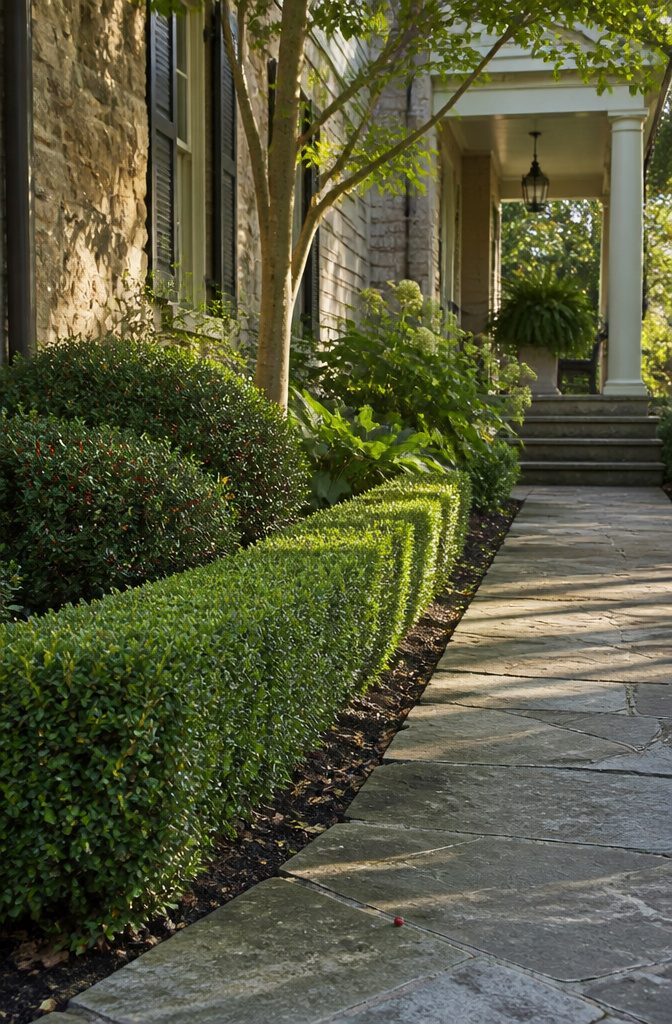
Boxwood is the pick for a clipped, formal front. It keeps its green leaves all year, works as a foundation planting or a hedge, and takes shaping easily.
Give it well-drained soil. It tolerates partial shade and needs little watering once established.
Dwarf yaupon holly is a compact native evergreen with a softer look. Tiny white flowers open in spring, and it adapts to most soils, though acidic soil suits it best.
It also resists pests and handles drought. Berries need a partner: red berries form only if you plant both male and female shrubs.
If you have room for one plant and want berries, skip yaupon. Without them, it is still a tidy, easy-care evergreen.
12. Wintercreeper and Cotoneaster
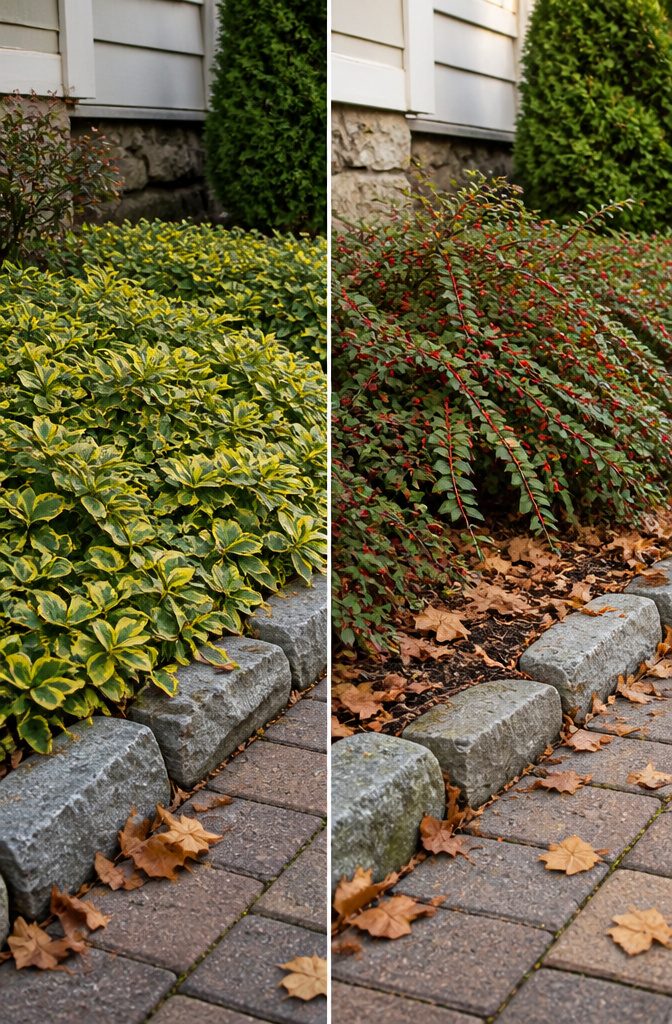
Emerald and Gold wintercreeper (Euonymus fortunei ‘Emerald n Gold’) has glossy evergreen leaves in golden yellow and rich green. It stays low enough that many gardeners run it as a groundcover.
It tolerates poor soil and shade, but the gold color is strongest in full to partial sun. It is classified invasive in some growing zones, so check your state’s invasive-plant database before buying, and skip it if it’s listed.
Rockspray cotoneaster (Cotoneaster horizontalis) is the safer pick if wintercreeper is off the table.
This broadleaf evergreen carries small pink to white flowers in spring, then clusters of orange or red berries in fall. Its arching stems catch fallen leaves, so autumn cleanup takes patience.
13. Juniper
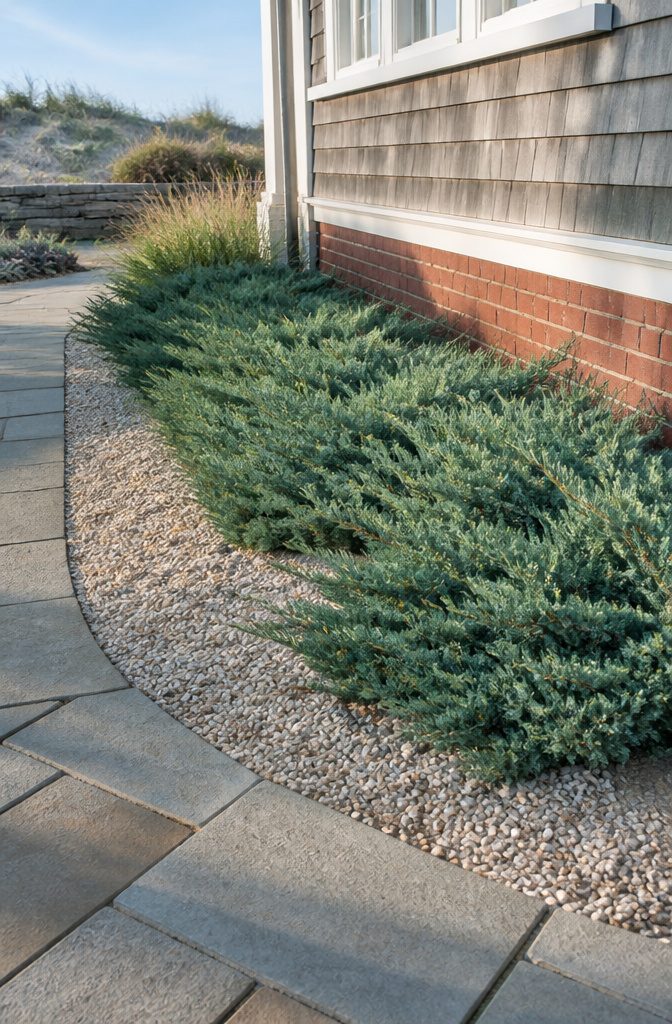
Juniper is the evergreen to choose when the bed is dry, the soil is poor, or the house sits near the coast and gets salty air.
It handles all three, and it adds fine texture that stays in place through winter.
The choice that matters is form.
Pick the form for the job before you pick the color. Low, spreading junipers work as ground cover along a walk or across a slope.
Taller ones grow into a privacy screen. A tall type planted where you wanted a low edge is the common mistake, so check the plant tag for the form before you buy.
Foliage comes in blue, green, or gold. Blue reads cool against brick, and gold stands out against a dark house.
Evergreen or Flowering Shrubs
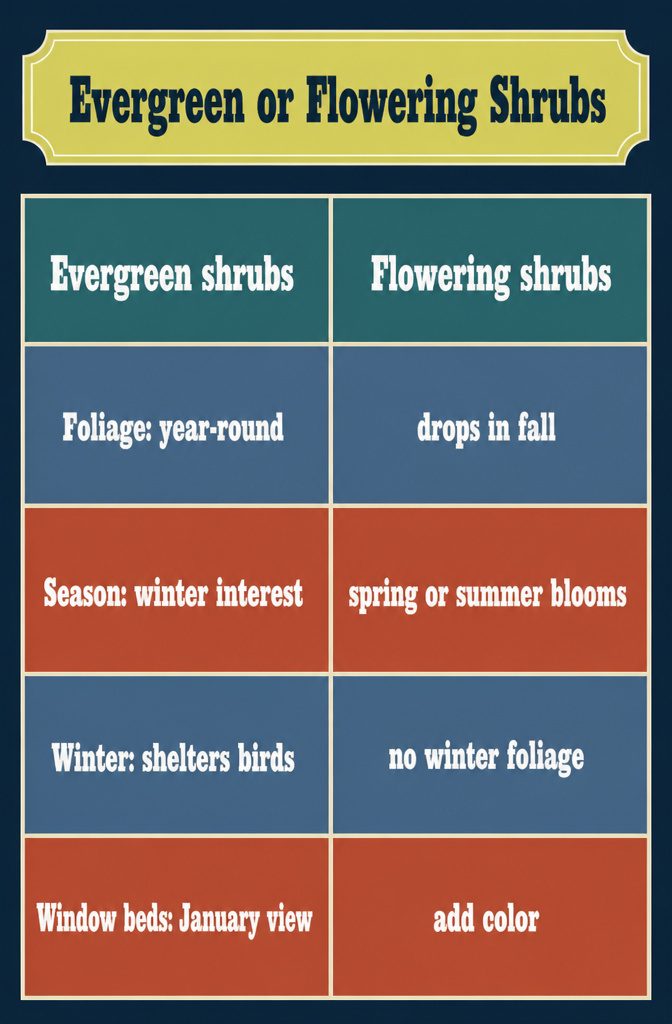
Shrubs give a front yard structure, fill bare spots, and hide what you’d rather not see, like an AC unit or uneven ground. Compact types need less pruning, so they stay in bounds without constant shearing.
Evergreens keep their foliage all year, add interesting bark, and shelter birds through winter. Deciduous flowering shrubs drop their leaves in fall and make up for it with blooms in spring or summer.
If the bed sits under a window you’ll look out of in January, build it around evergreens, then add flowering shrubs for color. Low-growing choices split into 6 flowering and 10 evergreen options.
Site, Soil and Mulch
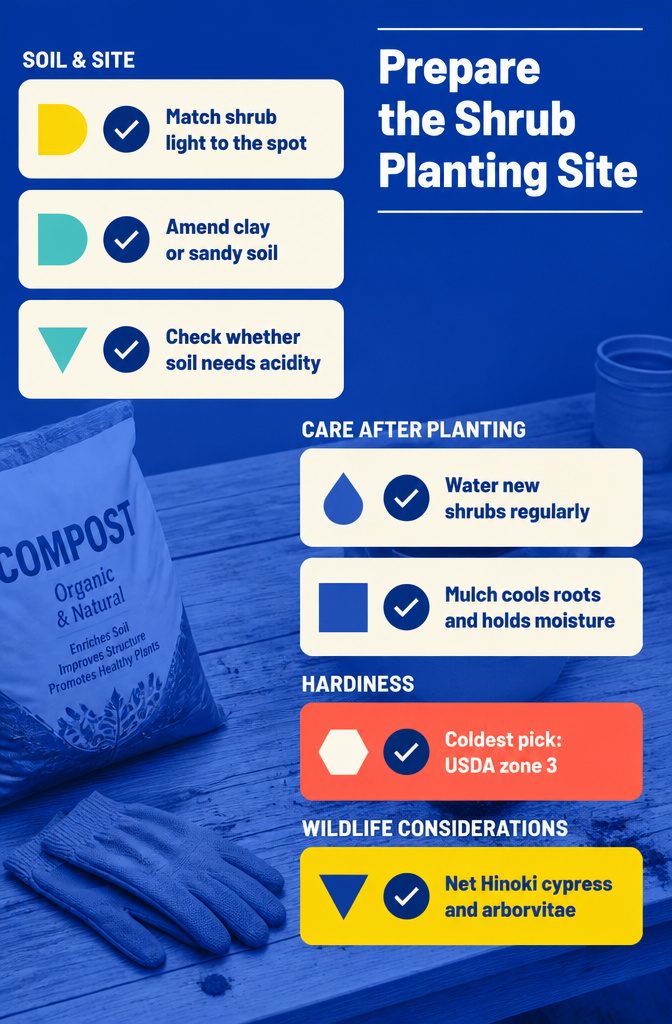
Check these before you buy; the plant tag answers most of them:
- Light: A full-sun shrub won’t do well in partial shade, so match the tag to the spot.
- Soil: Work compost into heavy clay or sandy dirt before planting. Some shrubs want acidic soil, while others aren’t picky.
- Water: Give new shrubs regular water at first. Many become drought tolerant with time.
- Mulch: A layer keeps roots cool, holds moisture, and cuts down on weeds.
- Hardiness: The coldest zone among these picks is USDA zone 3.
- Deer: Some choices resist deer. Hinoki cypress and arborvitae do not, so plan on netting if deer visit your street.
Frequently Asked Questions
What plants should I put in front of my house?
Match the shrub to your light and soil, then decide between evergreen and flowering. Dwarf mugo pine, dwarf Hinoki cypress, round arborvitae, boxwood, and juniper keep their foliage all year.
Dwarf Korean lilac, ‘Little Princess’ spirea, azaleas, shrubby cinquefoil, and Little Lime hydrangea supply seasonal blooms. Use evergreens as the backbone of any bed you see in winter, and add flowering shrubs for color.
What shrubs should I avoid planting in my yard?
Avoid any mugo pine that isn’t labeled as a dwarf form, because a plain mugo pine can reach 20 feet.
Skip Emerald and Gold wintercreeper if your state lists it as invasive, and skip dwarf Hinoki cypress and round arborvitae if deer visit your yard.
Also check mature height before planting under a window: Little Lime hydrangea reaches 5 feet and will cover low glass.