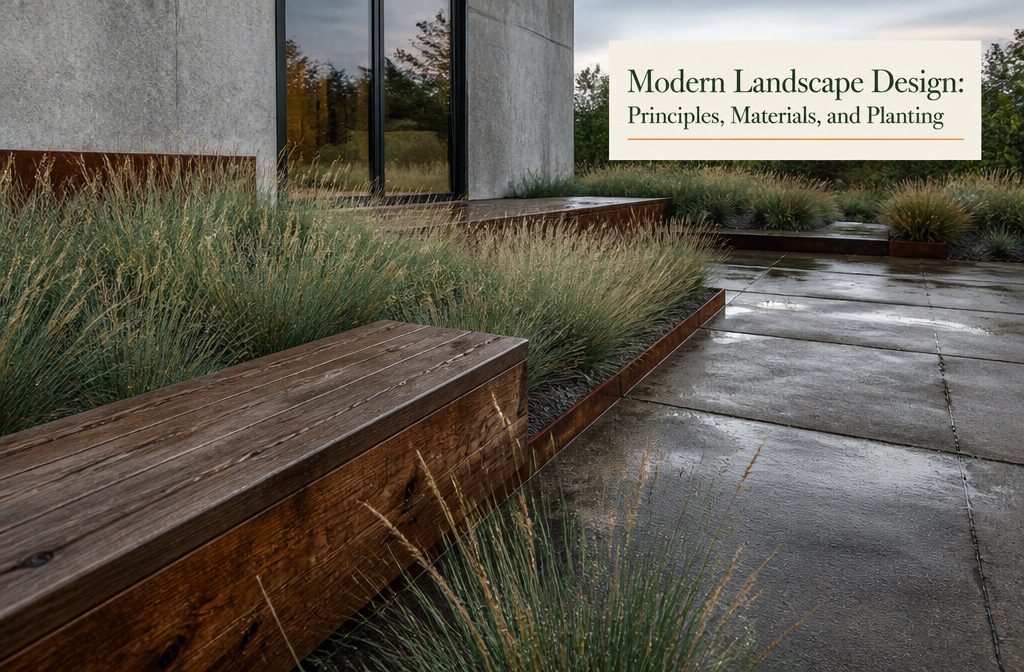
A modern yard is built from straight edges, a few hard materials, and repeated plants, with every element given a job.
It works only if people use it: a sharp patio nobody sits on fails the style’s own test. Typical pairings are concrete and corten steel warmed by ipe, planted with drifts of Bouteloua gracilis.
What Modern Design Means
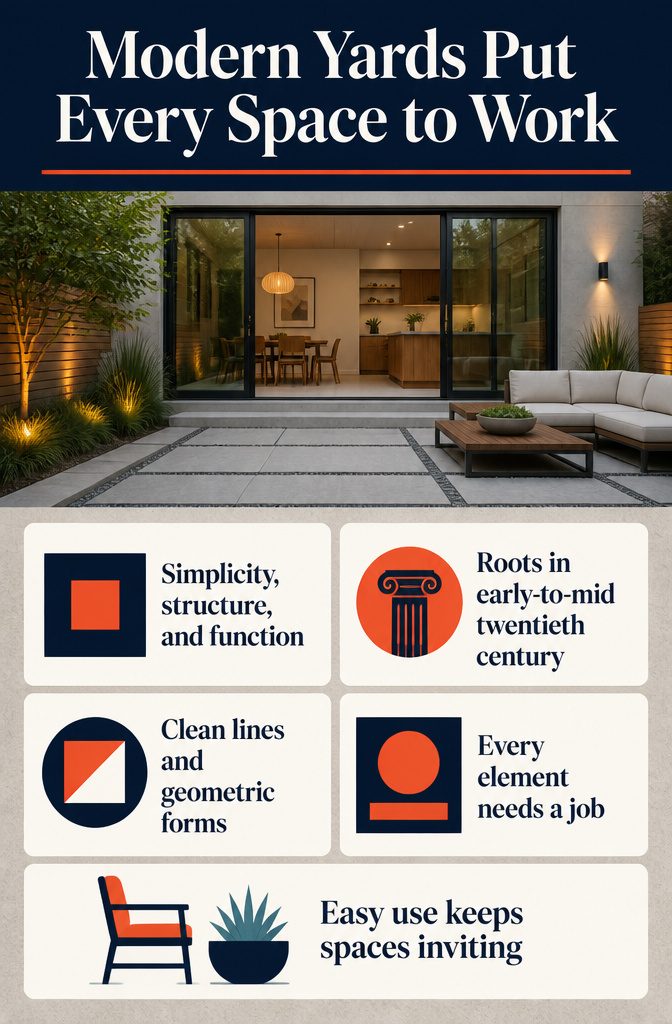
Modern landscape design rests on simplicity, structure, and function.
It peaked in the early to mid-twentieth century and laid the groundwork for the mid-century modernism of the 1950s and 60s, so the two share the same aims: clean lines, geometric forms, and a restrained plant palette.
Think of the yard as outdoor rooms that continue the house.
A patio or path that meets an interior door blurs the line between inside and out, and every element should have a job. Anything purposeless counts as clutter.
That does not make the yard stark.
A modern yard stays inviting when its spaces are easy to use and easy to maintain. A patio that looks sharp but never gets used has failed the style’s own test.
Recommended Products

EASYFLEX DECORATIVE NO-DIG LANDSCAPE EDGING: Get a beautifully landscaped yard without all the work of a dig-in lawn edging; simple installation without trenches or shovels; color may vary due to the unique manufacturing process.
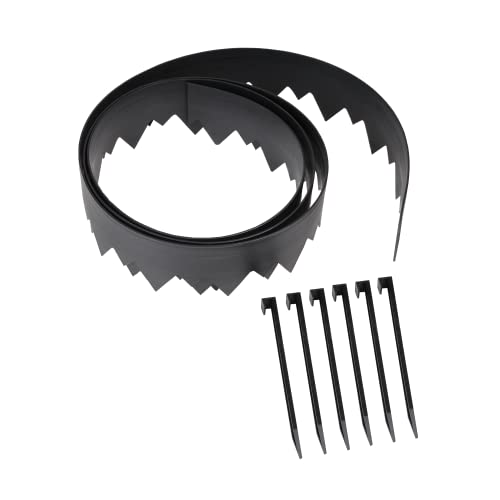
Pound‑In Lawn Edging – Create clean, defined garden borders without hiring a professional; installs with minimal ground preparation.
Lines, Geometry, and Balance
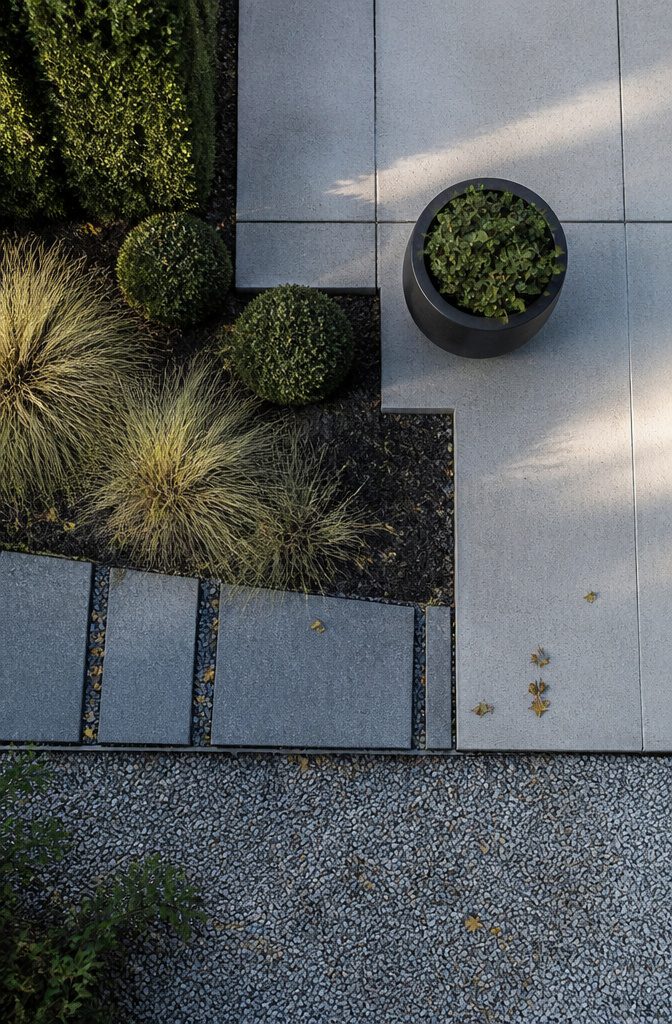
Straight edges do most of the organizing in a modern yard.
Patios, beds, and paths with crisp, straight sides give the eye clear lines to follow, where traditional design leans on curving beds and loose borders. Nature rarely supplies a straight line, so every one you draw reads as deliberate.
Formal planting follows the same logic: clipped hedges and matched pairs of shrubs set in geometric, symmetrical patterns.
Symmetry is optional, though. A deliberately off-center layout, such as one large planter balanced by a low mass of grasses, still reads as harmony.
Restraint holds either version together. Pick a few quality elements over many competing features; a second focal point beside the first weakens both and brings back the clutter this style avoids.
Recommended Products

15.7" Large Paving Stones Covers More Area: our paver molds for concrete size is 15.7" x 15.7" x 2"; Each molds of concrete produces a realistic parquet style pattern, covering up to 0.15 sq; One mold creates a professional looking pathway pattern faster than traditional small stepping stones

🌳【Oversized Paver】 The oversized concrete brick mold is 23.6"x19.7"x1.8" in size, and the inside is composed of 10 rectangles of different sizes, which can pave a unique path.
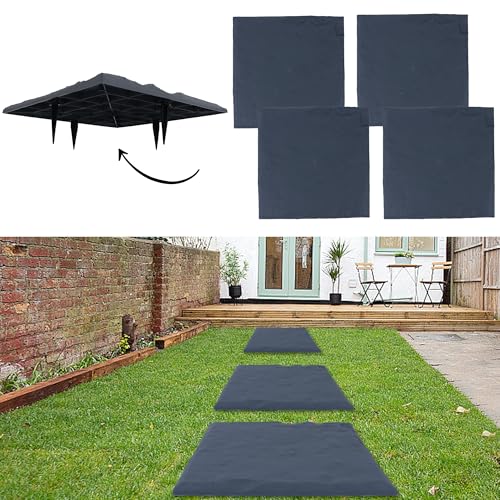
Durable & Easy: These 15.5" stepping stones are made of weatherproof resin, so they can withstand rain, hail, UV rays, and cold temperatures. They also feature four ground stakes for secure installation, making them perfect for patios, walkways, and gardens.
Hardscape Materials and Finishes
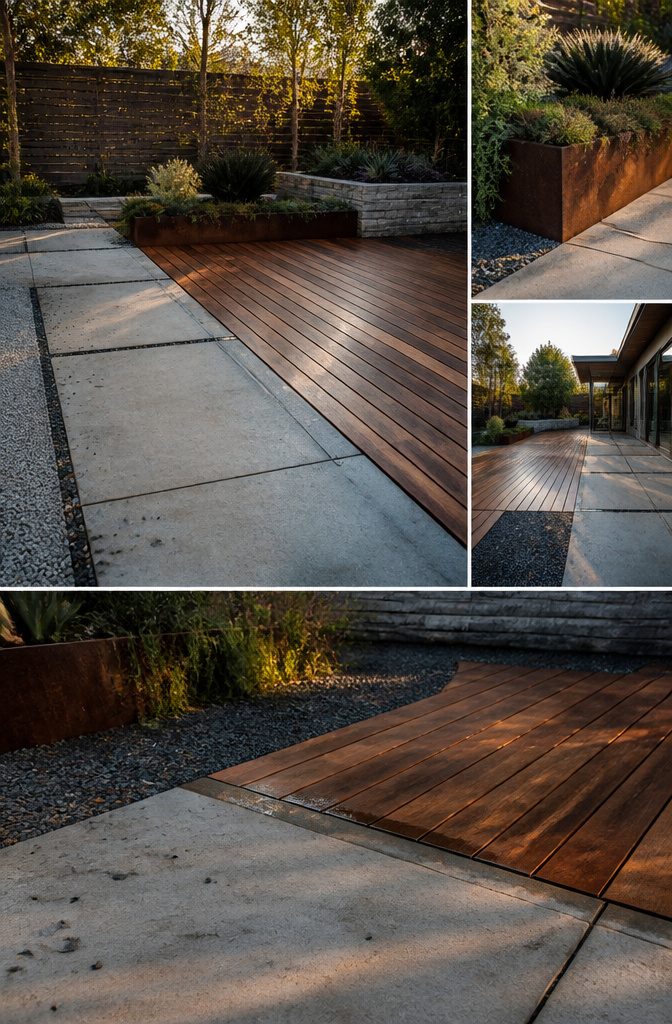
Keep the base cool and let one material carry the warmth. Concrete, stone, and gray gravel make the surfaces, and ipe or composite wood adds warmth against concrete and steel.
| Material | Use it for | Finish or tone |
|---|---|---|
| Concrete | Patios, stepping stones, walls, planters | Smooth or polished; large-format pavers |
| Corten steel | Planters, edging, walls, sculpture | n/a |
| Gravel | Beds | Gray or black |
| Ipe or composite | Decks, fences, screens | Warm |
| Stone | Hardscape surfaces | Bluestone, slate, limestone in neutrals |
Decomposed granite and mulch make quiet fill beside pavers.
Cool grays hold the palette together. Modern design adds warm accent colors; contemporary stays monochrome.
Recommended Products

Durable Corten Steel Construction: Crafted from heavy-duty Corten steel, this landscape edging naturally develops a rust-like patina over time, ensuring long-lasting durability while blending beautifully into outdoor spaces.

𝐏𝐫𝐞𝐦𝐢𝐮𝐦 𝐂𝐨𝐫𝐭𝐞𝐧 𝐒𝐭𝐞𝐞𝐥 𝐂𝐨𝐧𝐬𝐭𝐫𝐮𝐜𝐭𝐢𝐨𝐧: Made from high-quality Corten weathering steel, this 33ft landscape edging (10-pack) offers exceptional strength and durability. Designed to naturally form a stable rust-like patina over time, it provides long-lasting protection without the need for painting or maintenance.

𝐏𝐫𝐨𝐟𝐞𝐬𝐬𝐢𝐨𝐧𝐚𝐥-𝐆𝐫𝐚𝐝𝐞 𝐂𝐨𝐫-𝐓𝐞𝐧 𝐒𝐭𝐞𝐞𝐥 𝐄𝐝𝐠𝐢𝐧𝐠: Create sharp, long-lasting garden borders with our 6-pack of 8-inch tall Cor-Ten steel edging. Each piece measures 4 inches above ground and 4 inches below ground, making it ideal for flower beds and vegetable patches. This flexible metal border helps prevent grass overgrowth and keeps landscaping clean and organized.
Restrained, Repeated Planting
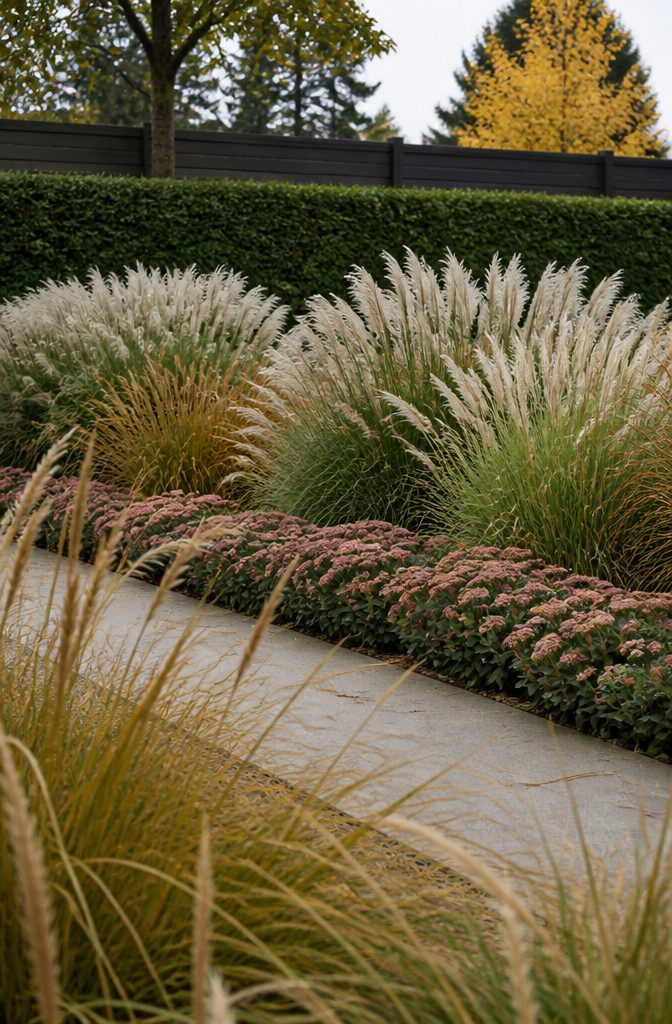
Modern planting drops the mix of colorful varieties and repeats a few plants in masses, so the yard reads clearly from the street and from your window.
Evergreens give it structure: Buxus sempervirens NewGen, Ilex crenata, Magnolia grandiflora ‘Little Gem’ and Juniperus chinensis ‘Spartan’.
Texture comes from Miscanthus sinensis (Maiden Grass), Yucca filamentosa, Liriope muscari and Sedum ‘Autumn Joy’. That list comes from North Carolina, so check each plant against your own zone before buying.
For a grassland look, plant Bouteloua gracilis, Schizachyrium scoparium and Panicum virgatum in drifts, one species per drift.
These natives need the least help from you. Swap thirsty lawn for moss, clover mixes or ornamental grasses.
Recommended Products

Product Specifications: MIGHTY109 Granite Gravel 3/4" Size, 40 LBS per Bag

Durable Material: This 40 lb. bag contains stabilized decomposed granite, a sturdy and long-lasting material ideal for outdoor projects.
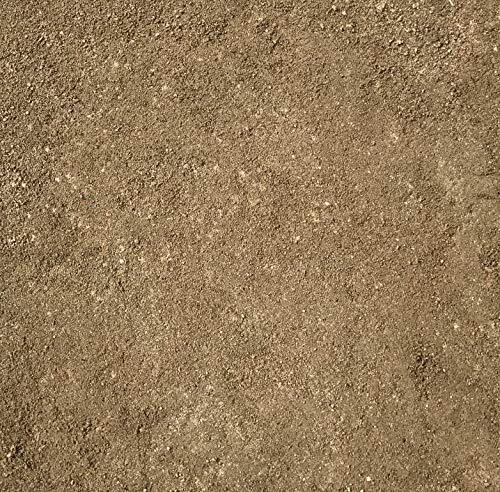
40 Lbs of Decomposed Granite (Gold Fines). Decomposed granite or gold fines, makes a great medium for natural pathways and patios due to it's ability to compact. Once installed, it becomes a firm surface that is suitable to walk and even drive on. Great addition to any garden or landscape.
Water, Fire, and Lighting
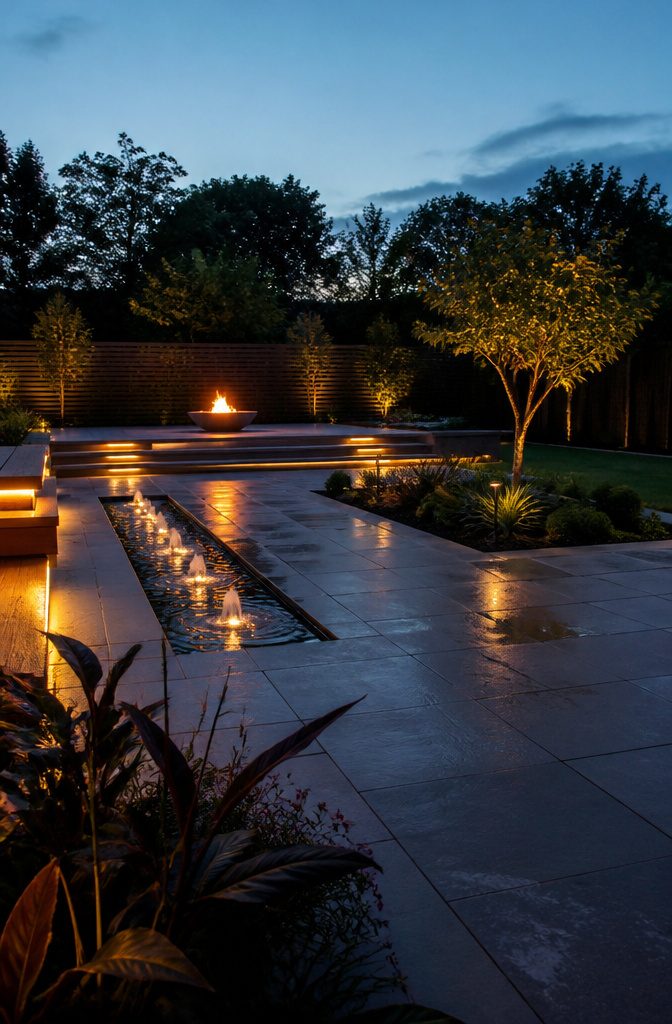
Subtle water suits a modern yard: a linear bubbler or a shallow reflecting pool will fit better than a tiered fountain. A minimalist fire pit adds warmth and extends how many evenings you can use the patio.
Keep each feature in proportion to its space and line it up with the paving or bed edges around it, so water and fire support the layout instead of competing with it.
Lighting does the same job after dark. Aim uplighting at a single specimen plant, set recessed step lights into risers, and run low-level path lights along walkways.
Choose LED fixtures with warm color temperatures. They show off the architectural lines and mark safe routes while keeping the nighttime look clean.
Recommended Products


Can be bent freely: 1 vase/unit, comprised of 5 individual flower tubes hinged together, they can be bent and contorted into various lines, curves and clusters. Put some flowers in it to match your decor to make it looks beautiful.

STRIKING HEXAGON SHAPE – Six-sided metal bed creates a modern focal point for front yards, courtyards or patio corners.
Plan the Site First
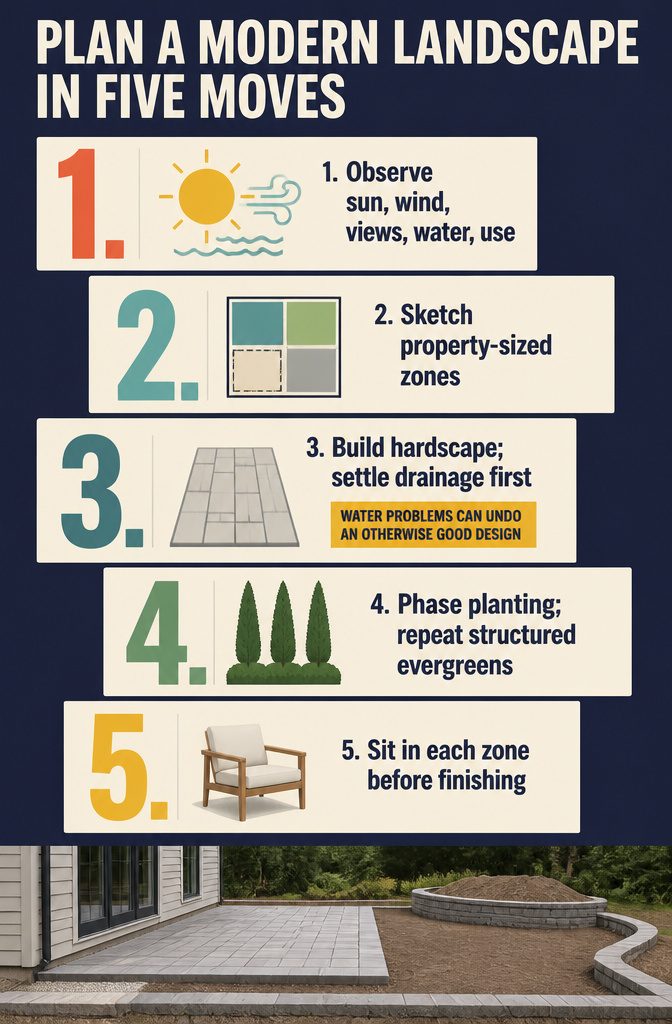
- Note where the sun, wind, and views fall, where water collects, and how you want to use each area.
- Sketch simple zones on paper, sized to your property. Oversized elements are the usual scale mistake.
- Build the hardscape first. Alignment, spacing, grading, and material transitions all need precision, and water problems can undo an otherwise good design, so settle drainage before anything is laid.
- Phase the planting over seasons to spread the cost. Repeat a few structured evergreens instead of mixing many varieties. Durable hardscape and evergreens also cut seasonal rework.
- Sit in each zone before calling it done. A sharp-looking space that is uncomfortable has missed.
On a traditional house, use modern elements selectively, such as simplified beds or one new patio.
Recommended Products
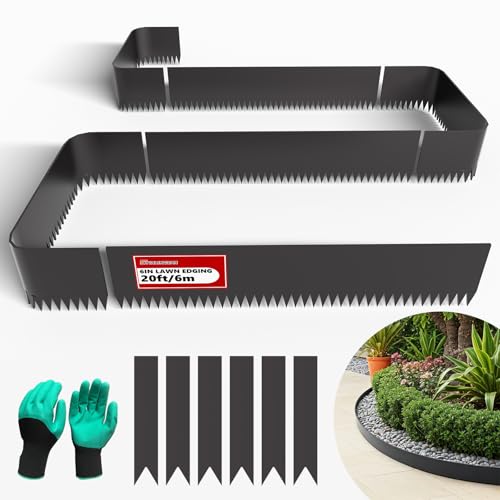
Rust-Resistant Galvanized Steel: Crafted from durable galvanized steel, our lawn edging is built to withstand various weather conditions and resist rust, ensuring long-lasting performance. This material maintains its aesthetic appeal over time, offering a reliable and low-maintenance solution for outdoor spaces.

Do it once, do it Right! Edge Right is the ultimate hammer-in edging. Instead of cheap plastics it's comprised of heavy duty 16-gauge COR-TEN steel.

SHIPMENT CONTAINS: One 5 inch x 40 foot brown flexible landscape edging coil with 10 matching stakes for securing garden borders
Modern Versus Contemporary
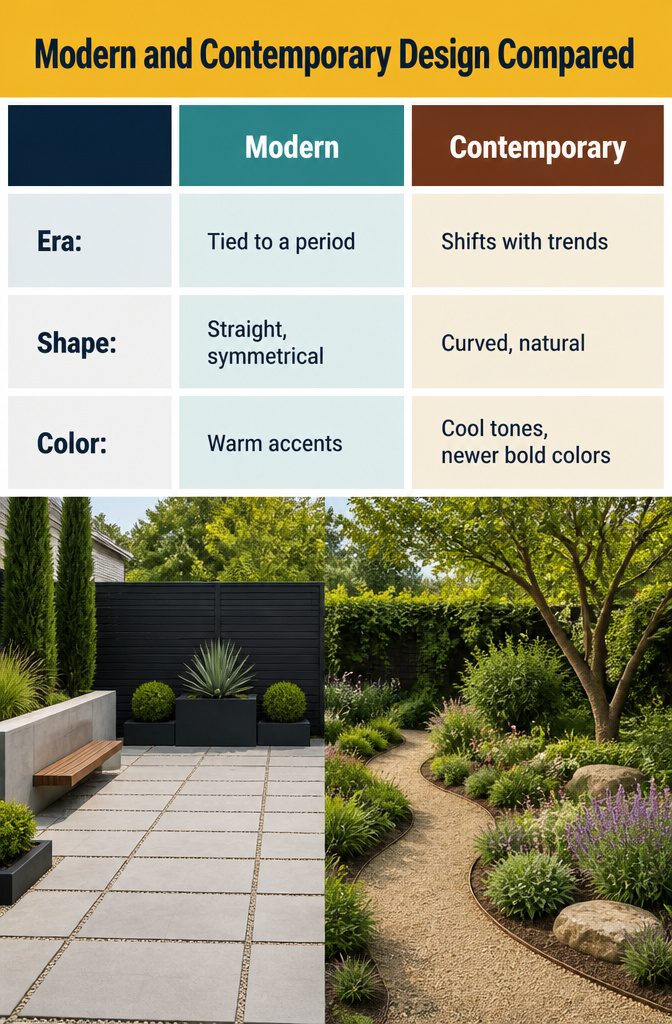
Modern design is tied to a historical period, the 1960s, with straight lines, symmetry, manufactured materials, and warm accent colors. Contemporary has no fixed date and keeps changing, borrowing from Modernism and other styles.
Labels get blurry, because some designers use "contemporary" for any reimagining of older styles, from traditional to desert. Ask for photos instead of relying on the word.
| Modern | Contemporary | |
|---|---|---|
| Era | Tied to a period | Shifts with current trends |
| Shape | Straight lines, symmetry | More curves and natural elements |
| Color | Warm accents | Black, white, and gray, with newer bold color and cooler blues, purples, and greens |
Recommended Products

🌲【Reusable】The concrete moulds is made of polypropylene.Very sturdy and can be reused.

Weather-Resistant & Built to Last: Crafted from durable PC+ABS resin, these stepping stones are heat-resistant, crack-proof in freezing temps, and impact-resistant. Designed for year-round outdoor use, they won’t fade, warp, or lose their shape—rain or shine.

Authentic Antique Pavement Style: This reusable path maker mold features an antique colored bricks design that enhances your outdoor spaces with a unique historical and cultural charm, ideal for creating distinctive garden paths and courtyards
Sustainability and Water Use
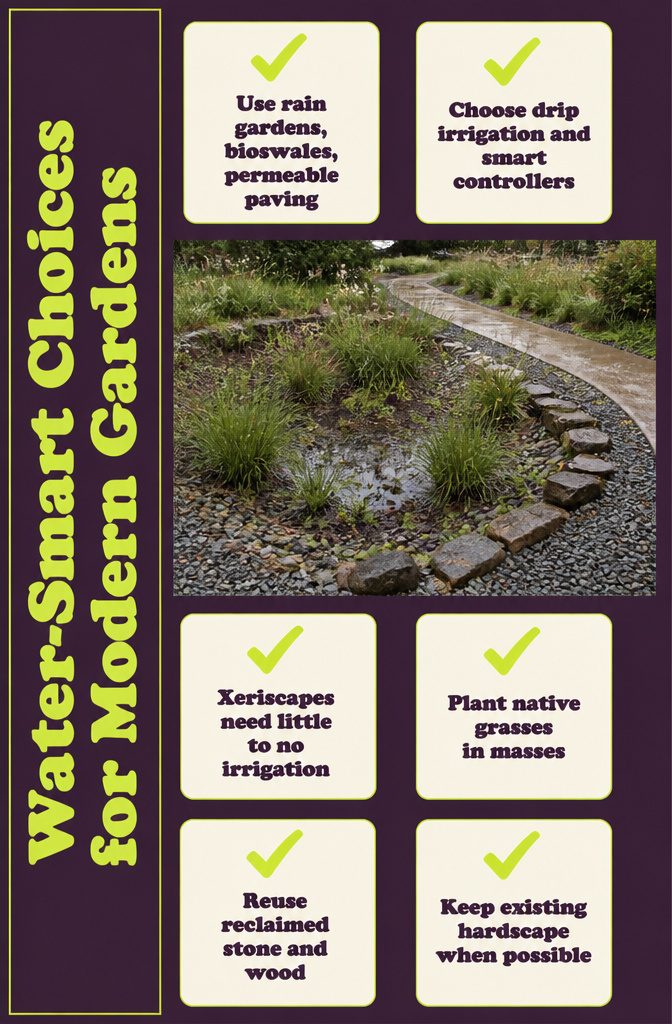
Sustainability fits modern design well, and it has become popular in contemporary design too. These measures do the most work:
- Rain gardens, bioswales, and permeable paving reduce runoff by letting rain soak in where it falls.
- Drip systems and smart controllers cut irrigation water.
- Xeriscape yards need little to no irrigation. They pair permeable gravel or mulch with native or climate-adapted plants.
- Native grasses such as Bouteloua gracilis, Schizachyrium scoparium, and Panicum virgatum anchor a meadow look with little help from you. Plant each in a mass rather than mixing many.
- Reclaimed stone and wood, or reusing the hardscape you already have, saves buying new material.
Recommended Products
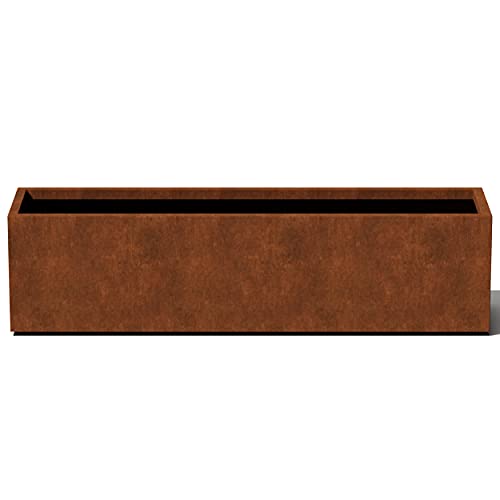
DURABLE MATERIAL: This sleek, outdoor planter is made from a thick gauge corten steel that will develop a beautiful rust patina naturally over time

Rustic Corten Steel Design: Crafted from premium rust-resistant Corten steel, this lawn edging develops a beautiful, natural rust finish over time while remaining durable against harsh weather conditions. Perfect for adding a timeless and rustic charm to your outdoor space.

ABOUT THE EDGING: 4.9" above ground; 6 Pack of 40" each, 20Ft total installed; 7 pieces 10'' Clamps for extra stability; Corten steel is a kind of weathering steel and develop rust patina over time, this rust acts as a protective coating and eliminates the need for paint; CorTen steel material allows the edgings to last for 100 plus years; Clamps and gloves included
Mixing Styles
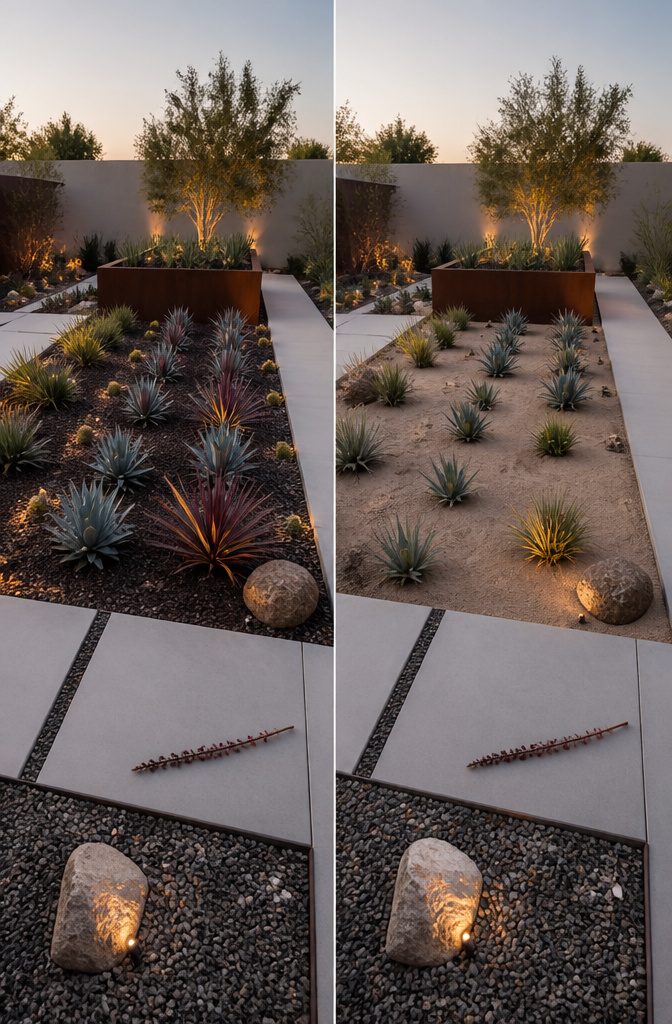
Style sits on two axes: modern to traditional, and formal to informal.
Planting style (desert, tropical, grassland) is a third choice that mixes freely with the other two. A formal modern desert yard uses rectangular spaces, straight concrete paths, rigid rows of succulents and desert shrubs, corten steel accents, and uplighting.
Agave attenuata, Aloe ‘Blue Flame’, and Red Yucca suit it, with boulders about 2 feet long placed individually rather than piled.
Change all three settings and you get an informal traditional tropical yard: palms, giant bird of paradise, Hibiscus, and Bougainvillea in loose arrangements.
Choose one planting style, one design style, and one level of formality, and hold each steady, so the mix reads as a decision.
Recommended Products

PREMIUM MATERIAL: Gold/brown decomposed granite mixed with natural binder for enhanced stability and reduced erosion in landscaping applications

Natural Crushed Granite Material: MIGHTY109 Granite Pea Gravel made from natural crushed granite with approximate diameter of stone 1/8 inch average

[Fine 1/8" Size (About 4-6 mm)]: Mini pebbles spread evenly for a clean finish in fish tanks, terrariums and small planters. Natural stones may vary slightly in size and shape
Frequently Asked Questions
Recommended Products


What defines a modern landscape design?
Modern landscape design is defined by clean lines, geometric forms, repetition, and a restrained plant palette.
Each element has a job, and anything without one counts as clutter. Materials and structure carry as much weight as the plants.
Are modern landscapes low maintenance?
They can be when the design is done well.
Durable hardscape and a few structured evergreens cut down on seasonal rework. Native grasses, drip irrigation, and gravel or mulch beds reduce the upkeep further.
Which materials work best for a modern landscape?
Concrete, stone, and gray gravel make a good cool base, and ipe or composite wood adds warmth against them.
Corten steel suits planters, edging, and walls. Large-format pavers and neutral stone such as bluestone, slate, or limestone keep the surfaces clean and architectural.
Can modern landscaping work with a traditional home?
Yes. Use modern elements selectively, such as simplified planting beds or a single new patio, so the update respects the existing architecture.
Is plant selection different in a modern landscape?
Yes. Modern planting repeats a few plants in masses instead of mixing many colorful varieties.
Evergreens supply structure and ornamental grasses or similar plants supply texture. Check any plant against your own growing zone before buying.
Why is professional planning important for modern design?
Clean lines depend on exact spacing, alignment, grading, and material transitions, and these details are hard to fix once built.
Drainage needs to be settled before any paving goes in, because standing water can spoil a good layout. A professional plan keeps those pieces coordinated so the result looks intentional and balanced.