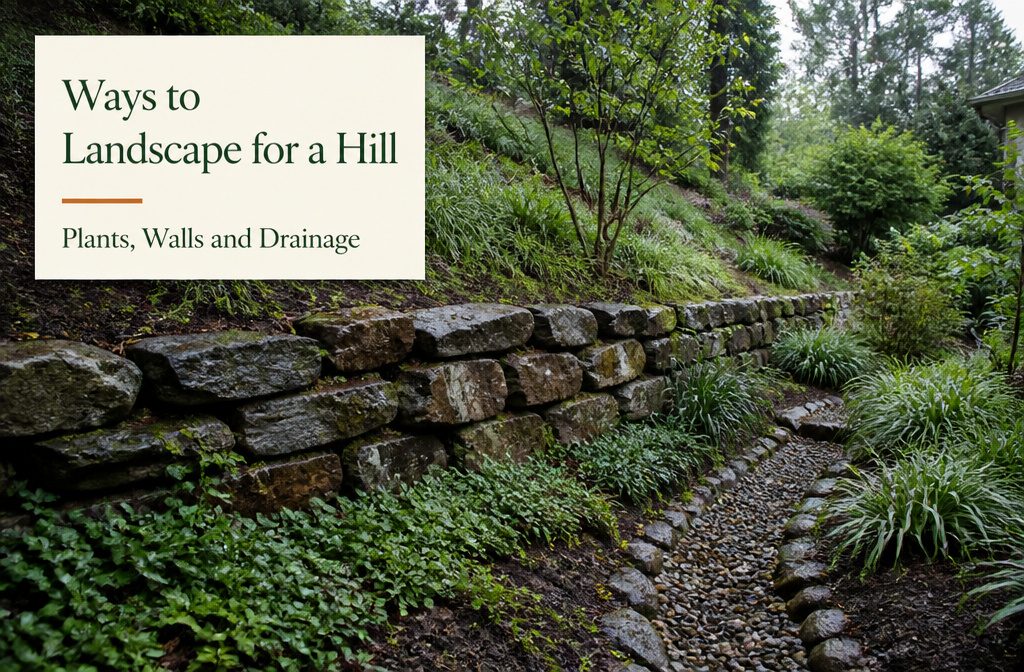
Hillside work runs from a few hundred dollars of ground cover to over $50,000 for engineered retaining walls with full drainage, and your slope’s percent grade decides where you land.
Grades past 15% need more than planting. Walls over 4 feet call for a licensed contractor or engineer, since badly built ones often fail within five years.
1. Test Soil and Slope
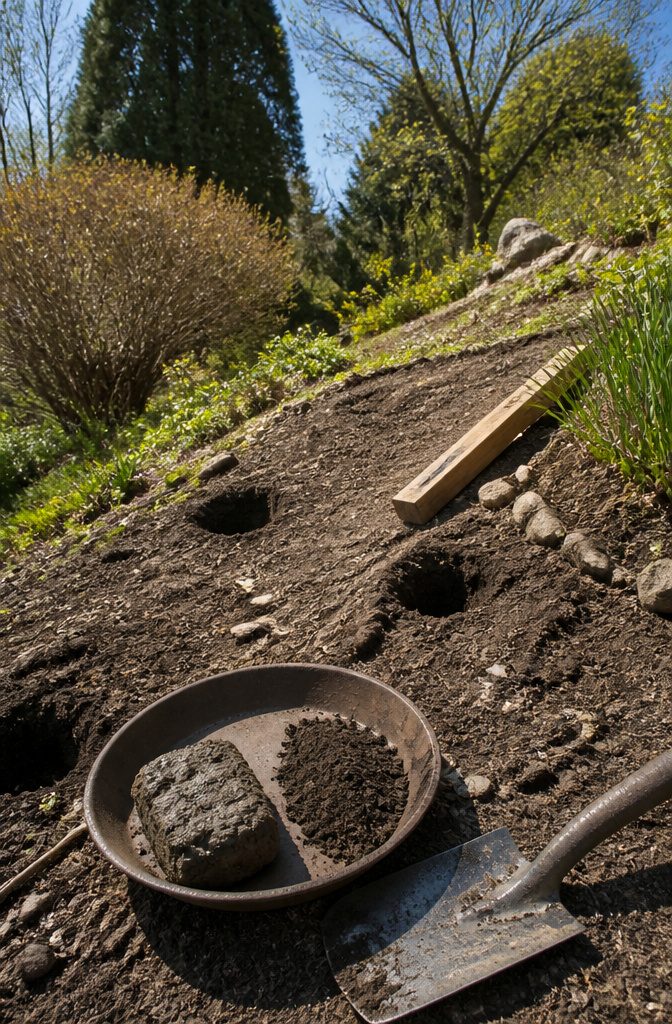
Dig 3 holes, one at each corner of the bed, mix the soil into one sample, and squeeze a handful into a ball.
A moist, sticky ball means clay, which drains poorly and can slide when saturated. A ball that won’t form means sandy soil, which is low in nutrients and erodes easily.
For clay, work in sand and compost or manure until the soil feels loose. A lab test adds pH, nutrient levels and composition.
Then measure the slope as a percentage: 0–5% is gentle, 5–15% moderate, 15–30% steep, and 30% or more very steep.
Steeper grades need more than planting. Start with one area before you take on the whole hill.
Recommended Products

LOW-GROWING CREEPING THYME GROUND COVER: Purple Creeping Thyme creates a dense, low-growing ground cover with attractive foliage and seasonal blooms. Suitable for garden borders, pathways, landscape beds, and other decorative outdoor planting areas.

🌱 10000+ Lemon Thyme Seeds for Planting Includes 10000+ lemon thyme seeds for planting, ideal for herb gardens, borders, containers, and outdoor landscaping projects with long-lasting aromatic foliage.
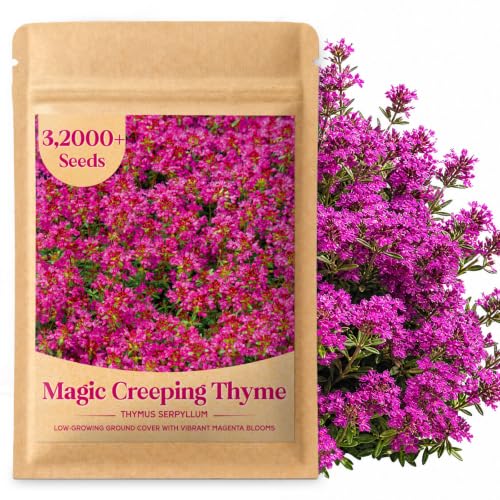
32000+ Seeds For Large Planting Areas: Over 32,000 Magic Creeping Thyme seeds provide generous coverage for pathways, garden borders, rock gardens, slopes and landscape projects. A great choice for creating a fuller planting area with a single packet
2. Ground Covers
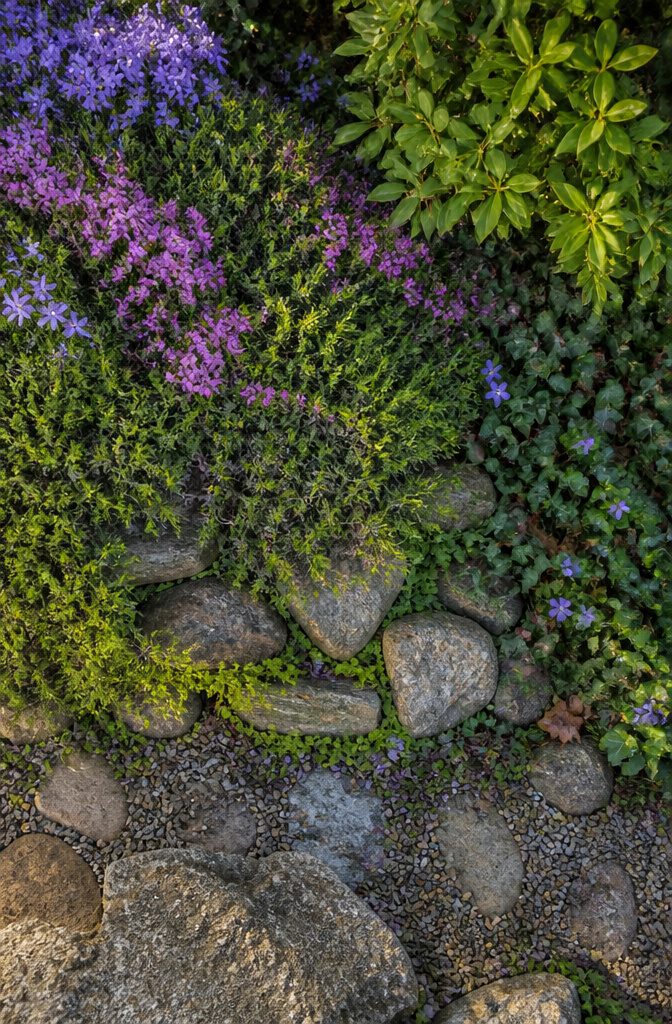
Ground covers bind soil with dense, spreading roots, which makes them the first thing to plant on a slope.
Creeping juniper, vinca, ivy and creeping phlox are the usual picks, and between them they cover slopes of different steepness and sun exposure. Juniper, phlox and creeping thyme are the ones to put in full sun and drier soil.
Vinca and ivy handle shadier spots, and forget-me-nots also work for holding soil. Deep-rooted types hold a hillside best, and flowering ones such as phlox bring pollinators.
Skip lawn grass on a steep incline.
Its roots struggle to get enough water and nutrients there and begin to die off. For a dry, sunny slope, cacti and succulents need very little water.
Recommended Products

Products made in the USA Since 1888!
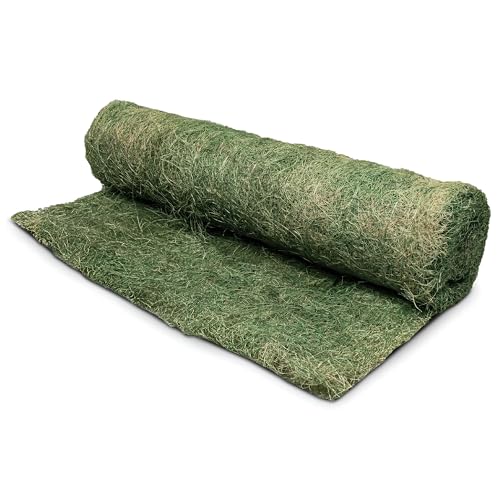
Aspen Wood Fiber Blanket: Made from natural curled aspen wood excelsior with long fibers distributed evenly throughout the blanket to support soil retention on disturbed ground areas
DIRECT FROM MANUFACTURER
3. Native Plants and Grasses
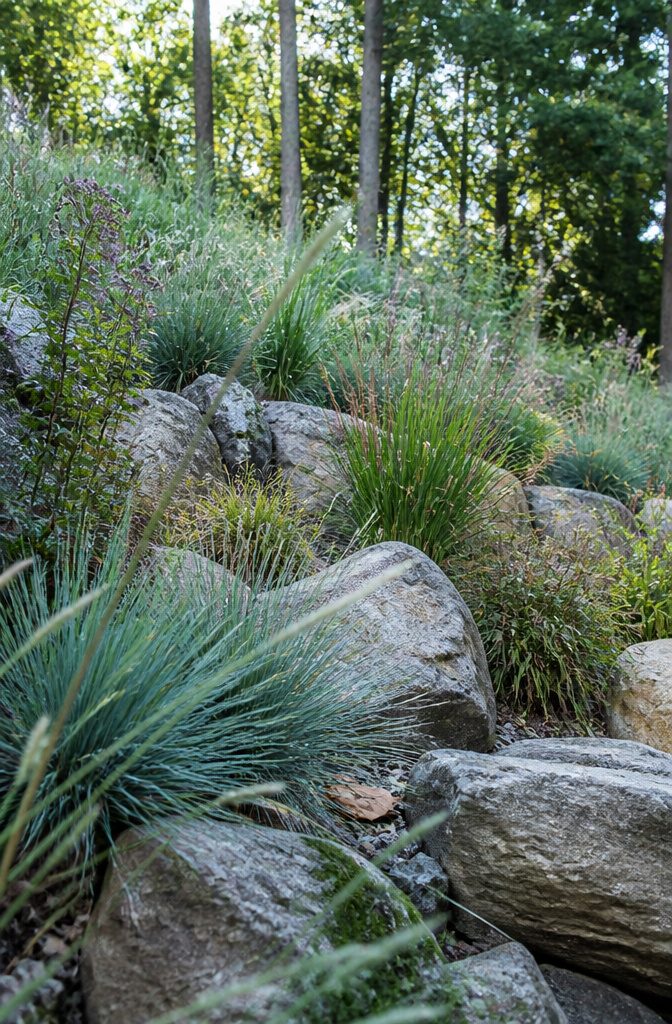
Native plants root deeply, need less water than exotics, and feed local wildlife, which suits a slope.
Little bluestem (2–4 ft) and switchgrass (3–6 ft) are dependable grasses, and wild bergamot (2–4 ft) draws pollinators. Ceanothus (3–12 ft) fixes nitrogen, but it is a West Coast plant, so match every native to your own region before you buy.
On steep, rocky ground, ornamental grasses hold soil with fibrous roots. Blue oat grass (Helictotrichon sempervirens) stays 2–3 ft, and Karl Foerster reaches 4–5 ft.
Dwarf muhly grass (Muhlenbergia porteri) and New England fescue (Festuca novae-angliae) also cope with rocky inclines. Plant them in full sun beside boulders, where their soft texture contrasts with the hard stone.
Recommended Products

Shade-Loving Native Plant – Thrives in partial to full shade; ideal for woodland gardens and low-light areas.

🌾 Vibrant Golden Color for Stunning Landscapes Create eye-catching curb appeal with Golden Sunset Yellow Prairie Grass live plugs featuring tall golden blades that add texture, movement, and warm seasonal color to any garden or landscape design

Hardy in USDA zones 4-9. Due to varying agricultural regulations, we do not ship to the following states: AK, AZ, CA, CO, ID, MT, NV, OR, UT, WA and HI.
4. Trees and Shrubs
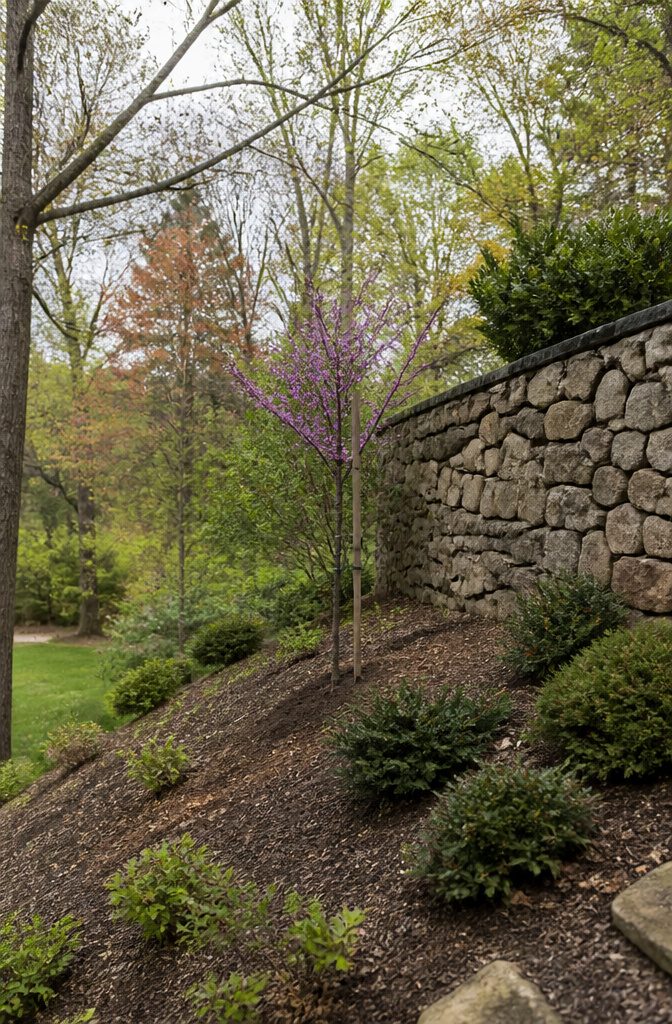
Deep roots hold soil on a slope, so woody plants beat anything shallow.
Eastern redbud sends roots 6–10 feet down, pussy willow 4–8 feet, and red osier dogwood and nannyberry viburnum 3–5 feet each. Plant the deepest rooters where the slope is steepest or the soil moves most.
Bayberry, boxwood and English holly are good choices when you need evergreen structure, but each suits different sun, soil and moisture. Check what your slope offers before you buy, and match the plant to the spot.
New plantings need watching. Check new trees and shrubs about every 6 months for washed-out soil around the base, exposed roots, leaning trunks, or ties and stakes that have gone slack.
Recommended Products
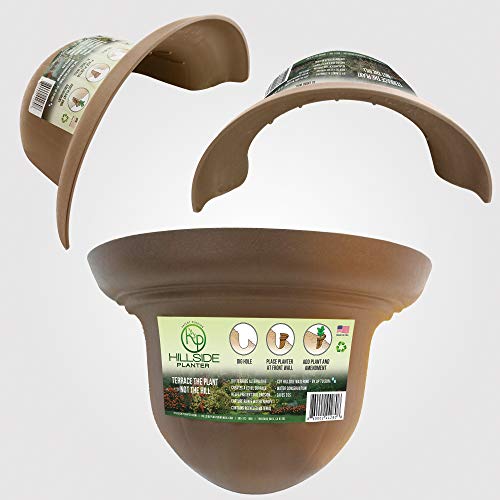
TRANSFORM SLOPES INTO PLANTABLE GARDEN SPACE – Designed specifically for hillsides and sloped landscapes, the Hillside Planter creates a stable, level planting pocket so you can successfully grow flowers, herbs, vegetables, and shrubs where traditional planting fails.

🌵 23 Heirloom Varieties – Annuals + Perennials: A curated mix of 23 drought‑tolerant species. Annuals provide fast first‑season color, while perennials return year after year – creating a low‑water wildflower meadow that thrives on neglect.
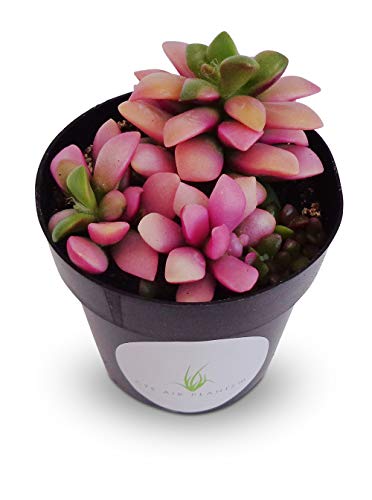
Anacampseros Sunrise Succulents Small Cluster in 2.5" Pots.
5. Mulch and Erosion Barriers
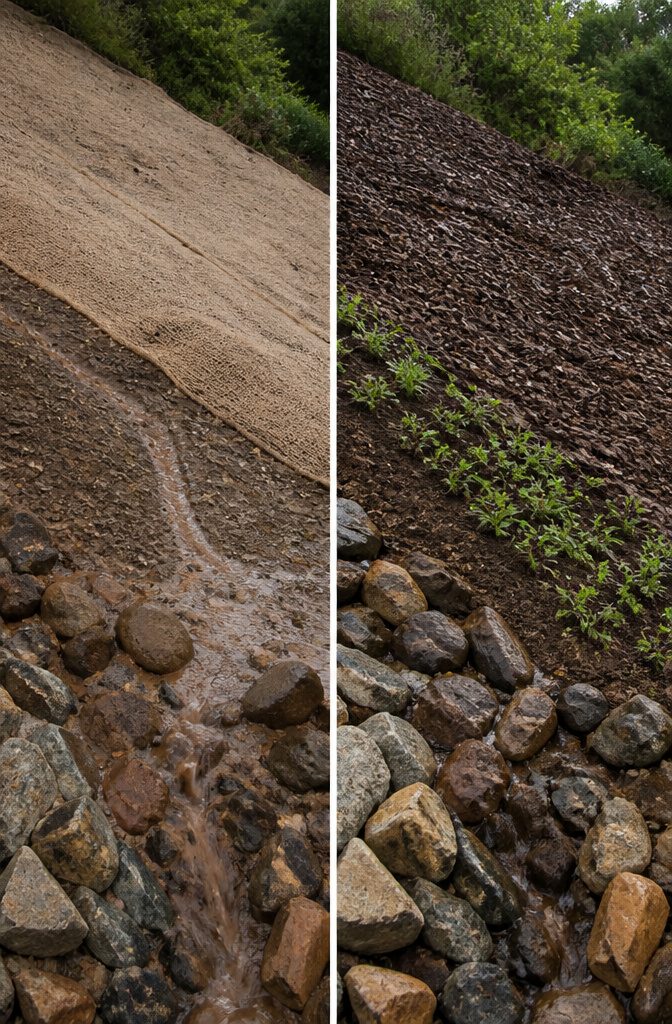
Standard shredded mulch slides downhill, so on slopes over 15% use chunky bark chips, shredded bark, or erosion-control netting. Depth and replacement vary by material:
| Material | Depth | Replace |
|---|---|---|
| Chunky bark chips | 3–4 inches | Every 2–3 years |
| Pine needles | 3–4 inches | Every 2 years |
| Shredded hardwood | 2–3 inches | Annually |
| Straw erosion blanket | 1–2 inches | Biodegrades in 6–12 months |
To stop erosion after heavy rain, pin down an erosion blanket on bare soil right away, plant a fast ground cover, and add a swale to redirect runoff.
Blankets cost $0.20–$0.80/sq ft, hydroseeding $0.08–$0.20/sq ft, silt fence $1–$3/linear ft, and riprap $25–$75/ton.
Recommended Products

HEAVY DUTY 8 OZ GEOTEXTILE FABRIC: Heavy duty non woven polypropylene drainage and filter fabric for French drains, retaining walls, road stabilization, erosion control, landscaping, rip rap, geocell, and construction projects.
HEAVY DUTY 8 OZ GEOTEXTILE FABRIC: Heavy duty non woven polypropylene drainage and filter fabric for French drains, retaining walls, road stabilization, erosion control, landscaping, rip rap, geocell, and construction projects.

HEAVY DUTY WOVEN DRIVEWAY FABRIC: True 4 oz woven geotextile with 200 lb rated tensile strength; strong enough for cars and trucks to drive on; stabilizes gravel driveways and roads
6. Retaining Walls and Terraces
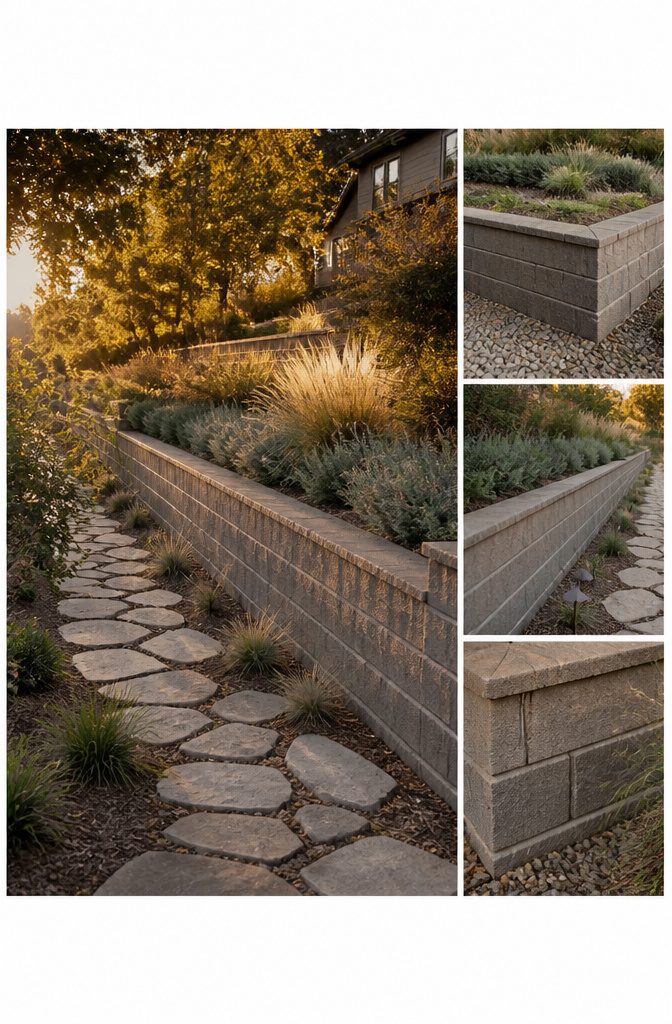
Walls hold soil, and the level beds they create slow runoff. A raised bed suits a gentle grade.
| Material | Height | Lifespan | Cost per linear ft |
|---|---|---|---|
| Natural stone | 3–4 ft (DIY) | 50–100 years | $25–$75 |
| Timber | 3–4 ft | 15–25 years | $10–$20 |
| Concrete block | 4–6 ft | 50+ years | $20–$45 |
| Gabion baskets | 6+ ft (engineered) | 40–60 years | $30–$60 |
Block wins for most yards. Timber is cheapest but wears out first.
Make terraces 2–4 ft wide at 15–20% slope, 4–8 ft at 20–30%, 8–12 ft at 30–40%, and 12 ft or more beyond that.
Permits usually apply above 3–4 ft, and every wall needs drainage behind it to relieve water pressure.
Recommended Products

62,000+ Seeds for Larger Areas: This generous pack of red creeping thyme seeds provides plenty for larger planting areas, multiple garden spaces, and reseeding

READY TO PLANT: Includes 3 Woolly Thyme (Thymus pseudolanuginosus) starter plants in 2.5” cubes. Each plant is well-rooted and ready to thrive. Natural variations in size, color, or seasonal appearance may occur.

PLANT TYPE: Creeping Thyme is a low-growing, spreading perennial herb known for its dense mat-forming growth habit.
7. Drainage
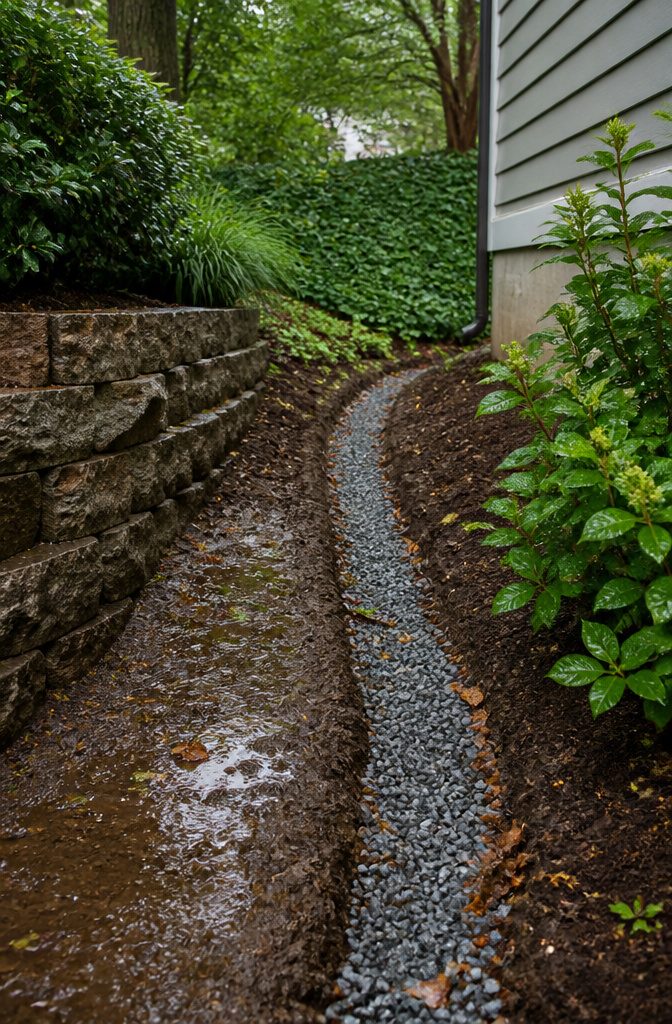
Dig a trench around the planned project and watch how fast water drains out of it. Standing pools after rain mean the slope needs a fix.
If the soil is brownish clay, work in sand and compost until it loosens, but stop before it turns sandy. Match the fix to where the water goes:
- French drain, $10–$25 per linear foot: the pick for wet areas and wall drainage. It is a gravel-filled ditch that leads water away from buildings, and it needs little upkeep.
- Swale or berm, $5–$15 per linear foot: the cheapest option, and it handles water spreading across the surface. Maintenance is minimal.
- Catch basin, $200–$500 each: sits at low points and driveways. Clean it once a year.
- Dry creek bed, $15–$30 per linear foot: carries water and looks like part of the garden.
Recommended Products

【Extra Deep Anchoring Power】The 10-inch length penetrates deeper into the soil than standard landscape staples, providing increased holding strength in loose soil, sandy areas, and locations exposed to strong wind.
【Extra Deep Anchoring Power】The 10-inch length penetrates deeper into the soil than standard landscape staples, providing increased holding strength in loose soil, sandy areas, and locations exposed to strong wind.

Great For Edging - This Roll is great for growing grass on the edging of a sidewalk, in between houses, backyards, front yards and many other areas.
8. Slope Irrigation
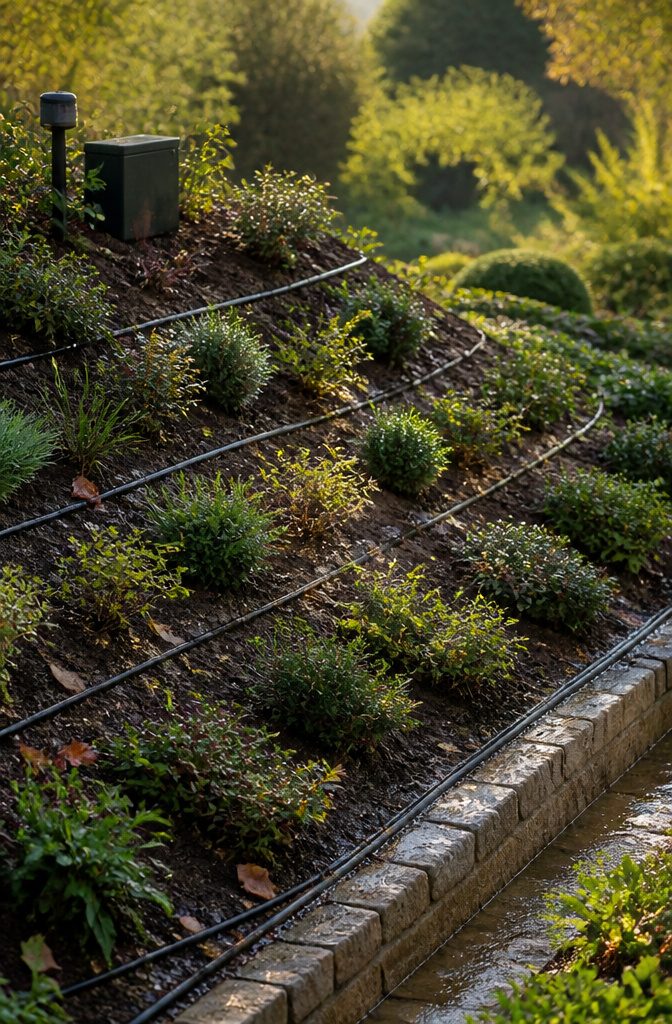
Water runs downhill fast, so apply it slowly at the roots and give each terrace its own line.
Drip wins for most slopes: it is 90–95% efficient, suits every grade, and costs less than buried emitters. Sprinklers waste the most water and belong on gentle grades only.
| System | Efficiency | Cost per sq ft | Best slope |
|---|---|---|---|
| Drip | 90–95% | $0.50–$1.50 | All slopes |
| Soaker hoses | 80–90% | $0.10–$0.30 | Gentle to moderate |
| Sprinklers | 50–70% | $0.20–$0.50 | Gentle only |
| Buried emitters | 95%+ | $1.00–$2.50 | Steep slopes |
Add a rain sensor to the controller, since overwatering is a major cause of slope erosion.
9. Paths, Steps, and Lighting
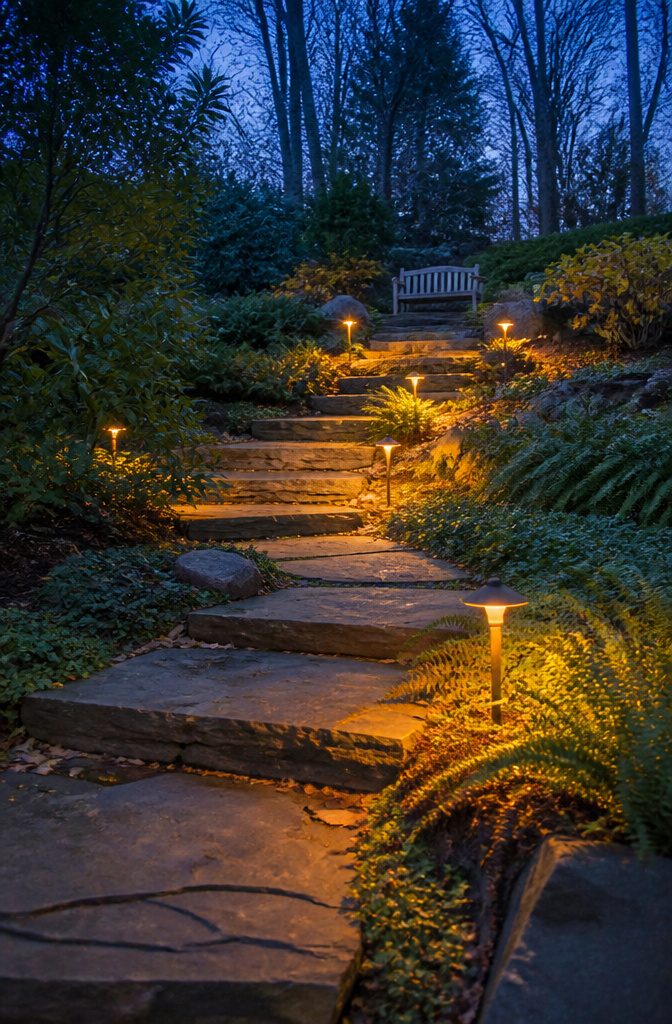
Natural flagstone is the step to buy at $50–$150 per step: it grips well and needs little upkeep.
Concrete pavers cost $30–$80 and need almost none. Timber sleepers are cheapest at $20–$50 but rot, and decomposed granite ($5–$15 per square foot) grips only while dry.
Curve the path. Gentle bends slow your descent and reduce erosion along the edge.
Make it wide enough for a wheelchair or walker, since a route a wheelchair can manage works for everyone. Light it and keep it clear.
Put path lights ($15–$60 each) at steps and bends. Uplights run $20–$80, spotlights $25–$100, and string lights $20–$150 per strand.
Choose low-voltage, or solar for remote spots where running conduit is a hassle. Plain wooden benches along the route cost less than stone.
Recommended Products

LIVE SEDUM TILE: 10" by 20" live plant mat featuring a combination of sedum succulent plants with earthy colors and contrasting shapes. These easy ground cover plants offer endless DIY possibilities.

The collection of 3 different Haworthias you will receive are growing in 2" pots

12 UNIQUE PLANTS: This succulents plants live assortment includes 12 handpicked, frost-tolerant varieties with no planned repeats. Sempervivum, Sedum, rosette, stemmed and trailing forms add color, texture and seasonal interest to outdoor spaces too.
10. Rock Gardens
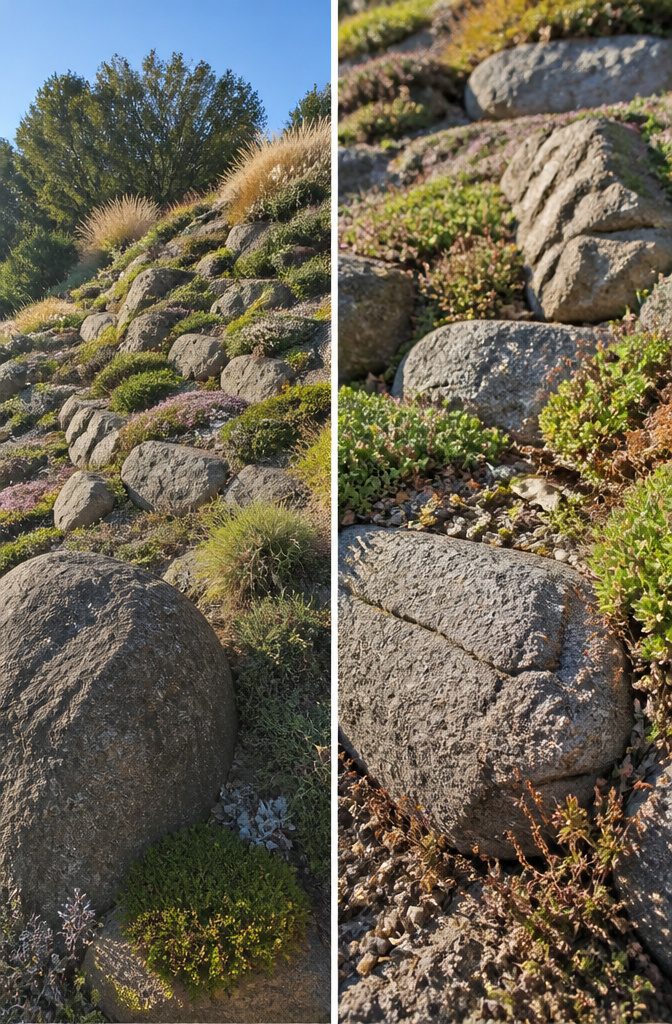
Stone on a slope holds soil as a low barrier, steps the grade into terraces, and fills beds that need little weeding. Weight decides what you can move yourself.
Fieldstone runs 100–120 lbs per cubic foot, sandstone 130–145, limestone 150–165, and granite 165–180. For DIY scale, stick with fieldstone or sandstone and leave granite to a crew with equipment.
Bed each stone partly into the hill, tilted slightly back toward the slope so it doesn’t creep downhill.
Plant sedum and creeping thyme in the gaps, since both handle thin soil and dry spells. Space plants at least 3 feet apart so the stone stays visible and roots aren’t competing.
Recommended Products

HEAVY DUTY – 6 Ounce Heavy Duty Geotextile – Don’t settle for lighter weights, the 6 ounce is tough and durable, non-woven fabrics are produced to be high-strength

MEDIUM DUTY – 4 Ounce Heavy Duty Geotextile – Don’t settle for lighter weights, the 4 ounce is tough and durable, non-woven fabrics are produced to be high-strength
HEAVY DUTY WOVEN DRIVEWAY FABRIC: True 4 oz woven geotextile with 200 lb rated tensile strength; strong enough for cars and trucks to drive on; stabilizes gravel driveways and roads
11. Rainwater Harvesting
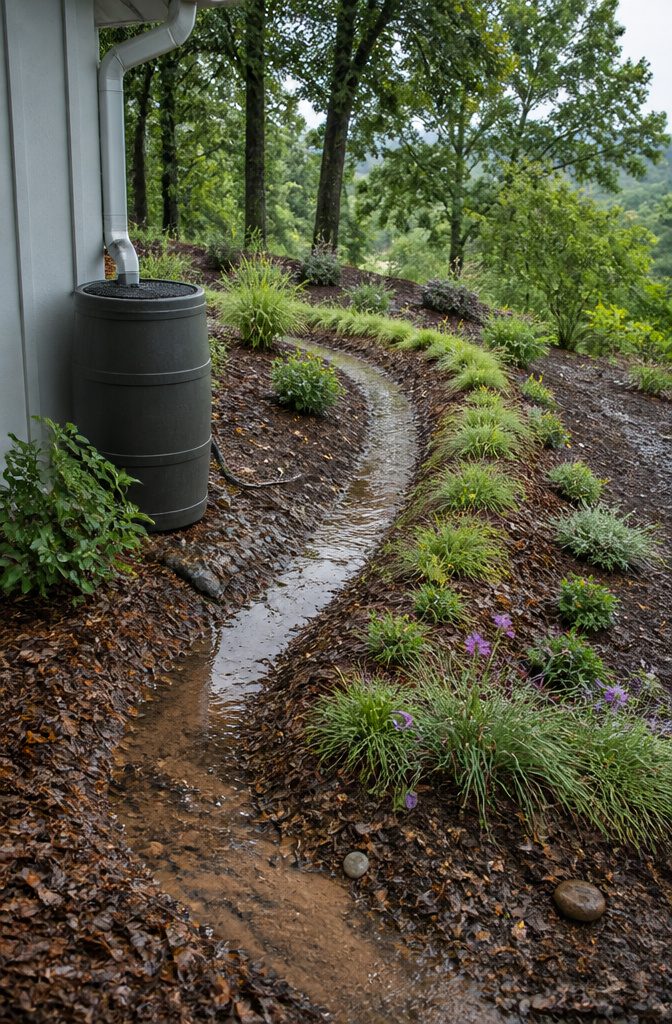
A single rain barrel holds 50–100 gallons and costs $50–$200. That is cheap, but the water saving is low next to what a sloped yard sheds in one storm.
Put barrels under downspouts and use them to feed a drip line in dry spells. A cistern stores far more, and it makes sense only if you are watering a large planting through summer.
On a hill, a swale-and-berm system does more of the work. A swale is a shallow trench dug along the contour, and the berm is the mound of soil piled on its downhill side.
The pair slows runoff, lets it soak in, and reduces erosion. Plant the berm, and the stored water feeds roots instead of running off.
12. Fire-Resistant Planting Zones
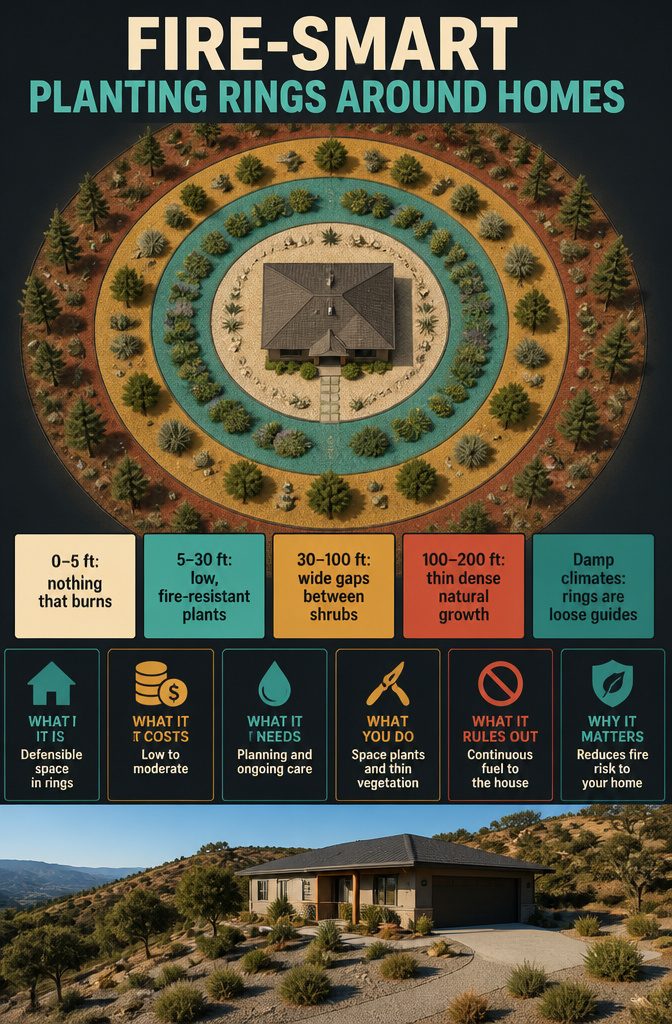
Defensible space is measured outward from the house, and each ring has a different job.
It matters most in dry, fire-prone areas. In a damp climate, treat the rings as a loose guide.
The planting rule is simple: keep the first 5 feet around the walls non-combustible, then loosen up with distance. Fire-resistant plants are low, moist-leaved and spaced in separate groups, so flame has no continuous path to the house.
| Zone from house | What goes there | Spacing |
|---|---|---|
| 0–5 ft | Gravel, pavers, succulents | Nothing that burns |
| 5–30 ft | Low, fire-resistant plants and ground covers | Small islands with open gaps |
| 30–100 ft | Shrubs and limbed-up trees | Wide gaps, no connected canopy |
| 100–200 ft | Thinned natural growth | Break up dense stands |
When to Hire a Pro
Do the low-risk work yourself and hire out the jobs where a failure damages the house:
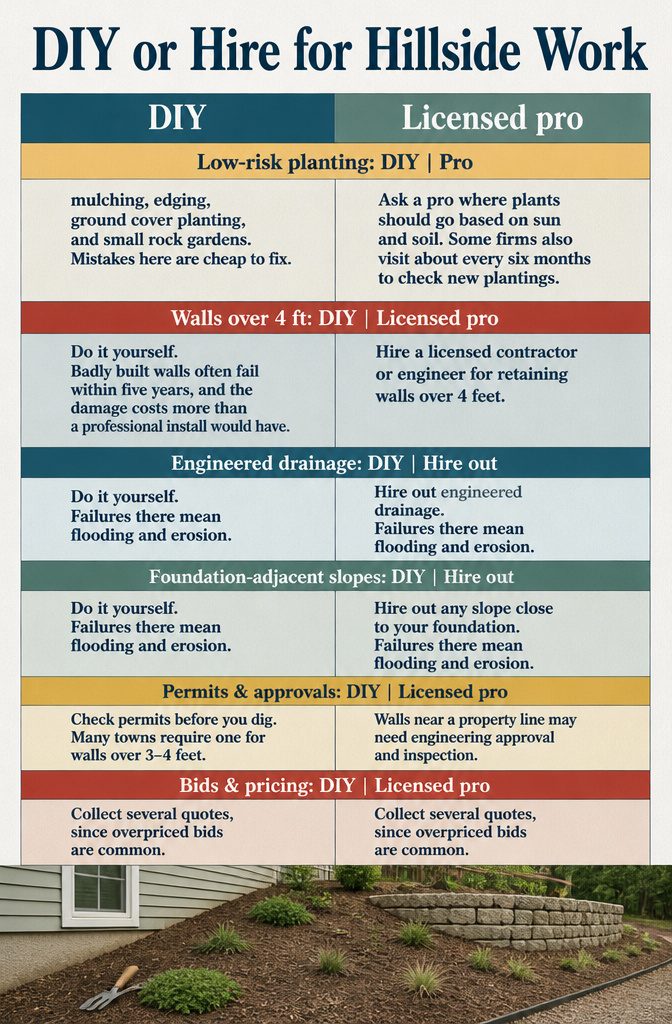
- DIY: mulching, edging, ground cover planting, and small rock gardens. Mistakes here are cheap to fix.
- Hire a licensed contractor or engineer for retaining walls over 4 feet. Badly built walls often fail within five years, and the damage costs more than a professional install would have.
- Hire out engineered drainage and any slope close to your foundation. Failures there mean flooding and erosion.
- Check permits before you dig. Many towns require one for walls over 3–4 feet, and walls near a property line may need engineering approval and inspection.
- Collect several quotes, since overpriced bids are common.
- Ask a pro where plants should go based on sun and soil. Some firms also visit about every six months to check new plantings.
Budget and Phasing
Hillside work costs more than the same project on flat ground because of specialized labor, structural parts and engineering.
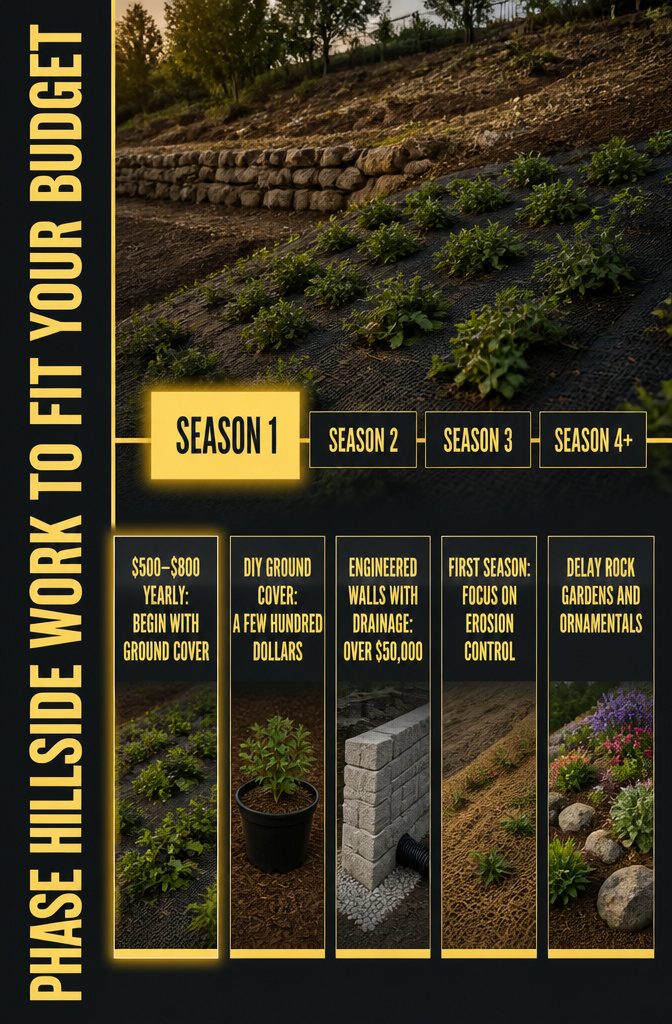
Prices run from a few hundred dollars for DIY ground cover to over $50,000 for engineered retaining walls with full drainage. A budget of $500–$800 a year puts you at the ground cover end, which is the right place to begin.
Pick one section of the slope and spend the first season on erosion control.
Rock gardens and ornamental plantings can wait for later seasons. Phasing this way protects the slope while spreading the cost over several years, and a small first area shows you what survives before you commit the rest of the hill.
Seasonal Upkeep
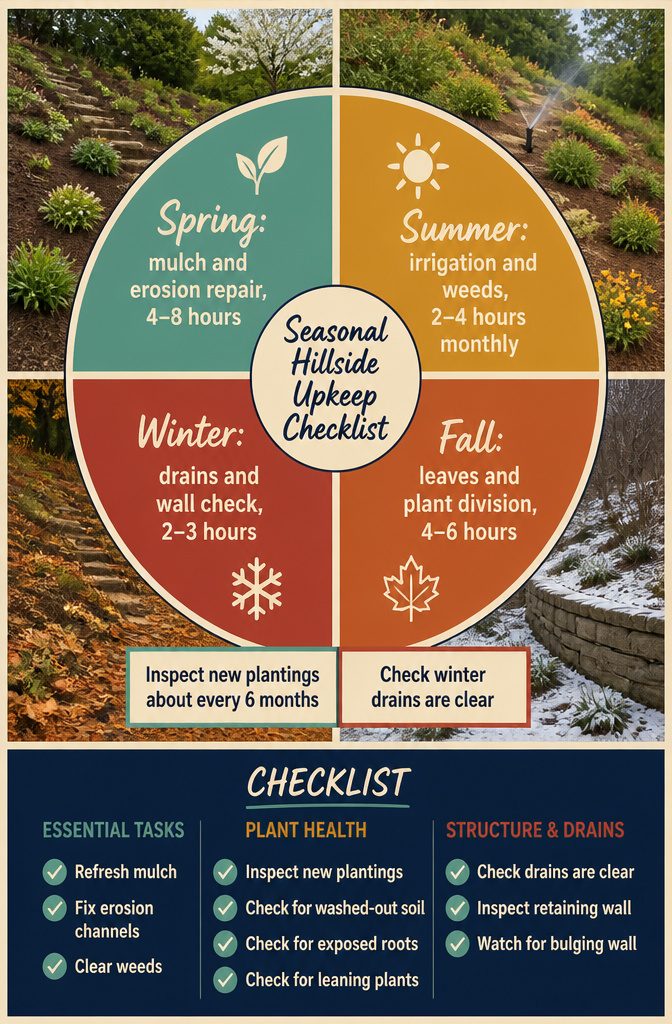
Spring takes the most time, and winter is when you catch problems before they turn into wall or drainage repairs.
| Season | Main tasks | Priority | Time |
|---|---|---|---|
| Spring | Mulch refresh, erosion repair | High | 4–8 hours |
| Summer | Irrigation check, weed control | High | 2–4 hours a month |
| Fall | Leaf removal, plant division | Moderate | 4–6 hours |
| Winter | Drainage inspection, wall check | High | 2–3 hours |
Refresh mulch each spring, while you are already fixing erosion channels.
Look over new plantings about every 6 months for washed-out soil, exposed roots, and plants that are leaning or failing. In winter, check that drains are clear and that no retaining wall is bulging.
Frequently Asked Questions
What is the best plant for stabilizing a steep hillside?
No single plant wins. Depth of root matters most, and eastern redbud reaches 6–10 feet down, deeper than pussy willow at 4–8 feet.
Pair woody plants with spreading ground covers such as creeping juniper, vinca or creeping phlox to bind the surface soil. Put the deepest rooters where the slope is steepest, and check that any native plant suits your region.
How do I stop my hillside from eroding after heavy rain?
Pin an erosion blanket over bare soil right away, since it holds the surface while plants take hold. Then plant a fast-growing ground cover and dig a swale to redirect runoff.
Blankets cost $0.20–$0.80 per square foot. On slopes over 15%, use chunky bark chips or netting, because standard shredded mulch slides downhill.
Do I need a permit to build a retaining wall on my property?
Usually yes once a wall is taller than 3–4 feet, but the rule is set locally, so check your town’s building codes before you start.
A wall near a property line may also need engineering approval and an inspection. For walls over 4 feet, hire a licensed contractor or engineer.
How much does hillside landscaping typically cost?
Costs run from a few hundred dollars for DIY ground cover to over $50,000 for engineered retaining walls with full drainage.
Slopes cost more than flat ground because of specialized labor, structural parts and engineering. A budget of $500–$800 a year covers the ground cover end, which is the best place to start.