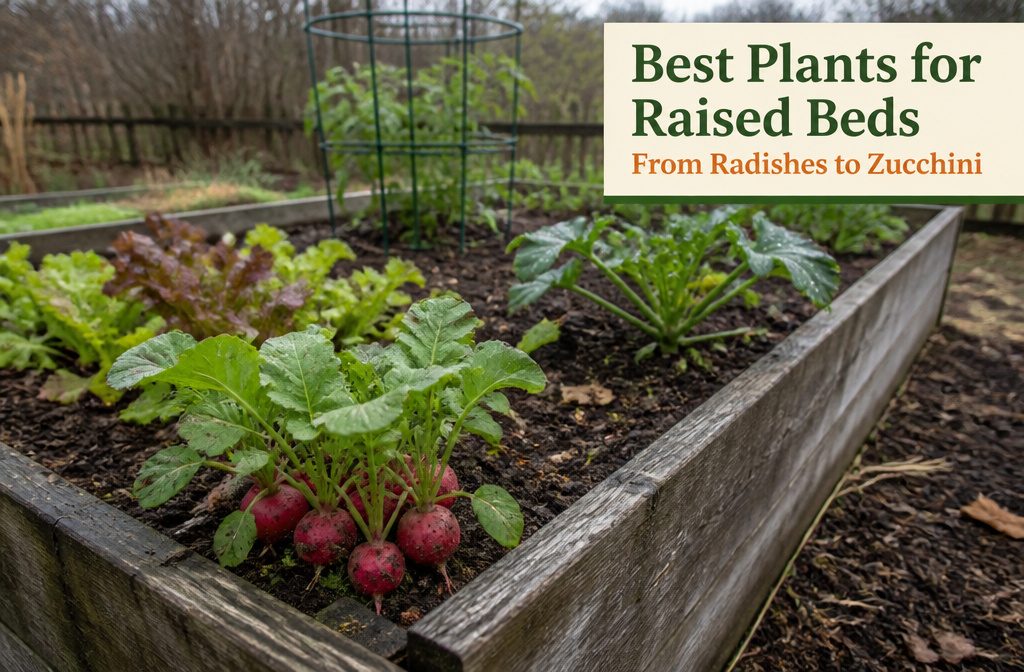
Radishes can be ready in 3–4 weeks, while a single zucchini plant is all a small bed can hold, so sun, season, and bed size decide your picks.
Zucchini and cherry tomatoes need 6–8 hours of direct sun. Radishes and lettuce bolt in summer heat, so they belong in early spring or fall.
1. Radishes
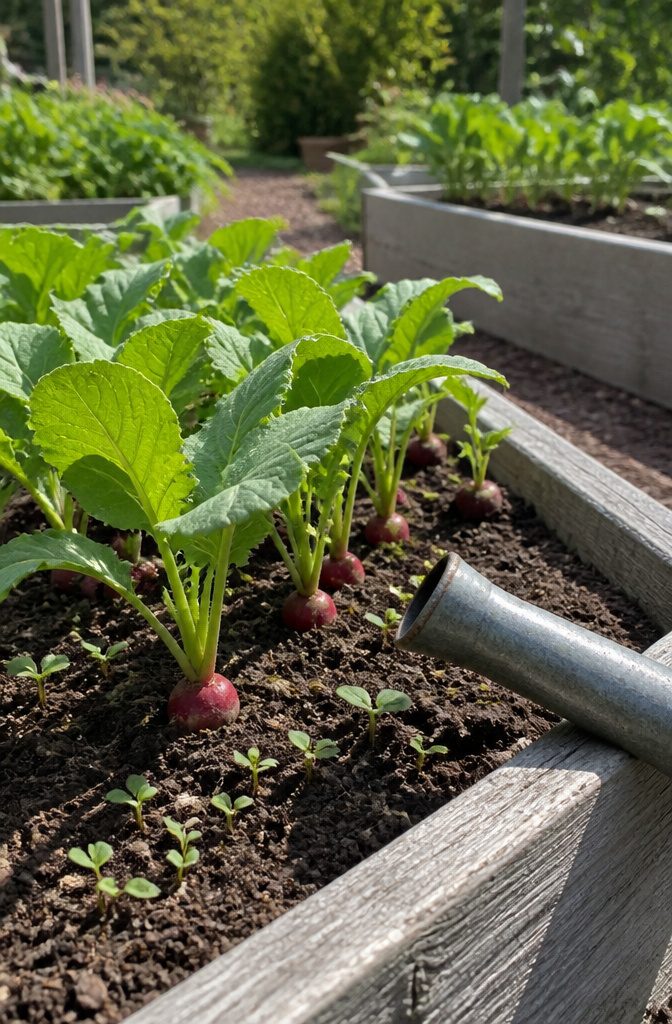
Radishes are the fastest crop you can grow in a raised bed. Direct-sown seed can be ready in as little as 3–4 weeks, and seed to harvest can take under 45 days.
That speed suits a first-season bed. If the soil or watering is off, the plants show it within days rather than months, and kids see seed turn into something edible before they lose interest.
The roots are compact, so you can tuck them between slower plants and use soil that would otherwise sit empty. Sow another round as each batch comes out.
Radishes are a cool-season crop. Plant them in early spring or fall, because heat makes them bolt, and a sunny midsummer bed is a poor place for them.
2. Lettuce
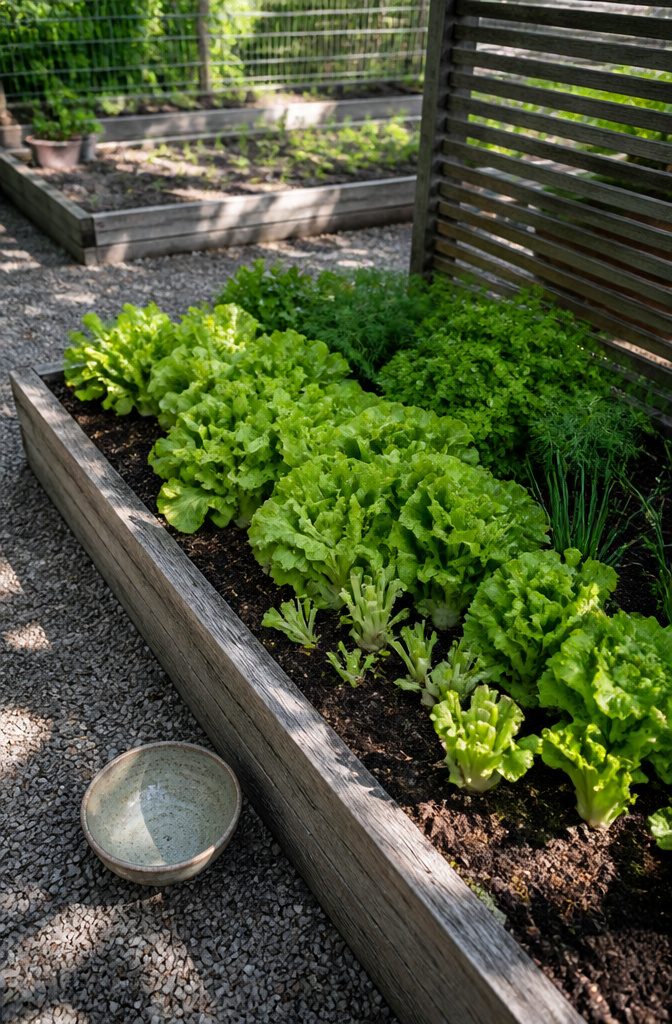
Loose-leaf lettuce is ready to pick in 4–6 weeks, and you harvest it by cutting the outer leaves and leaving the center to keep growing.
One planting then feeds you for months instead of giving a single head. The roots are shallow, so lettuce tucks in beside deeper-rooted crops, and even a compact 4×4 or 6×3 bed gives you steady salad.
Spring and fall are its seasons, because raised bed soil stays cool then. Summer is the limit.
Heat turns the leaves bitter and makes the plant bolt, which ends the harvest. In warm weeks, give the bed afternoon shade, or switch to heat-tolerant varieties.
Recommended Products
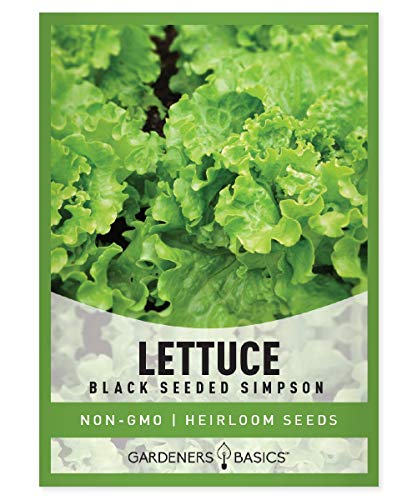
Black Seeded Simpson is a classic heirloom loose leaf lettuce with large, tender green leaves and a mild, sweet flavor. Harvest fresh leaves for salads, sandwiches, wraps, and other homegrown meals.

BEAUTIFUL RED LETTUCE - Red Salad Bowl Lettuce (Lactuca sativa) is a red oakleaf-style variety with tender, ruffled leaves and mild flavor, adds color and nutrition to fresh salads with loose leaf harvests

BEAUTIFUL OAK-SHAPED LEAVES – Oakleaf lettuce (Lactuca sativa) is a classic heirloom lettuce with tender, deeply lobed greens and mild flavor that bring fresh texture and color to homegrown salads
3. Spinach
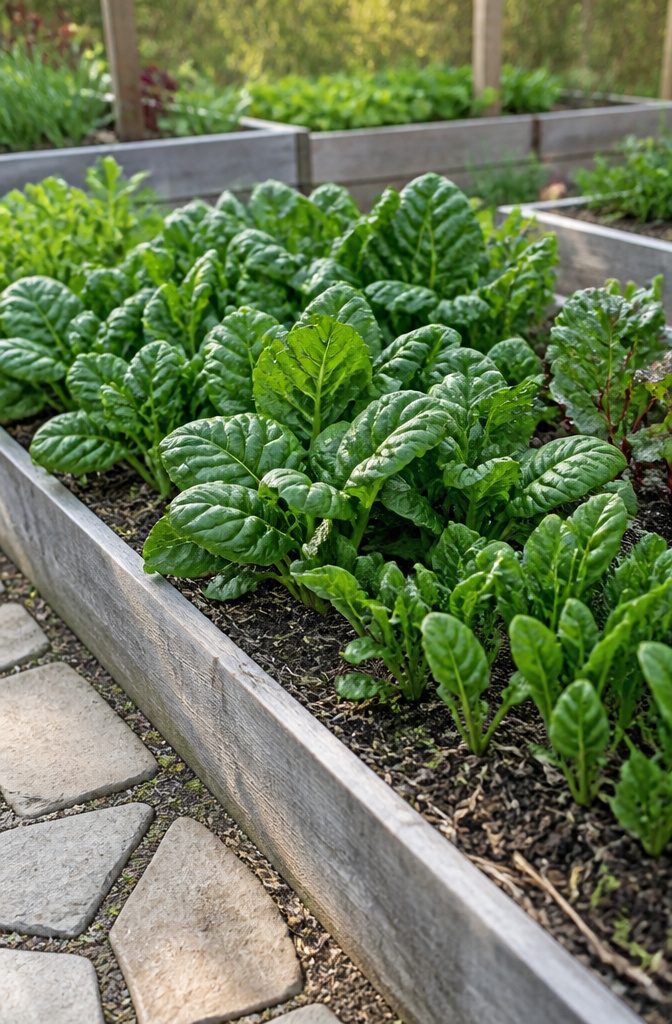
Spinach is harvest-ready in 4–6 weeks, so a spring or fall sowing turns over quickly. Cut it as baby leaves in as little as 3 weeks, or leave the plants to reach full size.
Like lettuce, it bolts in heat. Sow it only in cool windows, and choose bolt-resistant varieties if you want a slightly longer harvest.
Where spinach parts from lettuce is the job it does. It is rich in iron, folate, and antioxidants, and it blends easily into smoothies.
That makes it the better pick when you’re growing greens for nutrition, or for a picky eater, rather than for a salad bowl. It grows well in the loose, amended soil of a raised bed.
Recommended Products

EARLY HARVESTS – Sugar Ann (Pisum sativum var. macrocarpon) is an early maturing dwarf snap pea producing heavy yields of crisp, sweet pods on tidy 20–24 inch bush plants

BIG, TENDER LEAVES – Heirloom Fordhook Giant Swiss Chard (Beta vulgaris var. cicla) produces broad green leaves with crisp white stems, perfect for cooking, sautéing, or freezing for year-round use
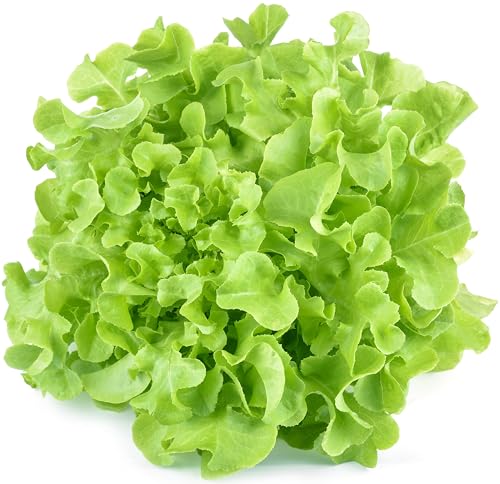
Distinct for its oak-shaped leaves and mild, nutty flavor. Best picked young.
4. Kale
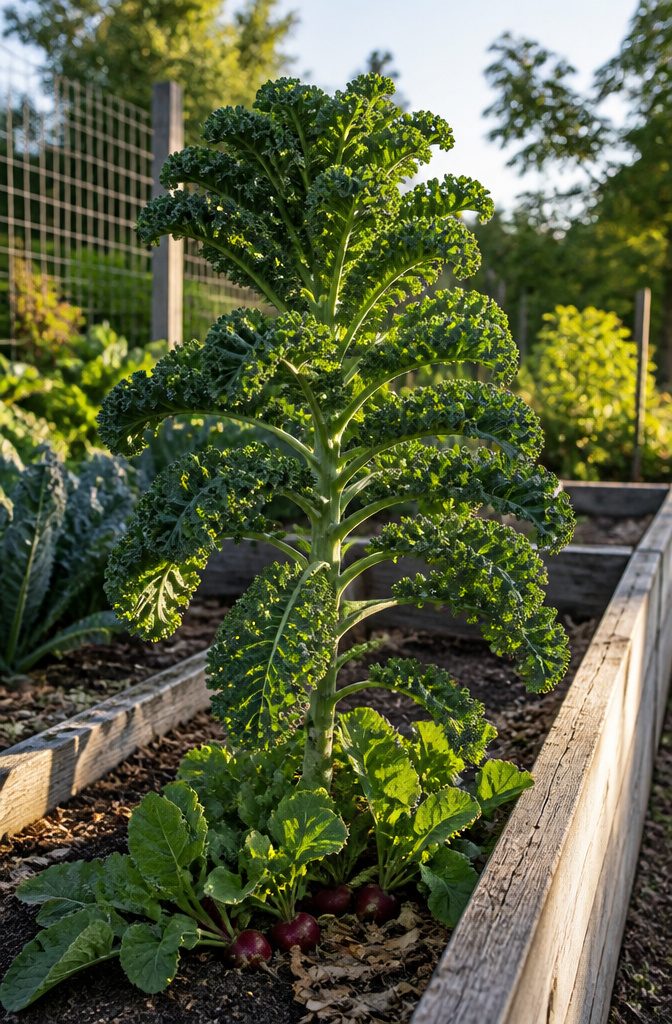
Kale takes 6–8 weeks from transplant to reach harvest size, slower than lettuce or radishes, but it keeps producing for months afterward. You can set transplants out well before your last frost date.
An established plant holds through summer heat and often a mild winter, which is more than most lettuce or spinach plantings manage, as long as you keep it well watered.
Pick the outer leaves closest to the base and leave the center alone.
Harvest from the bottom and the plant pushes new growth from the center, so a single plant feeds you all season. Cutting the whole head ends that.
Young seedlings attract aphids and cabbage worms.
Hand-pick the worms and spray insecticidal soap on aphids. Kale’s upright, open shape leaves room for radishes or lettuce at its feet.
Recommended Products

Stylish Design: Space-saving raised garden bed with lovely appearance, full of children's naiveness and fun, suitable for growing herbs and vegetables
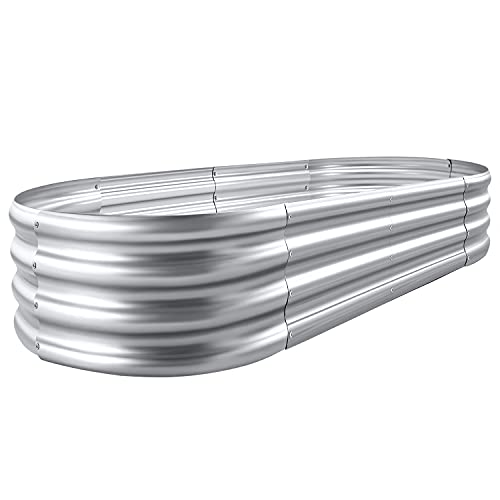
Each raised metal garden bed size: 4×2×1ft ,7.14Cu

DIMENSIONS: 32. 3 in. L x 14. 7 in. W x 30. 7 in. H
5. Swiss Chard
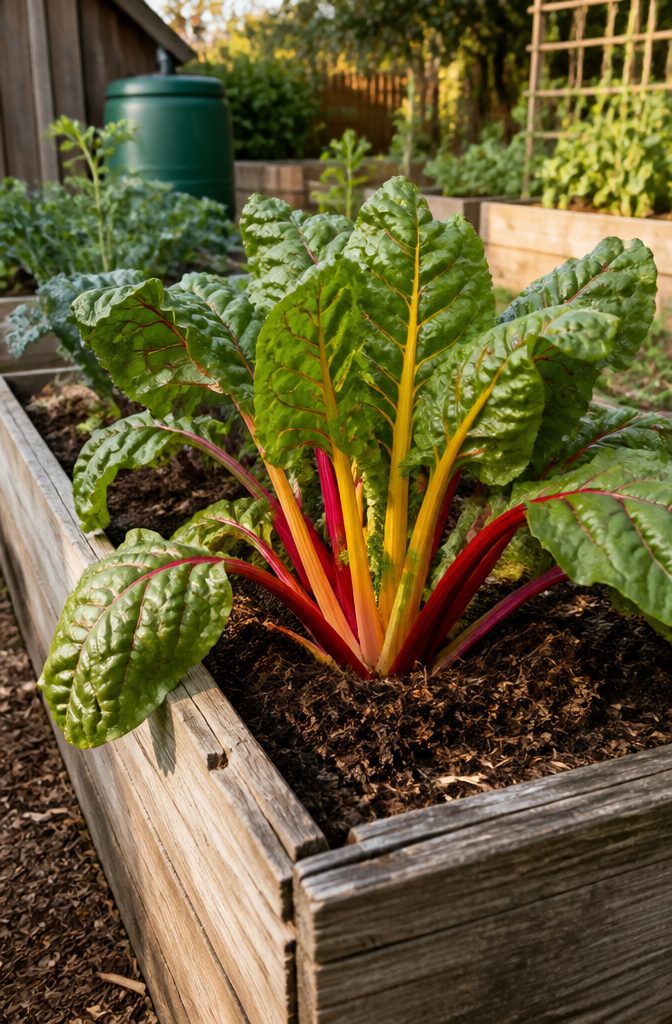
Swiss chard handles both frost and heat, so it covers more of the season than lettuce or spinach, which tend to stall once summer temperatures climb.
Plant it early in spring and it keeps producing through the hottest weeks, then carries on until after your first fall frost.
It also asks very little.
Pests and disease rarely bother it, especially compared with other leafy greens, and it doesn’t need fertilizer. A little compost pushed around the base every couple of months is enough.
Chard is a biennial, so it will stay in the bed for at least two years. For a gardener who wants low fuss, it’s an easy pick, and it’s a good-looking plant too.
Recommended Products

Cucumber Trellis Kit Includes: the complete garden cucumber trellis includes 6 curved tubes, 22×40cm straight stakes,4×32 cm straight stakes,5 equal cross connectors, 4 four-way connections, 6 equal tees, 2 straight connectors,1 * 3m garden netting,1 garden glove,100 garden ties, 20 plant support clips, 1 twist tie, 1 complete installation instruction. Garden trellis for cucumbers provides strong support for your plants to help you achieve better harvests

Assembles in Minutes, No Tools or Frustration - Say goodbye to complicated setups. Our A-frame trellis includes easy-connect joints and step-by-step instructions for fast, hassle-free assembly for plant trellis

Vegetable Trellis that Assembles in Minutes, No Tools or Frustration – Say goodbye to complicated setups. Our U-shape trellis includes easy-connect joints and step-by-step instructions for fast, hassle-free assembly
6. Peas
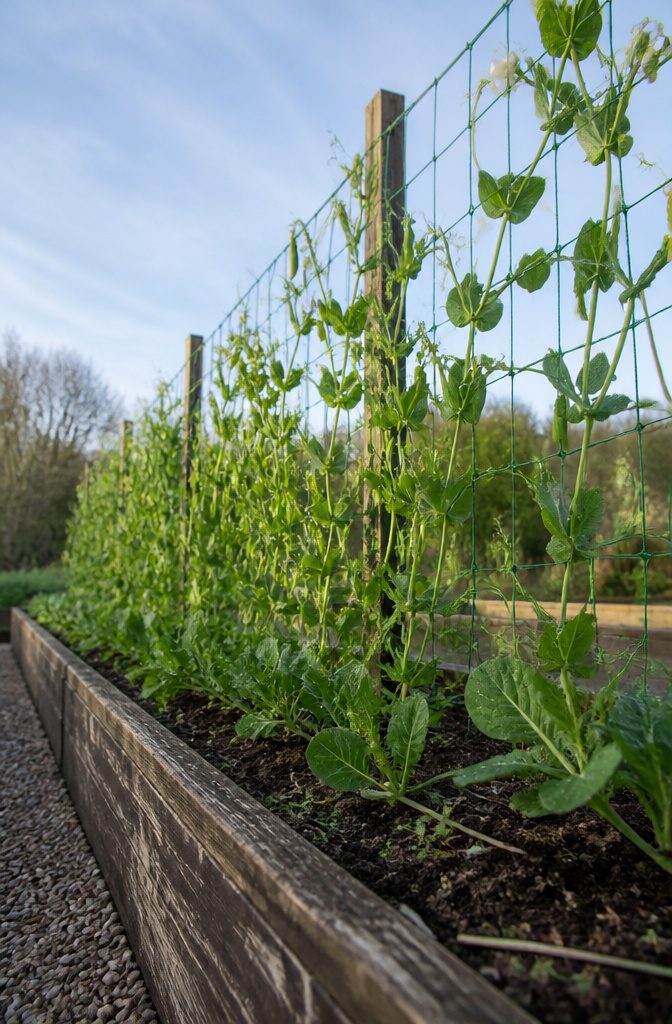
Peas climb, so run a trellis or a length of netting along the back edge of the bed, on the side that gets the most sun.
The vines take up air space instead of floor space, and the shorter crops in front stay clear of them.
Sow seed directly in the cool start of the season. Garden peas and snap peas both give harvestable pods in about 7–8 weeks, and you can eat them right off the vine.
Peas stop producing once temperatures stay consistently above the mid-70s Fahrenheit.
Don’t try to carry them through summer. When the pods slow down, pull the vines and plant a warm-season crop in the same spot.
Recommended Products
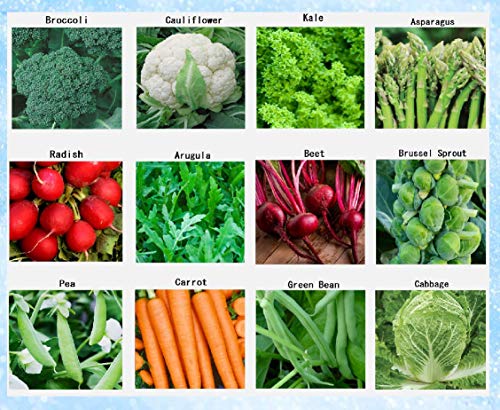
☘ 12 MOST POPULAR WINTER VEGETABLES: Radish, Pea, Broccoli, Beet, Carrot, Cauliflower, Green Bean, Kale, Arugula, Cabbage, Asparagus, Brussel Sprout.


FALL AND WINTER VEGETABLE SEEDS: 8 non-GMO heirloom varieties for planting vegetables in cool weather gardens, cold frames, raised beds, and containers
7. Bush Beans
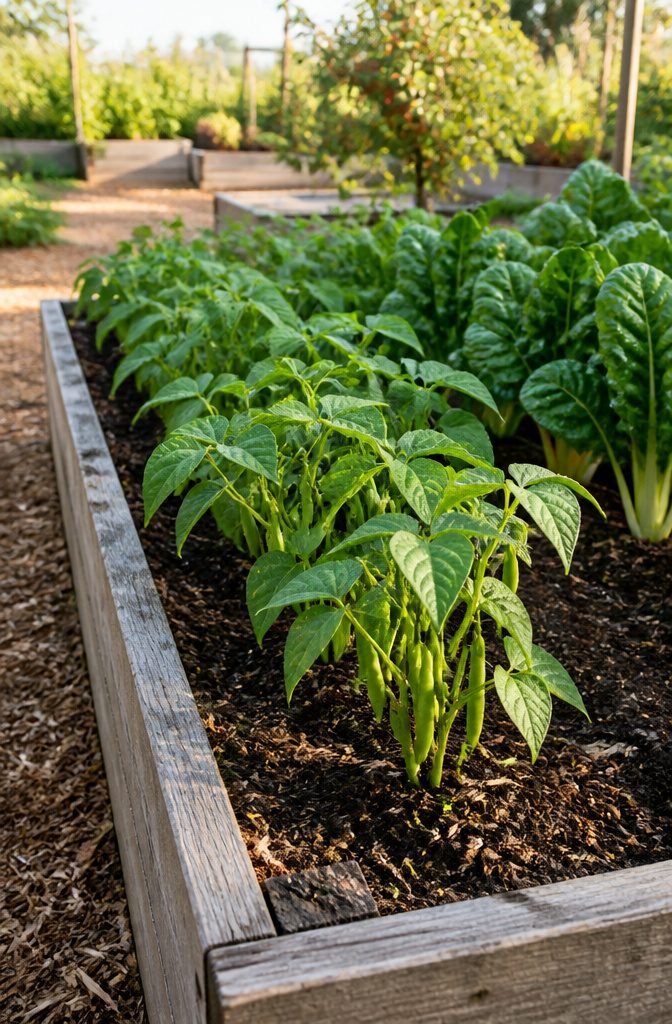
Bush beans stay compact and need no trellis, which is why they beat pole types in a small bed.
Each plant takes up less than half a square foot, so you can tuck them into any gap, and they go from seed to harvest in about 60 days.
A few plants yield loads of beans, so you’ll be picking from the same patch again and again.
Beans fix nitrogen in the soil, which helps neighboring plants and the crops that follow them in that bed. Rotate them into whichever bed you plan to fill with hungry plants next season.
Seeds cost about a penny each and sprout within a couple of days.
Wait until the soil is consistently warm before sowing, because bush beans stall in cool ground. Keep them away from onions and fennel, and keep them watered.
Recommended Products

CLASSIC HEIRLOOM LETTUCE SEEDS – Black-seeded Simpson lettuce (Lactuca sativa) is a beloved loose-leaf variety with light green ruffled leaves and sweet mild taste, ideal for fresh salads and easy harvests from spring through fall

10 LETTUCE VARIETIES – Lettuce (Lactuca sativa) varieties for your garden, including Buttercrunch, Green Salad Bowl, Iceberg, Lolla Rossa, Oakleaf, Parris Island Romaine, All the Year Round, Black Seeded Simpson, Red Romaine, and Red Salad Bowl

BEAUTIFUL RED LETTUCE - Red Salad Bowl Lettuce (Lactuca sativa) is a red oakleaf-style variety with tender, ruffled leaves and mild flavor, adds color and nutrition to fresh salads with loose leaf harvests
8. Carrots, Turnips, Kohlrabi, and Cauliflower
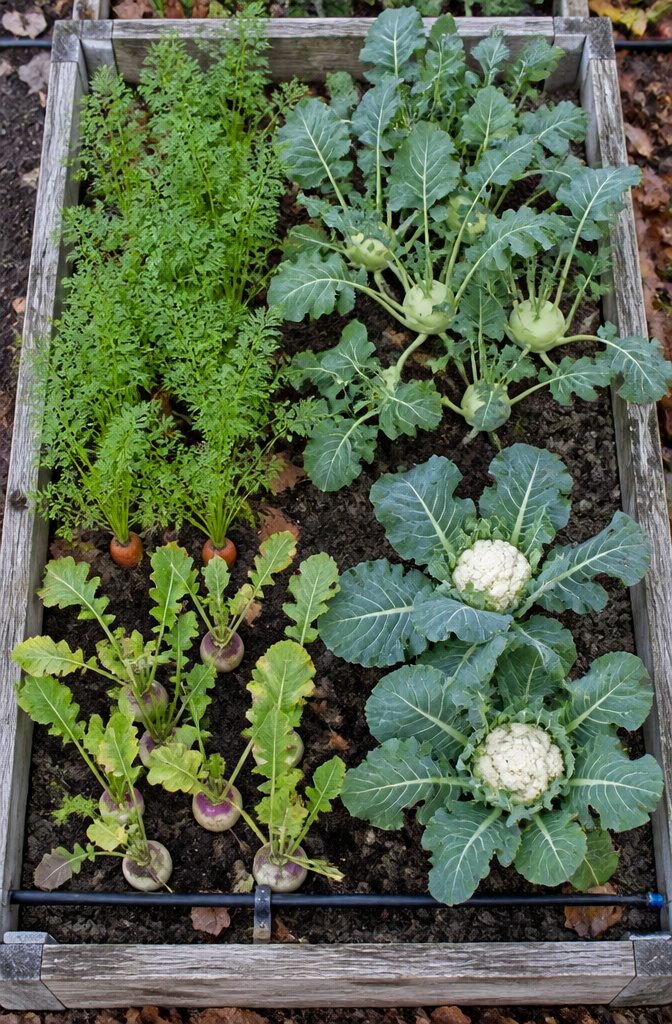
Carrots and turnips gain the most from a raised bed, while kohlrabi and cauliflower simply fit in. Grouping them by type helps:
- Carrots: A root crop. Loose raised-bed soil lets the root push down straight, and that is the main reason to grow carrots here instead of in packed ground.
- Turnips: Also a root crop, with the same advantage. Loose soil gives the root room to swell.
- Kohlrabi: A cole crop, so think of it with cauliflower rather than with the roots.
- Cauliflower: The second cole crop of the four. Kohlrabi and cauliflower can share one section of the bed.
Recommended Products

Compact Mini Romaine - Grow Little Gem lettuce with crisp green leaves and tender pale hearts. Its upright heads reach about 6-8 inches tall, a useful size for containers, raised beds and individual salads.

LONG, SWEET ROOTS - Imperator 58 carrots grow 8–10" long with smooth, tapered roots and rich orange color, perfect for juicing, fresh eating, and farmers market displays

FRENCH HEIRLOOM VARIETY – Viroflay spinach (Spinacia oleracea) produces very large, smooth 8–10" tender leaves with a mild, sweet flavor that are excellent for fresh salads and cooking.
9. Herbs
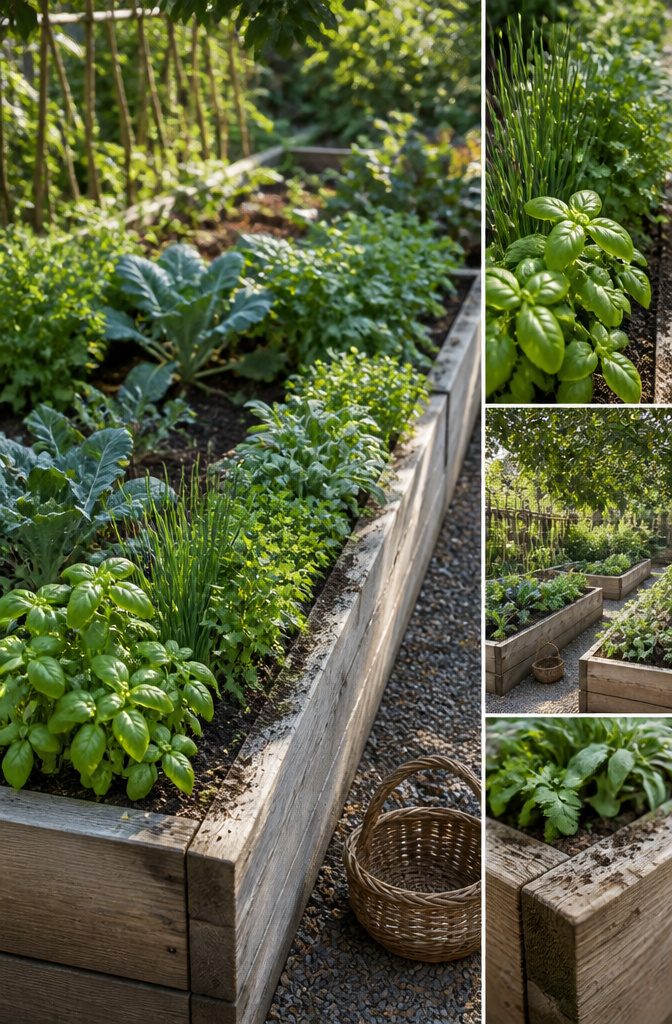
Herbs belong along the edges and corners of a bed, where they stay out of the way of larger crops. In an 8×4 or 12×3 bed, one full row down a side is plenty.
- Basil: Needs only 4 hours of sun, but it is very cold-sensitive, so plant it only after all frost risk has passed. Cut just below a leaf node and the plant grows bushier. It’s an annual.
- Chives: A perennial that regrows reliably with little attention. This is the easiest herb to keep alive.
- Parsley and sage: Both are easy and give repeated harvests, along with basil and chives.
- Cilantro: The fussiest of the five. It bolts quickly in heat, so sow a new batch every 2–3 weeks to keep a steady supply.
Recommended Products
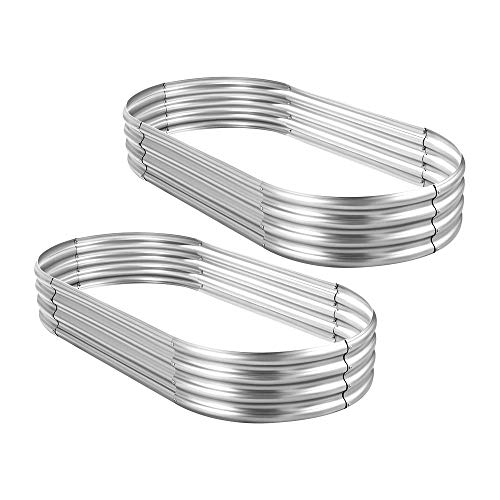
Each raised metal garden bed size: 4×2×1ft , 7Cu

More suitable raised garden bed size and Volume:67"L x 20"W x10"H, 7 Cu. Ft. You can cultivate plants, like vegetables, flowers, herbs in your patio, yard, garden, and greenhouse.

GIANT HEIRLOOM LEEK - Giant Leek seeds grow leek (Allium ampeloprasum), an enormous heirloom leek with long, thick stalks and mild onion-like flavor
10. Cherry Tomatoes
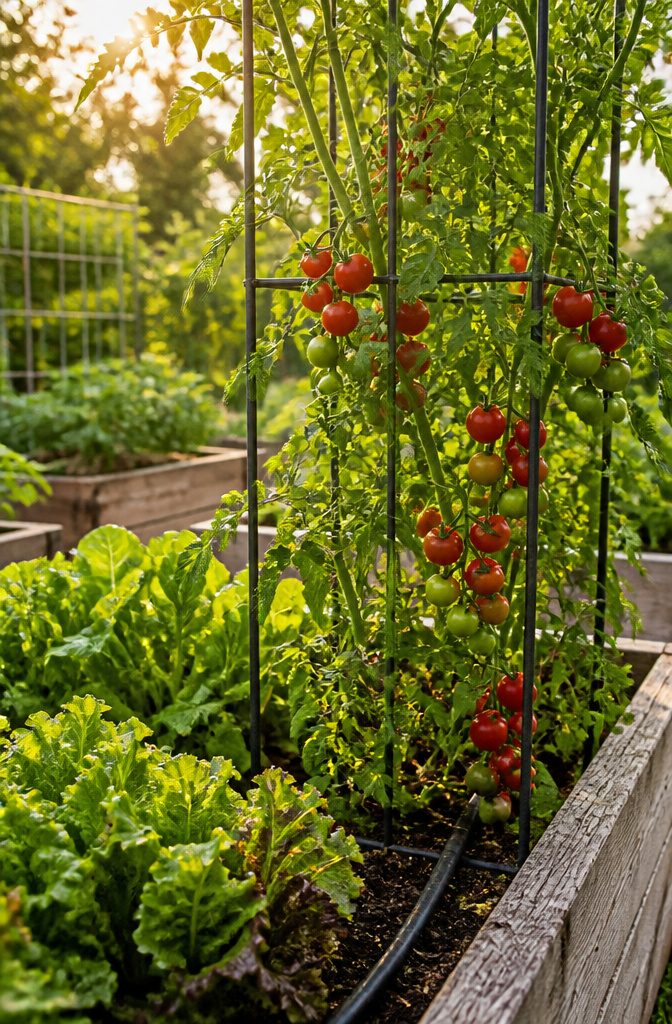
Cherry tomatoes start producing about 8–10 weeks after transplant and keep bearing heavily until frost, so they give the most fruit per square foot of any warm-season crop here.
Kids pick the bright fruit straight off the plant, and a bed with tomatoes in it looks like a real garden.
Determinate (bush) cherry types are easier to manage in a bed.
Indeterminate types also work, but they need a sturdy cage or trellis, and you should put them on the north edge of the bed so their height doesn’t shade the lower crops.
Tomatoes are heavy feeders, so keep feeding the soil through the season.
Uneven watering causes blossom end rot and cracked fruit. Drip irrigation or a fixed hand-watering schedule heads off both.
Recommended Products

【Adjustable Height Plants Trellis (11" to 48")】Perfect for Raised Beds & Tall Vines, grow any climbing plant! DIY from compact seedlings to towering vines! Match your raised bed cucumber trellis needs: Start at 11" for delicate seedlings, then effortlessly extend to 47" as your cucumbers, tomatoes, beans, or towering vines flourish! You may assemble the unit according to the picture.It can also be combined into your favorite or suitable shape.

A-Frame Design for Plant Growth: The garden trellis is designed to A-shape, allows you plant a row on the both side. And A-Frame design can maximizes the use of garden space

【HIGH COST PERFORMANCE】Besides the frame trellis, we also provide multiple accessories for your need.Includes 8 x panel trellis, 12 x screw, 6 x ground stakes,20Pcs cable zip ties,a pair of gloves.You may assemble the unit according to the picture.It can also be combined into your favorite or suitable shape.
11. Zucchini
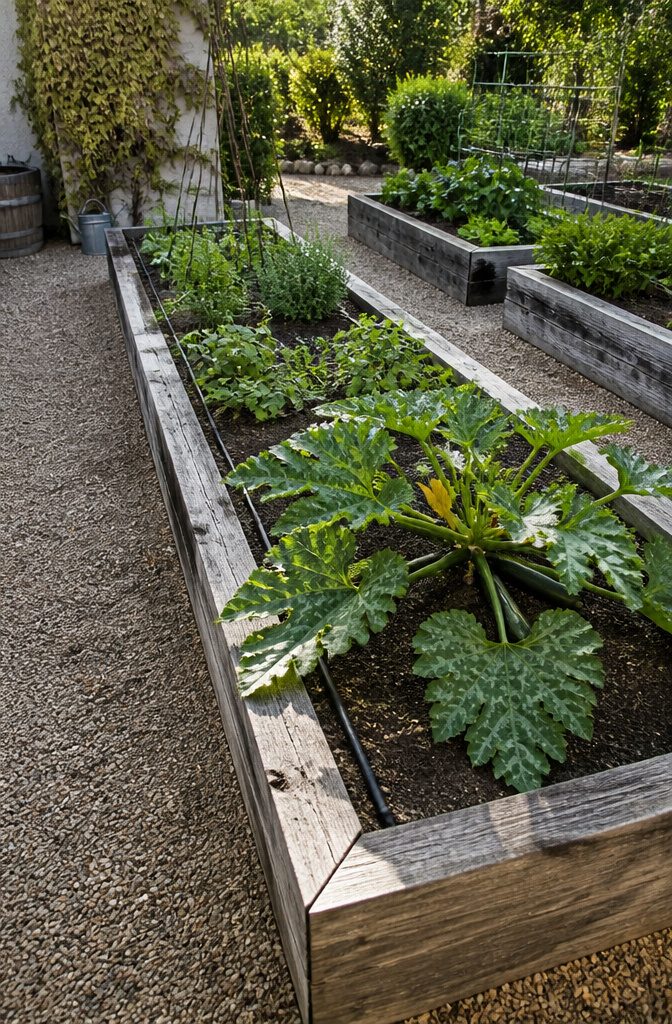
Zucchini gives you more food per plant than anything else in the bed, with first fruits 7–8 weeks after transplanting. A single healthy plant can out-produce a family of 4 in a week.
The cost is space.
Zucchini sprawls, and in a small or medium raised bed one plant is the most the bed can hold before it starts competing with its neighbors for light and root room. An 8×4 bed is a commonly recommended size.
In a long bed, give one end to the zucchini and fill the rest with compact companions like beans or herbs. In a small bed, skip it and plant something that stays put.
City gardeners should also watch fruit set. With few pollinators around, flowers can drop without ever turning into squash.
12. Flowers
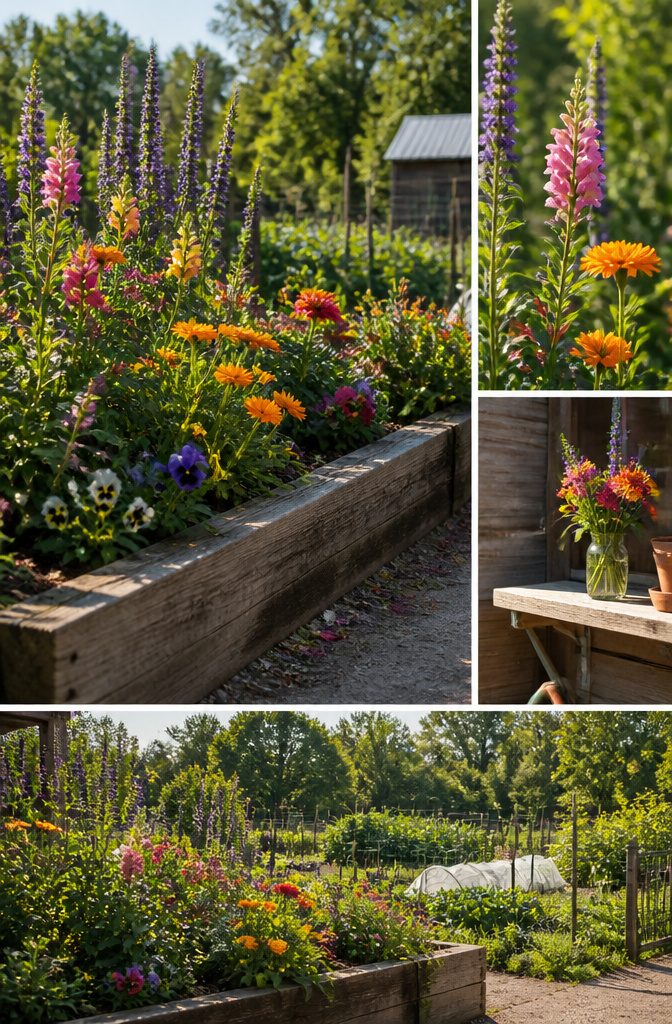
Flowers earn bed space in four ways:
- Pollinators. Blooms draw bees to beds with vegetables. Anise hyssop is a favorite (2–5 feet tall, zones 5–9), and it reseeds aggressively, so a raised bed keeps it contained. Unwanted seedlings pull up easily in spring.
- Cut flowers. A bed planted only with flowers gives you stems to bring indoors.
- Eye level. A tall bed lifts blooms closer to where you look.
- Loose soil. You control drainage and fertility, so flowers that want loose, fertile soil can grow even if your ground is heavy or poor.
Plants to choose from: snapdragons, marigolds, pansies, calendula, zinnias, ranunculus, cosmos, bachelor’s buttons, poppies, dahlias, coneflowers, lavender, sunflowers, stock, strawflowers, yarrow, black-eyed Susans, anise hyssop, pentas, and petunias.
Match Plants to Sun and Space
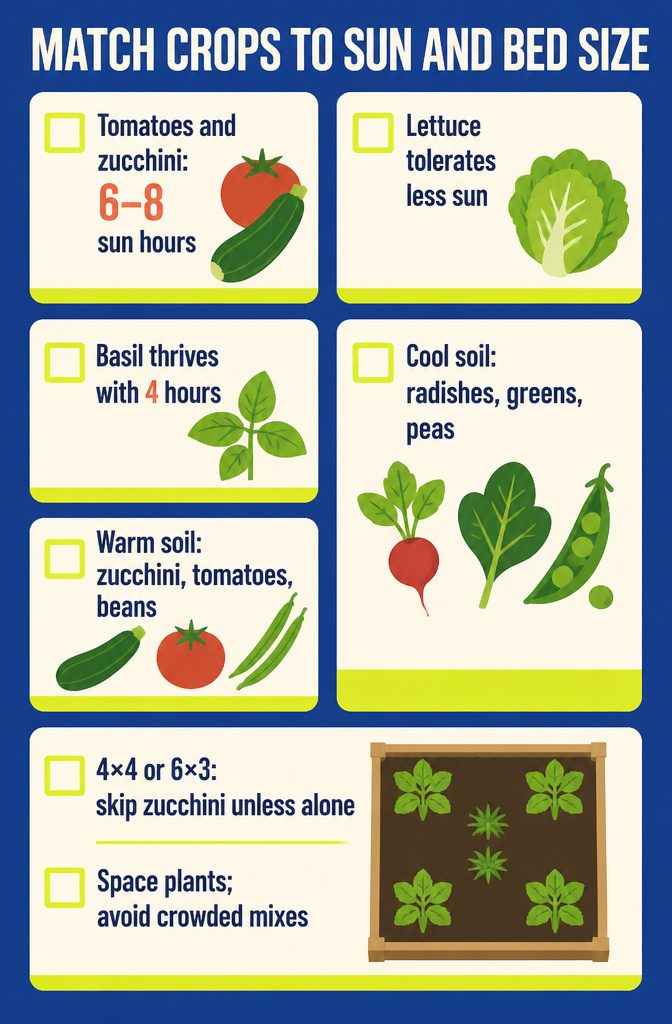
Count sunlight first. Warm-season crops such as cherry tomatoes and zucchini need 6–8 hours of direct sun a day.
In a bed that gets less, plant lettuce, which tolerates shade. Basil is the exception among sun lovers and still produces flavorful leaves on 4 hours.
Season sets what goes in when.
While the soil is still cool in early spring, sow radishes, lettuce, spinach, kale, and peas. By late spring, switch to zucchini, cherry tomatoes, and bush beans, which need warm soil.
Bed size settles the rest.
In a 4×4 or 6×3 bed, skip zucchini unless you give it the whole bed. Radishes, lettuce, herbs, and bush beans fit better, and a few well-spaced plants outproduce a crowded mix.
Why Raised Beds Suit Plants
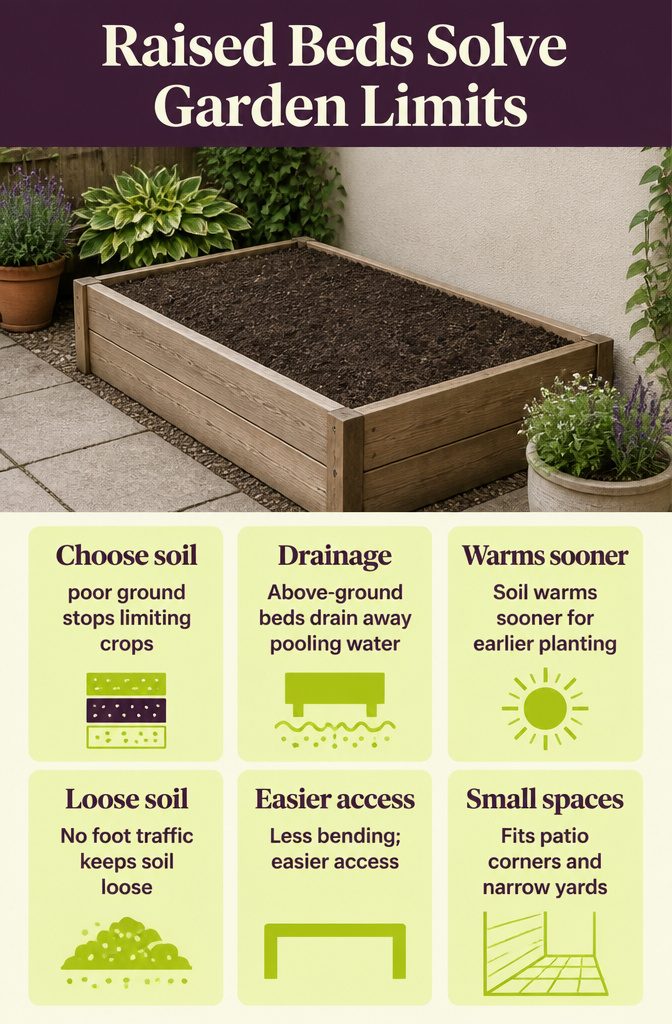
Raised beds fix a few specific problems, and most yards have at least one of them:
- Soil you choose. You fill the bed yourself, so thin or nutrient-poor ground stops limiting what you can grow.
- Drainage. Water drains out of a bed built above the ground instead of pooling around roots.
- Earlier warming. Soil in a raised frame warms sooner in spring, so planting can start earlier.
- Loose, fertile soil. Because you don’t walk on the bed, the soil stays loose for roots.
- Easier access. Less bending, and a good fit if kneeling on the ground is hard or impossible.
- Small spaces. A bed fits a patio corner or a narrow strip of yard.
- Flowers closer to eye level. Blooms sit higher, so you see them without stooping.
Block Planting and Layout
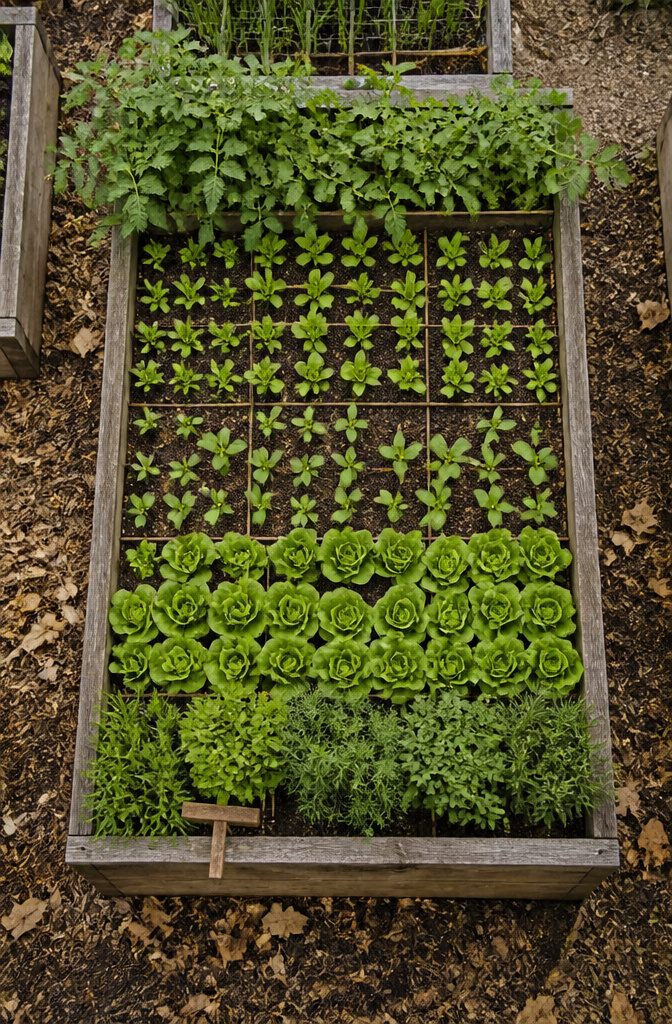
Plant in blocks instead of rows. A block is a grid of same-size plants filling a section of the bed, which leaves little soil bare and gives more harvest from the same space.
Check each seed packet first. It lists mature plant size and sowing instructions, and those spacings set the grid for that block.
Resist adding extra plants. Overcrowded plants compete for light and water, and the bed usually yields less for it.
Put tall crops like tomatoes along the north edge so they don’t shade shorter neighbors.
Herbs fit along the bed’s edges, where you can reach them without stepping in. Add supports for peas when you sow, so the vines have something to climb from the start.
Frequently Asked Questions
Which vegetables can be grown in a raised bed?
Almost any vegetable can, and sunlight and bed size decide which ones do well. Warm-season crops such as cherry tomatoes and zucchini need 6–8 hours of direct sun a day, while lettuce tolerates a shadier bed.
Corn is a poor fit because it is hard to anchor in the soil, and pumpkins and watermelons sprawl too much for most beds.