Ideas here run from potted plants you can set out in an afternoon to a built-up deck, kitchen and fireplace, and your pool type and climate decide which fit.
An above-ground pool needs its exposed sides covered, in the same wood as the deck or in large stones. Turf and dark paving hold heat on bare feet.
1. Low-Water Plants
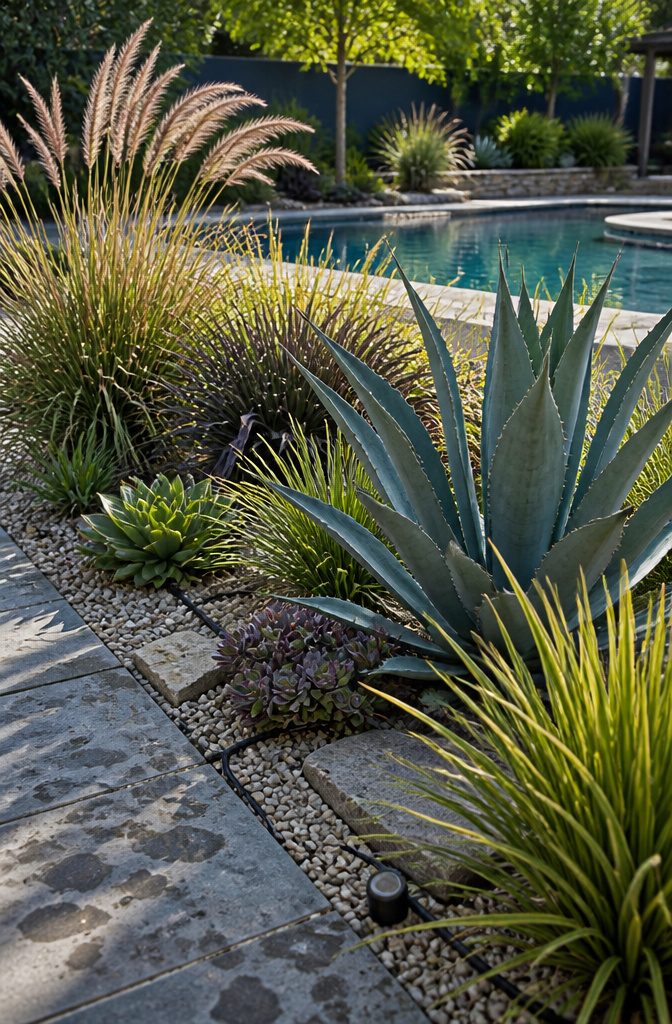
Agave and other succulents need very little water, and Fountain Grass, Maiden Grass, Dianella and Lomandra add softer texture without much upkeep.
Whatever you choose, it has to tolerate pool chemicals and extra humidity, since the bed nearest the water takes splash and spray all season. Match each plant to the sun or shade its spot actually gets.
Set the plants among stones, gravel or pavers for a rustic, low-maintenance look.
For watering, run drip irrigation or soaker hoses so water reaches the roots and not the deck. Add a soil moisture sensor and an automated timer, and the beds get water only when the soil needs it.
Recommended Products

What You Get: you will get 8 pieces of unpotted artificial plants, which are about 17 cm/ 6.7 inches in total length, and the stem is about 4.5 cm/ 1.8 inches long, cute small size and sufficient quantity is easy to meet your home decoration needs

Quantity: Package includes 1 piece artificial spiked agave plant with 23.6" diameter and height,15.7"height and 11.8" diameter.

Perfect Size for Any Space: Measuring 27.5" (70cm) in height, with a pot size of 4.3" (11cm) in height and width, this artificial agave plant fits beautifully in a variety of settings.
2. Privacy Hedges and Trees
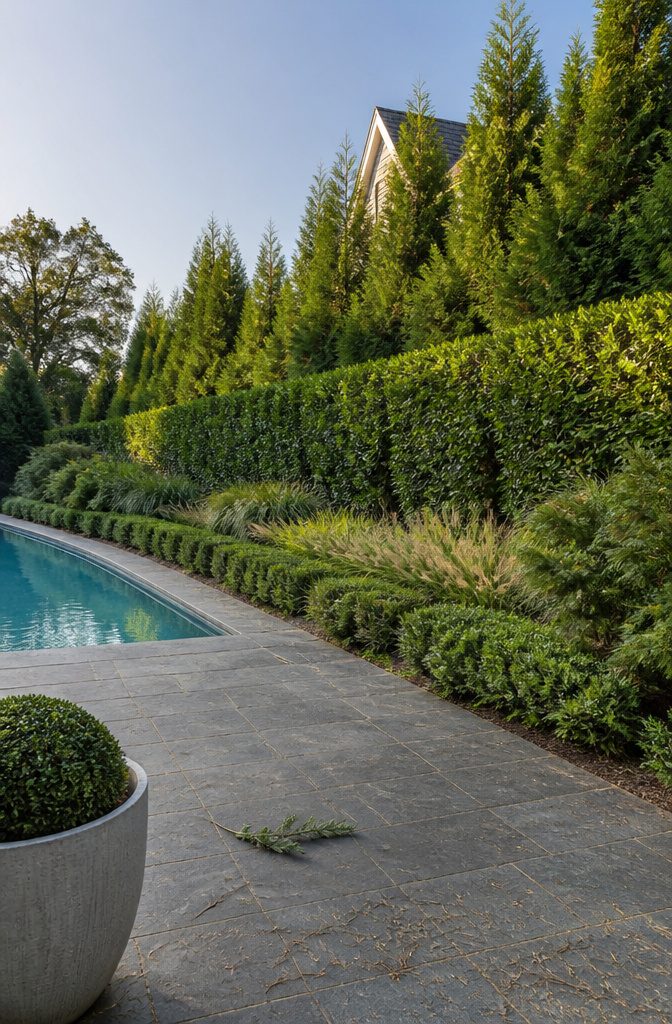
Layer the screen instead of relying on one row.
Tall evergreen trees at the back and dense, closely spaced hedges in front form a natural barrier that blocks sightlines and dulls neighborhood noise. Evergreens also drop less debris than deciduous trees, so fewer leaves end up in the water.
Boxwood and dwarf conifers suit the front layer. They stay green all year and need little upkeep.
For the property line, a living fence of native plants is the better buy. The species already suit your climate, so they need less water and fertilizer, and they feed local wildlife.
With an above-ground pool, plant native shrubs, grasses and flowers along the exposed sides to hide the walls.
Recommended Products

These are ready to plant and should be put in the ground according to the included instructions upon arrival. All pictures are of fully grown plants. Sizes shipped are in the title and description. Deciduous plants do not have leaves in the winter.

★ 3RD STREET INN HEDGE WALL - 3rd Street Inn offers the highest quality, most realistic, artificial foliage and privacy shrubs on the market today. Add 3rd Street Inn Hedge Wall's to your home, smoke shop, outdoor space, patio, driveway, and more!

【Realistic & Thick Artificial Hedge】Our Boxwood Panels not only have realistic looking leaves and our panels are much more dense with 400 pins per panel and 8 branches per pin for a total of 3000+ realistic faux leaves are not “see through” and offer better privacy Hedges. It has sun protection and will not fade due to outdoor use.
3. Tropical Planting
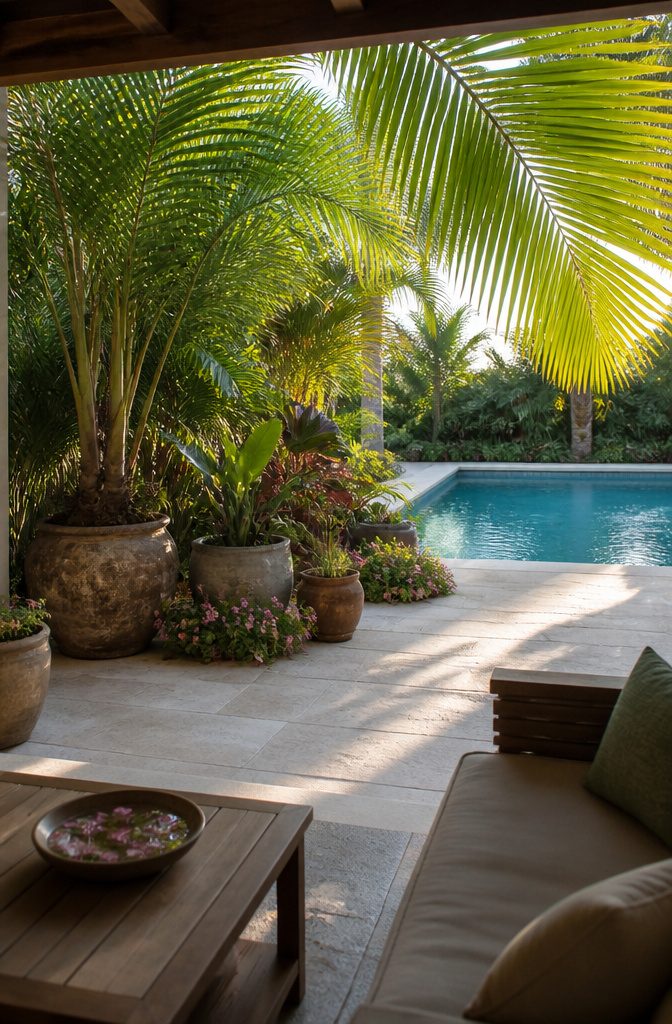
A lagoon look comes from layers: palm trees for height and shade, broadleaf tropicals in the middle, and a flowering ground cover spilling toward the pool edge.
Palms need little water and care, which keeps the budget small. Choose plants sturdy enough for pool chemicals and the extra humidity near the water.
In a colder climate, keep the tropicals in containers so you can move them indoors when winter weather arrives. Palms planted in the ground are a gamble there.
An above-ground pool needs a different move. A border of native shrubs, grasses and flowers hides the exposed sides and adds color, and it handles your local weather better than imported tropicals.
Recommended Products
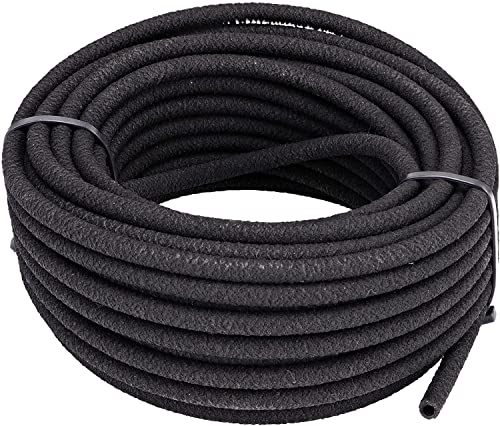
Slowly waters the soil around your plants for complete root zone hydration; Ideal for short runs on flat surfaces, such as vegetable gardens, borders, and around small plants

NO MORE HARD INSTALLATION - SET UP IN MINUTES. Tired of struggling with stiff barbed fittings? This drip irrigation system features quick-connect fittings that let you push, lock, and secure tubing effortlessly. No tools, no leaks, just a smooth setup experience. Enjoy a frustration-free installation and get your garden watering system running in minutes.
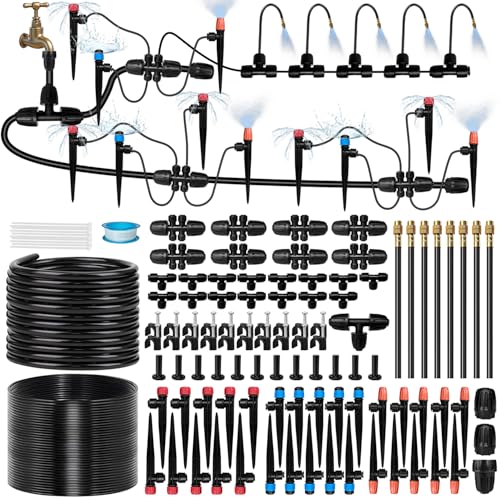
【Upgraded Tube Design & Water Saving】 Our garden watering system is upgraded to 1/2” diameter to support high water pressure. The 1/2” tee connector allows seamless splitting into 2 independent zones for customized watering schedules. By delivering moisture directly to root zones, this drip Irrigation system significantly reduces evaporation and runoff—saving more water compared to conventional sprinklers while eliminating the need for manual watering.
4. Container Plants
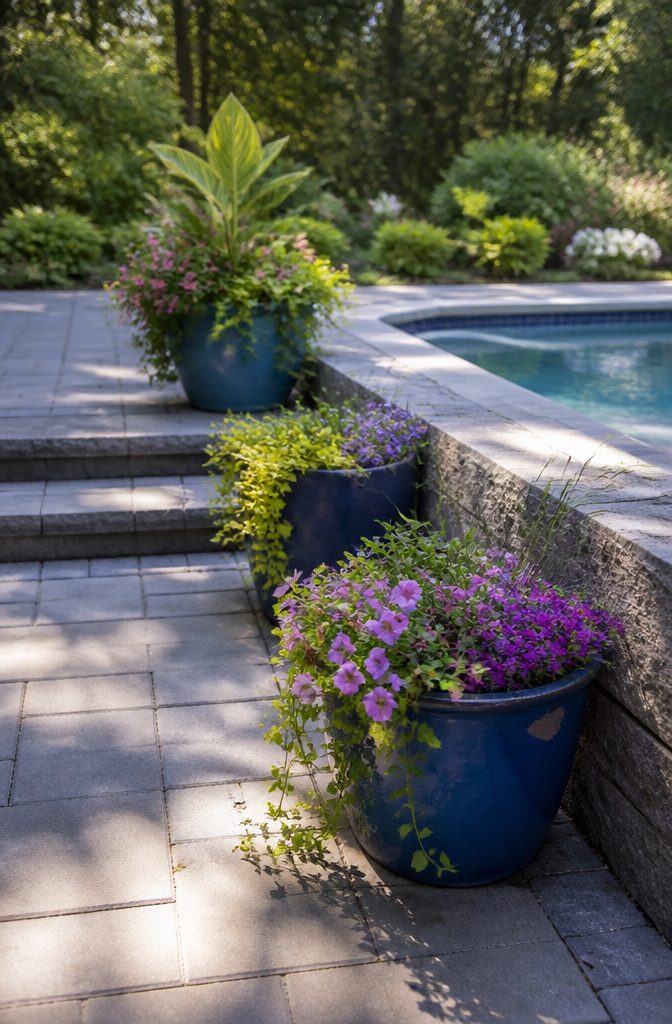
Pots give you pool-side color without a shovel, which makes them the best fit for a small yard, a patio, or a deck with no bed to plant in.
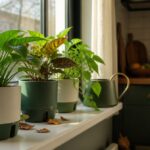
Because containers need no digging, you can set them out in an afternoon and rearrange them whenever a bloom fades or a gathering needs more floor space.
Portable cascading pots work well beside steps and along low walls.
Their trailing stems spill over the rim and soften the hard edges of paving. Pick lightweight ones you can slide around by yourself.
In colder climates, containers also let you keep tropical plants by the pool all summer. Move them into a garage or sunny room before the first frost, then bring them back out in spring.
Recommended Products
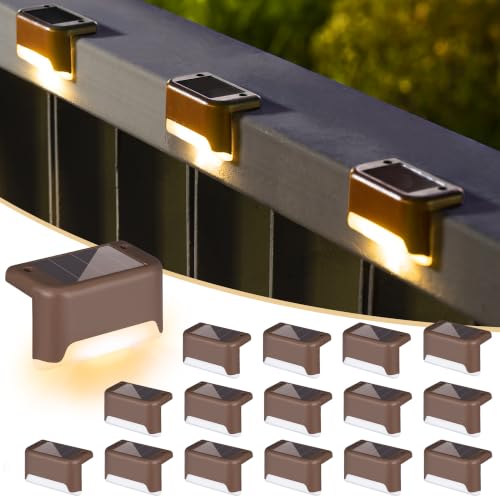
【Warm Light without Dazzling】This deck light features a 𝐁𝐫𝐨𝐰𝐧 𝐬𝐡𝐞𝐥𝐥 and warm white LED, decorate and illuminate your fence, deck, stairs, patio, balcony, yard, or garden. It ensures safer nighttime navigation for the whole family when going downstairs

【More Comfortable Performance】: GKOLED low voltage LED deck lights feature screw-free surface with minimalist and stylish design, blending seamlessly into your outdoor landscape. The full cutoff design and frosted lens can eliminate glare. These outdoor lights are ideal for deck, outdoor stairs, backyard fence, patio etc.

【Upgrade Version Solar Lights】- We have identified that traditional solar ground lights suffer from inadequate water resistance, poor rust prevention that frequently cause customer frustrations.Putting customers first, we've upgraded with ultrasonic welding for superior waterproofing and 304 stainless steel for rustproof durability, delivering brighter and longer-lasting illumination
5. Fragrant Flowers and Herbs
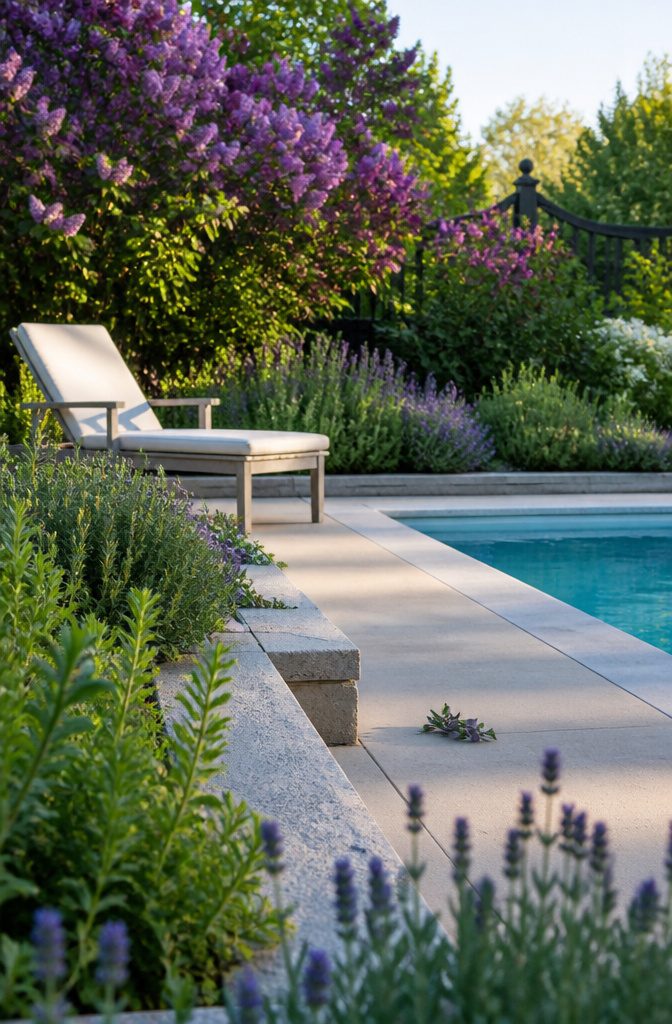
Scent reaches you in a lounge chair, which a pretty border can’t always do. Lilacs are the obvious pick: they smell good and also work as a living screen along the pool, so one planting handles fragrance and privacy.
Herbs earn their spot beside the seating or path, where a brush of your hand releases the scent.
Check the light before you buy. Note how many hours of sun each spot gets, then match the plant tag to it, because herbs and flowering shrubs both sulk in the wrong exposure.
Near the water, keep chlorinated water out of the beds. Splash-out and spills can damage plantings, so set fragrant beds back from the pool edge rather than right against it.
Recommended Products

Home Decor Accent: Transform your indoor and outdoor spaces with JUSTOYOU's lifelike agave plant artificial. Its UV-resistant properties ensure long-lasting beauty, while the realistic design adds a touch of nature to any setting

Captivating Agave: From its intricate, thick trunk to its spiky leaves, this 4 foot tall agave, complete with pot and moss, is a must-have for any nature-inspired decor.

Package Includes: this set includes three highly realistic artificial agave plants, each approximately 15.75 inch/ 40 cm and featuring 21 leaves; Their lifelike appearance makes them ideal for patios, gardens, or large outdoor landscaping arrangements
6. Cottage-Style Border
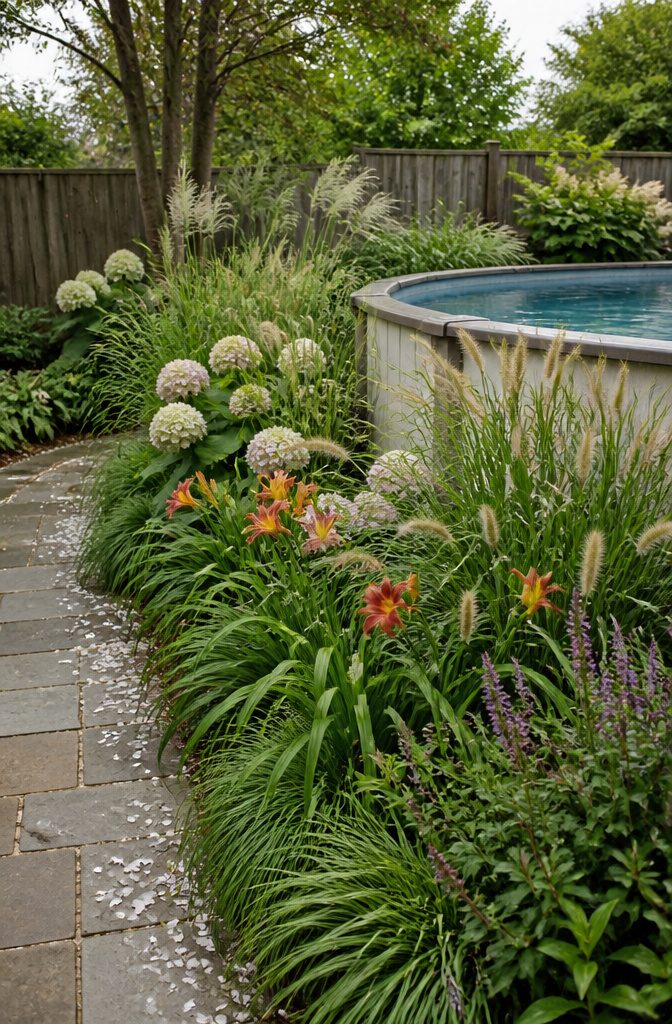
A loose mix of hydrangeas, lilies and decorative grasses gives a pool edge a softer, less structured look than clipped hedges and straight lines. Let the plants overlap so the bed reads as one relaxed mass.
The grasses do the practical work. Fountain Grass and Maiden Grass need minimal care, and their roots hold soil in place and prevent erosion.
Dianella and Lomandra are two more grasses that need little upkeep. Hydrangeas add bulk, and lilies add color between the clumps.
On an above-ground pool, a border of native shrubs, grasses and flowers also hides the exposed outer wall. If you want crisp lines instead, the formal planting below suits you better.
Recommended Products

Premium UV-Resistant Material - Crafted from high-density polyethylene, these artificial boxwood panels are lightweight yet durable. Featuring UV-resistant certification from Intertek, they are tested for sun protection and long-lasting color retention, ensuring your greenery stays vibrant indoors or out.

Dimensions: 48" Width x 12" Deep 48" Height ) Easy assembly in 10-15 Minutes as well as convenient assembly and disassembly. have installation instruction in the package

HIGH QUALITY PE MATERIAL: Our artificial fencing panel is made of high density polyethylene, UV&weather-resistant and not easy to fade. It is durable for long-term use and maintenance-free, saving your time and cost-effective.
7. Formal Geometric Planting
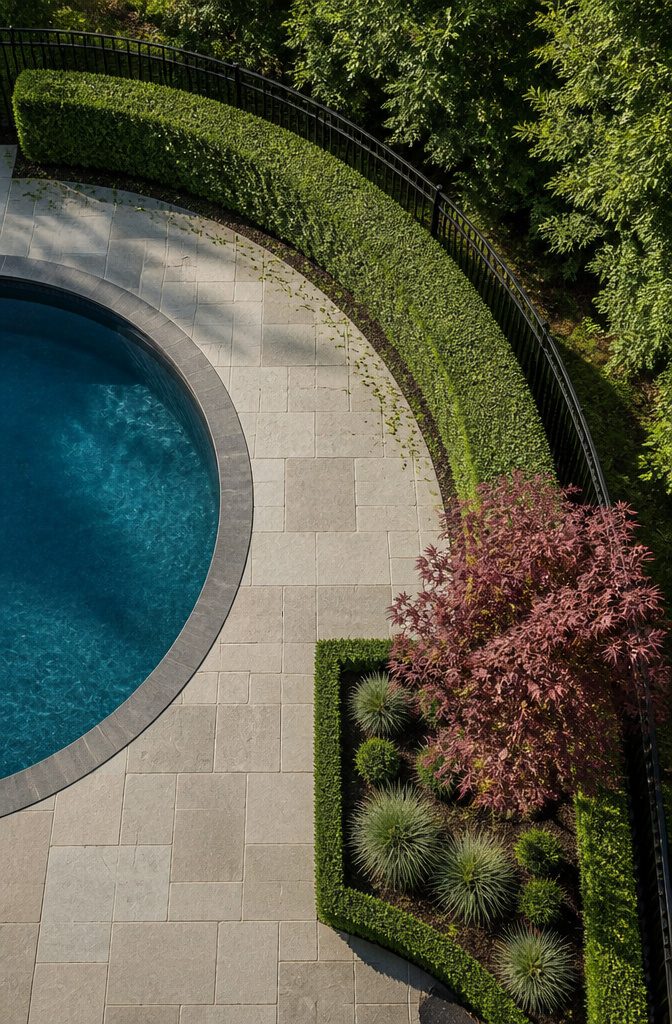
Let the planting repeat the pool’s outline.
A half-circle hedge that curves between the pool and the fence echoes a round or kidney-shaped pool and gives you privacy in the same move. Around a rectangular pool, straight-edged beds do the same job.
Boxwood is the natural hedge plant here. It stays evergreen, needs little upkeep, and takes a clipped shape well.
For the Asian-style version, keep the beds tidy and mix drought-tolerant grasses, shrubs and a few other plants. A Japanese maple makes a good focal point in that arrangement, offering shade and shape while needing little water.
The cost is time: clipped hedges need regular trimming. A formal edge that goes shaggy looks worse than a loose border, so skip this style if you won’t keep shears handy.
Recommended Products
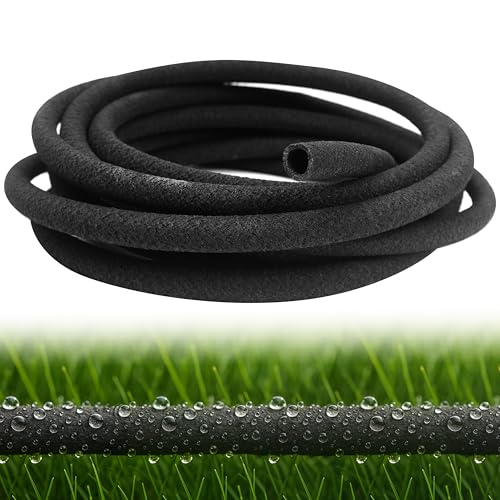
Specs: Features a 1/2" diameter and is 25ft long, providing adequate length to extend any existing watering system or drip supply.

✔Comprehensive Drip Irrigation Kit:MIXC drip irrigation system, equipped with a versatile range of components, caters to all your garden watering needs.Includes essential parts such as 197ft 1/4'' irrigation tube, 33ft 1/2'' irrigation tube, 1/2‘’ Lock Barbed Tee connectors, drip emitter streams, vortex emitters, Blue Mist Nozzles, Quick connection tees, Faucet Connector, and more.
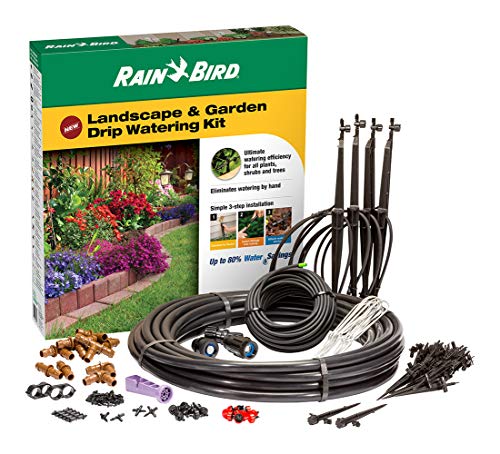
Comprehensive 108-piece kit for flower beds, gardens and landscaped areas; eliminates hand watering, saves time and money
8. Rock and Stone Landscaping
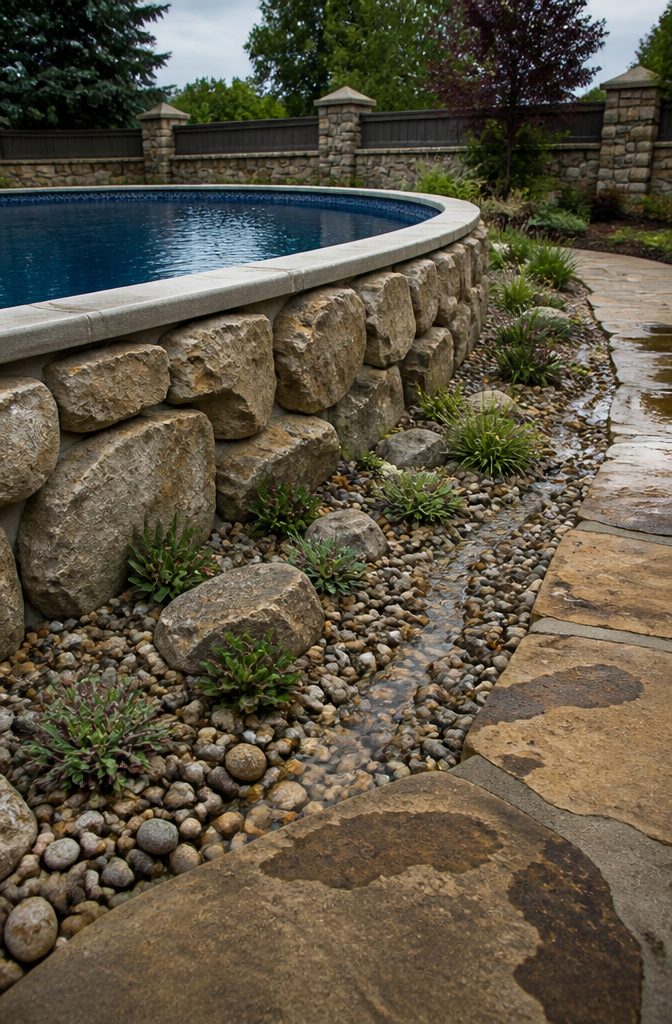
Rock beds beside a pool do practical work. They improve drainage, which cuts down on slick, puddled spots and keeps soil from washing out onto the deck.
Choose stone that matches the surrounding beds, and the whole yard reads as one design instead of a pool dropped onto a lawn.
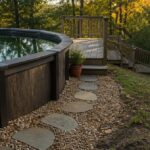
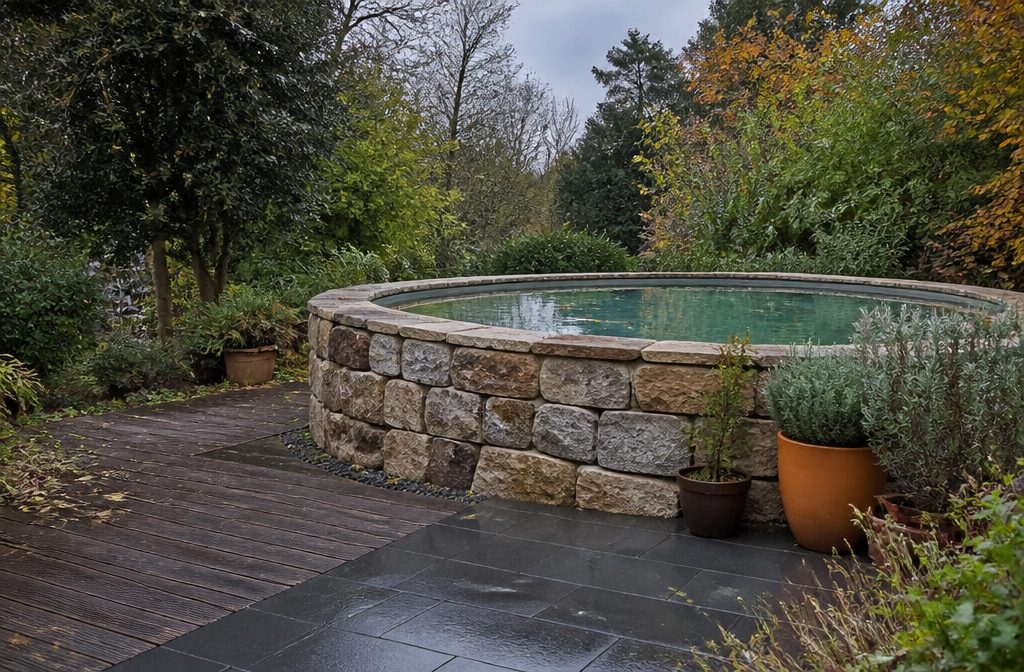
For an above-ground pool, cover the exposed sides with large decorative stones. Matching the stone to something already on the property, such as the base of a fence, makes the transition look natural.
Pair the stone with low-water plants and you get a rustic bed that needs little upkeep once it is planted.
Recommended Products

Waterproof : Our solar ground lights feature an improved hermetic seal, making them resistant to rain, snow, frost, and sleet. No need to worry about weather damage – they're built to last.
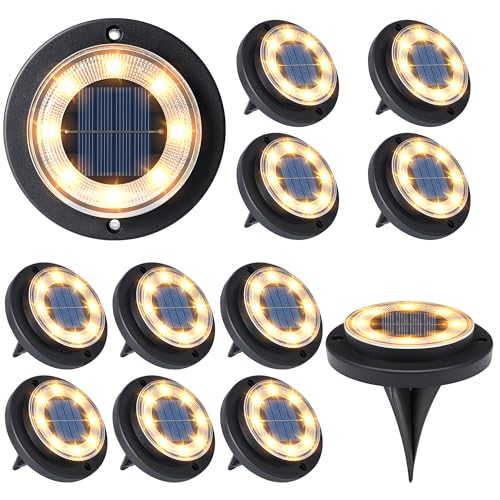
Waterproof : Our solar ground lights feature an improved hermetic seal, making them resistant to rain, snow, frost, and sleet. No need to worry about weather damage – they're built to last.

【Solar Garden Lights】Mini solar pathway lights outdoor (H 2.4"x D 2.7") made of stainless steel and plastic. The small size of this solar lights outdoor waterproof makes it more suitable as an ambient light to decorate your garden and walkways. It also serves as a perfect marker light for driveways and night games
9. Pavers and Walkways
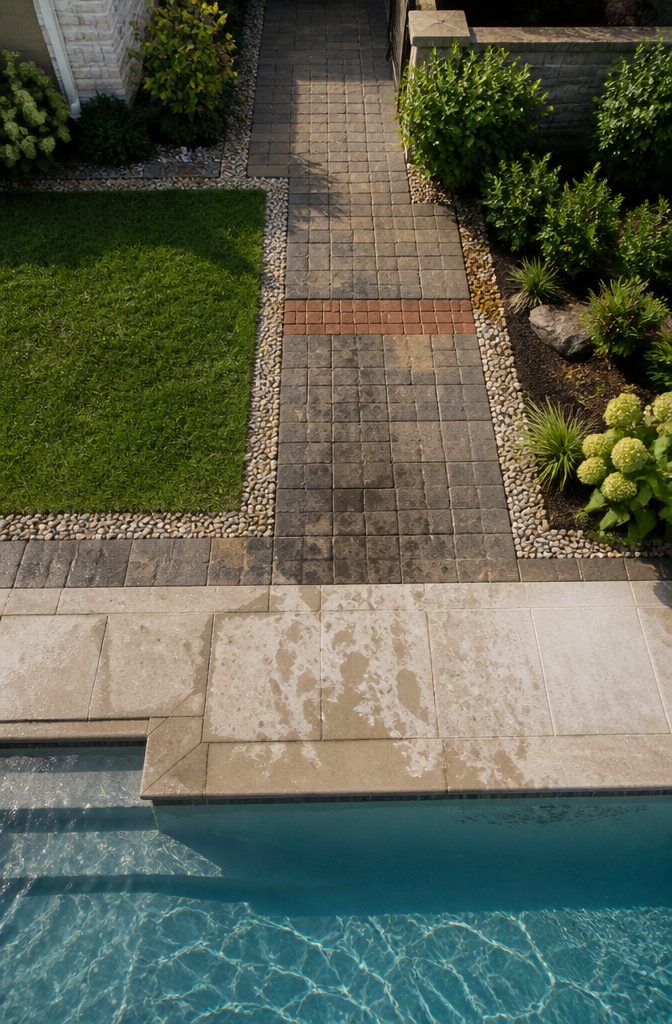
Concrete, stone, pavers, brick, gravel and wood all work around a pool, but they behave differently when wet and in full sun.
- Grip matters most underfoot. Choose durable, non-slip paving stones over smooth or polished surfaces, which get slick at a wet pool edge.
- Drainage comes second. A thin gravel border against the pool wall carries water away from the walking surface.
- Dense, dark materials hold heat, and you will feel it on bare feet in the afternoon.
- A brick or stone walkway to the house keeps wet feet off the grass, so no one tracks dirt inside.
- Pavers are the easiest to maintain and repair, and they come in many styles and colors to suit your yard.
Recommended Products

Lifelike Agave Plant: This 23” Fake Agave Plant features incredibly realistic leaves, perfectly mimicking the vibrant look of a real agave. This fake floor plant brings the beauty of nature to your space, whether placed indoors or outdoors, without the need for maintenance.

Product Design: Artificial yucca plants have a realistic appearance, without the need for watering or sunlight, always maintaining lush greenery, bringing fresh vitality.

NOTE: Comes pre-dusted for a natural, aged look. Prefer clean? Just wipe with a damp cloth to reveal the fresh green color. The dust is water-soluble, non-toxic, and easily removable — no damage to the leaves.
10. Artificial Turf
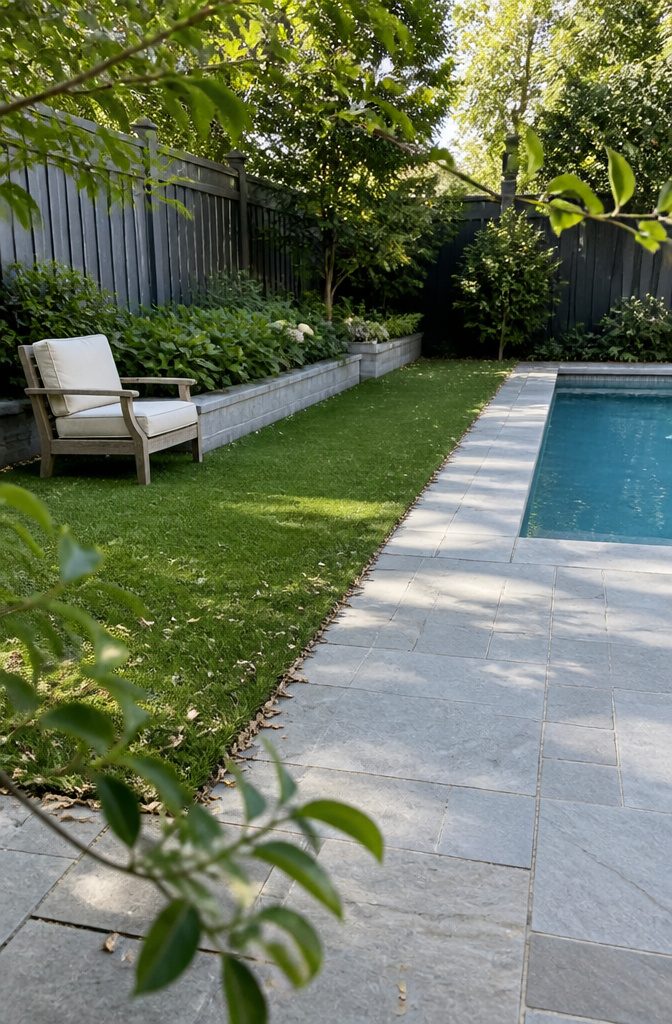
Artificial turf gives you a green poolside surface with no mowing, watering or fertilizing, which is why it appears on most lists of low-maintenance pool features.
It stays green year-round, so even a small yard gets a lawn look beside the water.
Heat is the trade-off.
Turf holds heat, so surface temperature matters more here than it does with real grass. Test how it feels barefoot in direct afternoon sun before you cover a large area.
Use turf in shaded or partly shaded spots, and keep the walking zone right at the pool edge in a surface that stays cooler. A turf patch beside the pool will serve you better than turf wall to wall.
Recommended Products

MATURE SIZE: Wintergreen boxwood grows into a dense, compact evergreen shrub reaching 3-4 feet in height and width at maturity

Artificial Fence panels for concealment, lightweight yet of high density and stability, perfect to cover ugly views, turn them into a brand new look with natural looking greenery
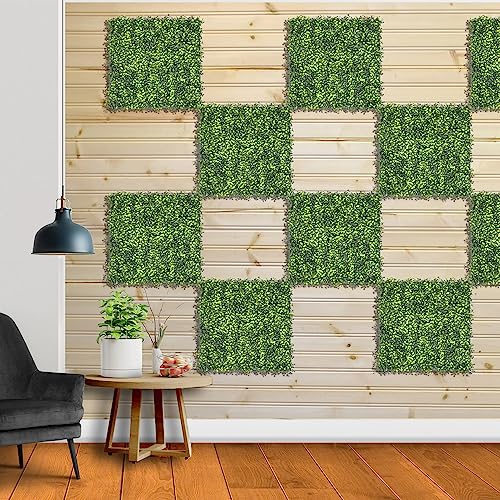
✅HIGH QUALITY: Leaf wall is made of high density polyethylene that is sun resistant, colorfast, unbreakable and will withstand all weather conditions for years to come. Ready to make any space stand out and show off your love of nature! Plus, our plant walls are odorless, giving you a natural feel right at home.
11. Deck or Patio Extension
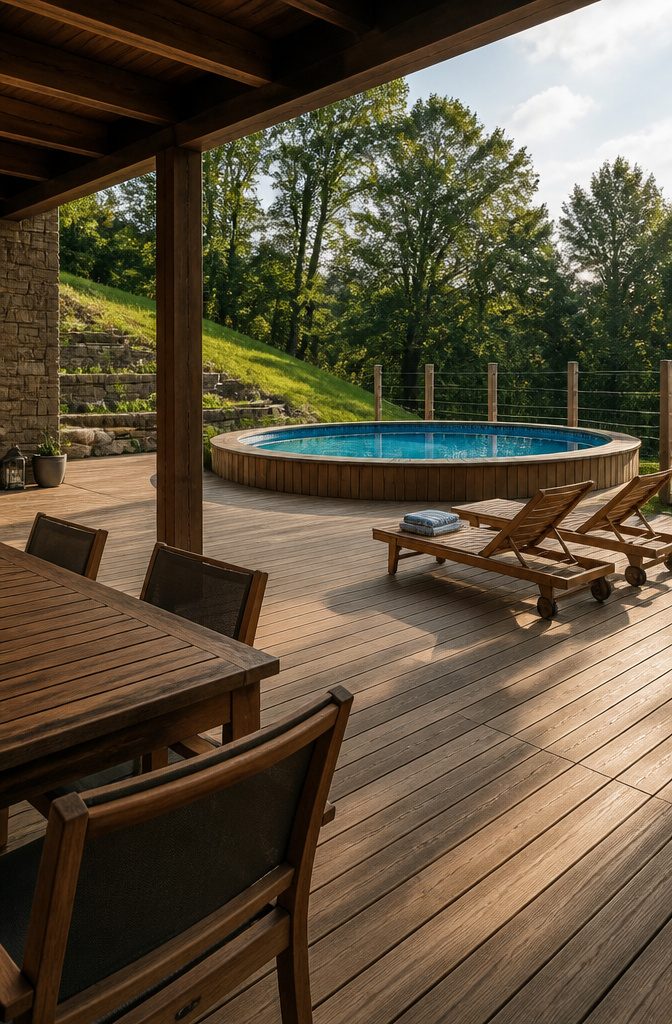
Tilly Designs gave a family that entertains a wood deck running from the patio out around an above-ground pool, which pulled the pool into the party space.
The part of the deck past the covered patio is open sun, so the loungers go there and the patio keeps the shade.
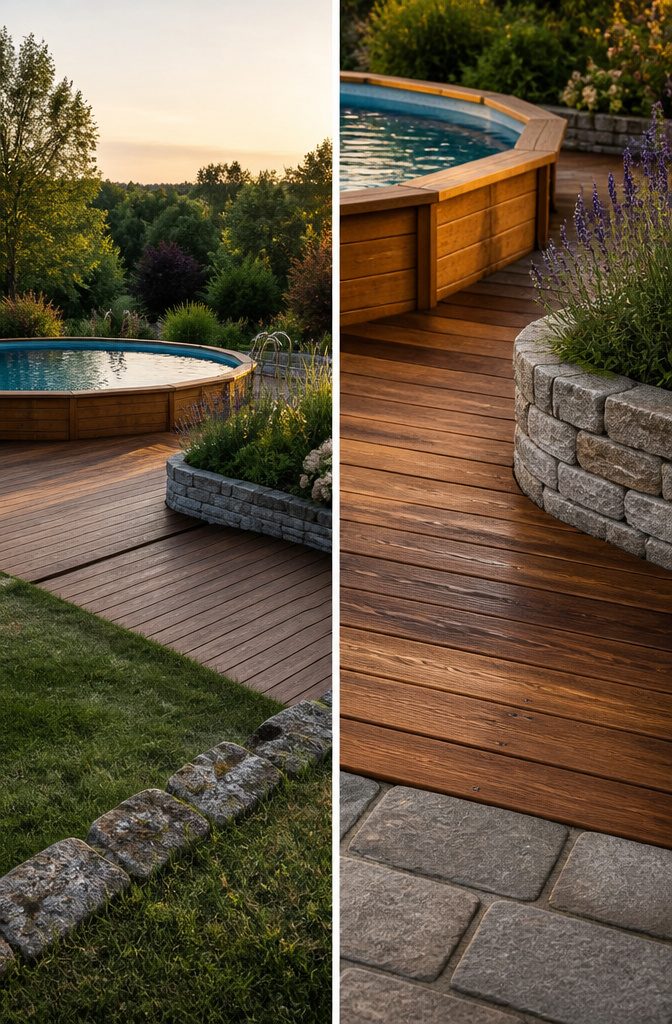
Build the deck of an above-ground pool up to the rim, then cover any exposed pool wall in the same wood as the deck.
McMillan Builders used matching wood this way, and the pool reads as part of the deck instead of a tank beside it.
On a sloped yard, a deck on posts can step down with the grade. You get level footing for loungers without regrading the yard.
12. Pool and Path Lighting
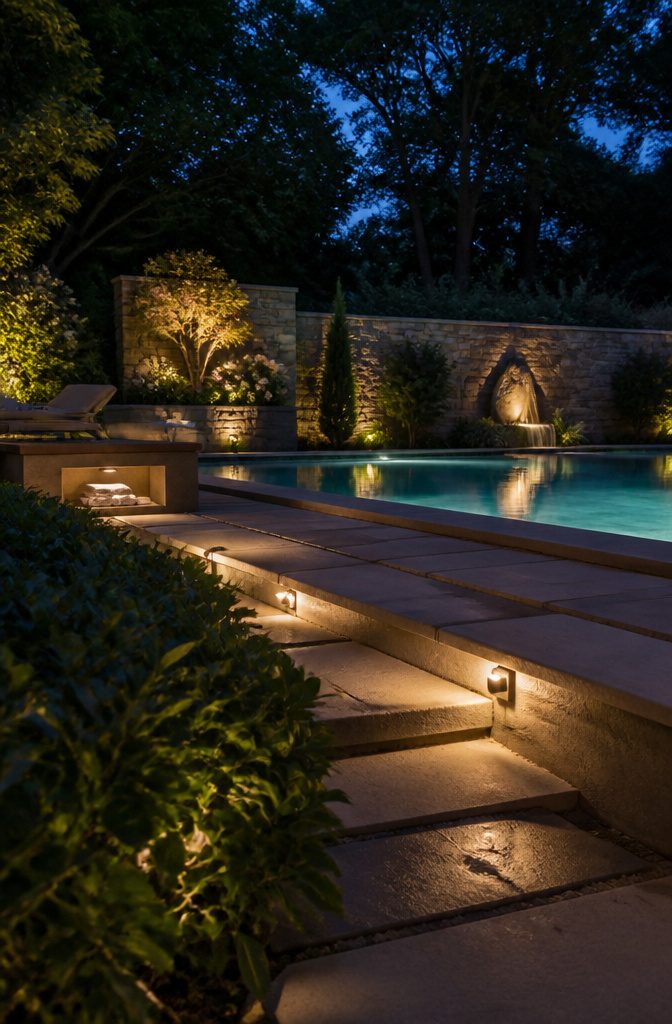
Pool lighting comes in three types: lights in the water, landscape lights around it, and task lighting where you cook, read, or set out towels.
Start by deciding whether the lighting is for safety, ambiance, or both, since that sets how many fixtures you need.
If anyone will swim after dark, light the walkways, paths, steps, and decking, so you can see the pool edge and every change in level.
For atmosphere, aim accent lights at a water feature, a sculpture, or a standout plant.
Colored or color-changing pool lights look dramatic, but a plain warm white ages better. Choose LEDs to cut energy use, and buy only fixtures rated for wet environments.
13. Water Features
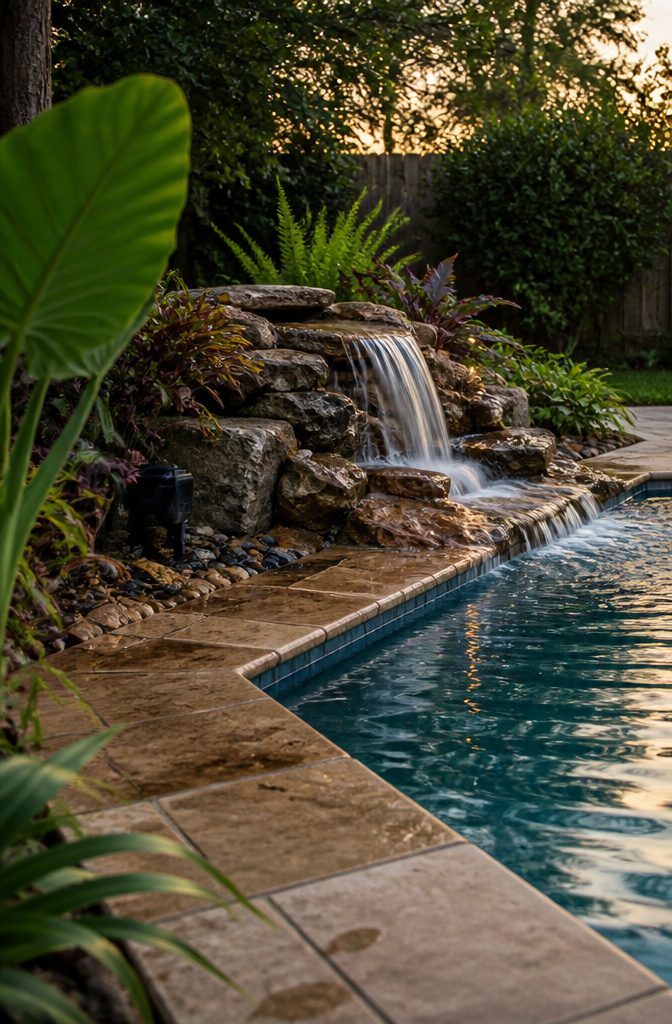
A fountain, waterfall or stream gives a pool area what plants and paving can’t: motion and sound. The splash also masks street and neighbor noise, so the yard feels more private.
A waterfall or stream that spills toward the pool gives you a focal point you can see from the patio. A single fountain suits a small space.
Moving water adds to the plumbing and upkeep of the yard. Each feature needs a pump and supply lines, so plan where the lines and power will run before you build.
Adding them later means cutting into finished paving or planting. Moving water also loses more to evaporation and splash, so in a dry climate pick one feature rather than several.
14. Kitchen, Shower and Fireplace
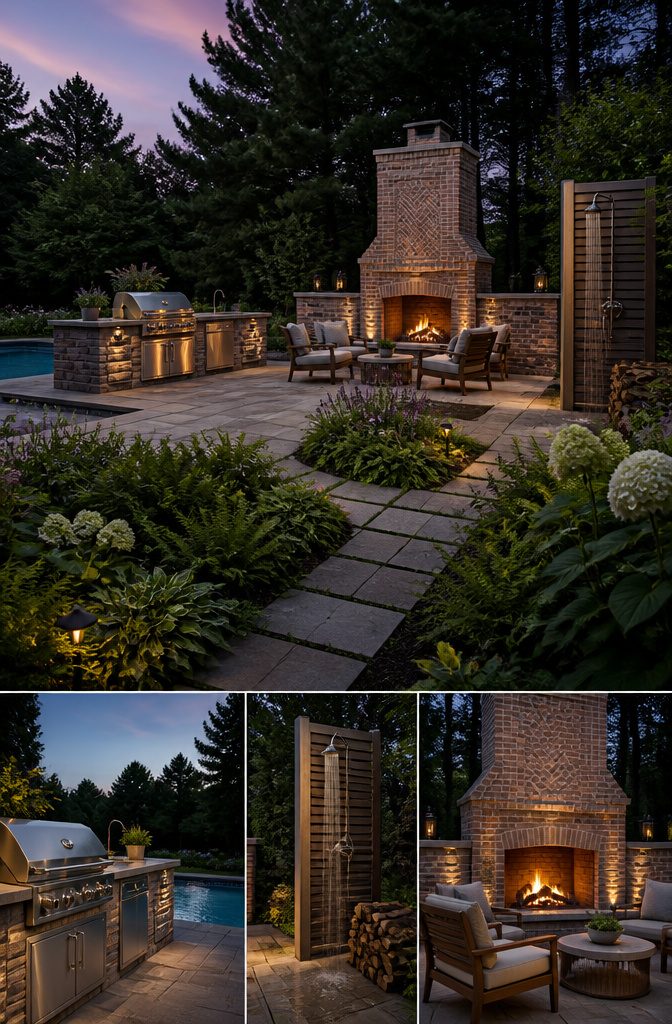
Place the outdoor kitchen close to the water.
Cooking and eating poolside keeps guests from trooping through the house, and weather-resistant materials cut the upkeep that usually makes these builds a chore. If the budget is tight, start with a grill and a counter and add pieces later.
A fireplace extends the patio into cooler months, so your entertaining space works well past summer.
Build it from brick or stone, which stay low-maintenance and last. Position it so it becomes the focal point from your seating area.
Add a shower near the pool exit. It gives swimmers a place to rinse and keeps wet footprints off the patio and out of the house.
15. Matching Materials and Colors
A naturalistic yard suits a free-form pool with stone or rock.
A structured, formal yard suits a rectangle or square with clean lines. Decide whether the materials should blend in or contrast so the pool becomes the focal point.
On an above-ground pool with a deck built up to it, cover the exposed sides in the same wood as the deck.
Beside a stone-clad pool, a planter in the same stone looks planned and gives you a ledge for drinks.
Choose decking by how it drains and whether it holds heat, because a hot surface burns bare feet. Settle use, privacy and access before buying anything.
Frequently Asked Questions
What are some low-maintenance plants for pool landscaping?
Succulents such as agave, ornamental grasses like Fountain Grass, Maiden Grass, Dianella and Lomandra, and evergreens like boxwood and dwarf conifers all need little upkeep.
Cacti and perennials are also common low-effort choices. Whatever you pick must tolerate pool chemicals and humidity, because the bed closest to the water gets splash and spray.
How can I reduce water use in my pool landscape?
Plant drought-tolerant species such as agave and other succulents, and water them with drip irrigation or soaker hoses so the water reaches the roots instead of the deck.
Add a soil moisture sensor and an automated timer so the beds are watered only when the soil needs it.
What are the benefits of ornamental grasses around a pool?
Grasses need little care and add soft texture and a calm, natural look. Their roots also hold soil in place and prevent erosion.
How can I create privacy around my pool?
Layer the screen: tall evergreen trees at the back and dense, closely spaced hedges in front.
Together they block sightlines and dull neighborhood noise. Evergreens also drop less debris than deciduous trees, so fewer leaves land in the water.
What low-maintenance features can I add to my pool landscape?
Pavers are the easiest paving to maintain and repair, rock beds improve drainage and need little care, and portable cascading pots add color with no digging.
Artificial turf removes mowing, watering and fertilizing, but it holds heat, so use it in shaded or partly shaded spots and keep the walking zone at the pool edge in a cooler surface.