Pick a shrub for the job it has to do, then check it against your sun, soil and hardiness zone.
The plant name settles less than you’d expect: one juniper cultivar stays near 2 feet while another passes 25, so the mature size on the tag tells you whether it fits.
1. Spiraea and Weigela
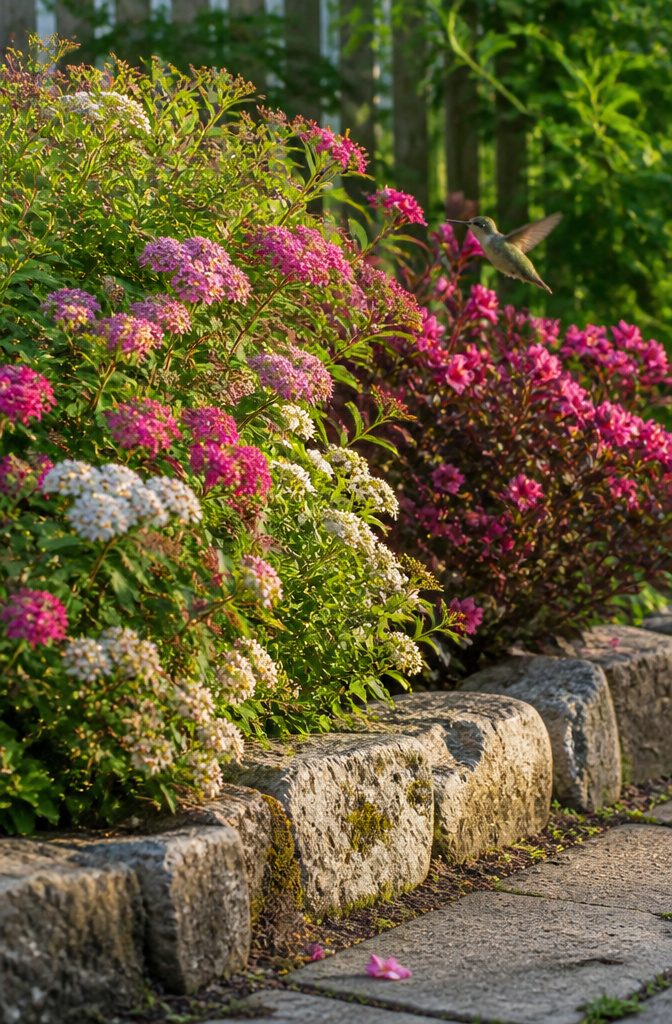
Double Play Doozie spiraea reblooms from spring to fall with no pruning, because spent flowers tuck down into the foliage while new ones open above them.
The Double Play series stays 1½–3 feet tall, grows in zones 3–8 in full sun to part shade, and comes in red, pink and white flowers. Hummingbirds visit the blooms, and deer tend to stay clear.
Spilled Wine weigela reaches 2–3 feet tall and 3 feet wide in zones 4–8, and it stays in bounds without pruning.
Its deep wine-red leaves give color all season, and magenta-pink flowers open every spring. Butterflies and hummingbirds visit the blooms, and deer tend to leave weigela alone.
Both suit small yards, and both look best planted in a mass.
Recommended Products

We cannot ship our plants to the following states: AK, AZ, CA, CO, HI, ID, MT, NM, NV, OR, UT, WA, or WY. All orders to these states will be automatically cancelled.

This Plant will Ship in a fabric Grow Bag ( see pics ) - The plants are grown in a 1 Quart nursery pot, but they will not ship in in the pot

It is fully rooted in the soil and can be planted immediately upon arrival, weather permitting. Planting and how-to-care instructions will arrive with shipment.
2. Hydrangea and Rose of Sharon
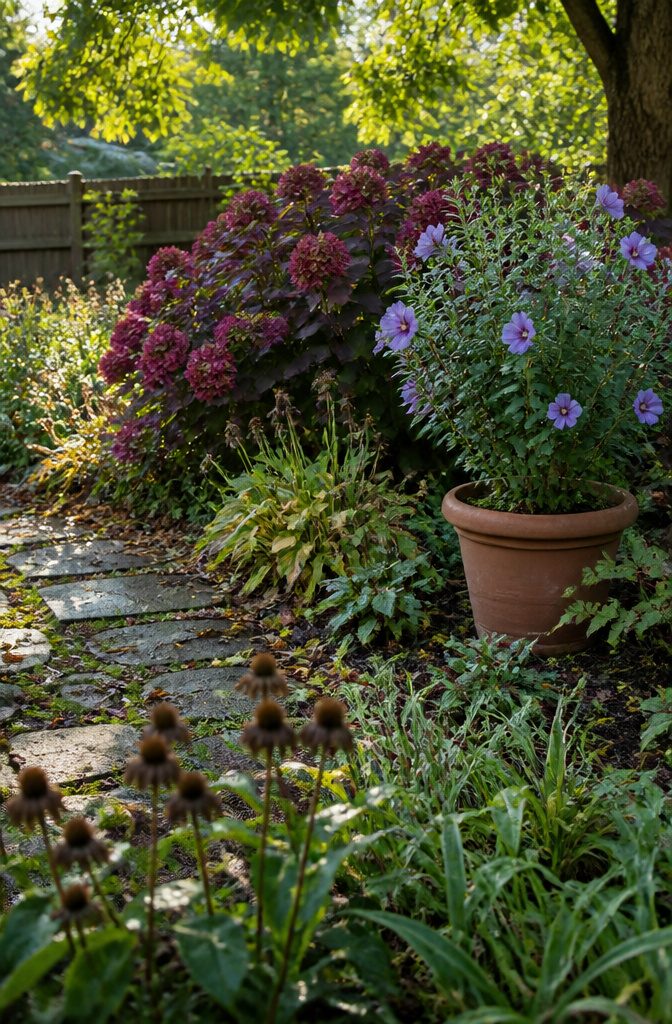
Let’s Dance Can Do! hydrangea is the one for the back of a perennial border. This reblooming hybrid grows in zones 5–9, in full sun or in part shade at a woodland’s edge.
It skips the usual hydrangea demands: no pruning, and no need for perfectly acidic, always-moist soil. Cooler fall weather brings out purple tones in the foliage and turns the flowers burgundy.
Azurri Blue Satin Rose of Sharon is the better pick for a container. It is also hardy in zones 5–9.
Its habit is tidier than the old varieties, which grew huge and thinly leafed, and it blooms all summer. It is suited to sunny sites, so a shadier corner goes to the hydrangea.
Recommended Products

Thrives in USDA zones 4-8

It is fully rooted in the soil and can be planted immediately upon arrival, weather permitting. Planting and how-to-care instructions will arrive with shipment.

Produces vibrant red flowers that rebloom throughout the season, adding lasting color to your landscape.
3. North Pole Arborvitae
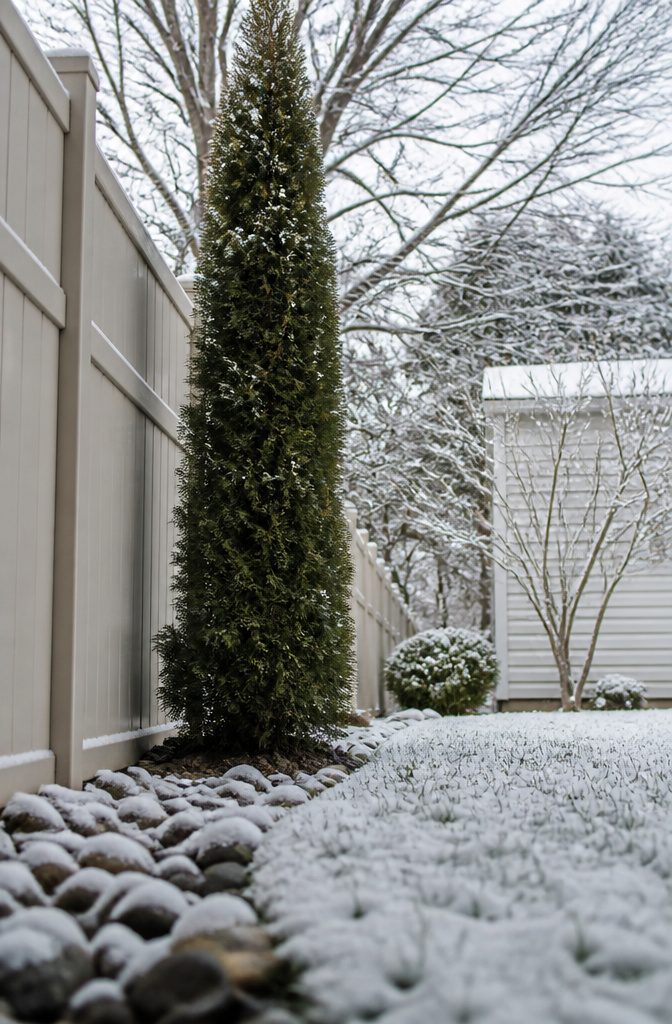
North Pole arborvitae (Thuja occidentalis) is a columnar evergreen that tops out at just 3–5 feet wide and 10–15 feet tall, which makes it narrower than common screening varieties like Emerald Green.
That slim footprint lets you line it along a fence in a tight side yard or flank a front entrance with a matching pair. It was developed in Minnesota and is hardy to zone 3.
It is also more resistant to winter burn, so the foliage keeps its dark green color through the coldest months. Give it sun to part sun.
Check the cultivar tag before you buy. Arborvitae as a group spans zones 2–8 and runs from 3 feet to over 70 feet tall.
Recommended Products

Thrives in USDA zones 3-8

Compact, hardy perennial shrub with rich blue to pink blooms, 6-12" in Tall

4. Boxwood and Inkberry Holly
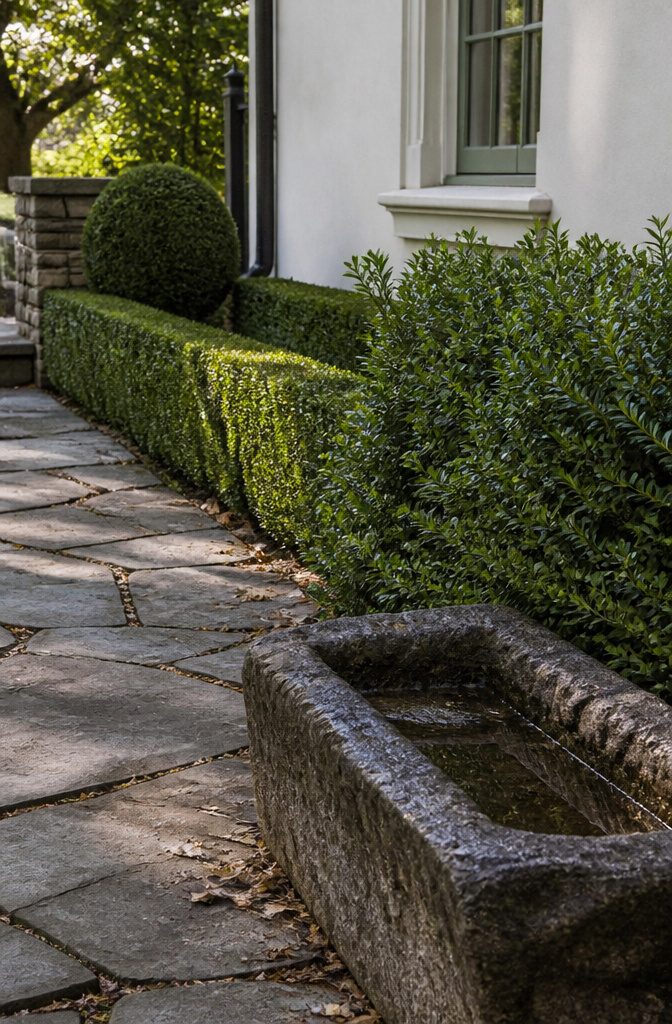
Boxwood wins when you want clipped lines.
It is among the best evergreens for shaping, which is why it shows up in formal hedges, borders, topiaries and foundation framing. It grows in sun or shade and is hardy in zones 5–9, with a few varieties reaching zone 4.
Most stay 2–4 feet tall and wide, but some reach 8 feet, so check the plant tag before putting one under a window. Sprinter fills in faster than other varieties.
Inkberry holly wins when you want a native evergreen with a naturally rounded shape.
It grows 24–36 inches tall and wide in zones 5–9, and it is branched right to the ground, so it never looks bare-legged. Inkberry needs partial to full sun, so a shaded bed goes to boxwood.
Recommended Products
We cannot ship our plants to the following states: AK, AZ, CA, CO, HI, ID, MT, NM, NV, OR, UT, WA, or WY. All orders to these states will be automatically cancelled.

These are ready to plant and should be put in the ground according to the included instructions upon arrival. All pictures are of fully grown plants. Sizes shipped are in the title and description. Deciduous plants do not have leaves in the winter.

Made for Arborvitae Trees – Formulated to support healthy growth in arborvitae and evergreen hedges.
5. Azalea, Rhododendron, Mountain Laurel
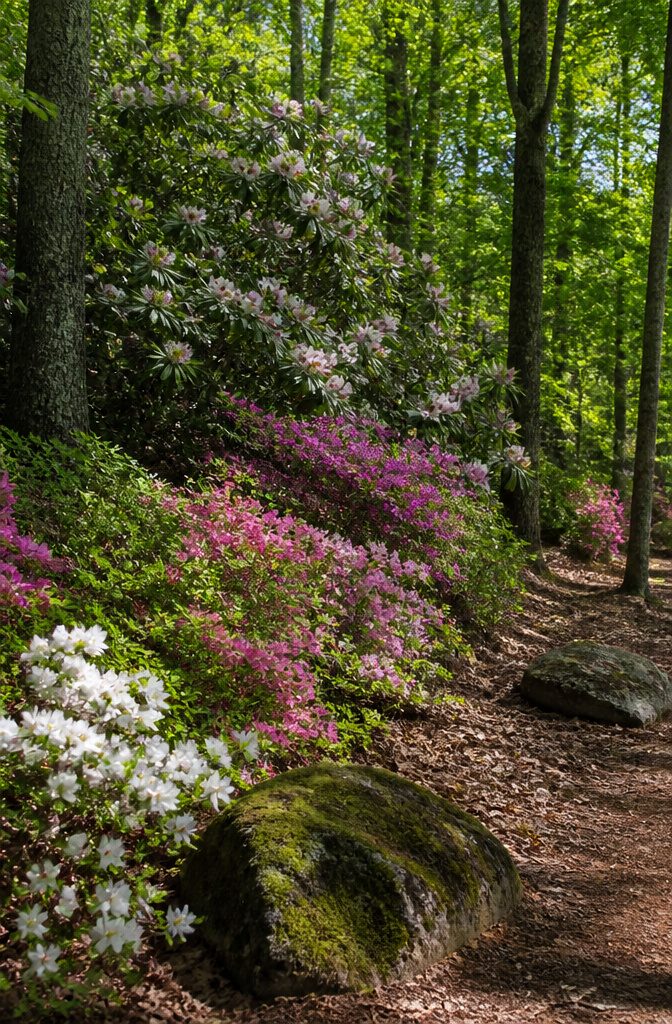
Azaleas are a type of rhododendron, and the group holds thousands of varieties, both evergreen and deciduous. Size is the first filter: plants range from 1 to 8 feet tall and wide, so check the tag.
Hardiness covers zones 3–9 depending on variety, and peak bloom lands in mid-spring. Some varieties flower as late as July, and reblooming types give a second flush in late summer.
Mountain laurel is the larger choice, 5 to 15 feet tall with an equal spread, hardy in zones 4–9. Its leathery, glossy evergreen leaves look good all year.
Cup-shaped flowers, rose to white with purple markings, open May through June. Connecticut’s state flower, it is native to southern New England.
6. Yew and Juniper
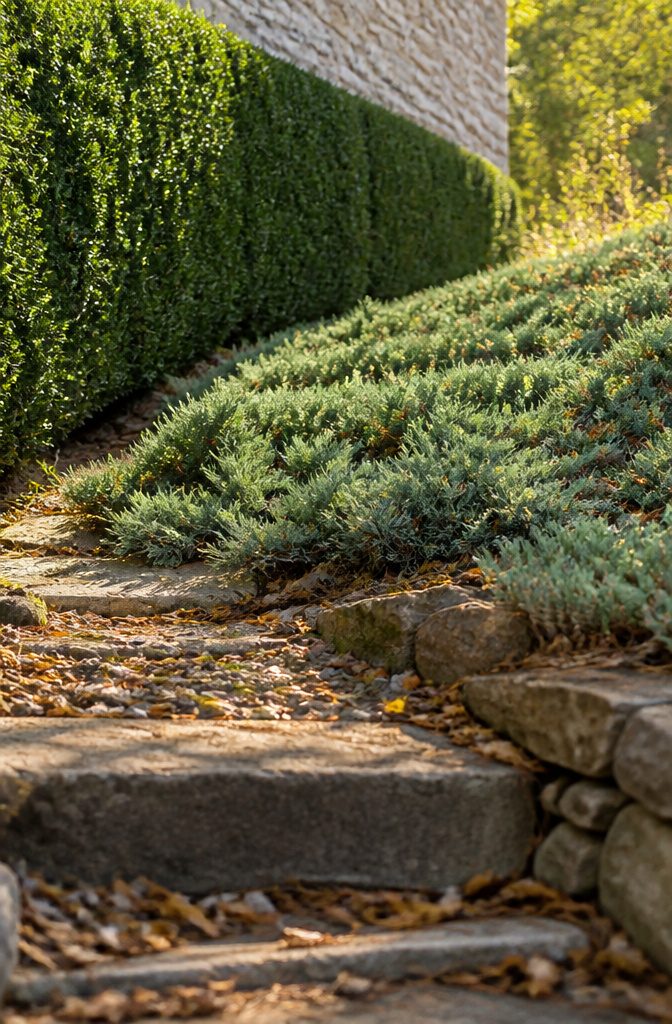
Yew is the better pick for shade, privacy hedges, foundation plantings, and clipped topiary. It grows in zones 3–10, takes full sun to shade, and runs 3–20 feet tall and 1–10 feet wide depending on cultivar.
It needs excellent drainage, so skip spots where water pools. Yews are toxic to people and animals, so keep them away from play areas and pets that chew plants.
Juniper is the pick for full sun, slopes, and deer. It grows in zones 4–9 and looks good in all four seasons.
Low cultivars stay about 2 feet tall and 3–4 feet wide, which suits slope cover. The largest pass 25 feet tall and 7–10 feet wide, big enough for a privacy hedge.
Recommended Products
Includes two Reblooming Red Weigela starter plants, each measuring approximately 6–12 inches tall and growing in a 4-inch nursery pot.

Thrives in USDA zones 4-8

For Best results, plant in usda zone: 4-8 - mature size: 18-24in H x 24-36in w
7. Oregon Grape and Blue Holly
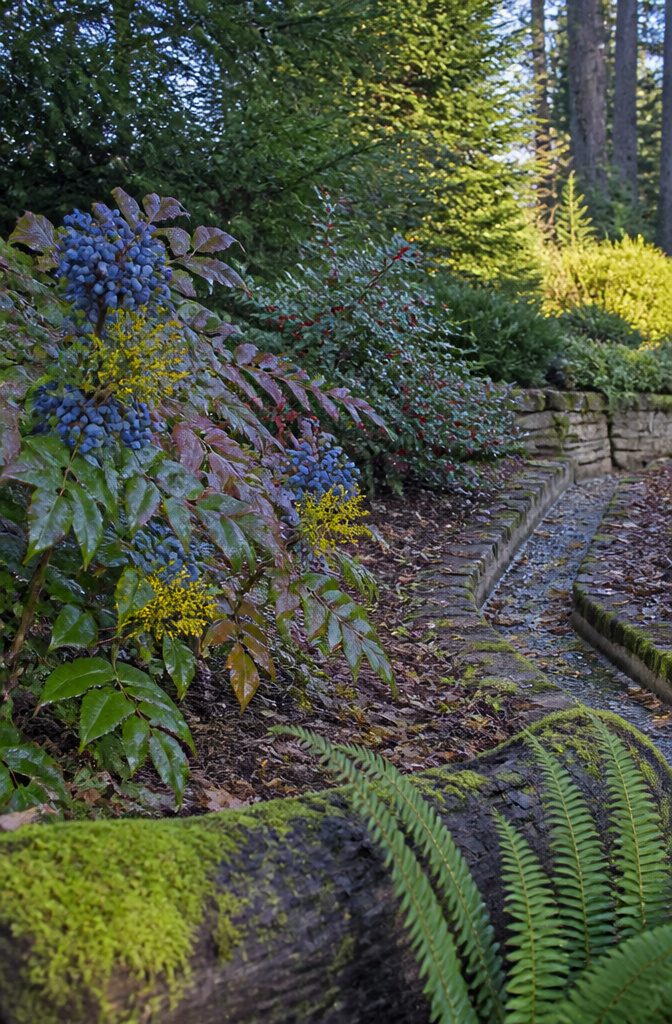
Oregon grape (zones 5–8) suits a shady spot, since it takes partial to full shade.
It reaches 3–6 feet tall and 2–5 feet wide. Yellow flowers open in spring, and clusters of dark blue, grapelike berries ripen in late summer.
The berries are edible. The shiny green leaves turn bronze red in fall, which gives you color in all four seasons.
Blue holly (zones 5–7) wants partial to full sun and grows up to 6–10 feet tall and 3–4 feet wide, depending on the cultivar. Its glossy blue-green leaves stay attractive year-round, and the red berries look striking against snow.
A male holly must grow nearby, or the female plants will not fruit. Buy at least one of each when you shop.
Recommended Products

VIBRANT BLOOMS: Features stunning pink and purple mophead flowers that bloom repeatedly throughout the growing season, creating a spectacular garden display

Thrives in USDA Zones 4 to 9

Hydrangea Live Plant in 2.5 Inc Pot, Hydrangea Tree Shrub Bush Perennial Outdoor Planting, Change Color Each Season
8. Bearberry, Cotoneaster, Winter Heath
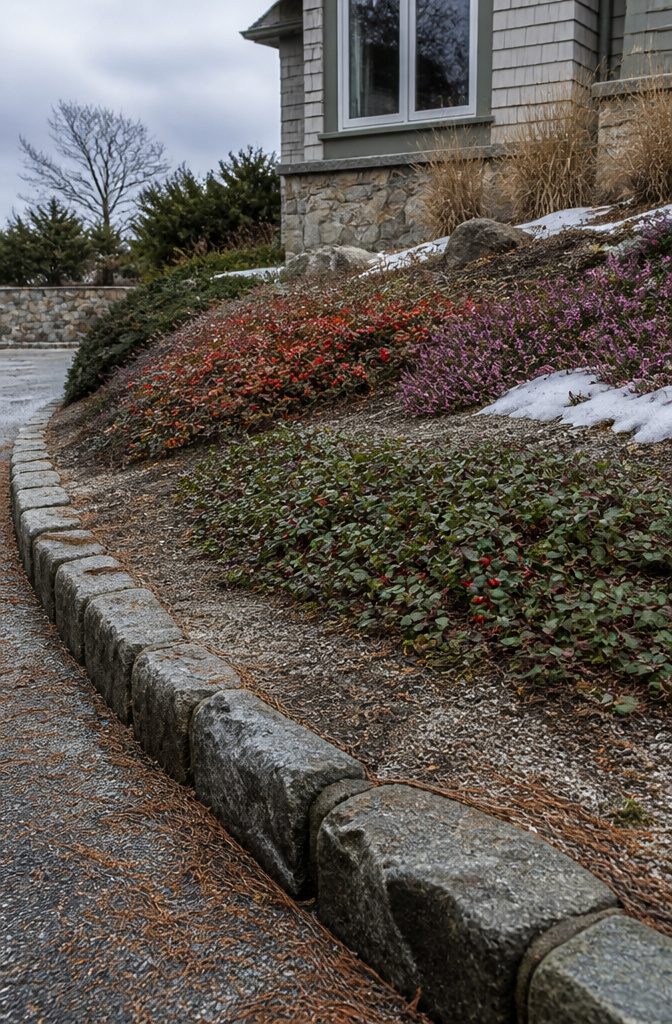
Bearberry is the pick for a cold, windy or sandy spot. It stays up to 1 foot tall and spreads 3–6 feet in zones 2–7, with pink-tinged white flowers in spring and red berries that last all winter.
It is extremely winter hardy and isn’t bothered by wind, salt spray, or sandy soil.
That makes it a good choice for a slope or a strip beside the road, where little else holds on.
Cotoneaster (zones 5–8) matches that height but spreads 4–6 feet.
Its glossy leaves turn bronze-red in fall and winter, and coral-red berries follow the spring flowers. It wins when you want color beyond the berries.
Winter heath is the smallest, with a spread of 1½ feet in zones 5–7. It blooms December through March, even under snow in northern ranges, so plant it where you can see it from a window.
Recommended Products
Made for Arborvitae Trees – Formulated to support healthy growth in arborvitae and evergreen hedges.

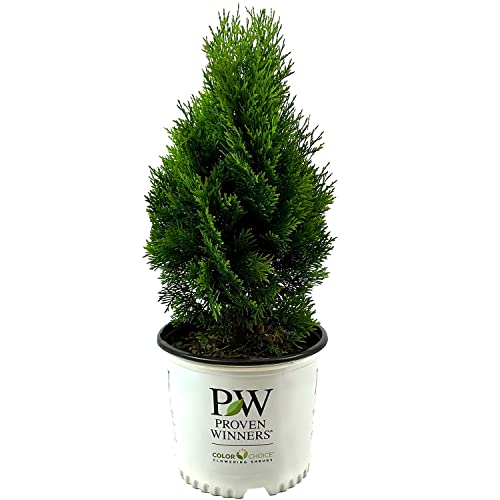
LIVE PLANT: Enjoy this outdoor green Thuja occidentalis tree all year around. An upright, narrow growing evergreen trees with rich emerald green foliage

Attention: California and Arizona residents cannot order this item due to state restrictions.
9. Abelia and Golden Euonymus
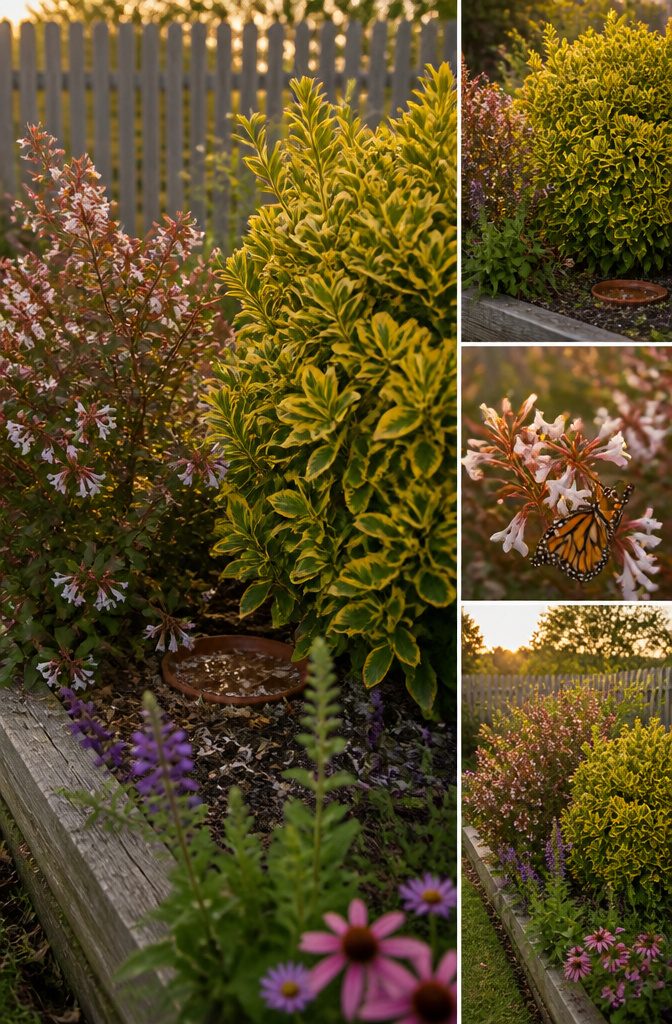
Abelia is the better choice for a pollinator planting. The flowers open in spring and keep coming into fall, so hummingbirds, butterflies and other pollinators get months of bloom.
The foliage changes color through the seasons. Size and hardiness vary by type: 2–10 feet tall, 2–8 feet wide, zones 4–11, in full sun to partial shade.
Read the plant tag before buying, because that spread covers very different shrubs. Some varieties are deciduous, so they drop their leaves in winter.
Golden euonymus is the better choice for year-round color. Its bold variegated leaves hold their color all year.
It tops out at about 6 feet tall and 3 feet wide, which fits a narrow bed, and it grows in zones 6–9 in partial to full sun. It is easy to grow and needs little care.
Recommended Products
PREMIUM QUALITY | Cold storage and humidity control for keeping the seeds healthy and fresh at all times*. MADE IN USA | All of our seeds and products' components come from...
10. Butterfly Bush, Aronia, Yucca
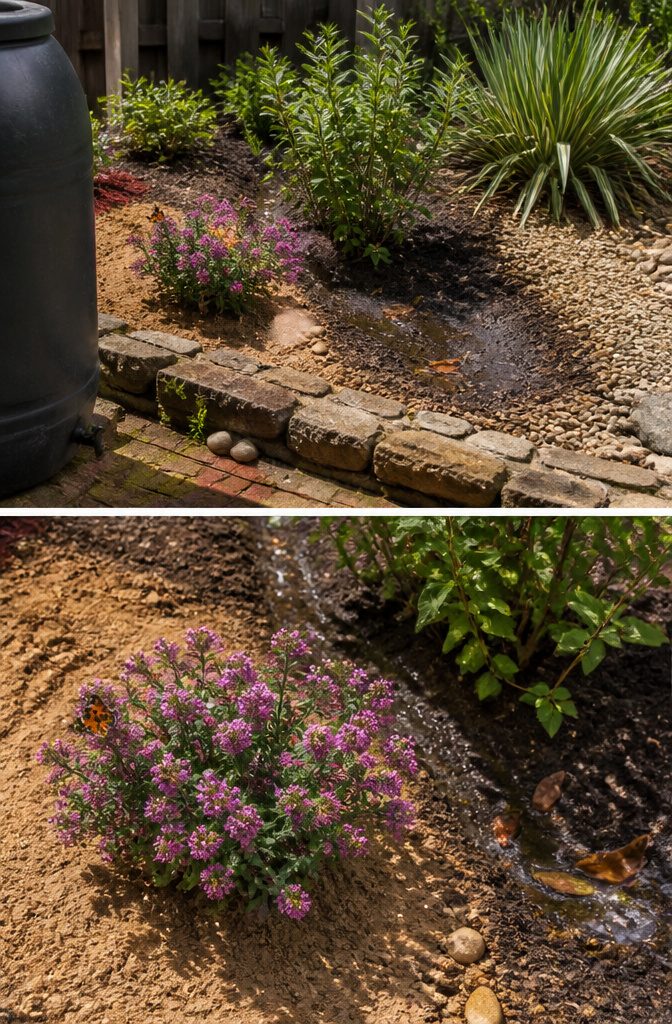
Butterfly bush suits sandy soil that dries fast.
Once established, it handles dry weather and needs extra water only during long, hot dry spells, and it draws pollinators. Pugster Pico Punch is the compact pick for foundation beds.
Aronia is the shrub for clay, because it copes with both sopping wet clay and clay baked dry.
Yucca grows in zones 4–10.
Size varies by type, from 2–4 feet tall to 30 feet, so check the tag before buying. It is drought tolerant, slow growing, and needs little care.
Choose its spot carefully, because established clumps are hard to remove. If you might redesign the bed in a few years, plant something else.
Recommended Products

For sale is one red weigela that is approximately 10-16 inches tall and shipped in a quart pot

We cannot ship our plants to the following states: AK, AZ, CA, CO, HI, ID, MT, NM, NV, OR, UT, WA, or WY. All orders to these states will be automatically cancelled.

WINE & SPIRITS Weigela florida PPAF; CBRAF
Match Shrubs to a Purpose
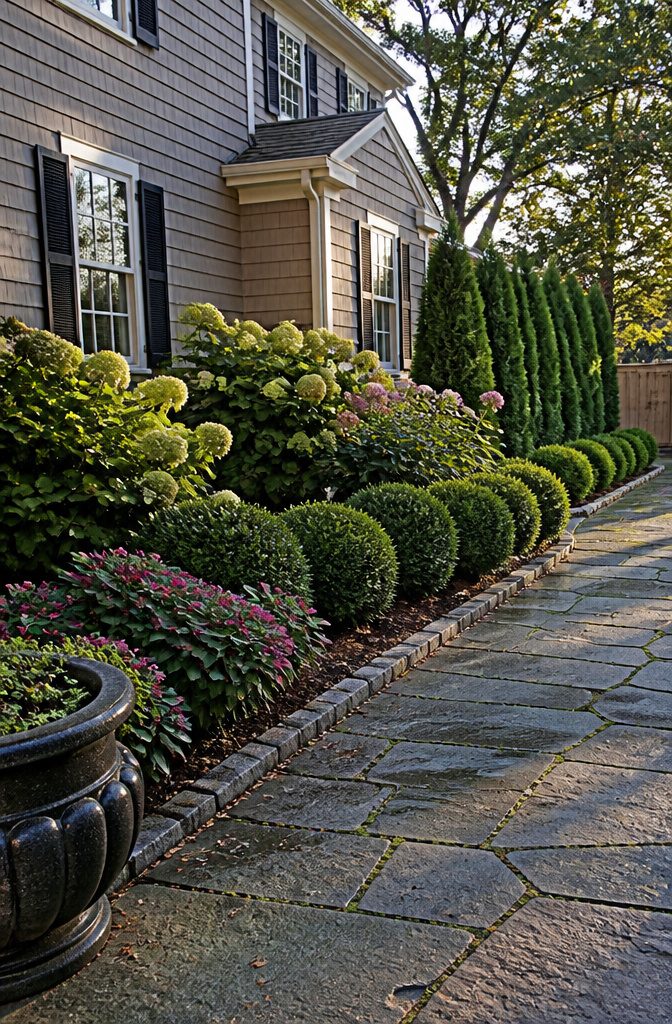
Choose by the job the shrub has to do.
For a front-of-house foundation planting, pair a bloomer with an evergreen: hydrangea, azalea, weigela, or compact butterfly bush for color, and boxwood, Gem Box holly, or compact Thuja for structure that holds through winter.
For a screen or privacy hedge, stick with evergreens, which keep dense leaves year-round. North Pole arborvitae matures only 3–5 feet wide and 10–15 feet tall, so it fits a narrow strip along a back fence better than wider Emerald Green.
For mass planting and season-long color, Spilled Wine weigela stays 2–3 feet tall and 3 feet wide with no pruning.
Boxwood suits clipped borders and topiary. Bearberry and cotoneaster suit slopes.
Sun Hours and Soil Type
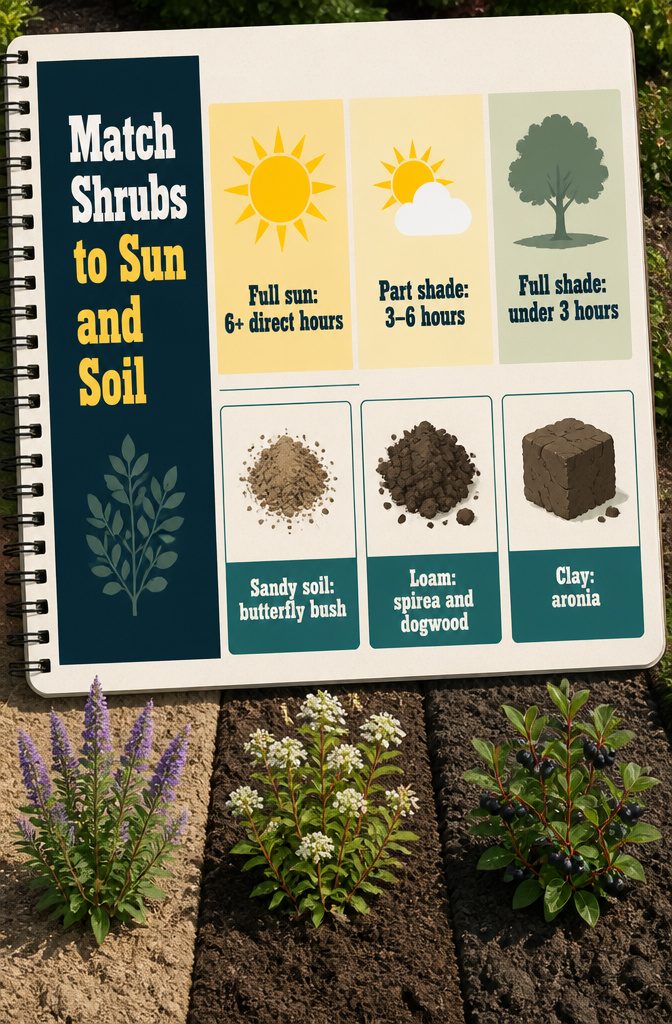
Check light first, then soil. Count the hours of sun the spot gets:
- Full sun is 6+ hours of direct light. Flowering shrubs often need this much to set buds.
- Part shade is 3–6 hours.
- Full shade is under 3 hours.
For soil, squeeze a handful of moist soil firmly, open your hand, and poke it. The way it holds together tells you which shrubs to buy:
- It falls apart: sandy soil. Butterfly bush suits it.
- It holds its shape but crumbles when poked: loam. Spirea and dogwood do well here.
- It holds its shape and ignores the poke: clay. Aronia is the pick.
Zones and Winter Protection
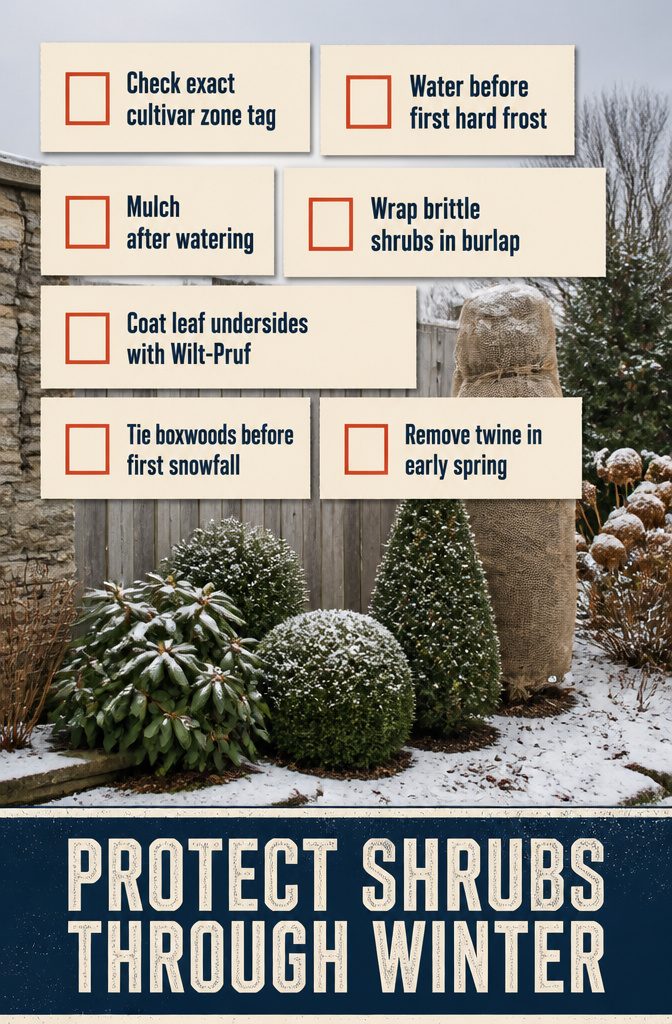
Match each shrub to your USDA Hardiness Zone, which a ZIP code lookup on a zone map gives you. Zone ranges vary by variety, so read the tag on the exact cultivar.
Frozen soil blocks water uptake, wind and sun dry out evergreen foliage, and heavy snow bends branches. To protect evergreens:
- Plant azaleas and rhododendrons on the east side of a wall or fence, out of north and west winds.
- Water well before the first hard frost, then mulch.
- Wrap brittle or floppy shrubs in burlap or shrub covers.
- Spray Wilt-Pruf anti-desiccant, coating the leaf undersides too.
- Stake burlap into a windbreak; one screen shields several shrubs.
- Tie upright shrubs like boxwoods with twine before the first snowfall, then remove it in early spring.
Check Mature Size
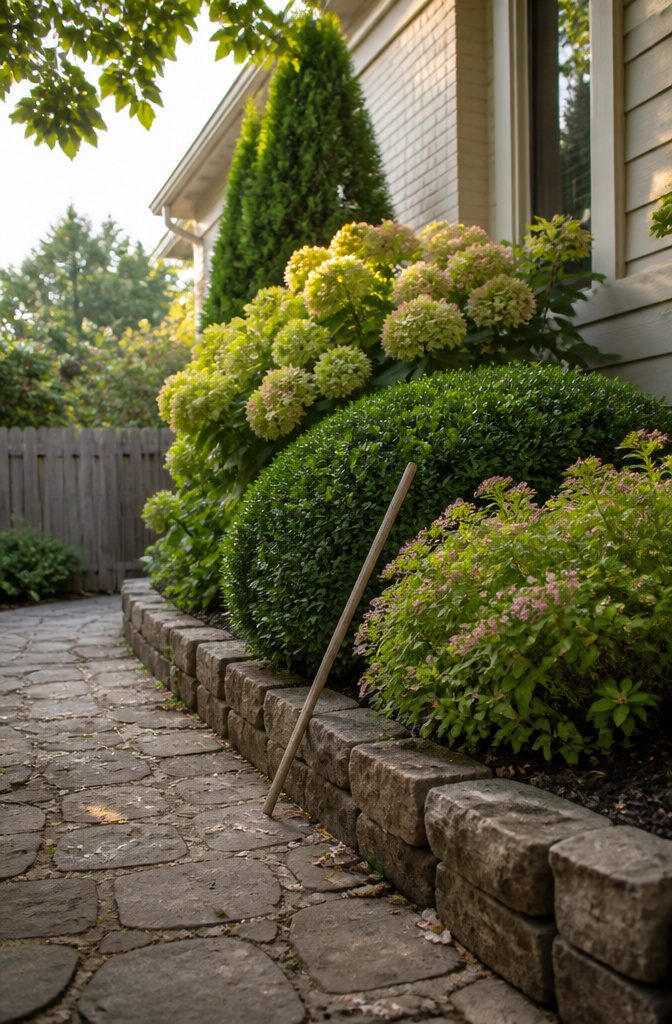
A shrub bought small can reach over 6 feet wide or tall, so the mature height and width on the tag decide whether it blocks a window or crowds a path. Measure the spot first, then match the plant to it.
Tall shrubs like arborvitae suit privacy screens and borders.
Medium shrubs like hydrangeas and boxwoods fill the middle layer of a foundation planting or define a screen. Right against the house, pick compact types such as Pugster Pico Punch™ butterfly bush, or Double Play® spirea, which stays 1½–3 feet tall.
Names alone mislead, so check the cultivar, not just the plant name. Juniper runs from 2 feet tall to over 25 feet, and yew from 3 to 20 feet.
Maintenance and Evergreens
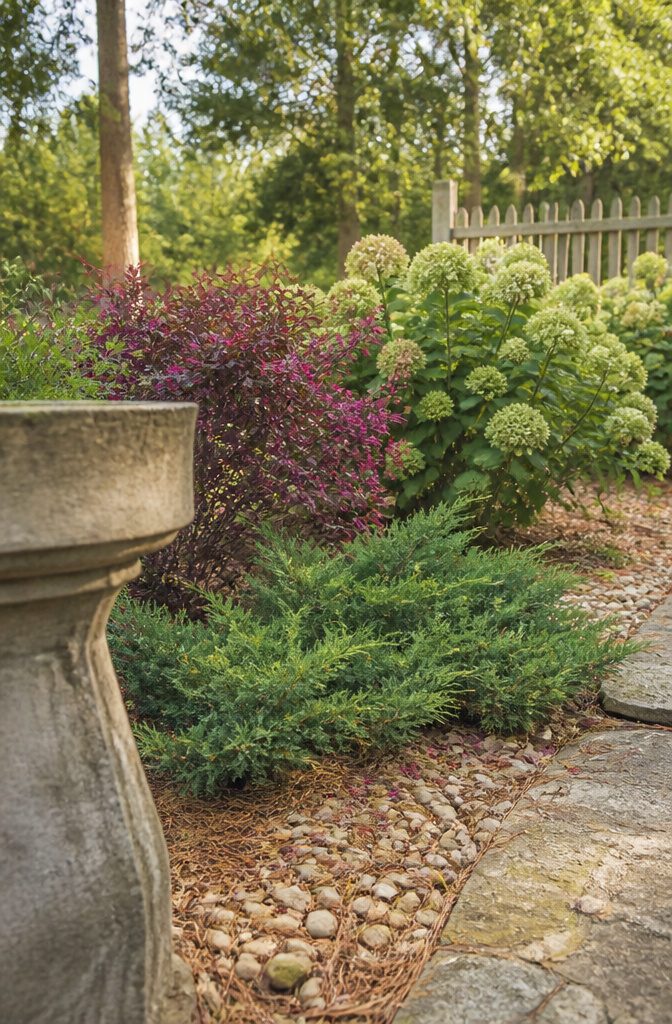
Count the minutes you’ll really spend on upkeep before you buy anything.
Spiraea, weigela and reblooming hydrangea are the hands-off flowering picks. Spilled Wine weigela shows how far that can go: it stays 2–3 feet tall and 3 feet wide in zones 4–8 and needs no pruning to keep its shape.
Drought tolerance cuts the other chore. Butterfly bush handles dry weather once established and wants extra water only during long, hot dry spells.
For evergreens, juniper is the easy choice if you pick a variety whose mature size fits the spot, so you never shear it back. Deer tend to leave spiraea, weigela and juniper alone, which saves you fencing and repellent.
Frequently Asked Questions
How do I choose shrubs for landscaping?
Check sun first, then soil, then your USDA hardiness zone. Full sun is 6+ hours of direct light, part shade is 3–6 hours, and full shade is under 3.
Read the plant tag for the zone range and mature size of the exact cultivar, since size and hardiness vary widely within one plant name. Then match the shrub to its job, such as privacy, season-long color, or low upkeep.
What shrubs should I plant in front of my house?
Pair one flowering shrub with one evergreen. Hydrangea, azalea, weigela, or compact butterfly bush add color, while boxwood, Gem Box holly, or compact Thuja hold their shape through winter.
Right against the house, choose compact types such as Double Play spirea, which stays 1½–3 feet tall, so the plants don’t block windows later.